


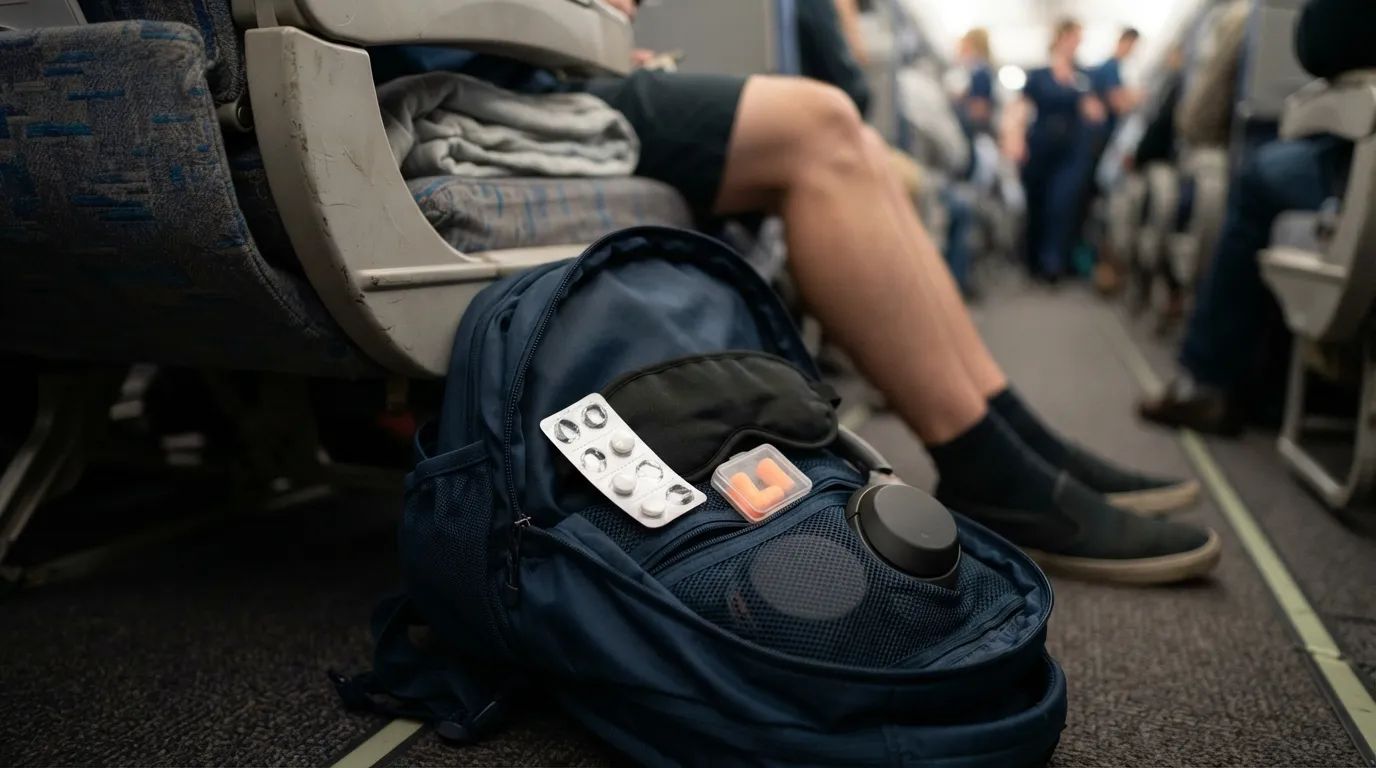
Most people use the first hour of a long flight to settle in. Regulars use it to head off stiff legs, a body clock stuck on home time and a dry, headachy first day.
The CDC calls a flight long-distance at generally more than four hours, and that is where blood-clot risk starts to count.1 The countdown starts with the watch on your wrist, but the final item can’t show up until you’re back on the ground.
#17 – Your Watch Set to Destination Time
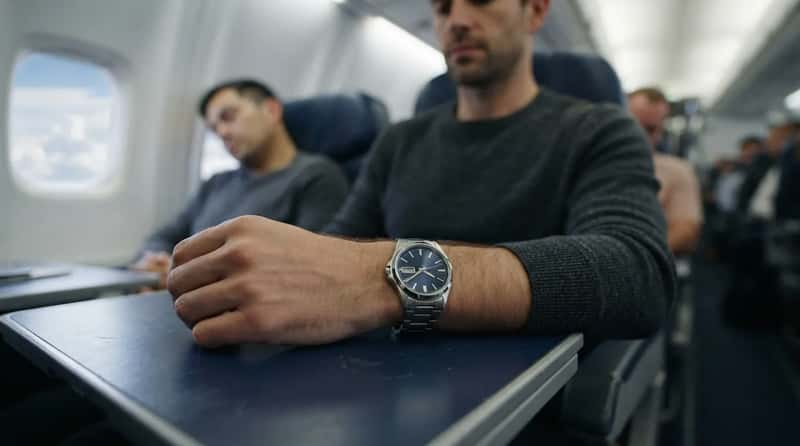
Jet lag happens because your body’s clock is still synced to the time zone you left. The more zones you cross, the more likely you are to get it.2 3
Mayo Clinic’s travel guidance is to switch to the destination schedule as soon as you leave home, setting your clocks to the new time when you board. If your phone changes time zones on its own, turn off the automatic setting and pick the destination zone by hand.
Knowing what time it is at your destination doesn’t settle whether the next few hours should be spent asleep.
#16 – An Eye Mask and Earplugs Within Reach
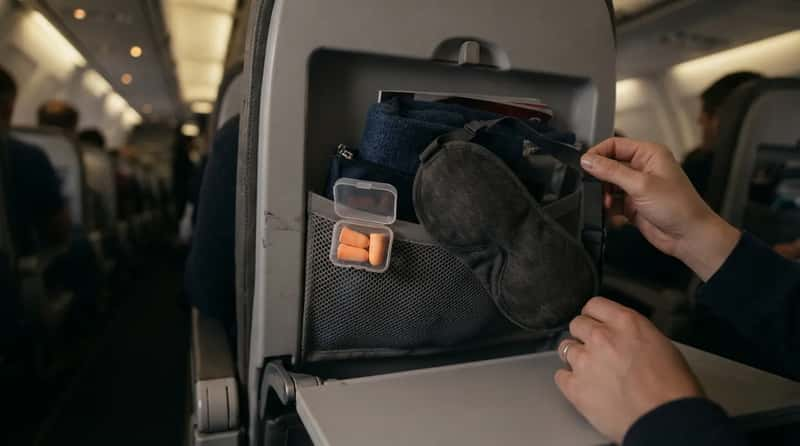
Mayo Clinic says to try to sleep on the plane if it’s nighttime at your destination. It names earplugs, headphones and eye masks as the tools that block noise and light.
The American Thoracic Society’s travel-sleep sheet agrees: sleep during the destination’s night period, and eye shades might help. A neck pillow is a comfort, but the mask and earplugs are what the guidance names.
Tuck them in the seat pocket before the cabin lights dim, so you’re not digging through a bag in the dark.
A mask keeps light off your eyelids, but the cabin air keeps working on your eyes anyway.
#15 – Lotion and Saline Spray Against Dry Cabin Air
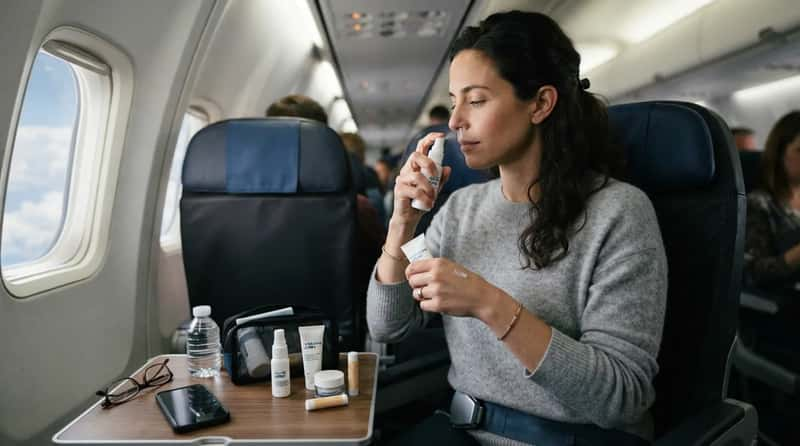
Cabin humidity on a long flight usually sits between 10 and 20 percent, while the air at home is typically 40 to 60 percent. Over hours, that dries out your skin, eyes, lips and nasal passages.
At a Glance
- Cabin air: usually 10 to 20 percent humidity
- Typical home air: 40 to 60 percent
- Most affected: skin, eyes, lips and nasal passages
- Usual fixes: moisturizer, saline spray, and taking out contact lenses
Moisturizer, saline spray and taking out contact lenses are the usual remedies. The nose is worth the trouble because low humidity can reduce the effectiveness of the mucous membranes in your nose and throat, a first defense against pathogens.
Lotion, lip balm and a small saline spray cost very little and fit in a pocket. Skip the travel humidifier, since its effectiveness in constantly circulating cabin air is limited.
#14 – Steady Sips of Water From Boarding
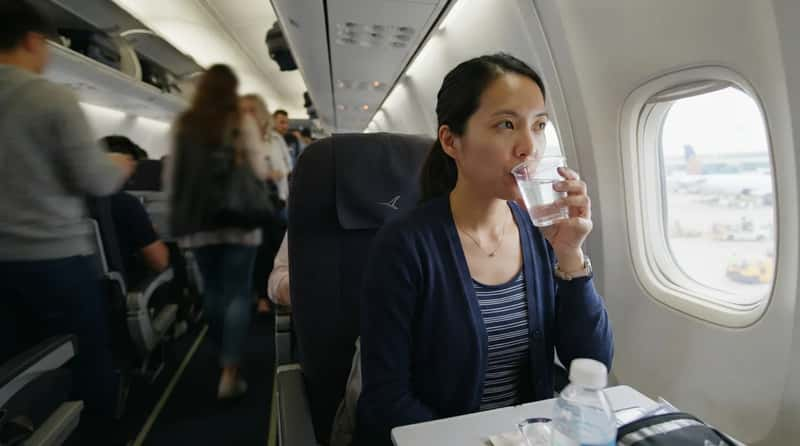
Mayo Clinic says dehydration may worsen jet lag symptoms, which is the usual reason given for sipping water from the start.3 How much a normal flight actually dries you out is less settled.
There is no official in-flight target, and the UK Civil Aviation Authority states that low cabin humidity does not result in dehydration. A steady sip is enough, and forcing down liters isn’t needed.
Don’t skip drinks to avoid the bathroom. That walk to the lavatory does your legs some good anyway.
The more clear-cut drinks question is the one about what goes into the glass.
#13 – The First Drink You Turn Down

Mayo Clinic’s community health guidance for trips says to avoid alcohol, drink plenty of water, and get sleep if you can on a night flight. The reasoning is that alcohol is a diuretic and tends to fragment sleep in the second half of the night, which is the stretch a red-eye is meant to give you.
On a daytime flight where you’re not trying to sleep, one drink costs you less. On a night flight it undercuts the whole plan, and it adds to the dryness you’re already fighting with lotion and water.
The drink cart sets your sleep, and the tray that follows sets your meals on the airline’s schedule.
#12 – Local Mealtimes and a Bedtime You Hold
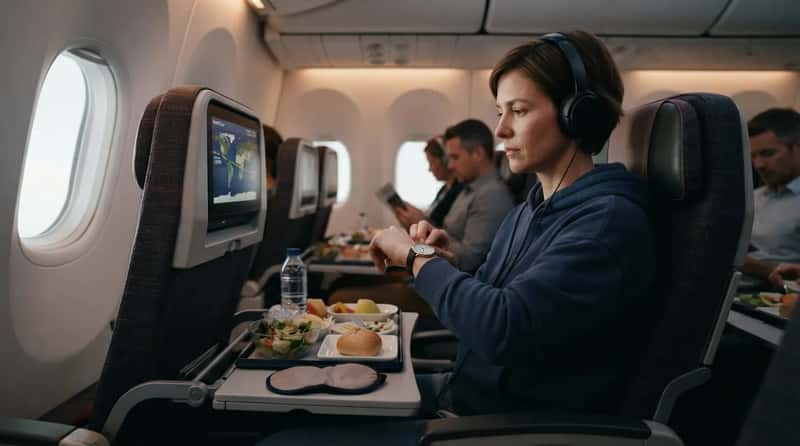
Mayo Clinic asks for two things at your destination: don’t sleep until local nighttime, no matter how tired you are, and time your meals with local mealtimes too. Both depend on the clock you set at boarding.
On the plane, that means a full meal that lands in the middle of destination night is one to pass on. Lighter meals sit more comfortably after hours in a seat anyway.
If you need a nap on arrival day, Mayo’s community health page says to keep it short and still plan to go to bed at local time. Eat lightly, nap briefly and hold to the local bedtime, so your body isn’t handed a second, competing schedule.
#11 – A Light Plan Based on Direction
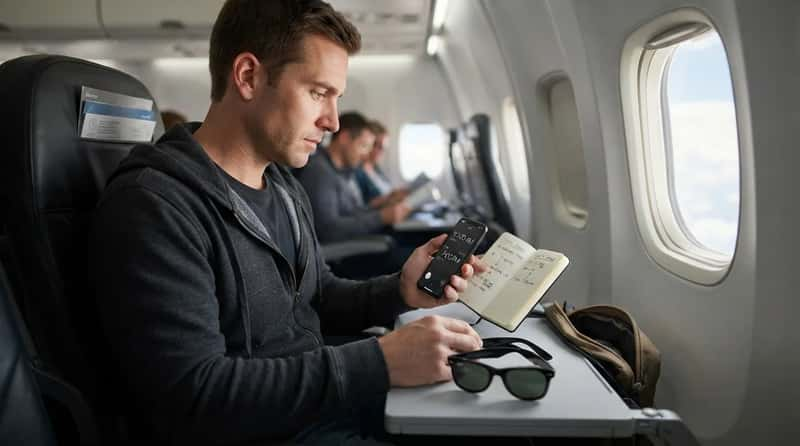
If jet lag has one genuine lever, it is light. After traveling west, Mayo Clinic says to expose yourself to light in the evening, and after traveling east, to morning light.3
There is an exception for long eastward trips. Beyond eight time zones, your body could confuse morning light with evening light or the reverse, making sleep problems worse.
So after more than eight zones east, Mayo advises sunglasses and avoiding bright light in the morning. Work out your direction and your zone count in the first hour, while the destination clock is already on your phone.
Light does most of the clock work, and some travelers add a tablet whose timing is easy to get wrong.
#10 – A Melatonin Tablet Timed for Bedtime
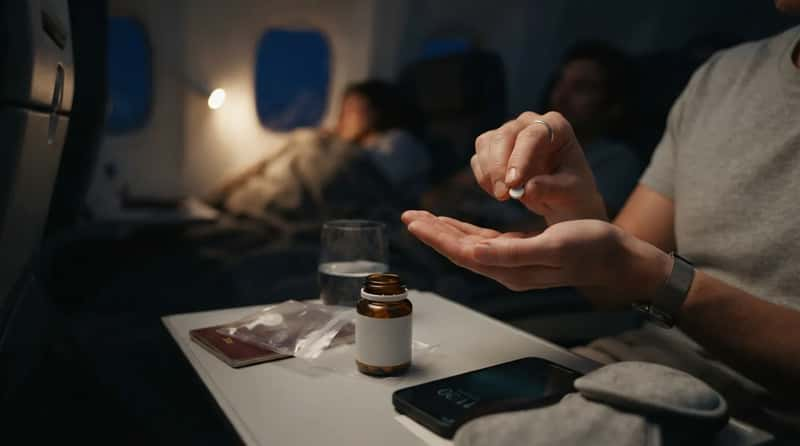
Reviews of randomized trials summarized by the NIH’s National Center for Complementary and Integrative Health suggest melatonin can modestly reduce jet lag symptoms.4 The effect is clearest after eastward flights across five or more time zones, when it’s taken close to the destination bedtime.
The American Thoracic Society’s sheet puts that at 1.5 to 2 hours before bedtime at your destination. Taking one at boarding is therefore the wrong moment.
If you’re flying west or crossing only a few zones, light and a steady schedule carry most of the weight, and the bottle can stay in the bag. Ask your doctor or pharmacist first if you take other medicines.
Melatonin is timed to the destination, while the stronger sleeping pills raise a different warning altogether.
#9 – The Sleeping Pill Left in the Bag
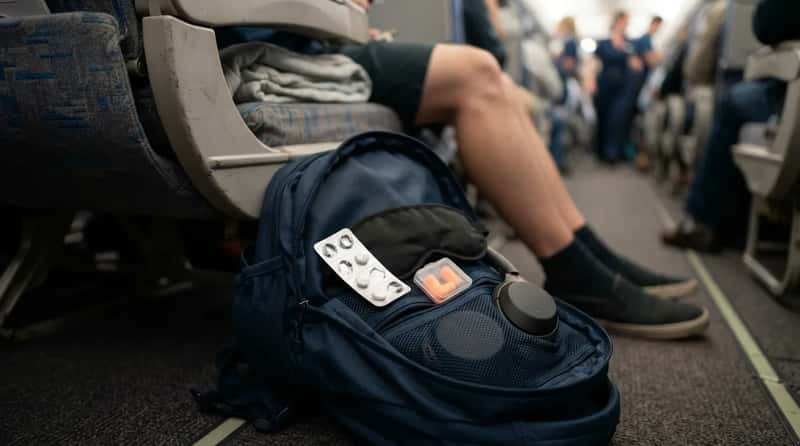
The World Health Organization has recommended that long-flight passengers exercise their legs and resist taking sleeping pills, to reduce the risk of potentially fatal blood clots. The pairing fits how clots form, since they can develop in the deep veins of the legs when you sit still in a confined space for long periods.5
Worth Knowing
- A sleeping pill can keep you in one position for hours, which works against leg movement.
- Earplugs, headphones and an eye mask let you rest without one.
- A prescription sleep aid is a question for your doctor before travel day, not once you’re seated.
#8 – Uncrossed Legs and Loose Clothing
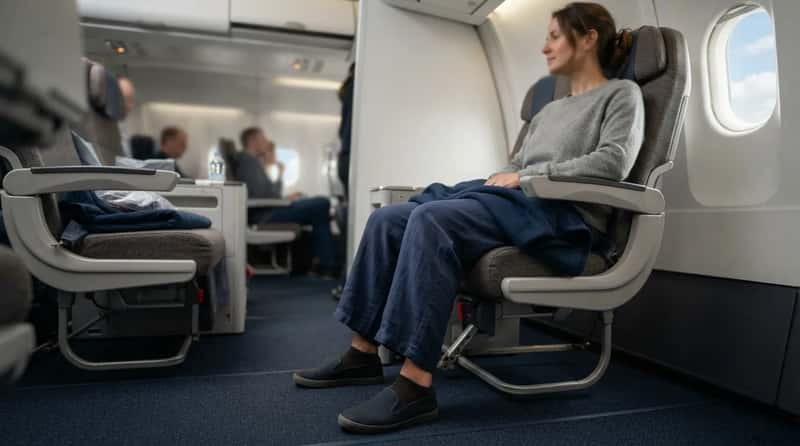
Sit with both feet on the floor and leave your legs uncrossed. On long flights passengers often sit for hours with bent knees, which reduces calf muscle activity and slows blood flow in the legs.6
Crossing the legs is a common habit that physician guidance says to avoid for long periods. Loose clothing belongs to the same setup, since it is recommended for long flights.
Neither costs anything, and both are easiest to get right in the first hour, before your body settles into a position it will hold for the next one.
Feet planted is only half the job, because the muscles still have to work.
#7 – Ankle Flexes and Calf Tightening in Your Seat
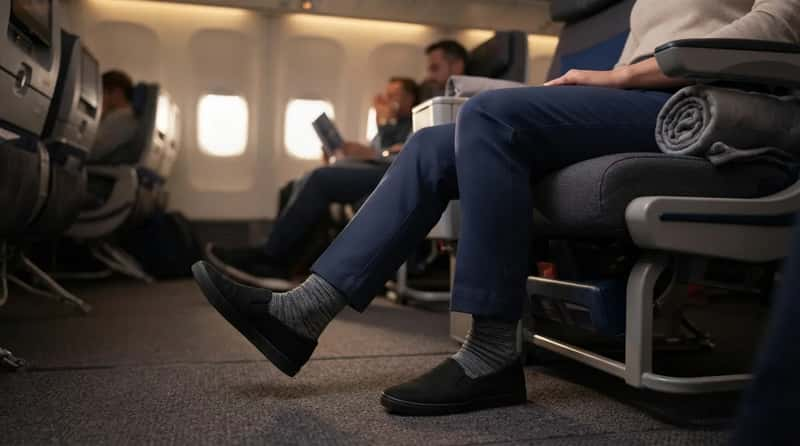
The CDC says to move your legs frequently on long trips and exercise your calf muscles to improve the flow of blood. Scripps Health, summarizing the same guidance, gives a concrete version: extend your legs straight out and flex your ankles.
While seated, that means flexing your ankles, raising your heels and contracting your calf muscles. The person beside you won’t notice a thing.
Start in the first hour. A habit begun at takeoff is easier to keep up than one begun when your legs are already stiff.
Exercises in the seat have a limit, and the better fix depends on where in the cabin you sit.
#6 – The Aisle Seat and a Walking Schedule
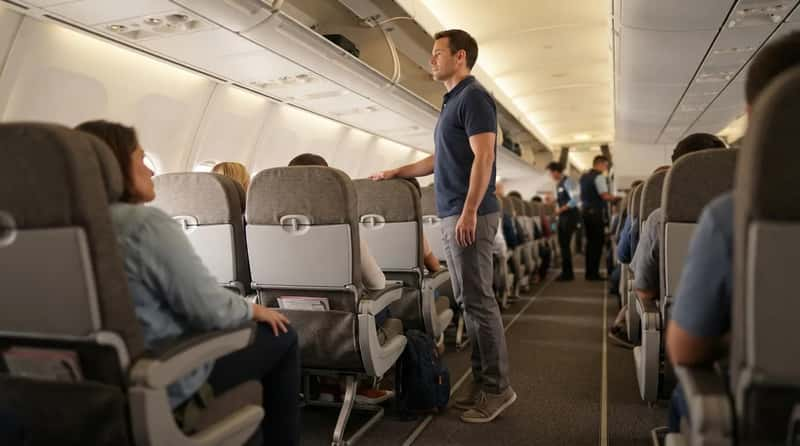
The CDC’s advice is to move your legs frequently and walk around every one to two hours. Its list of protective measures for long-distance travelers also includes aisle seating when possible.
Quick Compare
- Aisle: You can stand and stretch without climbing past or waking neighbors, and the CDC lists it as a protective measure.
- Window: You get the view, but every walk means asking someone to move.
The aisle matters because you can get up without waking your neighbors, so you’re far more likely to actually do it. If you have to choose between a window view and the aisle on a long flight, the aisle wins.
The view is a poor substitute for the walking. And the same trip down the aisle can double as the lavatory visit your water intake will eventually require.
#5 – A Seat Belt Kept On After the Sign
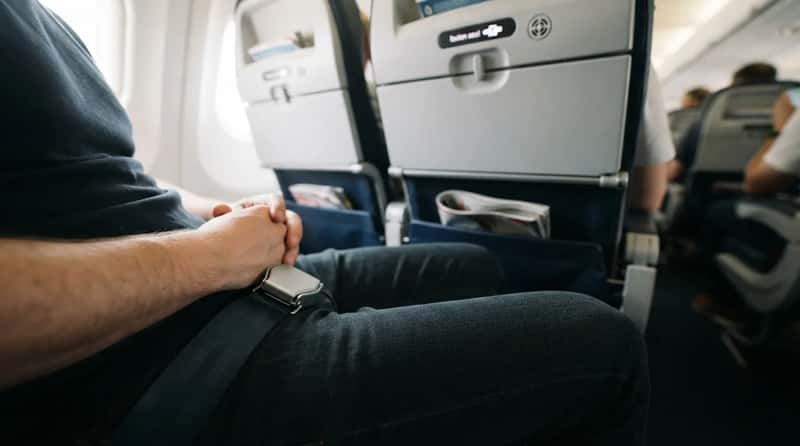
The FAA’s advice to passengers is to keep the seat belt buckled at all times when seated. Regulations require it during landing and taxi and whenever the seat belt sign is illuminated.7
The extra caution is warranted because turbulence often occurs unexpectedly and can even occur when the sky appears clear. The habit pairs well with the walking schedule above.
Get up when the ride is smooth, and buckle again the moment you sit back down.
Belted in and moving regularly, you’ve covered what applies to nearly every long-haul passenger, though some travelers need more than that.
#4 – Compression Stockings for Higher-Risk Flyers
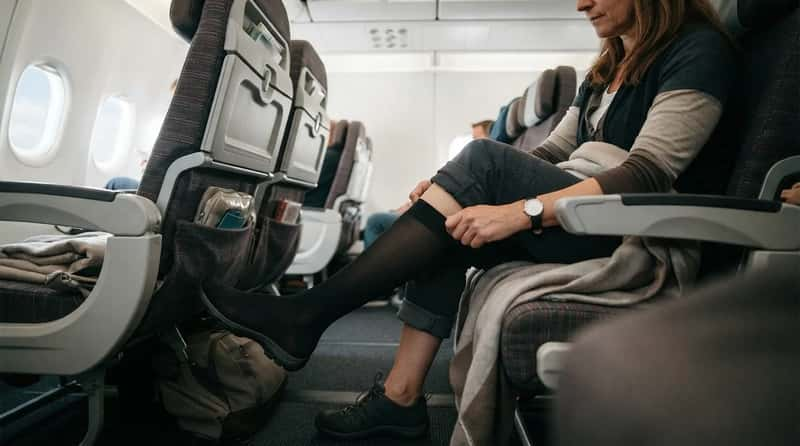
Compression stockings are the one item here that the guidelines reserve for particular travelers. For long-distance travelers on trips over six hours who are at increased risk of clots, the American College of Chest Physicians recommends properly fitted below-the-knee graduated stockings, along with walking, calf exercise and an aisle seat.
If you have no risk factors, put your effort into the walking and the ankle work, and treat stockings as optional spending. If you do have risk factors, get them fitted and put them on before you board, since struggling into them in a cramped seat is a poor plan.
#3 – A Doctor’s Call Before the Flight
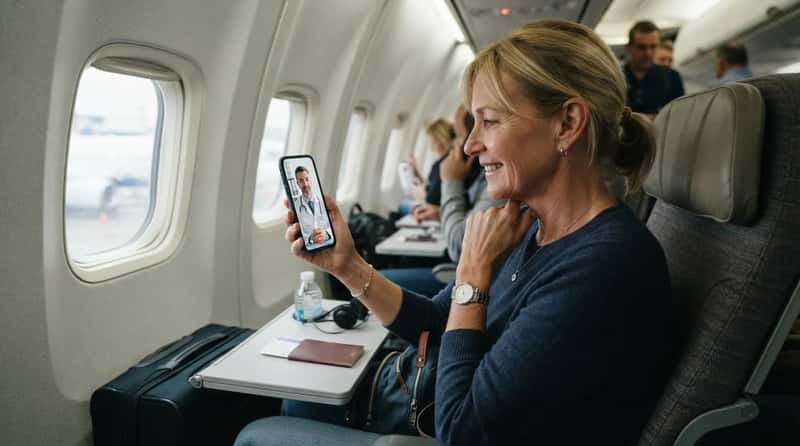
The CDC says to talk to your doctor before you travel if you think you may be at increased risk for blood clots, such as if you had a previous clot.1 It lists family history among the risk factors.
For the general population the odds are low: the WHO has said studies put the risk of a clot during any travel longer than four hours at 1 in 6,000. But the WHO also said people in high-risk groups were more likely to develop clots on flights.
Fast Facts
- General-population clot risk on travel over four hours: about 1 in 6,000, per the WHO
- Risk factors the CDC names include a previous clot and family history
- Several long flights in a short period add to the risk
- Stocking guidelines target higher-risk travelers on trips over six hours
That is why a conversation before booking beats guesswork in the seat. Whether the stockings from the last item or a medication make sense for you is a decision for your doctor.
Your risk factors are settled by the day you fly, but the itinerary around the flight can still be rearranged.
#2 – The Itinerary Behind the Flight
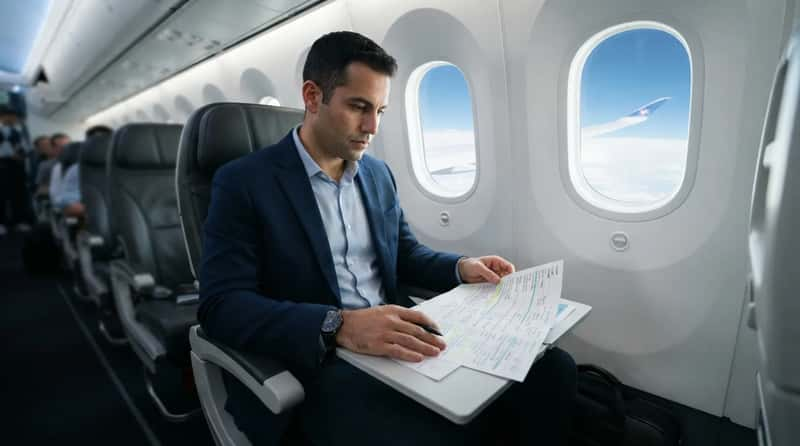
The CDC notes that several long flights in a short period add to the risk, so the schedule matters as much as the seat.1 Where plans allow, break a very long trip with a stopover, and if you have risk factors, avoid stacking several long flights in a few days.
A similar idea applies to the body clock. Mayo Clinic’s community health page suggests that if you have an important event at your destination, you consider arriving a few days early so your body can adjust.
A nonstop is easier on the calendar. If you have a clot history, or something important waiting at the other end, the extra night buys something specific.
Whatever the itinerary looks like, the clot window runs well past the landing.
#1 – Warning Signs You Learn Before Landing
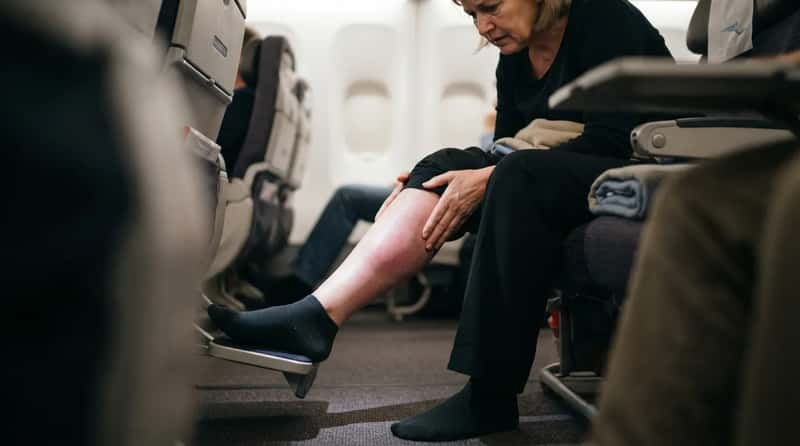
Everything above happens in the seat, but the signs of a clot show up later. The CDC tells travelers to learn the signs and symptoms of blood clots before they go.
It notes that most travel-related clots appear within one to two weeks of the flight. That means the problem can start at home, days after the trip has stopped feeling relevant.
The WHO lists pain or cramps in the calves, and swelling of the leg, as the symptoms. A sore, swollen leg in the days after a long flight is worth a call to your doctor, even if the trip feels far behind you.
The CDC explains that a clot in a deep leg vein can sometimes break loose and travel to the lungs, causing a potentially life-threatening pulmonary embolism.1 Sudden shortness of breath or chest pain calls for emergency help, not a wait.
Most of what’s on this list takes seconds, and most of it pays off after the plane lands. It shows up in the clock you set, the light you seek and the leg you pay attention to.
Count the flight as the first step of your arrival, with effects that run into the following days and, for clot warning signs, the following weeks. The plane lands in hours, but the first hour aboard keeps working for days.
Sources
- CDC, Understanding Your Risk for Blood Clots with Travel: https://www.cdc.gov/blood-clots/risk-factors/travel.html
- FAA, Turbulence: Staying Safe: https://www.faa.gov/travelers/fly_safe/turbulence
- Mayo Clinic, Jet lag disorder: https://www.mayoclinic.org/diseases-conditions/jet-lag/symptoms-causes/syc-20374027
- Mayo Clinic News Network, Prepare for jet lag before boarding the plane: https://newsnetwork.mayoclinic.org/discussion/mayo-clinic-q-and-a-prepare-for-jet-lag-before-boarding-the-plane/
- Mayo Clinic Community Health, Jet lag: https://communityhealth.mayoclinic.org/featured-stories/jet-lag
- American Thoracic Society, Travel and Sleep patient education: https://www.thoracic.org/patients/patient-resources/resources/travel-and-sleep.pdf
- NBC News, WHO offers travel tips to avoid fatal blood clots: https://www.nbcnews.com/news/amp/wbna19486899
- The Blood Project, Air Travel and Venous Thromboembolism: https://www.thebloodproject.com/air-travel-and-venous-thromboembolism/
- Scripps Health, How To Prevent Blood Clots During Long Travel: https://www.scripps.org/news_items/3019-how-to-prevent-blood-clots-during-long-travel
- Aviation Week, Tackling Turbulence: https://aviationweek.com/tackling-turbulence-simply-put-seat-belts-are-still-key
Bonus: The Insider Habit Nobody Tells You
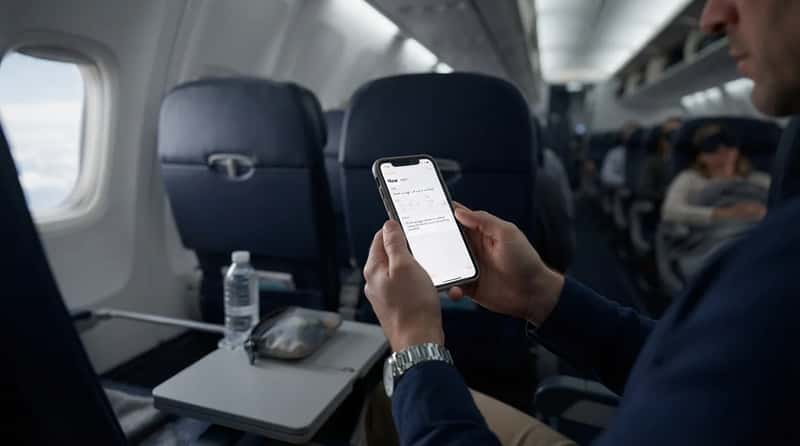
Regulars don’t rely on memory. In the first hour, they set two alarms on their phone, one for the air and one for after landing.
- Alarm 1, in the air: Make it a repeating timer labeled “Stand and walk.” Set it for every 60 to 90 minutes, which keeps you inside the CDC’s one-to-two-hour walking window even if you doze off.
- Alarm 2, after landing: Create a calendar reminder for 7 days and another for 14 days after your flight. Title it “Check my legs: calf pain or swelling?” This covers the one-to-two-week stretch when the CDC says most travel-related clots appear.
- Add a note: In the reminder, type your doctor’s phone number and the line “Sudden chest pain or shortness of breath means call emergency services.”
Do it before you put the phone in airplane mode. It takes about two minutes, and it means the habits on this list don’t depend on you remembering them when you’re tired.
- CDC Blood Clots and Travel: https://www.cdc.gov/blood-clots/risk-factors/travel.html
- Mayo Clinic Jet Lag Disorder: https://www.mayoclinic.org/diseases-conditions/jet-lag/symptoms-causes/syc-20374027
- Mayo Clinic Jet Lag Q&A: https://newsnetwork.mayoclinic.org/discussion/mayo-clinic-q-and-a-prepare-for-jet-lag-before-boarding-the-plane/
- NCCIH Melatonin Overview: https://www.nccih.nih.gov/health/melatonin-what-you-need-to-know
- Scripps Health Clot Prevention: https://www.scripps.org/news_items/3019-how-to-prevent-blood-clots-during-long-travel
- CDC Yellow Book DVT: https://www.cdc.gov/yellow-book/hcp/travel-air-sea/deep-vein-thrombosis-and-pulmonary-embolism.html
- FAA Turbulence: Staying Safe: https://www.faa.gov/travelers/fly_safe/turbulence
