A private room on an Amtrak long-distance train comes with an attendant, priority boarding and complimentary meals. It sounds effortless, and it mostly is, as long as the hard parts are settled before the doors close. Once you are moving, you cannot trade cars, reach a checked bag or shorten a flight of stairs.
That is why people who ride these trains often do their real work at booking and on the platform, where a wrong guess costs a poor night or real money. Fourteen of the items below are about choices and small habits. The last one is about a senior discount that many travelers assume covers the whole ticket, and it does not. First, the room itself.
#15 – Choosing Between a Roomette and a Bedroom
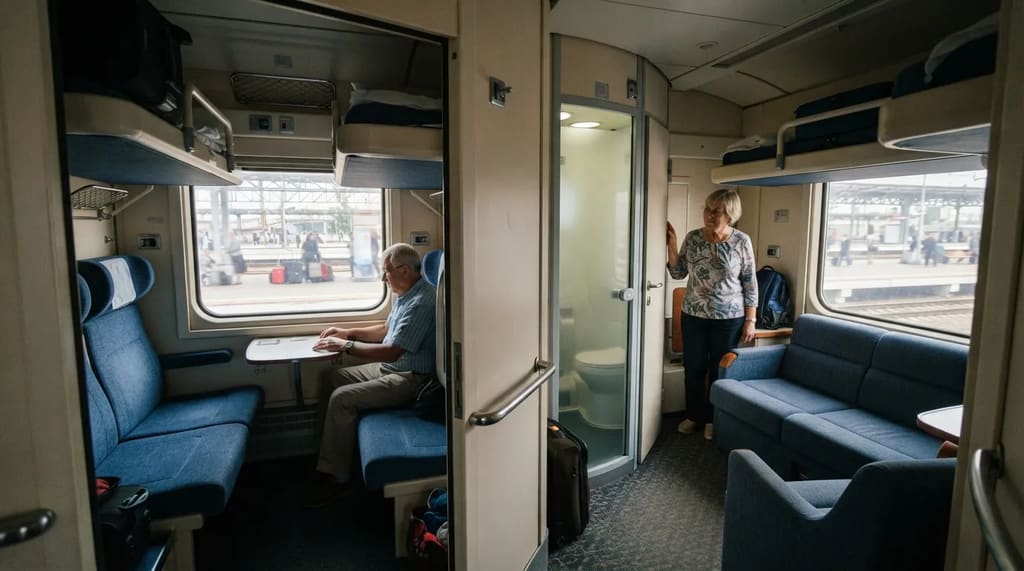
A roomette is the smaller room, with two seats by day and upper and lower berths by night. A bedroom gives you twice the space, with a sofa and a separate chair that become the beds.1
The bathroom is the difference you will notice most.
- Roomette: no shower in the room, so you use a communal shower and a toilet elsewhere in the car.
- Bedroom: a private toilet, shower and sink inside the room.
For one night, I would take the roomette, since you will spend most of the time asleep and the savings are real. For two or three nights, or if a walk down the car in the dark worries you, the bedroom earns its higher price.
A roomette’s toilet and shower are down the car, and on a double-deck car that can mean a flight of stairs.
#14 – Whether Your Sleeper Car Has Stairs
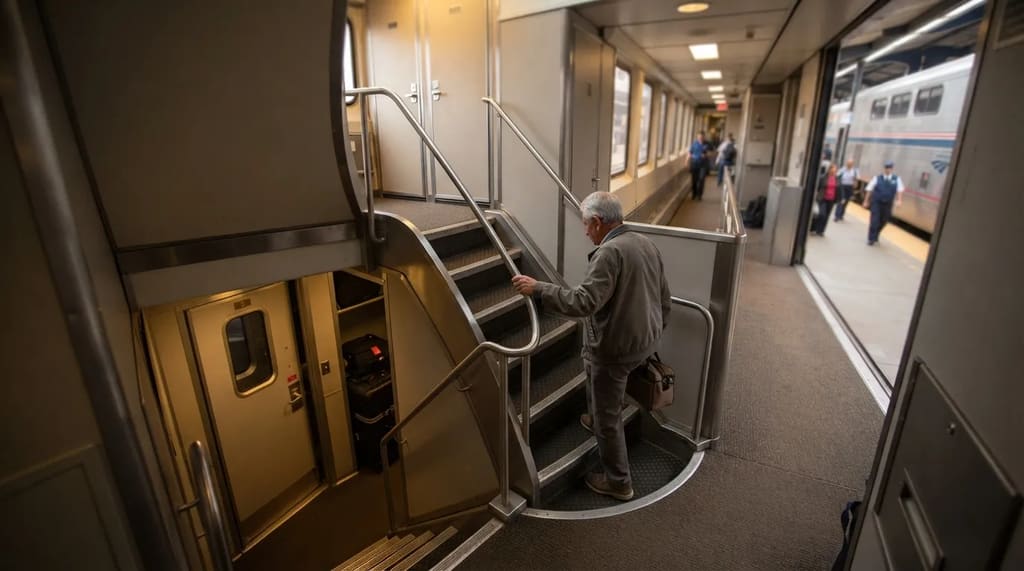
Superliner cars run on most of Amtrak’s western long-distance routes. Their bedrooms are on the upper level, so you enter below and climb a narrow staircase.
Viewliner cars are single-level, so once you are aboard there are no more stairs. They run mainly along the Eastern Seaboard, so the route you book largely decides which kind of car you get.1 Find that out when you book, because the platform is a poor place to learn it.
A double-deck car is no reason to skip the train, because several rooms sit on the lower level. The lower level also holds one room built for passengers who cannot manage stairs at all.
Quick Compare
- Superliner: most western long-distance routes, with bedrooms upstairs and a narrow staircase to reach them.
- Viewliner: a single level, mainly along the Eastern Seaboard, and no stairs once you are aboard.
- Either way: ask which car your route uses before you pay for a room.
#13 – Lower-Level Rooms When Stairs Are the Problem
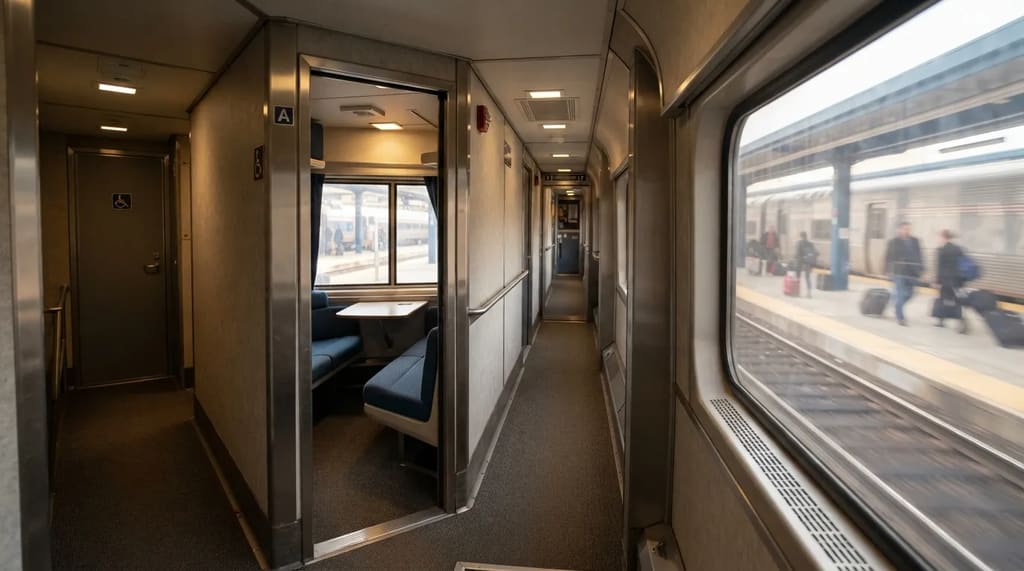
A Superliner’s lower level has four roomettes, a family bedroom at one end and an accessible bedroom at the other, plus three bathrooms and a shower room. Lower-level roomettes sit closer to the bathrooms and shower, though you feel the train’s movement and hear the wheels more.
The accessible bedroom is meant for a different need. Amtrak describes it as being for customers traveling with a disability, on the entry level, with space for a wheelchair.
- A sofa for two by day and upper and lower berths by night.
- An accessible in-room sink and restroom, with a private shower nearby in the car.
If stairs are your only problem, a lower-level roomette is a better buy than an upstairs bedroom, since the bathroom you use most often is a few steps away.
That room’s listing suggests one or two suitcases, a reminder of how little floor a sleeping room has.
#12 – One Carry-On You Can Lift Overhead
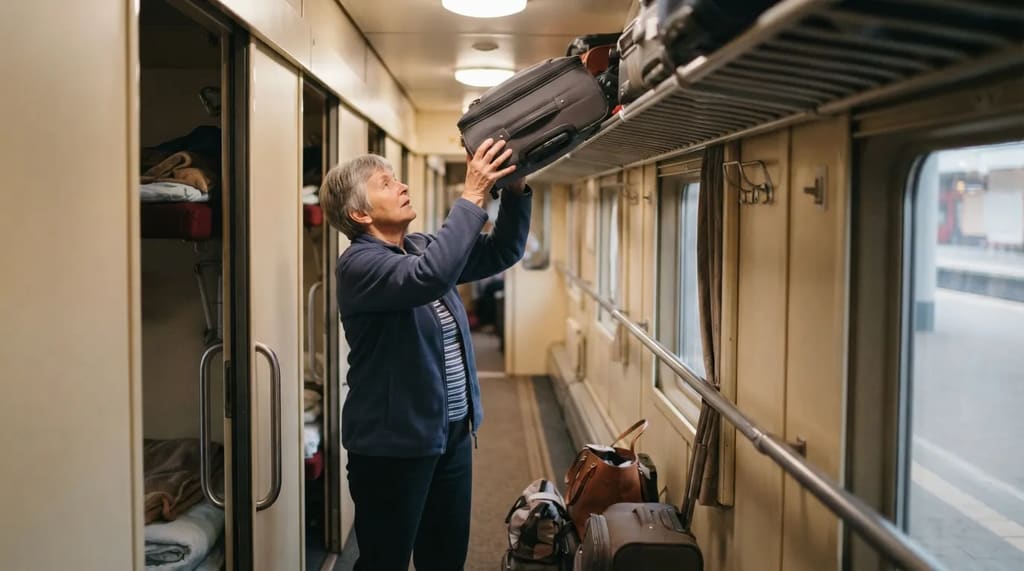
Each passenger may bring one personal item and two carry-on bags free of charge.
- Personal item: 25 pounds, 14 x 11 x 7 inches, small enough to fit under the seat.2
- Carry-on bags: 50 pounds each and 28 x 22 x 14 inches, sized for the overhead rack or luggage tower.
Amtrak’s rule says you must be able to safely lift a carry-on over your head onto the shelf. A bag at the 50-pound limit is heavy for anyone to hoist, so I would pack well under it and send the rest as checked baggage.
You will not have access to checked bags while on the train. That means the carry-on has to hold tonight and tomorrow morning.
Whatever does not fit in the carry-on goes to the baggage car, a service that not every station offers.
#11 – Checked Baggage Service at Both Stations
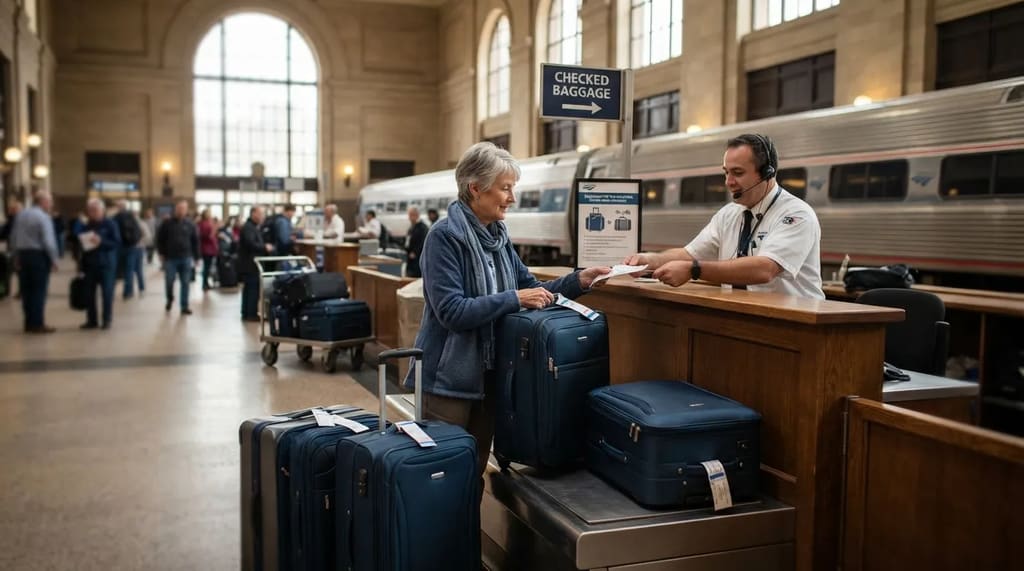
Each passenger can check up to four bags, two free and two at $20 each. Both your origin and destination stations must offer checked baggage service, so confirm that when you book rather than at the counter.3
At a station that isn’t manned, you bring the checked bags on board and store them in the luggage area in your car. You also collect checked baggage after each segment of the journey, which makes a trip with a change of trains much more work.3
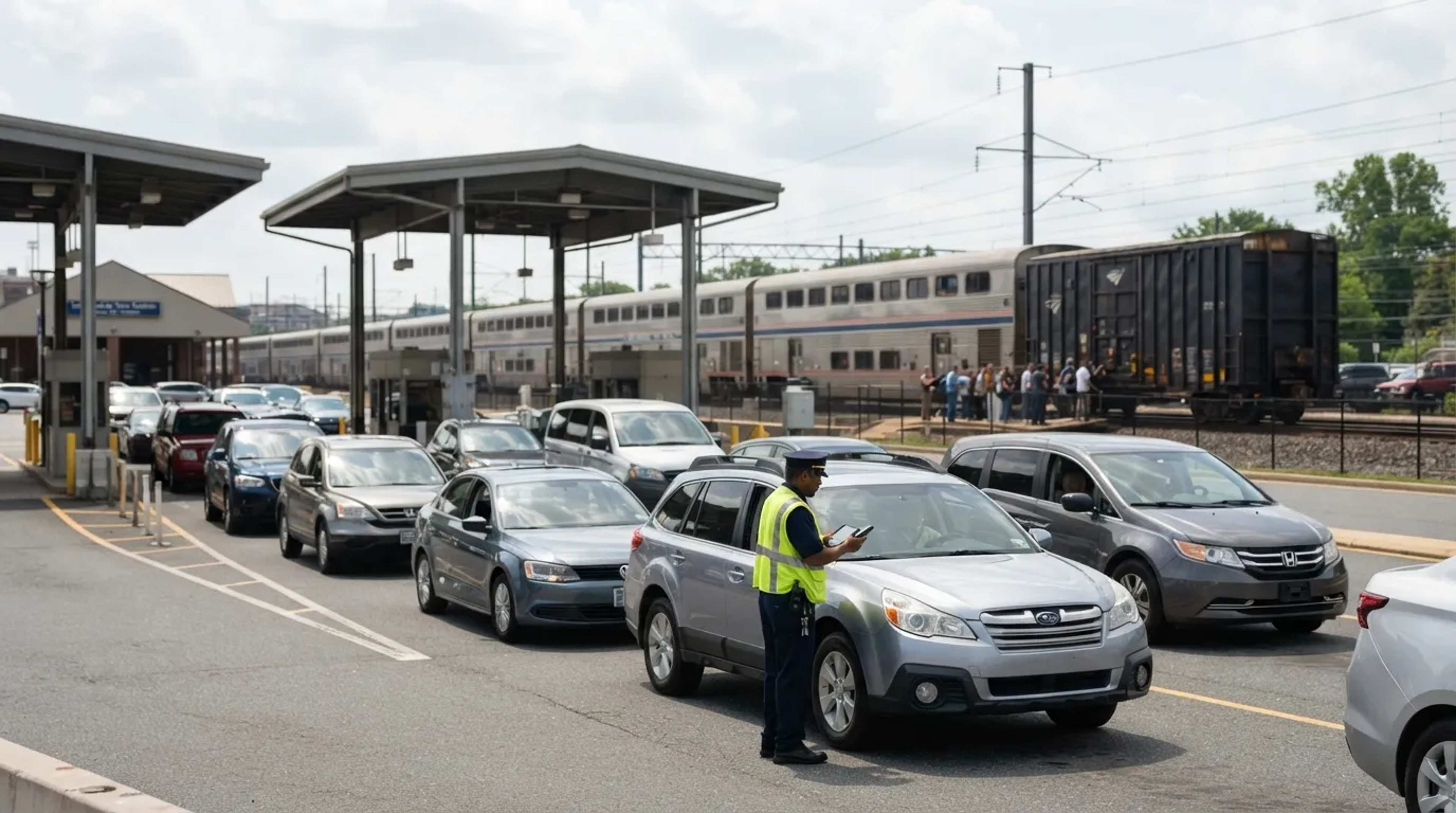
On that kind of itinerary I would skip checked bags and travel with carry-ons alone. The Auto Train is a separate case: it has no checked baggage service, and you pack inside your vehicle, which you cannot reach en route.
Fast Facts
- Up to four checked bags per passenger.
- Two are free, and the other two cost $20 each.
- Both your starting and ending stations must offer the service.
- On a trip with a change of trains, you collect your bags after each segment.
What goes inside a checked bag matters as well, because some things are not accepted there at all.
#10 – Keep Medications and Valuables in Your Hands
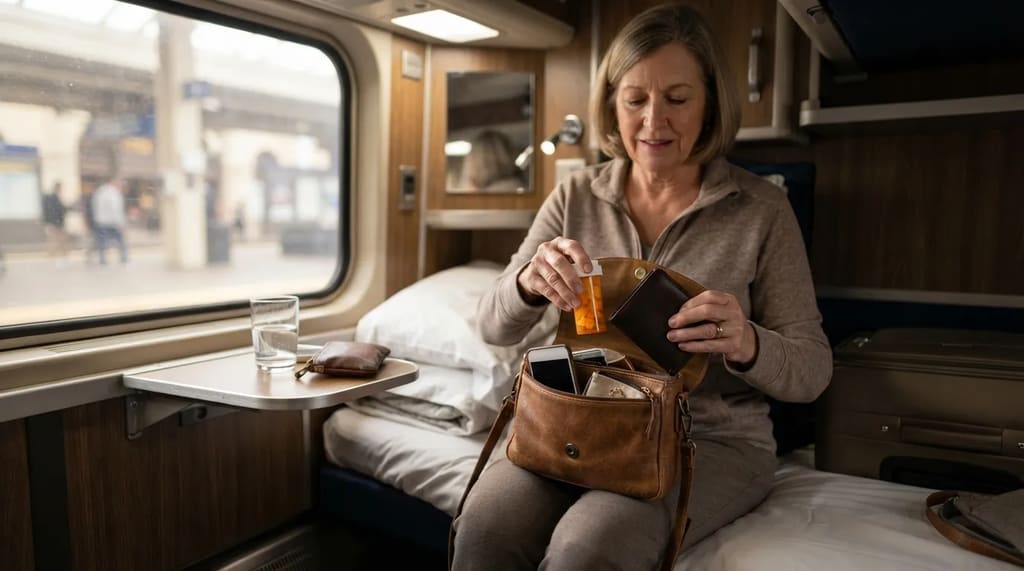
Electronics, jewelry, ID and money are not accepted in checked bags. Amtrak also disclaims liability for carry-on baggage, so the safest place for them is a bag you keep beside you.
Medication belongs with them, since a checked bag is out of reach until the trip ends. Amtrak’s page for senior travelers lists medication storage among its available accommodations, so ask what that covers when you book if a medicine must stay cold.
#9 – The Station Lounge Before Departure
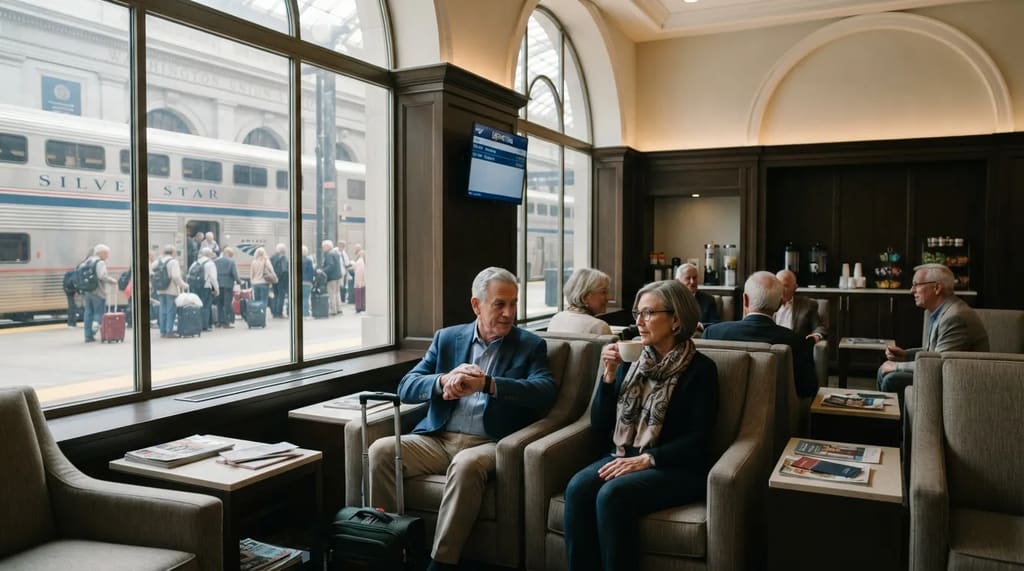
Passengers in private rooms get complimentary lounge access at major stations, which is part of what the room fare buys. At select stations, the lounges offer snacks and drinks, and some have showers.
Which station has one depends on where you start, so check before you count on it. If you begin at a major station with an hour or two to spare, use the lounge. A chair and a restroom away from the platform crowd beat a bench, and you can sort your bags there without anyone waiting behind you.
Leaving the lounge for the platform raises the question of when you board and who helps you do it.
#8 – Priority Boarding for Passengers 65 and Older
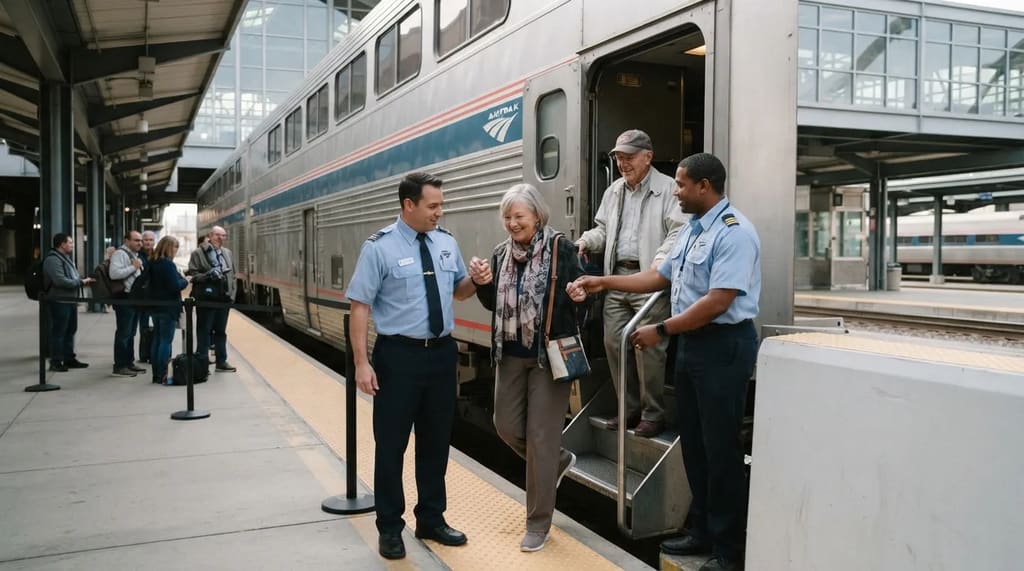
Amtrak offers priority boarding at many stations. The list includes passengers 65 and over, anyone needing assistance to board, and passengers in private rooms.
Platforms can mean steps, lifts or bridge plates, and they differ from station to station. If you need help, say so when you book and again to the agent when you arrive.
Take the early boarding even if you walk well. The car’s attendant shows you to your room, and that goes more smoothly before the car fills with other people’s bags.
Age is what puts you on that boarding list, and age is also what the fare depends on, with its own paperwork.
#7 – Photo ID That Proves Your Age
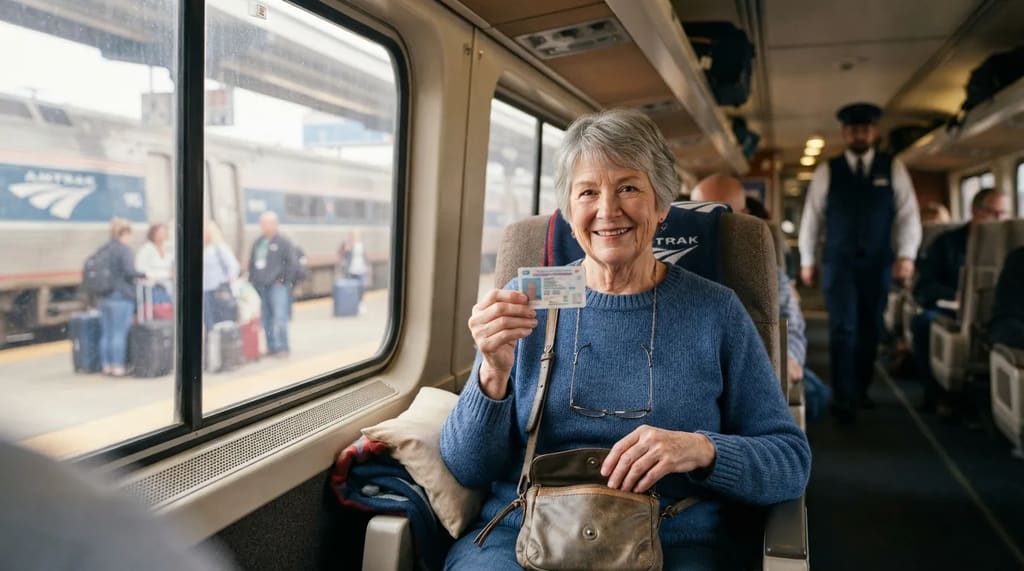
Travelers 65 and older can save 10% on train fare when booking through Amtrak. You select at least one Senior as the traveler type, and the discount then applies automatically.
Valid proof of age is required when you buy the ticket and again on board. Keep your ID in a pocket or the small bag, not in a suitcase that has gone to the baggage car.
The discount follows each traveler’s own age, so a spouse under 65 pays full fare. Adults with a disability get 10% off rail fare too, and so does a companion; if both discounts fit you, ask an agent which gives the lower total.
At a Glance
- Senior discount: 10% off train fare for travelers 65 and older.
- Set the traveler type to Senior when booking, and it applies automatically.
- Proof of age is checked at purchase and again on board.
- A spouse under 65 pays full fare.
#6 – How Dining Works on Your Route
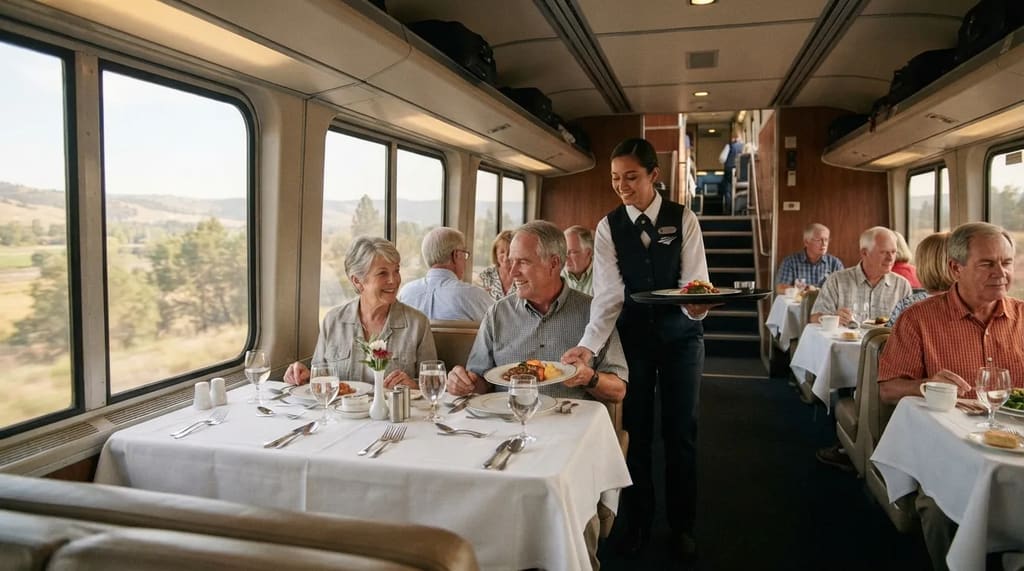
Meals are included when you travel in a private room. The style of dining differs by route, though. Traditional Dining, with full table service in a dining car, is available on eight routes, and the other routes use a different system.4 5
On some trains that system is pre-prepared meals heated in an oven or microwave. Look up how your own train serves its meals before you plan a special dinner around it.
On a double-deck car, the dining car is on the upper level, up the same narrow staircase as the upstairs rooms. If that climb is hard, your attendant assists with meals, so ask about having them brought to you. The dining car is open only at mealtimes, so learn the hours at boarding.
#5 – What the Sleeping Car Attendant Handles
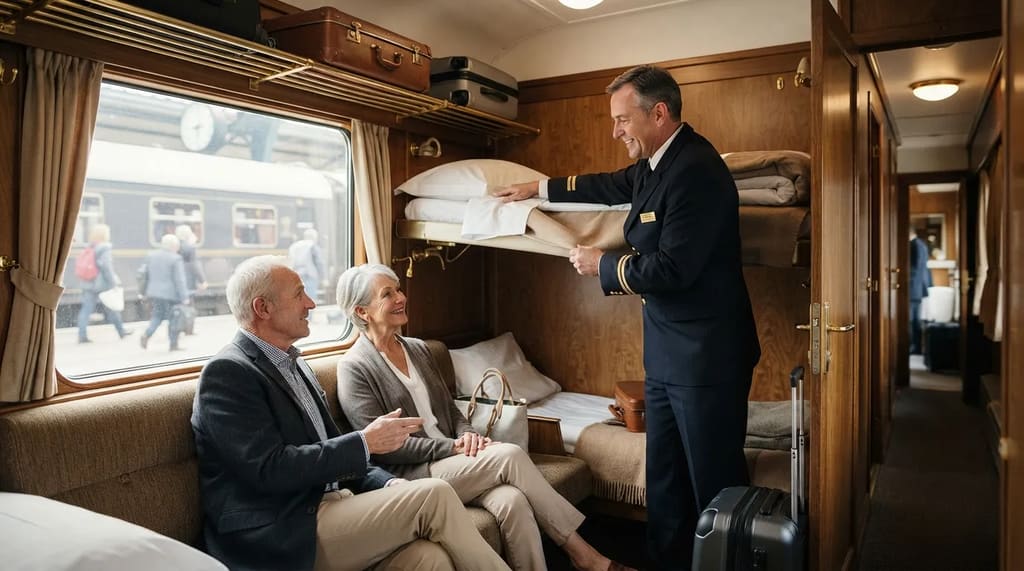
Every sleeping car has an attendant who shows you to your room, takes down your beds at night and folds them up in the morning. The attendant also helps with luggage and meals.
That makes the attendant the person to tell, early, what you need. Say what time you want the bed made, whether you would like meals brought to the room, and whether the stairs give you trouble.
Since one attendant looks after the whole car, a request made in the first few minutes is easier to meet than one made when the car is full. It also lets you plan around the staircase from the platform instead of in the middle of the night.
Turning down the bed and helping with luggage are the attendant’s work, but the shower is a separate matter that depends on your room.
#4 – A Shower on a Moving Train
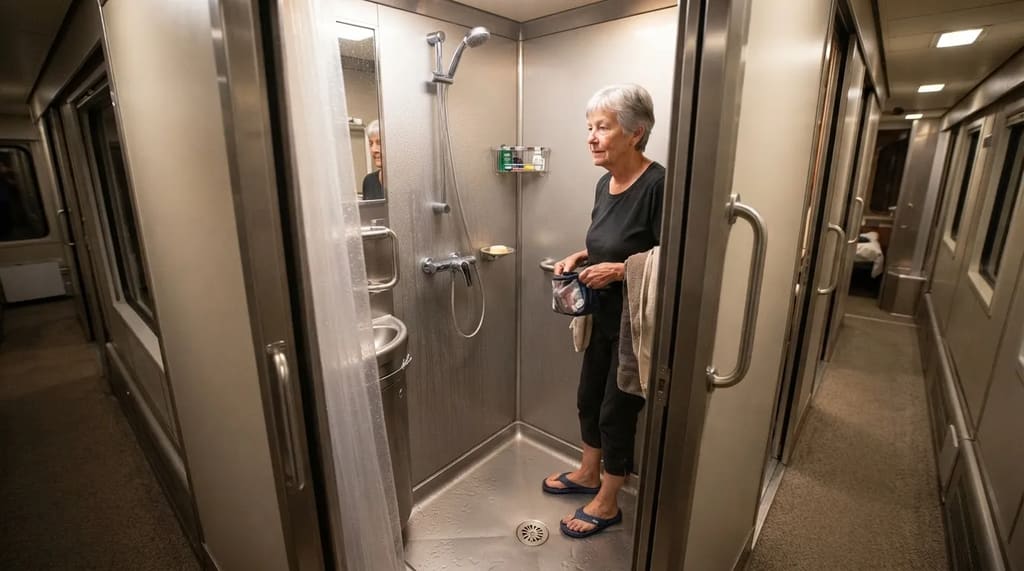
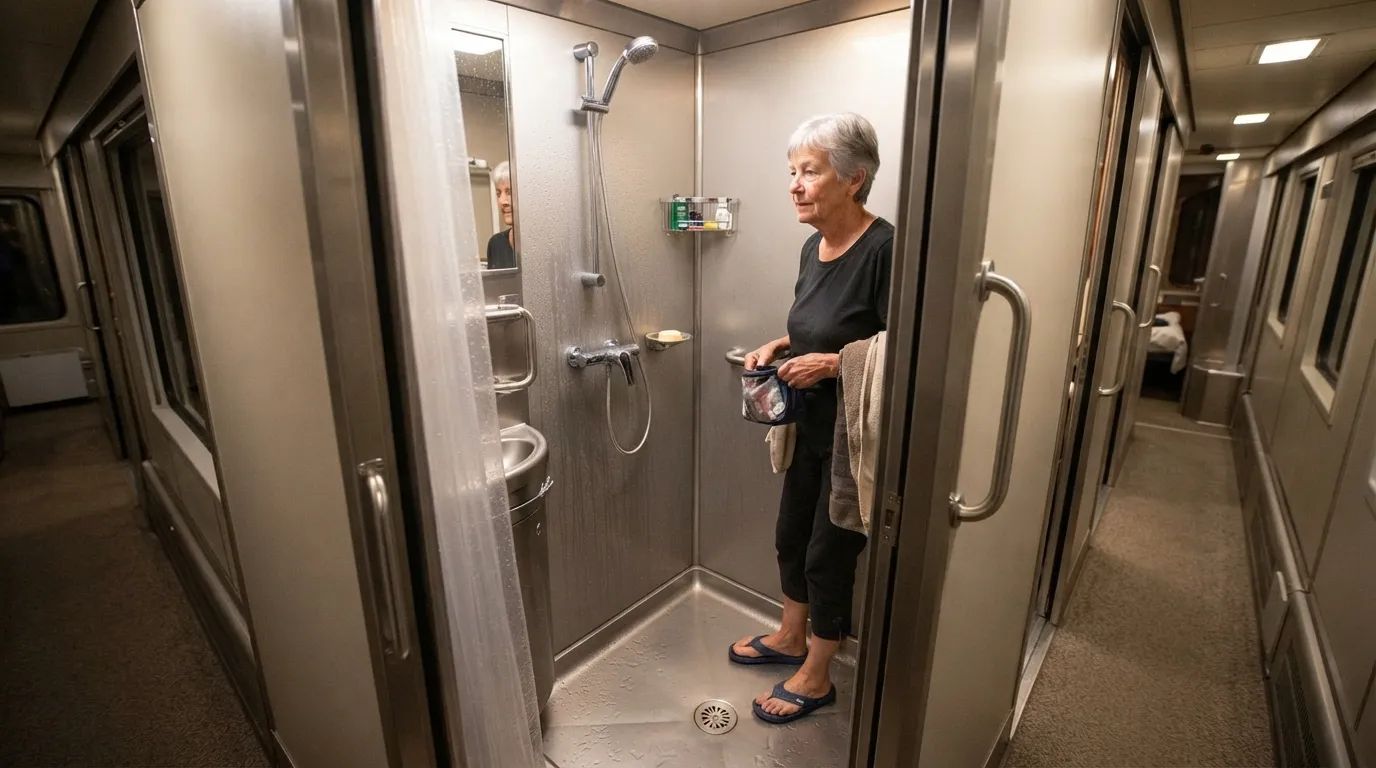
All sleeping car passengers have access to a shower. In a bedroom it is inside the room; in a roomette car it is on the lower level, opposite the vestibule from the stairs.
Keep it short, because the train has limited water. Sandals are useful for the trip to the shower, and there may be a wait before morning arrivals.
On a one-night trip, I would skip the car shower and wash at a lounge before boarding or at the hotel after. The wait, the stairs from an upper-level roomette and the swaying floor make it more trouble than it is worth, though on a longer trip it is a different calculation.
Related Stories From Travelbinger

#3 – Linens, Coffee and Outlets Already in the Room
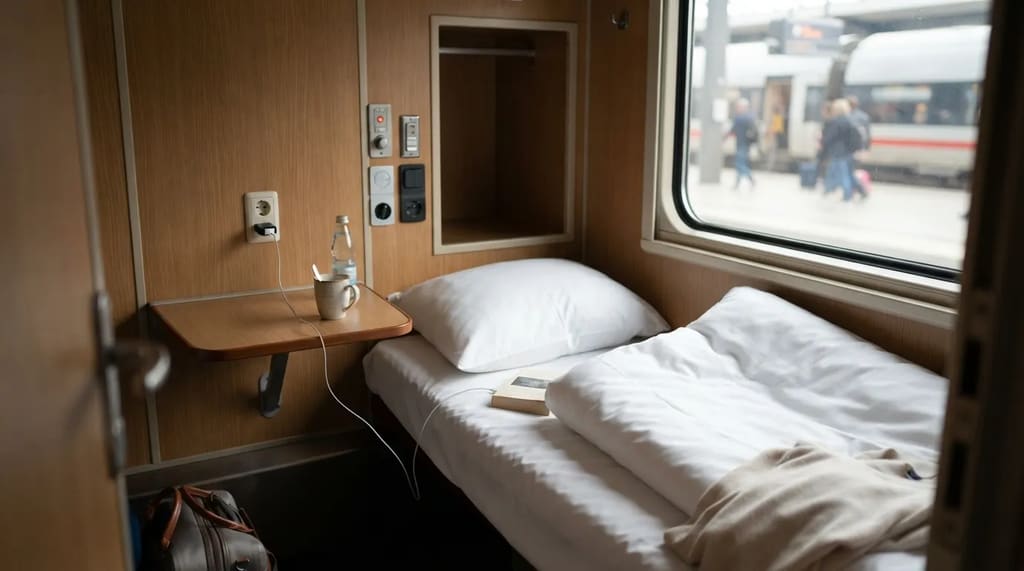
Bed linens and soap are included, as are dining car meals, bottled water, coffee and the attendant’s help. So the carry-on can hold your own clothes and medicine, with no room needed for bedding.
Electrical outlets, climate controls, reading lights, a small closet and a fold-down table are all within reach. A charger with a long cord is worth packing, since the outlet may not be next to where you sit.
- Leave at home: sheets, pillows and bar soap.
- Bring: slippers or sandals, a light sweater, your charger and a book.
The meals, coffee and linens all assume you are aboard long enough to use them, which some itineraries do not allow.
#2 – Boarding After Dinner or Arriving Before Breakfast
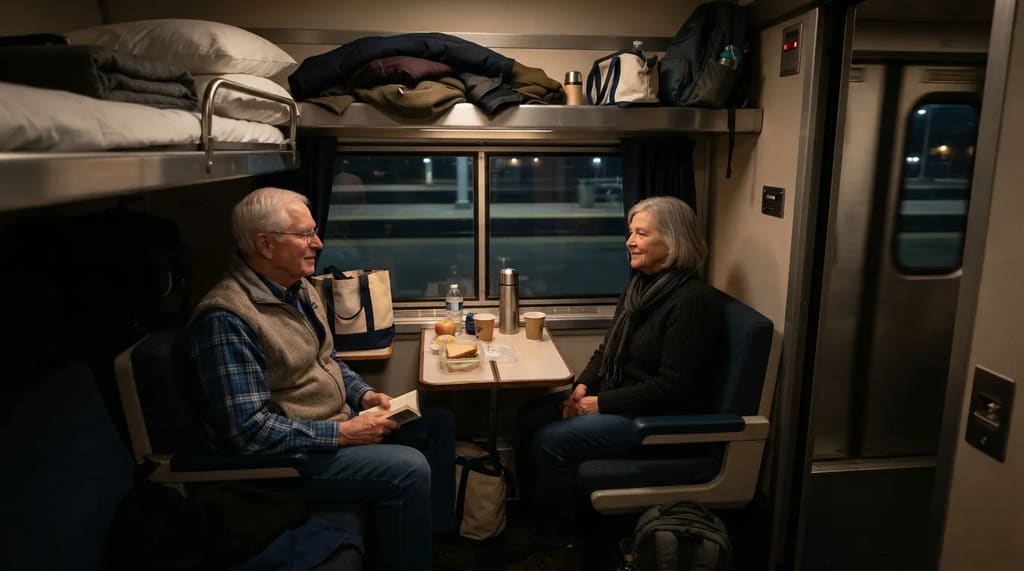
If you board late at night and get off early in the morning, outside scheduled meal times, Amtrak does not provide meals. A short overnight leg can therefore mean paying for a room without getting the dining car that makes the room a good value.
Eat before you board in that case, and carry something for the morning. Every long-distance route has a café car offering takeaway meals, snacks and drinks, so you are not stranded, though you pay for what you buy there.5
Worth Knowing
- Meals are tied to scheduled meal times, not to the hours you hold the room.
- A late boarding and early exit can fall entirely between meals.
- The café car is your backup, and you pay for what you buy.
The dining car hours covered earlier are worth confirming with your attendant at boarding. You can then match your arrival time against the schedule before the train starts moving.
Pricing a sleeper means a train fare plus a separate charge for the room, and the two are not discounted alike.
#1 – The Senior Discount That Skips the Room Charge
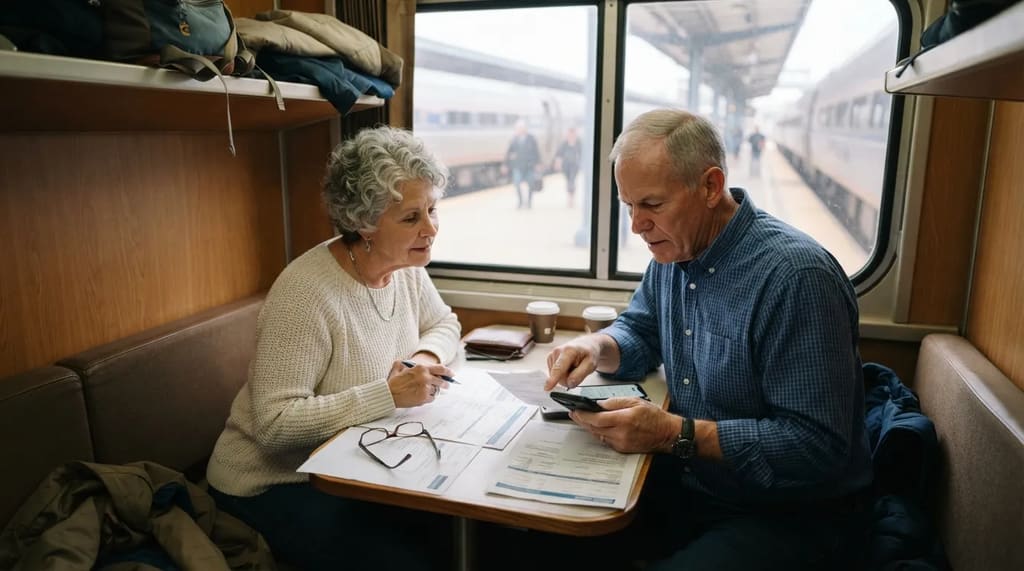
Amtrak’s 10% senior discount applies to the train fare for travelers 65 and older. Its own page states that it does not apply to sleeping accommodation charges.
On a sleeper ticket the room charge is usually the largest line, so the discount touches the smaller part of what you pay. The roomette-versus-bedroom choice from the start of this list moves the price far more than the discount ever will.
Still select Senior when you book, since it costs nothing and applies on its own. Just do not choose a route, a date or a room because of it.
Look back over the list and a pattern shows. The things that matter most are the ones you cannot redo once the doors close: the room, the stairs and the bag you keep beside you. The discount, the shower and the extras can be sorted out later or skipped.
The platform is the last place to fix a problem cheaply, and an attendant is easiest to talk to before the train begins to move. A short list written the week before does most of the work.
If you have slept on a train, what did you wish you had packed in the bag you kept with you?
- Amtrak Superliner Bedroom: https://www.amtrak.com/superliner-bedroom
- Amtrak Baggage Fact Sheet: https://media.amtrak.com/wp-content/uploads/2016/07/Baggage-Policy-Fact-Sheet_2_17_23.pdf
- Amtrak Vacations At the Station: https://www.amtrakvacations.com/trip-planning/at-the-station
- Amtrak Traditional Dining: https://www.amtrak.com/onboard/meals-dining/dining-car
- Long-Distance Amtrak Routes: https://en.wikipedia.org/wiki/Long-distance_Amtrak_routes