
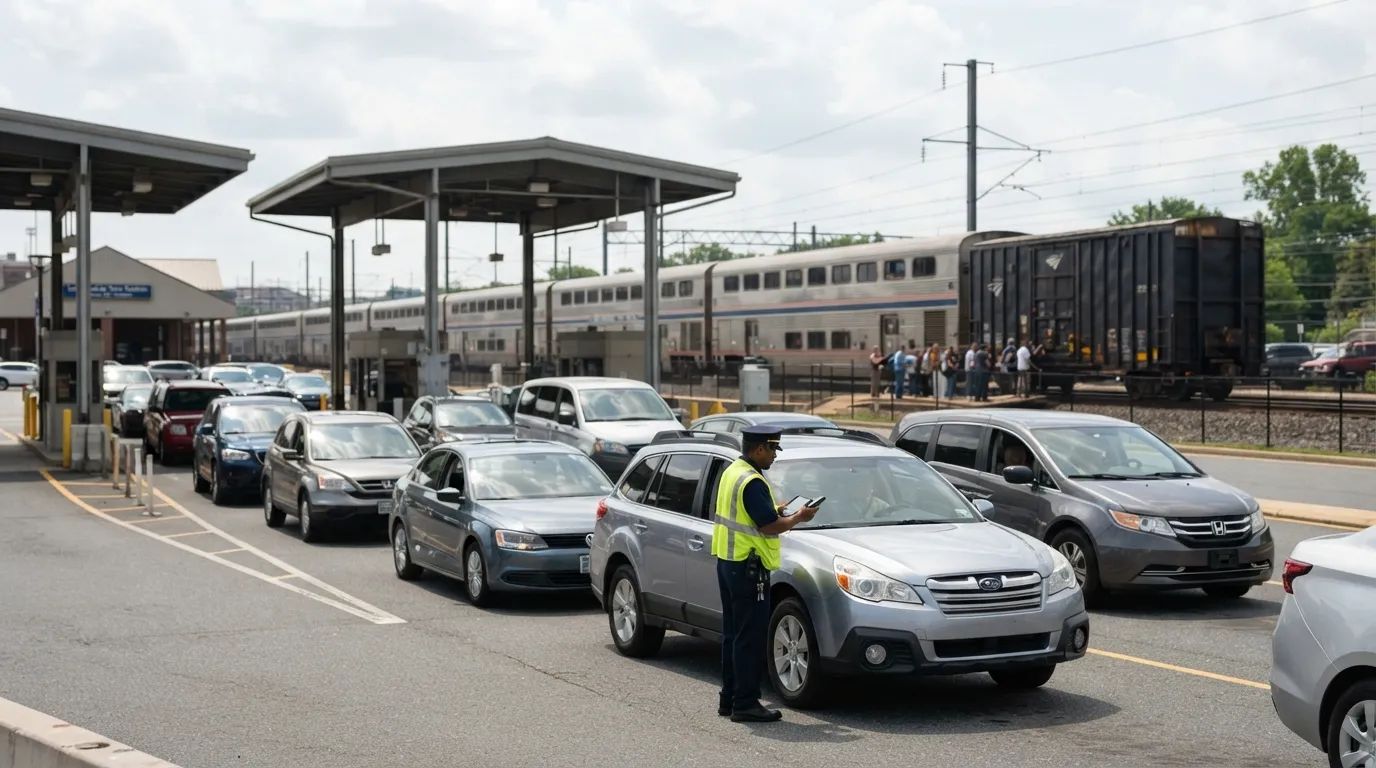
Picture this: you roll out of Virginia at 4:00 p.m., doze through the Carolinas and Georgia, and wake up in Florida. Your own car rides in a separate carrier behind you, locked away until you reach Sanford. That’s the Auto Train, and these 12 lessons are the ones snowbirds usually learn at the station gate, after they’ve already committed.
Some of the rules are small, like where to charge your phone. One is big enough to turn you away before the train even leaves. Stay through #1, because that deadline arrives 90 minutes ahead of departure and has no exceptions. First, the numbers behind the whole trip.
#12 – 855 Miles Overnight With No I-95
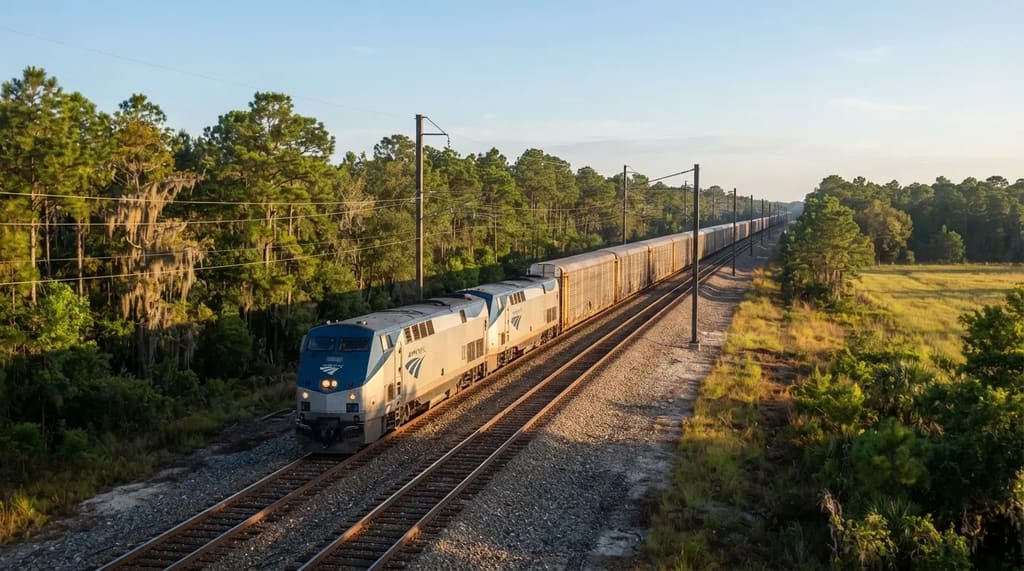
The Auto Train is an 855-mile daily service for passengers and their automobiles, and it runs nonstop. Southbound it leaves Lorton at 4:00 p.m. and reaches Sanford at 8:59 a.m. That’s a scheduled 16 hours and 59 minutes, so you go to sleep in Virginia and wake up in Florida.1
That’s the case for riding it. Amtrak says the train lets you save 900 miles of driving, gasoline and wear and tear on your car, and skip the traffic congestion on I-95.2 Your own car arrives with you, so there’s no rental and no shipper to coordinate.
Fast Facts
- Route: Lorton, Virginia to Sanford, Florida
- Distance: 855 miles, nonstop
- Departs 4:00 p.m., arrives 8:59 a.m.
- Scheduled travel time: 16 hours and 59 minutes
The ticket comes in two parts, a passenger fare and a vehicle fare. Every reservation must include a vehicle. You also load at Amtrak’s own terminal, about 20 miles south of downtown Washington. It isn’t Union Station or any other Amtrak stop.
Prices move with demand, so the figure to compare against a driving trip is the total. That means the passenger fare, the vehicle charge, and whether you choose Coach or a private room.
The overnight part is the easy part. Staying connected on the way is where the brochure promises more than the countryside delivers.
#11 – Free Wi-Fi That Fades in Farm Country
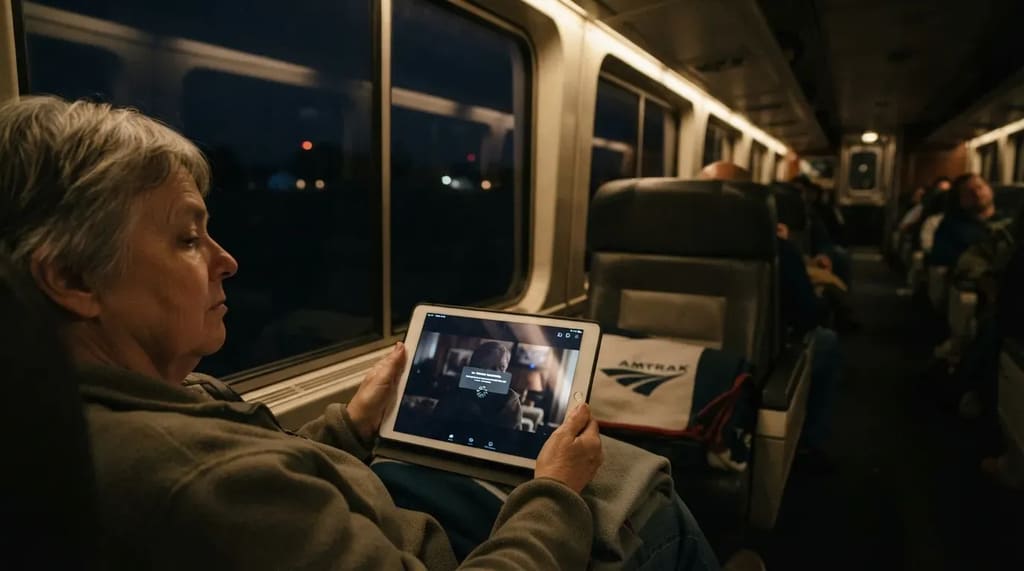
Amtrak advertises free basic Wi-Fi throughout your Auto Train journey, including at the departing station, onboard and on arrival. That’s a real perk. It’s also the one thing on this train you shouldn’t build your evening around.
The reason is geography. Onboard internet depends on cell towers along the route, so speed and availability follow regional coverage. The route crosses long rural stretches in the dark, and reception can be sporadic in the more rural areas.
Treat the Wi-Fi as a bonus and nothing more. Download your movies, crossword apps and e-books at home or while still at the station. A signal that drops at 10 p.m. is a small annoyance if the show is already on your tablet.
The same goes for calls. Tell the family waiting in Florida your arrival time before you leave, since you may be out of touch for stretches.
Once the screen goes dark, the seat has to do the rest of the work, and one detail about where it sits matters if stairs are hard on your knees.
#10 – Coach Seats With No Middle Seat
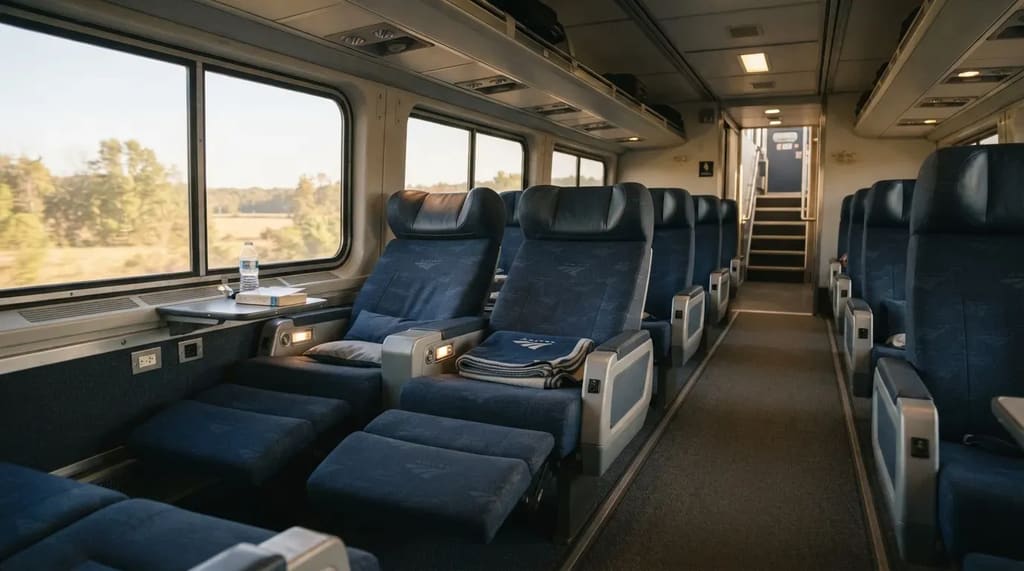
The coach car has a feature airlines gave up long ago. Amtrak describes wide, reclining seats with ample legroom, no middle seat option, and at-seat trays, reading lights and an electric outlet. For one night, that’s a decent bed for a lot of travelers.
The cars are two levels, though, and stairs feel very different at 2 a.m. Request a lower-level seat if stairs bother you. Lower-level seats are on the same level as the bathrooms, which saves a climb in a moving car.
Now the verdict, which you may argue with. If your back or hips complain after a long car ride, skip the coach seat and pay for a room. If you can sleep anywhere, coach is a fair trade for a single night, and the money you save buys a better first Florida dinner.
Either way, around suppertime the train sorts passengers into who eats for free and who pays, and it depends entirely on which ticket you bought.
#9 – Dinner Is Free Only If You Sleep
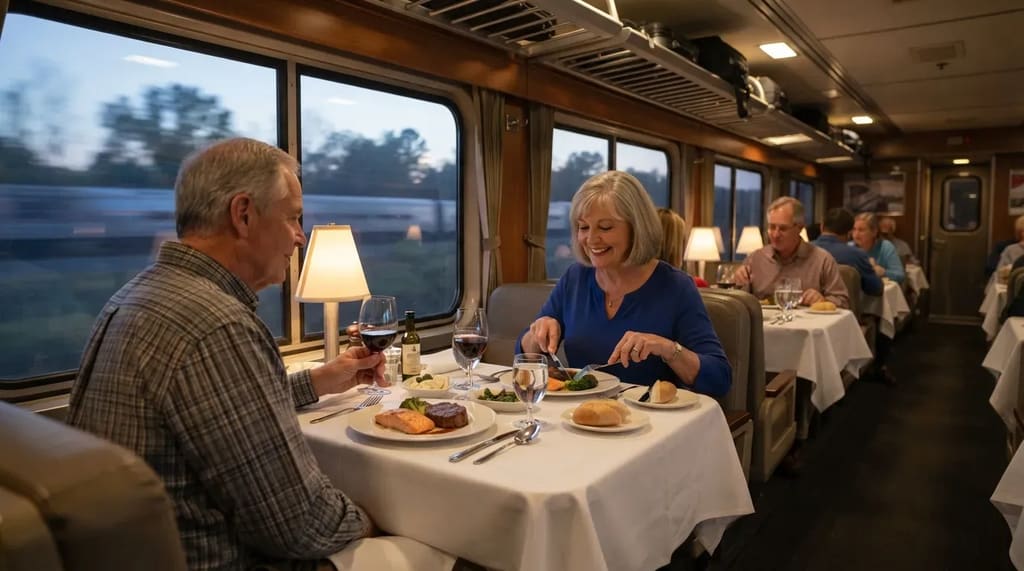
On this train the ticket decides the meal. Sleeping car customers receive a complimentary dinner with a wide menu selection and a complimentary wine pour. Coach customers can buy meals, snacks and beverages in the Cross Country Café.
Dining-car seatings fill in a pattern. The rail-travel guide On Track On Line reports two or three seatings, typically at 5:00, 7:00 and 9:00 p.m. It also advises checking in by 1:00 p.m. for the best choice of seating.
Coach riders have a third option, and it’s a smart one. You may bring your own food and drinks aboard. Amtrak can’t store or heat it, so a packed dinner that needs neither beats standing in a café line with a tray.
Breakfast is simpler. Amtrak says coach customers get a complimentary continental breakfast before arrival.3 Menus change, so confirm what’s offered when you book.
Wine with dinner is one thing. The bottle packed in your luggage follows a different rule, and your ticket type decides that one too.
#8 – The Bottle You Packed Stays Corked
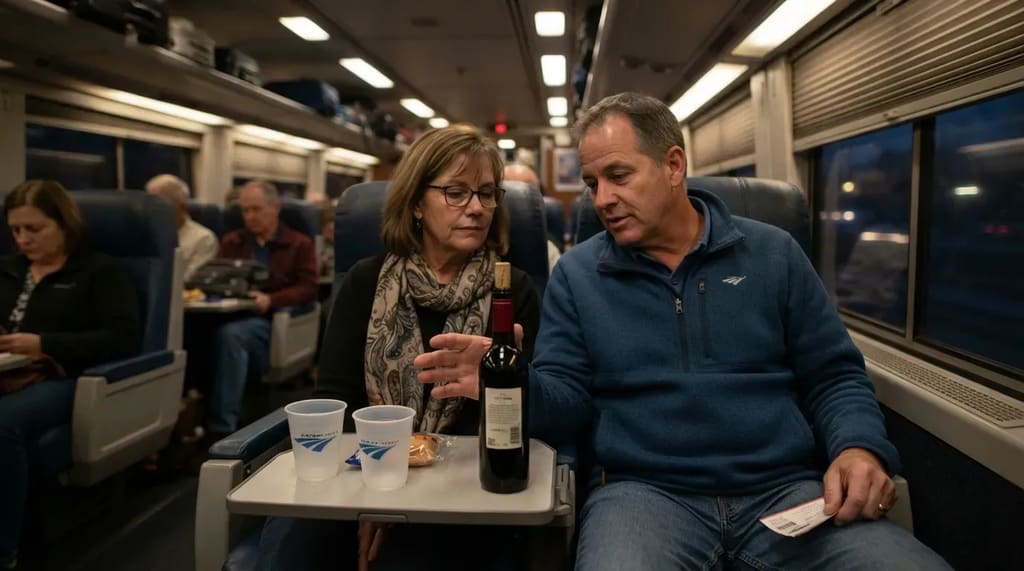
Bringing your own alcohol sounds simple until you read the fine print. Alcohol you carry on board may be consumed only in a sleeping accommodation. Coach passengers are told to leave it in the car.
That second part settles it for coach riders, since the car isn’t reachable until morning. Your vehicle is not accessible during the trip, so a bottle stowed in the trunk simply waits for Sanford. The celebratory toast moves to the hotel or the new rental.
Only private-room passengers can open their own bottle, and only inside the room. Everyone else can buy a drink from the lounge, where the café area sells soft and alcoholic drinks until late in the evening. Policies like this can change, so confirm when you book.
Quick Compare
- Coach: buy dinner in the café, keep your own bottle in the car, continental breakfast before arrival
- Private room: complimentary dinner with a wine pour, your own bottle allowed inside the room, hot breakfast
- Boarding: room customers get priority boarding
#7 – Why the Family Dog Stays Home
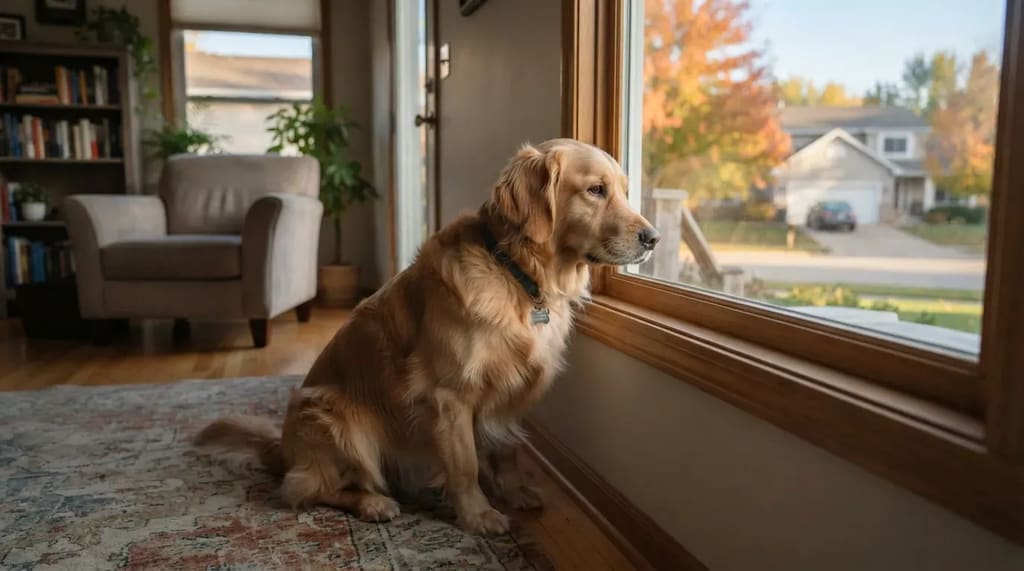
A train that carries cars sounds like it would carry pets. It doesn’t. No pets are permitted on board, with the sole exception of service dogs clearly assisting a passenger with special needs. If you rely on a service animal, ask Amtrak about it before you book.
The obvious workaround fails too. Never leave a pet in the car. The auto carriers can be frigid in winter and steamy in summer, and you couldn’t get back to the vehicle for the whole trip.
So here’s the plain conclusion: if a dog or cat is part of your household’s winter move, the Auto Train is off the table for that trip. That’s the one case where driving wins, because no packing trick fixes it.
Everyone else gets to pack, and the rule there is blunt. Whatever you need that night had better not be in the trunk.
#6 – The Carry-On Is Your Only Luggage
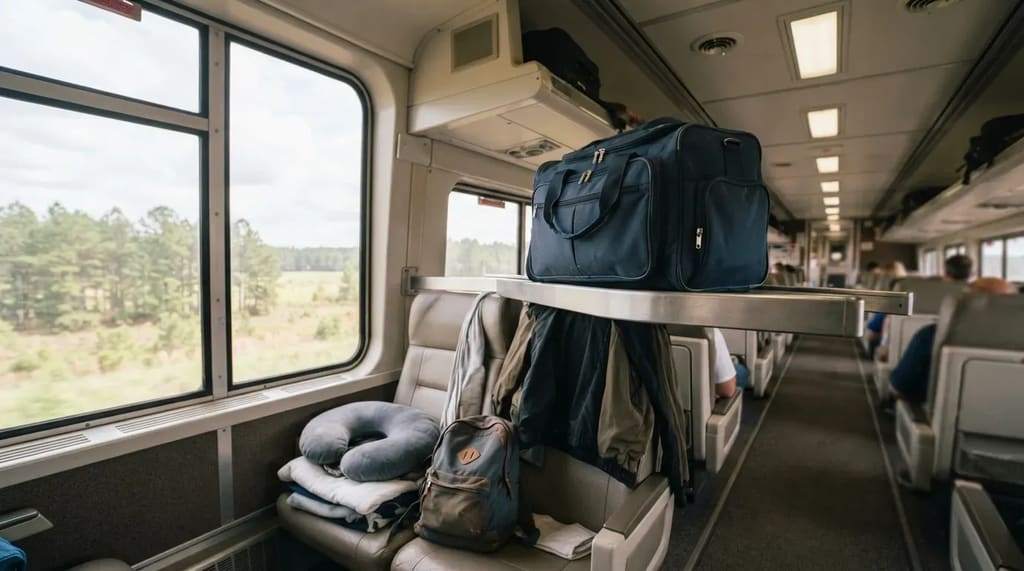
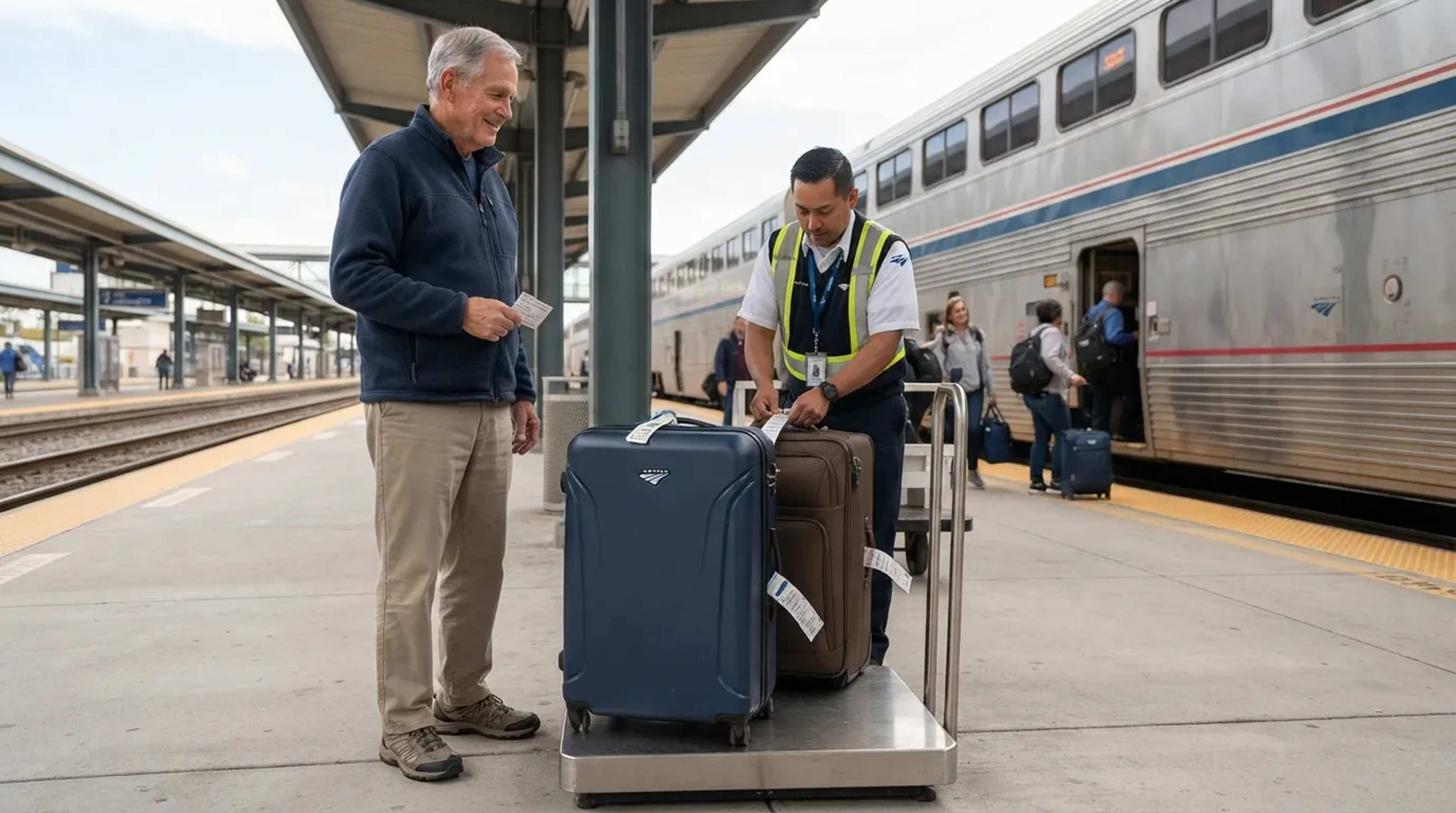
There’s no baggage car on this train. You can’t access your car during the journey, and the Auto Train has no checked-baggage service.4 Your trunk is sealed from the moment you hand over the car until you’re back at the Sanford station.
So the carry-on is your whole overnight kit. Sources agree on the essentials: medication, phone chargers and a change of clothes. Add your glasses and anything that keeps you comfortable, and remember the downloaded shows from #11.
Pack medication, chargers and a change of clothes in the bag you carry aboard. If you use a scooter or wheelchair, Amtrak specifies a 30-inch maximum width on the Auto Train, with further limits to confirm in advance.
Arrival brings its own surprise. The train stops, but your trunk doesn’t reopen right away.
#5 – Arriving at 8:59 Doesn’t Mean Leaving at 9:00
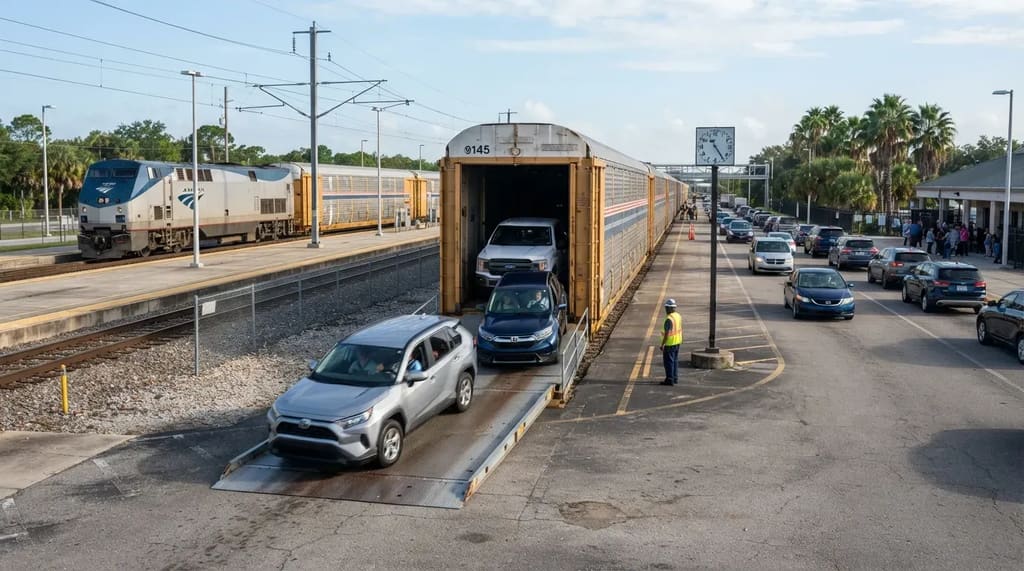
The train is scheduled in at 8:59 a.m., but your car is somewhere behind you in a long line of carriers. Vehicles unload in the order they were checked in, and one guide’s estimate is that standard offloading can take an hour or more. Amtrak’s route can carry up to 340 vehicles.
There’s a paid shortcut. Priority Offloading is an add-on booked in advance that moves your car near the front. It comes with a catch: Priority Offloading vehicles must check in by 2:00 p.m., a half hour earlier than the 2:30 cutoff for standard cars.
Whether to pay depends on your morning. If a hotel check-in, a rental office or a long drive to a house in The Villages is waiting, buy it. If your day is open, waiting with free Wi-Fi, which Amtrak says is available on arrival, and your leftover continental breakfast costs you nothing.
Before any car makes it that far, someone checks what’s strapped to the roof, and that list is longer than most snowbirds expect.
#4 – The Roof Box Has to Come Off
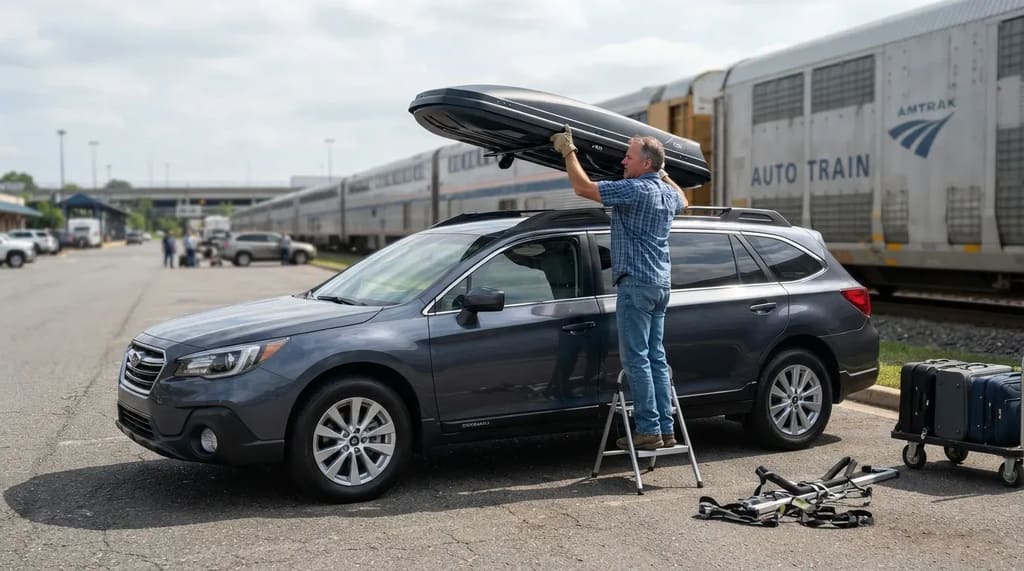
The cargo carrier that stays on your SUV all winter can’t ride. Under Amtrak’s carriage terms, roof-mounted luggage and bicycles must be removed. Factory roof racks must remain empty. That means the box, the kayak cradle and the bikes all come down before check-in.
Rear-mounted racks get a different answer. Rear-mounted bicycles follow separate acceptance rules, and Amtrak requires a waiver and applies size rules. The practical point is that a rear rack with bikes adds feet to your car.
Roof luggage and bikes must come off, and factory racks must ride empty. The 192-inch standard limit is measured including racks, and a hitch rack can push you into a pricier category.
At a Glance
- Roof boxes, luggage and bikes: removed before check-in
- Factory roof racks: allowed only if empty
- Rear-mounted bikes: waiver and size rules apply
- Standard length limit: 192 inches, racks included
That brings up the number where the bill changes, and it’s measured in feet, not dollars.
#3 – Two Feet of Truck Means a Second Space
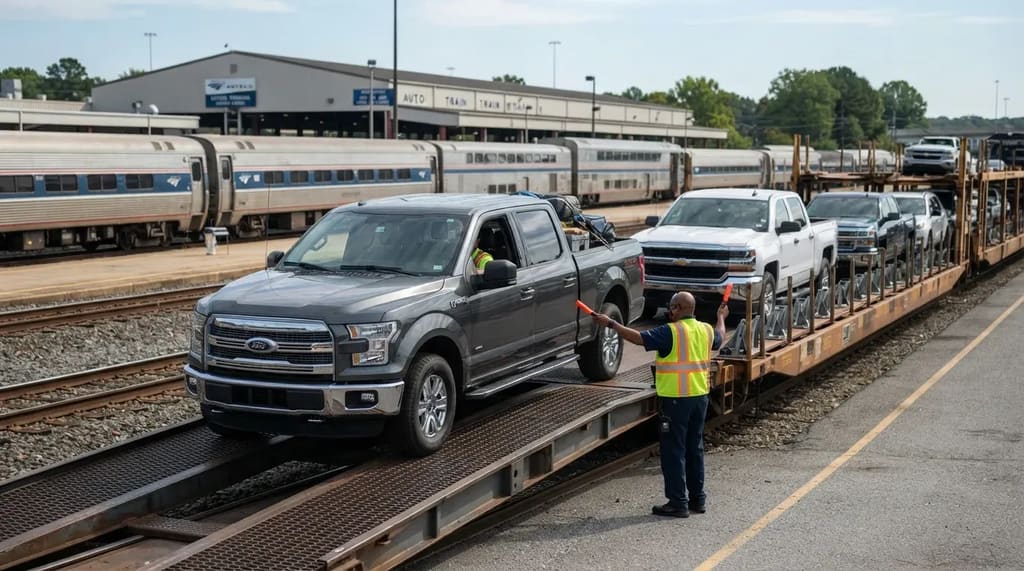
Amtrak sorts cars by length. Standard vehicles can be up to 192 inches long and extended vehicles up to 216 inches, which is 16 feet and 18 feet. Past that line, the booking changes completely.
Any vehicle over 18 feet needs a second space and extra payment. Amtrak lists the Ford F-150, Ford Excursion, Chevrolet Silverado and Chevrolet Suburban as examples that qualify as oversize.5 Those are the trucks and big SUVs snowbirds actually drive.
Related Stories From Travelbinger
The process also isn’t a few clicks online. Oversize bookings are handled by phone. If you’re in this group, make the call before you plan the rest of the trip, because oversize cars also have the earlier 2:00 p.m. deadline you saw in #5.
Length gets the attention. Width is the measurement that can stop a car at the gate, and the culprit is often a side mirror.
#2 – Mirrors Can Decide Whether You Ride
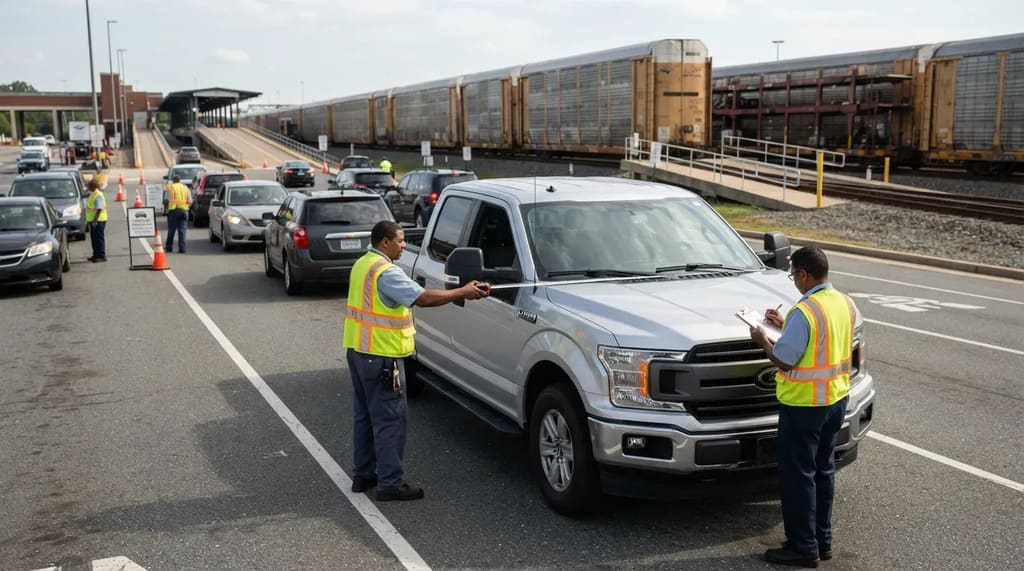
Here’s the hard stop. Vehicles wider than 84 inches, or 7 feet, cannot be accommodated, and that includes the side mirrors.6 A pickup that looks narrow in the driveway can fail on its mirrors alone.
There’s a fix if you know about it. If the mirrors push the vehicle past 84 inches, at least one must be removed before loading.6 Do the measuring at home with a tape, so you aren’t learning what you needed in a staging lane.
The width limit is 84 inches, mirrors included. Amtrak also lists a maximum height of 85 inches, ground clearance of at least 4 inches, and a maximum tire width of 14 1/2 inches for standard vehicles. Some designs are simply refused: dual-wheel vehicles and cars with gull-wing or scissor doors.6
Even a car that clears every tape-measure test can still be turned away, and the reason this time is on the clock, not the ruler.
#1 – Your Car’s Deadline Comes Before the Train’s
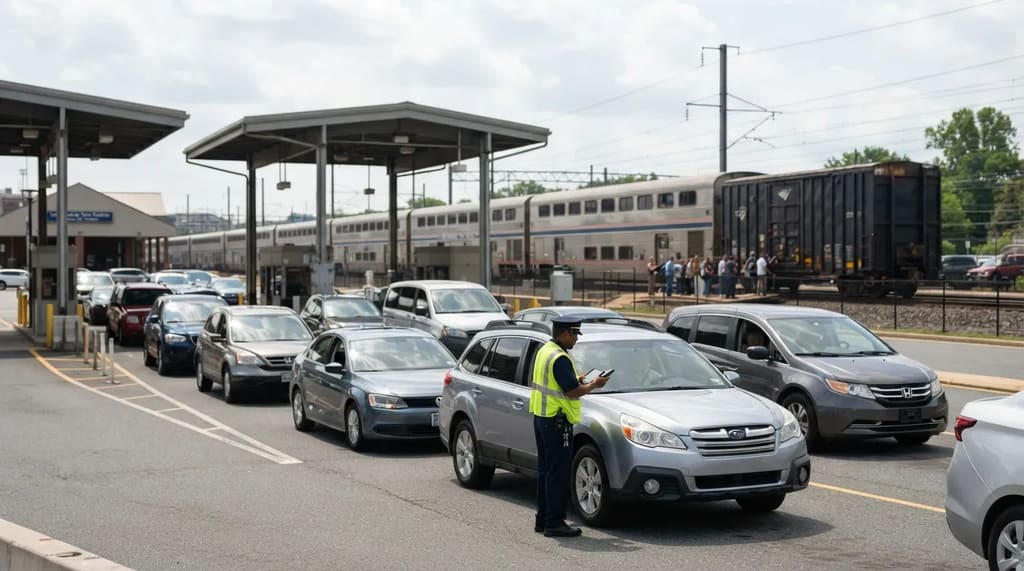
The train leaves at 4:00 p.m., but your car is due earlier, and Amtrak says exceptions cannot be made.4 That makes this the costliest mistake on the list, because every other item here can be dealt with at the station. This one can’t.
Check-in opens at 11:30 a.m. and ends at 2:00 p.m. for oversize vehicles, motorcycles, trailers and Priority Offloading vehicles. It ends at 2:30 p.m. for all other standard and extended vehicles.6 Standard cars check in by 2:30 p.m., 90 minutes before departure.
The consequence is spelled out in plain terms. A late arrival can mean missing your booked departure entirely. That would put you back on the 855-mile drive you paid to skip, in a car you just spent the morning packing and measuring.
So treat 2:30 as the time you pull up to the gate, not the time you leave home. Lorton sits on the southern edge of the Washington commuter zone, and a Friday-afternoon crawl on the way in can cost you more than the whole trip saves.
Read the list again and a pattern shows. The seat is the easy part. Nearly every rule, from the roof rack to the mirrors to the 2:30 gate, is really about the car, and the car is the passenger the train cares about most.
Start with the vehicle’s size, rack and deadline, then pick the seat and the dinner. By the time you board, the part you’d have worried about is already handled, and the night is yours.
If you couldn’t reach your trunk for 17 hours, what’s the one thing you’d make sure was in your carry-on?
- Auto Train Route Overview: https://www.a1autotransport.com/amtrak-car-transport/
- Amtrak Vacations Auto Train: https://www.amtrakvacations.com/trip-planning/auto-train
- AOL Auto Train Overview: https://www.aol.com/articles/855-mile-train-connects-washington-111500000.html
- Amtrak Auto Train Experience: https://www.amtrak.com/auto-train-experience
- Amtrak Vacations Check-In Requirements: https://www.amtrakvacations.com/trip-planning/onboard-experience/auto-train/vehicle-check-in-requirements
- Amtrak Vehicle Requirements: https://www.amtrak.com/auto-train-boarding-and-vehicle-requirements