
Ohio will let you log as many as 212 contact periods back home and still treat you as a non-resident.1 2 That’s far looser than the six-months-and-a-day rule many first-timers pack into the car with the golf clubs. It’s also why this list exists. The mistakes that cost Ohioans real money in Florida are rarely about miles or months. They come down to paperwork, dates and one stray address.
These twelve rules count down from road and storm basics to the tax traps. The one waiting at #1 carries the steepest penalty on the list, and it starts with a form plenty of people file in perfectly good faith. First comes the rule you’ll meet on your very first drive south.
#12 – Cashless Tolls and the Move Over Ticket
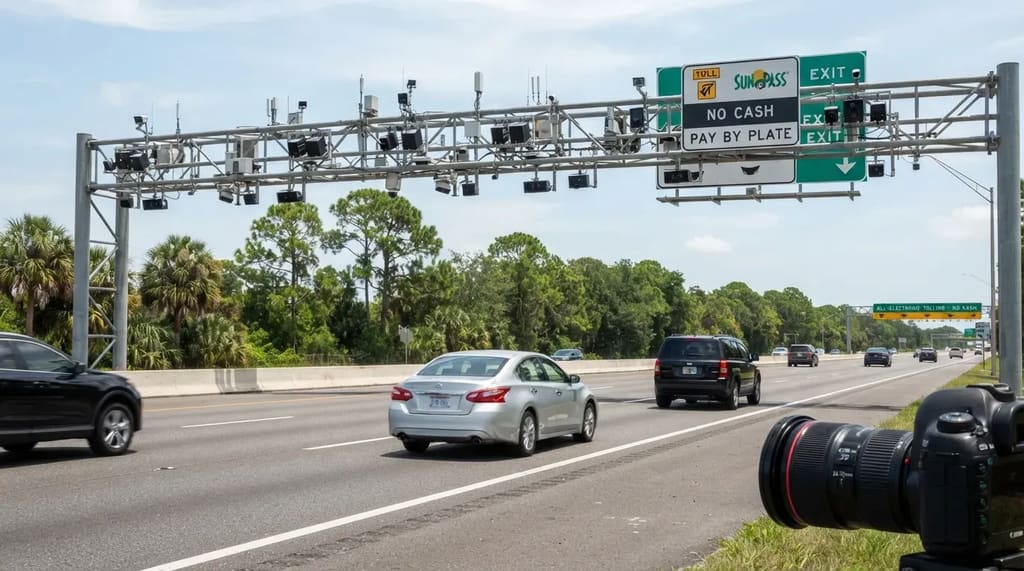
Plenty of Florida toll roads take no cash at all. A camera reads your plate and sends the bill to the address on your registration, sometimes with an added fee. For an Ohio snowbird, that invoice can land in a mailbox back home weeks after you’ve forgotten the trip. Before the first long drive, set up a toll account that covers the roads you’ll use, with your plate and a current card on file.
Florida’s Move Over law works much like Ohio’s, with one habit to build. When you see a stopped emergency vehicle, tow truck or utility crew with flashing lights, change lanes if it’s safe, and slow down if it isn’t. Texting while driving is also a primary offense in Florida, so an officer can stop you for it alone, and handheld phone use is restricted in school zones and work zones.
Fast Facts
- Many Florida toll roads are cashless, and cameras read your plate.
- Unpaid tolls are billed to your registration address, which may be your Ohio mailbox.
- Near flashing emergency or utility vehicles, move over if it’s safe and slow down if it isn’t.
- Texting while driving can get you pulled over on its own.
Once the car is sorted, the bigger exposure is the house you leave behind, and its riskiest months fall while you’re back in Ohio.
#11 – The Empty Florida Home in Hurricane Season
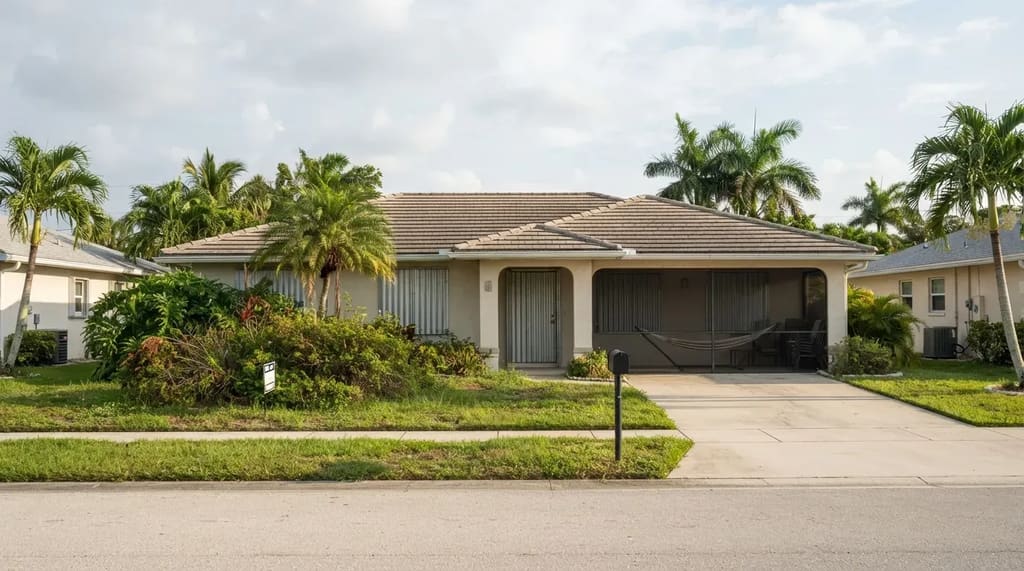
Atlantic hurricane season runs from June 1 through November 30, so the months your Florida home is most exposed are the months it’s most likely to be empty. You’ll probably be hundreds of miles away when a storm arrives, and nobody will have checked the roof, the shutters or the patio furniture. A neighbor or paid property manager with a key and a written storm checklist matters as much as the shutters do.
Insurance adds a second surprise. Many Florida homeowners policies apply a separate hurricane deductible, often figured as a percentage of the insured value rather than a flat dollar amount. A cheap-looking policy can leave you paying thousands before coverage even starts. Ask your agent to state that deductible in dollars for your house, and ask what the policy says about a home left unoccupied for months.
Wind is only half of a storm bill. The other half is damage that no standard homeowners policy covers, and that can’t be bought at the last minute.
#10 – The 30-Day Wait That Leaves Flood Coverage Out of Reach
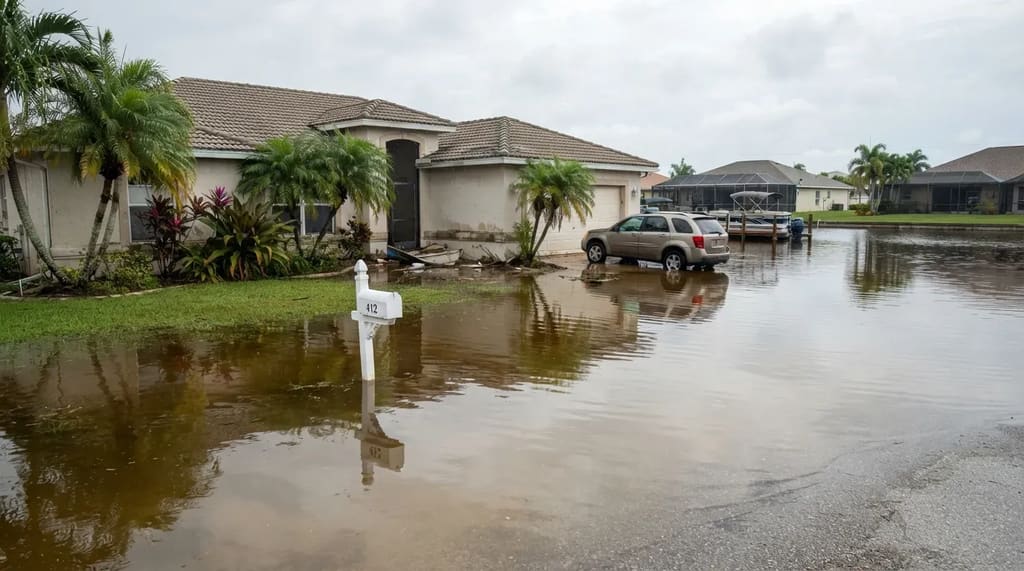
A standard homeowners policy typically excludes flood damage, and rising water from storm surge or heavy rain counts as flood. That coverage is sold separately, through the National Flood Insurance Program or private insurers. A new federal flood policy generally takes 30 days to start.3 So you can’t buy it once a storm is already named, because the policy won’t be in force when the water arrives.
Floods also happen outside the mapped high-risk zones. Lenders require flood insurance only inside those zones and only when there’s a mortgage, so a paid-off house or condo may carry no coverage and no reminder.3 Price a flood policy anyway, even if no lender asks for one. The premium is a known number, and the repair bill after a flood isn’t.
Insurance is something you choose. The next deadline is set by Florida, and one of its triggers is a number of months you may already be approaching.
#9 – The License Clock and the Six-Month Line
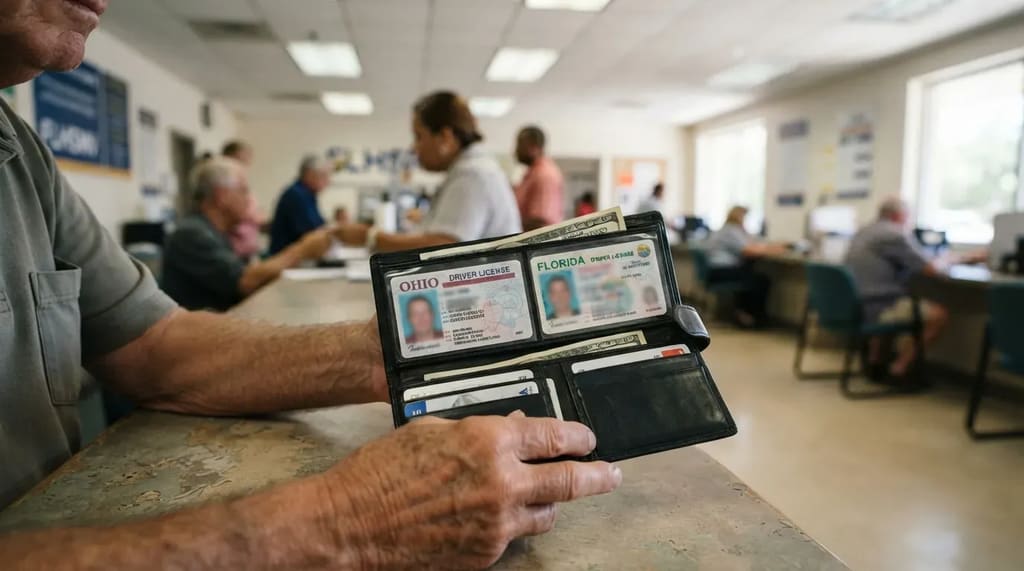
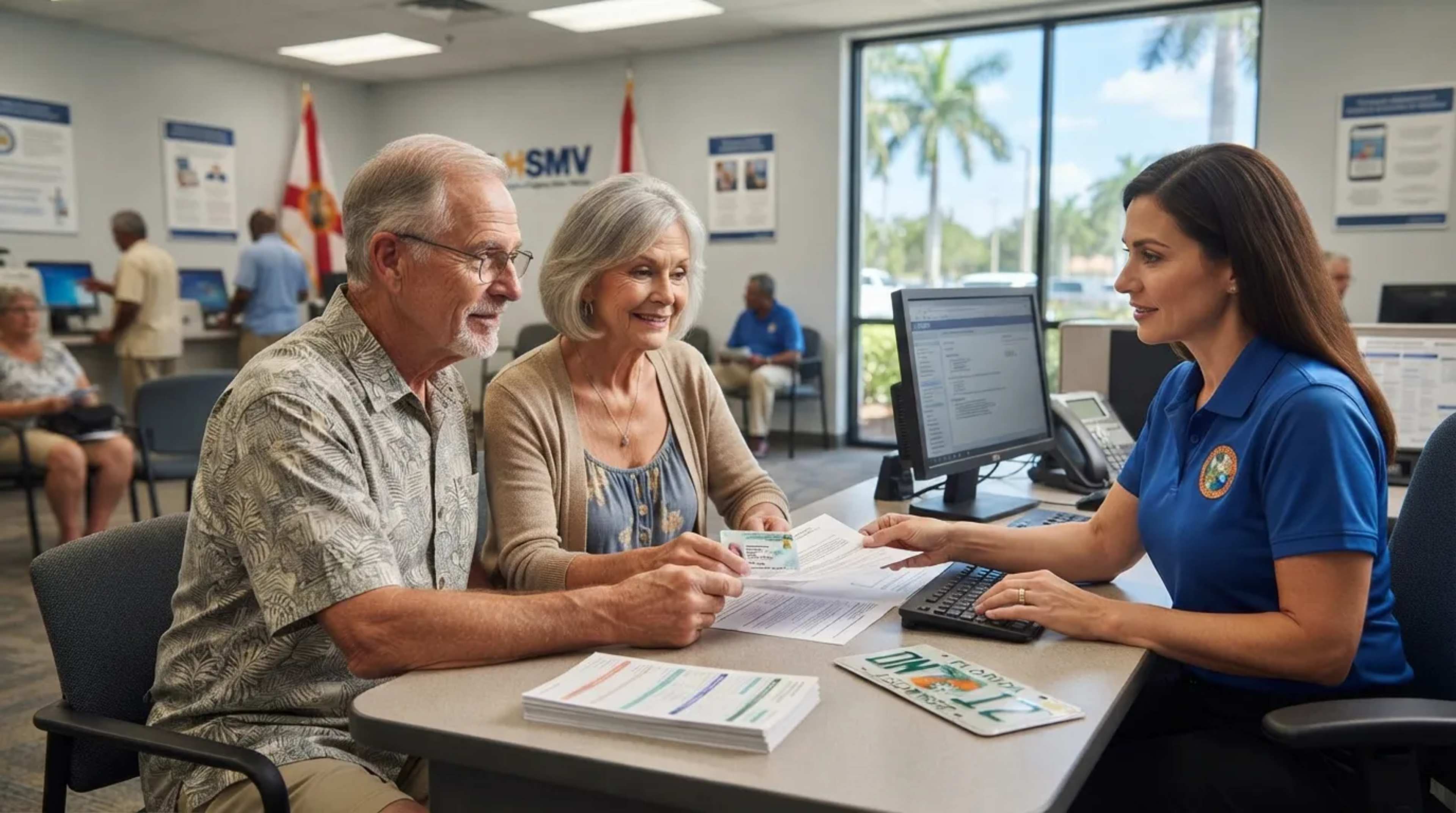
Florida’s highway safety department says you must get a Florida license within 30 days of becoming a resident.4 Its visitor FAQ counts you as a resident if you enroll children in public school or live in the state for more than six consecutive months.4 A seven-month winter, then, isn’t just a long vacation by the department’s definition. Snowbirds who keep a residence elsewhere generally don’t have to switch, but a stay that stretches past six months is the moment to ask the department first.
The card in your wallet is also a tax document. Advisers who explain Ohio’s non-resident safe harbor list not holding a valid Ohio driver’s license among its conditions, so keeping the Ohio license can undercut an otherwise tidy Florida story. The same card can cut the other way, because a Florida license is one of the first things a property appraiser asks to see when you claim homestead. Check with a tax professional before you renew or surrender either one.
At a Glance
- 30 days: the window to get a Florida license once you become a resident.
- Six consecutive months: the department’s visitor FAQ treats a longer stay as residency.
- Public school enrollment: enrolling children also counts you as a resident.
- Two-way card: an Ohio license can complicate the Ohio tax story, and a Florida one supports homestead.
#8 – The Car That Never Goes Home
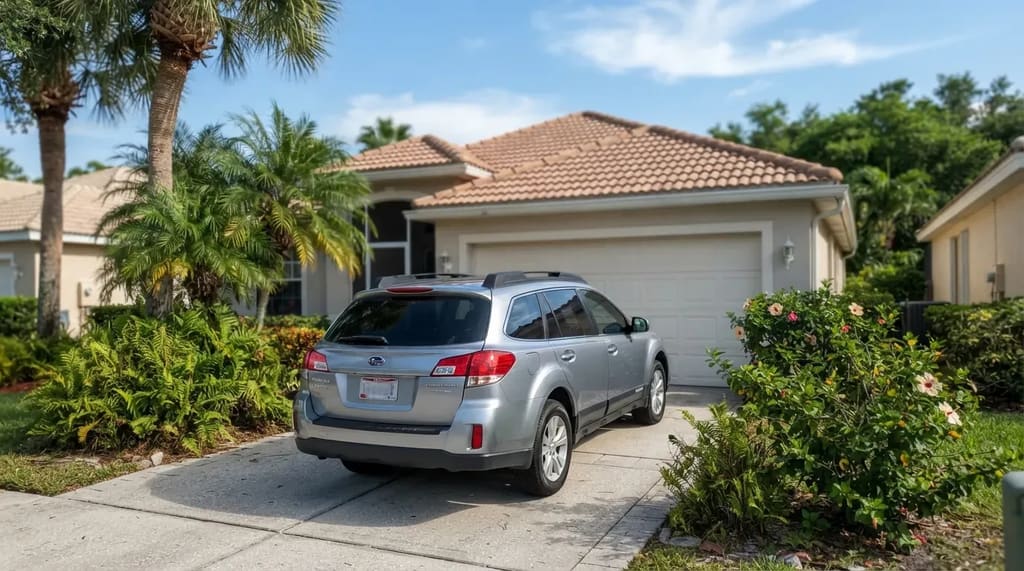
Someone permanently moving to Florida needs to update the vehicle registration within 10 days.5 A person who keeps a primary residence elsewhere is technically not a Florida resident, so that clock doesn’t apply. Most snowbirds drive home with Ohio plates for exactly that reason. The rule only gets complicated when the vehicle’s pattern changes.
The case that draws questions is a vehicle that stays in Florida year-round, even while you’re back home. A car that never leaves Florida invites a residency question. If you do register it, Florida wants the garaging address and proof of a Florida car insurance policy. That means the car’s registration and its insurance change together, and the registration becomes one more record that says “Florida” about you.
The next rule involves a building rather than a car, and its age decides how large a future bill could be.
#7 – The Condo Birthday That Triggers an Inspection

Florida now requires milestone inspections for residential condo and co-op buildings three or more habitable stories tall. The first is generally due by December 31 of the year the building turns 30, or 25 years if it sits within three miles of the coast.6 Follow-up inspections come every 10 years. Thirty years inland, 25 near the coast, then every decade. A tower finished in 1996 reaches its 30th birthday in 2026.
Here’s the verdict: the building’s age matters more than the granite countertops or the lanai view. A newer building may be years from its first inspection, while an older one may already have a report with a repair list attached. Ask for the certificate-of-occupancy year before you fall for the unit.
An inspection that finds problems sends the invoice to the owners, and the way Florida lets associations collect that money has changed.
#6 – The Reserve Fund That Turns Into a Bill
Florida’s reserves law requires associations in buildings three stories or taller to fully fund reserves for items such as the roof, structure, electrical, plumbing and windows. That sounds like good news for owners, and in the long run it is. But boards that waived reserves for years now face a statutory deadline with empty accounts, and the gap has to come from somewhere.
That somewhere is often you. Florida condo boards can levy special assessments for what the budget doesn’t cover, with no dollar cap in most cases. Unpaid assessments can accrue interest and late fees and lead to a lien or foreclosure. A building flagged by the milestone inspection in #7 is the likeliest place for this to happen. If you’re in Ohio when the notice goes out, a missed envelope is still your problem.
You can see much of this before you sign anything, if you know which documents to request.
#5 – Four Documents to Read Before Buying
The July 2025 update added website requirements for condo associations, covering the declaration, bylaws, rules, a list of current contracts and milestone inspection reports. For a buyer in Ohio, that means a lot of homework can be done from the kitchen table. Associations must also describe in their financial statements how they’re funding structural reserves, which tells you whether the plan is steady contributions or a future bill.
Worth Knowing
- Look for the declaration, bylaws and rules on the association’s website.
- Check the list of current contracts for ongoing costs.
- Read the financial statements to see how structural reserves are being funded.
- Find the milestone inspection report, plus any pending or planned special assessments.
A buyer’s checklist should also include any pending, planned or recently completed special assessments, and the milestone inspection report, including Phase Two if one was triggered. Ask for the milestone report and any planned assessments before you make an offer. An evening with those two documents is worth more than any number of showings, because pools and elevators don’t tell you what the engineer found.
With the property side covered, the tax side starts with a number that’s bigger than most Ohioans expect.
#4 – Why 212 Beats Six Months and a Day

Ohio counts contact periods, not months. A contact period is any two consecutive days when you’re away overnight from your out-of-state residence and spend part of both days in Ohio. Someone arriving Monday and leaving Tuesday has one such period, not two. A quick trip home for a holiday or a doctor’s appointment therefore adds fewer days to the count than you might fear.
In 2015, Ohio raised the number from 182 to 212. The Ohio limit is 212 contact periods, up from 182 in 2015. Older articles and forum posts that still cite 182 describe a prior version of the law. That’s roughly seven months’ worth of overnights, a generous margin for a typical winter. Even so, hitting the number is only half of the test.1
#3 – The October 15 Form That Makes It Official

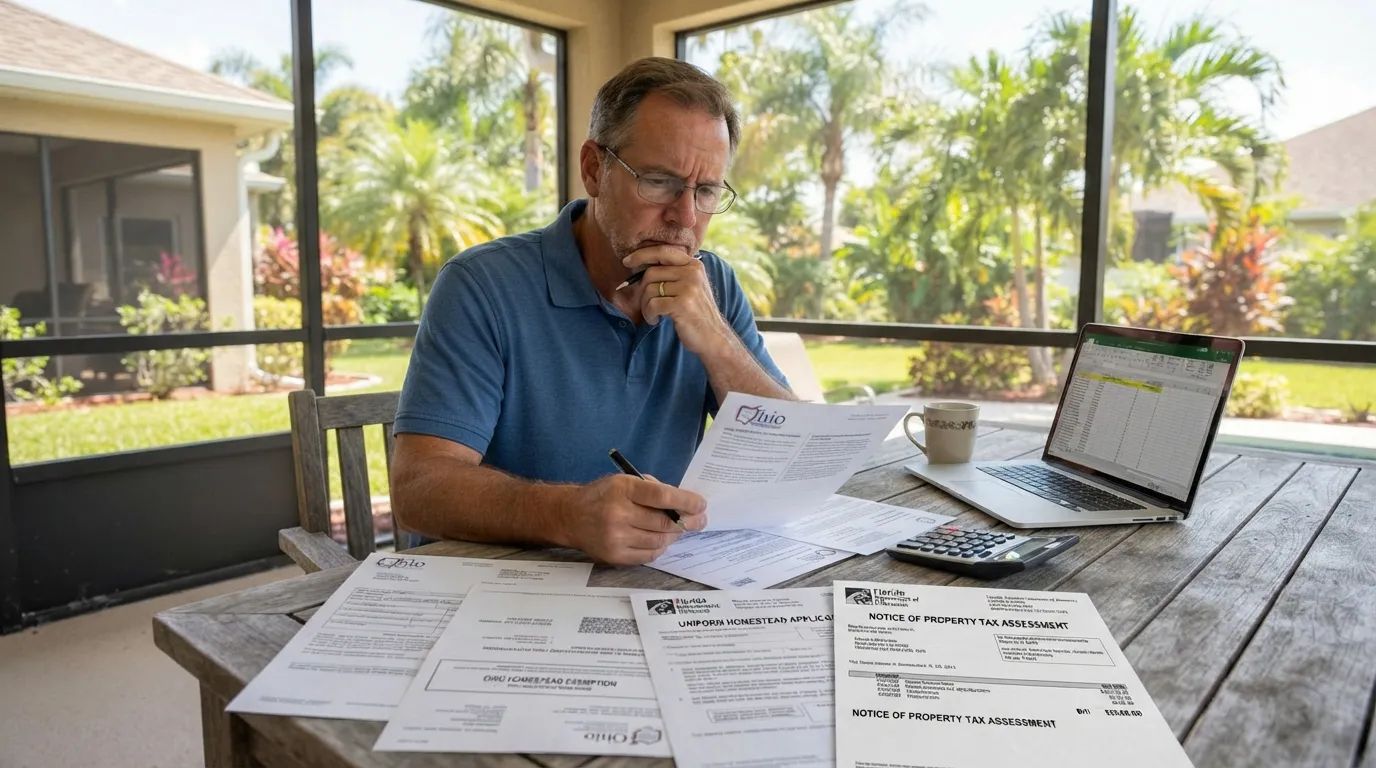
To claim the bright-line safe harbor, you must file the Affidavit of Non-Ohio Residency/Domicile, Form IT DA, with the Ohio Department of Taxation by October 15 following the tax year.7 File Form IT DA by October 15 after the tax year. The day count alone doesn’t do the work. The conditions also include owning at least one non-Ohio home for the entire year, not claiming an Ohio homestead or owner-occupied tax reduction, and not receiving in-state college tuition.
The verdict: if you’ve been counting on your 212-day margin and haven’t filed the affidavit, you’ve done the easy part and skipped the part that counts. Even a timely filing doesn’t end the matter. The Department of Taxation can still challenge a taxpayer’s claim, including the accuracy of the statements in the affidavit, so every answer on the form should match your records.
Related Stories From Travelbinger



The affidavit speaks to Ohio. Florida has its own proof requirements, on its own calendar, and the key date comes well before April.
#2 – Florida’s January 1 Homestead Cutoff
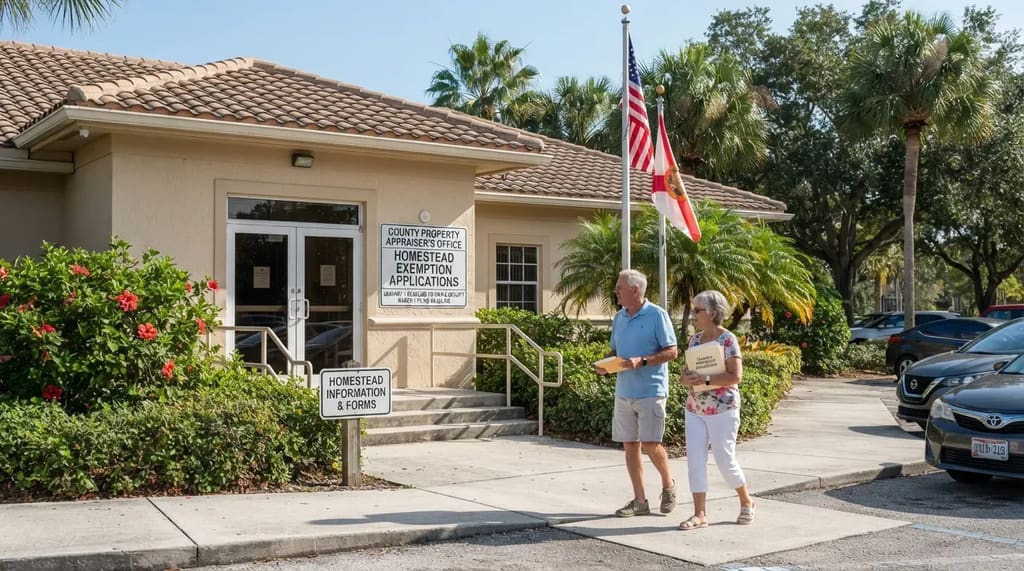
To qualify, you must own and occupy the property as your permanent Florida residence as of January 1 and file the application no later than March 1.8 Own and occupy on January 1, then apply by March 1. Buying in February means you can’t claim the exemption until the following January 1. The savings come with a long-term benefit too: the Save Our Homes cap limits annual assessment increases to 3% or the Consumer Price Index, whichever is lower.8
Quick Compare
- Ohio: stay within 212 contact periods and file Form IT DA by October 15 after the tax year.
- Florida: own and occupy on January 1, then file the homestead application by March 1.
- Both: each state wants proof on paper, not just your word about where home is.
Snowbirds often find the catch in the word “permanent.” Temporary occupancy, seasonal residence or an intent to move later in the year generally doesn’t satisfy the legal standard. Property appraisers typically ask for a Florida license or ID, Florida vehicle registration, voter registration if you’re registered, and Social Security numbers. That’s the license from #9 and the car from #8 again, now serving as evidence. Claiming homestead means committing to Florida as your home.
Claiming homestead correctly is one thing. Claiming it in both states is the costliest slip on this list, and the penalty runs longer than a single tax year.
#1 – The Double Homestead That Florida Can Bill
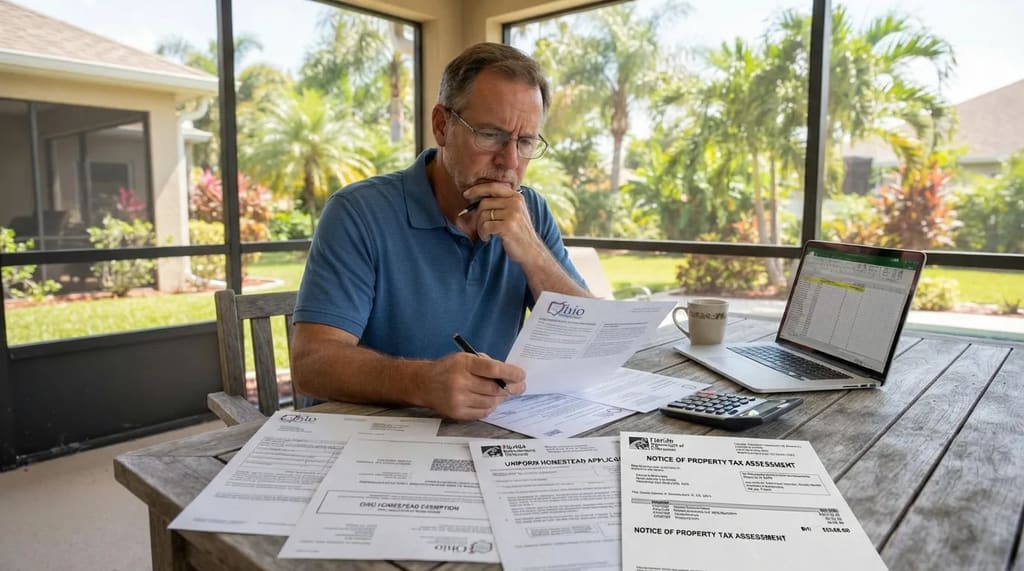
If you claim your Florida real estate as your primary residence, you can’t also claim your Ohio real estate as your primary residence, and the reverse is true too. Ohio’s non-resident safe harbor from #3 depends on it, because you can’t receive an Ohio homestead property tax reduction and still qualify. Claim one primary residence, in one state, on every record.
The consequences can be lopsided. An Ohio law firm describes a case in which someone took the homestead credit on both an Ohio and a Florida property. Florida issued an assessment for each year he claimed both and barred him from future Florida homestead credit. That firm calls Florida very aggressive in enforcing these rules. The lesson ties the whole list together: your license, voter registration, vehicle registration, tax return address and bank and credit card billing addresses should all point to the same state.
All twelve rules share one idea: the days on your calendar matter less than the paper trail behind them. If you spend winters in Florida and summers in Ohio, one state should be the one your documents name as home, and every other bill, card and form should agree with it. That makes the tax questions much easier to answer in either direction.
So pull out your wallet and your mailbox pile tonight. Which one, the license, the car’s plates or the property tax bill, is quietly telling a different story than the rest?
- Ohio Residency Information Release: https://dam.assets.ohio.gov/image/upload/tax.ohio.gov/ohio_individual/individual/information_releases/2015-02residencyir.pdf
- Ohio Bright-Line Test Overview: https://bdblaw.com/ohio-income-tax-an-individual-may-now-spend-up-to-7-months-in-ohio-but-still-be-taxed-as-a-nonresident-under-the-bright-line-residency-test/
- NFIP Flood Basics: https://www.floodsmart.com/knowlege-base/the-basics/
- FLHSMV Visiting Florida FAQ: https://www.flhsmv.gov/driver-licenses-id-cards/visiting-florida-faqs/
- FLHSMV New Resident Requirements: https://www.flhsmv.gov/new-resident/
- Florida Milestone Inspection Requirements: https://www.boarddeadline.com/articles/florida-statutes/florida-condo-structural-inspection-requirements
- Ohio Affidavit Filing Guide: https://www.domicile365.com/Articles/Ohio-Tax-Residency.html
- Florida Homestead Exemption FAQ: https://ocpaweb.ocpafl.org/faqcontent/HX_FAQ