Picture the car at hour three: the playlist is fine, the kids are quiet, and Grandpa insists he’s “doing great” while quietly gripping the door handle. AAA’s recent Thanksgiving forecasts have put more than 70 million travelers on the road by car, close to 90 percent of all holiday travelers, and plenty of those cars carry someone over 75 in the back seat.1
The trouble rarely starts on the highway. It starts weeks earlier at the kitchen table, when the plan gets built around the destination and not the passenger. The eleven mistakes below run from merely annoying to genuinely risky, and the cheapest fix on the list takes a few minutes beside the car. It’s tied to the most serious risk of all, but first comes traffic, because the hour you leave shapes everything after it.
#11 – Leaving Wednesday Afternoon Like Millions of Other Drivers
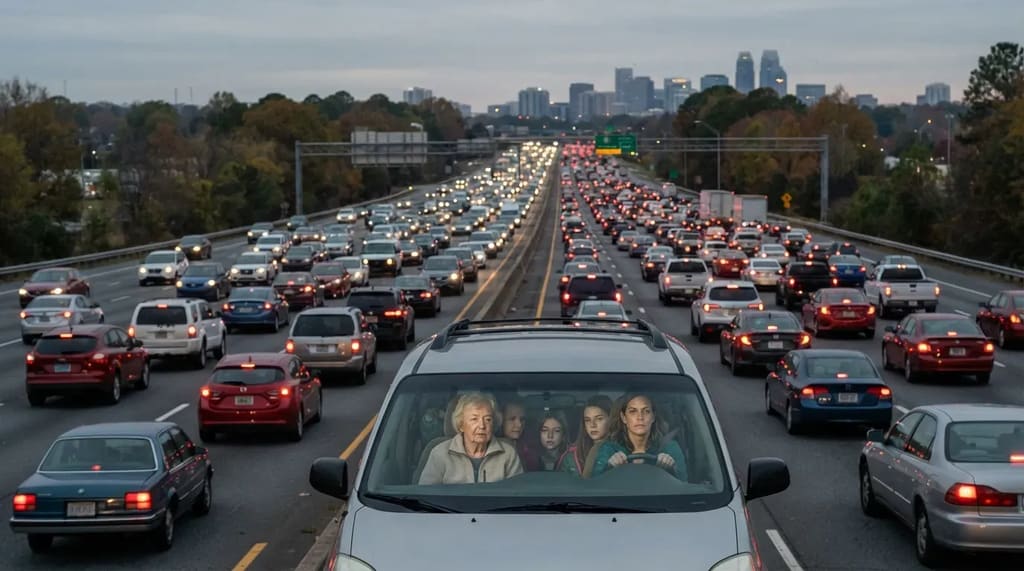
Tuesday and Wednesday before Thanksgiving bring some of the heaviest congestion of the year, and the worst stretch is the afternoon and early evening. That’s exactly when many families pull out of the driveway after work or school. A grandparent who needs a bathroom every couple of hours feels every stalled mile far more than the driver does.
Slow traffic also means the next rest area isn’t where your schedule said it would be. Suddenly a 20-minute gap has become an hour of “Are we close to an exit?”
Leaving in the morning costs nothing but an earlier alarm, and AAA recommends it for drivers in general. It also builds in a cushion. If a stop runs long, you still arrive in daylight, which matters because vision changes make glare and low light more tiring for older drivers.
A morning start only works if the route has somewhere decent to stop. That depends on a choice many families make on autopilot.
#10 – Following the Fastest Route Instead of the Kindest One
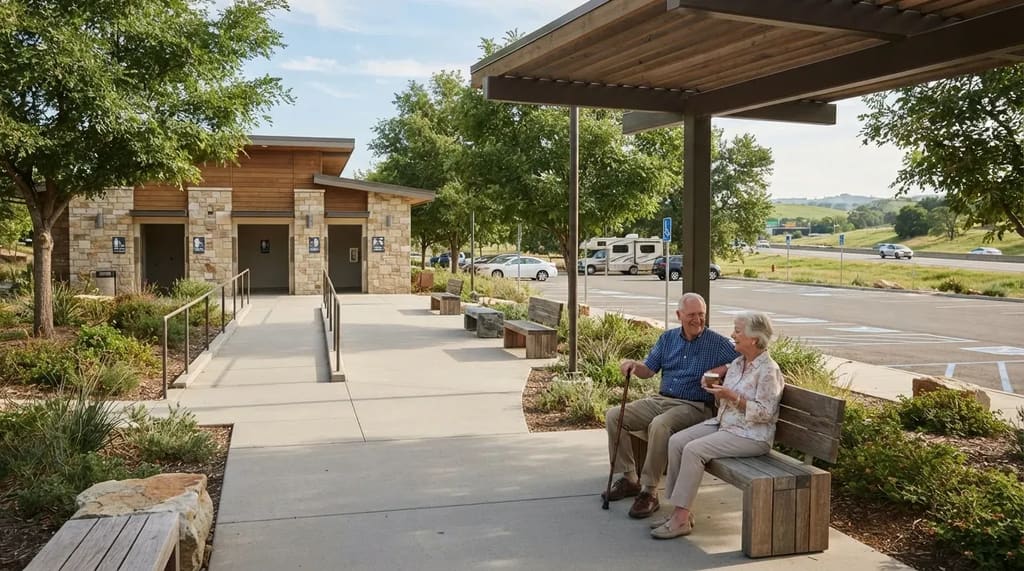
Navigation apps pick the quickest line between two towns, and that line says nothing about where an 80-year-old can comfortably walk around. One senior-travel guide suggests mapping the route around the best rest stops, because some highway rest areas are excellent and others are not.
A good stop has clean restrooms, shaded seating, ramps, benches and easy parking. A gas station with one narrow bathroom and no place to sit does not qualify, no matter how many minutes it saves.
Quick Compare
- Grandparent-friendly stop: clean restrooms, shaded seating, ramps and benches
- Stop to skip: one narrow bathroom, nowhere to sit, a curb at every door
- The real trade-off: a few saved minutes versus a passenger who can actually recover
Look at the map the same way for emergencies. The same guide says to identify hospitals along the way. That takes ten minutes at a computer and can spare you a frightening search at a dark exit.
Even a well-chosen route falls apart if the day on it is too long for one passenger.
#9 – Cramming an Eight-Hour Day Into One Sitting
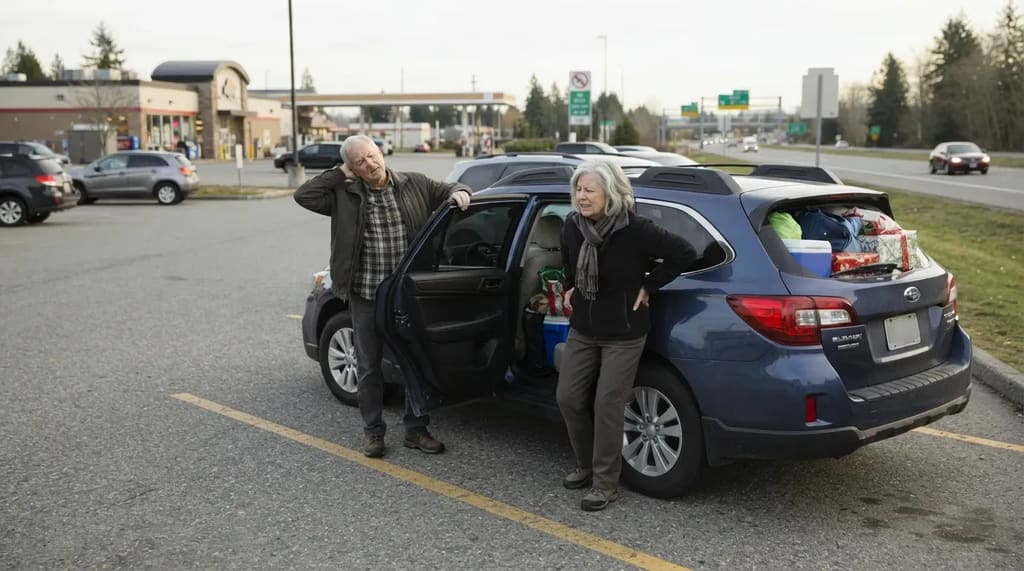
It’s tempting to treat the drive as a hurdle to clear in one push, especially when the holiday meal has a start time. Senior-travel advice leans the other way: instead of eight or ten hours in the car, consider shorter stretches with built-in rest stops. Another guide recommends keeping daily travel times short to avoid fatigue.
If the total mileage is long, splitting it over two days is usually the smarter call, even though it adds a hotel night. That extra room costs far less than arriving too worn out to enjoy anyone.
The body keeps its own account of those hours. Sitting in one position for more than two hours is hard on the back and can compress the disks between the vertebrae, which can cause numbness or tingling in the legs. Grandparents with arthritis or stiff hips feel it sooner than the rest of the car.
#8 – Leaving the Blankets and Winter Kit Behind
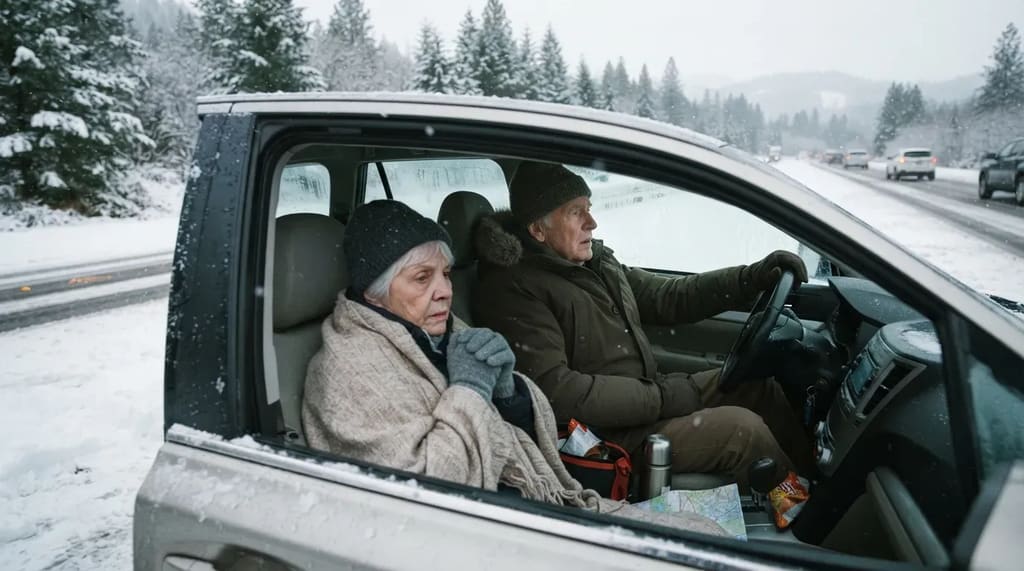
A breakdown on a holiday weekend is not rare. One AAA club in Kansas projected more than 3,000 emergency roadside calls during its holiday period, and when that many drivers need help at once, the wait stretches. AAA in Oregon warns that its own trucks face the same traffic delays and challenges as everyone else in wintry weather.2
A 78-year-old sitting in a cold car for an hour is a very different problem from a 30-year-old doing the same. Older bodies lose heat faster and have less room to shrug off a long chill.
AAA’s winter list includes blankets, an extra set of warm clothes such as gloves, hats and scarves, a shovel, and traction material, plus water and snacks.3 Keep the gas tank at least half full all winter so the heater can keep running if traffic stops.
The kit covers a cold car. It doesn’t cover the glasses and hearing aids your grandparent will miss most.
#7 – Burying the Hearing Aids Under Every Suitcase
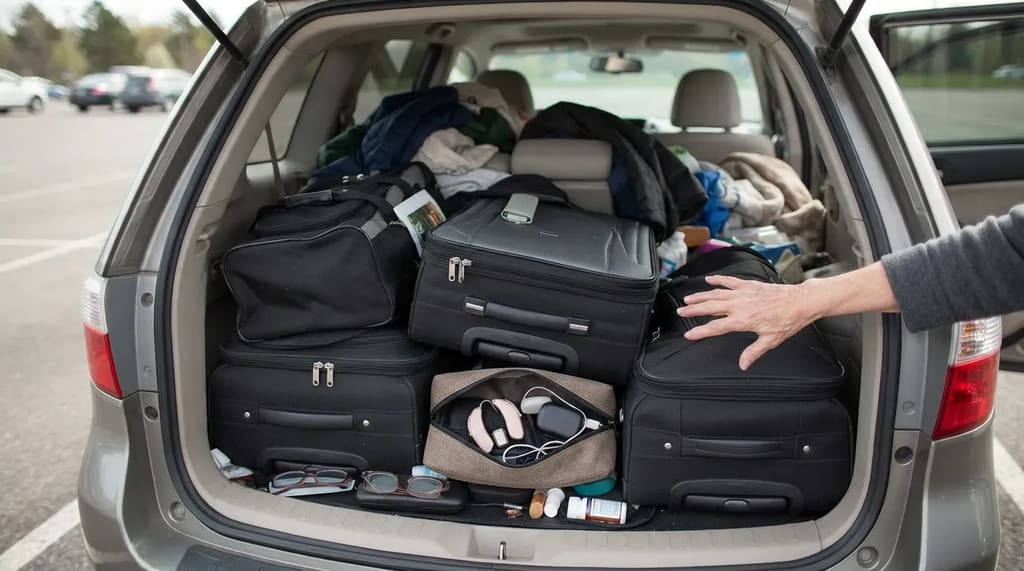
Grandparents rely on small things every hour of the day. A packing list from one senior-care firm names medications, water, snacks, glasses, hearing aids, chargers, medical cards and mobility aids. If those sit under the suitcases, every stop turns into an unloading job.
Keep one small bag within reach of the back seat instead. It’s a tiny change, and it keeps a dropped charger or a missing pair of glasses from becoming a parking-lot crisis.
At a Glance
- Health: medications, medical cards, mobility aids
- Senses: glasses, hearing aids and their chargers
- Refreshment: water and preferred snacks
- Location: back-seat reach, never the trunk
Comfort belongs in that bag too. Advice for family road trips suggests a favorite blanket, a travel pillow or a supportive seat cushion, along with a cooler stocked with preferred snacks and plenty of water.
A good seat cushion may do more for the day than any gadget in a travel catalog, since the seat is where your grandparent will spend most of it.
#6 – Trusting the Word “Accessible” on a Hotel Website
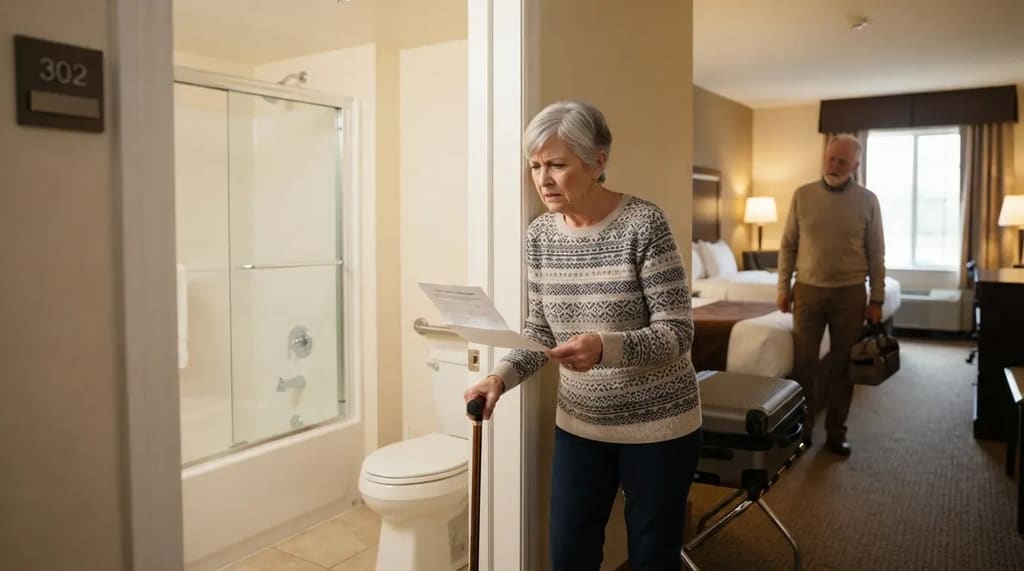
A booking page can say “accessible room” and still mean something different from what your grandparent needs. One guide warns that an accessible room on a hotel website does not always mean what you need it to mean. Its advice is to call the front desk, not the reservation line, and ask whether the shower grab bar is installed in the room you will actually get.
It also suggests asking whether the room is on the ground floor or has a working elevator, and how far it is from the parking lot. Those answers decide whether check-in feels easy or like a second long hike.
The five-minute call matters most on a holiday weekend, when the good rooms go first. It also protects the evening, since a room that works only helps if your grandparent reaches it with some energy left.
That depends on how much the day asked of them.
#5 – Scheduling Every Hour and Forgetting the Nap
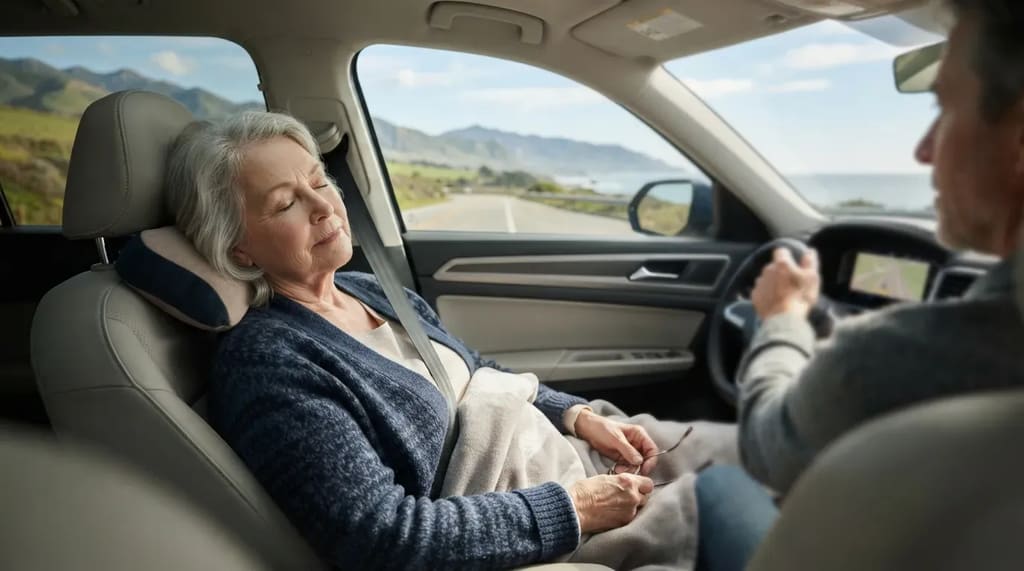
Families often plan the trip like a vacation for people half the age of the grandparents on board. Senior-travel guides keep returning to the same point: leave plenty of downtime for resting or taking a nap back at the hotel. They also advise sticking to meal, medication and bedtimes as closely as possible.
A late dinner that pushes a medication schedule off by hours can cost more than a missed attraction ever would.
The easiest cut is the second activity of the day. A shopping stop after the museum may feel like a bonus to the driver, and it may be the tipping point for a grandparent who stopped enjoying things an hour earlier.
A relaxed lunch in a public park or a few hours in a movie theater can do wonders. That kind of slow stretch is easier to schedule once you know what the trip is really for.
#4 – Skipping the Stop Grandma Actually Wanted
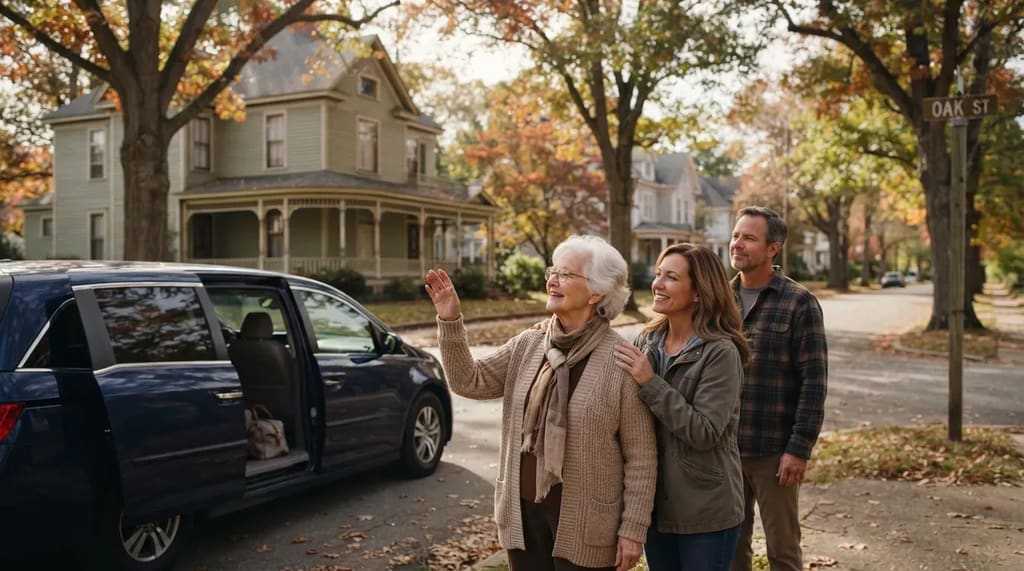
Many holiday drives get planned by the middle generation, with the oldest passengers consulted last or never. A travel writer’s guide to trips with aging parents says to have a clear intention for why you are traveling together and a clear idea of what everyone wants from the trip. The same guide says to expect the pace to be slower than if you were traveling without them.
Asking before the route is set costs one phone call.
The stops that matter most are often free. One road-trip guide suggests including stops tied to family history, such as old neighborhoods, cemeteries, churches or favorite restaurants.
A fifteen-minute detour past a childhood street can give a grandparent a reason to talk for the next hundred miles. It also doubles as a rest break.
#3 – Putting All the Pills in One Bag
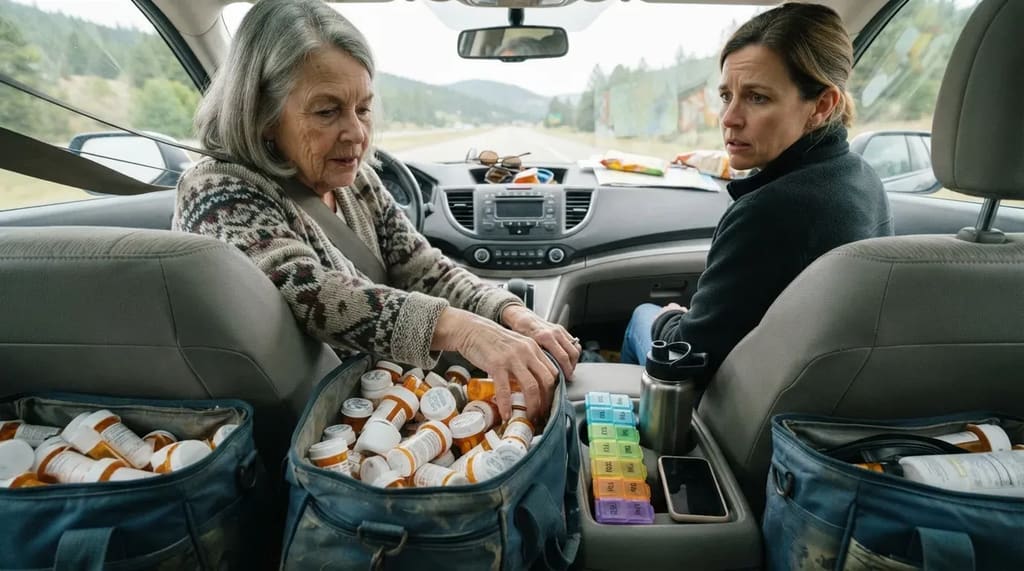
Medicine is where small packing errors turn into real consequences. One senior-center guide points out that many older adults rely on medications for their comfort and potentially even their lives. Its advice is to bring extra, spread across multiple people’s bags, in case doses are lost or luggage is delayed.4
In a car, that means keeping the main supply in the cabin where you can reach it and splitting a few days’ worth into a second bag.
Other guides add a few habits that make a missed dose or a pharmacy call far less stressful.
Worth Knowing
That list is easier to write after a conversation with the person who prescribed the pills.
Related Stories From Travelbinger



#2 – Booking the Trip Before Calling the Doctor

The order of operations matters here. Guides on traveling with older relatives say to consult the parent’s healthcare provider before booking, and to discuss current health, medications and any physical limitations.5 A brief visit or call can change the plan: a shorter day, an extra stop, or a change in when a dose is taken.
Make that call before putting down a nonrefundable deposit, not after. A deposit you can’t get back is a lot of pressure to ignore a doctor’s “maybe not that far.”
Leave the appointment with paper in hand. One guide suggests a simple medical summary with health conditions, medications and the healthcare provider’s contact information, and another adds copies of insurance cards and a list of emergency contacts.
The doctor can also say whether long hours of sitting are a problem for this particular grandparent. That is the one risk the car itself creates.
#1 – Letting Them Sit Four Hours Because “I’m Fine”
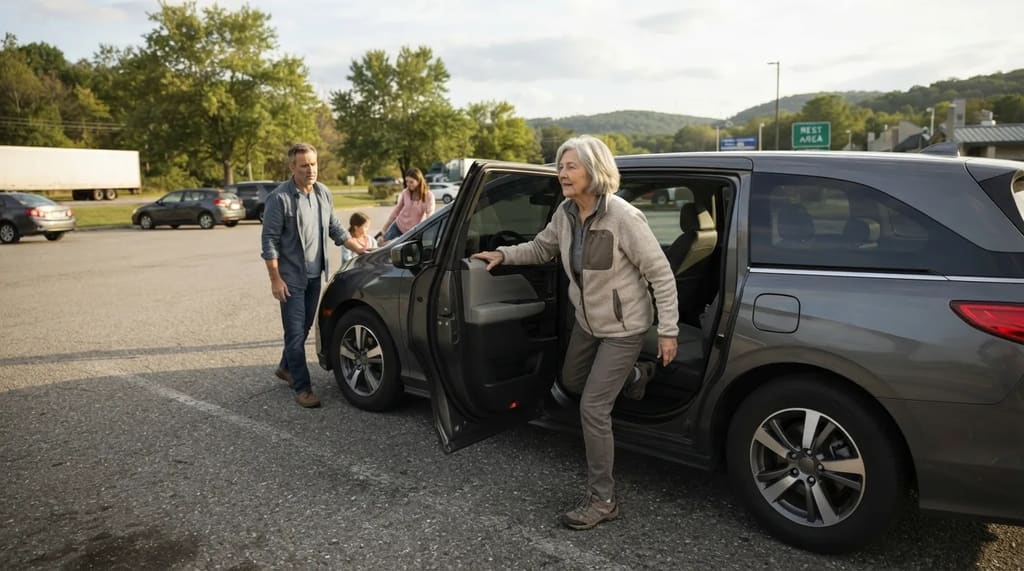
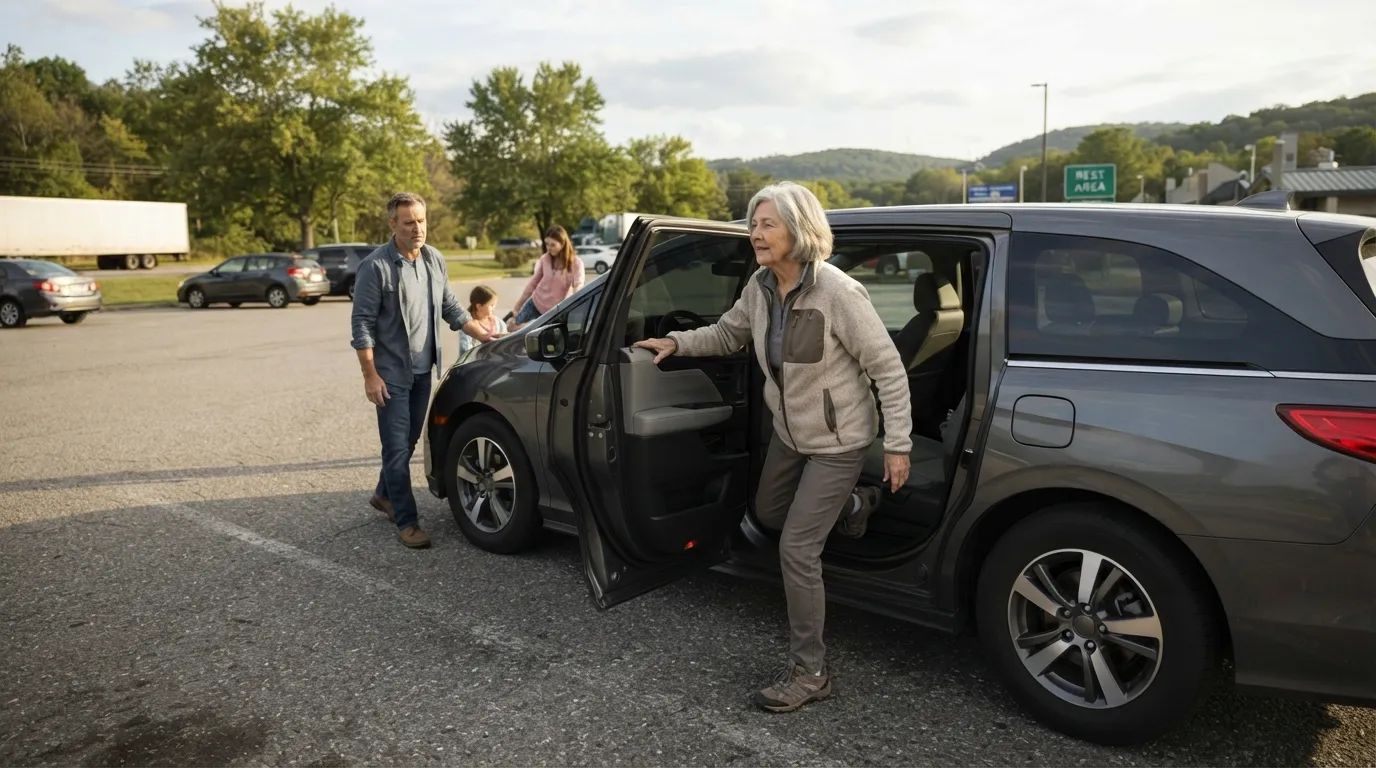
The Centers for Disease Control and Prevention says anyone traveling more than four hours, whether by air, car, bus or train, can be at risk for blood clots. The agency’s advice is simple: move your legs frequently and walk around every one to two hours. The CDC also notes that even on a long trip the risk is generally very small, but age is among the listed risk factors.6
A grandparent over 75 is also more likely to have another risk factor, such as heart disease or a past clot. That’s why a stop that feels like a minor delay to the driver can matter far more to the person in the back.
Fast Facts
- Risk window: trips longer than four hours, by any mode of travel
- Stop rhythm: walk around every one to two hours6
- Warning signs: pain, tenderness, swelling, warmth or color changes, usually in one leg
The hard part is that about half of people with DVT have no symptoms at all, so nobody in the car may notice a problem.7 Clots can take time to develop after travel, so a sore or swollen calf the week after you get home deserves a call to the doctor.
A few minutes beside the car every hour or two is the cheapest item on this list, and for a family with a grandparent aboard, it ranks above everything else.
Don’t wait for a grandparent to ask. Many will say they feel fine at hour three because they don’t want to slow anyone down. Setting the stops in advance, as part of the route, takes that decision off their shoulders.
The common thread across all eleven mistakes is that the trip gets planned around the car and the calendar, when the person in the back seat sets the real limits. Change the question from “how fast can we get there” to “how well will Grandpa arrive,” and the traffic, the route, the room and the stops mostly sort themselves out.
The turkey will still be hot when you walk in. The difference is that everyone at the table, including the oldest person there, will actually have the energy to enjoy it.
- AAA Thanksgiving Travel Forecast: https://newsroom.aaa.com/2025/11/aaa-thanksgiving-travel-forecast-2025/
- AAA Oregon Winter Emergency Kit: https://info.oregon.aaa.com/winter-prep-emergency-kit
- AAA Washington Emergency Vehicle Kit: https://wa.aaa.com/impact/advocacy/emergency-vehicle-kit
- Senior Traveling Guide Packing: https://www.seniortravelingguide.com/tips/packing
- Health in Aging Travel Tips: https://www.healthinaging.org/tools-and-tips/tip-sheet-safe-travel-tips-older-adults
- CDC Travel Blood Clot Risk: https://www.cdc.gov/blood-clots/risk-factors/travel.html
- Scripps Long Travel Blood Clots: https://www.scripps.org/news_items/3019-how-to-prevent-blood-clots-during-long-travel