
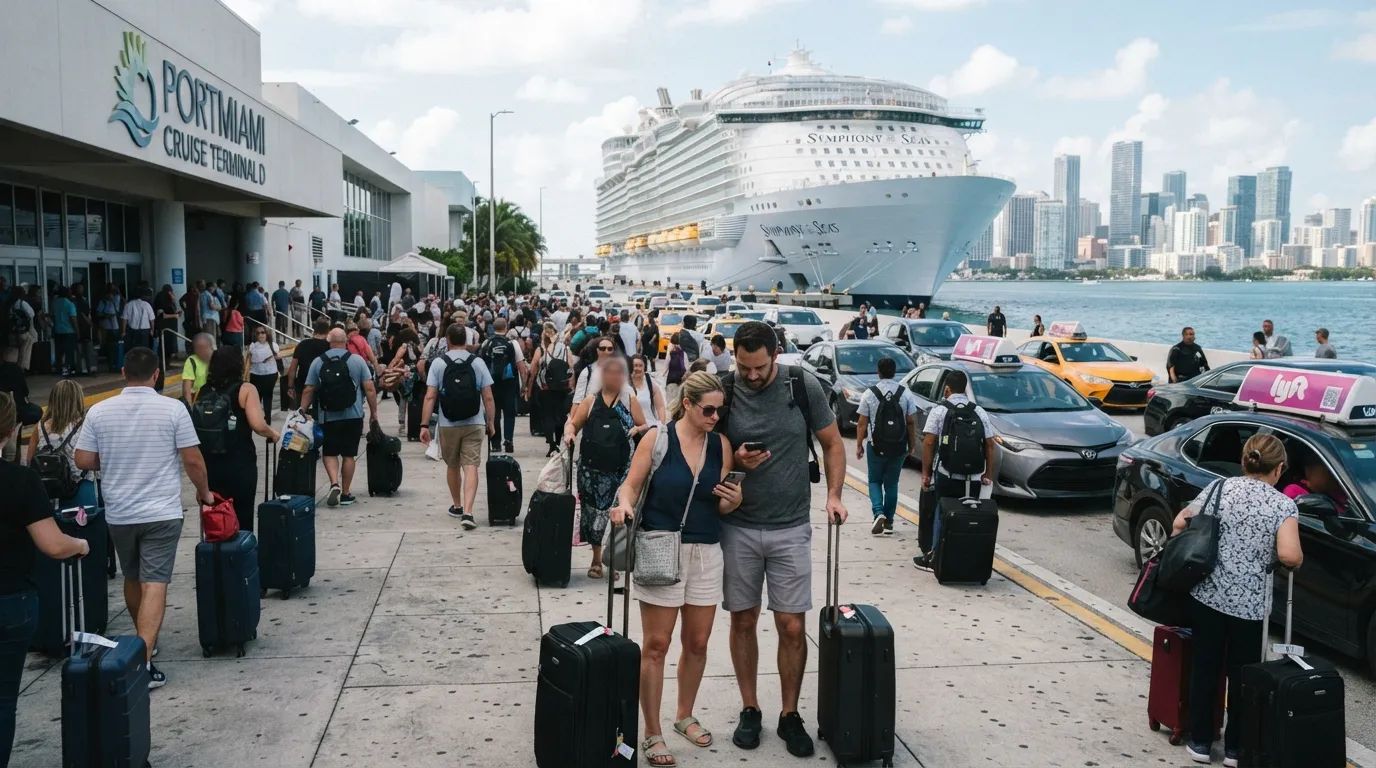
PortMiami moved 8,564,225 cruise passengers in a single fiscal year, so the veterans in that crowd have seen just about every way a sailing can go sideways.1 Most first-timers assume the hard part starts once they’re on the ship. It doesn’t. The real mistakes happen before the gangway: wrong terminal, wrong port, wrong hotel, wrong card at the parking gate.
Seasoned cruisers learned these lessons the expensive way, and some of their rules sound too small to matter, right up until a ship sails without someone. The countdown below runs from the quiet slip-ups to the one gamble veterans say they’d never take. Number 1 involves a document you may not technically need, which is exactly why it catches people.
#13 – The Terminal on Your Paperwork Is the Only One That Counts
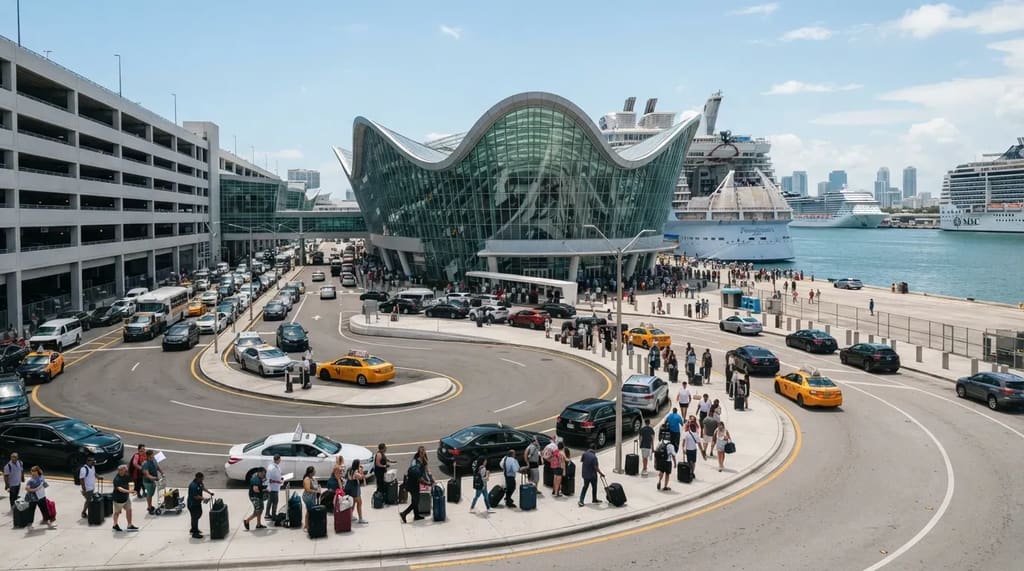
Miami isn’t one big dock, and guessing wrong costs you a long, sweaty walk. PortMiami sits on Dodge Island, about 8 miles from Miami International Airport, and has ten cruise terminals, each with its own garage or lot.2 Tell a driver “the cruise port” and you may get dropped at a door that isn’t yours.
Terminal assignments can also change between sailings. One 2026 guide noted that Royal Caribbean guests were being sent to Terminal AA rather than Terminal A, and it warned that a wrong drop-off means hauling luggage across the island in Florida heat.2 Check the terminal on your boarding documents a few days before you sail, and again the night before.
But the wrong terminal is a small slip next to the wrong port, which is #12…
#12 – The “Miami” Cruise That Actually Leaves From Fort Lauderdale
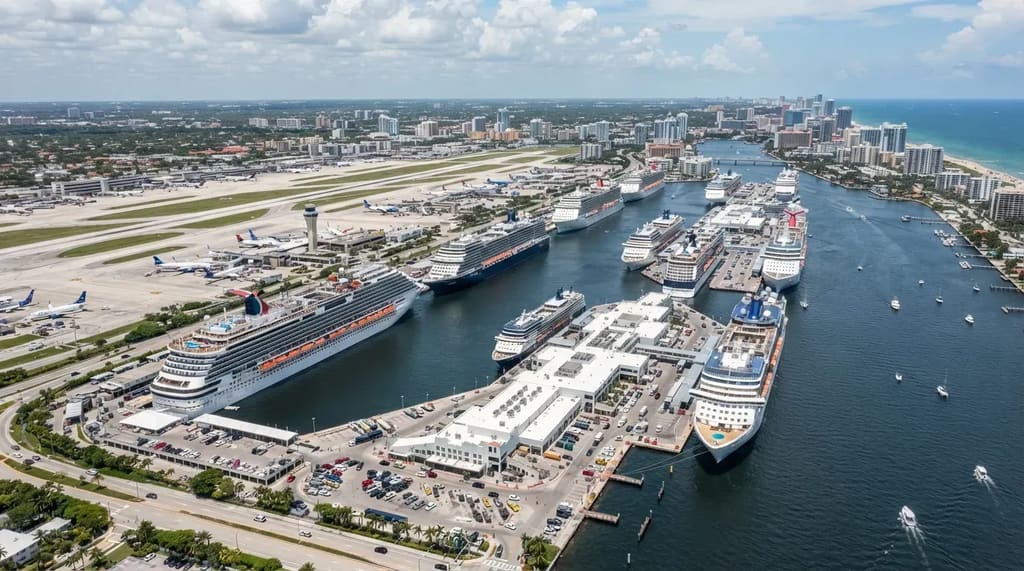
Booking sites love the word “Miami,” and it hides a trap. Port Everglades is a separate port in Fort Lauderdale, and it sits very close to the Fort Lauderdale airport. Passengers who see “South Florida” in a listing sometimes assume the two ports are interchangeable. They aren’t.
The gap is real. Fort Lauderdale’s airport is about 25 to 30 miles from PortMiami, a 45 to 75 minute drive depending on I-95 traffic.3 A rideshare between the two usually costs several times a short hop from the Miami airport. The mix-up happens in reverse too, when travelers book flights into the wrong airport for a ship sailing from the other port.
Quick Compare
- PortMiami: Dodge Island, about 8 miles from Miami International Airport
- Port Everglades: Fort Lauderdale, very close to the Fort Lauderdale airport
- Wrong airport penalty: roughly 25 to 30 miles and a 45 to 75 minute drive
Read the port name on your confirmation, not just the city. And speaking of flights, the next rule is the one veterans repeat most…
#11 – Land the Day Before, or Gamble With a Ship That Won’t Wait
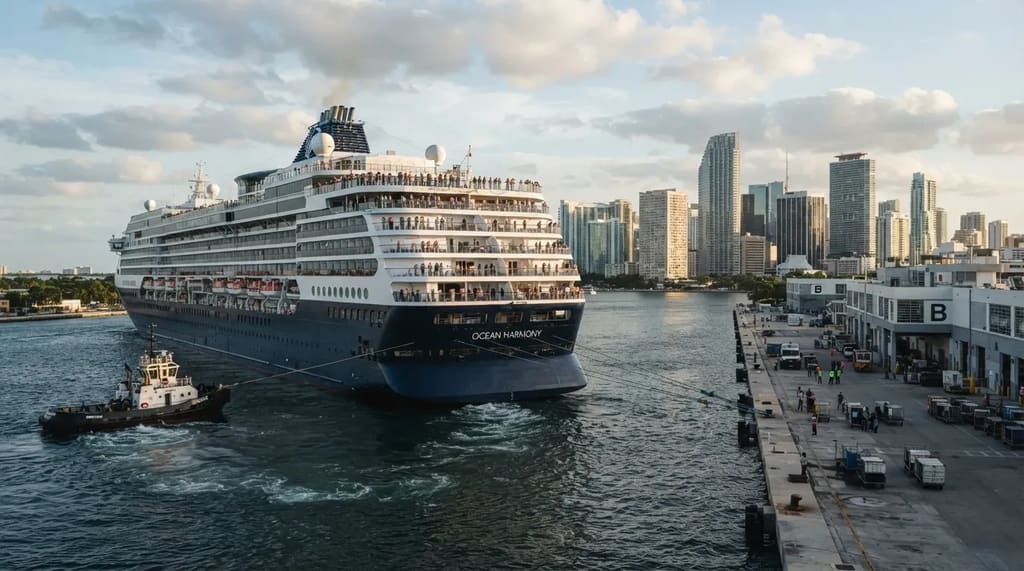
Same-day arrival is the most common unforced error in Miami cruising. Flight delays, storms and road traffic are common enough that flying in on sailing morning is the biggest unnecessary risk on the trip. The port is close to the airport, but the ship’s departure time isn’t flexible.
A ship will not wait for a delayed flight, and travel insurance rarely makes up for a missed sailing. If you truly must fly in that morning, aim to land before 11:00 and choose a nonstop. A connection through a winter-weather hub is the kind of thing that ends a vacation at baggage claim.
Now for where to sleep that night, which is a more heated debate than you’d think…
#10 – Skip South Beach for Your Pre-Cruise Night
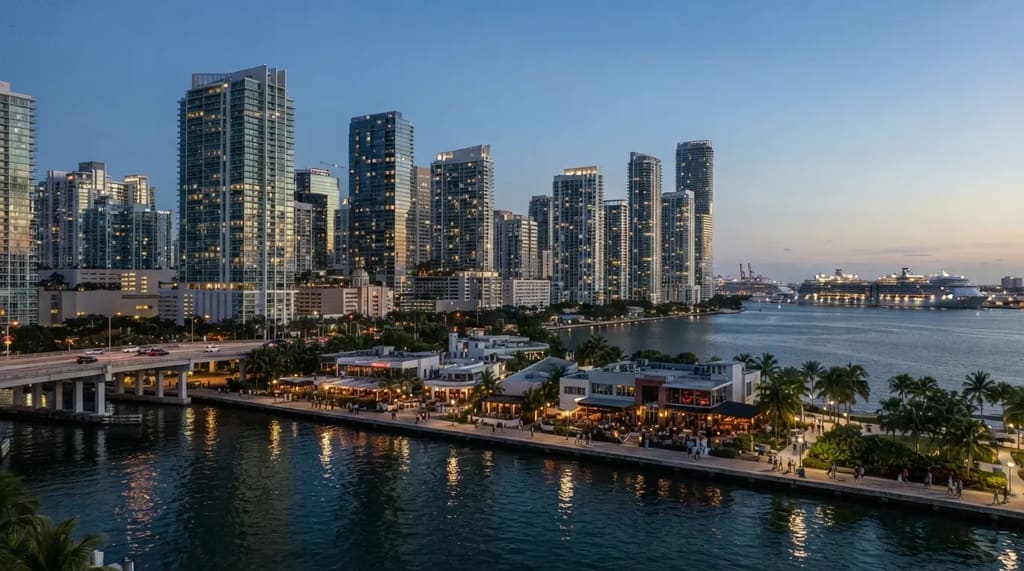
Here’s the unpopular opinion: South Beach is the wrong place to spend the night before a cruise. Plenty of travelers rank it as the must-do Miami stop. Many cruise experts argue it’s the worst pick for embarkation morning.
The reason is simple geography. The port is about 10 minutes from downtown and 15 to 20 from South Beach, and that’s on a good day. Miami Beach is great for a longer stay, but it adds transfer time and traffic risk right when you want neither. Brickell is a favorite because it’s a short rideshare from the port and has plenty of dining within walking distance.
Why It Stands Out
- Brickell is a short rideshare from the port
- Restaurants are within walking distance of many hotels
- Downtown is about 10 minutes from the port, versus 15 to 20 from South Beach
- Less transfer time means less embarkation-morning risk
Save the beach for the post-cruise days, when nobody is watching the clock. And one hotel trick can quietly pay for the whole stay…
#9 – The Hotel Package That Makes Port Parking Look Silly
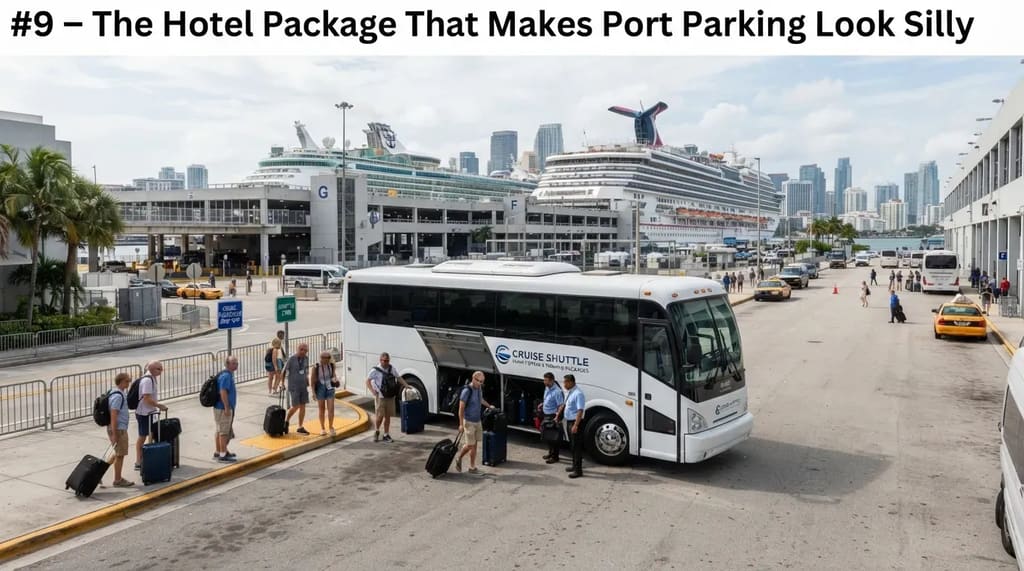
Drivers tend to treat the hotel and the parking as two separate bills. Many downtown and Brickell hotels offer packages that combine one hotel night with 7+ days of parking, plus a shuttle to the port on departure morning. Done right, the room costs you very little extra.
One 2026 guide puts the numbers side by side. Airport-area pre-cruise hotels run roughly $110 to $180, often with free week-long parking.4 That’s why bundled packages are worth pricing against port parking instead of dismissing out of hand. Rates move fast in cruise season, so compare on your actual dates.
Still want to drive straight to the port? Check the math first, because it gets ugly…
#8 – The Parking Bill Nobody Mentions at Booking
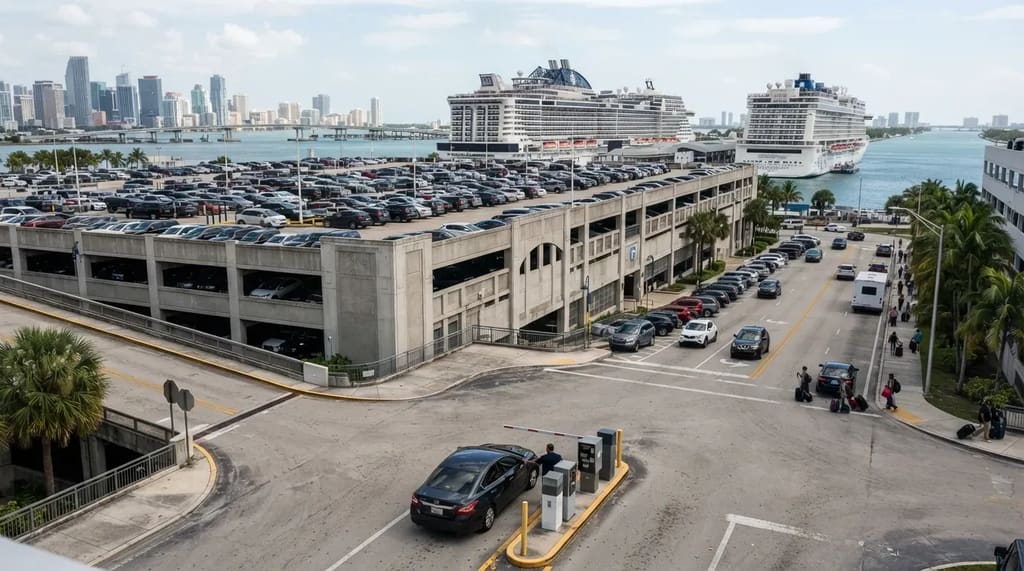
Parking is the line item that quietly eats a cruise budget. Official PortMiami parking costs $25 per day at most garages and $35 at the MSC and Norwegian garages, per one 2026 guide.2 You pay for every day, including the day you arrive and the day you leave. Other sources list slightly lower rates, so confirm yours before you go.
On a seven-night cruise, that’s eight parking days: roughly $200 at $25 a day, or $280 at $35. Off-site lots start around $7 to $10 a day, with a shuttle ride as the trade-off. Frequent cruisers call that a fair price for keeping a few hundred dollars in their pockets.
And even if you do park at the port, there’s a payment mistake waiting at the gate…
#7 – The Debit Card That Gets Turned Away at the Garage
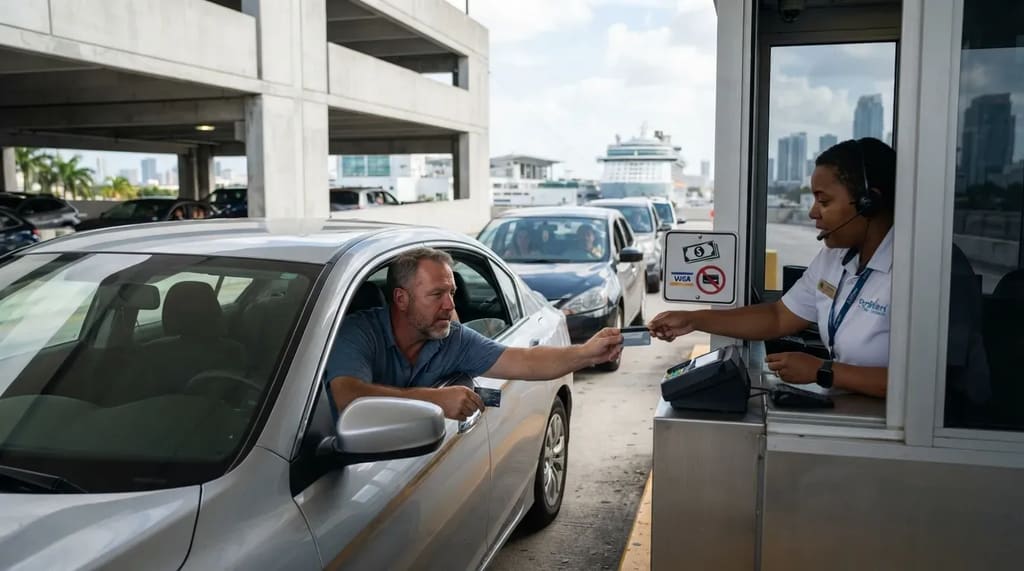
This one sounds minor until you’re standing there with bags and a line of cars behind you. PortMiami garages take cash, Visa, Mastercard, Amex and Discover only.2 The same guide says debit cards aren’t accepted. Policies can change, so treat this as a warning to double-check, not a guarantee.
Seasoned passengers carry a credit card for the garage and keep some cash as a backup. It’s the kind of detail the cruise line’s pre-trip emails rarely mention. You’ll be glad you read this on a Saturday morning, when the lines grow and nobody is in the mood to negotiate.
Not driving at all? The next rule is about a transfer choice that costs families more than they expect…
#6 – The Cruise-Line Shuttle Can Cost a Family Double a Rideshare
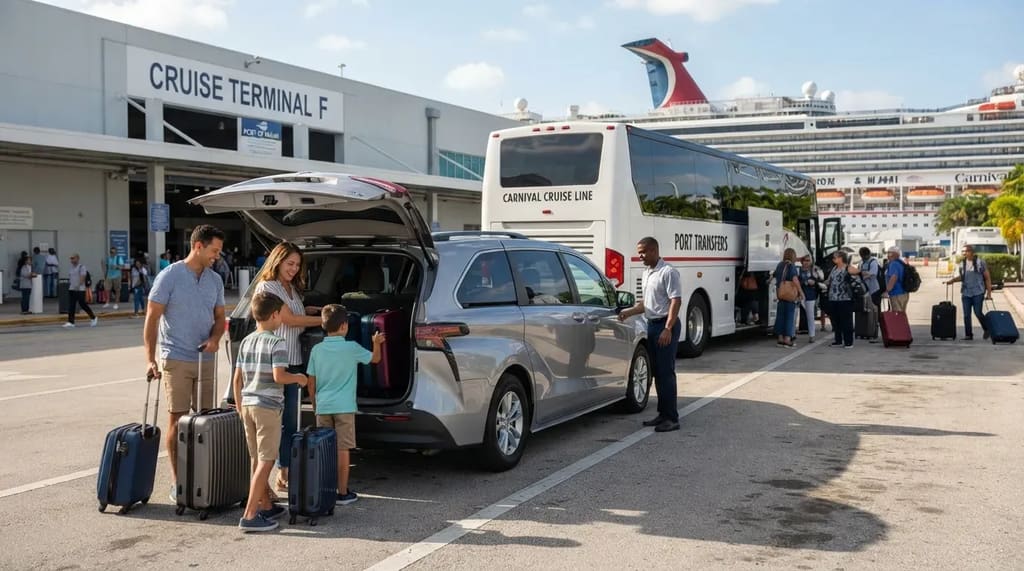
“Official” transfers feel safe, and many first-timers book them without comparing. Cruise-line airport transfers run about $20 to $35 per person each way, while a rideshare from the airport to the terminal runs about $25 to $45 depending on surge.4 The rideshare price covers the whole car. The shuttle price multiplies by every head.
Run it for a family of four at the low end: $20 each way per person is $160 round trip. A rideshare each way at $25 to $45 lands between $50 and $90 for the same trip. The shuttle isn’t always a bad deal, though. Solo travelers and anyone who wants a fixed price may prefer it.
Next up is the arrival-time habit that separates calm boarders from stressed ones…
#5 – Arrive in Your Window, Not at Dawn
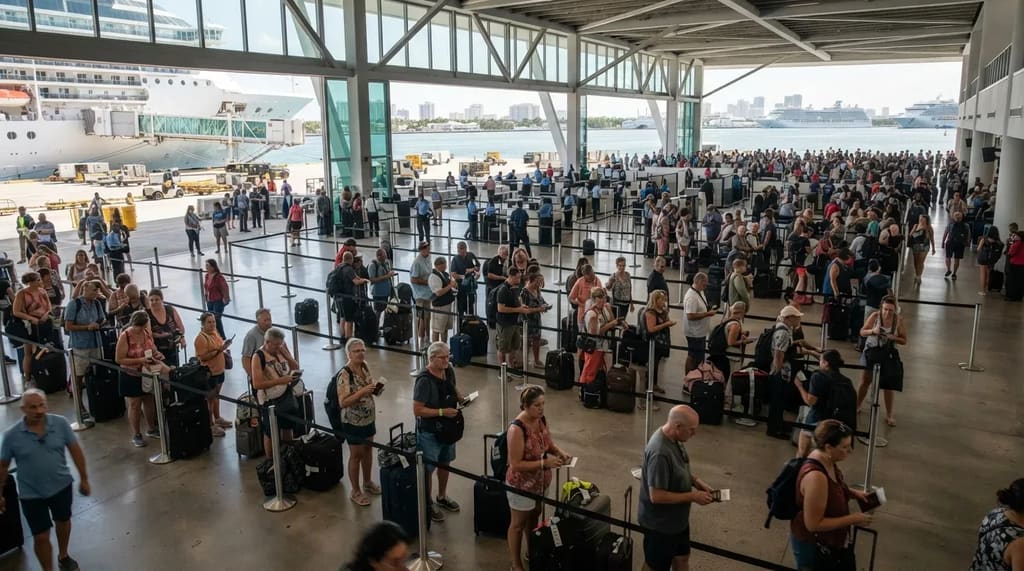
Showing up early feels responsible. Turns out it often just means standing in a hot terminal. Cruise lines assign embarkation time slots, and arriving outside yours means waiting. The ship also has to finish turning around from the last sailing, so the early crowd gains nothing.
Pack smart for the gap between boarding and bag delivery. Checked luggage typically reaches the cabin 2 to 4 hours after embarkation. Veterans put a change of clothes in their carry-on so a late suitcase doesn’t derail the first evening. Attach luggage tags before you leave the hotel, not at the curb.
The calendar matters as much as the clock, and it’s the tip many people skip…
#4 – The Month You Sail Changes More Than the Weather
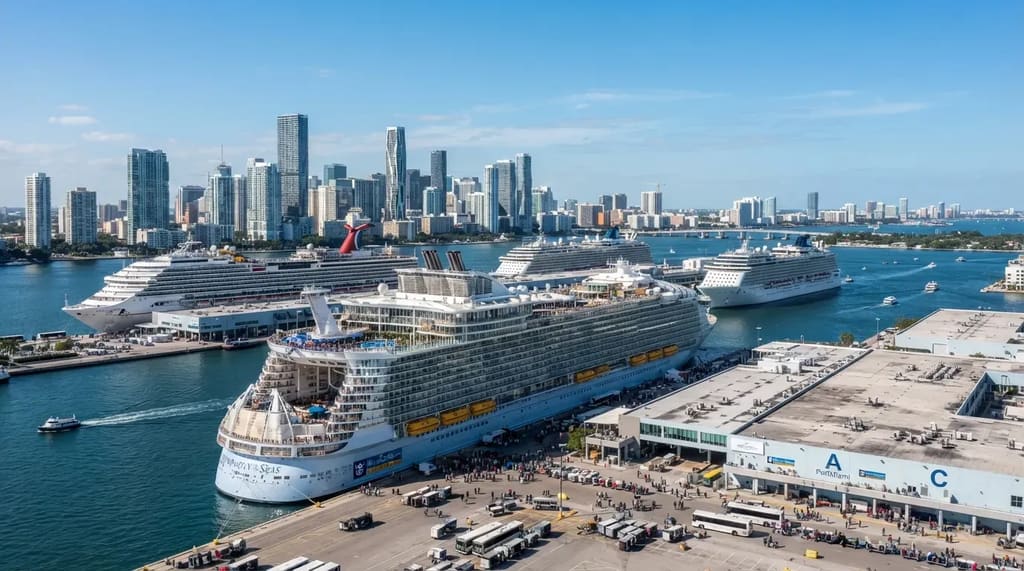
Miami is a year-round port, but not every month is equal. One port guide lists December through April as the best time to cruise from Miami. That’s the dry, milder stretch, and it’s also when ships and prices fill up. The 8.5 million passenger count shows how busy the port stays.
The Atlantic hurricane season officially runs June 1 through November 30.5 Late summer and early fall can bring cheaper fares and a higher risk of rerouted itineraries. Itinerary changes are usually the cruise line’s call, and they can come just days before you sail.
Before you board, there’s a small digital habit that saves more headaches than any packing hack…
#3 – Screenshot Everything Before You Reach the Port
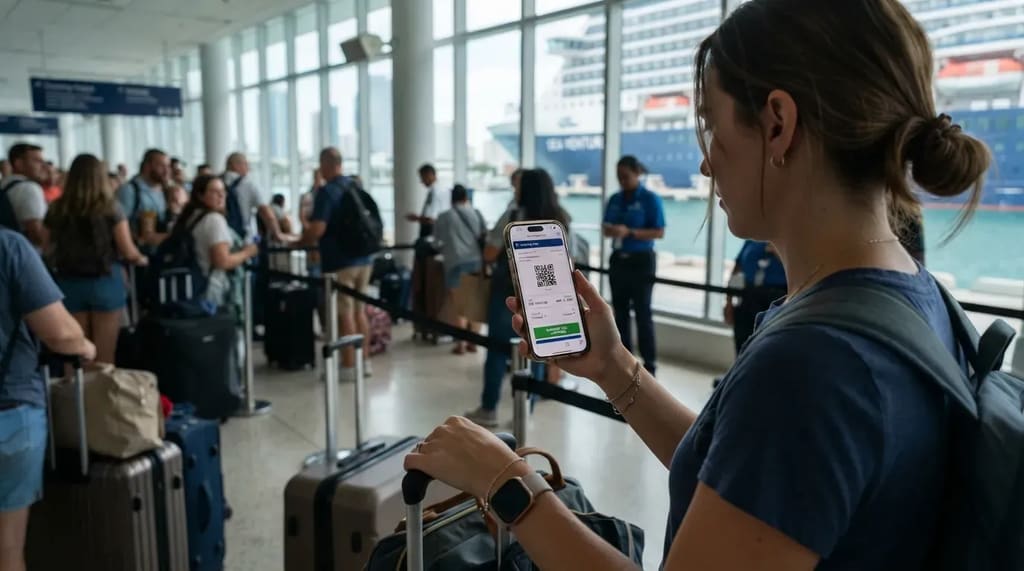
Embarkation day is a bad time to count on a strong signal. One guide advises screenshotting your boarding pass and terminal assignment because port Wi-Fi can be unreliable on busy days. Cruise apps can freeze at exactly the wrong moment, usually when you’re holding a suitcase in each hand.
Related Stories From Travelbinger


It’s also worth completing check-in early. One local guide recommends finishing online check-in 24 to 48 hours before sailing. Keep your ID, documents and cruise confirmation in a single folder on your phone, plus a paper copy if you like. It’s a five-minute job that rarely feels important until it is.
Fast Facts
- Screenshot your boarding pass and terminal assignment
- Finish online check-in 24 to 48 hours before sailing
- Keep ID, documents and confirmation in one phone folder
- A paper copy makes a handy backup if the app freezes
Then there’s the end of the trip, when most people make the opposite mistake…
#2 – Don’t Book the Morning Flight Home
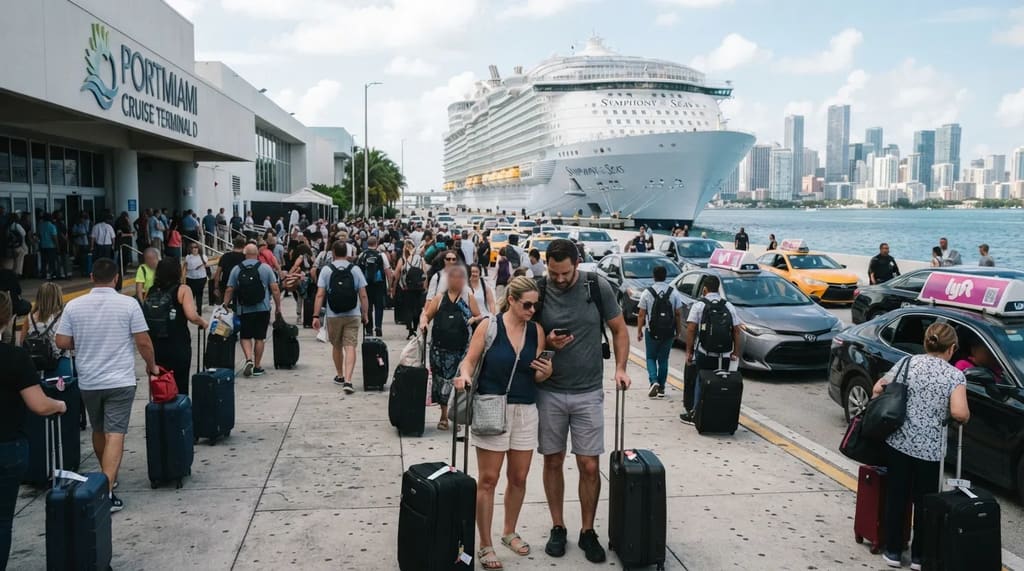
Disembarkation isn’t instant, and that’s where return flights go wrong. Passengers typically leave the ship between 7:00 and 10:00 and are clear of the terminal by about 10:30. That’s a best case, and it assumes your color-coded group gets called early.
Allow 60 to 90 minutes from the port to the airport for flight connections. Rideshare queues right after debarkation can add another 20 to 30 minutes. The usual advice from frequent cruisers is to book an afternoon flight and treat the extra hours as free time in Miami.
But the biggest trap of all is one nobody sees coming until they’re standing in a foreign port…
#1 – The Passport You Technically Don’t Need
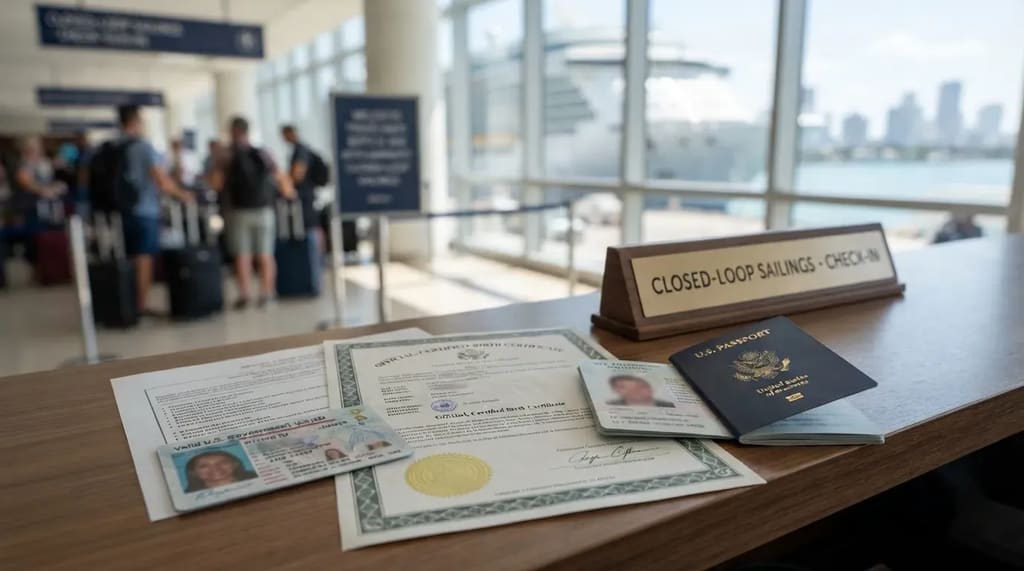
Here’s the loophole that sounds too good to be true, and it’s real. U.S. citizens can cruise without a passport on a closed-loop cruise with just a birth certificate and government-issued photo ID, depending on age.6 7 That includes a short three-night Bahamian cruise from Miami. The catch is in the fine print: the birth certificate must come from a government vital records office, and a hospital birth record isn’t sufficient.8
The real danger shows up when plans fall apart. If you miss the ship in a foreign port or need an emergency flight home, you can’t board an international flight without a passport book. Some cruise lines also require passports even on closed-loop sailings.6 Veterans call skipping it to save money the single biggest gamble in Miami cruising.
Cruising from Miami works best when you plan the parts that happen on land. The biggest surprises are the ones most people never check: a terminal change, the wrong port, a debit card refused at a garage gate, or a passport left in a drawer at home.
The ship is the easy part. So which of these tips would you have skipped, and which one would have saved your trip?
- Miami-Dade PortMiami Results: https://www.miamidade.gov/global/release.page?Mduid_release=rel1764622080449470
- Walking Cruiser Miami Guide: https://www.thewalkingcruiser.com/miami-cruise-port-guide
- Port Everglades Airport Distances: https://porteverglades.org/port-everglades/airports-near-port-everglades/
- Miami Cruise Port Guide: https://www.miamitourism.org/miami-cruise-port/
- NOAA Hurricane Season Climatology: https://www.noaa.gov/tropical-cyclone-climatology
- CBP Western Hemisphere Travel: https://www.cbp.gov/travel/us-citizens/western-hemisphere-travel-initiative
- Royal Caribbean Passport Guide: https://www.royalcaribbeanblog.com/2025/11/07/cruise-without-passport
- AAA Closed-Loop Cruises: https://cluballiance.aaa.com/the-extra-mile/advice/travel/closed-loop-cruise