
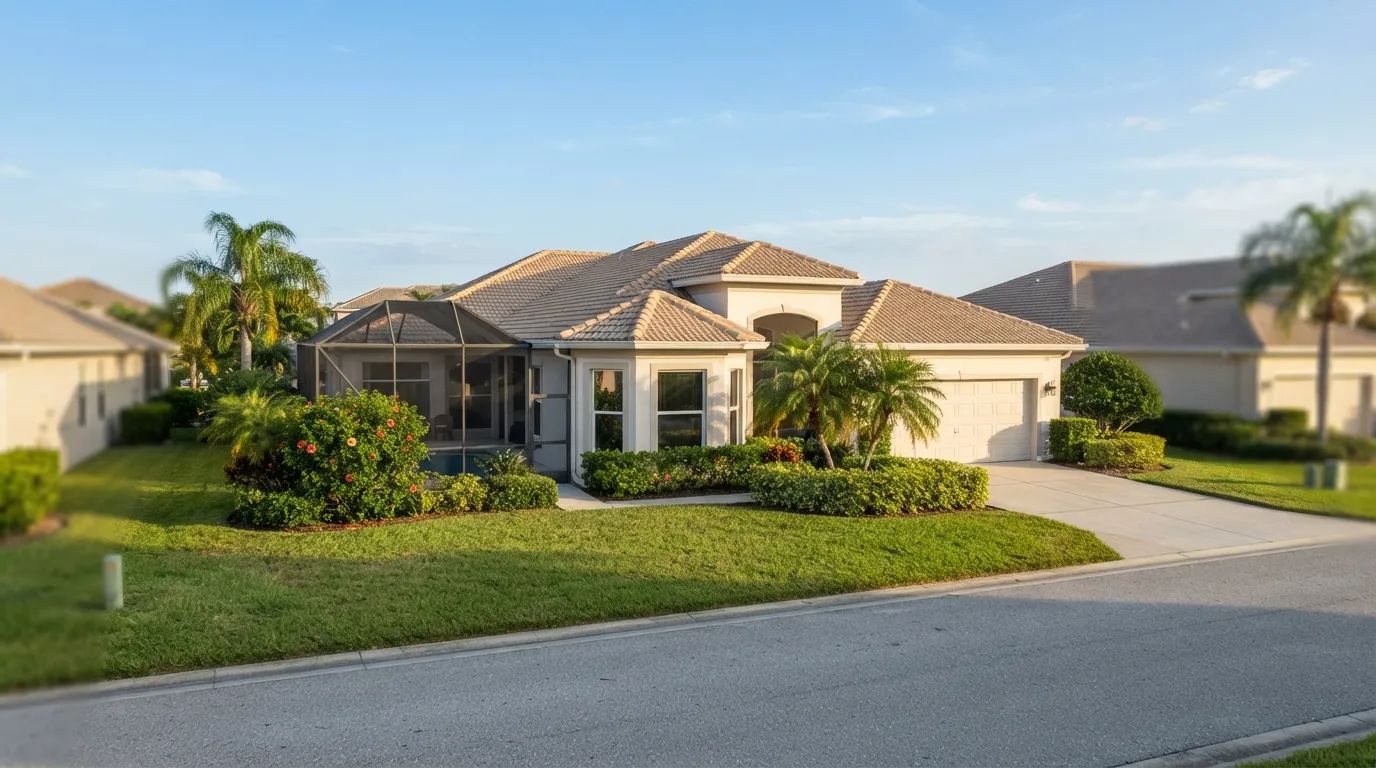
Florida is counting the days your Michigan car spends in the state, and nobody sends a reminder. Once a nonresident’s vehicle passes 90 days in a year, Florida expects it to be registered and insured there, and a winter in Fort Myers or Sarasota can cross that line without anyone keeping score.1 That is one of 13 state rules, covering licenses, insurance, condo bills and property taxes, that catch Michigan snowbirds who thought they were only visiting.
The strange part is how ordinary the traps look. One insurance swap can quietly end your Michigan no-fault coverage, and one form with a March deadline controls the biggest yearly saving on this list. But the countdown starts with something smaller: the license sitting in your wallet right now.
#13 – Your Michigan License Stays Valid, Even After Months in Florida

Here is the surprise: Florida does not put a deadline on your license when you cross the state line. The state’s highway safety agency, FLHSMV, says the 30-day deadline for a Florida license starts when you establish residency, and arriving for the winter does not do that.2 A visitor can use a valid out-of-state license for as long as they remain a nonresident.
So the Michigan license in your wallet stays the one that counts, on Michigan’s renewal schedule. Trading it in means surrendering the old card, and that choice echoes later in your insurance, your car registration and your property records. A Florida license puts you under Florida’s renewal rules, while a home-state license keeps you under your home state’s.
Still, a few things you do in Florida can start the clock on their own, whatever the calendar says.
#12 – A Paid Winter Job Starts a 30-Day Clock
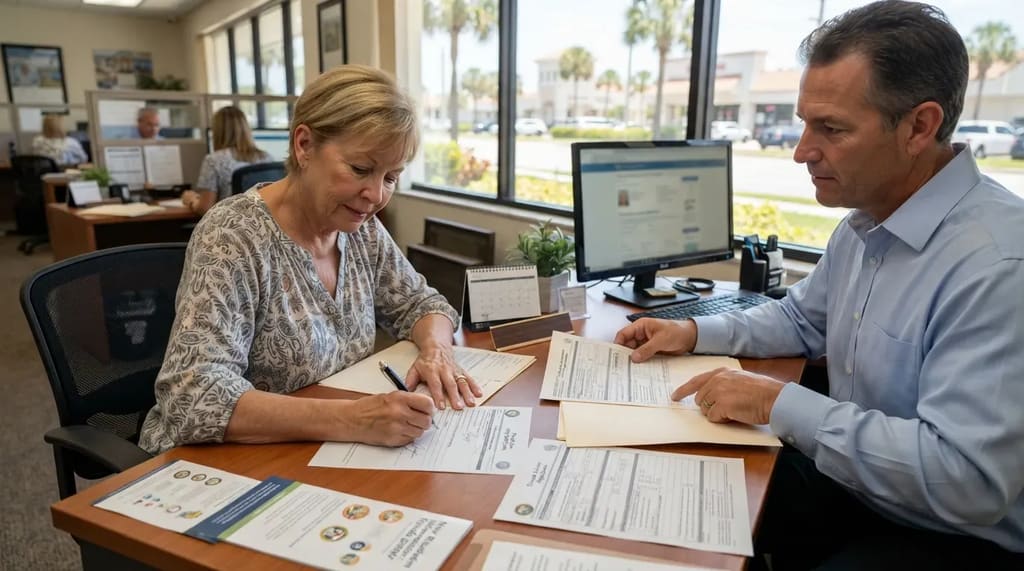
Florida reads certain acts as proof that you have moved, whatever you tell yourself about being a visitor. A new resident who accepts employment, engages in a trade or profession, or enrolls a child in a Florida public school must get a Florida license within 30 days. Making a permanent home in the state counts too.
The trigger in each case is something you do. The number of weeks you have spent here does not enter into it.
At a Glance
- Florida driver’s license: 30 days after you become a resident
- Vehicle title and registration: 10 days for new residents
- Residency triggers: paid work, a trade or profession, a child in public school, or a permanent home
- Time spent as a visitor: not a trigger on its own
If you are thinking about paid seasonal work, settle the question before the first shift. Becoming a resident also brings the shorter vehicle registration deadline with it, and that one is a bigger shock than the license deadline. Your car, meanwhile, keeps a day count that is separate from yours.
#11 – Your Car’s 90 Days Add Up Even When You Go Home for Christmas
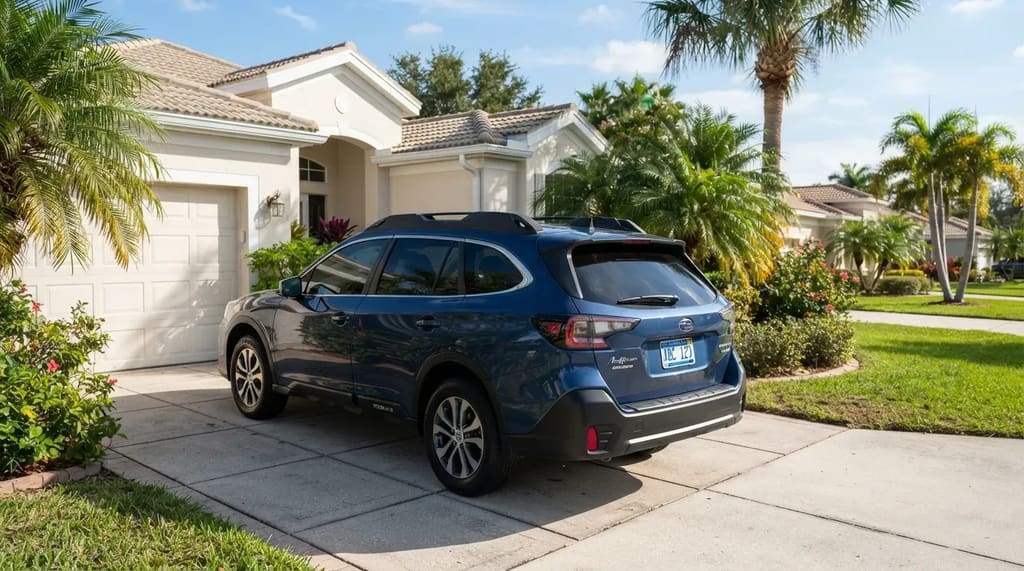
The 90-day line for a vehicle is cumulative, not consecutive. Florida law requires a vehicle that stays in the state more than 90 days per year to be registered and insured in Florida with Florida PIP.1 3 A Michigan couple who arrive in early November, fly home for the holidays and return in January can pass the mark well before April, especially if the car stays parked in Florida.
Going home for Christmas does not reset the count. If your winters run from November or December into spring, plan as though the rule applies to you instead of hoping the days come up short. The next few items show what that means for insurance, registration and the cost of getting it wrong.
Counting days matters for the car, but the road rules apply from the first mile.
#10 – Move Over Covers More Than Police Cars
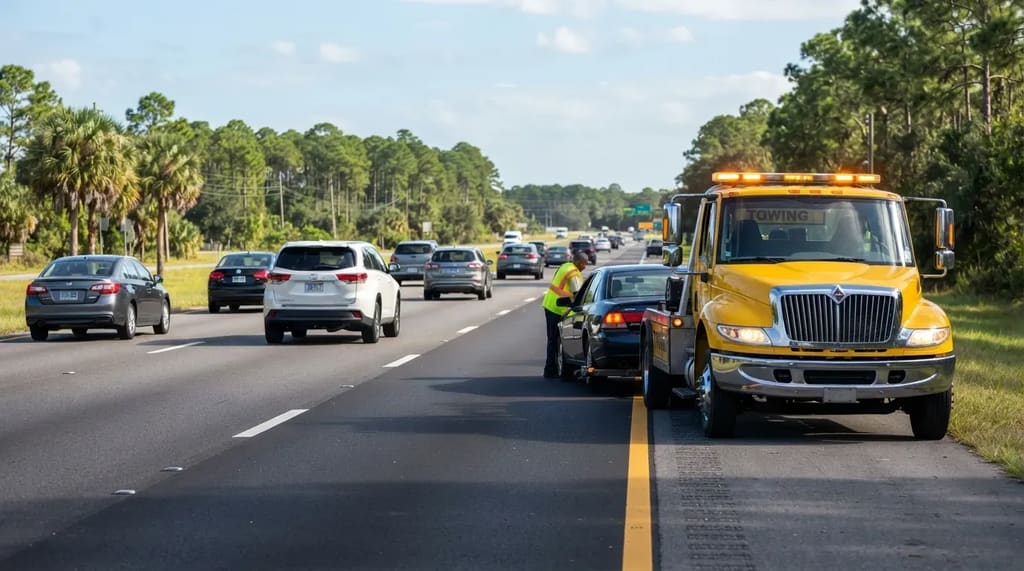
Any Michigan driver knows the idea behind Florida’s Move Over law: when a vehicle with flashing lights is stopped on the roadside, you change lanes away from it if you safely can. Florida’s version reaches past police cars to tow trucks and other service vehicles working the shoulder. If you cannot change lanes, you are expected to slow well below the posted limit, generally 20 mph under it on faster roads.4
The long drive down I-75 is plenty of warm-up before you reach the state line. Florida’s interstates stay busy all winter, and a stopped tow truck on a crowded stretch gives you only seconds to decide. Treat any roadside vehicle with flashing lights the same way and you will never have to guess which kind it was.
Fast Facts
- Covered vehicles include police, fire and ambulance units, tow trucks, and sanitation and utility vehicles
- First choice: move over one lane if it is safe
- Second choice: slow to 20 mph below the limit when the posted limit is 25 mph or higher
- On slower roads, with a limit of 20 mph or less, the target drops to 5 mph4
#9 – Florida Wants $10,000 in PIP on Your Car
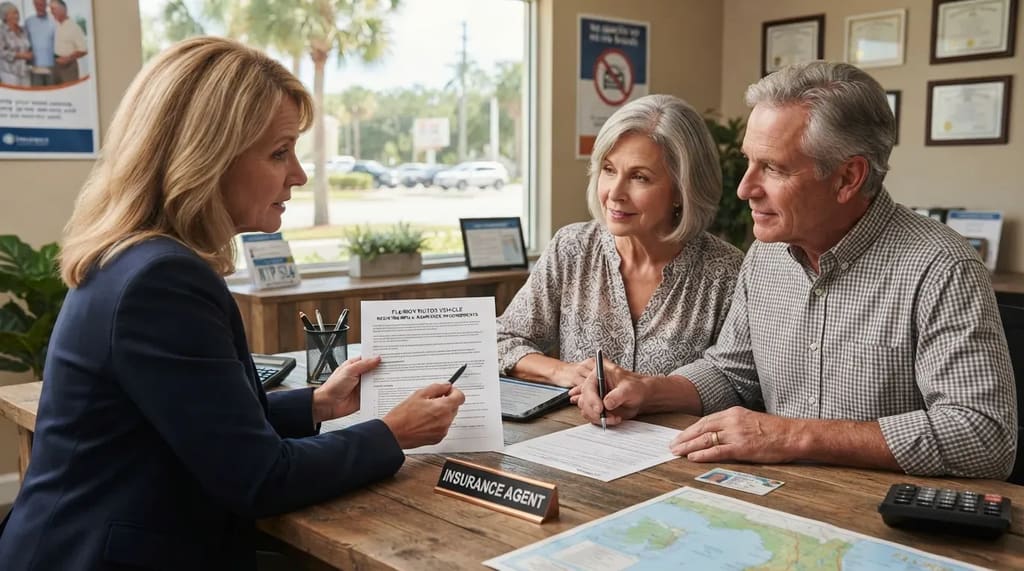
Florida requires $10,000 in PIP and $10,000 in property damage liability coverage before you can register a vehicle. PIP is no-fault coverage, so it pays you whether or not you caused the accident. That is a different structure from Michigan’s, and it is the reason a Florida-registered car needs a Florida-compliant policy.
The $10,000 figure is a floor, and a low one next to a hospital stay or a newer car. If you have a house and savings to protect, carrying only the minimums is a poor bargain, so ask an agent about higher liability limits when you buy. Many owners also assume their northern policy already handles all of this, which brings up a clause worth reading closely.
#8 – The “Out-of-State Coverage” Clause Is Not a Florida Policy
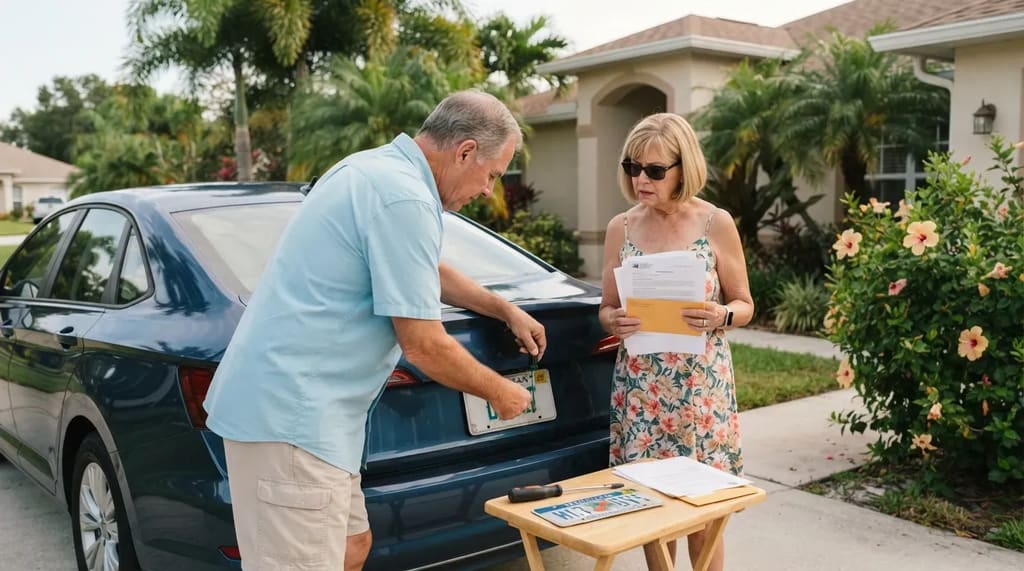
Many snowbirds assume the out-of-state coverage clause in a northern policy converts to meet Florida’s no-fault rules. It does not. Once a car has to be registered in Florida, it needs Florida PIP, and leaning on a northern policy’s clause does not satisfy that requirement. The coverage has to come from an insurer licensed to do business in Florida.1
The clause still has a job while you are a visitor, covering you on a short trip in a car registered at home. It does not stretch to a car that has become a Florida car on paper. In October, ask your Michigan agent one narrow question: what happens to this policy if the car is registered in Florida? A clear answer beats a general reassurance.
After a crash, the coverage question comes with a timer attached.
#7 – Fourteen Days to Get Checked After a Crash
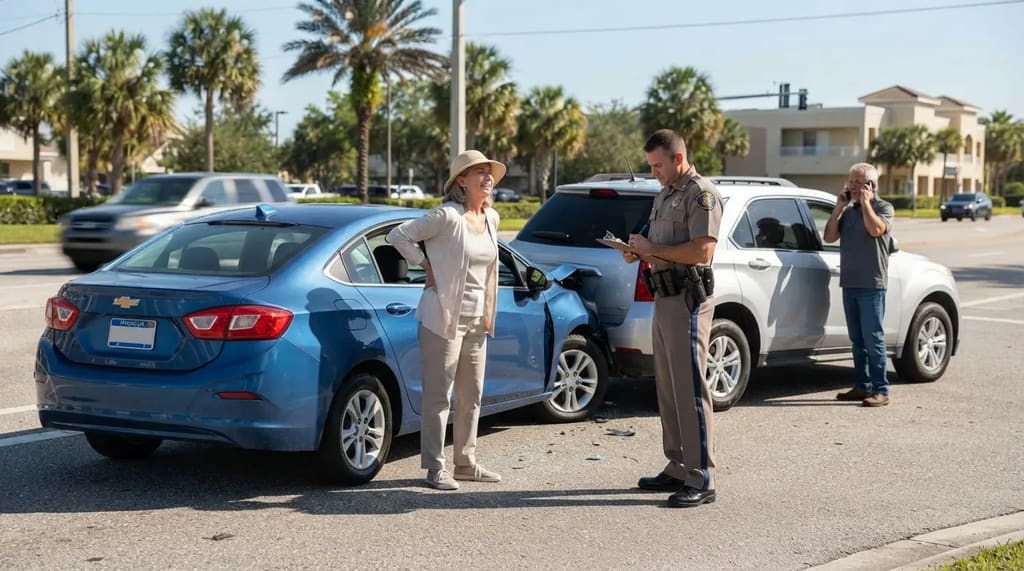
Florida is a no-fault state, so an injured driver usually starts with PIP, and PIP comes with a deadline. Florida’s no-fault rules generally require you to get initial treatment within 14 days to use PIP benefits. That matters if your car is registered in Florida and insured with Florida PIP, and it matters for your Florida-resident neighbors too.
Soreness after a collision often builds over several days, so waiting to see how you feel is the classic way to miss the window. A winter visitor with a Michigan-registered car is generally under different rules, which is why it pays to know in advance which kind of driver you are.
Drivers are not the only ones the no-fault rules sort by residency. Pedestrians get sorted too.
#6 – A Visitor Hit on Foot May Not Get the Driver’s PIP
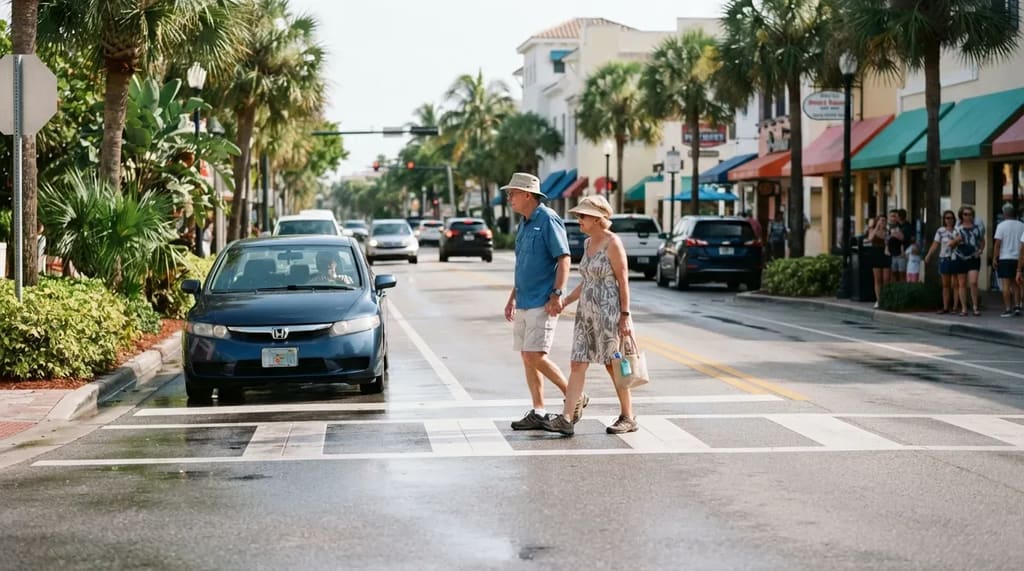
On a pedestrian claim, Florida’s no-fault statute treats visitors differently. The PIP coverage on the car that hits a pedestrian applies only if that person is a Florida resident.5 Out-of-state visitors often can’t use the driver’s PIP, so their own policies and the driver’s liability coverage matter most.
Worth Knowing
- Florida resident on foot: the striking car’s PIP can apply
- Out-of-state visitor on foot: often shut out of the driver’s PIP
- Visitor’s fallback: their own policy and the driver’s liability coverage
- Car in Florida over 90 days with Florida PIP: your own PIP may cover you as a pedestrian
This ties back to the 90-day car rule. Florida generally requires PIP on a vehicle that stays in the state for more than 90 days in a year, and if you carry that coverage, your own Florida PIP may cover you when you are hit as a pedestrian. So the walk to dinner in your community can be covered very differently depending on how your car is insured. The same visitor-versus-resident line shapes registration, which has a very short deadline of its own.
#5 – Ten Days and $225 to Register a Car
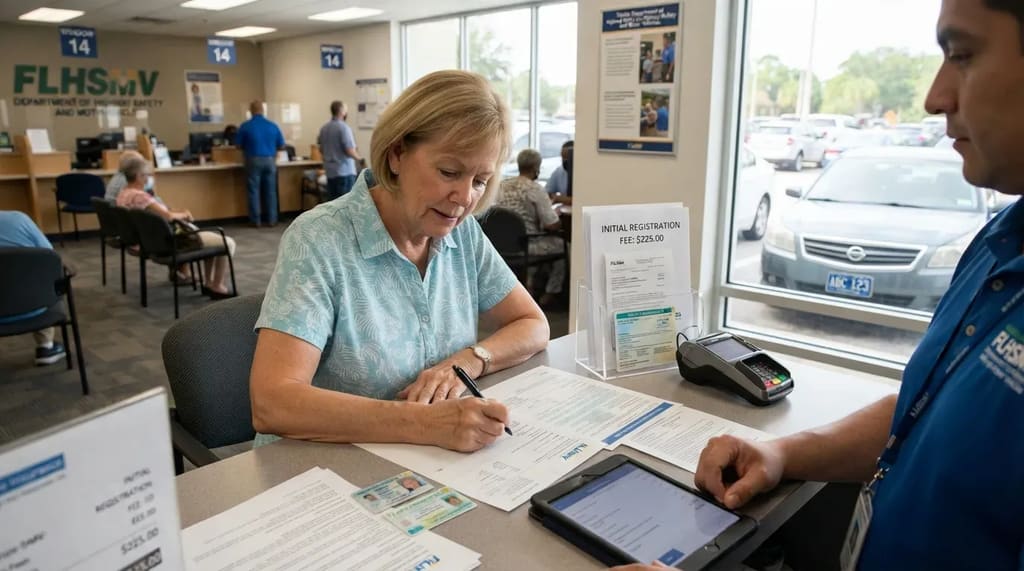
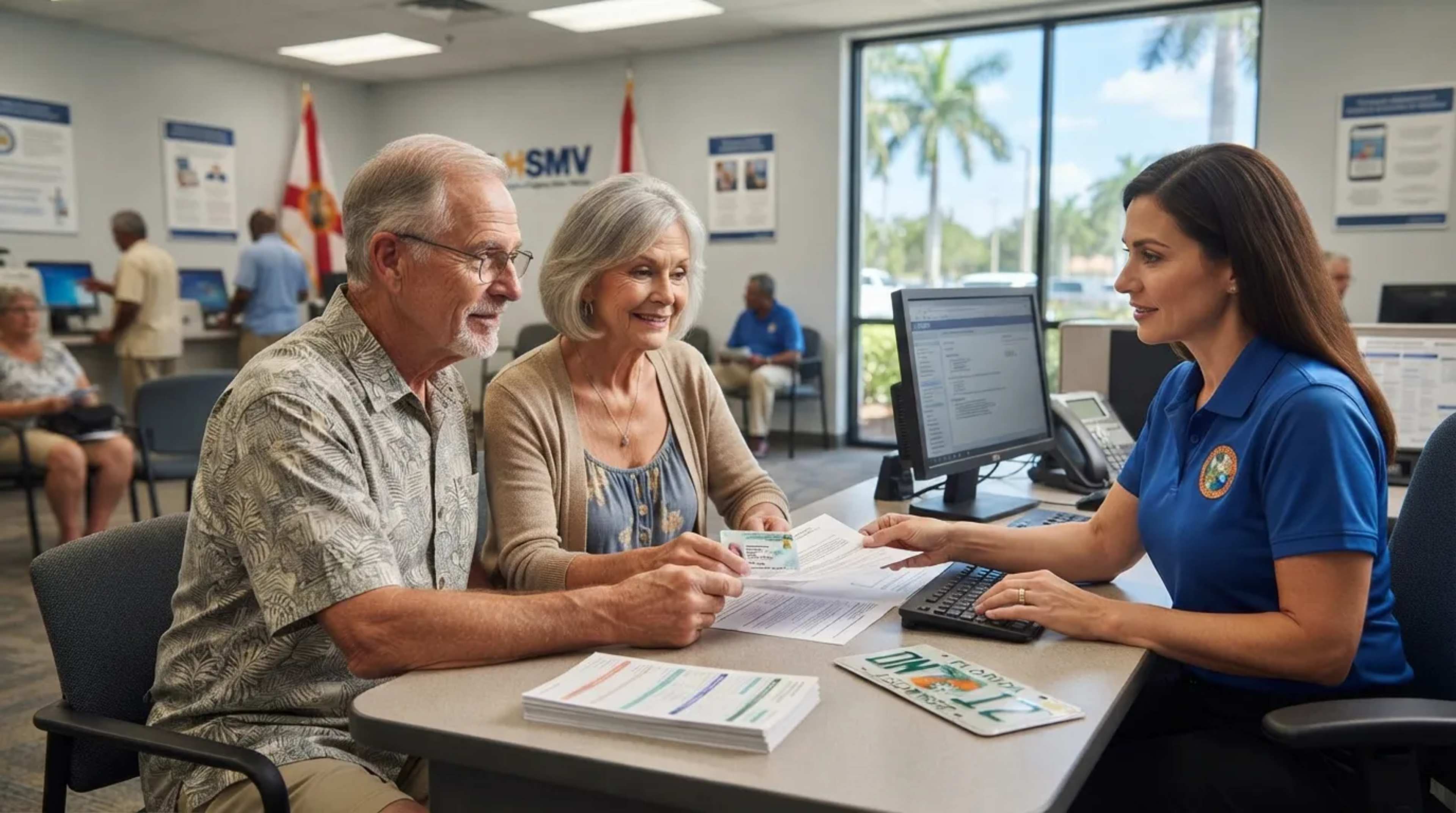
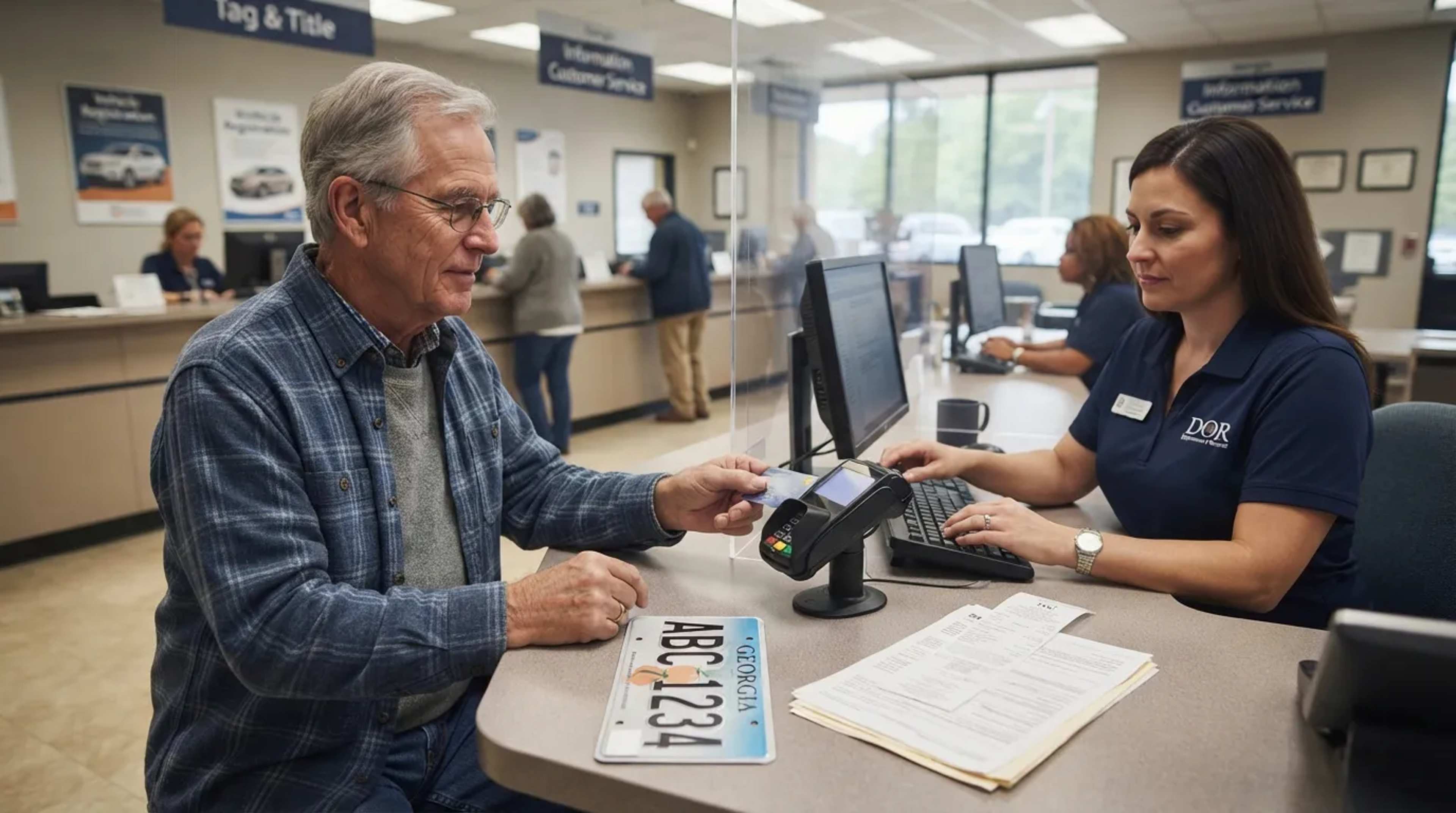
FLHSMV gives new residents 10 days to title and register their vehicles. That is far tighter than the 30 days allowed for a license. Florida insurance has to be in place first, because FLHSMV will not issue a registration if it cannot electronically verify valid coverage.2 The order is simple: buy the policy, then register.
Florida charges a one-time $225 initial registration fee when someone who has not previously held a Florida tag registers a vehicle. The fee stings less than the decision hiding behind it. That Florida policy can change what happens to the Michigan coverage you were counting on.
Buying a Florida policy to satisfy the registration rules can end a Michigan policy you wanted to keep.
#4 – Registering in Florida Can Cost You Michigan No-Fault
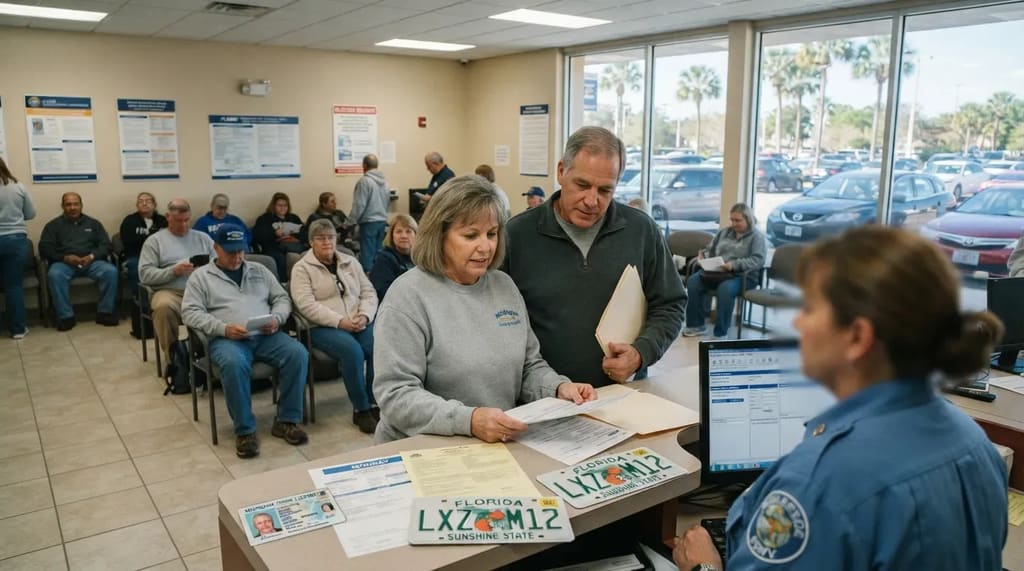
Michigan’s no-fault benefits come attached to a Michigan policy. If you register your car in Florida and cancel the Michigan policy to meet Florida’s rules, the Michigan personal injury protection goes with it. Florida coverage does not take its place when you are driving back home, because Michigan’s no-fault system and Florida’s are built differently.
Some carriers write policies for people who split the year between the two states. If you are going to register a car in Florida for the winter, find out before you cancel anything whether your insurer offers an arrangement that keeps Michigan coverage in place. Availability varies by carrier and region, so get the details from your agent in writing.
None of this touches the building next to your parking space, which falls under a separate set of Florida rules.
#3 – Condo Reserve Laws Reach Seasonal Owners
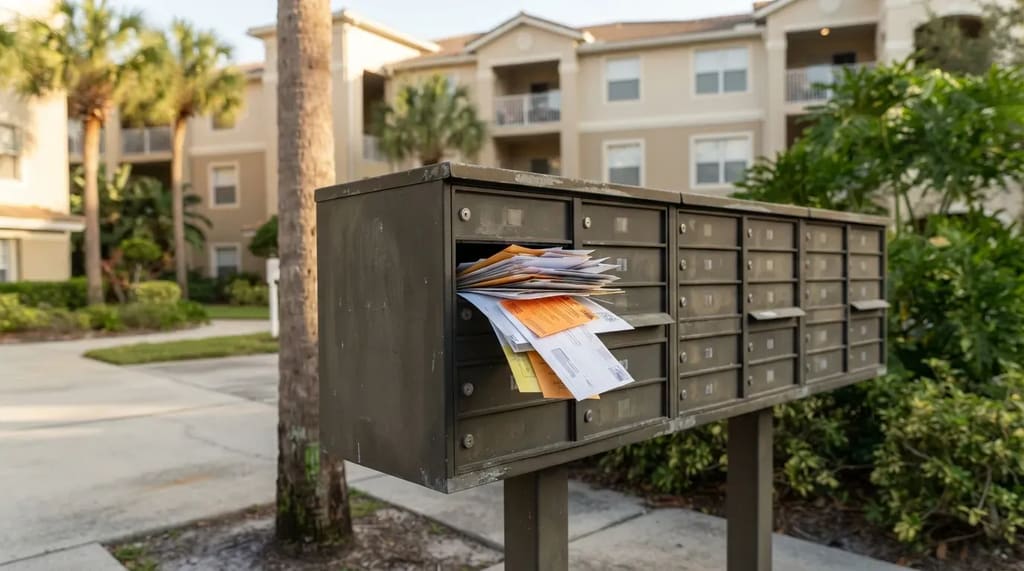
Florida’s condo laws changed after the Surfside collapse, and they affect owners who live elsewhere half the year. Chapter 718 now requires Structural Integrity Reserve Studies for buildings of three stories and up, and boards can no longer waive reserve funding for the items those studies cover.6 Those items include the roof, load-bearing walls, foundation, plumbing, electrical and waterproofing. A board that kept dues low for years may now have to catch up.
Related Stories From Travelbinger

Catching up often means a special assessment. Associations can fund reserves through special assessments, lines of credit or loans, and the notices and meeting calls land in a mailbox a seasonal owner may not be checking. Special assessments are generally not tax deductible for owners. If you own in a building three stories or taller, ask for the reserve study early instead of waiting for the bill.
Assessments are one line in a Florida owner’s costs. The property tax bill is the other, and second homes get less protection there than primary residences.
#2 – A Second Home Gets No Homestead Break
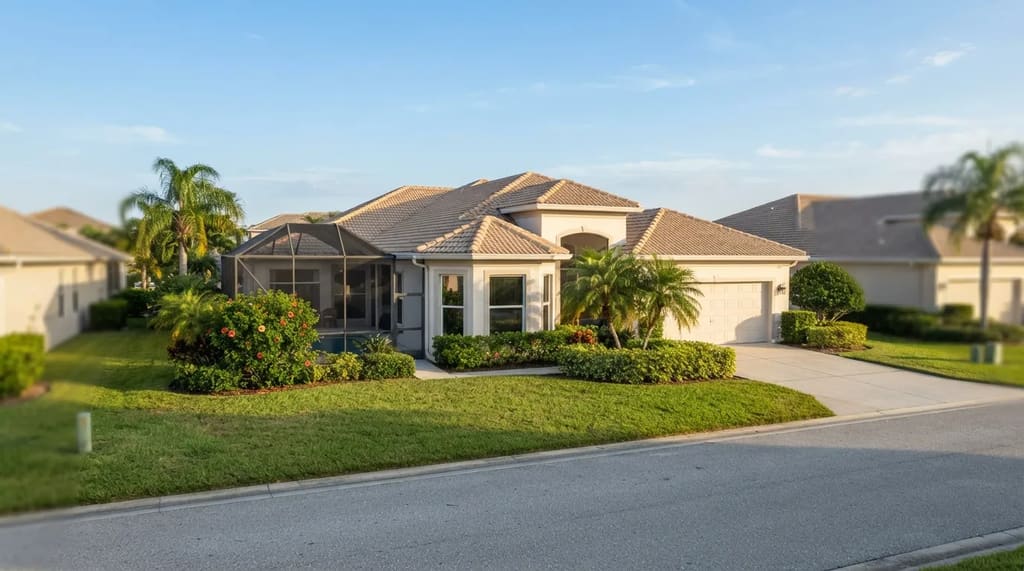
Second homes, rental property and commercial buildings do not receive the homestead exemption. They also miss the 3% Save Our Homes cap. They get a weaker protection instead: a 10% annual cap on assessment increases that excludes school taxes and requires no application.7
Quick Compare
- Homestead home: assessment cap of 3% or the change in the Consumer Price Index, whichever is lower. You must apply by March 1.
- Second home: assessment cap of 10% a year, excluding school taxes. No application needed.
- Portability of the cap to another property: not available for non-homesteaded properties.
Owners of non-homesteaded properties also cannot port that savings to another property. Florida property tax rules are a frequent political topic, so check the county property appraiser’s current figures before you budget. Claiming the homestead break instead means proving Florida is your home, which is a harder test than the form suggests.
#1 – The March 1 Form That Declares Florida Home
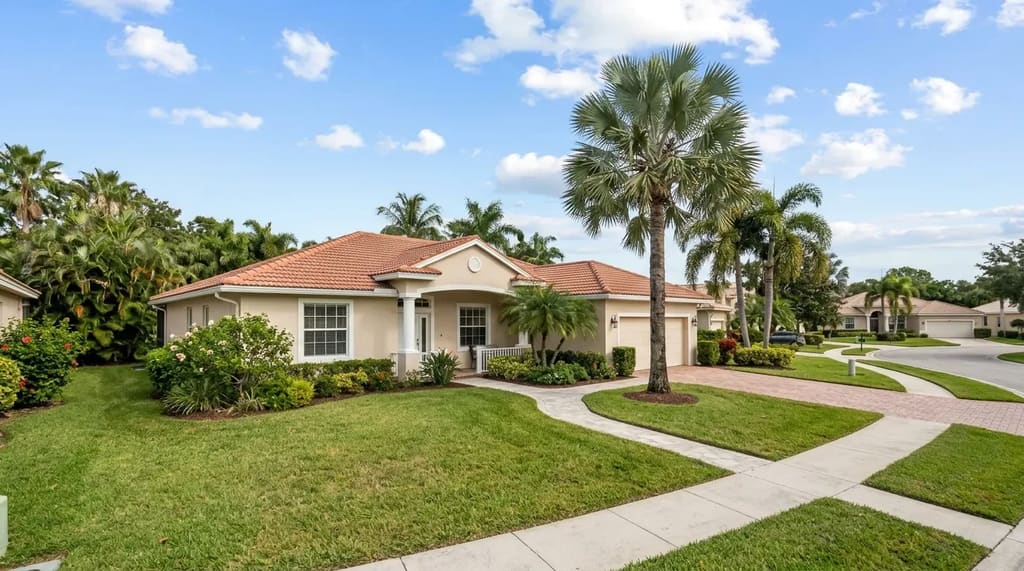
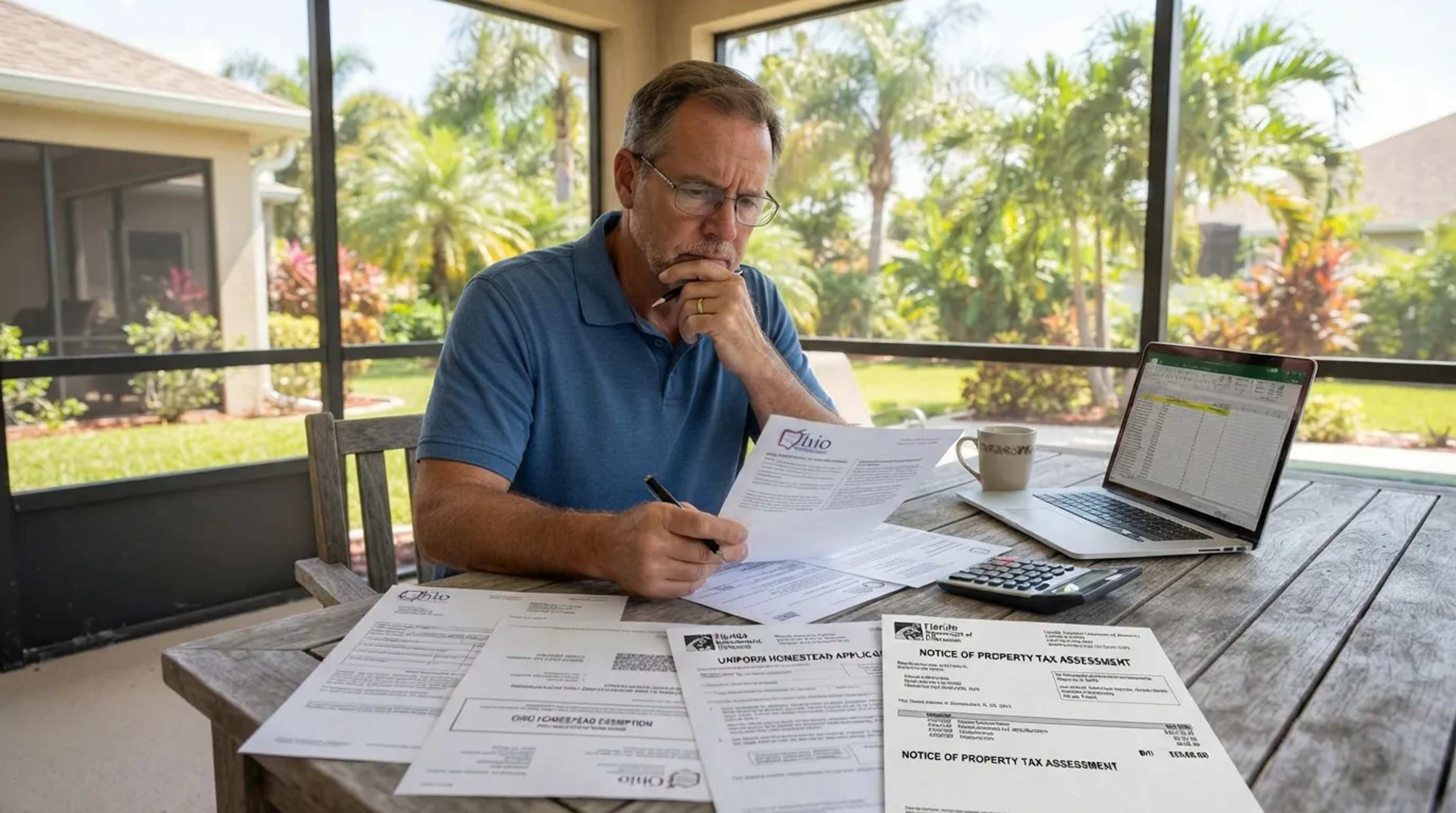
The homestead exemption is granted by the county property appraiser, and you have to ask for it. You must qualify as of January 1 and apply by March 1, and missing that date waives the exemption for the year.8 It takes roughly $51,000 off the taxable value of your primary Florida home (the second slice excludes school taxes) and caps how fast the assessment can grow. The cap is 3% a year or the change in the Consumer Price Index, whichever is lower. That makes it the largest yearly saving in this piece.
The price is a declaration that Florida is your permanent home. You must be a permanent Florida resident, hold title, make the property your permanent residence and have no other residency-based benefits elsewhere. You can only have one homestead in Florida. A residency-based break on a Michigan home, such as the principal residence exemption, is the kind of benefit these rules rule out, so check with both counties and a tax professional before filing.
Then your other records have to agree with the form. Appraisers look for a Florida driver’s license, voter registration, vehicle registration and a declaration of domicile as proof of permanent residency, and a mismatched set undercuts the claim. That brings back the license, the registered car, the Florida insurance and the Michigan policy you were weighing. For a couple who spend most of the year in Michigan, skipping homestead is usually the honest choice, and the higher second-home tax bill is the price of it.
Florida sorts you into visitor or resident, and most of the rules above follow from which one your paperwork says you are. The trouble tends to start when the records disagree, like a Michigan license on a Florida-registered car, or a homestead form beside a Michigan voter card.
Snowbird life is supposed to feel like leaving the paperwork up north. Florida is happy to remind you that it came along.
- Florida Statute 627.733: https://www.flsenate.gov/Laws/Statutes/2026/627.733
- FLHSMV New Resident Guide: https://www.flhsmv.gov/new-resident/
- Florida Nonresident PIP Rule: https://regulations.justia.com/states/florida/69/69o/chapter-69o-176/section-69o-176-008
- FLHSMV Move Over Law: https://www.flhsmv.gov/safety-center/driving-safety/move-over/
- Florida Out-of-State Injury Claims: https://www.thelawofwe.com/florida-laws-out-of-state-injury-claims/
- Florida Chapter 718 Statutes: https://www.flsenate.gov/Laws/Statutes/2024/Chapter718/All
- Save Our Homes Cap Analysis: https://jonesfoster.com/our-perspective/save-our-homes-cap-florida-benefits-pitfalls
- Homestead Exemption FAQ: https://ocpaweb.ocpafl.org/faqcontent/HX_FAQ