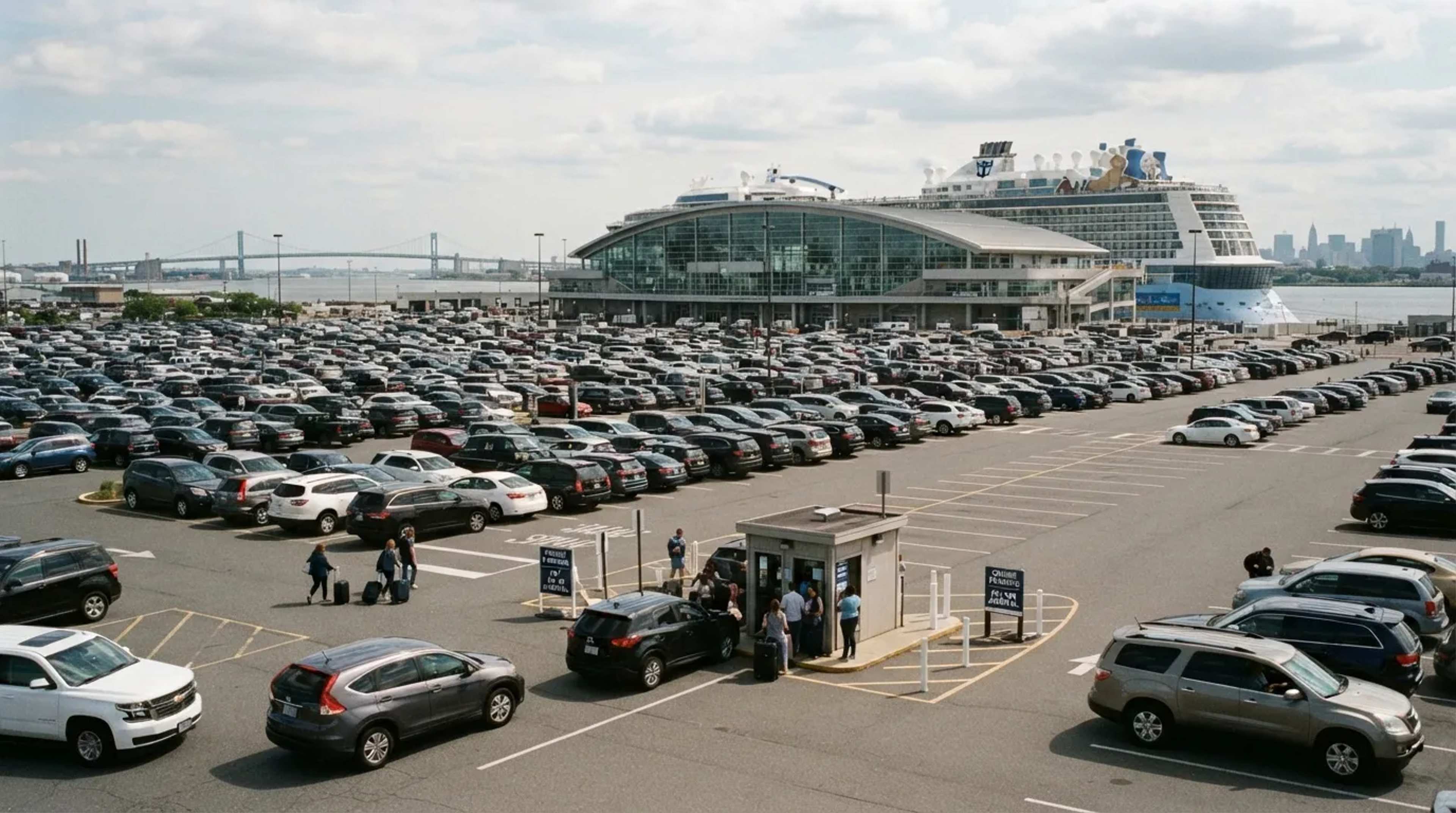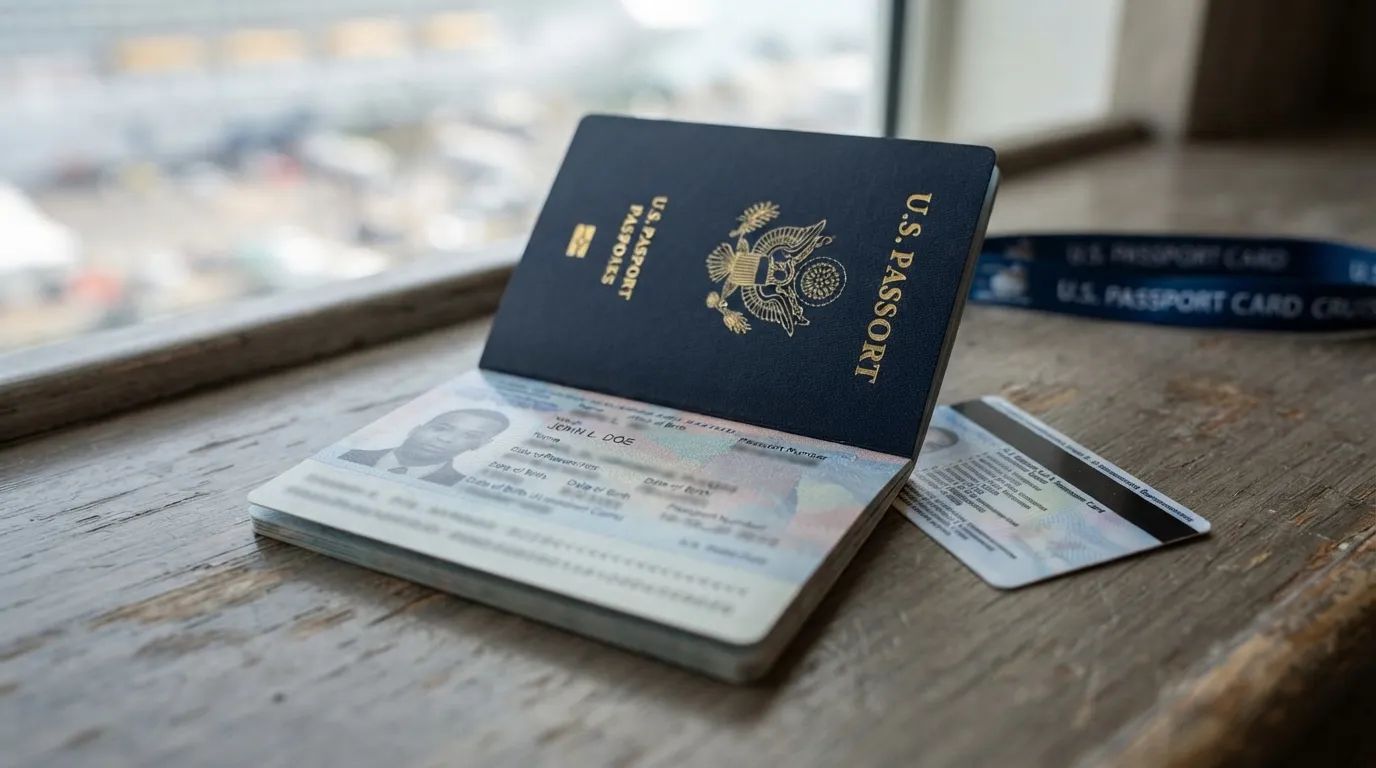
A U.S. citizen on a round trip that starts and ends at the same American port can legally board a cruise ship with a government-issued birth certificate and a photo ID.1 No passport book is required. That small exception explains much of what goes wrong at the terminal, because a rule that sounds optional invites shortcuts. For travelers over 60, the shortcuts tend to involve medicines, implants, mobility aids and paperwork.
Screeners are there to scan bags, not to coach you, so most of this goes unsaid at the checkpoint. The fifteen items below run from a confiscated gadget to a very real expense. The cheapest thing on the list is a single document the terminal may never ask to see, and it is tied to the largest bill. First comes the most ordinary trouble spot, a bag the X-ray machine doesn’t like.
#15 – The Bag That Gets Carried to the Side Table
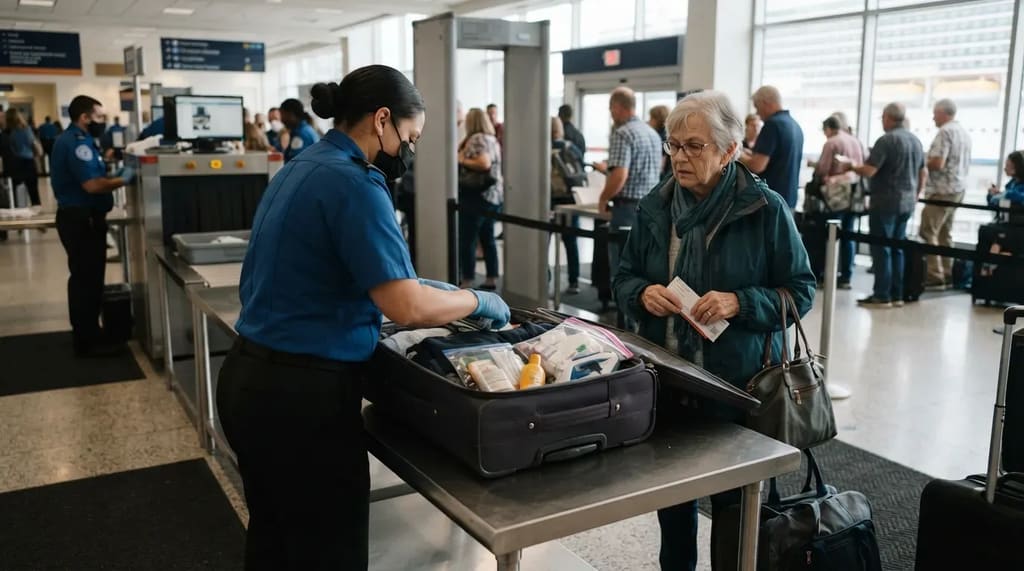
Cruise terminal security looks a lot like the airport version. You walk through a metal detector while your bags go through an X-ray, which is how staff look for prohibited items such as irons and alcohol.
You don’t have to take anything out of the bag. But if the scan shows something odd, such as extra liquids, the bag is carried to a side table for a closer look. Anything prohibited is confiscated before you are allowed to board.
The side table is where a hurried packing job gets noticed, and on a busy embarkation day it is a slow, awkward place to stand. A bag with medicines and liquids kept together is far easier to explain than one with them scattered through every pocket.
Most of what comes off those side tables is electrical, and the clothes iron is the classic example.
#14 – The Travel Iron Security Will Take Away
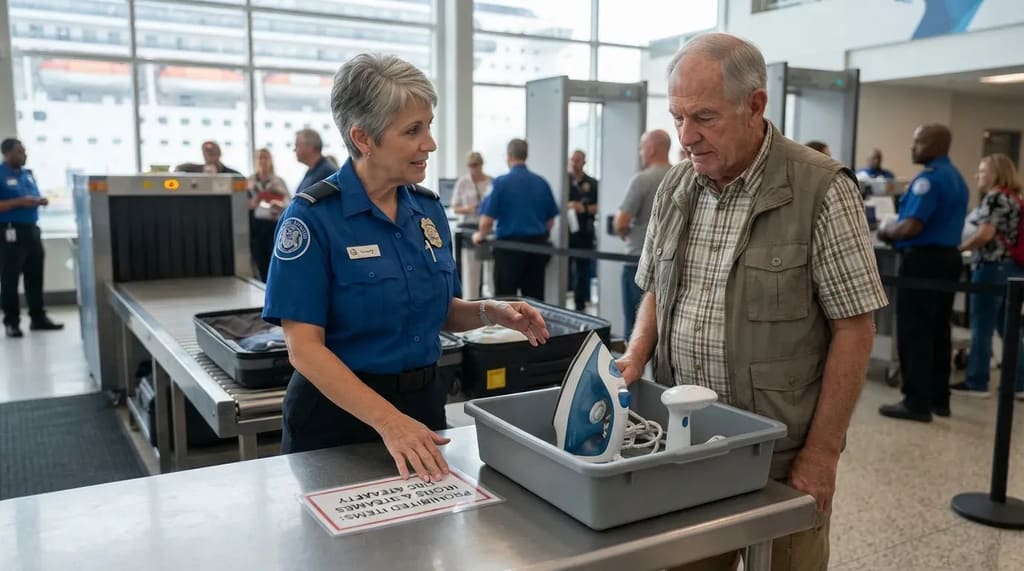
Clothes irons and steamers are banned on virtually every cruise line. Cabins are small, enclosed spaces, and fire risk is taken extremely seriously. A compact travel steamer doesn’t count as a loophole, because travel steamers are held at security too.
Holland America’s list goes further than irons. It bars anything with a heating element, including heating blankets and coffee machines with hot plates.2 That matters if you travel with a heating pad for a bad back.
If wrinkles bother you, the iron is not worth the argument at the table. Ships offer laundry or pressing services, and wrinkle-release spray is the usual stand-in.
Wrinkle spray solves the iron, but the shortage of cabin outlets is a harder problem, and the lines answer it in very different ways.
#13 – The Power Strip That Passes on One Line and Fails on Another
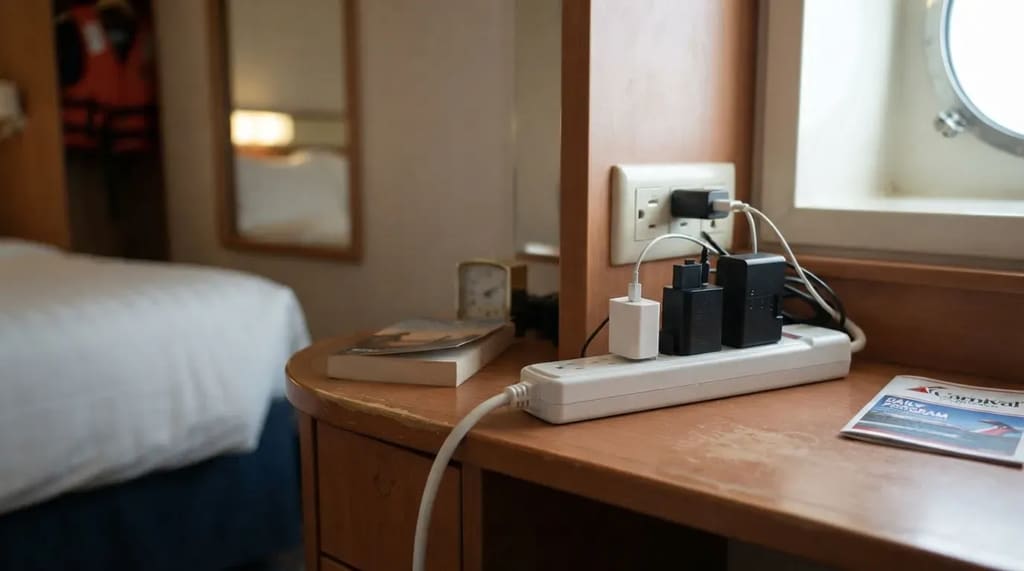
Cabins have few outlets, which tempts travelers to pack a power strip. The lines disagree on what is allowed. Royal Caribbean and Celebrity ban strips outright, Carnival allows them without surge protection, and Princess permits non-surge strips after an onboard inspection.
Disney’s list names extension cords, power strips, multi-plugs and surge protectors, which makes it the strictest of the group.2 Guides also contradict each other on whether surge-protected strips are allowed, so a summary read online is not a safe basis for packing.
At a Glance
- Royal Caribbean and Celebrity: power strips are banned outright.
- Carnival: strips are allowed only without surge protection.
- Princess: non-surge strips are permitted after an onboard inspection.
- Disney: extension cords, multi-plugs and surge protectors are all named on the list.
Read your own line’s prohibited-items page, and if it leaves any doubt, leave the strip at home. A USB hub is usually fine, and it covers a phone and a tablet. If a medical device needs a plug, ask the cruise line before you sail.
#12 – One Sealed Bottle of Wine, and Nothing Stronger
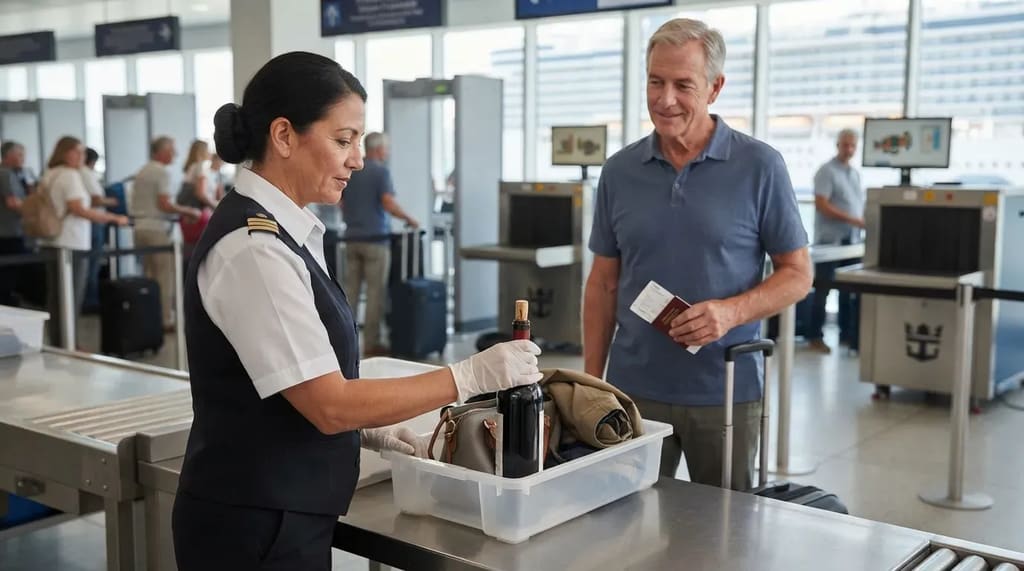
Alcohol is where passengers most often assume the rules are looser than they are. All five big lines let each adult bring wine or champagne, but none lets you bring liquor or beer. The usual allowance is one sealed 750 ml bottle per adult on embarkation day on Royal Caribbean, Carnival, Princess and Celebrity, with Norwegian allowing more for a corkage fee.
What happens to a seized bottle depends on the line. Princess says alcohol outside its policy is removed and discarded, and Royal Caribbean says liquor seized on embarkation day is not returned. Other lines hold confiscated items until the end of your sailing.
A flask tucked into a water bottle is a poor bet, since the luggage is scanned. Anyone who wants a favorite spirit is better off buying it in port.
Wine at least has a written allowance, which is more than some wellness products get.
#11 – The “THC-Free” CBD Gummy That Still Counts
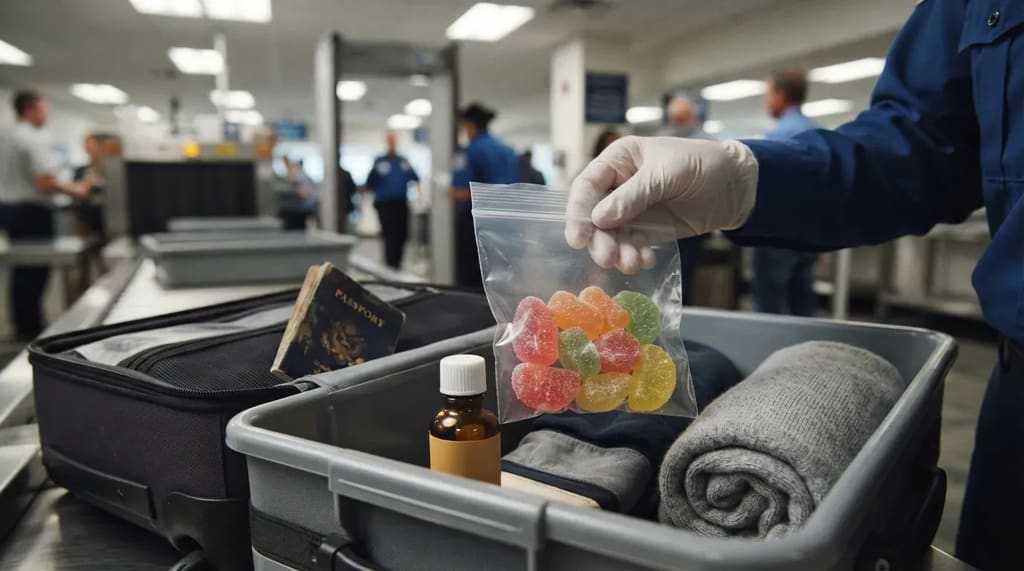
Pharmacies and gas stations sell CBD gummies and creams as ordinary wellness items, and that is how many travelers pack them. Carnival’s prohibited list includes CBD products, even those labeled THC-free.3
The wider picture is no looser. None of the five big lines lets you bring marijuana, even for medical use. Airports are no friendlier, since medical marijuana and high-THC CBD products are prohibited from plane travel even with a prescription, so a flight to the port shares the problem.
Fast Facts
- Carnival’s list includes CBD, even when the label says THC-free.
- None of the five big lines allows marijuana, medical or not.
- High-THC CBD and medical marijuana are also prohibited from plane travel.
- A “legal in my state” label doesn’t change what the terminal enforces.
If CBD is part of your daily routine, leaving it home for a one-week sailing is simpler than arguing at the table. A cruise line’s list, not your state’s law, is the one that applies at the terminal door. Ask your doctor about a substitute for the week.
Mobility equipment lives under a different kind of rule, one that depends on what the device is used for.
#10 – The Scooter Rule That Splits Mobility From Recreation
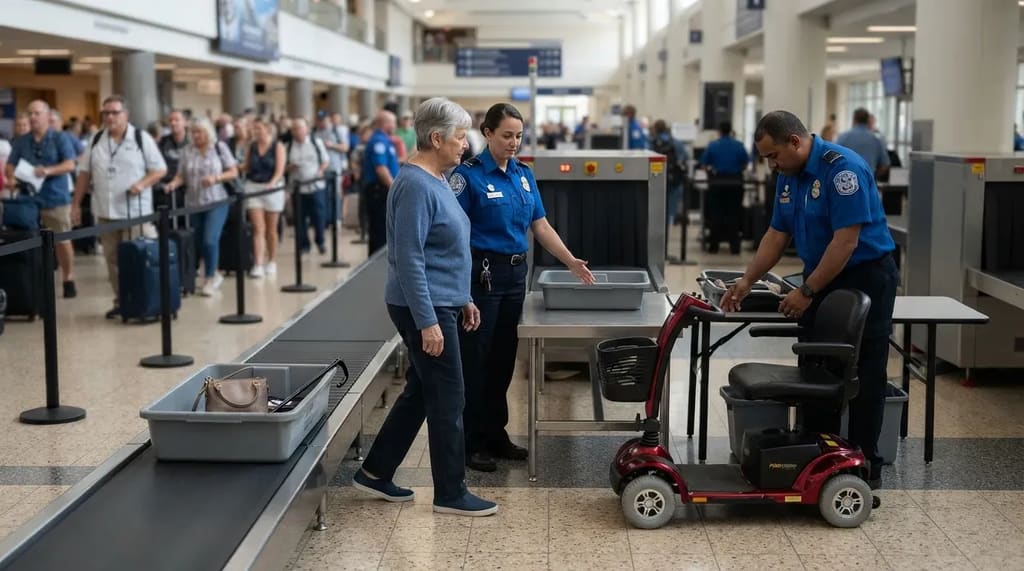
Mobility equipment is allowed, but the wording is specific. Holland America’s list bans spillable batteries, except those in wheelchairs, and permits scooters only if they are used for mobility.
The same list bans hoverboards and self-balancing scooters, and a Segway is permitted ashore only for mobility limitations and cannot be used on board. A recreational scooter and a mobility scooter can look alike at a glance, yet the line treats them very differently.
Those are Holland America‘s rules, and other lines write their own. If you fly to your departure port, TSA requires every passenger using a scooter, wheelchair, walker, cane or other mobility device to be screened in some way.
#9 – The Over-75 Shoes-On Shortcut That Belongs to Airports
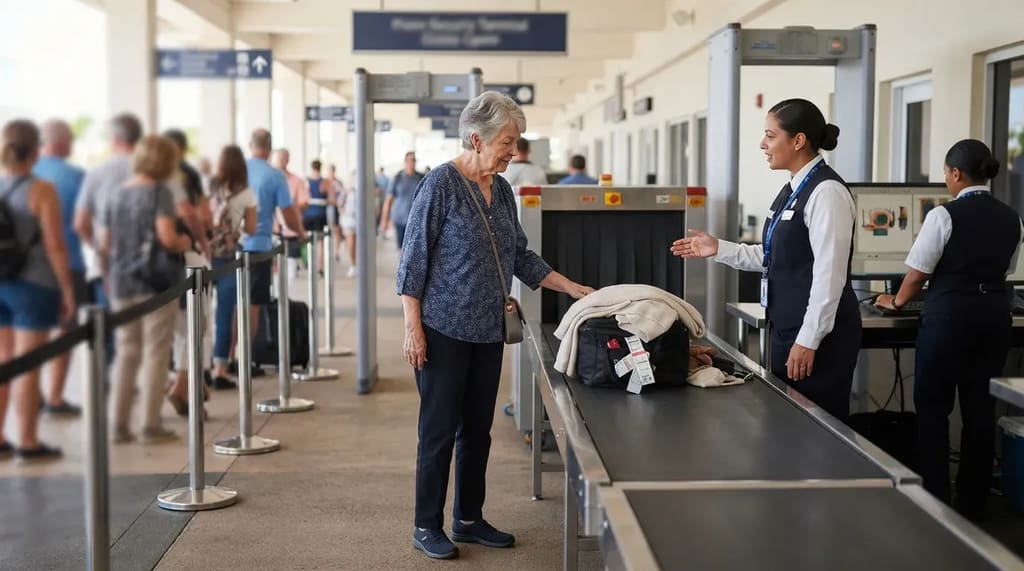
TSA gives passengers 75 and older some modified screening, and older travelers can leave on shoes and light jackets or sweaters. Many readers know this from the airport and expect it to follow them to the pier.
It is a TSA program for airport checkpoints. Cruise terminal screening is run by each terminal under its own approved screening program, so the shoes-on courtesy shouldn’t be assumed. What a terminal offers older passengers is a question for the staff at the door.
Asking costs nothing. At airports, you can ask to sit down for a pat-down, and the same polite request is worth making at the pier. TSA also notes that this modified screening isn’t a way to skip screening or the line.
Even a checkpoint handled gracefully comes with a rule about walking away from it afterward.
#8 – The Walk Back to the Car That Sends You to the End of the Line
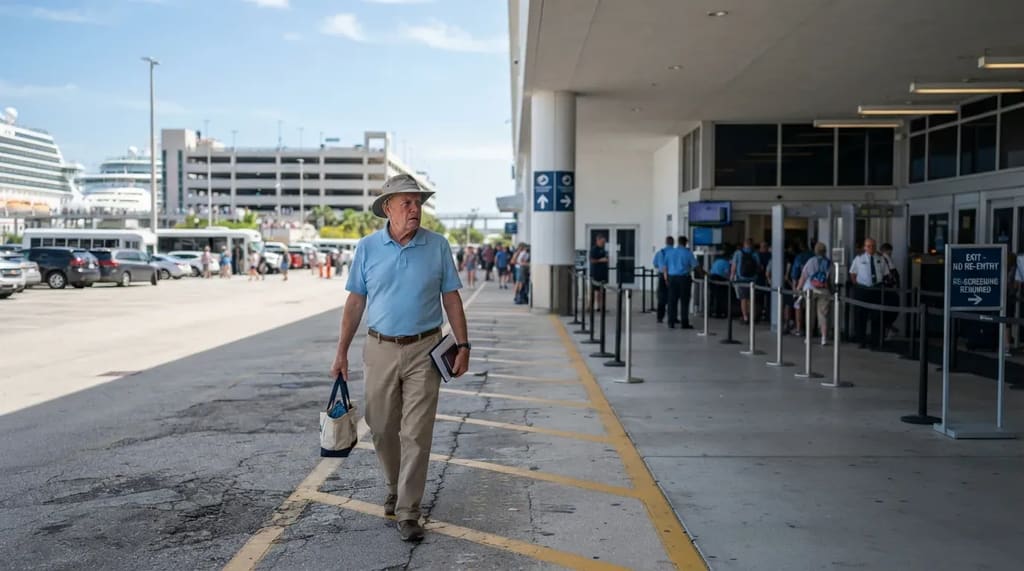
Federal terminal rules set the order of events. Facility personnel must check personal identification before they allow you to proceed to a screening location. Your ID is looked at before your bag ever reaches the belt.
After that, screened passengers and their carry-on items must stay in the secure areas of the terminal until boarding. Anyone who leaves a secure area must be re-screened.
In practice, a walk back to the car for a forgotten pill organizer sends you through the checkpoint a second time. Do the final pocket check at the curb, before you join the line, and not after the scanner.
#7 – The Face Scan That Belongs to the Federal Government
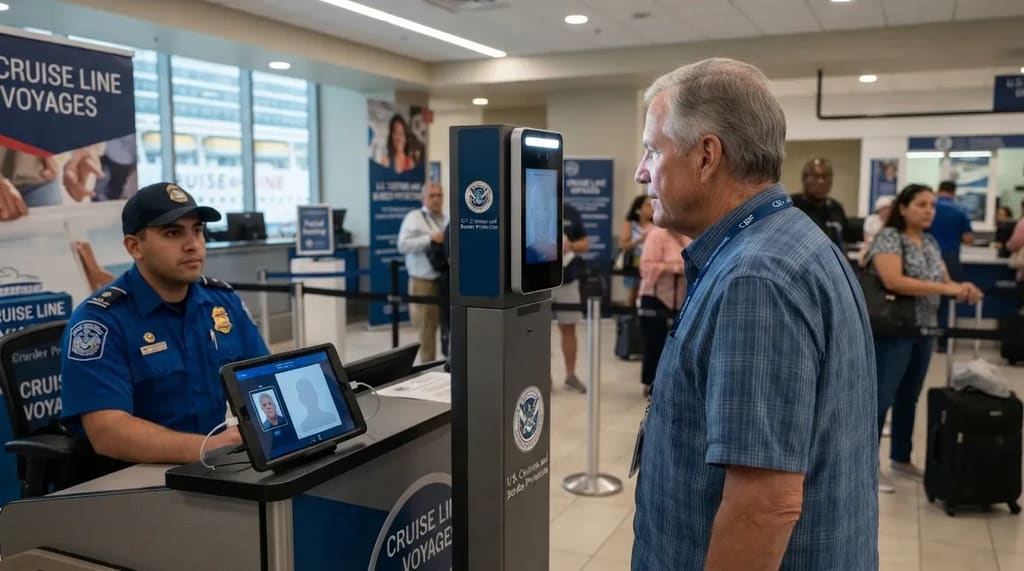
Many terminals now use facial recognition at embarkation. U.S. Customs and Border Protection runs it, not the cruise line, even though the camera sits inside a terminal covered in the cruise brand.
At the two largest lines, the terminal cameras feed CBP’s Traveler Verification Service rather than separate company databases. It is a federal system with a cruise-ship backdrop.
U.S. citizens can decline the scan and ask a CBP officer for a manual passport check instead.4 That is your choice to make. Because the camera is federal, the question belongs with the CBP officer and not with the cruise line’s check-in agent.
Worth Knowing
- The camera is a CBP system, even though the terminal wears the cruise brand.
- U.S. citizens may opt out and request a manual check.
- Direct opt-out questions to the CBP officer, not the check-in agent.
- If you opt out, keep your travel documents within easy reach.
The camera compares your face with records assembled weeks before you arrived.
#6 – The Background Check Your Name Gets Before You Arrive
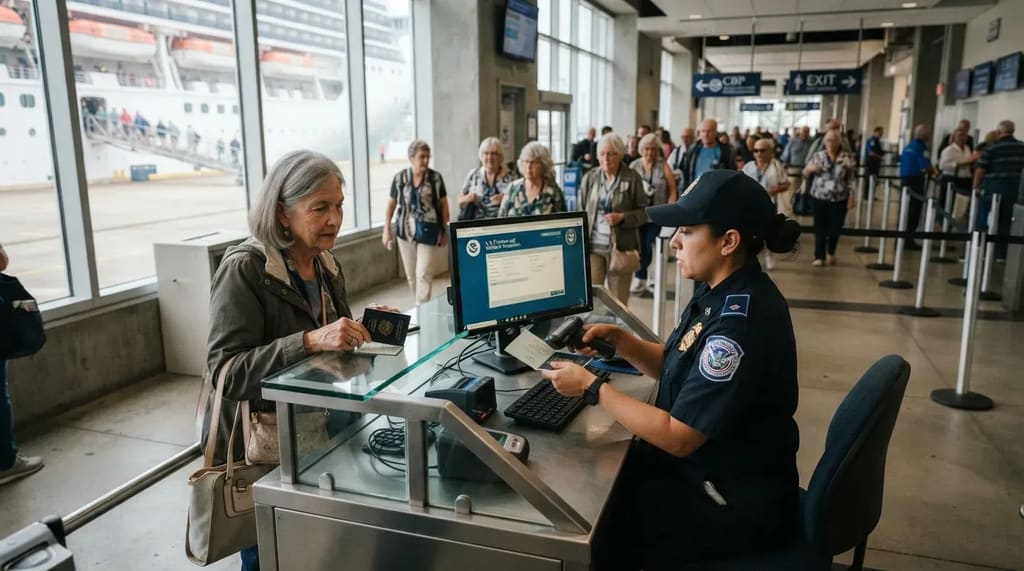
The cruise line sends the full passenger and crew manifest to CBP systems before the ship even enters U.S. waters. The information is run through federal databases for outstanding warrants, immigration flags and other security risks.
That makes the booking the thing being checked, so the name on it should match the ID you carry. A maiden name, a missing middle name or a nickname is far easier to correct with the cruise line from your kitchen than at the counter.
The process runs by the book at the far end too. CBP requires every departing passenger to be off the vessel and scanned out before a new set of travelers may go aboard. That is why debarkation times are not negotiable.
#5 – The Pacemaker Nobody Heard About Until the Metal Detector Beeped
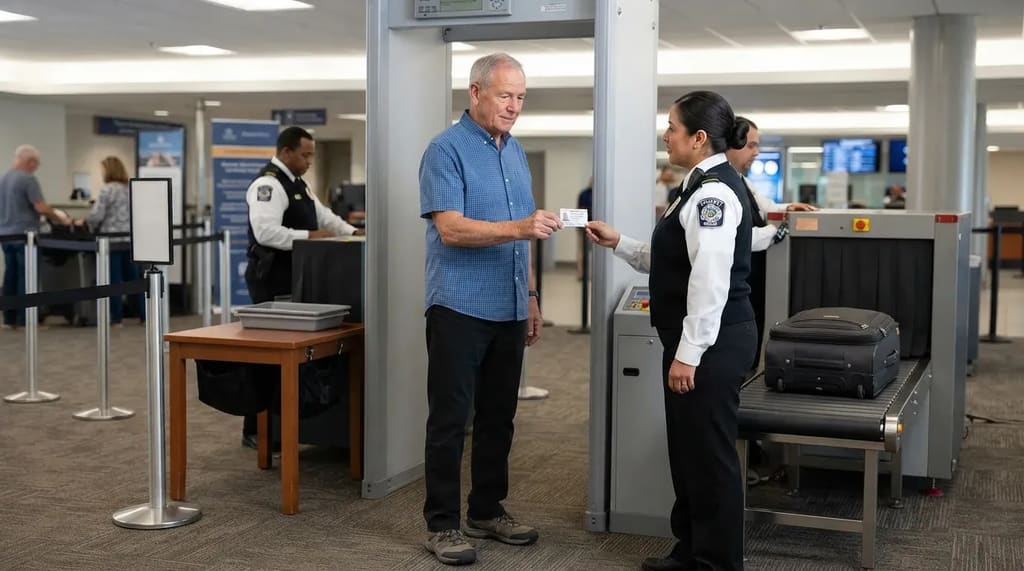
The simplest fix at any checkpoint is to speak first. TSA urges travelers with a pacemaker to tell the officer at the start of screening, or to wear a medical card that makes the information visible.5 Cruise terminals use a walk-through metal detector, so the time to say it is before you step in.
It isn’t only pacemakers. People with replacement joints, insulin pumps or spinal stimulators can also request alternative screening.5 At airports, the alternative is most likely a pat-down.
Don’t count on remembering to mention it when the line is moving and a staff member is waving people forward. A card in your pocket does the remembering for you.
Telling an officer about a device is half the preparation, and the pills in your bag are the other half.
#4 – The Pill Bottles That Should Never Leave Your Carry-On
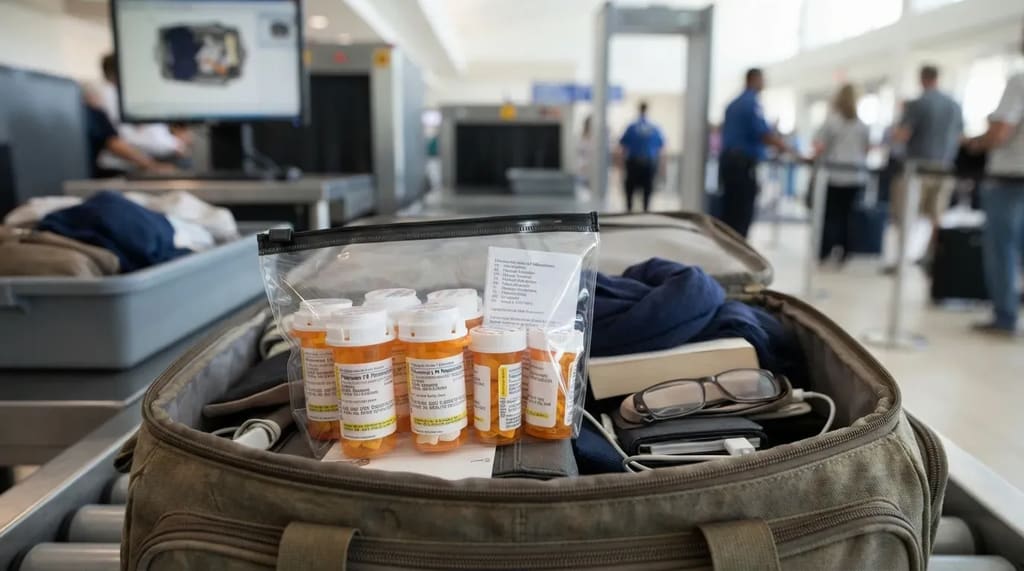
Medicines belong in the bag that stays with you. Keeping them in your carry-on means a lost suitcase doesn’t leave you without them. At a cruise terminal, checked bags can be a long way from your cabin for hours after you board.
- Keep essential medications in original, labeled containers.
- Pack a medication list and your doctors’ contact details alongside them.
- Carry no more opioids or sedatives than you need, since they are highly regulated and draw more scrutiny.
Labeling pays off at the checkpoint, because clear labeling can make screening faster, which is why original packaging helps. A loose handful of pills in a plastic bag invites questions that a labeled bottle answers on its own.
Medicine is easy to organize, but the ID in your wallet is trickier, because a card that looks official may not prove what a cruise needs it to prove.
#3 – The REAL ID License That Proves Too Little
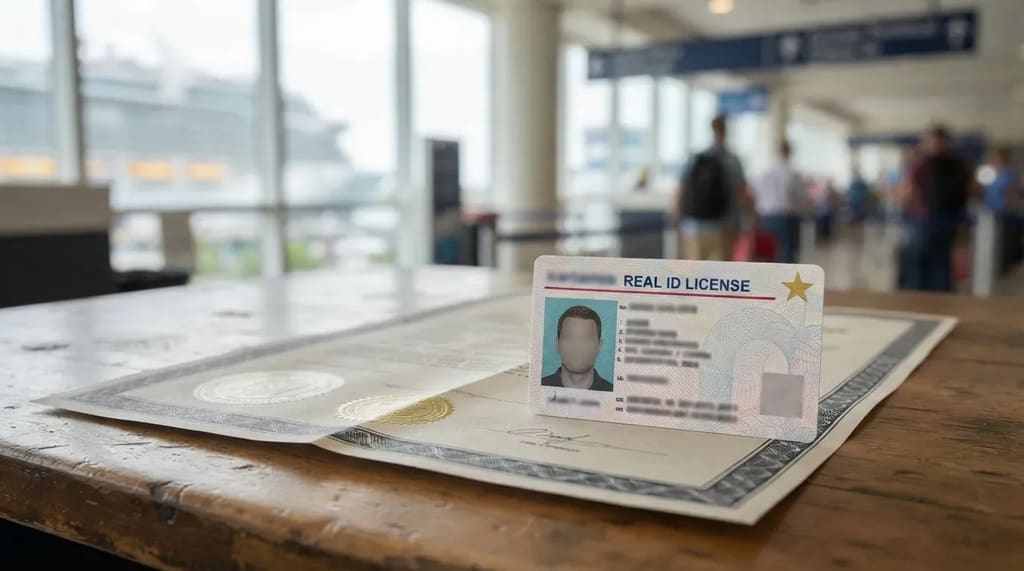
A new REAL ID license feels like the strongest card you own. It satisfies domestic air travel and federal facility requirements, but it proves identity and legal presence, not citizenship.
Related Stories From Travelbinger


That gap matters on a closed-loop sailing. You would still need to pair the license with a birth certificate to meet the documentation rule. The license answers who you are, and the certificate answers whether you are a citizen.
Flying to your port is a separate hurdle. Starting in February 2026, TSA charges a $45 fee to travelers without acceptable ID.6 The cruise paperwork and the flight paperwork are two different checks, and a card that clears one doesn’t automatically clear the other.
Its partner paper has fine print of its own about what counts as a birth certificate.
#2 – The Birth Certificate That Has to Be Certified
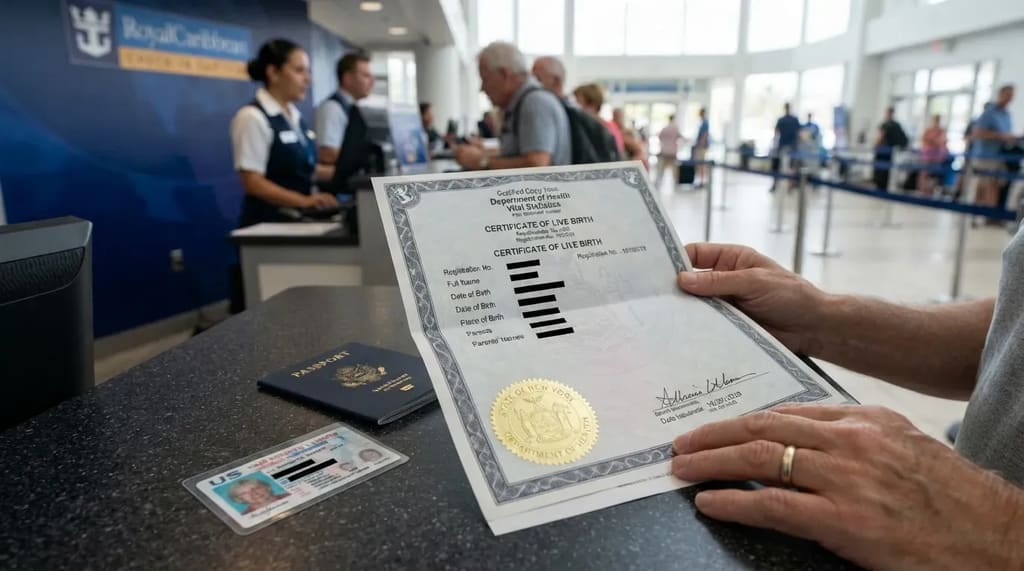
The certificate has to be the real thing. Royal Caribbean‘s guide says it must be an original, state-certified birth certificate, with no photocopies, paired with a state ID or driver’s license.1 Some summaries claim CBP will accept a photocopy, but the cruise line is the one standing at the counter, and its rule is the one you will be held to.
A certified copy comes from your state’s Vital Records office. If yours is lost, faded or a hospital souvenir copy, ordering a replacement now costs a small fee and some waiting. Waiting until the week before sailing costs far more in stress.
Other proofs of citizenship can stand in. CBP also accepts a Consular Report of Birth Abroad or a naturalization certificate. The best answer for most travelers is still the certified birth certificate, ordered early.
Both papers will get you aboard, but neither will get you home from a foreign port.
#1 – The Passport Book Nobody May Ask You to Show
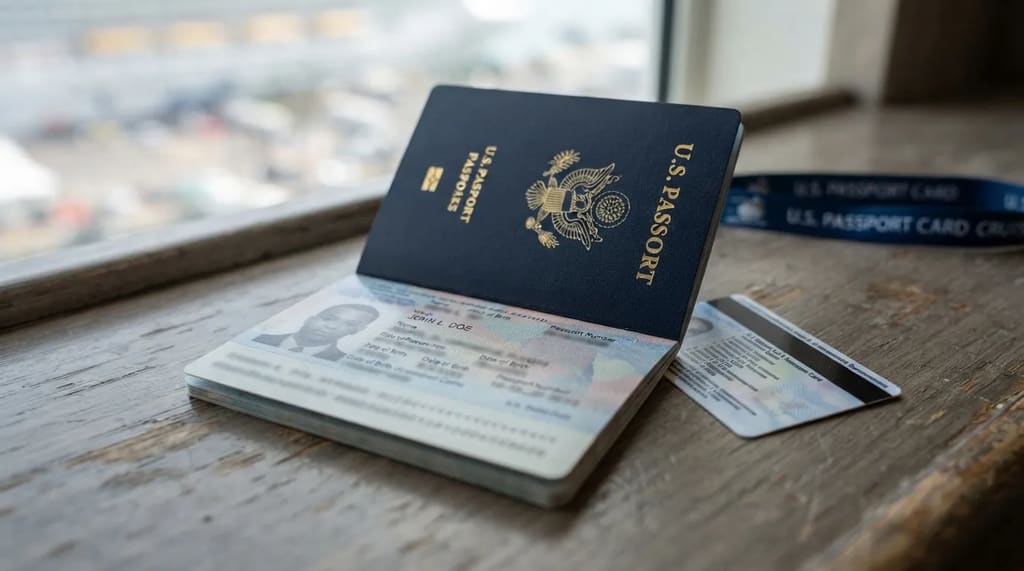
On a round trip from a U.S. port, nobody at the pier may ask for a passport, and that is exactly why it gets left behind. If you miss the ship, have a medical emergency or need to fly home from a foreign port, you cannot board an international flight without one.
The documents above fall short here. A birth certificate and a passport card both work for boarding a closed-loop cruise, but only a passport book gets you home if you miss the ship or face a medical emergency abroad. The passport card is not valid for any flights.
Some itineraries remove the choice altogether. Royal Caribbean’s guide says a one-way repositioning cruise, or a cruise involving international flights to embark or disembark, requires a passport book.1 A passport book works for every cruise.
Quick Compare
- Birth certificate plus photo ID: boards a closed-loop cruise, but can’t get you on a flight home.
- Passport card: boards a closed-loop cruise, but is not valid for any flights.
- Passport book: works for every cruise and every flight.
This is the cheapest item on the list and the one tied to the largest bill. A stranded traveler pays for a last-minute international flight, and may need a hotel while paperwork is sorted out. Even on a closed-loop sailing, carrying the passport book is worth the trouble, and you will probably never be asked to show it.
The common thread in these fifteen items is that the trouble rarely starts at the scanner. It starts earlier, with a document that proves less than you assumed, a product that looked harmless, or a detail you meant to mention and forgot.
That points to a shift in order. Pack the folder first: the certified birth certificate, the passport book, a medication list and a card for any implant. The suitcase can wait a day, and the folder can’t.
Do you know right now where your certified birth certificate is, and could you put your hand on it today?
- Royal Caribbean Passport Guide: https://www.royalcaribbean.com/guides/do-you-need-a-passport-for-a-cruise
- Holland America Prohibited Items: https://www.hollandamerica.com/en/us/faq/cruise-planning/packaging-and-luggage/prohibited-items
- Carnival Help Center: https://www.carnival.com/help
- CBP Carnival Facial Biometrics: https://www.cbp.gov/newsroom/local-media-release/cbp-carnival-cruise-line-introduces-facial-biometrics-port-baltimore
- TSA Disabilities and Medical Conditions: https://www.tsa.gov/travel/tsa-cares/disabilities-and-medical-conditions
- TSA ConfirmID $45 Fee: https://www.tsa.gov/news/press/releases/2026/01/27/oklahoma-travelers-without-real-id-will-have-option-pay-45-fee