Here is the twist behind this title: nobody at Guest Services deletes a port fee because you turned 60. Governments and port authorities set that charge, and the cruise line only collects it and passes it on.
The money people over 60 actually keep sits right around that line. The charge is usually labeled taxes, fees and port expenses, and it can make up roughly 10 to 20 percent of the base fare.
Next to it you will find senior fares chosen at booking, refunds for skipped ports, and a few onboard charges you can question. Some of these are fees you cannot touch but should understand, and some are credits that go unclaimed.
The final item names the one charge Guest Services can adjust at the desk. It also explains why changing it costs someone other than the cruise line.
#15 – Where Port Fees Sit on Your Invoice

The charge appears on your invoice as “Port Expenses” or “Government Taxes and Fees,” listed apart from the cabin fare. It covers docking tolls, harbor pilot fees, security, baggage handling, ship inspections and local government taxes, so the amount follows your itinerary and not your birthday.1 2
Together these charges can make up around 10 to 20 percent of the base fare, though this varies by port.1 Unlike gratuities, which can be adjusted onboard, port fees are collected as part of your final payment.
When you compare quotes from two lines or two agents, compare totals with taxes and fees included. A low fare with a heavy fee line can cost more than a higher fare with a light one.
That fee line doesn’t care about your age, but the fare above it can, and the cutoff changes from one line to the next.
#14 – The Age Cutoff That Changes by Line

Fifty-five opens many senior fares, which is lower than the 60 most travelers assume. Royal Caribbean and Carnival both offer 55-and-older rates on select sailings, and other mainstream lines run similar offers.3
Some lines and some promotions set the bar at 60 or 65 instead. So a 62-year-old can qualify on one ship and be shut out on the next.
Rules can also hinge on where you live or on how many people in the cabin must meet the age. The only safe move is to read the fine print before you pay a deposit.
Fast Facts
- Many senior fares start at 55, not 60.
- Some promotions raise the bar to 60 or 65.
- Residency can decide who qualifies.
- Cabin rules may require every guest, or just one, to meet the age.
Here is the catch that surprises people: that discount applies to the fare, never to the fee line from the last section. And the fee line has another trick up its sleeve.
#13 – Port Fees Can Rise After You Book
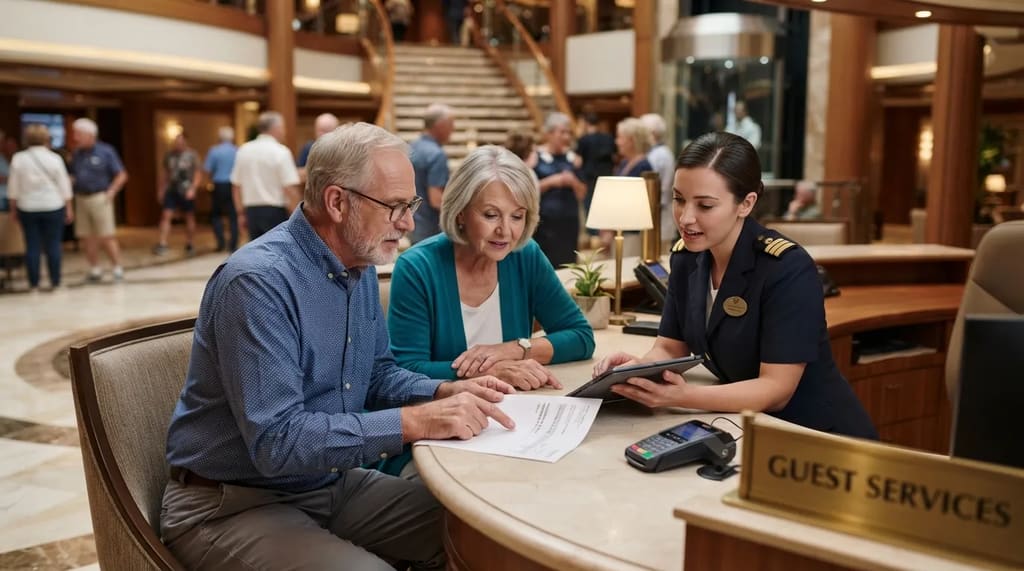
Most cruise ticket contracts let the line pass along increases in government taxes and fees after you have booked.4 It sits deep in the terms, so it catches people off guard far more often than it should.
Your fare is typically locked at booking, but the tax line is the piece that can drift. That is how a final bill ends up a little above the number you first saw.
If the fee on your final invoice looks higher than your first quote, ask your agent or the cruise line to itemize it. You may not get it reversed, but you will learn exactly which port or tax moved.
It feels unfair, and it is the first sign that this line plays by different rules than the rest of your bill. The next section shows how different.
#12 – Why Your Senior Discount Can’t Reach the Fee Line
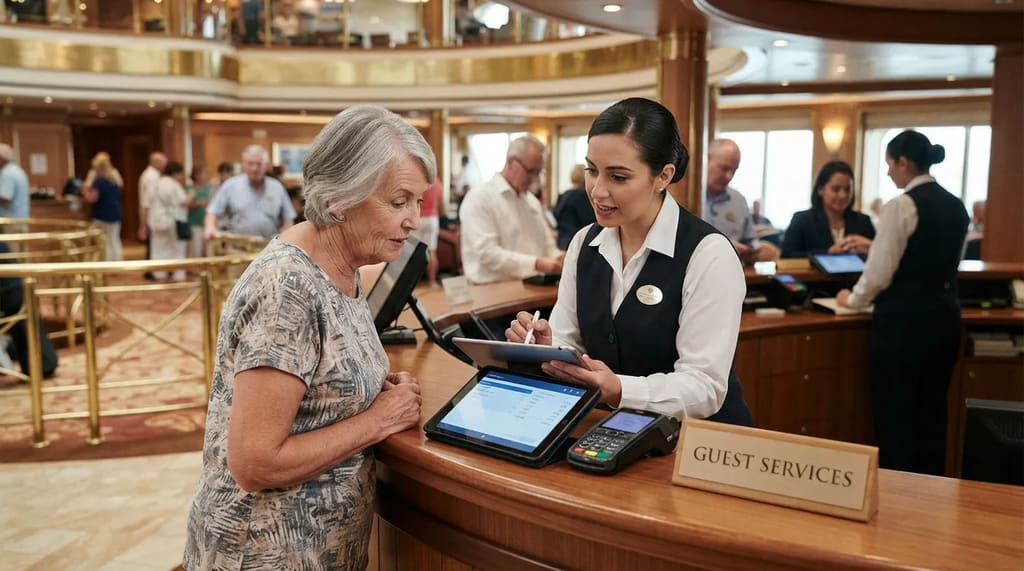
Senior rates, early-booking deals and agent perks come off the cruise fare. Taxes and fees are then added on top at full price.
That is why a big advertised discount rarely matches the total you actually pay. The headline number was never the whole bill.
Quick Compare
- Cruise fare: senior rates, early-booking deals and agent perks can apply.
- Taxes and fees: added on top at full price.
- Agent commission: generally none on taxes and fees, so there is little room to trim.
Try a simple habit: write the fare in one column and the fees in another. You will see the true size of your discount, and you will spot lines that quietly hide a heavy fee total behind a cheap fare.
The place where that gap grows fastest is a cruise that sails north.
#11 – Alaska’s Passenger Taxes

Alaska charges a state tax on cruise passengers, and port communities add their own per-person fees on top. Those charges are why the fee line on an Alaska sailing so often looks fatter than one on a Caribbean week.5
Alaska is a favorite for travelers over 60, with its glaciers, slow scenery and wildlife from the rail. Many of those travelers are surprised when the tax line is the part of the bill that doesn’t shrink with a senior rate.
None of this can be removed at a desk, because it is owed to the state and the ports, not to the ship. What you can do is compare the all-in total on two Alaska itineraries before you fall for the cheaper fare.
A seven-night trip with several busy ports can cost more in fees than one with fewer stops. And Europe plays the same game in a different way.
#10 – Local Passenger and Tourist Taxes in European Ports
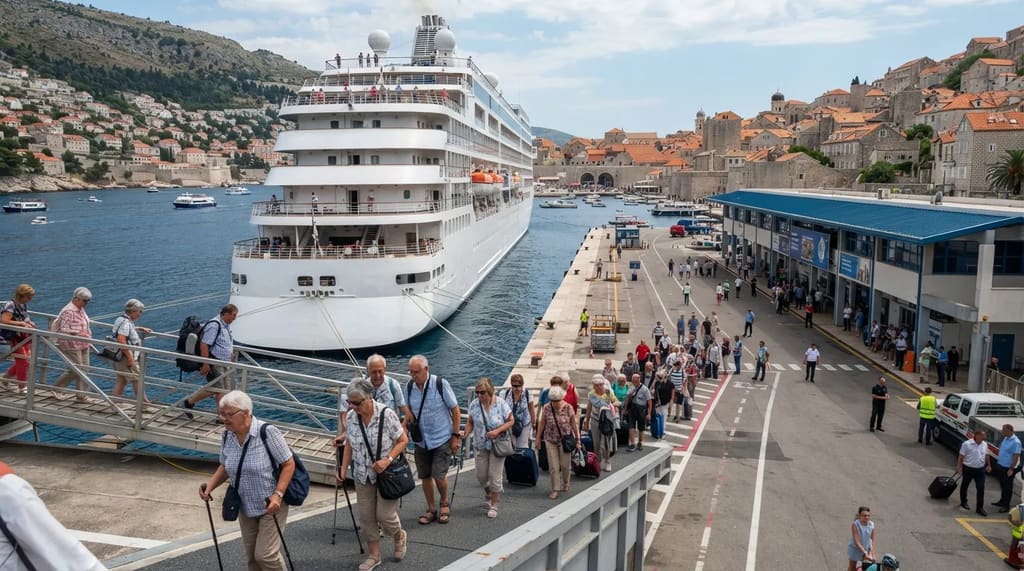
Some European ports and cities add their own passenger or tourist taxes, and cruise guests can get swept into them. They are small on their own, but they stack across a multi-country itinerary.
That stacking is part of why a port-packed route can carry a heavier fee line than a relaxed one. You are not paying for the view; you are paying for every dock the ship touches.
These charges are set locally, so a ship’s staff has no power to wave them away. If the line looks high, the answer is almost always in the itinerary, not in an error.
Ask your agent which ports on your route add their own charges before you commit. It is a two-minute question that can explain a lot, and it leads to a cost that never shows up on your invoice at all.
#9 – The Parking Fee at the Port
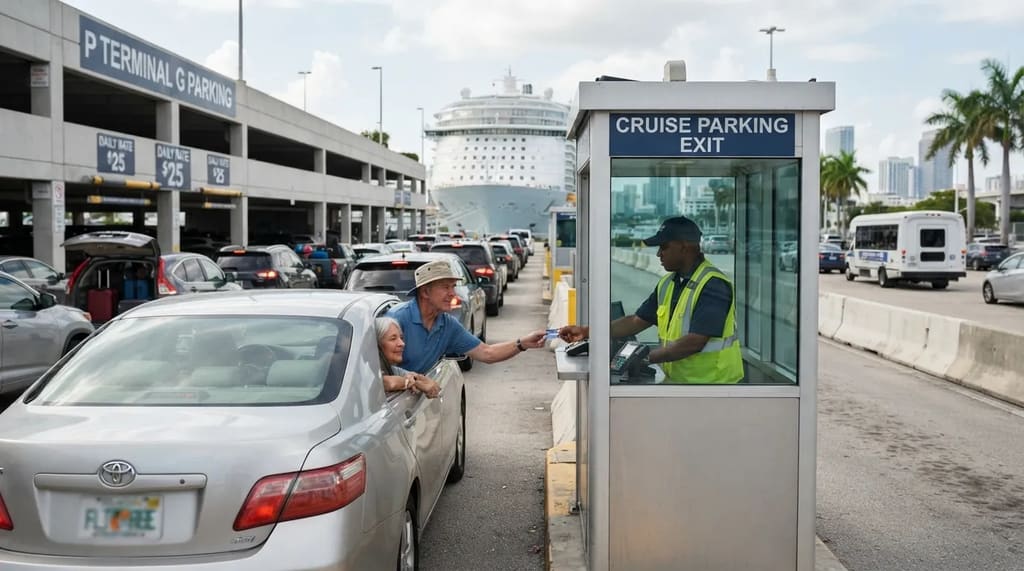
If you drive to your ship, the port charges you for parking, and that fee never appears on your cruise invoice. You pay it at the lot, usually at a daily rate that adds up over a week.
Guest Services cannot touch it, because the cruise line doesn’t collect it. The port authority or a private lot operator does.
Off-site lots with shuttles are often cheaper than parking at the terminal. Compare rates before you go, and check whether the shuttle runs early enough for your boarding time.
It is a small cost, but travelers over 60 who drive to Florida or Texas ports feel it on the way home. The next item is a trip built around saving, where fees still show up.
#8 – Repositioning Cruises: Cheap Fares, Same Fee Line

When ships move between seasons, such as Alaska to the Caribbean, the lines sell long, one-way trips at low nightly fares. Retirees with flexible calendars love them for exactly that reason.
The taxes and fees line still lands on the invoice, and against a bargain fare it can look like a surprisingly big slice. That is the moment people start asking Guest Services whether anything can come off.
Usually nothing can, because the fee is owed to ports and governments. A bargain per night does not shrink the charge for docking.
At a Glance
- The appeal: long, one-way trips at low nightly fares.
- The catch: the fee line stays, so it looks bigger against a cheap fare.
- The extra cost: flying home from a different city.
- Best for: retirees with flexible calendars.
Add up the flight home before you call it a deal. And some lines solve the whole fee problem by never showing it separately.
#7 – The Lines That Fold Port Charges Into the Fare

Many river cruise lines and some premium ocean lines include port charges in the quoted fare. The price looks higher, but it is closer to the real total.
That makes the comparison with a mass-market ship tricky. One quote has the fees tucked inside, and the other adds them at the end.
So if you hunt for a separate fee line and can’t find one, that is not a trick. It means the cost is already in there.
Always ask what the quote includes before you decide which cruise is cheaper. Next comes a fee that hits one group of travelers in a very particular way.
#6 – Solo Travelers and the Fee Line

Many travelers over 60 sail alone after losing a partner or simply because it suits them. They often meet the single supplement, which can nearly double the cruise fare.
Taxes and fees are usually charged per passenger, not doubled. So the supplement inflates the fare while the fee line stays about the size you would expect.
That means the extra cost isn’t coming from ports or governments. It comes from the cabin pricing, and that is where the negotiating room is.
Some lines run offers that waive or reduce solo supplements on select sailings. Ask about them, because the fee line won’t be the place you save.
#5 – The Refund When a Port Gets Skipped

Storms, closures and mechanical delays can force a ship to skip a stop. When that happens, the port charges tied to that stop were never used.6
Policies vary. Some lines refund or credit the government fees for a port they never reached, and others offer only onboard credit or nothing at all.4 6
Worth Knowing
- Ask at Guest Services before you disembark.
- Keep any written notice of the itinerary change.
- Ask whether the answer is a refund, an onboard credit or neither.
- Get the outcome in writing if you can.
Politely asking is the part most travelers skip, and it is often the part that matters. It is one of the few times the fee line moves because of something that happened at sea.
There is a bigger case that happens before you ever leave home.
#4 – Cancelling Before You Sail: The Fees That Come Back

If you cancel before sailing, the cruise fare can fall under penalty rules, with deposits lost on a sliding schedule. Taxes and fees are typically treated differently, since they weren’t used.
In many cases those government charges come back to you even when the fare deposit does not. It is one of the few places where the fee line works in your favor.
People who cancel for health reasons often forget to ask for it. Request the refund in writing, and ask the line to show you exactly what it is returning.
Travel insurance may help with the fare side, so read that policy too. Then there is the perk that looks like a discount but isn’t.
Related Stories From Travelbinger



#3 – Onboard Credit That Looks Like a Discount

Many senior promotions arrive as onboard credit instead of money off the fare. It feels like a win, and sometimes it is.
It can reduce what you pay at the end of the cruise, but it doesn’t rewrite the tax line on your invoice. And it usually has no cash value if you don’t spend it.
Read the terms for what the credit covers, since lines differ on what it can pay for. A promised credit is only as good as the things you can actually use it on.
Still, it lowers the final onboard bill, and that is where the next two charges live. The first of them rides along on every drink.
#2 – The Automatic Charge on Drinks and Spa Bills

Many ships add an automatic service charge to bar tabs and spa treatments, often somewhere between 15 and 20 percent.7 It shows up in the receipt, so you rarely notice until the total is bigger than you expected.
Guest Services rarely removes it. It is built into how the venue is staffed and paid.
If service was truly poor, a polite word with a manager is the realistic route. A blanket request to wipe the charge usually goes nowhere.
This charge is the close cousin of the one that comes next, but it is much harder to move. The last item is the one that actually can be adjusted at the desk.
#1 – The Daily Gratuity: The One Charge Guest Services Can Adjust

On many lines, a daily gratuity is added to your account automatically for each person on each night. Guest Services can typically adjust it on request, whether that means raising it, lowering it or taking it off.7
Policies differ by line, so confirm yours before you walk to the desk. Some lines also let you change it during the cruise through an app or kiosk.
Here is why it is the strongest point on this list: the person who absorbs that change isn’t the cruise line.8 The money is shared among crew such as cabin stewards, dining staff and others who serve you.
Much of their income depends on it, so the line is built to keep it flowing. If you adjust it, you are choosing something that lands on a crew member’s paycheck.
That is a real choice, and it is yours to make. Just make it knowing whose pocket it touches.
So the fee you came here wondering about, the port fee, almost never moves. The savings sit around it, in the fare you pick, the refunds you ask for and the credits you actually use.
Before your next sailing, check the age rule, itemize the fees and know which charges can’t move. The one that can move is also the one with a person on the other end.
- Cruise Port Fees Explained: https://www.cruisenation.com/guides/cruise-guides/port-fees-and-taxes
- Cruise Port Tax Budget Guide: https://choose-cruise.com/blogs/cruise-port-tax-explained-your-2026-budget-guide/
- Royal Caribbean Special Pricing: https://www.royalcaribbean.com/gbr/en/faq/questions/qualifications-special-pricing
- Port Taxes Charges and Refunds: https://fedlaws.org/port-taxes-for-cruises-explained-charges-changes-and-refunds/
- Cruise Port Fees and Taxes: https://cruise-talk.com/cruise-port-fees-and-taxes/
- Skipped Port Refund Guide: https://cruiseports.co/cruise-port-skipped-refund/
- Cruise Gratuities Explained: https://passportprotravel.com/cruise-gratuities-explained/
- Cruise Gratuities Crew Impact: https://cruiseportadvisor.com/cruise-ship-gratuities-explained/