
Port Everglades sits just 1.8 miles from Fort Lauderdale-Hollywood International Airport, and that tiny number has talked plenty of cruisers into cutting their margins to nothing. On paper, it looks like the easiest cruise start in America. In real life, it’s a record-breaking port that counted 4,773,873 cruise passengers in fiscal year 2025, a 16 percent jump over the year before.1 2
With crowds that size, one small slip can turn into a big bill, from a surprise garage charge to a ship that sails without you. Along the way you’ll find a Fort Lauderdale ship with a Hollywood address and a terminal built around a single cruise line. The last item on this list holds the cheapest fix for the most expensive mistake, so stay for it. Start with the one that looks easiest.
#13 – The Airport Next Door You Can’t Walk To
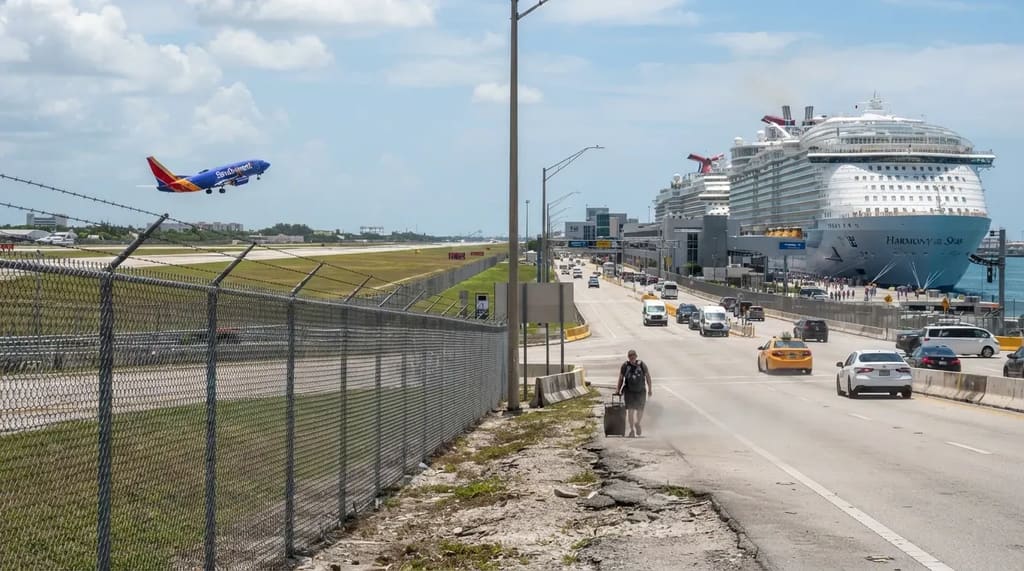
The port describes itself as the only major port in the country that sits next to an airport. That makes a late-morning flight on sailing day look perfectly reasonable. Even so, the port tells cruisers to allow 45 minutes to an hour from landing to check-in. Baggage claim, the ride and the security checkpoint all fall inside that window.
Don’t try to close the gap on foot. The route runs along US-1 and industrial port roads, and there are no proper sidewalks on the way. A week of luggage in South Florida heat makes it worse.
The port is reachable by car, taxi, ride-share, bus and rail. If you’re flying in only for the cruise, skip the rental car. You’d pay the port’s daily parking rate on a car that sits idle all week.
Fast Facts
- Distance from FLL to the port: 1.8 miles.
- Port’s suggested time from landing to check-in: 45 minutes to an hour.
- Ways to get there: car, taxi, ride-share, bus and rail.
- Walking route: US-1 and industrial roads, with no proper sidewalks.
Those same roads serve a business far larger than cruising, and the numbers are hard to picture from the pier.
#12 – A Fuel and Cargo Giant Under Your Cruise Ship
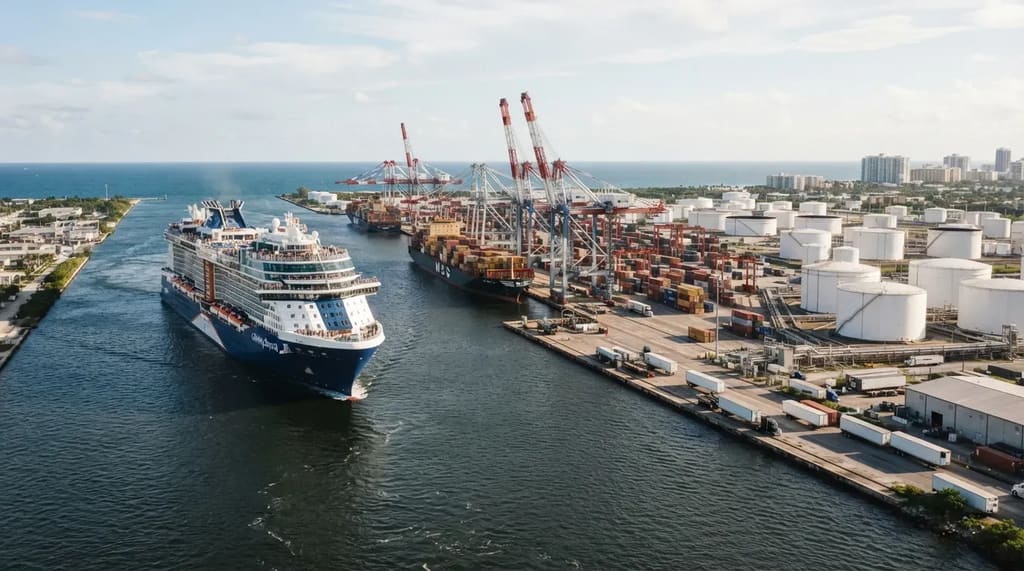
Cruise is only one of three businesses here. In fiscal year 2025 the port hit record volumes in cruise, cargo and energy at the same time, a first for the port.1
It processed 1,167,552 container units, the highest in its history. It also handled 131,855,261 barrels of petroleum products, which keeps it Florida’s largest petroleum port.1 The berths and roads you use on embarkation day belong to a working industrial waterfront, shared with trucks and tankers.
It changes the view when you leave, too. The port has bought giant gantry cranes to move more containers, so the channel you sail out through is a working one, with industrial gear lining the way before the open water.
Industrial layout also explains why the address on some boarding paperwork may not say Fort Lauderdale at all.
#11 – Your Fort Lauderdale Ship May Have a Hollywood Address
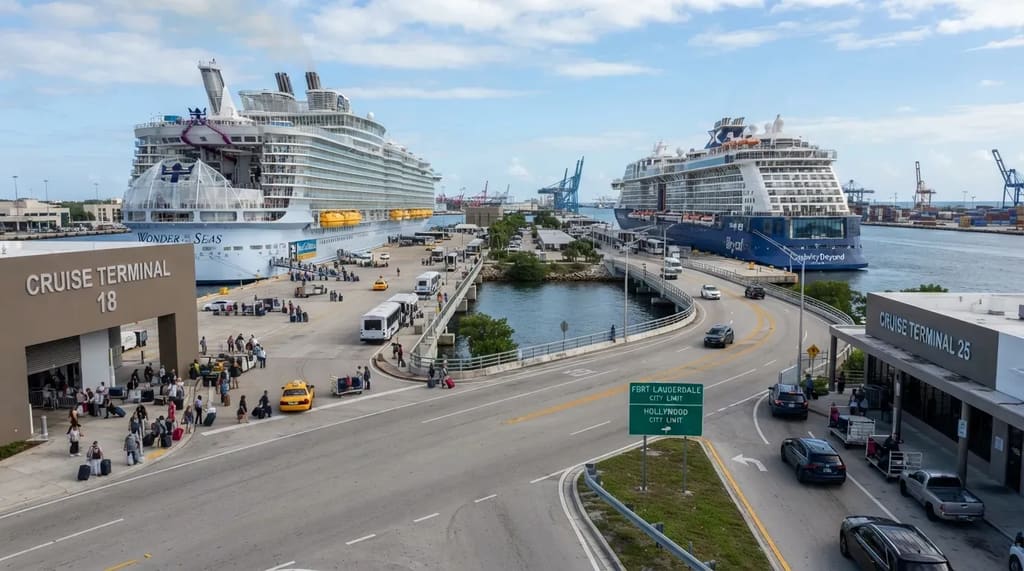
The cruise line says Fort Lauderdale, but the postal address for some terminals says Hollywood. The port’s main address is 1850 Eller Drive, Fort Lauderdale. Yet listings for Terminal 18 and Terminal 25 carry Hollywood street addresses. The reason is that the port’s land spans three municipalities: Fort Lauderdale, Hollywood and Dania Beach.
A map app that drops you at the main address can leave you on the wrong side of a big complex, with luggage in the trunk and a ship already boarding. Search for your terminal’s own address, not just “Port Everglades.” It takes thirty seconds the night before and saves the kind of circling that eats an arrival window.
Once you’re inside the gates, a terminal number matters more than any street name, and there are eight to choose from.3
#10 – Eight Terminals, and Only One Is Yours
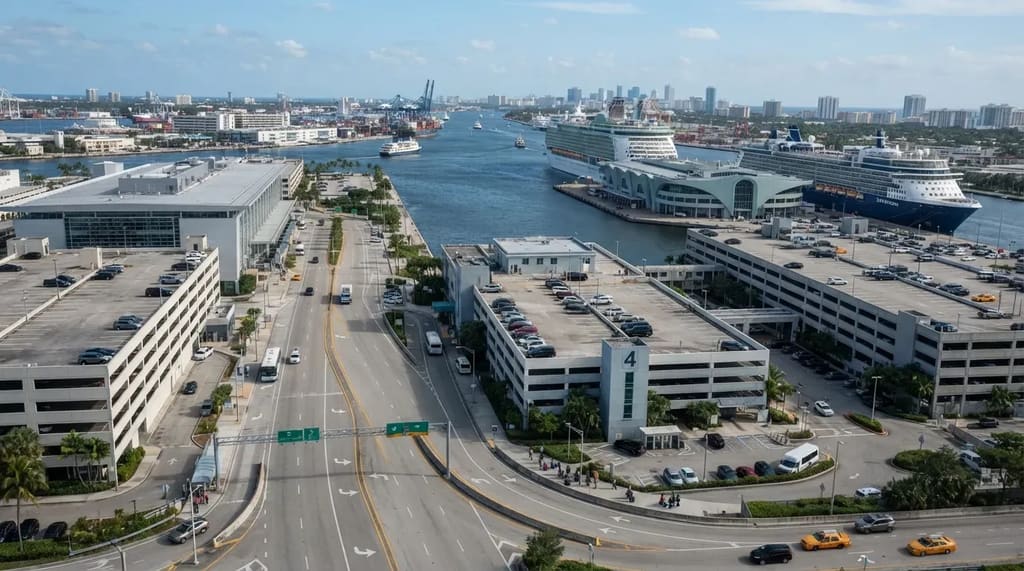
The port has eight cruise terminals: 2, 4, 18, 19, 21, 25, 26 and 29. Your terminal number appears on the boarding documents from your cruise line, and that number decides which garage or lot is closest. Here’s the usual pattern, though patterns can change:
- Princess commonly uses Terminal 2, and Disney is primarily at Terminal 4.
- Royal Caribbean often uses Terminal 18 and sometimes 29.
- Celebrity frequently uses Terminal 25.
- Carnival and Holland America typically rotate among Terminals 19, 21 and 26.
Treat that list as a guide and let your paperwork decide. Your boarding documents name your terminal; don’t guess from the cruise line. Assignments can change, and a wrong guess puts you in the wrong garage with the clock running.
One of the eight cost more to build than any other terminal the port has put up, and it was designed around a single cruise line.
#9 – The $120 Million Terminal Built for One Cruise Line
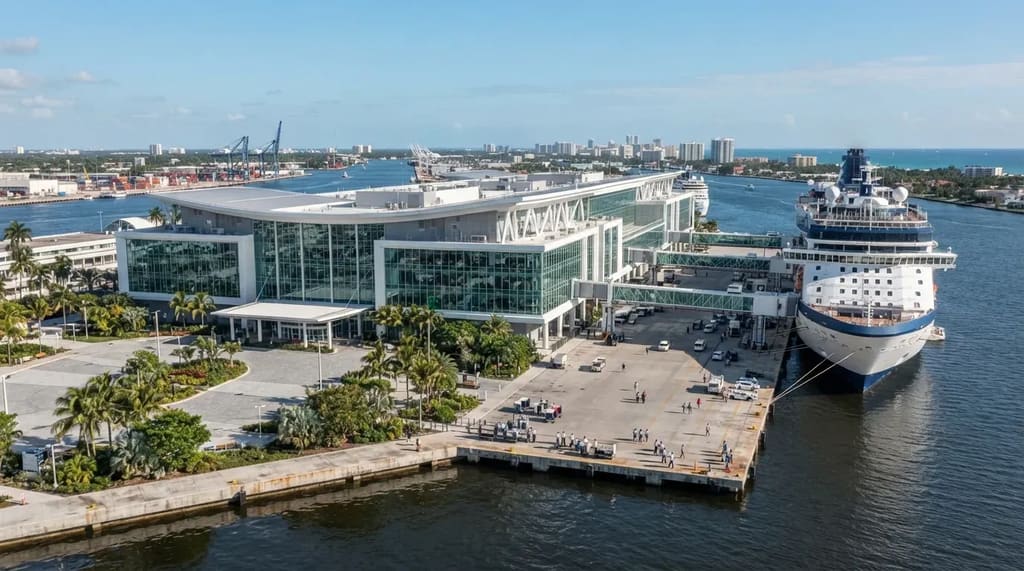
Terminal 25 cost $120 million, the largest investment the port has made in any single cruise terminal.4 5 It’s also the port’s first brand-designed terminal, built around Celebrity Cruises. Terminal 25 is the first one designed around a single cruise line. The building covers 157,800 square feet and has 48 check-in stations.5
The reason was ship size. The port wanted to handle newer, larger ships such as Celebrity Edge, which began homeporting here in late 2018. The line’s newest arrival keeps that going: Celebrity Xcel was named on November 16, 2025, and carries 3,250 passengers.
The next upgrade is invisible from the check-in hall. The port has received two federal grants and is in early design to bring shore power to Terminal 25. The longer plan is to add shore power to all eight cruise terminals over 20 years, so the terminal you just read about is first in line for the port’s plug-in power.6
Across the port, a different kind of terminal serves a line whose newest ship carries a heroes-and-villains theme.
#8 – Two Northport Terminals With the Newest Ships in Town
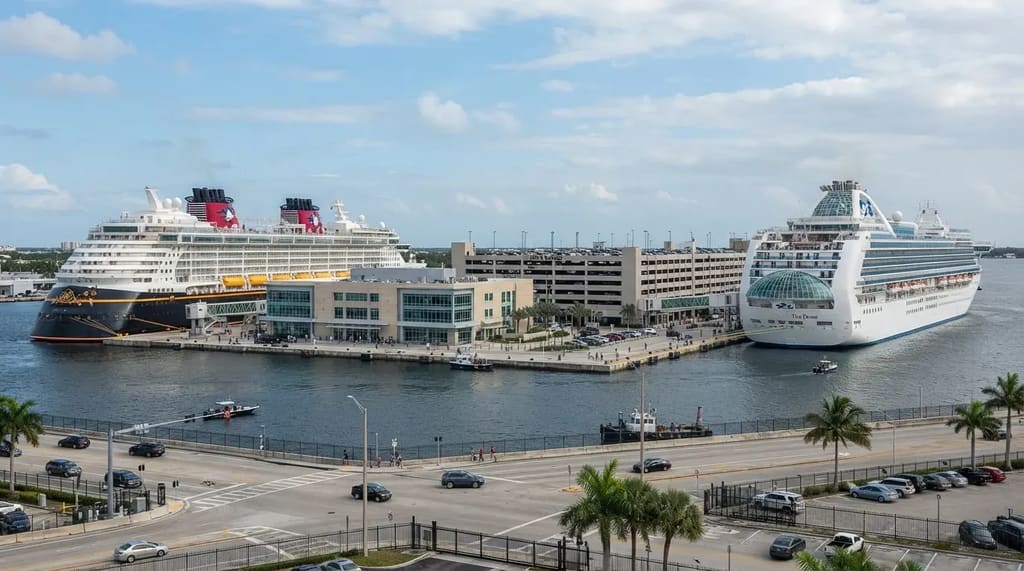
Disney Destiny holds 4,000 passengers, sails with a heroes-and-villains theme, and began year-round sailings from Terminal 4 in late 2025. The building was designed for crowds like that. It’s a LEED Silver certified, two-story terminal that seats more than 500 cruisers, with a VIP experience on the second floor.
Terminal 2 sits right next door. It’s a newer building used mostly by Princess, and Star Princess, the second of the line’s Sphere Class ships, has begun its Caribbean season from the port.
Because the two terminals are neighbors, both share the Heron Garage. On a morning when both ships are in, expect the same roads and the same garage to serve both crowds.
Midport plays at a different scale, starting with a building that has 90 check-in stations.
#7 – Terminal 18 Has 90 Check-In Stations and Its Own Lot
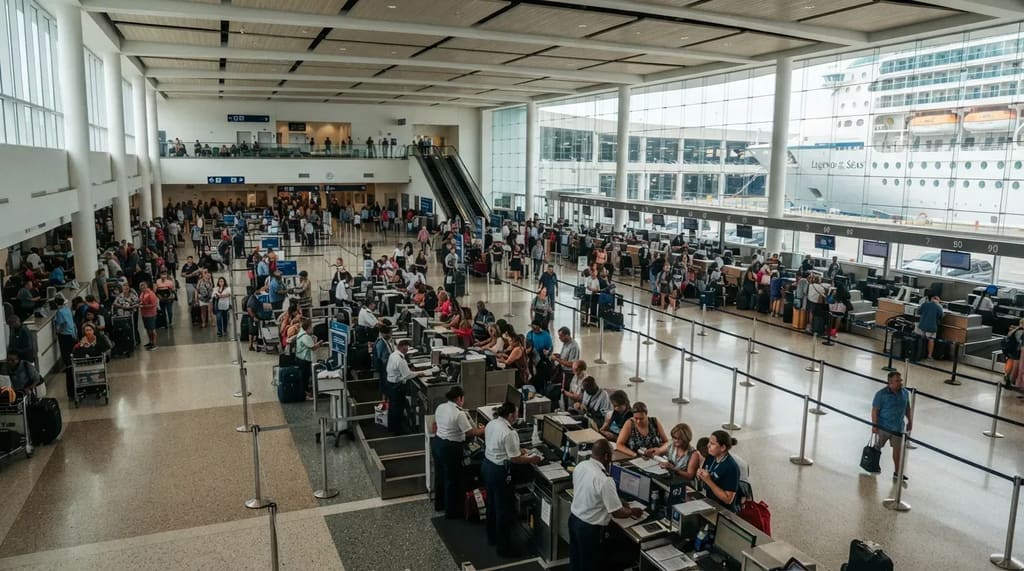
Terminal 18 is the largest terminal building at the port, at 259,370 square feet, with 90 check-in stations, six elevators and seven escalators. If long walks tire you, it’s worth knowing those elevators and escalators are there before you arrive.3
It opened in 2009 for Oasis of the Seas, and recent improvements include a more open embarkation hall, refreshed waiting and VIP lounge areas, and updated wayfinding signs. The port has also added room for the next arrival. More than 850 parking spaces now sit beside the terminal for the Icon-class Legend of the Seas, bringing the port’s total to 6,386 across two multistory garages and several surface lots.7 Legend of the Seas begins sailing from the port in November 2026.
For drivers, here’s the useful part. Unlike most other terminals, Terminal 18 has its own dedicated surface lot directly in front of the building, and it uses Lot C or Lot B. Terminal 18 has its own surface lot right in front. It’s the exception to the garage rule from #10.
At a Glance
- Size: 259,370 square feet, the port’s largest terminal building.
- Check-in: 90 stations.
- Getting around inside: six elevators and seven escalators.
- Opened: 2009, for Oasis of the Seas.
- Parking: a surface lot out front, using Lot C or Lot B.
#6 – Embarkation Traffic Peaks Between Ten and One
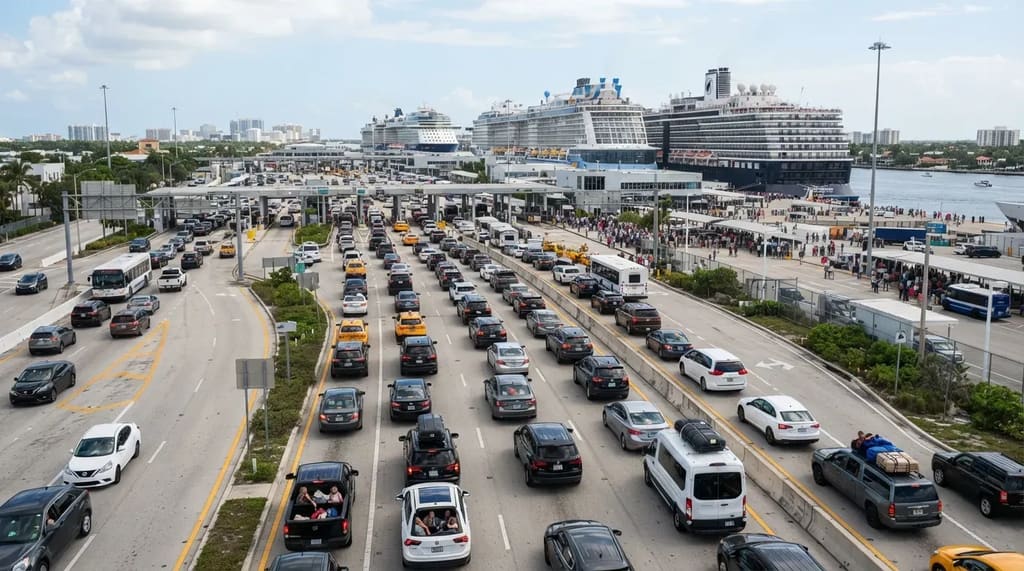
Embarkation traffic peaks between 10:00 a.m. and 1:00 p.m., when several ships board at once. The port is homeport to 40 cruise ships from nine cruise lines, and based on current schedules it expects cruise volumes to rise further in fiscal year 2026.1 That rush is built into the schedule, and it won’t thin out soon.
Even the short drive from the airport feels it. It takes 10 to 15 minutes, stretching toward 20 on busy Sunday embarkation mornings. That’s still short, but it’s one more minute-eater when the 45-minute figure from #13 is already a minimum.
Here’s a verdict that might start an argument: don’t try to beat the crowd by showing up hours before your slot. Cruise lines assign a Port Arrival Time, and that time is how a line spreads thousands of guests across a morning. Arrive inside the arrival window your cruise line assigned. Then the rush works for you instead of against you.
#5 – A Cheaper Flight Into Miami Adds Hours
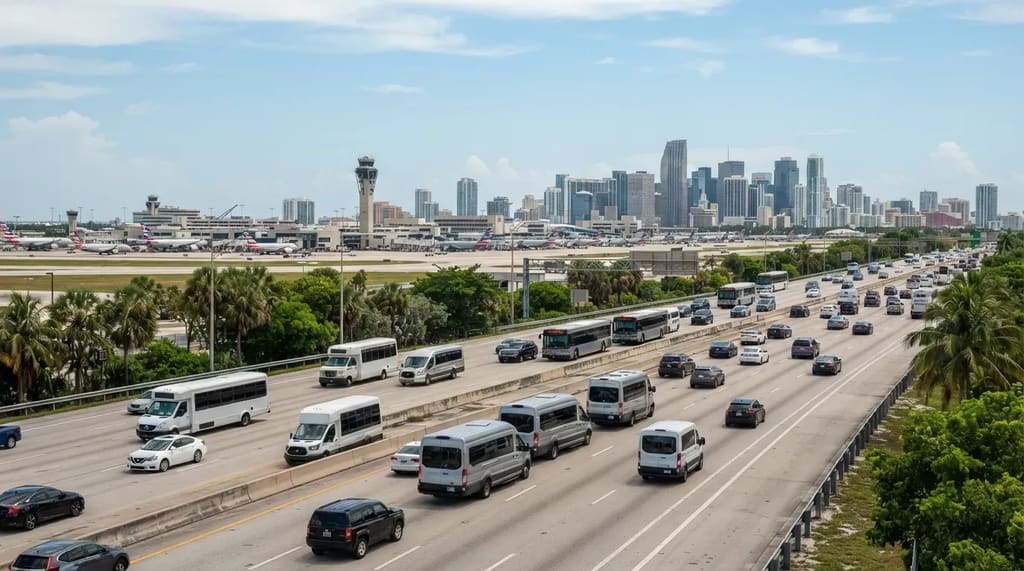
The port’s own guidance lists three airports, and they aren’t close to equal. Miami International is 27 miles south of the port, and Palm Beach International is 50 miles north.
The time allowances tell the story. The port says to allow two to three hours for the transfer from Miami and three to four hours from Palm Beach. That compares with 45 minutes to an hour from Fort Lauderdale.
Add two to four hours if you fly into Miami or Palm Beach. A lower fare into Miami has to pay for those extra hours, plus the ground transport. Your ship’s sailing time won’t move to match.
Quick Compare
- Fort Lauderdale-Hollywood: 1.8 miles away, allow 45 minutes to an hour.
- Miami International: 27 miles south, allow two to three hours.
- Palm Beach International: 50 miles north, allow three to four hours.
If you’re driving instead, the port’s garages work unlike most airport lots, and the biggest difference is that you can’t book ahead.
#4 – The Port’s Own Parking Can’t Be Reserved
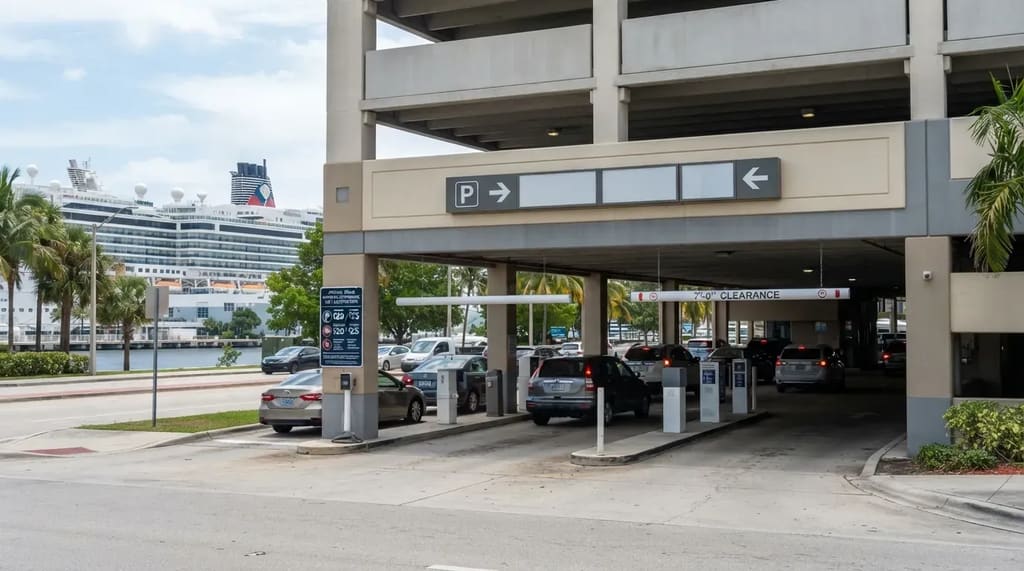
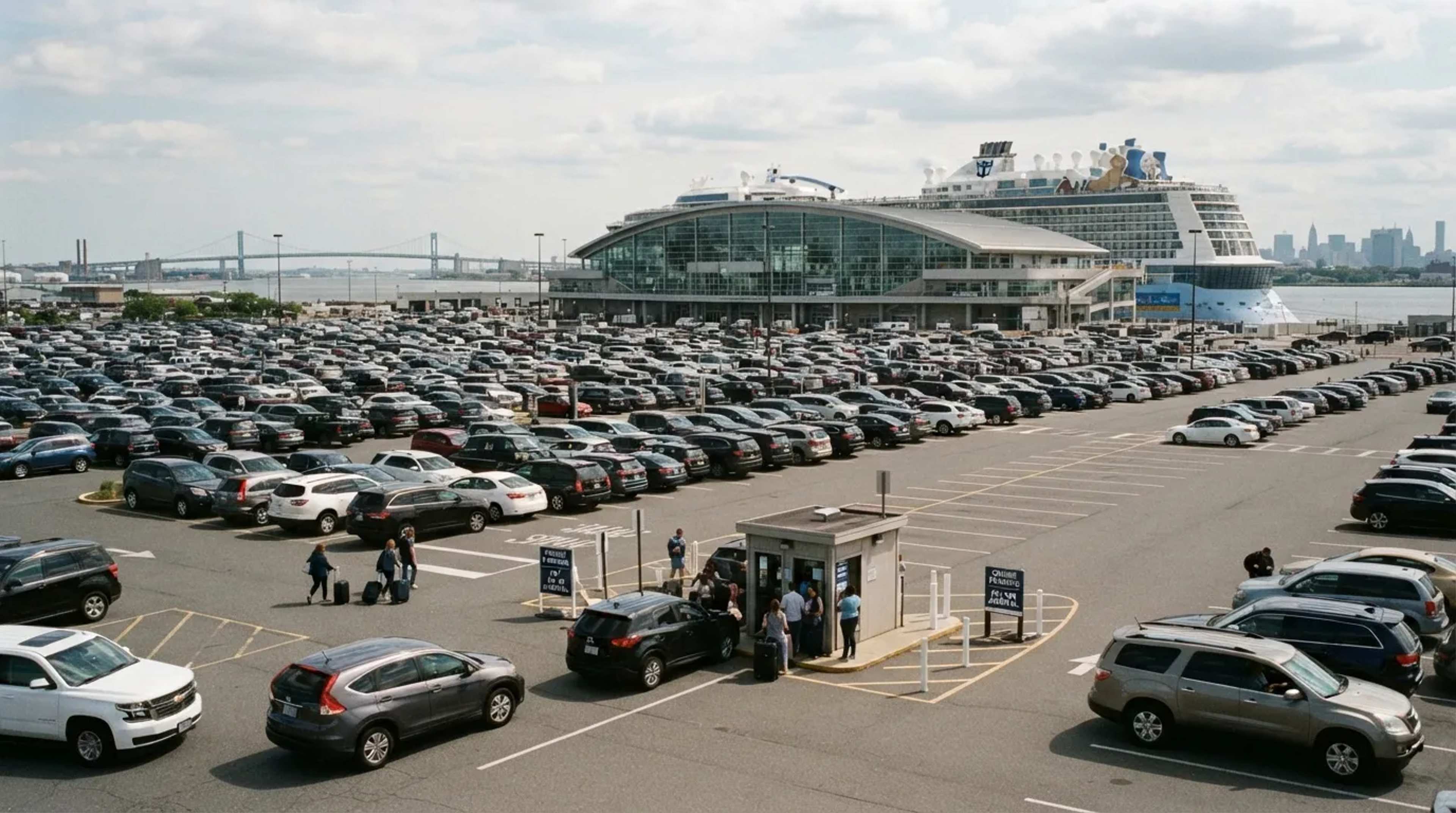
Official Port Everglades parking does not accept advance reservations or prepayment.8 There are no reservations, and you pay at machines on the garage’s first floor. The contactless machines take cash, credit and debit.
The daily rate depends on which guide you read. Some list $20 per day for a standard vehicle and $25 for oversized. A 2026 guide lists a $25 daily maximum for standard vehicles and $35 for oversized. Check the port’s parking page before you go, because rates change.
Height matters too. The covered garages reportedly have a strict 7-foot clearance, so a tall van or a car with a roof carrier may not fit.8 Match your terminal to its lot using the list from #10, and don’t assume the nearest structure is the right one.
Skip the garage, and the math changes, because lots outside the gates will shuttle you to the ship for less.
#3 – Off-Site Lots Beat the Garage on a Week-Long Cruise
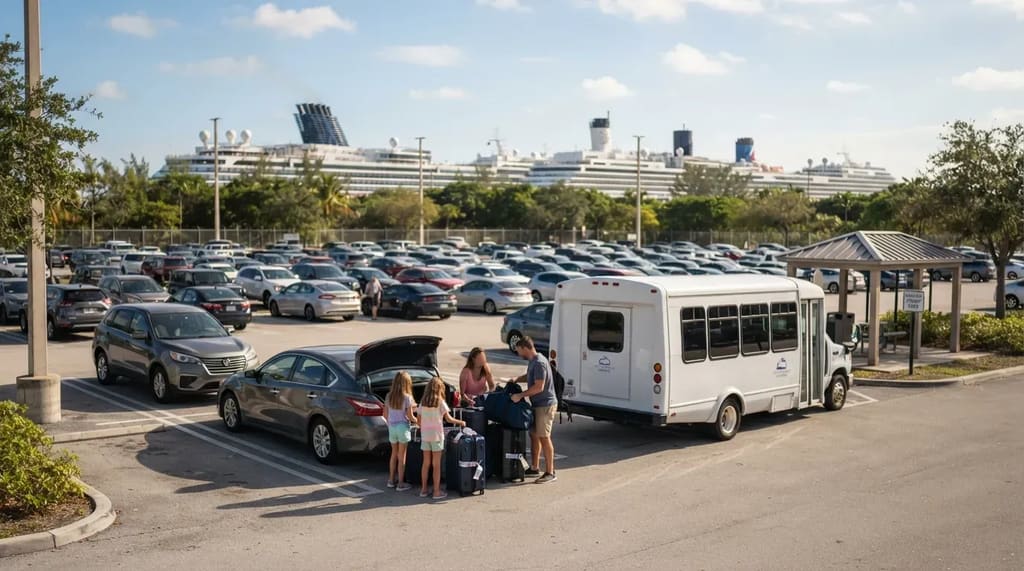
At the 2026 maximum of $25 a day, a seven-night cruise puts $175 on your parking bill. That’s the price of walking straight from your car to the ship.
Independent lots near the port run their own shuttles, and they’re often cheaper than the port’s $20-a-day official rate. Some also offer what the port’s garages don’t. One off-site lot, for example, accepts advance bookings and includes a free port shuttle.
My verdict: for a week or longer, a booked off-site spot is the better deal. The exception is anyone hauling heavy bags or struggling with transfers, who may reasonably pay for the garage. The shuttle adds a step at both ends, so leave extra minutes. Compare finished totals, not headline rates.
Related Stories From Travelbinger
#2 – Disembarkation Morning Is a Different Port
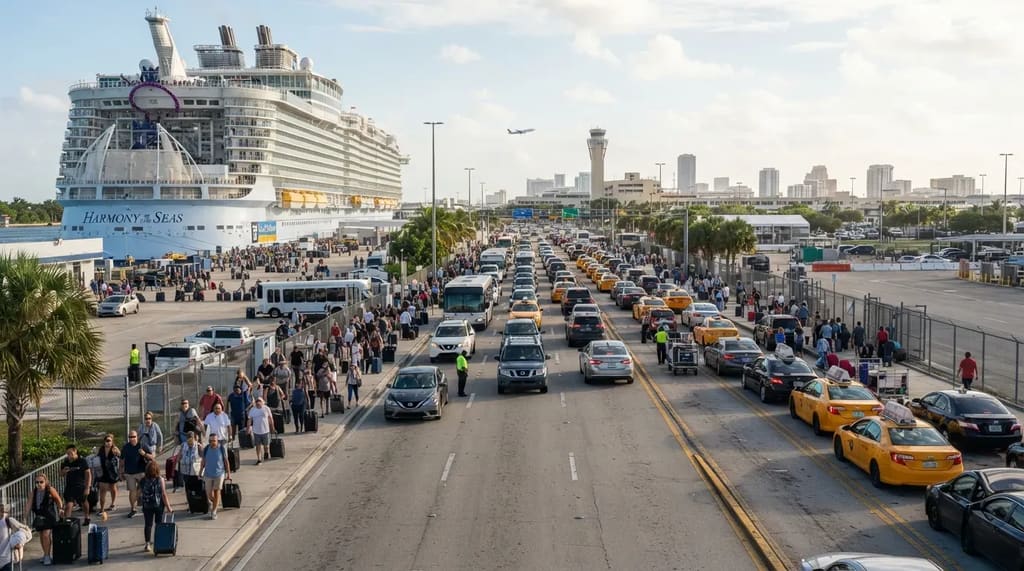
Disembarkation is staggered by luggage group, and customs and baggage collection add time. When a full ship empties between about 8 and 10:30 a.m., the taxi rank can swamp within minutes. The same port that felt easy on arrival day can crawl on the way out.
The airport is still about two miles away, but the road doesn’t care. Disembarkation mornings clog the port road, so allow an hour to reach the airport, even though it’s about two miles. Add airline check-in and bag drop on top of that hour. A midday or afternoon flight is far safer than a 10 a.m. departure.
It also explains why the arrival-day figures from #13 and #6 matter. You’ve been through the rush once, and now you have to leave through it.
The biggest margin on this list starts the day before you sail, and it costs about one hotel night.
#1 – One Hotel Night Before Sailing Beats Every Other Tip
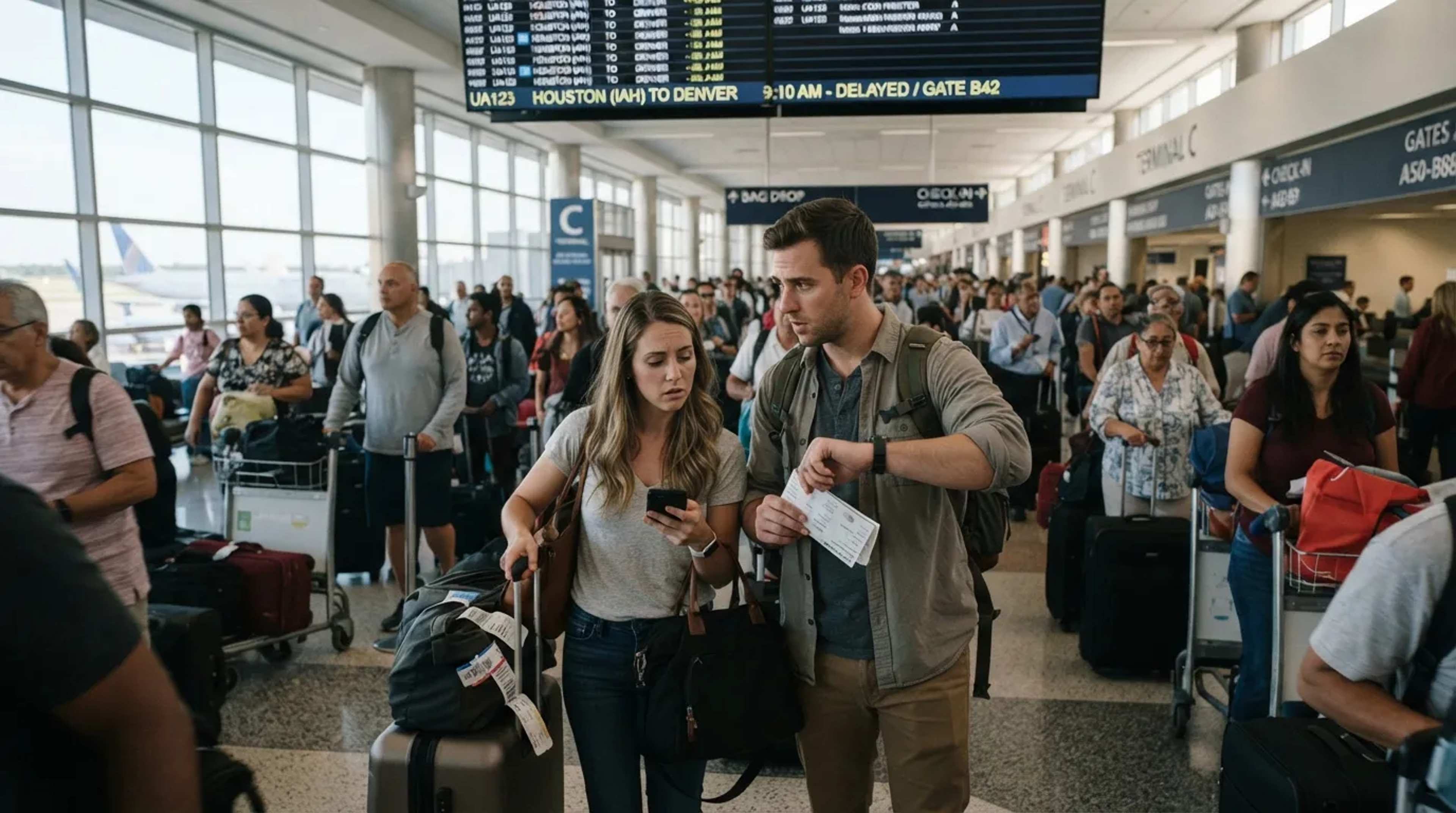
Take the 45 minutes to an hour from #13 and add everything that can go wrong in the air. A delay, a missed connection or a storm can use up all of it. A same-day flight is a gamble no matter how short the drive is, because the ship sails on its schedule and your airline doesn’t answer to it.
Missing the departure can cost you the cruise itself, so check your travel insurance policy’s wording on missed sailings before you rely on it.
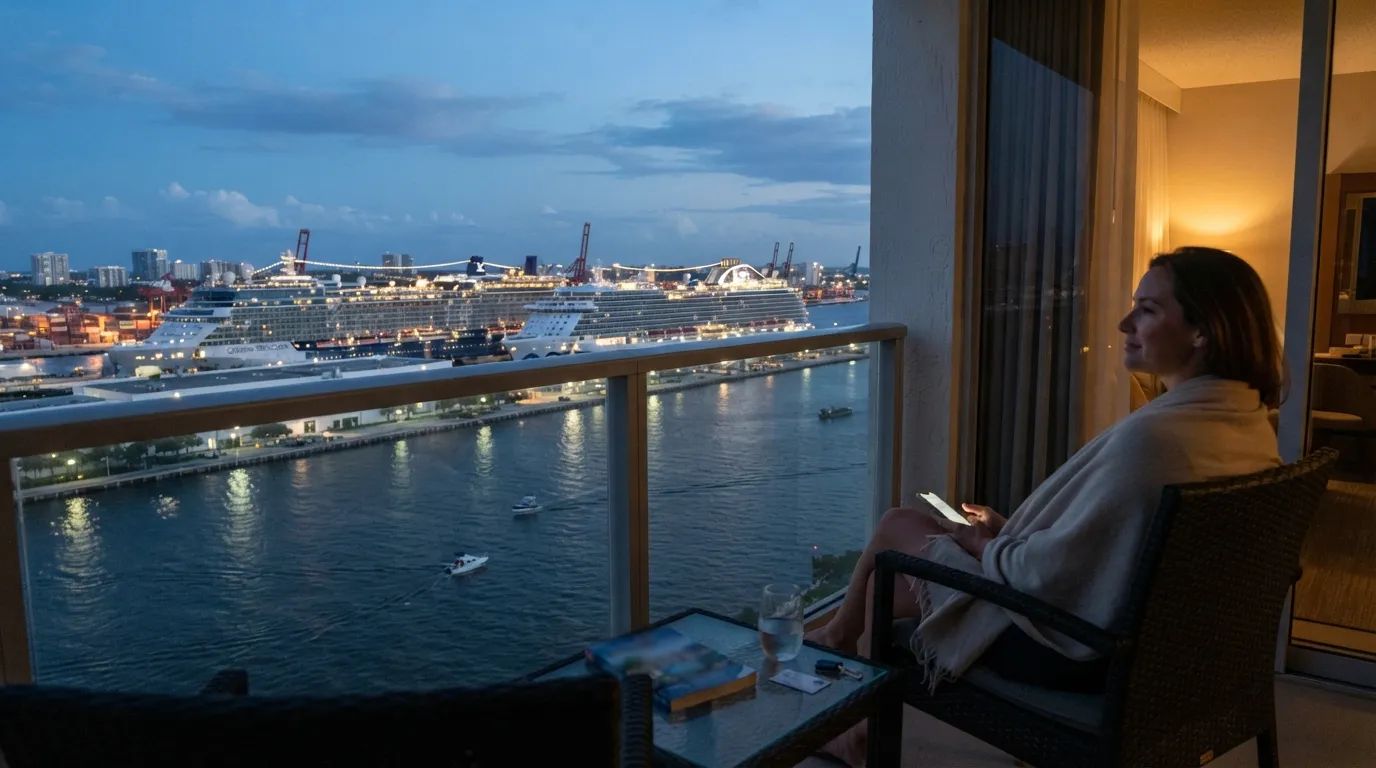
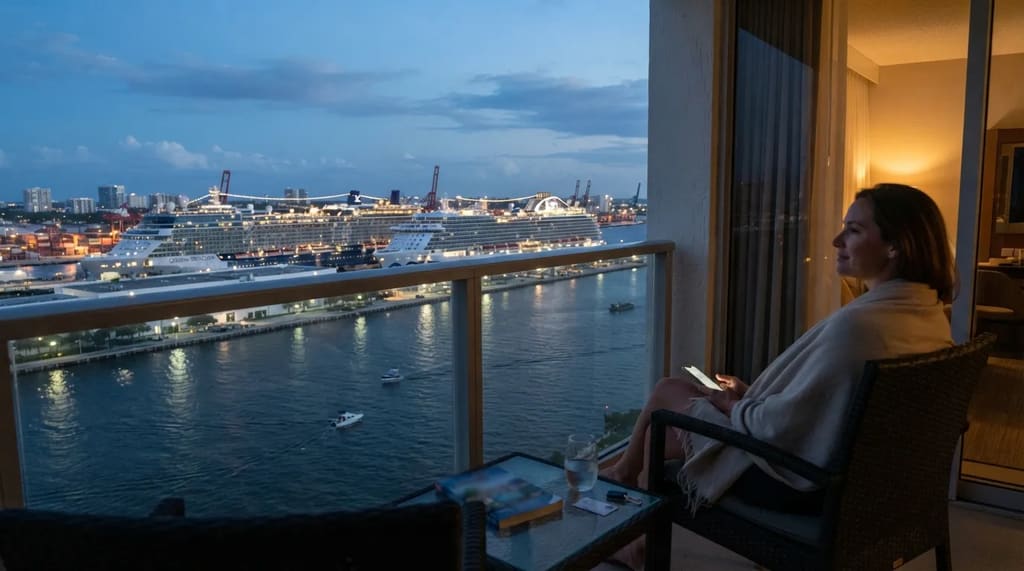
Fly in the day before and sleep within a short ride of the port. Arriving in Fort Lauderdale at least one day before embarkation can provide protection against flight delays. For that one night, you give up a hotel bill and a little sleep. In return you remove the whole airport-to-ship chain from the sailing-day schedule.
Season matters as well. The port follows Broward County emergency protocols during named storms, which can include closures or access restrictions. Atlantic hurricane season runs from June 1 through November 30, so a day of slack is protection against more than a late plane.
One practical catch: most FLL airport hotels run shuttles to the airport only, not to the cruise terminals. Budget for a ride to the port, which is the short trip from #13.
Port Everglades looks easy because the distances are small: 1.8 miles from the airport, a few hundred yards from garage to gangway. The schedule is another matter, because every step has its own wait, from the gate line to the check-in hall to the taxi rank on the last morning.
Give each step its own cushion and the short distances do what the brochures promise. Skip the cushions and the same distances work against you.
What was the one step on your last Fort Lauderdale sailing that took longer than you planned for: the airport, the gate, the garage or the line?
- Port Everglades Record Volumes: https://www.freshplaza.com/north-america/article/9794971/port-everglades-records-peak-volumes/
- Cruise Industry News Record Year: https://cruiseindustrynews.com/cruise-news/2025/12/port-everglades-celebrates-record-fiscal-year/
- Port Everglades Terminal Guide: https://www.jacksonjetsetting.com/blog/port-everglades-embarkation-guide
- Fort Lauderdale Magazine Terminal 25: https://fortlauderdalemagazine.com/port-of-the-future/
- Terminal 25 Investment Details: https://flaports.org/port-everglades-invests-in-the-future/
- Maritime Executive Shore Power: https://maritime-executive.com/article/port-everglades-is-planning-its-growth-in-cruise-operations
- Port Everglades Terminal 18 Upgrades: https://www.cruisenews.io/port-everglades-upgrades-for-record-4-9-million-cruise-guests/
- Port Everglades Official Parking: https://www.porteverglades.net/cruise/parking/