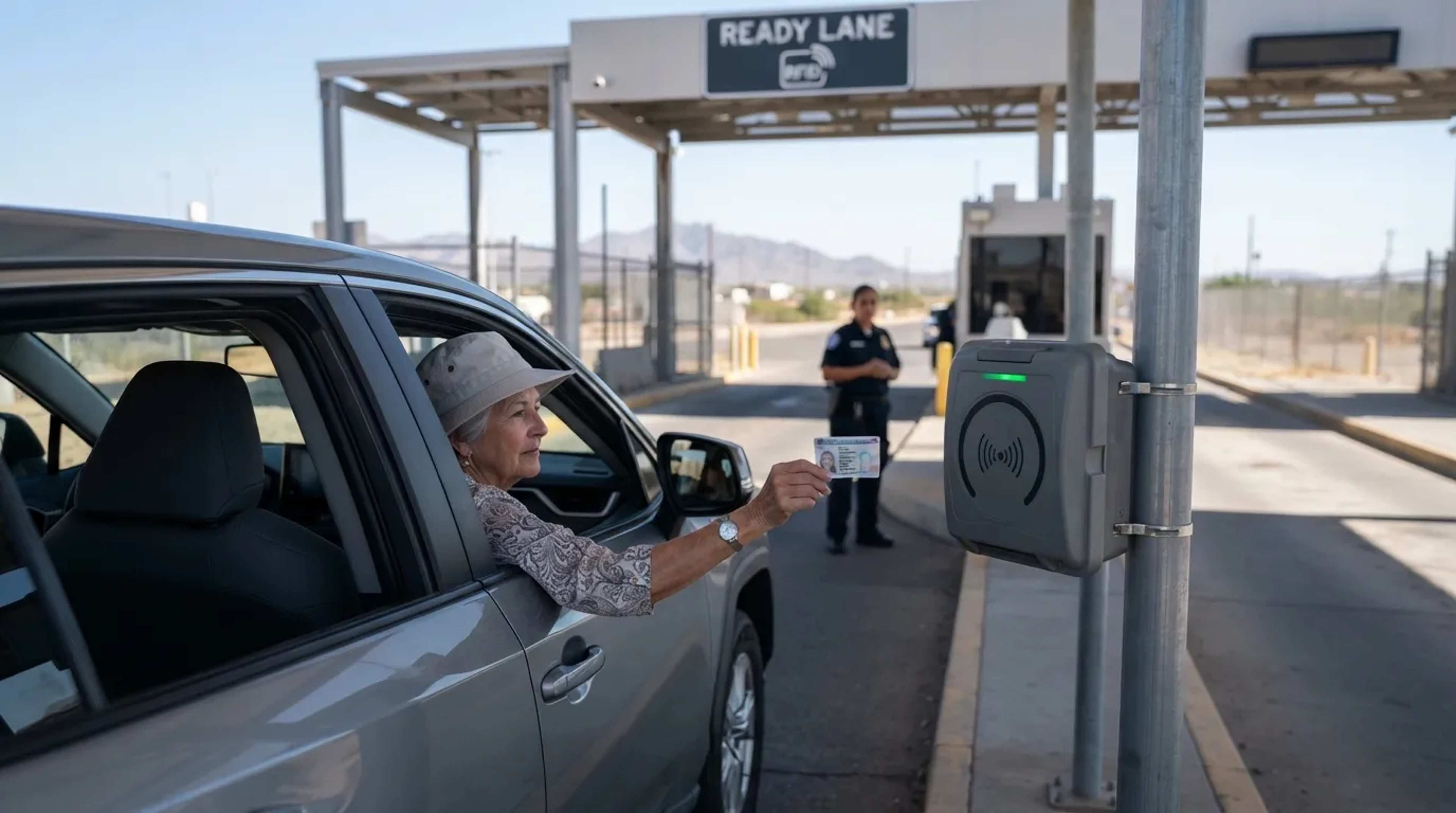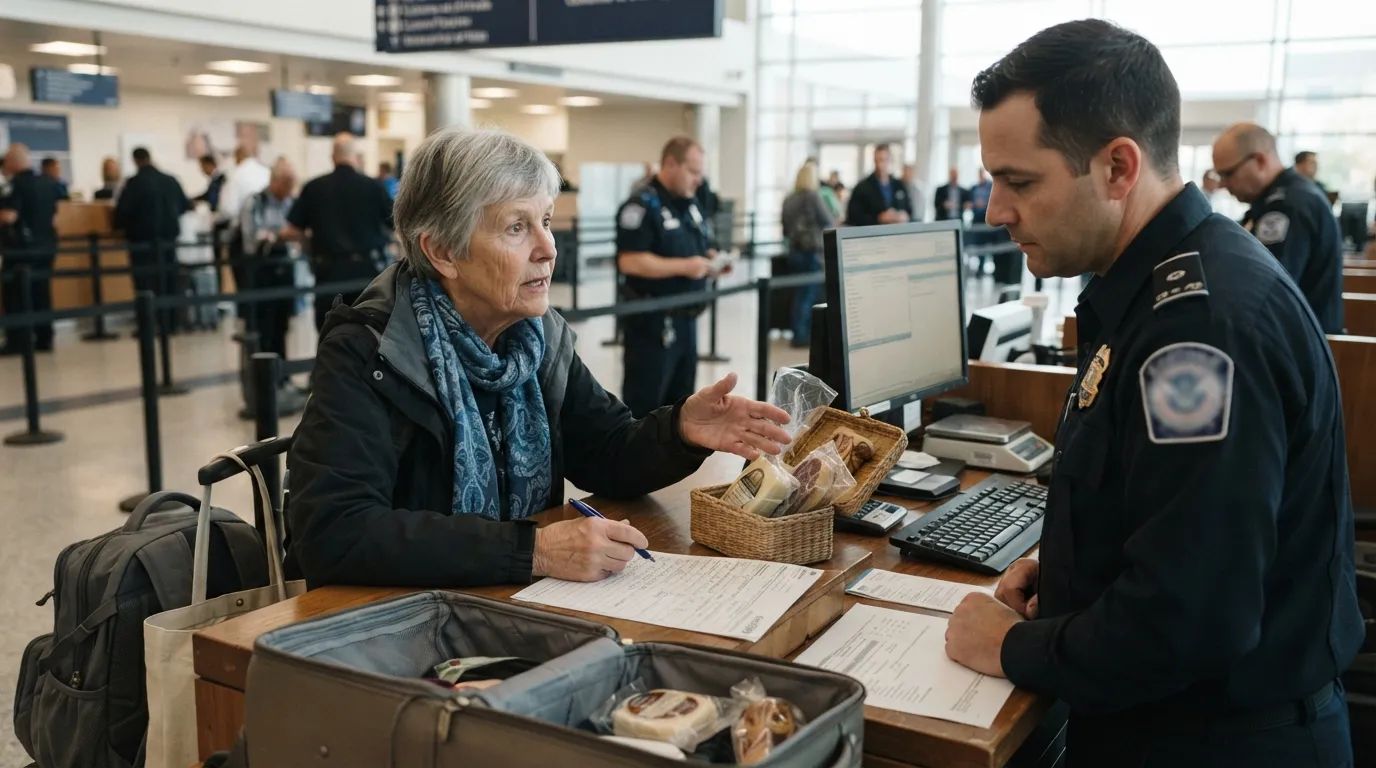
You know the signs by heart: “Welcome home.” “Have your passport ready.” “Declare all items.” What none of them explain is how much can hinge on ten seconds at the booth. A few short questions, one small form, and a handful of rules nobody posts on the wall can decide whether you walk out in five minutes or lose an hour (and sometimes a lot more).
To be clear, none of this is a secret age rule. These are ordinary rules that land harder on travelers over 60, who tend to take longer trips, carry more medication, and come home with more gifts for the grandkids. Some of the items below involve money, one involves the phone in your pocket, and one can put a green card at risk. The one at #1 is the sentence officers repeat more than any other.
#14 – The Grandkid Gifts Count Against Your Limit, Even Though They’re Not for You
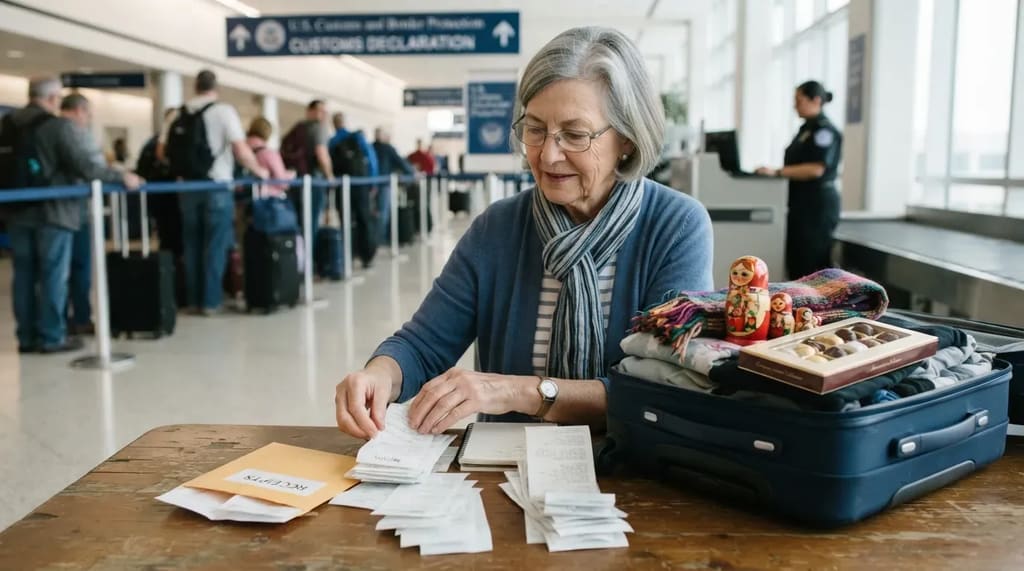
The presents in your suitcase belong on the form. The declaration asks for the total value of everything you bought or acquired abroad, including gifts for someone else. Items you mailed home are the exception. The hand-painted toys, the scarf for a neighbor, and the chocolates for the whole street all count.
For gifts, you list the retail value, meaning the price on the tag and not the bargain you bragged about at dinner.
U.S. residents are normally entitled to a duty-free exemption of $800 on items accompanying them. That sounds generous until you add up a two-week trip.
The figure has not changed in years, and plenty of travelers argue it’s stale. But it’s nothing compared to what a forgotten airline snack can cost you at #13.
#13 – The Leftover Fruit From the Flight That Can Turn Into a Fine
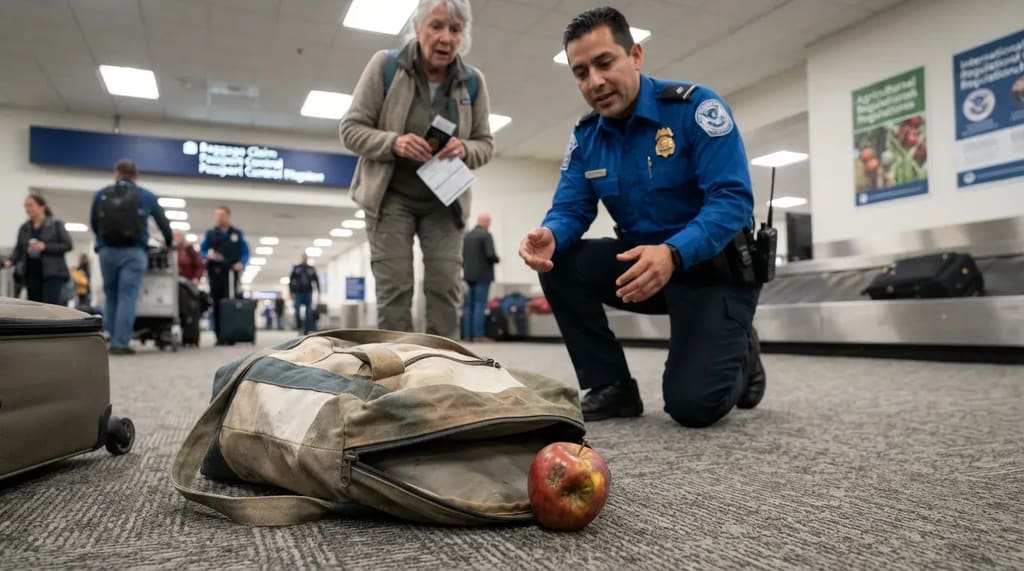
The most common surprise at the booth isn’t jewelry. It’s food. CBP’s form lists fruits, vegetables, plants, soil, and meat, and cheese, seeds, nuts, and even some wooden souvenirs can also draw attention. And yes, that apple rolling around in your tote bag counts.
The reason is pest control, not paperwork for its own sake. Declaring lets a USDA specialist decide whether an item is allowed, and answering yes doesn’t mean you’re in trouble. Even fruit served on the plane is on the list of things to leave behind.
Sources differ on the exact penalty for a first offense, but undeclared food typically runs into the hundreds of dollars and can climb higher. That’s a pricey snack. The next rule catches retirees who travel back to back, and it’s #12.
#12 – The 30-Day Clock That Quietly Wipes Out Your Allowance
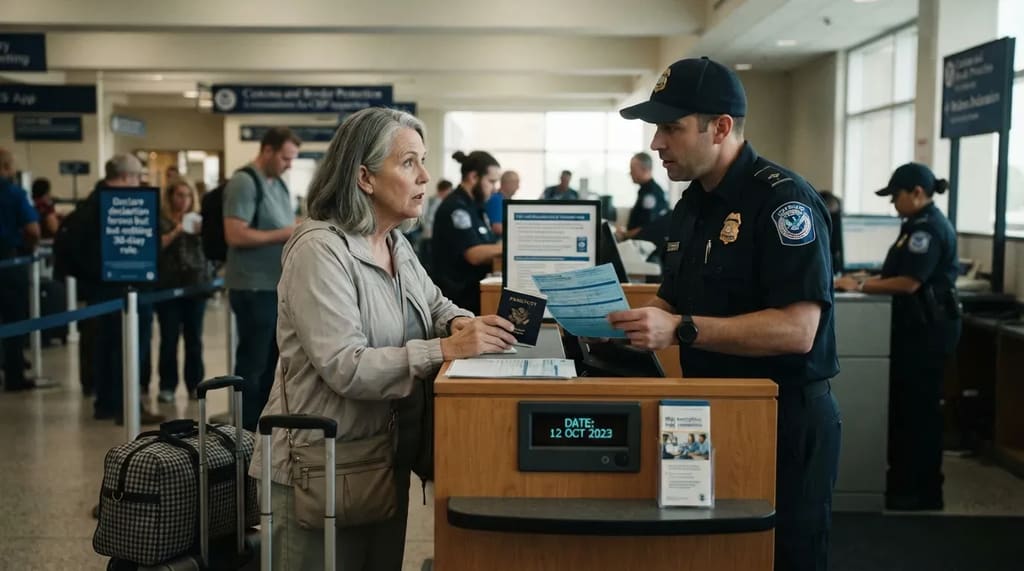
Two trips in one month can cost you your duty-free break. You generally can’t claim the $800 exemption if you already used it within the previous 30 days.1 Snowbirds, cruise-hoppers, and anyone who flies to Europe and then sails the Caribbean should pay close attention.
The clock runs silently. Nobody at the airport mentions it, and nothing on the arrival signs hints at it.
There’s also a time floor. The standard $800 allowance generally applies to returning residents who spent at least 48 hours abroad. One exception: travelers returning directly from Mexico can claim the full $800 regardless of trip length.1
Fast Facts
- The standard exemption is $800 per qualifying returning resident.
- Using it within the previous 30 days generally cancels it for the new trip.
- The usual minimum time abroad is 48 hours.
- Returning directly from Mexico is the exception to the time rule.
Go over the limit and the goods aren’t banned. CBP may simply assess duty on the amount above your allowance, so the penalty is a bill, not a scene. But couples have a trick most travelers never use, and it’s at #11.
#11 – The Couple’s Trick: One Form, Pooled Allowances
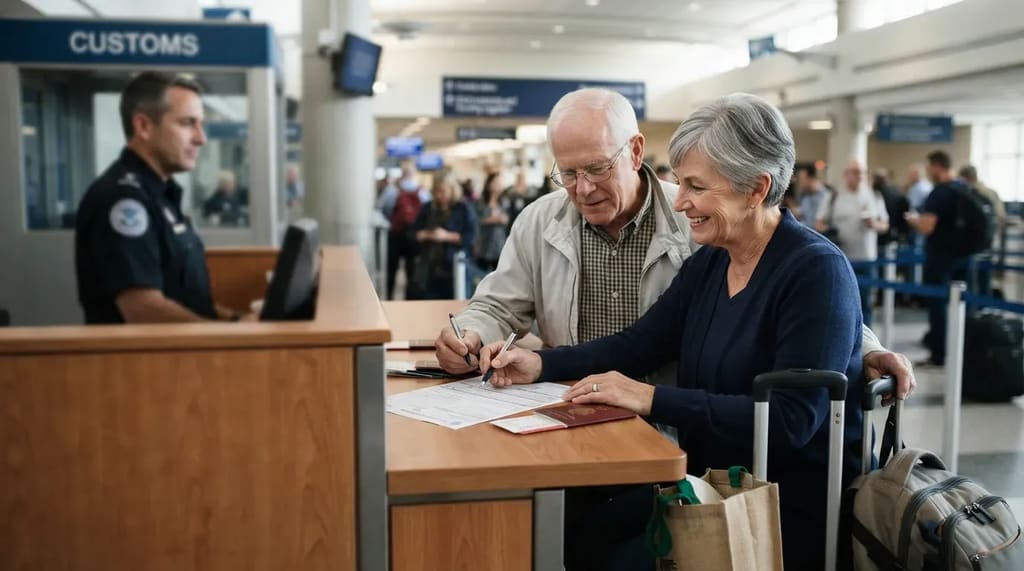
Two travelers sharing one declaration can have more room than either would alone. Family members traveling together who live in the same household can combine their exemptions on a joint declaration. CBP’s own example is a family of five reaching $4,000. The form even asks how many family members are traveling with you for exactly this reason.
Don’t mistake this for a loophole. The $800 exemption still belongs to each qualifying returning resident, and the 30-day rule still follows each person individually.
It also isn’t a spending cap. The exemption determines how much qualifying merchandise is covered without duty, not how much you’re allowed to buy. Spend more and you pay duty on the excess, nothing more dramatic. The next surprise involves a few bottles of wine, and the math is stranger than you’d expect.
#10 – The Wine Math That Trips Up Careful Shoppers
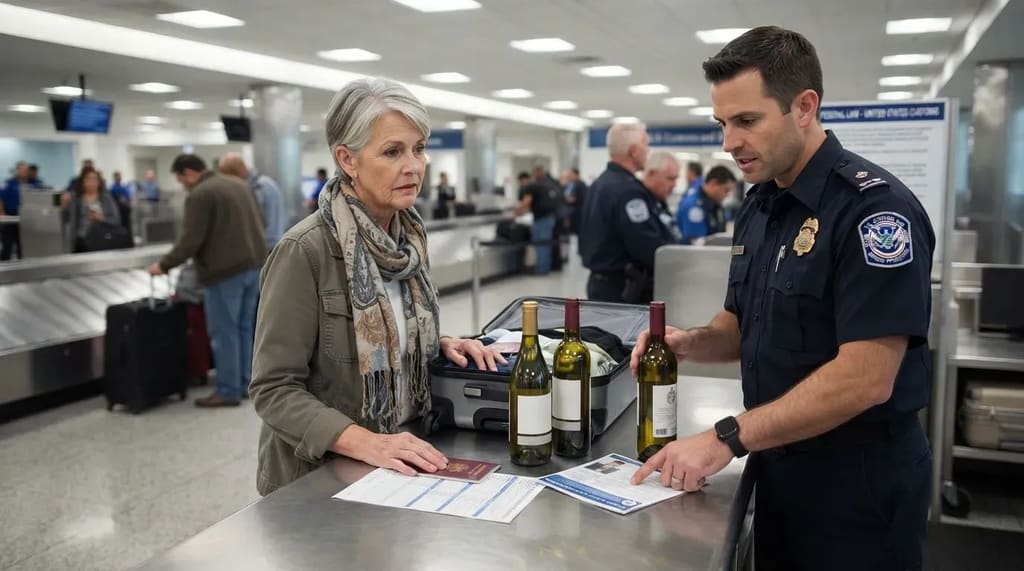
You can be under $800 and still owe money. In CBP’s own example, a traveler with three liters of wine and nothing else pays duty and internal revenue tax on two liters, even though the total is well under $800. The dollar allowance and the alcohol allowance are separate tests.
The usual duty-free alcohol allowance for adults 21 and over is one liter. That’s roughly one standard bottle with a little room to spare.
This is why the vineyard-tour haul so often ends in a bill. Plenty of retirees still pack six bottles anyway, because the souvenir feels worth it. The next item has nothing to do with money, and it involves your pill bottles at #9.
#9 – Your Weekly Pill Organizer Can Raise Questions the Bottle Would Have Answered
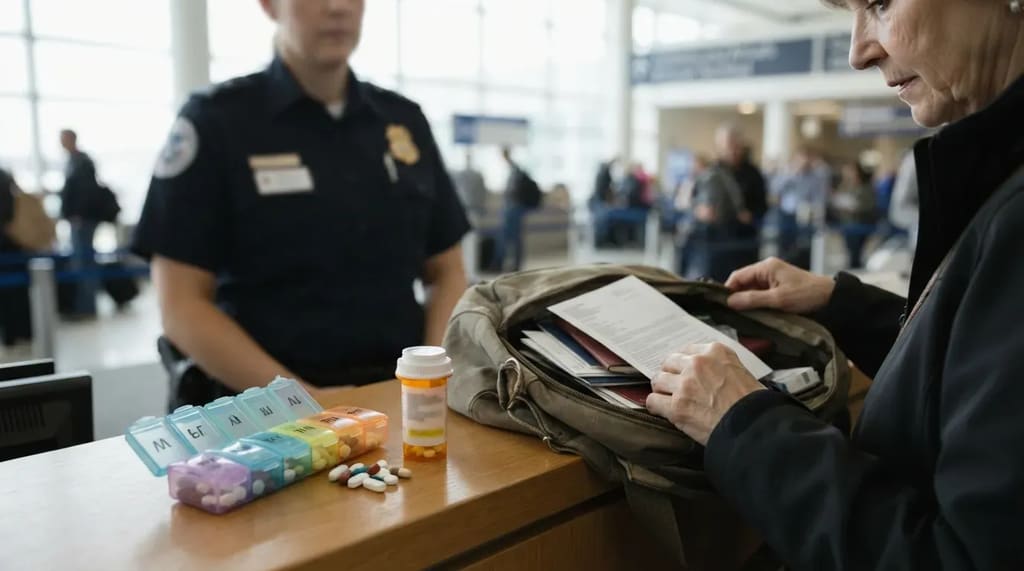
A pill organizer is handy at the hotel. At the booth, it tells an officer nothing. A loose white pill proves nothing, but a labeled bottle answers the question before anyone asks it.
Federal agencies advise packing medications in their original containers, with your name and the drug on the label.
Controlled substances need extra care. Strong pain relievers, sleep aids, and anxiety medications are the usual examples, so bring a doctor’s letter and declare them.
If you bought medicine abroad, the FDA’s personal-importation policy generally limits it to about a three-month supply. Declaring never hurts you here. The next rule involves a number almost everyone misunderstands, and it’s #8.
#8 – The $10,000 Figure Isn’t a Limit, and That Surprises Retirees
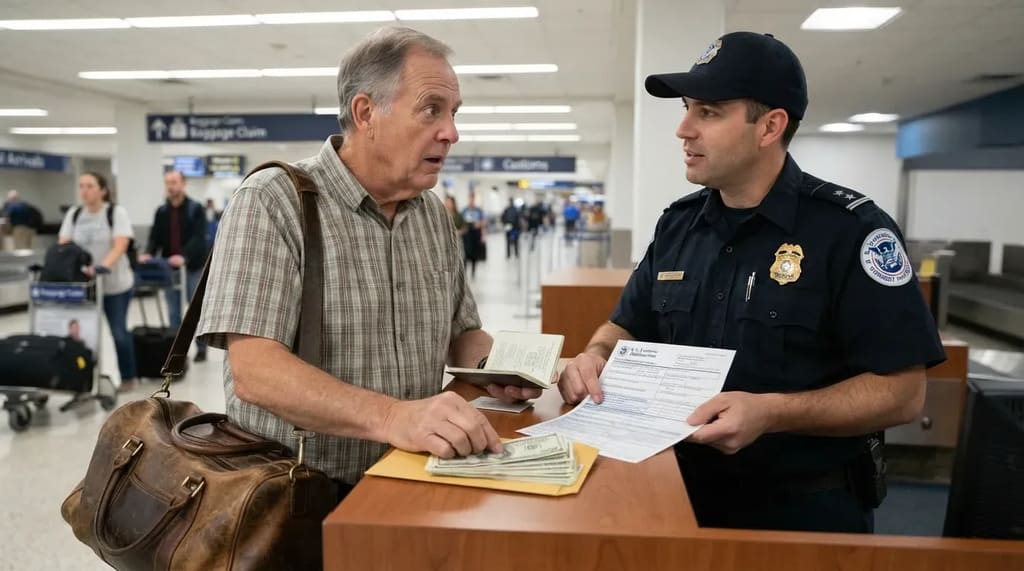
Carrying more than $10,000 is not illegal. Failing to report it is the problem. Travelers must declare currency or monetary instruments over $10,000.
That catches retirees paying for a medical procedure, buying a car abroad, or moving money for a property deal. Most never realize a threshold exists.
The danger comes from staying quiet. Unreported currency can be seized, and penalties can follow, even though the form asks about it in a single line.
The advice insiders give is simple: if the combined total is close to the line, declare it. There’s also a faster way back into the country than most people use, and it costs nothing, at #7.
#7 – The Free App That Quietly Replaces the Paper Form
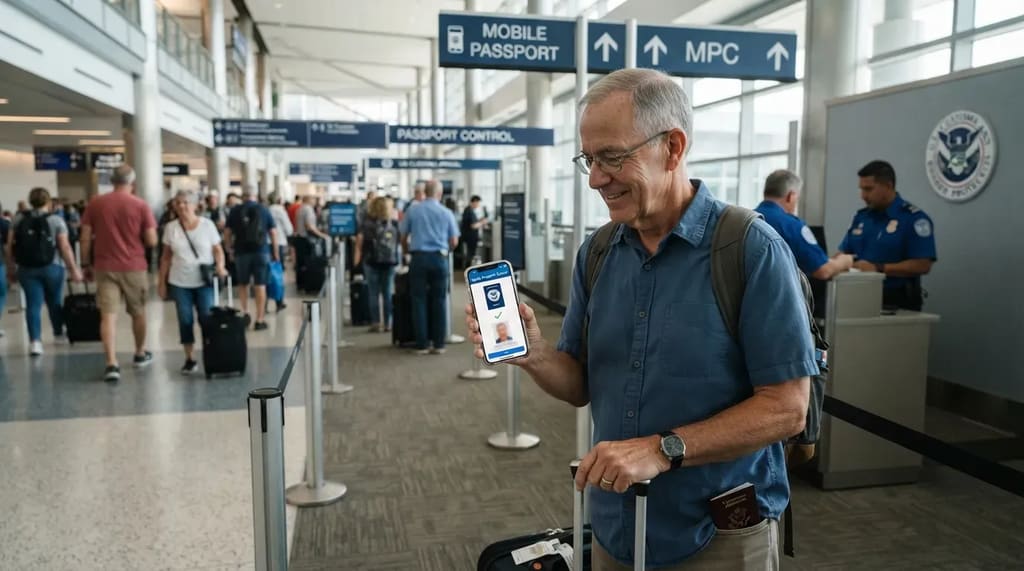
You may not need to fill out that paper declaration at all. Eligible travelers enter passport data, take a selfie, and submit their customs answers in the Mobile Passport Control app. Then they use the Mobile Passport line, which is typically far shorter. It’s free and open to U.S. citizens and lawful permanent residents.2
You can submit up to four hours before arrival. That means you can finish it before you land instead of at a crowded kiosk.2
The app works at dozens of locations, including most major U.S. international airports. CBP itself calls it a good alternative if you don’t qualify for a Trusted Traveler Program. Which raises the question of whether Global Entry is worth paying for. That’s #6.
#6 – Global Entry Costs $120, and It Still Won’t Save You From a Pull-Aside
The program costs $120 for a five-year membership and includes TSA PreCheck. The fee rose from $100 on October 1, 2024. You also have to clear a few hurdles: an application, a background check, and an in-person interview.
Plenty of travelers abandon the process halfway through, tired of the paperwork and the appointment hunt.
Here’s the part that stings. Members may still be pulled aside for further examination. For occasional international flyers, CBP suggests TSA PreCheck plus the free Mobile Passport app.
Quick Compare
- Mobile Passport Control: free, app-based, and submitted up to four hours before arrival.
- Global Entry: $120 for five years, with an interview, and it includes TSA PreCheck.
- The catch: Global Entry members can still be pulled aside for further examination.
The best-value choice depends on your travel calendar, not your age. The next change involves cameras at the booth, and the rules differ by citizenship at #5.
#5 – U.S. Citizens Can Actually Say No to the Camera
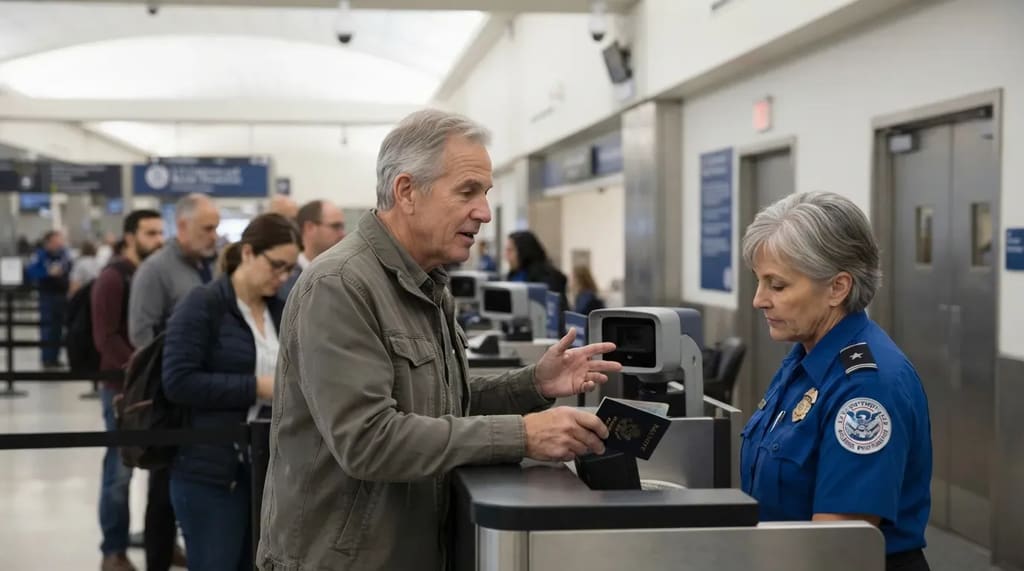
The camera at passport control isn’t mandatory for everyone. For U.S. citizens, it’s optional. Citizens who prefer to opt out can tell a CBP officer or airline representative and get a manual passport inspection. Many travelers never learn that. Photos of U.S. citizens taken for identity verification are deleted within 12 hours.3
The picture is different for non-citizens. A rule effective December 26, 2025 changed it. Before that, noncitizens under 14 or over 79 were exempt from being photographed.4
Now all noncitizens, including those previously exempt, may be photographed at entry and exit. If your parents or older friends travel on a green card, the age exemption is gone. The next surprise is about one little word, “secondary,” and it’s #4.
#4 – Being Sent to “Secondary” Isn’t an Accusation
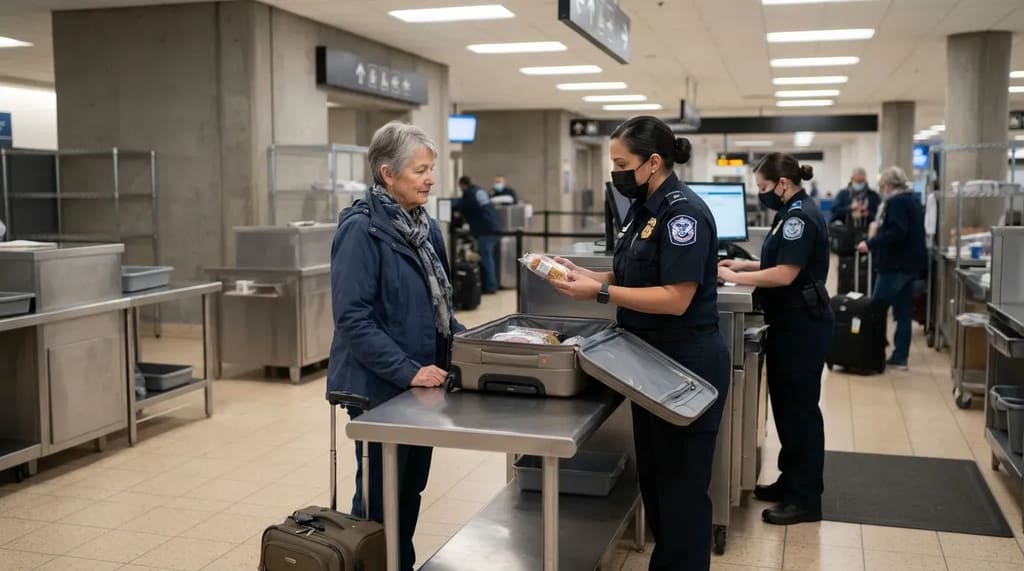
Hearing “please follow me” makes the heart race. It shouldn’t. Of the more than 419 million travelers CBP processed in fiscal year 2025, approximately 3% were referred for secondary inspection.5 That’s a lot of ordinary people.
Retirees with a duty payment, a produce check, or a plain random selection are all part of that crowd.
Secondary is usually where declared items get a closer look. Declaring lets a specialist decide whether an item is allowed, which is why honest declarations tend to shorten the visit.
Worth Knowing
- Roughly 3% of more than 419 million travelers works out to about 12 million people sent to secondary.
- Common reasons include a duty payment, a produce check, or random selection.
- Declared items are what usually get examined there.
- A truthful declaration tends to shorten the visit.
The practical approach is boring and effective: short, truthful answers, no jokes about contraband, and patience after a long flight. Officers have heard every joke. The next item should make you think about the phone in your pocket, and it’s at #3.
Related Stories From Travelbinger


#3 – The Phone in Your Pocket Can Be Searched Without a Warrant
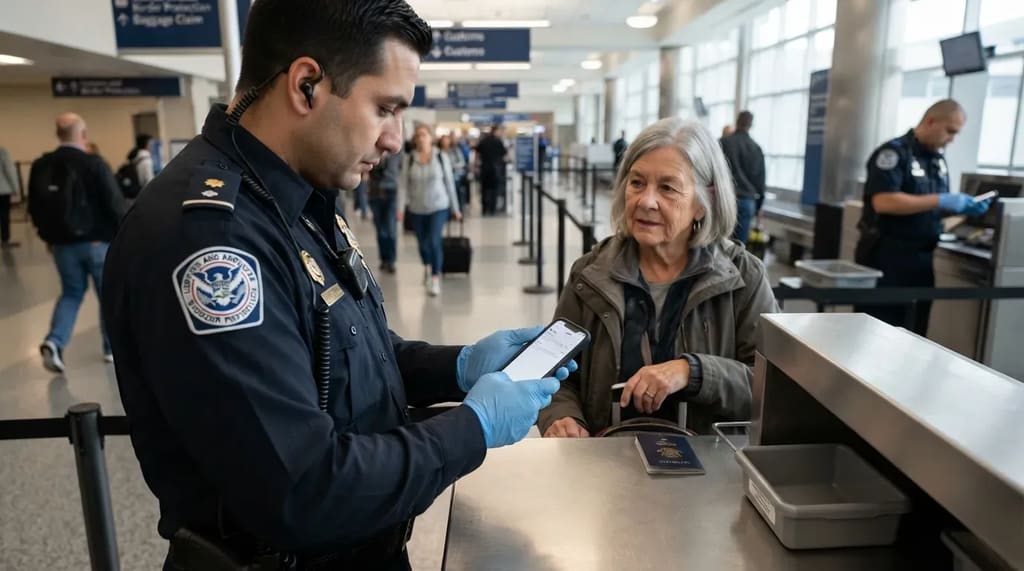
The numbers are climbing. CBP performed 55,318 device searches in fiscal year 2025, up 17% from 47,047 the year before.6 The agency says that’s less than 0.01% of arriving international travelers. Most of them, 50,922, were basic searches without connecting the device to outside equipment.
Under a new directive, agents can search flash drives, SIM cards, smartwatches, GPS devices, and more. Privacy groups, including the EFF and ACLU, have pushed back hard, arguing that a warrant should be required. CBP says the searches are an important enforcement tool.
U.S. citizens can’t ordinarily be denied entry for refusing to unlock a device, though refusal can mean more questioning or the device being held.7 The next item matters most for green card holders who spend long stretches abroad, and it’s #2.
#2 – Long Stays Abroad Can Raise Questions for Green Card Holders
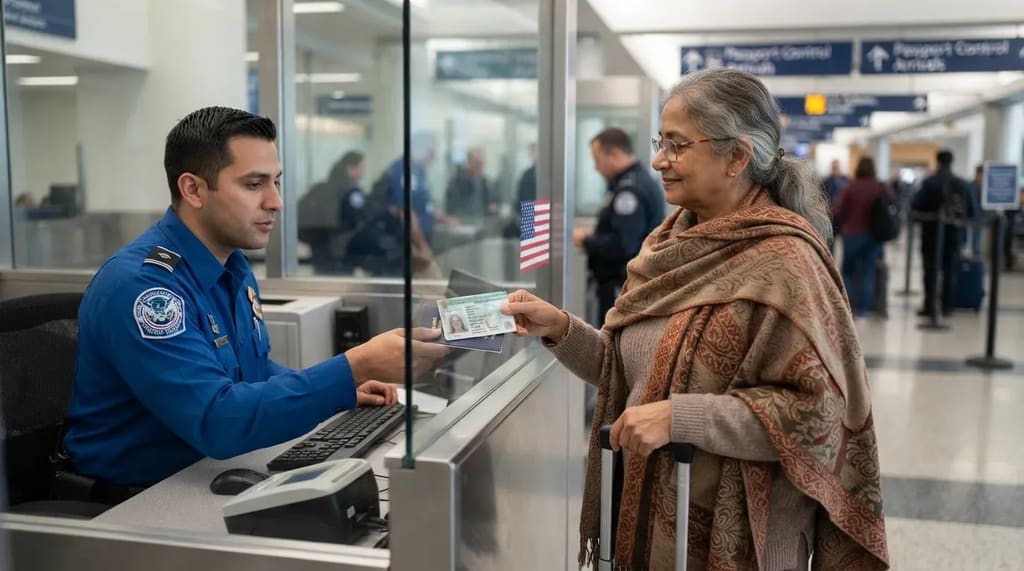
Not every returning traveler holds a U.S. passport. Many people over 60 are permanent residents who spend months, or even years, back in their home country. The officer at the booth can ask whether the U.S. is still your home.
Absences of more than six months commonly draw those questions. An absence of a year or more, without a reentry permit, can put your status at real risk.8
Officers look for ties. Where you file taxes, whether you keep a home here, and why the trip ran long all matter, so keep records of all of it.
At a Glance
- Six months or more: expect questions about your U.S. ties.
- A year or more without a reentry permit: your status can be at real risk.
- What helps: tax filings, proof of a U.S. home, and a clear reason the trip ran long.
This may be the most misunderstood rule on the list, because people assume a green card is permanent no matter what. It isn’t. And that brings us to the one idea behind every other item here, at #1.
#1 – The Rule Officers Repeat Most: When in Doubt, Declare It
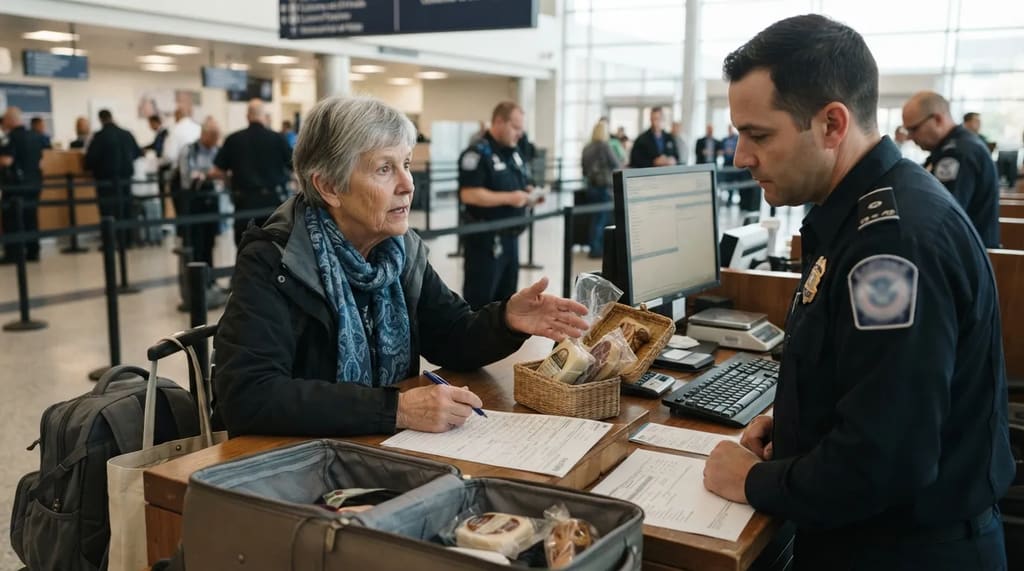
The gap between declaring and staying silent is huge. If you fail to declare an item and don’t mention it before the officer begins examining your baggage, the item is subject to forfeiture and you face a penalty equal to its value. For controlled substances, the penalty is $500 or 1,000% of the item’s value, whichever is greater. That’s the real cost of keeping quiet.
Now look at the other side. There is no penalty for declaring an item that turns out to be duty-free. You’re not expected to know which items are permitted, only to declare them honestly and let the officer decide.
The form is a test of honesty, not knowledge. The travelers who get in trouble are usually the ones who guess. The ones who sail through simply say yes and let the officer sort it out.
The surprises on this list aren’t really age rules. They’re ordinary rules that hit travelers over 60 harder: longer trips, more medication, more gifts, more cash, and more ties abroad.
The biggest shocker is the lopsided math. Declaring costs you nothing, and staying quiet can cost you the item’s full value. Add the free app, the camera opt-out, and the phone-search numbers, and the arrival signs start to look like only half the story.
- Returning Resident Duty Exemption: https://fedlaws.org/what-is-the-cbp-personal-duty-exemption-for-returning-residents/
- CBP Mobile Passport Control: https://cbp.gov/travel/us-citizens/mobile-passport-control?cmp=1
- Biometric Rule Photo Retention: https://cbsaustin.com/news/nation-world/new-dhs-policy-at-ports-of-entry-to-collect-biometric-data-for-noncitizens-to-prevent-visa
- DHS Biometric Final Rule: https://iso.mit.edu/news/dhs-announces-final-rule-to-implement-biometric-entry-exit-program
- FY2025 Secondary Inspection Figures: https://www.steptoe.com/en/news-publications/investigations-and-enforcement-blog/navigating-us-border-searches-of-electronic-devices-practical-guidance-for-chinese-companies-and-employees.html
- FY2025 Device Search Statistics: https://stateofsurveillance.org/news/eff-fourth-circuit-border-device-search-warrant-cbp-55000-searches-2026/
- CBP Border Device Searches: https://cbp.gov/travel/cbp-search-authority/border-search-electronic-devices
- USCIS Reentry Permit Instructions: https://www.uscis.gov/sites/default/files/document/forms/i-131instr.pdf