Winter in the Everglades can feel like a wildlife show with the front-row seats thrown open: alligators lined up beside a boardwalk, wading birds working the last ponds, and mornings cool enough for a sweatshirt. Here are the 12 things worth knowing first, from fees and far-apart entrances to the parking-lot math that trips up weekend visitors. The park covers about 1.5 million acres of wetlands, mangroves and forest, and in winter much of that water pulls back into a handful of deep channels and ponds.
That shrinking is why a December trip can feel like a different park from a July one. It is also why a badly timed Saturday in February can mean an hour in a line of cars while your tram leaves without you. You pay for a day like that in gas, fees and patience. And the thing that makes this season so rewarding is the one thing no pass, ticket or reservation can control. We will get to it at the very end. First comes the calendar, because the dry season has no official first day.
#12 – The Dry Season Has No Official Start Date
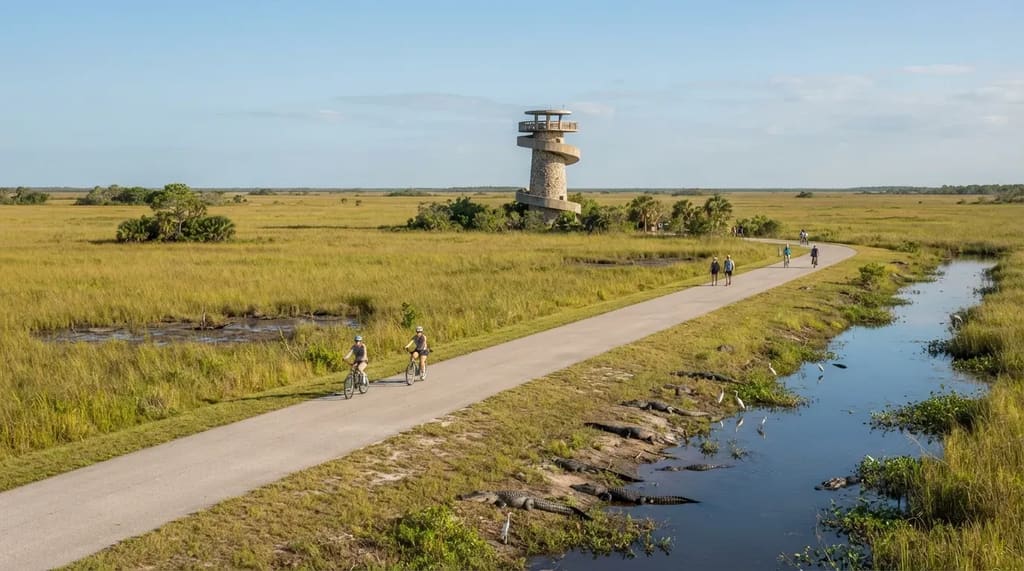
Guides disagree on the dates. Some run the dry season from December through mid-May. Others say roughly November through April. The change is gradual, and the wet season that follows brings heavy heat, daily rain and clouds of mosquitoes.
Late November can already feel like dry season, with lower lodging prices and thinner crowds. Some visitors also aim for early May to catch the last dry conditions with fewer people around.
If your schedule bends, I would choose the edges of the season over the middle. December through February is the peak for wildlife density. December through April is when Shark Valley’s parking lot most often reaches capacity. The shoulder weeks give up a little of the first in exchange for a lot less of the second. Even the Long Pine Key campground sets its dates to match: its 2026 to 2027 season runs November 1 through April 30.
Quick Compare
- Late November: lower lodging prices and thinner crowds
- December to February: peak wildlife density
- December to April: Shark Valley’s lot most often hits capacity
- Early May: the last dry conditions, with fewer people
Whatever month you pick, the first charge arrives at the entrance station.
#11 – The Gate Fee, the Pass and the Cash Problem
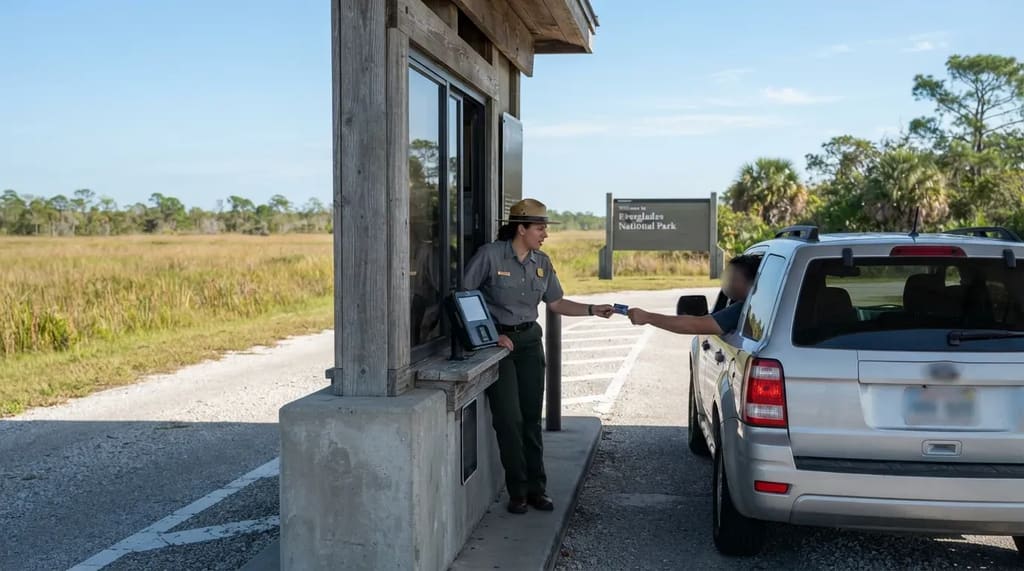
The standard fee depends on how you arrive:
- $35 per vehicle, good for seven days1
- $30 per motorcycle
- $20 for each visitor on foot or bike, aged 16 or older
Bring a card. The Homestead and Shark Valley entrance stations take credit or debit only, and the park does not accept cash. Because the fee is valid for seven days at all entrances, a trip that touches Homestead on Tuesday and Shark Valley on Friday costs you one fee.1 2
The annual pass is $70 and covers the passholder plus the vehicle’s passengers. Unless you expect to come back at least three times in a year, as some winter residents do, the single pass is the better buy. Visitors from abroad should know that non-US residents 16 and older pay an extra $100 each, unless they hold an annual or America the Beautiful pass.1
#10 – Four Entrances That Do Not Connect
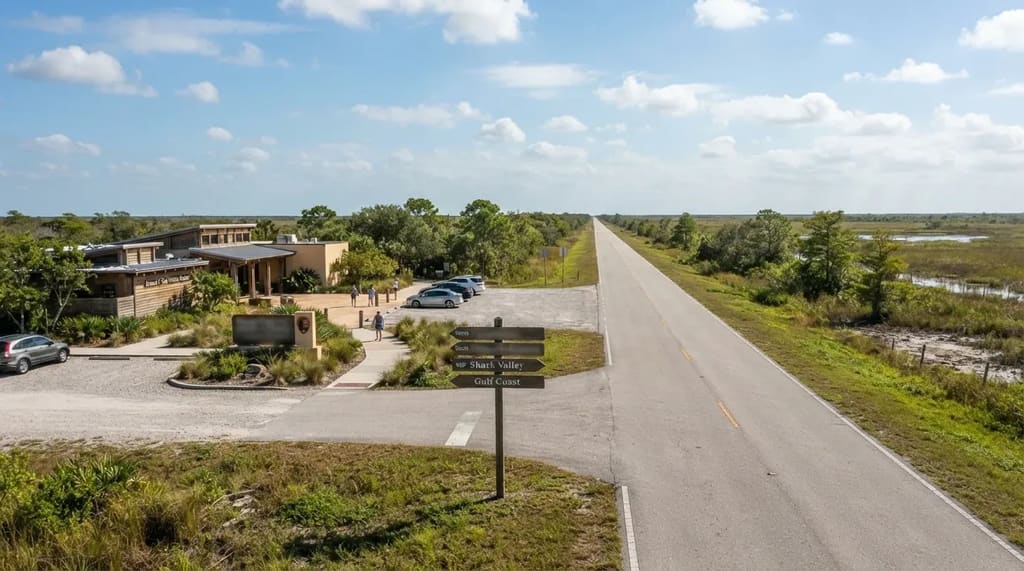
The park has four entrances, all open daily: Gulf Coast, Shark Valley, Ernest F. Coe at Homestead, and Flamingo. They are not all connected by road, so the route you choose matters. Shark Valley sits on the Tamiami Trail, and the Gulf Coast area is in Everglades City. Flamingo is 38 miles south of the main entrance in Homestead, and you reach it only through that entrance.
AAA’s park guide puts a full exploration at four or five days. With a day or two, pick one district and give it a slow morning. Hopping between districts burns your best, coolest hours in the car.
The Homestead side also holds the quickest close look at an alligator, on a boardwalk near the entrance.
#9 – Alligators a Few Feet From the Boardwalk
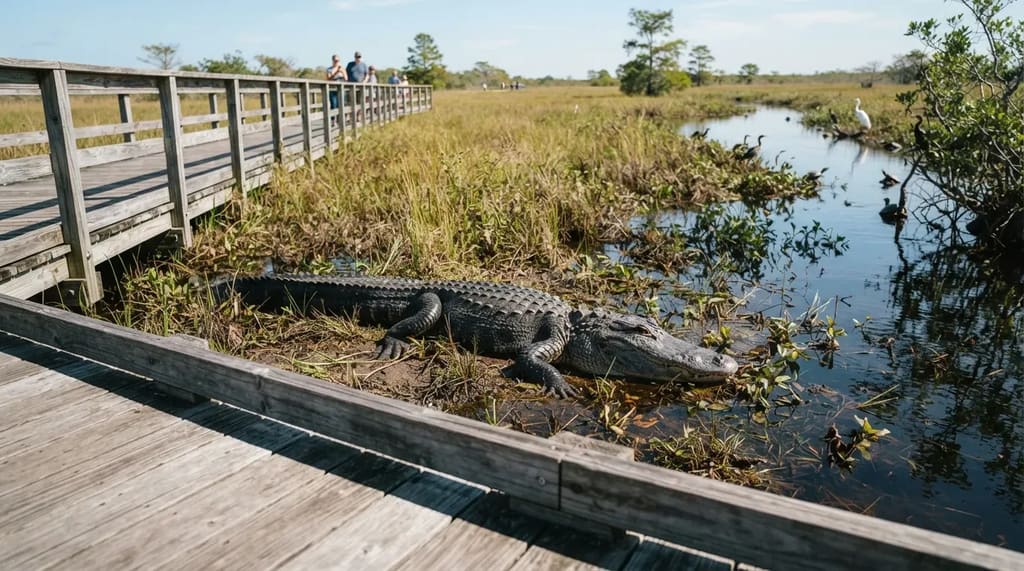
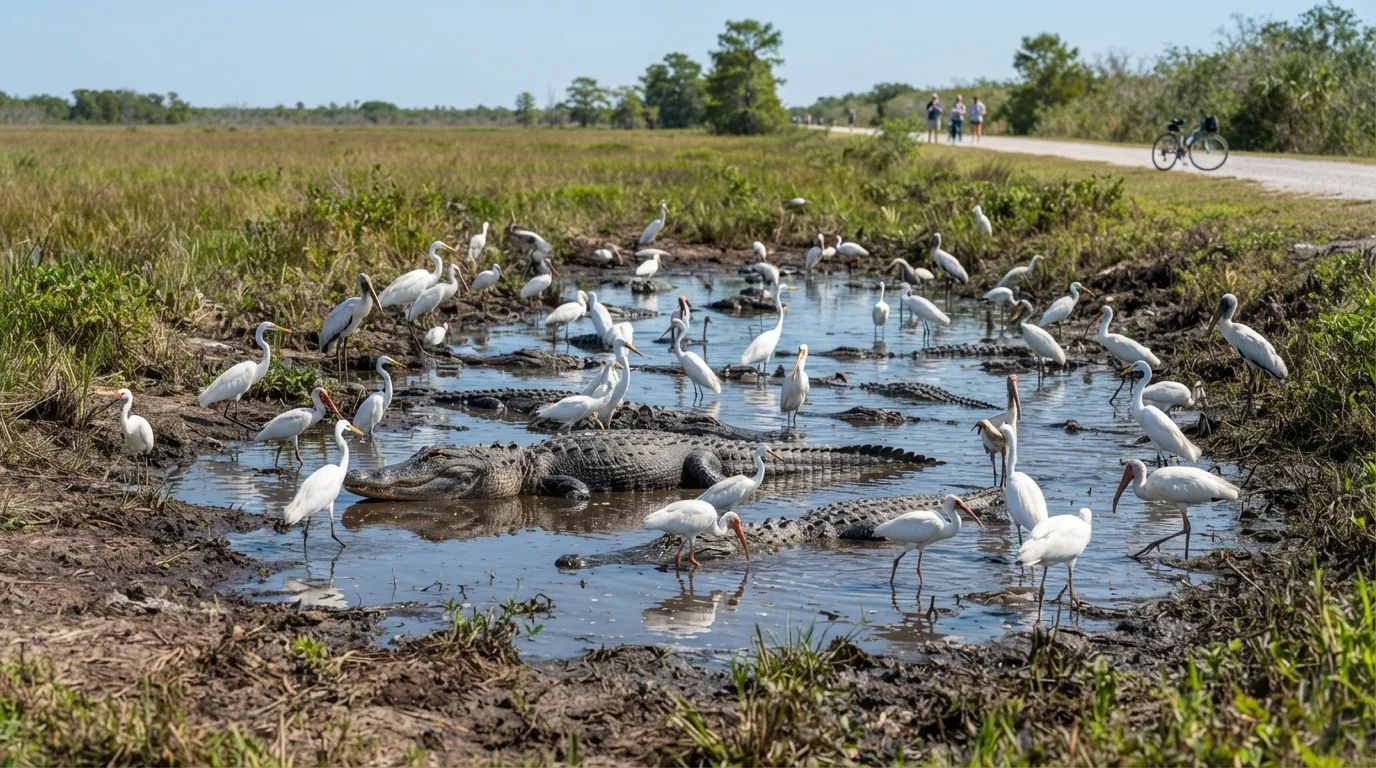
The Anhinga Trail is a flat half-mile boardwalk near the Homestead entrance. In the dry season you will see alligators, turtles and wading birds at close range, often within your first ten minutes. Falling water is the reason: wildlife crowds around the remaining ponds and sloughs. You can see dozens of alligators, sometimes within a few feet of the boardwalk.3
Because the walk is short and level, it suits almost any pace. I would call it the best first hour in the park for anyone who is not up for long distances. Give the alligators distance and never feed them, which is illegal and dangerous.
Two more stops sit close by. The Gumbo Limbo Trail winds through a hardwood hammock and gives you shade, and the Pa-hay-okee Overlook gives you the big sawgrass view. Go early if you can. Early starts mean cooler temperatures, more active wildlife and less crowding at Anhinga Trail and Shark Valley.
Fast Facts
- Anhinga Trail: flat, half-mile boardwalk near the Homestead entrance
- Shade stop: Gumbo Limbo’s hardwood hammock
- Big view: Pa-hay-okee Overlook over the sawgrass
- House rule: never feed alligators, because it is illegal and dangerous
The boardwalk shows one corner of the park. Over on the Tamiami Trail, the sawgrass loop has no cars at all.
#8 – Shark Valley’s Loop Has No Cars, So Choose a Ride
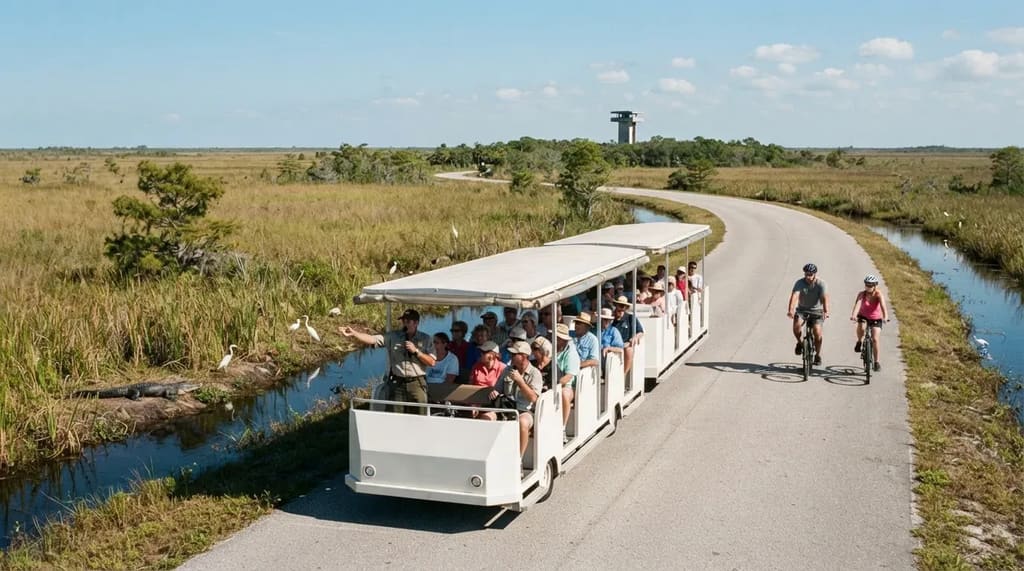
The area is not open to private vehicles, so the 15-mile paved loop leaves you three choices: hike, ride a bike, or take the tram.4 The tram is a two-hour open-air ride run by an approved park concessionaire. A trained naturalist explains the wildlife, water flow and plants as you go. Tickets run $36 for adults, $27 for seniors 62 and older, and $19 for children 3 to 12, plus park entry.
For a first visit I would take the tram over a bike. The loop has no shade along its entire length, and the narration tells you what you are looking at. The stop at the observation tower lets you climb up and see the marsh laid out in a way you cannot get from the ground.5 Reserve ahead, because dry-season tours fill fast, and plan to arrive at least 30 minutes before departure to pick up your boarding tickets.
A tram seat is easy to reserve. The parking space in front of the visitor center is not.
#7 – The Shark Valley Lot Fills Before Lunch
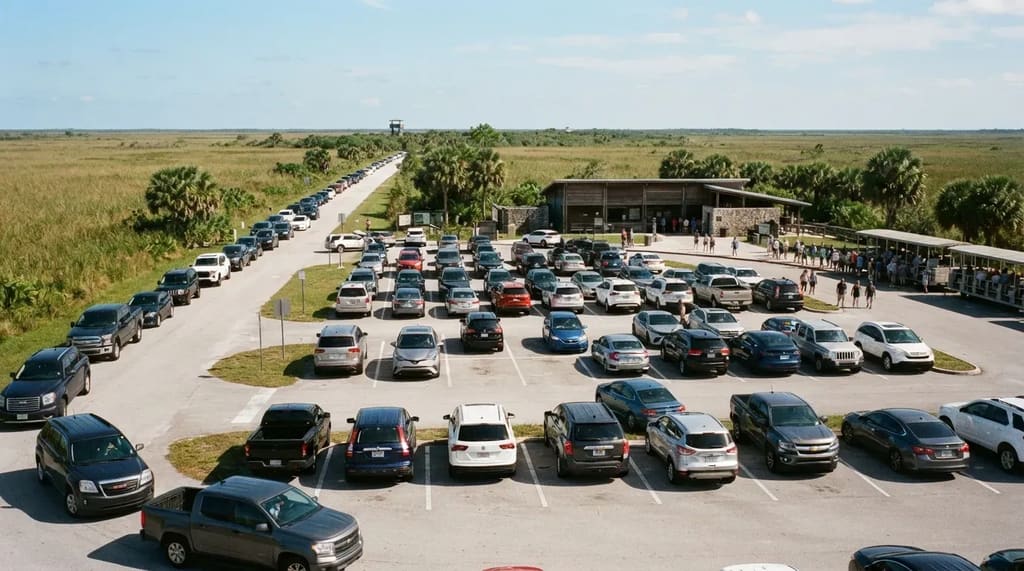
Everglades National Park requires no reservation to enter in 2026 and has no timed-entry system.2 Nothing limits the number of cars except the size of the lots. Shark Valley’s lot is small compared with the number of people who want to visit in the dry season.
One visitor who went in April reported that the lot was full by 10:30, and that the line of cars was even longer when they left a few hours later. Add the hour a Saturday in February can cost you, and you can see how a paid tram ticket ends up unused.
Worth Knowing
- No reservation or timed entry is needed to get into the park in 2026
- The only limit on cars is the size of the lot
- One April visitor found Shark Valley’s lot full by 10:30
- Tram riders should arrive at least 30 minutes before departure
I would give a weekday morning more weight than any purchase on this list. It costs nothing, and it decides whether everything else you booked actually gets used.
#6 – Mosquitoes Thin Out but Never Fully Leave
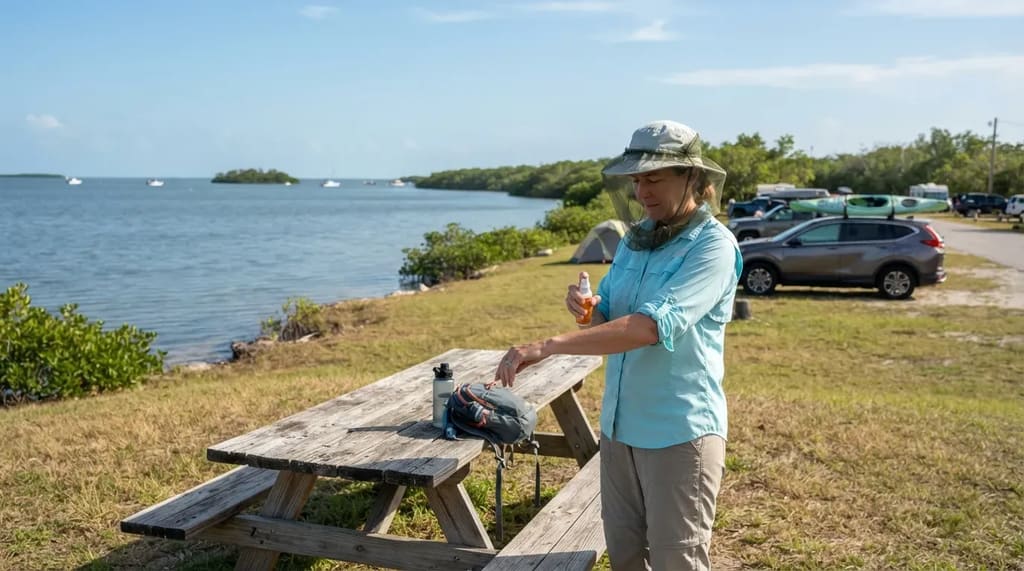
The dry season brings lower humidity, far fewer mosquitoes and concentrated wildlife. The wet season, by contrast, means heavy heat, daily rain and clouds of bugs. That contrast is why winter is the popular choice for families and anyone who dislikes bites.
Repellent still belongs in the bag, though. Mosquitoes never disappear completely, even in the dry season, so pack some for the kids too. Campers at Flamingo, which sits on the water at the end of the road, describe the mosquitoes there as intense except during cooler winter months. That makes the warmer edges of the season the likelier time to need it. A visitor in early May had almost no bugs, so the pattern is real, just not guaranteed.
Cooler weather helps with the insects. It also catches visitors dressed for a Florida afternoon at seven in the morning.
#5 – Cold Mornings and a Loop With No Shade
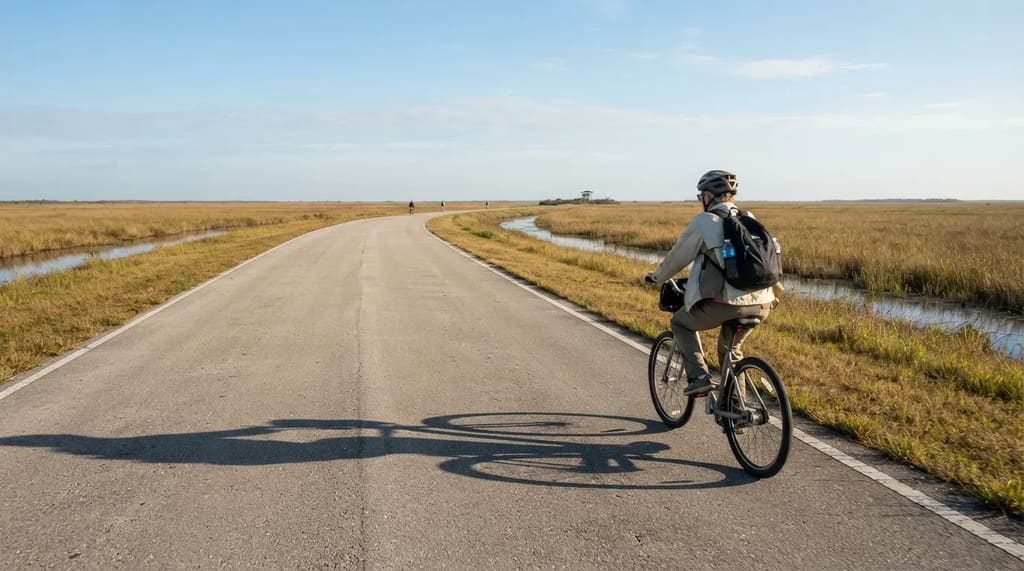
Dry-season mornings run in the 50s to 60s, and afternoons warm to the high 70s or mid 80s. That swing is why layers matter more than any single jacket. You can shed them as the sun climbs and pull them back on for the drive home.
On the Shark Valley loop there is no shade along the whole route, so a hat, sunscreen and water matter as much as the sweater does. Bike rentals are available, but renting one means riding all 15 miles of that open pavement.
If you plan only the boardwalk, a light jacket and a bottle of water are plenty. The hardwood hammock at Gumbo Limbo gives a short stretch of shade on the Homestead side. Fire danger is also high in the dry season, which is a good reason to follow any posted fire rules at a campsite.
Mild weather also opens up the far end of the Homestead road, where camping options expand as conditions improve in mid-November.
#4 – Flamingo Sits 38 Miles Past the Gate
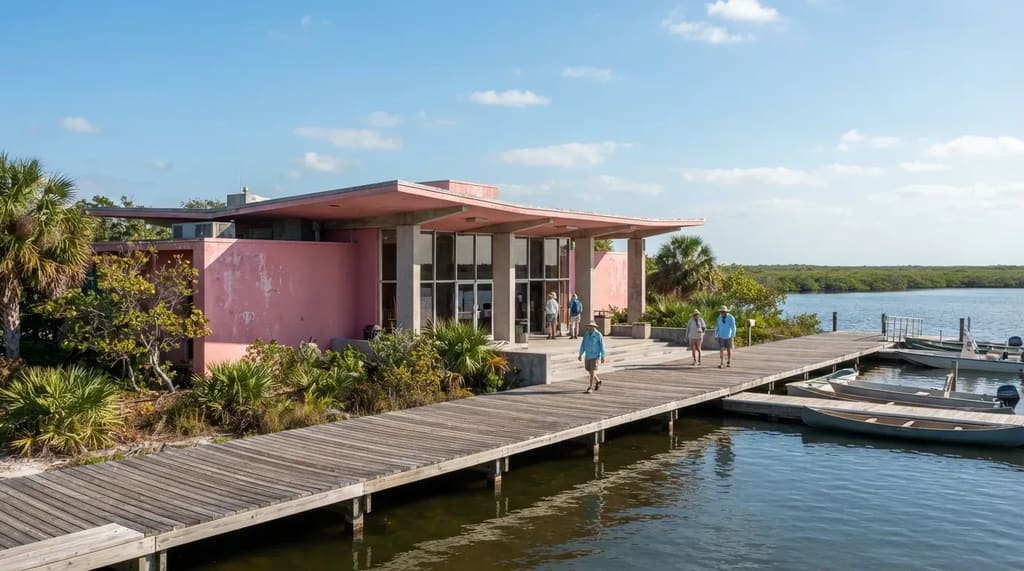
The village at the end of the road has made a comeback. The restored 1957 pink Guy Bradley Visitor Center has exhibits on the animals and ecology you commonly see around Flamingo, and lodging and dining have returned to the area. It is a good place to look for manatees, crocodiles, osprey and other birds. It also holds nearly all of the park’s longer hiking trails and most of its designated canoe trails. The visitor center is open daily from 8 to 5, mid-November through April.
My view is that Flamingo makes sense only if you have two days or are willing to make it a long day. The drive eats hours of a short visit, and the rewards are slower and wetter than the alligator parade at the boardwalk. If you want to camp, Flamingo Campground has 274 sites, and the Bayside campground is closed for the 2026 season. The operator also lists a 10% discount for seniors at Flamingo and Long Pine Key.
The opposite corner of the park, on the Gulf side, only recently got its front door back.
#3 – A Gulf Coast Visitor Center Rebuilt After Two Hurricanes
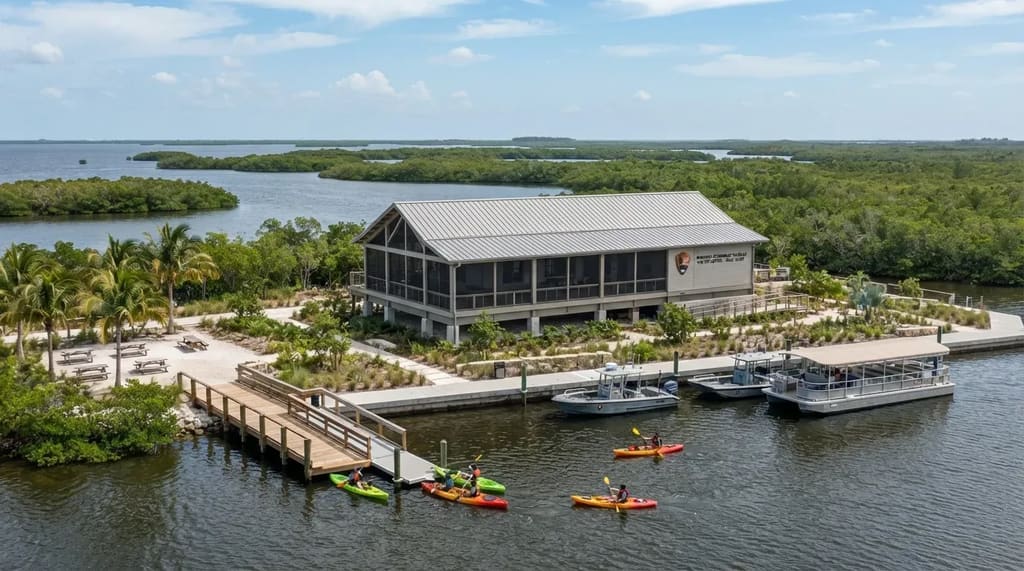
Hurricane Irma destroyed the original Gulf Coast Visitor Center in September 2017, and Hurricane Ian destroyed the temporary contact station in 2022. The new Marjory Stoneman Douglas Visitor Center opened in 2026. The National Park Service lists it as open daily from 9am to 5pm, with a kayak launch, wildlife watching and a picnic area.6
Related Stories From Travelbinger
The center is the gateway to the Ten Thousand Islands, a maze of mangrove islands and waterways that stretches toward Flamingo and Florida Bay. Boat tours that enter the park are available from Everglades City. One catch appears on the NPS page as of its March 2026 update: entrance passes cannot be purchased at the Gulf Coast Visitor Center.6 Sort out your pass before you go, and treat the current NPS page as your reference, since older guidebooks may describe a very different setup.
Rangers use the Gulf side as one of several bases for winter programs, and those schedules change from year to year.
#2 – Winter Is When the Ranger Programs Run
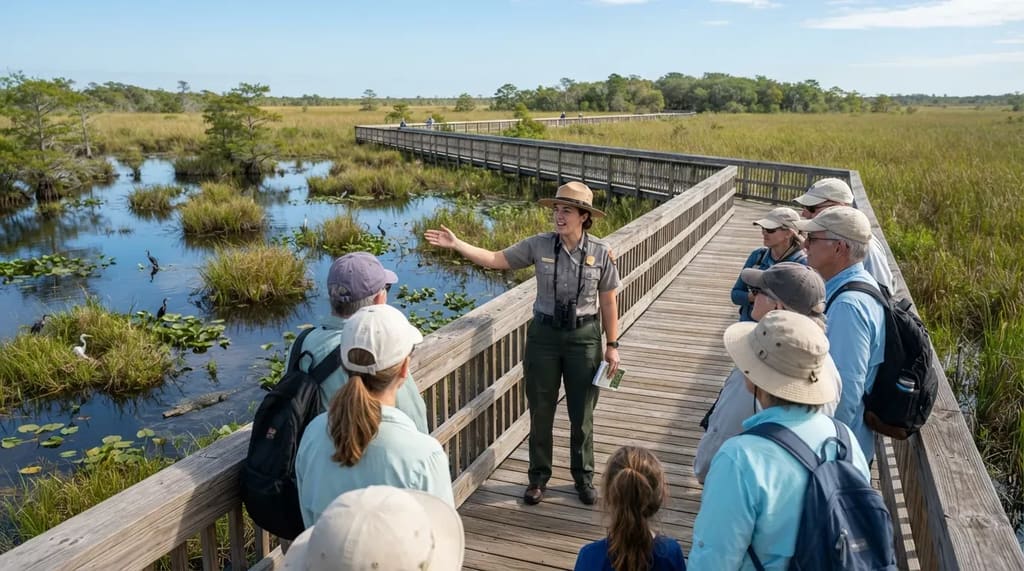
The dry season is also when the park has more rangers on hand. An NPS release about an earlier season explained that more rangers are available to help visitors through guided programs, offered at the Gulf Coast, Shark Valley, Royal Palm and Flamingo areas. Past offerings included the Anhinga Amble, an easy half-mile boardwalk walk, and a 2.5 hour bike tour in the Pine Rocklands.7
Some options ask more of you. The Slough Slog is a ranger-led wade through knee-deep sawgrass and cypress swamp. The ranger-led kayak tour runs four hours and is noted as strenuous. Read the descriptions before you sign up.
At a Glance
- Easy: Anhinga Amble, a half-mile boardwalk walk
- Moderate: a 2.5 hour bike tour in the Pine Rocklands
- Wet: the Slough Slog, through knee-deep sawgrass and cypress swamp
- Strenuous: a four-hour ranger-led kayak tour
I would put an easy ranger walk on the first morning, since a guide who can name what is in front of you changes how the rest of the trip looks. Save the wading and paddling for when you know you are up to them. Check the visitor centers for current schedules and times.
#1 – The Shrinking Water That Makes It All Possible
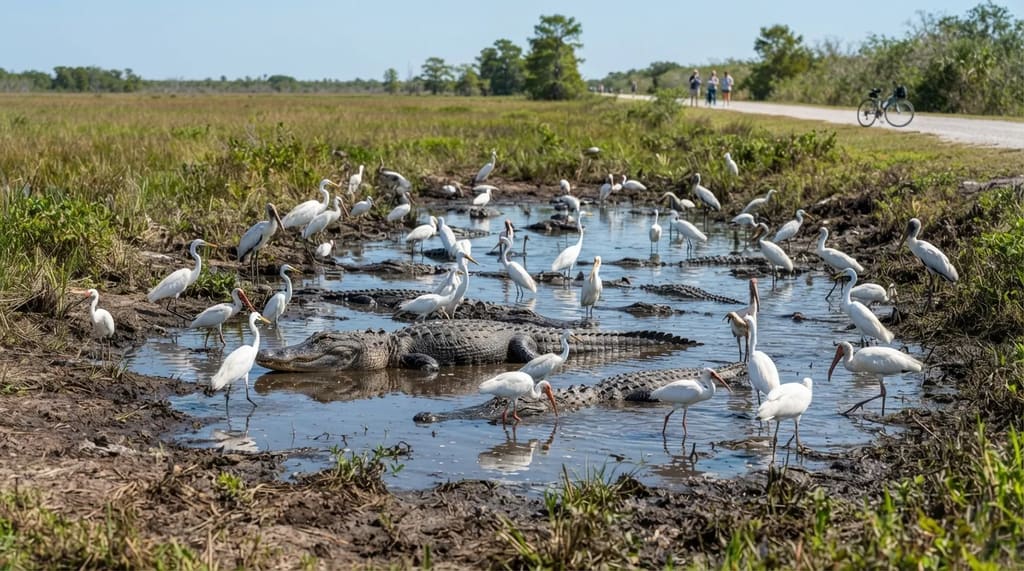
As the dry season advances and the water level falls, wildlife concentrates around the remaining ponds and sloughs. That is the whole reason alligators and wading birds are so easy to find in winter. The drying does not happen evenly. Deeper channels stay wet year-round, and in the dry season alligators create and maintain depressions known as alligator holes. Beside the Shark Valley road, the canal concentrates fish and the birds that eat them. The show you came for is a product of scarcity, and its size depends on how much water the winter leaves behind.
That dependence is why no ticket can promise a result. A visitor review posted in May 2026 said drought limited gator sightings, though they still found a few adults and babies. The lot that fills, the tram that sells out and the early start all exist because so many visitors are drawn to the same shrinking pools. The one input you cannot buy, book or arrive early for is the water itself, so build in a second morning if you can.
Treat the dry season less like an attraction schedule and more like a tide table. The useful question is where the water has gone and when you will be standing beside it. Pick one district, go on a weekday, and give the cool morning hours your full attention.
A plan with some slack will beat a plan with four stops. Pack as if the morning will be chilly and the afternoon sunny, because both will happen. If you have been to the Everglades in winter, which entrance did you choose, and what time did you reach the parking lot?
- NPS Everglades Fees: https://www.nps.gov/ever/planyourvisit/fees.htm
- Everglades 2026 Entry Requirements: https://www.nationalparkentry.com/park/everglades
- NPS Walk the Anhinga Trail: https://www.nps.gov/thingstodo/walk-the-anhinga-trail.htm
- NPS Shark Valley Visitor Center: https://www.nps.gov/ever/planyourvisit/svdirections.htm
- NPS Shark Valley Tram Tour: https://www.nps.gov/thingstodo/shark-valley-tram-tour.htm
- NPS Marjory Stoneman Douglas Center: https://www.nps.gov/ever/planyourvisit/gcdirections.htm
- NPS Seasonal Ranger Programs: https://www.nps.gov/ever/learn/news/2012interpprogramseverpr.htm