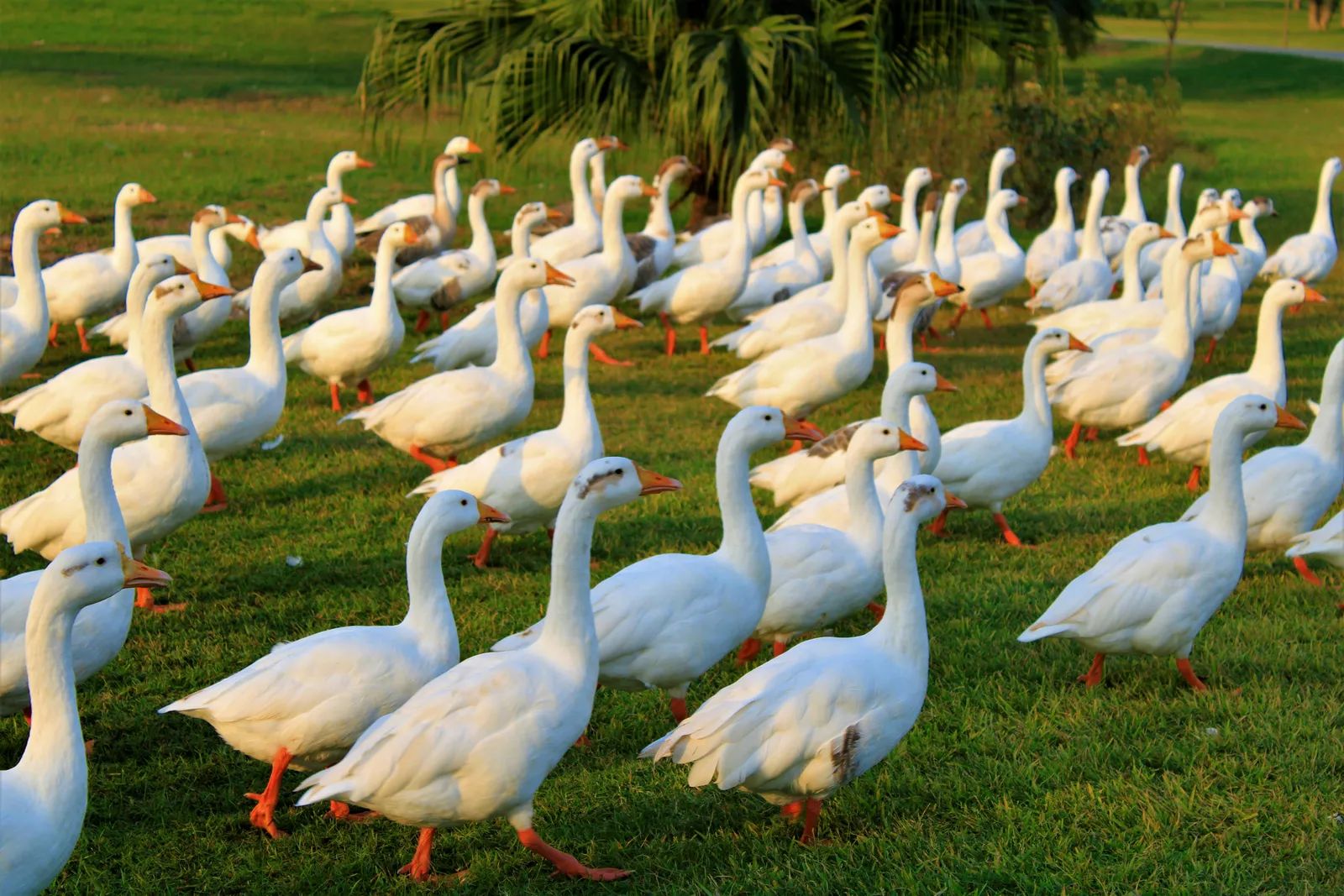
Each winter, a small goose that travels farther than most of its relatives is finding food on manicured lawns along the East Coast. The Atlantic brant has long depended on underwater vegetation, but that habitat is shrinking. Turfgrass fields, including golf courses, are filling part of the gap. The Wildlife Society reported on new research into why these birds choose certain turf over others, and the answer says as much about location as about the grass itself. ([1])
A long journey to a crowded winter range
The Atlantic brant is small for a goose, yet it makes one of the longest migrations of any species in its family. Breeding grounds lie in tundra meadows, where the birds spend the summer. When the cold arrives, they head south to the Mid-Atlantic coast of the United States.
Most of the population ends up in a narrow stretch of the coast. Roughly 90 percent of the species winters in New Jersey or New York, where the birds have traditionally fed on submerged aquatic plants in shallow water. That concentration makes any change to the local food supply especially consequential for the species as a whole.
What the researchers looked at
The research team sampled turfgrass fields used by brant in New York and New Jersey during the winters of 2021 and 2022. Rather than asking only what the grass looked like, the team examined the surroundings of each field. The work focused on three features that appeared to shape whether a brant was likely to spend time there:
- The total area of the field
- The distance to a water source
- The distance to the nearest roost
Those landscape factors were not the only ones measured. The team also looked at conditions that could influence how well the birds forage, including grass height and the amount of weed and clover growing in the turf. Nutritional measures such as energy density and the carbon-nitrogen ratio were part of the picture as well.
Location may matter more than appearance
The findings challenge a simple assumption that a well-kept lawn would appeal to geese mainly for its food value. In the paper published in Wildlife Biology, the researchers concluded that “landscape-level characteristics may outweigh traditional forage-quality” within urban turfgrass systems. In practical terms, a field close to water and a safe roosting site could attract birds even when the forage on it is not especially rich.
That distinction matters for managers. Turf sites are not a permanent replacement for the marine plants brant normally eat, and the researchers did not present them as one. Still, the study suggests that the placement of a field may influence how useful it becomes, and that planners who understand those features may be better positioned to respond if underwater vegetation declines further.
What matters now: Atlantic brant are relying more on turf in the Mid-Atlantic, and the layout of a field may count for more than its grass quality. The researchers suggested their results could guide future management if submerged vegetation declines or population patterns shift.
Looking ahead for birds and the places they use
The research does not settle how brant will fare over the coming decades. It does, however, show that the species is adapting to a landscape shaped by people, with golf courses and other turf areas becoming part of its winter routine. The authors framed their work as a way to inform future decisions, not as a final verdict on these sites.
For anyone who walks past a fairway or an open lawn near the coast this winter, the sight of a flock of geese may carry more meaning than it first appears. Those birds have crossed a great distance to get there, and their choices reveal how carefully they read a landscape. Their presence is a reminder that wildlife and everyday green spaces are closer neighbors than many people realize.