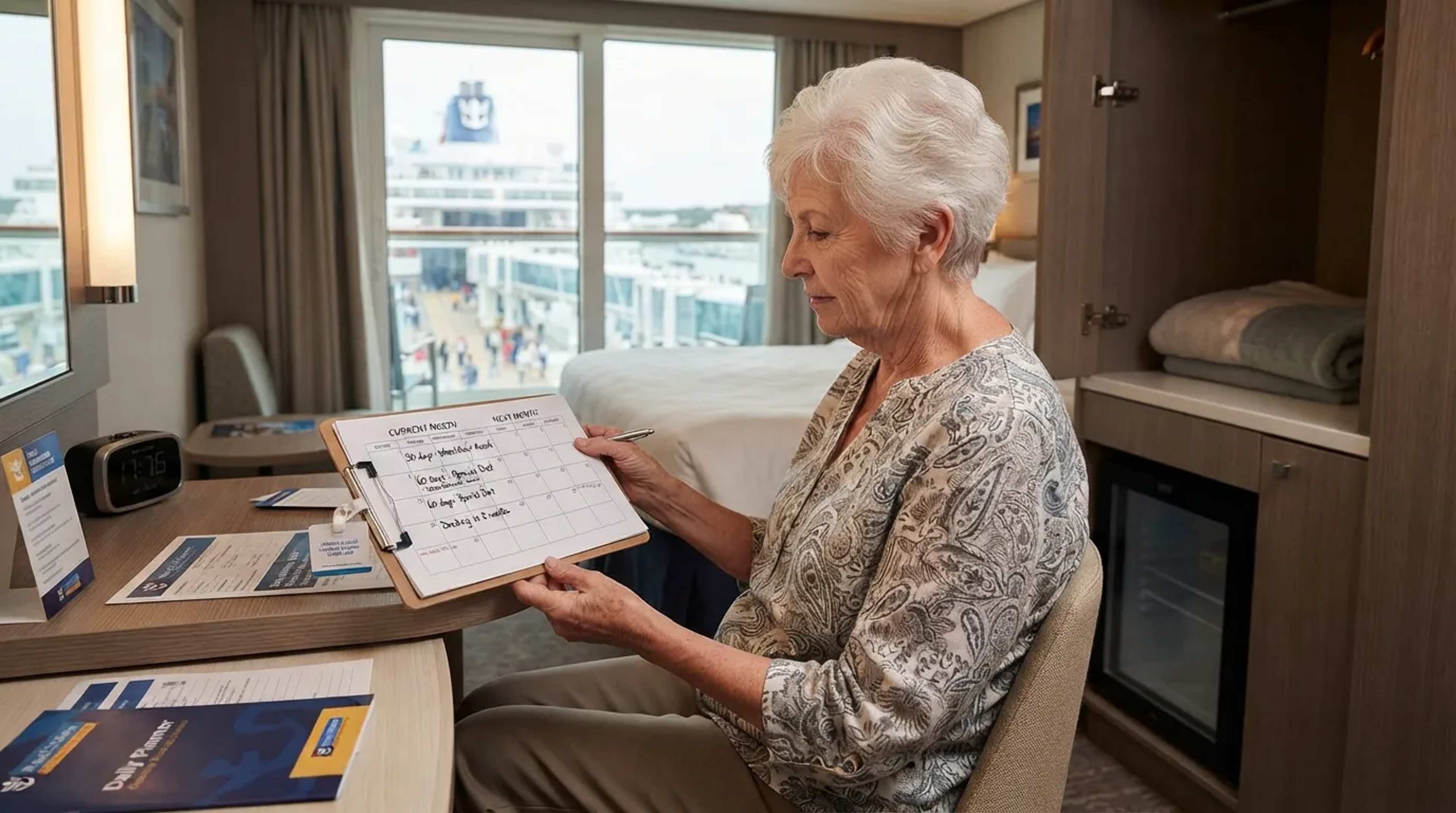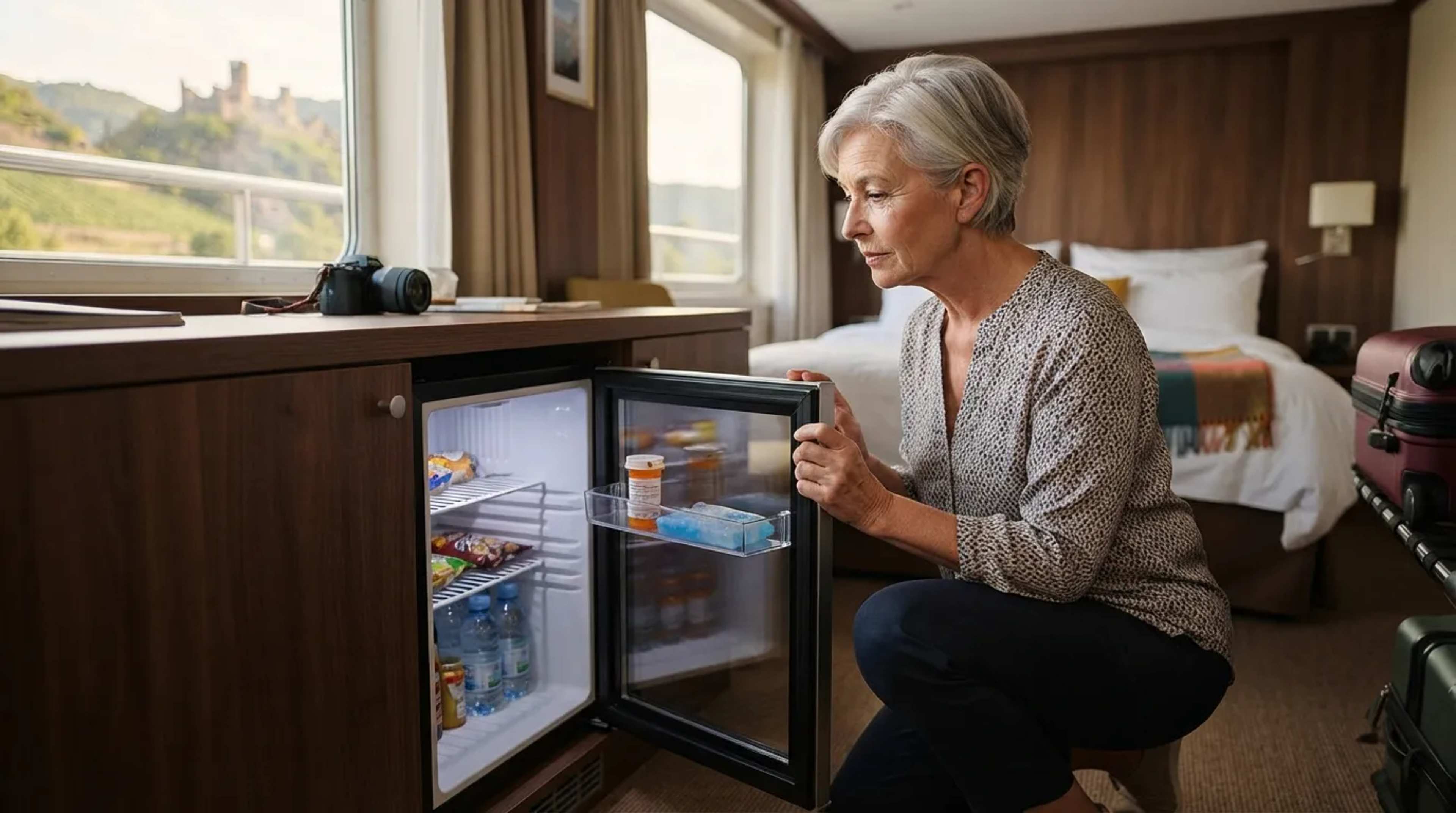
The card you are handed at boarding looks like a done deal. It shows your dinner time, your dining room and sometimes your table number, and it quietly decides whom you sit beside, how late you eat and how far you walk after a long day in port.
It is not always a done deal. Thirteen requests follow, and the maitre d’ can take nearly all of them in person on the first afternoon aboard. But one has a deadline that passes before you ever leave home, because the ship stocks its pantry before it leaves port. We start with the hour printed on that card.
#13 – A Different Seating Time Than the One on Your Card

When you book, you choose between traditional dining and My Time Dining, and traditional means an assigned early or late seating.1 The hour you end up with is not always the hour you would have picked, and it is easy to assume it is locked in.
Royal Caribbean tells guests to ask the maitre d’ at a hospitality desk on embarkation day if they need to change a time or table.1 Cruise Critic also calls that day the best time to ask, since the earlier you inquire the better the outcome.
If you take medicine with meals or tire by evening, treat a late seating as something to change before the first dinner, not something to try for a night. A request made on embarkation day is easier to grant than one made after the room has settled.
Changing the hour leaves the table as it was, and the table may seat ten strangers.
#12 – A Table for Two Instead of a Shared Ten
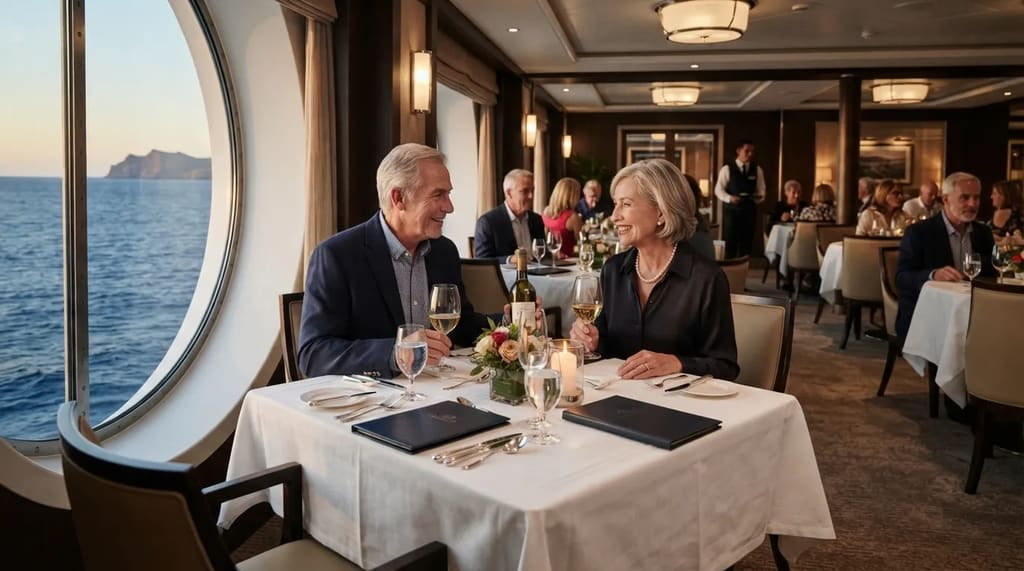
Cruise Critic names embarkation day as the time to ask for a two-top in place of a table for ten. If you are marking an anniversary or a birthday, say so while you ask.
You can also try before you board. Cruisers on Carnival message boards describe emailing the maitre d’ about a week before sailing, and the same threads advise confirming once aboard.
A table for two is a request, and the supply is limited and not guaranteed. I would send the email and still walk to the dining room with your card, because the maitre d’ can look up your assignment and change it if need be.
A table for two suits a couple, though it can leave a traveler who likes conversation with too little of it.
#11 – A Table of Six or Eight for Company

Large tables of eight to ten are the default on many lines, so you may need to ask for nothing more than to keep the one you were given. If that is bigger than you want, a table for four to six is a good middle ground for families or friends.
If friends or relatives are sailing on the same ship, ask to be seated together. One Carnival cruiser tells of friends who turned up aboard unexpectedly and were seated together after a word with the maitre d’. Another had a travel adviser link two cabins’ reservations and try for a table of four.
Quick Compare
- Table for two: Quiet and private, but limited and not guaranteed
- Table of four to six: A middle ground for families, friends or a solo diner who wants some company
- Table of eight to ten: The default on many lines, with the most conversation and the most strangers
Before you settle in, find out where the table sits. A Carnival regular notes that the maitre d’ usually has dining room layouts showing your assigned room and the size and location of your table.
#10 – The Same Waiter and Table All Week
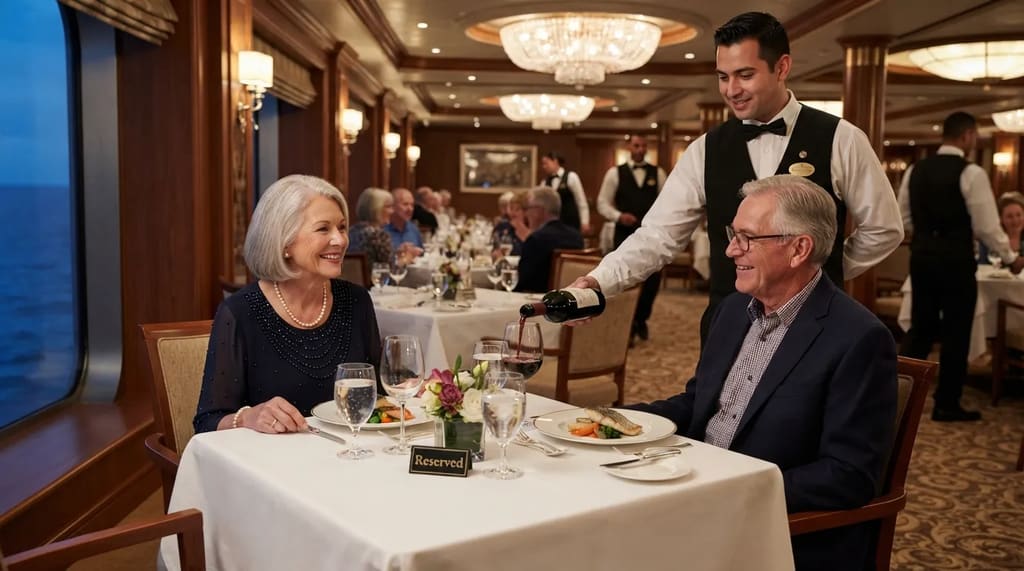
Traditional dining means the same time, the same table and the same waiter every night. A waiter who sees you nightly can learn how you take your coffee, while open-time dining seats you according to availability and gives a waiter less reason to learn your habits.2
That matters most if you have a food restriction. Cruise Critic advises reminding the maitre d’ and waitstaff aboard, even after you have told the line.2 One waiter hearing it on the first night means you are not repeating it at every dinner.
If you sail alone, or want dinner to feel familiar, I would take fixed seating and put up with the set hour, which you can still adjust on embarkation day as described earlier. Flexible dining makes more sense when your days are hard to predict.
The price of that familiarity is a fixed hour, and some lines are built around dropping it.
#9 – An Open-Time Dinner for Days That Run Long
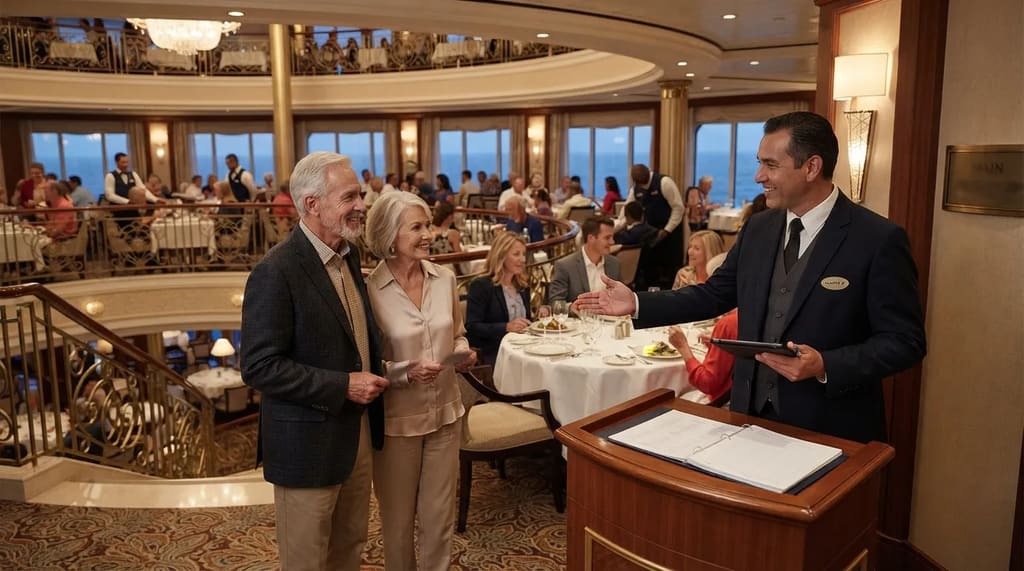
On Royal Caribbean’s My Time Dining, you eat in the main dining room whenever you like during dinner hours, according to availability.1 You make that choice when you book, so it is a decision for the planning stage.
On most lines, guests who choose flexible dining can reserve main dining room times for each night before sailing, and those with reservations may be offered a priority line, sometimes even a separate section of the room. So reserve instead of arriving and hoping.
One Carnival regular on the Cruise Critic boards divides his own trips this way:
- Anytime dining on a 10-day Alaska cruise and a 12-day Baltic cruise
- Early assigned dining on Panama Canal, repositioning and Hawaii cruises, because of the number of sea days
Wherever the hour lands, the maitre d’ also has a say over where in the room you sit.
#8 – A Window Table, With Realistic Expectations

A window table can be requested, but you should not count on getting one. The maitre d’ assigns tables aboard, so it helps to treat the window as a pleasant extra.
The timing of your seating also matters. A Carnival cruiser points out that at late seating, or a late My Time slot, it will be dark outside anyway. The view is mostly an early-seating pleasure.
At a Glance
- A window is a request, not a promise
- The view pays off most at early seating
- Late seating means a dark window, so table size or an easy route may matter more
- Naming a specific table or area gets you a quick yes or no
If you have taken the late seating, I would not spend your one conversation with the maitre d’ on a window. Spend it on table size or on a spot you can reach without a step. If you do want the view, name a specific table or area from the room layout, so the answer can be yes or no on the spot.
#7 – Telling the Dining Room About an Occasion
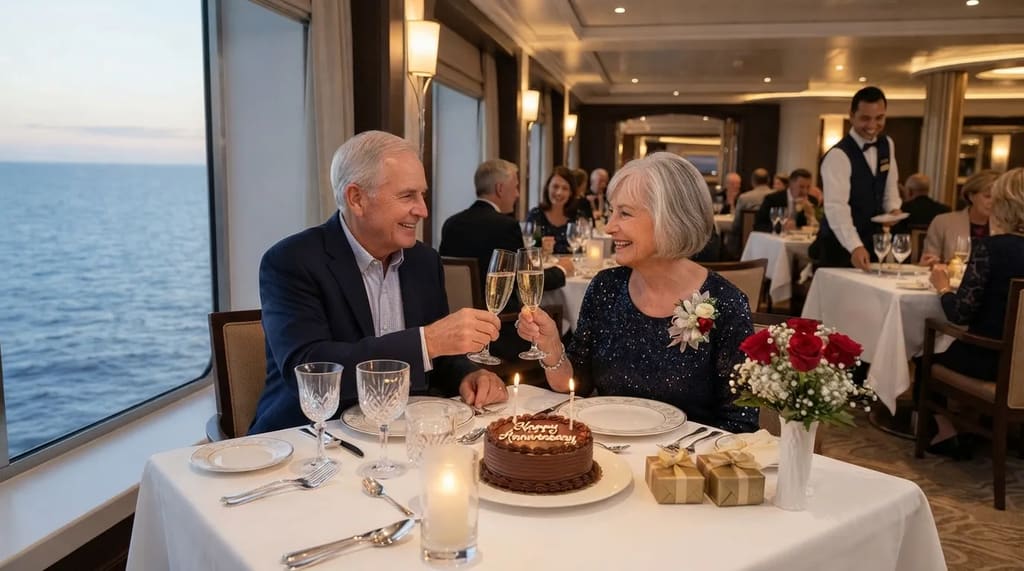
Cruise Critic advises mentioning a special occasion, such as an anniversary or honeymoon, when you ask for a change. A cruise dining guide adds that naming a birthday or anniversary raises the odds of getting your preferred table.
Give the date as well as the occasion, and say it in the same conversation as your table request. The staff can then plan around the right evening, which a remark to a waiter midweek may never reach.
Keep the odds in view. Since tables for two are limited and not guaranteed, name a second choice you could live with.
An occasion helps with a table you have not yet seen, and does less for one you have already sat at and disliked.
#6 – Moving Tables After the First Night
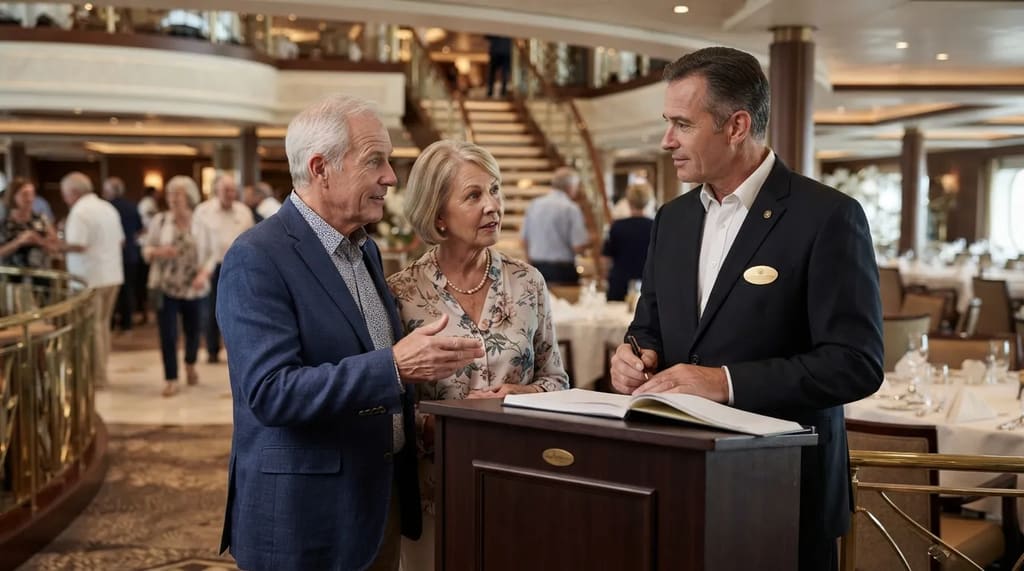
Cruise Critic says that if you learn on the first night that your tablemates are a poor match, you can still contact the maitre d’ and propose a different arrangement. A first dinner is not a sentence for the week.
Timing is the catch. One Carnival cruiser writes that a change requested on the first dining day is not processed until the next day, and that requests are usually honored within a day or so.
If you struggle to hear in a crowded room, I would ask on the second morning instead of hoping a loud table improves. A week is a long time to nod along to conversation you cannot follow.
Say plainly what is wrong, such as the noise or the hour, so the maitre d’ has something to fix.
Table changes look different when you sail alone, since the question becomes whether to share at all.
#5 – Dining Alone or Choosing to Share
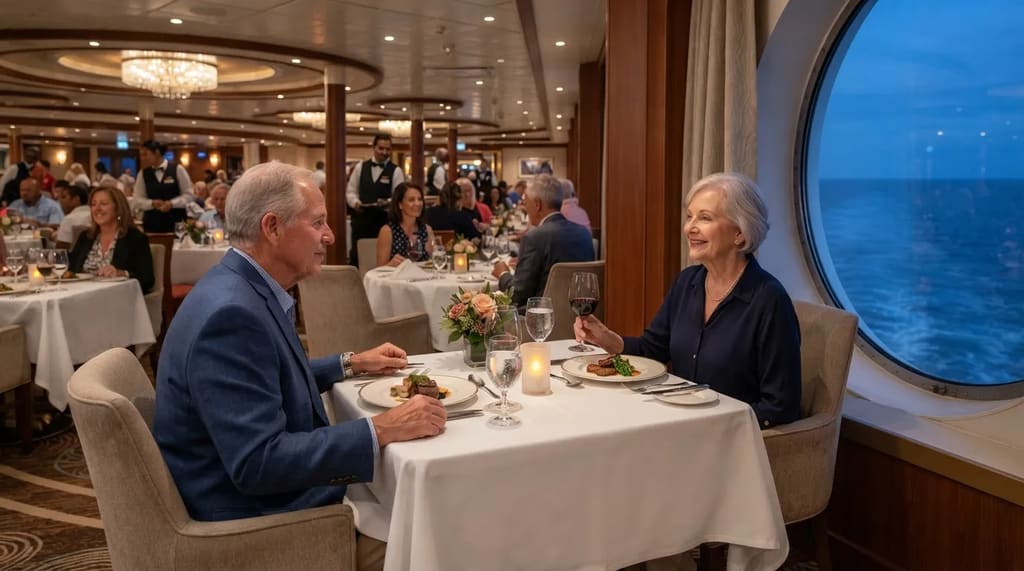
A solo Carnival cruiser recalls that in the set-dining days you had to request a table for two early, and the request was usually met graciously. The lesson is to say what you want before the seating chart fills.
On Carnival’s anytime dining, the app check-in has an option you can select if you would like to share a table. That puts the choice in your hands each night.
If you want company, ask for the mid-size table described earlier instead of a table for ten. If you want quiet, one cruiser on Fodor’s says that asking for a table for two on entering the dining room at breakfast and lunch has always worked.
#4 – A Table With No Steps and Room for a Walker
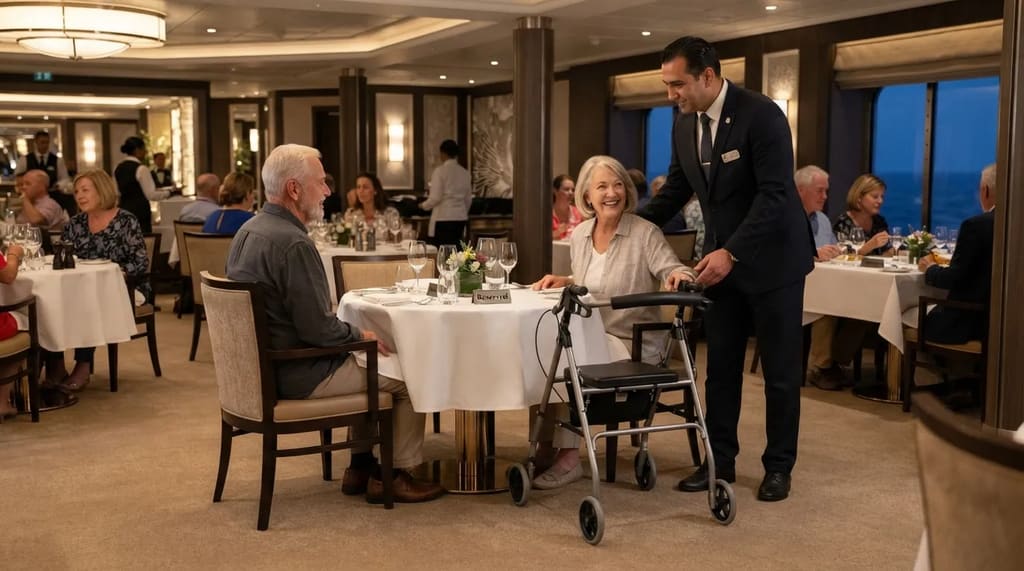
Princess lets guests request an accessible table through its app, with no steps up or down on the way and room nearby for a wheelchair or walking aid. Carnival also says accessible tables are available.3
Royal Caribbean’s special needs form lists being unable to use steps among the needs it will plan for. It asks for the form at booking, but no later than 30 days before sailing.4 After that deadline, the line says it will make reasonable efforts.
A cane or walker needs somewhere to rest just as a wheelchair does, so say what you use. A short list helps the staff choose a table:
- What you use: cane, walker, scooter or wheelchair
- The width of the scooter, if you have one
- Any step you cannot manage, including one at the entrance
Carrying a tray through a buffet is a separate problem, and it has its own request.
#3 – Table Service at the Buffet
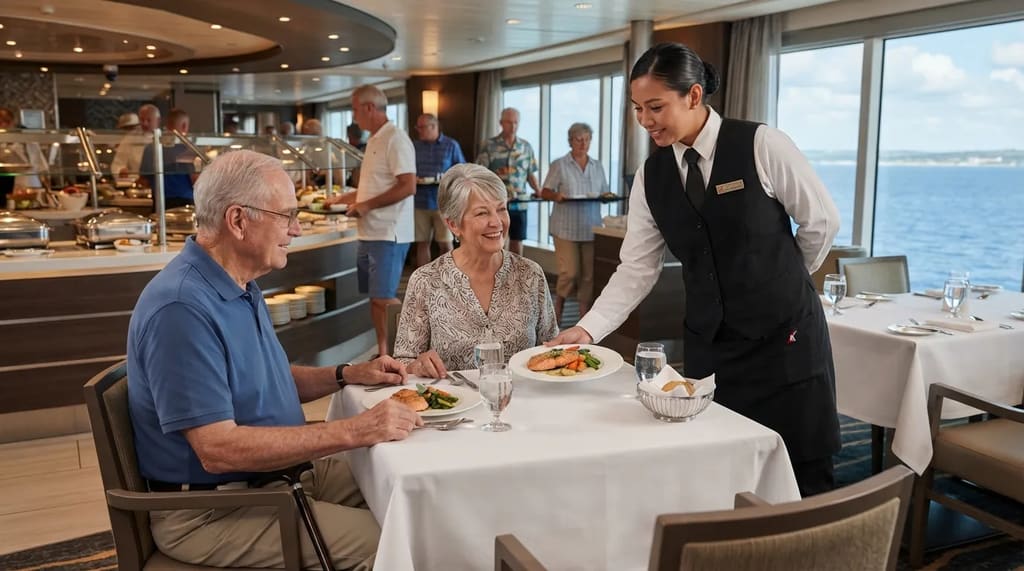
Carnival says it can provide table service in areas where self-service dining is offered, if you ask.3 That matters when a tray, a cane and a moving deck do not mix well.
The buffet is not the only informal option. Carnival lists Lido Deck casual dining, 24-hour room service and specialty restaurants among its accessible dining choices.3 If the main dining room is wrong for you on a given night, you have somewhere else to go.
Worth Knowing
- Table service at self-service areas is available on Carnival if you ask
- Room service on Carnival runs 24 hours a day
- Lido Deck casual dining and specialty restaurants are also on its accessible list
- Other lines may handle this differently, so check with guest services
I would ask at the first buffet meal instead of working out a way to carry a tray yourself. If you have already arranged the table with no steps, add this to the same conversation. Other lines may handle it differently, so ask guest services what your ship offers.
#2 – A First-Day Word With the Head Waiter
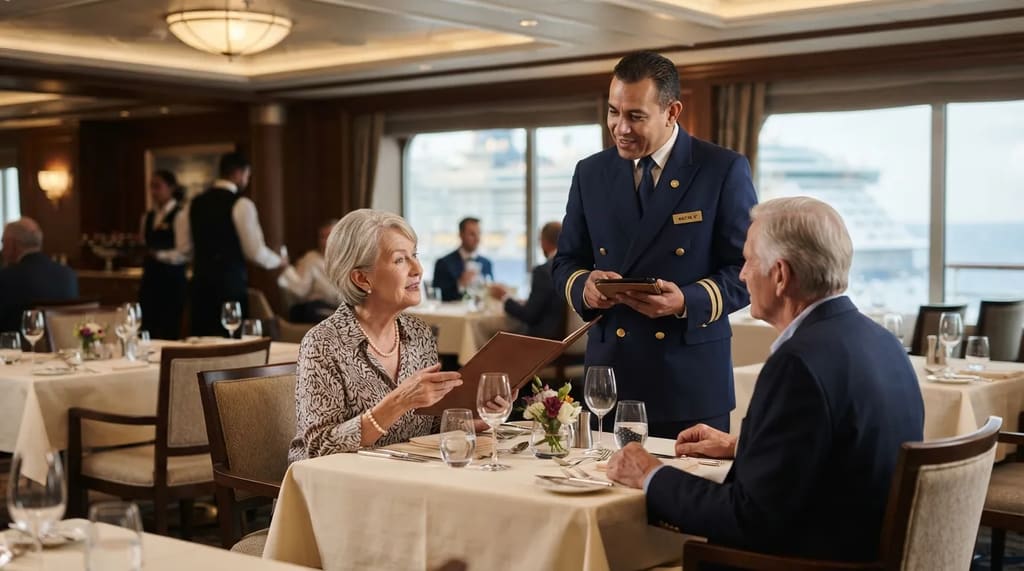
The Cruise Lines International Association reports that once aboard, dining teams connect with guests who have dietary needs, and some lines designate one crew member as the special diet liaison.5 One cruise guide advises speaking with the headwaiter or dining host on your first day.
Related Stories From Travelbinger


Several channels carry the information from there:
Do this even if you told the line months ago, because the person serving you may not have read the file. Cruise Critic advises reminding the maitre d’ and waitstaff aboard.
That conversation shapes what the kitchen does with what it has aboard, and it cannot add what the ship never loaded.
#1 – Dietary Notice Weeks Before You Sail
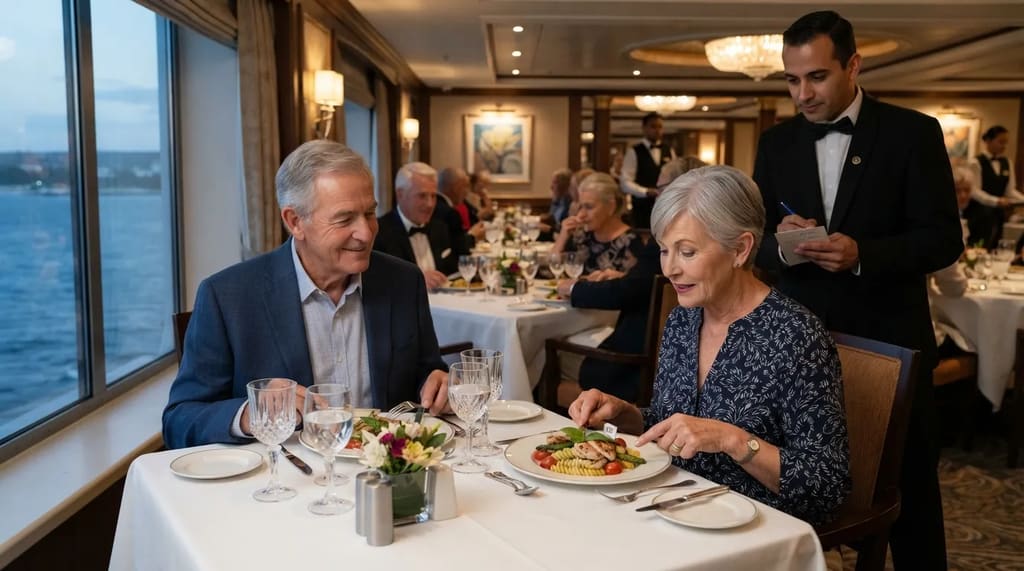
Cruise lines generally ask guests to report allergies and dietary requirements at least a month before sailing, and sometimes before the final deposit. The reason is practical: advance notice lets the ship procure specific items, such as gluten-free pasta or dairy-free milk.6
Deadlines differ by line, and kosher or halal meals prepared ashore and sent to the ship may need more notice. Cruise Critic lists shorter windows for gluten-free requests on some lines:
- Hurtigruten asks for at least two weeks
- P&O Cruises and Disney Cruise Line ask for three days before departure7
Check your own line’s deadline when you book, and send the request early. The more upscale the line, the likelier it can cater without advance notice,7 but on a mainstream line a diner who sends nothing ahead may find fewer choices than one who did.
A table can be moved on the second morning, and a seating time can be changed on embarkation day. A pantry cannot be restocked once the ship has sailed. Of the thirteen, this is the one I would not leave to boarding day.
You can often file it online in the pre-cruise portal or through your travel advisor, at the time of booking. For a severe allergy or celiac disease, talk with your doctor before you decide what to tell the ship.
The table plan, the menu and the waiter assignment are all set by people who know only what you have told them. Most of these requests can be made on the first afternoon, in person, with your card in hand. The dietary notice and any accessibility form need to be on file before you leave home.
Before you book, decide which of the thirteen would change your week the most, and put that one in writing. The rest can wait until you can see the room.
If you have sailed with assigned seating, what size table worked best for you and your travel partner?
Bonus: The Insider Trick Nobody Tells You
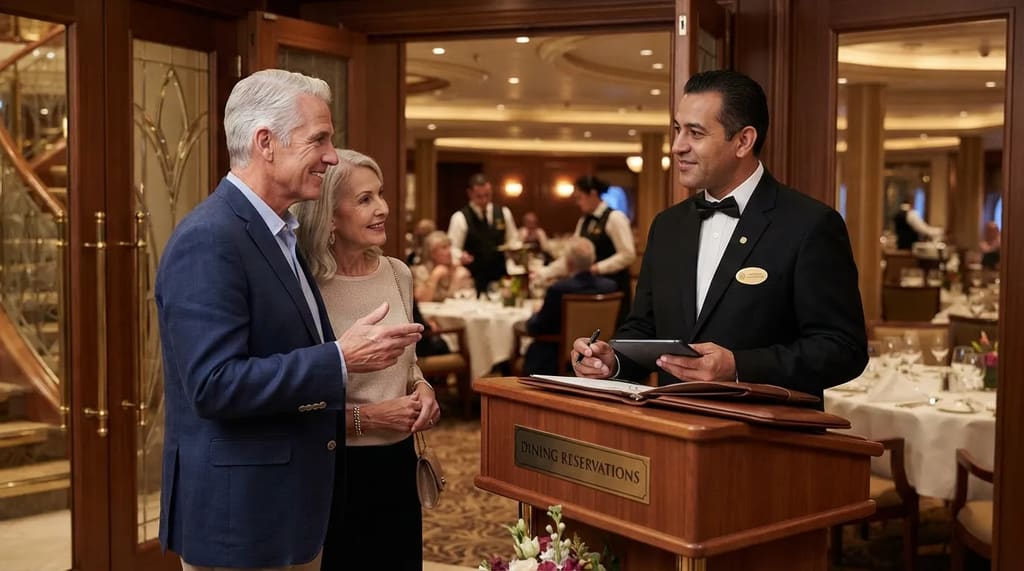
Do not ask for one thing. Hand the maitre d’ a ranked choice with a built-in fallback, and agree on when you will hear back. It turns a request they might have to refuse into a problem they can solve.
- Decide your one must-have before you walk up. Is it the hour, the table size or a route with no steps? Name that first and let the rest flex.
- Offer two acceptable options. Say something like: “We would love a table for two at the early seating, but a table for four would also be fine.” A fallback gives the maitre d’ an easy yes.
- Ask when to check back, then do it. Ask, “When would be a good time for me to stop by and confirm?” Return at that time instead of waiting for a message, and read the table number on your card again.
- If the answer is no, ask for a second look. Ask to be put down for a change after the first night, when tables often open up. Then ask whom to see and when.
Be polite, specific and brief, and keep your card in hand. Staff tend to help the guest who makes the job easy.
- Royal Caribbean Dining Times: https://www.royalcaribbean.com/faq/questions/what-dining-times-are-available-at-the-main-dining-room
- Cruise Critic Dietary Restriction Tips: https://www.cruisecritic.com/articles/10-tips-for-cruising-with-a-dietary-restriction-and-eating-well
- Carnival Accessibility Services: https://www.carnival.com/about-carnival/special-needs
- Royal Caribbean Guest Special Needs: https://www.royalcaribbean.com/resources/guest-special-needs
- CLIA Accessible Vacations: https://cruising.org/news/cruise-lines-lead-way-accessible-vacations
- CLIA Dietary Needs: https://cruising.org/news/how-cruise-lines-handle-dietary-needs
- Cruise Critic Gluten-Free Cruising: https://www.cruisecritic.com/articles/what-to-know-if-you-want-to-cruise-gluten-free