A $15 seat fee sounds like pocket change until you do the math. United’s cheapest fare starts seat selection at $15 per flight per person, so a couple flying round trip can spend $60 before they’ve picked a row.1
Other airlines price seats differently, and the fee is only the visible part of the deal. What it buys, when it comes back and whether you owed it at all are the parts the seat map leaves off. These fourteen questions run from quick checks to the ones that carry real money. Stay for the last one, because it covers a case where a seat the airline sells for a fee can legally cost you nothing. First comes the question that settles whether you’re buying a seat at all.
#14 – Does This Fare Include a Seat at All?
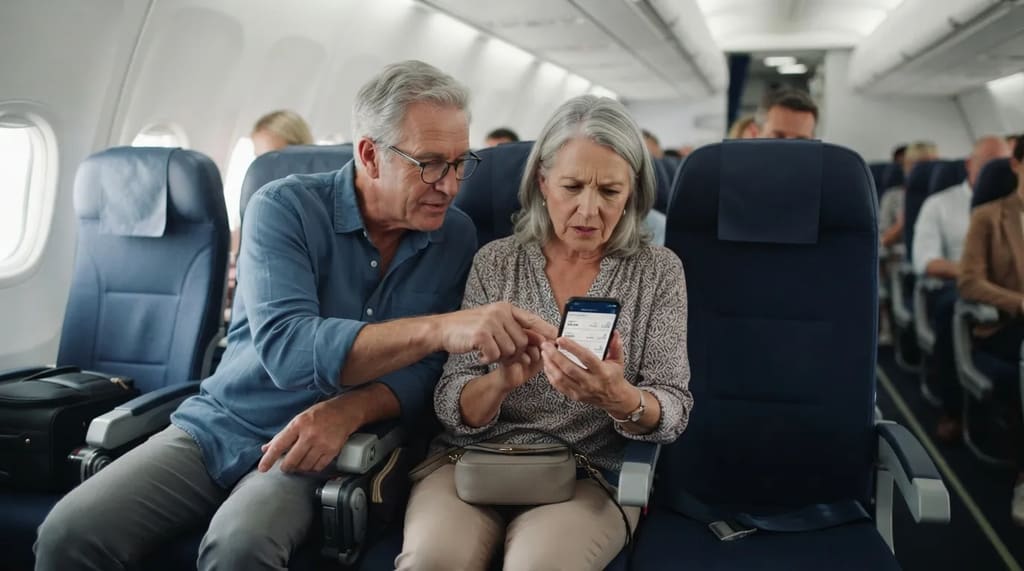
The cheapest fare on the screen may not include a seat. That’s the trade for the low price, and it now reaches more airlines than it used to.
On American Basic Economy tickets bought on or after May 18, 2026, every customer pays to select a seat, status holders included. United’s standard Economy fare includes a free standard seat, but Basic Economy doesn’t. Southwest ended open seating for travel from January 27, 2026, and its Basic fare now gets a standard seat assigned at check-in.2 3
Airlines also rename their fares, so match the name on your screen. What was Delta’s Basic Economy is now called Main Basic. Ask: does this exact fare let me choose a seat when I book?
At a Glance
- American Basic Economy: everyone pays to pick a seat (tickets bought on or after May 18, 2026)
- United Basic Economy: no free seat; standard Economy includes one
- Southwest Basic: a standard seat is assigned at check-in
- Delta: look for “Main Basic,” the new name for Basic Economy
Suppose the answer is that you can pay. The price you see then comes with two missing words, and they change the total for any couple.
#13 – Is the Fee Charged Per Flight and Per Person?
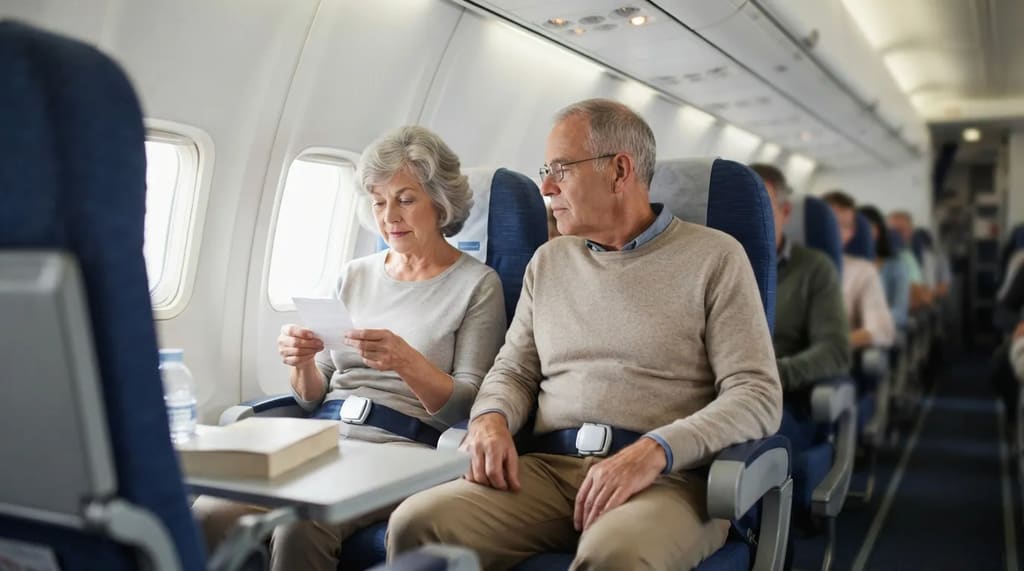
Multiply before you click. United’s $15 starting fee on Basic Economy is quoted per flight per person, so a couple on a nonstop round trip is buying four seats, or $60.
Preferred seats raise the stakes. United lists them from $36 on Basic Economy tickets, which puts the same couple at $144 for a plain round trip.1 Count every flight and every traveler before you compare fares.
That’s why the cheap fare isn’t automatically the cheap ticket for two people who want to sit together. On United, if the standard Economy fare costs less than $30 more per ticket round trip, it beats Basic plus four $15 seat fees, and it includes the seat.
Finding the price is its own task. One major airline doesn’t publish a single fee to look up.
#12 – Where Can You See the Real Price?
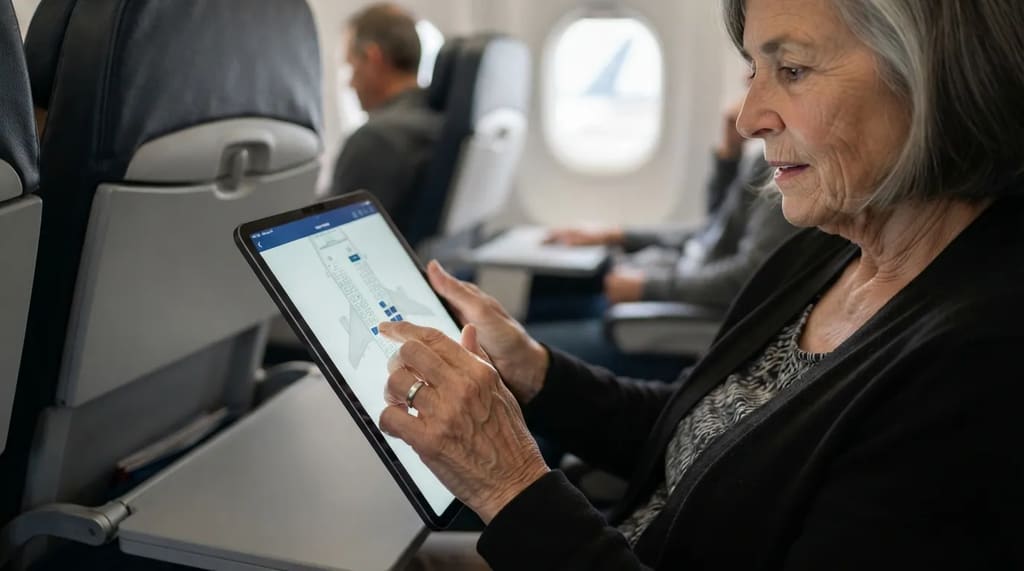
Delta doesn’t publish one flat seat fee for Basic Economy, so the real number only appears on your own seat map.
That’s typical. Fees vary with the length of the flight and how desirable the seat is, which means a fee chart you find online is a guide, not a quote.
Work through the booking screens until the seat map for your flights appears, then read the price on the row you’d really choose. Front rows, exit rows and extra-legroom rows usually cost the most, so compare an ordinary row and a better one side by side.
Read the price on your own flight’s seat map, not a fee chart. Take a screenshot while you’re there, because you may need it if the airline moves you later.
#11 – What Do You Get If You Skip the Fee?
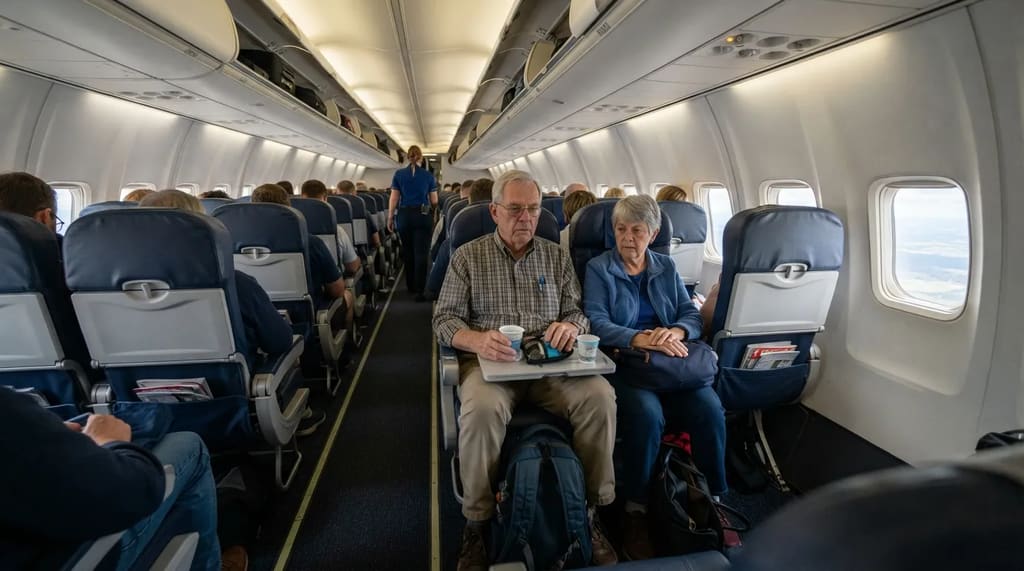
Declining the fee doesn’t leave you standing at the gate. If you skip the fee on American’s Basic Economy, the airline assigns you a seat for free at check-in, and United does the same.
On any airline and fare, you can take a remaining seat for free once check-in opens, usually 24 hours before departure.
What you get depends on what’s left. Availability varies by route, aircraft and how full the flight is. On a half-empty plane that’s fine. On a full one you may land in a middle seat toward the back, and a couple may not be placed side by side.
For a short, simple trip where you can sit anywhere, skipping the fee is a sound way to keep the $60 from the earlier math. If you need an aisle for medical reasons, don’t leave it to the gate.
Paying for a better seat brings a different question, because the label “extra legroom” covers more than one kind of row.
#10 – Is the Extra-Legroom Seat an Exit Row?
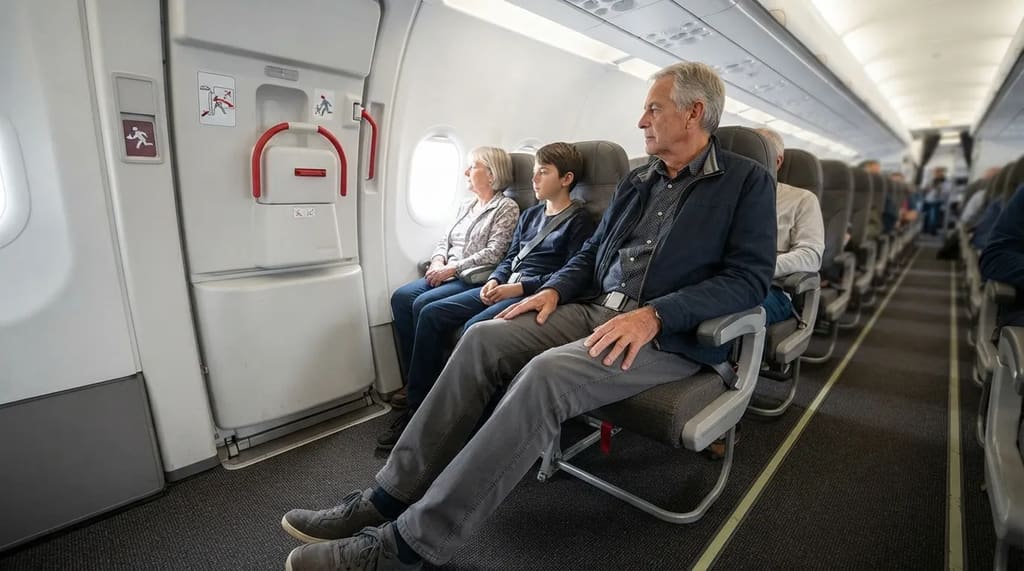
Many extra-legroom seats sit in exit rows, and an exit row comes with duties.
Federal safety rules require exit-row passengers to be able and willing to open the exit and help others in an evacuation, so an airline can move a traveler who can’t. Ask whether the seat is an exit row before you pay, and ask what happens to your fee if you’re reseated.
If you have to choose between an aisle and extra legroom, buy the aisle. A few inches of knee room help for a while, but a clear path to the restroom matters for the whole flight.
On a 90-minute hop, extra legroom rarely repays its fee, because you enjoy the extra inches for so little time.
The row at the very front has a trade-off of its own. It takes away something you’ll want within reach during the flight.
#9 – What Does a Bulkhead Seat Take Away?
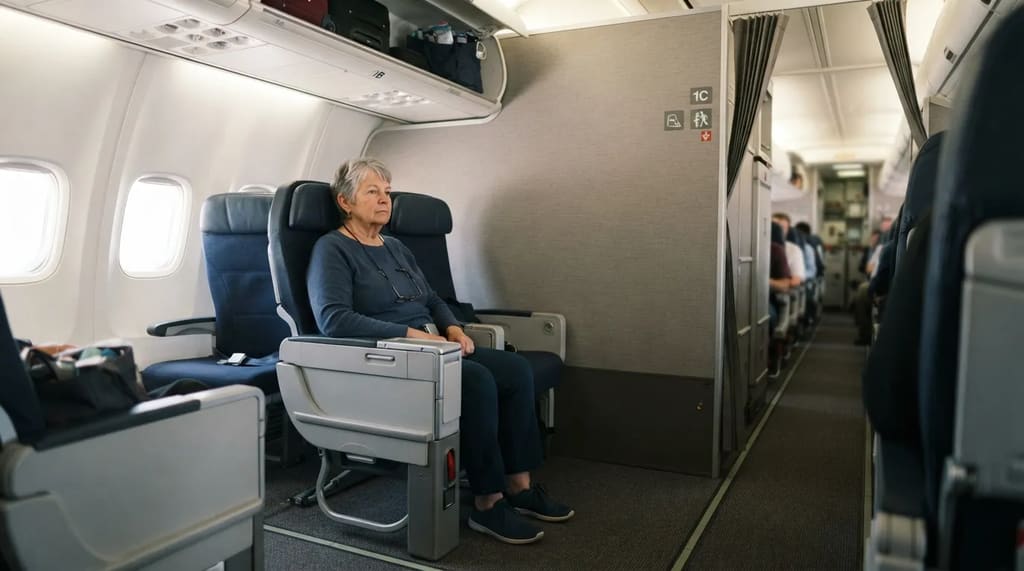
A bulkhead seat has no seat in front of it, which also means there’s often no under-seat storage.
Worth Knowing
- Your bag of medications, glasses and phone charger goes overhead for takeoff and landing, out of reach when you need it.
- Many bulkhead rows keep the tray table in the armrest, which can make that armrest fixed.
- The legroom is real, because there’s open floor ahead of you.
- If you need to lift an armrest to transfer, check before you pay.
If you like essentials at your feet or need a movable armrest, the trade-offs matter. Ask where your bag goes and whether the armrests lift.
A roomy seat is no help if you reach the aircraft after the bins fill. Some fares put you in that position by design.
#8 – Does This Fare Board You Last?
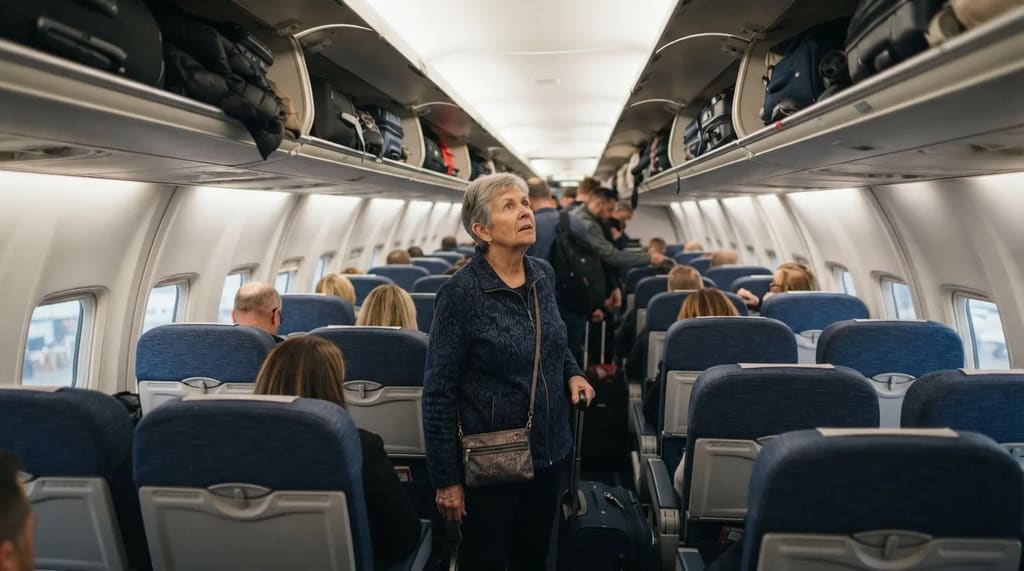
Last to board often means the bin above your seat is already full. Basic economy fares generally come with last boarding, and Southwest’s Basic fare is last to board as well.
You may still have a carry-on coming. American’s Basic Economy includes a carry-on bag and a personal item, so you can keep the bag and lose the bin space. Ask what gate-checking costs on your fare, and whether it’s free when the bins run out.
Basic fares board last, so ask what happens when the bins fill. If you walk slowly, that question matters more than the seat does.
Priority boarding sometimes arrives bundled with a seat, and the bundle can cost more than the parts you’d use.
#7 – Is the Bundle Cheaper Than the Seat Alone?
On one Southwest flight priced by The Points Guy, an extra-legroom seat alone cost $60 more, while the full Choice Extra bundle cost $140 more.
That bundle adds two free checked bags and priority boarding to the extra-legroom seat. Here’s the arithmetic on that flight:
- Seat alone: $60 more
- Choice Extra bundle: $140 more
- Difference: $80, which has to pay for two checked bags and priority boarding
Treat Choice Extra as a baggage deal with a seat attached. Subtract the seat-only price from the bundle price, then price the bags you’d really check. If you travel with a carry-on, the $80 buys things you won’t use.
The lower tiers work the same way: Choice includes a standard seat selection at booking, and Choice Preferred includes a Preferred seat. Ask the agent to quote each tier for your date.
Before you buy any bundle, check whether a card in your wallet or a loyalty tier already covers the seat.
#6 – Does Your Status or Card Waive the Fee?
Elite status used to wipe out seat fees on nearly any fare. At American it no longer does on Basic Economy tickets bought on or after May 18, 2026, where every customer pays to select a seat.2 On Main Cabin fares, AAdvantage status members keep free seat selection.
Southwest’s benefits come with timing attached. A-List members can select a Preferred or Standard seat at booking at no cost, and an Extra Legroom seat within 48 hours of departure if one is available.3 Priority and Performance cardholders get the same.
The benefit often depends on the fare you buy as well as the card you hold, so ask what’s free for you on this exact fare. Free extra legroom on Southwest opens only 48 hours before departure.
#5 – What Happens to the Fee if You Change Plans?
A seat fee you paid before changing your own flight usually comes back as a credit, not cash. For changes you make yourself, airlines usually issue a credit rather than a refund.
So ask two things at the desk or on the phone: does the credit expire, and does it apply to a seat on a different flight? A credit you can’t use before it lapses is a lost fee.
There’s one window that works differently. Airlines that fly to or from the United States must offer a 24-hour safety net on new bookings, but each carrier chooses which version. The rule covers tickets booked at least seven days before departure, so ask whether a seat fee paid in that window comes back too.4
Self-made changes usually earn a credit, so ask whether it expires.
Quick Compare
- You change plans: usually a credit, so ask about the expiry date
- Booked 7+ days out, inside 24 hours: ask whether the seat fee comes back with the ticket
- The airline cancels: the seat fee is owed back along with the fare
When the airline is the one making the change, the rule flips, and federal refund rules reach further than the ticket price.
#4 – Is the Seat Fee Refunded if They Cancel?
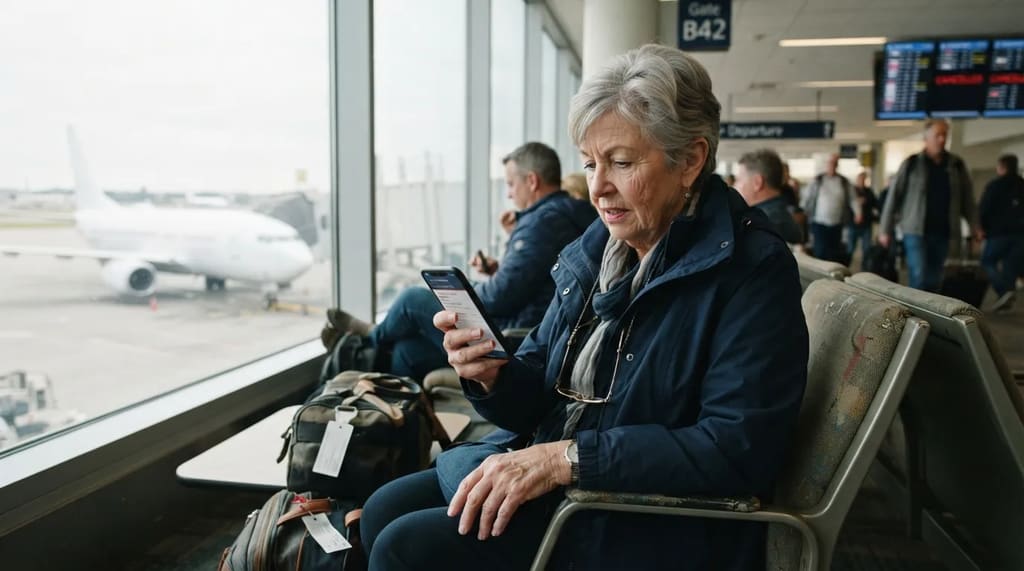
If the airline cancels your flight, the seat fee is owed back along with the fare. Passengers are entitled to a refund of the fee for an extra service, such as seat selection, if the airline doesn’t provide it.
The seat fee is owed back when the airline can’t deliver the seat. That holds when the failure isn’t your doing, which covers a canceled flight.4 Airlines must also tell you that you’re entitled to a refund of the ticket price and ancillary fees.
Where you bought matters. For a ticket bought through a travel site, DOT advises contacting that agent first about the fare. But seat refunds come only from the airline, even when a travel agency sold the ticket. You may be dealing with two parties for one trip.
The refund goes back to your original payment method, and airlines can’t charge a processing fee on a mandatory refund. DOT still has a refund rulemaking pending, so check its current page before you file a claim.
Cancellations are the obvious trigger. A plane swap can erase your seat while the flight stays on schedule.
#3 – What Proof Do You Need After a Plane Swap?
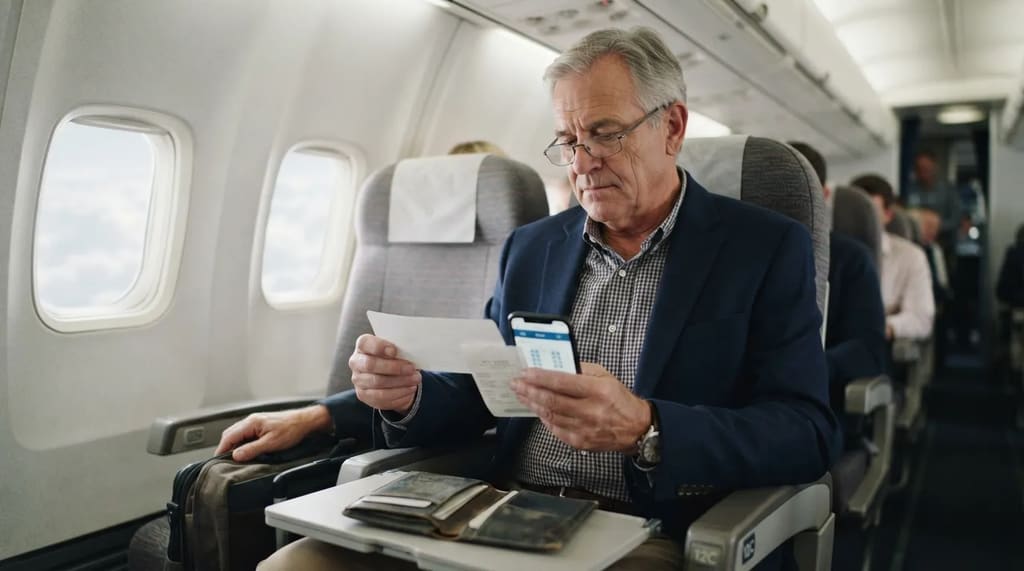
Your flight leaves on time, but the seat map you paid for no longer exists. A smaller aircraft or a reshuffled cabin can do that without a cancellation.
Related Stories From Travelbinger

Here the process starts with you. When only you are affected, such as an aircraft swap that erases your paid seat, you notify the operating carrier, and that notice counts as your refund request. The operating carrier is the airline whose plane you’re on, which on a codeshare may not be the one that sold the ticket.
Save four things before the app refreshes: the original seat, the replacement seat, the fee receipt and the boarding pass you flew on. Delta, for one, says it refunds a reassigned Main Basic passenger who isn’t moved to a comparable or better seat.
Notify the operating airline yourself when a plane change erases your seat. Keep the request short and name the seat you paid for.
All of this assumes you’re choosing a seat for comfort. For some travelers a seat is a requirement, and federal rules list which ones the airline must provide.
#2 – Which Seats Must the Airline Provide on Request?
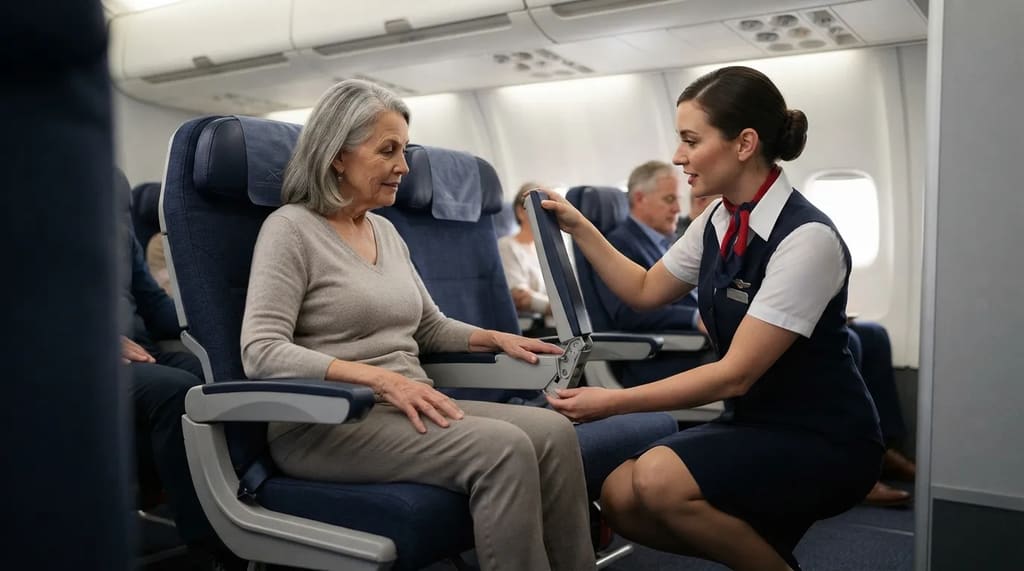
Airlines must provide specific seating accommodations to passengers who self-identify as having a qualifying disability, when that type of seat exists on the aircraft. The main ones:5
- A movable aisle armrest, for a passenger who uses an aisle chair to board and can’t transfer over a fixed armrest
- An adjoining seat for a companion providing certain kinds of assistance
- A bulkhead or other seat for a service animal
- A bulkhead or roomier seat, on the better side of the aisle, for a fused or immobilized leg
Aircraft with 30 or more seats must have movable armrests on half of their aisle seats, and you have the right to be told where those seats are. Ask for row numbers, not a general yes. Ask at booking, and name the accommodation you need.
There are limits. An airline doesn’t have to give you more than one seat per ticket, or a seat in a different class of service.
Those cases carry a pricing rule the seat map never mentions, and it can take the fee to zero.
#1 – Do You Have to Pay for This Seat?
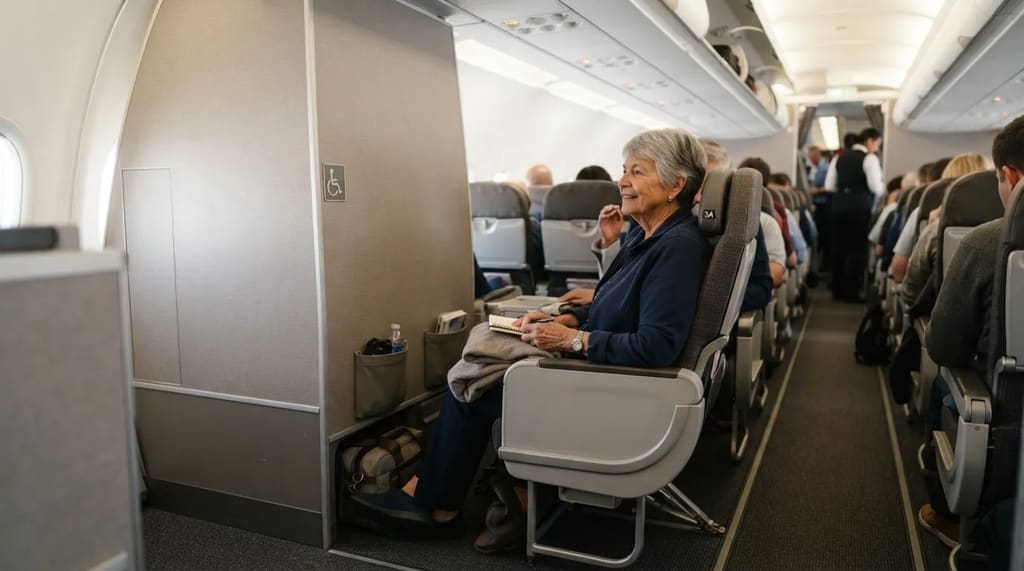
Suppose the only bulkhead seat left is sold for a fee, and your disability requires a bulkhead seat. DOT says the airline must assign it to you without a fee, if it’s in the class of service you bought.6 7
So the seat that costs other passengers money costs you nothing. The airline must assign the accommodating seat even if it isn’t otherwise available to the general public at the time you ask. That makes the bulkhead from earlier a question of eligibility, not just of price.
The rule isn’t limited to the four named cases. If your disability isn’t one of them, the airline must assign any seat not already taken that accommodates your needs, even if it isn’t offered to the general public.8 It also can’t require you to sit in a particular seat because of your disability, except to meet FAA safety rules.
Timing decides how well this works.
Worth Knowing
- Up to 24 hours before departure: the airline must assign the seat when you first ask.
- Inside 24 hours: it must do its best, but doesn’t have to move someone already seated.
- Class of service: the seat must be in the cabin you bought.
A fee-only seat must be free if your disability requires it. Ask when you book, keep the confirmation, and check with the airline or DOT on how the rules apply to your situation.
A seat fee buys a promise with conditions: which fare it’s attached to, how many flights it covers, what comes with it and what happens when the airline can’t deliver. Ask those questions before you pay, and keep the receipt the way you would for any other purchase.
If you need a particular kind of seat, reverse the order. Ask about the accommodation first, and the price second.
- United Seat Selection Guide: https://www.nerdwallet.com/article/travel/united-airlines-seat-selection-what-you-need-to-know
- American Basic Economy Newsroom: https://news.aa.com/news/news-details/2026/American-Airlines-updates-bag-fees-and-Basic-Economy-fares-OPS-POL-04/default.aspx
- Southwest Assigned Seating: https://www.southwest.com/customer-enhancements/assigned-seating/
- DOT Refunds Guidance: https://www.transportation.gov/individuals/aviation-consumer-protection/refunds
- eCFR Seating Accommodations Rule: https://www.ecfr.gov/current/title-14/chapter-II/subchapter-D/part-382/subpart-F/section-382.81
- DOT Developmental Disabilities Guide: https://www.transportation.gov/sites/dot.gov/files/docs/Developmental_Disabilities_Guide.pdf
- DOT Seating Accommodation Guide: https://www.transportation.gov/resources/individuals/aviation-consumer-protection/seating-accommodation-guide/seating-1
- Federal Seating Accommodation Regulations: https://www.govregs.com/regulations/expand/title14_chapterII_part382_subpartF_section382.81