
A shore excursion can go sideways before the bus even leaves the pier, and the cause is rarely dramatic. It’s a dead headset, a late arrival, a missing five-dollar bill. These 19 small courtesies are the ones that make a guide’s long day easier to run.
None of them is a grand gesture, and that’s the surprise. They run from simple prep to tipping etiquette to one habit that decides whether you’re still aboard at sailing time. Save a close look for #1, because it quietly props up every other courtesy on the list, and plenty of guests still get it wrong. Start with the easiest win.
#19 – Charge the Headset and Find Your Ticket Before Bed
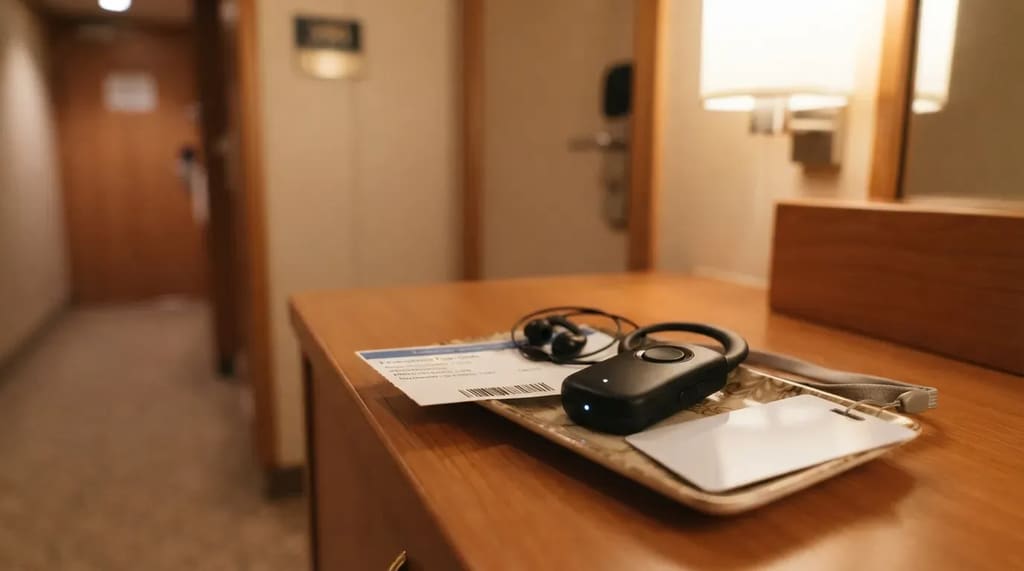
Your cruise line will usually deliver excursion tickets to your cabin at least a day before the tour, unless they’re digital and in the app. Either way, a paper ticket is easy to lose among the daily schedule and the other flyers piling up.
Some tours also ask you to bring an audio receiver from your cabin so you can hear the guide on a crowded street. It needs a full charge the night before, and the tour description and your ticket should say whether you need to bring it. A dead receiver leaves you straining at the back of the group. Charge the receiver the night before and keep the ticket with your ship card.
Tickets and batteries are the easy part. The next courtesy involves a paragraph most guests skim, and it decides how much of the day your legs can handle.
#18 – Read the Fine Print and Pick a Tour Your Legs Can Handle
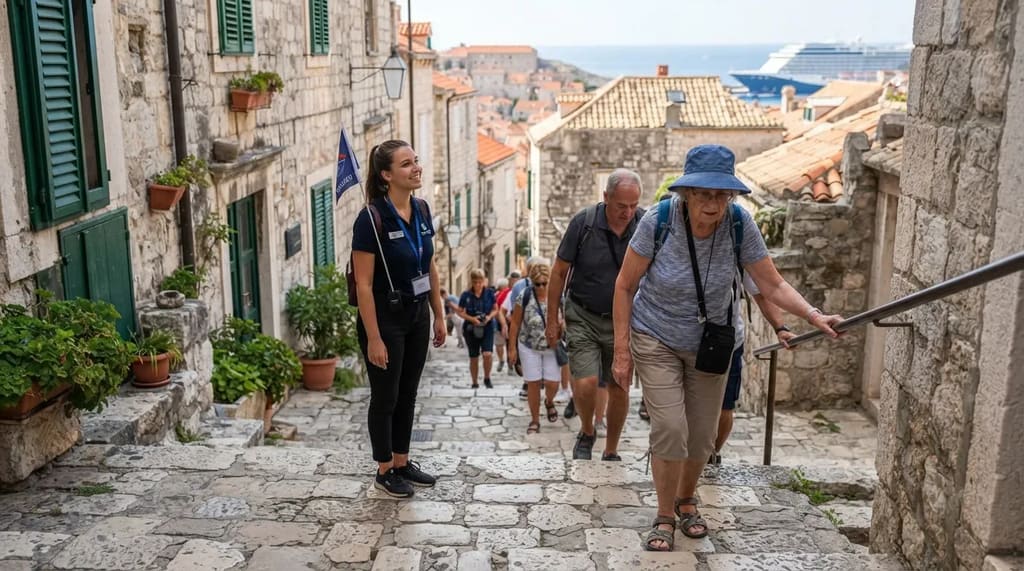
Two tours of the same town can spend your hours very differently. Cruise Critic points out that you may have to choose between short stops at many places and an in-depth look at one area. The description tells you which one you’re buying.
Read it before you pay. If a line is vague, ask the shore excursion manager to describe the tour in detail, and ask exactly how much walking and how many stairs the day involves.
Overreaching on a tour’s difficulty proves nothing. It slows everyone behind you, including the guide who has a schedule to keep. Choosing a tour you can handle is the first courtesy you offer the group.
Quick Compare
- Many short stops: a sampler of the port, with more variety and less time at each place.
- One area in depth: fewer places, but more time to actually take them in.
- Either way: the description and the excursion manager can tell you how much walking is built in.
Once you’re on the right tour, the first thing a guide hears from you can set the tone, and it takes about two seconds.
#17 – Greet the Locals in Their Own Language

A couple of greetings and polite phrases in the local language, said with a smile, show basic courtesy. You don’t need a phrasebook. Learn hello, please and thank you before you reach the port.
Try them at the first café or market stall, where the stakes are low and the reward is a friendlier exchange. A good guide can also help with polite interactions in shops and cafés, so ask how a phrase is really said.
Small efforts in etiquette can open doors to things like local tips from shopkeepers. That’s a bonus, not a promise, and the courtesy is worth it either way.
#16 – Be at the Meeting Spot Before the Doors Open

When the gangway opens, the first wave of passengers surges off, and the crowd often clears quickly. If a guide is waiting at a meeting point, skip the second coffee and head straight there.
Aim to be early for the tour, not merely on time. A group leaves once it’s assembled, so one late guest spends minutes that belong to every other person on the bus. Cruise etiquette lists put it plainly: be early for tours.
Showing up on time is half of respect. The other half is what you’ve chosen to wear when you get there.
#15 – Cover Your Shoulders and Obey the No-Photo Signs
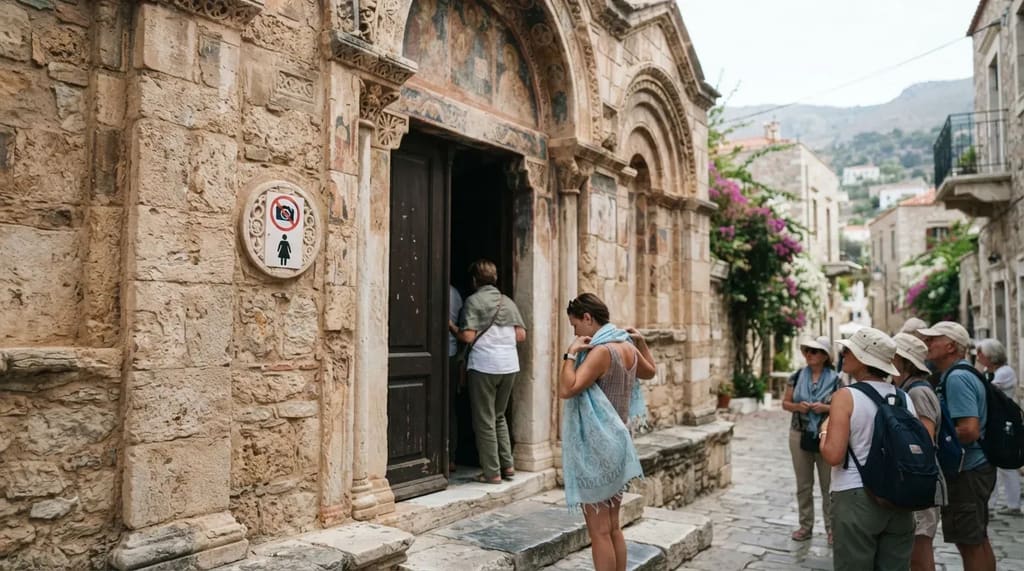
Churches, temples and mosques on port itineraries often set dress rules, and the sign at the door isn’t a suggestion. Pack modest clothing options and be mindful of local customs.
Observe dress codes at religious sites and follow photo rules where signs request no images. A crossed-out camera means the phone goes in your pocket, and your guide’s description does the work instead. Pack one modest layer for any day that includes a place of worship. It’s far easier than being turned away at the door while the group waits.
Respect for a place also covers what lives there, and the rule comes down to two things you’d rather not do.
#14 – Leave the Wildlife and the Beach as You Found Them

Cruise etiquette lists for shore days carry two short bans: don’t litter and don’t harass animals. They sound obvious, and they matter most at the stops where groups crowd together, such as beaches, boat docks and wildlife viewing points.
A guide has to manage the whole group at those places. When one guest crowds an animal for a photo or leaves a wrapper behind, the guide is the one who has to deal with it in front of everybody.
Pack out every wrapper and keep your hands off the animals. Keeping your distance also keeps you safe, since a wild animal doesn’t know you’re on vacation.
#13 – Know Who Your Daily Gratuity Doesn’t Cover
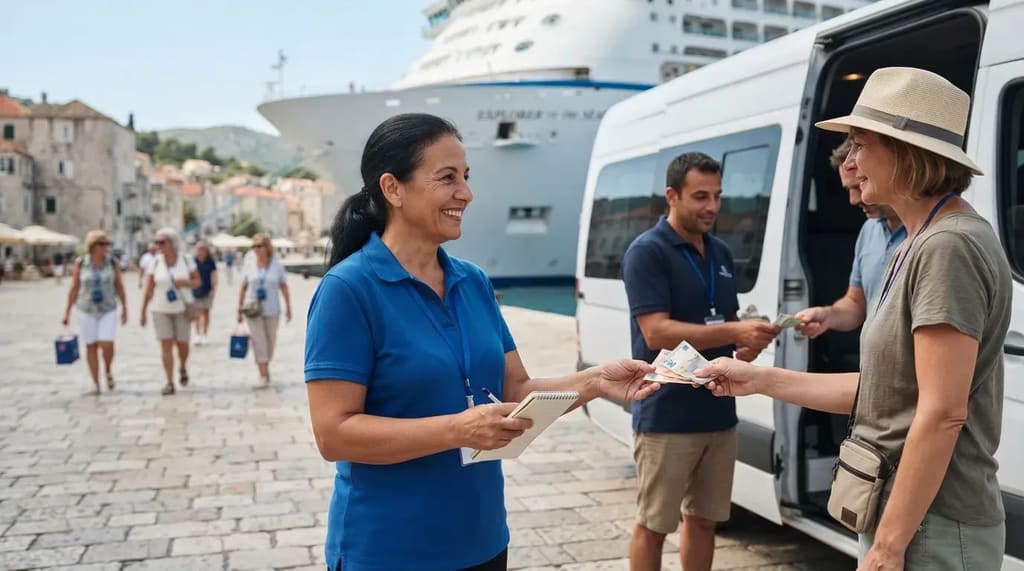
The automatic service charge on your onboard account typically runs in the neighborhood of $14 to $23 per person, per day, and it pays the ship’s crew. The local guide and driver on your excursion are usually on a different payroll, because tour operators are usually independent of the cruise line.
That’s why shore excursion guides and drivers are not covered by your onboard gratuities. Tip the guide and driver directly, in person.1
The driver deserves a separate thank-you, and it’s a smaller number than the guide’s.
#12 – Hand the Bus Driver a Tip of His Own
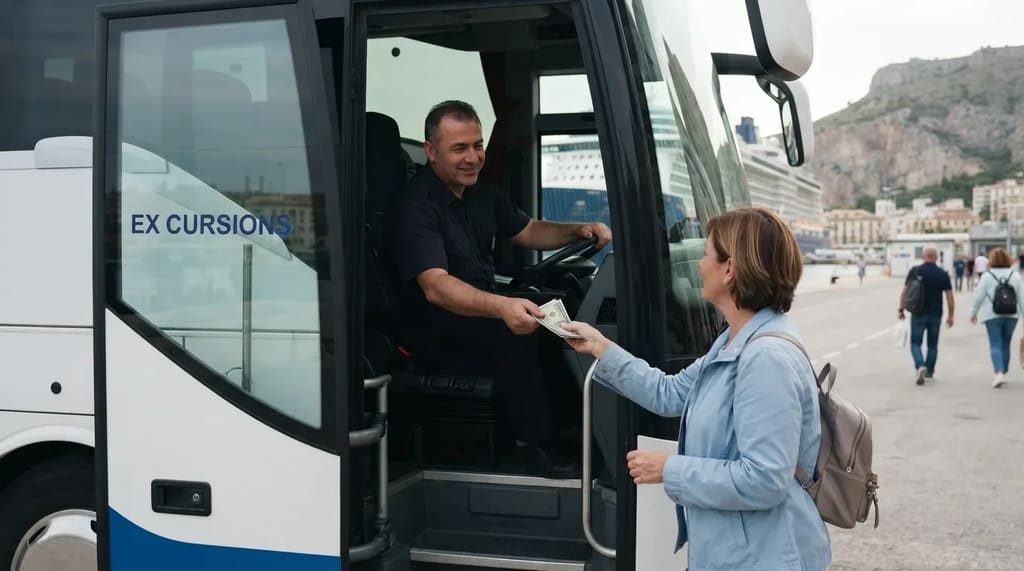
The driver stays at the wheel while the guide collects the thank-yous. Tipping the bus driver and tour guides is acceptable and appreciated on most shore excursions.2
Afar suggests a starting point of $2 per person for the bus driver, with the guide’s tip handled separately.2 About $2 per person is a fair start for the driver. You can go higher after a long mountain road or a tricky parking lot.
That makes two tips, and you’ll need the right bills in your pocket to hand them over.
#11 – Carry Small Bills So Nobody Has to Make Change
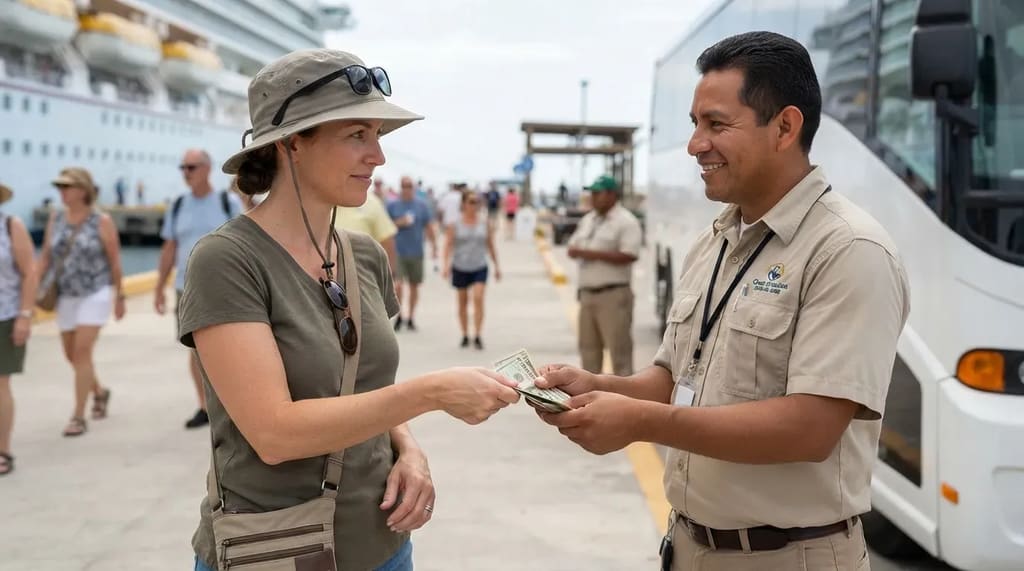
The last five minutes of a tour is a bad time to discover that your smallest bill is a $50. Tips on shore are normally handed over in cash, so a few ones, fives and tens belong in your day bag.
Run the numbers using the starting amounts in the surrounding items. For a couple on a full-day tour, $10 each for the guide and $2 each for the driver comes to about $24 in small bills for the day.
Your cruise card won’t help here, since independent guides and drivers can’t charge a tip to your shipboard account. Bring cash, and bring it in pieces small enough to hand over without asking anyone for change.
Dollars are welcome in much of the Caribbean. In other ports, a pocketful of them can be nearly worthless.
#10 – Tip in the Currency the Port Prefers
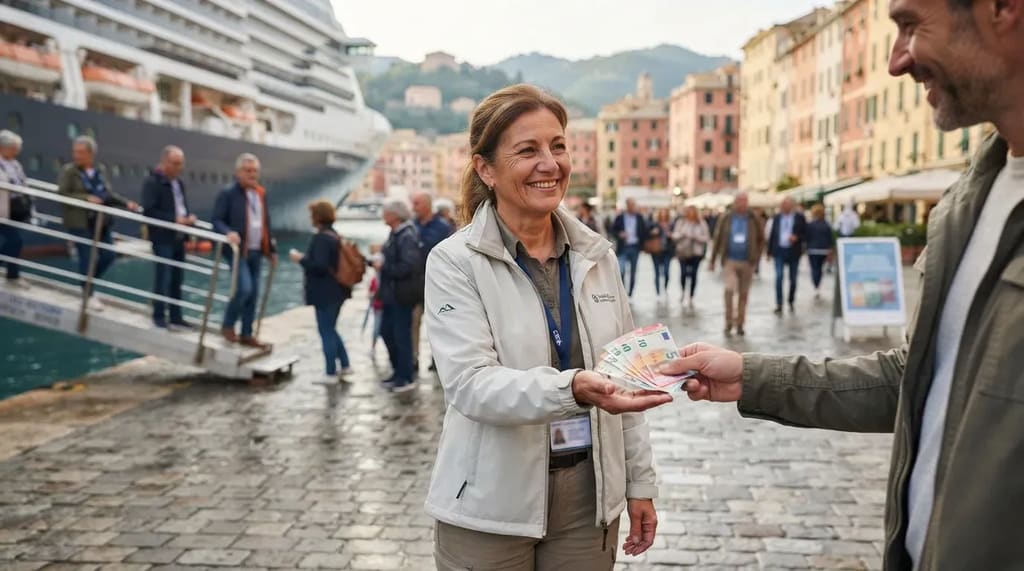
U.S. dollars are widely accepted across the Caribbean, but that habit breaks down in Europe and much of Asia, where local currency is usually the better choice. A modest withdrawal from an ATM in town can cover the day’s tips.
Some places don’t expect tips at all. Japan, South Korea, Australia and New Zealand are the usual examples, and a pile of bills pushed on a guide there can cause confusion rather than gratitude.
Tipping habits depend on the country, and your cruise director can advise. Ask the ship’s guest services before you go ashore.
Knowing the custom settles where the money goes, but the amount is another question, and the popular rule of thumb is too high.
#9 – Skip the 20 Percent Rule on Shore Tours

Restaurant math doesn’t carry over to a tour bus. Afar’s suggested starting point for the guide is $5 per person for a half-day tour and $10 per person for a full-day tour.2
U.S. News & World Report’s travel site quotes a cruise expert who recommends $10 per person, which usually comes to about 10% of the excursion’s cost. On a $100 tour, 20 percent would double that, so the 20 percent rule is overkill.3
Start at $5 for a half day and $10 for a full day. You can increase that amount based on your experience. Reserve the bigger tip for the guide who earned it, not for the one who simply showed up.
Fast Facts
- Guide, half-day tour: about $5 per person as a starting point.
- Guide, full-day tour: about $10 per person.
- Bus driver: about $2 per person, handed over separately.
- Onboard service charge: doesn’t reach local guides or drivers.
Timing matters as much as the amount, and the moment arrives just before you step off the bus.
#8 – Stay Put for the Wrap-Up Speech

Most excursions close with a short speech. A cruise expert quoted by U.S. News says the wrap-up thanks you for coming and reminds you that tips are welcome.
It’s tempting to slip off the bus early to beat the crowd. Resist, because the guide can’t follow you across the pier, and that speech is the natural moment to say thanks.
Have your cash ready before the final speech begins. Hand it over directly, add a word about what you enjoyed, and then go. It takes under a minute.
#7 – Thank the Boat Crew Who Got You to the Reef

A snorkeling or sailing excursion has more than one person working it: a captain, a lead guide, and often a deckhand who helps you with fins and ladders. Those crews tend to be the group most often skipped at tip time.
Treat the lead crew like any tour guide. Tip in cash at the end, and scale it up if someone spent extra time with a nervous swimmer or found you the fish you came to see. A snorkel guide who looked after you in the water has earned a tip.
From here, a mistake costs you more than an awkward moment. A private guide needs one piece of information from you before the day begins.
#6 – Tell a Private Guide When You Need to Be Back
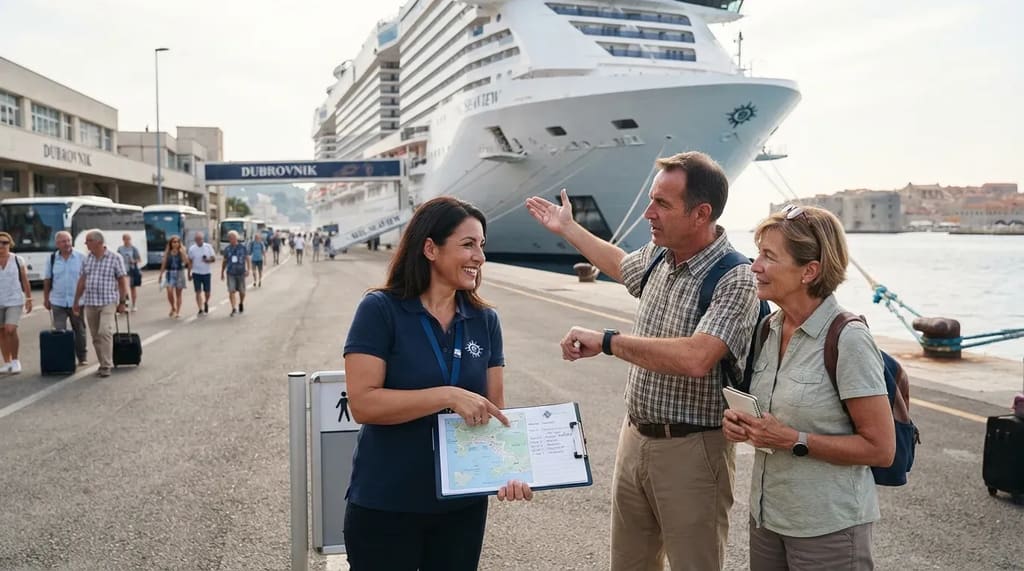
A custom tour runs on what you tell the guide, including the one thing you forget to say. If you’re arranging a private tour, communicate that you need to be back at the pier well before all-aboard time.
The Points Guy also advises you to understand how far you’re going from the pier and make sure your guide understands the all-aboard time. Say the all-aboard time out loud and name the hour you want to be back.
Then follow through. Check in at your agreed halfway point, and don’t let a long lunch quietly rewrite the plan.
Even with the hour agreed, you and the guide can be running on two different clocks.
#5 – Set Your Watch to Ship Time
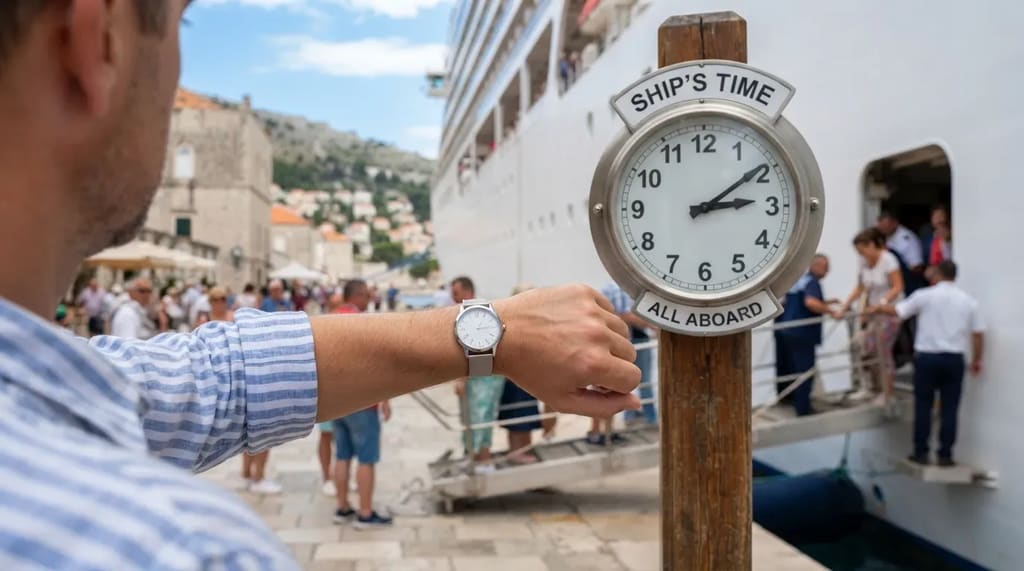
A ship can keep its own clock, and it sails by that clock, not the one on the port’s church tower. Port guides stress that departure decisions are based on ship time, not the local clock.
If your phone updates automatically, it may jump to local time as soon as you land. Set one watch or alarm to ship time and leave it alone.4 The all-aboard time is printed in the daily newsletter and displayed at the gangway, so confirm it against that.
With the clock settled, the question becomes what protection sits behind it. An independent operator’s promise is worth only what its wording says.
#4 – Get the Return Guarantee in Writing
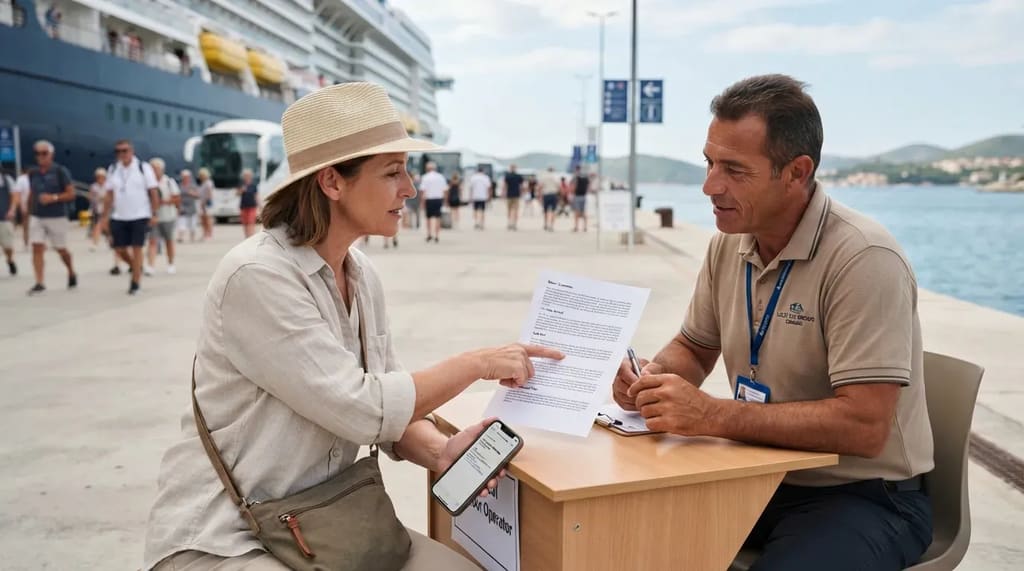
Some operators guarantee that you’ll arrive at the ship on time or they’ll pay for you to reach the next port of call. That’s a real offer, but only when it’s documented.
Look for wording that promises return before your ship’s all-aboard time, and ask for it by email, with your ship’s name and sailing date. A vague line such as “we’ve never missed a ship” commits the operator to nothing.
Keep in mind what the guarantee is. The operator may reimburse the tour cost or help you reach the next port, but the cruise line has no obligation to wait.
Related Stories From Travelbinger


Treat it as protection for a bad day, not a reason to book a tour that ends near all-aboard. That booking is a gamble no email can fix.
Worth Knowing
- A real guarantee names the promise: return before all-aboard, or help reaching the next port.
- Email confirmation should include your ship’s name and sailing date.
- It covers delays caused by the tour, not a guest who wanders off.
- The cruise line itself still isn’t required to hold the ship.
One loophole survives even a perfect guarantee, and a single step away from the group can trigger it.
#3 – Stay With the Group, Even for One More Photo
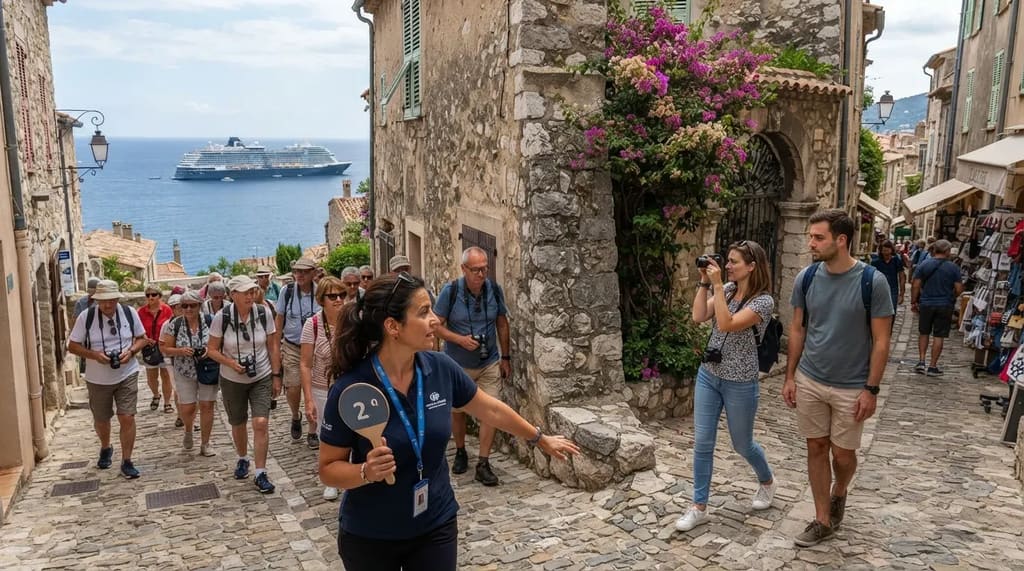
A return guarantee has an exclusion. It covers delays caused by the tour, not your own choices; if you wander off and miss the bus back, the ship sails without you.5
That’s why the etiquette lists say to follow your guide’s instructions and stay with the group, which keeps the excursion running smoothly and safely. A guide counting heads can’t count a guest behind a market stall.
The guarantee covers a late tour, never a guest who wandered off. If free time is part of the day, agree on a landmark and an exact time to regroup before you split up.
A loophole like that matters only because of the gap between two kinds of bookings, and the gap is bigger than the price tag suggests.
#2 – Book the Ship’s Tour When the Stop Is Far From the Pier
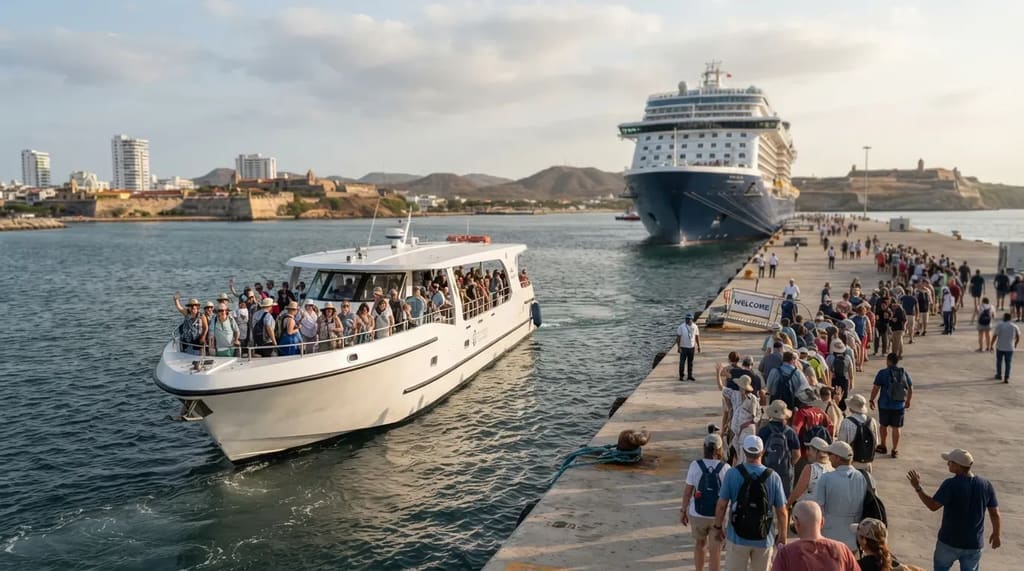
When a ship-sponsored tour runs late, the ship waits. If you buy through the cruise line, you’re guaranteed that the ship will wait for the tour bus; with an independent company you don’t have the same guarantee.3
Cruise Critic notes that ship-sponsored excursions cost more but include vetted operators and protection against the ship leaving before the buses return.6 That premium is a fee for certainty.
The verdict: pay for the ship’s guarantee on trips that run far from the port. A drive two hours inland to a ruin carries real risk of traffic or delay, so the extra cost is justified. When the sights are a short walk or taxi ride from the pier, go independent and keep the savings.6
At a Glance
- Ship-sponsored: costs more, uses vetted operators, and the ship waits for late buses.
- Independent: no guarantee the ship will wait, so the margin is up to you.
- Best fit for ship tours: long drives inland where traffic can stretch the day.
- Best fit for independent: sights a short walk or taxi ride from the pier.
Whichever way you book, one number protects you, and it’s bigger than the buffer most schedules leave.
#1 – Finish Every Tour 90 Minutes Before All-Aboard

All-aboard usually falls 30 to 60 minutes before the ship sails, and the ship leaves on its published schedule. If you’re not back, ship staff will notice and try to track you down, but the ship still sails on time.4
After that, you’re on your own. Don’t expect reimbursement for the days you miss aboard, and getting to the next port is on you, at your own cost.
That’s why the standard advice for independent tours is at least a 90-minute buffer before the all-aboard time. Book tours that end at least 90 minutes before all-aboard.5 The Points Guy adds that showing up at exactly the all-aboard time isn’t the goal.
It’s also the courtesy that covers everything above. A guide who isn’t racing the clock can slow down, answer questions and finish the route, and you’re the one who gets the unhurried day.
Look back over the list and the pattern is plain. Charged batteries, small bills, an agreed return time and a ninety-minute cushion all do the same job: they leave room for something to go wrong.
You can’t control traffic, weather or a late ferry, but you can control how much margin you carry in time, cash and attention.
When did a guide do one small thing on a tour of yours that made you reach for a bigger tip than you’d planned?
- Frommer’s Cruise Gratuities: https://www.frommers.com/tips/cruise/a-guide-to-cruise-gratuities-has-cruise-tipping-gone-overboard/
- Afar Cruise Tipping Guide: https://www.afar.com/magazine/when-and-how-much-to-tip-on-a-cruise
- Cruise Critic Shore Excursions: https://www.cruisecritic.com/articles/what-to-expect-on-a-cruise-shore-excursions
- Points Guy Pier Runner: https://thepointsguy.com/cruise/avoid-becoming-a-pier-runner
- Port Adventurer Independent Guide: https://portadventurer.com/travel-tips/shore-excursions-vs-independent/
- Cruise Critic Ship vs Independent: https://www.cruisecritic.com/articles/ship-sponsored-or-independent-shore-excursions-which-is-right-for-you