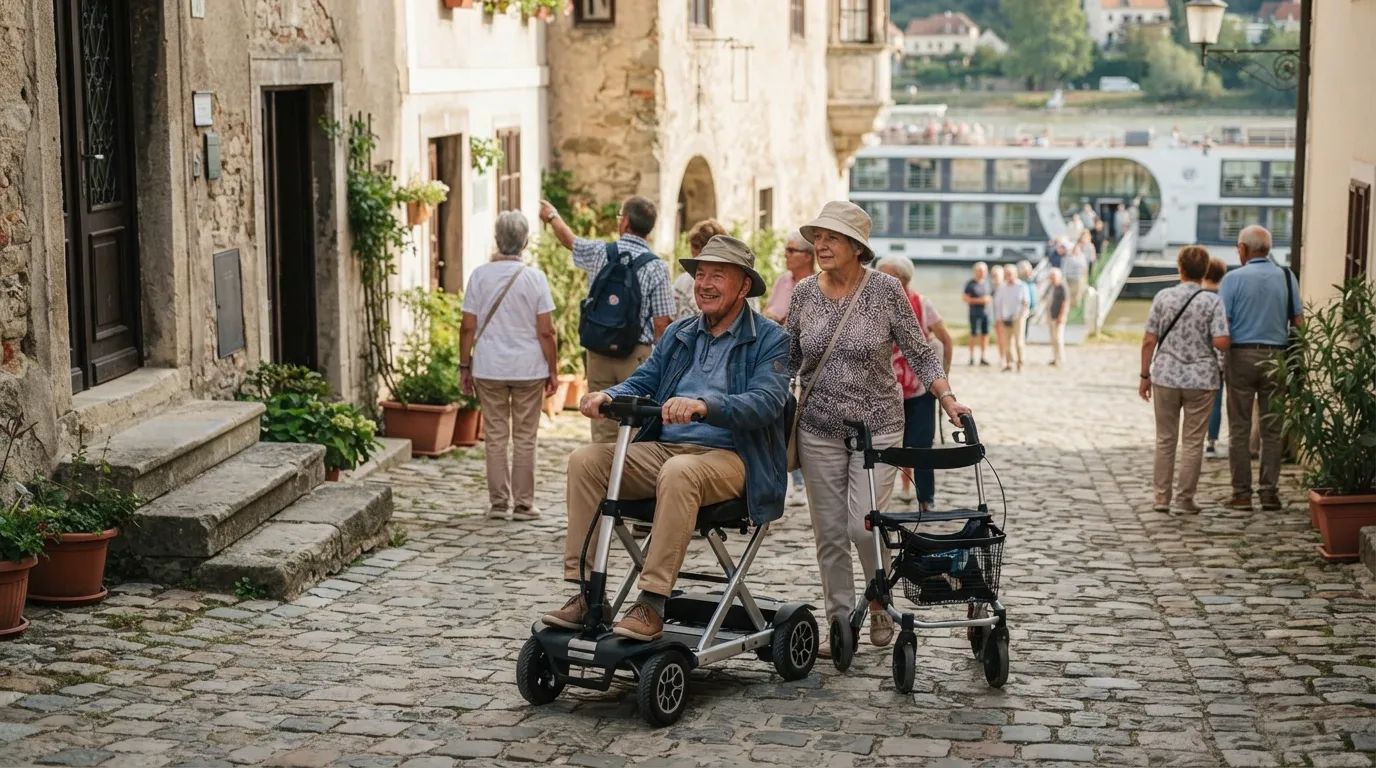
A river cruise looks like the one vacation where nothing can go wrong. The ship does the unpacking, the scenery drifts past your window, and every tour is already arranged. But travelers who have done this many times know the trouble rarely starts on the water. It starts the moment they step onto shore.
Cobblestones that look charming in photos. A gangway tilted at a steep angle. A “short” tour that quietly turns into three hours on a coach. Here are the 14 things experienced seniors check before they pay for a single excursion, and the last one is the question almost nobody thinks to ask.
#14 – The Activity Rating Is Not Just a Label
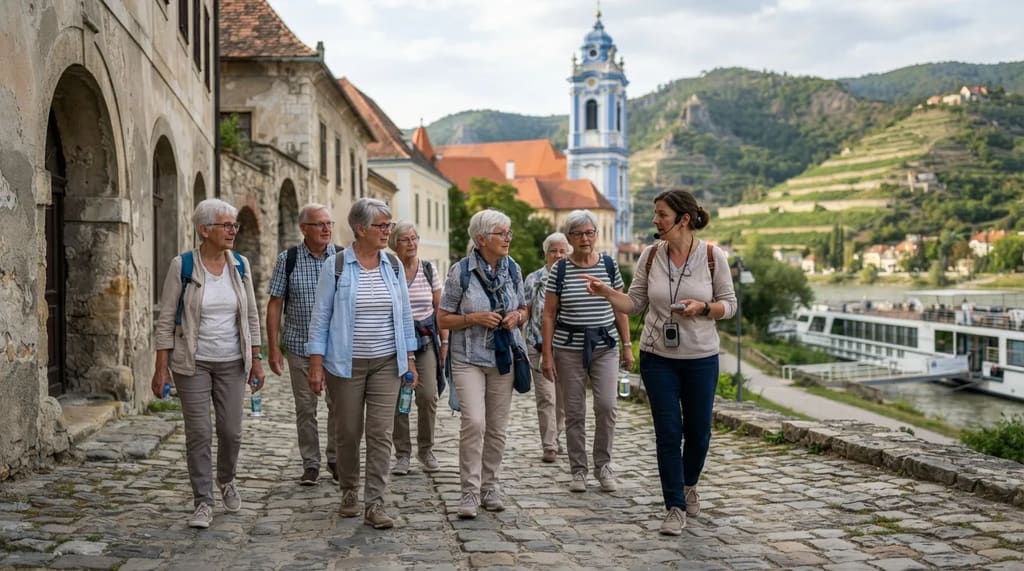
Most river lines tell you how hard each tour is. Few first-timers read it closely.
Many cruise lines grade their excursions by activity level, usually easy, moderate and demanding. The names differ from line to line, and so does the meaning.
A tour marked “easy” can still mean a long stretch on your feet. The rating describes the pace, not always the total time standing.
- Read the full tour description, not only the rating.
- Compare your line’s rating system against the brochure’s key.
Experienced travelers also ask a second question: how does this line define the rating? One company’s “moderate” is another’s “light.”
But the rating hides something bigger, and it sits right on the ground under your feet.
#13 – Check the Surface, Not Just the Distance
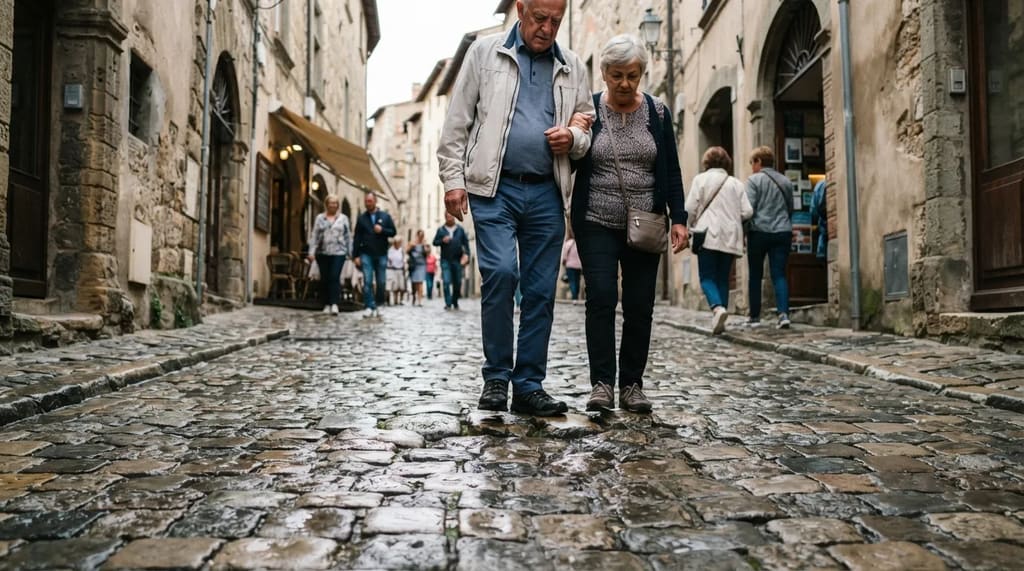
Distance is the number everybody asks about. Surface is the number that matters.
Old European town centers are famous for uneven stone paving. They look wonderful in photographs and are hard on knees, hips and balance.
A short walk on uneven stone can wear you out more than a long walk on a flat path. Wet stone makes it worse.
- Ask whether the route is paved, cobbled or has steps.
- Ask if there are hills, slopes or ramps.
Quick Compare
- Flat, smooth path: easiest on balance, even over a longer walk.
- Cobblestones: uneven footing that tires you faster than the distance suggests.
- Steps and slopes: hardest on hips, knees and breathing.
- Wet stone: adds slip risk to every option above.
Seasoned travelers pack shoes with a good grip and a firm sole, and they break them in at home first. A new pair that rubs on day one can cost you the rest of the week.
Some travelers say guided old-town walks are overrated for anyone with balance concerns. They argue a seat at a café in the square gives you the same atmosphere. It’s a fair point, and worth weighing before you sign up for every walk.
Then there’s the part of the day that happens before any tour starts.
#12 – Ask About the Gangway and the Ship Crossing
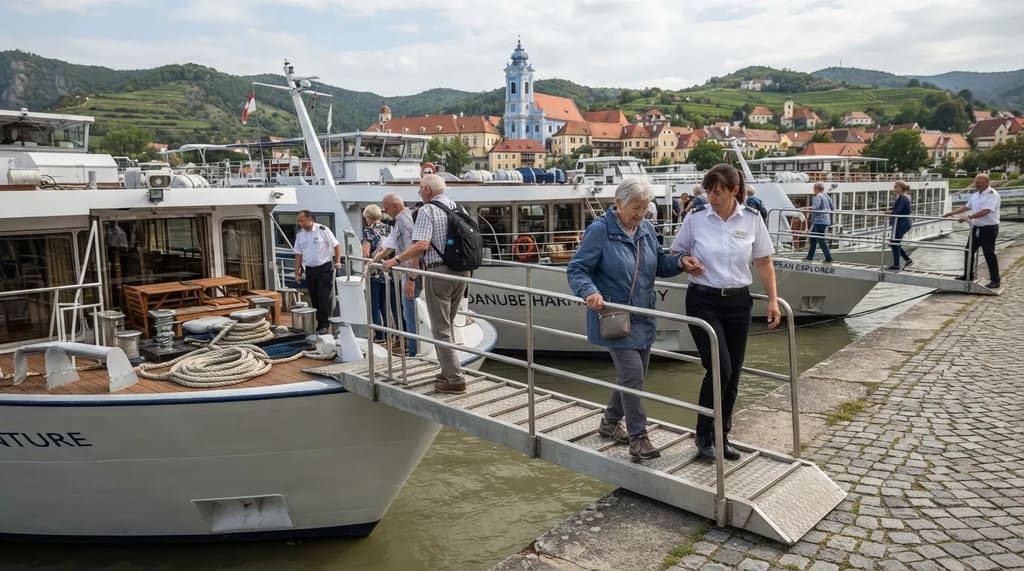
Getting off the ship is its own excursion. Nobody puts it in the brochure.
River ships often dock side by side when a port is busy. To reach land, you may have to walk through one or two other ships first, which can mean extra stairs and narrow passages.1 2
Your ship may not be docked beside the shore at all. That surprises many first-timers.
- Gangway angle changes with the water level.1
- Ramps can be steep at very high or very low water.
Experienced seniors ask the reception desk each evening how tomorrow’s docking looks. They want to know where the ship will tie up and whether a crew member will help at the gangway.
And docking isn’t the only thing the river itself can change.
#11 – Know What Happens When the Water Moves
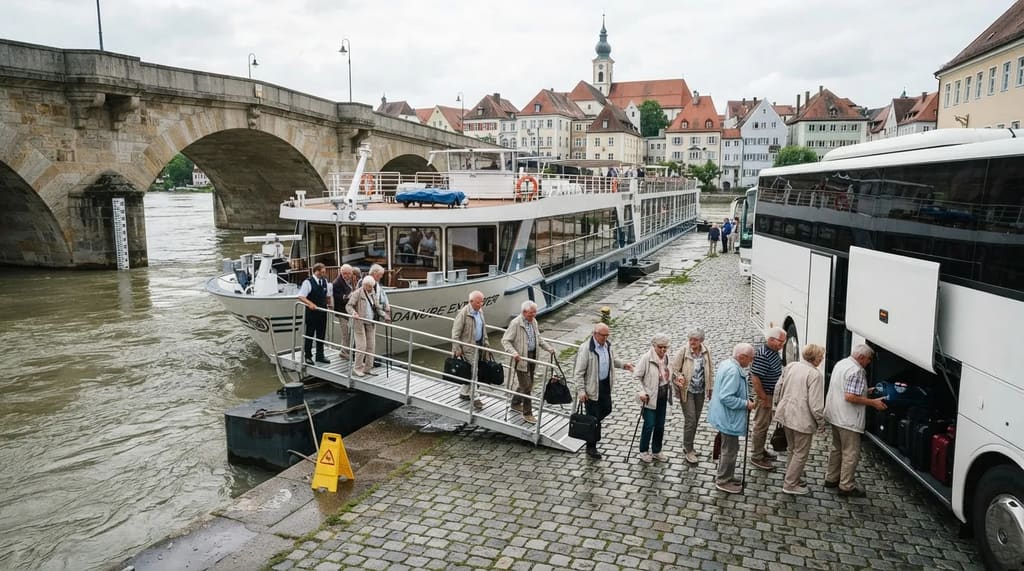
Rivers don’t follow schedules. Plans on paper are only plans.
Very high water can stop ships from passing under bridges. Very low water can stop them from sailing certain stretches. Either one can rewrite your week.3
When water levels shift, you may be moved to a different ship and travel part of the route by coach.3 4 Excursions get moved, shortened or swapped.
- Read your line’s policy on itinerary changes.
- Ask what compensation, if any, is offered.
The change can also mean more long coach days. A tour you picked for being short might become a full day on the road. Ask early what the line’s usual backup plan looks like for your season and river.
That brings up something else: all those hours sitting on a coach.
#10 – Ask How Long You’ll Be on the Bus
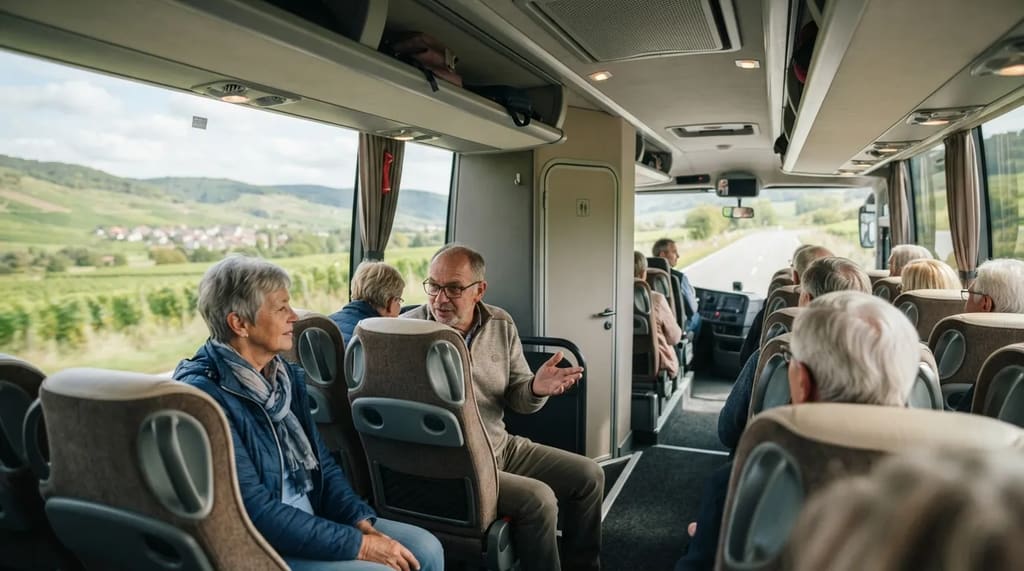
A river cruise is supposed to be gentle. A three-hour coach ride is not.
Some excursions head inland, away from the water. That means real time in a vehicle, sometimes with stops far apart.
Many travelers never ask whether the coach has a restroom on board. It’s one of the most useful questions you can put to a tour operator.
- Ask the total driving time, both ways.
- Ask where the restroom stops are.
Experienced seniors also ask about seat choice. Sitting near the front often means easier boarding and less sway. Some prefer an aisle seat so they can stand and stretch without disturbing anyone.
Long rides also mean skipped meals and missed medication times. Keep a small snack and a bottle of water in your day bag, whatever the tour promises.
Once you’re off the bus, the next issue is how fast the group moves.
#9 – Find Out the Pace Before You Pick the Group

Not every group walks at the same speed. You can often choose yours.
Many river lines offer different pace groups on the same tour. Guides use small radio receivers so each person can hear while walking behind.5
Some lines offer a slower group on the same walk, but you usually have to ask. It isn’t always advertised.5
- Ask whether a slower or “gentle” group exists.
- Ask the size of each group.
In a big group, the fastest walkers tend to set the pace and everyone else scrambles. Smaller groups are often easier to keep up with, and easier to slip out of quietly if you need to.
Pace is one thing. Weather can make the same walk feel completely different.
#8 – Plan for the Weather You’ll Actually Get
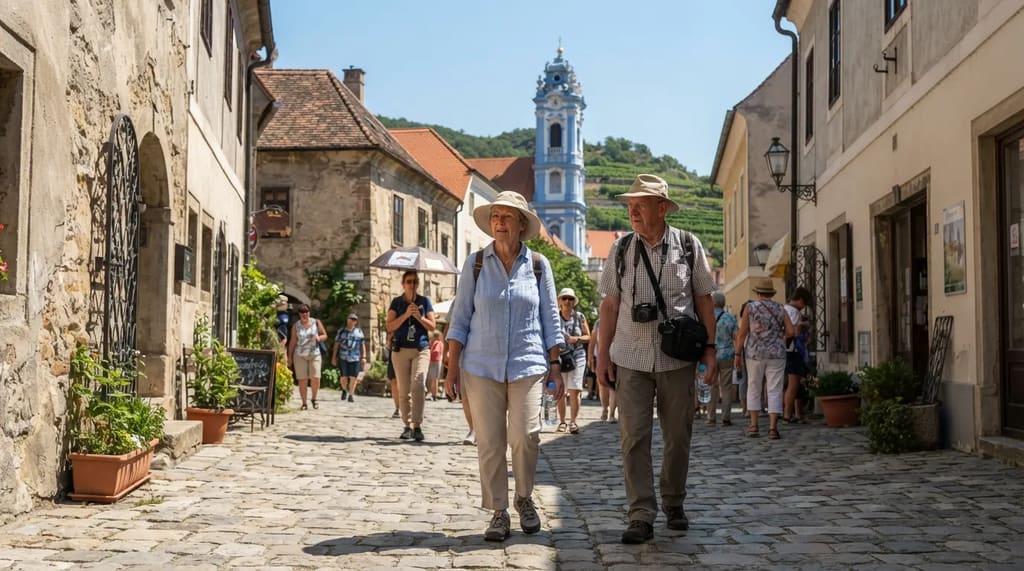
Europe in July is not Europe in December. The same tour feels like two different trips.
Summer can bring serious heat, especially in stone-heavy towns with little shade. Winter markets mean cold, damp air and slick ground.
Hot stone streets can feel hotter than the air temperature suggests. Shade is often scarce on old-town squares.
- Ask where the shaded rest points are on a summer walk.
- Bring layers, a hat and water, whatever the forecast says.
Older travelers tend to feel temperature extremes differently, and some medications make heat harder to handle.6 If you take any, ask your doctor before you go. It’s far easier to adjust a plan at home than from a bus on a hot afternoon.
Heat is only one health question, though. The next one is about what you carry.
#7 – Carry Your Health Information With You

Don’t leave your medical details in the cabin safe. A tour is where you’ll need them.
Experienced travelers carry a short written list of medications, allergies and conditions in a day bag. They add an emergency contact and a doctor’s number.
Medications should travel in your carry-on, not your checked bag. If a bag is delayed, you still have them.7
- Keep a printed list in your day bag.
- Keep medications in original labeled containers.7
Check your travel insurance too. Read what it says about medical care, evacuation and pre-existing conditions. Some policies set a time window after your first deposit for certain benefits, so read the fine print early, not the week before you fly.
At a Glance
- On one card: medications, allergies and conditions.
- Contacts: a family member and your doctor.
- Insurance: your policy number and the insurer’s emergency phone line.
- Where it lives: your day bag, not the cabin safe.
Medical details matter. So does money, and that’s where the next rule starts.
#6 – Read the Fine Print on Paid Excursions
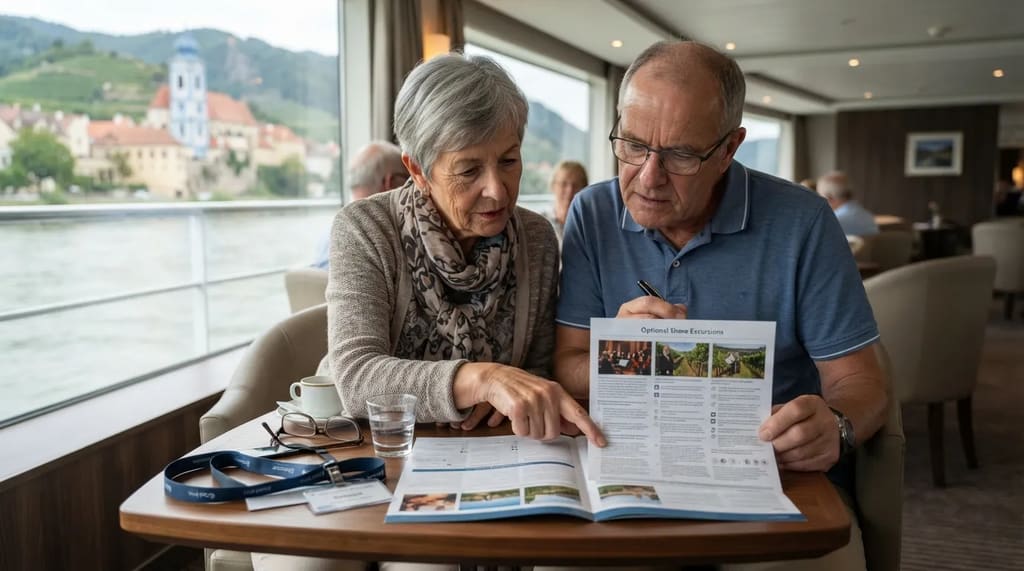
Included tours and paid tours are not the same product. The refund rules rarely match either.
Most river lines include at least one guided tour in every port. Optional extras cost more and often come with their own booking rules and cancellation windows.
Some optional tours can’t be refunded once you’ve booked them. Others have a cutoff date before sailing.
- Ask when you can still cancel.
- Ask what happens if you feel unwell that morning.
Here’s a view some seasoned cruisers hold, and it’s controversial: many optional tours aren’t worth the extra money. The included walk often covers the best parts of town, and the extra fee buys you a longer day, not a better one.
Of course, some travelers skip ship tours altogether, and that carries a risk of its own.
#5 – Know the Rules Before You Go Alone
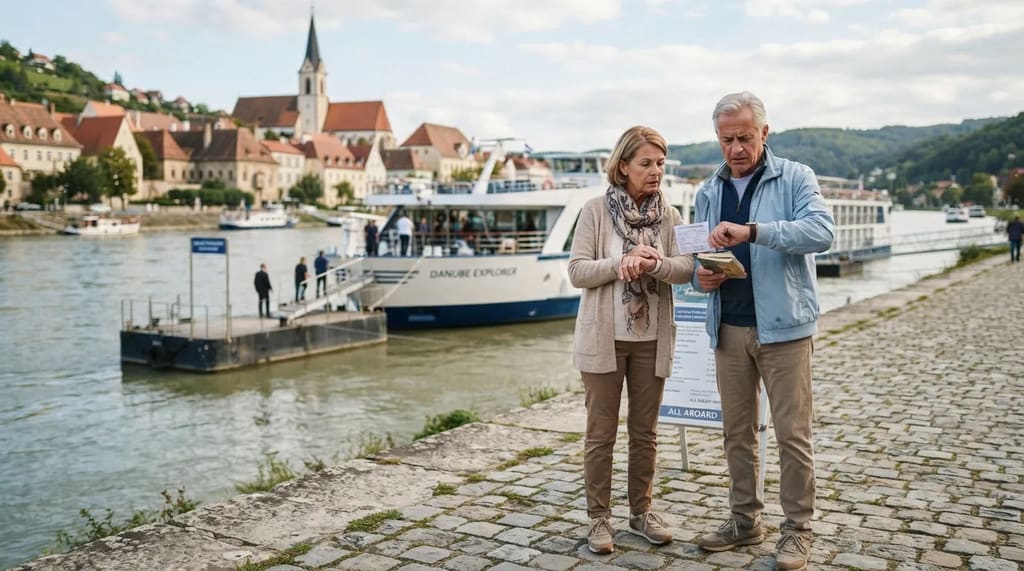
Going off on your own can be a smart choice. It can also be a costly one.
Independent exploring lets you set your own speed and sit down when you want. But the ship has a departure time, and it does not wait for one person.
The ship’s departure time is firm, and a missed boat is your problem to solve. You may have to catch up at the next stop at your own expense.
- Note the “all aboard” time and set an alarm.
- Carry a card with the ship’s name, port and phone number.
Some travelers argue that ship-led tours are overpriced for what you get. Others say a guide is worth every cent because they handle timing and transport. Both sides have a point, and the honest answer depends on your health, the town and your comfort with directions.
A lot also depends on whether you need a mobility aid, which is the next rule.
#4 – Ask About Mobility Aids Before You Book
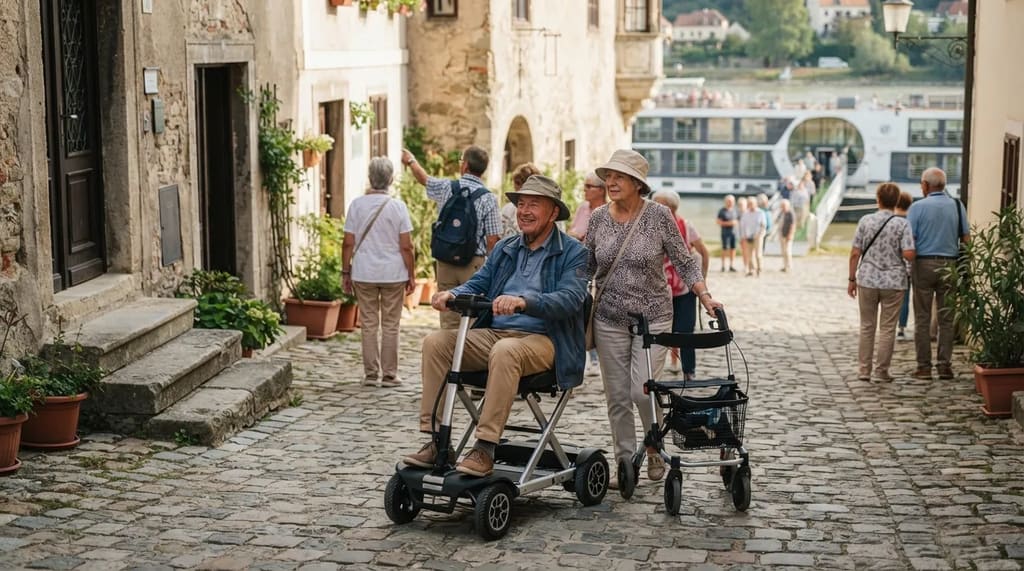
Wheelchairs, walkers and scooters raise questions that need answers in advance.
Not every ship, coach or historic site can handle them. Narrow doors, older elevators and stepped entrances are common in Europe.1
Some historic buildings simply can’t be entered with a wheelchair or scooter. Tours may skip them or offer a different route.
- Ask your line about its policy on aids onboard and on coaches.
- Ask whether a specific tour can adapt.
Experienced travelers contact the line before booking, not after, and get answers in writing where possible. Staff can then arrange accessible cabins and suitable excursions, and you’ll know what to expect.
If you only need help on certain days, ask whether you can rent or borrow equipment locally. Policies differ, so don’t assume.
Worth Knowing
- Older buildings often have narrow doorways, small elevators or a few steps at the entrance.
- A tour may skip a site or use a different route rather than turn it into a problem.
- A written yes is more reliable than a quick verbal one.
- Ask about equipment on coaches and in ports, not just onboard.
Which leads to something travelers often overlook: what you eat and drink along the way.
Related Stories From Travelbinger

#3 – Check Food, Drink and Tasting Stops

Tastings are a highlight on many tours. They’re also a risk for some.
Wine, beer, cheese and pastries show up on a lot of excursion itineraries. Food allergies and special diets don’t pause just because you’re on vacation.
Alcohol and some medications don’t mix, and a tasting stop often comes with several pours. Ask your doctor before you go.
- Tell the line about dietary needs well before sailing.
- Ask whether a tasting includes non-alcoholic options.
Here’s the part many people never realize: you can skip a tasting. Sit out, sip water and still enjoy the setting. A host is rarely offended.
Next is a rule that sounds soft, but it protects your entire trip.
#2 – Don’t Stack Back-to-Back Tours

Every day has a tour. That doesn’t mean you have to take every one.
A typical river cruise schedules something nearly every day. Morning walks, afternoon excursions and evening events pile up fast.
Fatigue is the quiet reason many travelers cut tours short. By day four, a packed schedule catches up.
- Pick your must-see stops first.
- Leave at least one free morning or afternoon.
Many experienced seniors say skipping a stop is the smartest decision they make. They aren’t missing out. They’re pacing a long trip so they can enjoy the best days fully.
That annoys some travelers who feel they’ve paid for every minute. Yet a rested traveler sees more than a worn-out one dragging through an excursion.
But the rule the most experienced travelers insist on comes last, and it’s the one nobody mentions.
#1 – Always Ask for Your Exit Plan
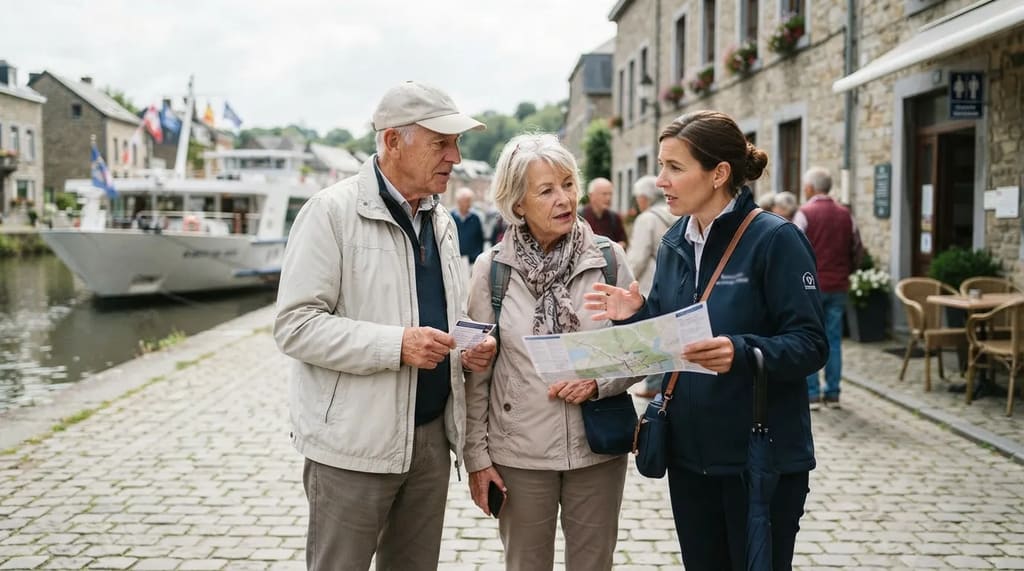
The best travelers know how they’ll leave a tour before it begins.
Things change on the road. You may feel unwell, tired or simply done. A plan for that moment is the difference between a small hiccup and a real problem.
Few travelers ask the guide how to return to the ship early. It’s the question that matters most.
- Ask the guide how to leave the group and who to tell.
- Keep the ship’s emergency number saved in your phone and on a printed card.
Ask whether a taxi or transfer is available and whether you’d cover the cost. Tell your travel partner what you’ll do if you split up. Know where the nearest restroom and seating are on the route.
Why It Stands Out
- It takes about a minute, and it works on any tour.
- It turns “I have to stay” into “I can choose.”
- It protects your travel partner from guessing what happened.
- It makes every other rule on this list easier to follow.
None of this takes long. About a minute turns a tour into something you can safely stop. That’s the real rule beneath all the others: never join a tour you can’t leave.
River-cruise excursions go best when you check the details before you book. Read the rating, ask about surfaces, gangways and water levels, and find out how long you’ll be on the coach. Look for a slower group, read the refund rules, carry your health information and keep your schedule light.
The single most useful habit is knowing how to leave a tour early. The ship, the guide and the weather are mostly out of your hands. Your preparation isn’t, and it’s what lets you enjoy the river without worrying about the shore.
- Side-by-Side Docking Mobility: https://luxuryvacationsconsulting.com/best-european-river-cruises-for-seniors-with-limited-mobility/
- River Cruise Docking Rafting: https://river-cruise-experts.beehiiv.com/p/what-every-river-cruiser-should-know-understanding-water-levels-docking-and-navigating-europe-s-rive
- Rhine Water Levels Guide: https://amsterdamexperiences.nl/rhine-river-cruise-water-levels/
- Low Water Ship Swaps: https://www.forbes.com/sites/emesemaczko/2026/08/11/low-water-levels-are-still-disrupting-european-river-cruises-from-ship-swaps-to-evacuation/
- Emerald Gentle Walking Group: https://www.cruisemummy.co.uk/emerald-river-cruises-review/
- CDC Older Adults Extreme Heat: https://www.cdc.gov/aging/emergency-preparedness/older-adults-extreme-heat/
- CDC Traveling Abroad with Medicine: https://wwwnc.cdc.gov/travel/page/travel-abroad-with-medicine