Most people think a tender port is won or lost at the pier the next morning. Seasoned cruisers know better. By the time the ship drops anchor and the little boats start ferrying passengers, the smooth ones have already done their work in the cabin the night before.
You’ll find the habits below, all 14 of them, in the quiet hour after dinner, long before anyone queues at the tender door. A few are practical, a few are surprising, and one is something veterans rarely say out loud. Keep reading, because the habit at the very top of the list changes how the whole week feels.
#14 – They Read Tomorrow’s Daily Programme Tonight
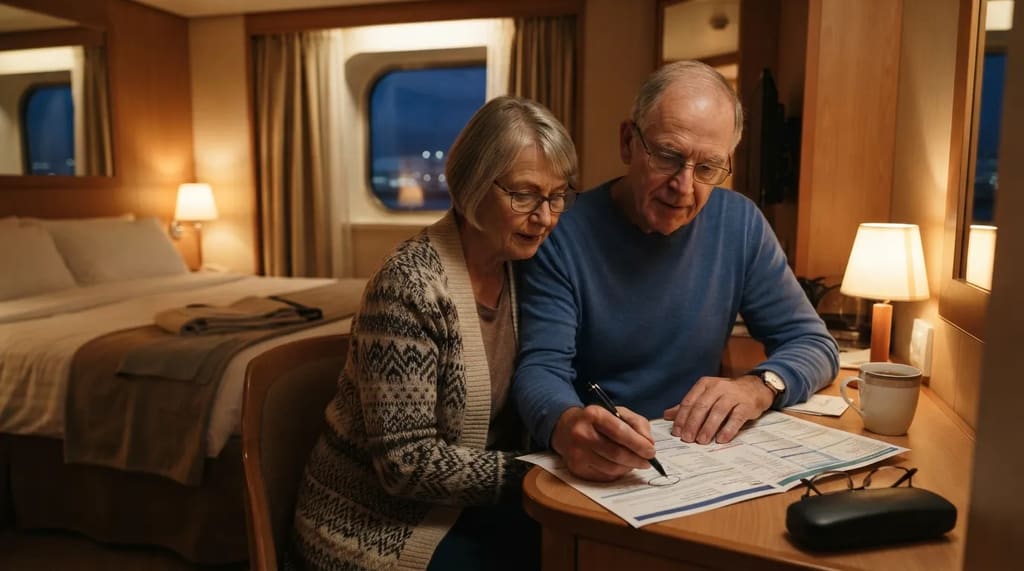
Experienced cruisers don’t wait for morning to find out how tomorrow will work.
The daily programme usually lands in your cabin in the evening, and veterans read it before they do anything else. It lists the port, the all-aboard time and any tender notes.
The tender details often hide in small print near the bottom. That’s where you’ll find the meeting point, the ticket process and the first boat time.1
Some say a printed sheet is outdated and the app is enough. Plenty of old hands disagree. They like paper they can circle with a pen, and a sheet never loses signal.
- Circle the all-aboard time.
- Note the first tender and the last tender back.
But that’s nothing compared to what experienced cruisers check next, in #13…
#13 – They Work Out the Tender Plan Before Bed
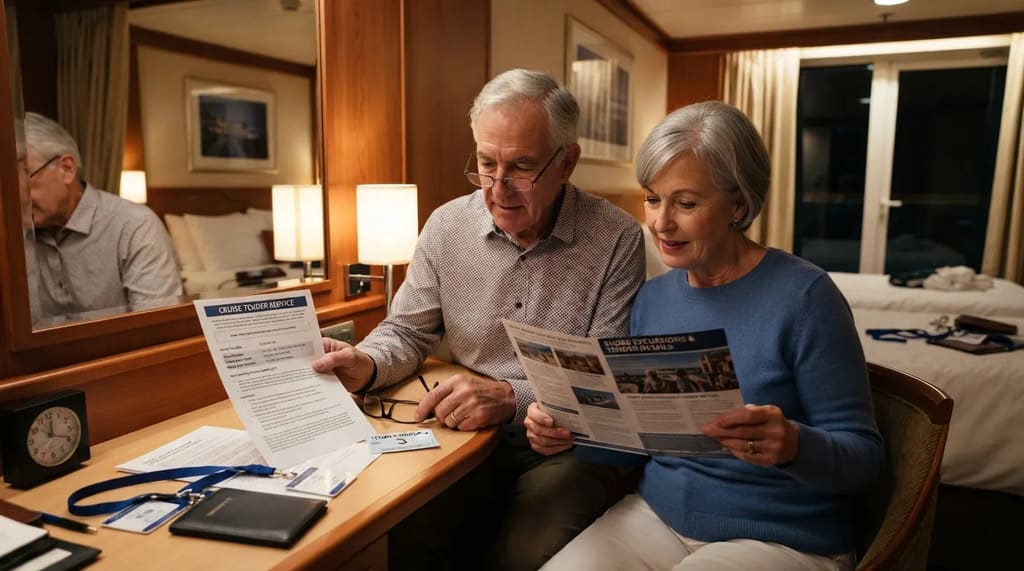
A calm morning starts with knowing exactly how you’ll get onto that boat.
On some ships, passengers collect tender tickets or wait in a lounge until their group is called. On others, anyone can simply queue at the tender door.2 The system changes from ship to ship, which is why veterans read the instructions instead of guessing.
They also note whether they booked a ship excursion. Excursion groups often board first, while independent travelers may wait longer.1
Quick Compare
- Ticket system: Collect a ticket or wait in a lounge until your group is called.
- Open queue: Go to the tender door when you’re ready.
- Ship excursion: Groups often board first.
- Independent: You may wait longer, so plan the timing.
Then they do a little mental math. Decide when you’d like to step ashore, then work backward to when you need breakfast and when you need to be dressed.
- Know where the tender meeting point is.
- Know whether you need a ticket.
The queue moves a lot more smoothly when you aren’t deciphering the rules while standing in it.
And the next habit sounds trivial, until you’ve stood in a damp line in the wrong clothes…
#12 – They Lay Out Clothes in Layers
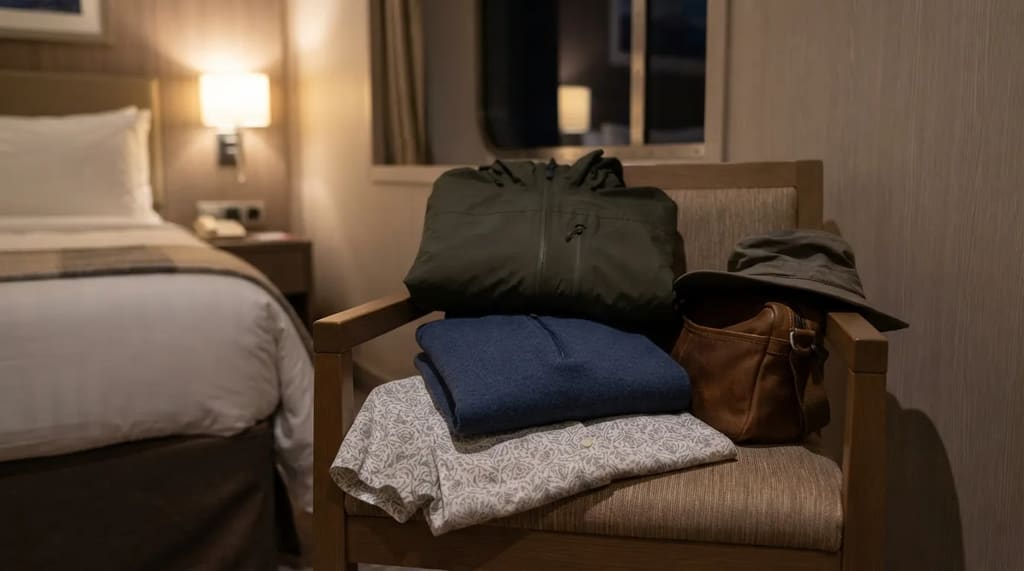
Experienced cruisers dress for the boat ride, not just the town.
A tender is often open to the air, and spray, wind and sun can all show up within a few minutes. The temperature on the water can feel very different from the temperature on deck.
So veterans build layers: a light top, a sweater or fleece, and a thin rain jacket that folds small. They lay it all on the chair before bed.
That saves the morning scramble too. No rummaging in a dark cabin while your partner sleeps. You dress, check the mirror and go.
Pick fabrics that dry quickly. Cotton stays wet, and a damp shirt under a sea breeze is a mistake you only make once.
But there’s one item people get wrong more often than any piece of clothing, in #11…
#11 – They Set Out Grippy, Closed-Style Shoes
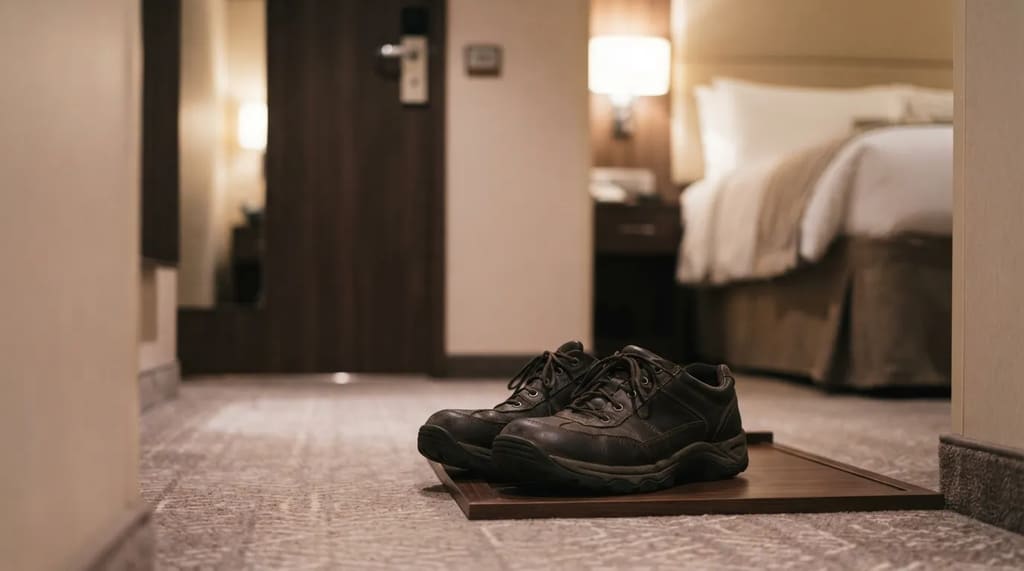
Ask a veteran what matters most for tender day, and many will point at your feet, not your outfit.
Boarding means stepping from a ship platform onto a boat that rises and falls, often on wet surfaces. Plenty of seasoned cruisers refuse to wear flip-flops on a tender, and it’s easy to see why.
This is where the bar debate gets heated. Fashionable sandals look great in photos, but many experienced travelers call them the most avoidable risk of the whole trip.
Look for a firm sole with good tread. A closed toe or a secure strap helps. Set the shoes by the cabin door so they’re the first thing you see.
- Choose a flat or low heel.
- Break shoes in before the trip, not on it.
A good pair of shoes costs far less than one bad fall.
Next up is a habit that keeps your hands free, which matters more than you’d think…
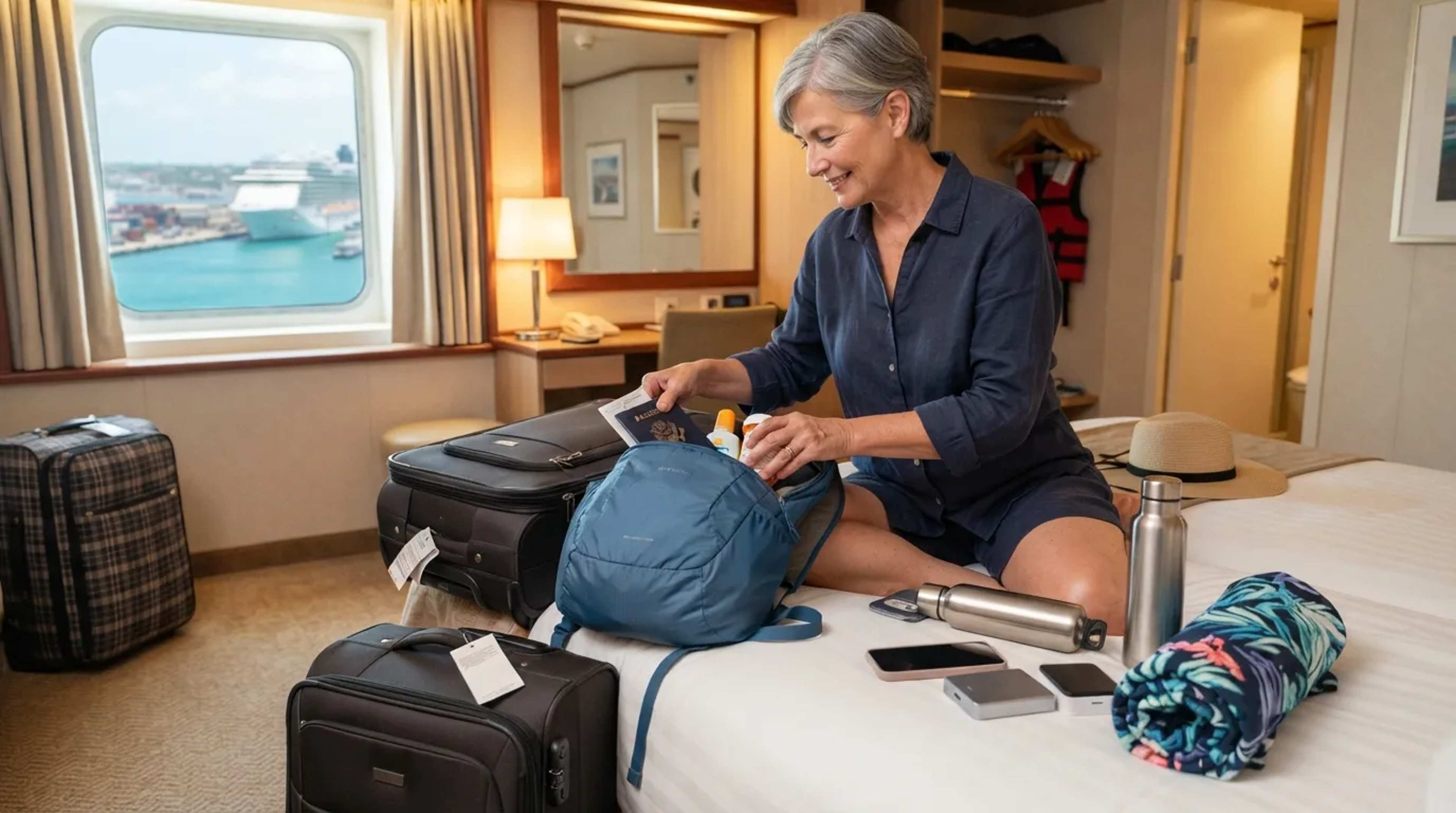
#10 – They Pack a Light Day Bag Tonight
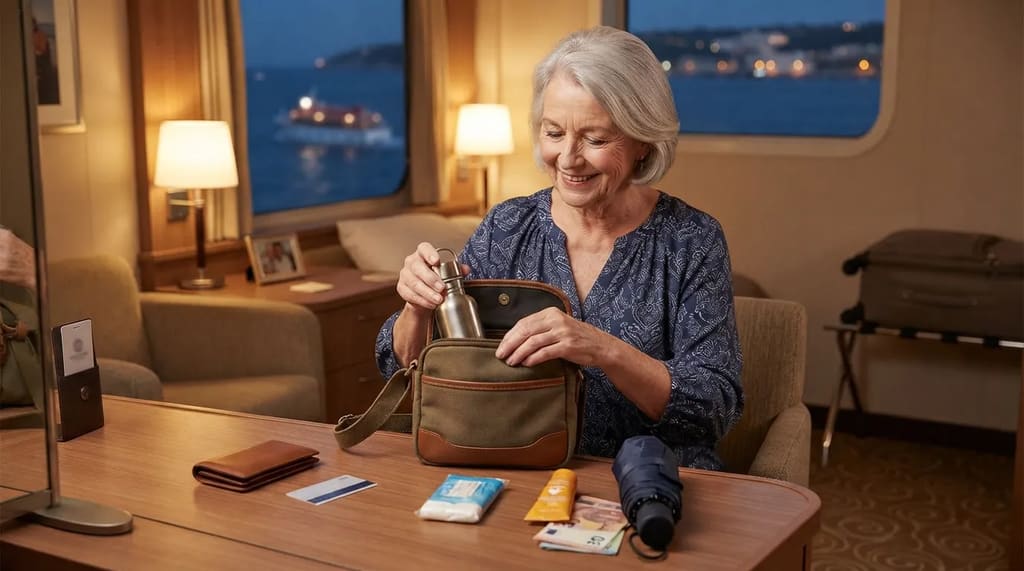
Veterans pack the bag in the evening, and they pack it light.
On a tender you may need a free hand for the rail. A heavy shoulder bag can throw off your balance on a moving boat. A small crossbody bag or a compact backpack works better.
The usual contents are simple:
- Ship card and photo ID, or whatever the cruise line requires
- A small amount of local currency and one card
- Sunscreen, tissues and a refillable water bottle
Everything else stays behind. Extra weight is exactly what you notice at the end of a long walk on cobblestones.
Check the bag against the weather forecast too. A thin rain cover or a compact umbrella earns its space.
But the most important items aren’t in the bag at all. They’re in your toiletry kit, in #9…
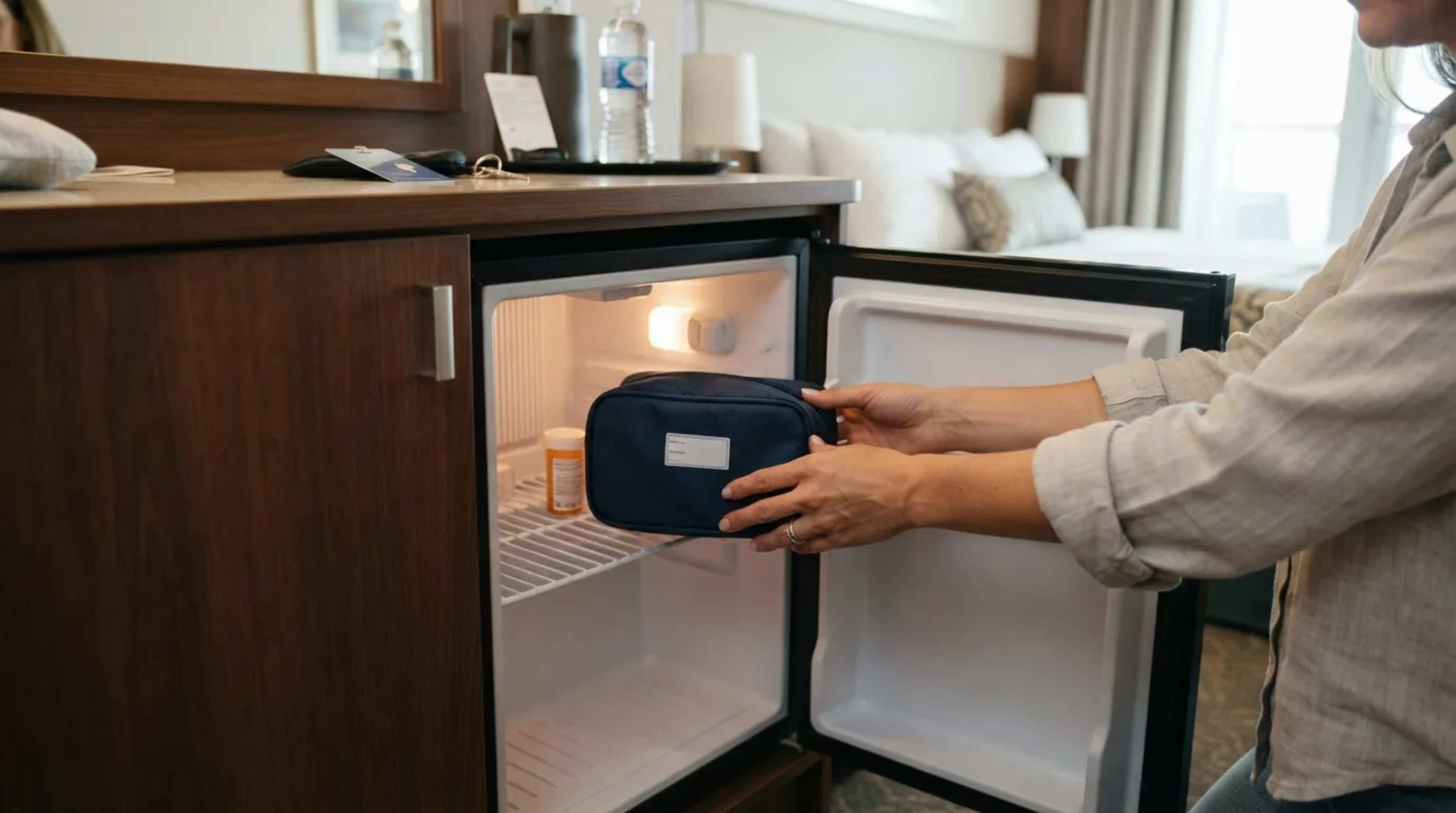
#9 – They Sort Medications and Motion Remedies
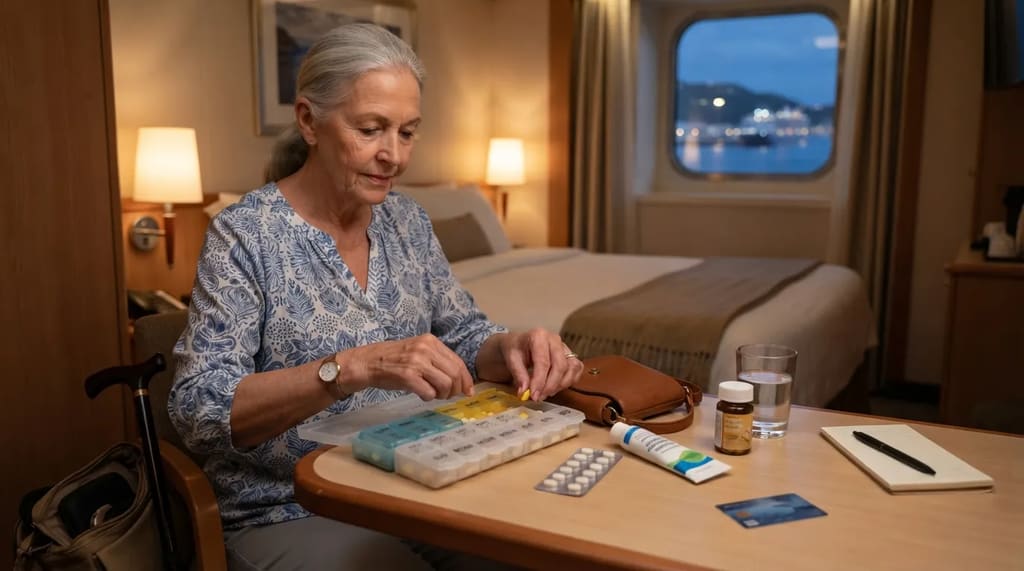
Experienced cruisers don’t leave their health to chance on a day with a boat ride in it.
Many keep a pill organizer so they know the day’s doses are accounted for. If you take regular medication, check the timing against your plans. The all-aboard time can quietly clash with a dose schedule.
Some travelers are prone to motion sickness, even on a short ride. They talk to a doctor or pharmacist before the trip about what suits them. That’s the safe course, and it means never borrowing a stranger’s remedy.3
Bring a small supply of what you need in the day bag. Don’t count on getting back to the cabin.
Take a moment to check any allergy or mobility aids as well. A cane tip, a brace or a hearing aid battery is much easier to sort tonight than at the tender door.
And speaking of things that quietly run out, here is the habit nobody tells beginners about…
#8 – They Charge Everything Before Lights Out
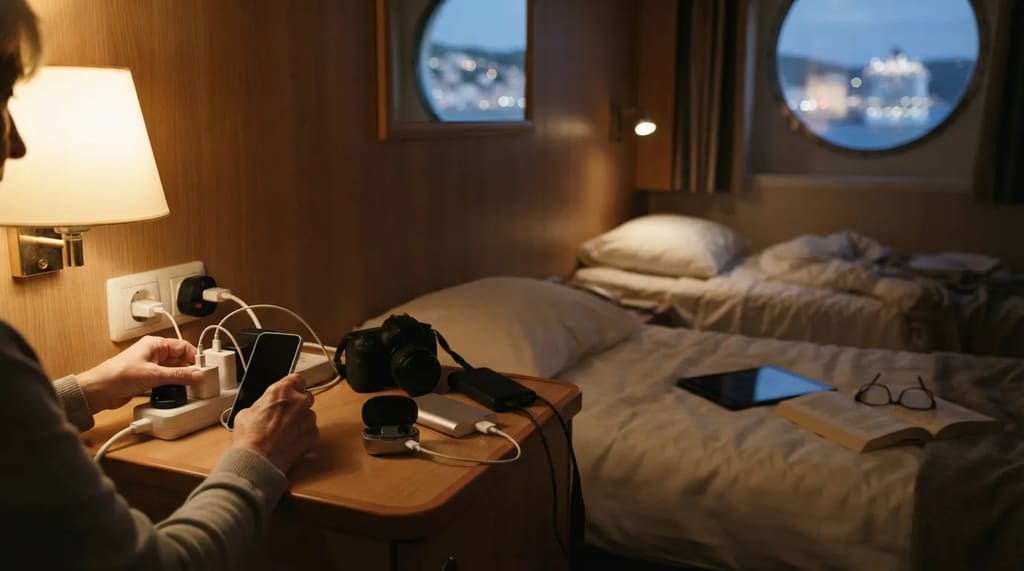
Experienced cruisers treat the cabin outlet like a pre-flight check.
The phone, the camera, the power bank and the hearing-aid charger all go on the plug before bed. The cabin may be the last place you see an outlet for hours. Towns at tender ports can be small, and cafés don’t always have a free socket.
Many older ships have few outlets, so some travelers bring a compact power strip where the cruise line allows it. Check the line’s rules first, because some restrict certain types.
Veterans also download offline maps tonight. Roaming signals can be patchy or costly, but a map saved in advance works without a connection.
- Charge the camera and phone.
- Save an offline map of the port.
Worth Knowing
- Start with the items you can’t do without, such as the hearing-aid charger and the power bank.
- Check the cruise line’s power strip rules before you pack one.
- Open the offline map once tonight to confirm it saved properly.
- Toss the charging cable into the day bag if the power bank needs it.
It’s a small step. But the next one saves you if the phone dies anyway…
#7 – They Photograph the Essentials
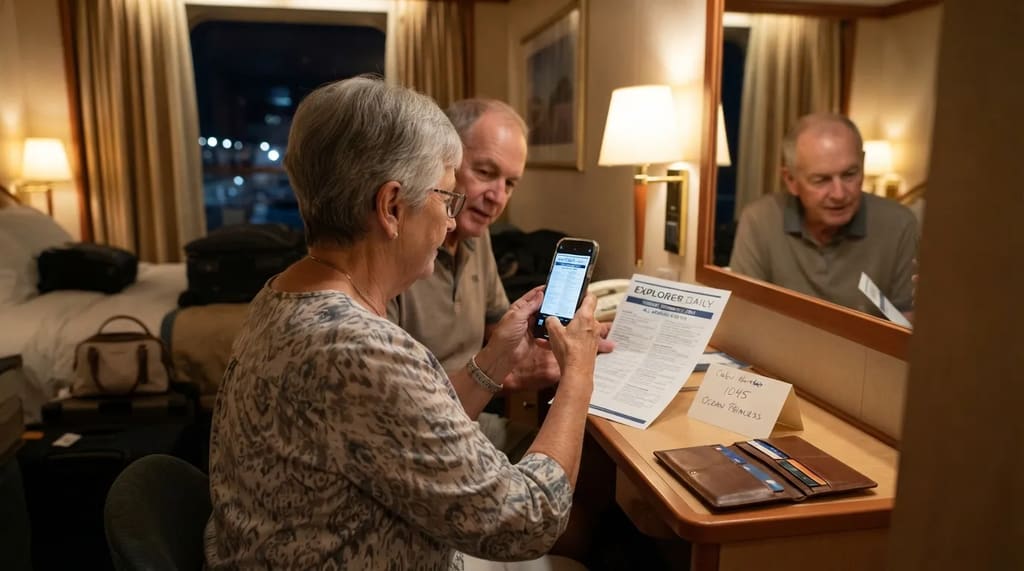
Veterans keep a digital paper trail on the phone, and a backup in their pocket.
Before bed they photograph the daily programme page that shows the all-aboard time. They also snap the ship’s name and the contact number for the ship or port agent, if the cruise line provides one. Nobody remembers those details when they suddenly need them in a hurry.
Some also write the cabin number and ship name on a card. It sounds old-fashioned, but it works when a battery dies or a phone gets soaked on the ride.
Keep a copy of the key details somewhere separate from the phone. A card in your wallet does the job.
- Photo of the all-aboard time
- Contact details for the ship
But there’s a quieter habit that affects how you feel by noon, in #6…
#6 – They Go Easy on Late Drinks and Heavy Food
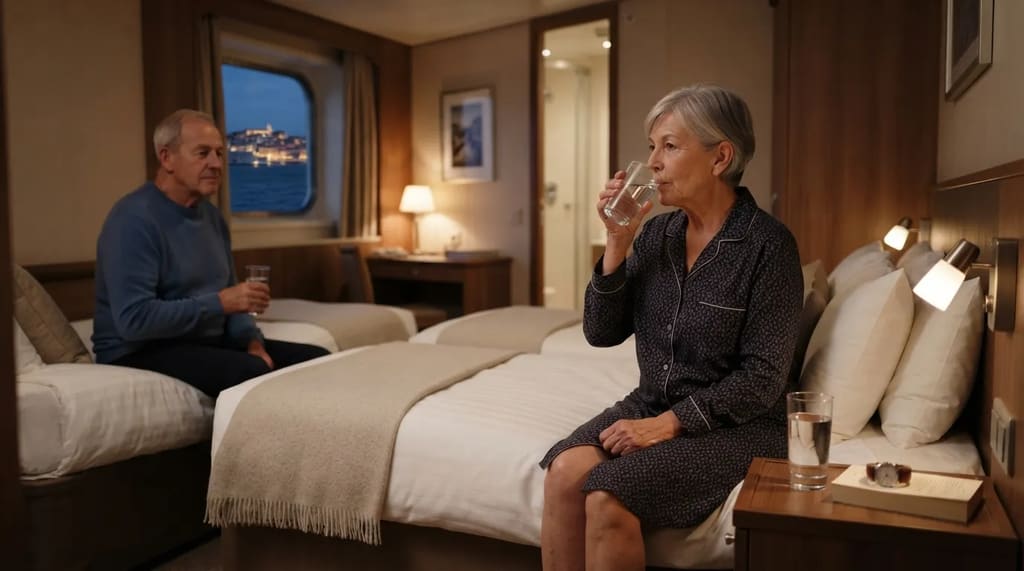
Experienced cruisers know the evening reaches straight into the morning, and they plan for it.
A rich dinner and a few late cocktails can make a rocking boat feel worse.4 They can also leave you dry and tired. The classic tender-day regret is a slow, foggy morning.
Veterans choose what suits them. Many sip water in the evening and have their last drink early. They don’t preach about it. They simply notice how they feel on tender days.
Some say the late-night show is the highlight of a cruise and worth a rough morning. Plenty of old hands disagree. They’d rather see the island with a clear head.
Keep a glass of water by the bed. Finish it before sleep, or first thing when you wake.
Still, even the best preparation can be undone by something nobody controls, in #5…
#5 – They Check the Weather and Sea Conditions
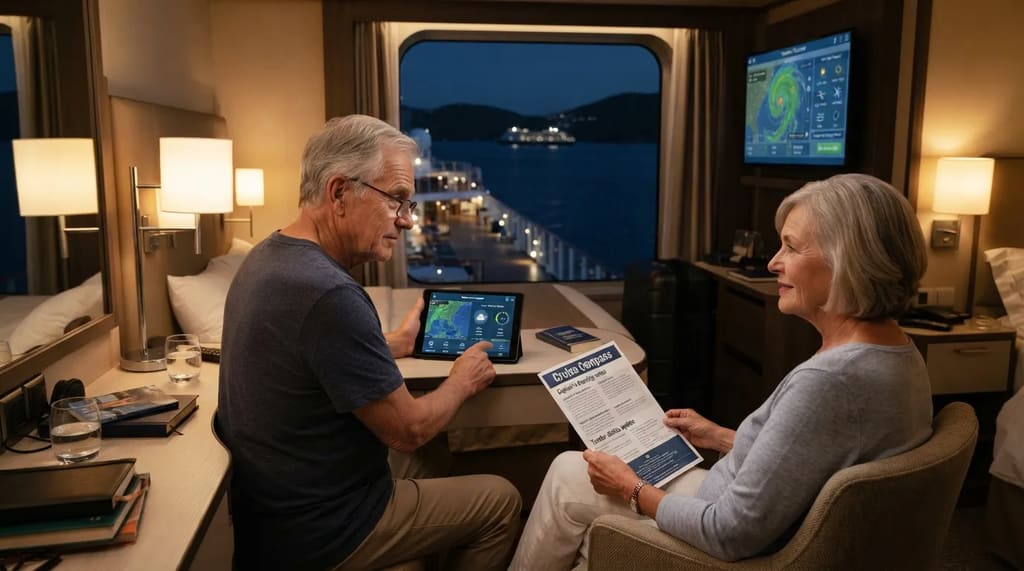
Veterans know that tender operations can change at the last minute.
Before bed they look at the forecast on the ship’s channel or app, and they listen for the captain’s evening update. A tender port can be skipped if conditions aren’t safe.1 5
That’s not a failure of the cruise line. It’s a safety call. Yet plenty of first-timers arrive at breakfast shocked that the plan changed.
So seasoned travelers carry a quiet Plan B. They know what they’d do on board if the tender stopped, and which activities and lectures are on.
- Check the forecast and the captain’s note.
- Keep a simple fallback in mind.
And with the plan sorted, the next habit is the one that makes everything else work…
#4 – They Go to Bed Early and Set Two Alarms
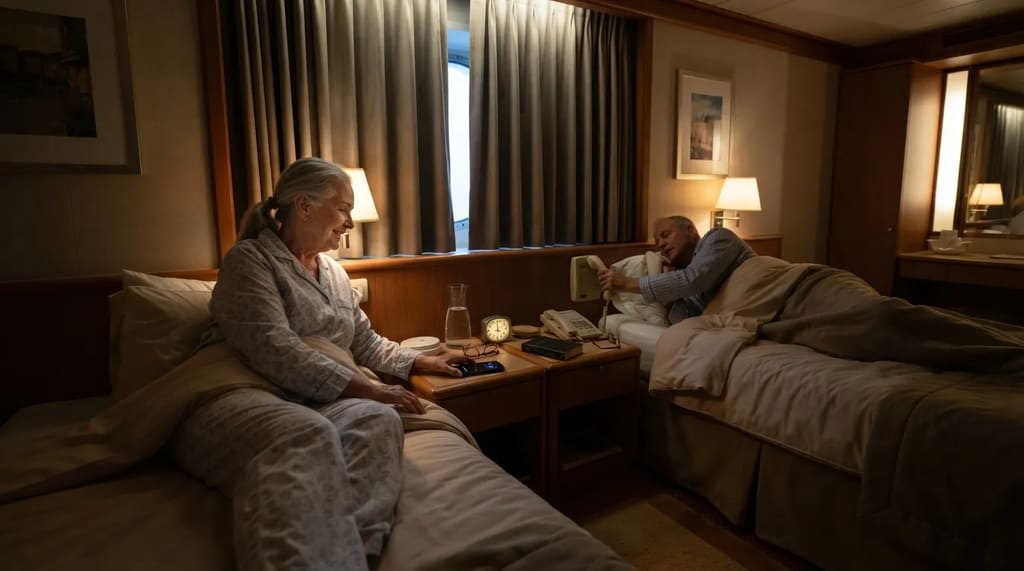
The most reliable cruisers are the ones who sleep.
On a tender day the schedule can start earlier than on a dock day. Queues form and groups are called in order. The best tender times often go to the people who are already up and ready.
Veterans set an alarm on the phone and, if the ship offers it, a wake-up call on the cabin phone as a backup. Two alarms are a small price for peace of mind.
They also dim the lights, close the curtains and put the phone down. A steady routine tells the body it’s time to rest.
It isn’t glamorous. But it’s why they’re the first people at breakfast and the last people to look rushed.
But there’s one more thing to do before you turn out the light, in #3…
Related Stories From Travelbinger
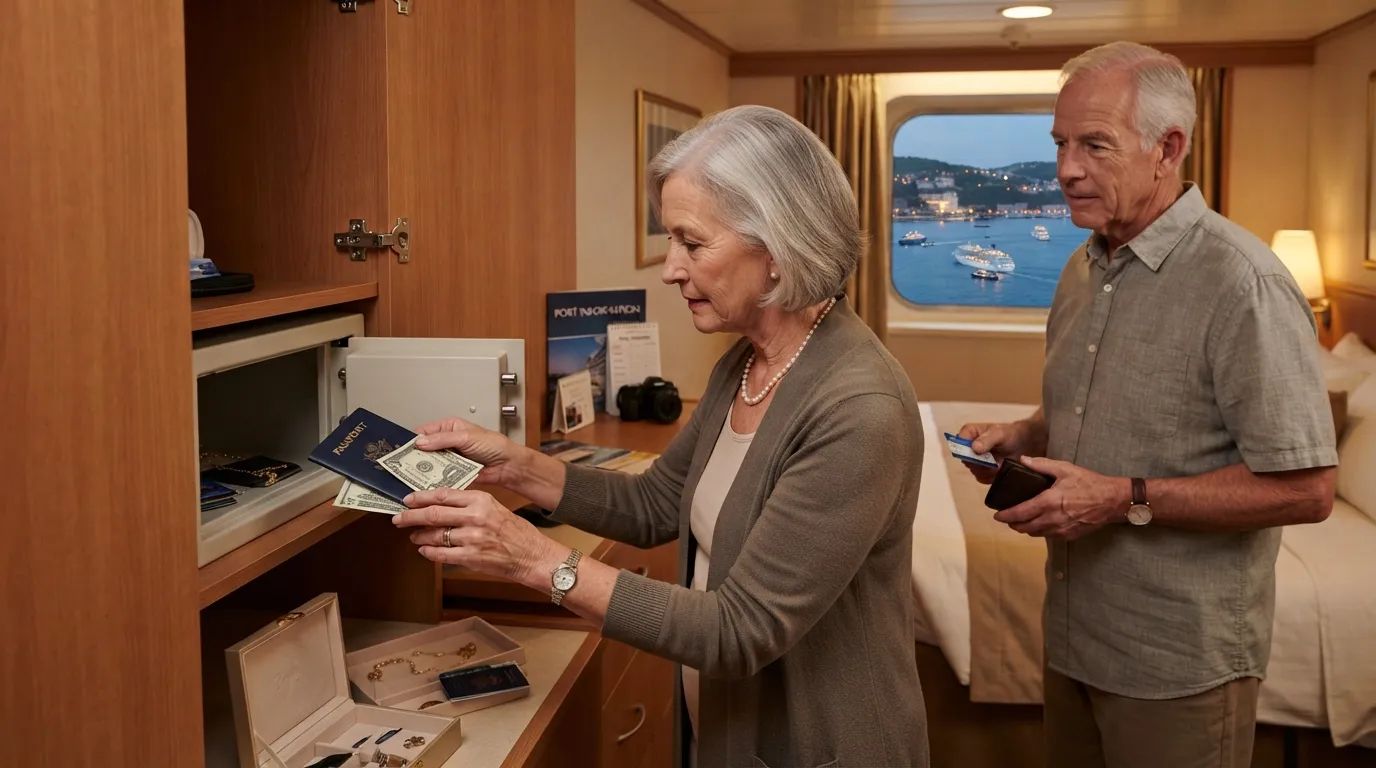
#3 – They Secure Valuables Before Leaving the Cabin
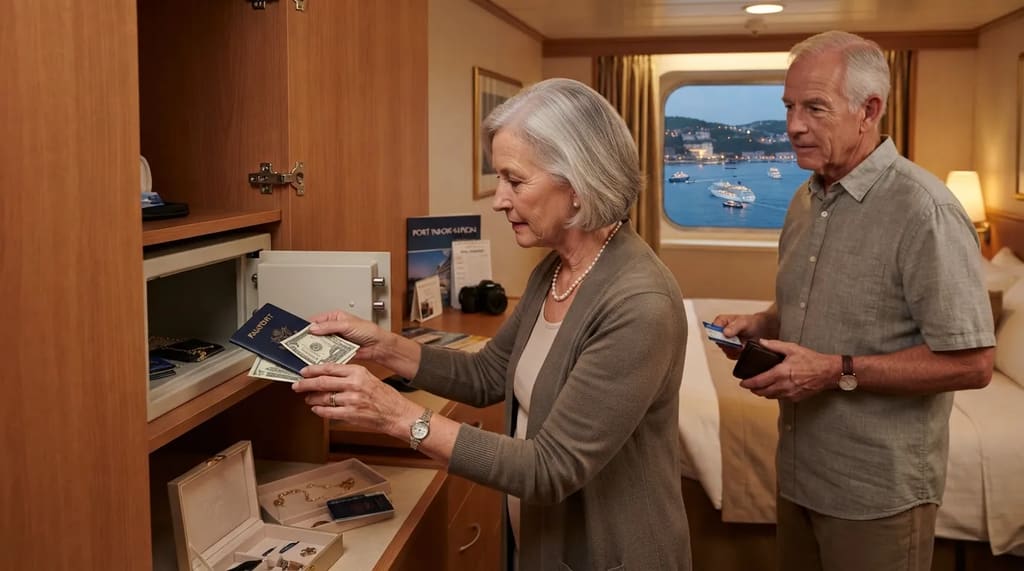
Experienced cruisers decide the night before what stays and what goes.
The cabin safe is the usual home for passports, spare cards and extra cash. Many take only what they need ashore. Carrying less is the simplest protection against loss.
Check the cruise line’s ID rules for the port. Some ports ask for a passport, others accept a ship card. Don’t guess. The cruise line’s port information will tell you.
Veterans also leave flashy jewelry in the safe. A boat ride and a crowded market are poor places for a good watch.
- Leave spare cards and extra cash in the safe.
- Carry only the ID the port requires.
At a Glance
- Stays in the safe: spare cards, extra cash, flashy jewelry and any ID the port doesn’t require.
- Goes ashore: ship card, required ID, one card and a little local currency.
- Before bed: tell your travel partner what’s in the safe and who knows the code.
The forgotten-code story is an old one for a reason.
Now we reach the habit that divides the cruising world, in #2…
#2 – They Honestly Assess Their Own Mobility
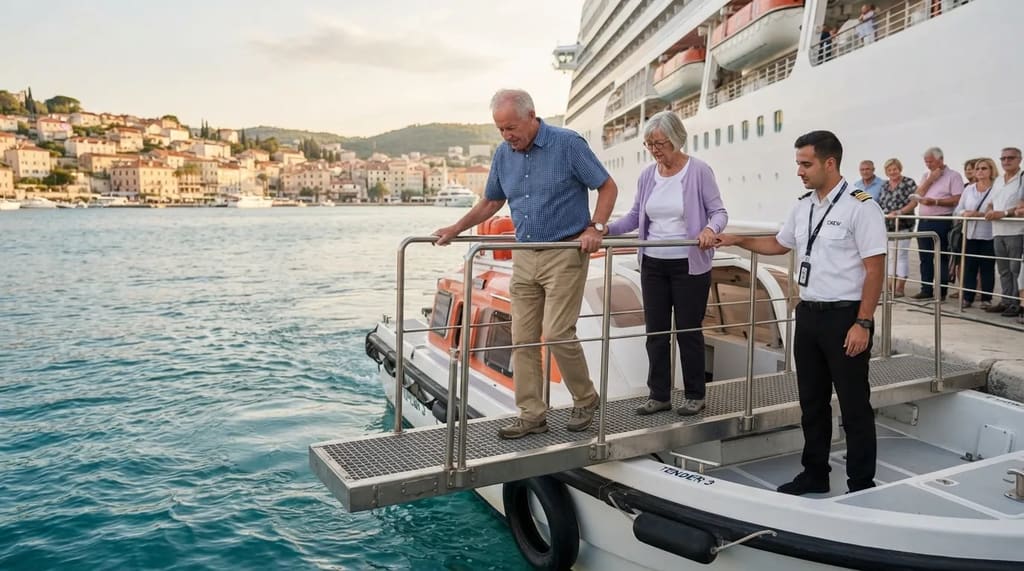
Veterans don’t pretend. They check whether the tender actually suits them.
Boarding usually means stepping across a gap and handling a few steps. This is the part of a cruise that most brochures skip. Cruise lines often have policies for guests who use wheelchairs or have limited mobility, and those rules vary by ship and port.6 7 Ask guest services before the day, not at the door.
Here’s the controversial part. Some experienced cruisers argue that a tender port simply isn’t worth it for anyone who feels unsteady. They’d rather enjoy a quiet ship. Others say you should always go ashore if you can, and the decision is yours.
Both camps agree on one point. Decide with facts, not pride.
- Ask guest services what help is available.
- Try the steps slowly, with a hand on the rail.
And that brings us to the habit seasoned cruisers rarely admit, the one at the top of the list…
#1 – They Give Themselves Permission to Skip the Port
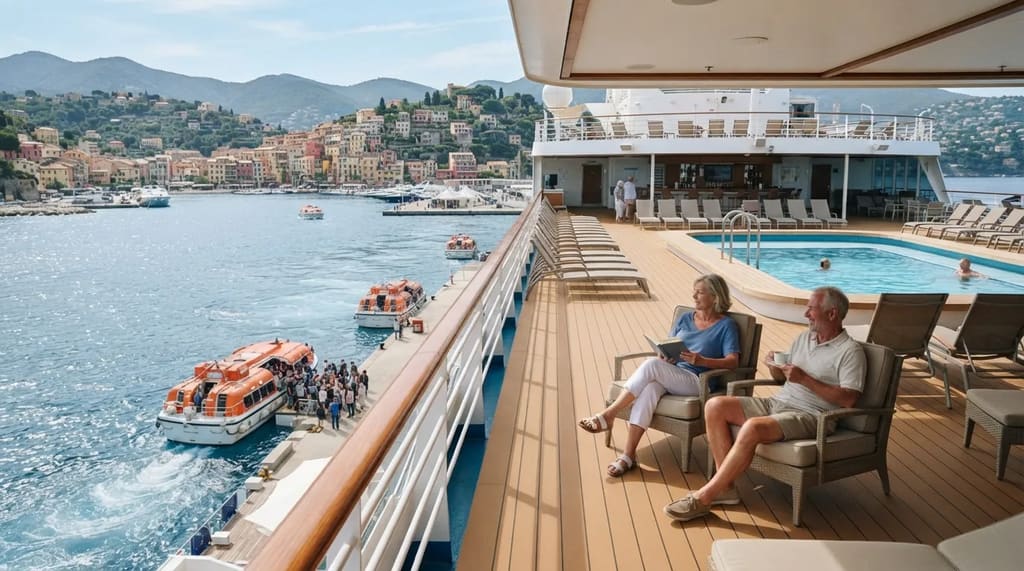
The best habit of all is knowing you’re allowed to stay on board.
Experienced cruisers, especially those who’ve seen many ports, often treat a tender day as optional. Many quietly admit that a quiet ship is one of the best parts of the trip. The pool is free. The dining room is calm. The deck chairs are all yours.
They decide the night before, not at the tender door. If the sea looks rough, the legs feel tired, or the port holds little they care about, they stay. No guilt.
This is the opposite of what the brochures sell. Cruise advertising treats every port as unmissable. Veterans know that isn’t true.
The decision is easier when you make it with a clear head. Sleep on it, then confirm at breakfast.
That one habit changes how the whole week feels, and it ties all the others together.
The Bottom Line
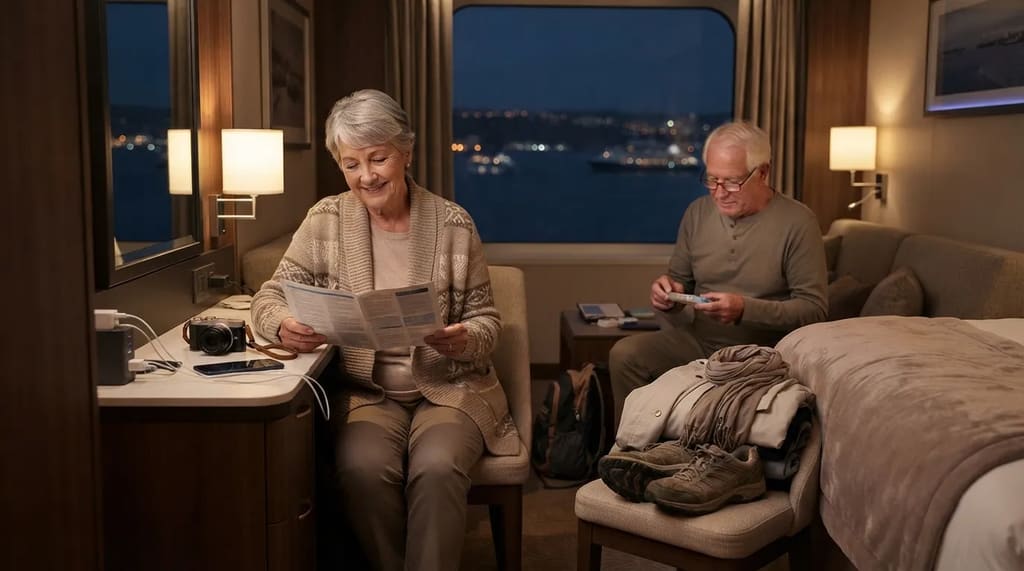
Tender-port days don’t go well by luck. They go well because someone spent a calm half hour in the cabin the night before.
Read the programme. Know the tender plan. Lay out layers and grippy shoes. Pack light, sort medications, charge devices and photograph the essentials.
The most surprising habit of all is the permission to stay on board. Experienced cruisers treat the port as a choice, not a duty, and that may be the real secret to a relaxed week at sea.
- Tender Ports Explained: https://portadventurer.com/travel-tips/tender-ports-explained/
- Royal Caribbean Tender Guide: https://www.royalcaribbeanblog.com/2022/12/28/what-does-tender-mean-cruise-ship
- NIAAA Alcohol Medicine Interactions: https://www.niaaa.nih.gov/publications/brochures-and-fact-sheets/harmful-interactions-mixing-alcohol-with-medicines
- Medscape Motion Sickness Management: https://emedicine.medscape.com/article/2060606-treatment
- Cruise Itinerary Changes Explained: https://www.cruise-collective.com/article/what-happens-when-a-cruise-itinerary-changes
- Celebrity Accessible Cruising FAQ: https://www.celebritycruises.com/faqs/accessible-cruising
- MSC Accessibility and Medical: https://www.msccruisesusa.com/accessibility-medical