Most first-timers drop their bags, glance at the towel animal and head for the buffet. Veteran cruisers do something different. They walk the room like inspectors, because the first hour on board is when a fix is cheapest and the Guest Services line is longest.
Your luggage may not reach the cabin for hours, but the cabin opens to you as soon as it’s ready, and five minutes inside catches most of what can go wrong. Seventeen checks follow, rising from small comforts to ones with real consequences. Stay for #1. It costs nothing, and plenty of guests assume the ship has already handled it. First, the smallest thing in the room: the pillow.
#17 – Pillows, Hangers and the Ice Bucket
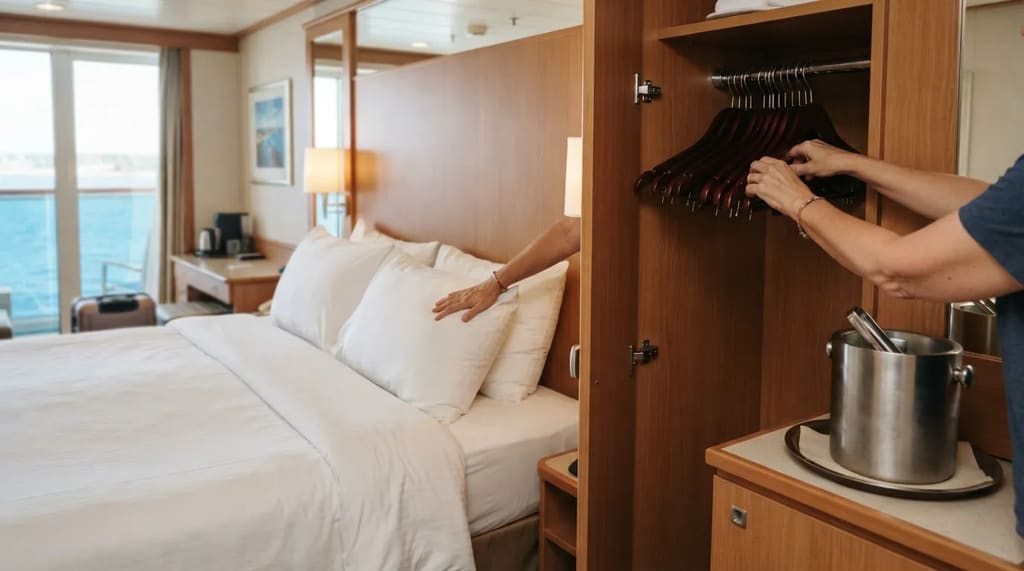
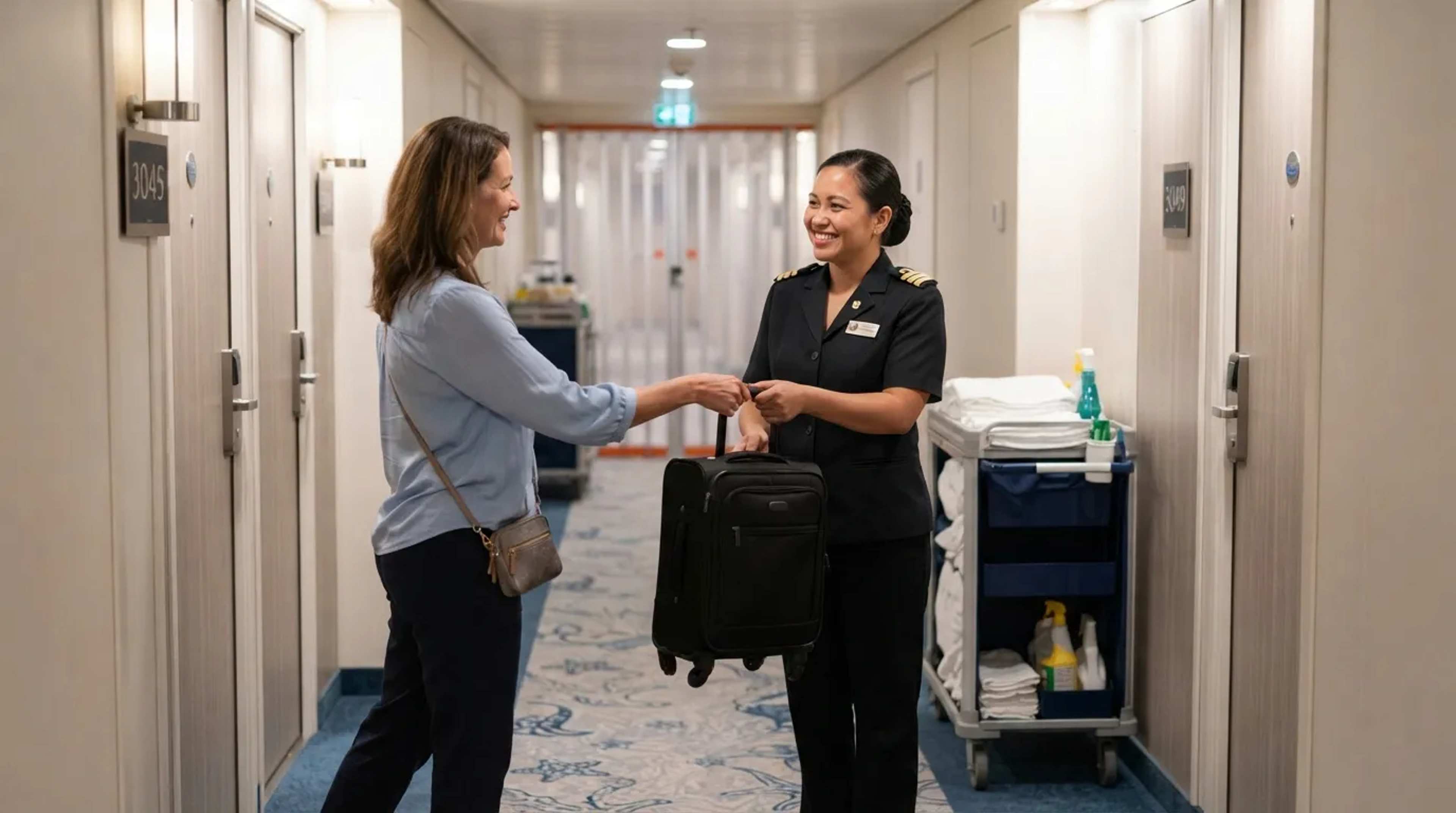
Press the pillows and count the hangers before you do anything else. On the first day your stateroom attendant is usually somewhere nearby, so a shortage is a quick conversation.
Extra pillows, more hangers and a regularly filled ice bucket are all worth mentioning early so the attendant can plan for them. That makes your steward the right person for small fixes.
Call your steward, not Guest Services, for small fixes on embarkation day. The Guest Services lines are long that afternoon, and a pillow isn’t worth a place in one.
Pillows are an easy swap. A bed made up for the wrong number of sleepers is a bigger request.
#16 – Bed Setup for Everyone in Your Party
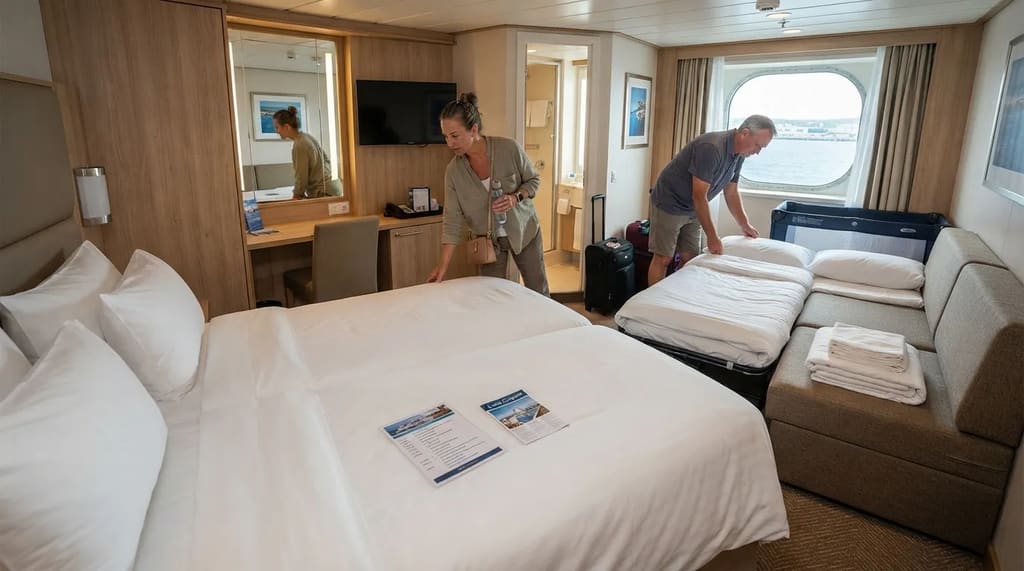
A room booked for two can be made up as one large bed or two singles, and you’ll want to know which one you got before the first night.
Compare the beds with what you requested. If a third or fourth person is traveling with you, check their sleeping arrangements too. If you requested a crib for a grandchild, look for it now.
If the beds are wrong, ask your steward to separate or join them. It’s a common request, so nobody will find it strange.
Once the beds are right, some guests start wondering what’s in them. Checking takes one hand and one corner of the sheet.
#15 – One Sheet Corner and Thirty Seconds
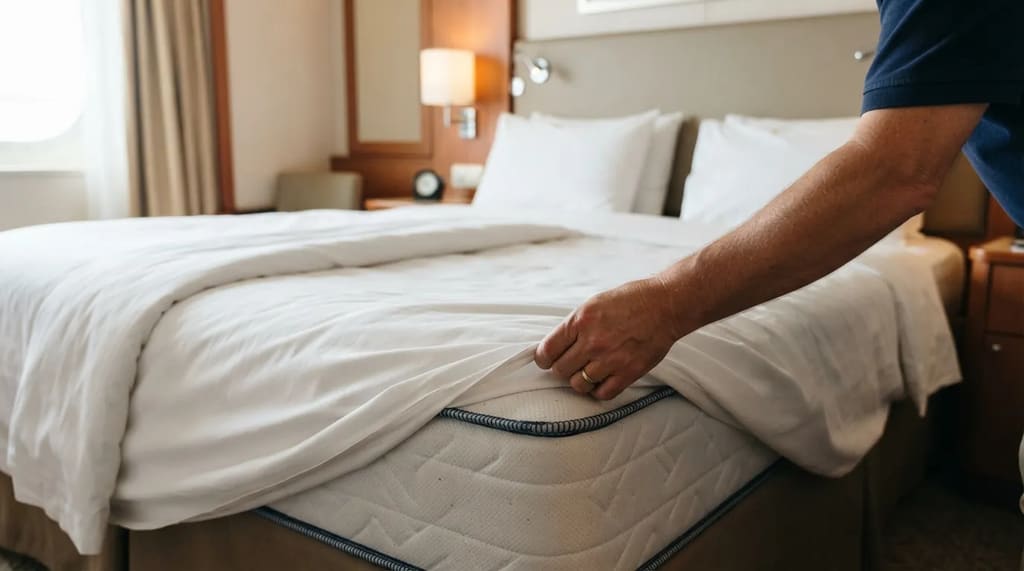
Thirty seconds is all this check deserves. Turn back one corner of the sheet and look at the seam of the mattress.
You’re looking for black spots or rust-colored stains, which Travelers United lists as signs of bedbugs. Bedbugs are rare on cruise ships, so this is a quick look, not an inspection.1
If you do find something, tell your steward or Guest Services right away rather than waiting until morning. Look for black spots or rust-colored stains at one corner.
The bed passes. Now for the small things you’ll touch within minutes of walking in.
#14 – Four Surfaces Worth a Wipe
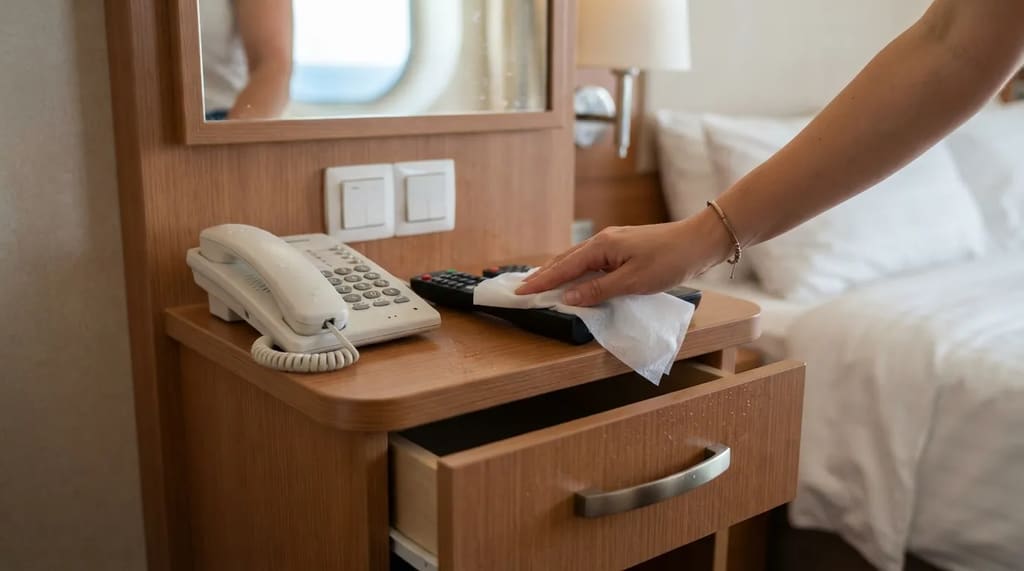
Skip the full scrub. A short list of surfaces does the job.
The remote, the telephone, the light switches and the drawer handles are the items usually named as dirtier than others in hotel rooms and cruise cabins. Cruise ships are generally very clean, so a few wipes are enough and the walls can be left alone.
Wipe the remote, the phone, the light switches and the drawer handles. Bring your own sanitizing wipes, because the cabin won’t supply them.
You’ll be touching every one of those four anyway while you test the lights and open the drawers, so the wipes cost you almost no extra time.
Quick Compare: Steward or Guest Services?
- Your steward: pillows, hangers, ice, bed setup, anything left behind or dirty, a dead TV.
- Guest Services: a room category that doesn’t match your booking, or a safe that won’t work.
- Either one: any sign of bedbugs, reported right away.
#13 – Drawers, Closet and Under the Beds
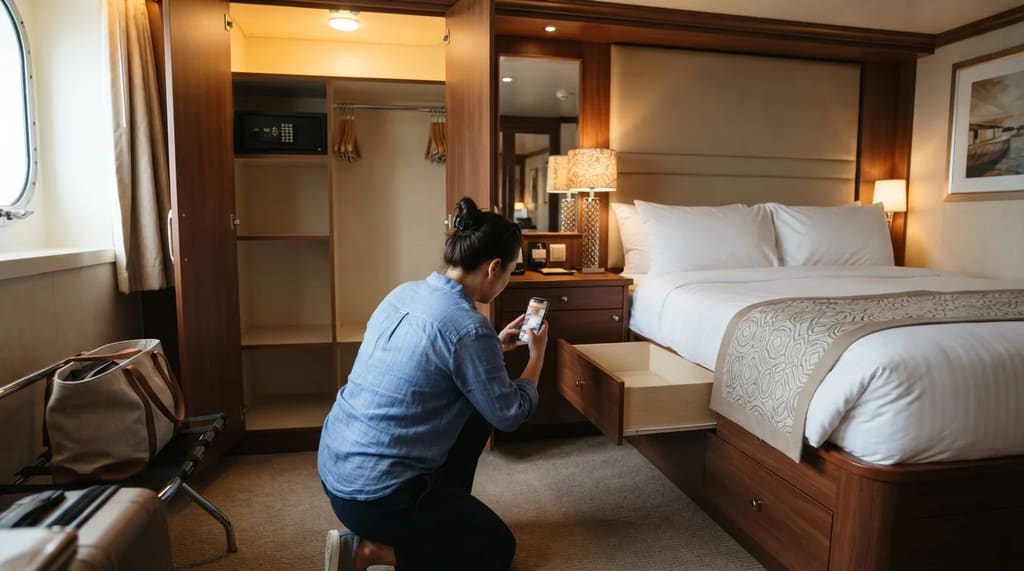
Open every drawer and the closet before anything of yours goes inside. Previous guests sometimes leave things behind, and a forgotten item is also a clue about how carefully the room was cleaned.
The places to look are the same ones you’ll check on the last morning. A final sweep of drawers, under the bed and behind the bathroom door is standard departure advice, and the arrival sweep covers the same ground.
Open every drawer, the closet and look under the beds. Anything left behind or anything dirty is a call to your steward, who can sort it before your luggage arrives.
A clean room can still be too warm, and you’ll want to know that before the safety drill pulls you out of it.
#12 – The Thermostat Before the Muster Drill
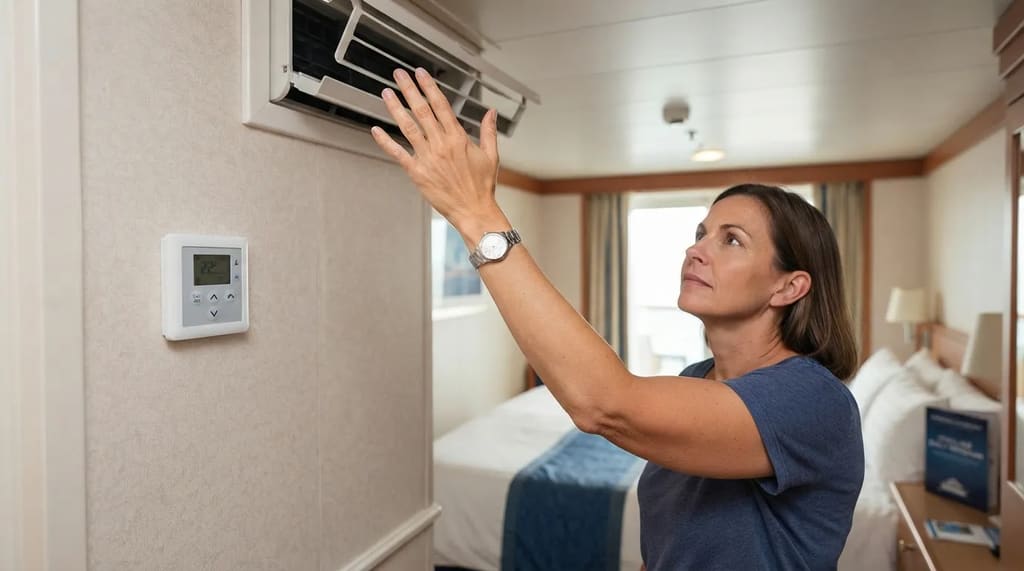
Set the temperature before you leave for the safety drill, so the room has time to cool while you’re gone.
Check the thermostat as soon as you arrive to make sure the air conditioning is working to your liking. Hold your hand to the vent rather than trusting the dial alone.
A fault found now can be fixed while you’re at the drill or at lunch. One found at bedtime means a long night and a call to the desk. Set the thermostat and confirm cold air before the drill.
Cold air is one thing the room’s wiring should provide. Whether it can charge your phone is another.
#11 – Outlets, Chargers and Power Strips
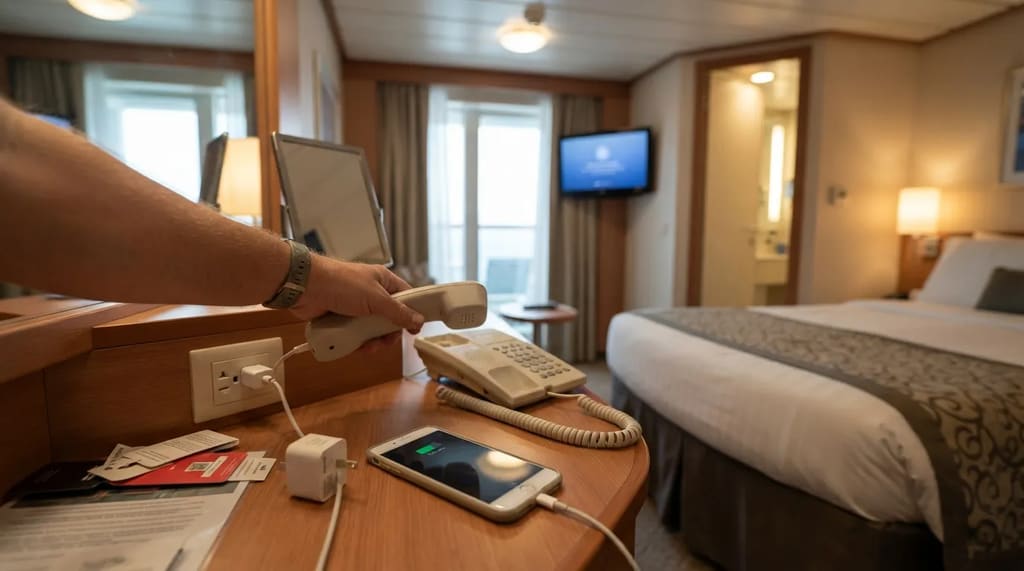
Bring your own charger to this test. Plug it into at least one outlet and confirm that it charges.
While you’re at it, switch on the overhead, bedside and bathroom lights, and lift the handset to make sure it connects to the ship’s desk. A dead phone matters more than it seems, because it’s how you reach your steward.
Charge your own device in at least one outlet before you unpack. If you use a power strip, find out what your line allows before you plug it in.
The television does more than entertain. On some ships it carries part of the safety briefing.
#10 – A Television That Works, Watched or Not
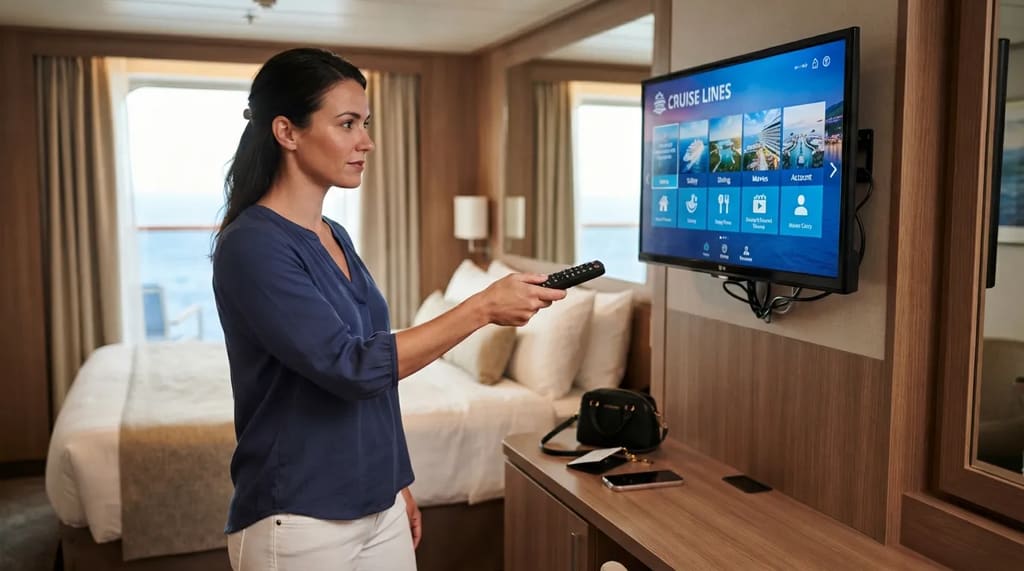
You may never turn it on for a movie, and it still needs to work. You can usually order room service through the stateroom TV.
There’s a safety reason too. Many cruise lines now deliver part of the safety briefing by video on the stateroom TV or an app, so a blank screen can mean a missed briefing.2
Check the remote’s batteries and the picture before you unpack. A dead set deserves a call to your steward before dinner, not a shrug. It’s a ten-second fix on the first afternoon and a nuisance on the fourth.
Some lines use the cruise app instead of the TV, so log in on your phone while you’re standing there.
#9 – Toilet, Hot Water and Shower Drain
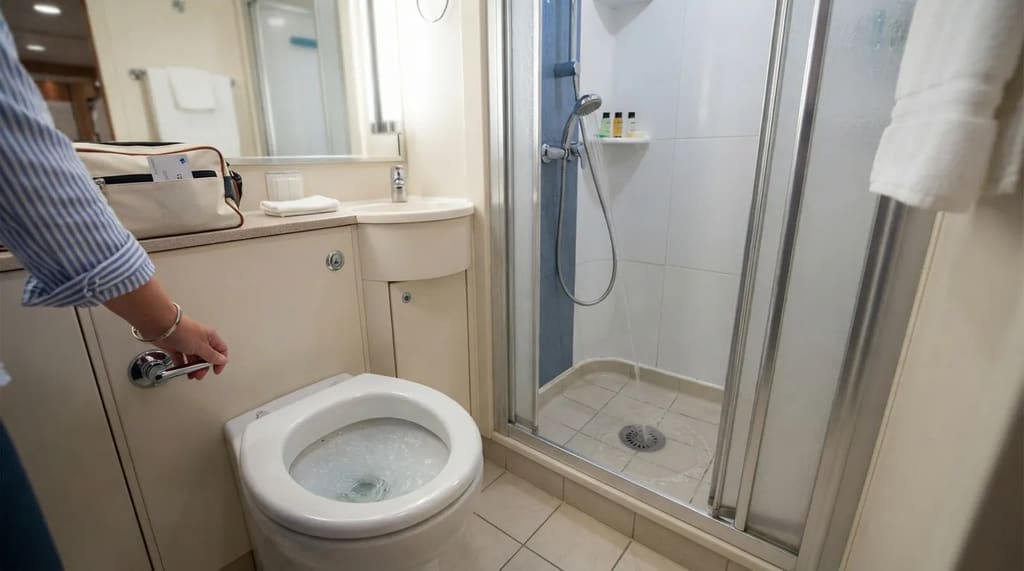
Flush the toilet, run the shower and watch where the water goes. The toilet should flush properly and the shower should drain well.
Cabin bathrooms are tiny, so a slow drain shows up fast. Left alone, it can leave you standing in a puddle by the third morning, after two showers lost to a fix you could have requested on day one.
Run the shower for a full minute and watch the drain.
The bathroom passes. The small card in your pocket does more jobs than opening the door, and a mistake on it follows you all week.
#8 – The Keycard in Your Pocket
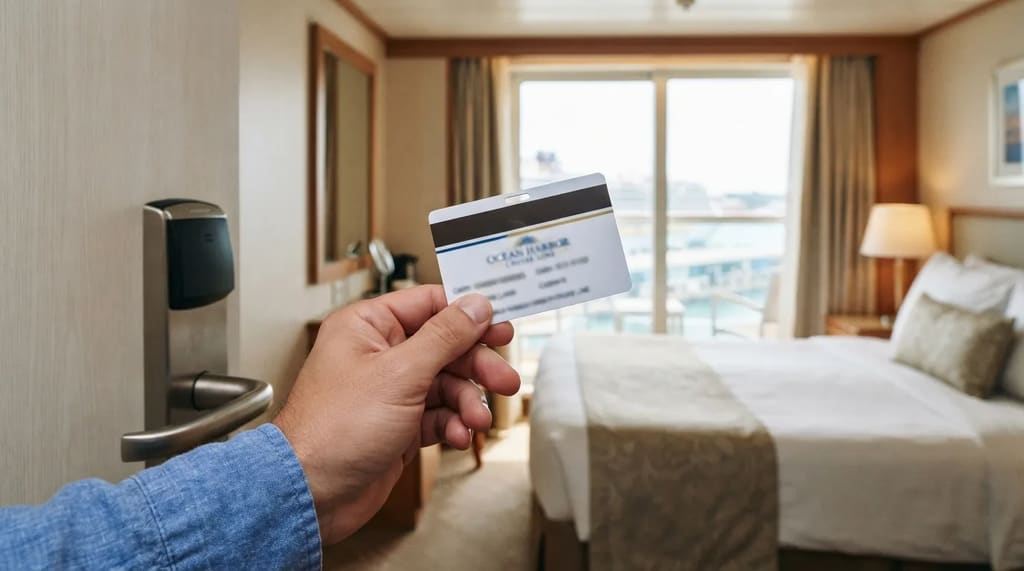
It’s your room key, your ID and your onboard charge card in one. Check that the name and cabin number on it are right.
How you get it depends on the line. It’s either handed to you at check-in, waiting at your cabin door, or available through the cruise line app. A card with someone else’s details is worth fixing before you use it for the first drink.
Confirm the name and cabin number printed on your card. Carry it at all times onboard, since it also works as your security ID.
Fast Facts: One Card, Many Jobs
- It opens your cabin door.
- It charges purchases to your onboard account.
- It doubles as your security ID aboard.
- It may carry your muster station, and it may open your safe.
The card matches you. The room may not match what you paid for.
#7 – A Room Category That Matches Your Booking
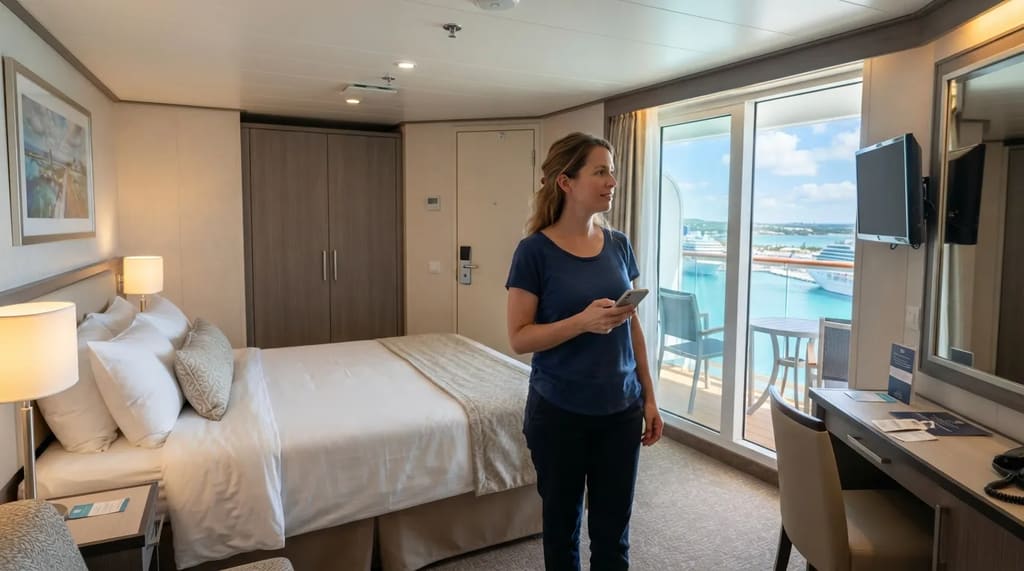
If you booked a balcony and walked into a cabin without one, that is a clear mismatch. The same goes for an oceanview room that turns out to be an interior.
Make sure the category matches what you booked, especially if you chose a specific layout or location. Keep your booking confirmation on your phone, so you can show the desk what you paid for instead of describing it.
Raise any category mismatch within the first hour. This is the one problem on the list that belongs at the desk instead of with your steward, because an attendant can’t change which room you were given.
Even the right category doesn’t tell you what sits on the other side of the walls.
#6 – What Sits Above, Below and Beside Your Cabin
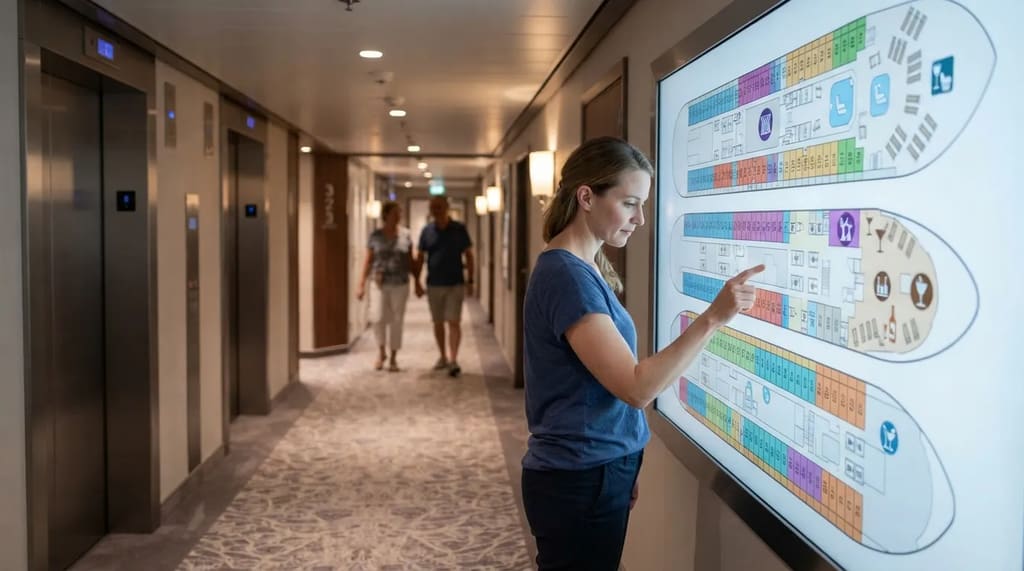
Noise travels through ceilings and floors, so your own corridor tells you only part of the story. Check the decks above and below on the deck plan.
You’re looking for nightclubs, pool decks and casinos, plus crew service doors, housekeeping pantries, bars and kids’ clubs nearby. A cabin by an elevator or service area has its own traffic. A deck plan hangs near most elevators, so this takes a minute.
At a Glance: Noise Hotspots on the Deck Plan
- Above you: pool decks, nightclubs and casinos.
- Below you: bars, kids’ clubs and entertainment venues.
- Beside you: crew service doors, housekeeping pantries and elevators.
Check the decks above and below, not just your own corridor. Cabin walls aren’t soundproof, so what you read on the plan at 3 p.m. is what you’ll hear at 11 p.m.
If the plan shows a busy venue overhead, ask your steward what options exist, and do it before you unpack. Meanwhile, the nearest thing between you and that corridor is the cabin door, and it should latch.
#5 – Door Latches and the Deadbolt
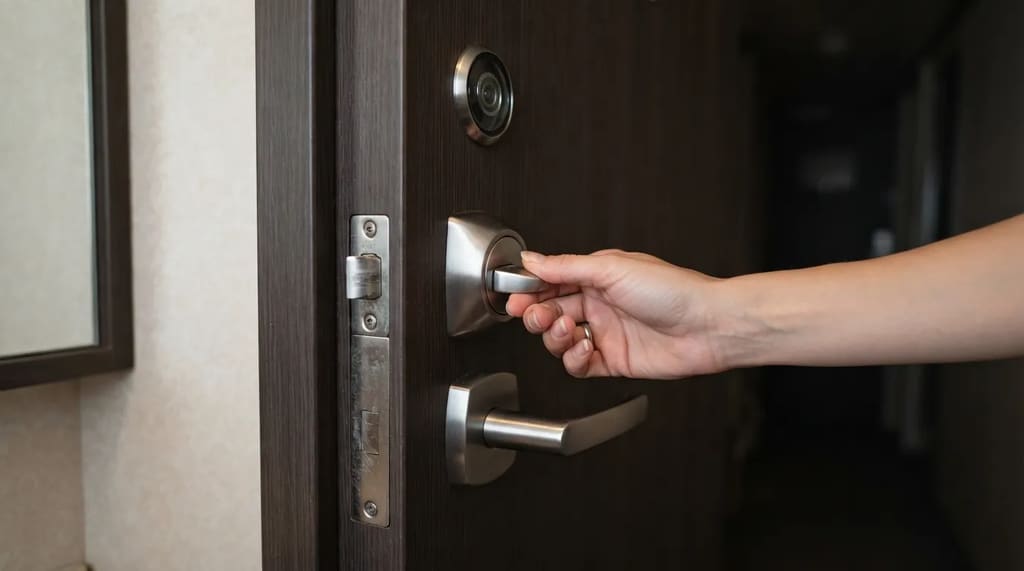
A door that sticks on day one won’t improve, and you’ll use it more than you expect. The cabin, bathroom, closet and balcony doors should each shut and latch properly.
A sticky or loose door is a safety issue as well as an annoyance, especially with children aboard. Close each one firmly and listen for the latch.
Then look at the cabin door itself. If it has a deadbolt, use it. Don’t answer the door without asking who’s there or looking through the peephole.3
Shut every door in the cabin and confirm each one latches.
The cabin door is the lock everyone remembers. The one on the balcony is the one that gets forgotten.
#4 – Balcony Door, Lock and Divider
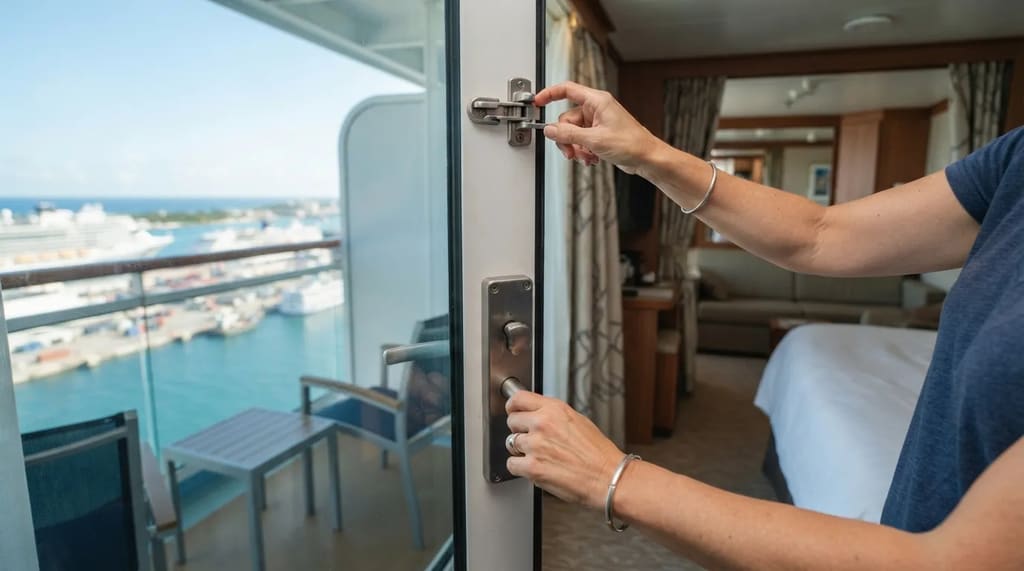
If you booked a balcony, open the door and step out before you do anything else in the room. It should slide freely and close without a fight.
Then lock it. Close and lock the balcony door when you’re asleep and when you leave the cabin, especially in port. Opportunistic intruders can crawl into a cabin through the balcony, so even upper decks aren’t an excuse to leave it open.3 4
If you booked connecting balconies, look at the divider. Check that it’s open, and if it isn’t, ask your stateroom attendant to open it.
Lock the balcony door at night and whenever you leave the cabin.
Locking the balcony protects the room. Whatever you can’t afford to lose needs a better place than a nightstand.
#3 – The Safe, Tested Empty
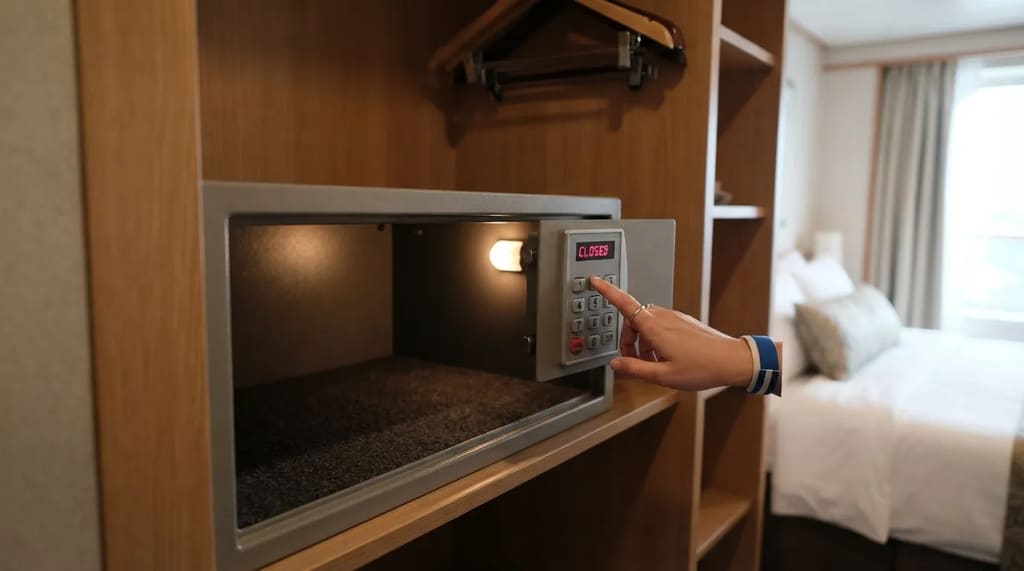
Open the safe before anything goes inside it. Test it empty and set the code before you put anything in.
It’s normally opened by a code or by your cruise card. The card you just checked in #8 may be the key, so keep it somewhere you won’t lose it. If the safe doesn’t work, let Guest Services know as soon as possible.
Use it even if you left the jewelry at home. Your passport, spare cash and extra cards all belong in the stateroom safe.4
Set the code and test the safe while it’s empty.
#2 – Cold Storage for Medication
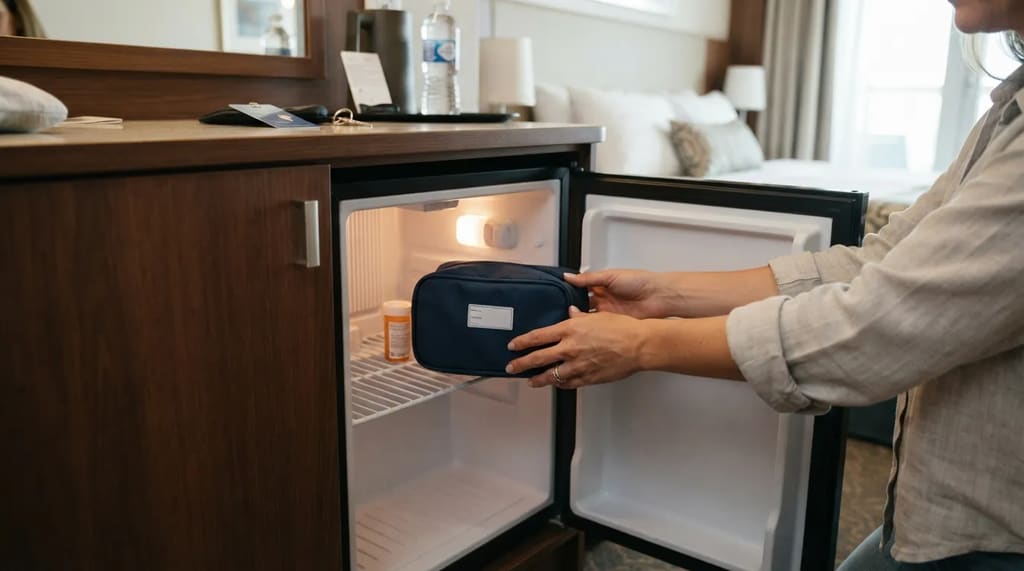
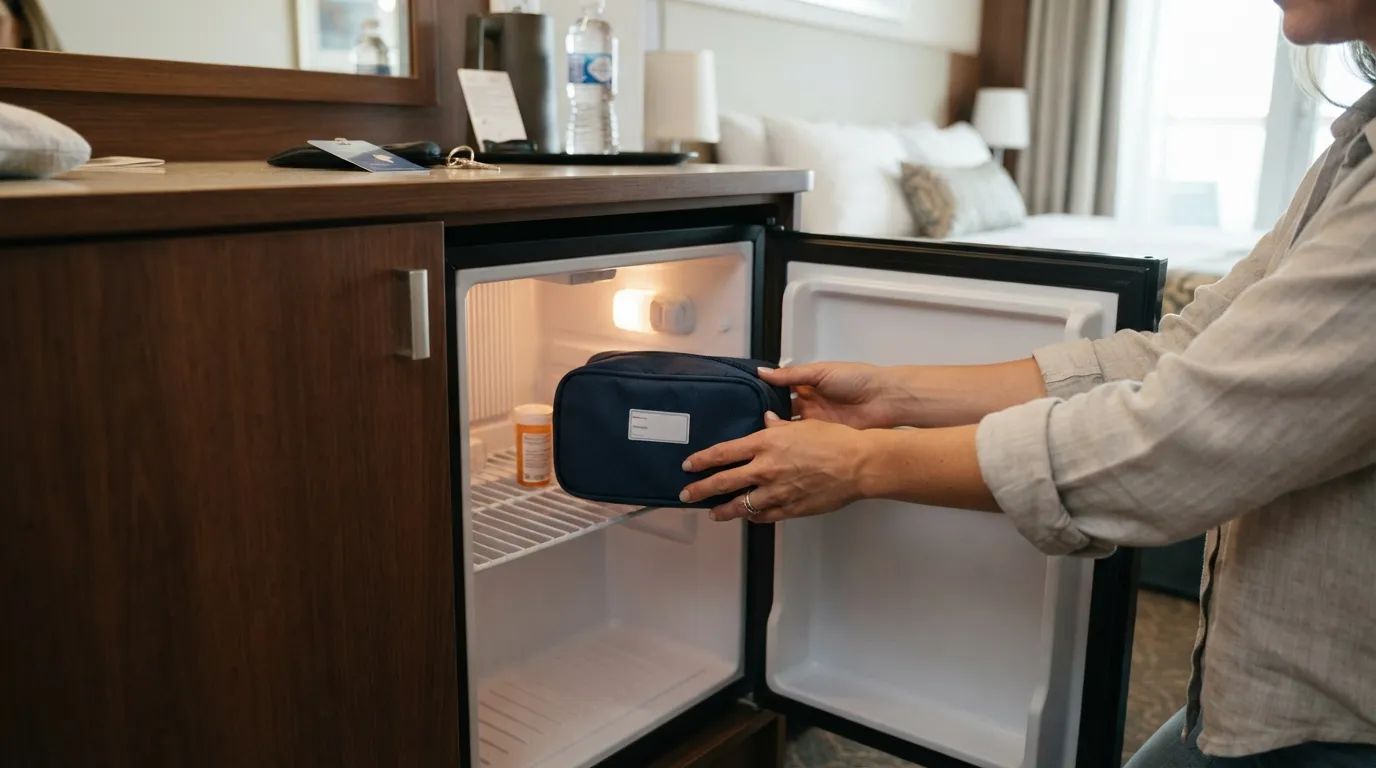
This is the one cabin check that may have a deadline before you ever leave home. If you keep medication cold, the cabin fridge is something to settle before boarding, not after.
Carnival tells guests whose cabin fridge isn’t cold enough to notify the ship before boarding through its pre-cruise medical forms. Princess directs guests without a stateroom refrigerator to its accessibility team.
There’s a catch to the backup plan. Storage may be available at the ship’s medical center, but only during its open hours, which is a poor fit if a dose falls late at night.5
Tell your cruise line about refrigeration needs before you board. Policies vary by line, so call yours, and ask your doctor what temperature the medicine needs.
Worth Knowing: Before You Pack the Insulin or Injectables
- Ask your doctor what temperature range the medicine needs.
- Contact your cruise line before sailing, not at the pier.
- Ask what the ship’s medical center can store, and during which hours.
- Test the fridge when you arrive, and report a weak one right away.
Every fix so far starts with a call to your steward. The last check begins with a card on the back of your door and a set of life jackets that may not be where you expect.
#1 – Life Jackets and the Walk to Your Muster Station
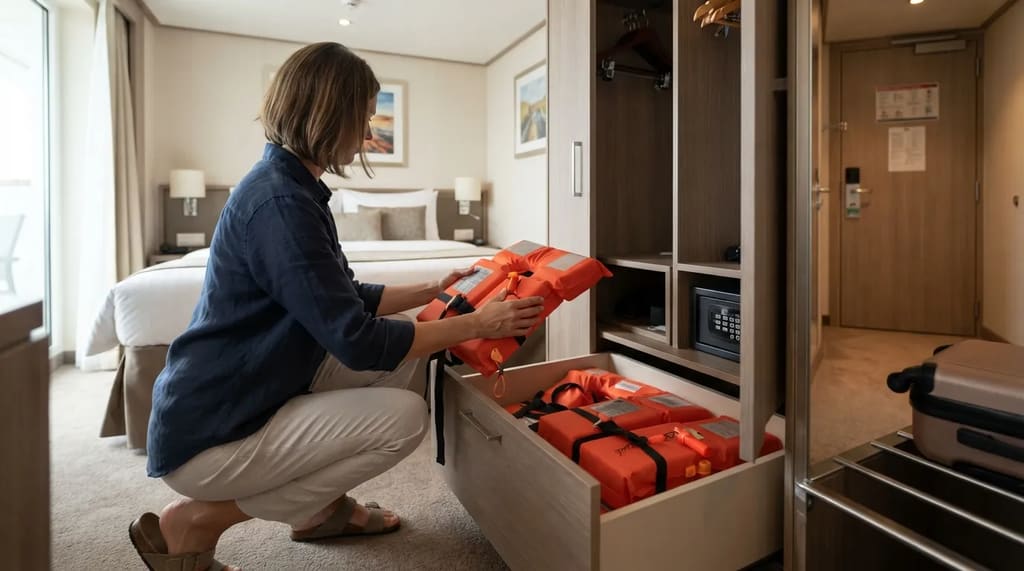
Count the life jackets in your cabin before you decide the room is ready. They’re usually stowed in the closet or under the beds, and there should be one for every guest on your booking.
Don’t assume they’re in the closet, though. International SOLAS rules require the instructions in your cabin to give your muster station, the actions to take in an emergency and how to put on a life jacket.6 That information is usually on the back of the cabin door and on your keycard, with signs in the halls.
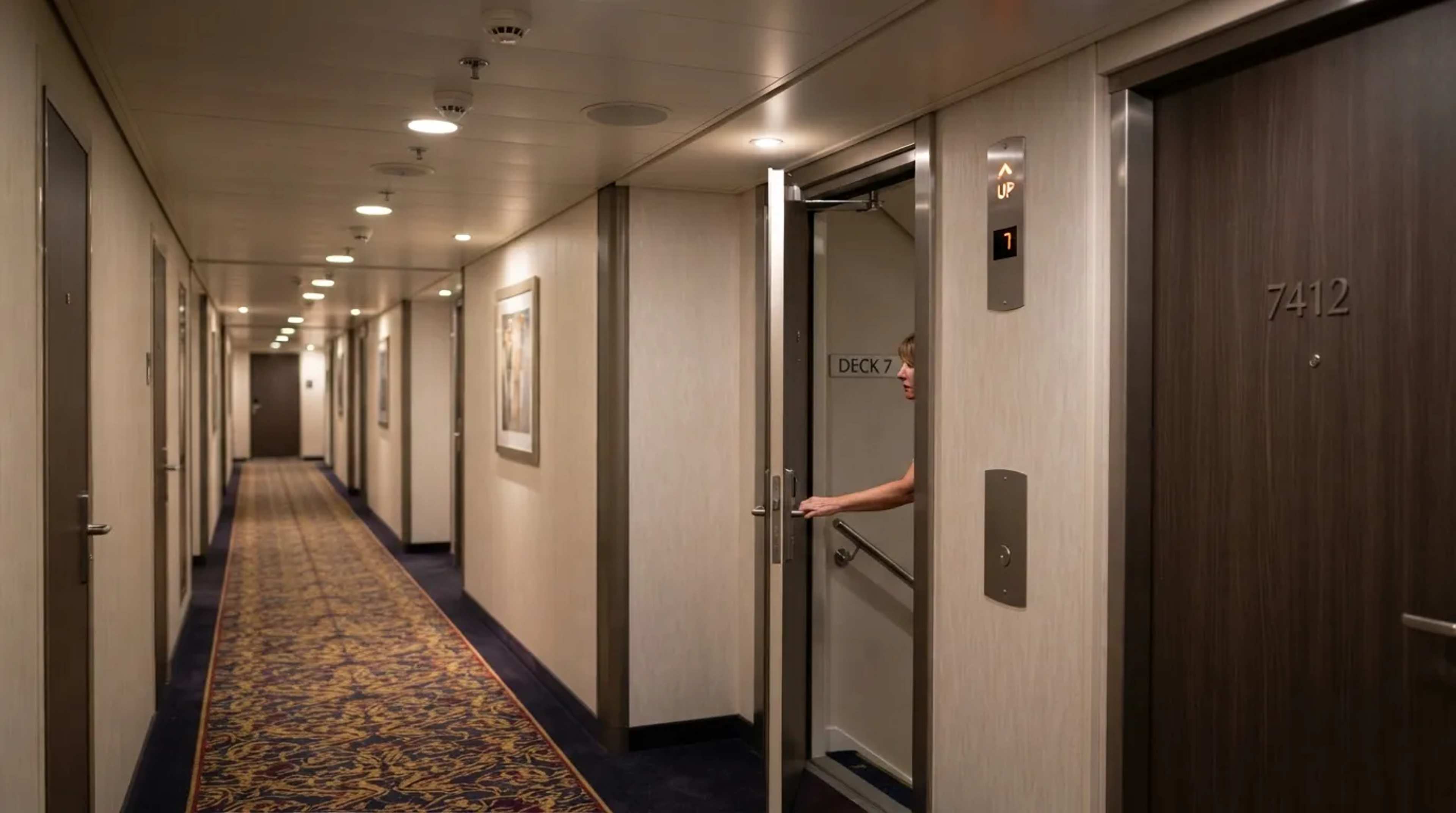
Then do the part most guests skip. Walk from your door to your muster station once, taking the stairs. That’s the route you’d use in an emergency, so it’s the one worth knowing.
Attendance at the drill is mandatory, and it has to be finished before the ship leaves port. Many lines now offer a modernized version, with a short safety video on the cruise app or in your stateroom, which is why the TV in #10 matters. Most lines no longer require you to bring a life jacket to the drill, but check your line’s instructions.
Every other item here costs you a bad night or a long line if you skip it. This one costs far more, and it’s the only one you can’t redo once the ship is moving.
Everything on this list shares one trait: it’s cheapest to fix while the ship is still tied up and the crew is nearby. A pillow, a drain, a mismatched room or a missing form all get harder to solve once the ship has sailed.
Which cabin problem would you have wanted to catch before the ship left the pier?
#18 – The Bonus Tip Nobody Shares: Build Your Offline Cabin Cheat Sheet
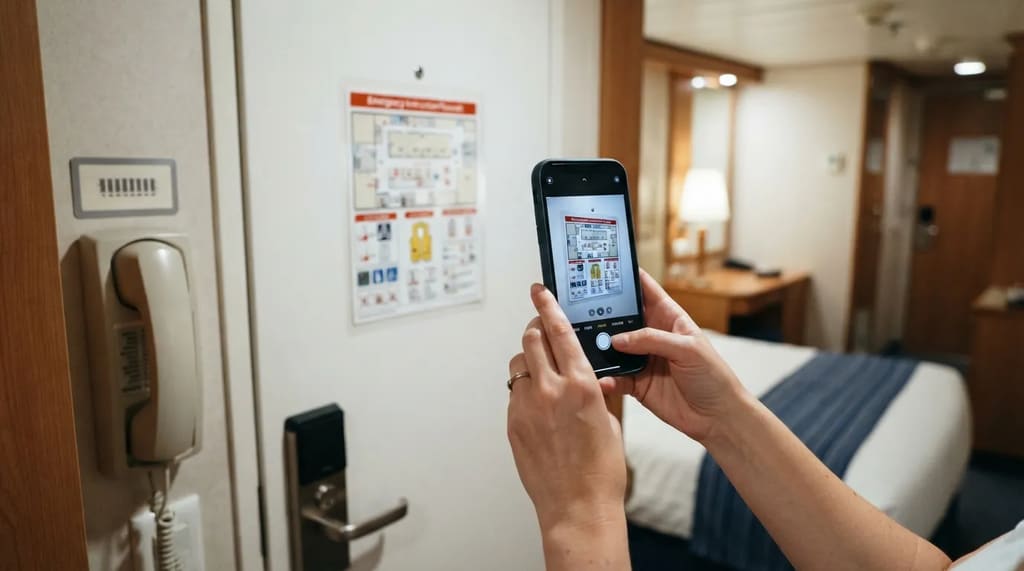
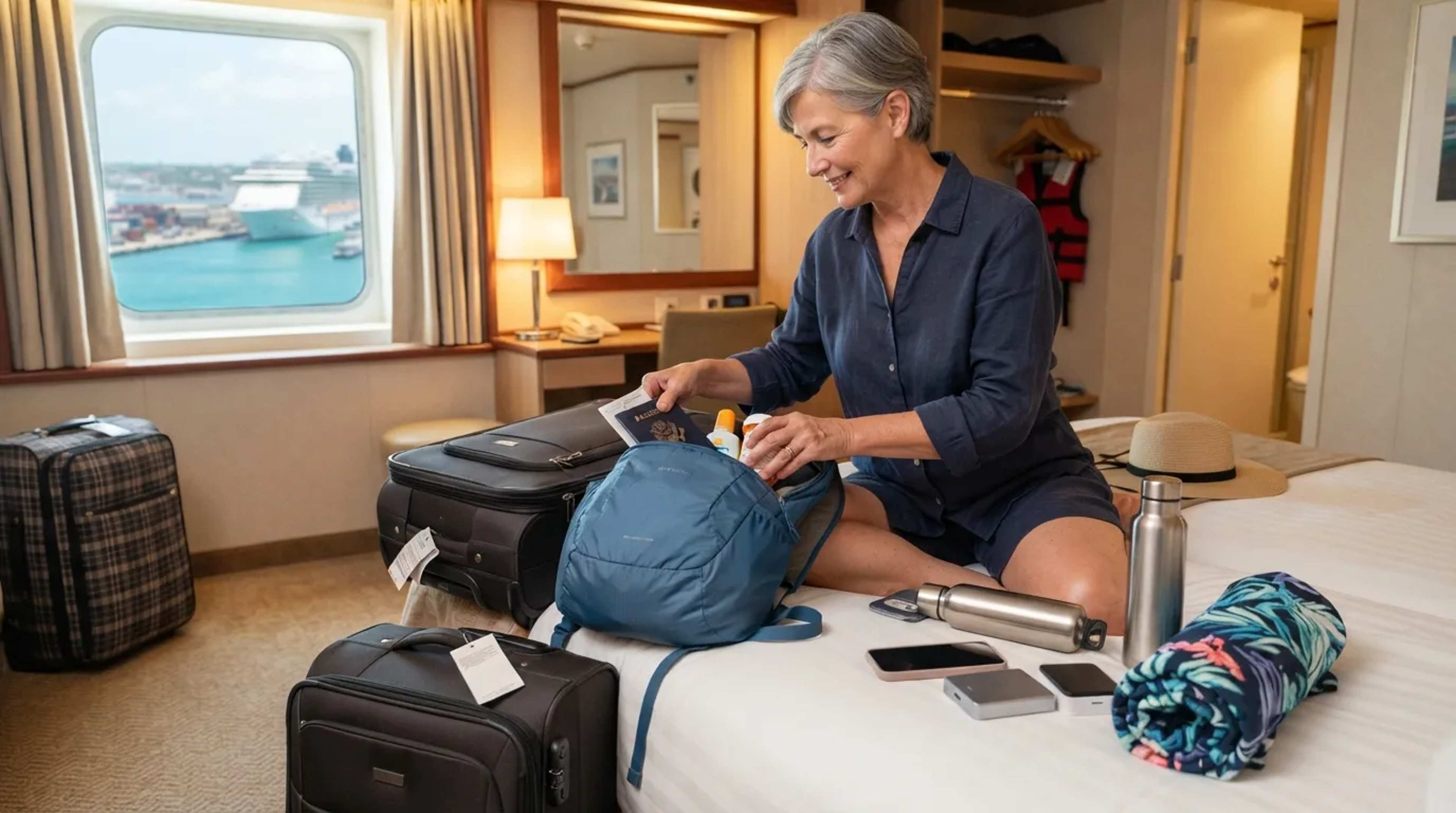
Once the ship leaves port, your phone may have no signal and ship Wi-Fi is usually a paid add-on. Veteran cruisers use the first five minutes to save everything they might need to screenshots and photos that work with no connection at all.
Take these photos before you leave the cabin:
- The back of your cabin door: the emergency card with your muster station and life jacket instructions.
- The deck plan near the elevators: frame it so your cabin, your muster station and the nearest stairwell are all visible.
- Your booking confirmation and keycard: the front of the card only, showing your name and cabin number.
- Your steward’s name and the cabin phone numbers: the ones printed on the cabin phone or in the room directory.
Move them into one album named “Ship” so you can find them in seconds. Never photograph your safe code.
Send the album to a travel partner or family member at home while you still have signal. If your phone is lost, dead or dunked in the pool, a second copy ashore can still reach you.
- Cruise Cabin Red Flags: https://cruisewithleo.com/cruise-cabin-red-flags/
- Carnival Muster Drill Briefing: https://carnival–tst.custhelp.com/app/answers/detail/a_id/1200/~/safety-briefing—muster-station-drill&gsessionid=ZIV-nbyPsEHy4KmJMqwoVYWsisj_lKNIWZmMv8O2GzbT9uWrNLbcrg
- Cruise Critic Safety Tips: https://www.cruisecritic.com/articles/9-tips-for-staying-safe-on-a-cruise-ship
- Forbes Cruise Safety Tips: https://www.forbes.com/sites/davidnikel/2023/12/29/cruise-safety-7-tips-to-stay-safe-on-a-cruise-ship-vacation/
- Carnival Special Requirements Form: https://www.carnival.com/about-carnival/special-needs/~/media/CCLUS/Images/pdf/special-requirements-information-form-pdf.ashx
- Frommer’s Muster Drill Guide: https://www.frommers.com/tips/cruise/cruise-ship-safety-what-to-expect-in-a-muster-drill/