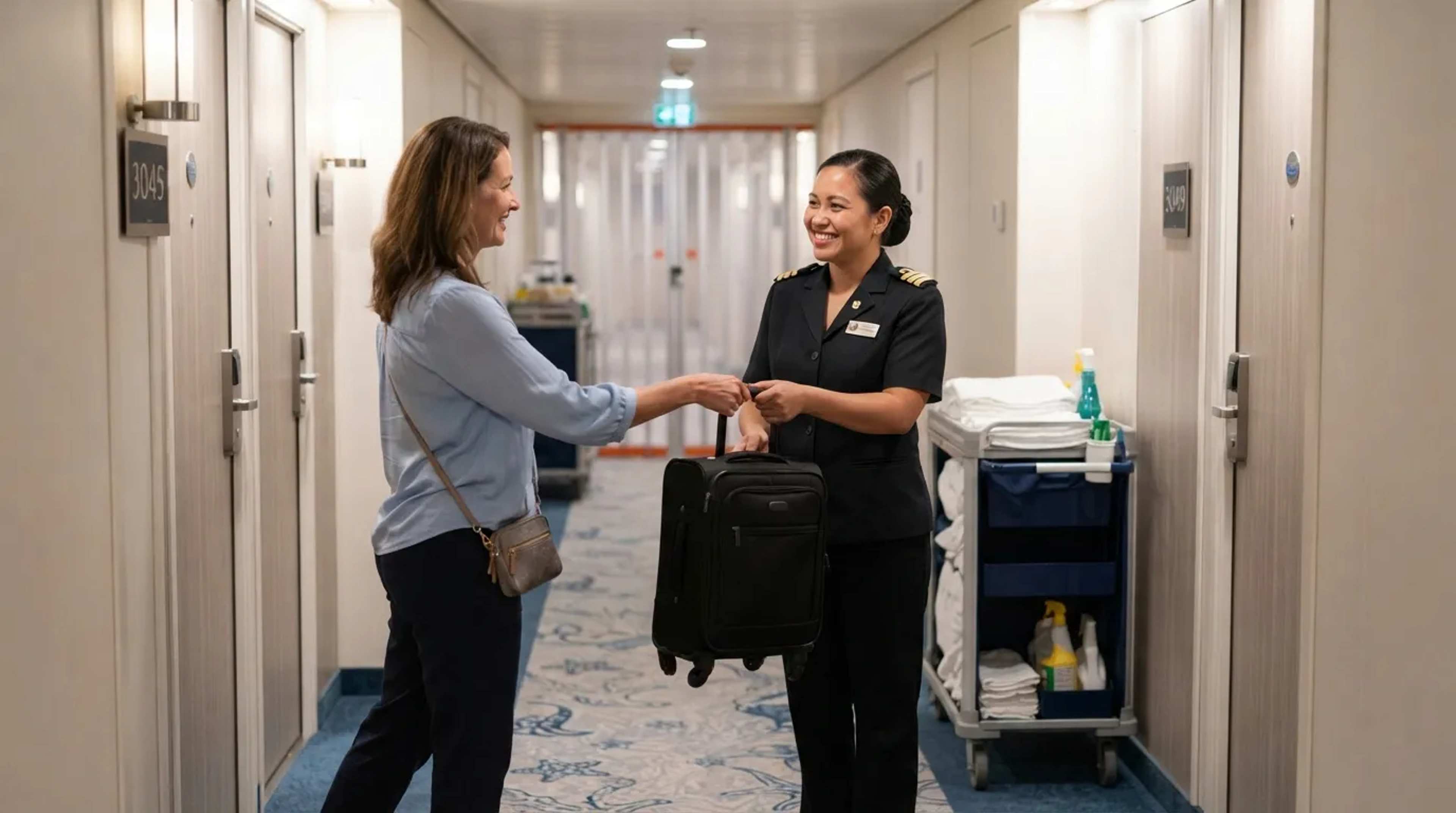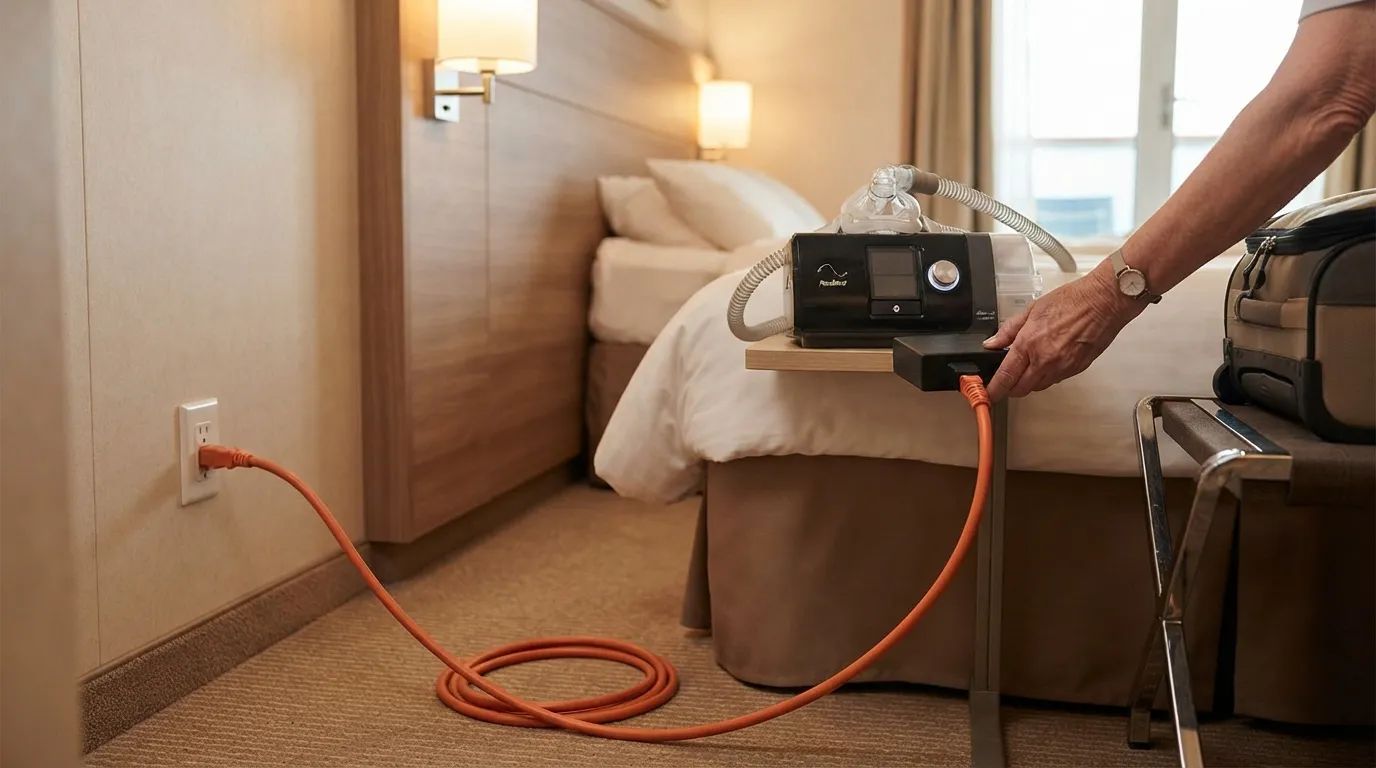
Most cabin requests take a steward about a minute. A few can’t be handled at the cabin door at all, and by the time you’re standing in the room, it may be too late. Ask in the wrong place or at the wrong time, and you spend the first night in the wrong bed, or the whole trip without something you need.
These 15 requests run from the quick asks to the paperwork-heavy ones. Stay with the list to #1, which gives you the one date that decides whether a shower stool, a sharps container and your CPAP supplies are waiting when you walk in. First, the easiest ask on the ship.
#15 – Extra Hangers From Your Steward on Day One
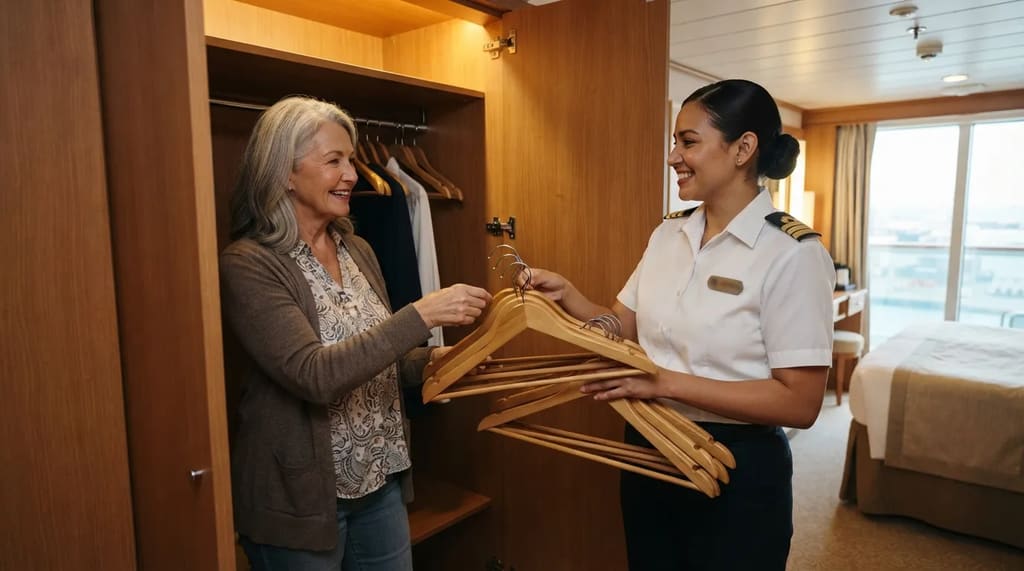
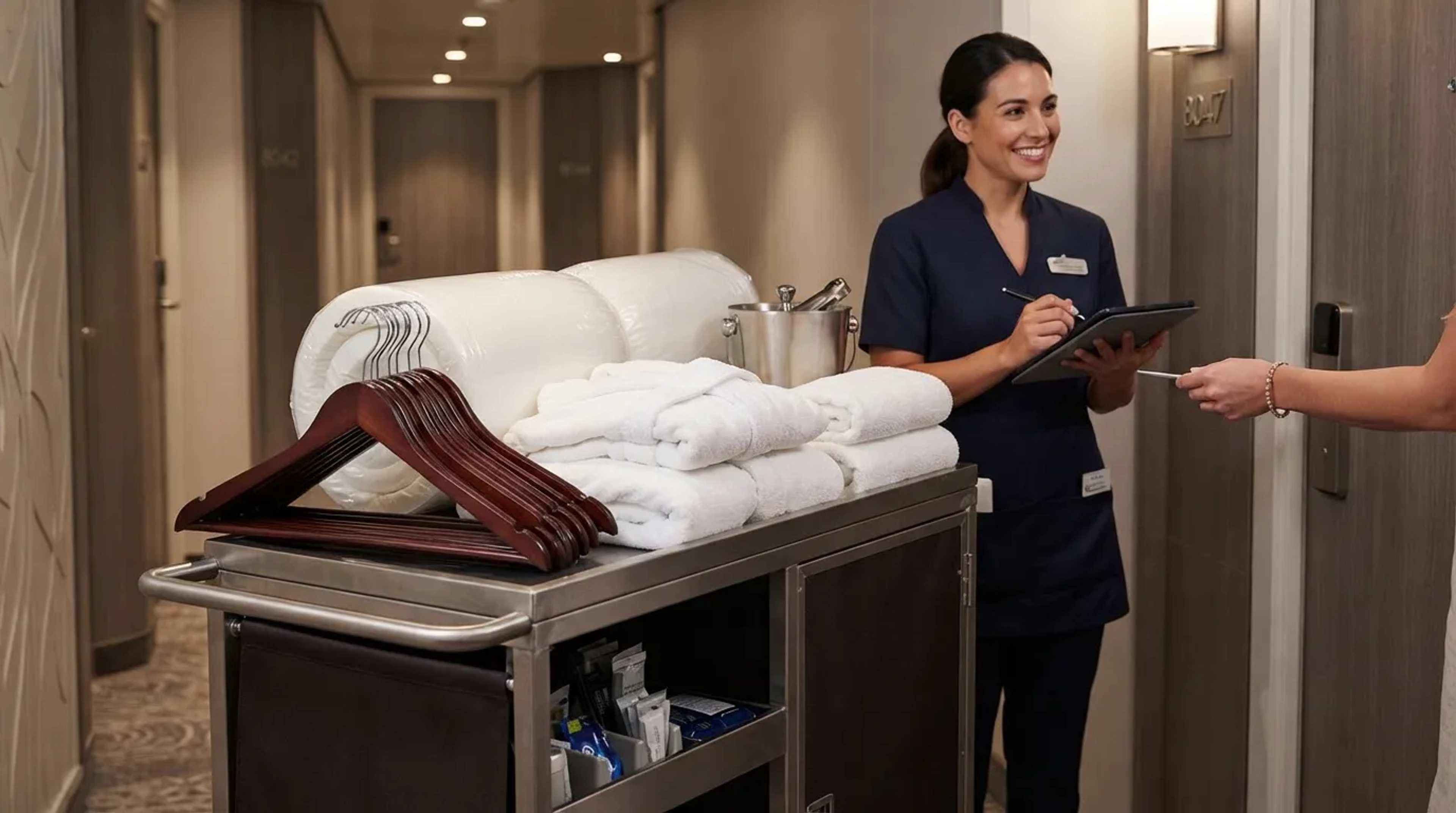
Hangers are about the cheapest request a ship can fill, which makes them the perfect first ask. Stewards can often provide extra pillows, towels, blankets, wine glasses, a corkscrew and fresh ice.
The first day is the best time to ask. Once your steward knows what you need, they can work it into their routine.
Make that first conversation do several jobs. Use it to say how you like your bed, whether you need extra bedding, and when you want the cabin serviced. Ask for hangers and towels the moment you meet your steward.
Hangers take a steward a minute to fetch. What you sleep on takes more thought, starting with the part your head touches.
#14 – Pillows Softer, Firmer or Extra
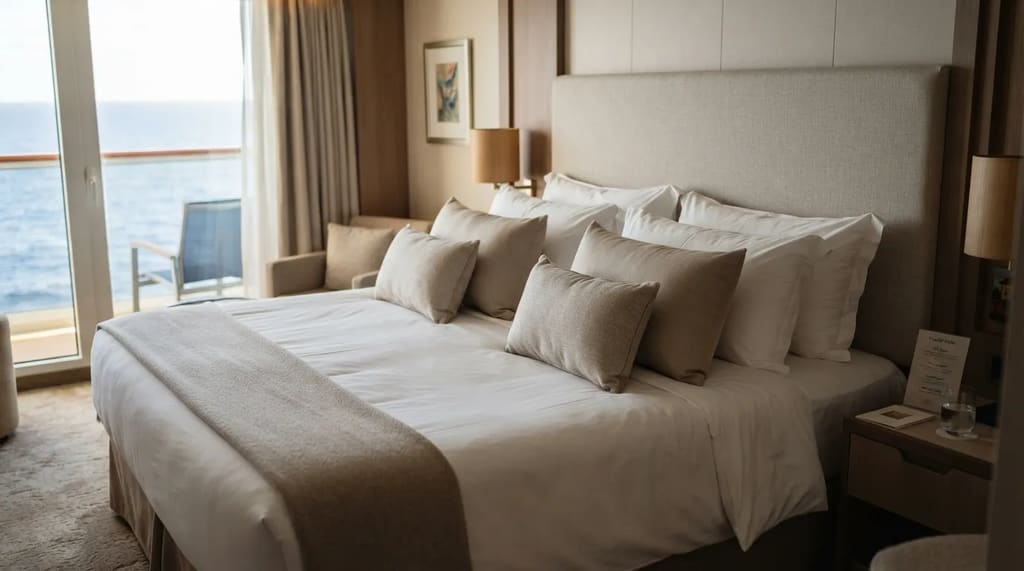
The pillow on your bed is only the default. Your cabin normally has enough pillows, but that doesn’t mean they’re the right ones. Cruise Critic advises that if yours is too flat, firm or soft, you should ask your steward about alternatives.1
Some cruise lines and cabin categories have pillow menus that offer softer, firmer, feathered or non-feathered options. If feathers are a problem for you, hypoallergenic bedding goes through the cruise line’s special-needs contact first, and then your steward.
Worth Knowing
- Pillow menus exist on some lines and in some cabin categories, not all.
- Choices can include softer, firmer, feathered or non-feathered pillows.
- Feather allergy? Start with the line’s special-needs contact, then tell your steward.
Ask on the first afternoon, before the first night in the bed rather than after three bad ones. Hand your steward a card that says how many pillows you want, and when. Words on paper leave nothing to interpret.
Pillows fix the neck, not the chill. The cure for a cold cabin rides on the same cart, as long as you ask before the first cold night.
#13 – Extra Blankets for a Cold Cabin
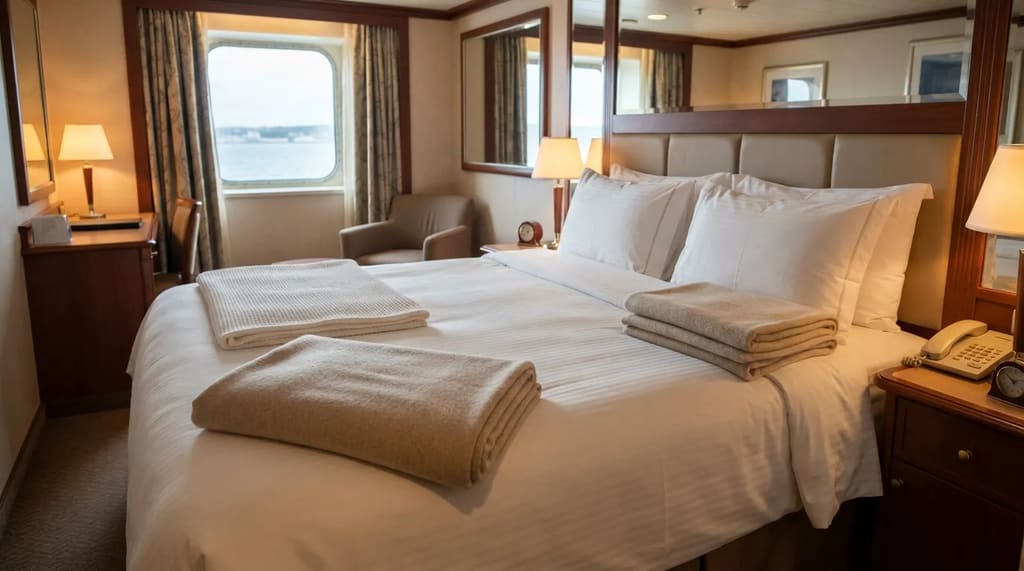
The cheapest heater on a ship is a second blanket. A steward can simply bring more bedding, and extra blankets are among the easiest things to add.
If one of you runs cold, ask on the first evening so the blankets are on the bed before the first chilly night. Wait until you’re shivering at midnight, and a simple request turns into a phone call and a long wait.
A spare also settles the thermostat argument if you share the cabin, because one of you can pile it on while the other kicks it off. Ask for a lighter blanket you can fold at the foot of the bed. Ask for extra blankets the first evening, before the first cold night.
#12 – Twin Beds or One Big Bed
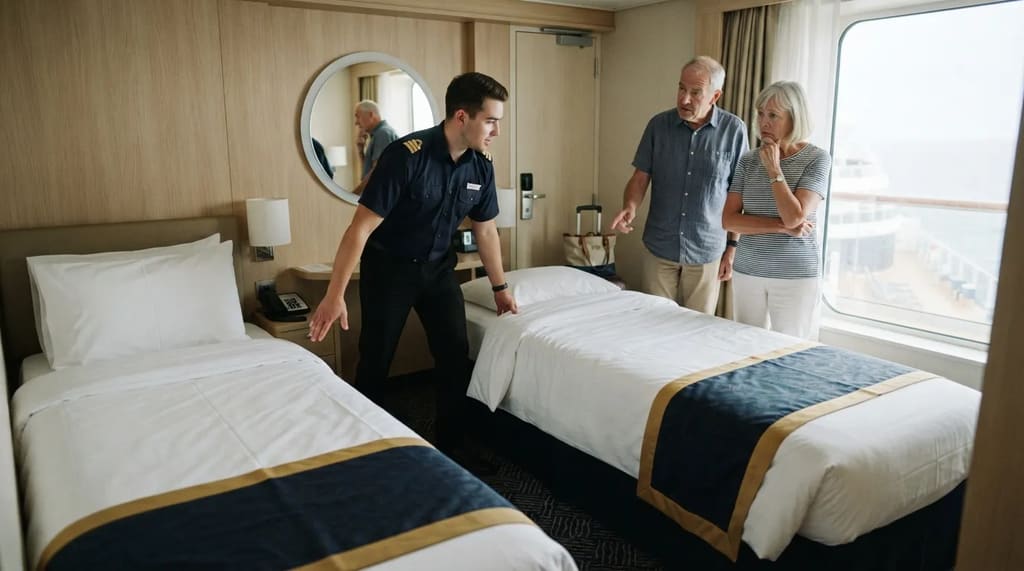
Booking a queen doesn’t guarantee you’ll find one. Most cabins have two twin beds that can be pushed together, and even if you chose a setup when you booked, the beds may not be arranged that way when you arrive.
Just tell your steward. It’s one of the most common requests they get, and there’s no reason to drag ship furniture around yourself. Embarkation afternoon is hectic, so the change may not happen right away, but the beds are usually rearranged by bedtime.
Pushing twins together fixes one problem and leaves a seam down the middle. Mattress toppers and seam-hiding bed runners take time to track down, so ask early if the seam bothers your back. Tell your steward twin or queen on the first afternoon.
That settles the bed. A cabin sleeping a third person raises a different problem, and it has to do with how safely you can reach the bathroom in the dark.
#11 – A Sofa Bed Folded Away by Day
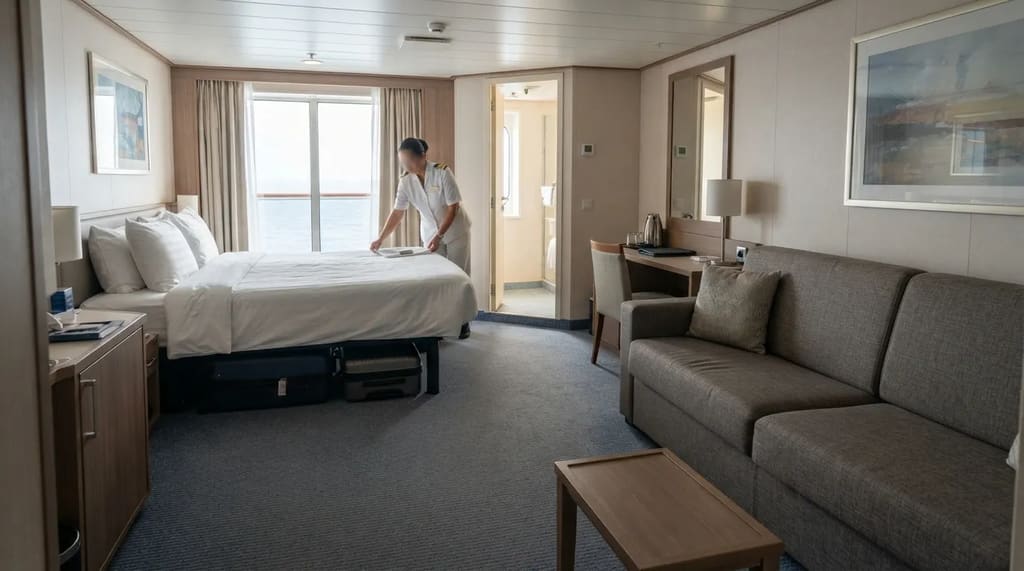
The cabin gets tight fast when a third or fourth person joins. The extra bed has to fit into the same floor space, and cabins for three or four rely on a sofa bed or pullman bed.
If you’re sailing with a grandchild or a friend, ask your steward how and when the extra bed will be set up. Having a sofa bed folded away during the day can make a huge difference, and it’s one of the most common requests stewards get.
For anyone who gets up at night, floor space is a safety matter, not a luxury. Stow luggage under the bed and keep pathways clear. Keep a clear path from every bed to the bathroom.
The bed gets made on your steward’s schedule, and so does the rest of your day. Whether the knock at the door comes at seven or at ten is something you can set on the first afternoon.
#10 – Your Service Schedule on One Card
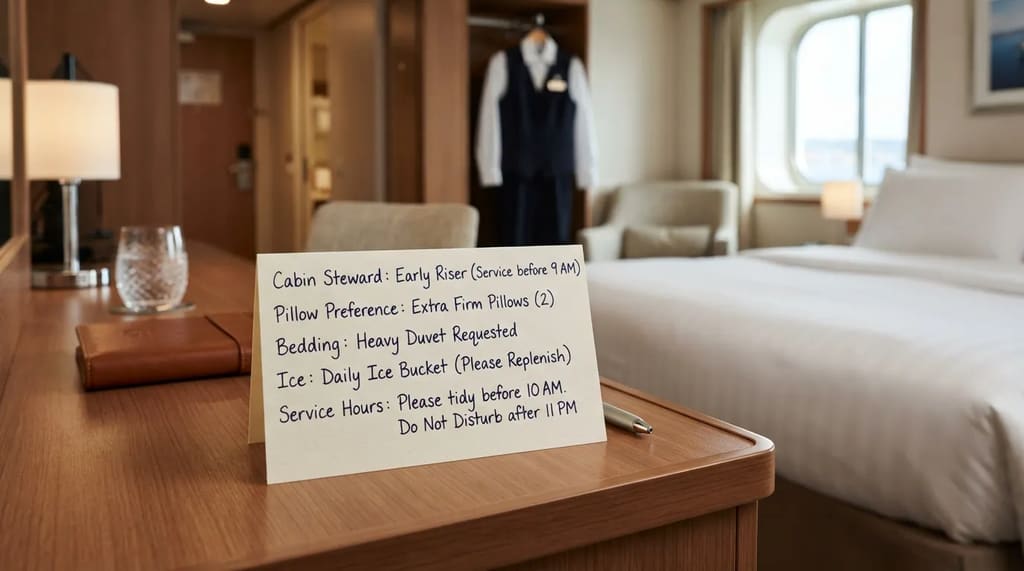
A steward who doesn’t know your habits will guess, and a bad guess is a knock while you’re still asleep. Tell them you’re an early riser and they can tend your cabin first thing. Late sleepers can ask for the opposite.
Then keep it to one conversation. Once your steward knows what you need, they can work it into their routine, but calling them back every 20 minutes with something new works against you.
Here’s my take: one handwritten card does more than five phone calls. It lists your pillow, bed and blanket requests and your service hours in a form your steward can keep in a pocket. Give your steward one short list on day one.
A card works for anything on the cart. A burned-out bulb is the steward’s job too. Smoke, sparks and flooding aren’t, and they go to a different number.
#9 – A Dead Bulb Goes to the Steward First
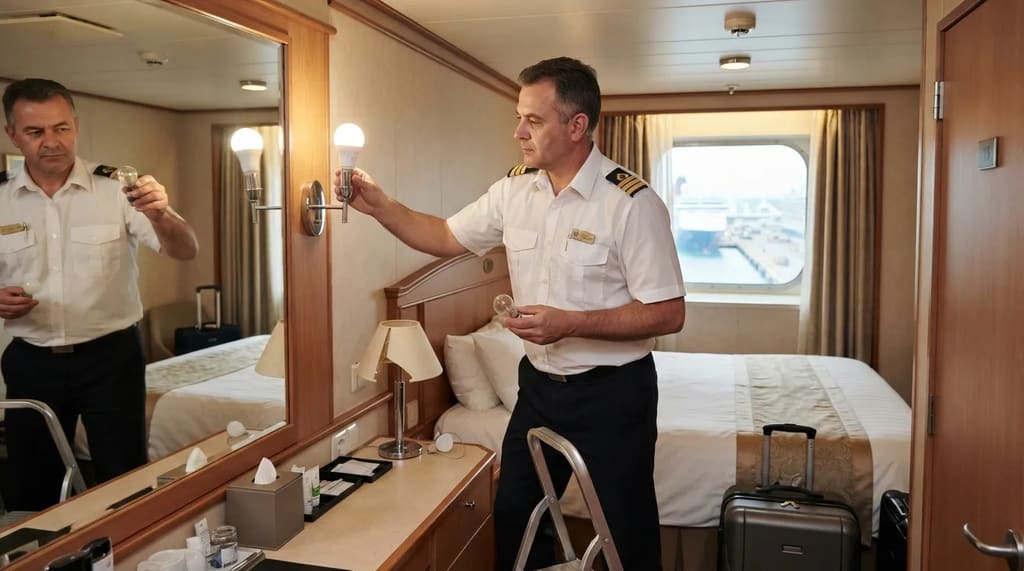
Cabin-specific problems, like replacing light bulbs or sending extra pillows, are best brought to your steward. Your steward knows the cabin and can handle small things without a line at guest services.
Embarkation day is one of the busiest for stewards, and the cabin may not be ready when you arrive. Give a request time, then follow up later in the day if it still hasn’t been done.
Bigger things travel by a different route. Extension cords, medication fridges and sharps containers go through a form rather than through your steward.
Quick Compare
- Your steward: burned-out bulbs, extra pillows, other small cabin fixes
- The request form: extension cords, medication fridges, sharps containers
- Guest services or the emergency number: smoke, sparks, flooding
If you see smoke, sparks or flooding, skip both and call guest services or the ship’s emergency number immediately. Small cabin fixes go to your steward; smoke, sparks and flooding go to emergency.
#8 – Distilled Water for a CPAP Humidifier
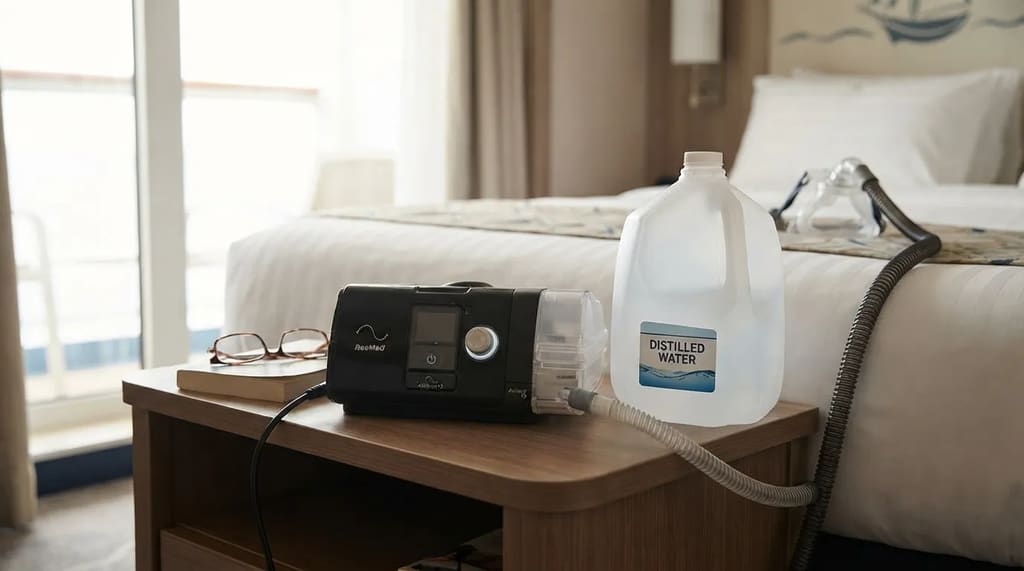
Whether the ship hands you distilled water for free depends on the line. Some lines charge for it, and others include it. A CPAP humidifier needs it, so this is not one to leave to chance.
A request made early is more likely to be filled. Princess, for example, says you can request distilled water for a CPAP machine when you make your reservation. If it isn’t in your cabin at embarkation, remind your room steward.
Don’t count on buying replacement parts onboard either. Princess adds that supplies for these devices are not available on the ship. Request distilled water when you book, not at the pier.
Water is the easy part of a CPAP trip. The power cord is where a standard cabin can leave you short, and the wrong one can be a safety problem.
#7 – A Medical Extension Cord, Not a Power Strip
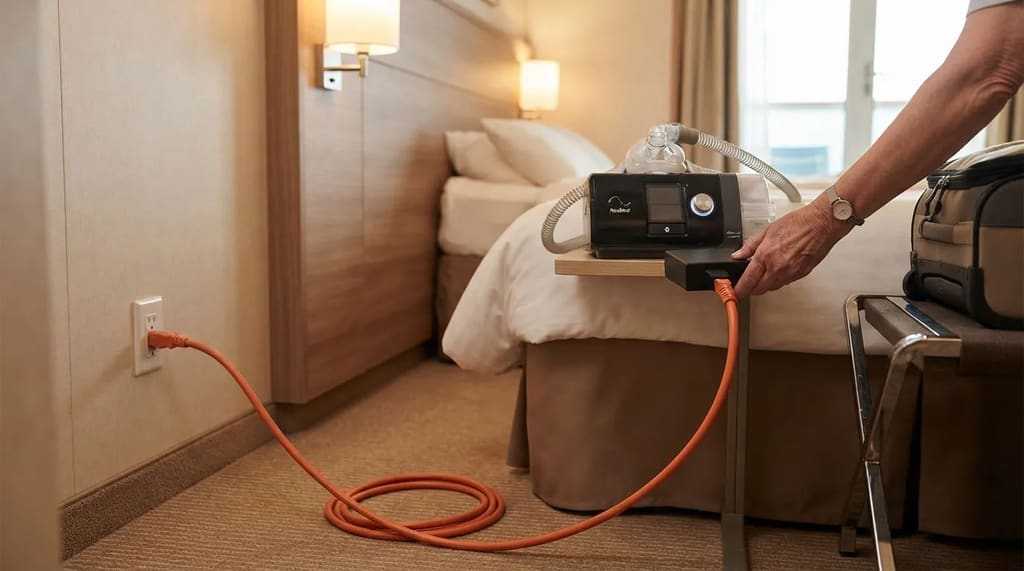
A USB phone charger can’t power a CPAP machine, so bring the original power supply. If the cabin outlet is far from the bed, resist the urge to pack a power strip.
Arrange a medical-use extension cord through your cruise line instead, since Royal Caribbean has approved cords available on request. If you do bring your own, make sure it’s in good condition and doesn’t include a surge protector.
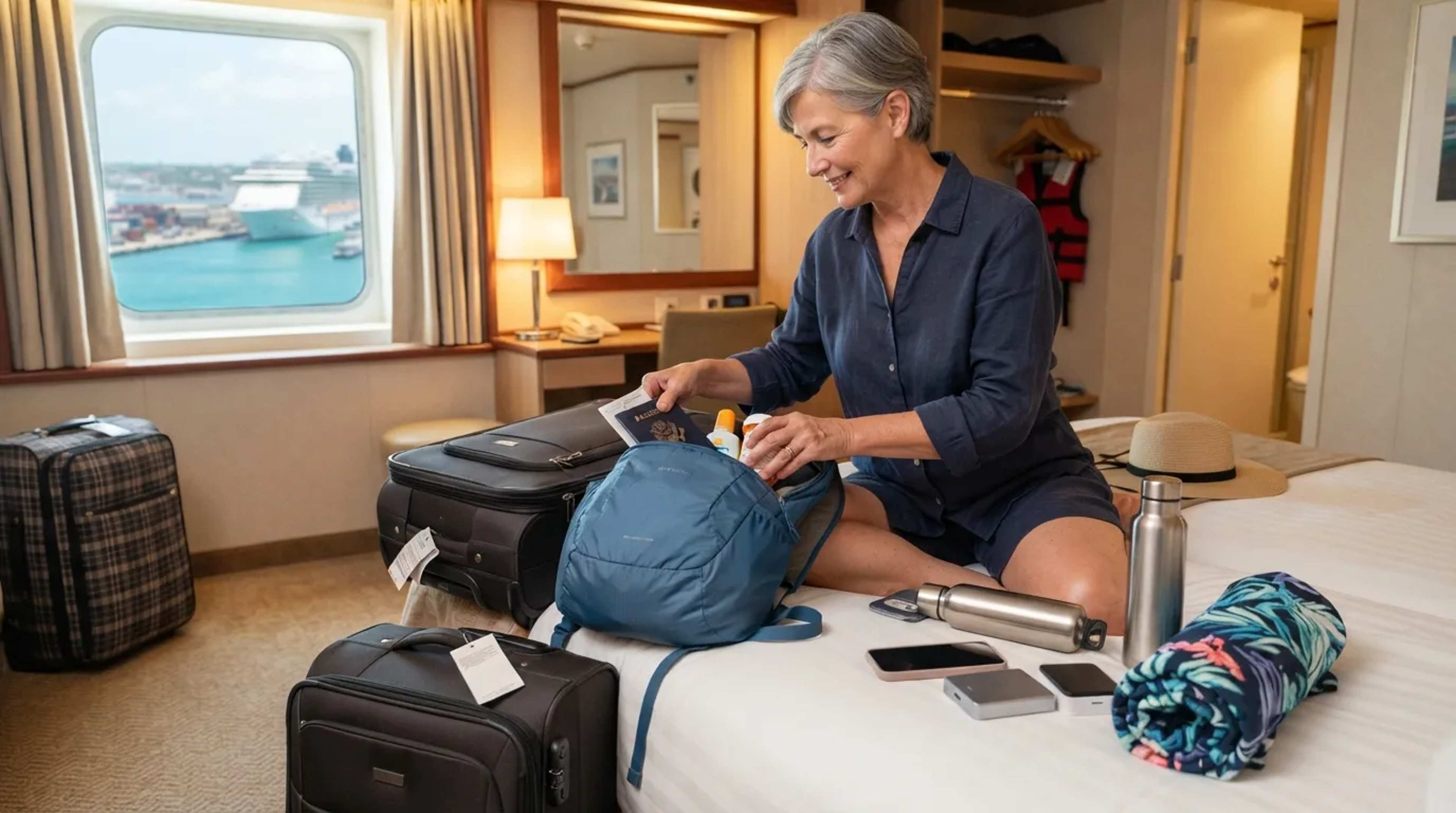
Carry the machine yourself. Carnival tells guests to hand-carry CPAP machines and concentrators rather than checking them, and checked cruise luggage can take hours to reach your cabin.2
A machine you need tonight shouldn’t be waiting on a luggage cart. Carry the CPAP yourself and label it with your name and cabin number.
Everything so far plugs in or sits on a pillow. Where the cabin sits in the ship is the next decision, and it’s far easier to make before you book than after you sail.
#6 – A Cabin Midship, Not Beside the Elevator
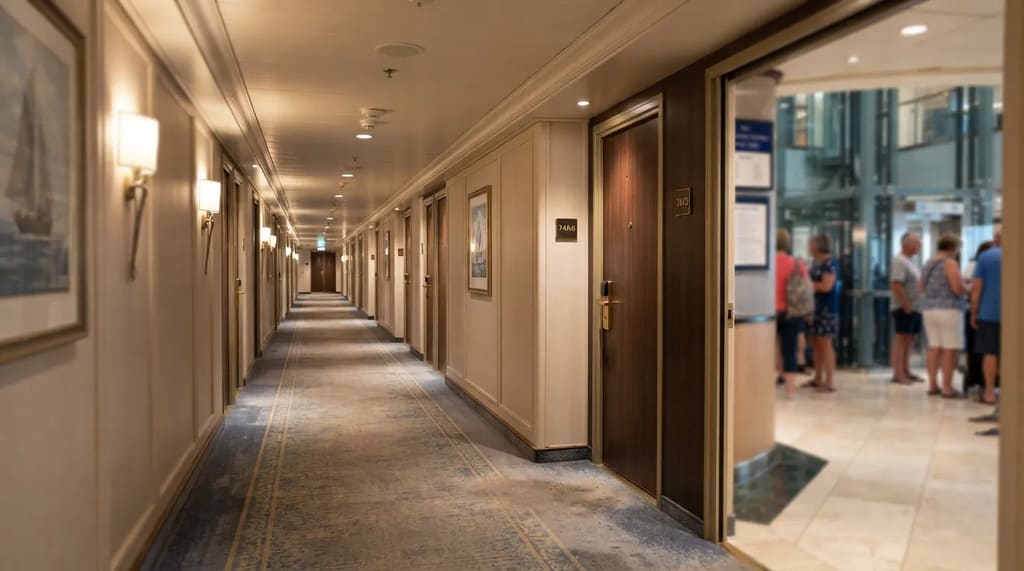
A balcony doesn’t calm a rough ride. Position does. For motion, choose a lower passenger deck near the middle of the ship, away from the bow. Location can reduce how much movement you feel, but it can’t remove the motion of the ocean.
Noise is the second filter. Cabins under the pool deck can get early-morning chair dragging, and cabins near elevator lobbies hear more hallway traffic. The simple noise-buffer strategy is a cabin with other cabins directly above and below.
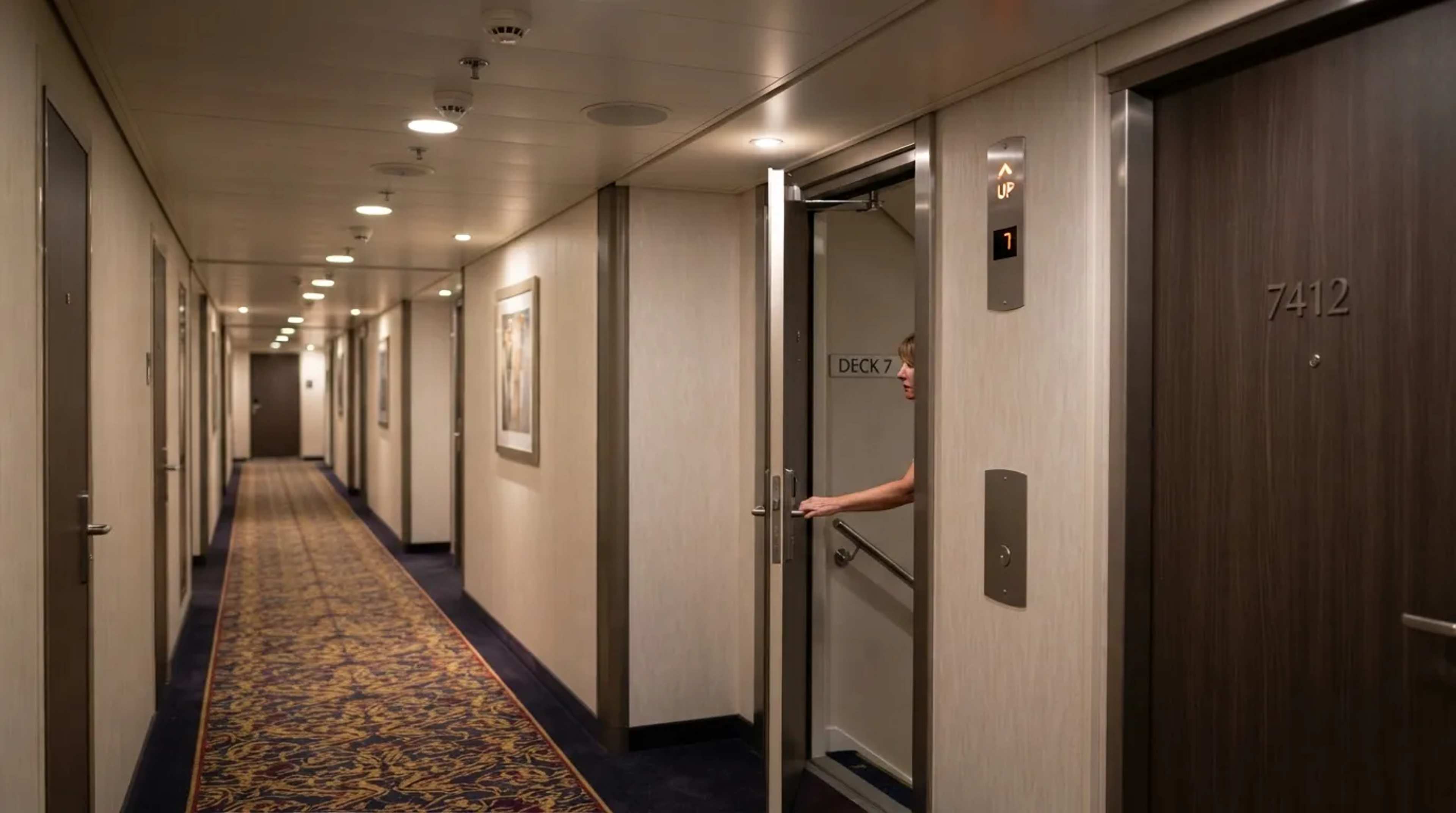
If walking is hard, you can ask for a cabin close to the elevators, but a few doors away beats the door beside them. Count cabin doors from the elevator instead of relying on a vague label like forward, midship or aft.
Fast Facts
- Least motion: a lower passenger deck, near the middle, away from the bow
- Most quiet: other cabins directly above and below you
- Noise traps: the deck under the pool, and rooms by elevator lobbies
- Easier walking: a few doors from the elevator, counted in doors, not deck labels
My verdict for anyone prone to seasickness: a midship inside cabin beats an aft balcony. Pick a cabin a few doors from the elevator, not beside it.
Location is settled at booking. The request that comes after you board involves a needle, and it doesn’t belong in any trash can in the cabin.
#5 – A Sharps Container Delivered to the Cabin
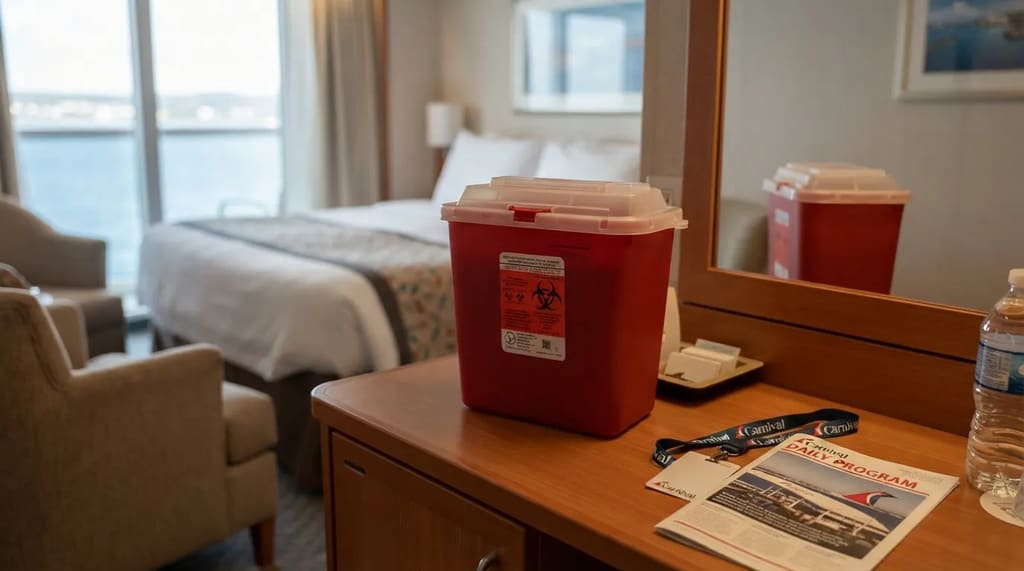
Needles don’t belong in the ordinary cabin trash, which is why this request exists. If you inject insulin or any other medication, it’s a routine ask, not an awkward one.
Carnival says any medical sharp, meaning needles, lancets or blades, must go in a sharps container, and you can request one from your housekeeping steward once on board.2 You should never improvise with a water bottle or the bathroom trash.
You can get ahead of it, too. Carnival offers a pre-cruise form covering diabetes, sharps and medicine storage, and Royal Caribbean lists a sharps container among its additional cabin amenities.3 If you need to dispose of syringes mid-cruise, the ship’s medical center is another option.
Ask for the sharps container before sailing, and again on day one.
A sharps container handles the used supplies. The unused ones, insulin especially, need somewhere cold, and the drinks cooler in the cabin may not be it.
#4 – A Medical Fridge Instead of the Cabin Cooler
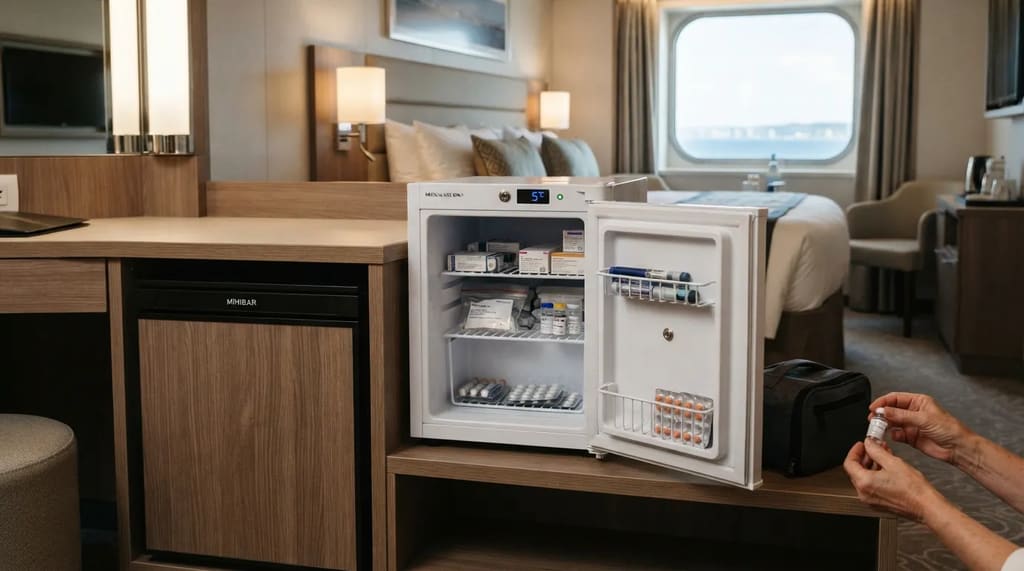
It’s easy to assume the minibar will hold your medicine. A cabin minibar is built for drinks, and the lines say so plainly.
Norwegian’s guidance says minibars aren’t suitable for temperature-sensitive medicine. Disney asks guests not to use the stateroom cooler for medications with specific temperature requirements, and notes that mini-fridges may not maintain proper temperatures for insulin.4
So ask for the real thing. Royal Caribbean’s special-needs page lists a mini-refrigerator among the things you can ask for, and Carnival has its own form for diabetes, sharps or medical storage.3 5
On MSC, medication kept in the medical center can be collected only during opening hours, so for an evening dose a cabin refrigerator arranged ahead is easier.
At a Glance
- Cabin minibar: made for drinks, not for temperature-sensitive medicine
- Cabin medical fridge: arranged ahead through the line’s request form
- Medical center storage: safe to ask about, but pickup is limited to opening hours on MSC
If your doctor has set a temperature range, the minibar is not a plan. Bring an insulated medication case as backup. Request the medical fridge on the form, and carry an insulated case too.
Medicine is one risk in the cabin. The wet bathroom floor is another, and the ship keeps a short list of items to make it safer.
#3 – A Shower Stool or Raised Toilet Seat
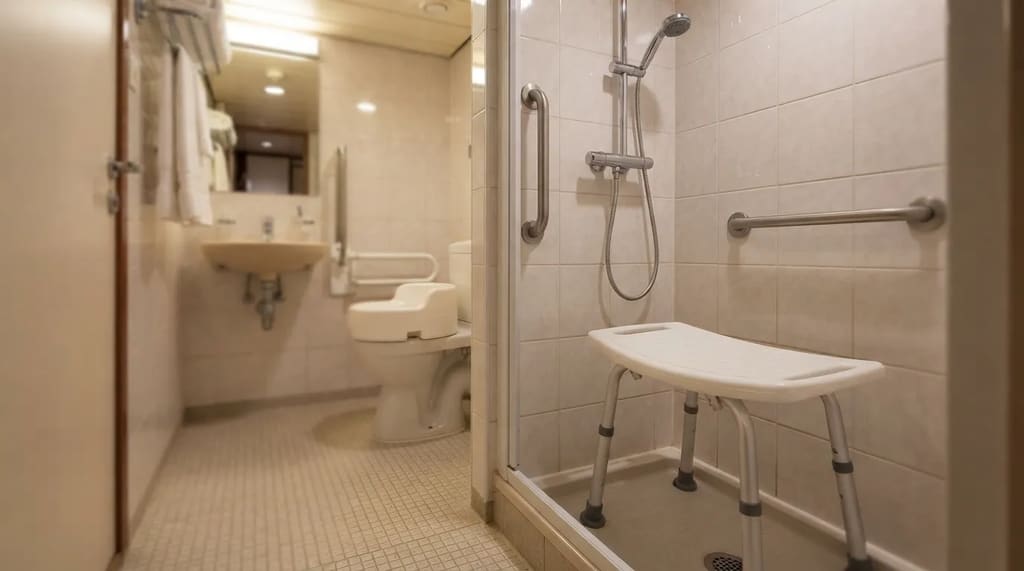
A ship bathroom is small, wet and often has a threshold to step over. Royal Caribbean’s special-needs information lists a raised toilet seat, commode chair and shower stool among requestable items.5 The Points Guy’s accessibility roundup adds that bedrails are available on request too.
These are equipment requests, which means they go through the cruise line’s request form instead of the person who turns down your bed. That form is where you can request a shower chair, a sharps container, distilled water or refrigeration for medication. One form covers most of what you’ve read so far.
Grab bars are a different matter. They’re not pre-installed in every cabin category, so if balance is the reason you’re asking, the answer is the cabin itself. Request the shower stool or raised toilet seat on the cruise line’s form.
Grab bars come with the cabin, not the cart. Which category you book decides whether you get them.
#2 – An Accessible Cabin With Grab Bars
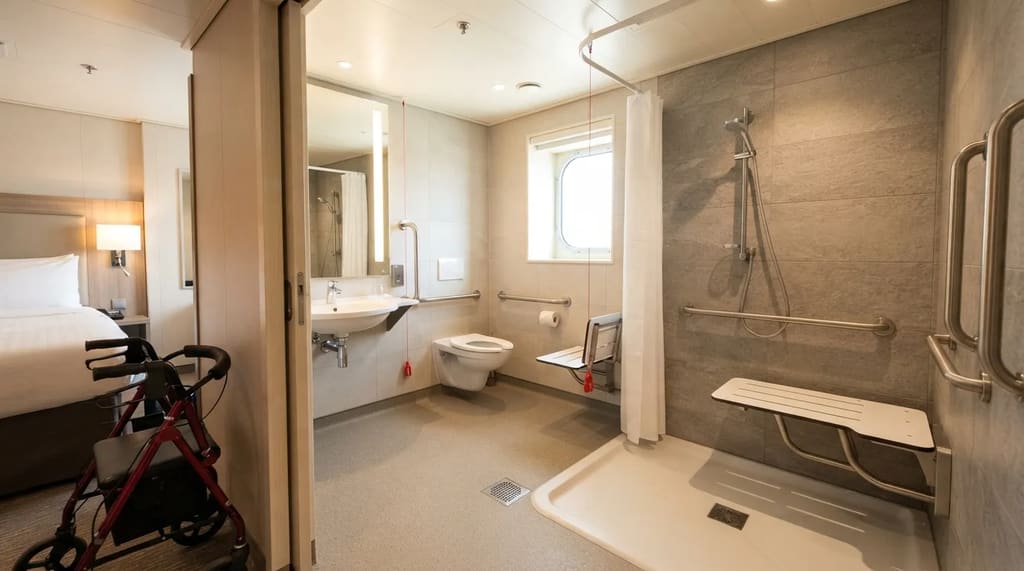
If a cane or walker is part of your day, the cabin category matters more than any extra you add later. Virgin Voyages describes ambulatory accessible cabins for guests with a cane or walker, with grab bars to help with balance.6
Its fully accessible cabins go further, with doorways at least 34 inches wide, no step into the bathroom, a turnaround space of at least 60 inches, and a roll-in shower with grab bars and a fold-down seat.6 Other lines publish their own versions of these features, and they vary by ship.
The phrase “accessible cabin” covers a wide range, so ask for specifics. Get the exact door width, shower type and bathroom threshold in writing. If you use a rollator, cabin storage and bathroom access in standard staterooms are the main challenge, so ask about these:
- Door width into the cabin and into the bathroom
- Roll-in shower or tub/shower combination
- Height of the bathroom threshold
Request the accessible cabin when you book, not afterward. Ask for door width, shower type and threshold height in writing.
Everything from the CPAP water to the shower stool shares one weakness: it only shows up if you asked in time. The date that decides it is the most important item on this list.
#1 – The 45-Day Deadline for Equipment Requests
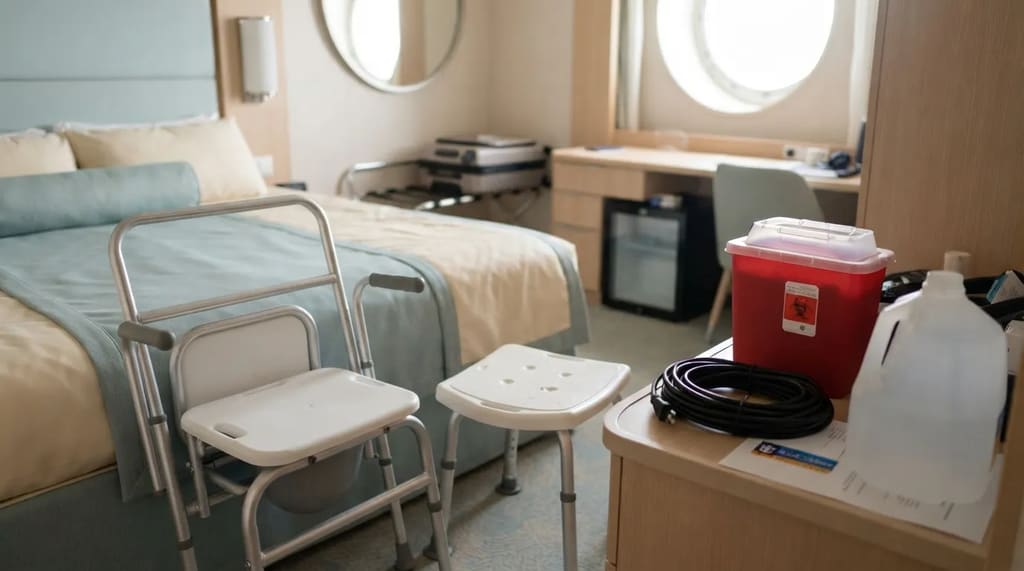
Forty-five days is the number to remember. Royal Caribbean’s access department asks for requests for additional stateroom amenities, such as a commode chair, shower stool, sharps container, extension cord and distilled water, no later than 45 days before embarkation.7
That one deadline governs much of this list: the CPAP water and cord, the sharps container, the shower stool and the medication fridge. A Royal Caribbean reservation number is required when you make the request. If you’re booking through a group or travel agent, ask when that number will be issued, since you can’t submit without it.7
Another guide gives 30 days before sailing for a sharps container or refrigerator request. The earlier date is the safer one to plan around, and other lines run their own forms, so check yours.
This is why I’d rank the form above every other item here. Pillows, blankets and bed layout can be fixed in an afternoon if they go wrong.
Put the date you submitted the form on your one-page request card and show it to your steward on day one. Send equipment requests at least 45 days before you sail.
The pattern behind all fifteen is lead time. The easier something is to hand over, the later you can ask for it, and the more it depends on equipment, the sooner the request has to leave your hands.
So sort your own list before you pack: what your steward can fix by dinner, and what needs a form, a date and a reservation number. Put the second pile at the top of the folder, because the first can always be fixed on the spot.
If you could send only one form six weeks before your next cruise, what would you put on it?
#16 – The Bonus Tip Nobody Shares: Get Your Request Confirmed in Writing

Sending the form is only half the job. Requests can get lost between the access department, the ship and your steward, and you won’t find out until you’re standing in the cabin. The fix is a confirmation trail.
- Submit, then verify. A week or so after sending the form, email or call the line’s access or special-needs team. Give your reservation number, ship and sail date, and ask them to confirm every item by name: stool, sharps container, fridge, cord, distilled water.
- Save the reply. Take a screenshot and print one copy. Ship Wi-Fi can be slow or costly, and a paper copy works at any door.
- Add it to your card. Clip the confirmation to your one-page request card, with the submission date at the top.
- Check the cabin right away. When you reach the room, check each item against your list before you unpack. If something is missing, tell your steward and guest services that afternoon, with your paper in hand, not at bedtime.
A confirmed request is a promise. An unconfirmed one is only a hope.
- Cruise Critic Steward Requests: https://www.cruisecritic.com/articles/things-cabin-steward-give-request
- Carnival Shipboard Medical FAQs: https://help.carnival.com/app/answers/detail/a_id/11347/~/shipboard-medical-services-faqs
- Carnival Special Needs Forms: https://www.carnival.com/about-carnival/special-needs
- Disney Medical Conditions Guide: https://disneycruise.disney.go.com/media/dcl_v0400/Site/DCLContent/Media/Assets/ShipsActivities/Ships/Services/_Service_/guests-with-disabilities/DCLGuestSpecialServicesInfo.pdf
- Royal Caribbean Guest Special Needs: https://www.royalcaribbean.com/resources/guest-special-needs
- Virgin Voyages Accessible Cabins: https://www.virginvoyages.com/accessibility/cabins
- Royal Caribbean Access Department Deadline: https://the80scruise.com/the-ship/accessible-cruising/