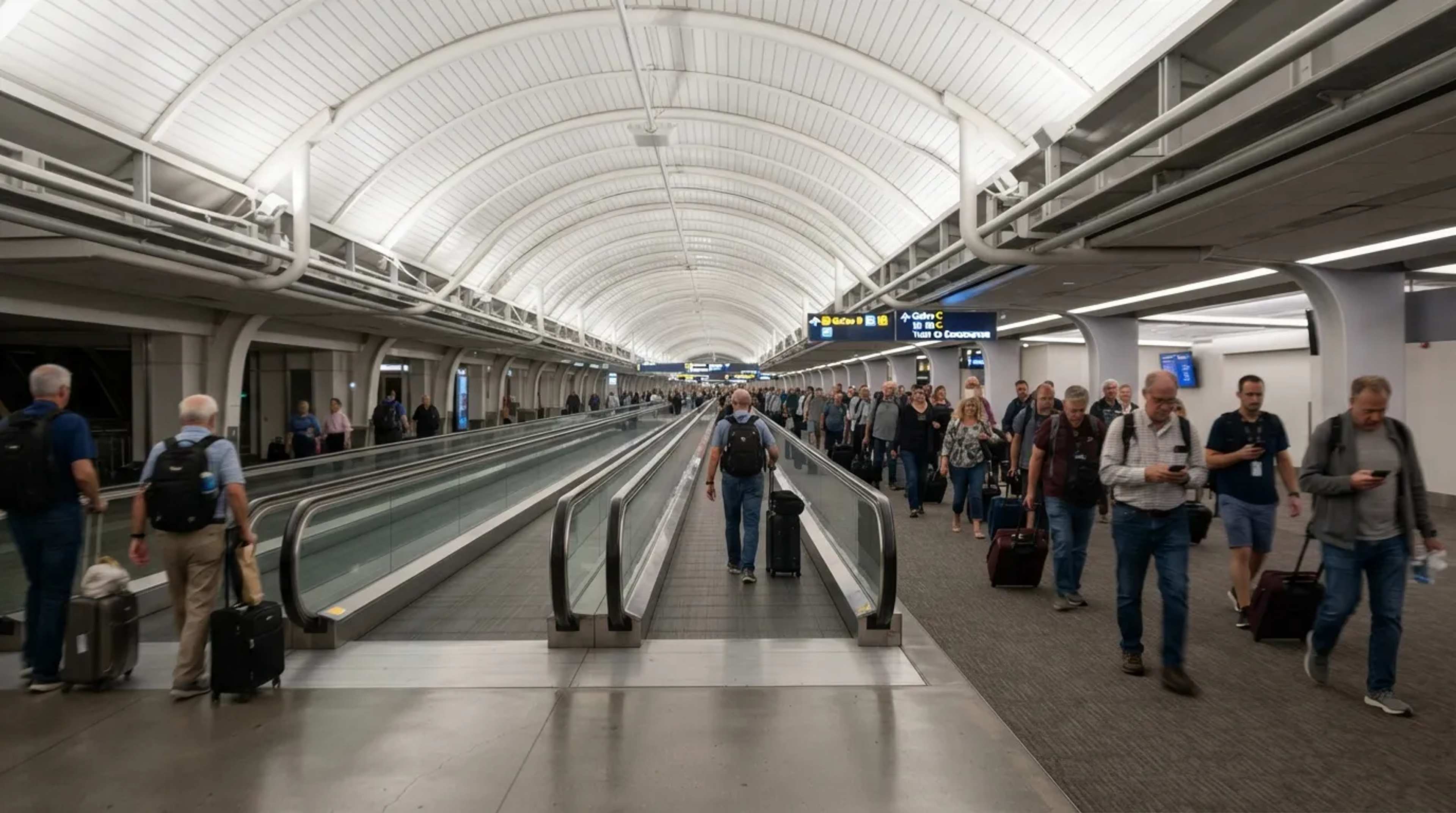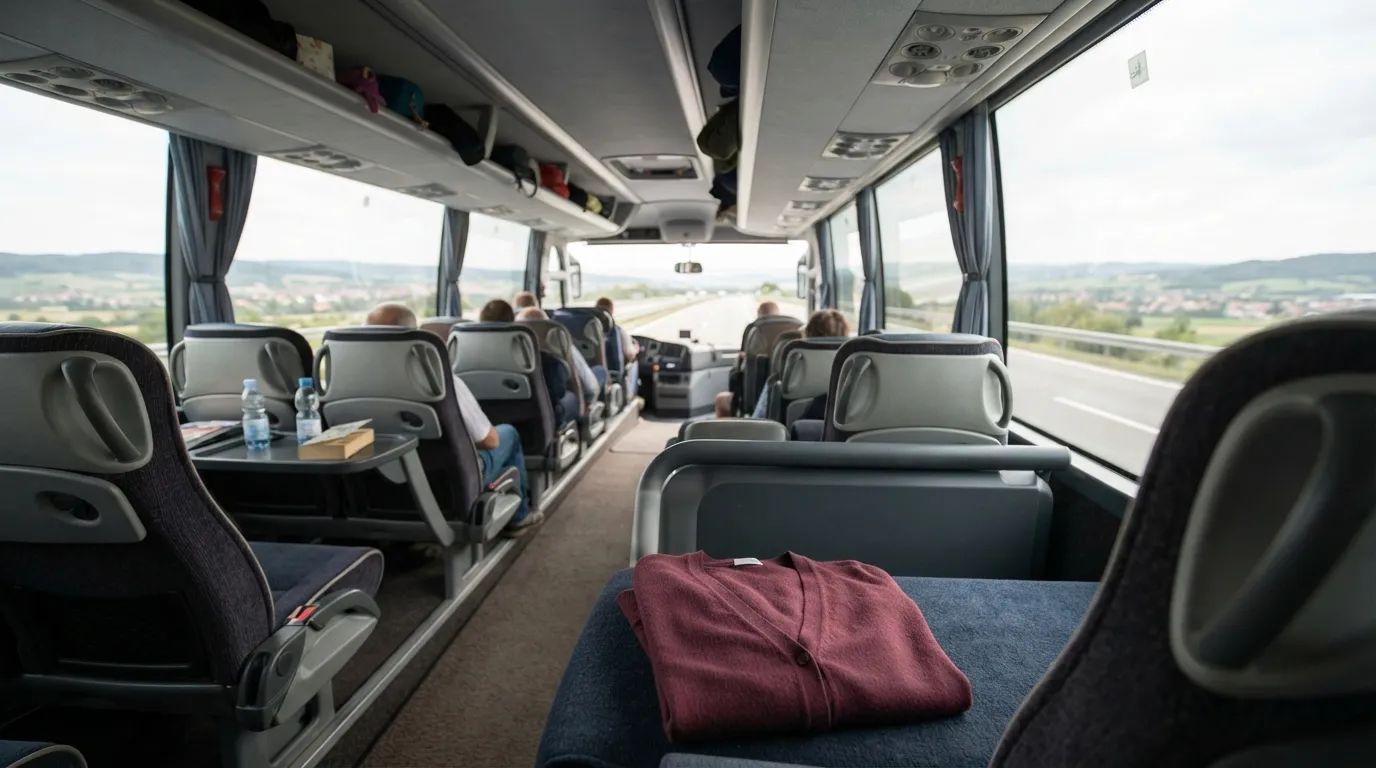
It’s 8 a.m. on day one. You hand your suitcase to the driver, watch it disappear into the baggage hold, and only then realize your cardigan and your pills just went in with it.
On many tours, one suitcase per guest rides under the coach all day, out of reach until the next hotel. That turns small packing slips into real costs: a burned-out appliance, a surcharge, a missed dose.
These fifteen mistakes run from minor nuisances to one that no shopping trip can fix. Stay through #1, which covers the item you can’t replace on the road and the rule that makes every other bag easier to pack. It starts with your feet.
#15 – Brand-New Shoes Packed for Cobblestone Days
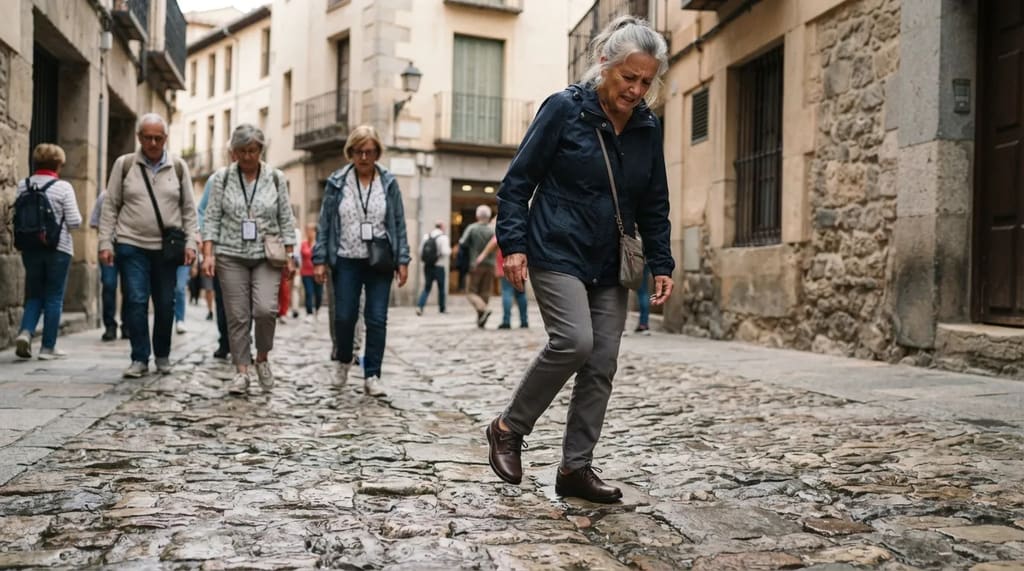
A pair of shoes bought last week has never faced six hours on uneven stone. Old-town streets in many European cities are paved with cobblestones, and a walking tour of one can run well past the point where a stiff heel starts to rub.
Wear any new pair around your neighborhood for a few weeks before you leave, on sidewalks and on stairs. That way a sore spot shows up while the store will still take them back. Break in every pair you pack, and pack only two.
Fast Facts
- Start breaking in new shoes a few weeks before departure.
- Test them on sidewalks and stairs, not just around the living room.
- Two pairs is the ceiling: one for walking, one clean backup.
- Keep the receipt until you know they’re comfortable.
The dressy second pair is the first thing to cut. A clean pair of your walking shoes goes with nearly any dinner on a tour, and shoes are heavy for their size, which matters once the suitcase meets a scale.
Good shoes handle the street, but the shirts you pair them with face a harder test in a hotel bathroom sink.
#14 – Cotton Outfits That Won’t Dry Overnight

On a multi-city tour you may sleep in a given hotel only a night or two, which leaves a damp shirt very little time to dry. Heavy cotton and denim can still be wet by morning. Thin synthetic and blended fabrics sold as quick-dry usually dry overnight on a towel rail.
Pack fabrics that dry overnight on a towel rail. Wash a shirt in the sink with a little shampoo, roll it in a towel to press out the water, and hang it before bed. The whole job takes about five minutes.
Itineraries that run from mountain passes to Mediterranean coasts cover a wide range of temperatures. Thin layers you can add or shed beat one heavy jacket, and they dry faster too.
Dry clothes still need a bag to ride in during the day, and the size limit on that bag catches travelers at the coach door.
#13 – A Day Bag That Won’t Fit Aboard
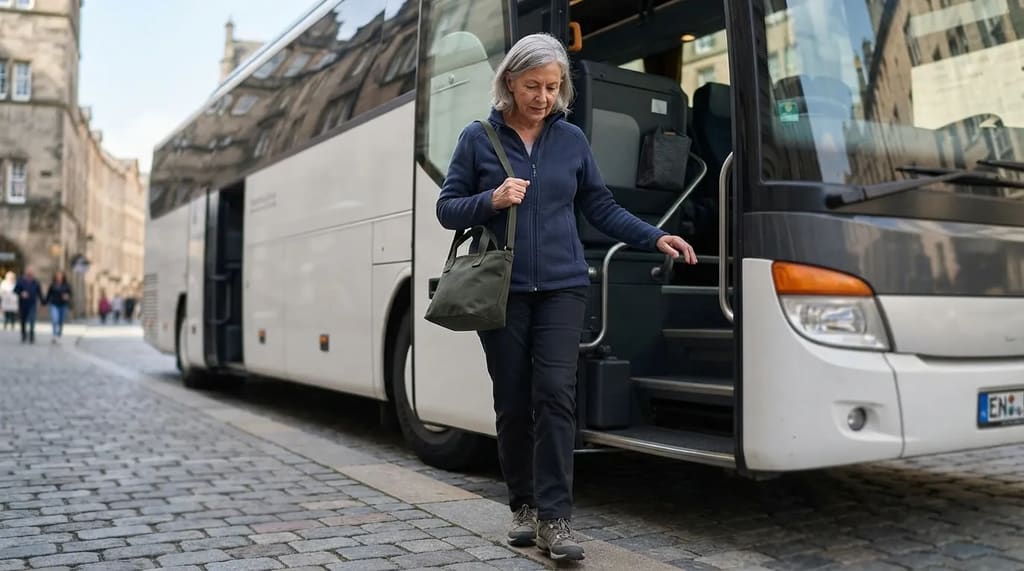
A carry-on bag on a tour coach is not the same as a carry-on for a flight. Trafalgar, for one, allows one piece per person of no more than 12 by 11 by 6 inches, small enough for under the seat or the small overhead compartment, and bars telescopic handles and wheels.1
That’s roughly the size of a small tote or camera bag, which rules out a wheeled roller and a bulging backpack. Choose a soft bag with padded straps you can sling over one shoulder, so a hand stays free for the rail on the coach steps.
Plan your day bag around about 12 by 11 by 6 inches. Your own operator’s figure may differ, so confirm it before you buy anything new.
A bag that small makes everything inside earn its place. The hair dryer from home doesn’t, because the hotel’s wall outlet will treat it badly.
#12 – The 120-Volt Hair Dryer in Your Suitcase
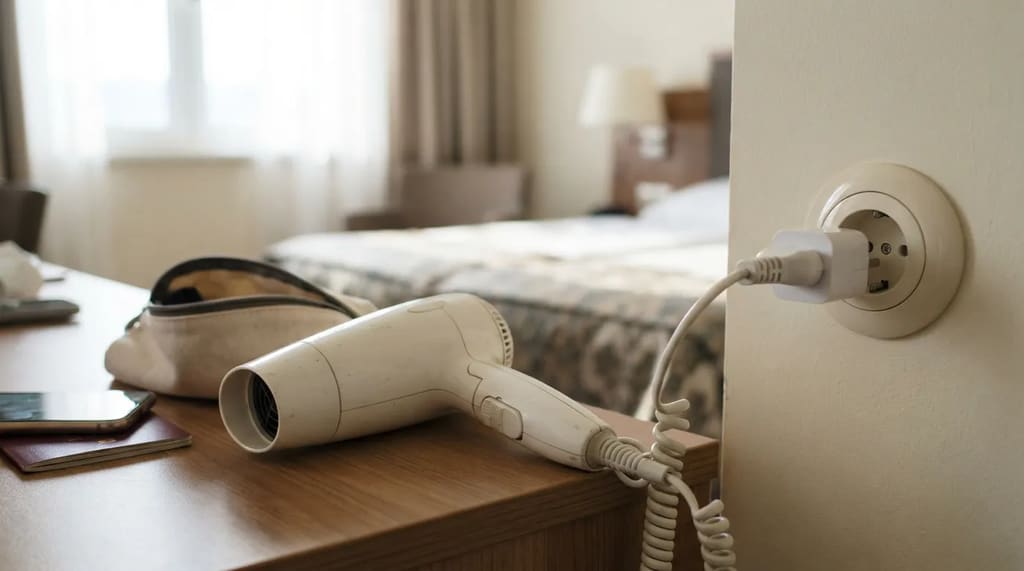
Plug a US hair dryer into a European outlet with only a plug adapter and you may destroy it. Europe runs at 230 volts against 120 in the US, and a passive adapter fits the plug but does not convert voltage.2
Phones, tablets, laptops, cameras and e-readers are the easy case. Their power bricks are almost always dual-voltage, so a label reading 100-240V means a plug adapter is all you need. Hair dryers, curling irons and many electric toothbrushes are the trouble. They’re usually rated for 110-120V only.
On plug shape, continental Europe uses round-pin Type C and F, the UK and Ireland use rectangular Type G, and one universal adapter handles both.
Leave the hair dryer at home. Many hotels supply one in the room, and a dual-voltage travel model is the only safe substitute if you want your own. Read the label for 100-240V before anything touches a European outlet.
Your phone charger passes the voltage test. The backup battery that keeps the phone alive on a long drive has a packing rule of its own.
#11 – A Spare Battery Packed in the Suitcase
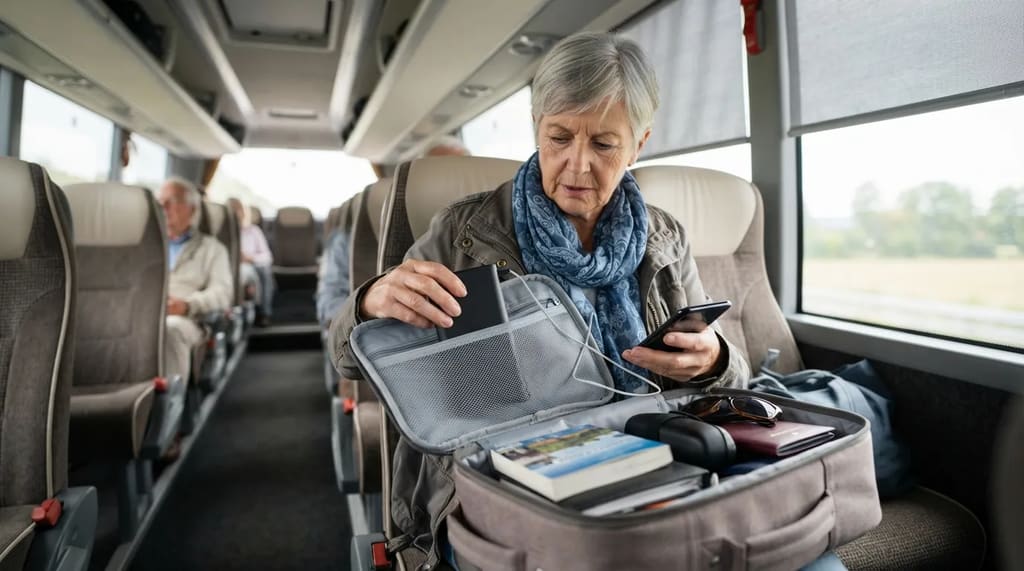
Spare lithium batteries, including the power bank in your purse, belong in your cabin bag and not in a suitcase you check for the flight.3 Airlines require this because a damaged battery that overheats is far easier to deal with in the cabin than in the hold.
It matters even more on a bus tour, because the flight over is only the first leg. Once you’re on the coach, a power bank earns its space. Not every seat has a working outlet, and your phone doubles as camera, translator and alarm clock.
Worth Knowing
- Power banks and spare batteries travel in carry-on bags, never in checked luggage.
- Most airlines allow batteries up to 100 Wh in the cabin without special approval. Larger ones need the airline’s okay.3
- The watt-hour rating is printed on the battery. Check it before you pack.
- Coach outlets are not guaranteed, so a charged power bank is your backup.
Pack one short cable per device and a multi-port USB charger, so a single adapter in a hotel outlet can charge the phone, the camera and the power bank overnight. All of it fits easily in the day bag from #13. Keep the power bank in your cabin bag, never in the checked suitcase.
That covers the phone. The layer you’ll reach for around mid-morning is a different problem, since it’s usually in the hold.
#10 – The Cardigan Left Under the Coach

By mid-morning the coach is rolling, the baggage hold is closed, and the air conditioning is working hard over a seat that has no sweater on it. Your sweater is in the suitcase beneath your feet.
At least one large operator bars passengers from stowing an extra carry-on bag in the hold with the suitcases. Whatever you want during the day has to fit in the bag you bring aboard.
Pack the day bag like a tote for a long afternoon: a light layer, a folding rain jacket, tissues, sunglasses, a water bottle and hand sanitizer.
If you’ll want it before dinner, it goes in the day bag. That one rule settles most of the packing decisions on this list.
#9 – No Coins for the Rest Stop Restrooms
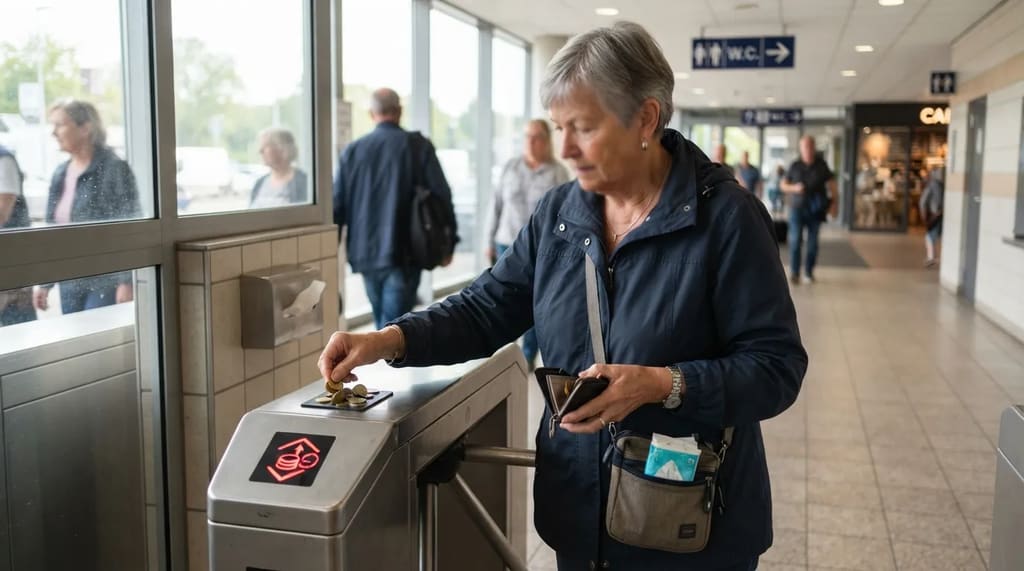
Public restrooms at many European rest stops and train stations charge a small fee, and the turnstile may accept only coins. Comfort stops on a coach are timed, so a fumble through your wallet for change costs you minutes you don’t have.
Keep a handful of small coins in an outside pocket of the day bag, with a pack of tissues beside them. The breakfast bill and café change are an easy way to collect them.
Change them as you go. A euro coin is no help if the route crosses into Switzerland or the United Kingdom, which use their own currencies. Carry a few small coins in the local currency at all times.
Quick Compare
- Germany, France, Italy, Austria: euro coins.
- Switzerland: Swiss francs, not euros.
- United Kingdom: pounds sterling.
- Czech Republic: koruna, even though it’s a popular tour stop.
Coins are a small daily convenience. The pouch coming up saves you a bigger chore: opening a full suitcase in a cramped hotel room every single night.
#8 – No Pouch for One-Night Hotel Stops
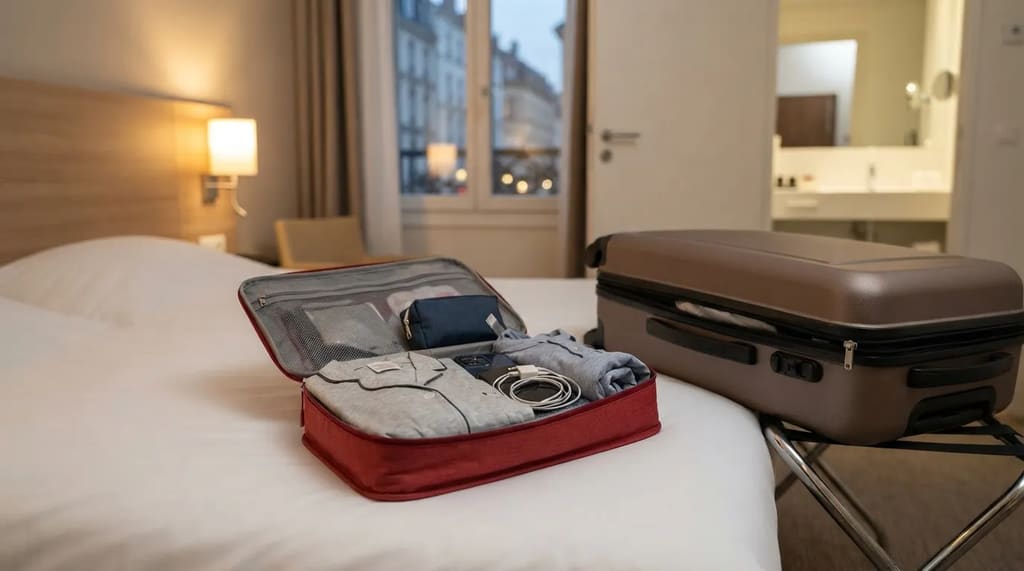
Unpacking an entire suitcase for a single night costs time at both ends, and it’s how things get left behind. A tour that changes hotels every night or two turns that chore into a routine.
Pack a small zip bag or packing cube with the next night’s essentials: sleepwear, toiletries, tomorrow’s clothes, the charger. Pull one night’s worth into a pouch and leave the suitcase zipped. The rest of the case stays organized until the next city.
The pouch also gives you a quick check each morning. If it’s empty and the bathroom counter is clear, nothing stays behind. A phone charger left in a wall outlet is an easy thing to lose.
Tidy bags help in the morning, but the hours between cities are hard on your legs, and one small garment can help.
#7 – Compression Socks Left Out of the Day Bag
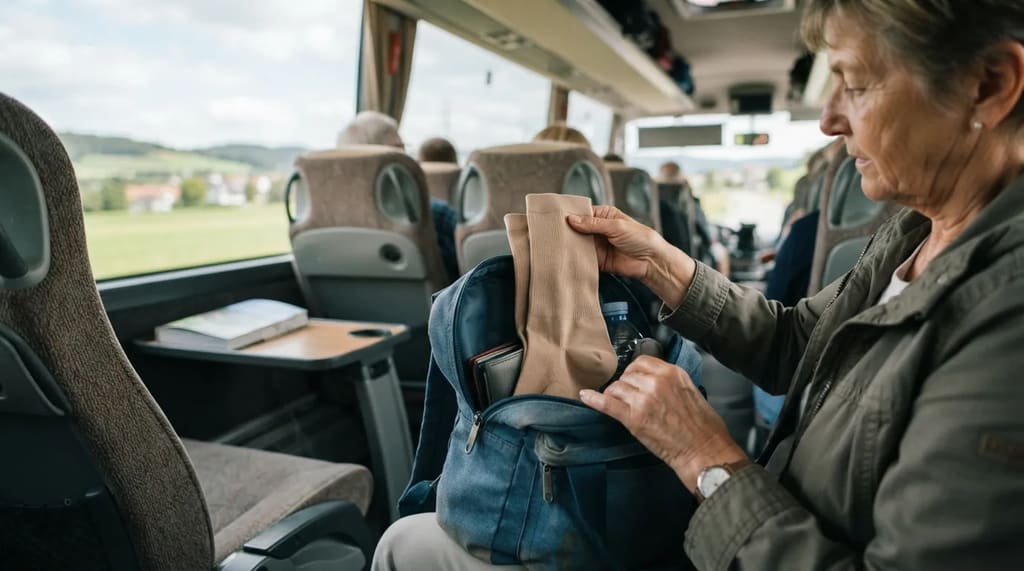
Sitting for hours between cities slows circulation in the legs, and swollen ankles at the end of a long coach day are common. Compression socks are a popular answer, and they take almost no room.
Not everyone should wear them, and fit matters. Ask your doctor before the trip whether compression socks suit you.4 If you have a circulation condition, that conversation is more important than the shopping.
If the answer is yes, pack a second pair so one can dry while you wear the other. Walk around at every rest stop, because movement does what no garment can.
Your legs are covered. The bag that holds your wallet is the next risk, and how you split your money matters more than which bag you buy.
#6 – Passport, Cards and Cash in One Pocket
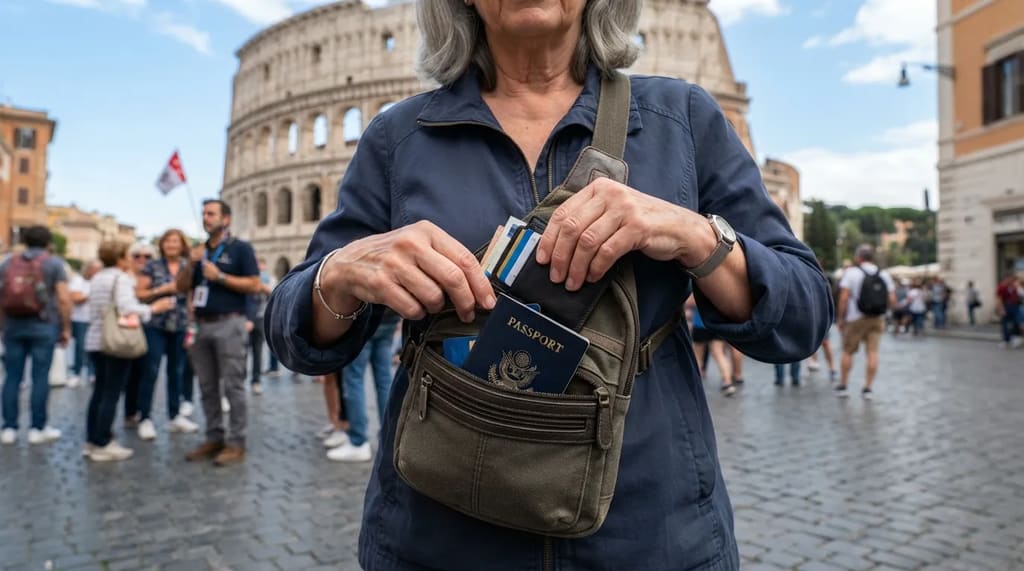
A lost wallet on day three of a ten-city tour cancels more than your spending money. If the passport, the only credit card and the cash are all in one bag, one loss takes all three at once.
Split them. Carry one card and a modest amount of cash for the day, and keep a second card somewhere else. If your hotel has a room safe, leave the passport there and carry a photocopy or phone photo, unless you’re crossing a border that day.
A money belt under your clothes is more trouble than it’s worth on a coach tour, where you spend the day with a group and a guide. A zippered crossbody bag worn in front covers ordinary risk. Never keep your only card and your only passport copy in the same bag.
Cards can be replaced with a phone call. The suitcase has to be carried, and in some hotels you’ll be the one carrying it.
#5 – A Suitcase You Can’t Lift Upstairs
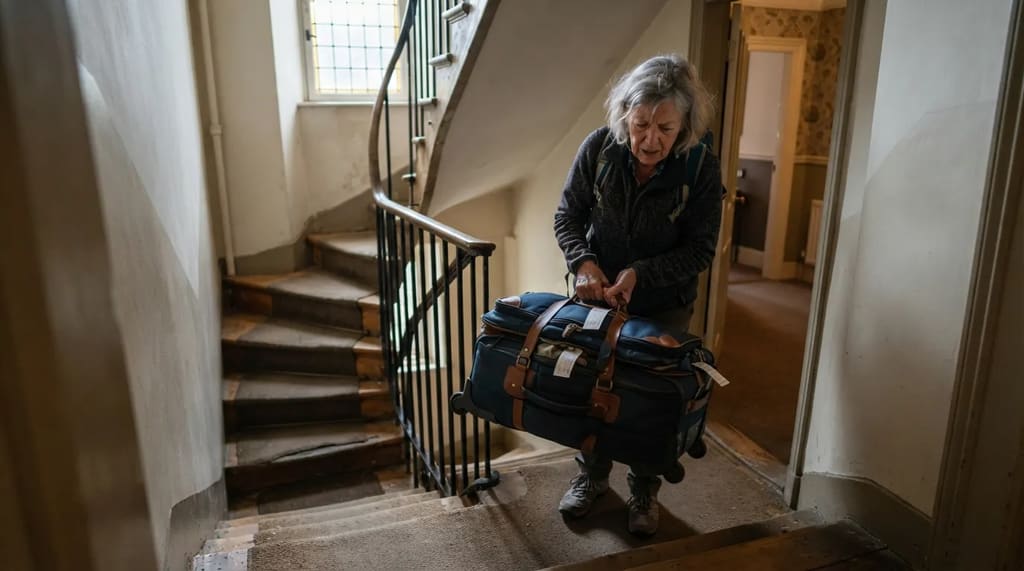
Not every hotel on a tour has a lift, and where it doesn’t, the stairs may be yours to climb with the bag. Star Tours, a UK coach operator, notes that some hotels may not have lifts and passengers carry their own luggage to and from their rooms.
The same applies to train legs. Where an itinerary includes rail, passengers handle their own luggage. So the real weight limit is the one your own arms can manage, which may be lower than the number on the tour’s paperwork.
A case can come in under the limit and still be too heavy for a flight of stairs, a curb or a luggage rack. Carry your packed suitcase up one flight of stairs before you leave home. If you’re out of breath at the top, take something out. On stairs, wheels don’t help.
Your own strength sets one limit. The limit on the paperwork is firmer, and going over it can cost money for every day of the tour.
#4 – Packing Right Up to the Weight Limit
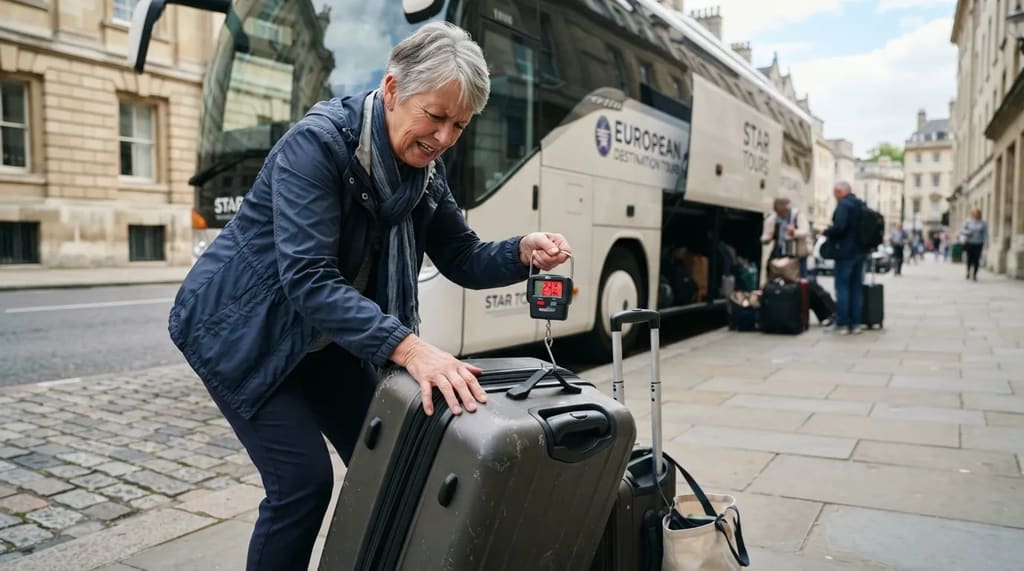
Some operators charge for an overweight bag by the day. Star Tours lists a non-negotiable £10 per bag per day for luggage over its 23 kg weight limit or size limit.5 A single heavy souvenir can turn into a charge that repeats.
Limits differ by operator. One large operator allows a single suitcase up to 23 kg (50 pounds), while another asks for one suitcase of no more than 20 kg, about 44 pounds. Your airline’s allowance can differ again, so work to the lowest of the three figures.
Treat the limit as a ceiling. A case packed to the limit on the way out has nowhere to put a purchase on the way home. Aim to leave the case at least 10 pounds under the limit.
#3 – Two Travelers, Two Suitcases, No Overlap
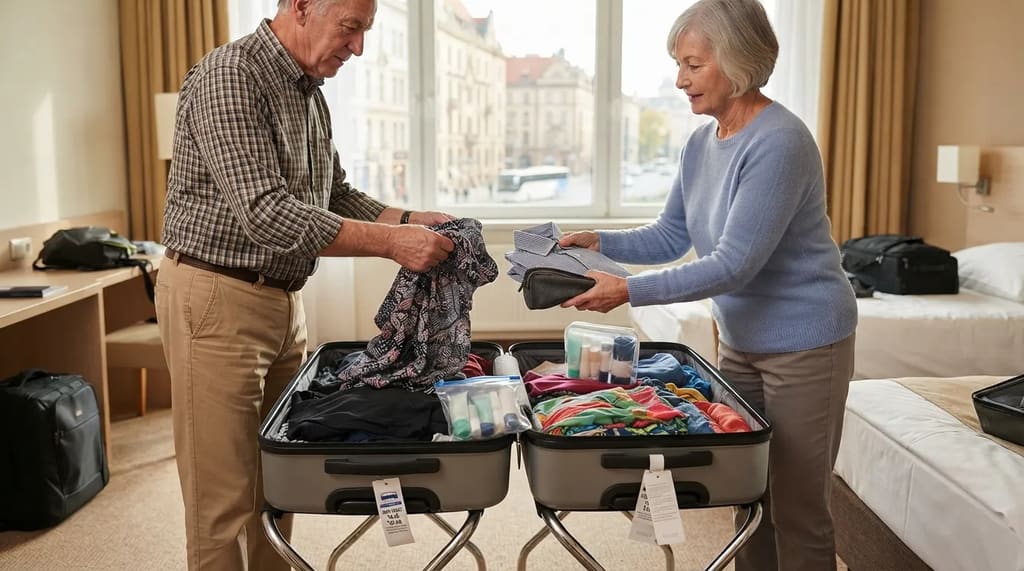
If you travel as a couple, each of you has one suitcase, and each suitcase holds one person’s whole wardrobe. If one bag is delayed on the flight over, one of you is left with nothing but the clothes you’re wearing.
The fix is simple. Split belongings between two cases, so that if one goes astray neither person is left without a change of clothes and necessities. Put one outfit and a set of toiletries for each of you in the other’s case.
It matters more on a tour than on a resort stay, because a delayed bag has to catch up with a coach that changes hotels. Mixing items also lets you balance weight so neither case drifts past the limit in #4. If you travel alone, a one-day kit in the day bag does the same job.
Clothes can be bought in any city on the route. A pill bottle can’t be improvised, and the paperwork for it takes a call to your doctor before you go.
#2 – Pills Without Their Labels or a Letter
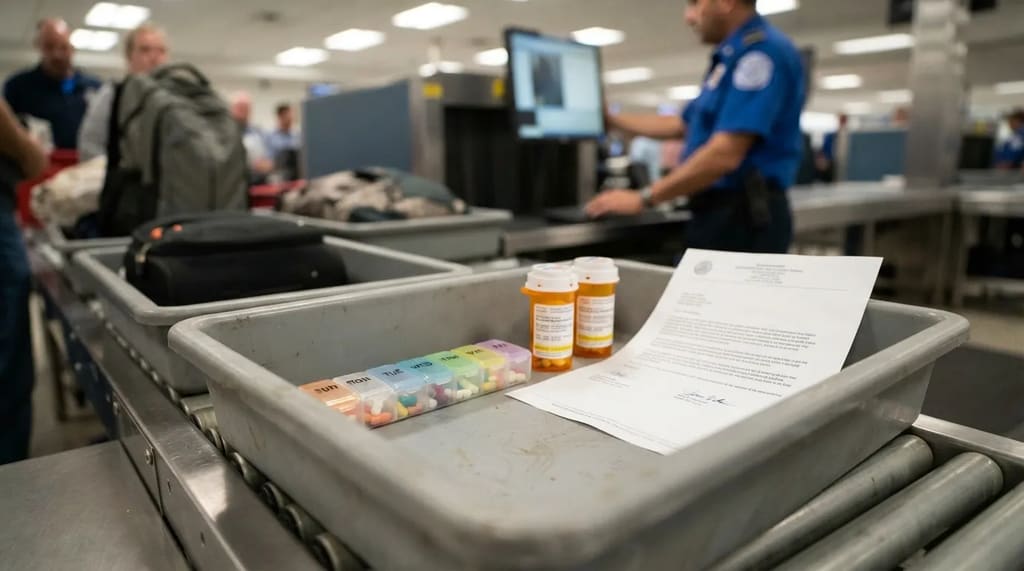
A weekly pill organizer holds your medicine neatly and tells a security officer nothing. Keep medication in its original packaging with the pharmacy label showing your name, the drug, the dosage and the prescriber.
If you use an organizer anyway, bring the original bottles or a signed copy of the prescription as backup.
Add a letter. A doctor’s letter in English should give your name, each medicine’s active ingredient, the dose and daily amount, and the reason you take it.6 Carry a doctor’s letter in English listing each medicine, its dose and its purpose.
The letter earns its place with liquids and controlled drugs. Liquids over 100 ml, such as insulin or syrups, are allowed through security when you show the letter.6
Strong painkillers, ADHD stimulants and some sleeping or anxiety medicines can need a Schengen certificate inside the Schengen area.7 Ask your doctor about each country on your route well before you leave.
You have the papers. Where you pack the medicine decides whether any of it is useful, and that choice can’t be undone once the driver closes the hold.
#1 – Medicine Packed Where You Can’t Reach It
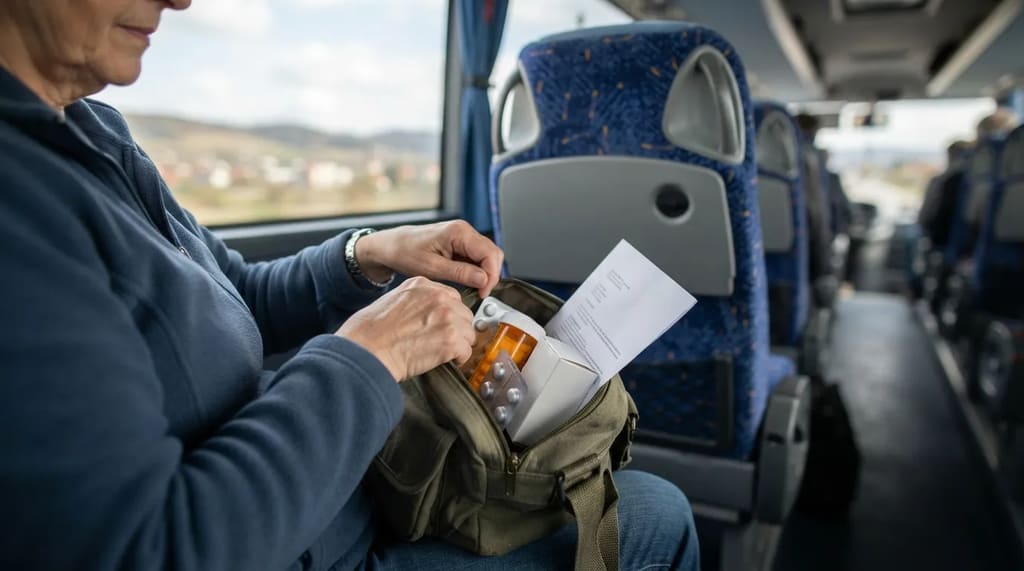
The suitcase goes into the hold at the first stop, and if your pills are inside, they go with it. A missed dose can’t wait until the evening, and a lost or delayed suitcase leaves you with nothing at all.
Hand luggage is where medicine belongs, in the original packaging with the pharmacy label. On a coach tour, that means the day bag from #13, with the letter from #2 tucked in beside it.
At a Glance
- Where: the day bag, never the suitcase.
- How: original packaging with the pharmacy label showing.
- Paperwork: the signed doctor’s letter in English, tucked in beside it.
- How much: the trip’s supply plus a few spare days.
Replacement is the real problem. If you run out abroad, you will usually need a doctor to issue a new prescription, and on a moving itinerary you may not be in one city long enough to see one.
Compare that with the hair dryer in #12. A dryer costs money to replace, but a prescription costs days.
Ask your doctor about quantity. Take only what you need for the trip plus a few days’ spare, because a delayed flight or a missed connection is a real possibility. Medicines ride in the day bag, with a few spare days’ supply.
If you travel as a couple, split the spare doses between two day bags, the same logic as #3. Everything else on this list can be bought, borrowed or rinsed out in a sink. Medicine needs a prescription, and that means a doctor you haven’t met.
Pack for the Hours You Can’t Reach Your Bag

The fifteen mistakes share a cause. A coach tour splits your belongings into two groups: the day bag you control and the suitcase you don’t see until evening. Most errors come from putting an item in the wrong group.
Before you zip anything, sort the pile with one question: when will I need this? Anything for the coach, the morning or the first night goes in the day bag. The rest can ride under the bus for a day and nothing bad happens.
What’s one thing you’d never let out of your sight on a trip, and what in your day bag is there because of it?
Bonus: The Five-Minute “Proof Kit” Nobody Builds Before Departure
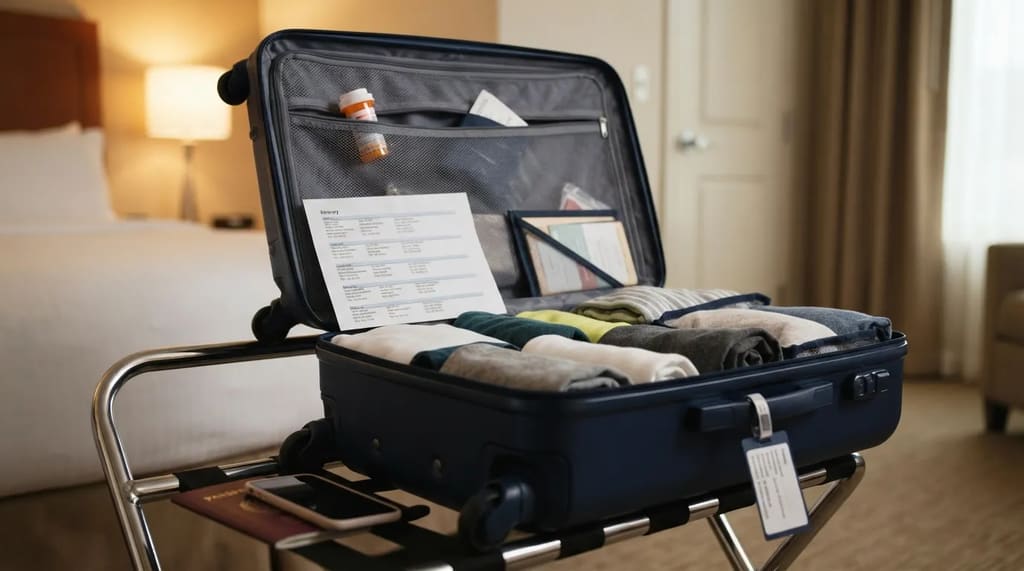
Most travelers pack everything except the evidence. When a suitcase is delayed or a prescription goes missing, the people who get fast help are the ones who can prove what they had and where they will be tonight.
Build this kit the night before you fly:
- Photograph the open suitcase from above, then each pharmacy label, the doctor’s letter and the bag’s luggage tag. Take one more photo of the closed case so you can describe it exactly.
- Put a printed itinerary inside the suitcase showing each hotel name, address and phone number for the first few nights. A tag on the outside can come off, and a page inside lets the airline deliver a delayed bag to your hotel instead of your home.
- Email the photos and a PDF of the itinerary to yourself and one family member, and save them on the phone so they open without a signal.
- If a bag doesn’t appear, file a delayed-bag report before you leave the baggage hall. Keep the claim tag and the reference number, and give the airline your first hotel and your tour operator’s contact details.
The whole job takes about five minutes at home. It turns “I think it was a blue case with a gray strap” into a precise report, and it gives a doctor abroad a clear record of every medicine you take.
Keep the receipts for any clothing or toiletries you must buy while a bag is missing, and check your travel insurance policy for delayed-baggage terms before you leave.
- Trafalgar Travel Conditions: https://www.trafalgar.com/en-ca/resources/conditions
- Plug Adapter Voltage Guide: https://adaptermatch.com/can-you-use-a-hair-dryer-abroad/
- FAA PackSafe Lithium Batteries: https://www.faa.gov/hazmat/packsafe/lithium-batteries
- CDC Blood Clots Travel: https://wwwnc.cdc.gov/travel/page/dvt
- Star Tours Luggage Guide: https://startours.co.uk/travel-guides/travel-and-transport-coach-luggage-pickup
- Travelling With Medication Guide: https://expatcents.com/guides/travelling-with-medication-europe/
- BfArM Schengen Controlled Drugs: https://www.bfarm.de/EN/Federal-Opium-Agency/Narcotic-drugs/Travelling-with-narcotic-drugs/_node.html