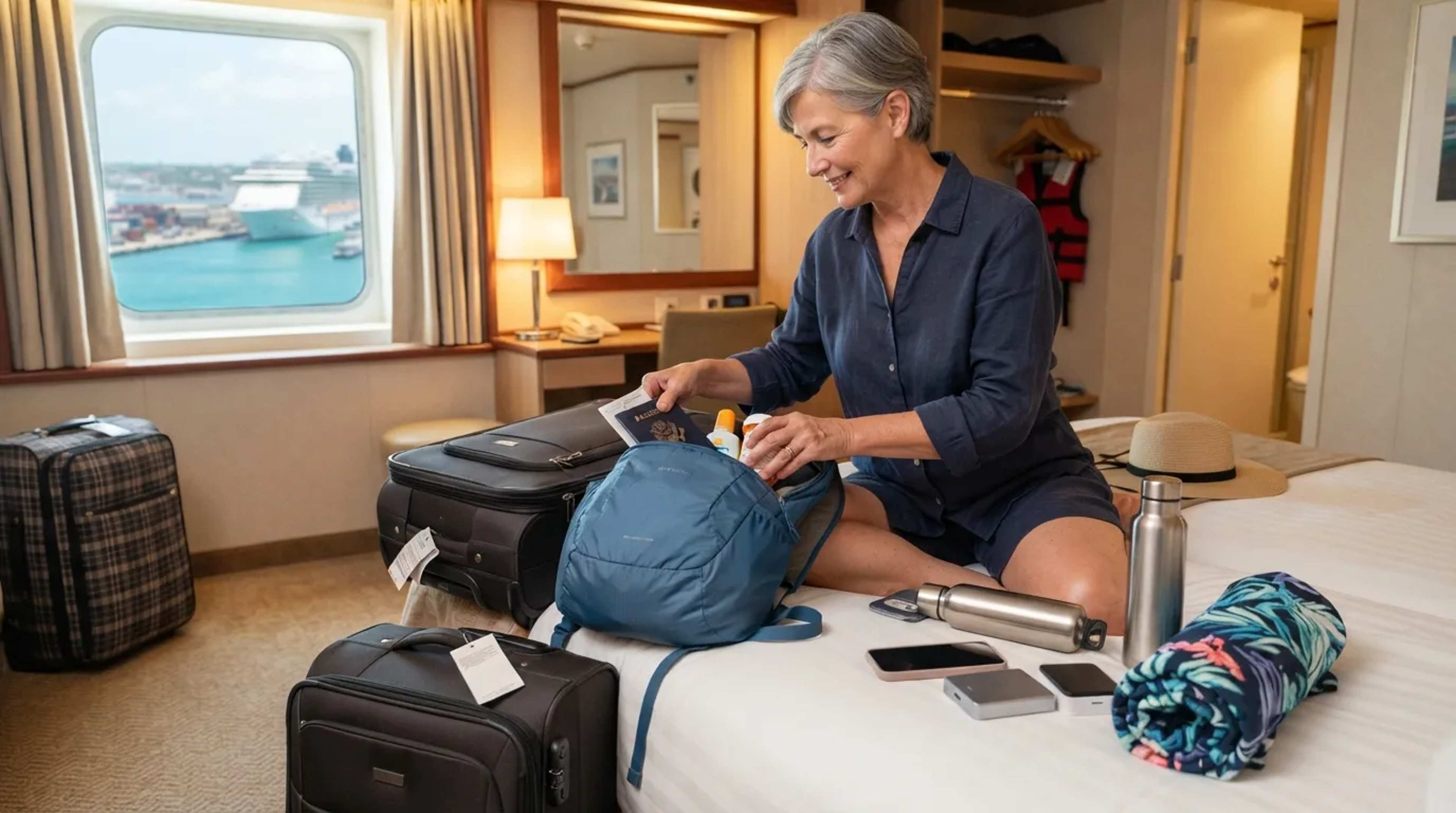
The cabin door opens, the bed is made, and sunlight spills across the carpet. Repeat cruisers know that is the moment to slow down, not unpack.
These are the twelve checks they finish in the first hour, and each one is cheap to fix now and annoying to fix later. Cabins commonly open around one or two in the afternoon and ships often sail around four, so the window is short.
Skip the checks and the price is small but sticky: a warm night, a dead toilet, a long wait on the phone later in the week. Day one is simply the easiest day to get a room fixed or changed.
One of the twelve takes about a minute and is the only one tied to a safety rule. It waits at the end of the list, and we start with the one that quietly decides how well you sleep.
#12 – Thermostat Settings Left by the Last Guest
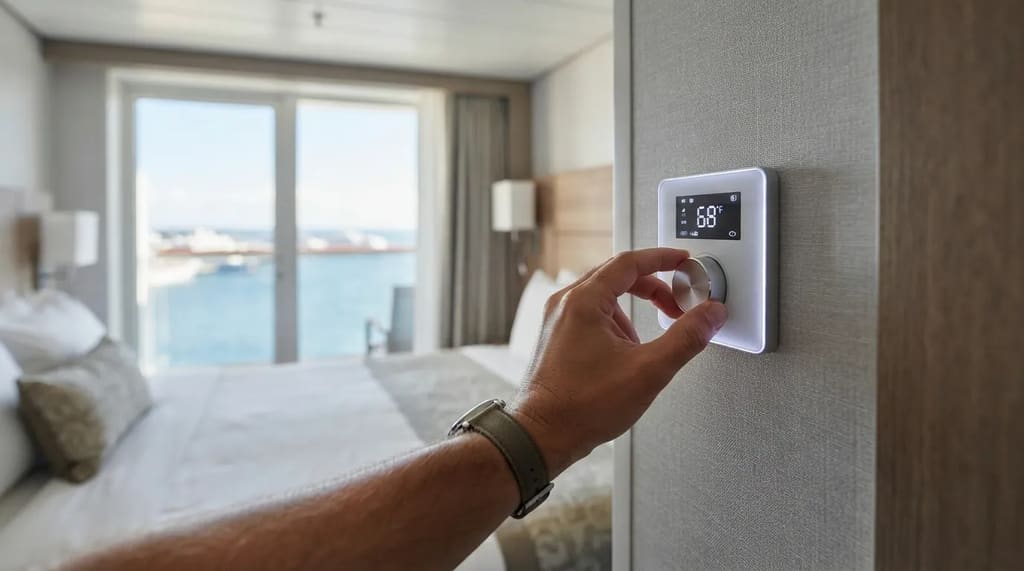
The thermostat may still be set for the last guest, so find it before you wander out to the balcony. Some ships let you choose an exact temperature, while others use a simple dial or slider.1
Turn it to the coldest or warmest end, depending on the season, and watch how quickly the room responds. That is the test Travelers United recommends, and it matters most in a balcony cabin, where sun through the glass heats the room faster.1 2
A cabin that stays warm at night costs you sleep all week, so a room that will not cool deserves a report the same day. Tell your cabin steward as soon as possible.
Waiting until day four to mention a broken air conditioner leaves you with the same warm room and fewer options. By then the easy fixes are gone, and you are pleading instead of asking.
A cool cabin still leaves the beds, which the booking system may have arranged differently from what you requested.
#11 – Bed Layout and the Pillow Squeeze Test
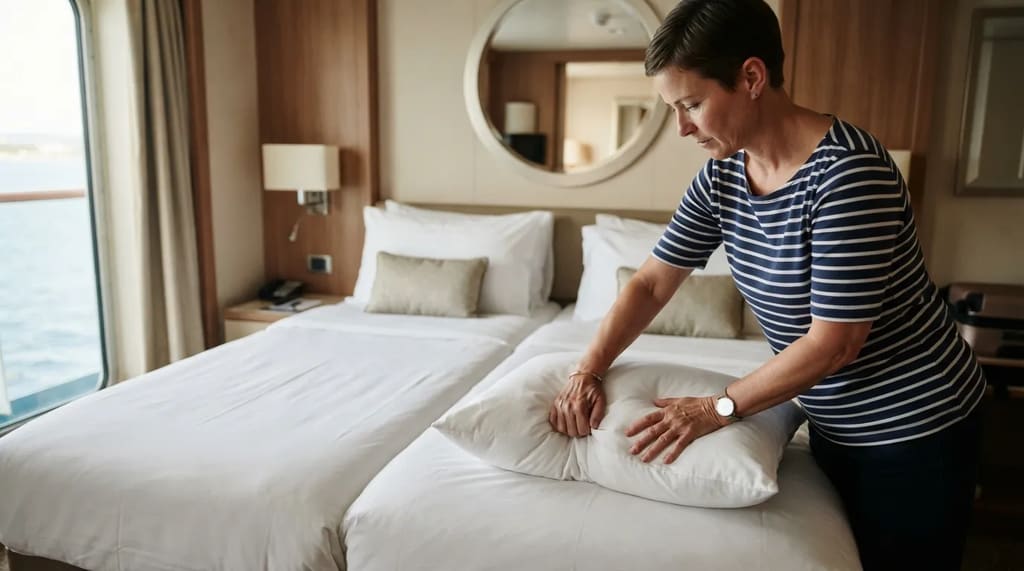
Cruise beds can usually be set up as two singles or one large bed, and you can state your preference on the reservation. The request is sometimes missed, and the first you hear of it is at bedtime.
Check the layout before you unpack, because it is far easier to change on day one than in the middle of the cruise. The fix is a short conversation with your steward.
You do not have to move any furniture yourself. Ask early and the beds can often be adjusted before you go to sleep that evening.
Pick up a pillow and squeeze it, since stewards can often bring extra pillows or a variety close to what you need. That matters a great deal with a stiff neck or a bad shoulder.
If a third or fourth person is traveling with you, check their sleeping arrangements too. A sofa bed or pull-down bed that was promised is worth seeing now, not at midnight.
Fast Facts
- Beds can usually be set as two singles or one large bed
- Your preference can be stated on the reservation, but it is sometimes missed
- Your steward is the right person to ask, not the front desk
- Extra pillows are often available on request
A wrong bed layout is not worth a trip to the guest services desk. Keep the desk for problems a steward cannot solve, which is a line the later items on this list will keep drawing.
Turning back the covers to check the layout also raises the question of what is on the mattress itself.
#10 – Sheet Corners and High-Touch Surfaces
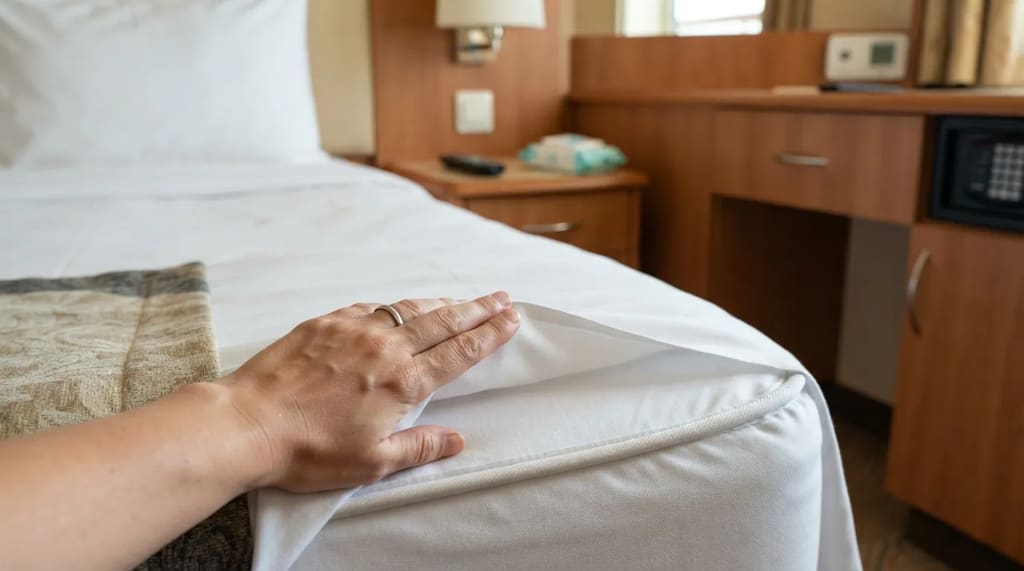
Turn back one corner of the sheet and look for black spots or rust-colored stains, which Travelers United lists as signs of bedbugs.2 Bedbugs are rare on cruise ships, so this is a thirty-second look, not an inspection.3
If you do find something, report it at once and before your clothes leave the suitcase. A move is far simpler when nothing has gone into the drawers.
Then wipe what every guest touches: the remote, light switches, drawer pulls, thermostat, phone and safe keypad.4 Ships are generally very clean, but these surfaces are handled constantly.
A pack of wipes from home makes it a two-minute job. The wipe-down is optional for a healthy traveler and worth it if anyone in your party is frail or recovering from an illness, but the sheet check is the one to keep either way.
Wipes handle the surfaces and say nothing about the plumbing, which shows its faults only when you run it.
#9 – Toilet, Hot Water and Shower Door
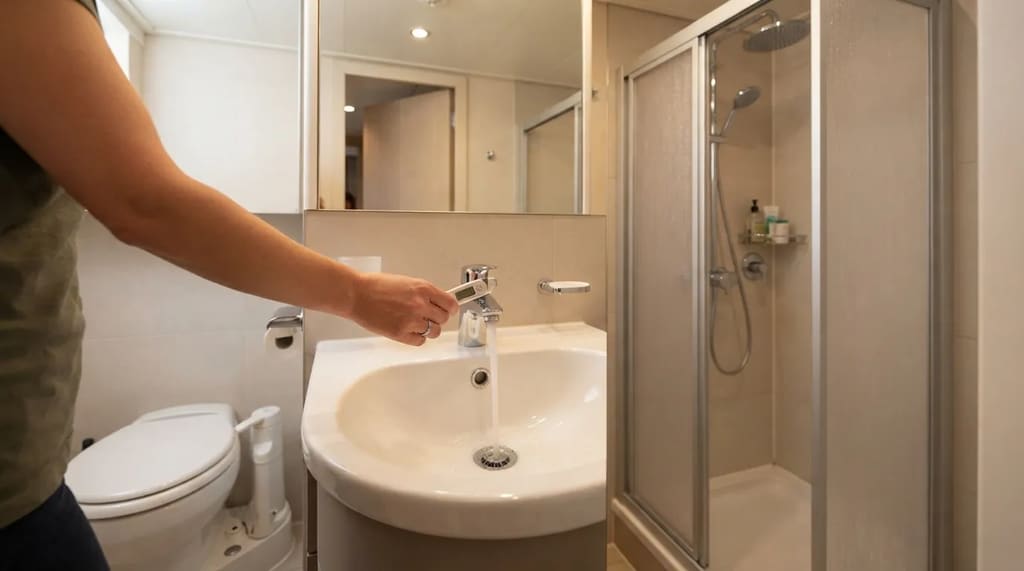
A ten-second test here can save an evening of waiting, because a fixture that looks fine can still fail when you use it. The bathroom check has four parts:
- Flush the toilet and watch it refill
- Run the hot water
- Turn on the sink and check the drain
- Slide the shower door or draw the curtain
Give the hot water a moment to arrive instead of judging it in two seconds. A shower that never warms up is a nasty surprise at seven the next morning.
Close the bathroom door as well, since the doors in the cabin, including the bathroom, closet and balcony, should shut and latch properly. Report anything wrong the same afternoon, because staff still have time to fix it then.
Plumbing is only half of what has to work, and the small electronics are the ones you will reach for in a hurry.
#8 – Phone, Lights and Television Before You Unpack
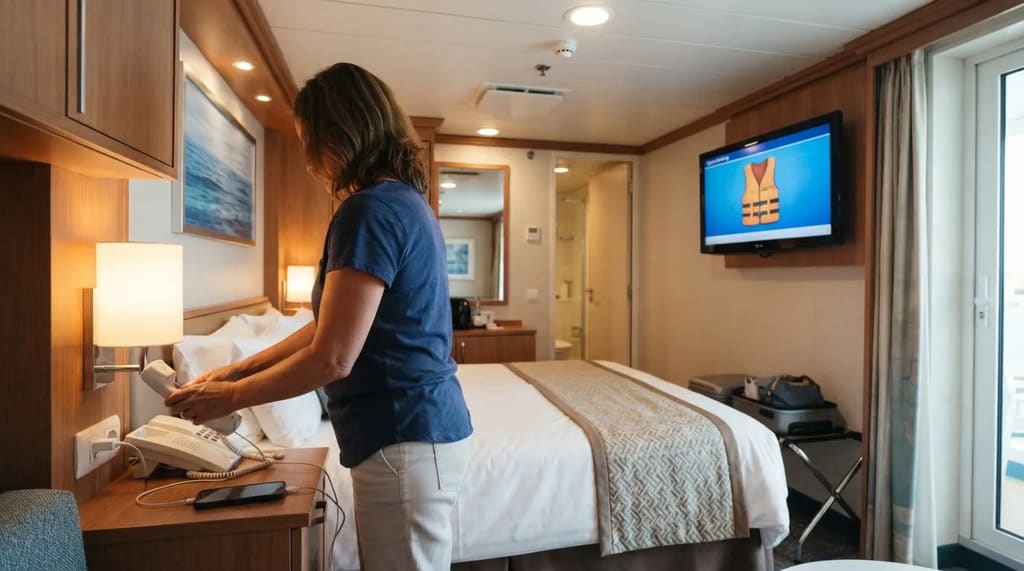
Switch on every light, including the overhead, bedside and bathroom lights. A bedside lamp that fails is easy to ignore until the hour you want to read.
Plug your phone charger into an outlet to prove it works. Cabins often have only a few, and you would rather learn which one is dead now than at eleven at night.
Pick up the cabin phone and confirm it works, since you may need it to reach ship personnel.2 Many lines now run key functions through their app, which means a dead handset can go unnoticed until the night you need it.
Check that the remote has working batteries and that the television gives a clear picture. Many cruise lines now deliver part of the safety briefing by video on the stateroom TV or an app, so a dead screen is more than an inconvenience.
At a Glance
- Lights: overhead, bedside and bathroom all switch on
- Outlets: your charger actually charges in at least one
- Phone: the handset connects to the ship’s desk
- TV: a clear picture and a remote with working batteries
The phone reaches the ship’s desk, though the person who can walk down the corridor and fix a problem is your steward.
#7 – A Quick Hello to Your Cabin Steward
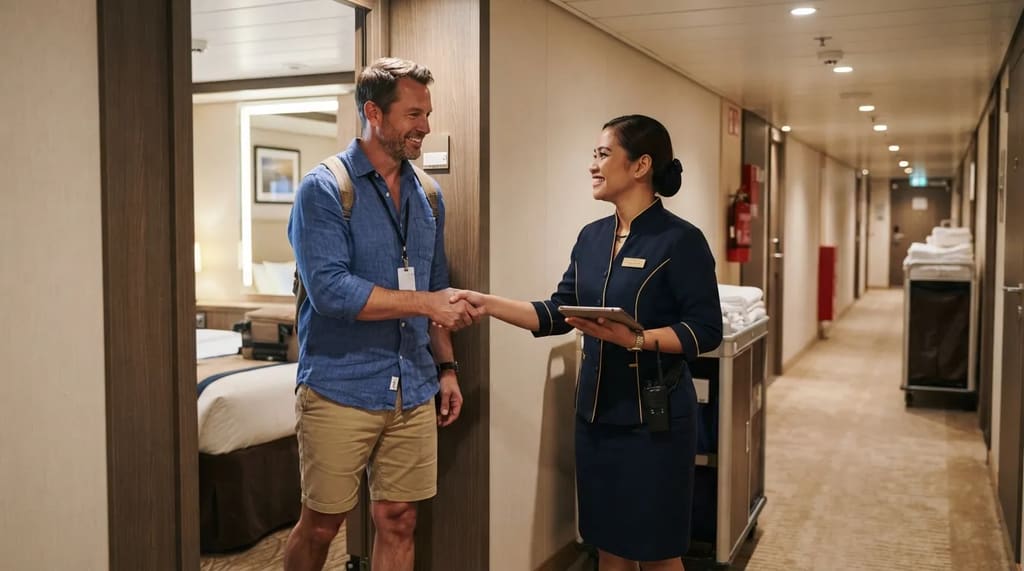
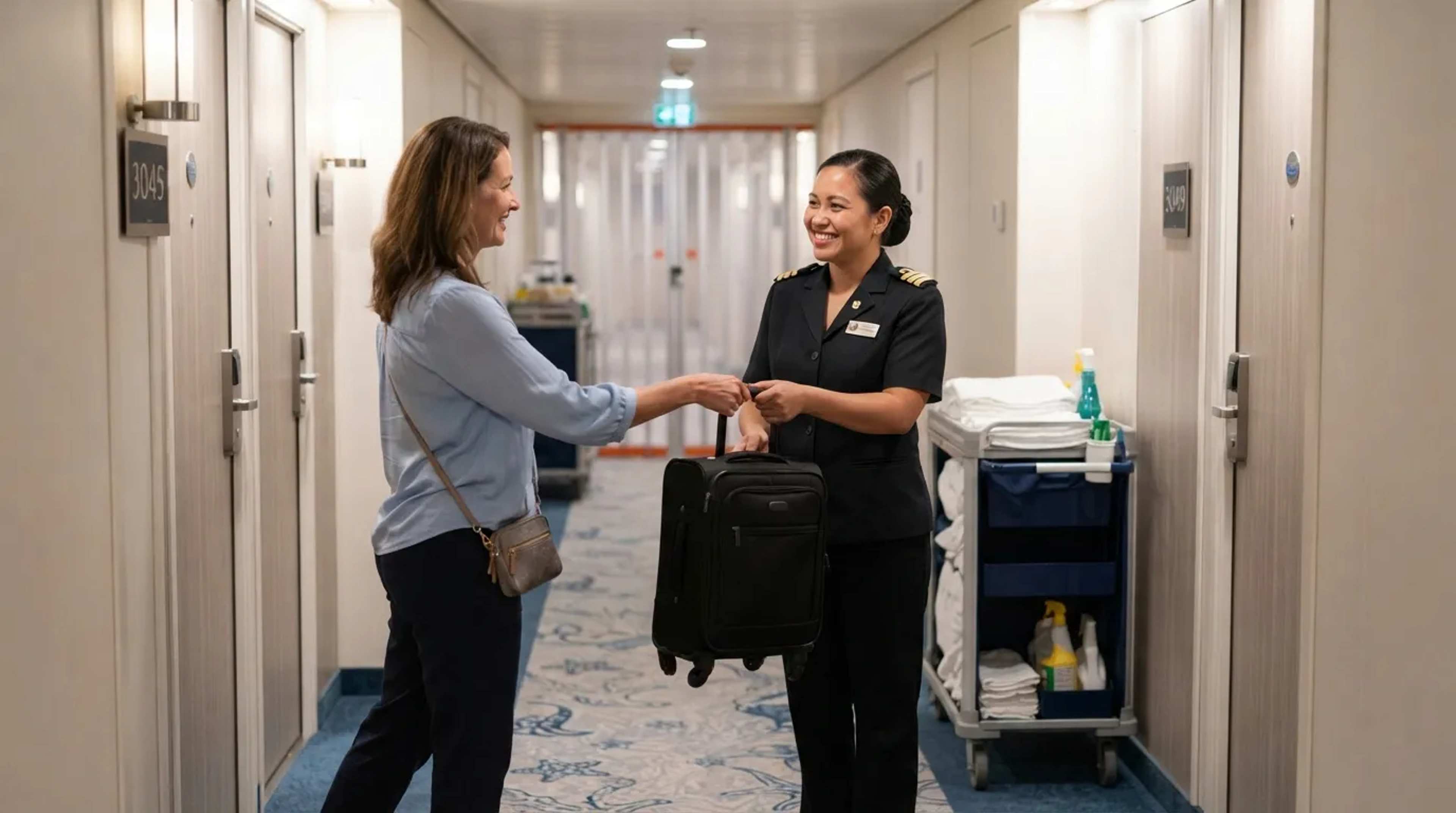
Stateroom attendants go door to door on embarkation day trying to meet everyone in the cabins they service, so you will probably meet yours without looking. Yours stops by daily for housekeeping, which makes that first hello your best chance to say what you need.
Say it on day one rather than day four. Bed layout, extra pillows and ice are all easier to arrange early.
A request made in person on the first afternoon is simple. The same request made after a bad night starts to sound like a complaint.
The steward is the fastest route to a fix for several items already covered, from the bed to a thermostat that is acting up. For anything small on your own list, go to the steward before the desk.
A steward can bring extra pillows, but cannot help with the medication packed in a suitcase that is still on the pier.
#6 – Medication and the Mini-Fridge Temperature
Luggage is delivered to the stateroom later in the day, and it can take several hours. Anything you need before bedtime belongs in your carry-on, and that includes all medications for the first 24 hours.
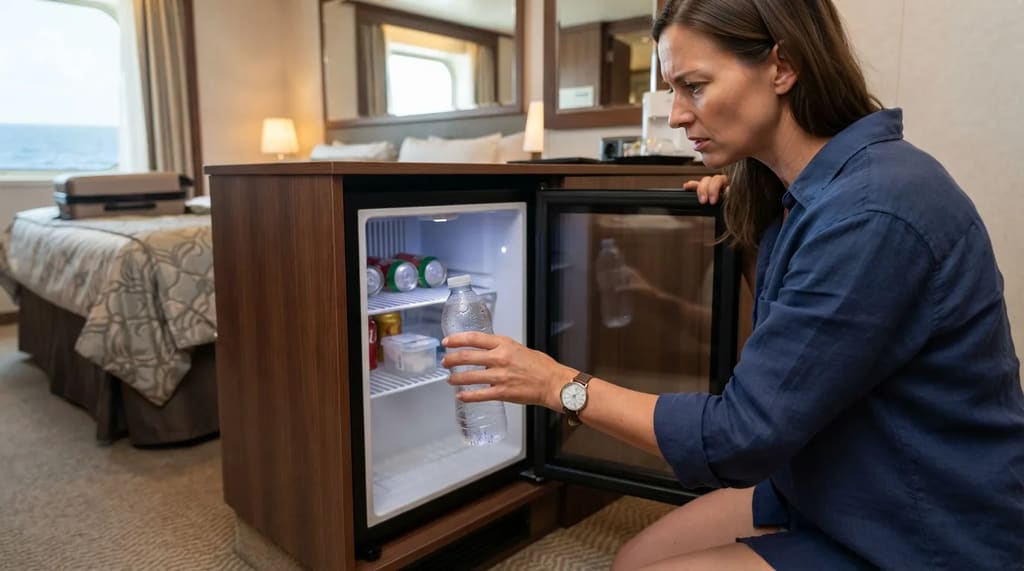
Later, check where your bags landed, because depending on the cruise line they may be inside the room or right outside the door. In the meantime, look at the mini-fridge, which most cabins have.
Its internal temperature can vary, which matters if a medication needs special cooling. Put a water bottle inside when you arrive and feel it later.
Keep anything that spoils out of the fridge until you have seen it stay cold. Ask your pharmacist or doctor how to carry a medication that must stay cold on a trip like this.
If you use a CPAP machine, Carnival, Royal Caribbean and Norwegian all allow them onboard.5 Confirm that an outlet near the bed works before the night you need it.
With the medication handled, the next question is whether you will actually get to sleep.
#5 – Noise From Elevators, Stairwells and Pumps
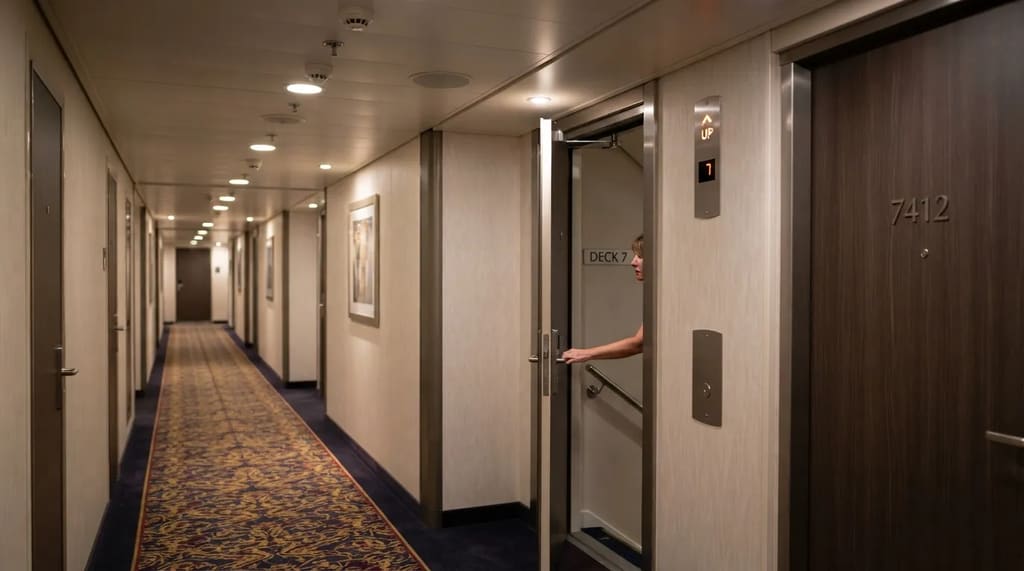
Look at where the cabin sits in relation to elevators and stairwells, and listen, because a docked ship hides some of the noise you will hear later. Stand still for thirty seconds and let the room tell you what it sounds like.
Elevator chimes and stairwell doors are easy to catch when you are quiet. They are much harder to ignore at two in the morning.
Check the deck plan on your phone for what sits directly above and below you. Pool decks, galleys, theaters and nightclubs can mean scraping furniture or thumping bass at odd hours.
Where the cabin sits changes what you hear, and none of it is a defect. It is simply better to know before the first night.
Quick Compare
- Far forward: anchor and thruster work
- Far aft: engine vibration
- Near elevators or stairwells: chimes and slamming doors
- Below a pool deck, galley or theater: scraping furniture or bass
If noise is already a problem, mention it to your steward or guest services on day one. Ships are often full and options can be limited, but a polite request early beats a groggy one later.
Noise can come through the walls, and it can also come through the glass door to a balcony.
#4 – Balcony Door, Divider and the View You Paid For
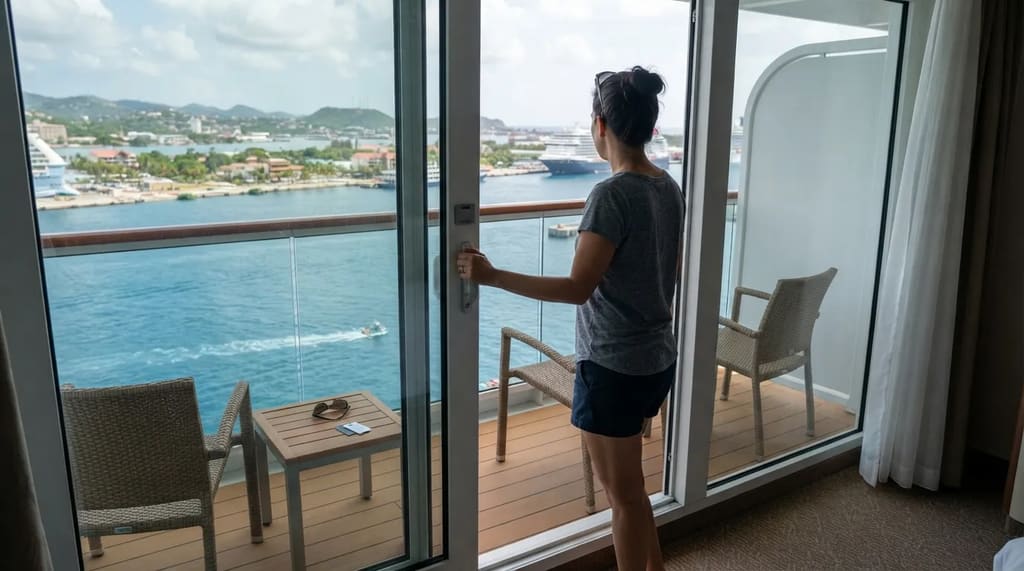
If you booked a balcony, step outside before you do anything else. This is the view you are paying extra for, and it should match the picture in your head.
Slide the door open and shut a few times and confirm that it latches. A sticky or loose door is a safety issue as well as an annoyance, especially with children aboard.
Look up, down and sideways for what a deck plan cannot always show, such as lifeboats, railings, ship structure or a neighbor’s furniture. Compare what you see with your booking confirmation, since cabins with limited views are usually described that way when you book.
Test the chairs and table for wobble, and check that the floor is dry. A small thing, but it is easier to ask for a fix before you have settled in with a drink.
Traveling with friends in the next cabin? Ask your steward whether the divider between your balconies can be opened, since on some ships it can.
With the balcony door locked, the next thing to lock up is everything you cannot afford to lose.
#3 – The Safe and the Key Card
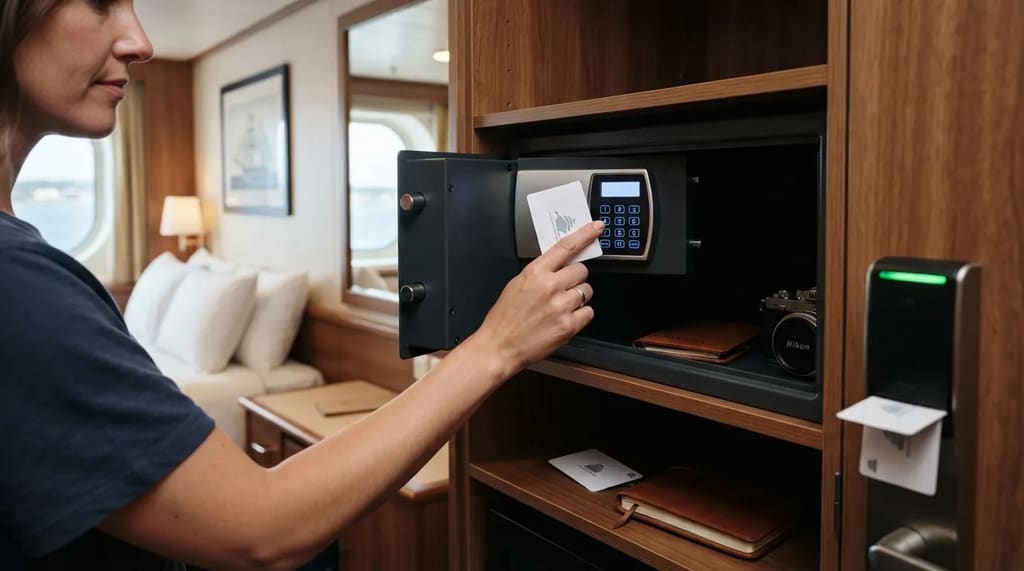
Open the cabin safe and test it before you trust it. A safe that looks fine can refuse a code, and you do not want to discover that with your passport already inside.
Set a code, close the door, and open it again with the code. Do it twice, because that is the only way to know it works.
Check the size while you are at it. Some cabin safes are small, so see whether your laptop or camera actually fits.
Then test your key card in the door lock. It is your room key, your ID and your onboard charge card in one, so check that the name and cabin number on it are right.
Related Stories From Travelbinger


A card that will not open the door is worth fixing at once, and guest services can sort it out. Better to find out now than when you are standing in the corridor after the first dinner.
A working safe and a working card mean little if the cabin itself is not the one you paid for.
#2 – Does This Cabin Match What You Booked?
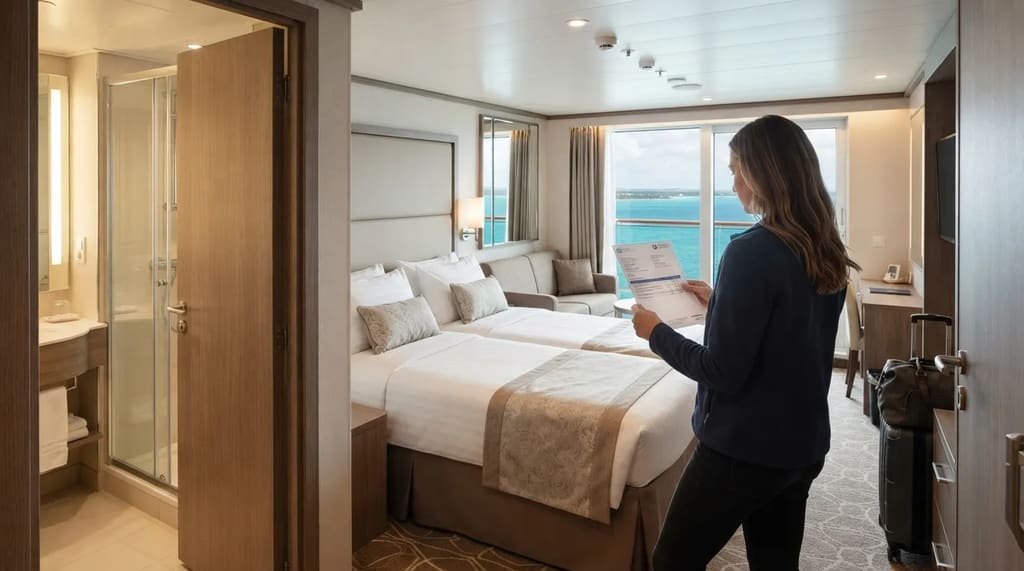
Pull up your booking confirmation and compare it with the room in front of you. This is the check where real money is on the line.
Look at the cabin category, bed setup, bathroom and view type. If you booked a balcony and walked into a cabin without one, that is a clear mismatch.
Count the beds against the number of guests in your party. If you booked connecting cabins, confirm that the connecting door is where it should be.
If you booked an accessible cabin, check that the features you need are really there, such as a wider doorway or a roll-in shower. These are not details to discover on night two.
If something does not match, go to guest services right away. This is exactly the kind of problem a steward cannot solve, and day one is when you have the most options.
Worth Knowing
- Bring your booking confirmation, with the category and bed setup visible
- Take a photo of whatever is wrong before you go, which makes the conversation shorter
- Have your party size ready to compare against the number of beds
- Go in person on day one, when you have the most options
That leaves the last check, which matters even if every other item on the list comes back perfect.
#1 – Life Jackets and Your Muster Station
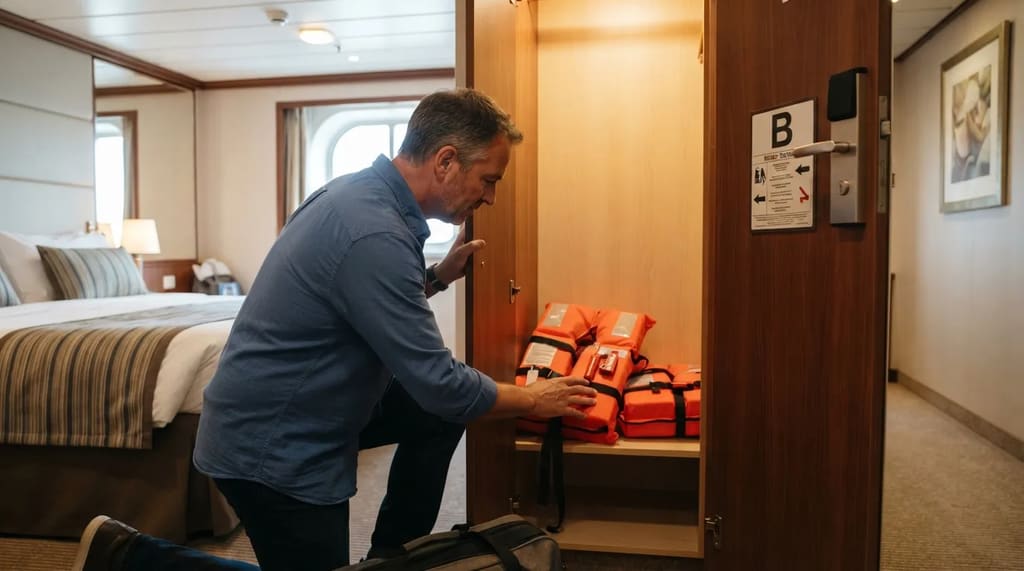
This is the check that takes about a minute and the only one tied to a safety rule. Count the life jackets in your cabin and find your muster station.
Life jackets are usually stowed in the closet or under the beds, and there should be one for every guest on your booking. If a child is traveling with you, ask your steward for a child-size jacket.
Your muster station assignment is usually posted inside the cabin, often on the back of the door. Read it now, while you are not rushing and the corridors are still quiet.
Passengers are required to take part in a safety drill before or immediately upon departure, and cruise lines treat it as non-negotiable.6 7 Knowing your route in advance means you walk to your station calmly instead of following the crowd.
It is the least glamorous item on the list and the one the others quietly depend on. Everything else is about comfort, and this one is about being ready.
Twelve checks, and most of them take less than a minute each. Together they fit comfortably inside the window before the ship sails.
That is the real trick repeat cruisers have learned: the cabin is the part of the trip that is hardest to change once the ship has left the pier. A little suspicion on day one buys a whole week of not thinking about it.
So when the horn sounds and the pier slides away, you can stand at the rail with a cool room, a working safe and a clear idea of where to go. That is when the vacation actually starts.
- Seasoned Cruisers Thermostat Tips: https://travelbinger.com/16-cabin-problems-seasoned-cruisers-solve-before-unpacking-a-single-bag
- Travelers United Embarkation Checklist: https://www.travelersunited.org/easy-embarkation-overlooked-essentials/
- Cruise Ship Bed Bugs Report: https://www.cruiseandtravelreport.com/hotres/cruise-ship-bed-bugs/
- Travelers United Cabin Items: https://www.travelersunited.org/twenty-items-to-complete-in-your-cabin-as-soon-as-possible/
- Carnival CPAP Policy: https://help.carnival.com/app/answers/detail/a_id/3372/~/
- IMO SOLAS Passenger Drills: https://www.imo.org/en/MediaCentre/PressBriefings/Pages/45-SOLAS-eif-.aspx
- Royal Caribbean Muster Drill: https://www.royalcaribbean.com/faq/questions/muster-drill-onboard-safety