Your suitcases can spend several hours out of reach after you board, and the cabin may not even be ready when you arrive. That gap is where repeat cruisers quietly pull ahead.
A confiscated power strip or the wrong bed setup costs you time on a trip you’ve already paid for. These sixteen routines take minutes each, and the crew is usually too busy on embarkation day to walk you through them.
Stay for the last one. It has nothing to do with comfort, and nobody will chase you to do it.
First comes the smallest habit of all, and every other routine assumes you’ve done it.
#16 – Lock the Door and Keep Your Cards Close
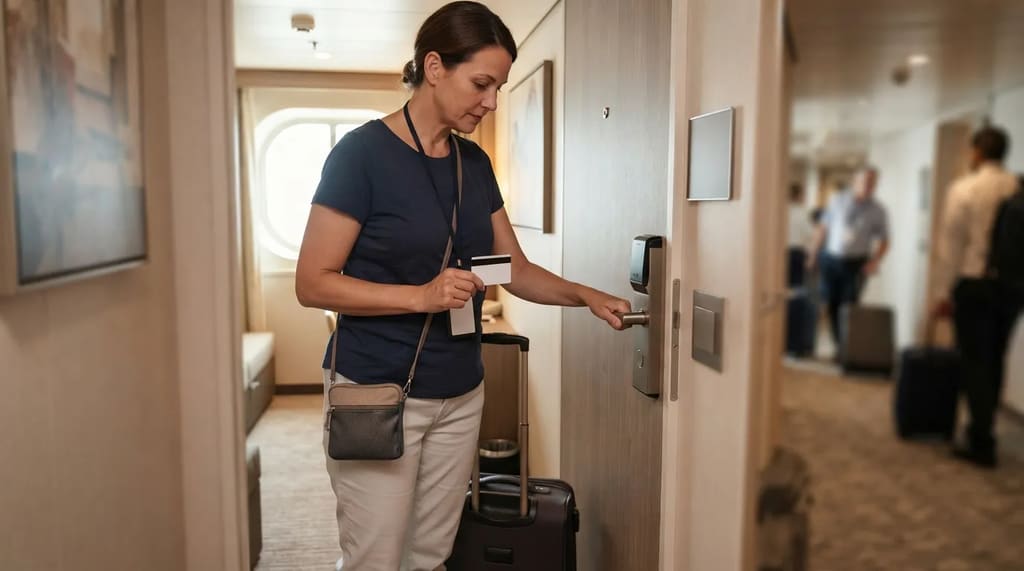
On most lines you get your keycard at check-in, so you can usually walk straight into the cabin once it’s ready. That’s the moment to start a habit you’ll repeat every day of the trip.
Once you’ve set your luggage down, lock the cabin door. Keep your cards on you rather than leaving them wherever you dropped your bag.
Embarkation day fills the corridors with strangers pulling suitcases, and your steward is in and out of other rooms. Lock the cabin door every time you set your bags down.
It costs two seconds and removes one worry before the ship leaves the dock. With the lock handled, the room itself needs a quick test, and the toilet is on the list.
#15 – Test the TV, Lights and Toilet Before Lunch
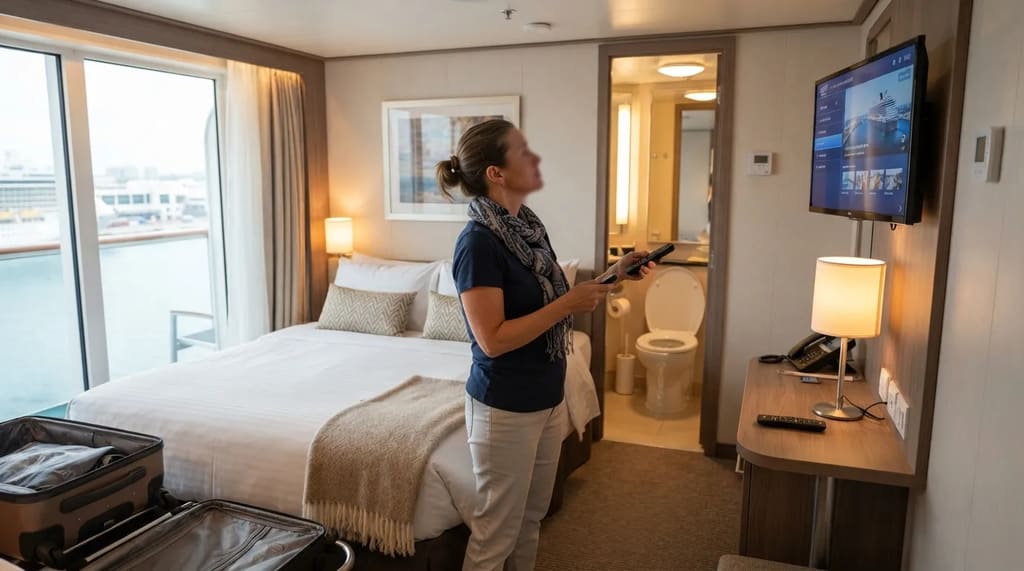
A light switch that fails at midnight stays broken until morning. Cruise Critic’s first-day advice is to test the TV, the toilet and the lights.1
Forbes makes the same point: inspect everything as soon as you enter, to be sure it all works. Add the thermostat, the phone and the outlet nearest the bed, because you’ll use all three every night.
A problem is easier to fix on day one than on night two. So do the check before you head to the buffet, not after.
Test everything before you leave the cabin for lunch. Tell your cabin attendant right away about anything that isn’t working.
Working fixtures are the easy part, though. The harder inspection happens at the mattress, and it takes about two minutes.
#14 – Check the Mattress Seams, Then Wipe the Surfaces
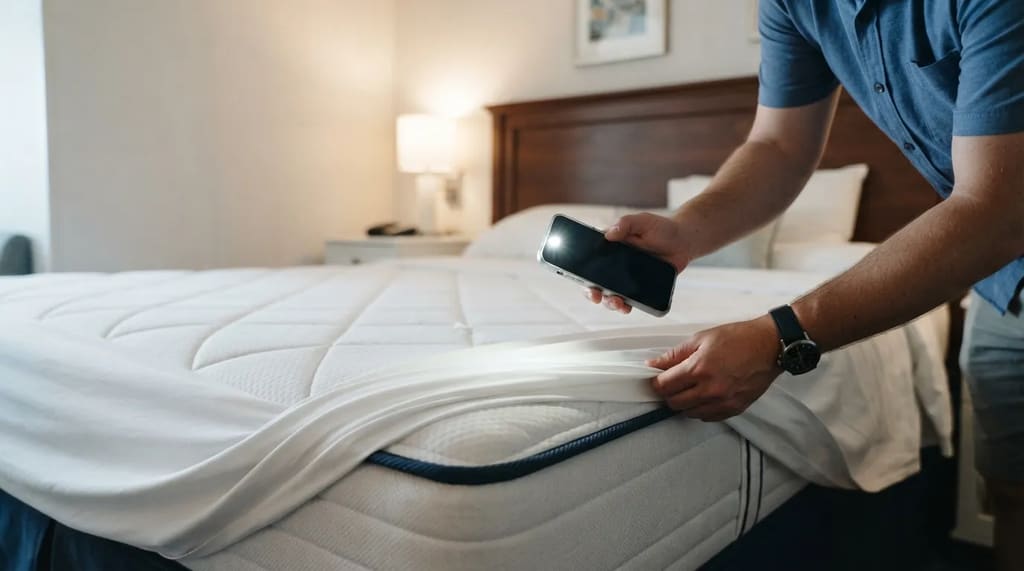
Two minutes with the flashlight on your phone is the cheapest insurance in the cabin. The same Cruise Critic list that says to test the fixtures adds a bed bug check and sanitizing anything you want sanitized.1
Pull back a corner of the sheet and look along the mattress seams and the headboard for dark spots or live insects. If anything looks wrong, tell your steward before you unpack a single shirt.
Worth Knowing
- Adult bed bugs are flat, reddish-brown and roughly the size of an apple seed.2
- Tiny dark spots along seams and piping can be droppings.
- Rusty or reddish stains on sheets are another warning sign.2
- Check the headboard edges too, not just the mattress top.3
Then wipe the TV remote, the light switches, the phone and the safe keypad. Those are the surfaces every previous guest touched, and a few wipes cover them.
Check the mattress seams first, then wipe the remote and switches. If the bed passes, turn to the one piece of cabin equipment that will hold your passport and your cash.
#13 – Set Your Own Safe Code and Test It
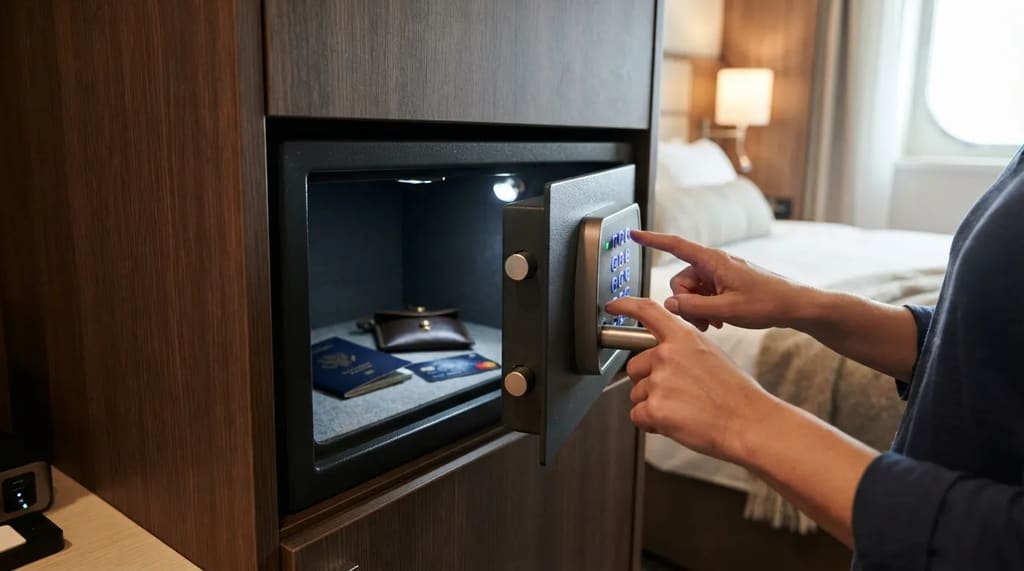
The safe appears on nearly every boarding-day checklist. The usual advice is simply to lock your valuables in it.
The checklist skips the part that matters, which is whether it opens again. Close the door, enter a code you’ll remember, and open it again.
Open and close the safe twice before you trust it. If it jams or won’t take a code, tell your steward that afternoon, not on the last night.
Passports, spare cards and jewelry belong inside. Sunglasses and the paperback don’t, and a safe with a short list of contents is easier to check.
Your valuables are secure, but the suitcases holding everything else may still be somewhere in the ship’s luggage system.
#12 – Keep the Carry-On Stocked Until Your Bags Arrive
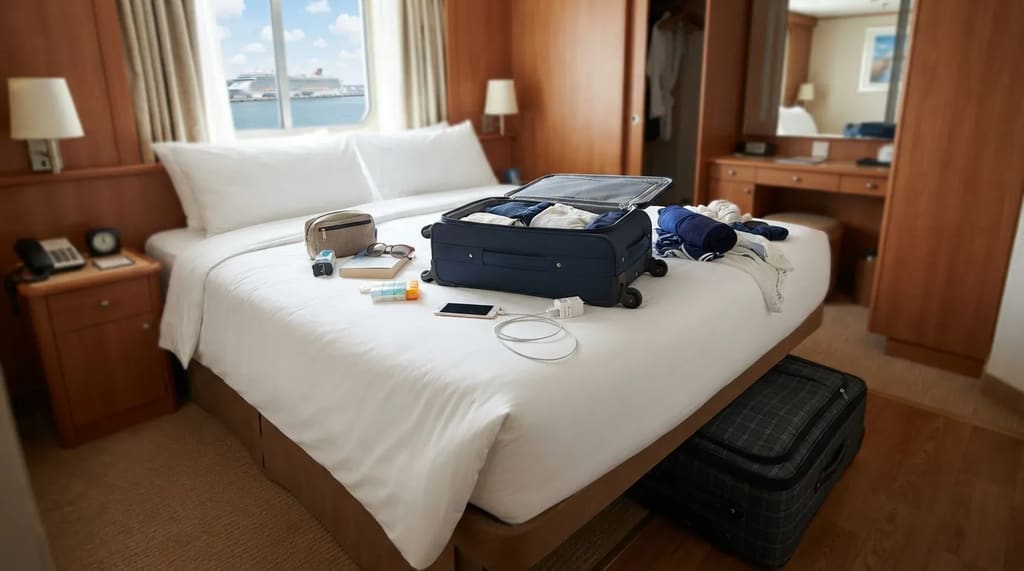
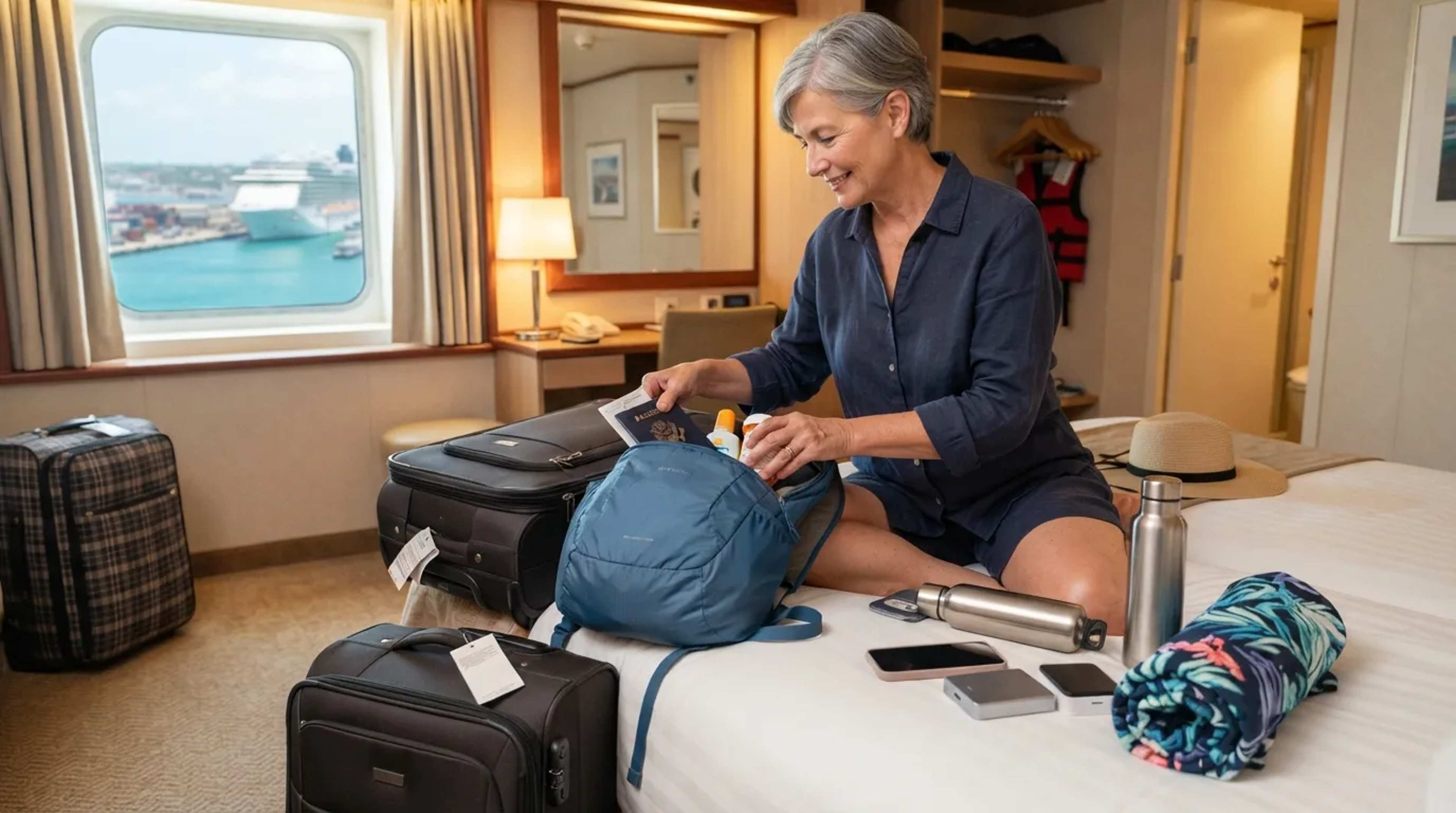
Checked bags may not arrive for several hours after you board. Porters usually take your luggage before you even reach the gangway.
Anything you need between boarding and dinner has to be in your carry-on. Pack medication, chargers and a change of clothes in your carry-on.
Add a swimsuit if you plan to hit the pool before your suitcase turns up. Once your luggage arrives, confirm it’s all there.
If a bag is missing by dinner, say so to your steward or the guest services desk while the ship is still in port. Then stow the empty suitcases under the bed and keep the pathways clear.
A clear floor matters when you cross the cabin in the dark. It also leaves your steward room to work, and the bed is the next thing to sort out.
#11 – Tell Your Steward Twin or Queen Before Night One
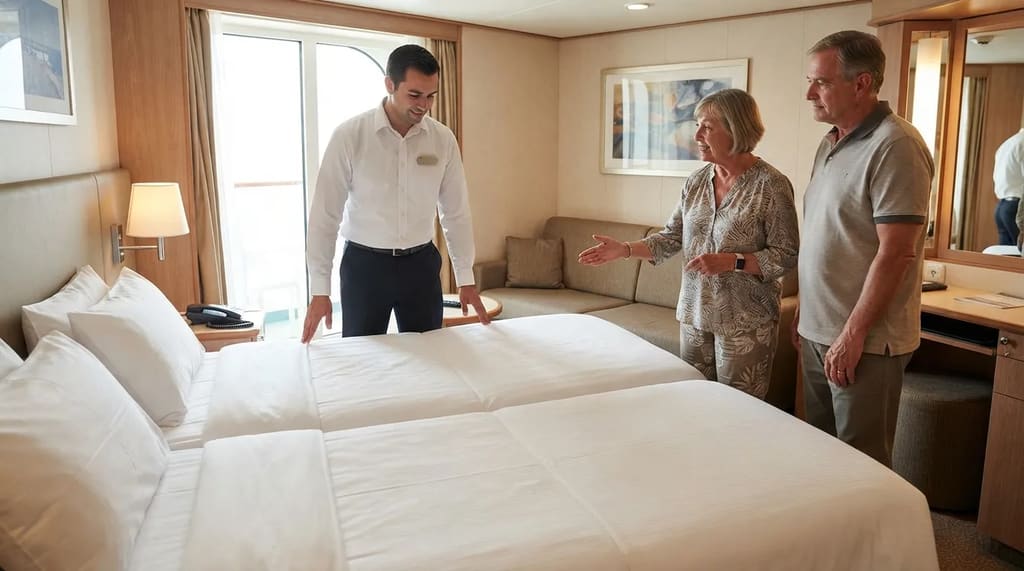
Pushing two twin beds together fixes one problem and creates another. The result is a seam down the middle of the mattress.
Say how you want the beds set up, and mention any mattress complaint while you’re at it. Both are easier to fix on day one than on night two.
You don’t have to wait until you board to ask. Bed configuration can be requested online during booking or check-in, and a steward can still change it once you arrive.
Tell your steward twin or queen on day one. If you’re sailing with grandchildren in bunks, that conversation matters even more.
Whoever shares the room also shares its outlets, and the chargers usually outnumber them.
#10 – Count the Outlets Before You Plug Anything In
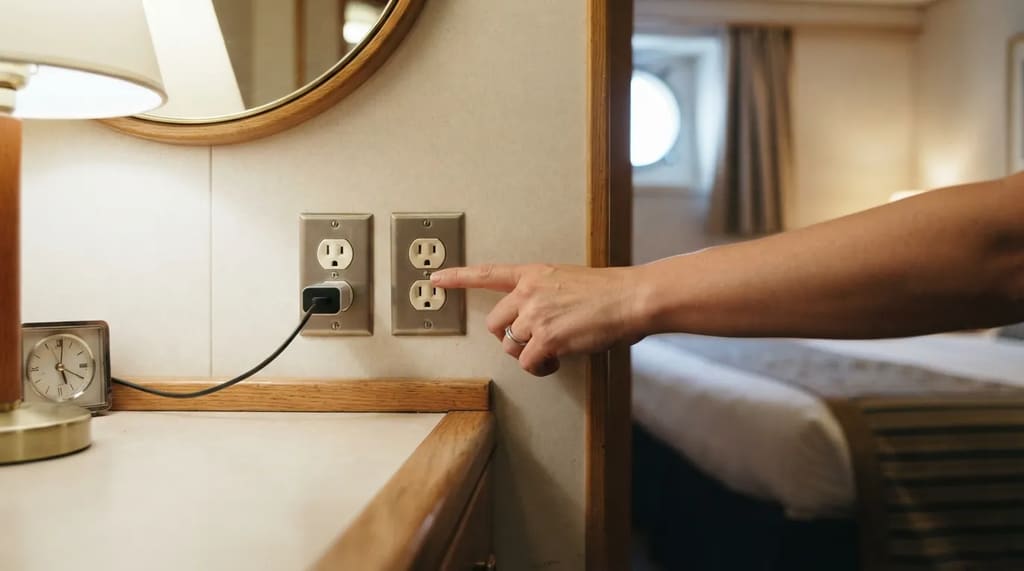
Older ships can have very few outlets, and some have no USB sockets at all. That’s why people pack a power strip.
All major lines ban surge-protected strips because they can interfere with ship circuits and create fire risk. The power bar you use at home will be confiscated if it’s found.
Beyond that, the rules differ by line. Here’s how three of them compare.
Quick Compare
- Royal Caribbean: prohibits extension cords, power strips and multi-plug outlets.4
- Carnival: generally permits non-surge strips.4
- Princess: says a non-surge strip or USB hub can help with limited outlets.
- Every major line: bans surge-protected strips.
With rules this uneven, I’d pick the hub. Bring a USB-only hub instead of a power strip.
One 2026 rundown lists USB-only hubs as allowed on every line. Chargers sorted, you may want to dress the cabin up, and at least one major line has ruled out the most popular way of doing it.
#9 – Leave the Door Decorations at Home
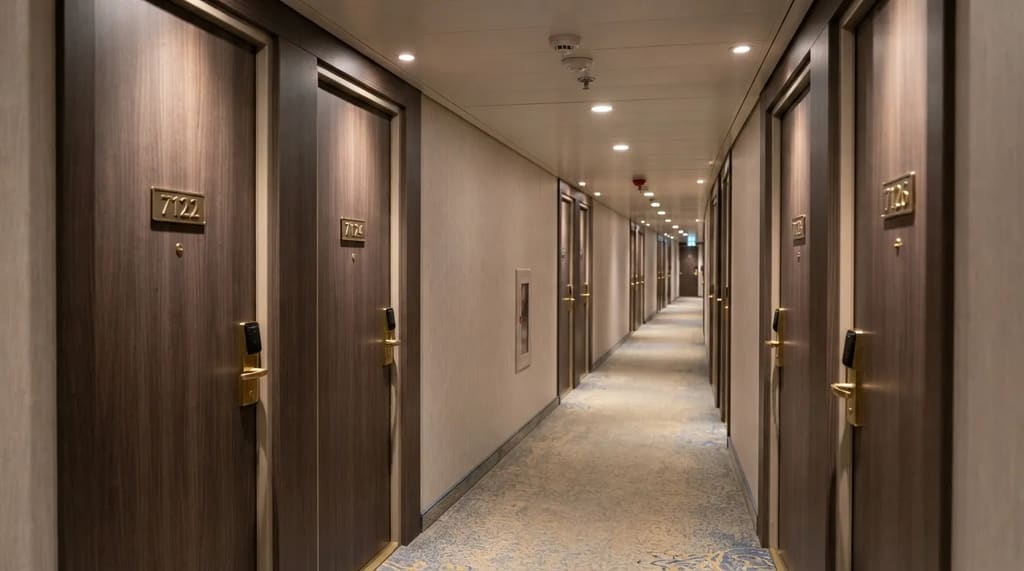
Norwegian eliminated stateroom door decorations in 2019, citing safety requirements.5 That surprises anyone who has seen decorated doors in photos.
Party poppers and helium balloons make most cruise lines’ prohibited lists. Fairy lights and LED string lights are also a problem, battery-powered or not.
Cruise Critic does suggest decorating your door to make the cabin feel like home. That advice depends on your line, so treat it as optional.
A banner isn’t worth a confiscation at security. Decorated doors are a visible tradition on Disney Cruise Line, though, so the answer varies by line.
Check your line’s rules before packing any door decoration. Those rules are written down, but the next routine involves a bucket, a refill and an assumption that trips people up.
#8 – Decide What Happens With the Ice Bucket
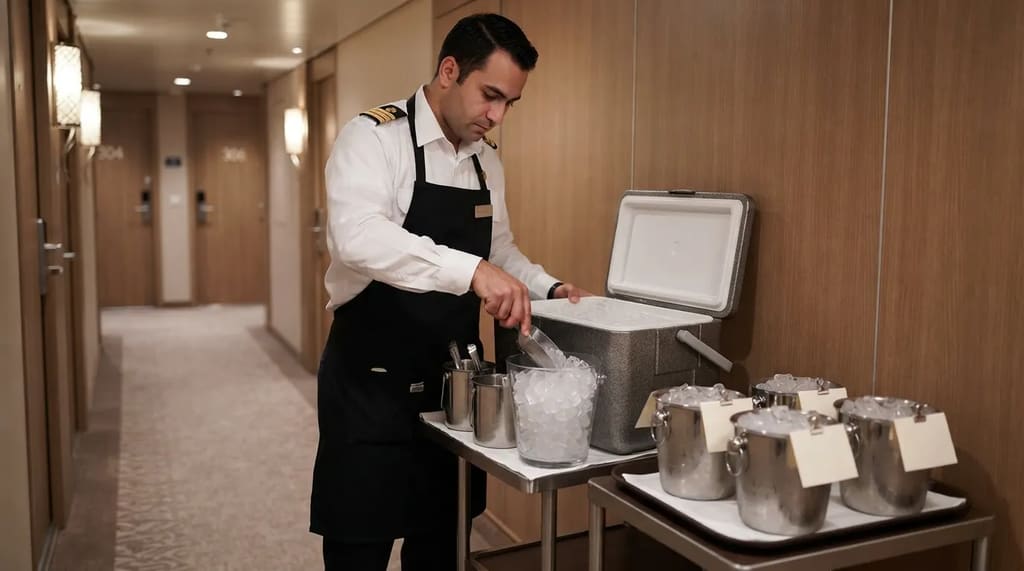
Ice is one of the most common cabin requests. That makes it the easiest way to learn how your steward handles standing instructions.
Your steward can refill the bucket every night, or at a specific time, if you say which. If you’d rather not find melting ice every morning, tell them to skip it.
Don’t assume that asking once means someone will refill the bucket for the rest of the cruise. So say it plainly: every evening, around five, or never.
Say whether you want ice daily, at a set time, or not at all. Use the same conversation to have unwanted snacks and drinks removed from the cabin.
Ice is a favor to your evening. A different preference, one your steward can’t guess, controls when the room gets cleaned at all.
#7 – Give Your Steward a Cleaning Window
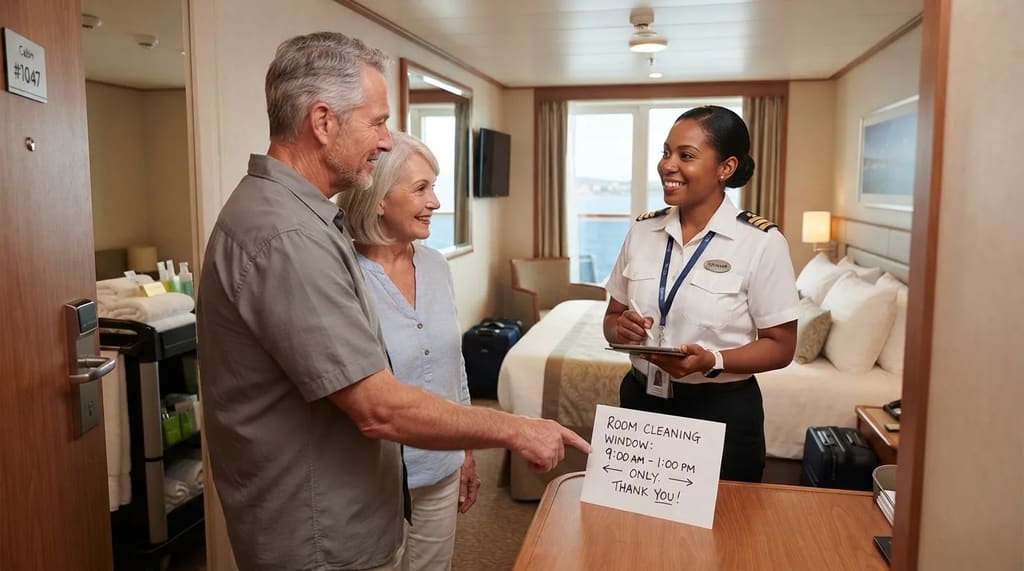
A steward who knows your hours can fit your cabin into a route instead of guessing. Your cabin is one stop among many, and the route decides when you see a clean room.
You can tell them when you’d like the cabin serviced. The same goes for turndown, which you can ask to come earlier or later than the default.
This matters most if you nap after lunch. Mention it if you’re a late sleeper.
Tell your steward which hours the cabin is free. Just don’t block service all day, or your steward may never get another chance to clean.
Cleaning is settled. Next comes the shopping list.
#6 – Ask for Extras in One Batch
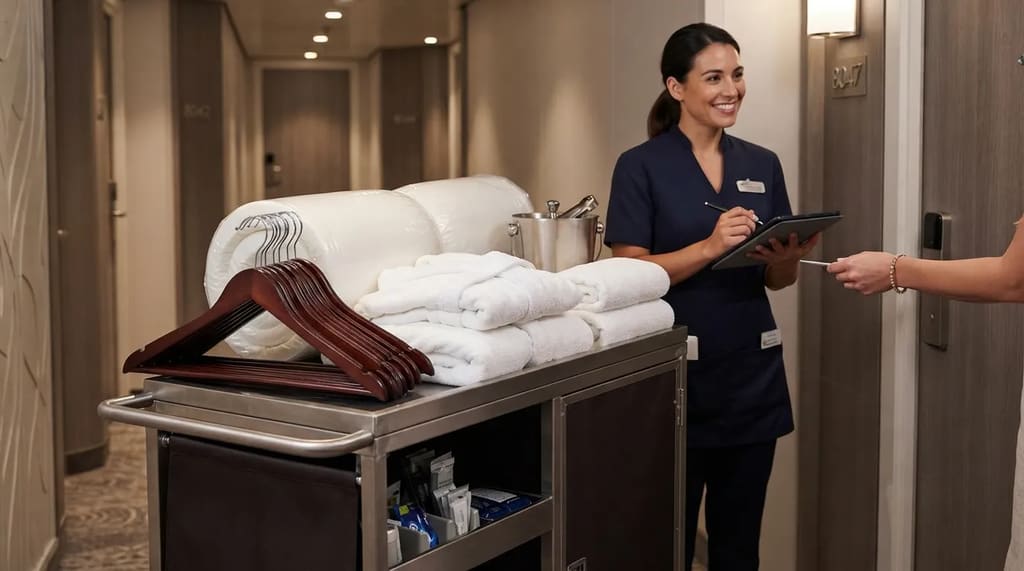
Extra hangers, a mattress topper, a second set of towels and a bathrobe are all routine asks. Most of them are the usual first-day requests, alongside the daily ice refill.
Your steward may have extras nearby, or may be able to get some once the first-day rush settles. That’s why you shouldn’t expect them within minutes of boarding.
Make your requests together instead of calling back every 20 minutes with something new. Ask for everything in a single conversation.
Extras make the room comfortable. A different kind of request makes it safe, and it needs more lead time than a pillow.
#5 – Arrange Medical Needs Before You Sail
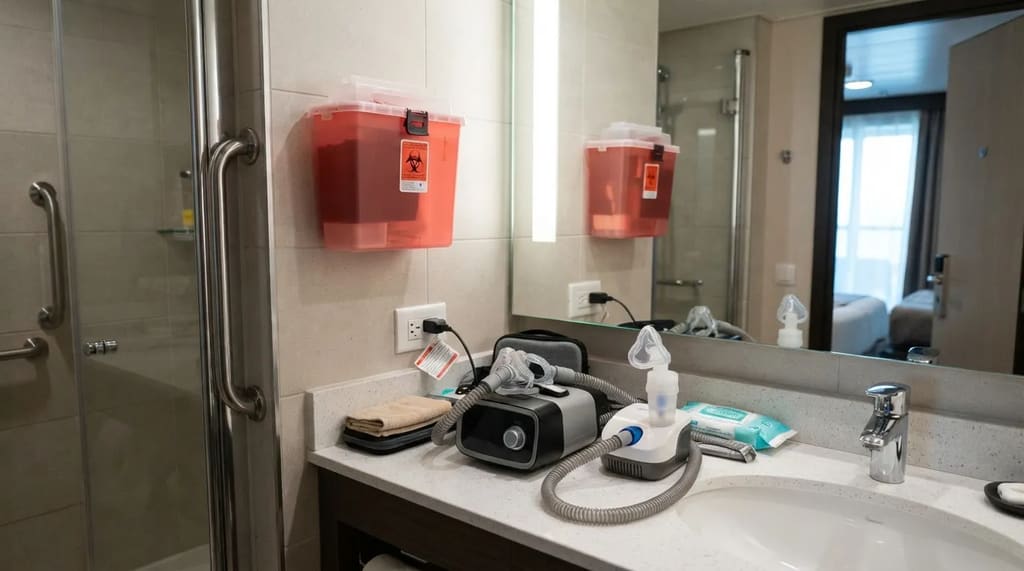
Some cabin requests can’t wait until you’re standing in the doorway. Requests such as sharps containers can be made online during booking or check-in.
Bathrooms often already have a sharps container as a standard safety fixture, but confirming it with your steward avoids a mid-cruise scramble. A thirty-second question on day one settles it.
Power is the other medical question. Lines that ban extension cords, such as Royal Caribbean and Celebrity, may make exceptions for essential medical equipment like CPAP and nebulizer machines.
Ask your line about CPAP and nebulizer cords before you pack.
Medical needs are the item you can’t afford to forget. The next question involves cash instead, and whether a twenty-dollar bill on day one buys anything.
#4 – Check What’s Prepaid Before You Tip on Day One
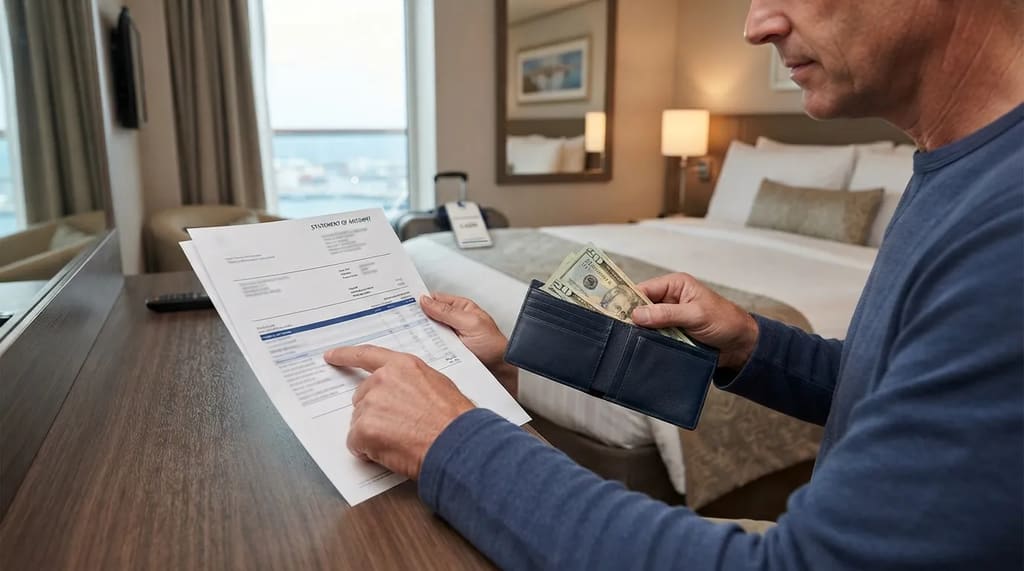
Whether to give your steward twenty dollars on the first day is debated among cruisers. Some do it as a thank-you, while others say it makes no difference.
I’d keep the bill in your wallet. Most of the bigger lines add a daily gratuity to your fare, and your cabin steward takes a cut of it.
Check your prepaid gratuities before you add cash. That one check keeps you from paying twice for the same service.
What improves service on day one is a clear, polite list, which lets your steward work your needs into their routine. Asking what your cabin grade includes can also uncover perks you’d otherwise pay for out of habit.
Related Stories From Travelbinger



Cash settles very little that a name and a clear list can’t settle better. The most useful thing you can hand your steward costs nothing and fits on an index card.
#3 – Hand Over a Short Written List
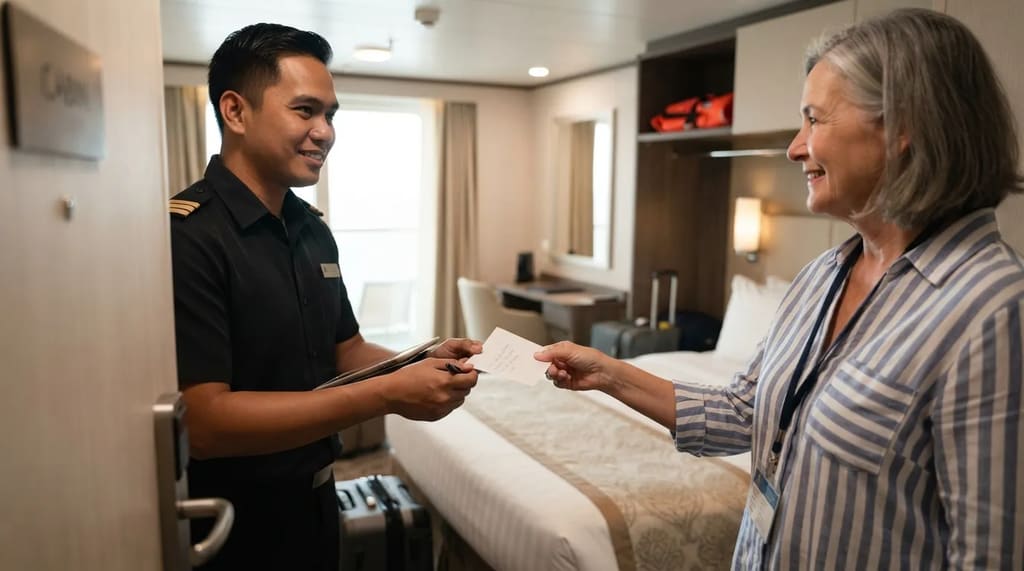
You don’t have to track down your steward the minute you board. Embarkation day is one of their busiest, because they’ve just finished turning over cabins from the last cruise.
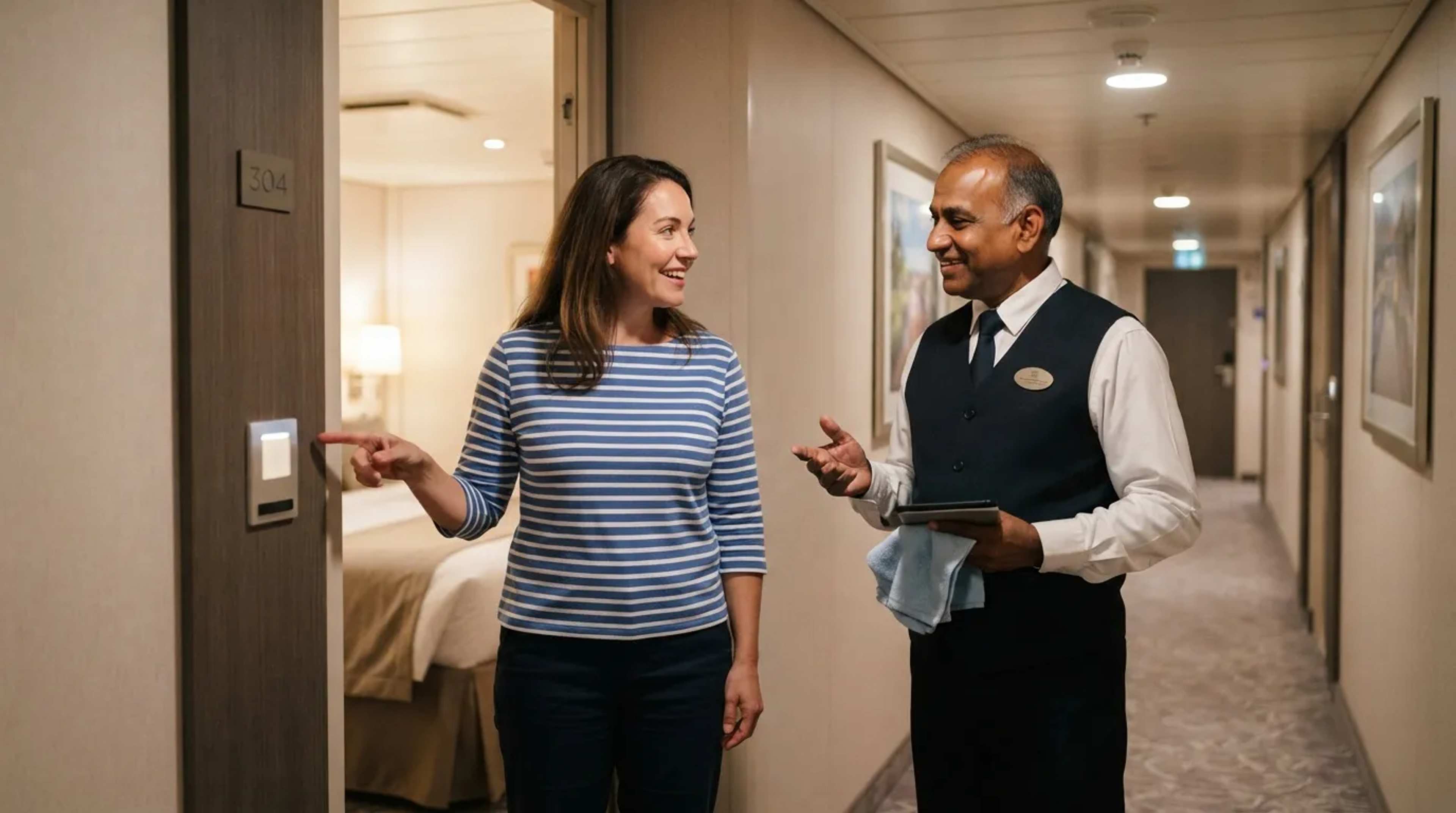
Your steward will usually introduce themselves in the afternoon or early evening. When they do, introduce yourself and learn their name.
Hand over a short written list with your cabin number, your name and your top three needs. Put your cabin number, your name and your top needs on one card.
At a Glance
- Cabin number and your name, written clearly.
- Bed setup: twin or queen.
- Ice: daily, at a set time, or never.
- Hours when the cabin is free for cleaning.
- Any medical or accessibility need.
Plain wording works better than a long explanation. Your steward is juggling a whole section of cabins, so a card they can glance at is a gift.
Your steward now knows what you need. The ship still needs one thing from you, and it’s mandatory.
#2 – Show Up for the Muster Drill

Forbes calls the muster drill the only absolute must-do on the first day. That’s a stronger claim than anything else on this list.
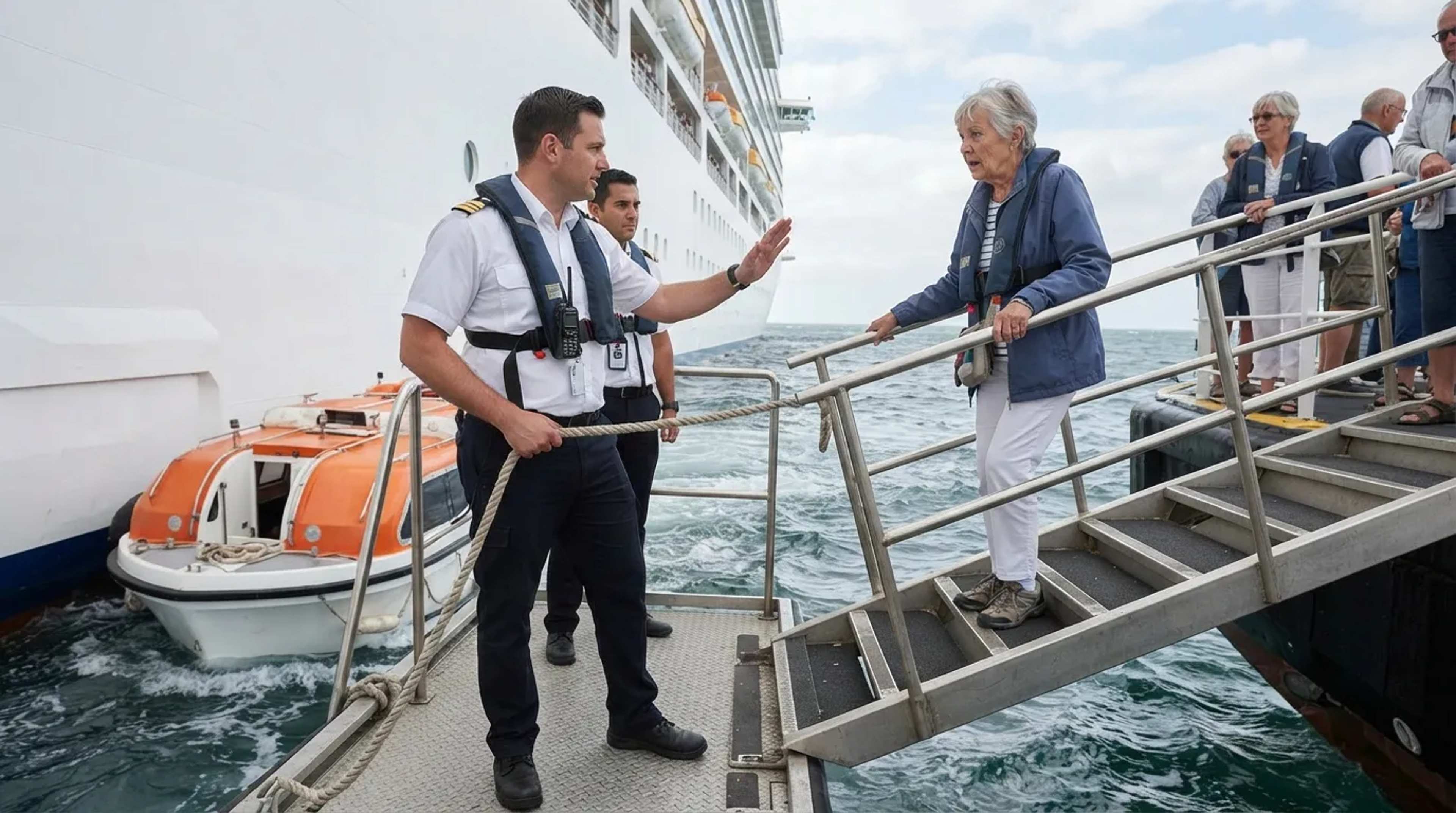
Under SOLAS, passenger ships must hold the drill before or immediately upon leaving the first port. The older rule allowed up to 24 hours, but many lines moved the drill earlier after the Costa Concordia disaster.6 7
Crew take roll at the stations, and elevators are off limits during the drill. Complete the drill before the ship leaves port.
Most lines no longer require you to bring a life jacket to the drill, but check your line’s instructions. If your station is outdoors, wear closed shoes you know are comfortable.
The drill shows you where to stand. It doesn’t show you how to get there from your own door in the dark, and that’s the last routine on the list.
#1 – Walk Your Route From the Cabin Door to Your Muster Station
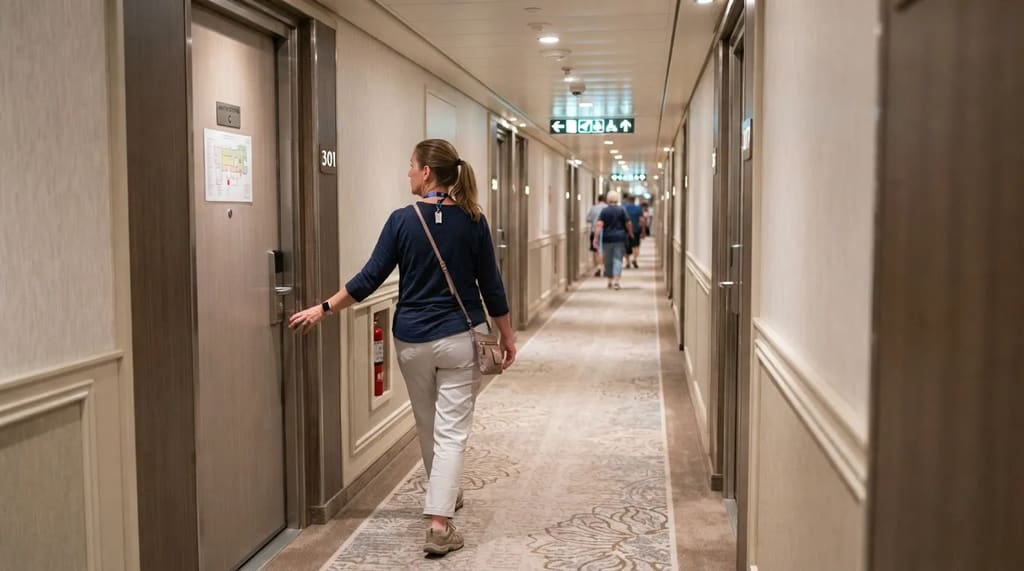
SOLAS requires the instructions in your cabin to give your muster station, the actions to take in an emergency and how to put on a life jacket. That makes the cabin the one place on the ship built to teach you the route.
Your muster station is usually on the back of the cabin door and on your keycard, with signs in the halls. MSC, for example, posts a “You are here” map there showing primary and secondary escape routes.
Don’t assume the life jackets are in your closet. The rules only require that they be readily accessible and clearly marked, so ask the crew where yours is stored.
So read the card on the door and find your jacket. Walk the route from your door to your muster station once, taking stairs.
The stairs are the route you’ll actually use, since elevators are off limits in a drill. Every other mistake on this list is cheap to fix, and this is the one you don’t get to redo.
Treat the First Afternoon as Setup Time
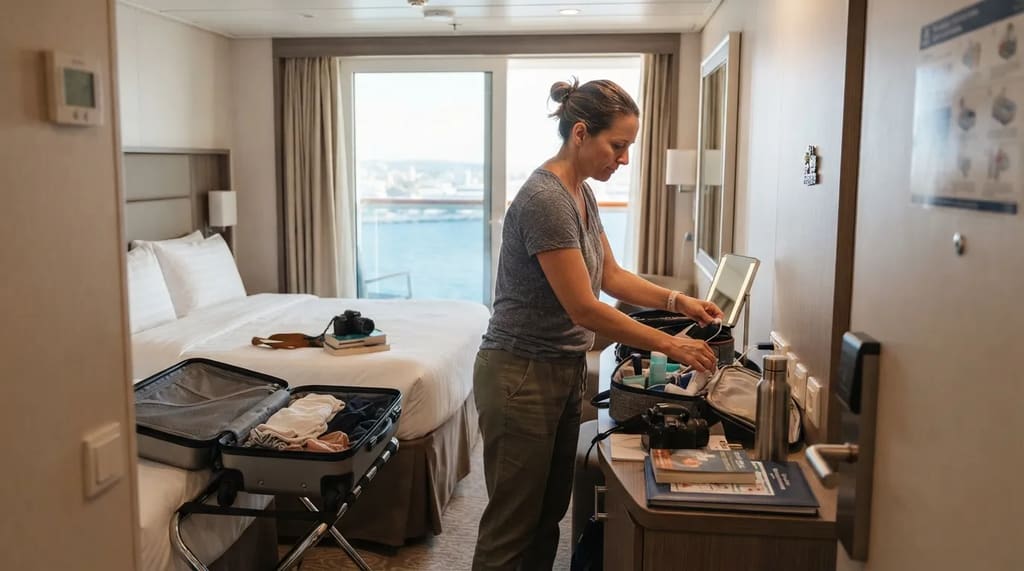
A cruise cabin runs on a schedule you didn’t write. Stewards work routes, outlets are limited, and the rules for cords, lights and decorations differ from line to line.
That makes the first afternoon the cheapest time to make the room fit you. Everything on this list gets cheaper to fix before the ship is under way, and the ship’s safety instructions are already printed on your door.
If you’ve sailed before, what’s the one thing you tell your cabin steward on the first afternoon?
- Cruise Critic First Day Tips: https://www.cruisecritic.com/articles/22-dos-and-donts-for-your-first-day-onboard-a-cruise-ship
- Cleveland Clinic Bed Bugs: https://my.clevelandclinic.org/health/diseases/17847-bedbugs
- Cruise Critic Bed Bugs: https://www.cruisecritic.com/articles/are-there-bed-bugs-on-your-cruise-ship
- Cruise Power Strip Rules: https://travel-hacker.com/2026/10/16/cruise-power-strip-rules/
- Travel Weekly NCL Decorations: https://www.travelweekly.com/Cruise-Travel/Citing-fire-safety-NCL-shuts-door-on-decorations
- IMO Passenger Drill Rules: https://www.imo.org/en/MediaCentre/PressBriefings/Pages/45-SOLAS-eif-.aspx
- Skuld Passenger Ship Drills: https://www.skuld.com/topics/ship/safety/passenger-ship-safety-drills/