Ask for two bread bowls on the first night, and Royal Caribbean says your waiter can bring them every evening without being asked again.1 The same goes for a cup of coffee with dessert. It’s a small favor, but it shows how a ship’s dining room really works: whatever you say early becomes the pattern for the week.
Sixteen requests and courtesies follow, from the cheap and cosmetic to one that touches your health. That last one is the surprise. It’s the single conversation where a note in the ship’s system isn’t enough, and it takes less time than the bread course. First, the bread.
#16 – Two Bread Bowls and Coffee Without Asking Twice
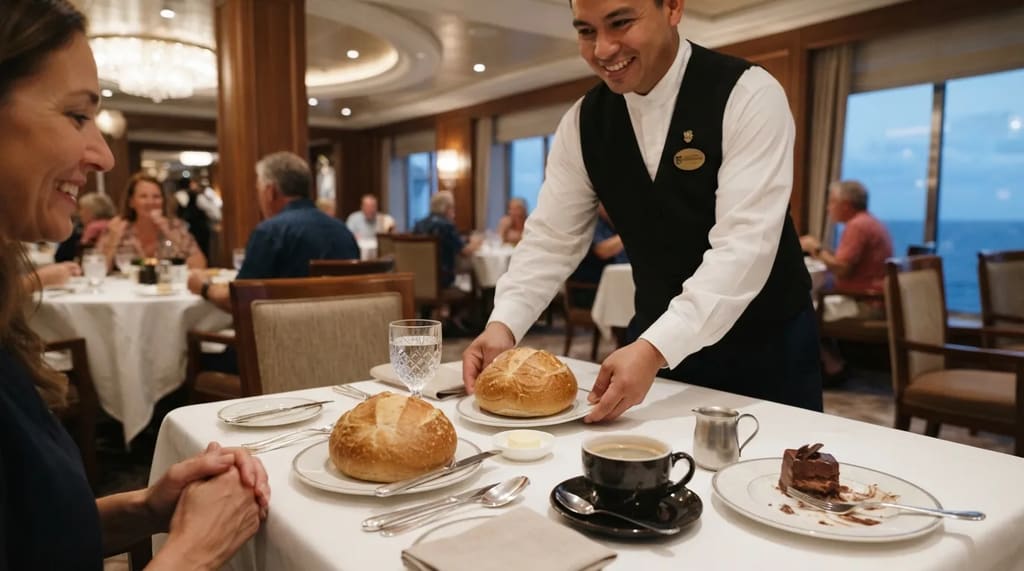
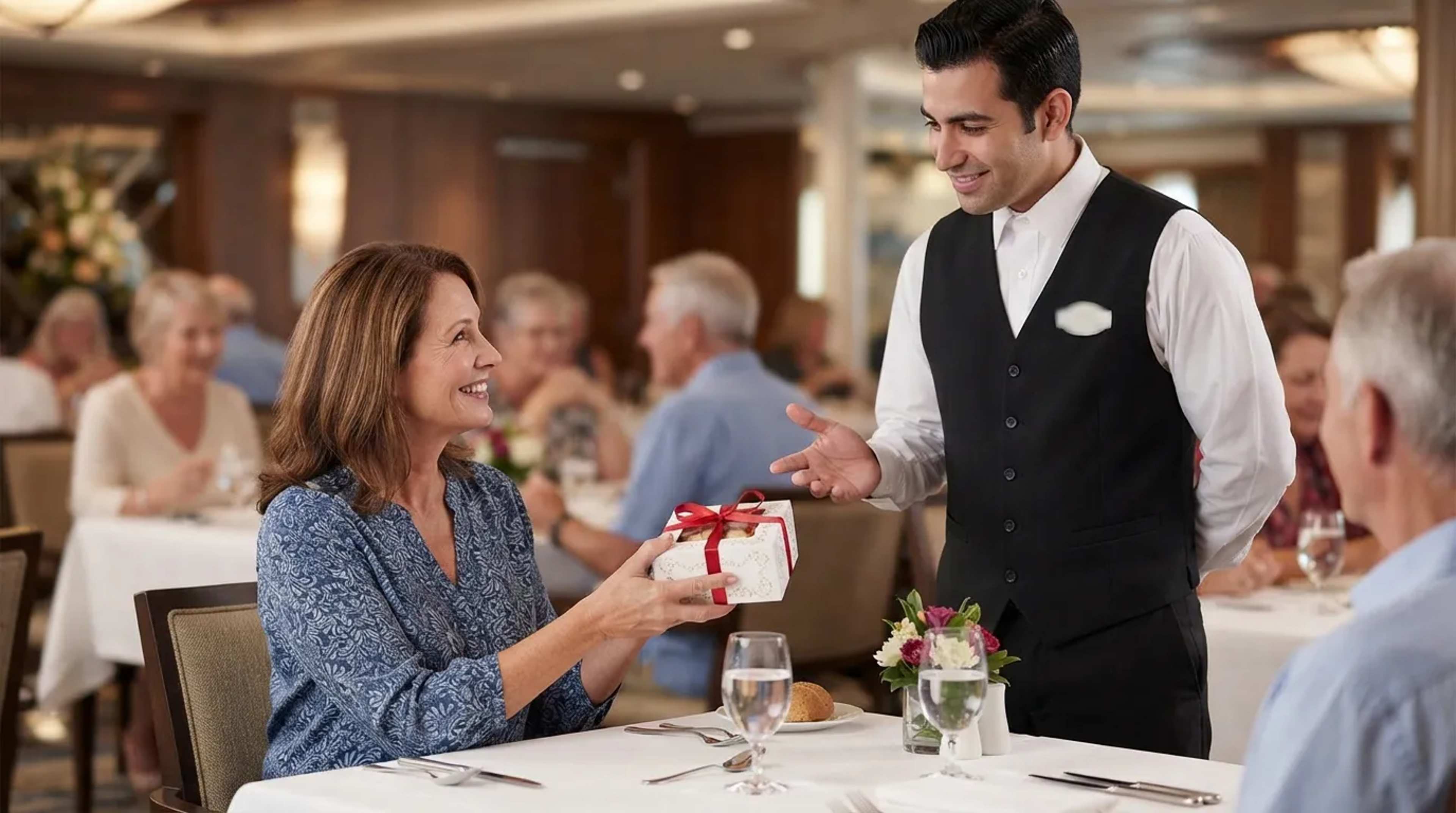
Royal Caribbean says its Main Dining Room waiters are highly attentive and can handle most requests with ease. The examples it gives are modest: two bread bowls instead of one, every night, or a cup of coffee delivered with dessert.1
Timing matters more than the request itself. Tell your waiter your preferences on the first night, and the whole sailing starts to fit you. On a seven-night cruise, that’s six fewer evenings of trying to catch someone’s eye.
Keep it specific. “Decaf with dessert” is easy for a waiter to carry out. A vague wish to be looked after gives the team nothing to act on.
Bread and coffee are things you can arrange in advance. So is the menu, if you know where to look.
#15 – Reading the Menu Before You’re Seated
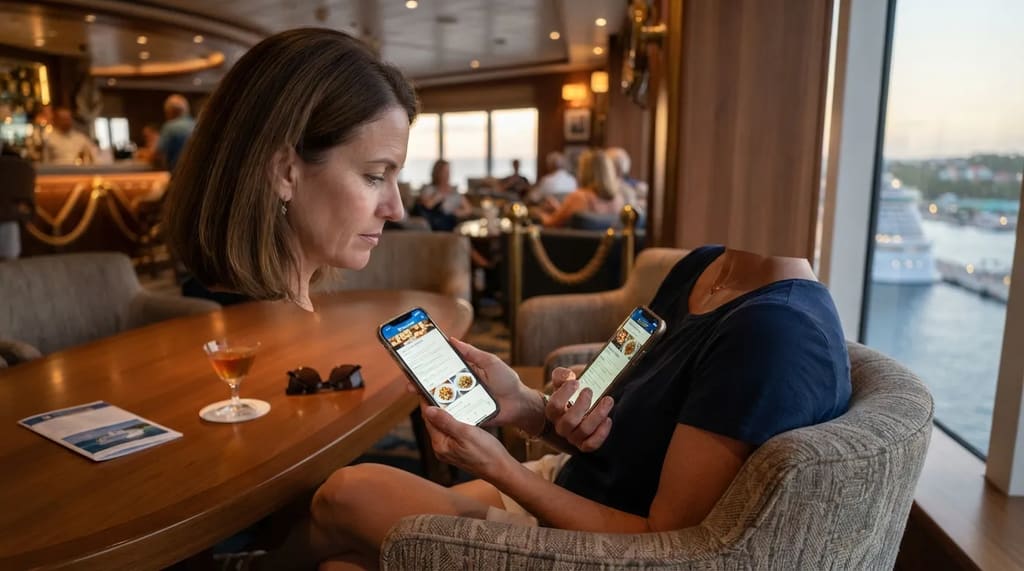
Royal Caribbean posts its daily Main Dining Room menus on its app, so tonight’s dishes are on your phone before you’ve even changed for dinner. That’s more than a curiosity.
A quick look tells you whether you want the dining room at all that evening. Check the day’s menu on the app before you dress, and you can plan a lighter dinner elsewhere on the nights the dining room serves something you’d skip.
Other lines vary. If your ship doesn’t post menus digitally, ask your waiter or the guest services desk whether the next day’s menu can be seen early. The worst answer is no.
Once you’ve read the menu, who do you ask about it? The person who carries the plates has served every dish on it.
#14 – Asking What the Waiter Would Order
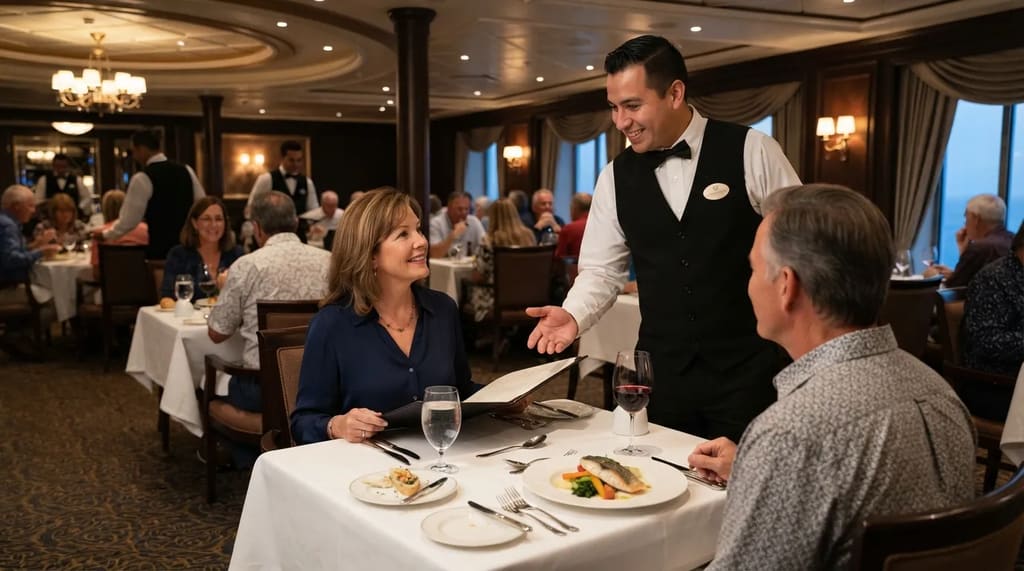
Asking for a recommendation costs nothing and works on any night of the cruise. It’s the cheapest courtesy on this list, and probably the one passengers use least.
A waiter serves the same rotating menu to table after table, so the answer comes from repeated experience of what the kitchen does well. It may steer you toward a dish you’d never have picked and end up loving.
Ask “What would you order tonight?” on the first evening, not the last. The answer is worth the most when you still have several dinners left to act on it.
And if the suggestion misses, is it rude to say so?
#13 – Swapping a Dish You Don’t Like
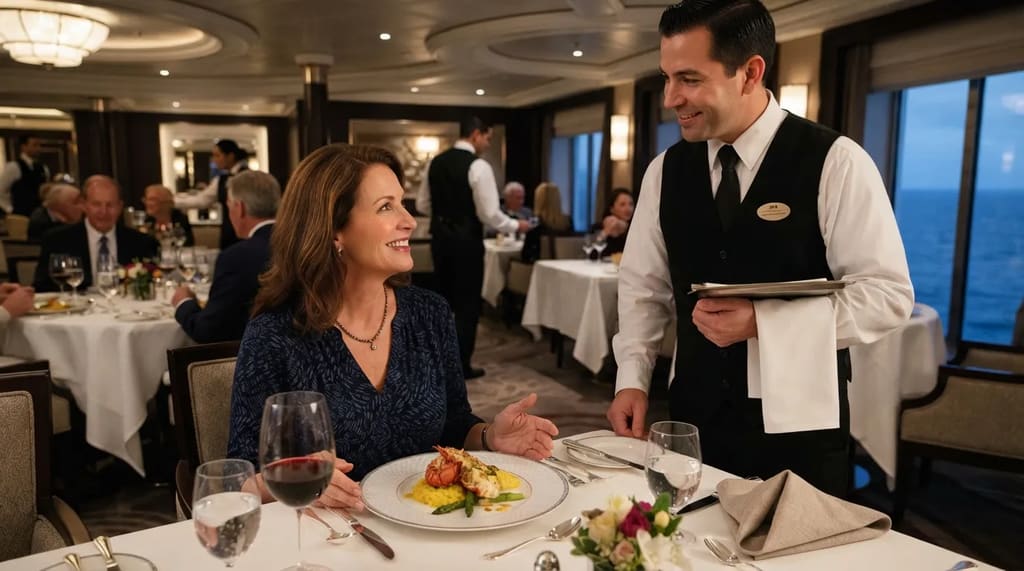
Ordering something adventurous that turns out to be a letdown happens on ships all the time. On lines where main dining is part of the fare, as on Holland America and Princess, an unwanted entree costs you nothing extra, so the waiter can usually bring another.
Say so after a bite or two, politely, rather than after the plate is cleared. A short, friendly word keeps the dining team on your side for the rest of the week.2
Worth Knowing
- Speak up after a bite or two, not once the plate is gone.
- On Holland America and Princess, a swapped entree adds no cost.
- The menu changes every night, so there’s always something new to try.
- A friendly tone keeps the dining team on your side all week.
The bigger mistake is playing it safe. Ordering the same three dishes all cruise wastes a menu that changes every night. A swapped plate is a mild inconvenience, but a week of repeats is a stack of included meals you barely tasted.
#12 – A Second Appetizer, or Last Night’s Favorite Again
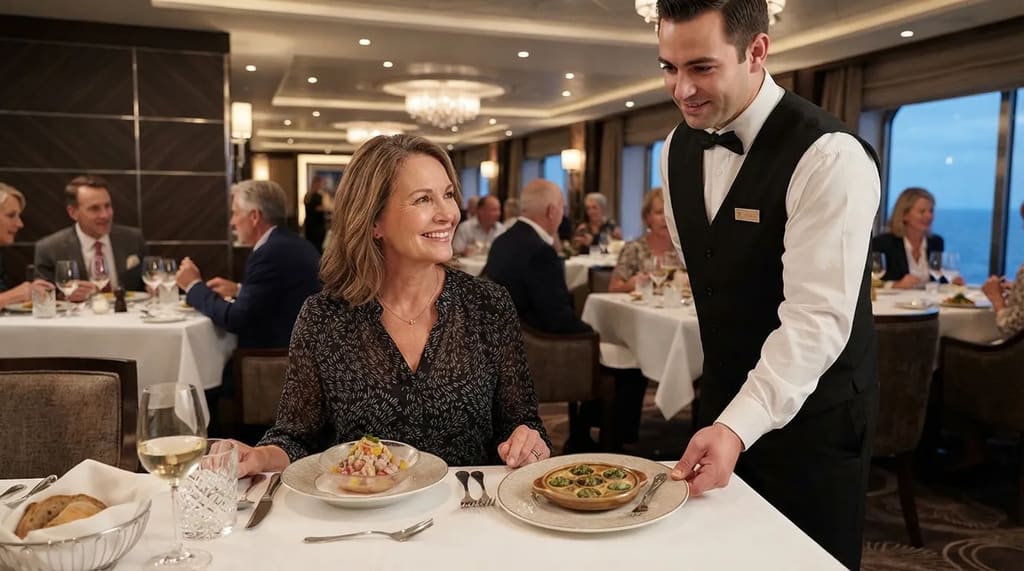
On most mainstream ships, main dining room courses are included in the cruise fare, so ordering extra is common. If you want to taste two starters, the question costs nothing.1 2
The same applies to a dish you loved earlier in the week. Ordering it again is a standard ask on virtually every major cruise line. Ask for the second plate; don’t assume it’s allowed, because rules have tightened a bit in recent years and policies differ by line.
Two courses and good company can also stretch dinner past two hours. That’s lovely, unless you have somewhere to be.
#11 – Setting the Pace of Your Evening
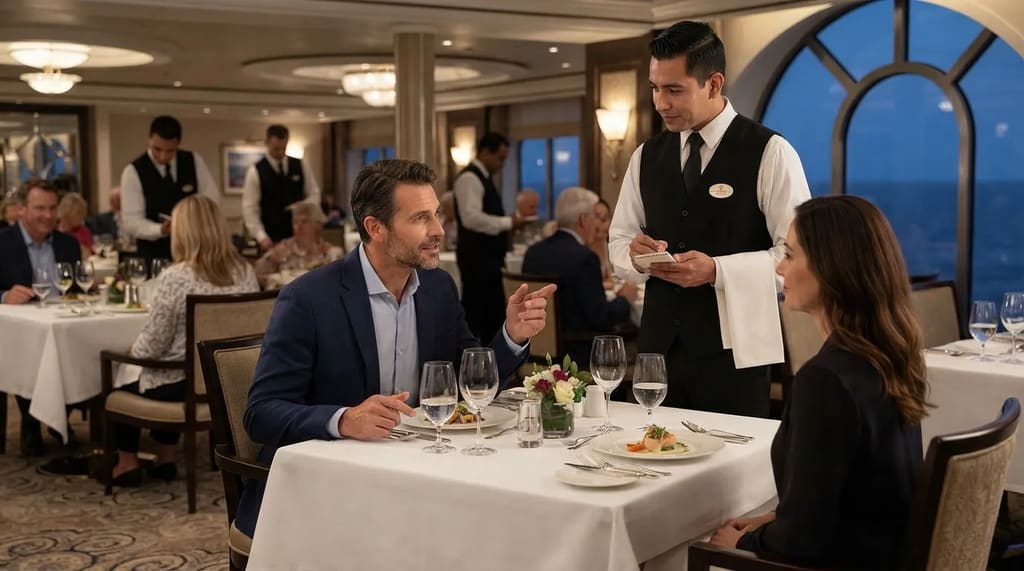
A leisurely two-hour dinner suits some passengers and ruins the evening for others. If you’d prefer to move faster, tell your waiter. It helps most when a show is waiting.
The reverse works too. If you want a slow dinner with no pressure to turn the table, say so at the start, so the kitchen and your waiter can time the courses.
Arrival time matters on fixed seating. One late guest holds up the whole table, while anytime dining only inconveniences you. If your party is running behind, send one person ahead to tell the waiter.
Timing is something you set at the table. Where the table sits can be changed too, but that takes a visit to the room’s entrance.
#10 – A Window Table or a Table for Two
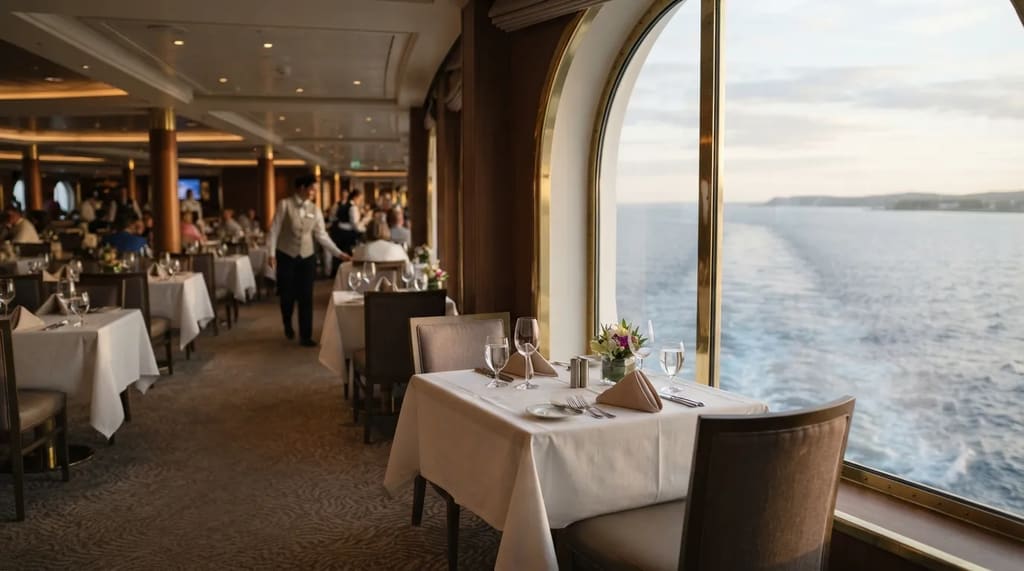
If you’d like a window but your table is in the middle of the room, Royal Caribbean tells guests to ask a crew member at the Main Dining Room entrance. The same goes for a table for two instead of sitting with other passengers.
Where you sit changes how the meal feels. A seat in a packed middle section or near the kitchen doors can make a long dinner feel even longer. For anyone who uses a cane or walker, or who struggles with noise, the location is part of the comfort.
Royal Caribbean also says to ask the Maitre’D at any hospitality desk on embarkation day. Make table requests on embarkation day, before the first evening rush.
Some travelers want the opposite of a quiet two-top. Cruise lines have a way to seat them with company.
#9 – Sharing a Table With Other Passengers on Purpose
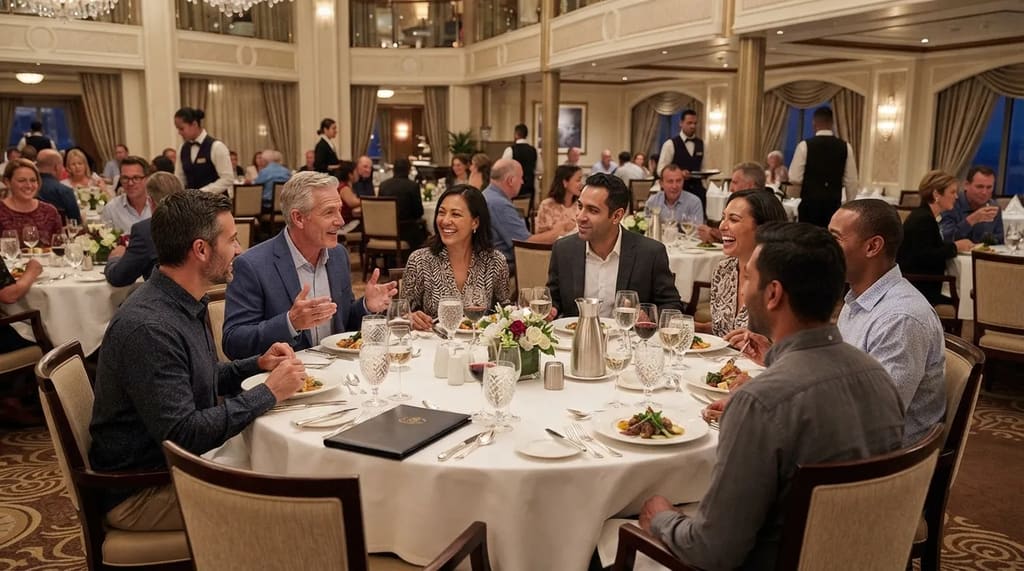
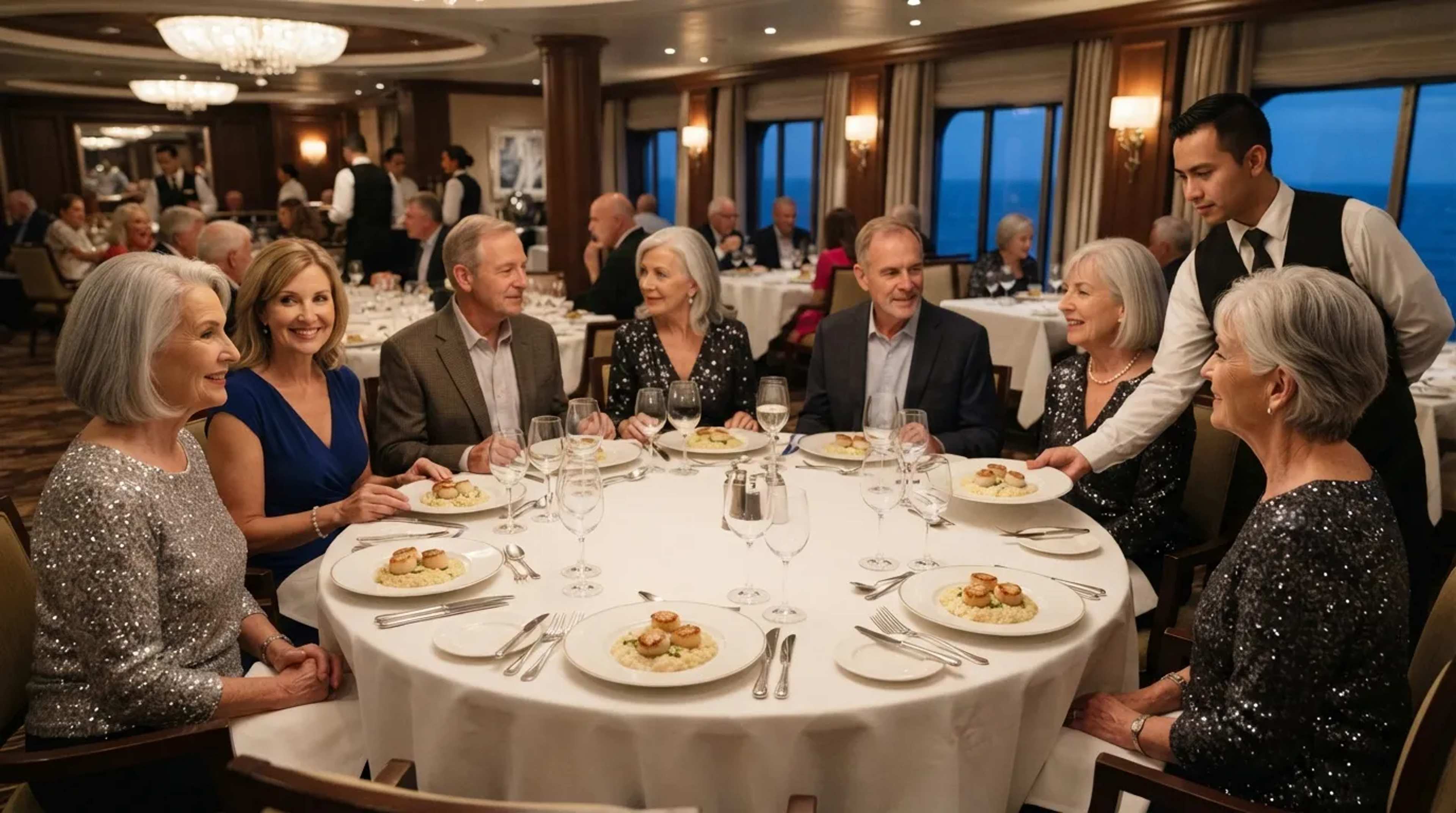
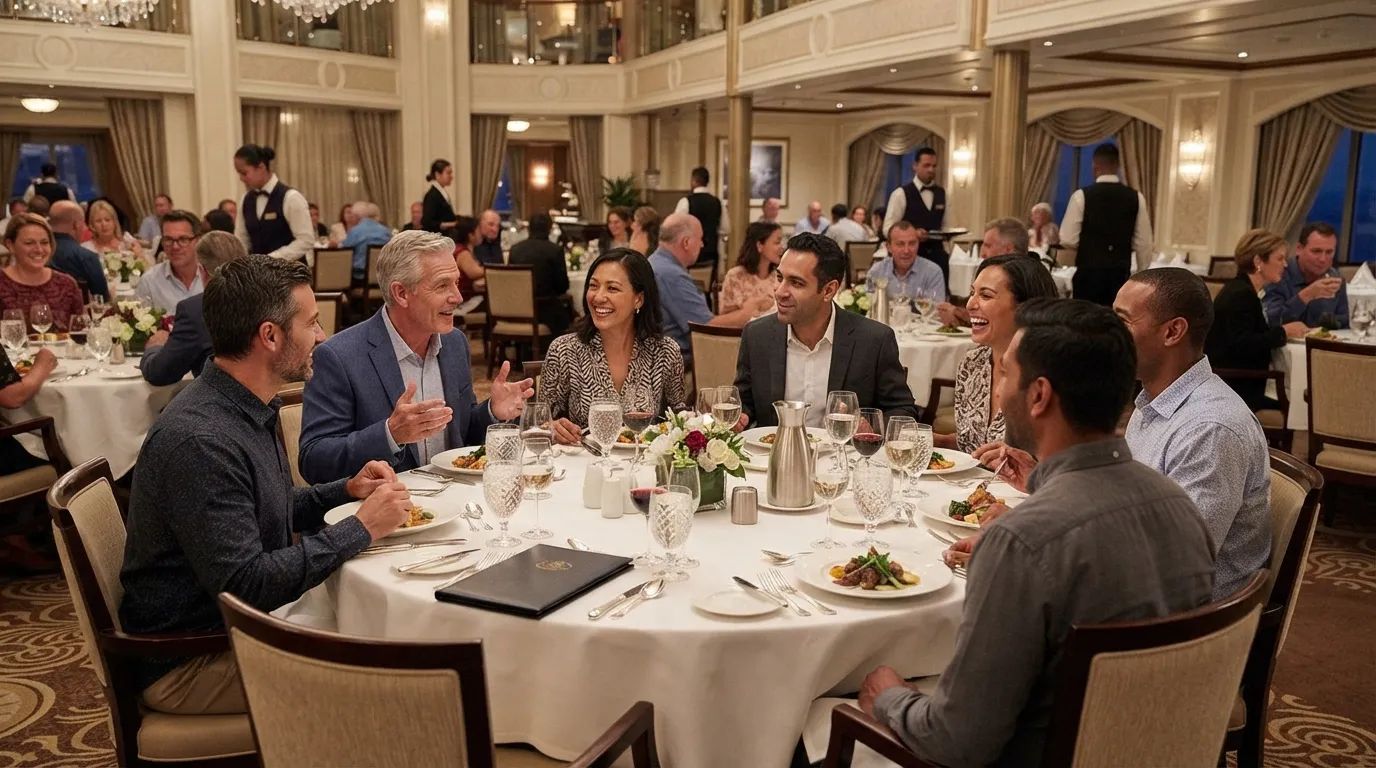
Singles who choose early or late seating are put at a shared table with other solo travelers or couples, so nobody has to worry about dining alone. That courtesy is built right into the system.
Request a larger table to widen your social circle. A table for eight gives you more chances to find people you like than a table for four.
There’s a catch tied to how you booked. Anytime dining seats you at the next available table, with no assigned table or tablemates. Shared tables come with fixed seating, so choose it at booking if company is the goal.
#8 – The Same Table and the Same Waiter All Week
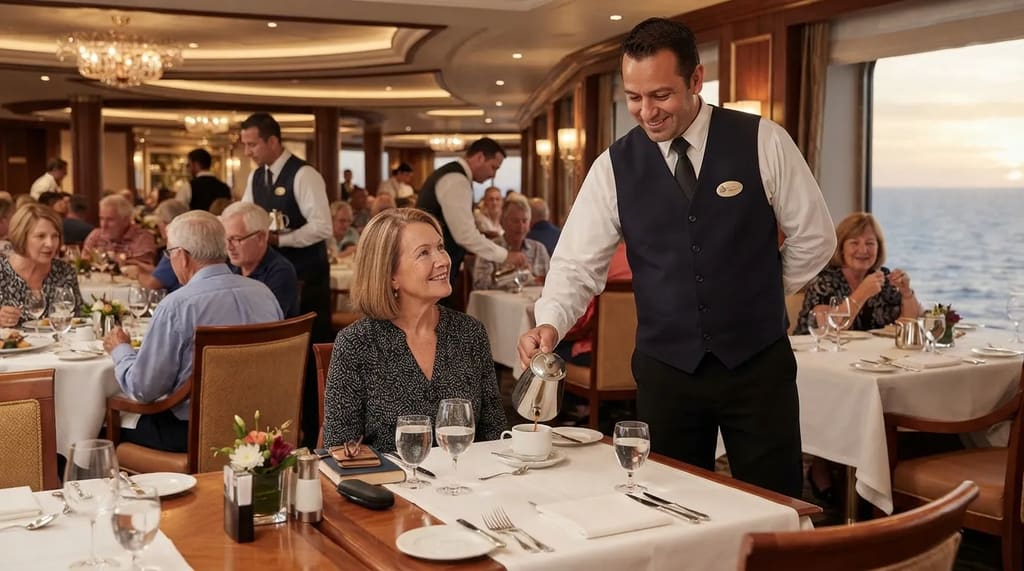
If you’d like a waiter to learn your habits, the dining plan you book matters more than anything you say at the table. Traditional dining means fixed early or late seating, with the same table and the same waiter all week.3
- Traditional: fixed seating, with the same waiter.
- Anytime: eat when you like, with different servers and some waiting in line.
Here’s a verdict some readers will dispute: for anyone who wants dinner to feel known, and especially for a solo traveler, fixed seating is the better bet. That coffee order from #16 only works if the same person is there to carry it out.
If you enjoy your waiter on the first night, ask to be seated in their section for the rest of the cruise. It isn’t guaranteed, but it can often be arranged if you’re flexible with dining times.
Anytime dining has advantages of its own, but they come with a catch at the door.
#7 – Reserving Ahead for Anytime Dining
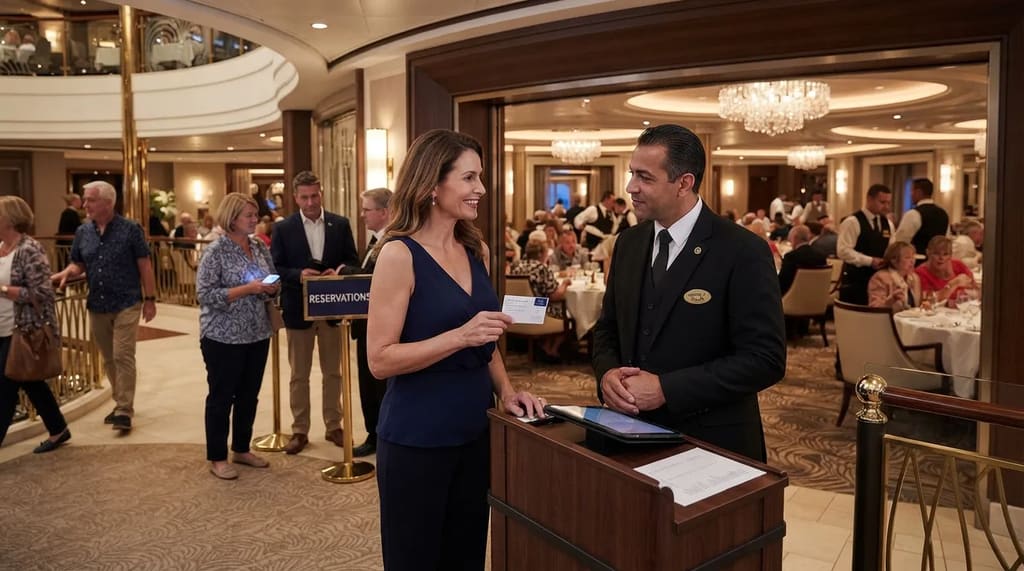
Anytime dining typically runs from 5:30 to 9:30 p.m., and you’re seated at the next available table. That sounds relaxed until the room is full and you’re standing there holding a pager.4
On most lines, passengers who choose flexible dining can reserve a main dining room table for each night before sailing, and those with reservations may get a priority line.5 You can also join a waitlist on the cruise line’s app and wait on your balcony until a table is ready.
Fast Facts
- Typical anytime window: 5:30 to 9:30 p.m.
- Without a reservation, you’re seated at the next available table.
- Reservations may get you a priority line on most lines.
- Arriving right when the room opens means the shortest wait.
Without a reservation, arriving right when the room opens gives you the shortest wait. Treat the reservation as part of the dining plan, since the flexibility is only worth having if you’re not stuck in a queue.
You’ll also see different servers each night, so the bread and coffee requests from earlier need repeating every time. And if a dinner starts badly, there’s a person to tell, though it isn’t always your waiter.5
#6 – Speaking Up When Night One Goes Wrong
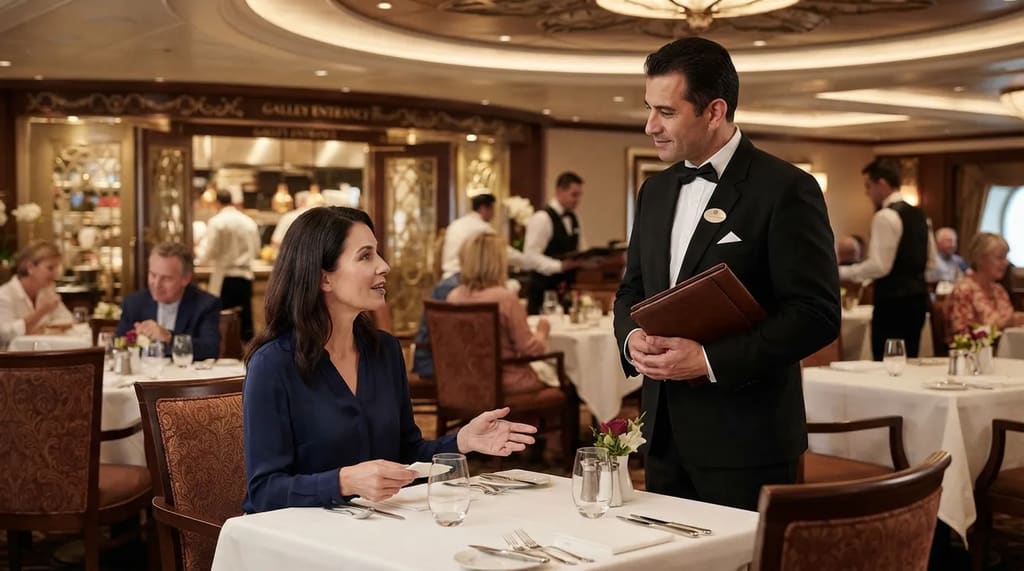
The soup is cold, the table sits beside the kitchen doors, and seven more dinners lie ahead. Don’t write off the dining room after one bad evening.
If night one goes badly, mention it politely to the head server or dining room manager. Raise a problem on the night it happens, because a table or timing issue raised early can be fixed, while one saved for the end of the cruise only gets noted.
Tone counts here. A calm, specific request, such as “could we move away from the door?”, gives a manager something to act on without making anyone defensive.
When a problem gets fixed, someone did the fixing, and the chain of people behind your dinner has names.
#5 – Learning Your Waiter’s Name
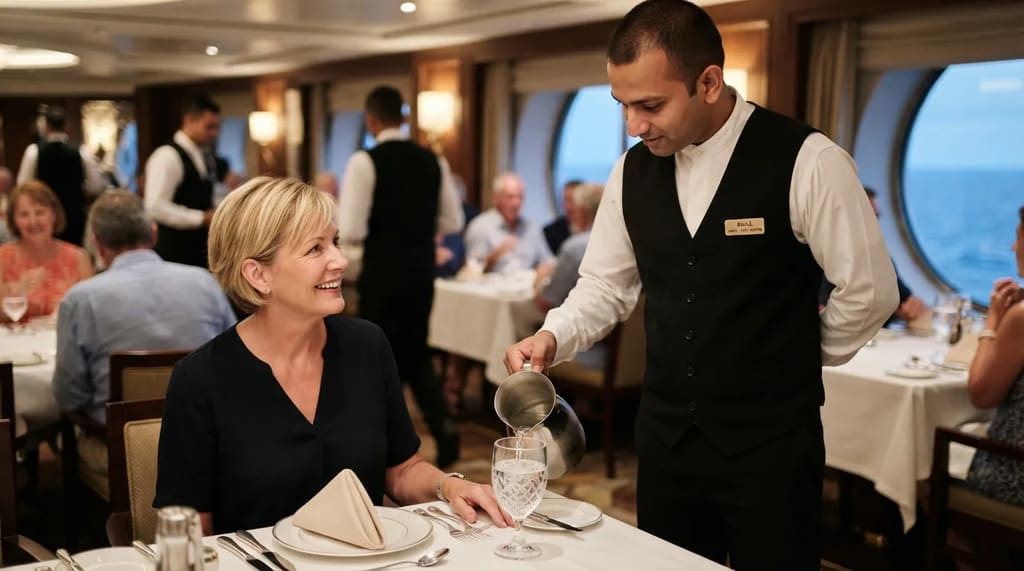
A cruise dining team is usually a waiter and an assistant waiter, with a head waiter overseeing a section of the room. That’s at least two names to learn, and both are usually on name tags.
Why It Stands Out
- It costs nothing and takes a glance at a name tag.
- It softens the tone of every request on this list.
- It acknowledges the people on a long working day.
Use them from the first dinner. Learn both the waiter’s and the assistant’s names on night one, and use them when you ask for something. It costs nothing and changes the tone of every request on this list.
Passengers are often asked how their day is going, and returning the favor can make a real difference. The person refilling your water and remembering your coffee every night is working a long day of their own.
#4 – What the Automatic Gratuity Already Covers
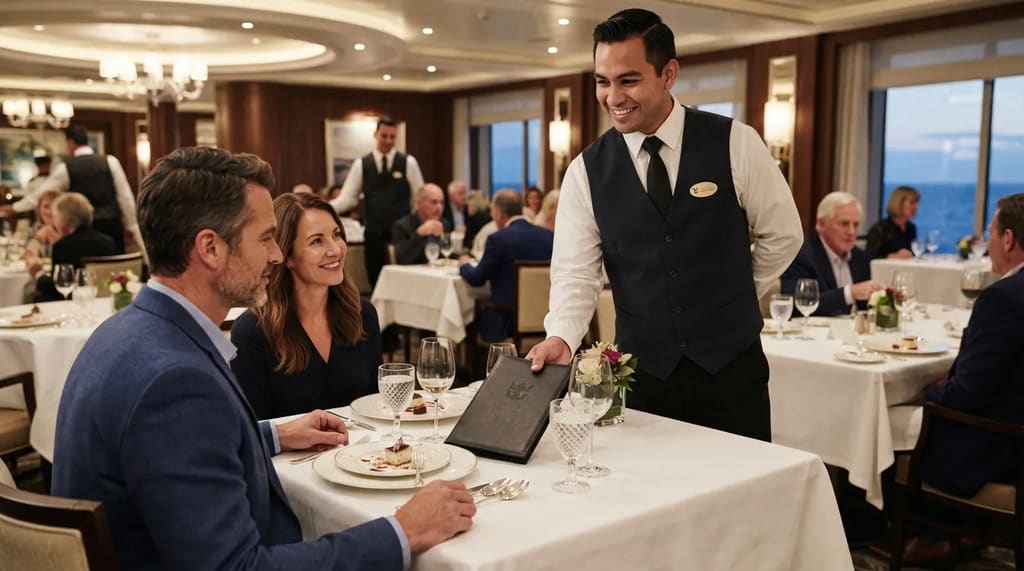
On most mainstream lines in 2026, the automatic charge runs $16 to $21 per person, per day. For two people on a seven-night cruise, that’s $224 to $294 added to your bill, and it’s meant to cover the dining team.6
Automatic gratuities don’t cover bartenders, spa therapists, specialty restaurant servers or room service deliveries. Most lines add 18 percent to specialty dining, bars and room service, and 20 percent at salons and spas. If you’re on a luxury line or Virgin Voyages, gratuities may already be included in the fare.7
Here’s a verdict some readers will dispute: skip the cash envelope on night one. The automatic charge already pays for standard service, so extra cash makes more sense at the end of the cruise, for a team that has earned it.
Gratuities cover the main room. On a night you skip it for a specialty restaurant, a different set of tips applies.
#3 – Mentioning Dietary Needs When You Book a Specialty Night

Specialty restaurants are best booked 30 to 90 days before sailing, and popular venues can sell out weeks before departure. If you have dietary needs, that’s the moment to say so.
On many lines you can add or confirm dietary notes through the cruise app when you make a specialty dining reservation. Mention dietary needs when you reserve a specialty restaurant, so the note travels with the booking and isn’t left to chance at the table.
Related Stories From Travelbinger


At a Glance
- Book specialty dining 30 to 90 days before sailing.
- Popular venues can sell out weeks before departure.
- Add dietary notes in the cruise app when you reserve.
- Tell your main dining waiter if you’re eating elsewhere that night.
It also helps to tell your main dining room waiter that you’re dining elsewhere that evening, so nobody holds your table or wonders where you are. And remember that specialty meals add the automatic charge from #4.
All of this assumes the ship already knows what you can’t eat. Getting it to know starts before you leave home.
#2 – Telling the Cruise Line Before You Sail
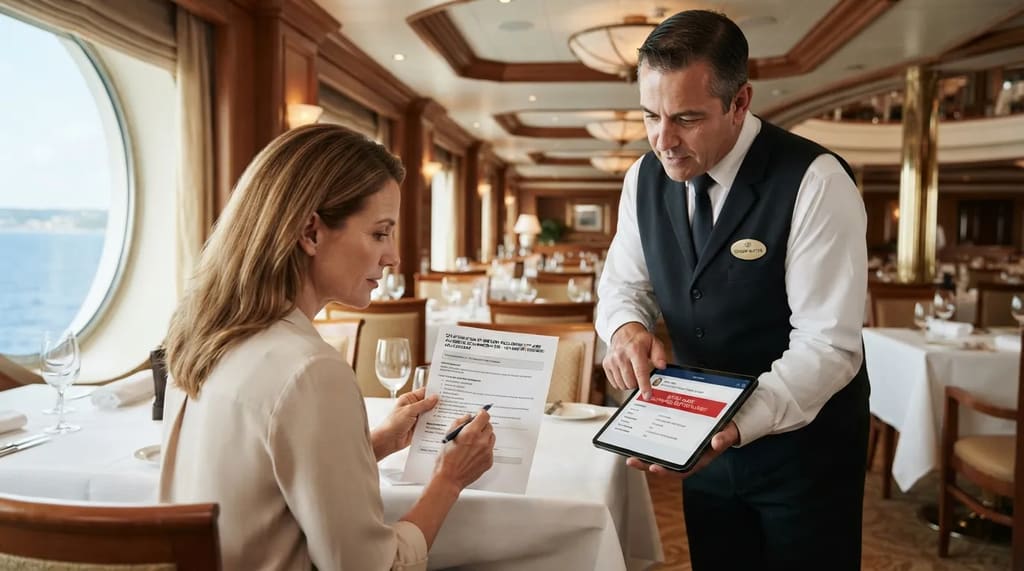
Most major cruise lines can accommodate severe food allergies when given advance notice, and some ask for 60 days or more. Notify the line at least 30 to 60 days before sailing, and use the channel it names.
Princess, for example, asks you to tell it in writing using its Cruise Personalizer.8 Give details of your allergens, how severe they are and any previous reactions, and ask for written confirmation of what the line can provide.
A checkbox on the booking page is a start, not the whole job. The cruise line typically sends the ship a report of passengers with dietary requirements ahead of sailing, but a written confirmation in your hand is worth more than an assumption.
The form gets you into the system. It doesn’t replace the conversation at the table, which is the most important item on this list.
#1 – The First-Night Conversation About Allergies
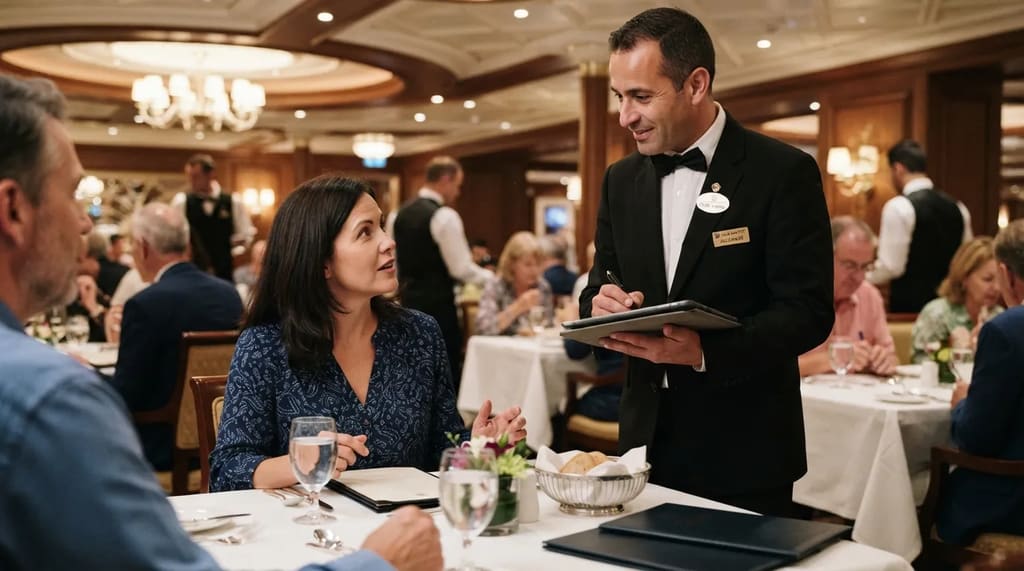
Across cruise lines, the allergy guidance reads almost the same: confirm your dietary request with the head server at dinner on the first night, and remind your server at each meal.8 Of all sixteen courtesies, this is the one you shouldn’t skip.
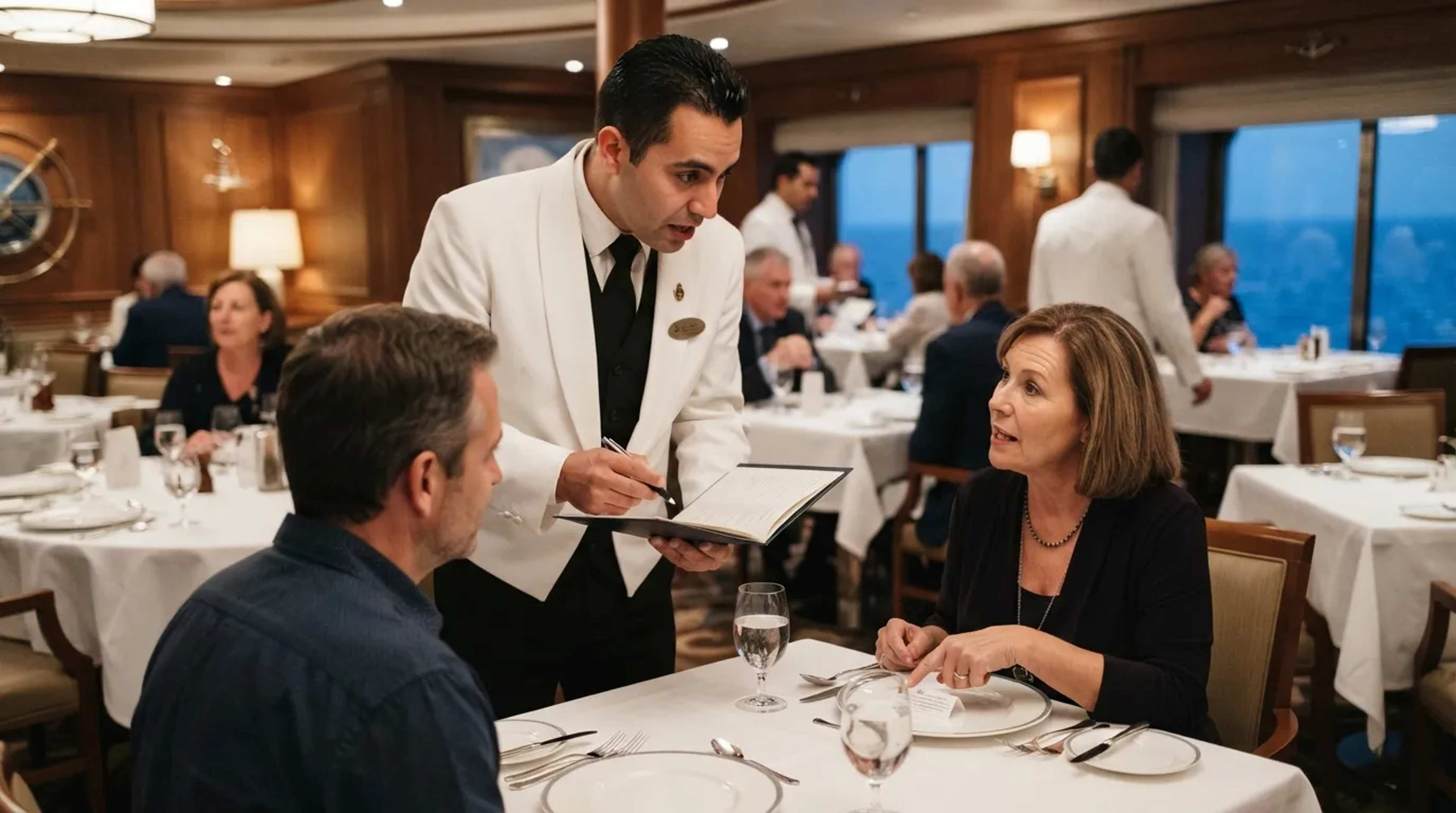
Your allergies should already be listed in the ship’s dining system, but introduce yourself to the head waiter anyway. A note on a screen doesn’t replace a spoken conversation, and one cruise guide cautions against assuming all will be well just because you filled out a form in advance.
- Speak to the maître d’ or head waiter on the first night.
- Be specific about what you can’t eat; if it’s a preference, call it a preference.
- Repeat it to your server at the start of every meal.
Main dining rooms often provide the safest setting for allergy management, as meals are prepared to order rather than served buffet-style. You can also request the same server each night, so they get to know you and your allergies.
Say it aloud, on night one, at every meal. If your allergy is severe, talk with your doctor and your cruise line before you book.
Look back over the list and a pattern shows up. The bread order, the table, the pace and the allergy note all follow the same rule: say it once, early and clearly, then repeat it where it matters. The dining team can only carry forward what you’ve told them, and the first evening is when they’re listening for it.
So think of the first dinner less as a meal and more as a short briefing for the people who will feed you all week.
If you could give your waiter one standing instruction on the first night of your next cruise, what would it be?
#17 – The Bonus Tip Nobody Shares: Order Tomorrow’s Dinner Tonight
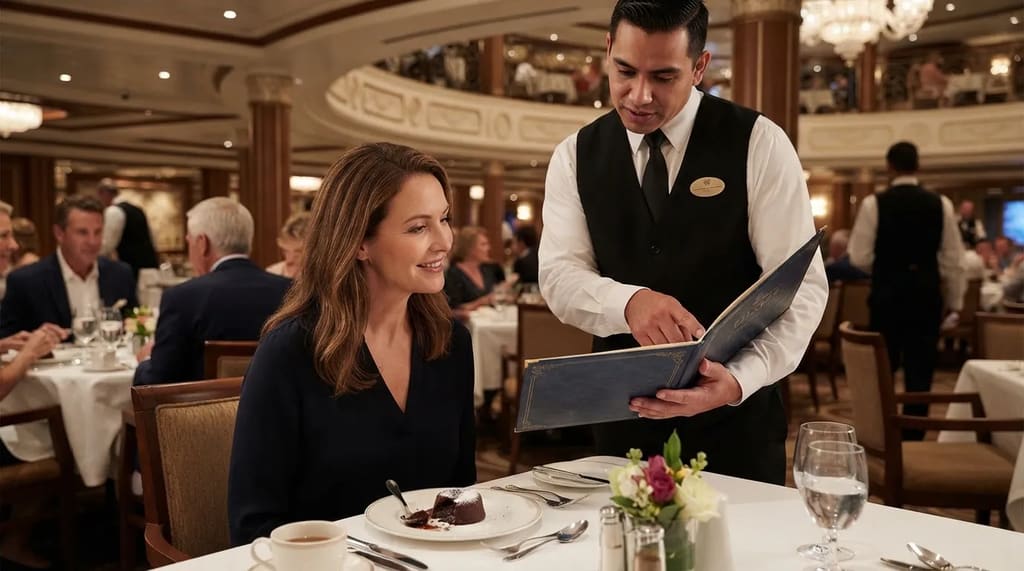
Most passengers only talk to their waiter about the meal in front of them. The smarter move is to ask about tomorrow’s menu while you’re finishing dessert tonight.
Here’s why it works: the kitchen is cooking for hundreds of people at once, and a request made a day ahead gives the galley time to plan instead of improvise. On many lines, that’s exactly how special dietary needs are handled, though the exact process differs by ship.
- Ask at the end of dinner: “Could we see tomorrow’s menu tonight?” If the app already lists it, ask your waiter to walk you through it anyway.
- Flag one dish: If you have an allergy, a dietary need or a strong dislike, point to the specific item and ask what the kitchen can do about it.
- Ask for a pre-arranged swap: A safe or simple alternative requested a day ahead is far more likely to arrive on time and as you pictured it.
- Confirm by name: Say your waiter’s name back to them and ask them to pass the note to the head waiter, so it doesn’t rely on one person’s memory.
Make it a nightly habit, and your standing instructions from night one turn into a plan the whole dining team can follow. If you have a severe allergy, still repeat it at the start of every meal.
- Royal Caribbean Main Dining Tips: https://www.royalcaribbeanblog.com/2023/04/11/best-main-dining-room-tips
- Royal Caribbean Dining Mistakes: https://www.royalcaribbeanblog.com/2026/02/20/mistakes-eating-royal-caribbean-main-dining-room
- Royal Caribbean Dining Times FAQ: https://www.royalcaribbean.com/faq/questions/what-dining-times-are-available-at-the-main-dining-room
- Royal Caribbean My Time Dining: https://www.royalcaribbeanblog.com/2018/09/05/royal-caribbean-my-time-dining-versus-traditional-dining
- My Time Dining Guide: https://cruise.blog/2025/02/guide-to-my-time-dining-royal-caribbean-cruise-ships
- Cruise Gratuities 2026 Guide: https://cruiseprodigy.com/pages/new-to-cruising/cruise-glossary/cruise-gratuities.html
- Cruise Gratuities Comparison: https://oceanscruise.com/blog/cruise-gratuities-comparison/
- Cruising With Food Allergies: https://cruiseline.com/advice/before-you-cruise/what-to-know/how-to-cruise-with-food-allergies