A late reservation can feel like showing up after the good part of the evening has ended. The room is loud, the kitchen is winding down, and a guest who can’t follow the conversation ends up paying full price to nod along. The 15 courtesies below are the quiet fixes a head waiter can arrange, and few of them cost the restaurant anything.
One of them takes a single sentence on the phone and shapes the night more than all the others combined. But the first begins before you even sit down, with the chair where you wait.
#15 – A Chair Waiting for You by the Door
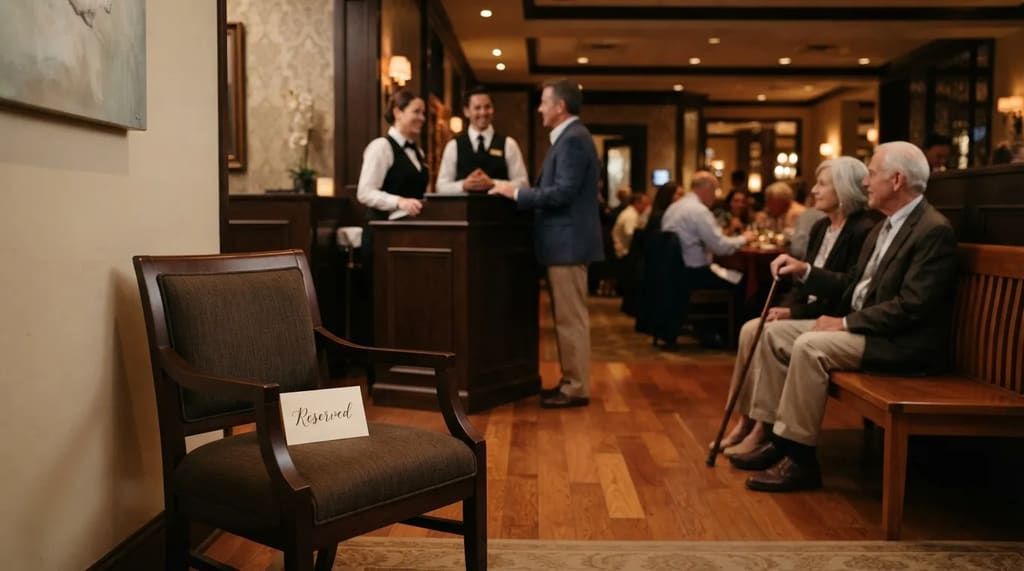
A late table is often not ready at the hour you booked, which leaves you standing at the host stand with your knees and back doing the waiting. A chair in the waiting area costs the restaurant nothing. Some restaurants go further and reserve a seat or two with signage for older or disabled guests.
If you see nowhere to sit, ask the host for a chair or a spot on a bench inside. You can also leave your cell number and wait in the car, since many restaurants will text you when the table is ready.
At a Glance
- Ask the host for a chair or a bench seat inside.
- Look for signage marking seats for older or disabled guests.
- Leave your cell number so the restaurant can text you.
- Wait in the car if standing is the problem.
Once you are seated, the lamp over the table decides whether you can read what is on the menu.
#14 – A Menu You Can Read at the Table
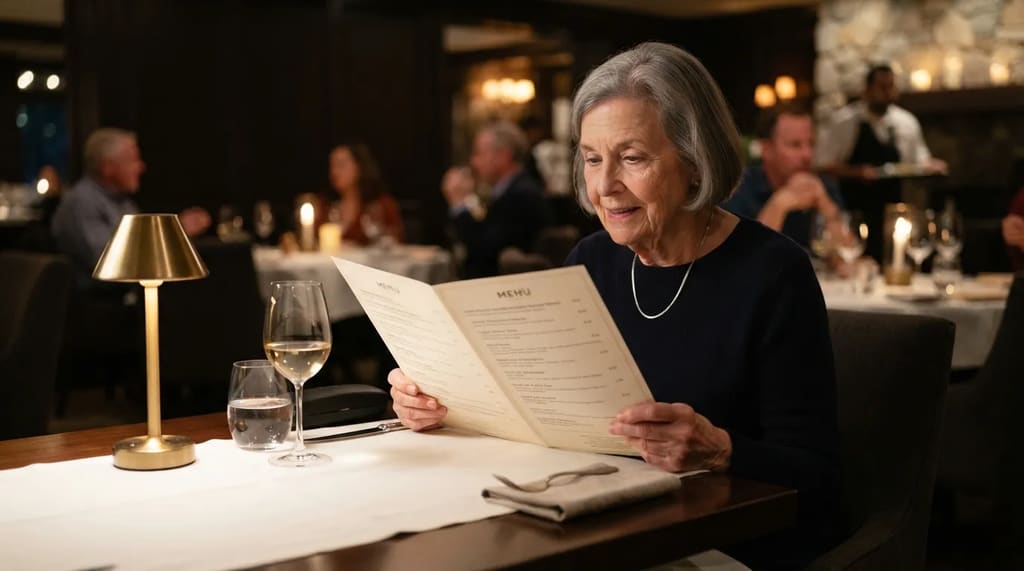
Small type under dim light is hard on aging eyes. A restaurant can fix the lighting cheaply with a dimmer on the lamp above each table, so guests can read comfortably and staff can still brighten the room for cleaning.
Type matters too. Larger print and plain lettering instead of fancy cursive are among the easiest changes a restaurant can make. If the menu in your hands is tiny, ask for a larger copy or ask the server to raise the light.
Reading the printed menu is the easy part. The specials are usually recited aloud over the room noise.
#13 – Specials Written Down, Not Recited
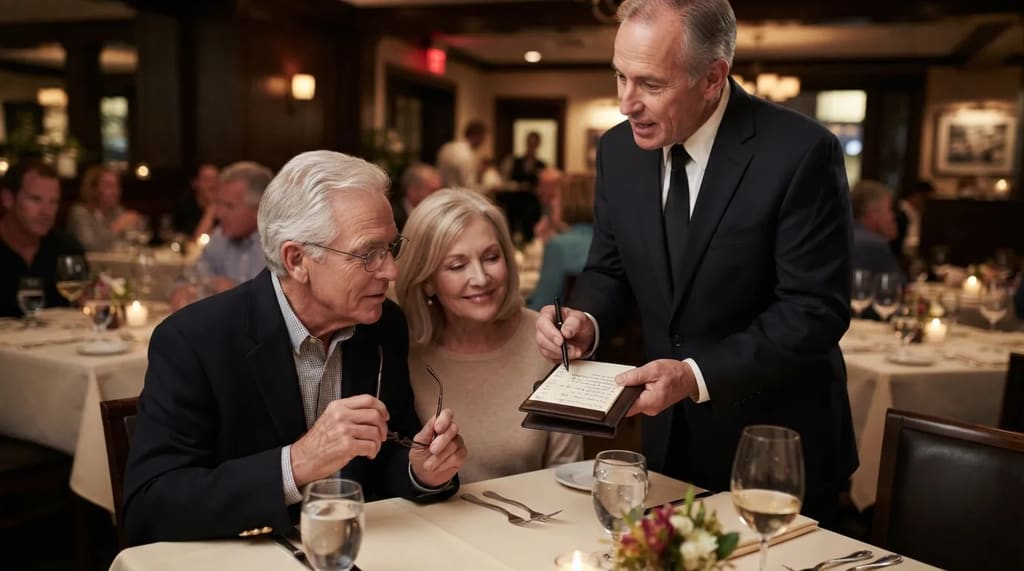
The specials are the one part of a dinner that usually arrives by voice alone. A list of dishes and prices is hard to catch in a loud room, and harder with hearing loss.
Ask the server to write them on the order pad or point to them on a card. If a price was lost in the noise, ask for it again before you order, since thirty and forty can sound alike across a crowded dining room.
Asking twice costs a little embarrassment. Guessing can cost you a good deal more when the check arrives.
#12 – A Plate That Stands Out From the Cloth
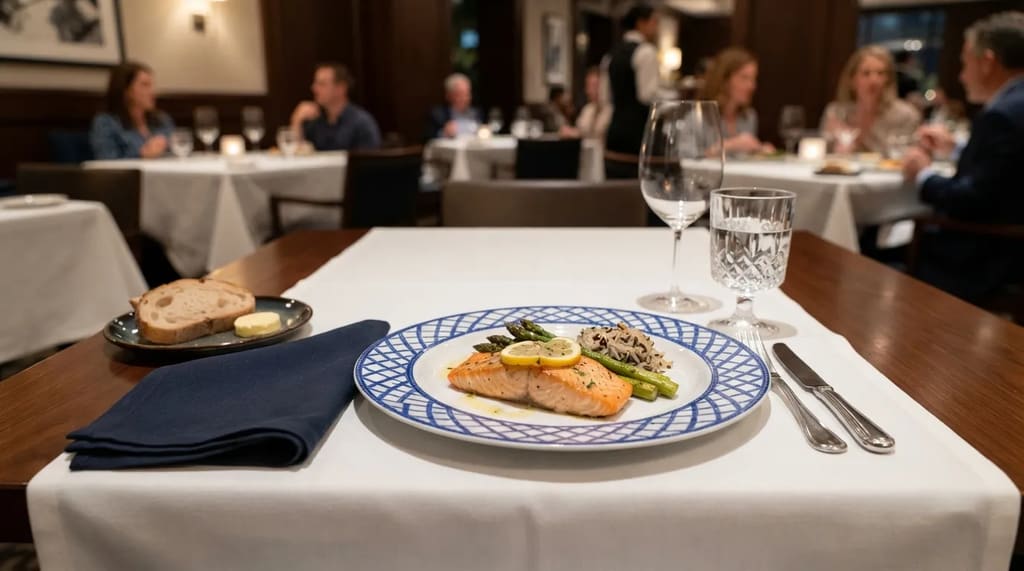
Plates with a border or a colored rim can help older diners, while white plates on white tablecloths can be hard to see for those with vision problems. Some restaurants choose their china with this in mind.
You cannot order the china, though, because a restaurant buys its dishes for the whole room. If food seems to disappear into the plate, a darker napkin or a bread plate nearby gives your eye something to work from.
That is a reasonable view to take, because a request about dishes uses up goodwill you may want for the seating chart.
#11 – A Chair Light Enough to Slide
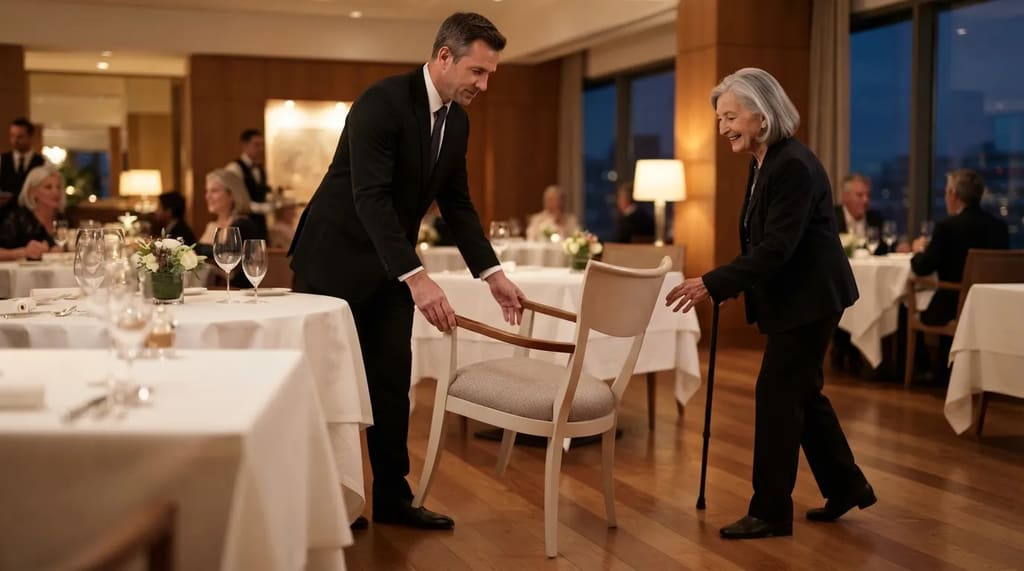
Chair weight is a design question that rarely reaches the guest, until the chair is too heavy to pull out. A server who draws the chair back for you before you sit has solved the problem in about two seconds.
Accept the help without apology. If the room has two kinds of seating, ask for the chair with arms, since arms give you something to push against when you stand.
Quick Compare
- Chair with arms: gives you something to push against when you stand.
- Chair without arms: easier to slip into, but less to lean on when rising.
- Booth: no heavy chair to move, though sliding along a bench asks more of your joints.
Even a light chair has to be reached, and the walk from the front door is often the longest part of the evening.
#10 – A Table Near the Door on Level Floor
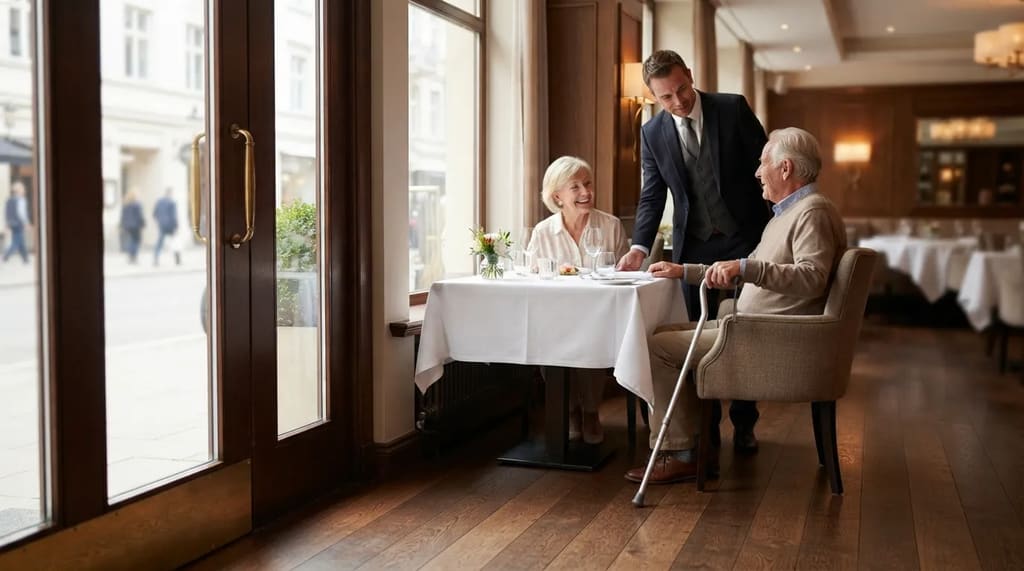
A guest with a cane, a walker or a bad knee feels every step and every tight turn between the door and the table. A host who is paying attention puts that guest near the entrance, on level floor, with room to move.
There is a trade-off. A table by the door can be drafty in winter and busy with arrivals, so it suits some guests better than others. If the room has a step down or an upper level, ask where the restrooms are before you accept a table.
Width is a separate matter, since a walker needs more room between tables than many dining rooms leave.
#9 – Room Between the Tables for a Walker
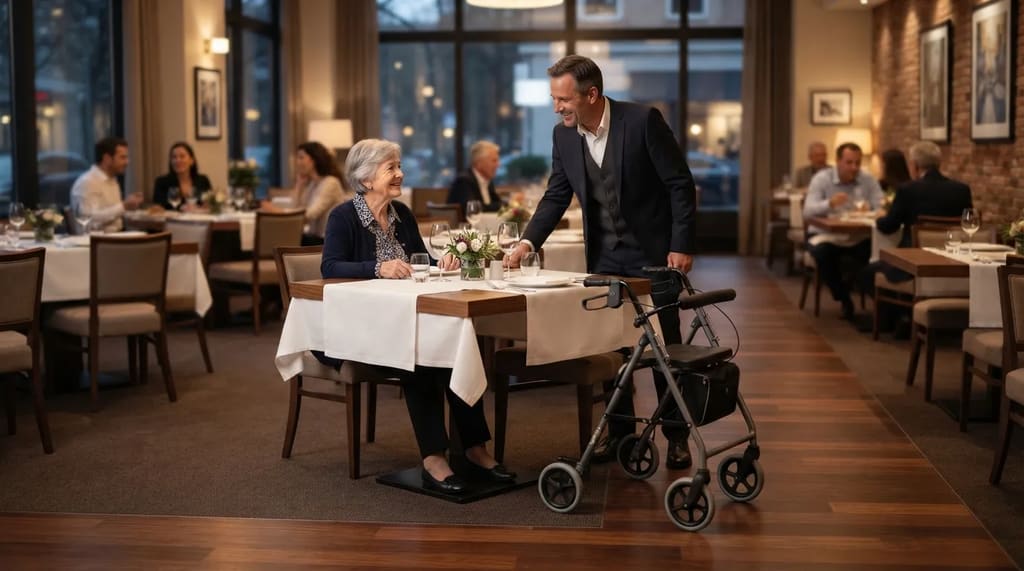
Restaurant layouts often have narrow aisles and cramped seating, which makes things difficult for people using mobility aids. A table can be reachable on paper and still be impossible to get to with a walker.
ADA standards call for accessible seating to be dispersed throughout the dining area.1 That means you should not have to accept a spot in a back corner just because you use a wheelchair or walker. Be specific when you ask:
- Name the device you use, whether a cane, a walker or a wheelchair.
- Ask for a clear path from the door to the table.
- Ask about steps between the table and the restrooms.
A window table behind a row of other tables is a poor trade for an aisle table you can reach without squeezing past strangers.
A walker takes up floor space, and so does a service dog, which has its own rules about where it may lie.
#8 – A Service Dog Allowed Inside With You
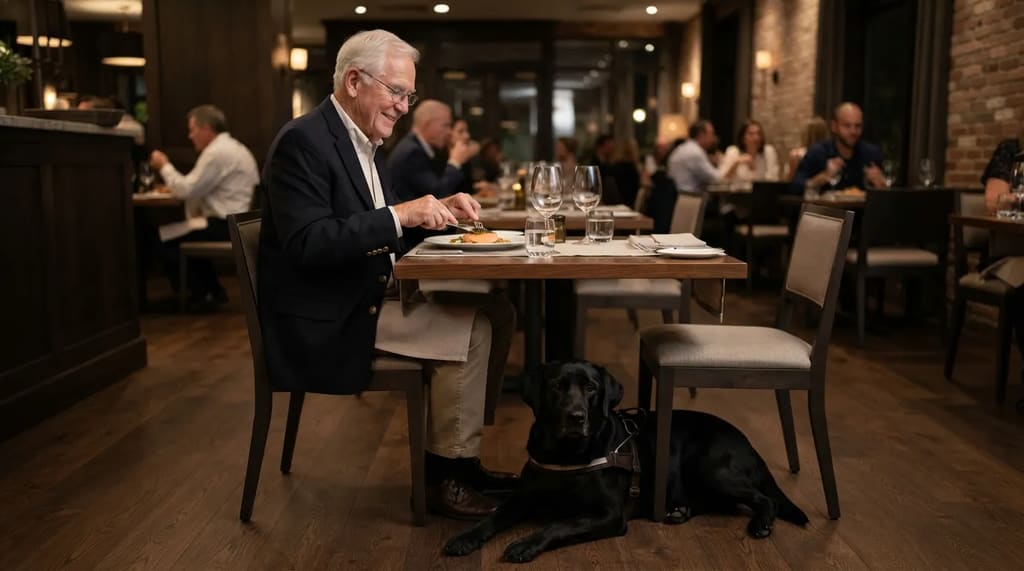
Restaurants are covered by the Americans with Disabilities Act and generally must not deny access to people with service animals, even if local health codes prohibit animals. The Justice Department’s own guidance spells out what that does and does not include.
- The restaurant cannot require you to dine outside because of the dog.
- The restaurant need not let the animal sit on a chair or be fed at the table.2
- The dog must not block aisles.
The practical side is the floor. Ask for a table where the dog can lie under it or beside you without sticking out into a walkway, which is the same clear-path request you would make for a walker.
#7 – A Plain Answer About When the Kitchen Closes
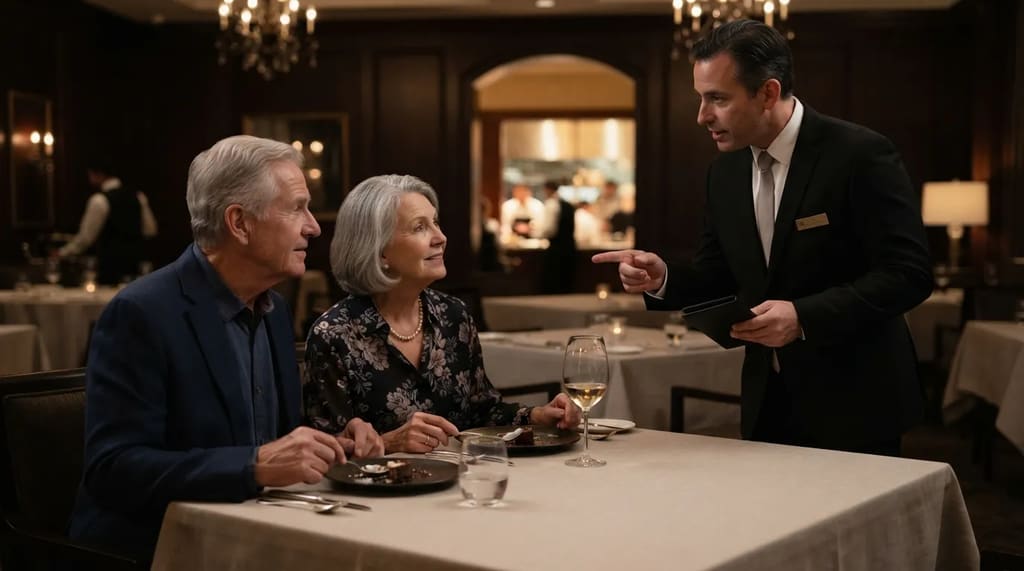
A late seating puts you near the end of the kitchen’s evening. Ask when the kitchen takes its last orders, so you know whether you have time for a second course, dessert or coffee without feeling hurried.
Say at the start that you are in no hurry. A server who knows that will leave you time between courses and will not whisk plates away the moment the last bite is gone.
How quickly the evening moves depends largely on the server, and some rooms now hand much of that job to a tablet or a phone.
#6 – A Person Instead of a Tablet
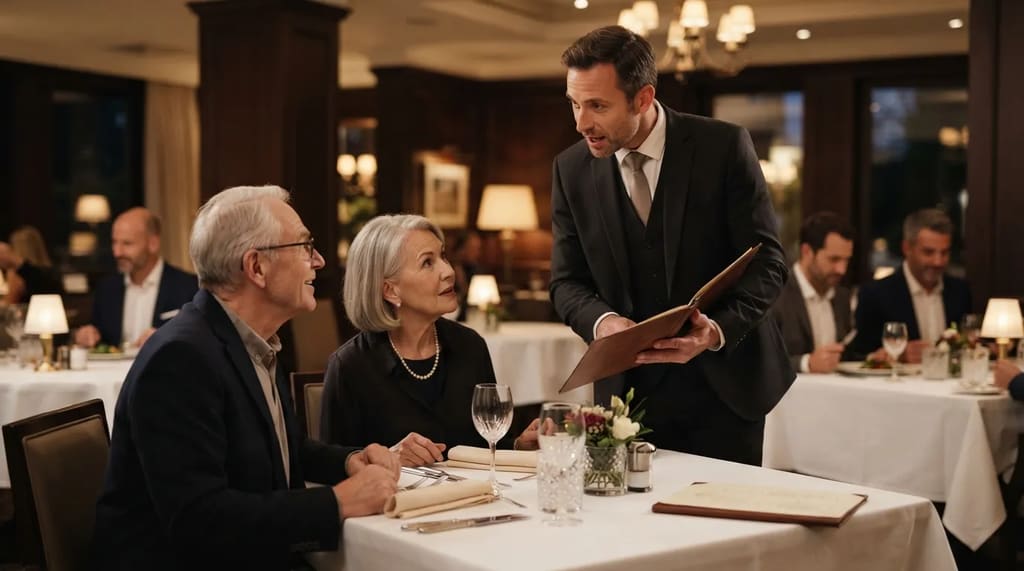
Technology has helped some diners. Mobile apps let guests view menus, make reservations and order from a phone, which can help patrons with mobility or communication challenges. That is a good reason to use an app for the reservation itself.
The QR code on the table is a different story. Automated ordering systems can alienate older diners who are not tech-savvy. If a menu is available only through your phone, ask for a paper copy and a person to take the order.
If you have trouble hearing, tell the server at the start and ask them to face you when they talk. It is a small request, and it changes how much of the evening you follow.
#5 – A Booth With the Right Back
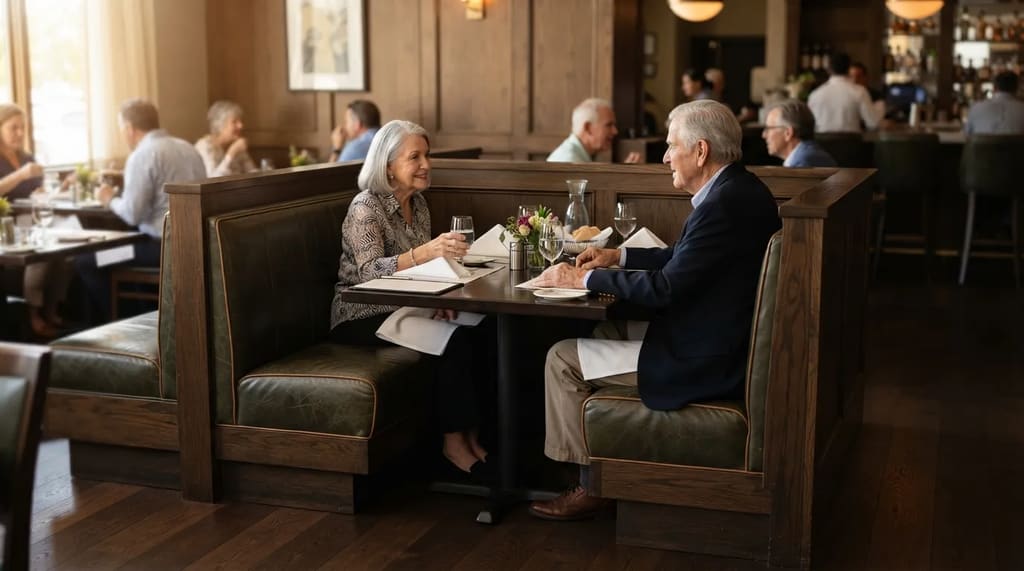
Booths split designers and diners alike. High-back booths help block sounds from other tables.3 Lower-backed seats can give older guests better support, because they can use the back of the booth as a balancing point.
- A high back suits you if hearing is the main trouble.
- A low back suits you if balance or getting up is the main trouble.
If you can only have one, choose by your knees and hips. A booth removes the heavy-chair problem entirely, but sliding along a bench asks more of your joints, so a table with chairs may serve you better. You can work on the noise another way.
Even the best booth cannot help if the wall behind it carries the clatter of the dish station.
#4 – A Wall at Your Back, Away From the Wait Station
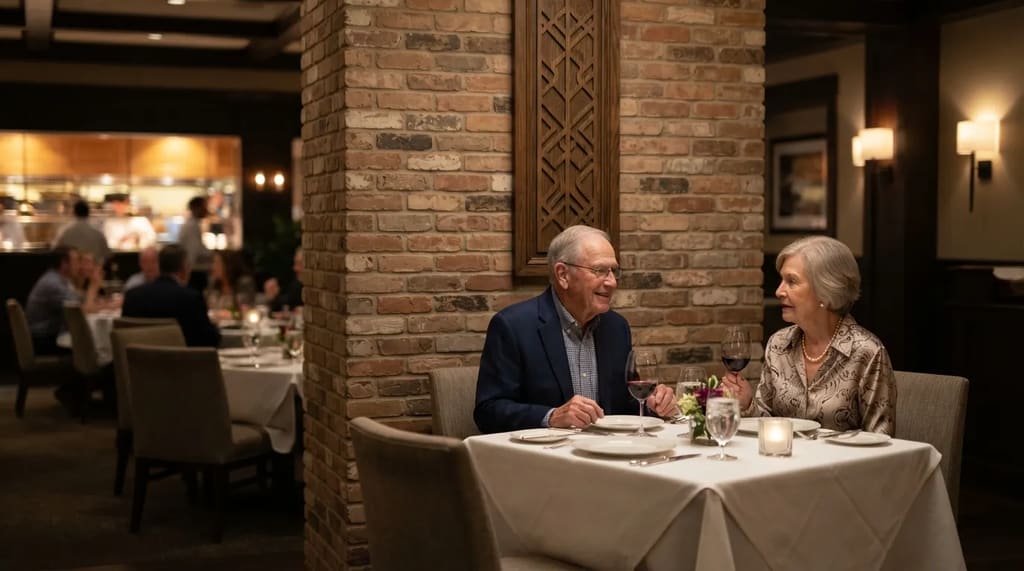
How a table is oriented to the wait stations and the kitchen access is a big factor in controlling noise. Shielding with walls or screens can dramatically help sound levels. A host can see these things on the floor plan, and you can see them the moment you walk in.
The National Institute on Deafness and Other Communication Disorders suggests looking and listening when you eat out.3 Is it a big room with a high ceiling, hard surfaces like metal and concrete, and tables crowded together? If so, ask for the quietest spot available.
Worth Knowing
- High ceilings let sound travel and linger.
- Metal and concrete surfaces bounce noise back into the room.
- Crowded tables put more voices within earshot of yours.
- Any of these is a good reason to ask for the quietest spot.
A corner with a wall behind you leaves fewer tables within earshot than a spot in the middle of the floor.
A good corner still fails if it sits beside the swinging door, which carries the loudest traffic in the room.
#3 – A Table Away From the Kitchen Door and Bar
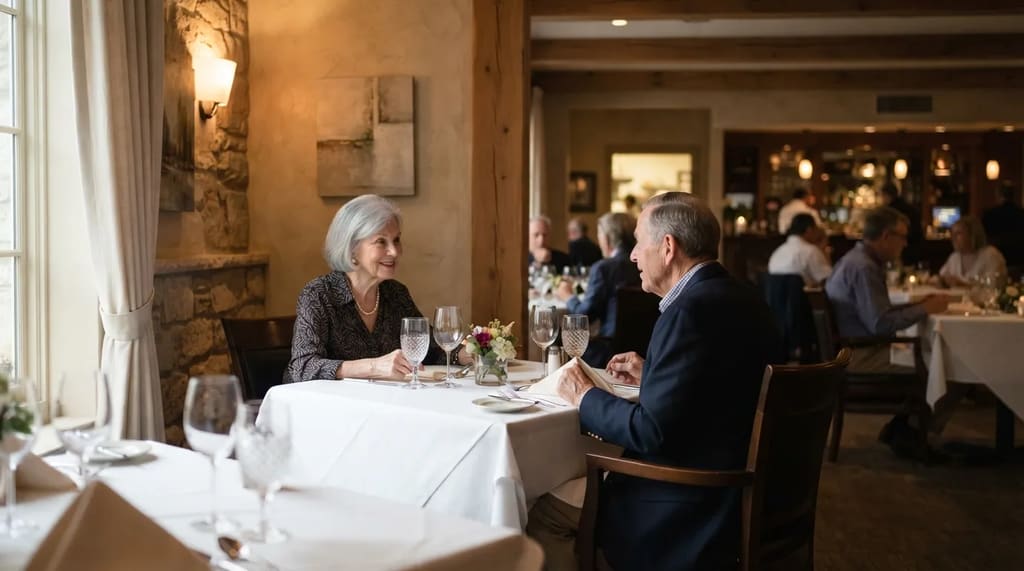
On age-related hearing loss, the institute gives a plain instruction. When you go to a restaurant, do not sit near the kitchen or near a band playing music.4 5 The bar belongs on that list as well, since it draws its own crowd and its own noise.
The first table a host offers is not always the one worth taking. If the only open table is beside the kitchen door, waiting ten more minutes for another is often the better trade. That is exactly when the chair by the entrance, from the top of this list, earns its keep.
Where the table sits matters less when the whole room is loud, and the loudness of a room has a measurable target.
Related Stories From Travelbinger

#2 – A Room Quiet Enough to Talk Across
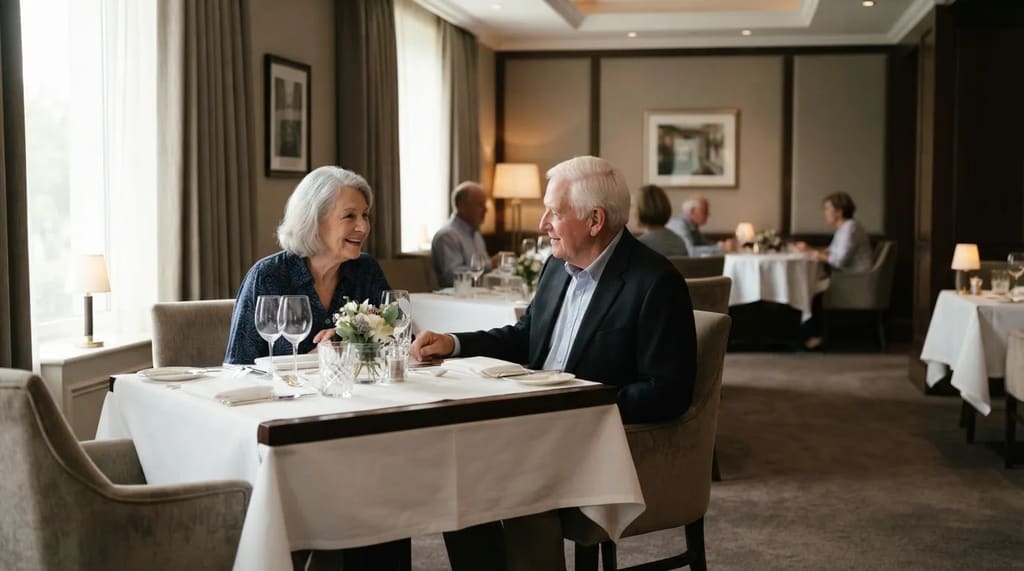
Researchers simulated a restaurant in a sound booth with 31 older adults with varying levels of hearing loss. As the background noise rose, the listeners raised their voices, reported more trouble communicating, and said they would spend less time and money. Louder voices made the room louder still.6 7
The researchers concluded that restaurant owners should aim for background noise of 50 to 55 decibels to include older adults with hearing loss. For comparison, sounds at or below 70 decibels are generally safe, while long or repeated exposure at 85 or above can cause hearing loss.6 8
Fast Facts
- 31: older adults with varying hearing loss took part in the sound-booth study.
- 50 to 55 dB: the background level researchers recommended for inclusive restaurants.
- 70 dB or below: generally considered safe.
- 85 dB or above: long or repeated exposure can cause hearing loss.8
If dinners out have stopped being fun, the room may be the culprit, not the menu. A meal you cannot talk through is poor value at any price. Ask the host on the phone whether the room is loud on that night, and whether there is music.
The host can only act on what the host knows, and the best time to tell them is days before you arrive.
#1 – One Specific Sentence at the Time of Booking
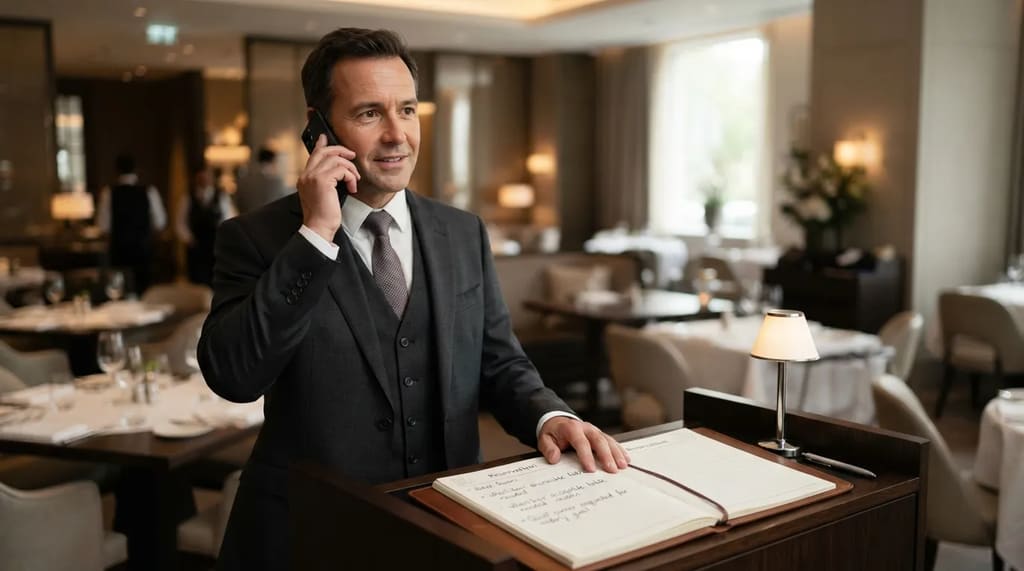
Every item above is decided from a seating chart, and the chart is drawn before you arrive. Requests for a certain area or table type depend on the day’s layout, other reservations and accessibility needs, so a restaurant that hears about yours early has the whole day to plan around it.
Specific requests work better than vague ones. Saying you need seating for a wheelchair is clearer than simply asking for an accessible table. Mentioning a quieter corner for an elderly relative gives the team a better chance to prepare.
Quick Compare
- Vague: “Do you have an accessible table?”
- Specific: “We need seating for a wheelchair.”
- Vague: “Somewhere nice and calm, please.”
- Specific: “A quieter corner for an elderly relative.”
A few sentences you could use:
- “We would like a quiet table away from the kitchen and the bar.”
- “I use a walker, so we need a level path and no steps.”
- “We are arriving at 8:30. Is the kitchen taking orders then?”
Then say it again at the door. The person who took your booking may not be the one holding the seating chart that night, so repeat the request at the host stand in a friendly way.
A dinner out feels like it begins when you sit down, but much of it has been settled by then. The table, the noise and the walk from the door were all decided from a chart, so a few minutes on the phone buy more than anything you can ask a server for later.
That also makes it fair to be particular. A restaurant would rather plan around a clear request than apologize for a poor table once you are already in the chair.
Which restaurant do you return to because the table is always right for you, and what is it about that spot that works?
Bonus: The Second Phone Call Nobody Thinks to Make
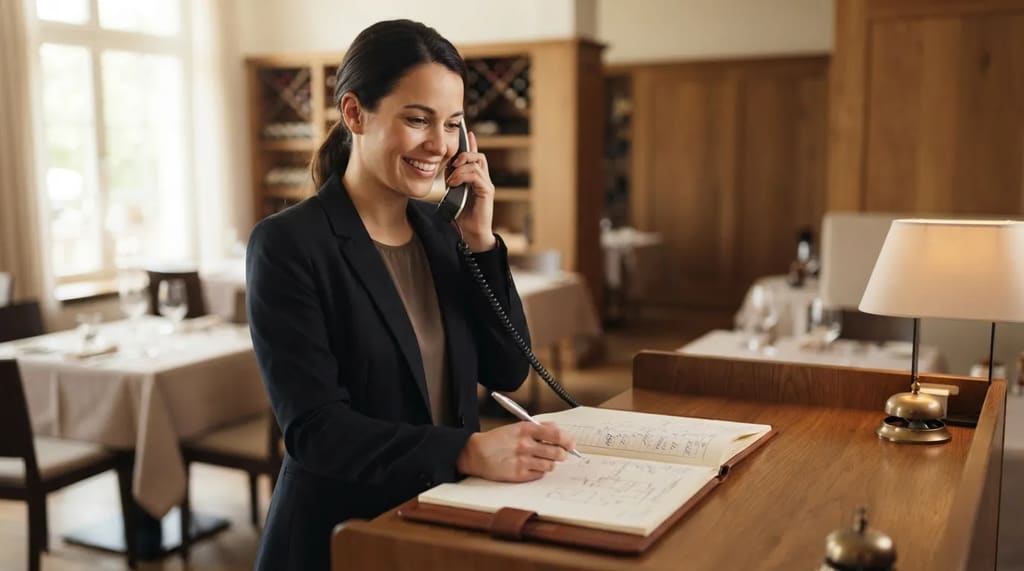
Your booking call reaches whoever picks up. A second, short call on the day of your reservation reaches the person who will actually be standing at the host stand that night.
- Time it: Call in the quiet stretch between lunch and dinner service, usually mid-afternoon, when staff have time to look at the floor plan instead of juggling a ringing line.
- Ask for a name: Request the host or manager working that evening, and write down the name.
- Ask one question: “Which table would you give your own grandmother tonight?” Staff know which spots run loud, drafty or cramped, and this question gets a straight answer.
- Close the loop: Ask them to add your request to the reservation notes, then greet that person by name when you arrive.
A request made to a named person, on the same day, is much harder to lose in the shuffle than a note typed in days earlier.
- ADA Dispersed Accessible Seating: https://www.katom.com/learning-center/dining-room-ada-compliant.html
- DOJ Service Animal FAQ: https://www.ohiocountyhealth.com/wp-content/uploads/10-27-15_c6_DOJADAServiceAnimal2015.pdf
- NIDCD Age-Related Hearing Loss: https://www.nidcd.nih.gov/sites/default/files/age-related-hearing-loss.pdf
- NIDCD Hearing Loss and Older Adults: https://www.nidcd.nih.gov/sites/default/files/hearinglossolderadults-508.pdf
- Johns Hopkins Presbycusis Guide: https://www.hopkinsmedicine.org/health/conditions-and-diseases/presbycusis
- Hearing Journal Restaurant Noise: https://journals.lww.com/thehearingjournal/fulltext/2023/02000/reducing_noise_in_restaurants__feasibility_and.6.aspx
- Scientific Reports Restaurant Noise Study: https://www.nature.com/articles/s41598-022-10414-6
- NIDCD Noise-Induced Hearing Loss: https://www.nidcd.nih.gov/health/noise-induced-hearing-loss