Picture a guest who spends a whole week in the back row with a sore hip. Or one who sits down to a cold plate while the rest of the table finishes dessert. Nobody was being unkind. The director simply never knew.
These are the fourteen quiet fixes tour directors can arrange for guests over 65, and most of them cost you one sentence at the right moment. Stay for the final item, though. It comes before day one, it decides whether any of the others can happen, and skipping it can cost you a deposit. First, the easiest request on the list.
#14 – Seats in the Front Third of the Coach
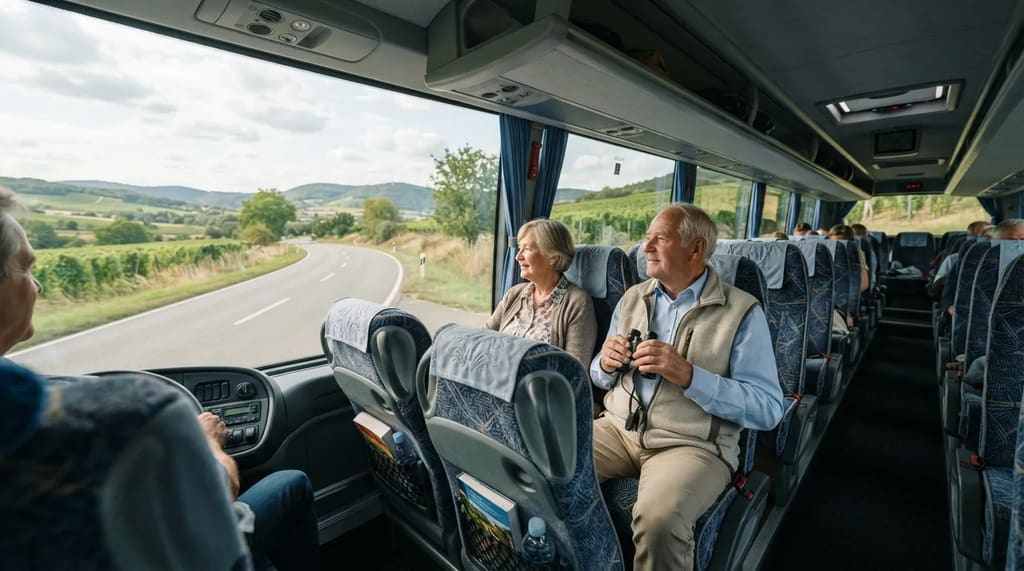
Many escorted tours rotate coach seats every morning, so the window you loved on Monday belongs to someone else by Tuesday. The idea is to give everyone a turn at different views and a chance to meet someone new.1
The rotation has some give in it. Go Ahead Tours asks travelers with considerations such as motion sickness to tell the Tour Director,1 and whether the answer is yes depends on the company’s policy. One company’s published rules say it will honor a front-seat request for motion sickness.
My view: rotation is a good rule for the group, and a bad knee, a stiff hip or a queasy stomach is the one fair exception to it. Ask for the front third of the coach on day one. A private word early goes down far easier than a standoff on day three.
Where you sit is only half of a long coach day. The other half is how long you go between stops, and there’s a right moment to bring that up.
#13 – Restroom and Stretch Stops That Fit You

Long stretches of sitting can leave older travelers stiff and swollen. That’s a good reason to treat stops as part of your health routine rather than a bother to the group.
If you need stops sooner than the schedule offers, tell the guide at the morning briefing instead of calling out mid-highway. The director can then work it into the day, perhaps by asking the driver to shorten a stretch or choosing a better spot.
Worth Knowing
- The morning briefing is the best window to ask, because the day’s route is still flexible.
- A director can ask the driver to shorten a stretch or pick a better stopping place.
- Standing up whenever the coach does keeps you moving, even without a restroom need.
- A calm request before departure lands better than a call from your seat mid-highway.
Raise it at the morning briefing, not from your seat on the highway. And stand up whenever the coach does, even if you don’t need the restroom.
Bags are the next place a day can go sideways, and what’s covered differs from one tour to the next.
#12 – Luggage Help at Every Hotel
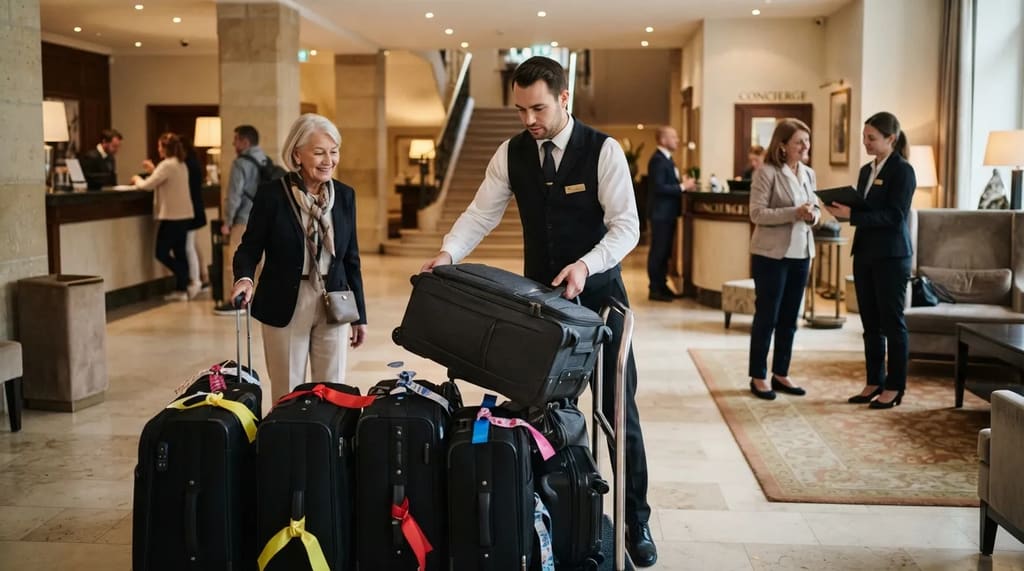
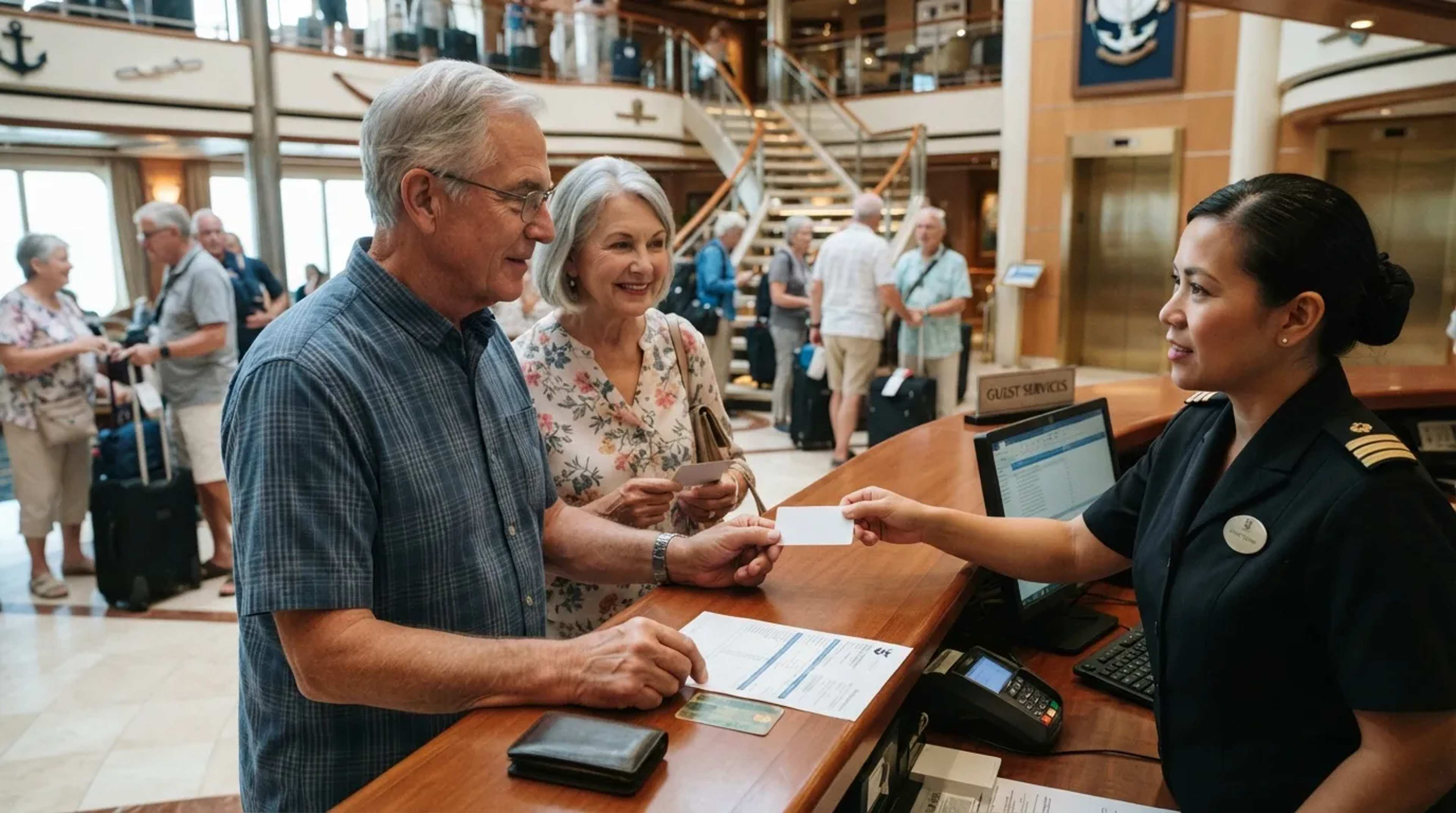
Many escorted tours include bag handling at hotels, but what counts as included varies. So the first-night question isn’t “Do you have porters?” It’s “What do the porters cover on my itinerary?”
That matters most if you travel alone. A solo traveler has no companion to lift, watch or chase a bag. Ask the director to confirm that your tag and room number are right, and say so if you can’t manage even a short carry to the coach.
Ask what bag handling covers before the first hotel. Medications, glasses and anything you can’t replace belong in your day bag, not in the suitcase.
Bags are one schedule. Your own morning is another, and a tour with fixed departure times can still bend for a traveler who warns the director the night before.
#11 – A Slow Morning or a Skipped Stop

A tour that runs on fixed departure times looks like it has no room for anyone’s pace. On a shared tour, confirm that adjustments fit the booked itinerary, and ask what happens if you need to skip a stop or return early.
The easiest version is a warning the evening before. If you plan a slow morning, tell your manager the night before. That gives the director time to sort out where you’ll meet the group and how you’ll get there.
Quick Compare
- Told the night before: the director can set a meeting point and plan how you’ll get there.
- Mentioned at departure: the group is already moving, and the plan has to be made on the spot.
Here’s a verdict that may annoy the go-everywhere crowd. Sitting out one stop to keep your strength for the next three days beats pushing through and spending the afternoon on the coach, worn out. Tell the director the night before a slow morning.
Sitting out a stop is simple when it’s optional. A steep walking tour is harder, because you’re already in it, and you need a plan made before the first step.
#10 – A Spot at the Back With a Regroup Point
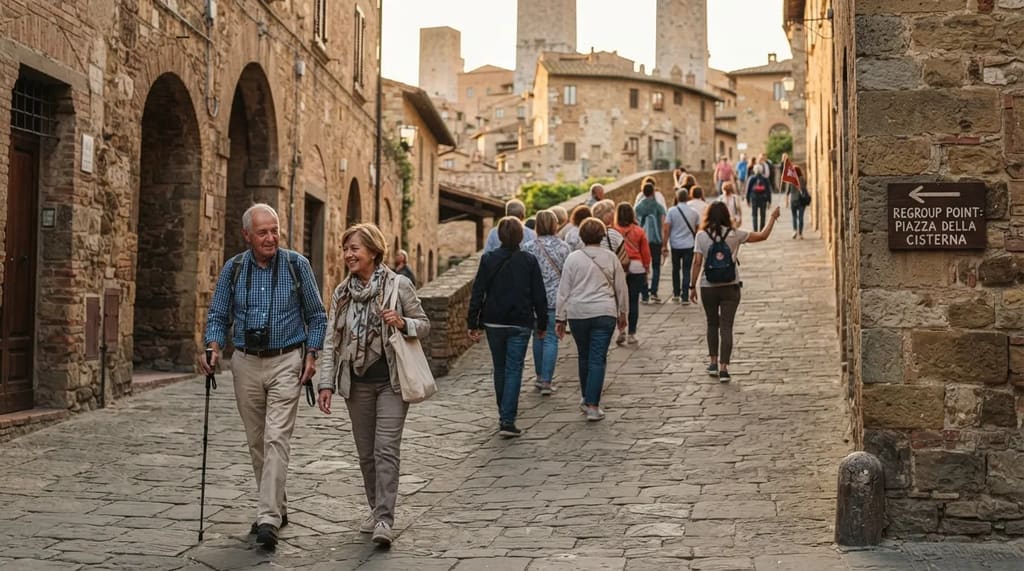
A steep old-town street is a poor place to discover you want to slow down. By then the group has moved on and the guide is at the front. You’re stuck choosing between hurrying and being embarrassed.
The fix is a short conversation. Ask the guide to let you walk at the back, with a plan for where to regroup. Say it before the walk begins, so the guide can build it into the route instead of improvising with a whole group watching.
Agree on where the group will regroup before the walk starts.
Slowing down is one fix. Another is knowing, before the group stops, how long you’ll be standing and whether there’s anything to sit on.
#9 – A Bench and an Exit at Long Stops
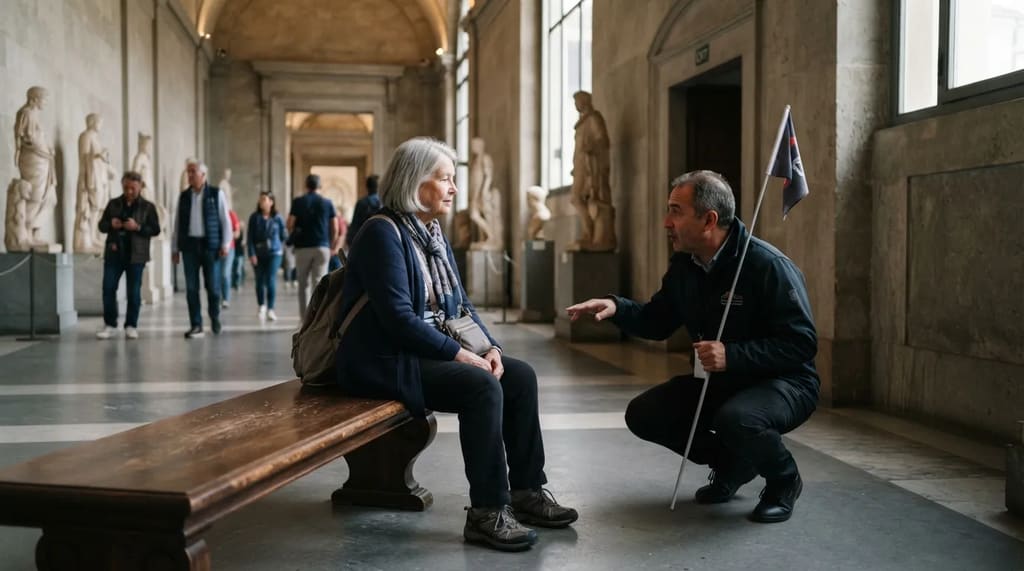
Walking distance gets most of the attention, but standing is a different limit. Someone may be fine walking short distances yet unable to stand for long. If that’s you, the director needs to hear “standing,” not just “I walk slowly.”
Museum lines, church interiors and long explanations at a viewpoint can all mean twenty minutes on your feet. Put three questions to the director at the briefing:
- How long is the stop, and is there seating?
- Is there a shorter loop or an early exit that doesn’t separate me from the group?
- Where will the coach or the group meet me afterward?
Tell the director that standing, not walking, is your limit. Directors can usually point you to a bench, a shaded spot or a café where you can wait without feeling left out.
Standing is a problem you can see coming. A kitchen is harder to see, and on group itineraries it runs on a deadline of its own.
#8 – A Set Menu That Already Knows Your Allergy

Restaurants on group itineraries aren’t cooking to order. They often prepare set menus in advance, so early notice gives the kitchen time to adjust.
Late notice has a price. Mention an allergy after the plates are out and you get a rushed substitute, or a cold plate while everyone else finishes dessert. That’s a poor way to spend a dinner you’ve already paid for.
The sequence is simple. Mention it at booking, then remind the tour director before the first dinner. Remind the guide again on the morning of each meal so the restaurant hears it twice. Tell the director before the first group dinner, then again that morning.
The clock matters at the table too, for anyone who takes medication with meals.
#7 – Dinner Times That Match Your Pills

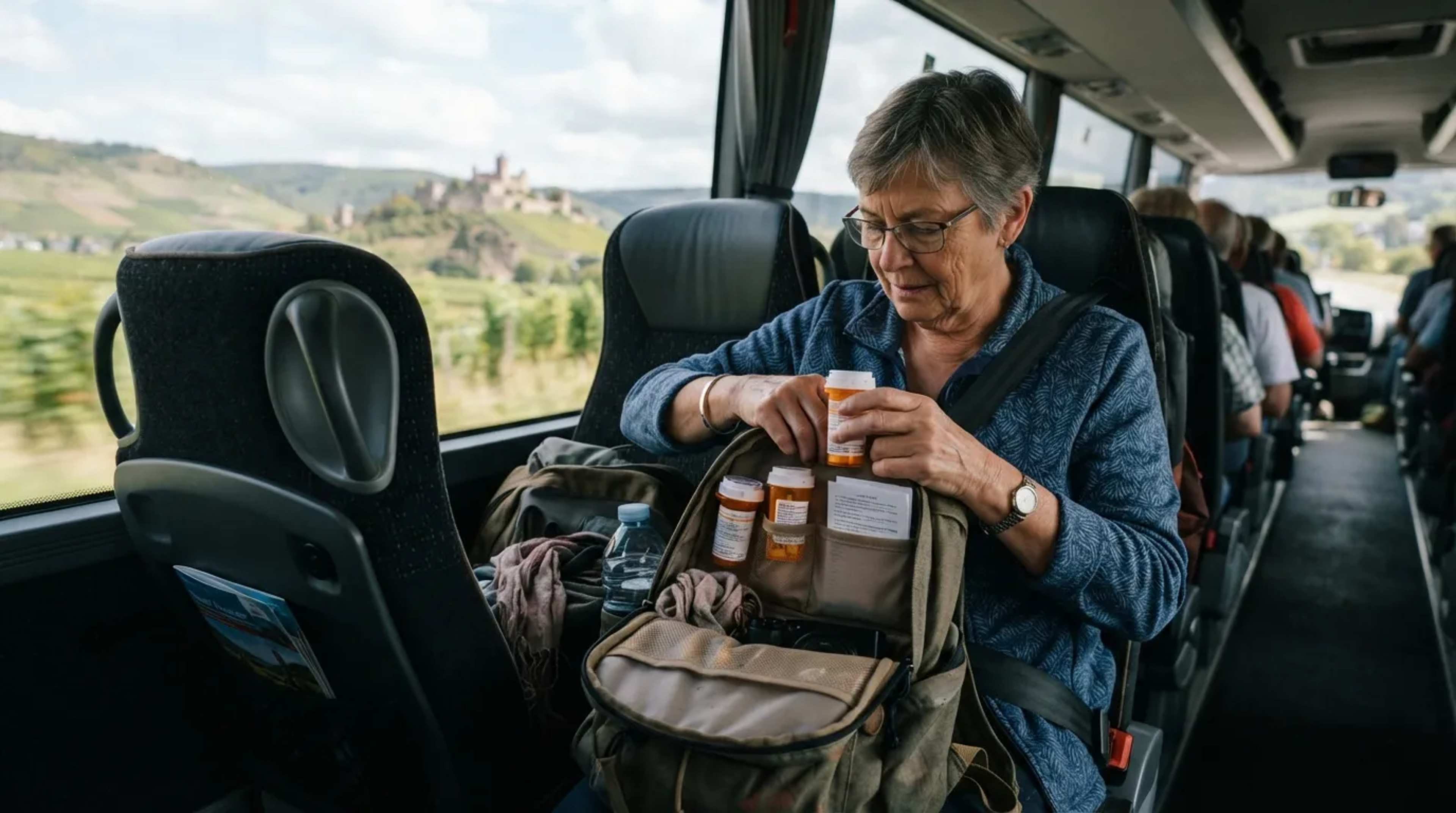
If your pills go with food, a late seating can throw off the whole evening. Many older travelers take medications with meals, so some tour operators ask restaurants for earlier seatings.
The timing is set days ahead, so the director can’t reshuffle it at the restaurant door. Group meals are generally ordered from a set menu well in advance, which is why the request has to reach the operator early. If meals are tied to medication, say so early.
Keep the pills themselves where you can reach them. A day bag is the simplest way to do it, and it means your medicine isn’t in the suitcase the porter from #12 has just carried off.
At a Glance
- Medications, within easy reach
- Glasses
- Water and a snack
- A light jacket
- A copy of your health note (see #6)
#6 – A Written Note With Your Health Basics
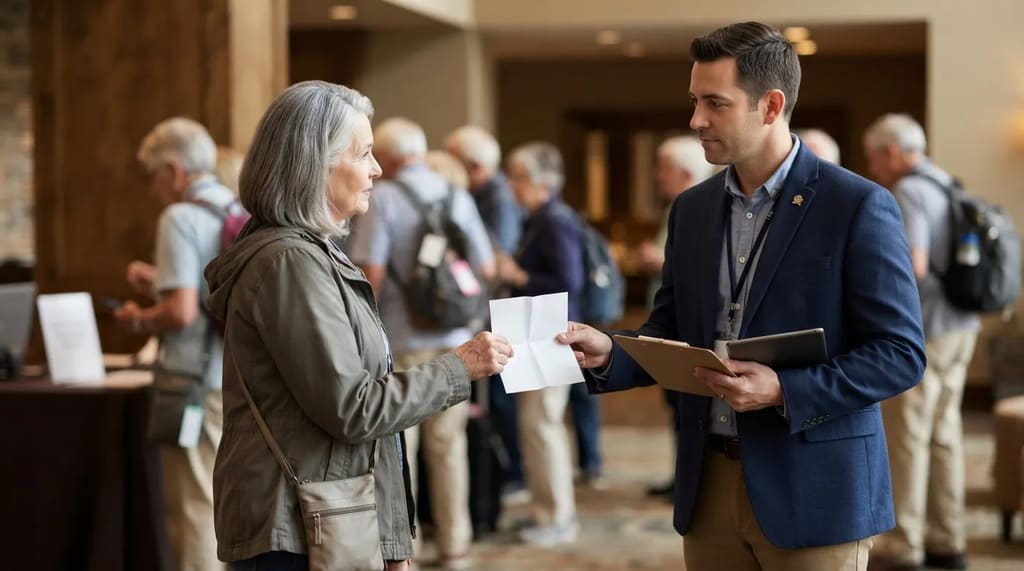
Tell the guide at the start about anything that could affect your day, such as diabetes, a heart condition, a medication schedule or an allergy. That’s easy to say and just as easy to forget in the first-morning bustle.
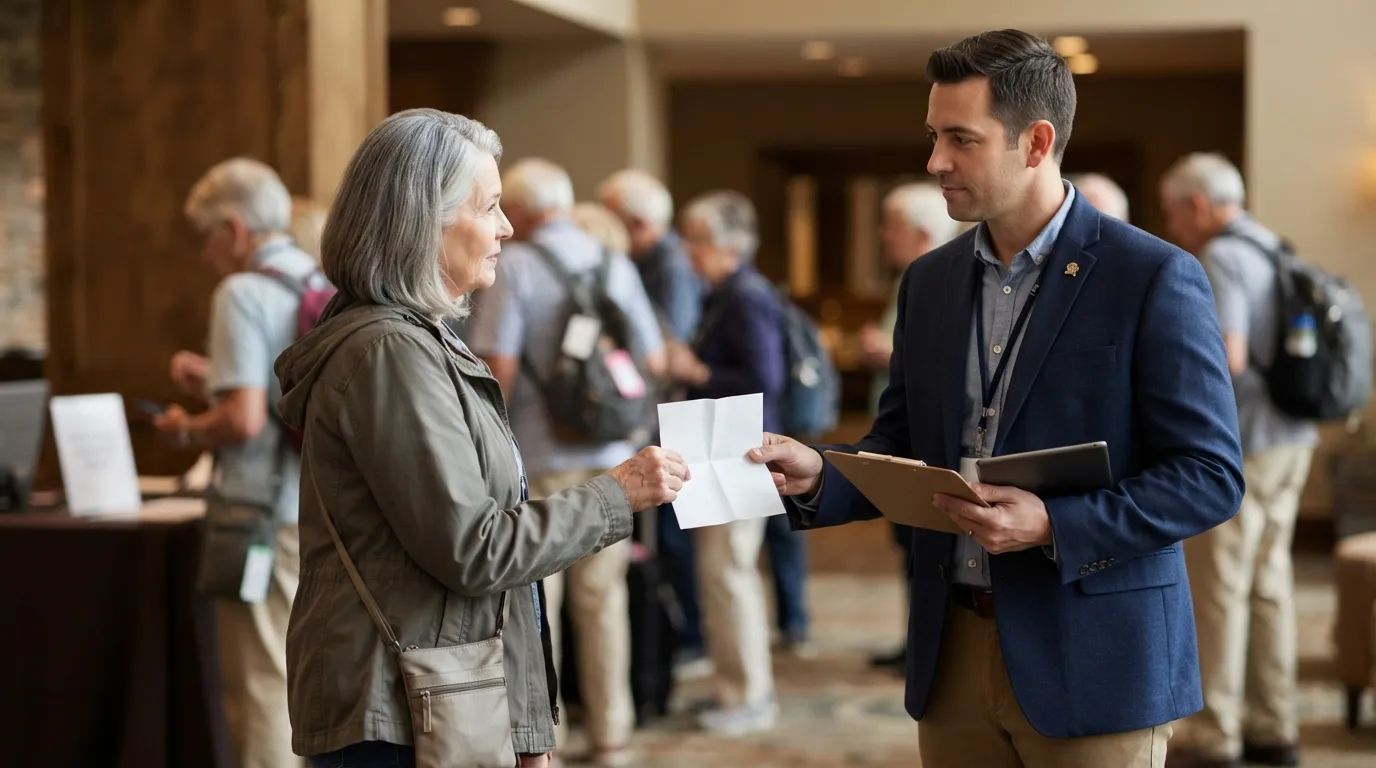
So write it down. Give the tour manager your emergency contact, medication list and any allergies on day one, in writing. A short note beats explaining at the table, and it carries the allergy details from #8 and the meal timing from #7 on one page.
- Emergency contact with a phone number
- Medication names and when you take them
- Allergies and any condition the director should know about
Hand the director a written note with your contact, medications and allergies. If you’re unsure whether a tour’s pace suits a health condition, ask your doctor before you book.
A folded card helps during the day. It does nothing for the night, when the real distance is the one between your door and the elevator.
#5 – A Room Close to the Elevator
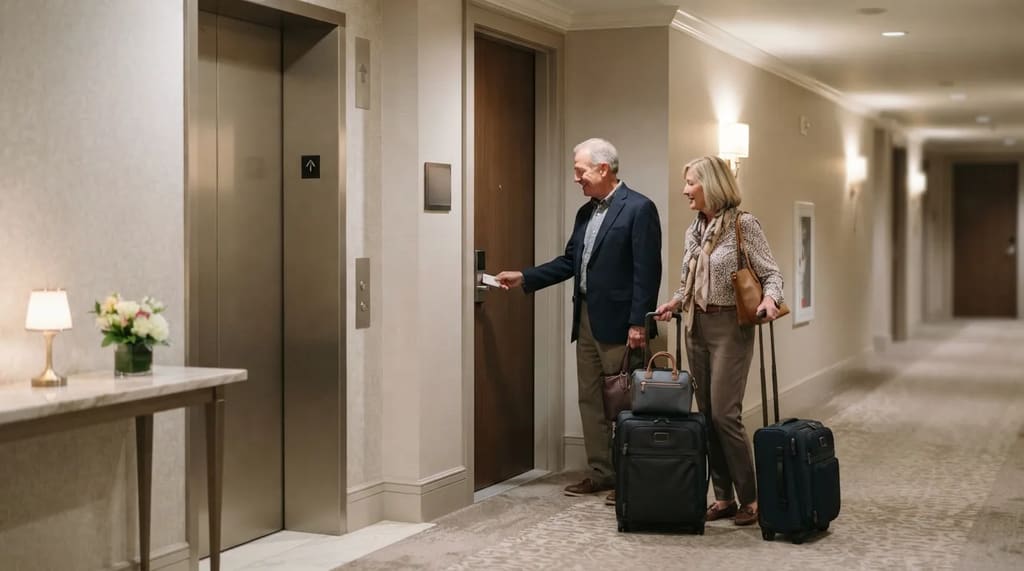
Here’s a detail that surprises travelers: the director doesn’t hand out the rooms. On many tours, room assignments are made by the hotel. The director’s job is to ask.
Requests for rooms near the elevator or on lower floors get passed along to the front desk. A manager can’t guarantee every request, but those made in advance have the best chance. If the room is wrong when you arrive, an experienced manager will usually take it up with the hotel on your behalf.
Be precise about which request you’re making. The ADA requires lodging to provide accessible rooms with mobility features,2 and that is a different thing from a room that is merely close to the elevator. Say whether you mean convenience or a mobility need, so the request goes to the right place.
Say whether you need an accessible room or only one near the elevator.
A request at the front desk is one kind of phone call. Another kind comes mid-trip, when you need something the hotel can’t supply.
#4 – A Phone Call Made on Your Behalf
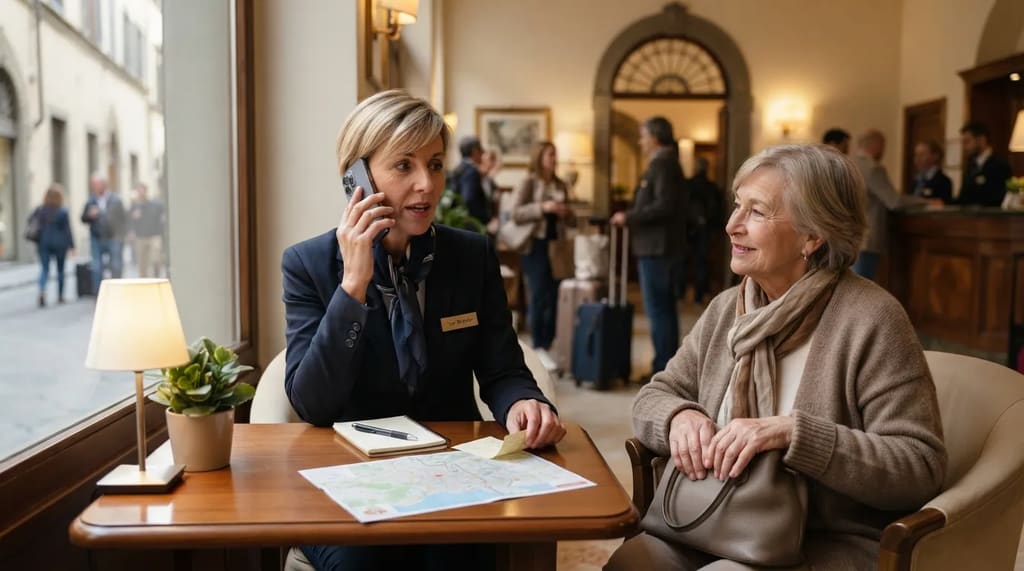
On many tours the director is the contact for anything health-related, from helping you find a pharmacy to explaining dietary restrictions at restaurants. In a country where you don’t speak the language, that call is worth more than a map.
It works best if the director already knows you. The note you handed over in #6 is what they reach for first. And if your needs change during the trip, repeat the message.
Why It Stands Out
- It bridges the language gap when you can’t explain a problem yourself.
- It covers practical help, such as finding a pharmacy.
- It works best when the director already has your note from #6.
- It turns a small problem into a quick fix, as long as you speak up the same day.
If your needs change mid-trip, tell the director that day. A swollen ankle on day four is a small problem when the director hears about it that morning. It’s a large one when it surfaces at the hotel on day seven.
#3 – Extra Boarding Time and Room for Equipment

This one is costlier, because it involves equipment and not only preferences. Federal rules generally require large motorcoach operators to provide accessible service, usually with advance notice.3 4
Related Stories From Travelbinger


That has a practical consequence. A wheelchair or walker user should tell the operator when booking, not on departure morning.4 The guide can then arrange the lift, the seating and the route.
On day one, give the director the details. Mention any equipment that needs storing or extra time to board, because its dimensions help determine which vehicle is used. Tell the director about any equipment that needs storage or extra boarding time.
Equipment is the visible part of a limitation. The harder part to explain is the invisible one, such as how far you can walk before resting, and a brochure rating won’t say.
#2 – Your Limits Described in Distance and Rests

The word “easy” on one brochure doesn’t mean the same thing on another. A label doesn’t carry over between companies. Road Scholar, for one, sorts its programs into Easy Going, On Your Feet, Keep the Pace and Let’s Go, with daily walking distance and activity time in the listings.5
So don’t tell the director “I’m fine with moderate.” Say what you can do. Asking whether a guest can walk a set distance on uneven ground, with or without rests, is more useful than a yes-or-no on a wheelchair. And be honest about a typical day, not just your best days.
My verdict: don’t book a tour on the word “easy” alone, whatever the brochure promises. Describe what you can do in distance and rests, not in labels. A director with that sentence can place you in the right spot on every walk.
The director can fit each day around your answer. The deposit, though, is where the real decision gets made, and it carries a rule that no director can change.
#1 – A Written Confirmation Before You Pay

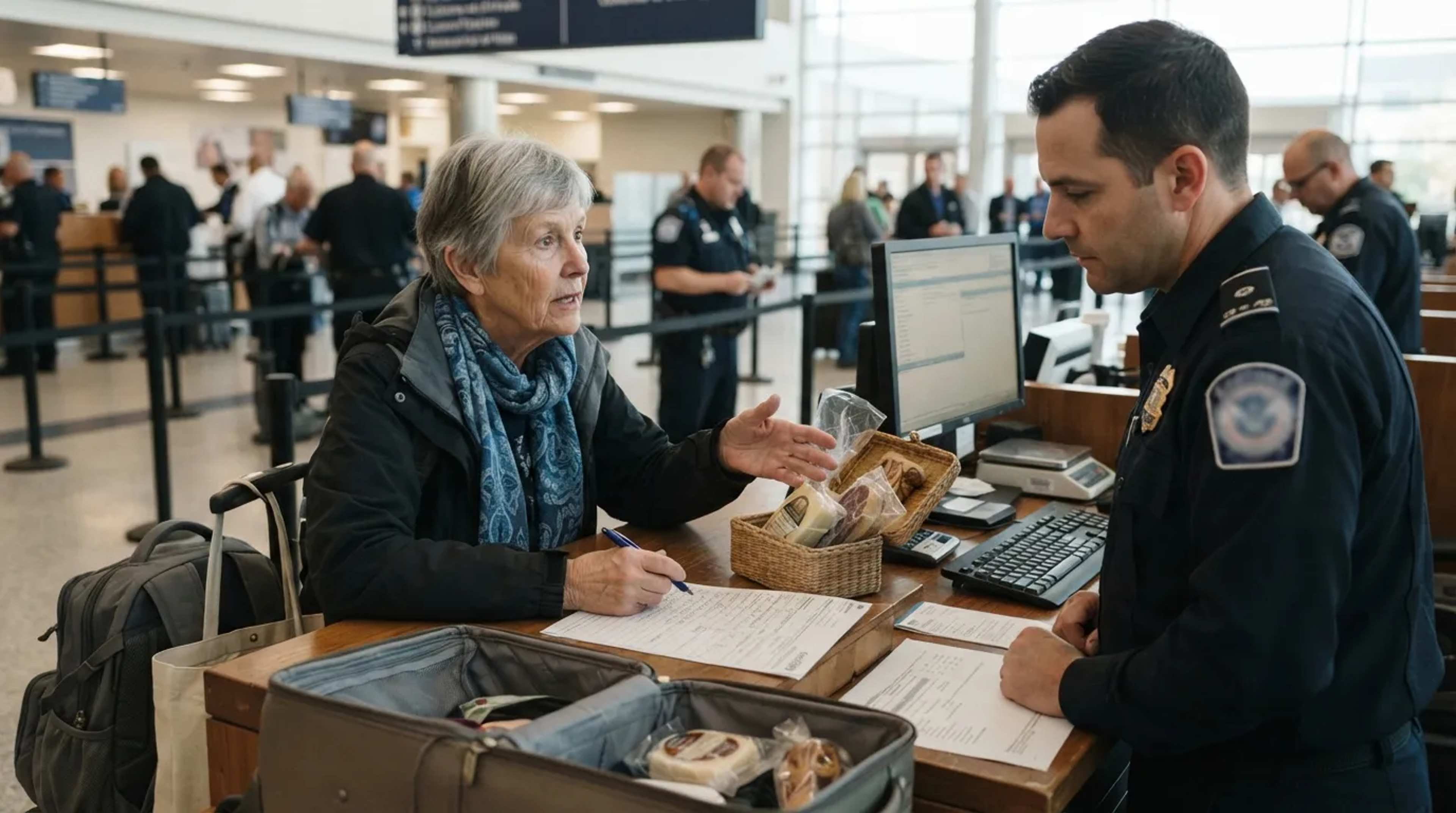
Every item above assumes the tour can take you as you are. That isn’t guaranteed. One senior-focused operator’s published rules allow walking canes but can’t accommodate travelers using walkers, wheelchairs or scooters. Travelers must be able to board independently and keep pace with the group.
Once you’ve paid, the director works inside that policy and can’t bend it. So the day-one mention is the second step, not the first. Raise your needs at the inquiry stage, before any deposit, so the operator can pick hotels and vehicles around them and you can walk away cleanly if the answers are weak.6
AAA’s group travel program asks travelers who need mobility help to say so before booking, so it can judge whether a tour is a good fit.7 A good operator will welcome the call. Then get the answers in writing:
- A confirmation that names the adjustments, not just the tour
- Your room type: accessible, or simply near the elevator (see #5)
- Any equipment, seating or meal needs you’ve discussed (see #8 and #3)
Get your adjustments named in the written confirmation before you pay. It’s also reasonable to ask for an acknowledgment before departure.
Notice what all fourteen have in common. A tour is built on advance arrangements, such as set menus, room lists and vehicle choices, and a director can only change what hasn’t been locked in yet. Your needs are logistics to plan around, not confessions.
That’s why one sentence on day one carries so much weight, and why one sentence before the deposit carries even more. Say it early, say it specifically, and write it down.
Which request would you most want to make on the first morning of your next tour, and what has held you back from making it before?
- Go Ahead Tours Coach Travel: https://support.goaheadtours.com/hc/en-us/articles/9121281439003-Traveling-by-tour-bus
- ADA Hotel Accessibility Guide: https://adalegallink.com/standards-guide/guide/hotels-lodging
- FMCSA ADA Bus Requirements: https://www.fmcsa.dot.gov/regulations/americans-disabilities-act-reporting-and-other-requirements-over-road-bus-companies
- eCFR Over-the-Road Bus Rule: https://www.ecfr.gov/current/title-49/subtitle-A/part-37/subpart-H/section-37.189
- Road Scholar Activity Levels: https://www.roadscholar.org/browse-collections/activity-level/
- AAA Group Travel Terms: https://westerncentralnyaaa.com/group-travel-terms-and-conditions
- AAA Group Travel Mobility Policy: https://westerncentralnyaaa.com/travel/here-to-help/group-travel