One pound. That is all that separates a 50-pound suitcase from a $100 surcharge on Delta, United and Southwest. The charge is added to the regular bag fee and billed each way, so one slightly heavy suitcase adds $200 to a round trip.
These fifteen items take that charge off the bill or keep your bag safely under it, with no standoff at the counter. The cheapest fix, a gadget costing $15 to $30, is tied to the biggest charge here, a tier that adds $200 each way. The smallest saving comes first, and it applies only between the Hawaiian islands.
#15 – Southwest’s Lower Surcharge Between the Hawaiian Islands
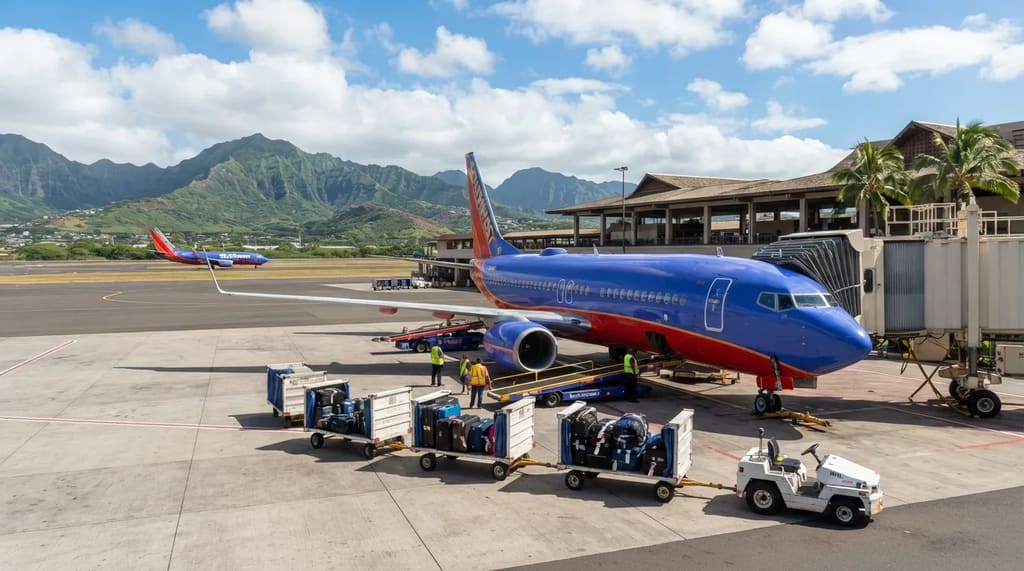
On Southwest’s interisland flights, a bag of 51 to 70 pounds adds $35 to the standard fee, and one of 71 to 100 pounds adds $70. The mainland charges for the same weights are $100 and $200.1
The oversize charge on those flights is also $35. In each case the surcharge is added to the standard bag fee instead of replacing it, so a heavy bag costs less to carry here than on a mainland route, though it is never free.1 2
Quick Compare
- 51 to 70 pounds: $35 interisland, $100 mainland
- 71 to 100 pounds: $70 interisland, $200 mainland
- Oversize bag: $35 on interisland flights
The lower schedule is listed for interisland flights only, so it does not help on a flight to or from the mainland. If you island-hop with a bag that picked up weight on the mainland leg, take a few minutes to confirm which schedule applies to each flight.
That discount ends at the water’s edge, and on the mainland the overweight fee is collected at the counter, where Southwest asks for a particular kind of card.
#14 – Prepaying the Bag and Carrying a Physical Card
United charges $45 for a first checked bag paid online and $50 at the airport, so prepaying saves $5 each way before weight enters the picture. It is a small amount, but it costs nothing to collect.
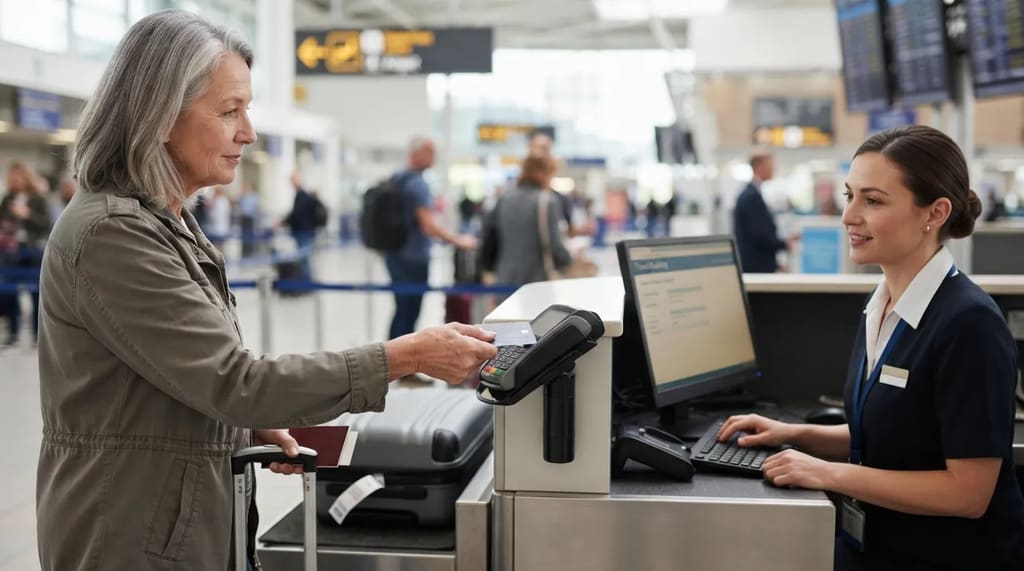
Overweight fees work differently. Southwest requires a physical credit card for overweight and oversize fees paid at the airport, and tap-to-pay and mobile wallets are not accepted.
If your cards live in a phone wallet, put the plastic one in your bag for the trip. The counter is a poor place to find out the reader will not take your phone while a line forms behind you.
A fee that has been paid can sometimes come back, and the late bag is the case with a federal rule behind it.
#13 – The Refund When Your Bag Arrives Late
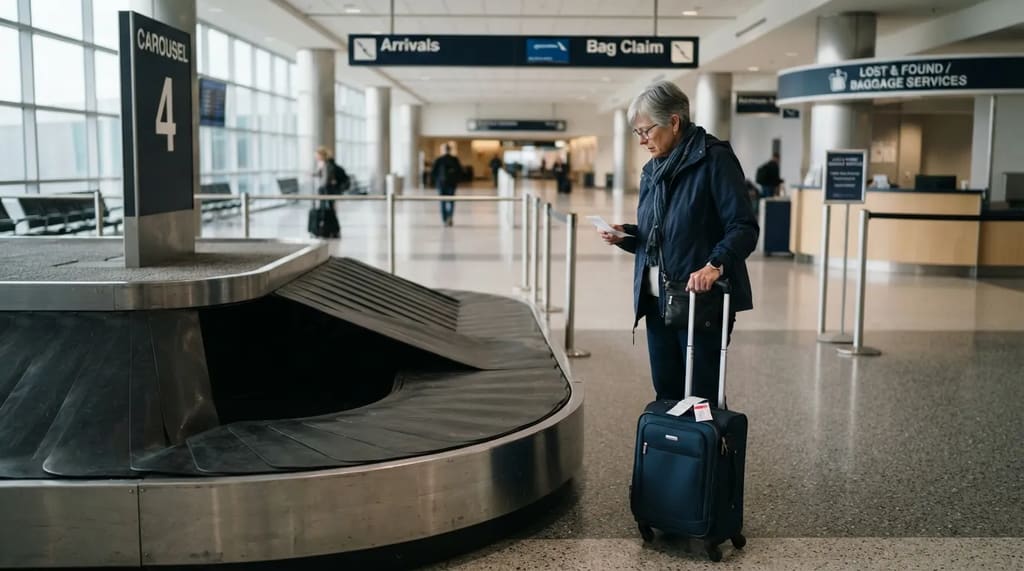
Under a 2024 Department of Transportation rule, airlines must refund the checked bag fee when a bag is significantly delayed.3 4 That is a fee you paid and can get back, which is rare in this list.
The rule speaks to the checked bag fee. Whether an overweight surcharge comes back with it is a question for the airline’s baggage desk, so ask when you file instead of assuming either answer.
Keep the baggage claim receipt and the receipt for the bag fee, since you will want both when you file. Hearing aids, medications and anything hard to replace belong in your carry-on, because a late suitcase cannot help you in the meantime.
Refunds repair a bag problem after the fact, while some fares settle the base fee before you leave home.
#12 – A Fare That Already Includes the Bags
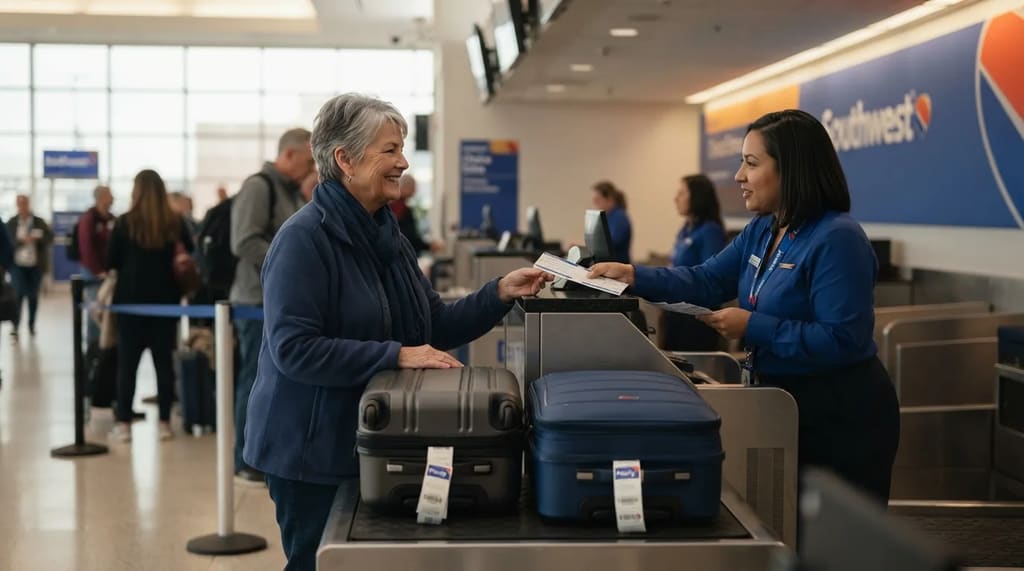
Southwest’s Choice Extra fare includes two standard checked bags, and a standard bag there may weigh up to 50 pounds and measure up to 62 linear inches.1 The bags are paid for in the ticket, so there is no bag fee to meet at the counter.
The word standard matters. The free allowance is written for bags under the 50-pound line, so confirm what happens to a heavier one before you count on it.
Price the Choice Extra upgrade against the bag fees on your specific route before booking. Since April 9, 2026, Southwest’s checked bags have been $45 and $55, so two bags cost $100 each way. The upgrade pays only if it costs less than the fees it replaces, and with one bag the math changes.
#11 – Airline Status for Bag Fees Alone
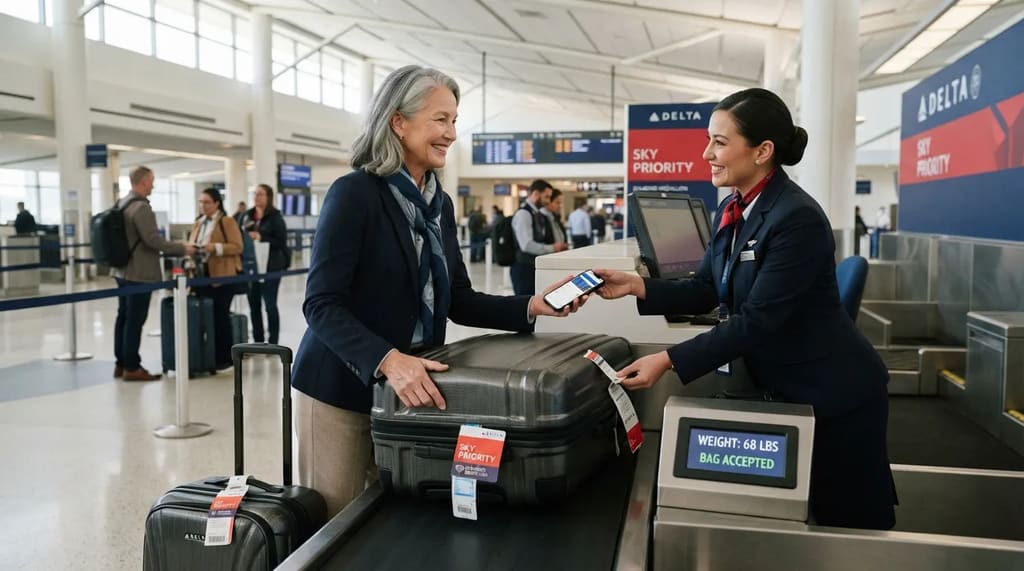
Status does buy bag benefits. On Southwest, A-List members get one free checked bag, and A-List Preferred members get two.
The strongest allowances sit higher up. One travel site reports that Delta Diamond and American Executive Platinum members get three free bags of up to 70 pounds each, which means a bag of 51 to 70 pounds carries no overweight fee for them.
I would not chase status to save on bags. Those top tiers come from heavy flying, and a couple who check bags on a few trips a year will find a card or a bundled fare far cheaper in effort. If you already hold status, read the exact weight allowance for your tier, since it differs by airline and fare.
Status belongs to one airline’s program, and a foreign carrier on part of your trip may weigh and charge by its own rules.
#10 – Overseas Carriers That Charge by the Kilo
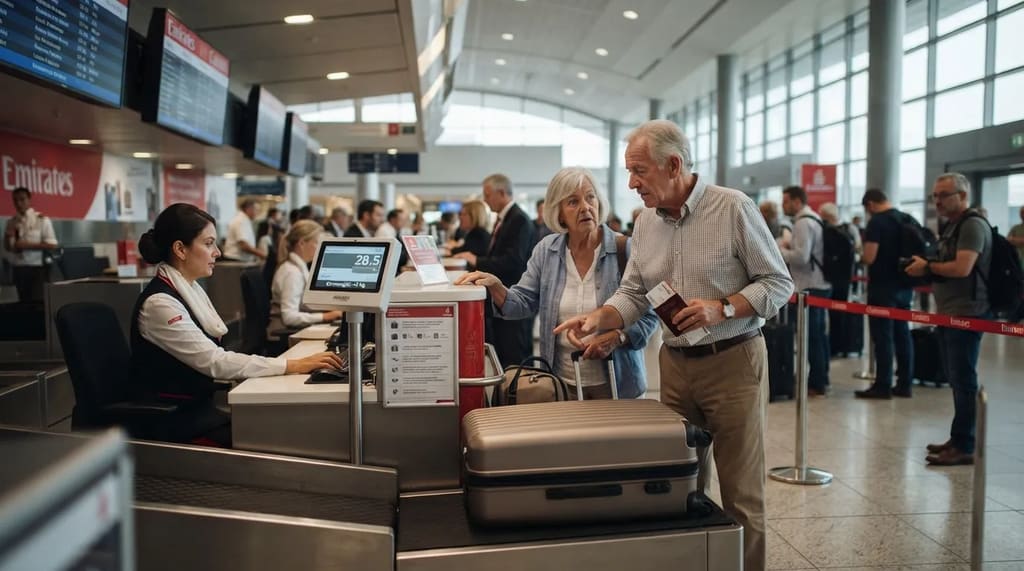
Some European budget airlines price excess weight per kilo, where the large US airlines use fixed steps. Ryanair is listed at £13 per kilo over the limit and easyJet at £12, with a 32-kilo cap per bag.
British Airways lists a flat £65 for an overweight bag, up to 32 kg (70 lb). Gulf and Asian carriers such as Emirates, Qatar Airways, Turkish Airlines and Singapore Airlines typically charge around $15 to $40 per kilo.
On a per-kilo airline, every kilo you take out saves money immediately. That is a reason to repack at the hotel the night before the flight home, instead of paying at the desk.
#9 – Frontier’s 40-Pound Line and JetBlue’s $150 Step
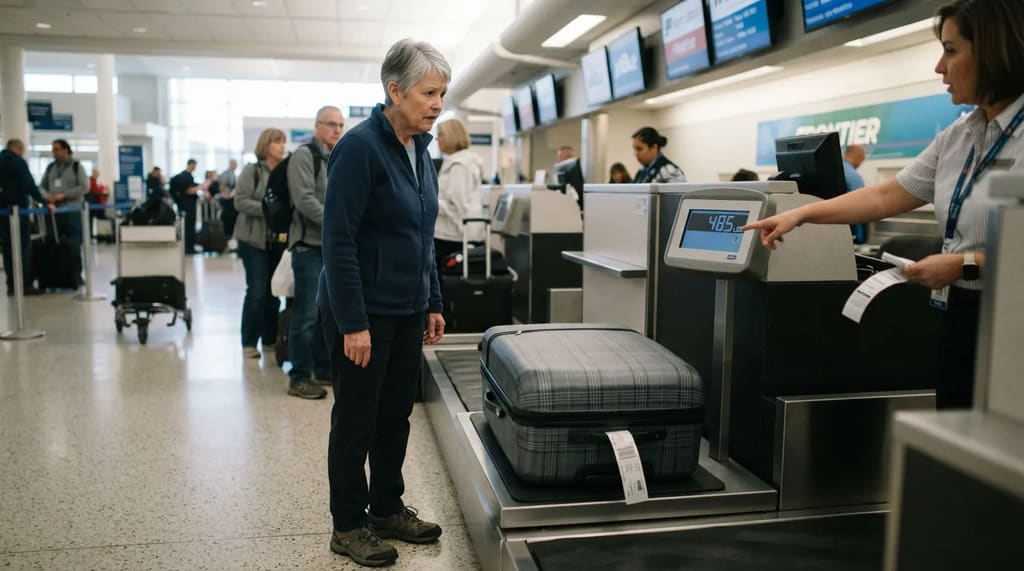
The 50-pound line is not universal. Frontier’s overweight fee applies at 40 pounds and up, and one comparison lists $75 for bags of 41 to 50 pounds.
JetBlue moves the other way. Its overweight fee is $150 for any bag from 51 to 99 pounds, against $100 for 51 to 70 pounds at Delta and Southwest.
Quick Compare
- Frontier: $75 for 41 to 50 pounds
- Delta and Southwest: $100 for 51 to 70 pounds
- JetBlue: $150 for 51 to 99 pounds
Frontier lists its first checked bag at $59 to $99, depending on route and when you buy it. A low fare can hide this. If you plan to check a full suitcase, add the overweight charge to the fare comparison before you book, because a 45-pound bag on Frontier can carry both fees.
At the other end of the range sits American, which allows a few pounds past 50 at a much lower price.
#8 – The Three-Pound Cushion at American
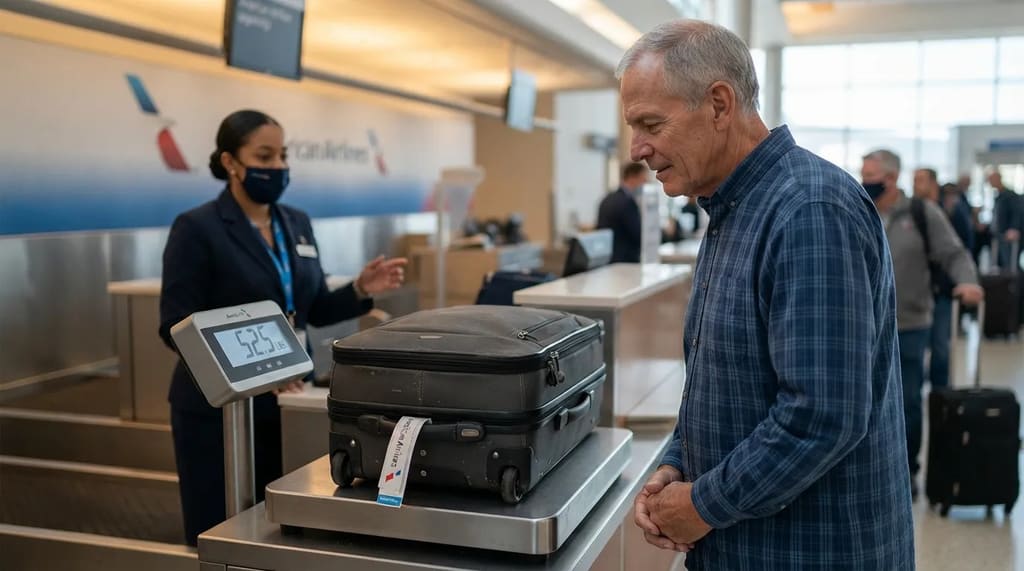
American charges $30 for a bag from 50 up to 53 pounds, and $100 from 53 up to 70.5 A suitcase that is a pound or two heavy costs far less there than at most airlines.
Sun Country steps its fee as well: $25 for 51 to 60 pounds and $50 for 61 to 70. At both airlines a bag two pounds over costs a fraction of a bag ten pounds over.
Set that beside Frontier’s 40-pound line, where a 45-pound bag already draws a $75 charge. The same suitcase carries no overweight fee on American and a real one on Frontier.
Trimming a few pounds is easiest when you have somewhere to put them, and the carry-on is the obvious place.
#7 – Moving Weight Into the Carry-On
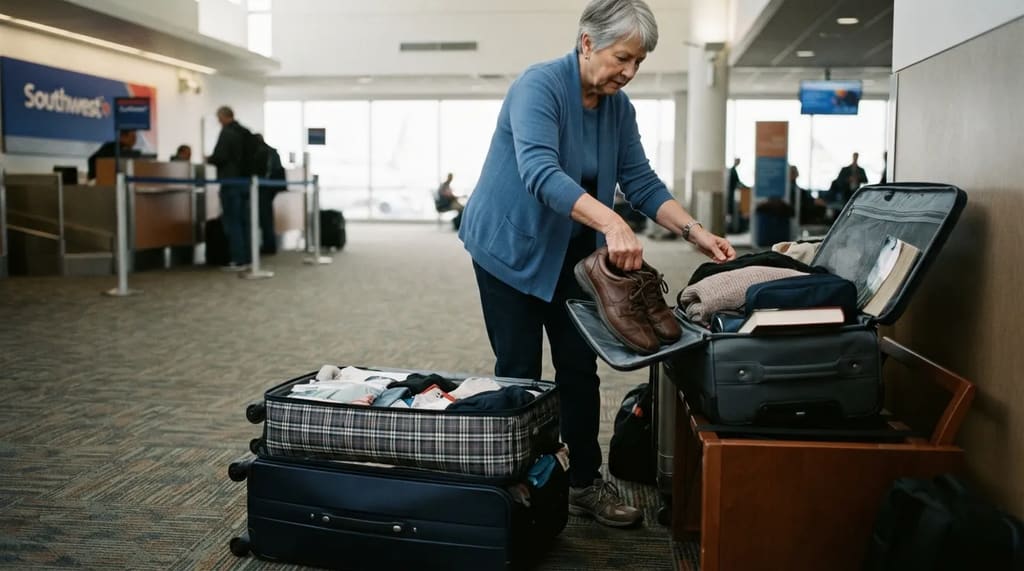
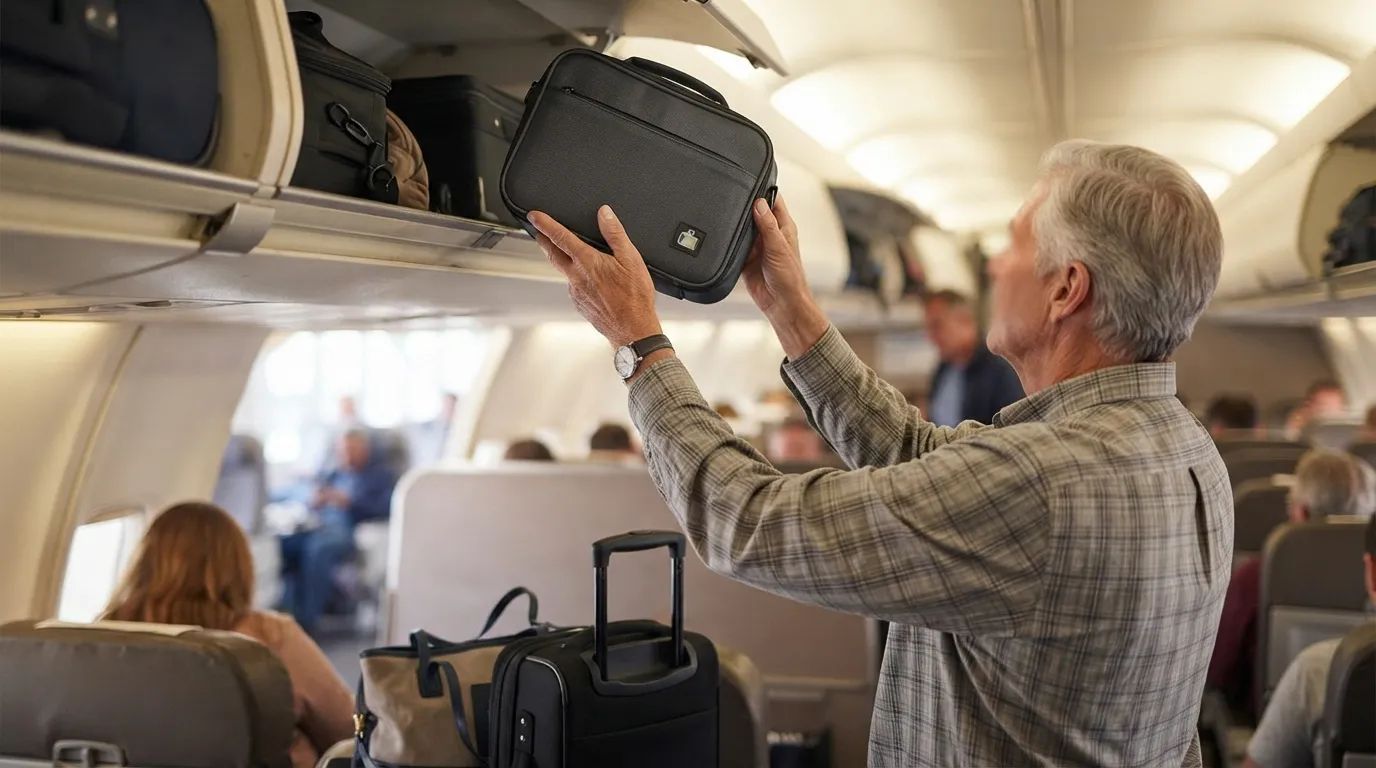
Southwest permits one free carry-on of 24 by 16 by 10 inches with no weight restriction, though you must lift it into the overhead bin unassisted. Some other airlines do set a carry-on weight limit, so check yours first.
Moving a few dense items, such as shoes, a book or a toiletry kit, can bring a checked bag under 50 pounds. That is often enough to avoid a $100 surcharge at Delta, United or Southwest.
My view is that you should shift weight only as far as you can comfortably lift it. A carry-on that strains your shoulder at the overhead bin is a poor trade for a fee you could avoid by repacking differently.
Allegiant’s FAQ lists a coat or jacket among the items passengers may bring aboard without charge. A bulky coat worn or carried onto the plane takes pounds out of the suitcase.
#6 – An Airline Card With a Free First Bag
A co-branded airline card is the usual way to drop the base fee. The Delta SkyMiles Gold card has a $0 introductory fee the first year and $150 after, and it waives the first bag for you plus eight companions.
Terms vary by airline, and the details decide who actually saves.
Quick Compare
- Delta SkyMiles Gold: first bag free for you plus eight companions
- United Explorer: covers the cardholder and one companion, and you must buy the ticket with that card
- Alaska Atmos Rewards Ascent ($95): covers you plus six guests when you pay for the flight with it
None of these waive the overweight fee. The card removes the standard first-bag charge, so a 60-pound bag still draws the $100 surcharge, and the card only helps once the bag is under the line.
Delta charges $45 each way for a first bag, so one bag costs $90 round trip. Two round trips with a bag cover a $150 annual fee, and I would skip the card if you fly that airline once a year. Many no-annual-fee airline cards leave out the bag benefit.
None of this matters for a walker or a wheelchair, which travel without a bag fee under federal rules.
#5 – Walkers, Wheelchairs and Scooters Checked Free
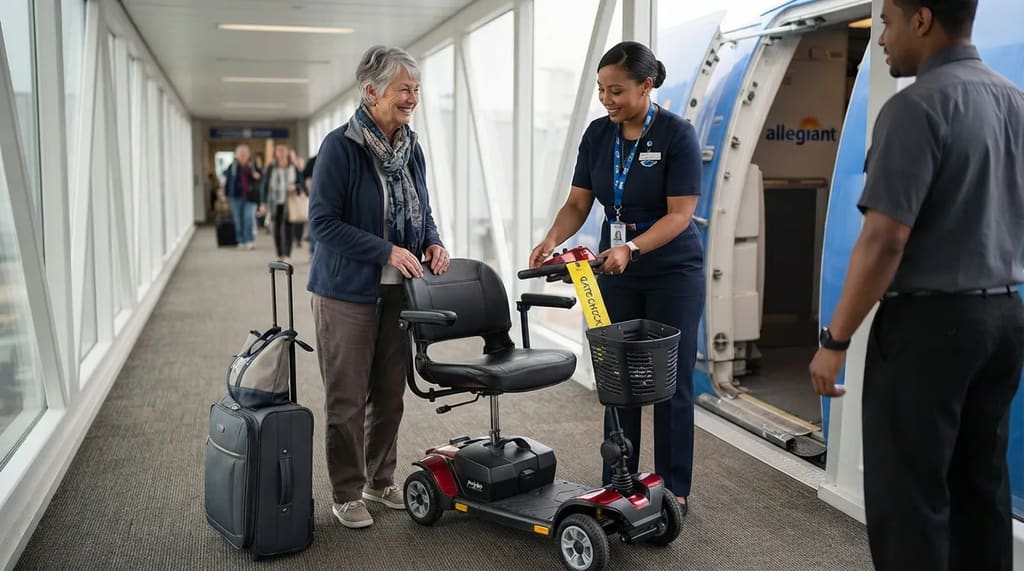
Assistive devices do not count toward your baggage limit. If a wheelchair does not fit in the cabin, airline personnel must stow it in the cargo hold free of charge, according to the Department of Transportation.
Allegiant’s published policy says there is no fee for required medical or assistive devices such as walkers and canes, and mobility devices can be checked at the gate or the ticket counter. Other airlines work under the same federal rules.
Airlines must check and return your assistive device in the same condition as it was received. If you travel with a device that has a lithium battery, ask the airline before you go how the battery must be carried, since battery rules are separate from baggage fees.
#4 – The CPAP and Medication Bag That Rides Free
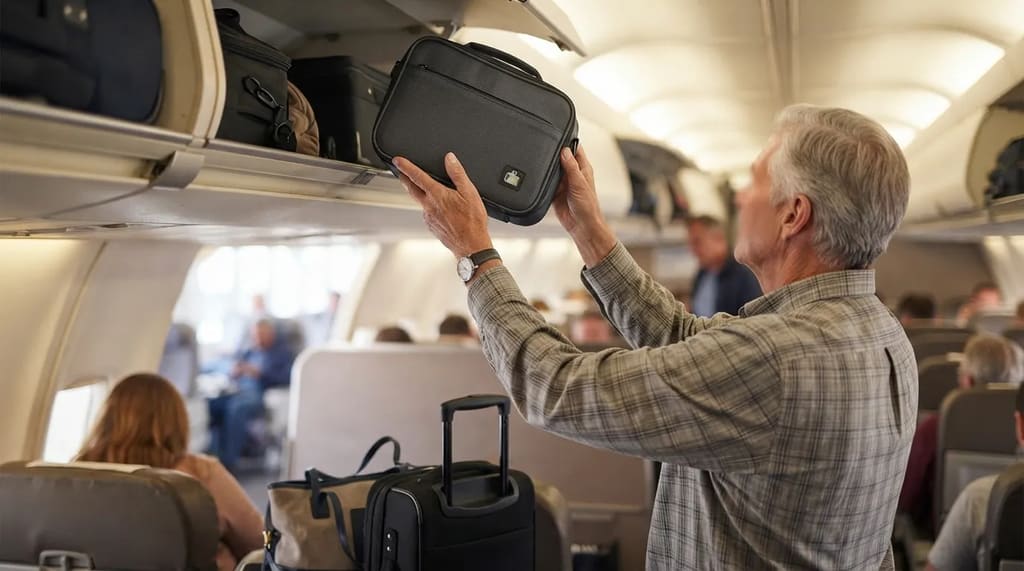
The Department of Transportation lists canes, crutches, braces and CPAP machines among the devices permitted in the cabin. Airlines must allow them free of charge, and they must not count against the passenger’s carry-on limit.6
The protection has an edge. If your bag also contains personal items, the airline can count it toward a baggage limit and charge a fee.
So pack the device on its own. A small bag holding only the machine, tubing and supplies is covered, while the same machine pushed into a roller bag with clothes may be treated as your carry-on.
If you plan to use a portable oxygen concentrator in flight, DOT describes several conditions to prepare for.
Worth Knowing
- Advance notice to the airline may be required
- A medical certificate can be needed in some circumstances
- Batteries must cover at least 150% of the flight time
- Earlier check-in may be expected
Once a bag mixes in clothes, that protection is gone and the 50-pound limit applies as it does to any suitcase, which a second bag solves more cheaply than a surcharge.
#3 – Two Bags Under 50 Pounds Instead of One at 65
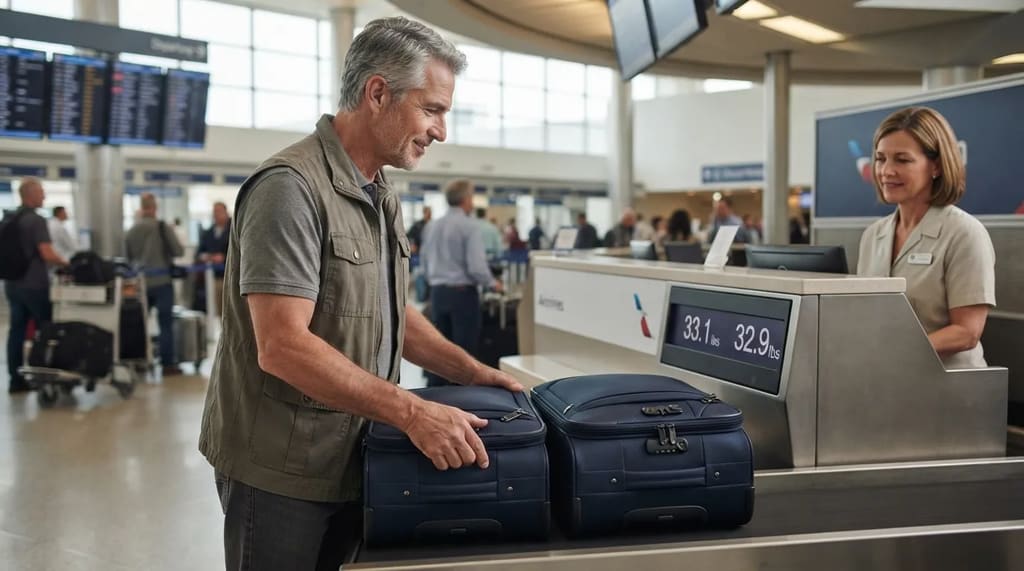
On Delta, a first bag is $45, a second is $55, and a bag of 51 to 70 pounds adds $100.7 Sixty-five pounds in one bag therefore costs $145 each way. The same clothes in two bags of about 33 pounds cost $100 each way.
That saves $45 each way, or $90 round trip, because the second-bag fee is smaller than the surcharge. Southwest’s $45 and $55 fees give the same arithmetic.
If you hold the Delta card from the card section above, the math improves. The first bag is free, and the cardholder gets a free second bag on domestic Delta flights (the second-bag perk began June 4, 2026), so two 33-pound bags cost nothing.
A third bag costs $150 on Southwest, so splitting stops paying once you need three. I rate this the most useful fix for an ordinary heavy suitcase, because it needs no card, no status and no paperwork.
Related Stories From Travelbinger
Splitting works only while each bag lands under the line, and a bag that reaches the counter near 80 pounds is priced in a different tier altogether.
#2 – The 71-Pound Tier at $200 on Top of the Fare
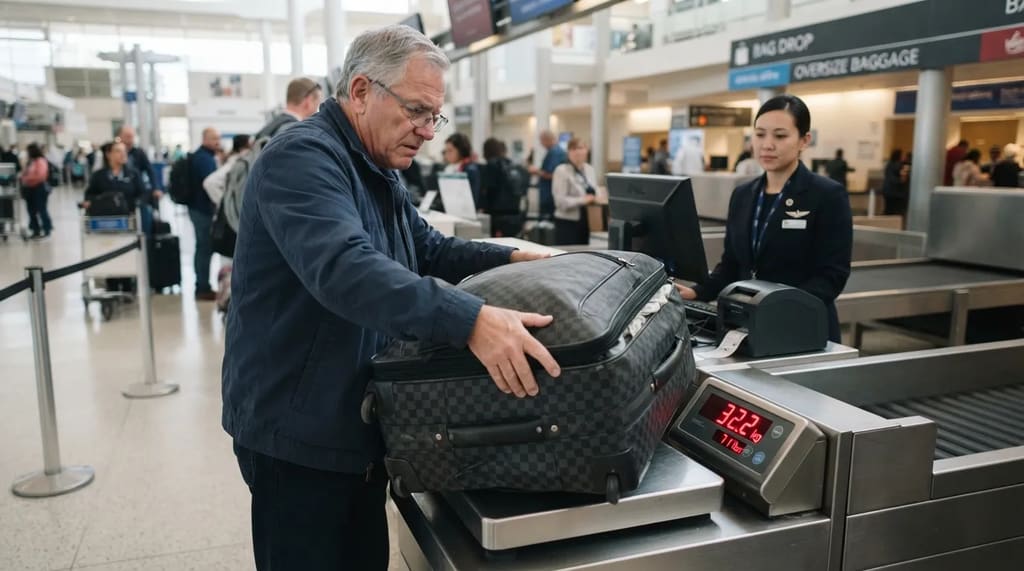
At United, a bag of 71 to 100 pounds carries a $200 surcharge added to the base fee, and Delta’s is the same for 71 to under 100 pounds.7 A first bag at Delta in that range costs $245 each way, which is $490 round trip.
Many airlines refuse bags above 45 kg, about 100 pounds, outright. Southwest accepts nothing over 100 pounds or 80 inches. The tier is the last stop before refusal.
If a Southwest bag is both overweight and oversize, only one $200 charge applies. That helps a little, but it does not make a 90-pound bag a bargain.
A bag in this tier is one to take apart. The split from the item above works even better here, since two 45-pound bags cost far less than one at 90.
The tier you land in depends on one number, and you can read it at home for the price of a luggage scale.
#1 – A $15 Scale and the Packing for the Trip Home
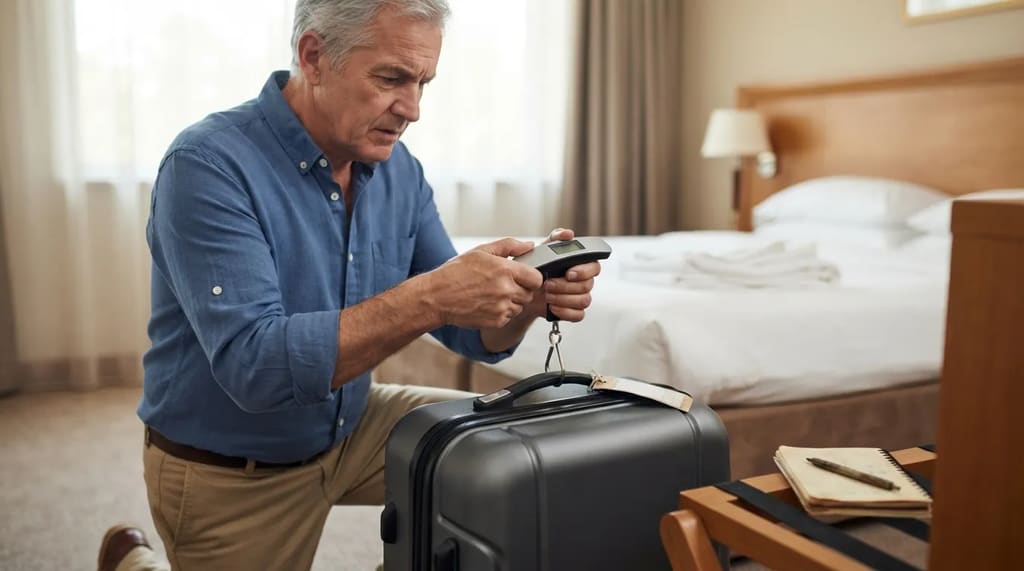
A luggage scale costs somewhere between $15 and $30, less than a single $100 surcharge at Delta, United or Southwest. Weigh the bag fully packed, including the shoes and toiletries that go in last.
Weigh it again before the return flight. Checked bag fees are charged per direction, and the trip home is where gifts, souvenirs and bottles join a bag that was packed once.
A bag that leaves at 48 pounds and comes home at 56 passes outbound for free and costs $100 more on the return at Delta. The same bag costs $100 on American too, since 56 is past its $30 band.
The $200 tier is usually reached by a bag nobody weighed. A scale keeps a gift-filled suitcase from landing there on the way home, which is why the cheapest item here sits against the largest charge.
The counter is where the fee is collected, but it is settled earlier: when you pick a fare, when you choose which card pays, and when you decide how many bags the same clothes go into. Each of those is a quiet moment at home, with no line behind you.
Try treating packing as the last step of buying the ticket. Weigh once, repack once, and check the airline’s own fee page for the line it draws, since that line is not the same everywhere.
What is the heaviest bag you have ever brought home from a trip, and what was in it?
Bonus: The Insider Move Nobody Tells You
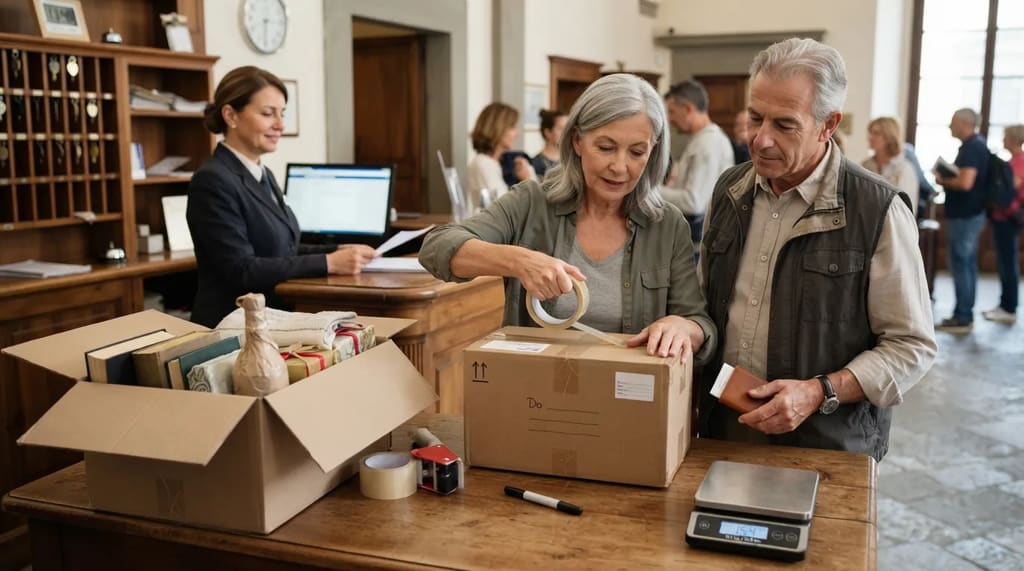
Ship the weight home instead of flying it. Heavy souvenirs, books, bottles and gifts are what push a bag over the line, and they are also the easiest things to mail. A ground parcel is often cheaper than a surcharge, and you do not have to lift the extra weight through the airport.
Do it the day before your flight home, when you still have time to act:
- Step 1: Weigh your packed bag at the hotel. If it is over the line for your airline, pull out the heaviest non-essentials until it sits about 3 pounds under.
- Step 2: Put those items in a box and ask the front desk where the nearest post office or shipping store is. Many hotels will also hold or send a package for you.
- Step 3: Get the price for USPS Ground Advantage or UPS Ground to your home address, and compare it with the surcharge on your airline’s fee page. Choose the lower one. If it is all books, ask about USPS Media Mail, which is slower but usually cheaper.
- Step 4: Pay for tracking, keep the receipt, and never mail medications, hearing aids or anything you cannot replace.
Do the comparison with real numbers before you pay. If shipping costs more than the surcharge, repacking into a second bag under the line is usually the better choice. Either way, you decide the price at a quiet table, not at a busy counter.
- Southwest Baggage Fees Guide: https://upgradedpoints.com/travel/airlines/southwest-airlines-baggage-fees/
- Southwest Optional Travel Charges: https://www.southwest.com/html/customer-service/travel-fees.html
- DOT Automatic Refund Rule: https://www.transportation.gov/briefing-room/what-airline-passengers-need-know-about-dots-automatic-refund-rule
- DOT Refund Final Rule: https://www.transportation.gov/briefing-room/biden-harris-administration-announces-final-rule-requiring-automatic-refunds-airline
- NerdWallet American Airlines Fees: https://www.nerdwallet.com/travel/learn/american-airlines-bag-fees-how-they-work-and-how-to-avoid-them
- DOT Passengers With Disabilities Rights: https://www.transportation.gov/sites/dot.gov/files/2022-07/508_Airline_Passengers_with_Disabilities_Bill_of_Rights_07132022_ADA.pdf
- Delta Overweight Fee Guide: https://www.sendmybag.com/airlines/delta-baggage-allowance/