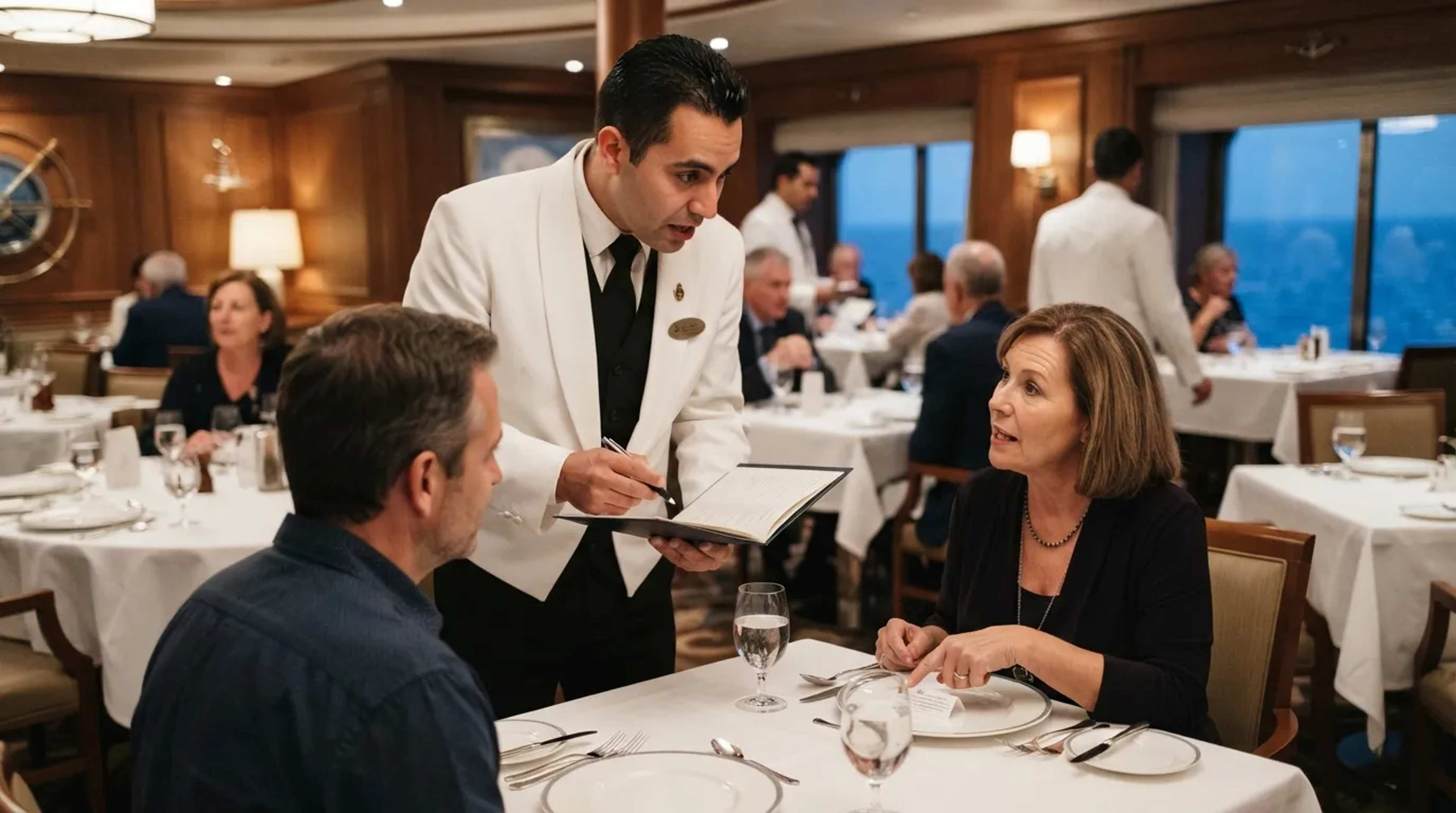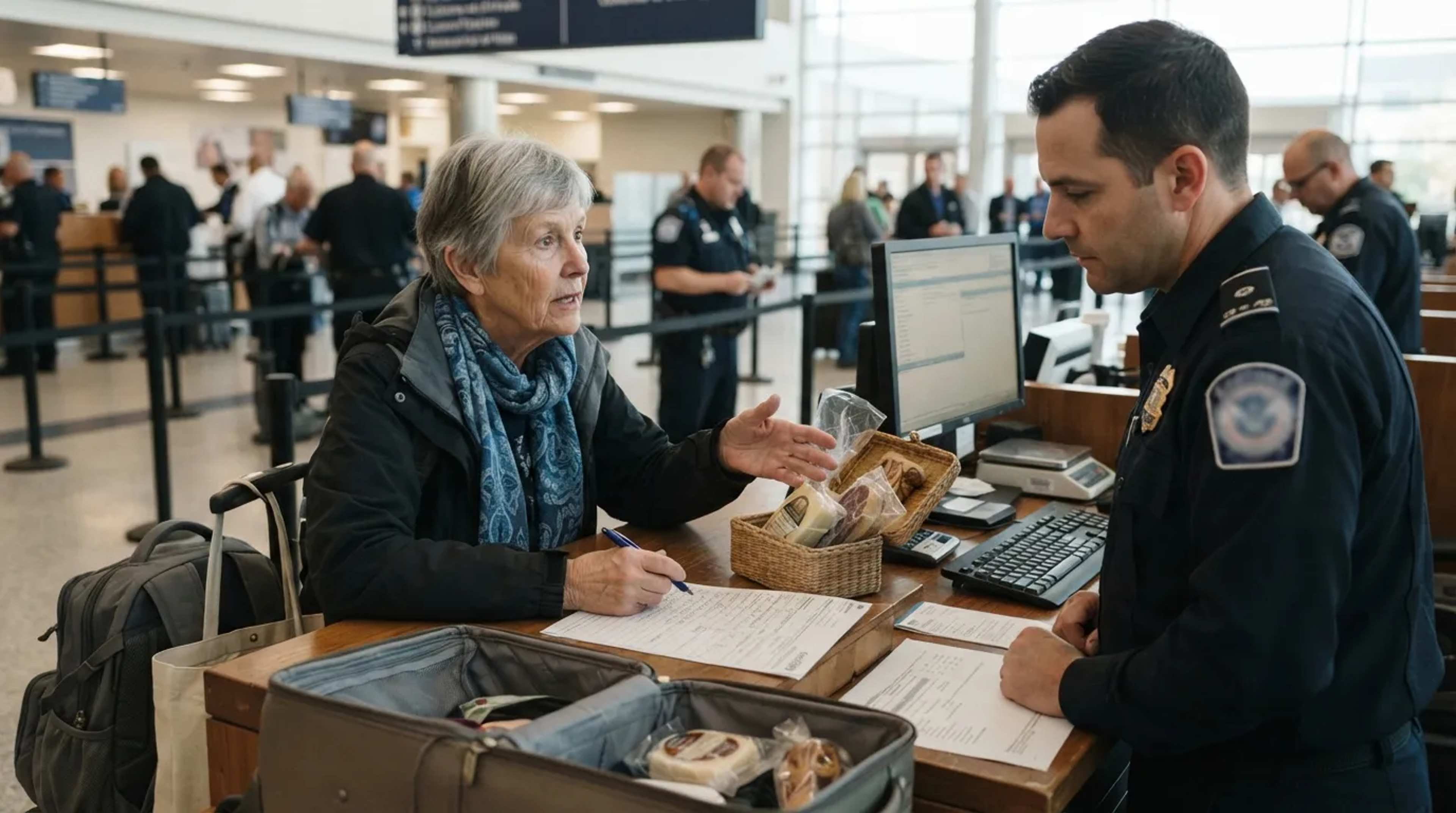
Every coach tour has two itineraries: the printed one, and the unwritten one that runs on small courtesies. Ten minutes lost at one rest stop can shorten lunch or cut a photo stop for forty people, and you’re one of the forty.
These fourteen habits come from motorcoach etiquette, driver advice and health guidance for older travelers. They start with small courtesies and end with costly ones. Stay for the last one, because it’s a deadline that begins the day you pay your first deposit, weeks before you pack. Missing it can strip coverage for your existing conditions. First, the smallest courtesy, the one you wear.
#14 – Go Easy on the Perfume

A coach puts you within arm’s reach of the same few people for hours, and unlike a restaurant, there’s no table to move to. Many people are adversely affected by perfumes and artificial scents, and the travelers in the next two rows get the full effect in a closed cabin.
Strong fragrance can bring on headaches or breathing trouble for some travelers. A passenger who can’t easily leave the vehicle also can’t easily say so, which puts the burden on the person wearing it.
The fix takes ten seconds. Apply fragrance sparingly, or skip it on driving days. The same goes for scented lotion and aftershave, since you’ll sit beside the same neighbors for the whole ride.
Scent is something you can leave at home. The phone in your pocket is harder to ignore, because it interrupts the guide as well as your neighbors.
#13 – Silence the Phone and Text Instead

A phone call on a coach is a speakerphone for the whole row. The guide’s narration competes with it, and so does the traveler dozing by the window.
Motorcoach operators give the same advice again and again. Use text instead of calling, and keep your phone silent as much as possible. Limit calls on the bus to urgent matters only. Video without headphones belongs on the same list, because sound carries in a closed cabin.
If a call can’t wait, make it short at a rest stop. Set the ringer to silent and text instead of calling. Family can text back, and you can read the answer at the next stop.
A ringing phone isn’t the only sound that talks over the guide. A friendly chat with the person beside you does it too, and the driver notices.
#12 – Pause Your Conversation When the Microphone Is On

A veteran coach driver interviewed by AARP makes a point that sounds minor. Personal conversations should wait until the tour director finishes speaking. He describes two passengers who carried on loudly while the director was talking, disturbing other passengers.
There’s a practical side to this. The commentary is usually where the guide announces the meeting time, the next stop and the evening plan. Talk over it and you’ll be the one asking for the meeting time again at the next stop.
Hold side conversations until the microphone is off. Save your questions for the guide until the narration pauses or the coach has stopped.
The same driver has advice for the downtime. Don’t be afraid to talk to the driver when you get off the bus.1 Drivers often know the local roads and the stops, and they get fewer questions than the guide does.
Worth Knowing
- The microphone is when the guide usually gives the meeting time, next stop and evening plan.
- Personal conversations can wait until the tour director finishes speaking.
- Questions for the guide fit best when the narration pauses or the coach has stopped.
- The driver is easiest to talk to once you’re off the bus.
When the doors open, your attention moves to the luggage bay underfoot, where your suitcase sits among dozens that look just like it.
#11 – Tie a Bright Marker on Your Suitcase
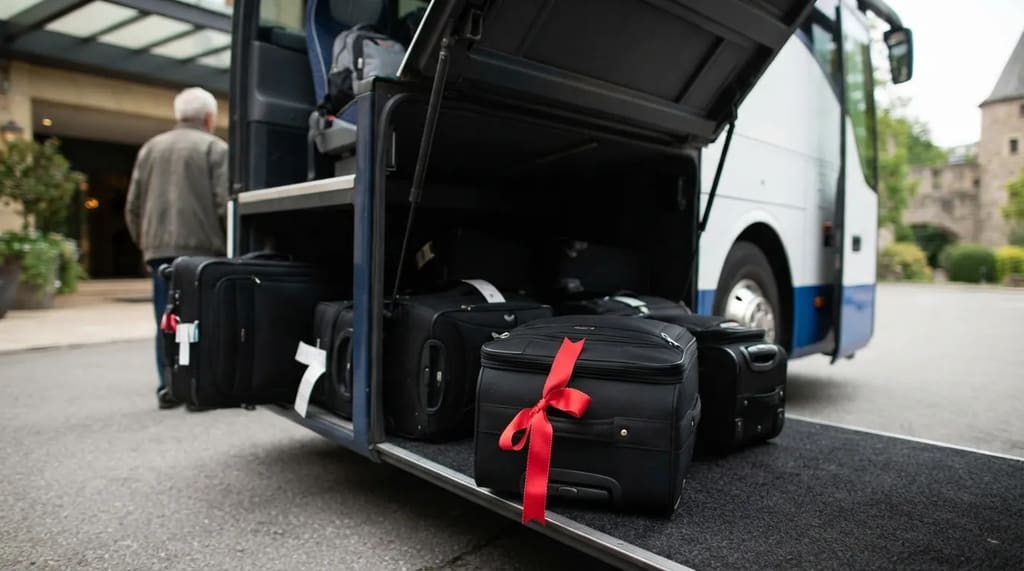
A black rolling suitcase has plenty of identical cousins. When the bay opens at a hotel, nobody wants to be the traveler peering into the dark and hoping.
The AARP driver mentions a habit he sees: some passengers put a red ribbon, bright yarn or tape on the handle.1 When the luggage bay is open, passengers can look in and make sure they see their luggage. A marker you can spot from ten feet away is worth more than a fancy tag.
The marker is for the big bag. For the daytime, keep a small travel bag or backpack at your seat for items you may need, such as medications, glasses and a book. Put a bright ribbon on the handle and watch your bag go in.
Your suitcase is accounted for, but your afternoon may not be. The printed itinerary holds details that catch out travelers who skip it.
#10 – Know Your Free Time Before You Get It

Free time at a stop is where the day’s plan stops being the guide’s and becomes yours. That’s also where travelers get lost, hungry or late.
One motorcoach operator’s etiquette page tells travelers to read the tour description so they know how much free time they’ll have and what food options there are. It also advises that you know the meetup time and location after free time on your own. That means knowing it before you step off the coach, not working it out from the parking lot.
- The exact time you must be back, written on paper or in your phone
- The place the coach will be, with a landmark you can find again
- The coach number and the guide’s phone number, saved before you walk away
Write down the meeting time, the place and the coach number before you leave your seat. A parking lot full of coaches looks the same from the far end.
#9 – Be in Your Seat Before Departure Time

One late passenger delays every seat on the coach. The delay lands on the whole group, and it can push the afternoon schedule back with it.
A tour operator’s etiquette guide breaks the habit into practical steps. Give yourself enough time to pack, have something to eat, take the last bathroom break and board on time. If you step out to stretch at a rest stop, be back on the coach at the stated time. And if you’re late, apologize to the group.
That meeting time you wrote down at the last stop does its job here. Be seated at the stated departure time, not walking toward the coach. A phone alarm set ten minutes early is the easiest fix.
Being on time costs nothing. The last-day envelope does cost money, and the amount depends on who is being thanked and what your paperwork says.
#8 – Budget the Guide and Driver Tips Early

On a seven-day tour, tips for the guide and driver can reach well over a hundred dollars for a couple. Trafalgar, a large escorted-tour operator, suggests $5 to $7 per person per day for the Travel Director and $3 to $5 per person per day for the driver.2
Add those together and you get $8 to $12 per person per day. Over seven days that’s $56 to $84 per person, or $112 to $168 for two. Other operators suggest different numbers. One travel company’s guide puts the director at $5 to $10 and the driver at $2 to $3, so the figures aren’t fixed.
Quick Compare
- Trafalgar: $5 to $7 for the Travel Director, $3 to $5 for the driver, per person per day
- Another travel company: $5 to $10 for the director, $2 to $3 for the driver
- Seven days for two, Trafalgar combined: $112 to $168
Budget about $8 to $12 per person per day, then check your operator’s own suggestion. The driver and guide are tipped separately, so bring small bills for both.
Money settles on the last day. The first day carries a smaller negotiation, over a seat that begins to feel like yours by the second morning.
#7 – Rotate Seats Instead of Claiming One

Somehow a seat chosen on day one turns into private property by day two. One operator’s etiquette guide calls it an unwritten rule that a chosen seat is yours for the whole tour, and it asks passengers to stay respectful of their neighbors’ space anyway.
The front matters to people. The AARP driver says the first two rows are the best seats, with big windows and a view of where you’re going. That makes them the most contested seats on the coach, and the ones most likely to cause quiet resentment.
Claiming the same seat for the whole tour is a habit worth breaking. Treat a seat as yours for the day, not for the tour. If motion sickness or a bad knee means you need a certain spot, tell the guide on the first morning and keep it without apology.
Group-tour writers also note that switching up seating arrangements encourages group conversation, so rotating can improve the trip as well as the manners. Wherever you end up sitting, you reach it by the coach steps.
#6 – Take the Handrail and Accept the Hand
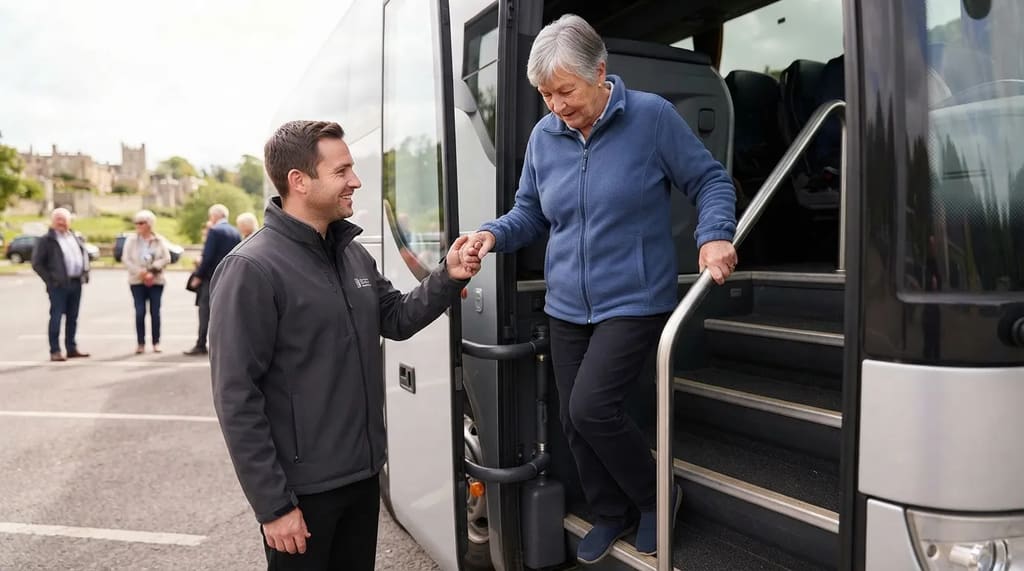
Federal Motor Carrier Safety Administration training material for drivers identifies the likeliest trouble spot on a coach. If a passenger has difficulty with any step, the stairwell is the place. The same material tells drivers to ask whether a passenger who may have trouble would like assistance getting on or off.
Passengers are part of the safety system too. Awareness is the best way to prevent a stair fall. That means looking at the steps instead of the person you’re talking to, and keeping one hand free for the rail.
The AARP driver adds that the guide will assist you on and off the bus as much or as little as you’d like. You set the level, and you can change it from one stop to the next.
Taking a hand isn’t a sign of frailty. It’s how a trip with sixty stops avoids a bad fall at stop number thirty. Use the handrail every time, and say yes when someone offers a hand.
A hand at the door is easy to arrange. A health condition is harder to mention, and the guide can’t plan around one they’ve never heard about.
#5 – Tell the Guide About Your Health on Day One

A guide can’t adjust for a condition they’ve never heard about. The American College of Emergency Physicians says it plainly in its travel recommendations for seniors: inform your tour guide about any chronic medical conditions.3
The same list adds to the habit. Wear a bracelet or necklace that identifies special medical conditions, and carry the information in your wallet. If you’re diabetic, monitor your blood sugar and follow your dietary restrictions, which is easier when the guide knows why you need a meal on time.
The physicians’ group points out that older travelers often visit emergency rooms away from home because of falls, medication interactions, chronic illness, or missing usual medications.3 A quiet word on the first morning covers part of that risk. Tell the guide about chronic conditions and allergies on the first morning.
#4 – Get Off at Every Stop and Walk

Four hours is the number to remember. The CDC says anyone traveling more than 4 hours by air, car or bus can be at risk for blood clots, and risk rises with age after 40.4
The CDC’s advice is to move your legs frequently and walk around every 1 to 2 hours. Between stops, extend your legs straight out and flex your ankles. The American College of Emergency Physicians suggests stretching about every 20 minutes when seated for long periods.
Fast Facts
- Risk window: trips of more than 4 hours by air, car or bus
- Risk rises with age after 40
- Walk around every 1 to 2 hours (CDC)
- In your seat: extend your legs and flex your ankles
- Stretch about every 20 minutes when seated for long periods (ACEP)
Aisles are narrow and the coach sways, so walking while moving isn’t the answer. The rest stop is where your walking happens, so keep an eye on the clock and be back by departure time, just as in #9.
Skipping the rest stop because you don’t need the restroom is a poor trade. Get off at every stop and walk, even when you feel fine. If you’re at higher risk, ask your doctor about compression stockings, which apply pressure to your legs and help move blood back to your heart.
Moving helps only if you have what you need at each stop. The pill you take at noon is in the wrong place if it’s in the bag underneath the coach.
#3 – Keep Every Medicine in the Bag at Your Seat

The luggage bay is usually closed from morning loading until you reach the hotel. Anything you take at midday has to ride with you, which makes the small bag at your seat the right home for medicine.
The American Geriatrics Society’s Health in Aging Foundation says to keep medications in their original containers with labels, including over-the-counter drugs and supplements.5 UCLA Health adds that you should bring enough for the trip, plus a few days extra. Delays happen.
Carry a written list too. The Foundation suggests listing every prescription, over-the-counter medicine and supplement, with the dose, the time you take it and what it’s for.5 Carry one copy and keep the other in your suitcase. A pharmacist or paramedic can use it in a minute.
Related Stories From Travelbinger



Tour days shift your routine, so set an alarm to remind you of your scheduled times. Keep every medicine and a written list in the bag at your seat.
Your medicines are covered. The card in your wallet may not cover what happens if you need a hospital.
#2 – Carry Your Coverage Details on Every Outing
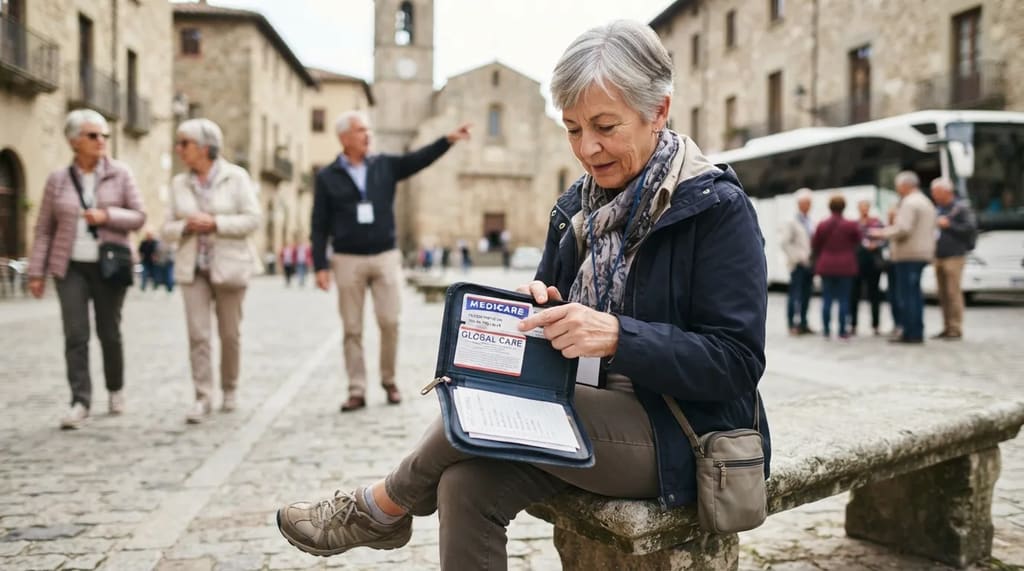
Original Medicare generally doesn’t pay for health care outside the United States. Even on a domestic tour, a Medicare Advantage plan may treat care away from your home area differently, so the question to ask is the one a senior travel guide poses: if you’re injured or ill on the trip, will your Medicare or other insurance cover it?
Make that call before you leave, and ask about emergency care and any hospital network rules. The National Council on Aging also suggests taking a list of your medications, your doctors, and a pharmacy covered by your insurance at your destination.
Then carry it. A senior-health guide recommends keeping health records, emergency contacts and travel insurance information with you even on daily explorations. That’s the same small bag as your medicines. Carry insurance cards, emergency contacts and a medical summary on every outing.
The coverage you carry matters, but the coverage you buy depends on timing. The biggest clock on this list starts on the day you pay your first deposit, not the day you leave.
#1 – Buy Travel Insurance Within Days of Your Deposit

The deadline for the most valuable feature of travel insurance passes weeks before you board. The pre-existing condition waiver is available only if you buy the policy within 14 to 21 days of your first trip deposit.6 Without it, the conditions you’re most likely to need care for are excluded.
The clock runs from the first payment, whether that’s booking a flight or reserving a cabin or tour. It doesn’t run from the final payment or from departure. Miss the window and the waiver is unavailable, and you can’t add it later.
Two more conditions usually apply. Most waivers require you to insure the full non-refundable cost of the trip and to be medically fit to travel on the day you buy.6 Cancel-for-any-reason coverage usually runs on the same early window.
At a Glance
- Window: 14 to 21 days from your first trip deposit
- Clock starts: at the first payment, not the final one or departure
- Usually required: insure the full non-refundable trip cost
- Also required: be medically fit to travel on the day you buy
That makes comparing plans for weeks a worse habit than choosing a good-enough plan fast. Count the days from your first payment, and buy inside the shortest window. Confirm the exact window and the definitions with the insurer or a licensed agent before you pay.
Look at the list again and you’ll see that the small habits and the big ones share a shape. Each one is cheap on the day you set it up and expensive when you try to fix it on the road. A ribbon on a suitcase, a list in a day bag and a calendar reminder after a deposit all work that way.
Your guide and driver can handle schedule changes and local detail. They can’t get back a deadline you missed or fill in a condition you never mentioned. Do the preparation before you leave, and the tour has room for the pleasant surprises.
Which pocket or pouch in your day bag holds your medication list, and has it ever saved you a phone call home?
Bonus: The Pre-Deposit Questions Nobody Asks

The best habit for a coach tour happens before you board: email the operator three questions and get the answers in writing before you pay the deposit. A tour that looks gentle in the brochure can have long driving days or a lot of stairs.
- Ask for the driving time: How many hours will we be on the coach each day, and what is the longest stretch between stops? Compare the answer with the 4-hour mark from #4.
- Ask for the walking load: How much walking, how many stairs and how much uneven ground does each day involve? Ask whether the tour has an activity rating.
- Ask about hotels and luggage: How many hotel changes are there, and is luggage handling included at every one?
Ask for the refund and change terms too, in case the pace turns out to be wrong for you.
Send the email the same day you decide to book. Your first deposit starts the insurance clock from #1, so you want the answers back before it runs down. Keep the reply with your insurance papers.
- AARP Coach Driver Secrets: https://www.aarp.org/travel/travel-tips/bus-tour-driver-secrets/
- Trafalgar Tipping Guide: https://www.trafalgar.com/real-word/tipping-on-a-trafalgar-tour/
- ACEP Senior Travel Recommendations: https://www.emergencyphysicians.org/article/elderly-emergency-care/travel-recommendations-seniors
- CDC Travel Blood Clots: https://www.cdc.gov/blood-clots/risk-factors/travel.html
- Health in Aging Travel Tips: https://www.healthinaging.org/tools-and-tips/tip-sheet-safe-travel-tips-older-adults
- Forbes Pre-Existing Conditions Waiver: https://www.forbes.com/advisor/travel-insurance/pre-existing-conditions/