A brisk walk, by the CDC’s definition, starts at 3 miles per hour.1 One slower-pace Italy program built for older travelers holds its walks to about 2 mph and 3 miles a day.2 That one-mile-an-hour gap is the difference between a lovely afternoon and a lost one, especially in the heat.
These twelve signals show you, your travel partner or a tour escort when the pace has stopped fitting the person, and they get more serious as the countdown goes on. Number one looks the least like a pace problem and calls for an emergency call. First, the gap itself.
#12 – The Two-Mile-an-Hour Pace Behind Slower Tours
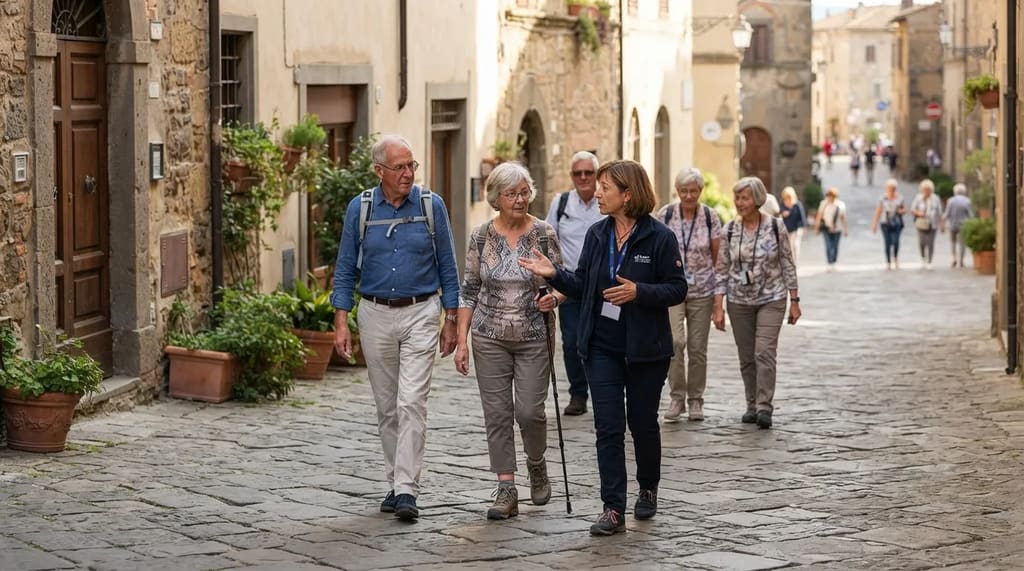
A mile an hour sounds like nothing. But the same 3 miles takes an hour at 3 mph and an hour and a half at 2 mph, so a group that moves briskly leaves slower walkers either rushing or stranded.
Quick Compare
- 3 mph (the CDC’s brisk starting point): 3 miles in 1 hour
- 2 mph (the slower-pace Italy program): 3 miles in 1.5 hours
- The gap: 30 extra minutes on your feet for the same distance
That’s why a label like “easy” or “moderate” tells you so little. Look for a stated daily walking distance and standing time, which is how Road Scholar publishes its slower-pace programs. Ask any operator for its daily walking distance and standing time.
Your own speed matters as well. Walking speed varies with age, height, leg length, health, pain, footwear and walking-aid use, so a tour pitched as slow isn’t automatically slow for you.3 A shorter traveler or someone with a cane may end up at the back of a “gentle” group.
Before you compare any tour with your own stride, you need your stride in numbers. It takes a hallway, a stopwatch and a few seconds.
#11 – Timing Your Own Walk Before You Book
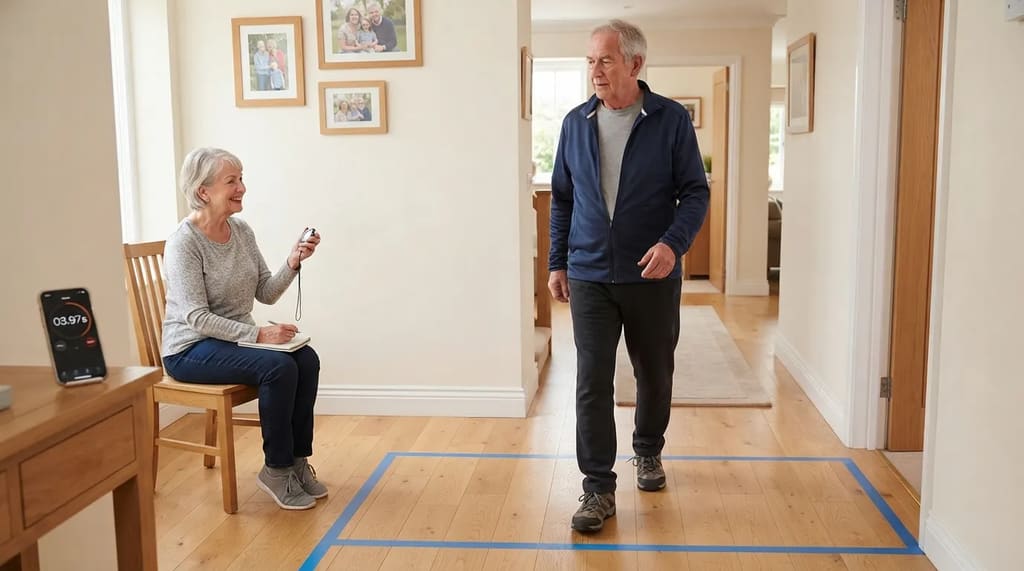
Geriatric medicine treats gait speed as a sixth vital sign, alongside blood pressure, pulse, breathing, temperature and pain. The reason is that one simple measure says a lot about how the body is holding up.
You can measure yours at home. Gait speed is the distance walked divided by the time taken, usually over a marked 4-meter or 10-meter course at usual pace. Mark 4 meters, about 13 feet, on a hallway floor, allow a step or two of run-up, and time yourself across the marked stretch. Four meters in four seconds works out to 1.0 meter per second.
- 4 seconds for 4 meters: 1.0 m/s, about 2.2 mph3
- 5 seconds: 0.8 m/s
- Just under 7 seconds: 0.6 m/s
Clinicians use a speed slower than 1.0 m/s as a yellow flag that calls for a closer look. In research, a usual speed below 0.8 m/s goes with a higher likelihood of several adverse outcomes in groups of older adults.3 Below 0.6 m/s, the likelihood of falls rises.
My view is that you should treat your result as a question for your doctor before you book, not a ruling on whether you can go. A slow reading in a carpeted hallway should steer you toward a slower-pace operator, not talk you out of the trip.
Whatever your number turns out to be, the first sign that a group has outrun it is often audible: the guide’s voice thins out.
#10 – The Guide’s Voice Fading Behind You
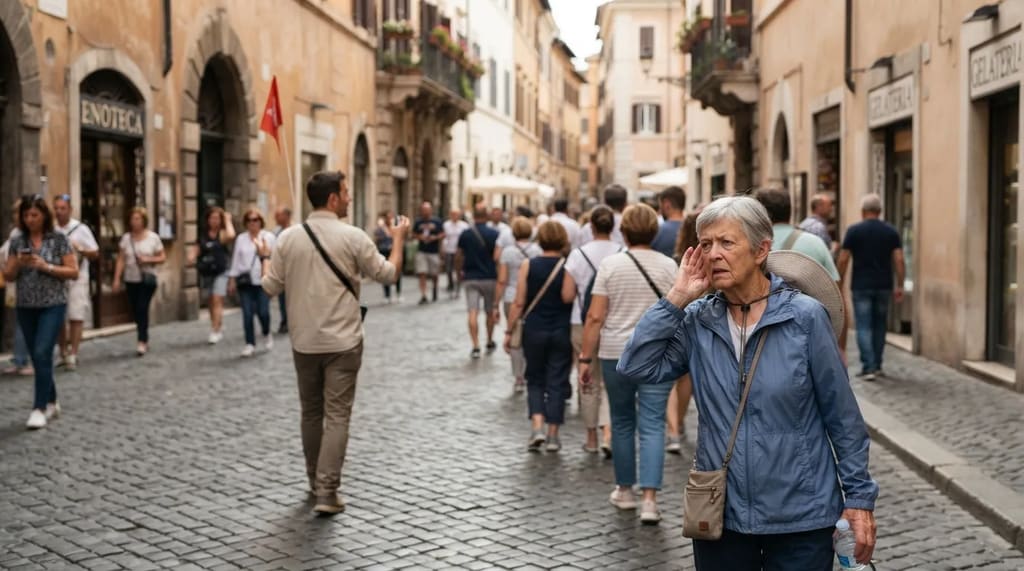
Losing the commentary is usually a distance problem before it’s a hearing problem. A guide talks facing forward, street noise fills in the rest, and the back of a moving line hears the least.
If you’re catching every third sentence, you’re probably too far back, which means the group is moving faster than you are. That’s a pace signal, and it shows up earlier than breathlessness does.
Two moves help. First, ask at booking whether the tour uses listening receivers, since some river-cruise excursions hand out a lightweight earpiece so you can hear the guide at all times. Ask at booking whether listening receivers come with the tour.
Second, ask the guide to name a meeting point before each walk, so you aren’t trying to keep up by sight. A short pause at the front costs the group less than a long gap costs you.
Operators that publish walking limits tend to list a second number beside the first, and it has nothing to do with steps.
#9 – Standing Time Listed Beside the Mileage
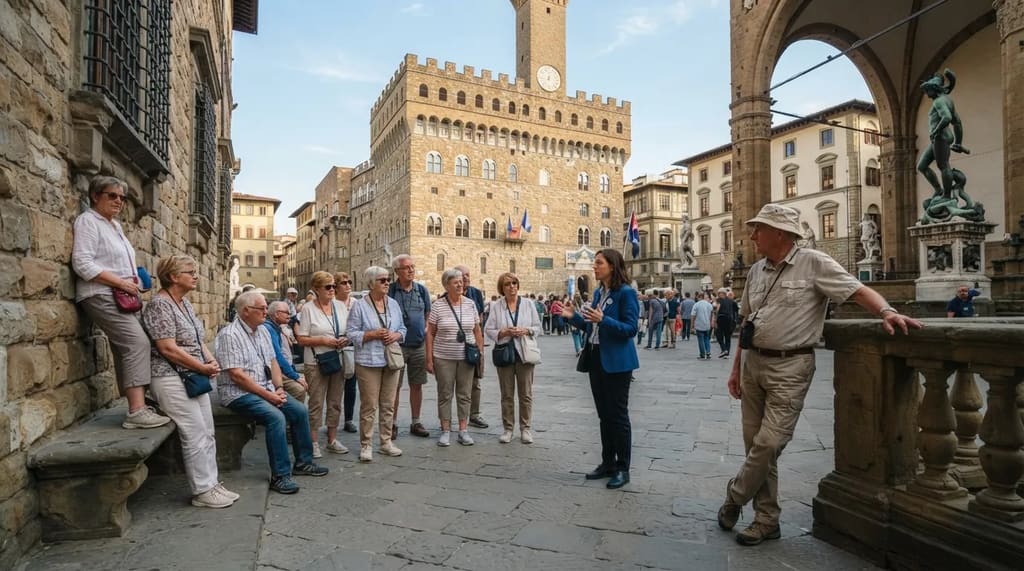
Standing is part of the pace, though it never shows up in a step count. Road Scholar’s slower-pace Italy program lists standing of up to 3 hours next to its walking distance.2 Operators who list both are treating them as separate loads on your legs.
The signals are easy to read once you know them. Shifting weight from foot to foot, leaning on a railing and scanning for a ledge all say that a lecture stop has run longer than your legs want. A guide facing a monument won’t see any of it.
Some operators plan around that. They look for routes with places to sit, such as a low wall, while the guide is speaking. Ask whether seating is built into each stop.
#8 – Total Mileage Is the Wrong Number
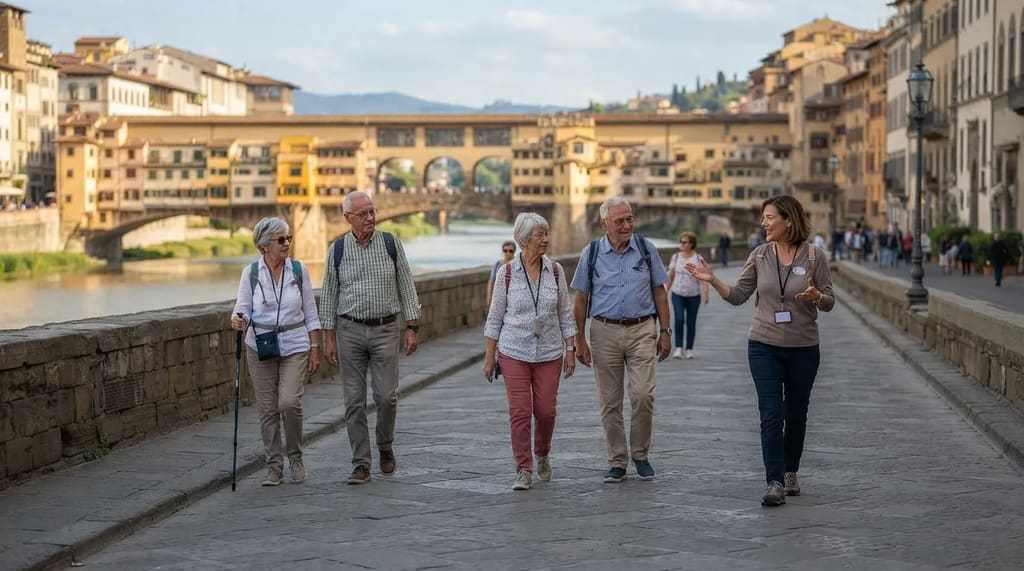
Daily mileage is the figure brochures lead with, and it’s the least useful one for a traveler over 70. Four short walks make a different day from one long one, even when the total is identical.
The better question is the longest uninterrupted walking segment, because that’s the stretch you can’t shorten once the group is moving. An operator who can answer with a number has planned its stops.
Then test yourself against it. For a true walking tour, NBC News’s guidance puts the bar at walking at a relaxed pace on level ground for at least an hour or two at a time. Ask for the longest uninterrupted walking segment, then practice that stretch at home.
If your comfortable stretch is shorter than the one on the itinerary, you don’t have to cancel. Senior-friendly doesn’t mean zero walking. It means manageable walking and enough flexibility to change the plan when energy drops.
At a Glance: Questions to Ask Before You Book
- What is the daily walking distance, and how long is the longest unbroken stretch?
- How much standing is planned, and is seating built into the stops?
- How many travelers are in the group?
- Are listening receivers provided?
- Can the day be adjusted if energy drops?
You won’t have a measuring tape on a crowded sidewalk, but you carry a gauge that works in the middle of a sentence.
#7 – The Sentence You Can’t Finish While Walking
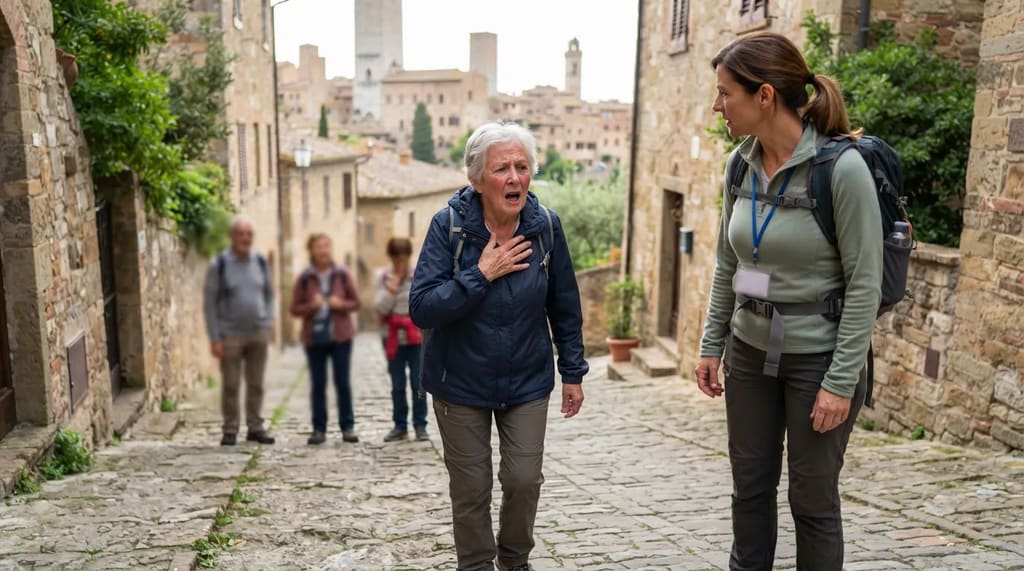
Stop halfway through a story to catch your breath, and you’ve just taken a measurement. It’s the oldest pace test there is, and it needs no equipment.
It’s called the talk test, and the CDC’s rule of thumb is that at moderate effort you can talk but not sing.1 At vigorous effort, you can’t say more than a few words without pausing for a breath. Talk but not sing is the comfortable range.
- Full sentences: the pace fits you
- Sentences breaking into short bursts: ease off before the next hill or staircase
- A few words per breath: stop and rest
Here’s why this beats trusting the group’s label. The federal Physical Activity Guidelines note that older or less fit adults may experience activities labeled moderate as vigorous. Brisk walking, at 3 mph or faster, is on the moderate list.
So a group’s “brisk” pace is a poor guide for you. If you’re speaking in fragments, you’re working harder than the chart says, and you should tell the guide before the next stretch, not after it.
Effort also has a clock. The stroll that felt easy at ten in the morning is a different walk at three, especially on the day you landed.
#6 – Day One Should Be the Lightest Day
A long flight plus jet lag takes more out of older travelers than younger ones, so the afternoon you arrive is the worst time to prove how fit you are. The tiredness doesn’t announce itself as tiredness. It shows up as a slower step and a lost appetite for the optional walk.
Well-planned itineraries allow for that. One approach is a first day of rest only, followed by soft mornings, fewer stops and a slower city sequence once the trip is under way.
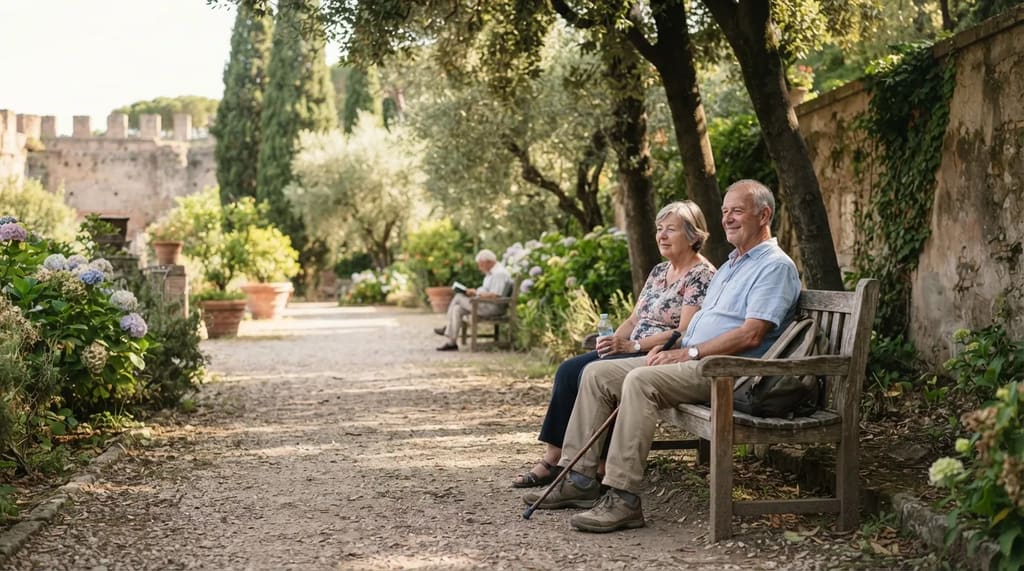
Guides can also rebalance a day as it goes. A heavier morning of walking means a lighter afternoon, and if you want to sit longer in a garden, the day can bend to that. Ask before booking whether the itinerary can be adjusted if your energy changes during the day.
Skipping the optional walk on arrival evening isn’t missing out. It protects the longer walks later, and the longest-segment number you asked about earlier tells you which days those are. Do the heavy walking in the morning and keep afternoons light.
Tiredness is easy to feel. The next signal is one an older body may not report at all.
#5 – Skipping Water Because You Aren’t Thirsty
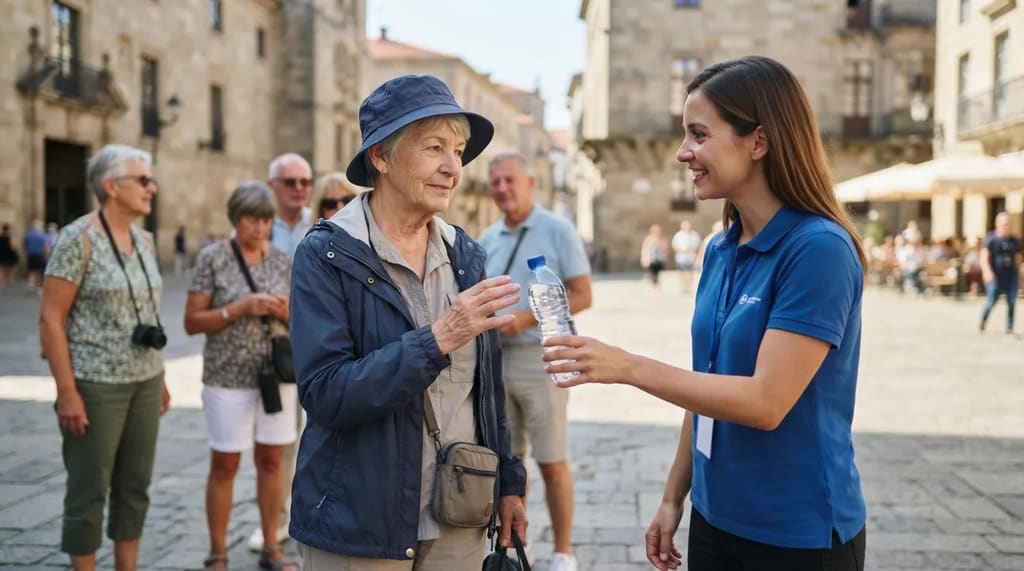
Thirst often fades with age, so older adults can drink too little just when they need more. Waiting until you feel thirsty works at your kitchen sink. On a tour, it can leave you behind on fluids for hours.
Older bodies can misjudge the heat itself, too. Older people may not feel the heat even when temperatures are high. The CDC adds that they can’t adjust to sudden temperature changes as fast as younger people, which is exactly what happens when an air-conditioned coach opens onto a sunny square.4
That makes “I feel fine” weak evidence on a hot day. The slow pace from earlier protects your legs, but it does nothing for your cooling.
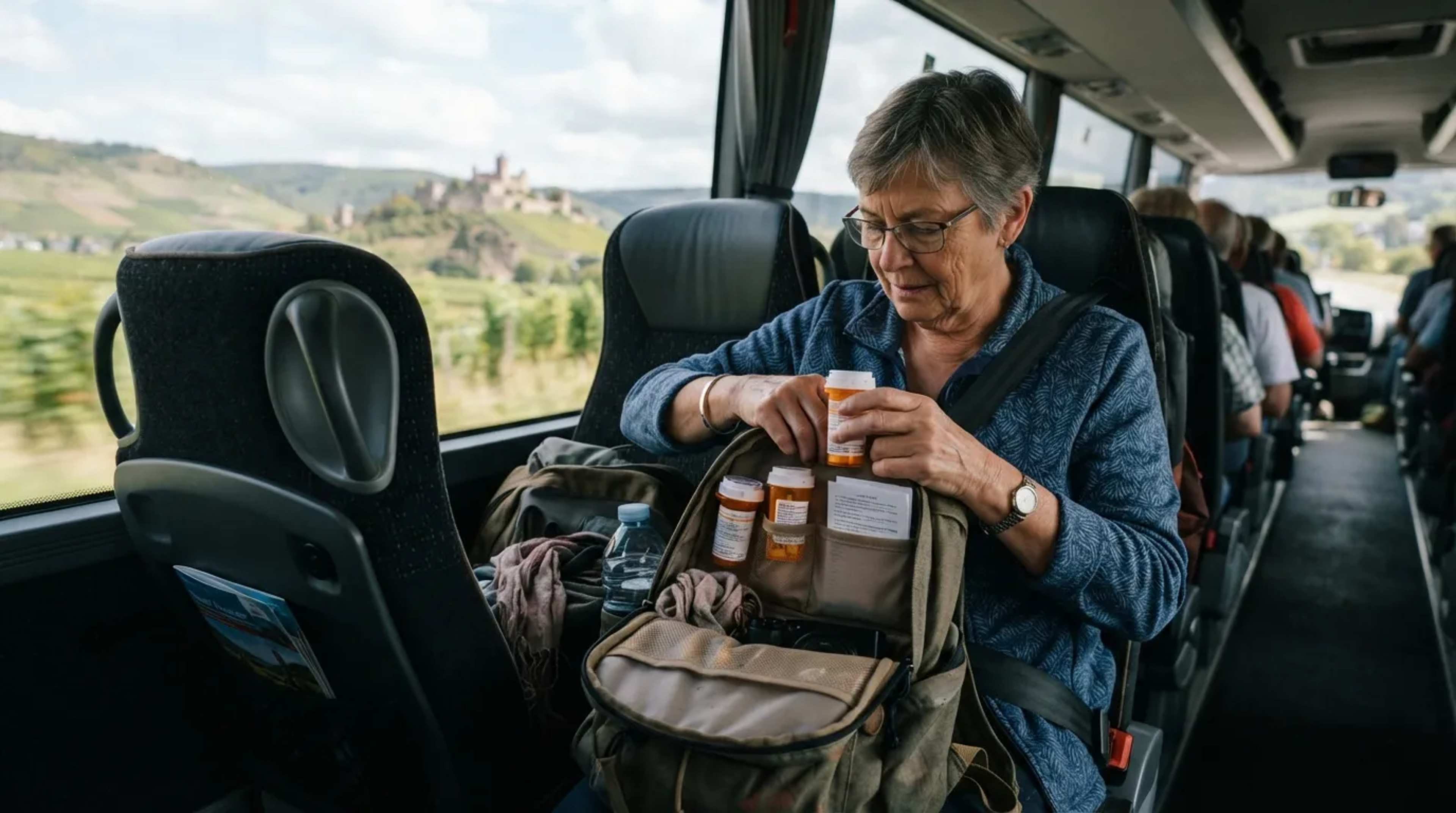
Medications are part of this. Older adults are more likely to take prescription medicines that affect the body’s ability to control temperature or sweat.5 Ask your doctor or pharmacist before you leave whether yours do.
Drink at every scheduled stop, thirsty or not. Tie it to the guide’s stops and you don’t have to rely on a feeling that may not arrive.
Thirst may fade, but your lower legs keep a record you can read at the hotel every evening.
#4 – Ankles That Swell by Evening
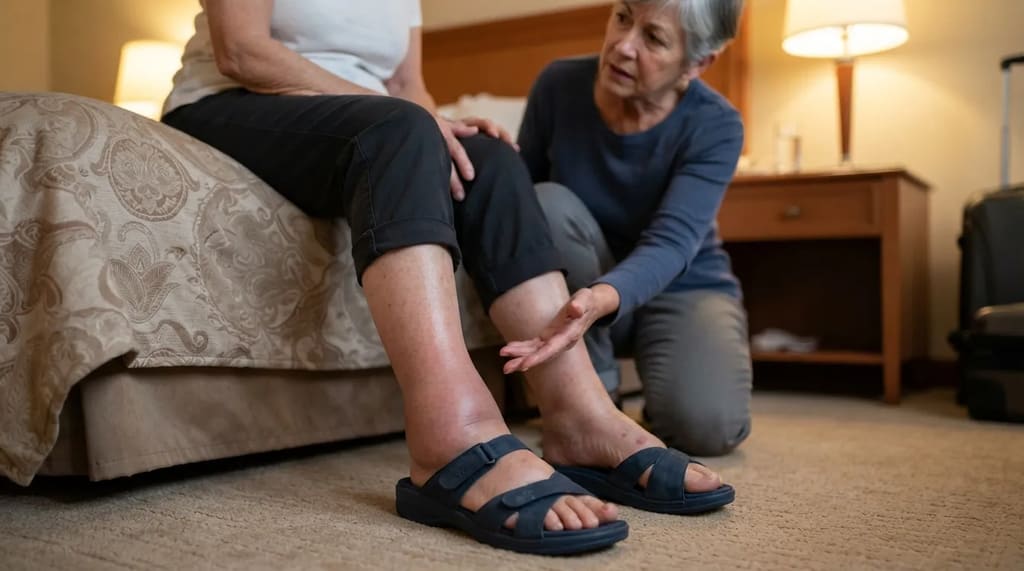
Swollen legs and ankles appear on the CDC’s list of heat-related problems for older adults, under the name heat edema.4 It’s one signal you can check without anyone’s help and without a stopwatch.
When you take your shoes off at the hotel, look at your ankles and compare them with how they looked in the morning. If they’ve puffed up after a hot walking day, treat that as a reason to lighten tomorrow’s longest stretch. Compare your ankles at night with how they looked in the morning.
Shoes matter here too, since footwear is one of the things that changes walking speed. Comfortable closed-toe shoes are standard advice for tours, even itineraries with little walking.
Swelling has causes other than heat, so if it doesn’t go down by morning, mention it to a doctor before the next big walking day.
#3 – Sudden Dizziness When the Group Stops

A short, sudden dizzy spell has its own name on the CDC’s heat list: heat syncope, or sudden dizziness.4 It’s easy to wave off as standing up too fast, which is exactly why it gets ignored.
The setting is what raises the stakes. Tour routes are full of curbs, cobbles and stairs, so a dizzy spell that would be harmless in a chair can end in a fall.
Sit down at the first dizzy spell, wherever you are. Don’t wait for the group to move on, and don’t try to walk it off. Find shade if there is any, drink water once you’re seated, and tell the guide or your partner what happened.
Telling someone matters because dizziness is rarely the only sign. They need to know to watch you for the cluster that follows.
One dizzy spell that fades after a sit is a warning. Dizziness that arrives with a pounding head, cramps or nausea changes the plan for the whole day.
Related Stories From Travelbinger

#2 – Cramps, Headache and Nausea in the Heat
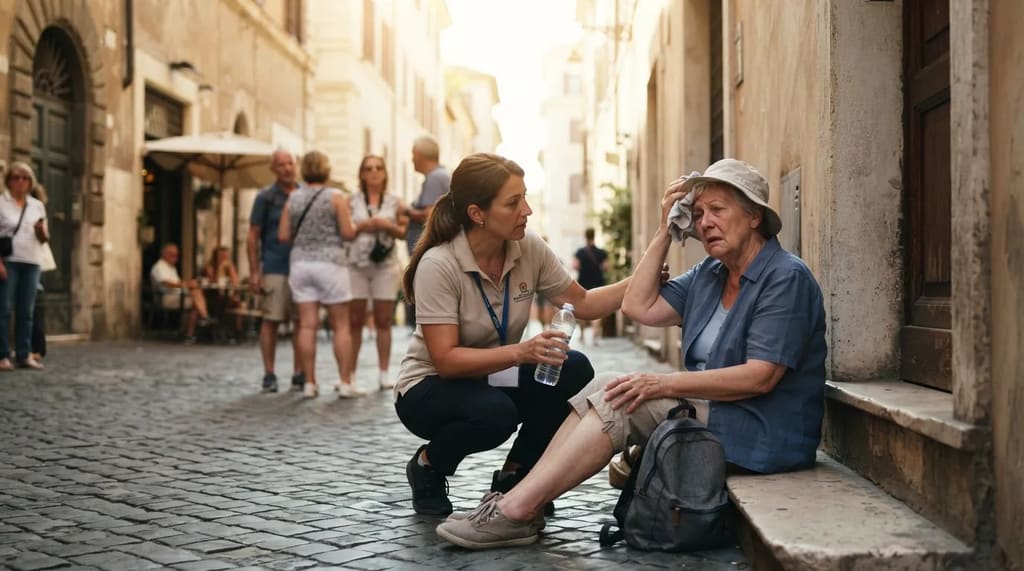
For people 65 and older, the CDC’s instruction is to seek medical care immediately for symptoms like muscle cramps, dizziness, headaches, nausea, weakness or vomiting.4 That’s a stricter rule than anything earlier on this list.
The earlier signals ask you to slow down, drink or sit. These ask you to end the walk, because heat exhaustion is the point where your body can no longer stay cool, and if it isn’t treated, it may progress to heat stroke.
- Heavy sweating and pale skin
- Tiredness, weakness and muscle cramps
- Headache, nausea or vomiting
Get out of the sun and into a cool place at once. A fan won’t solve it in a hotel room or on a coach: when the temperature is in the high 90s, fans will not prevent heat-related illness.6 Shade, cool water and air conditioning are the tools.
Pushing on to avoid holding up the group is the worst trade on the list. A tour leader can reroute, flag a taxi or move the group into shade far more easily than anyone can manage a medical emergency on the route. Cramps, headache, nausea or vomiting in the heat mean stop and get care.
Quick Compare: How the Response Escalates
- Slow down, sit and sip: a fading guide’s voice, broken sentences, swollen ankles, one brief dizzy spell
- End the walk and get care: cramps, headache, nausea, weakness or vomiting in the heat
- Call emergency services: confusion, fainting or sweating that stops on a hot day
Everything above can be spotted by a watchful guide or travel partner. The biggest item on the list doesn’t look like tiredness at all, and it gives you minutes, not hours.
#1 – Confusion and Sweating That Stops on a Hot Day
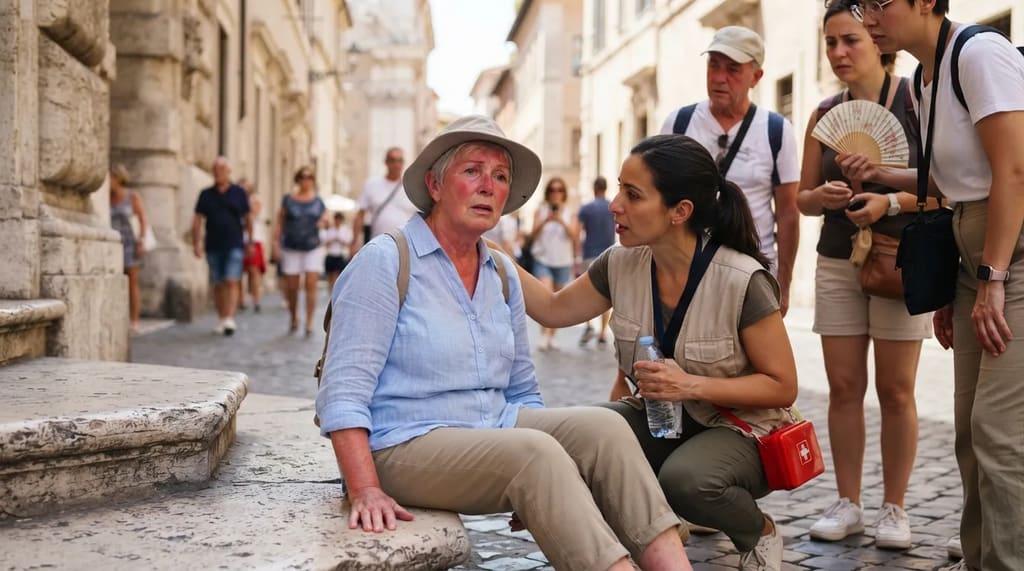
On a hot day, the most serious pace signal has nothing to do with speed. It can show up in someone who is walking at a perfectly comfortable pace.
Heat stroke is a medical emergency. The CDC lists fainting, behavior changes, a body temperature above 104°F, dry skin, a strong and rapid pulse or a slow and weak one, and no longer sweating even though it’s hot.4
The clock is short. California’s public health department says heat stroke can set in within 10 to 15 minutes and that you should call 911 if its symptoms are present.5
In older adults, the first sign can be confusion, sudden irritability or unusual fatigue instead of dramatic physical symptoms, so someone who simply seems off can be in trouble. Because older bodies may not feel the heat building, the traveler is often the last to know. That’s why “I feel fine” from earlier can’t settle it.
The job falls to the people around you. Agree with your partner before the tour that a sudden change in how either of you talks or acts on a hot day ends the walk and starts the call. Save the local emergency number and the tour leader’s phone before the first outing. Confusion, fainting or a stop in sweating on a hot day means call emergency services.
Pace is a reading of how your body is coping, and it can change by the hour. The best time to decide what you’ll do about it is the morning of the first day, when nobody is tired, hot or worried about holding up the group.
Agree on stop rules in advance with your partner and your guide: who calls a halt, what counts as a reason, and where the group regroups. A rule that’s already settled is far easier to use than a judgment you have to make while you’re dizzy.
What’s the longest stretch you can walk at home at a relaxed pace before you start looking for a bench?
Bonus: The Two-Question Trick Nobody Tells You
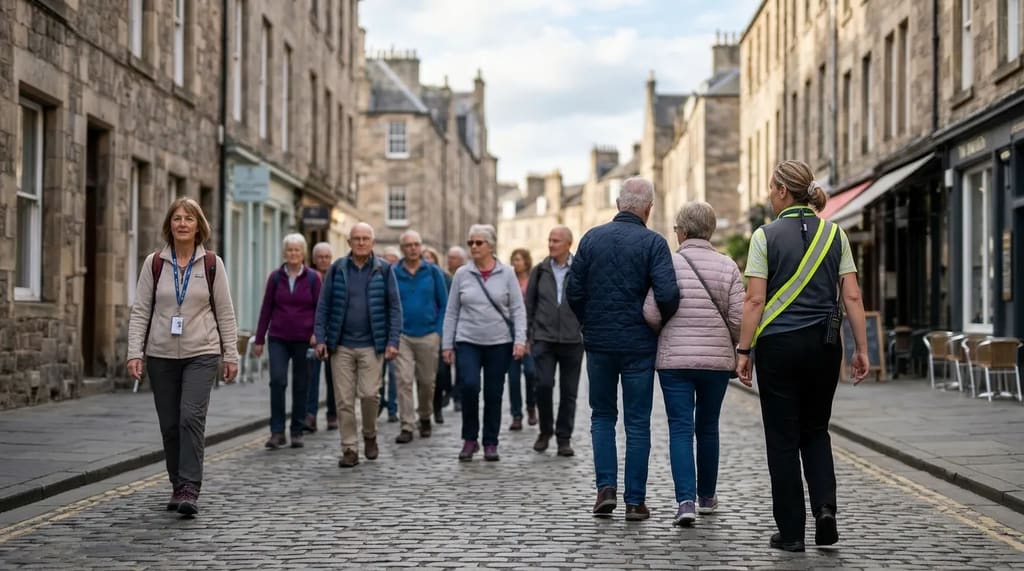
Most travelers ask how far the group walks. The ones who stay comfortable ask where the guide will be and how they can leave. Send these before you pay, and ask for the answers in writing by email:
- “Does a second staff member walk at the back of the group?” A guide at the front can’t see who is falling behind. A staff member at the rear (often called a sweeper) can slow the line the moment someone lags. If the answer is no, ask the guide to put you second in line, right behind the lead.
- “If I need to stop mid-walk, how do I leave?” Ask where a taxi or coach pickup is possible on each day’s route, and whether the operator will help arrange the ride and a hotel check-in afterward. A tour with a clear exit plan can pull you out of the heat quickly.
- “Can we agree on a hand signal?” Pick one, such as a raised flat palm, that means “I need to sit now” without you having to interrupt a talk or explain in front of strangers.
A good operator answers all three in minutes. A vague or defensive reply tells you what you need to know before you’ve spent a dollar.
- CDC Measuring Activity Intensity: https://www.cdc.gov/physicalactivity/basics/measuring/index.html
- Road Scholar Italy Slower Pace: https://www.roadscholar.org/find-an-adventure/24818/Italy-at-a-Slower-Pace-The-Best-of-Rome-Florence
- Fall Prevention Foundation Gait Speed: https://fallpreventionfoundation.org/2026/09/30/walking-speed-and-fall-prevention-why-gait-speed-is-called-the-sixth-vital-sign-and-how-to-test-yours-at-home/
- CDC Older Adults Extreme Heat: https://www.cdc.gov/aging/emergency-preparedness/older-adults-extreme-heat/
- California Public Health Seniors Heat: https://www.cdph.ca.gov/Programs/EPO/Pages/Extreme%20Heat%20Pages/BI_Natural-Disasters_Extreme-Heat_Seniors-and-Heat-Illness.aspx
- NWS Heat Illness: https://www.weather.gov/safety/heat-illness