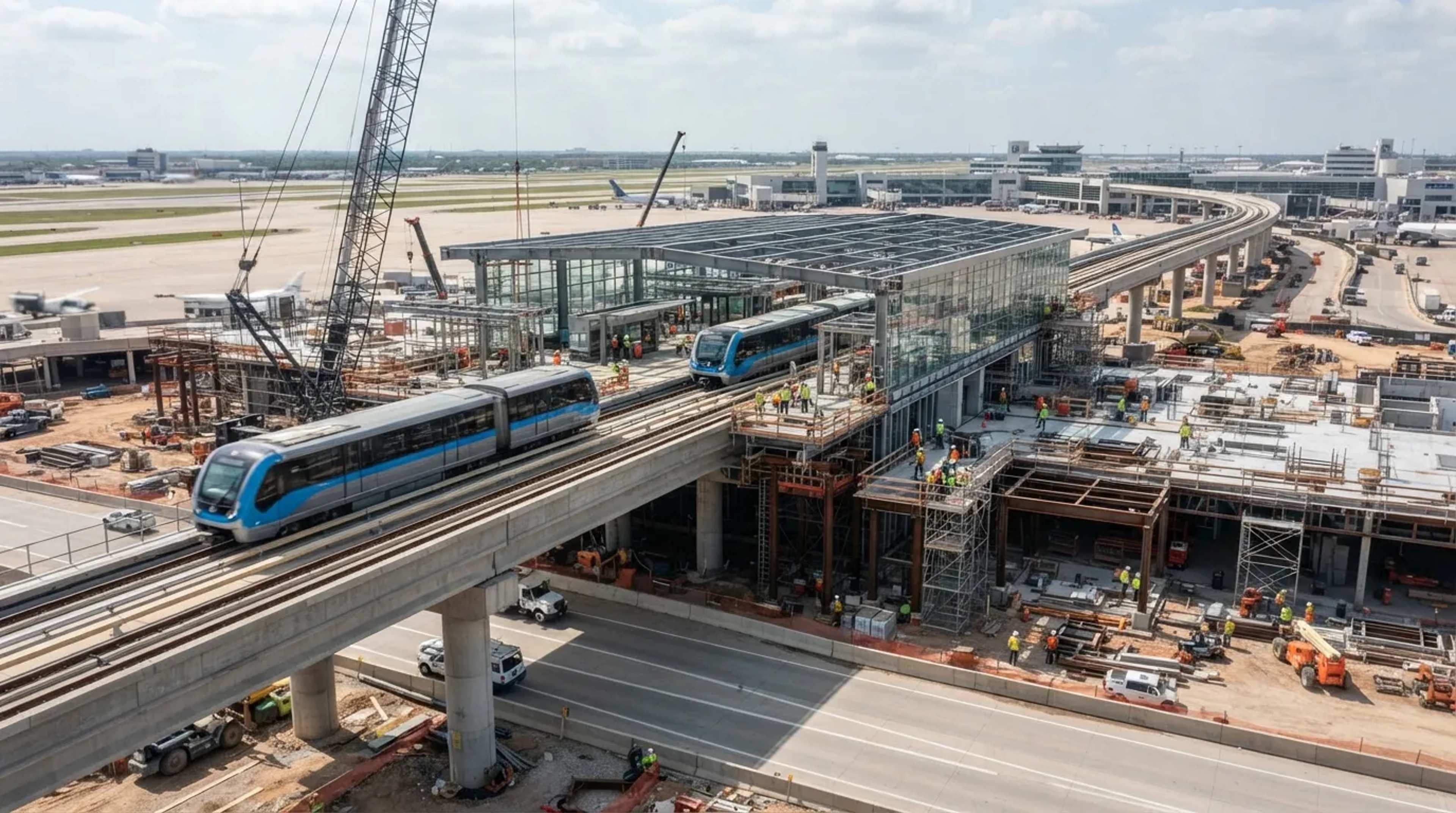

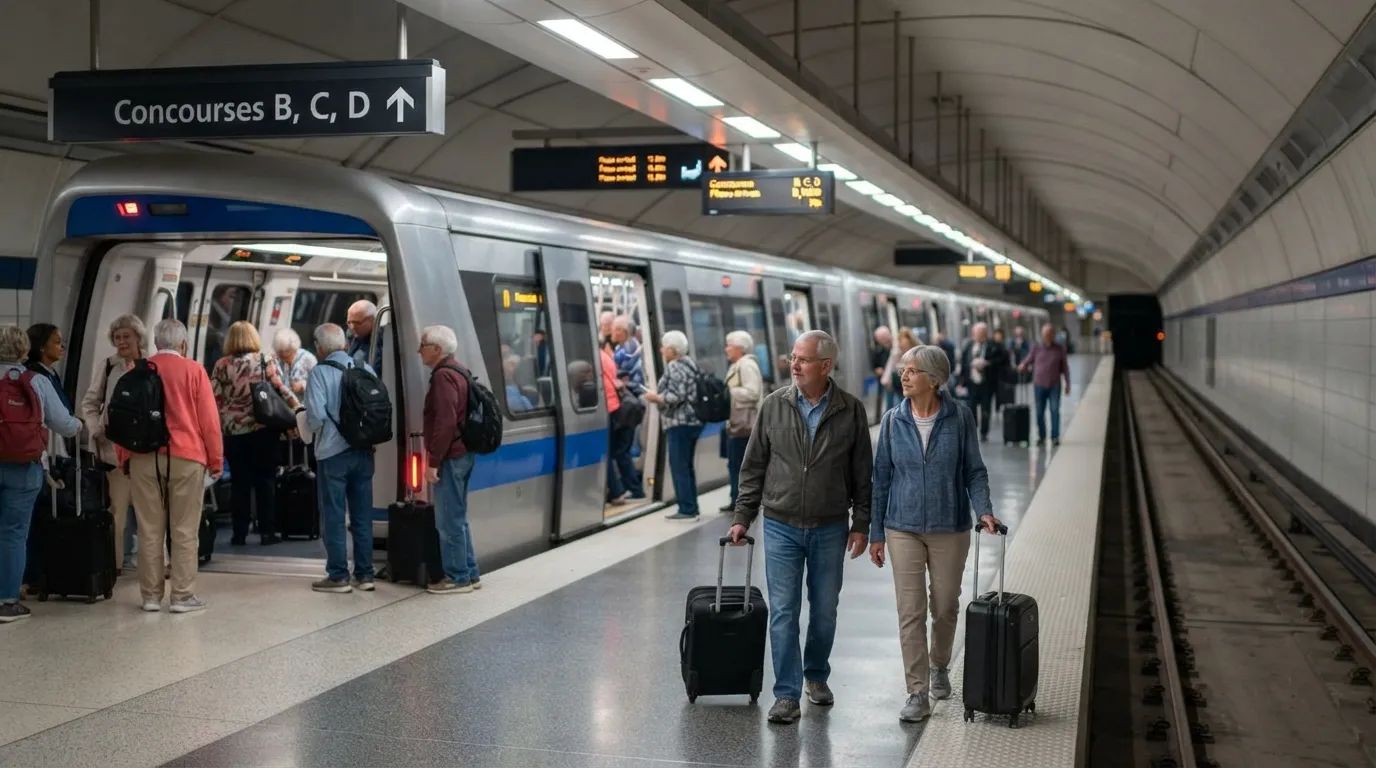
Hartsfield-Jackson has been called the busiest airport in the world for years, so you’d expect chaos. On paper it’s the opposite: seven concourses, lettered T and A through F, set in one straight line and linked by a free train. That tidy layout is exactly why it catches people off guard, and the 13 things below are where the surprises hide.
None of them is about getting lost. They’re about a walk that costs more than it should, a checkpoint you may not be allowed to use, and help many travelers assume the airport provides when it doesn’t. One slip involves a train that quietly stops working when you step to the wrong side of a line. It’s the last item on the list. First, the train itself, because riding it isn’t always the smart move.
#13 – Walking Beats the Train When the Next Concourse Is Next Door
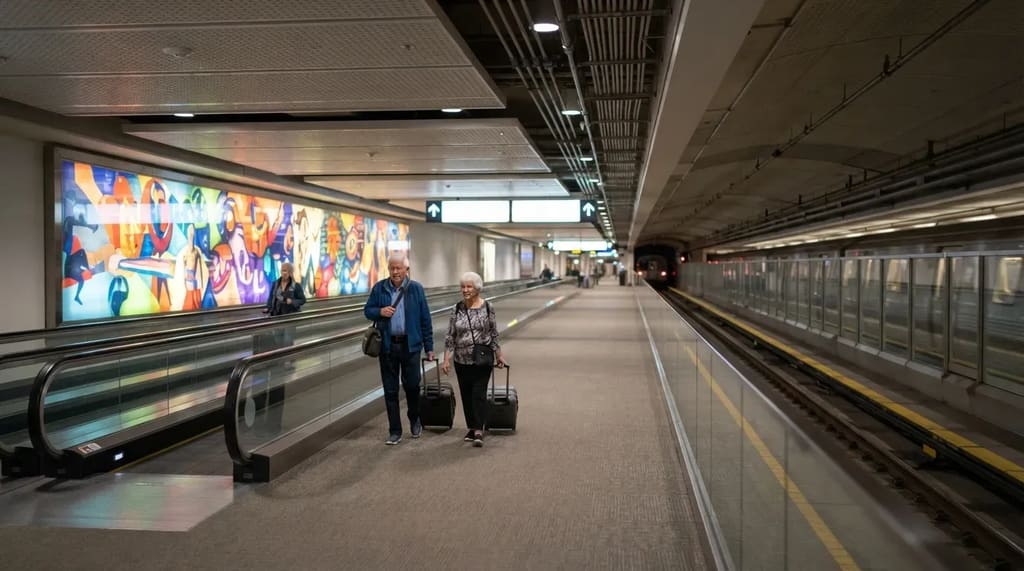
An underground corridor with moving walkways runs right alongside the train tracks, and walking between neighboring concourses takes about five minutes. The train has to be reached by escalator or elevator and then waited for. For a single concourse, the walk often wins.
If your knees and luggage allow it, walk one stop and ride for anything farther. For two or more concourses, the train is the better bet. The corridor also carries some of the airport’s public art, so a slow stroll gives you something to look at besides the clock.
The train isn’t the same service at every hour, though.
#12 – After 1 a.m., the Plane Train May Run on a Single Track
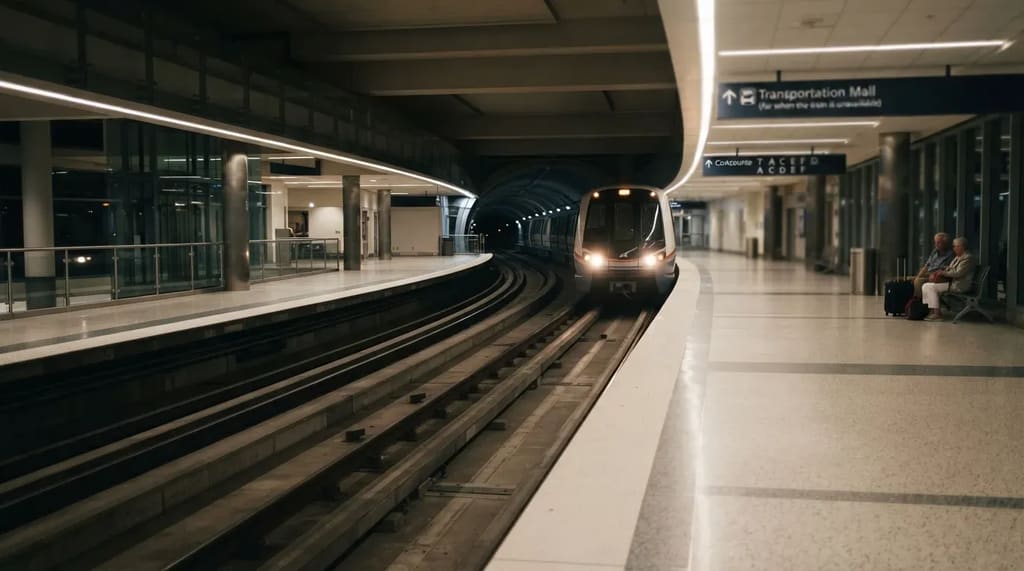
The Plane Train runs around the clock, and more than 250,000 passengers ride it each day.1 Overnight, starting at 1 a.m., it sometimes switches to a reduced single-track mode.2 In that mode the airport usually runs three trains2, so a late arrival can face a longer gap than the two-minute wait you’d expect in the daytime.
If you land late and your gate is several concourses away, plan for a slower ride. Signs for the Transportation Mall lead you to the walkways if the train is unavailable. That corridor is also your backup when a platform looks packed. Late arrivals should also expect that the checkpoint between them and the gate may have changed its hours.
Fast Facts
- The Plane Train runs 24 hours a day.
- More than 250,000 passengers ride it daily.
- From 1 a.m., it may switch to single-track mode.
- In that mode, about three trains are in service.
#11 – Four Domestic Checkpoints, and Each One’s Wait Is Posted Online
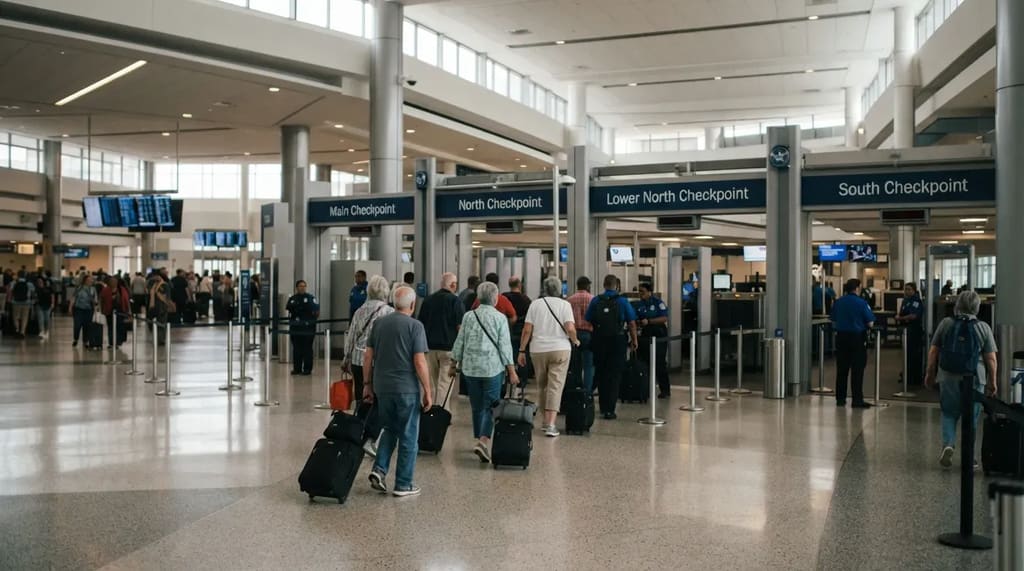
The Domestic Terminal has four checkpoints, called Main, North, Lower North and South. A separate International Main checkpoint sits in the International Terminal. The airport’s website posts a current wait for each one and sorts the waits into bands, from Low at 0 to 15 minutes up to Extended at more than an hour.3
That turns the choice of checkpoint into a decision you can make before you leave the car. The page shows each status in text as well as color, which helps on a small phone screen.3 Pick the shortest posted time among the lanes you’re allowed to use, because walking to a different one costs minutes of its own.
One of those four lanes is off-limits to most travelers.
#10 – The South Checkpoint Is for PreCheck Holders Only
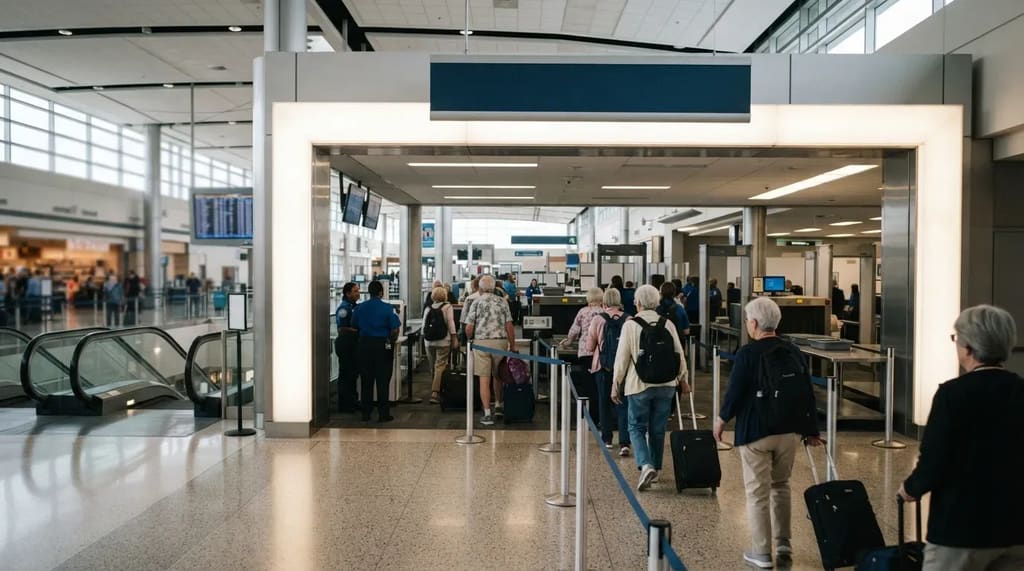
The airport’s wait-time page labels South as a PreCheck-only checkpoint.3 If you hold PreCheck, it’s the one to look for, since lanes reserved for enrolled travelers tend to be shorter. If you don’t, the trip over there is wasted effort.
PreCheck requires an application, a fee and an in-person appointment, and it lasts for several years. That makes it worth the trouble if you fly a few times a year, and probably not worth it for one trip. Compare it against the posted waits at the other checkpoints, because those are often short anyway.
#9 – Two Hours Early for Domestic, Three for International
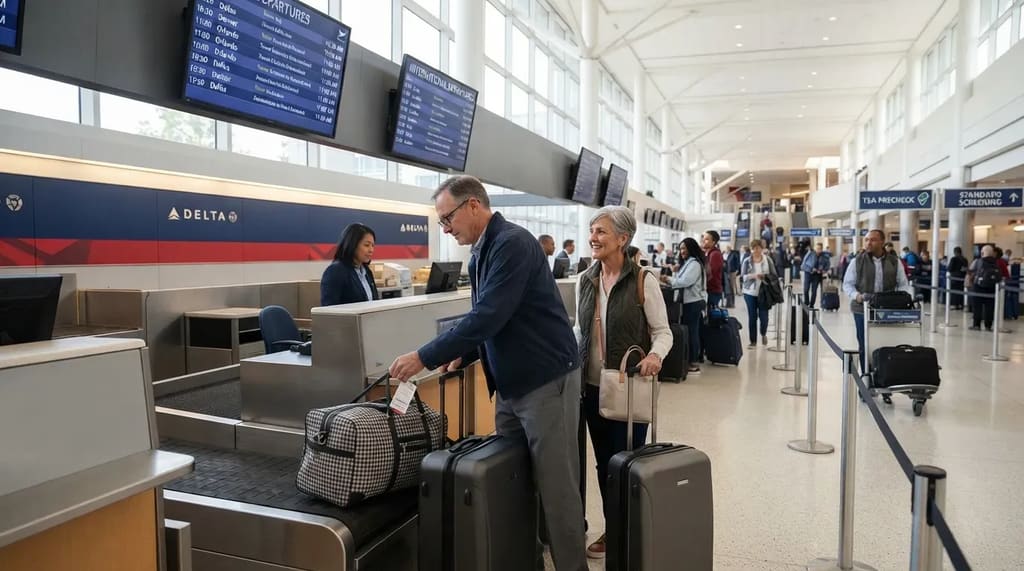
Airport officials recommend arriving at least two hours before a domestic departure and three hours before an international one.3 The posted checkpoint times cover only the security line. The parking or curb, the airline counter, the bag drop and the long walk to the gate aren’t in them.
Treat two hours as a minimum if you’re checking a bag, or if you’ve asked for wheelchair help, which is arranged separately and has its own timing. A few extra minutes cost you little, since the concourses have plenty of places to sit and eat. A missed boarding call costs far more.
At a Glance
- Domestic flight: arrive at least 2 hours before departure.
- International flight: arrive at least 3 hours before departure.
- Posted waits: run from Low (0 to 15 minutes) to Extended (over an hour).
- Not counted in those waits: curb or parking, the airline counter, bag drop and the walk to the gate.
#8 – The Domestic Terminal Has a North Side and a South Side, and Airlines Are Split Between Them
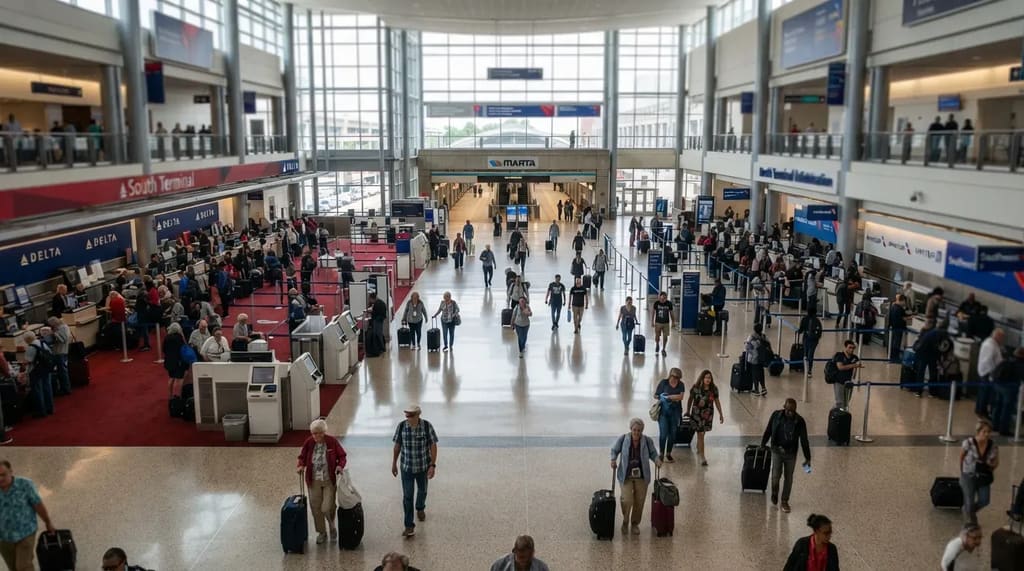
Most flights within the U.S. use the Domestic Terminal, which has two halves. The South Terminal is Delta’s main check-in area, and the North Terminal is commonly used by other airlines. Check your airline before the drive so you aren’t hauling bags from one end to the other.
The word “South” also appears on a security checkpoint, and the two are separate things. Trust the signs on the day, not the names. At street level the two halves meet at the baggage claim areas, which is also where the train station is.
That station is the cheapest way out of the airport.
#7 – The MARTA Station Is Inside the Domestic Terminal, Steps From Baggage Claim
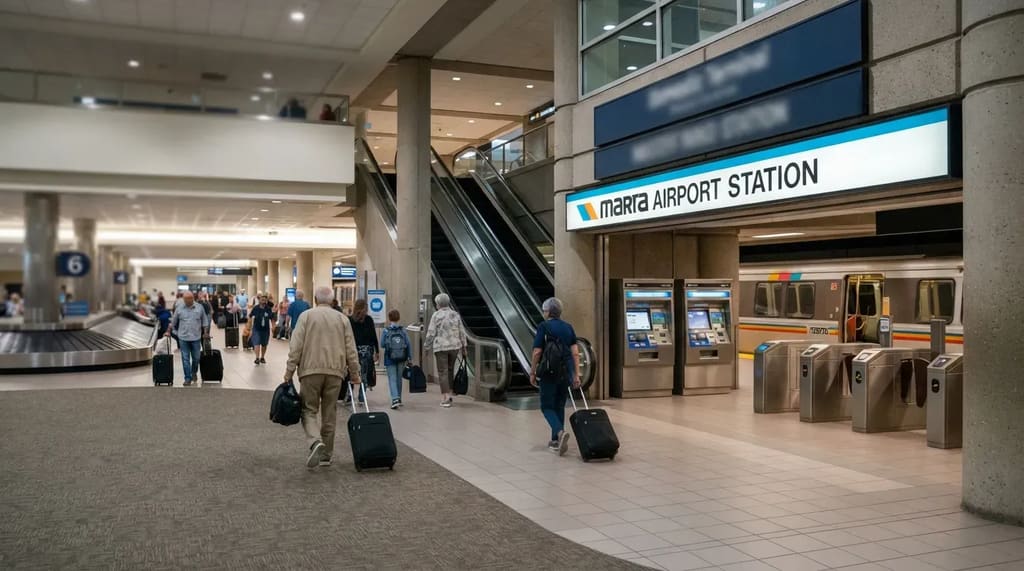
The MARTA Airport Station sits on the west end of the building, between the North and South baggage claim areas. The Red and Gold lines go straight to it. Listings put the ride downtown at about 20 minutes and the standard fare at $2.50, though you should confirm the current fare on MARTA’s website.
With a light bag and a hotel near a station, MARTA is hard to beat on both cost and time. With several large suitcases, or a hotel a long walk from the nearest stop, a car is easier on your back. Elevators connect all levels of the airport, and the station is ADA-compliant, so stairs aren’t a worry.
Anyone who landed at the other terminal has one more leg before the train.
#6 – The International Terminal Has No Train, Only a Shuttle
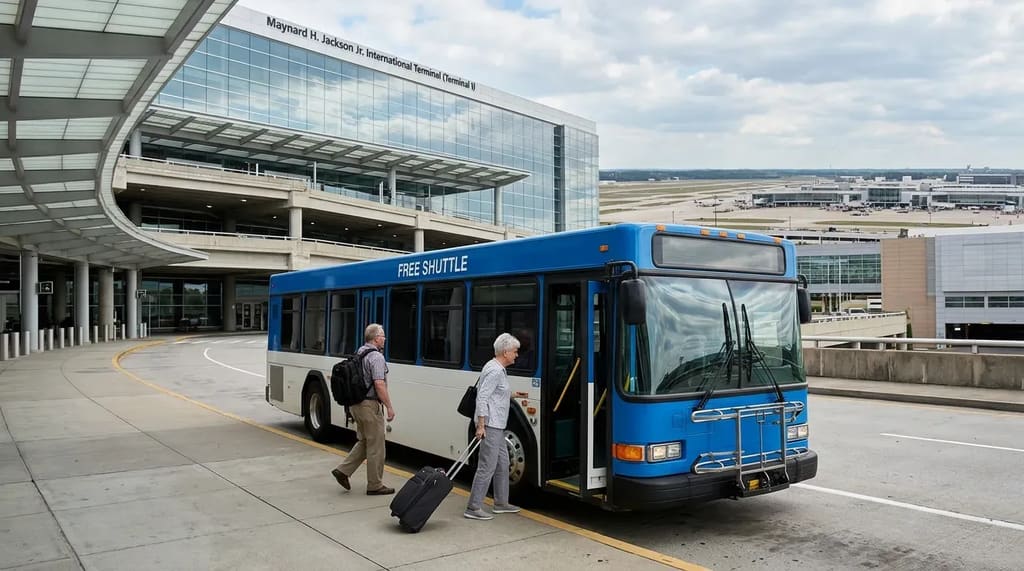
MARTA’s station is on the domestic side, so travelers at the International Terminal need a bridge. MARTA notes that a free shuttle runs from the International Terminal arrivals level to the Domestic Terminal baggage claim area, where the station is.4 Leave extra time for that ride before you start the trip downtown.
Connecting to another U.S. flight is a longer chain. You clear customs, collect your bags, re-check them just outside customs, go through security again, and then take the Plane Train to your domestic concourse. That is a lot of steps after a long overseas flight, so don’t book a tight connection.
Worth Knowing
- The free shuttle starts at the International Terminal arrivals level.
- It drops you at the Domestic Terminal baggage claim area, next to MARTA.
- A U.S. connection means customs, a bag re-check and a second security screening.
- After a long overseas flight, a roomy layover beats a tight one.
#5 – The SkyTrain Is Not the Plane Train, and Mixing Them Up Sends You the Wrong Way
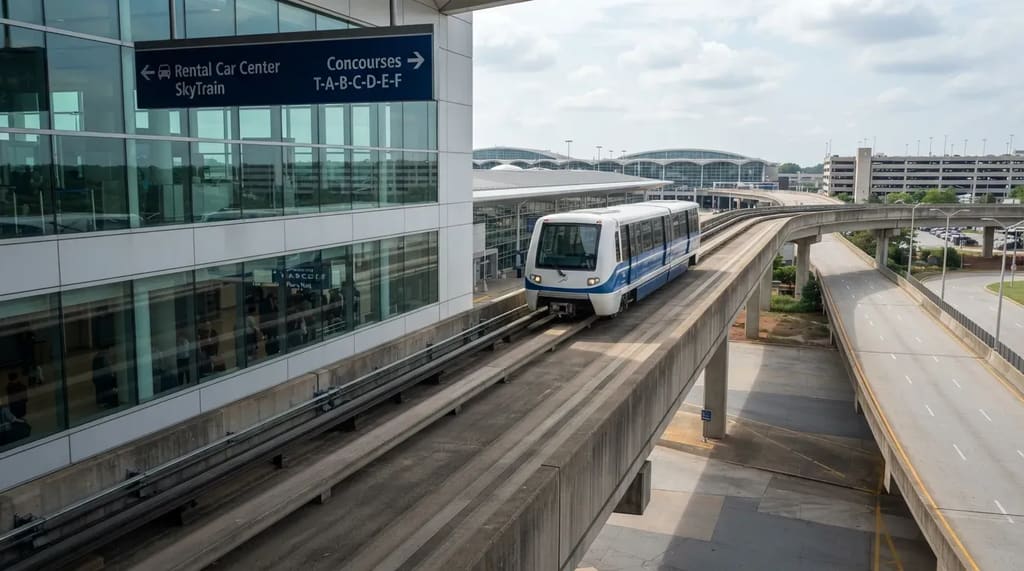
The two trains are easy to confuse. The Plane Train runs inside the secure area, linking the two terminals with the seven concourses. The SkyTrain is an automated people mover that runs outside security to the Georgia International Convention Center and the Consolidated Rental Car Facility.
The SkyTrain also serves the airport hotel area. If you’ve rented a car, this is the train you’ll need, and the Plane Train will not take you there. Follow the signs rather than the names.
Trains and shuttles solve distance. Some travelers also want staff to know they may need a little more patience.
#4 – The Sunflower Lanyard Is Free at the Information Desks
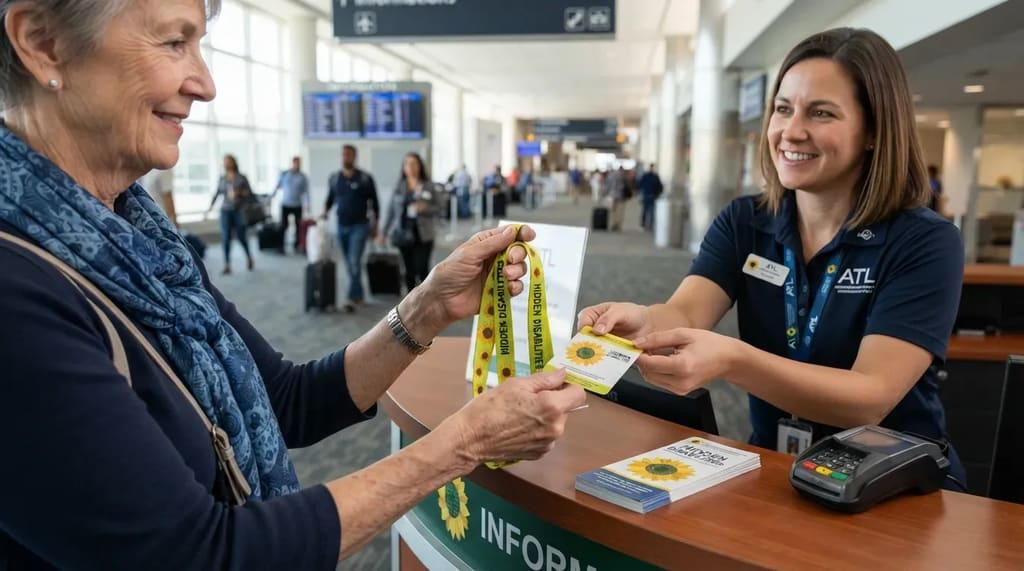
The airport hands out Hidden Disabilities Sunflower items, a lanyard and an ID card or pin, at its information desks for people who need extra support or a little more time.5 It’s meant for conditions others can’t see. Hearing loss is one example, and memory or anxiety concerns are others.
You can also start online. After you complete a short survey, you get a confirmation email, valid for 15 days, explaining how to pick up the lanyard.5 It asks for patience and doesn’t work as a fast pass. It costs nothing, and it may be worth wearing if you’d otherwise explain yourself at every counter.
A lanyard signals a need. Wheelchair service is a different matter, and the airport doesn’t run it.
#3 – Wheelchair Help Comes From Your Airline, Not the Airport
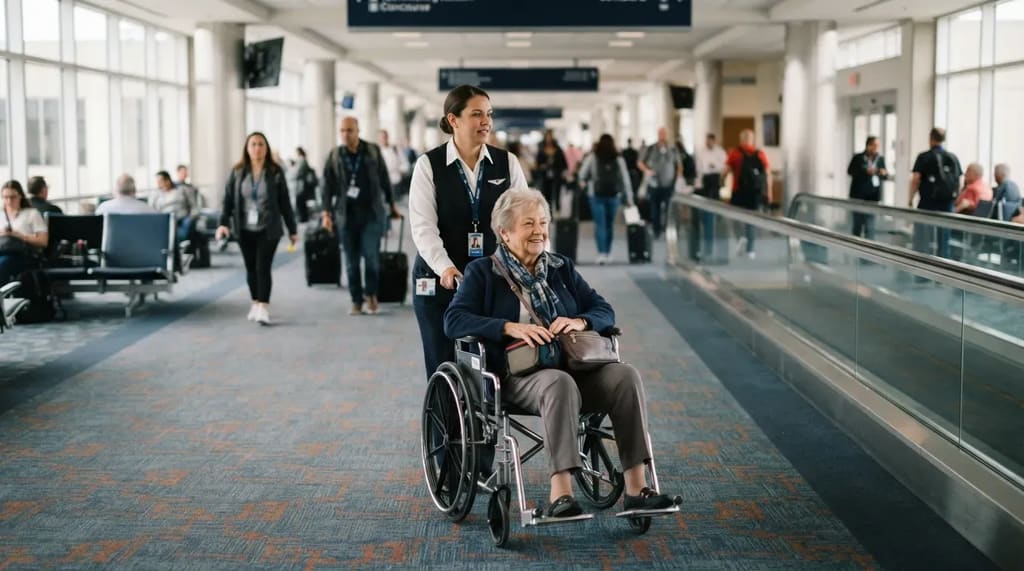
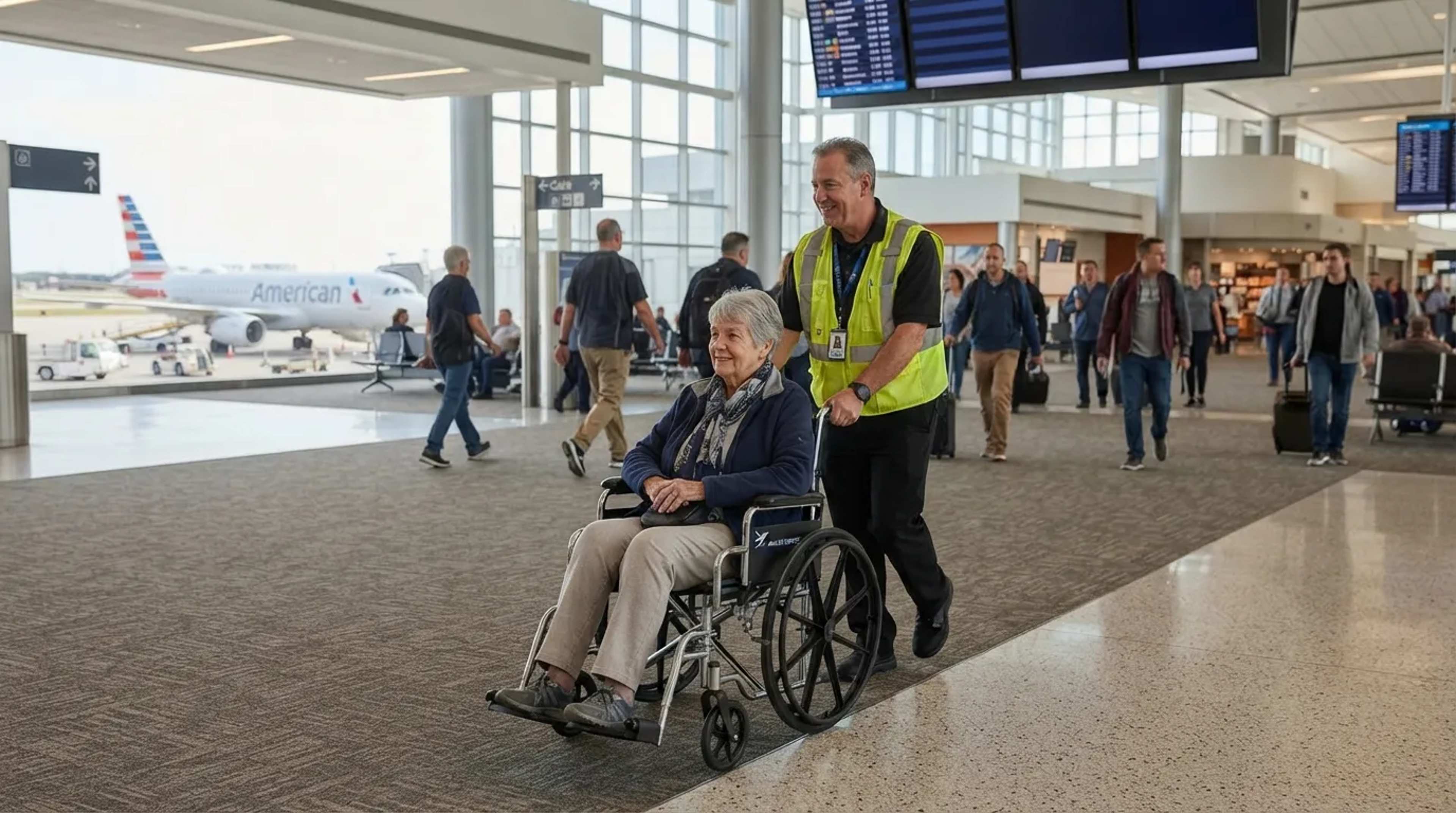
The airport’s own accessibility page tells travelers to contact their airline directly for wheelchair assistance. You can reserve a wheelchair by contacting the airline or by going to the ticketing counter before your flight.5 Airlines provide the service at no charge, and the easiest time to ask is when you book.
Confirm again a day or two before you fly, and say whether you’ll need help at a connection too. The distances here justify asking even if you walk well. If your gate is at the far end, a chair costs you nothing and saves your legs for the rest of the trip.
Related Stories From Travelbinger

Timing matters most when someone is driving you there after dark.
#2 – Late-Night Curb Drop-Offs Need a Phone Call First
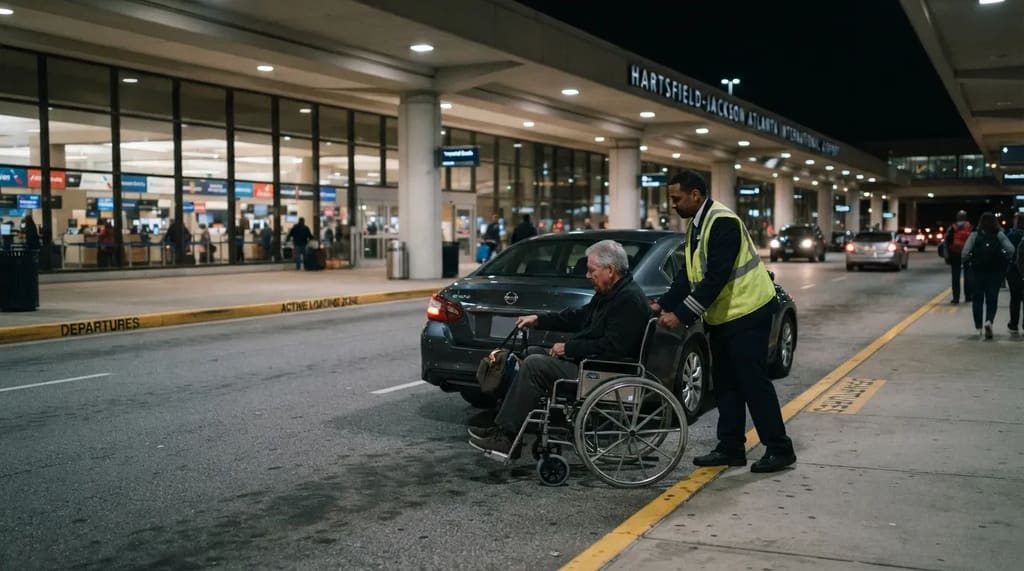
The airport’s accessibility page says that, because of partial roadway closures, passengers who need wheelchair help at drop-off between 9 p.m. and 5 a.m. should contact their airline’s wheelchair company at least five minutes before arriving.5 Check the page for the current wording, since road closures can change.
If a relative is driving you to a late flight, keep the airline’s wheelchair number handy and call while still on the road. An attendant can then meet the car at the curb, and you aren’t left waiting with your bags. The same page says travelers can contact ground transportation companies to request a wheelchair lift or a ramp-equipped vehicle.5
Once you’re past the checkpoint, the rules change again, and the biggest trap of all is waiting.
#1 – The Plane Train Works Only Inside Security, and Stepping Out Costs You a Second Screening
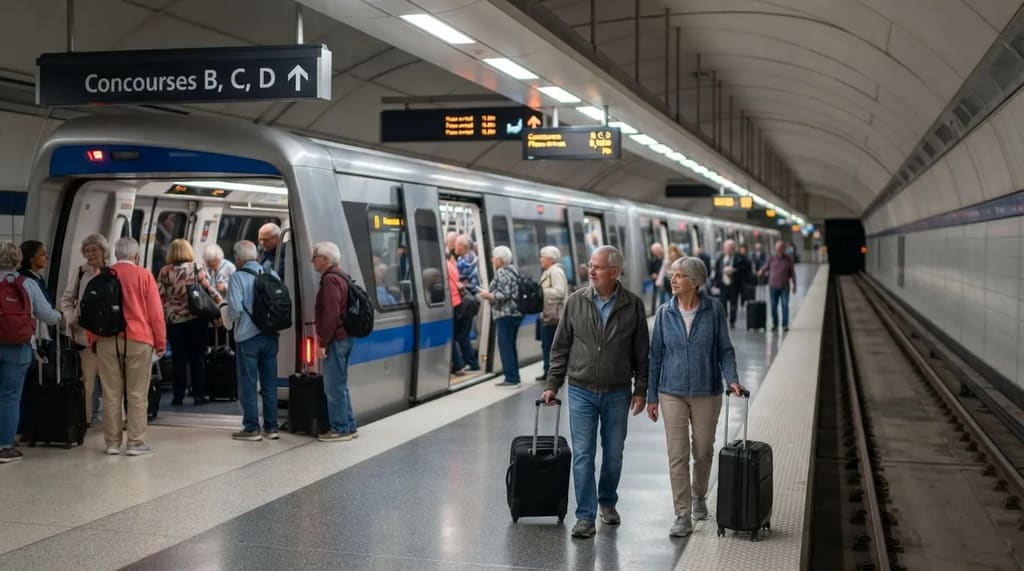
The Plane Train operates in the secure area, connecting the two terminals with the seven airside concourses.2 Step outside security to meet a relative or to find a different restaurant, and you’re on the landside, where the train doesn’t run. Coming back means another trip through screening, which is the one slip that costs both time and patience.
The airport gives you little reason to leave. Across the concourses you’ll find local Atlanta favorites, chef-driven restaurants and grab-and-go options. Arriving domestic travelers use the same train in the other direction, walking or riding the Plane Train to baggage claim in the Domestic Terminal.
International Terminal passengers work the other way around: once outside security, they use the free landside shuttle to reach the Domestic Terminal and MARTA. The shuttle is for before security, and the Plane Train is for after. Keep that line in mind and the rest of the airport falls into place.
Think of Atlanta’s airport as an outside half and an inside half. The shuttle, the SkyTrain and MARTA belong to the first, and the Plane Train and the concourse walkways belong to the second. Decide before you go through the checkpoint what you still need from the outside, because going back out costs more than any wait you saved.
Quick Compare
- Outside security: the free landside shuttle, the SkyTrain, the MARTA station and the rental car facility.
- Inside security: the Plane Train, the concourse walkways, the restaurants and your gate.
- Crossing back in: a second screening, every time.
If you’ve changed planes in Atlanta, did you walk the corridor or ride the train, and would you do it the same way again?
- ATL Plane Train History: https://www.atl.com/the-plane-train-getting-you-there-since-1980/
- Plane Train Overview: https://en.wikipedia.org/wiki/The_Plane_Train
- ATL Security Wait Times: https://www.atl.com/times/
- MARTA Airport Access: https://itsmarta.com/getting-to-airport.aspx
- ATL Civil Rights & Accessibility: https://www.atl.com/civil-rights/