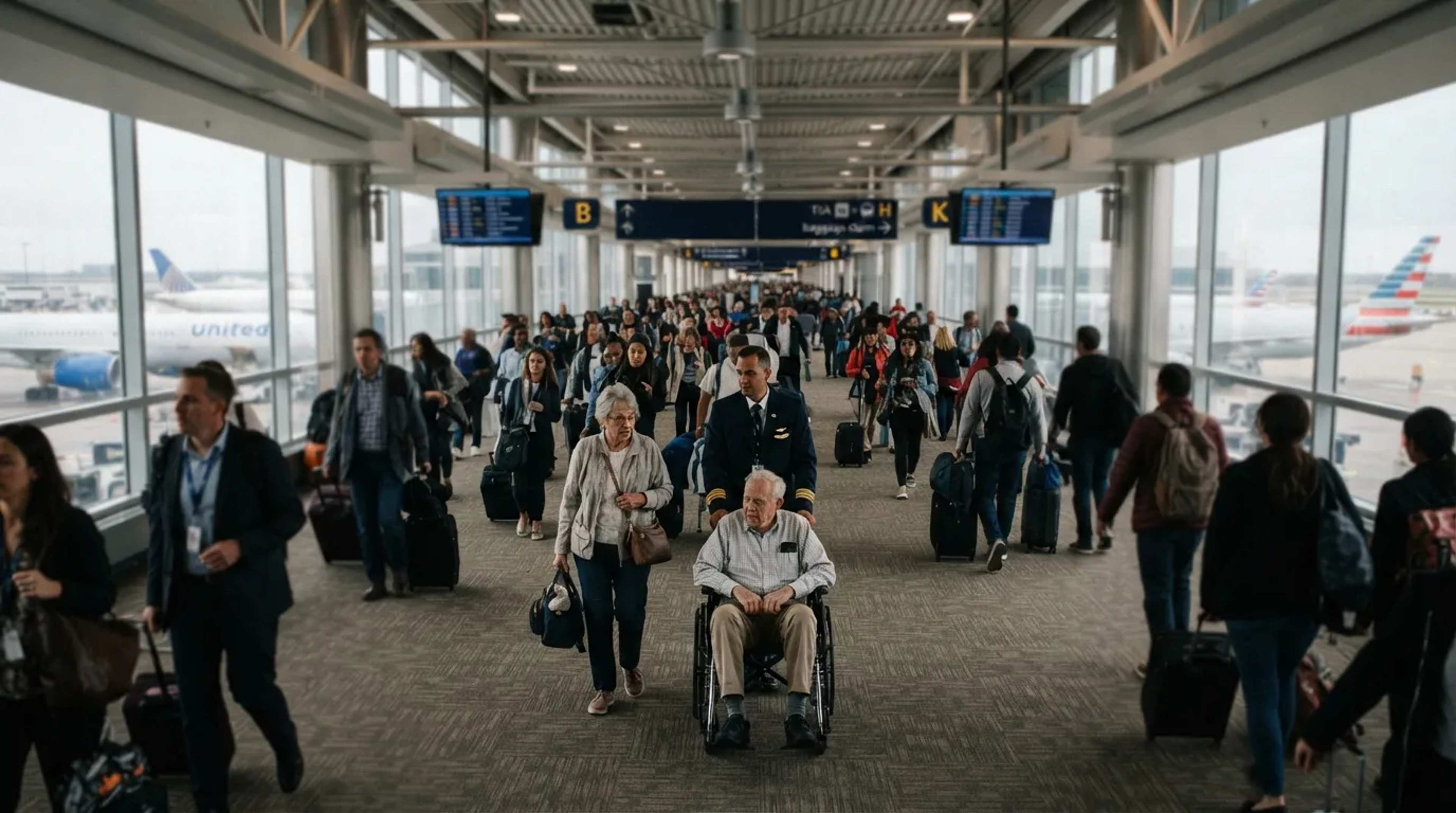
Dallas Fort Worth Airport covers roughly 27 square miles, which is bigger than Manhattan. Its five terminals, lettered A through E, are linked by a free train that comes along about every two minutes. A wrong turn still costs time you would rather spend sitting down, and some of the best help has to be arranged days before you leave home. These twelve tips are the ones that hold up in 2026.
Several have changed lately. A shoe perk for travelers 75 and older is gone, the busiest terminal is partly a construction site, and a free lanyard is meant to arrive in your mailbox. The most useful service of all, wheelchair help, is booked by neither the airport nor the security agency. That one comes last. The train comes first.
#12 – A Free Train Runs All Night Between Terminals
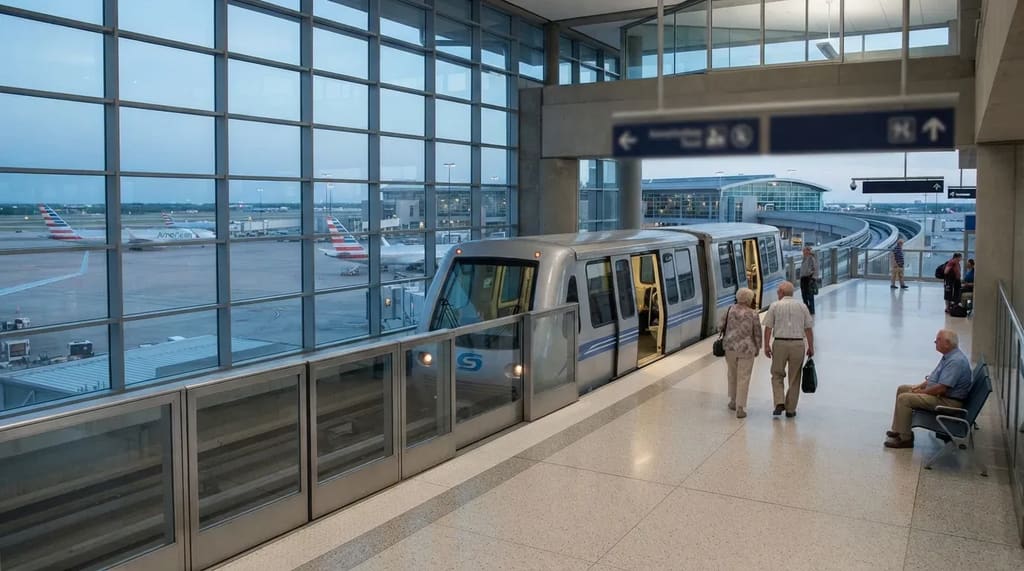
Skylink is a free light rail train that connects all five terminals. It runs 24 hours a day and needs no ticket. DFW lists an average ride of five minutes and a longest ride of nine minutes between the farthest points.1 A connection that looks impossible on the map is usually a short walk to a station and a short ride.
Each terminal has two Skylink stations, so if the first platform you spot is far from your gate, the other may be closer. The train runs in both directions around the airport, so board whichever way is shorter to your stop. Between terminals, the train is the right call. Inside a single terminal, check your gate number first, because the stations sit in only two places.2
The catch is that the train sits behind the checkpoint, so it does nothing for a traveler still on the public side.
#11 – The Train Stops at the Security Line
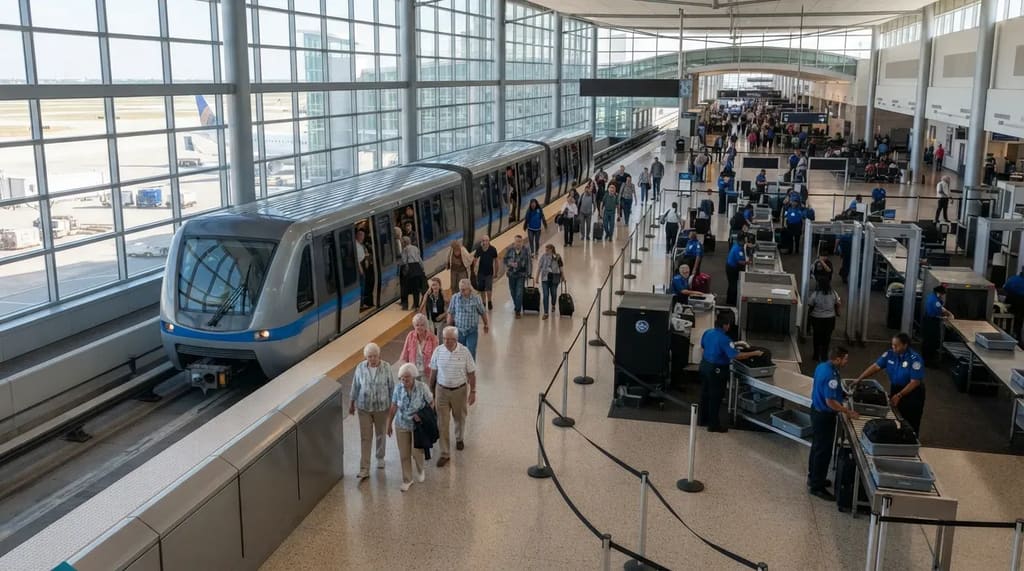
Skylink operates airside, mostly serving passengers connecting between flights, and it is closed to anyone who has not cleared security. It connects only the terminals, so it does not go to the parking lots or the rental car facility.2 If you are on the public side and need another terminal, DFW’s Terminal Link shuttle handles transfers outside security.
Arriving at the wrong terminal therefore costs you a shuttle ride and, once you leave the secure area, another trip through security. Confirm your terminal before you leave home and again at the curb if your flight changed. During maintenance, DFW says travelers can walk between certain terminals or use Terminal Link shuttles, so a closed train does not strand you.
For American Airlines passengers, the terminal most likely to be on that boarding pass is also the one under construction.
#10 – Terminal C Is Being Rebuilt Around You
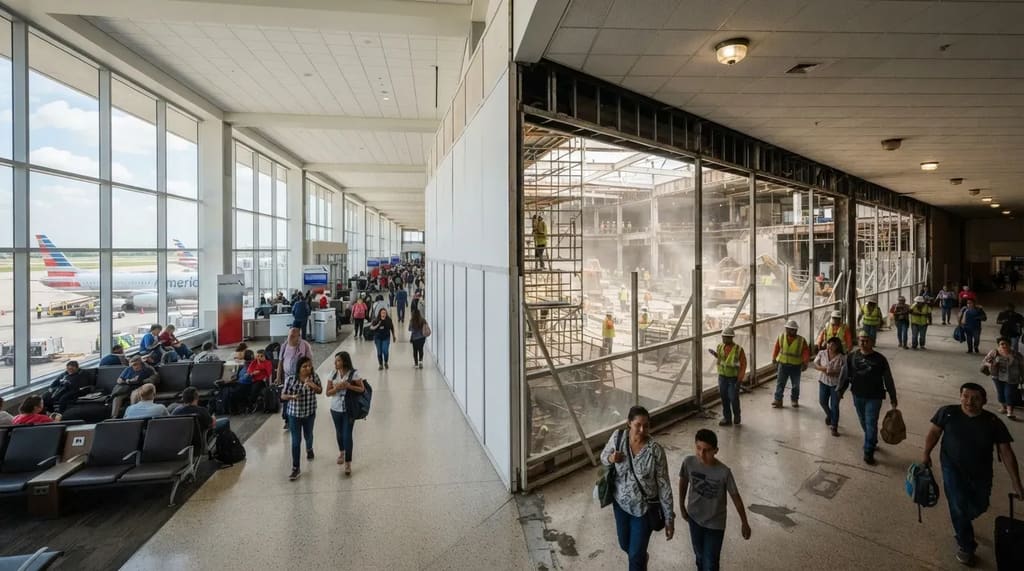
Terminal C is 52 years old and one of the original terminals at DFW.3 It is the airport’s busiest terminal and is used only by American Airlines. Right now a building that busy is being taken apart and put back together while the flights keep leaving.
DFW has opened a new pier with nine gates, five rebuilt and four new, with power stations, expanded seating and new concessions.3 4 That pier is only the first of three phases meant to reimagine the terminal’s existing footprint, and local reporting on airport contracts expects the work to run for years. Treat the new pier as a pleasant surprise rather than a plan, since you do not get to choose your gate.
Reaching Terminal C by car has changed too, because a new bridge is being built into it.
#9 – A New Bridge Is Changing the Drive to Terminal C
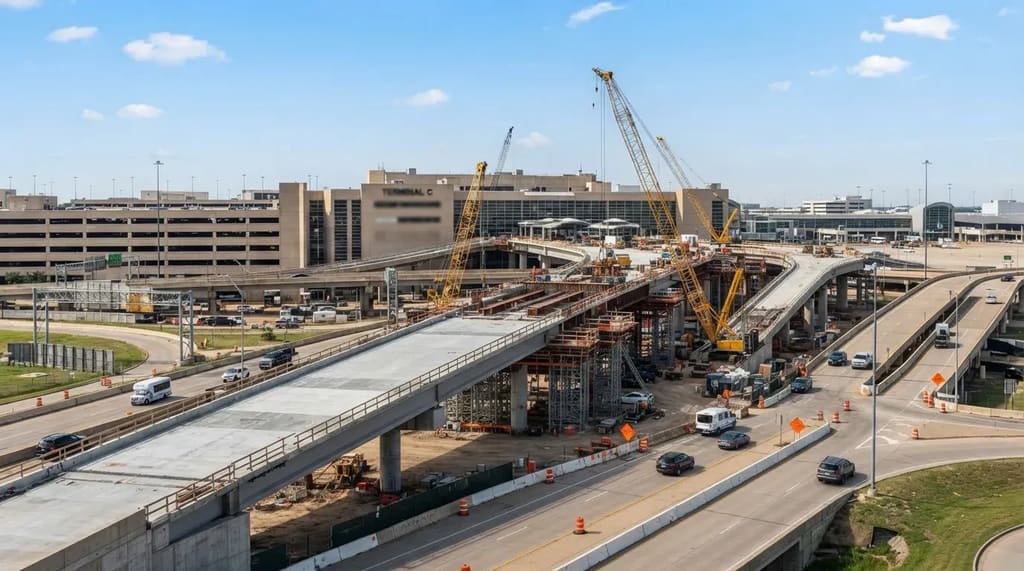
DFW has put roadway closures and detours in place to build a new bridge that will provide right-hand access into Terminal C. The airport issued a construction notice in January 2026 for the next phase of that project. The route a friend or relative drove last year may not be the route that works today.
If someone is driving you, ask them to read the airport’s current construction notices the evening before and to leave extra time. A driver who dislikes unfamiliar interchanges should have the option of skipping the airport roads altogether. For travelers who live near the right line, that option exists, and it is the next tip.
Rail avoids the road work entirely, though it reaches only two of the five terminals.
#8 – Trains Pull Right Up to Terminals A and B
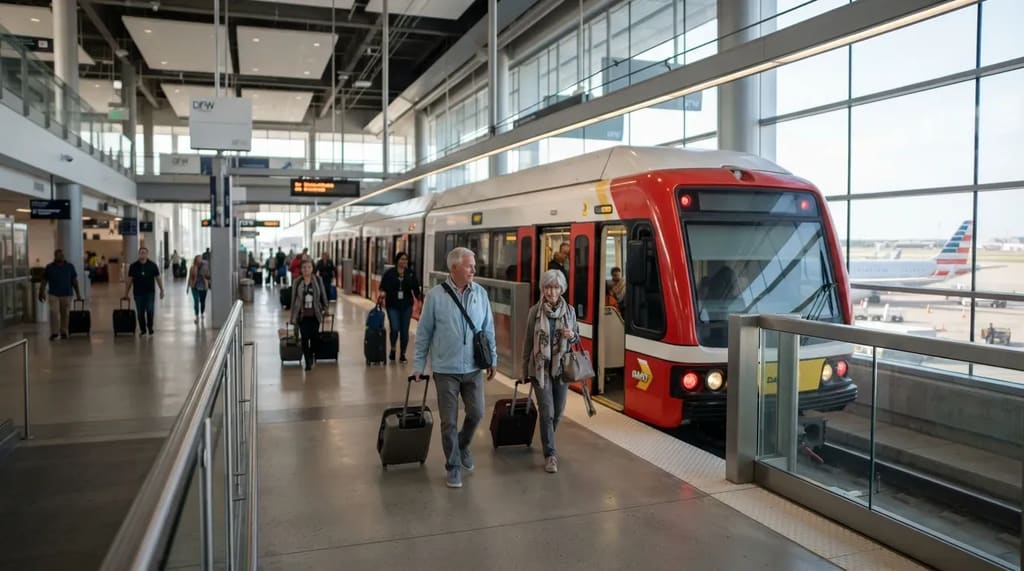
DART’s Orange Line serves Terminal A. The Silver Line and TEXRail both stop at Terminal B. If you live along one of those lines, the train beats the drive and the airport road construction.
Because rail stops only at A and B, a traveler flying from C, D or E has two choices. You can take the free Terminal Link shuttle outside security to your terminal. Or you can clear security at A or B and ride Skylink the rest of the way. The second option keeps you in one line instead of two, and it is the one to prefer when you have luggage and no reason to hurry.
Quick Compare: Rail Riders Headed to C, D or E
- Terminal Link shuttle: runs outside security and takes you to your own terminal, where you go through screening.
- Skylink from A or B: you clear security once at the rail terminal, then ride free the rest of the way.
- Rail stops: the Orange Line serves A, while the Silver Line and TEXRail serve B.
#7 – TSA PreCheck Has No Age Limit
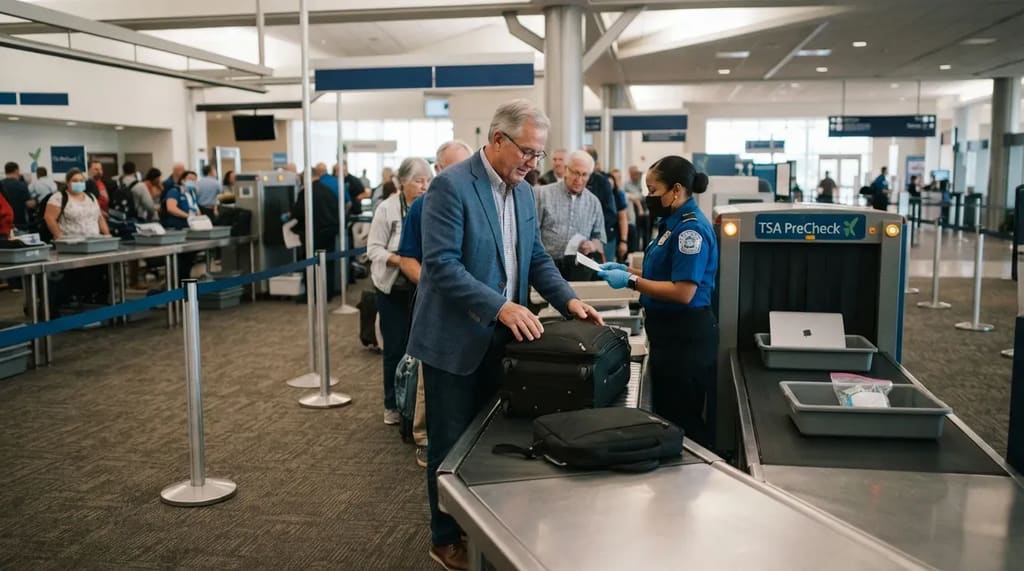
TSA says passengers 75 and older can receive some form of expedited screening. That means in your sixties or early seventies you are in the same line, under the same rules, as everyone else. The age break is real, but it starts later than many travelers assume.
PreCheck is the option open at any age. In PreCheck lanes you generally leave laptops, 3-1-1 liquids, light jackets and belts in place, and there is no age limit for applying. Enrollment involves an application and a fee, so check tsa.gov for current details. For anyone under 75 who flies a few times a year, PreCheck does more than waiting for an age-based perk.
#6 – The Famous Shoe Break for 75 and Older Is Gone
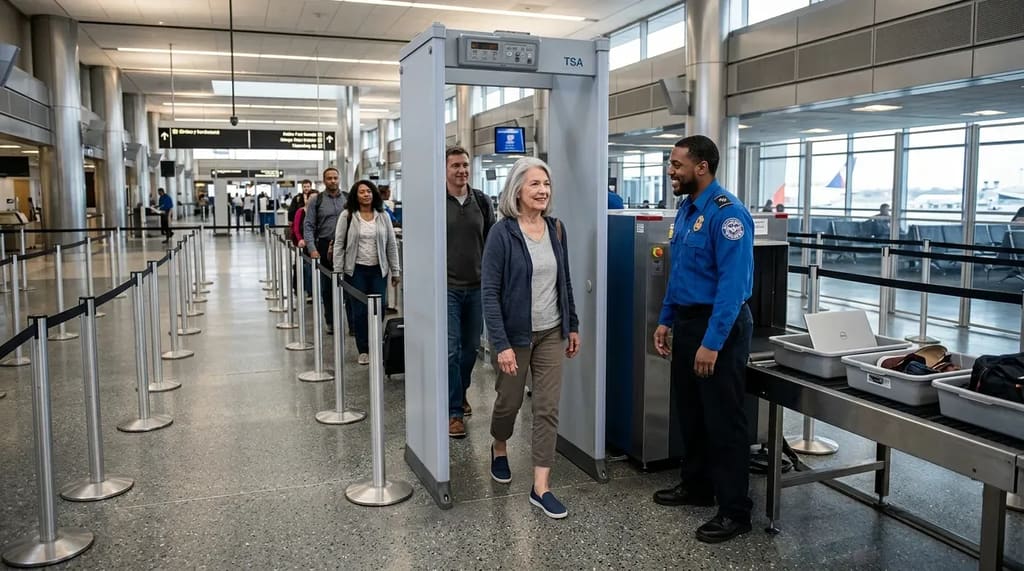
TSA ended its shoe-removal requirement nationwide on July 8, 2025. Children 12 and under and passengers 75 and older used to be exempt, and now everyone can keep their shoes on.5 The best-known senior break at the airport is now simply the rule for everybody.
Officers can still ask for shoes to come off if an alarm sounds or extra screening is needed. At that point, a pat-down is also possible. Slip-on shoes make either step quick. Do not build your plan around the old perk.
What still differs at 75 shows up when an alarm sounds, and it starts with a chair.
#5 – You Can Ask to Sit Down During Screening
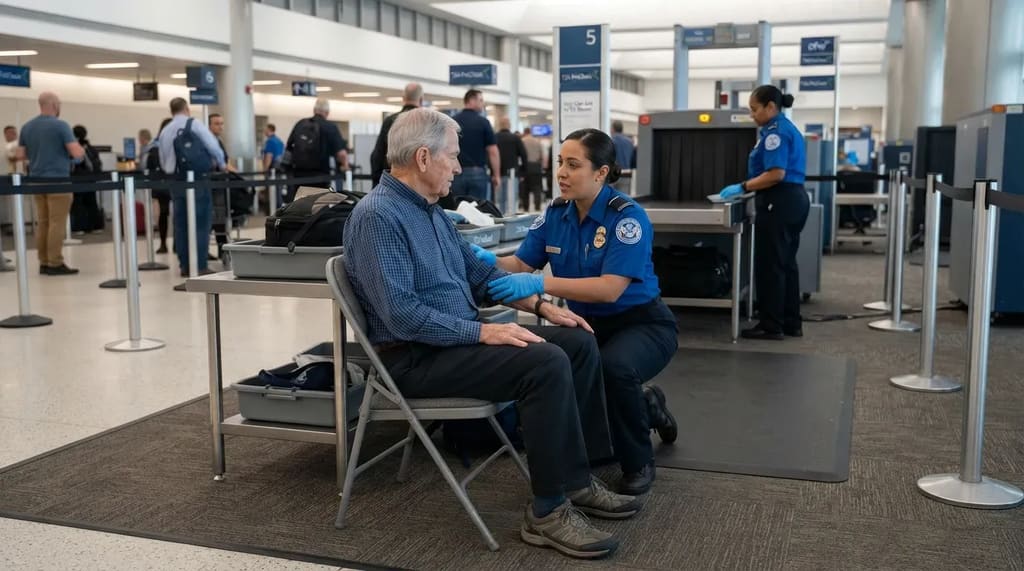
If an alarm goes off, passengers 75 and older can request to be seated during the additional screening. Those who cannot stand for screening can be screened through other security methods.
Age is not the only way in. A traveler of any age whose medical condition makes standing or walking difficult can tell the officers before stepping toward the scanner. That works better than speaking up after an alarm, because the officers can plan around you instead of reacting to you.
Worth Knowing
- At 75 and older, you can request a seat during additional screening after an alarm.
- If you cannot stand for screening, officers can use other security methods.
- At any age, a medical condition that limits standing or walking is worth mentioning before you reach the scanner.
- No call ahead? Ask at the checkpoint for a Passenger Support Specialist.
Asking works best when the staff around you can see why, and a small lanyard can do that without any explaining.
#4 – A Free Sunflower Lanyard Can Arrive by Mail
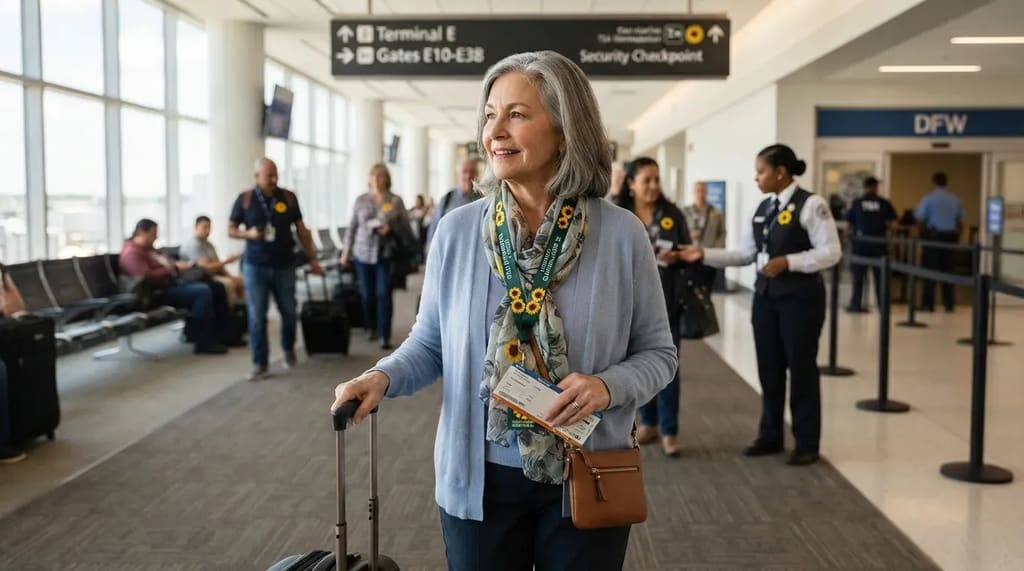
DFW’s free Sunflower program lets travelers with hidden disabilities, including many physical, visual, auditory or neurological conditions, wear a lanyard that tells trained staff they may need extra help, understanding or time. The preferred method is delivery by mail. Pickup spots are on the public side, so a same-day traveler has to collect the lanyard before going through TSA.
Do not expect it to work as a fast pass. Dallas Love Field, which runs its own version of the program, says the lanyard does not offer expedited service or a place ahead in line. It signals patience and nothing more. That is still valuable if conditions like poor hearing, vision or balance make the airport slower for you.
The lanyard tells staff you may need time, but it cannot arrange anything in advance. That is the job of a TSA helpline.
#3 – One Phone Call to TSA Cares Before You Fly
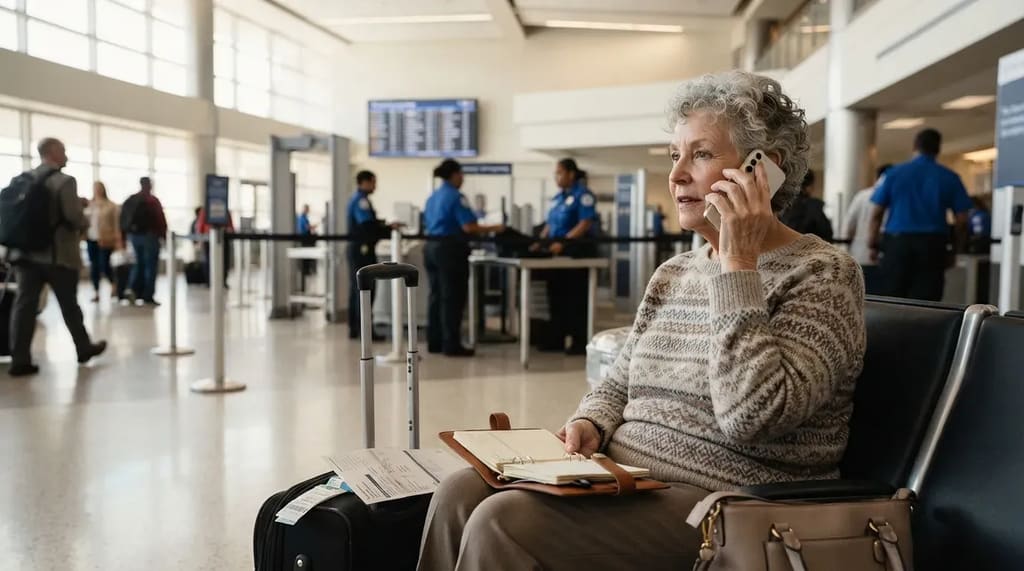
TSA asks that requests for screening assistance be made at least 72 hours before departure, by filling out the TSA Cares form or calling (855) 787-2227.6 7 The helpline is for travelers or companions with a disability, a medical condition or another specific circumstance. Age alone is not the qualifier, so the call fits a traveler who needs help, whatever their birthday.
Related Stories From Travelbinger


If you did not arrange anything beforehand, ask at the checkpoint for a Passenger Support Specialist. A call ahead is still better, because the TSA team can then give you guidance specific to your trip instead of improvising at the line.
TSA Cares covers the checkpoint and stops there, so help on the airplane itself is a different request.7
#2 – An Onboard Wheelchair for the Restroom Trip
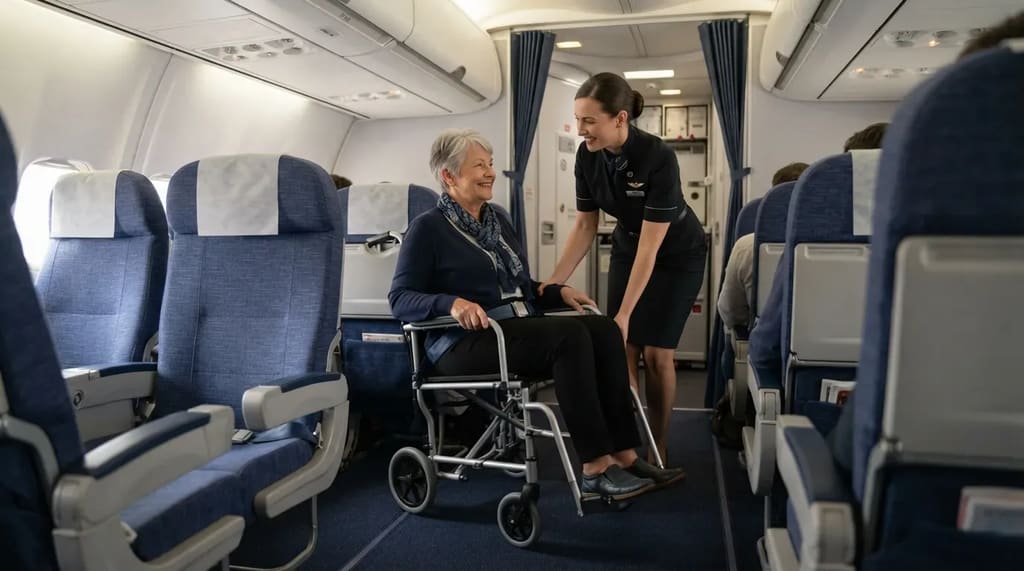
On aircraft with more than 60 seats and no accessible lavatory, airlines must place an onboard wheelchair on the flight if you give 48 hours’ notice.8 The narrow aisle on many planes is the reason the rule exists. Without that chair, a traveler who has trouble walking may simply stay in the seat for the whole flight.
Plan the request the way you would plan a seat assignment: when you book. Waiting until the day of travel leaves the airline no time to load the equipment. The notice goes to the airline, and the same is true of the wheelchair that meets you at the curb.
Fast Facts
- The rule applies to aircraft with more than 60 seats and no accessible lavatory.
- The airline needs 48 hours’ notice to put the chair on board.
- The easiest time to ask is when you book.
- The request goes to your airline, not to TSA or the airport.
#1 – The Wheelchair Request Only Your Airline Can Make
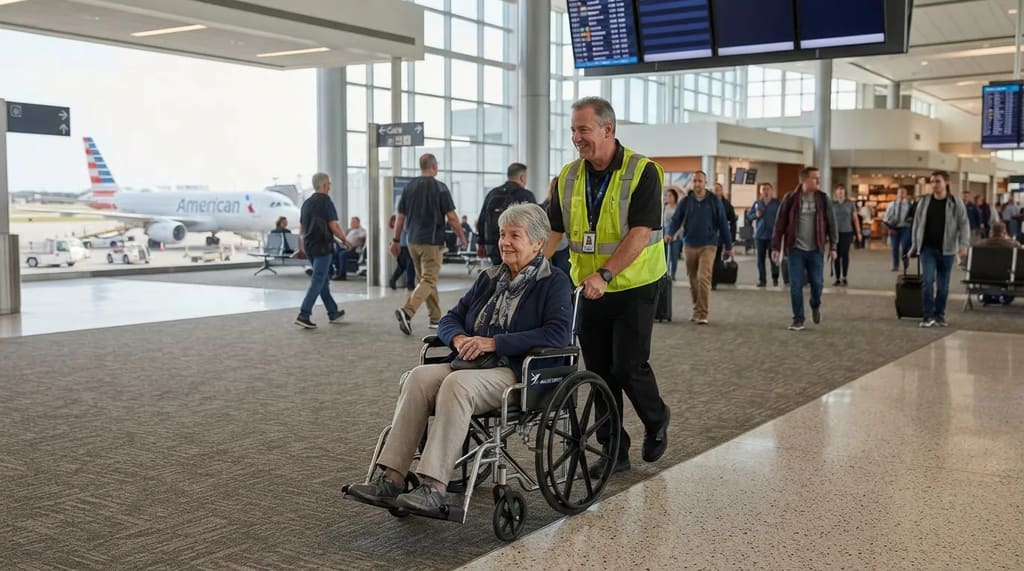
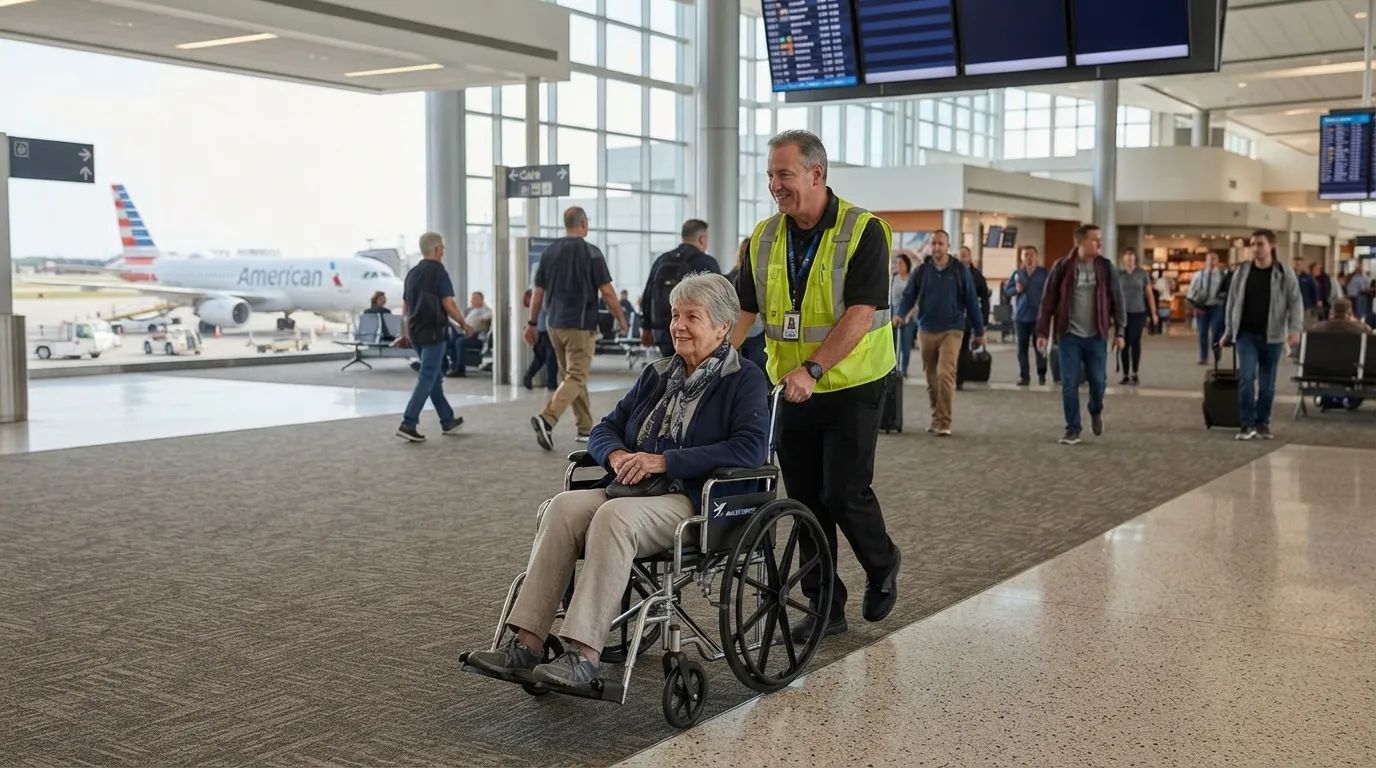
DFW’s own accessibility page tells you to contact your airline for airport wheelchair service, and says TSA does not provide it.6 That surprises travelers who call the airport or the TSA helpline and find the request goes nowhere. Wheelchair help is booked by the air carrier or its assigned representatives.
The service is worth asking for. Wheelchair assistance must be free regardless of ticket class, and under Department of Transportation rules it covers the trip from the curb or check-in through the gate. If DFW is your connection, say so when you book, since the airline is the one arranging the chair and the attendant. At an airport this large, that single request does more than any shortcut.
Nearly everything useful at DFW comes down to who has to be asked and when. The checkpoint help wants three days, the lanyard wants a mailbox, and the wheelchair wants your airline.
The airport gets easier when you set all that up from the kitchen table a week ahead and leave the walking to the train.
- DFW Skylink Connections: https://www.dfwairport.com/explore/plan/connect/
- DFW Skylink Wikipedia Overview: https://en.wikipedia.org/wiki/DFW_Skylink
- DFW Terminal C Project: https://www.dfwairport.com/construction/terminal-c/
- American Terminal C Pier: https://news.aa.com/news/news-details/2026/American-unveils-9-new-gates-at-DFW-OPS-INF-06/default.aspx
- AARP TSA Shoe Policy: https://www.aarp.org/travel/travel-tips/tsa-shoe-policy/
- DFW Disabilities and TSA Cares: https://www.dfwairport.com/explore/plan/assist/accessibility/visible-and-non-visible-disabilities/
- TSA Cares Request Form: https://www.tsa.gov/contact-center/form/cares
- DOT Passengers with Disabilities: https://www.transportation.gov/airconsumer/passengers-disabilities