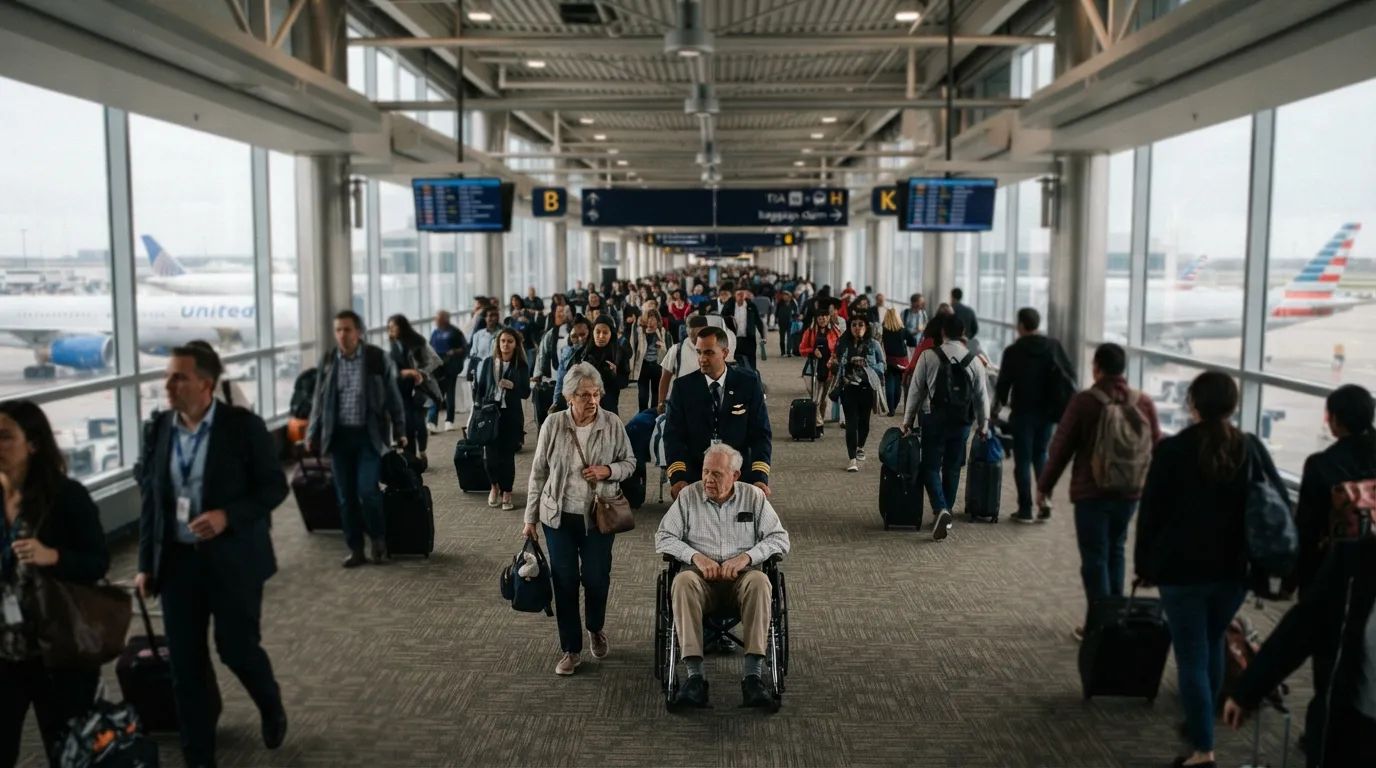
Most people brace for the long walk at O’Hare. The things that actually trip up travelers over 60 are quieter: a terminal number that doesn’t exist, an ID that looks fine but isn’t, and a layover that seems generous until the plane sits on the taxiway. These 12 specifics take real strain out of the trip.
Some are free and sit in plain view at the information desk. Others need a phone call before you leave home, and one involves a $45 charge at the checkpoint. A free train ties the whole airport together, and how much time to allow for it is the last item on the list. First, the terminal map, which has a surprise on it.
#12 – The Terminal Map Skips Number 4
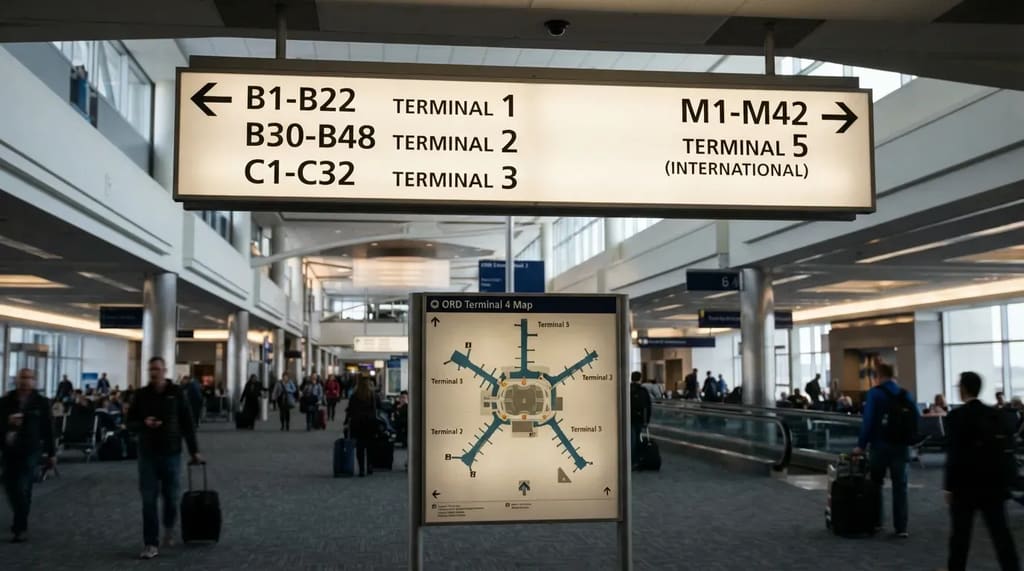
O’Hare has Terminals 1, 2, 3 and 5, and no Terminal 4, so a boarding pass that says 5 is not a misprint. Terminal 5 is the international terminal. Information booths sit on the lower level of Terminals 1, 2 and 3 and on both levels of Terminal 5.1
Terminal 2 matters for another reason: it is the one slated to be replaced. Terminal and gate assignments can shift as construction phases change, so trust your boarding pass, not your memory of the last trip. Check it the night before, because a different terminal changes where you get dropped off and whether you need the free train at all.
Those same information desks hand out a small free item for travelers who may need more time.
#11 – A Green Sunflower Lanyard From the Info Desk
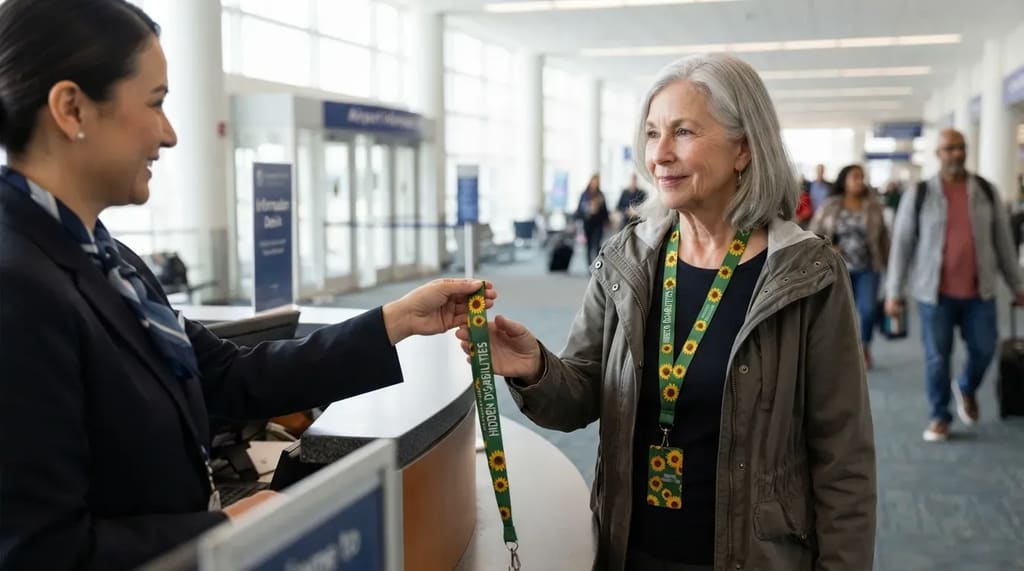
O’Hare takes part in the Hidden Disabilities Sunflower program. Lanyards, bracelets and hats with a sunflower on a green background let people discreetly show that they have a non-visible disability and may need extra assistance, understanding or time. The lanyards are free at the Airport Information Desks.
A non-visible condition might be hearing loss, a heart condition, memory trouble or chronic pain. None of those shows from across a gate area, and staff cannot offer patience for something they cannot see.
At a Glance
- Cost: free
- Where to get it: the Airport Information Desks
- Comes as: a lanyard, bracelet or hat
- What it signals: a non-visible disability and a possible need for extra time
The lanyard does the explaining so you don’t have to repeat yourself at every counter. It is a signal rather than a guarantee, and how an individual agent responds is still up to that agent.
#10 – A Free Train That Runs Around the Clock
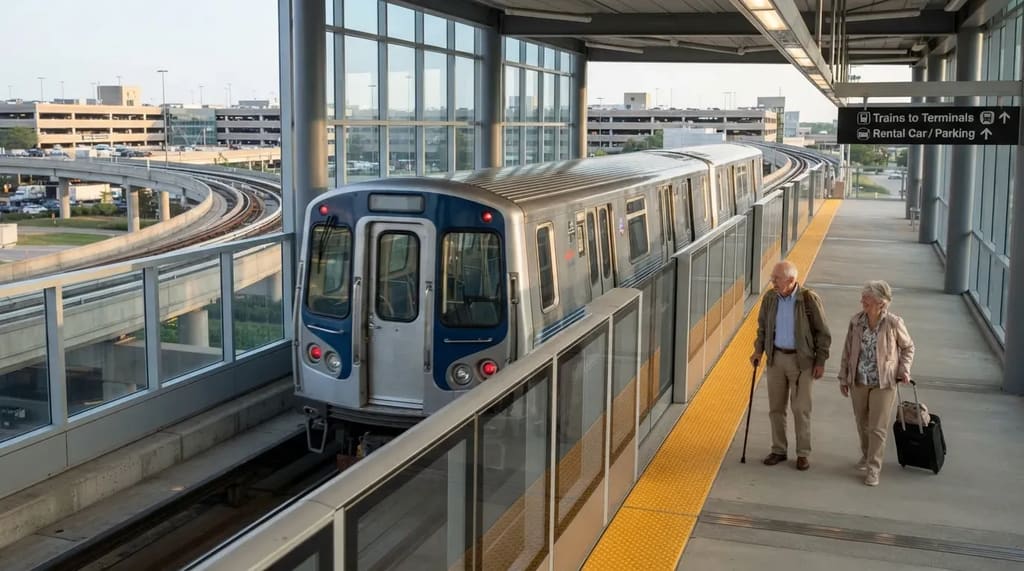
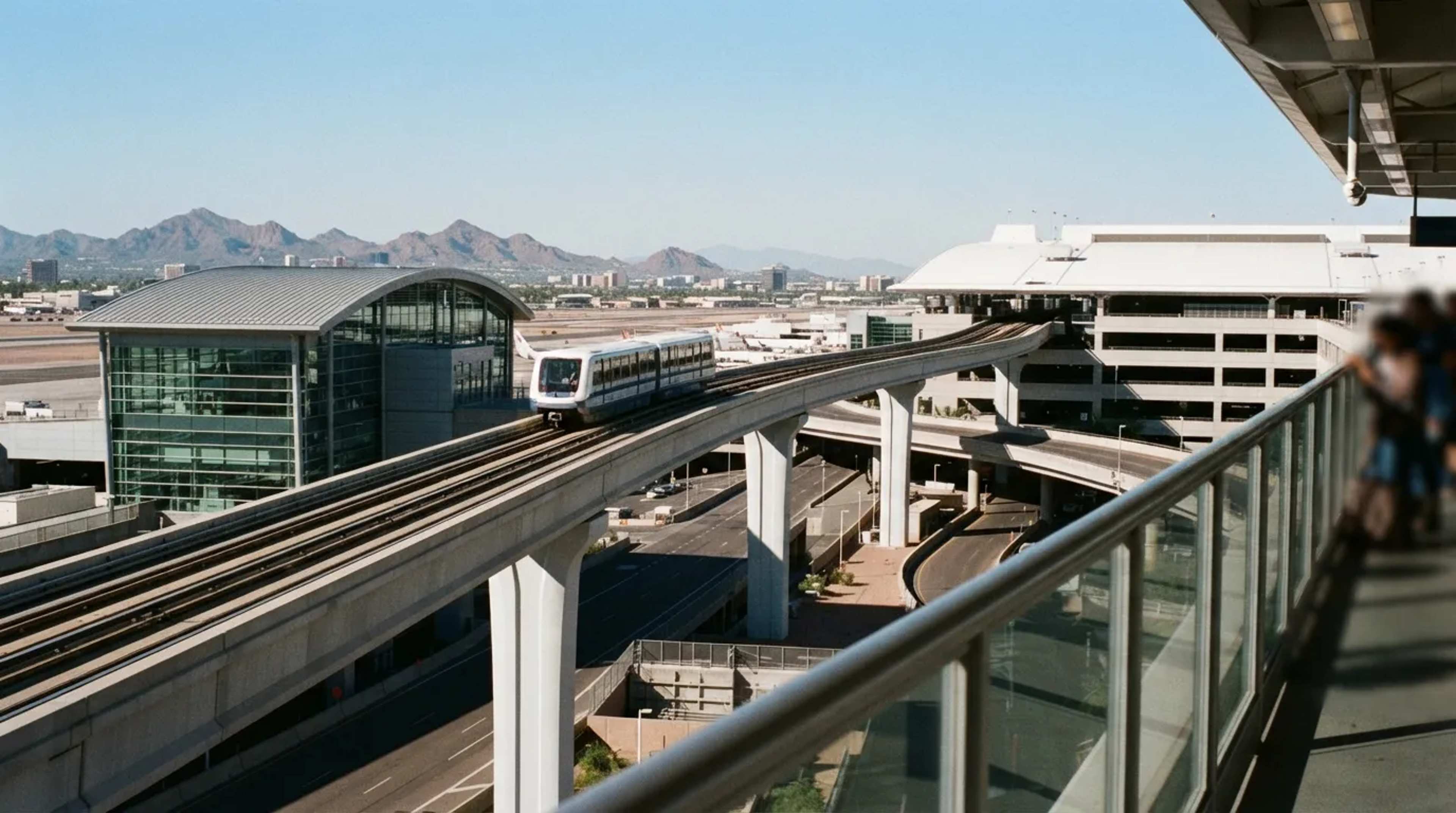
The Airport Transit System is an automated people mover that operates 24 hours a day, seven days a week, and it is free to riders.1 It connects the terminals with parking lots, bus and train connections and the rental car facility. The station platforms and train cars are fully ADA compliant, and there are elevators at each stop.2
One detail matters if you use a wheelchair or scooter: the airport says the new train no longer has designated wheelchair positions.2 If an airline attendant is helping you, ask how they handle the train before you reach the platform. Older travel advice that mentions shuttle buses between terminals dates from the years the train was closed.
Rides inside the airport cost nothing, which makes the fare on the train that leaves it easy to overlook.
#9 – The $5 Fare That Applies Only at O’Hare
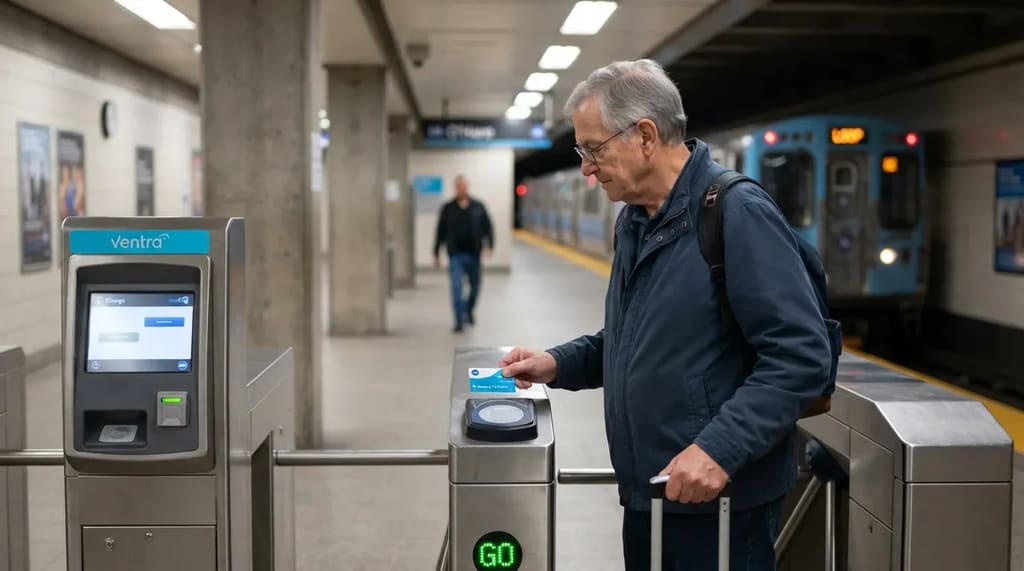
The Blue Line station sits under the parking garage for Terminals 1, 2 and 3, and service runs at all times every day. The ride to the Loop takes about 45 minutes. If you land at Terminal 5, take the free ATS train to Terminal 2 or 3 first, then follow the Blue Line signs down.
A special $5 fare applies when you board at O’Hare paying with transit value or a single-ride ticket. It does not apply when you ride with a pass.3
Seniors 65 and older can ride at reduced fares with an NITA-issued Reduced Fare Permit, and qualifying seniors enrolled in the Illinois Benefit Access Program ride free with a valid permit.3 If you live in the region, the permit paperwork is worth doing once, because it lowers every ride afterward.
A fare discount does nothing at the curb, where a different service covers riders who cannot manage a train at all.
#8 – Kneeling Shuttle Buses and Curbside Paratransit
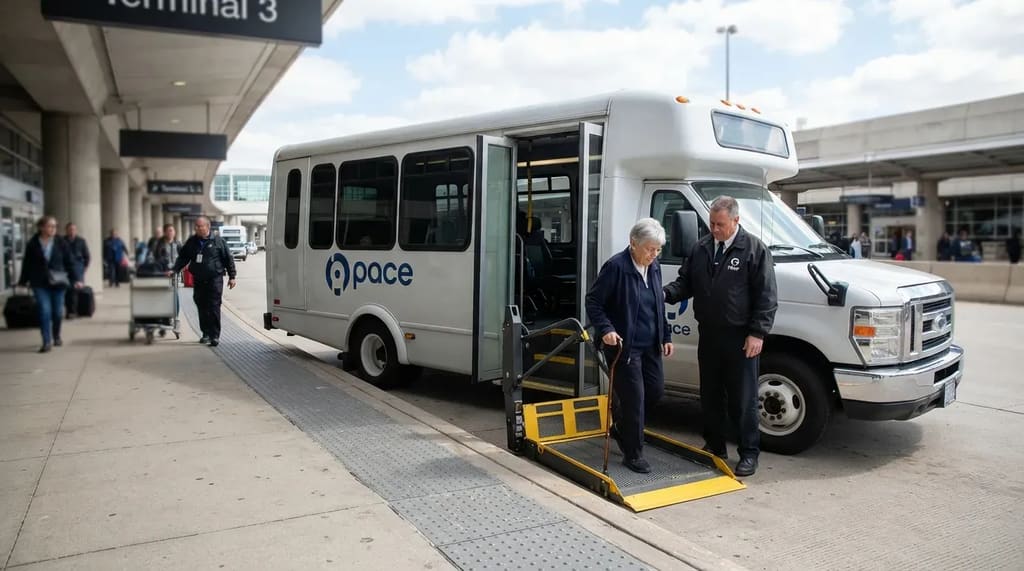
If you park at a remote lot, the shuttle buses kneel when requested and have two wheelchair positions with securing devices.2 Ask the driver rather than wrestling with the step. Parking facilities also set aside spaces for travelers with disabilities next to elevators, ramps and ATS platforms, which shortens the walk before you even reach the terminal.
For riders who cannot use public transit, ADA paratransit service arranged through Pace has curbside access at the terminals.4 Inside, all restrooms have wheelchair-accessible facilities. The airport also lists an adult-sized changing table with a powered ceiling lift that supports up to 330 pounds, which is worth knowing about if you are traveling with a spouse or parent who needs a caregiver’s help.
Quick Compare
- Airport Transit System: free, 24/7, with elevators at each stop
- Blue Line from O’Hare: $5 special fare with transit value or a single-ride ticket
- Remote-lot shuttle: kneels on request, with two wheelchair positions
- Pace ADA paratransit: curbside at the terminals for riders who cannot use public transit
#7 – Wheelchair Help Comes From Your Airline, Not the Airport
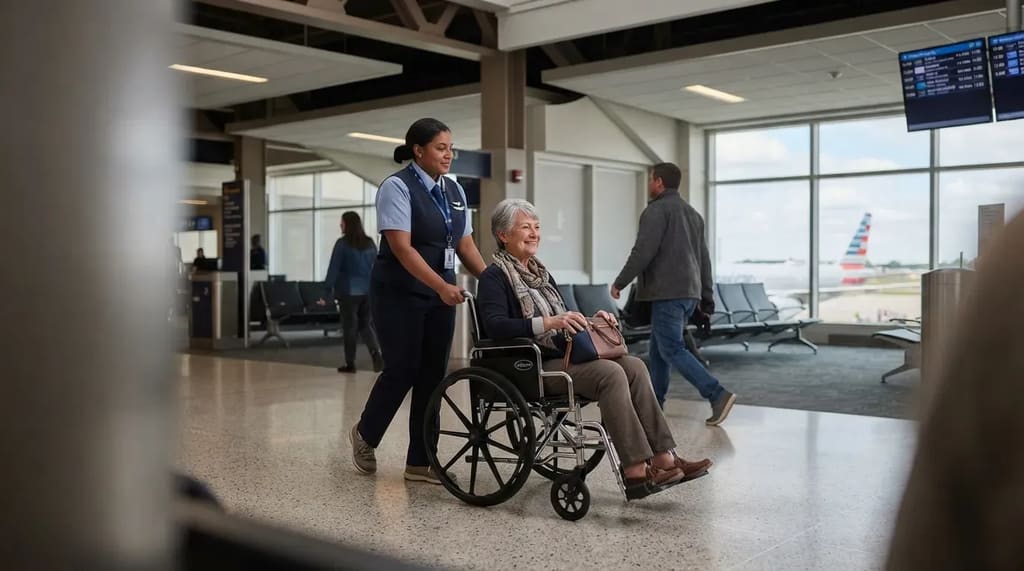
At O’Hare each airline coordinates its own wheelchair assistance. All ADA-related requests, including wheelchair assistance, medical needs and service animal arrangements, must be made directly with your airline.2 The help is free, and it covers getting around the terminal, including travel between terminals on the Airport Transit System. Nobody at the information desk can arrange it for you on the spot.
The airport’s accessibility page says to contact your airline before you travel and add the request to your reservation. Wheelchair help between gates takes time, which is why a tight connection and an assisted connection don’t go together. Request it whenever the distance between gates worries you, because it costs nothing and is far easier to arrange ahead than to hunt for on arrival.
Airlines handle the chair, while the checkpoint has its own contact for screening accommodations.
#6 – A TSA Phone Line That Answers Screening Questions Before You Go
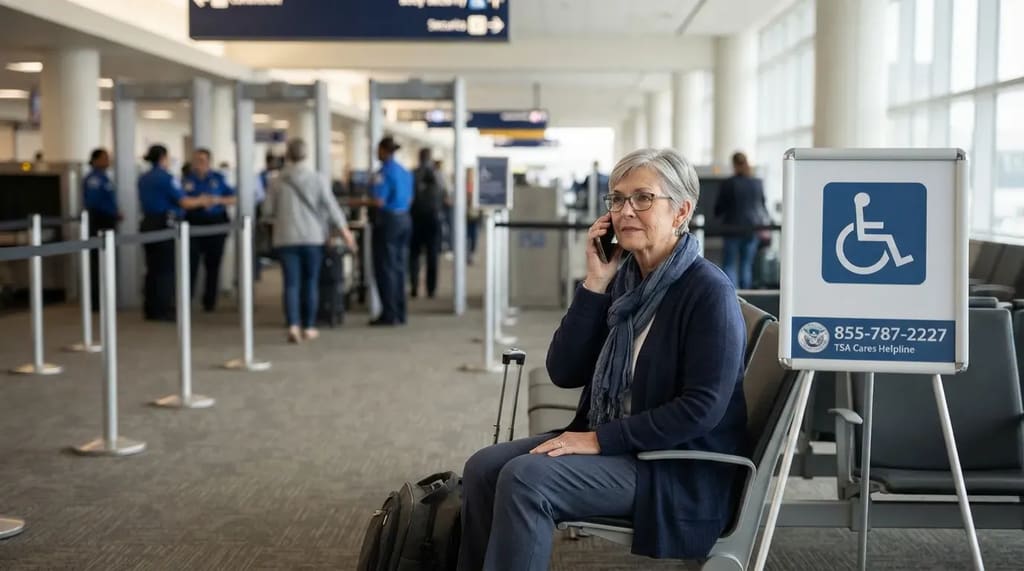
For security screening accommodations, O’Hare’s accessibility page sends travelers to TSA Cares at 855-787-2227. That is the number to call ahead if you have a medical device or a joint replacement that tends to set off the scanner. Hearing the process described by phone beats learning it with a line forming behind you.
At the checkpoint, TSA says you can request to be seated during a pat-down or additional screening. Passengers 75 and older who cannot stand for screening will be screened through other security methods.5 Tell the officer about your limitation before you step up, since it shapes which method they use.
What the checkpoint offers by age is narrower than some online advice suggests, and it starts well after 60.
#5 – TSA’s Age Break Starts at 75, Not 60
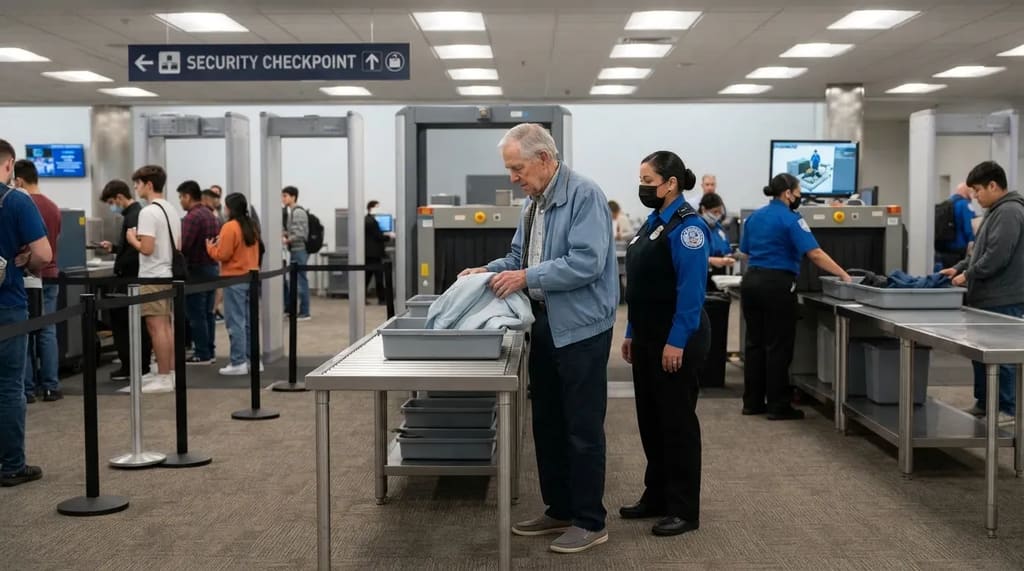
TSA’s page for travelers 75 and older says they can receive some form of expedited screening, while younger travelers go through standard screening. Light jackets still come off for Advanced Imaging Technology screening.5 The shoe part is no longer a special privilege, since AARP reported that everyone can now keep their shoes on after the 2025 rule change.
An alarm can still change things, because you may be required to remove your shoes for further screening or undergo a pat-down. Equipment also varies from airport to airport, so shoes on is the default, not a guarantee. Slip-on shoes make sense at any age, since they cost you nothing if you are asked to take them off.
Whether paid screening is worth buying looks different now that everyone’s shoes stay on.
#4 – PreCheck Has Lost Its Biggest Shoe-Leaving Perk
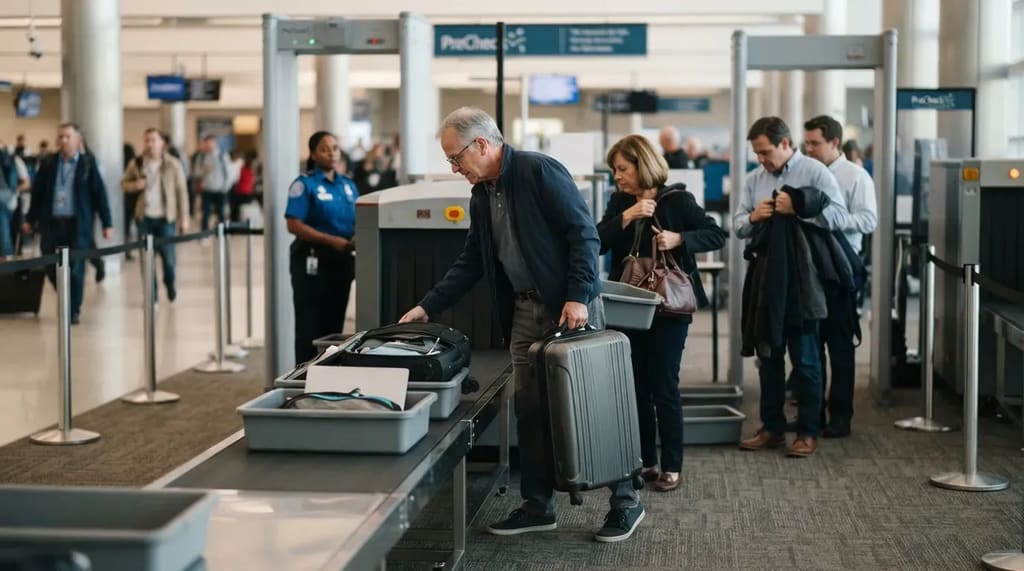
AARP noted that travelers who paid $75 or more for PreCheck mainly to keep their shoes on now need to decide whether the remaining perks are worth the cost. Those perks are keeping belts and jackets on and leaving laptops and liquids in the bag. There is no age limit for applying.
Whether it pays off depends on how often you fly. If you take one trip a year and are between 60 and 74, the remaining perks are modest and the money may be better spent elsewhere. If you fly several times a year, or bending over a bin and unpacking a bag is hard on your back or hands, the membership covers many trips and removes exactly the steps that wear on you.
Worth Knowing
- Price AARP cited: $75 or more
- Perks that remain: belts and jackets stay on, laptops and liquids stay in the bag
- Age limit to apply: none
- Best fit: frequent flyers, or anyone for whom unpacking a bag at the bin is hard on the body
It also makes no difference to the age-75 break described earlier, which works in the regular lane. And no lane helps if the card in your wallet is the wrong kind.
#3 – The $45 Surprise Waiting for a Non-REAL ID License
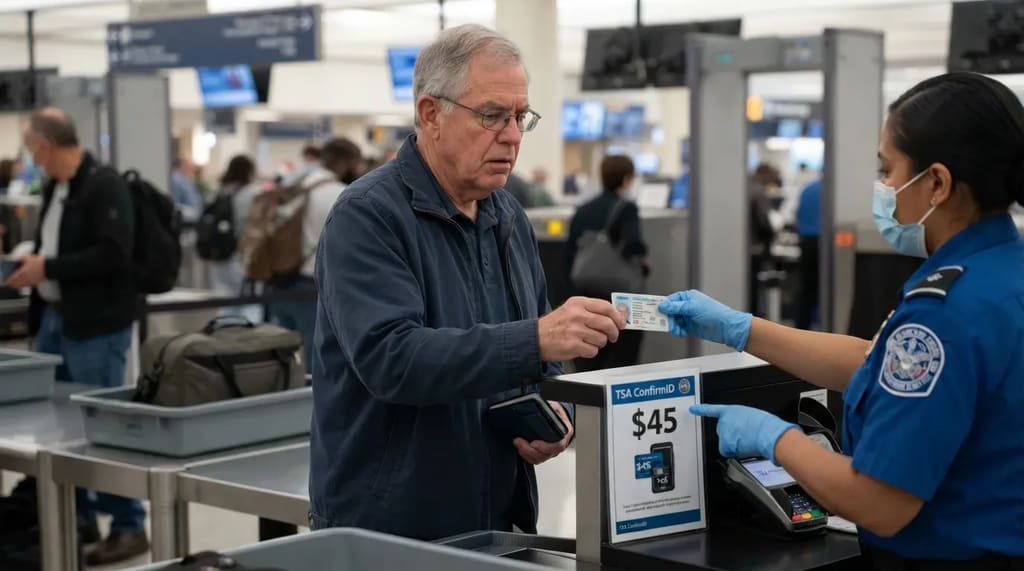
Since May 7, 2025, TSA has required travelers 18 and older to show a REAL ID-compliant card or another TSA-approved ID. Standard state licenses that are not compliant are no longer accepted for domestic air travel. A passport is one of the accepted alternatives, but an old license or an expired ID will not count.
The cost of getting it wrong is concrete. Starting February 1, 2026, travelers without a REAL ID or other acceptable ID can pay $45 to use TSA ConfirmID, with no guarantee of getting through.6 You would find that out at the checkpoint, after the drive, the parking and the bag drop.
Related Stories From Travelbinger



#2 – An Airport Under Construction Until 2034
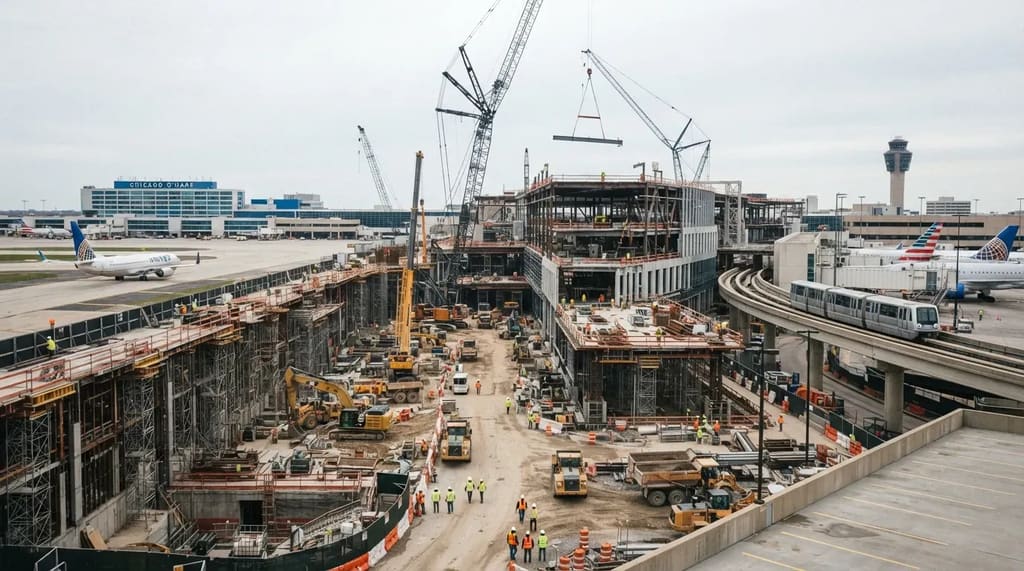
The project called ORDNext is expected to take until 2034.7 It includes a Global Terminal to replace Terminal 2, along with two new concourses. Work has started on Concourse D, which finishes in late 2028. The first phase of Concourse E, with 14 gates, is set to finish in 2030, and the Global Terminal goes up from 2029 to 2033.8
Fast Facts
- Full project: expected to run until 2034
- Concourse D: finishes in late 2028
- Concourse E, first phase: 14 gates, due in 2030
- Global Terminal: built from 2029 to 2033, replacing Terminal 2
- FAA flight caps: in place through fall 2027
The schedule is already pressing on flights. The FAA ordered flight caps through fall 2027 amid concerns about construction-related delays and growth.8 United faces the bigger challenge because it relies more heavily on Terminal 2, which will be demolished. If you fly United through O’Hare, expect more changes than other passengers see.
All of that matters most to your schedule when a connection is tight.
#1 – The Layover That Looks Fine on Paper
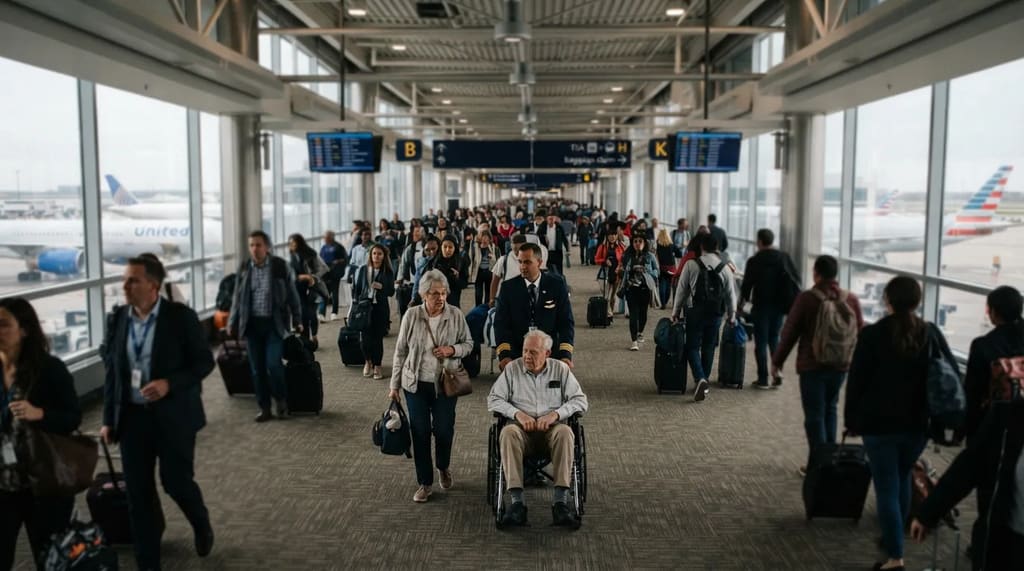
O’Hare can eat your time before you ever reach a terminal. A report covered in the Daily Herald found average outbound taxi times of 28.3 minutes, against 20.8 minutes at 30 other major airports. Inbound taxi times averaged 19.8 minutes, against 10.5 elsewhere.
A plane that lands on time can still reach the gate later than the schedule suggests, and those minutes come straight out of a short layover.
Now add the rest of what you have read here. Moving between terminals means the free train. An attendant pushing a wheelchair between gates takes more time than walking, and the airline arranges that help. Construction, and the FAA flight caps it brought, can slow the day further.
Choose the later connecting flight even if it means an extra hour or two in the terminal. The layover that looks generous on paper is the one that gets used up.
Nearly everything that makes O’Hare easier is arranged ahead of time or built into the schedule, and very little of it can be improvised once you are standing in a terminal. The phone call to the airline, the check of your license and the extra hour before the connection all happen before you leave home.
So skip asking how fast you can get through O’Hare. Ask how much room you have left if one thing goes wrong. At this airport, that room is the real luxury.
- Airport Transit System Overview: https://en.wikipedia.org/wiki/Airport_Transit_System
- O’Hare Terminal Accessibility: https://www.flychicago.com/ohare/ServicesAmenities/accessibility/Pages/Terminal-Accessibility.aspx
- NITA Paying Your Ride: https://nita.illinois.gov/riders/paying-for-your-ride
- Choose Chicago Airport Accessibility: https://www.choosechicago.com/plan-your-trip/accessibility-in-chicago/accessibility-at-chicagos-airports/
- TSA Screening 75 and Older: https://www.tsa.gov/travel/tsa-cares/screening-passengers-75-and-older
- TSA ConfirmID Rollout: https://www.tsa.gov/news/press/releases/2026/02/05/tsa-successfully-rolls-out-tsa-confirmid-0
- CBS Chicago ORDNext Report: https://www.cbsnews.com/chicago/news/chicago-ohare-airport-summer-passenger-record-flight-caps/
- Daily Herald ORDNext Schedule: https://www.dailyherald.com/2026/08/20/city-fast-tracking-ohare-concourse-will-speed-up-global-terminal-megaproject/