One online shop is asking $436.50 for a ceramic cup that once held a restaurant cocktail. It’s a Trader Vic’s tiki mug dated 1963, and it’s proof that what your parents hauled home from road trips, honeymoons and Navy deployments isn’t always junk. Souvenirs like it sit in attic boxes and kitchen drawers all over the country.
Here’s the catch: most of what came home from those trips is still worth a few dollars, and this list says so plainly. But a handful sell for real money when one small detail is right: a stamp, a label, a set that’s still complete. Stay for #1, a satin jacket whose price can leap from a few hundred dollars to several thousand because of what’s stitched into it.
#12 – Highway Postcards of Motels That No Longer Exist
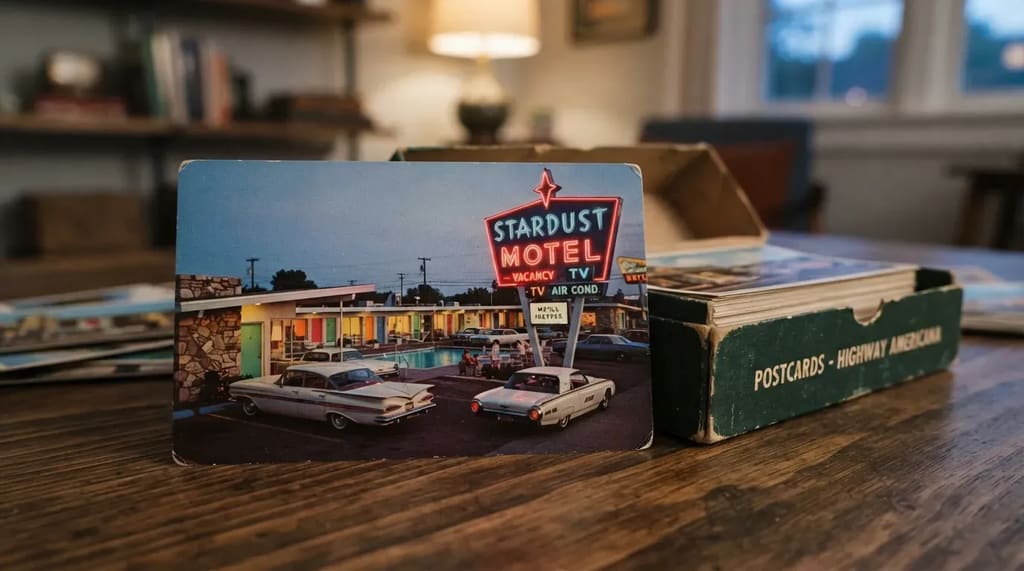
Chrome-era postcards, the glossy color kind racked at 1960s gas stations and motel desks, look like the cheapest thing in any shoebox. A grab bag of unposted 1962 Seattle World’s Fair cards lists on Etsy for under two dollars, so a pretty view of a fountain won’t pay for much.
The value sits in the subject. A card showing a neon motel sign, a drive-in or a diner that was bulldozed decades ago is a photograph nobody can retake, and that’s what a collector is paying for.
Sort your stack by what’s pictured before you do anything else. Roadside businesses with a readable name and a clean front go in one pile, and scenic views and state capitols go in another. Skip paying for an appraisal on postcards. A few minutes comparing sold listings for the same motel will tell you more than a fee would.
At a Glance
- Best bets: neon signs, motels, diners and drive-ins
- Weaker bets: fountains, state capitols and generic scenery
- Check for a readable business name on the front
- Compare sold listings for the exact same place
The next souvenir was small enough to slip into a coat pocket, and what decides its worth is a tiny stamp on the back.
#11 – Souvenir Spoons Where the Silver Stamp Matters
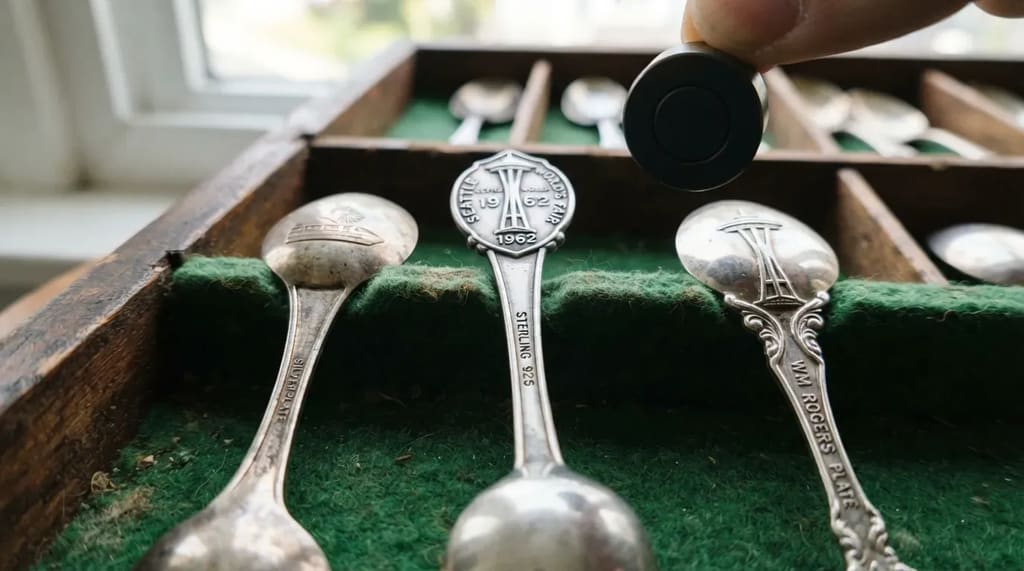
A Space Needle spoon from the 1962 Seattle fair is listed on eBay for $7, and a silver-plated demitasse spoon from the same fair sells on Etsy for about $10. So a spoon with a city crest on the handle is not automatically a prize.
What changes the math is the metal. Spoons stamped Sterling or 925 are at least worth their silver content, while plated ones stay in nostalgia territory.
The blunt truth: a drawer full of plated spoons is a keepsake, not a retirement account. Look for “Sterling” or “925” stamped on the back of the handle, and check the bowl too, since some makers marked it there.
Enameled crests and unusual shapes add interest, but the stamp comes first. The next souvenir held no metal at all, just cardboard discs and a plastic viewer that put vacation spots in 3D.
#10 – View-Master Reels in Their Original Packets
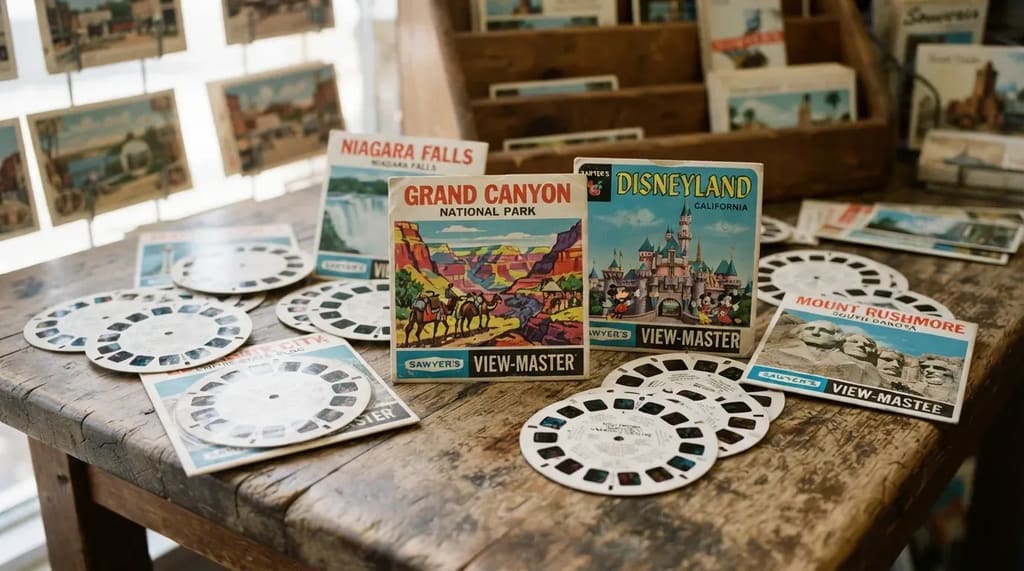
View-Master reels were a travel souvenir long before they were a toy. The format was introduced at the 1939 New York World’s Fair, and by the 1960s the travel reels sat on gift-shop racks next to the postcards.1
They usually came three to a packet with a small booklet, and that packaging is where collectors start looking.
A reel in its original packet with the booklet beats a loose one. Reels of famous landmarks tend to be easy to find, while views of small attractions that have since closed are harder to replace, and that’s where the interest is.
Keep the viewer too, since a working one lets a buyer see what they’re paying for. The next souvenir didn’t need a battery either, but it ticked, and its value starts with the country stamped on the back.
#9 – Cuckoo Clocks Marked West Germany
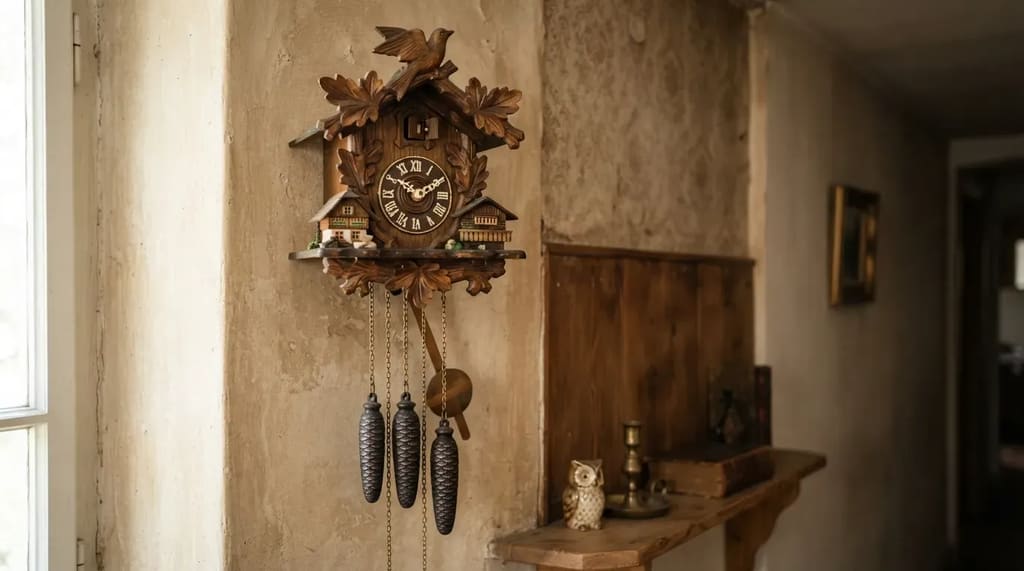
Germany was divided in the 1960s, and that fact helps you date a cuckoo clock. West Germany existed from 1949 to 1990, so a “West Germany” mark places a clock somewhere in that window, and a clock marked that way from a 1960s trip to the Black Forest is a plausible match.
Carved leaves, a little house and a pair of pinecone weights were the standard look, and thousands of travelers hung one in the hallway.
Condition and construction set the price. A mechanical movement with chains, weights and a pendulum is the first thing to check, because later clocks sometimes swapped in battery works.
Quick Compare
- Mechanical clock: chains, hanging weights and a swinging pendulum
- Battery-swapped clock: quartz works inside, often without the pendulum
- The mark: “West Germany” points to a 1949-1990 window
The bird is worked by small bellows inside, so if the call is a weak wheeze, a repair shop can tell you whether it’s a cheap fix. Missing weights or a missing pendulum will cost you at sale, but they are parts, not a death sentence. Another European souvenir came home wrapped in tissue, and the sticker on its base is easy to lose.
#8 – Murano Glass With the Label Still On
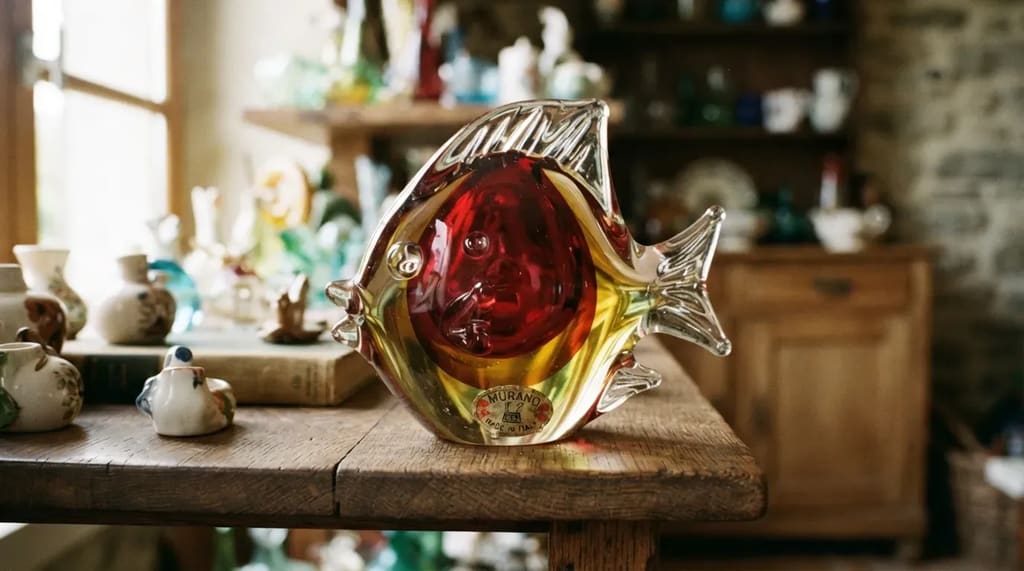
Glassmakers have worked on Murano, an island in the Venetian lagoon, since the late 1200s, and 1960s tourists carried home clowns, fish, ashtrays and bowls from its shops. Plenty of those pieces are decorative and unmarked, so size and color alone won’t carry a price.
What lifts a piece is a signature, or the original paper or foil label that some shops and furnaces stuck on the base.
A small unmarked glass animal is a nice shelf piece, and it won’t change anyone’s budget. A signature or original maker’s label can matter more than the size of the piece.
Look at the base under good light before you wash or scrub anything, since a label can peel right off. After the glass, the next souvenir is paper, a booklet of coupons that was meant to be used up.
#7 – Disneyland Ticket Books Nobody Finished Using
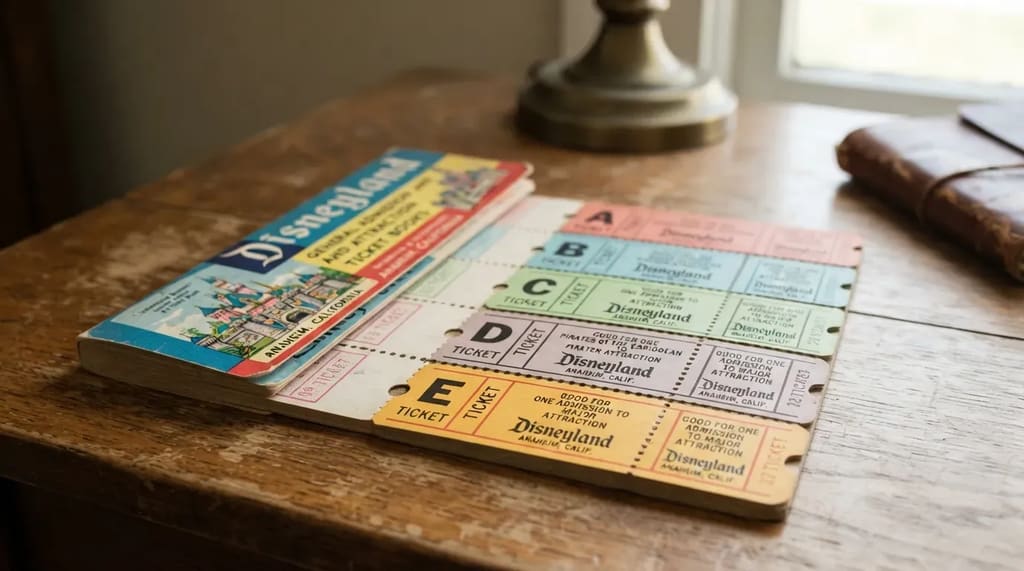
The phrase “E ticket ride” comes from a real coupon. Disneyland sold books of lettered tickets from 1955, added the top-tier E ticket in 1959 for the biggest attractions, and kept the system until it moved to a pay-one-price passport in 1982.2 3
A family could buy a book at the gate, hand over coupons ride by ride, and leave with whatever was left over.
That leftover is the point. Books were designed to be spent, so a book with unspent coupons is scarcer than an empty cover, and it’s the first thing to look for in a drawer of old park papers.
An empty cover is a fine keepsake, just not an investment. Store anything you find flat and out of sunlight, because the paper is the whole value.
Fast Facts
- Ticket books went on sale at the park starting in 1955
- The E ticket arrived in 1959 for the headline attractions
- The system ended in 1982 with the pay-one-price passport
- Unspent coupons are the scarce part, not the cover
The next souvenir comes from a fair that lasted only six months, and its prices run from a few dollars to over $200.
#6 – Seattle World’s Fair Plates and a $200 Decanter
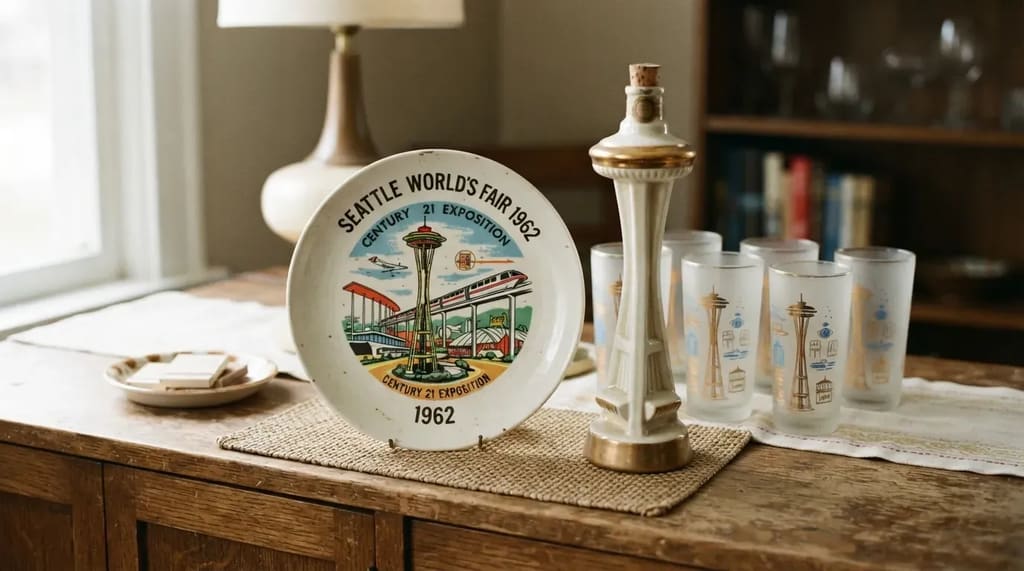
The Seattle fair ran from April 21 to October 21, 1962, and the souvenirs that survived it now list for anything from a few dollars to a couple hundred.4 A basic Space Needle plate shows up on eBay at $6.29, while a Jim Beam commemorative decanter from the fair is listed for $201.25. A set of seven frosted Libbey glasses lists for $89.72.
Department-store exclusives and boxed sets sit at the top. One dealer lists an 11-inch plate made exclusively for Frederick & Nelson at $45, against $16 for a plain 5-inch Space Needle plate on Etsy. Sets and store exclusives list at several times the price of a plain plate.
These are asking prices, so check sold listings before you count on them. Two years later New York staged its own fair, and its best-priced souvenirs weren’t the china.
#5 – New York World’s Fair Paper That Outsells Plates
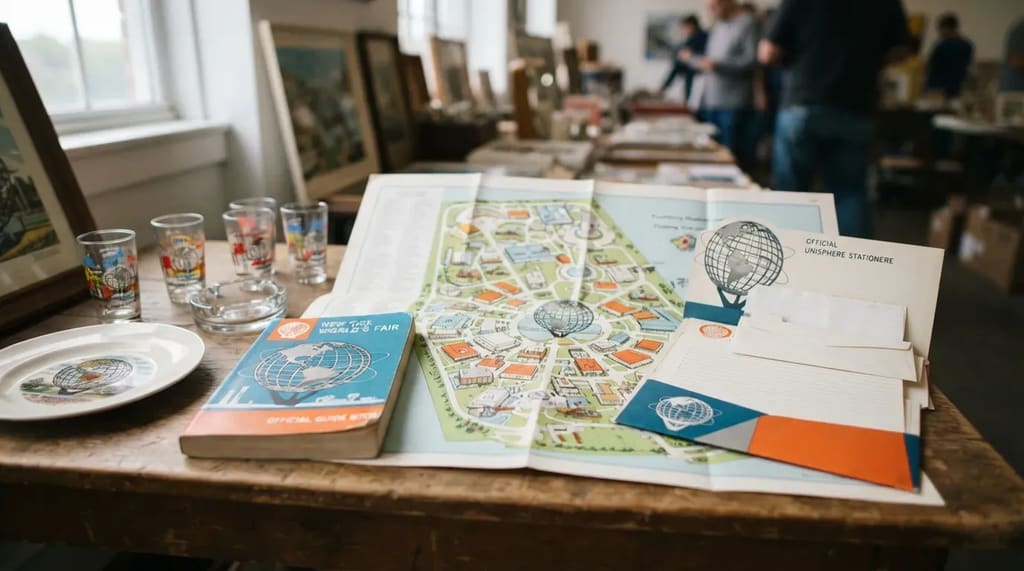
A 1964-65 Unisphere souvenir plate lists on Etsy for $8. An original poster-sized map with the official guide book is listed at $250, and an original Unisphere stationery folder is listed at the same price.
Plates and ashtrays were made in huge numbers for a fair that drew crowds across two seasons, which is why they stay cheap.
The paper is the prize. Ashtrays and plates are the filler of this fair, while the guide book with its poster map lists around $250. Complete sets also hold up better than single pieces, with a set of eight souvenir glasses listed at $144, so don’t break a set apart.
Like the Seattle prices, these are asking figures, and a few of them will sell for less. The next souvenir was sold at a roadside stand and cost a few dollars, and the price now depends on whether a hallmark is stamped inside.
#4 – Roadside Turquoise Jewelry With a Maker’s Stamp
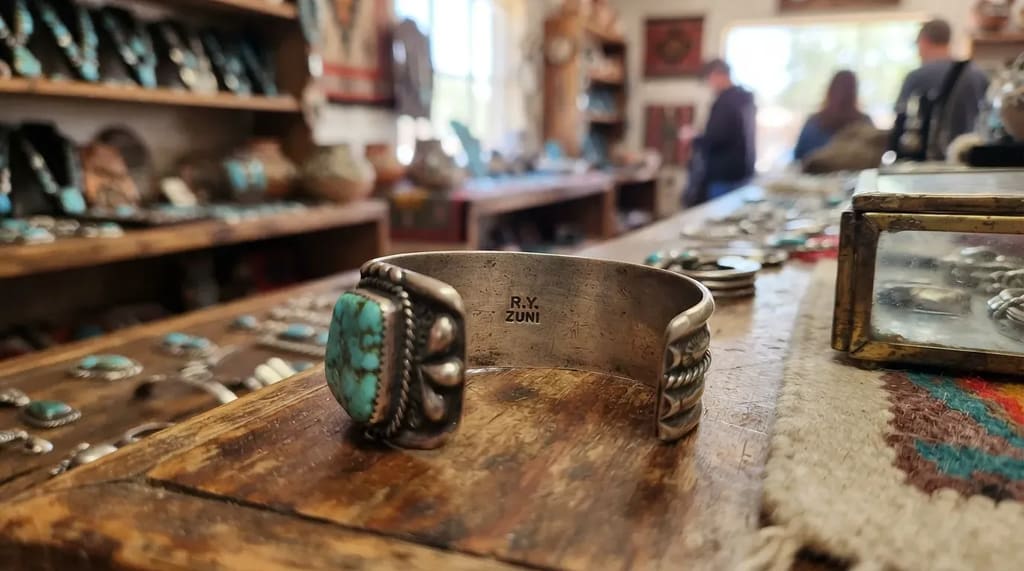
Trading posts and roadside stands across the Southwest sold turquoise and silver jewelry to motorists in the 1960s. Some of it was handmade by individual Native artists, and some was stamped out in quantity for the tourist trade.
The two can look alike across a glass counter and trade very differently now. Weight, hand-finished details and the quality of the stone all matter.
Turn the piece over and look for a maker’s stamp or initials. Under the Indian Arts and Crafts Act of 1990, anyone selling a piece today as Native American-made has to be telling the truth about it, so ask a seller who made it and how they know.5
That question protects you whether you’re buying or selling.
Why It Stands Out
- Handmade pieces show hand-finished details, not identical repeats
- Stamped tourist pieces were made in quantity and tend to look uniform
- A maker’s stamp or initials gives a buyer something to research
- Stone quality and silver weight still count, hallmark or not
The next souvenir was a cocktail mug, and the same design can list for $15 or $400.
#3 – The Trader Vic’s Tiki Mug Listed at $436
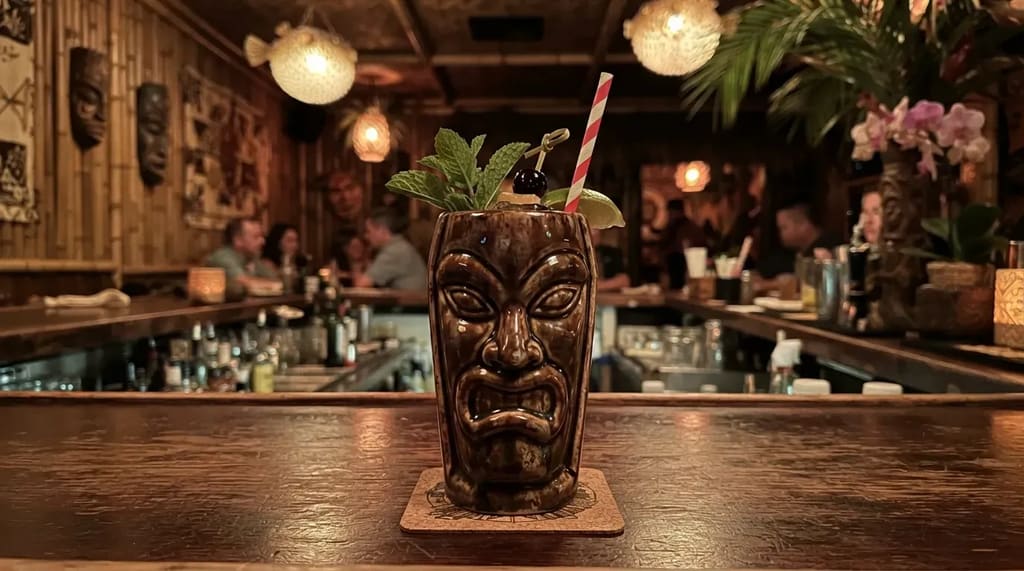
Current listings for 1960s tiki mugs cover a wide range. A black Trader Vic’s coffee grog mug from 1963 sat at $15.50 on an eBay bid, a first-edition Honi Honi is listed at $150, and a set of four 1963 mugs sold for $265.
Stephen Crane’s Kon-Tiki mugs, made for Sheraton hotel restaurants, list around $52 on Etsy. And then there’s the shop that wants $436.50 for a “rare” 1963 mug.
Current listings for 1960s Trader Vic’s mugs run from about $15 to over $400. That spread matters because Trader Vic’s mugs are still being made, and one Etsy listing is a 2019 edition.
Turn the mug over and check the mark and the date. The next souvenir came from south of the border, and a maker’s name is what turns a bracelet into a collectible.
#2 – Taxco Silver Bracelets Signed by the Workshop
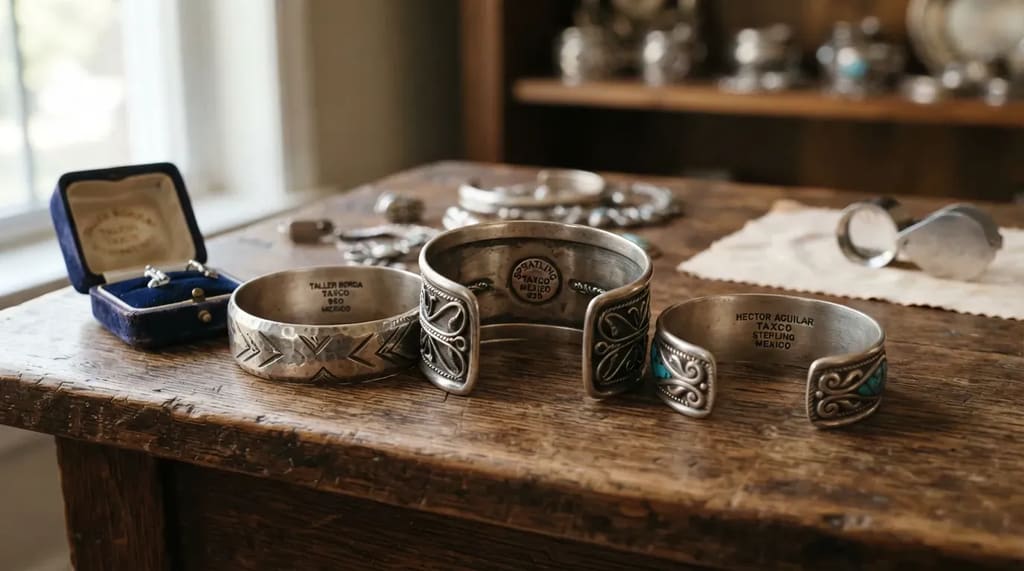
Taxco, a silver town in the Mexican state of Guerrero, was a standard stop for American tourists in the 1960s. The American William Spratling opened a workshop there in the early 1930s, trained local silversmiths, and helped turn the town into a center of modern silver design.6
Visitors came home with bracelets, brooches and earrings, usually in a small box and usually still stored in one.
Pieces from named workshops and designers draw collectors, while unsigned souvenir pieces depend more on their silver. Look for a maker’s mark beside “Mexico” and “925.”
That’s the same 925 stamp you checked on the spoons in #11, which means you can sort a jewelry box and a silverware drawer in one sitting. For anything you think might be significant, a local appraiser can confirm what a listing can’t. The top spot isn’t silver at all, and the gap between versions of it is the widest on this list.
#1 – The Satin Jacket Sold Outside a Navy Base
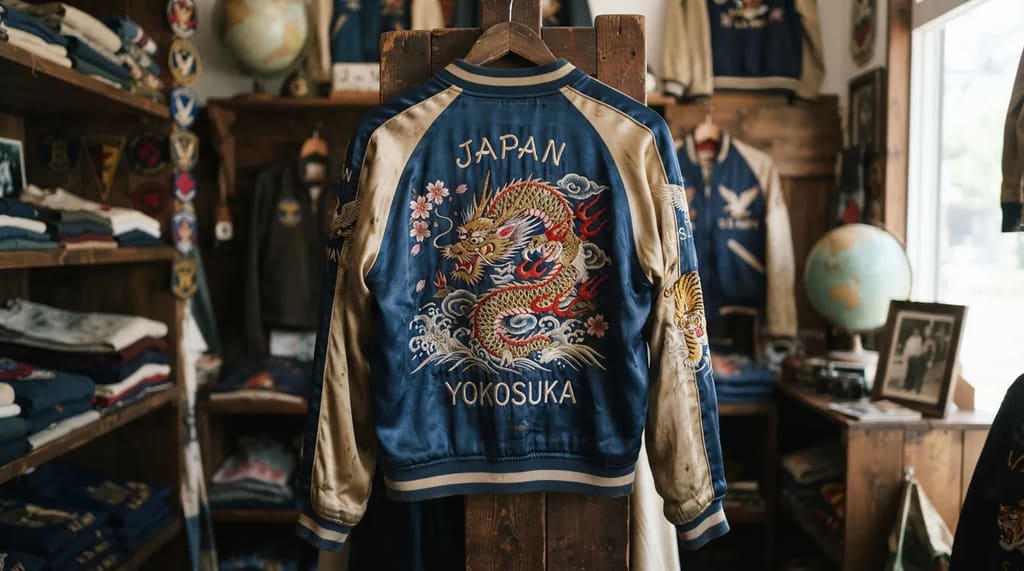
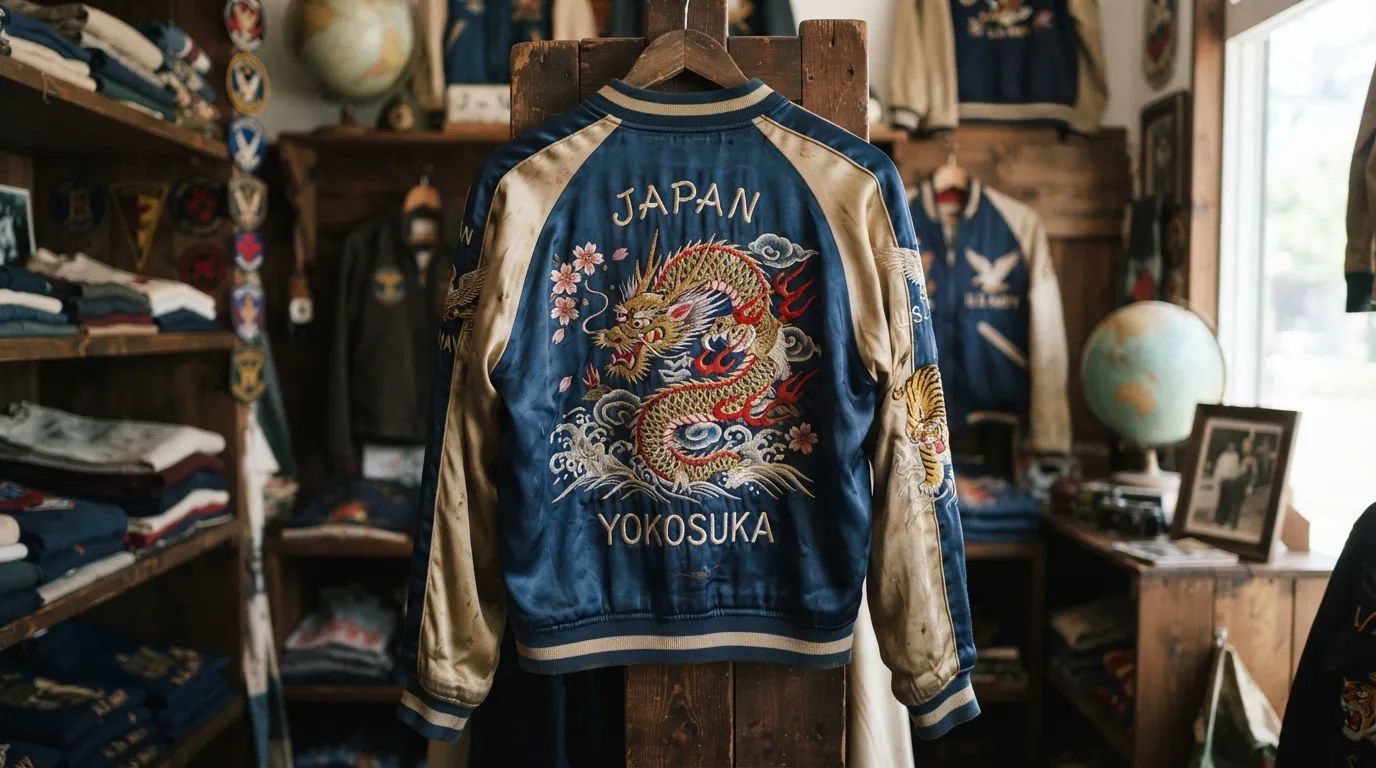
After World War II, tailors around the U.S. Navy base at Yokosuka, Japan, began embroidering satin jackets with dragons, tigers and eagles for American servicemen. When the servicemen returned home, they brought the jackets with them, and the style spread across the U.S. These are called sukajan.7
One seller says original 1950s jackets reach several thousand dollars at auction, and a Japanese-jacket specialist adds that the 1950s and ’60s examples are especially admired by collectors.
The detail that matters is the one stitched into the design. An embroidered base name and service dates can matter more than condition. The same seller says a jacket worn hard for thirty years by its first owner can be worth more than a pristine one with no history, because the wear is the evidence.
It’s the same lesson as the 1963 date on the tiki mug in #3: the souvenir is worth what its details can prove. If you’re holding a jacket you believe is an original, ask an appraiser before you wash it, repair it or sell it.
Look at the pattern across these twelve. The dollar signs rarely sit on the front of the souvenir. They’re on the back of a handle, the bottom of a mug, a paper sticker, a coupon nobody spent, a name stitched into satin.
A shoebox of 1960s trip keepsakes deserves a slow evening with a flashlight before it goes to a donation bin.
Which souvenir from a trip in the 1960s or ’70s is still in your house, and what’s stamped or printed on the bottom of it?
- Museum of Play View-Master: https://www.museumofplay.org/toys/view-master/
- D23 Ticket Books: https://d23.com/a-to-z/ticket-books/
- D23 E Ticket: https://d23.com/a-to-z/e-ticket/
- Seattle City Archives World’s Fair: https://www.seattle.gov/city-archives/exhibits-and-education/digital-document-libraries/century-21-worlds-fair
- Interior Indian Arts & Crafts: https://www.doi.gov/ocl/indian-arts-crafts-0
- Museum of Mexican Silver: https://museumofmexicansilver.com/
- Stars and Stripes Sukajan: https://www.stripes.com/living/pacific_travel/quick_trips/2022-12-08/sukajan-yokosuka-museum-exhibit-jackets-8318433.html