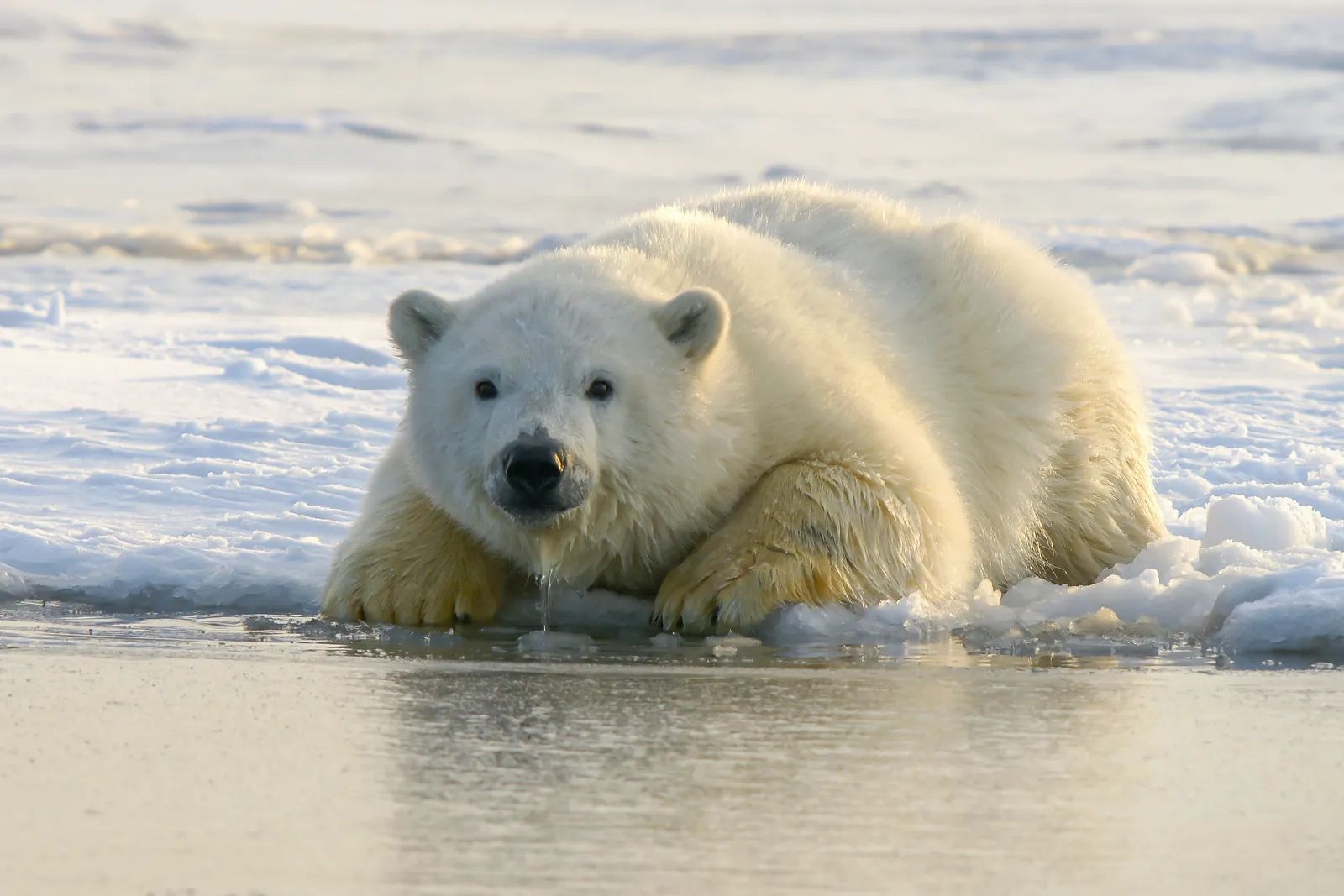
Alaska – As sea ice retreats across the Arctic, ([1])polar bears are spending more of the summer on land, where natural meals are harder to find. New research presented at The Wildlife Society’s annual conference suggests that the remains of Indigenous whale harvests may help some bears get through that lean stretch. The findings focus on Alaska’s northern coast, where scientists have been measuring how much energy bears actually gain from these leftovers.
A meal left on the beach
Each September, Iñupiat hunters from Kaktovik, a village on Barter Island, harvest bowhead whales from the icy waters of the Arctic. Once a whale is brought ashore, cutting up the meat, blubber and other materials becomes a shared community task. Whatever the community does not take for subsistence is left behind in bone piles.
Hunters have also built safeguards into the process. Crews toss large chunks of blubber about 100 yards from the work area, which keeps polar bears busy while people continue their work. Seabirds feed at the piles too, so the bones draw more than one kind of wildlife.
Why the piles matter more each summer
Climate change is pushing bears onto land for longer periods, and that shift is bringing them into closer contact with whaling. Karyn Rode, a research wildlife biologist with the U.S. Geological Survey’s Alaska Science Center, said the number of bears summering onshore in Alaska and the time they spend there have both grown. Researchers estimate that about 30% of the population now spends roughly 60 days on land each summer. An earlier study found that more than 70% of bears on land in one summer visited at least one bone pile.
That overlap carries risk as well as benefit. Bone piles can draw bears away from nearby villages, yet they also bring animals closer to people. The research team wanted to know how much energy the bears were gaining from these remains, and whether those extra calories could help them survive summers without sea ice.
What the tracking data showed
The team followed 25 bears using GPS data collected between 2008 and 2023. Researchers also observed the animals at bone piles, measuring their bite rates, the parts of the whale they ate and how long they stayed. Trials with polar bears in zoos helped estimate how much a bear could eat in a given period, and those results were used to calculate energy intake at the piles.
The nutritional picture was encouraging. Researchers estimate each bone pile offers around 30,000 pounds of food, and the food bears ate from whale carcasses was similar in nutritional value to the seals they typically hunt on sea ice. Atwood said some piles contained up to 70% blubber, a detail that surprised the team. The researchers concluded that the piles could sustain around 200 bears, with most of those animals gaining weight.
Benefits, limits and open questions
The picture is not simple. Over part of the 15 year study period, the bear population declined, and Atwood said that drop may have been linked to poorer body condition in ringed seals, the bears’ main prey. Sightings near Kaktovik and a nearby industrial area also shifted through the year. Researchers reported that sightings in the village and industrial area were roughly twice as frequent two to three weeks before whale remains became available as they were four weeks after the harvest.
The table below separates what the study found from the limits that still apply.
Related Stories From Travelbinger

| Finding | Limitation or open question |
|---|---|
| The piles could support around 200 bears, and most gained weight | The estimate rests on 25 tracked bears and zoo-based feeding trials |
| The bear population declined during part of the study | A link to lower body condition in ringed seals may explain the drop, but the cause is not confirmed |
| The piles kept bears in one area for a time | Bears returned once the food ran out, and the team suggested spreading remains more evenly over time |
A measured takeaway for the Arctic coast
The research suggests that whale harvest remains can provide real nutrition for polar bears during sea ice-free months, but they do not solve the broader problem. Atwood said the bone piles worked well for keeping bears in one area, though only temporarily. “Once they ran out of the bone pile, bears made their way back,” he said.
What matters now: Bone piles from bowhead harvests can supply a meaningful share of summer food for bears on land, yet the benefit depends on timing, the health of seal populations and how remains are distributed. The science is still developing, and the researchers have not established how these patterns will hold as the Arctic continues to warm.