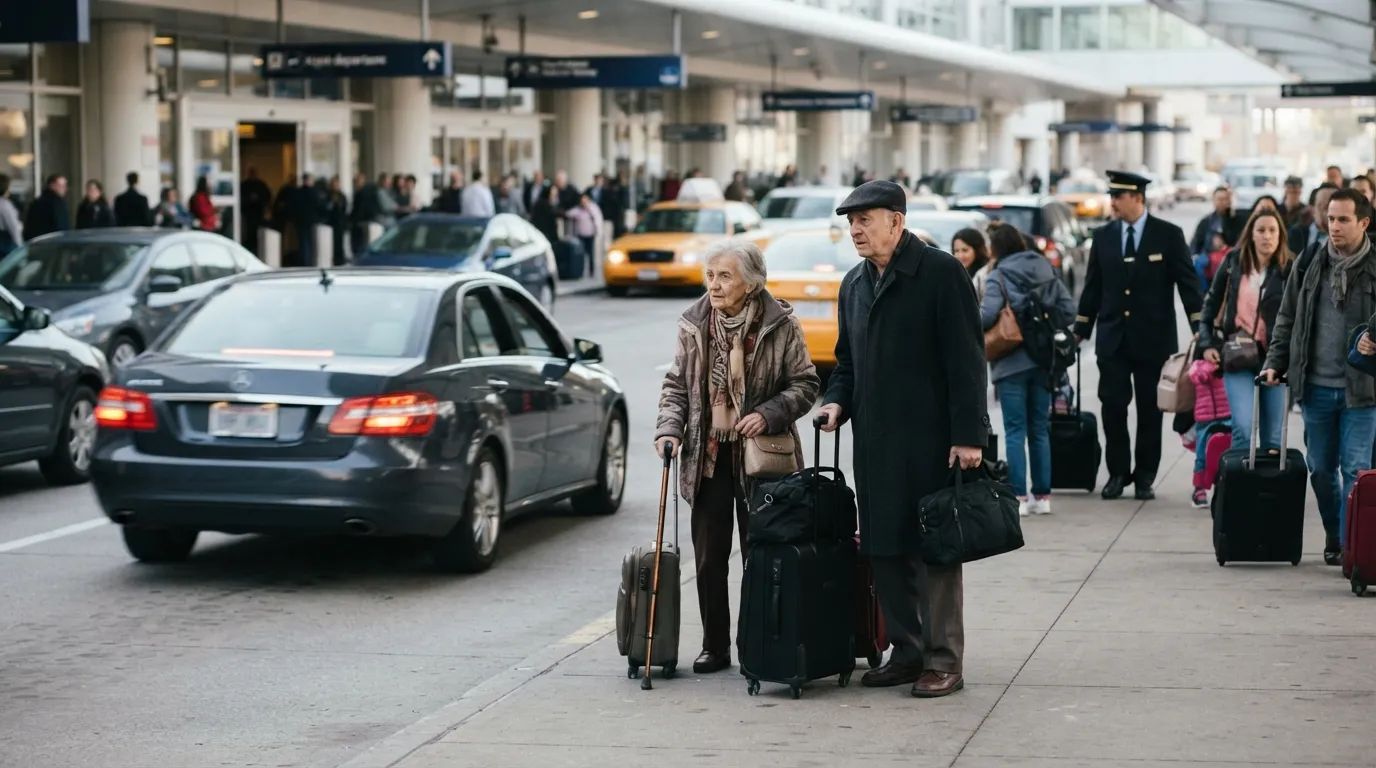
The drive feels like the easy part of a holiday flight. Then a grandparent ends up alone at a curb with a rolling bag, a license that doesn’t pass, or a wheelchair request nobody confirmed. TSA expects to screen about 17.6 million air travelers between Nov. 24 and Nov. 30, with more than 3 million of them on Sunday, Nov. 29 alone1, and plenty of those travelers ride to the terminal with a son, daughter or grandchild. That short ride is where a holiday trip can go wrong, with a tow, a $45 fee or a missed boarding call.
The nine mistakes below run from small slip-ups to one that can leave a grandparent stranded in a busy terminal. Almost all of them look harmless from the driver’s seat. Stay for #1. It’s the costliest on the list, and it takes less time to fix than a goodbye hug.
#9 – Holiday Crowds That Break a Normal Departure Time
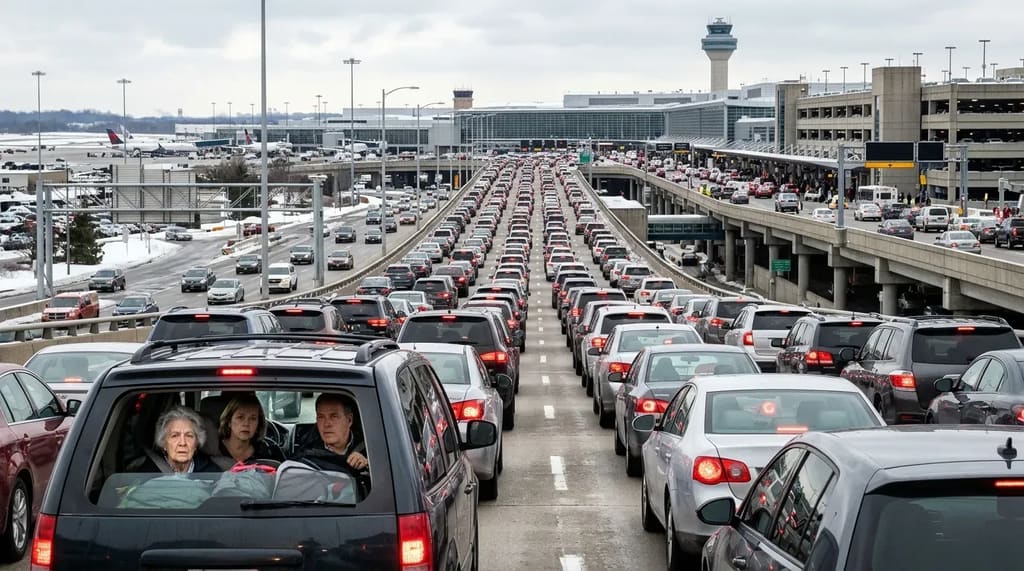
The FAA expects the heaviest holiday air traffic in 16 years, with more than 417,000 flights scheduled over nine days.2 All of those passengers have to pass through the same terminal roads, curbs and security lines. A 35-minute drive on an ordinary Tuesday can stretch well past an hour when the airport approach backs up. Families who leave at the usual time often arrive with the check-in cushion already gone.
Road timing matters as much as flight timing. The Wednesday before Thanksgiving is routinely one of the busiest travel days of the year, and the Sunday afterward is the big return crunch. Add a full hour to your usual leave-by time, and check the flight status before you start the car. A delay you learn about in the driveway costs far less than one you learn about at the curb. The hour you don’t need costs a cup of coffee. The hour you do need can cost a flight.
Leaving on time only helps if you pull up to the right door, and at a big airport the right door for your grandparents’ airline may be far from the one you’d guess.
#8 – A Terminal Door That Isn’t Your Airline’s
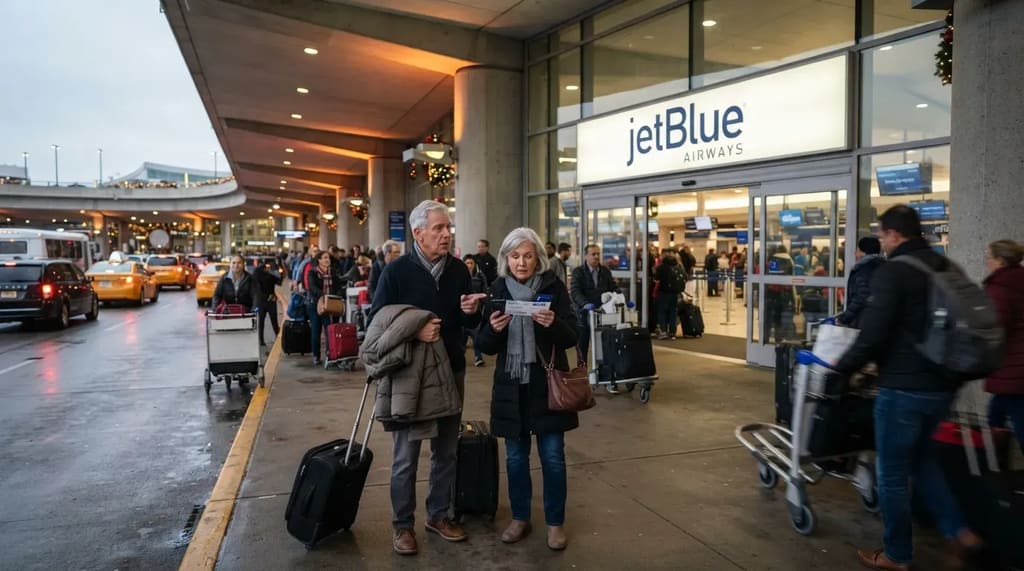
Pulling up to the wrong terminal can turn a two-minute drop-off into a long, tiring walk with a rolling bag. Airlines are assigned to particular terminals, and larger airports can have several, so the airport’s name on the ticket doesn’t tell you where to stop. A flight sold by one airline and flown by a partner can leave from the partner’s terminal. On a trip with a connection, only the first flight’s airline matters for the drive.
Once you know the terminal, learn the level too. At Broward County’s airport, drop-offs go to the upper-level departures curb at every terminal,3 and many large airports follow the same two-level pattern. Confirm the terminal the night before, using the airline’s app or the airport’s website. Then text the terminal, the airline name and the door number to your grandparent’s phone, so there’s something to read besides what you said in the car.
At a Glance
- Terminal: set by the airline that operates the first flight, not by the airport name.
- Partner flights: check whether the operating airline uses a different terminal.
- Level: departures are often upper level, so follow the signs early.
- Text it: terminal, airline name and door number, sent the night before.
Even at the right door, the clock is short, because airport curbs are built for active loading and the rules on goodbyes are stricter than most families expect.
#7 – Parking at the Curb for One More Hug
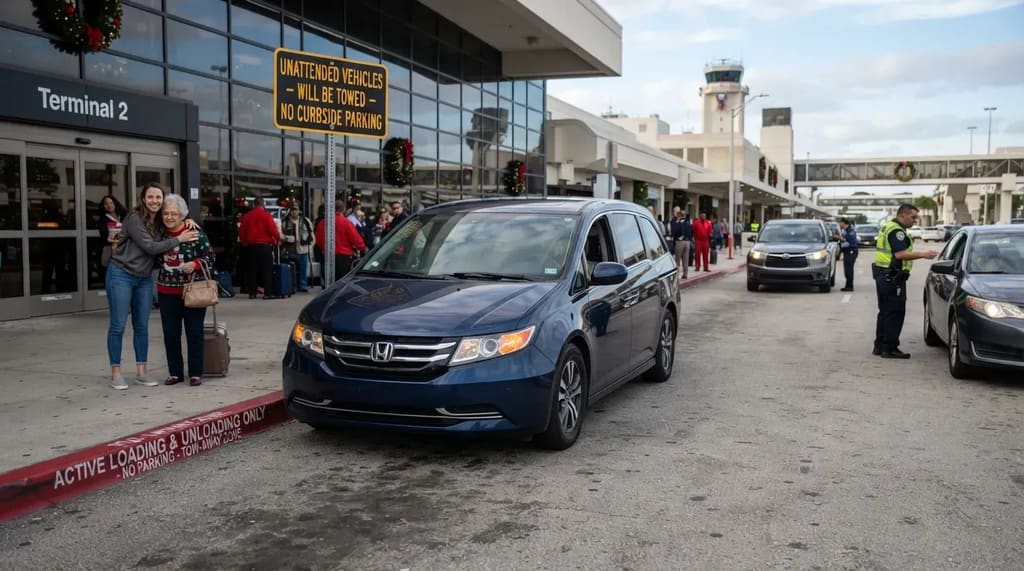
A car left at the departures curb can be towed while its driver is inside saying goodbye. Broward County, which runs Fort Lauderdale-Hollywood International, says leaving a vehicle unattended at the curb is strictly prohibited and that the car will be towed.3 Its curbside areas are for active loading and unloading only, and unattended vehicles are subject to tickets or fines.3 Gainesville Regional Airport likewise requires passengers to be actively loading or unloading.
The curb hug is worth skipping if your grandparent needs any help at all. Gainesville’s own guidance is to drop off the passenger and bags, then park in the short-term lot if you plan to stay until the plane leaves. A short-term parking fee is almost always cheaper than a tow and a ticket. Park, and walk your grandparent to the counter. That way you aren’t watching the curb for an officer while you say goodbye.
Whatever goes into the trunk, one small bag has to stay out of it, because a checked suitcase can land in a different city than its owner.
#6 – Grandpa’s Daily Pills in the Checked Bag
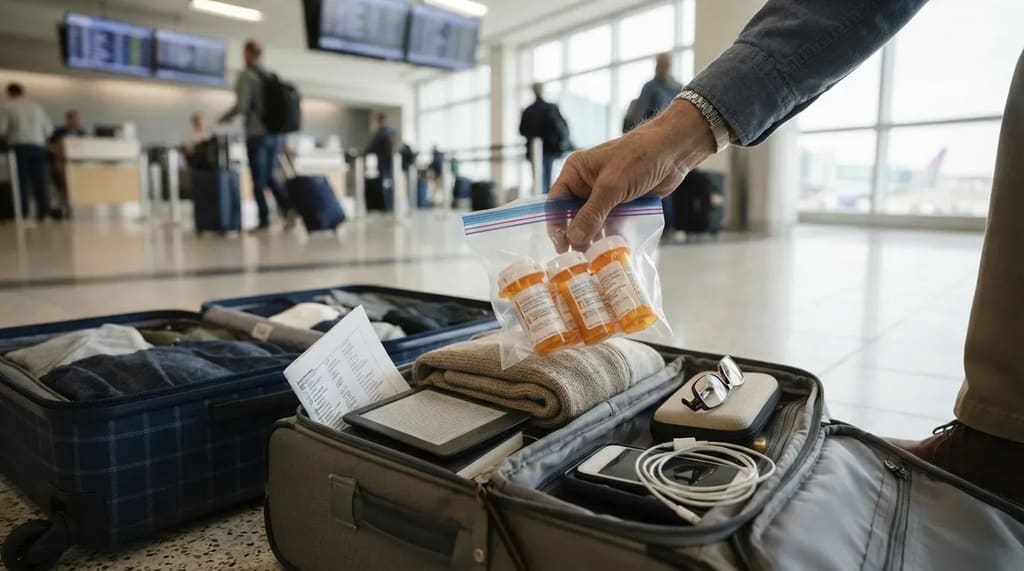
A suitcase can arrive a day late, and anything essential inside it arrives a day late too. Prescriptions, glasses, hearing-aid batteries and a phone charger belong in the carry-on that stays with your grandparent. Keep pills in their labeled pharmacy bottles. Pack enough for a couple of extra days, in case a storm or a delay stretches the trip.
TSA’s liquids limit has an exception for medically necessary liquids, so pull them out and mention them to the officer at the start of screening. A printed medication list with the doctor’s phone number, tucked into the same bag, helps if a medical question comes up mid-trip. Do all of this the night before, so the extra hour you built in goes to traffic and not to repacking in the driveway. Medications, glasses and chargers ride in the carry-on, never the checked bag.
Worth Knowing
- Pills stay in labeled pharmacy bottles, not loose in a pillbox.
- Medically necessary liquids get an exception to the liquids limit. Mention them at the start of screening.
- Glasses, hearing-aid batteries and a charger go in the same carry-on.
- A printed medication list with the doctor’s number rides along too.
- Pack a couple of extra days of doses in case the trip runs long.
Everything else in the trunk has to be lifted out of it, and the person reaching for the handle is often the one who shouldn’t.
#5 – A Suitcase Grandma Shouldn’t Be Lifting
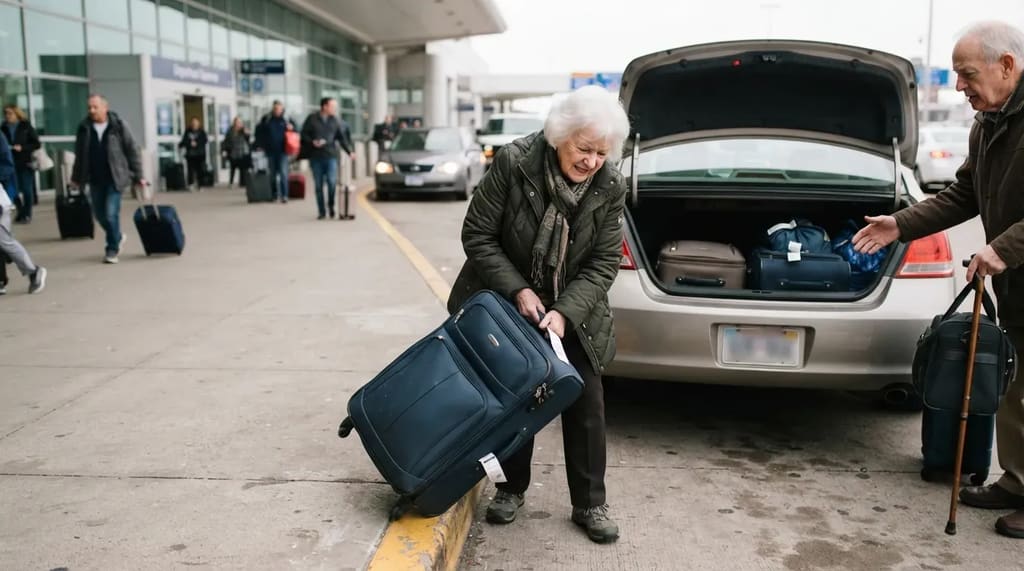
Holiday suitcases run heavier than vacation suitcases, because they’re stuffed with gifts. Domestic checked-bag weight limits at the large airlines commonly sit at 50 pounds, so a bag packed with presents for the grandkids can draw an overweight fee at the counter. Then comes the lifting: out of the trunk, onto the curb, onto the scale, off the scale. A proud grandparent will often reach for the handle first.
Weigh the bag at home. Step on a bathroom scale holding it, then subtract your own weight. Better still, ship the gifts ahead or carry them in your own luggage. At many airports, skycaps will take bags at the curb for a tip, and a full bag drop takes longer than a curb stop allows, which is one more reason to park. Weigh the suitcase at home, on a bathroom scale, before it goes in the car.
#4 – The Free Wheelchair Grandma Insists She Doesn’t Need
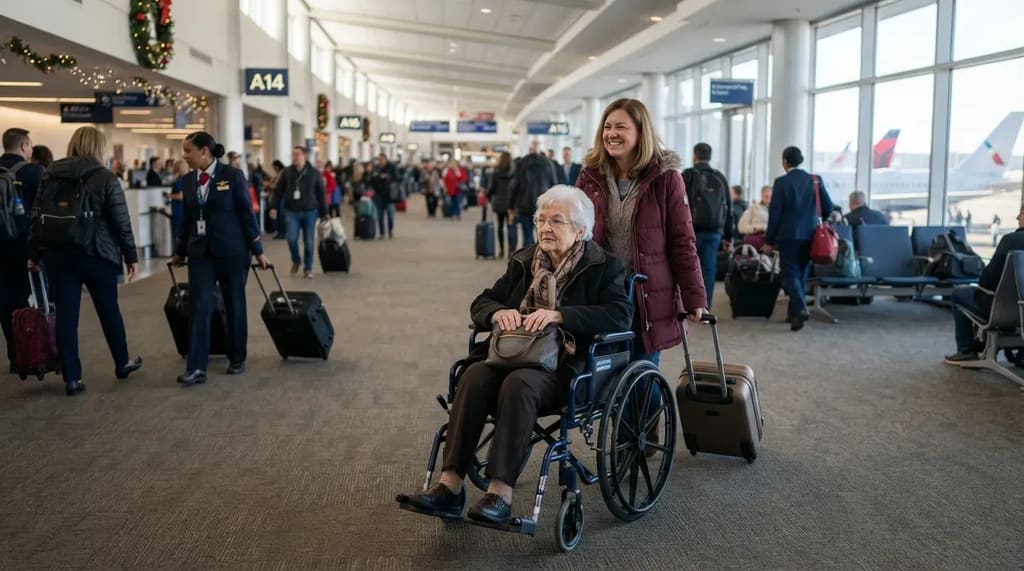
Wheelchair help at the airport costs nothing, and you don’t need to own a wheelchair to ask for it. Federal rules require airlines to provide wheelchair and escort assistance to passengers with disabilities at no charge. Under the Air Carrier Access Act rules, that help covers the route from the terminal entrance to the gate and onto the plane. A traveler can qualify even if she can walk short distances but can’t manage prolonged walking or standing.
That describes a lot of grandmothers who handle a full kitchen on Thanksgiving morning but wouldn’t last a long holiday concourse. Take the chair. Request it when you book and confirm it at check-in, and contact the airline at least 48 hours before the flight. An unused wheelchair costs nothing, while a long walk to a far gate can cost a flight.
The wheelchair covers the walk, but the checkpoint belongs to a different agency, with a different phone number and a longer deadline.
#3 – The TSA Cares Call That Isn’t the Wheelchair Request
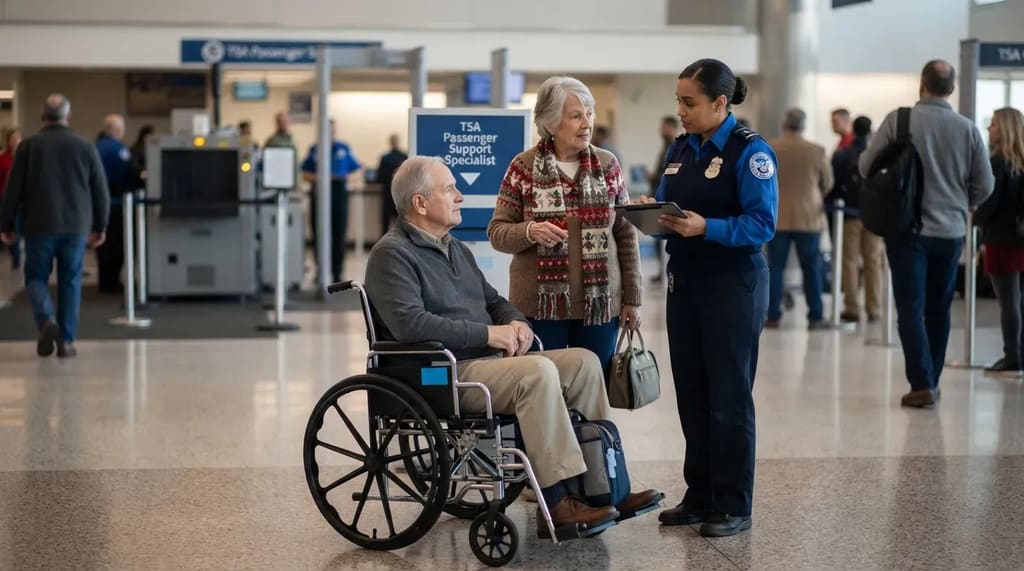
There are two agencies and two phone numbers, and families tend to know only one of them. TSA doesn’t provide wheelchairs; the airline does. TSA Cares is the separate line that arranges help at the checkpoint, and TSA asks for at least 72 hours’ notice at (855) 787-2227.4
TSA Cares doesn’t replace airline assistance, doesn’t provide personal care and doesn’t exempt anyone from screening.4 A family that makes only one call gets only half the help. Because the TSA deadline is the longer one, count back from the flight and make that call first. Then call the airline about the wheelchair.
- Airline: wheelchair or escort from the terminal entrance to the gate, requested at least 48 hours ahead.
- TSA Cares: a Passenger Support Specialist to guide your grandparent through screening, requested at least 72 hours ahead.
Once the help is lined up, one card in a wallet can still undo it, and the fee for getting that wrong is $45 per adult.
#2 – A Driver’s License That Triggers a $45 Fee
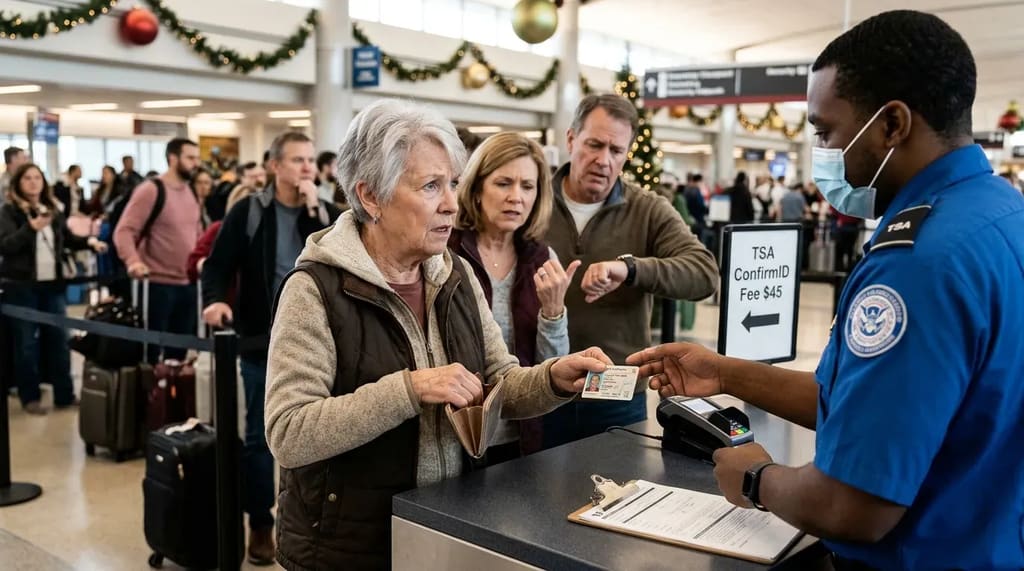
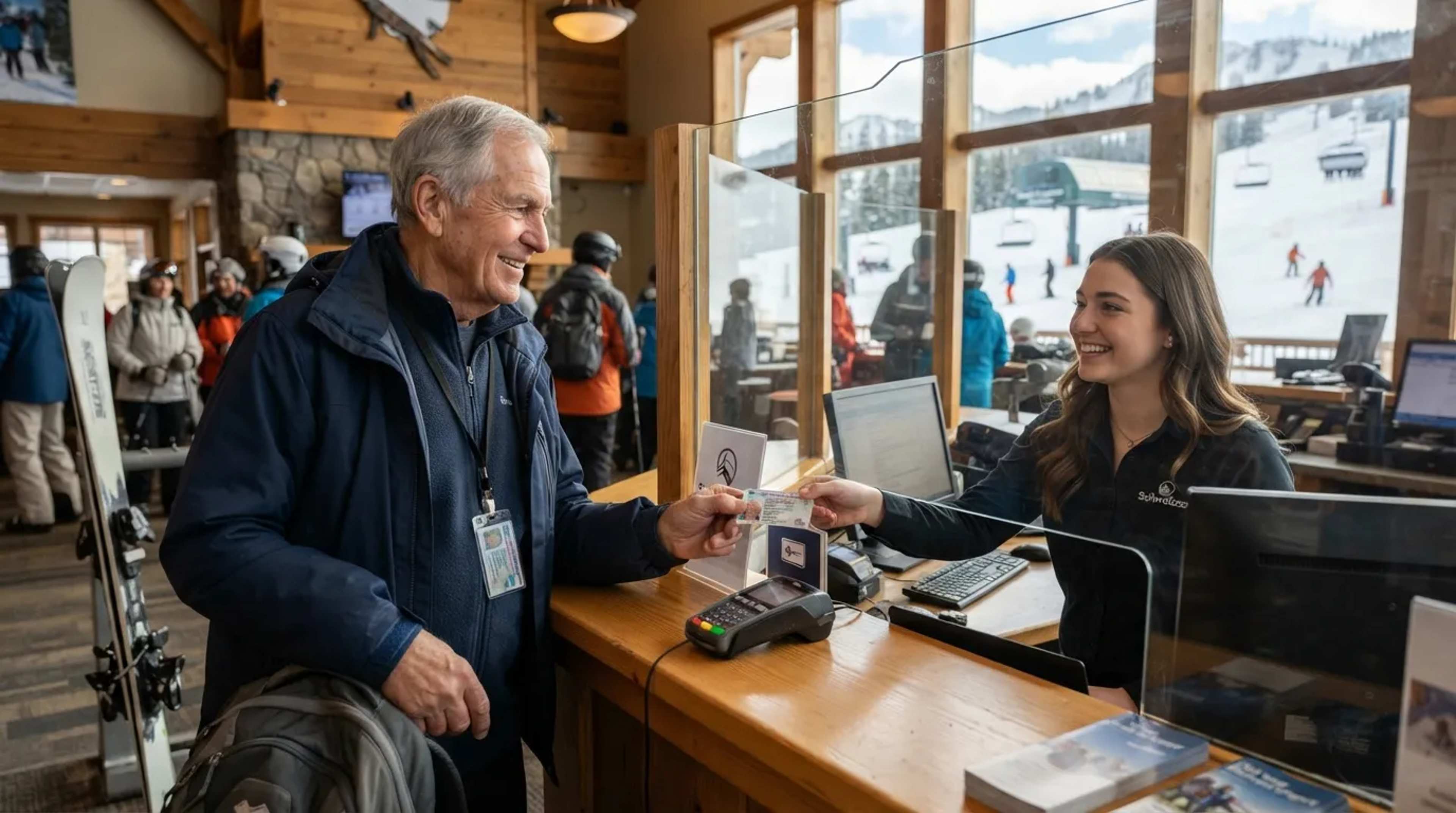
TSA has said roughly 6% of travelers arrive without a REAL ID or other acceptable identification. Since Feb. 1, 2026, adults who try to fly domestically that way are charged $45 to use an alternative check called TSA ConfirmID. The fee is non-refundable,5 it covers 10 days from the travel date on the receipt, and TSA says there’s no guarantee it can verify the person’s identity.6
The verification alone could take up to 30 minutes, which on a holiday morning can swallow the whole cushion you built into the departure time. Every adult without a REAL ID pays separately, while children under 18 don’t need ID for domestic flights. Three adults in the car without compliant IDs would owe $135 before anyone reaches the scanner.
Related Stories From Travelbinger

Fast Facts
- Cost: $45 per adult, non-refundable.
- Coverage: 10 days from the travel date on the receipt.
- Delay: verification could take up to 30 minutes.
- Kids: children under 18 don’t need ID for domestic flights.
The fee is paid electronically, so a grandparent needs a card or bank account handy.6 A $45 fee is a rescue, not a plan. A REAL ID license carries a star in the corner, and if the star is missing, a passport works for domestic flights too. Check the license for the REAL ID star, or pack a passport instead.
With the paperwork settled, one moment is left, and it happens in the ten seconds after the trunk is empty and the engine is still running.
#1 – Driving Away Before Anyone Has Taken Over
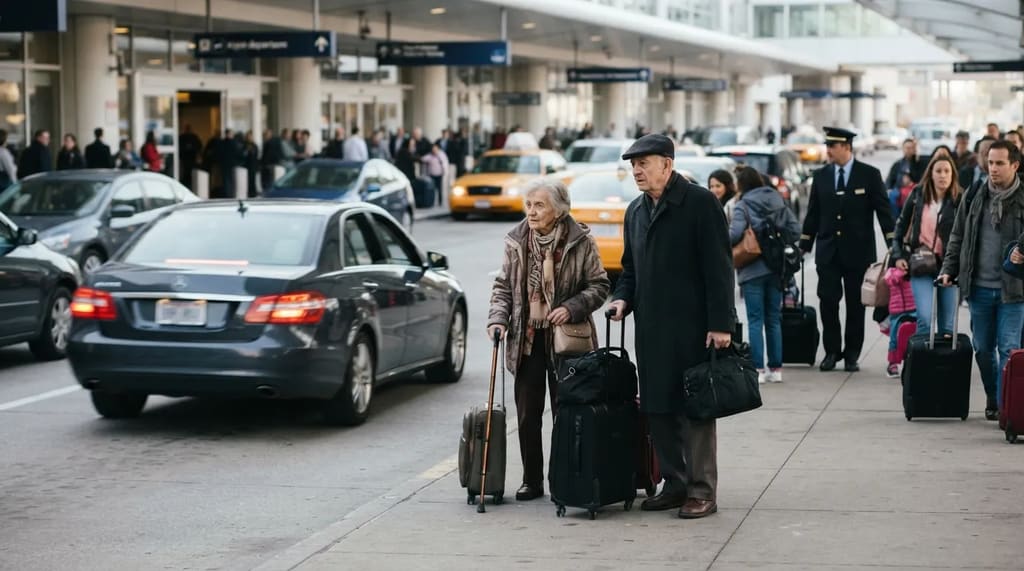
A wheelchair request on file doesn’t walk up to the counter by itself. Passengers who request help in advance still have to identify themselves to airline staff when they reach the airport or the gate.7 That’s the gap in every plan on this list. The airline has the request, TSA has the checkpoint note and the family has the car, but a grandparent standing at the curb alone, unsure whom to tell, has none of the three working for them.
The curb only allows a quick unload, so the fix is to park, walk your grandparent inside and stay until an airline agent, skycap or wheelchair attendant has taken over. The same handoff applies on the way home. Confirm the assistance with every airline on the itinerary, and make sure it’s noted for each flight segment. Then settle the pickup in advance, because arrivals curbs are for active loading only, and drivers are told to approach when their party is already outside waiting.3
- The boarding pass and ID are in a pocket or purse, not buried in a bag.
- A staff member has the wheelchair request and knows your grandparent’s name.
- Your number is saved in their phone, and the return pickup plan is agreed.
Don’t pull away until a person, not a plan, has taken over. It takes less time than the goodbye hug, and it backs up every other step on this list.
The drive to the airport feels like the whole job, so the planning tends to stop at the parking lot. But every item here sits at a handoff: family to curb, curb to airline, airline to TSA, TSA to gate. Trouble starts wherever a handoff is assumed instead of arranged, and arranging one usually takes a phone call, a text or ten seconds of standing there.
Before the next holiday trip, walk the route in your head and name who has your grandparent at each stage. If the answer is “probably someone,” turn it into a name. The best goodbye isn’t the one at the curb. It’s the one you say after you’ve watched them be handed safely to someone who knows they’re coming.
- DHS TSA Thanksgiving Forecast: https://www.dhs.gov/news/2026/11/24/tsa-ready-thanksgiving-passenger-volumes-urges-travelers-plan-ahead
- FAA Thanksgiving Flight Forecast: https://www.faa.gov/newsroom/trumps-transportation-department-announces-record-breaking-thanksgiving-air-travel-2026
- Broward Airport Drop-off Rules: https://www.broward.org/Airport/passengers/Transportation/Pages/Pickupdropoffoptions.aspx
- TSA Cares Passenger Support: https://www.tsa.gov/travel/tsa-cares/passenger-support
- CNBC REAL ID Fee: https://www.cnbc.com/2026/01/31/real-id-fee-tsa.html
- Pay.gov TSA ConfirmID Fee: https://www.pay.gov/public/form/start/1820857221
- DOT Passenger Disability Bill of Rights: https://www.transportation.gov/sites/dot.gov/files/2022-07/508_Airline_Passengers_with_Disabilities_Bill_of_Rights_07132022_ADA.pdf