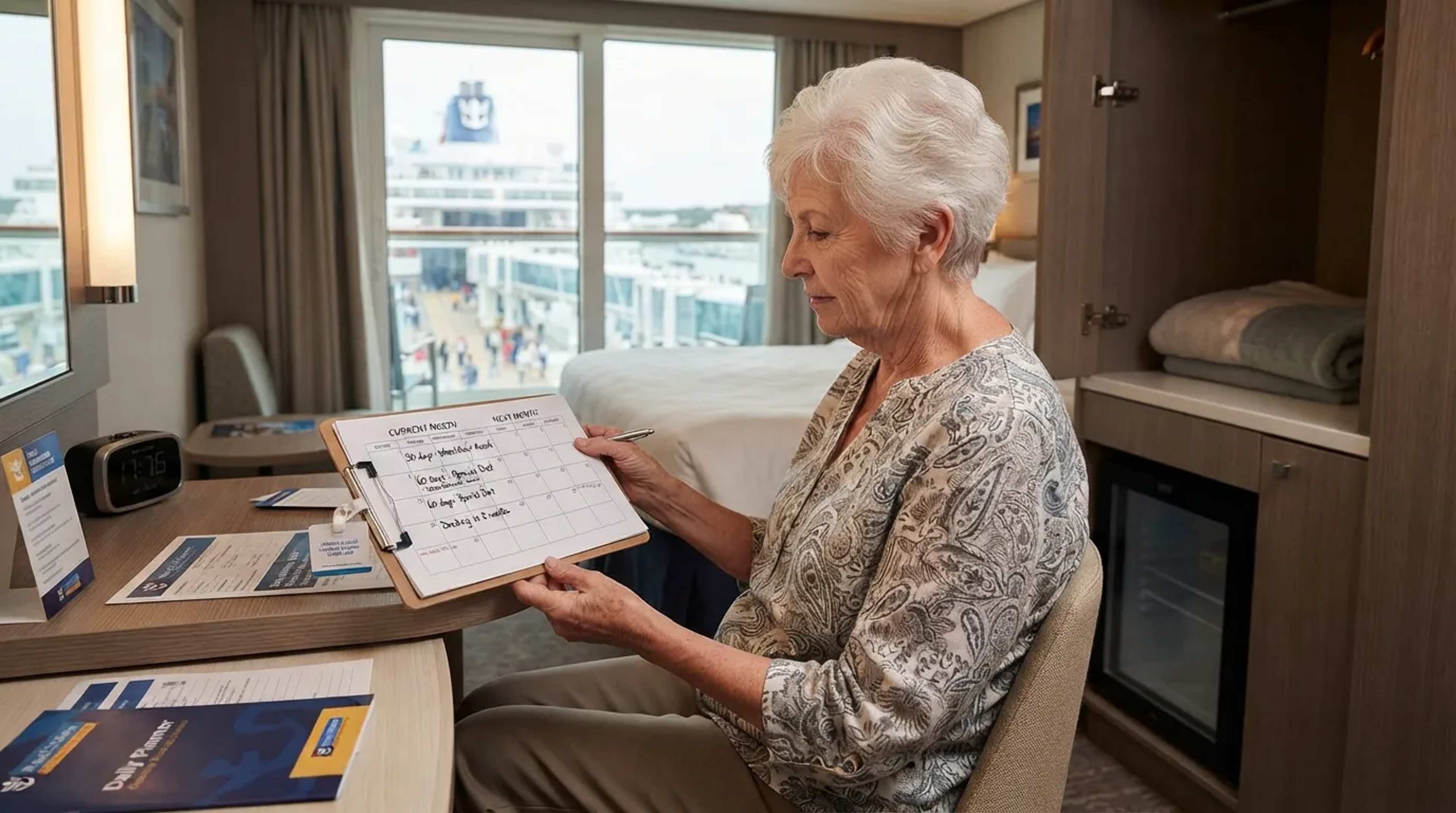
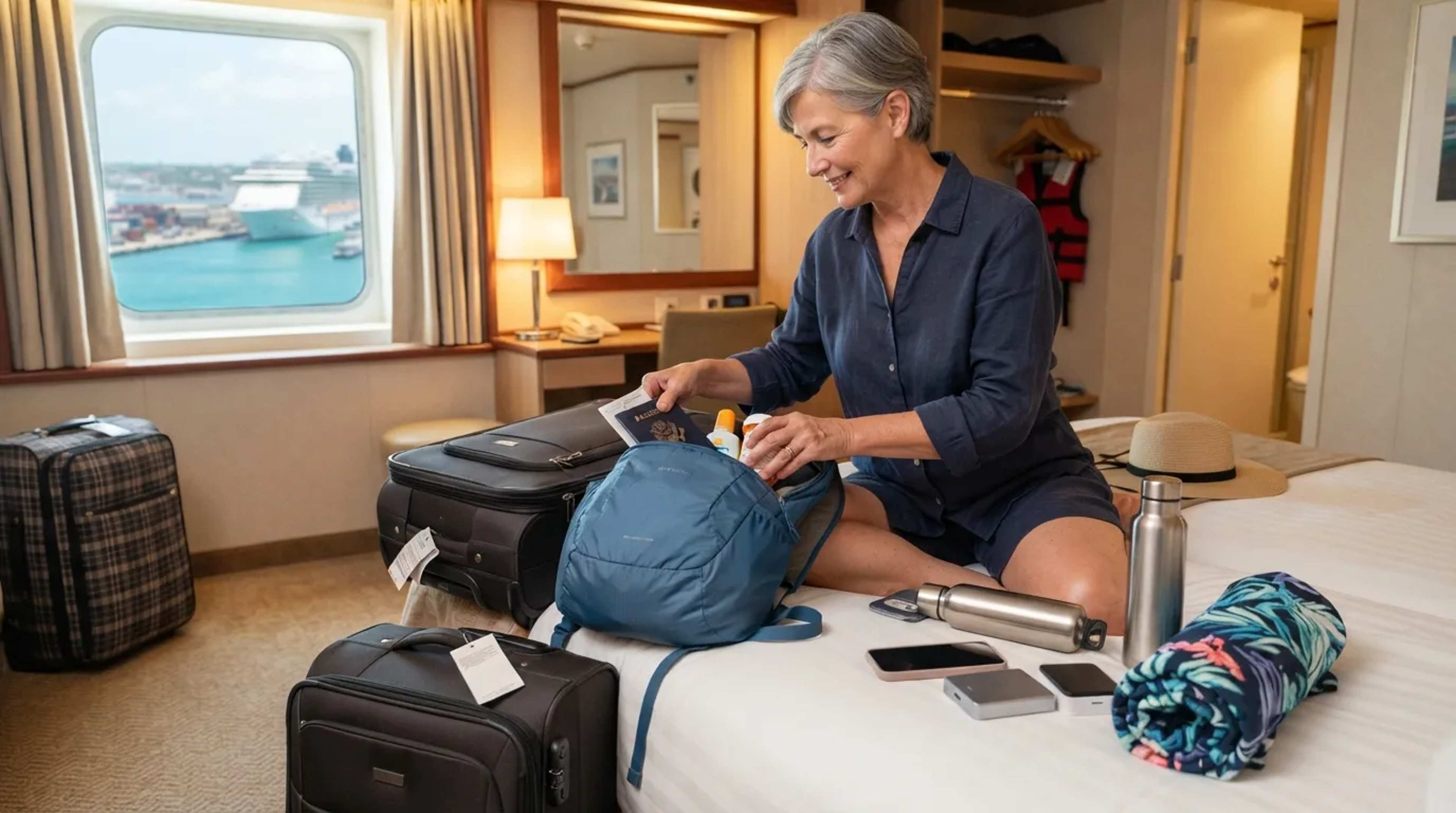
The brochure photo shows a sunlit window, a castle sliding past and a bed made up like a boutique hotel. It doesn’t show the lone outlet behind the nightstand, the stairs outside your door or the hum of an engine two decks down. That gap is why experienced river travelers have a short list of requests ready before the luggage is even unpacked.
How comfortable a cabin is depends on where it sits on the deck plan, what’s above and below it, and what the dock puts outside the glass. These fifteen requests start with small comforts and climb toward money and mobility. Stay for #1, because it covers the one feature you can pay extra for on the Rhine or Danube and still not be promised on a docking day. First, the bed.
#15 – Twin Beds or a Queen, Settled Early
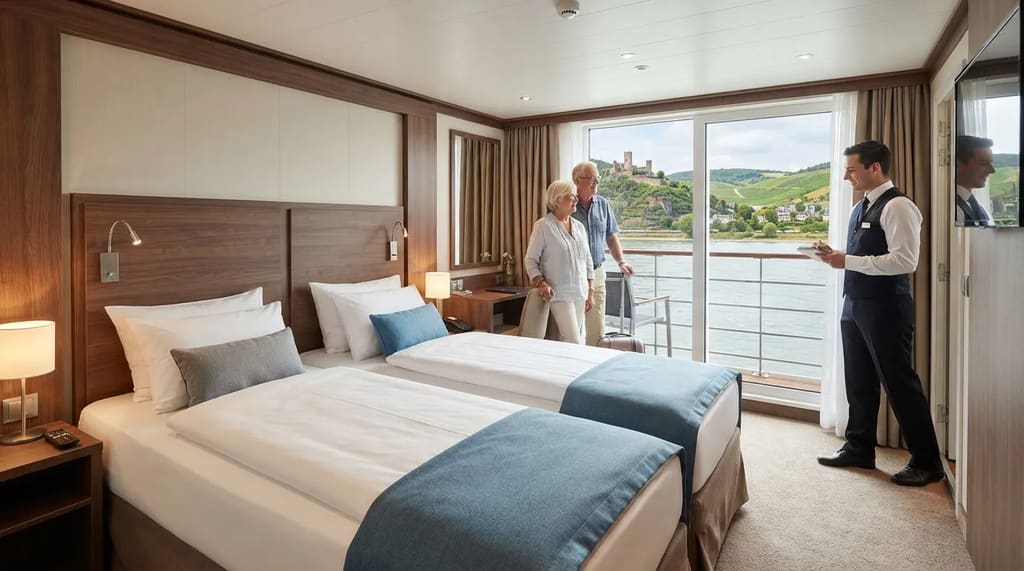
A queen bed that splits into two twins is standard on river ships, yet the split won’t happen on its own. Some older vessels, including ones Grand Circle has used, have fixed twin beds, so the layout depends on the ship you book.
Viking describes its stateroom bed as a queen with an optional twin configuration, which means you choose it. Ask for your arrangement when you book, then tell the steward on the first afternoon so the cabin is ready by bedtime.
Request the bed layout at booking and repeat it to the steward. If snoring or a bad back sends you and your partner to separate pillows, this is the cheapest comfort upgrade on the ship, because it costs nothing.
Even a perfect bed won’t help if the outlet beside it can’t power what you brought, and sockets on river ships vary more than you’d expect.
#14 – Counting Outlets Before You Pack
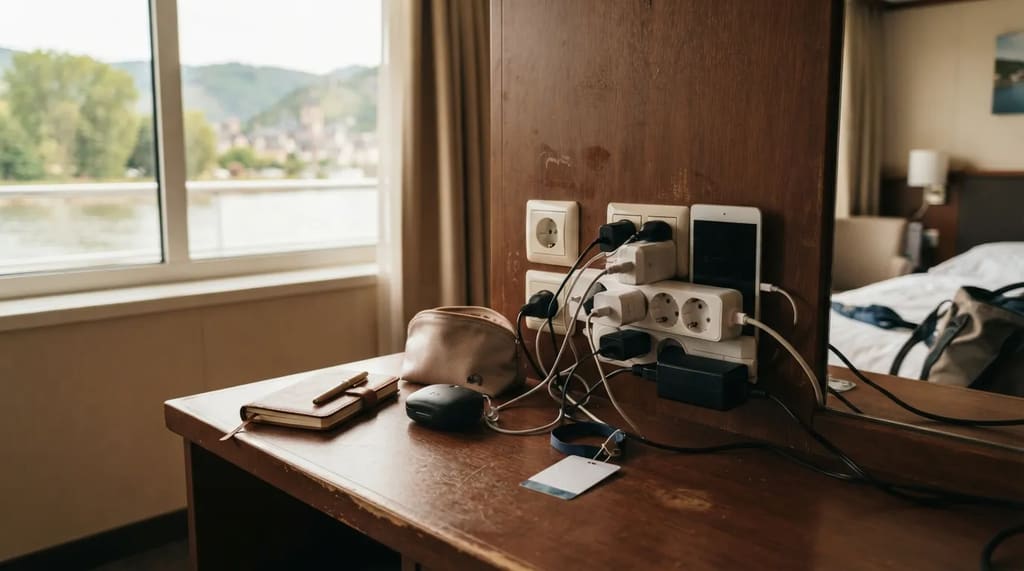
Plan on fewer sockets than you have devices. Older ships may have only one or two outlets, often by the vanity, and newer ships add USB ports without ending the shortage.
A phone, a tablet, a hearing-aid charger and a CPAP machine can all want the same socket overnight. Plug types vary too: Viking lists 110 and 220 volt outlets in its staterooms, while some other ships offer European-style sockets with a single U.S. plug.
Pack a power strip without surge protection, plus a plug adapter. Bathroom outlets are often meant for shavers only, so use the cabin’s hair dryer instead of your own heated tools.
The bathroom comes with its own surprise, and it involves a tub that most river cabins simply don’t have.
#13 – The Shower-Only Bathroom, and What to Ask
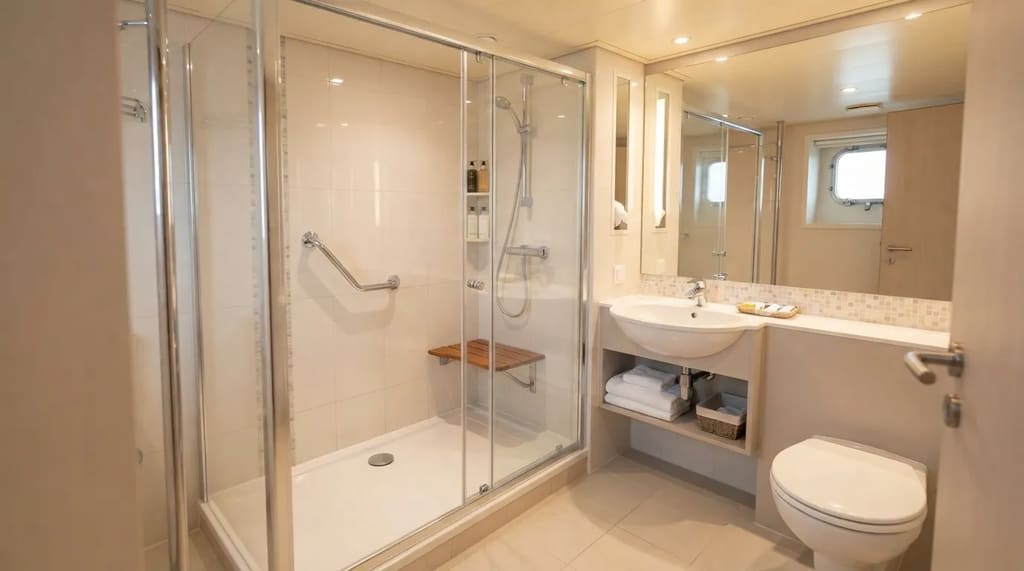
Expect a compact bathroom with a shower, sink and toilet, and no tub. Bathtubs generally turn up only in suites or accessible cabins, so a standard river cabin gives you a stall shower instead, often glass-enclosed.
For many travelers over 60 that’s welcome, since stepping into a shower is easier than climbing over a tub rim. The entry is the real question, so ask whether there’s a raised threshold, whether a grab bar is fitted and whether you can sit.
Paying a suite premium just to get a bathtub is a poor trade on an itinerary built around days in port. Ask about the shower threshold and grab bars before you book. If you love a long soak, book a hotel night at either end of the trip.
At a Glance
- Standard cabin: stall shower, sink and toilet, no tub.
- Tubs generally appear only in suites or accessible cabins.
- Three questions to ask: raised threshold, grab bar, seat.
- Soak fix: add a hotel night before or after the cruise.
In a cabin this small, the bed has a second job: the suitcases go beneath it.
#12 – Where the Suitcase Goes in a Small Cabin
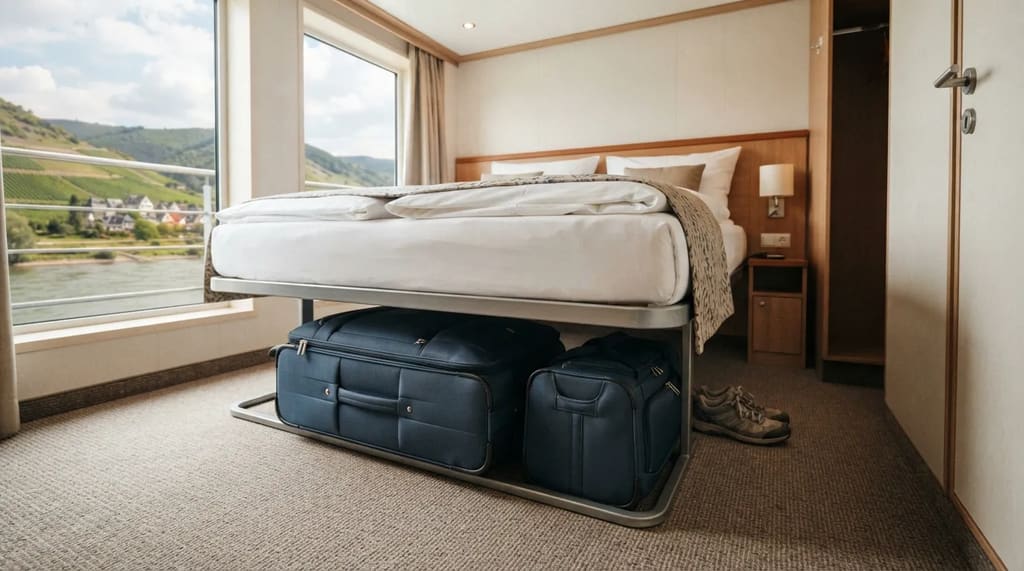
Luggage is meant to slide under the bed, and that is the cabin’s main answer for bulky storage. Closets and drawers hold clothes, which is why river cabins look uncluttered in photographs.
That plan works only if the bag is low enough to fit. Compare your largest case with the gap under a hotel bed and favor soft-sided bags that squeeze in, because a hard shell that doesn’t fit ends up standing in a room with little floor to spare.
Choose soft-sided luggage that slides under the bed. Magnetic hooks and over-the-door organizers also help, since the metal walls and the back of the door are the spare storage in a small cabin.
#11 – A Quiet Cabin for Light Sleepers
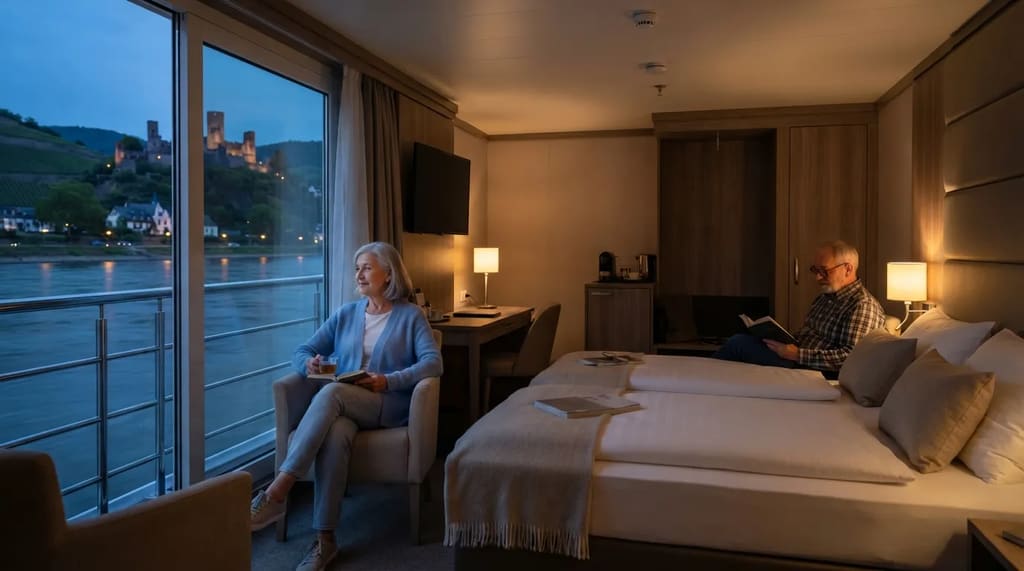
A river ship keeps moving while you sleep, through locks and under low bridges. Engines, lock mechanisms and crew announcements can carry into cabins at night, and cabins at the back of the lower deck sit nearest the engine room.
The top deck looks like the easy fix, but it sits beneath the sun deck, where chairs scrape and people linger after dinner. A top-deck cabin isn’t automatically the quiet one.
Ask for midship, away from the engine, the lounge and the gangway. Cruise lines know which cabin numbers fit that description, and a request framed by noise source gives the agent something concrete to check.
Quiet won’t help if the walk to the elevator is long, and on some ships the elevator doesn’t stop on every deck.
#10 – The Walk from Cabin to Elevator
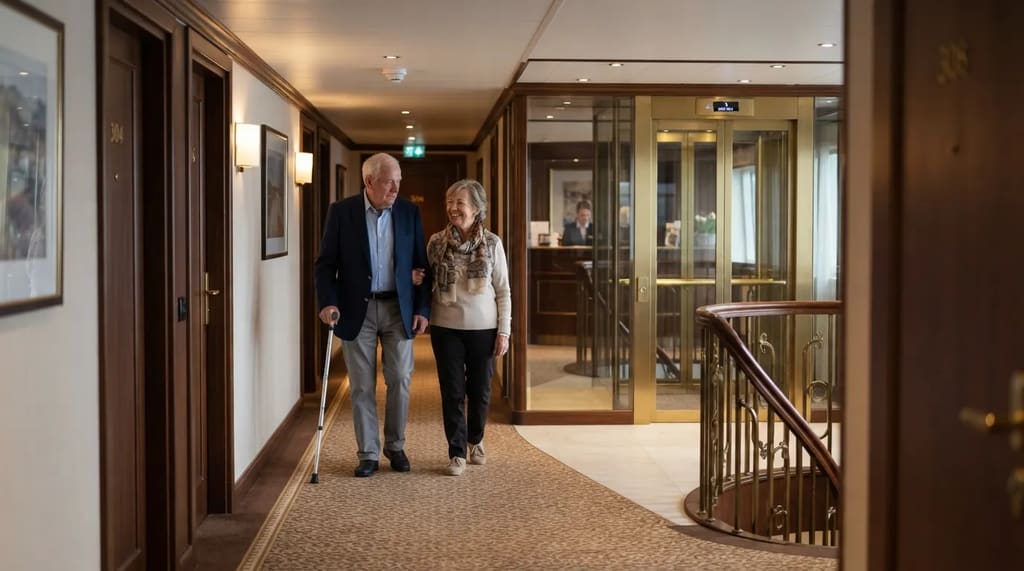
Not every river ship’s elevator serves every deck, and a lower deck can mean stairs only. That turns the elevator question into a cabin question.
A cabin on a deck the elevator skips can cost less for exactly that reason, and a premium cabin on the wrong deck still means stairs. Trace your daily route on the deck plan: cabin to elevator, elevator to dining room, dining room to gangway.
If you use a cane or walk slowly, a cabin near reception, the elevator or the central public areas is usually the easier choice, though those spots can be livelier than the end of a corridor. Trace the route from cabin to elevator, dining room and gangway before you pay the deposit.
Distance matters just as much when you’re not traveling alone, because two cabins booked together can land at opposite ends of the ship.
#9 – Cabins Side by Side for Companions
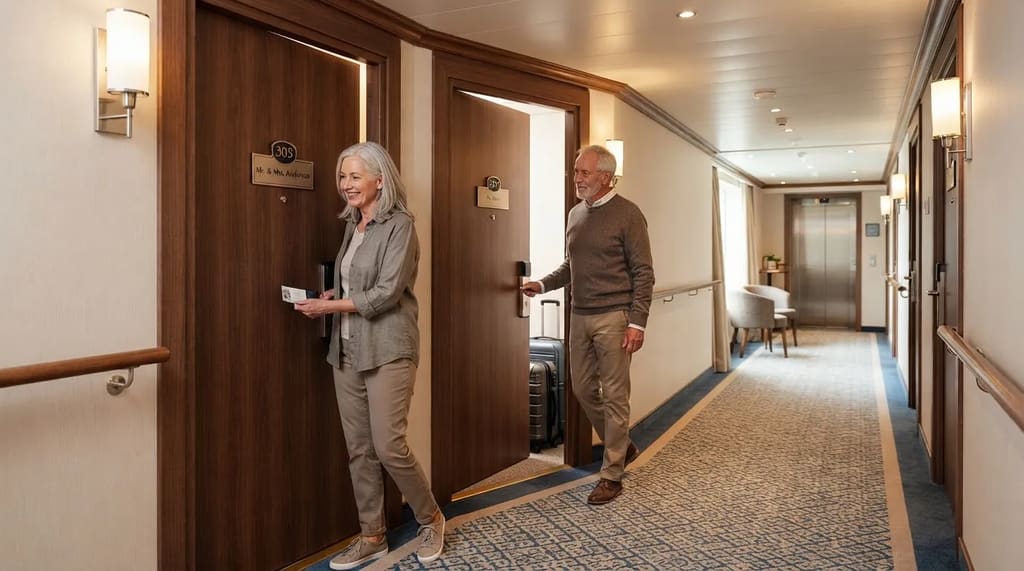
If you’re sharing the trip with a sibling, a friend or an adult child, the two cabins have to be requested as neighbors. Say so at booking, and put any mobility or medical needs in writing at the same time.
Group bookings can secure adjacent cabins, though you should confirm that the group’s shore plans suit your pace. Don’t assume the ship has connecting cabins, since not every line offers them, but some Rhine ships, such as AmaWaterways’ AmaKristina, were built with connecting and triple-occupancy cabins.1
Ask for neighboring cabins on the same deck, and get it in writing. If one of you has a mobility need, the short walk to the elevator that you checked a moment ago applies to both rooms.
Solo travelers face a different puzzle, since a ship built for couples charges for a bed no one will use.
#8 – A Single Cabin Without the Supplement
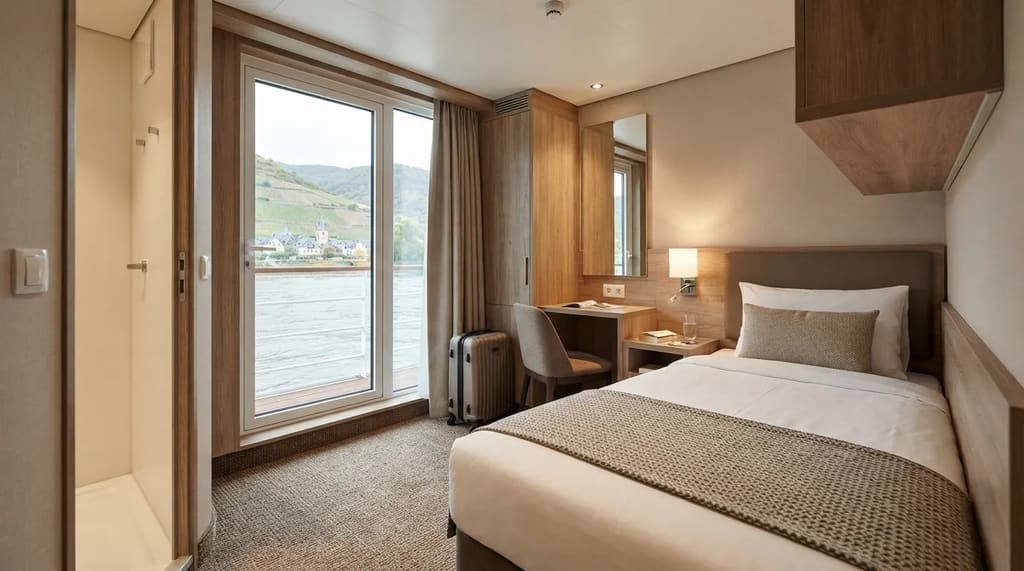
Traveling alone usually brings a single supplement, a surcharge for using a cabin built for two. Some ships carry true single cabins that skip it.2
Those cabins are few, so they tend to vanish first. Ask whether your ship has any, whether the supplement is reduced or waived on your sailing dates, and how small the room really is.
Ask about true single cabins before you accept the supplement. The difference can be large enough to decide which sailing you choose.
Whether you’re one or two, the next question is what you’ll see when you pull back the curtain.
#7 – A Window That Actually Shows the River
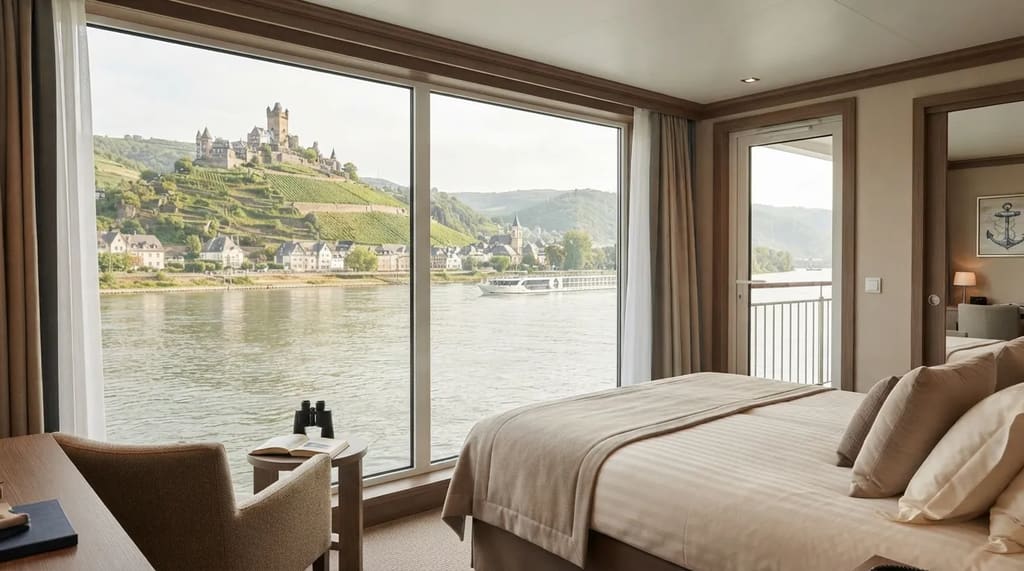
On many river ships, lower-deck cabins have small windows set high in the wall, and those windows are often fixed. You can see sky, a bit of bank and the occasional bridge pier, but not much else.
Upper-deck cabins usually have bigger windows or balcony doors, and they cost more for it. That’s the trade: a lower price, or a view you can enjoy from the bed.
Ask how big the window is, whether it opens and where it sits relative to the bed. If you plan to spend quiet mornings in the cabin, that answer is worth more than a fancier bathroom.
Quick Compare
- Lower deck: small, high-set window, often fixed, lower price.
- Upper deck: bigger window or balcony door, higher price.
- Before you pay: check size, whether it opens and where it sits next to the bed.
The window is only half of the comfort story, because the room behind it has to stay at a temperature you can sleep in.
#6 – A Thermostat You Understand by Dinner
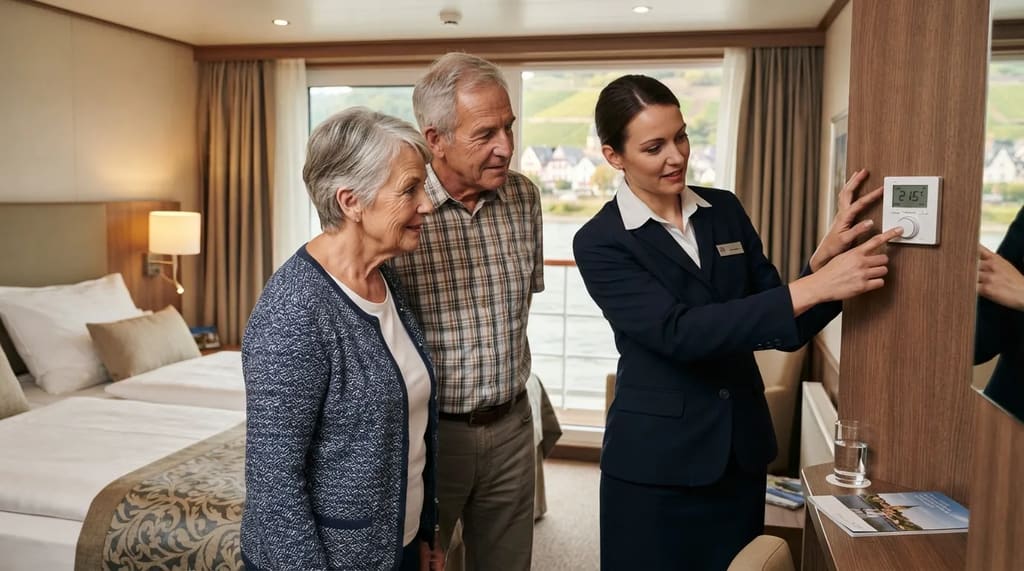
Most river cabins have their own climate controls, but the dial isn’t always where you’d look. Spring and fall nights on the water can be cool, and a cabin in midsummer can warm up fast once the sun hits the glass.
Ask the steward to show you the controls on the first afternoon, not at midnight. If the room runs too warm or too cold, say so that day, since it’s easier to adjust early than to sleep badly for three nights.
Have the steward walk you through the controls and set a comfortable temperature before dinner. It takes two minutes and saves a restless night.
Some needs are bigger than comfort, and for travelers with mobility limits they decide which cabin works at all.
#5 – An Accessible Cabin, Before the Last One Is Gone
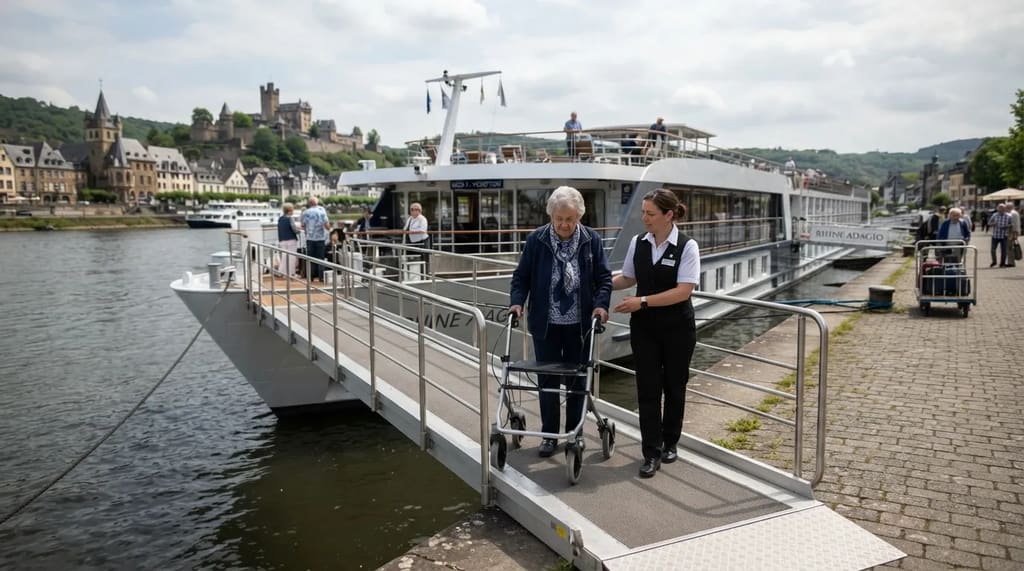
Accessible cabins are few, and they can be gone long before departure. Book them early and describe your needs in plain terms: a wheelchair, a walker, difficulty with steps or trouble standing in a shower.
Then ask about the gangway, which is the part brochures skip. Ships tie up where the dock allows, and water levels change, so the slope between ship and shore can vary from stop to stop.
Ask what help the crew provides at the gangway and how the cabin handles a wheelchair or walker. A cabin that works on paper can still leave you stuck at the door to the dock.
Worth Knowing
- Accessible cabins are limited and can sell out well before departure.
- Plain-language descriptions of your needs get better answers than general labels.
- Gangway slope changes with dock position and water level.
- Ask what crew help is available at every stop, not just the first.
Another need that can’t wait until bedtime is anything that has to stay cold.
#4 – A Cold Spot for Medication
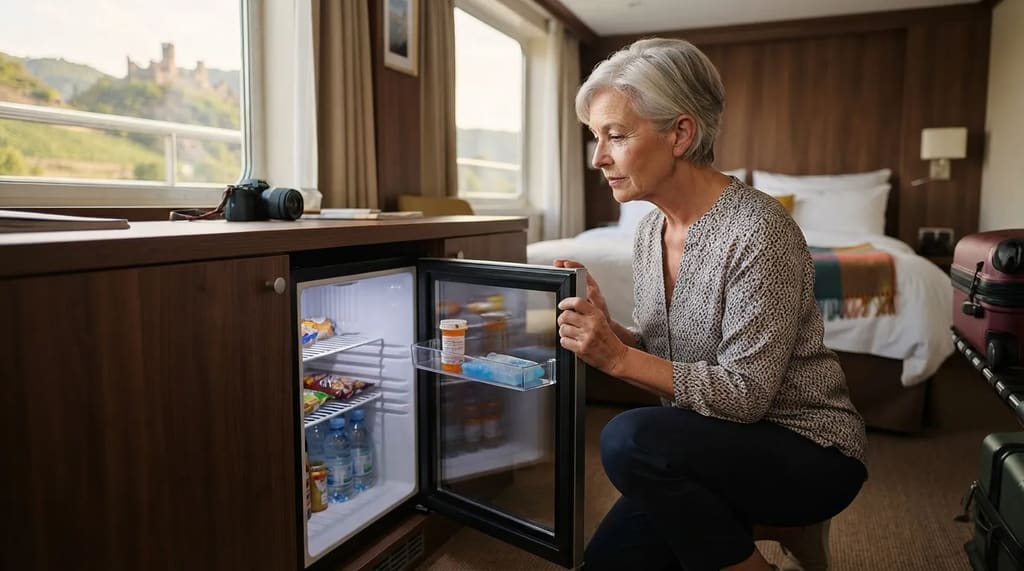
If a prescription has to stay cool, ask on day one about the cabin fridge or minibar. Don’t assume it keeps the temperature your medication needs, and don’t assume every cabin has one.
Check with your pharmacist or doctor before the trip about how cold the medication must stay. Then ask the ship what it can offer if the cabin fridge isn’t suitable.
Related Stories From Travelbinger

Ask about a fridge and its temperature on the first afternoon. It’s easier to solve before the first dose than after.
Even a well-planned cabin can fail you if you’re standing in the lobby with nowhere to go.
#3 – Knowing When the Cabin Is Ready
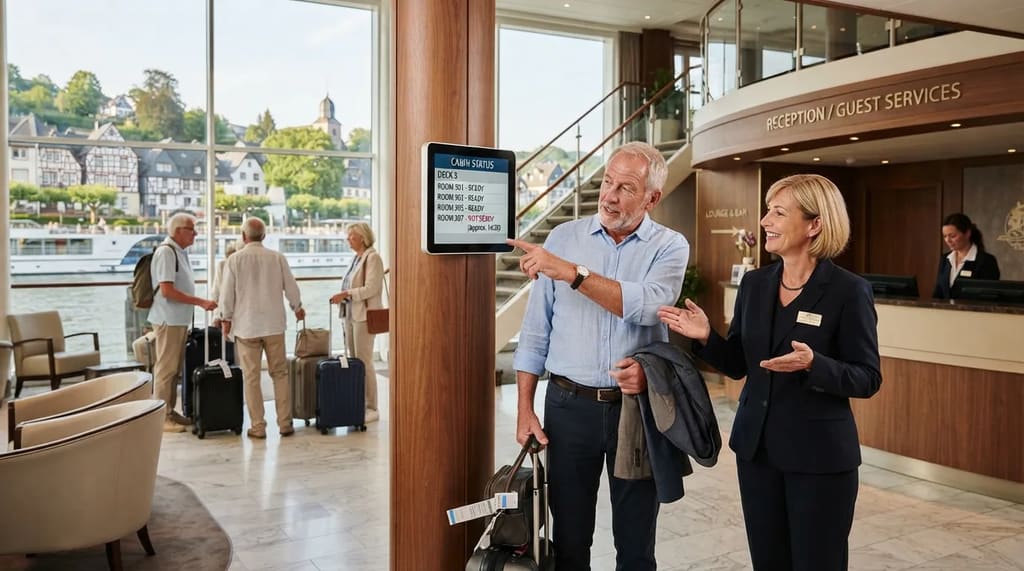
On most river cruises, embarkation is in the afternoon, and your cabin may not be ready the moment you walk aboard. You can arrive tired from a long flight and find your room still being turned over.
Ask at booking or on arrival when the cabin will be available and where you can wait comfortably. Ask where the luggage goes, and whether lunch or a lounge is open in the meantime.
Ask when your cabin will be ready and where to wait. If the answer is “later,” you can plan a short walk or a coffee instead of standing around with your bags.
Then comes the request that can feel the most personal, since it involves the thing you came for.
#2 – Which Kind of Balcony You’re Really Buying
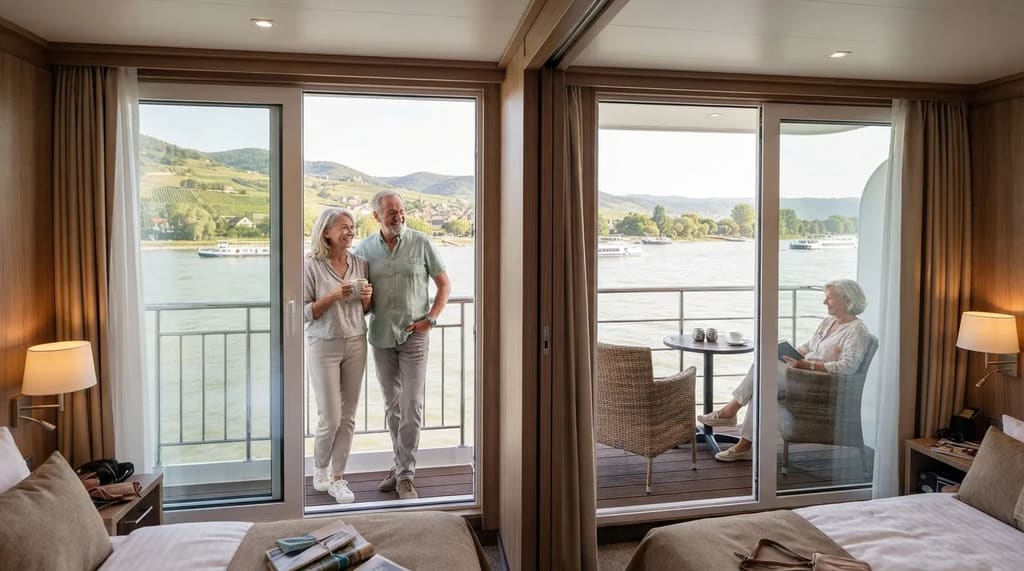
River ships use the word “balcony” loosely. A French balcony is a sliding door or window you can open but not step outside onto, while a true veranda gives you a small outdoor space with a chair.3
Prices can differ a lot between the two. Many travelers are happy with a French balcony because the glass opens and the river air comes in, while others want a place to sit with a cup of coffee.
Ask whether you can step outside or only open the window. Pay for a veranda only if you’ll actually use it.
Fast Facts
- French balcony: the glass opens, but you can’t step out.
- Veranda: a small outdoor space with room for a chair.
- The price gap between the two can be sizable.
- Simple test: will you really sit outside with your coffee each morning?
And even the right balcony can leave you staring at something you didn’t pay for.
#1 – A View That Survives Docking Day
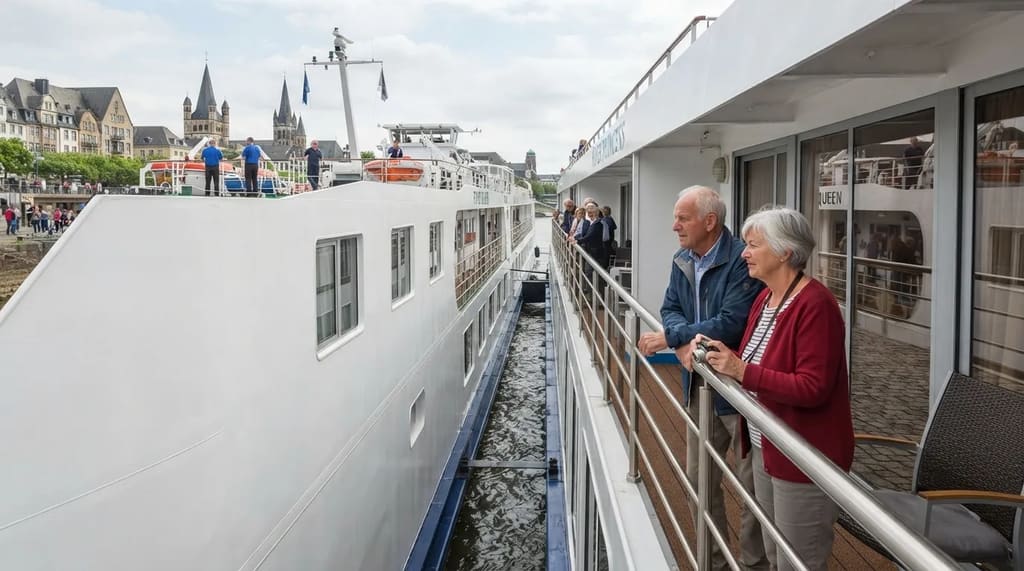
Here’s the catch no brochure highlights. In busy ports, river ships often tie up side by side, so the window you paid extra for can face the hull of the ship next door.4 5
Which side of the ship faces the dock can change from stop to stop, and cruise lines generally can’t guarantee a clear view at every port. A veranda on the wrong side may spend part of the trip staring at another ship’s windows.
Ask which side of the ship faces the river at your key ports, and accept that no one can promise it every time. Then plan your ports of call so that you’re ashore, not in the cabin, when the view is blocked.
A river cabin isn’t about the photo in the brochure. It’s about asking the small questions on day one, so the big moments, the castles, the vineyards and the bends in the river, show up when they’re supposed to.
- Travel Weekly AmaKristina Launch: https://www.travelweekly.com/River-Cruising/AmaWaterways-launches-the-AmaKristina
- Travel Market Report Solo Cabins: https://www.travelmarketreport.com/articles/%20%20%20%20/cruises/articles/solo-friendly-cruise-lines-with-single-occupancy-cabins-or-no-low-single-supplements
- Cruise Specialists Balcony Definitions: https://www.cruisespecialists.com/blogs/river-cruise-windows-balconies-defined/
- Dream Destinations Balcony Comparison: https://www.dreamdestinations.com/blog-main/river-cruise-balcony-comparisons-in-2022-what-view-do-you-want
- Travel Mavericks River Cabins: https://www.thetravelmavericks.com/pages/river-cruise-cabins–french-balcony-vs–balcony-vs–suite-47747