Hotel chains disagree on when you count as a senior: 55 at Best Western, 60 at Choice and Wyndham, and 65 at Hilton. That gap decides whether a polite question at the counter saves you money or goes nowhere.
But the discount is the least interesting favor on this list. The twelve requests below cost nothing, and several matter most after dark, when the lobby thins out and the night clerk is the one person who can fix a problem.
Stay to the end, because the final request decides whether the room you booked is still waiting for you.
#12 – The Senior Rate and Its Age Cutoff
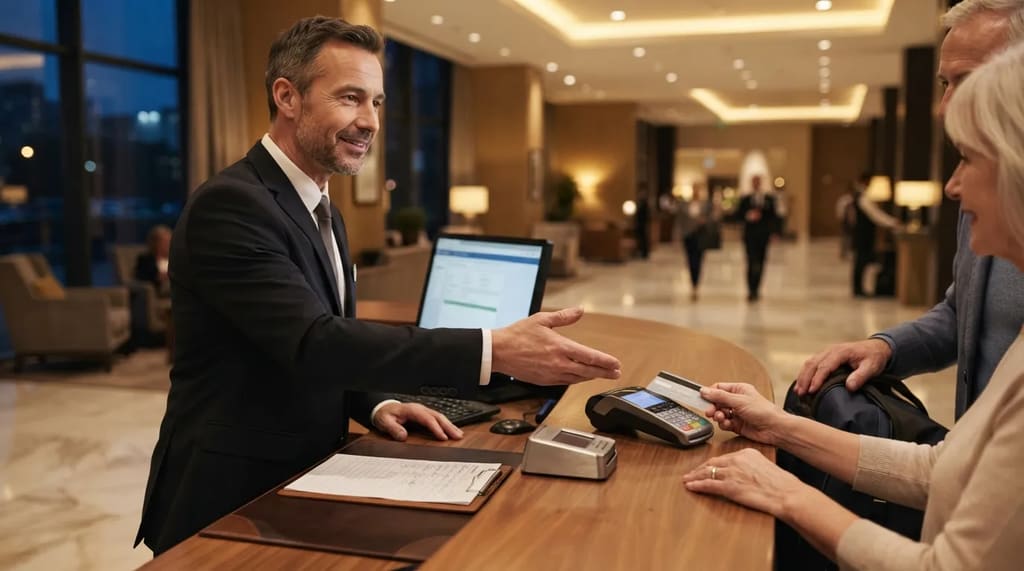
A senior rate isn’t one rate, because every chain picks its own starting age. Wyndham starts at 60, Marriott at 62, and Hilton at 65, and Hilton’s discount tops out at 6%.1 2
Hilton’s discount applies to the best available rate and covers a maximum of two rooms.3 Marriott’s typical discount runs up to 15%, so on percentage alone the lower age bar earns the bigger discount.
Quick Compare
- Best Western: senior rate starts at 55
- Choice and Wyndham: both start at 60
- Marriott: starts at 62, with a typical discount of up to 15%
- Hilton: starts at 65, with a discount capped at 6% on up to two rooms
Hilton’s 6% is the smallest perk on this list, hardly a reason to pick one hotel over another. ConsumerAffairs cautions that the discounted price isn’t always the cheapest, so compare it against the regular rate before you commit.1
Staff ask for proof of age at check-in, and the rate is subject to availability.3 Keep your driver’s license in your pocket rather than your suitcase, and ask for the rate again at the desk if the clerk doesn’t mention it.
If you’re 58 and every chain turns you down on age, there’s a membership card that rewrites the question.
#11 – The AARP Card That Beats the Age Cutoff
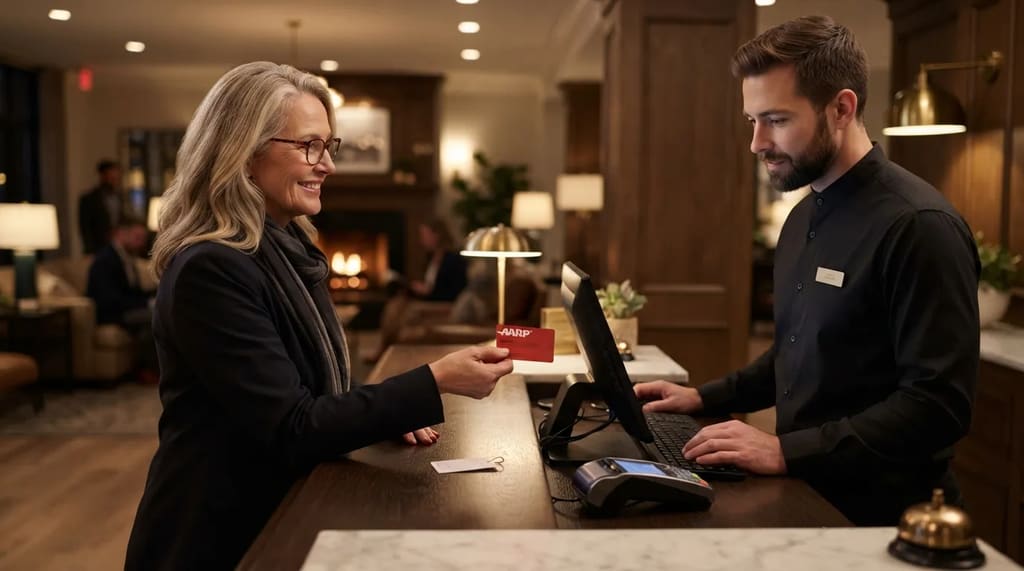
AARP’s hotel rates are aimed at travelers 50 and older, which puts them years ahead of any chain’s senior age. A member may qualify for hotel discounts whether or not they’ve reached a chain’s regular senior age.
That makes the card the better tool for guests in their mid-fifties, who are too young for the senior rates above. It also gives you a second route if you’re 62 and a chain’s age bar sits just past you.
Whether Hilton still takes part is in dispute, because 2026 guides split on whether its AARP rate was discontinued or still gives up to 10% at participating properties. Ask whether the AARP rate is live for your exact dates, which is the safest move.
Marriott is the other chain where the guides split. Some say it has no AARP discount and sells a senior rate to guests 62 and older instead, while another table lists an AARP rate of up to 10%.
Rates get settled when you check in. The last morning of your stay holds a request that costs just as little, though the answer depends on how full the hotel is.
#10 – A Later Checkout, Asked for the Night Before
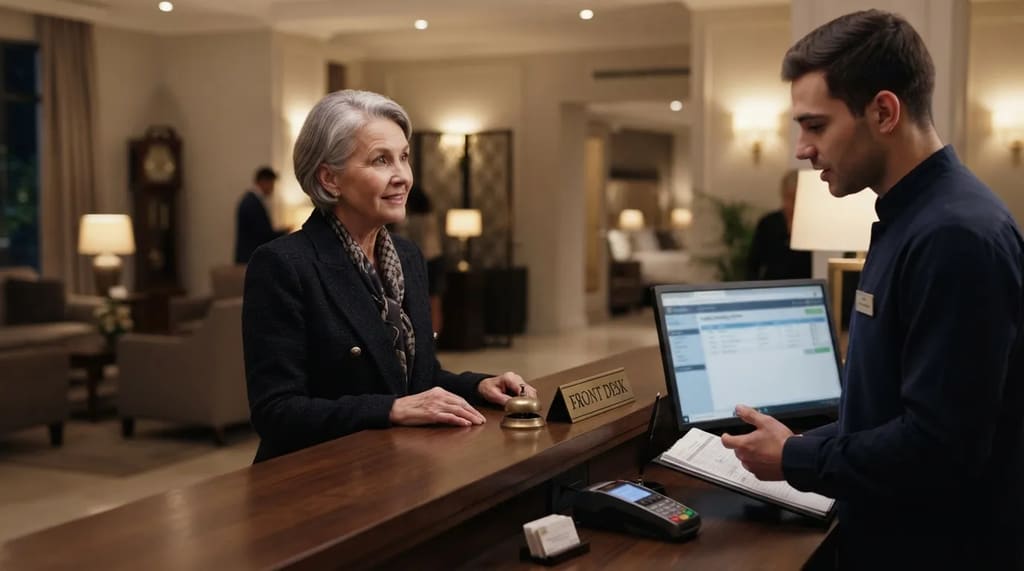
Checkout is usually set in the late morning, and the reason is housekeeping. That hour gives staff time to reset rooms for the next guests.
In special circumstances you can apply for a late checkout, and generally no extra fee is required. That makes it the cheapest favor on this list, with the catch that a hotel can say no on a full night.
Ask while you’re standing at the desk the evening before, not at 10:55 the next morning. A clerk looking at tomorrow’s arrivals can tell you straight away whether an extra hour or two is possible.
Name a specific time, such as one o’clock, instead of asking for something vague like “late.” If the answer is no, ask whether the desk will hold your bags, which many hotels do for departing guests.
#9 – A Shower Seat and Hearing Devices on Request
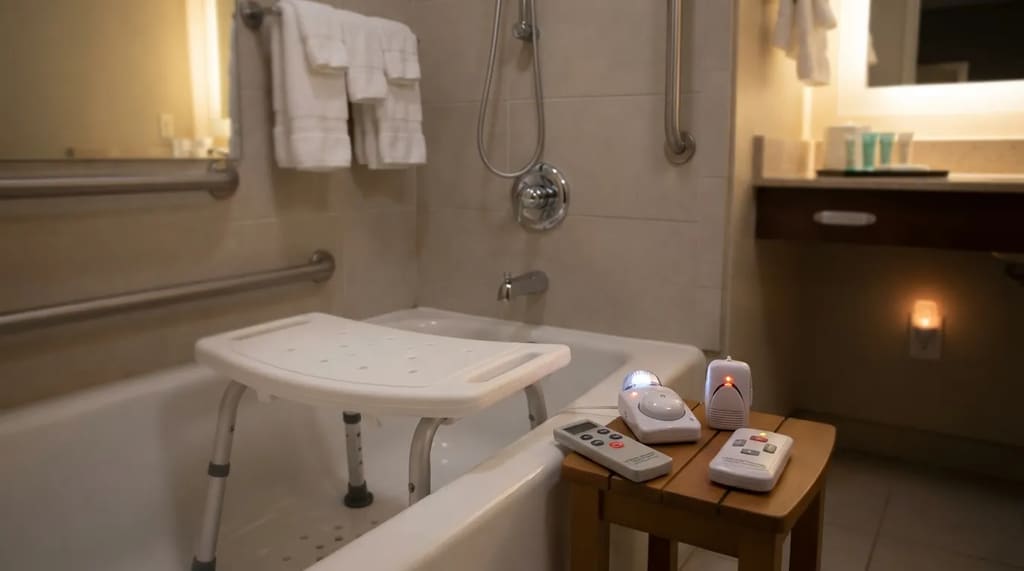
Some hotels keep loose equipment that never appears on the room listing. Their accessibility pages describe a bathtub bench, portable shower seats and hearing-support devices as available on request.
That matters because in a standard room the shower may be a tub you have to climb into. A shower seat or tub bench can be had for the asking, and it turns the same tub into something you can use after a long day on the road.
Hearing gear comes in a few forms. Hearing accessible rooms prioritize visual alarms, door knock indicators and text-capable phones, and at least one hotel provides portable light alerts free of charge.
If you take out your hearing aids to sleep, ask about a flashing alert for the door and the fire alarm. Ask at check-in rather than after you’ve gone up to the room, because fetching equipment is easier while you’re still at the desk.
When you need the whole accessible setup instead of one piece of it, the booking has details worth confirming, starting with which version of the bathroom you’ll get.
#8 – The Accessible Room You Can Reserve in Advance
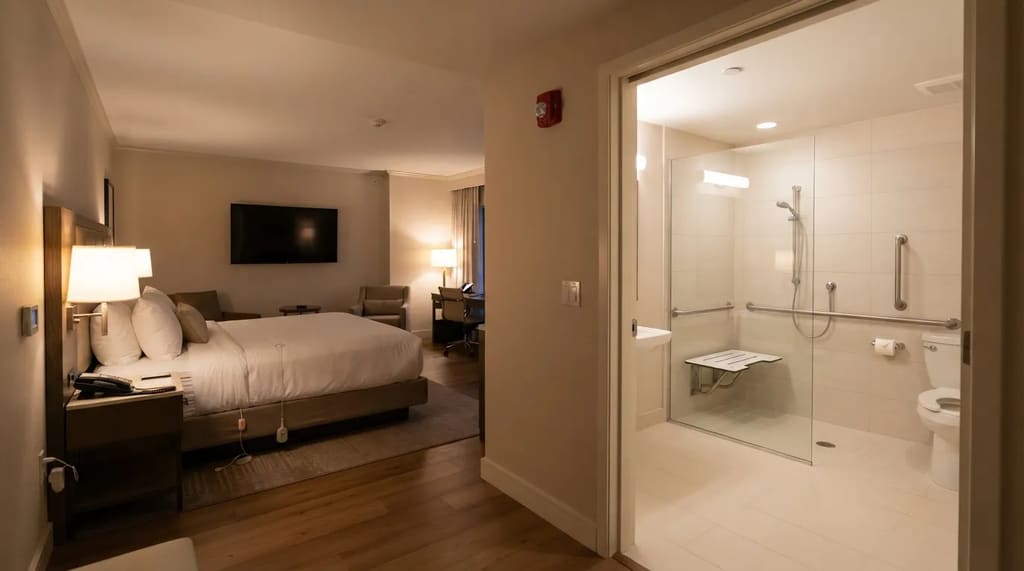
Accessible rooms have doorways at least 32 inches wide,4 and that one measurement explains why they feel different from the standard room down the hall. Typical features include lowered peepholes and thermostats, flashing fire alarms and grab bars around the toilet.
The bathroom comes in two versions: a curbless roll-in shower, or a tub with grab bars, a seat and a hand-held spray. Hotels must provide both types across their accessible rooms, and some chains let you select one when you reserve.
Ask for photos before you book, because the same label can describe different layouts. Confirm whether your category is a mobility room, a hearing room or a combined room, and ask whether the rate matches a standard room with the same bed type.
Worth Knowing
- Ask for photos of the actual room layout, not a generic category image.
- Confirm the room type: mobility, hearing or combined.
- Ask which bathroom you’ll get, a roll-in shower or a tub with a seat.
- Check that the rate matches a standard room with the same bed type.
On arrival, test the shower, grab bars, alarms and peephole height before you unpack. If something fails, you want to learn that at seven in the evening while the desk can still move you, not at midnight.
Once you’re in the room, the first call you place from it matters more than unpacking.
#7 – The First Call You Make From Your Room
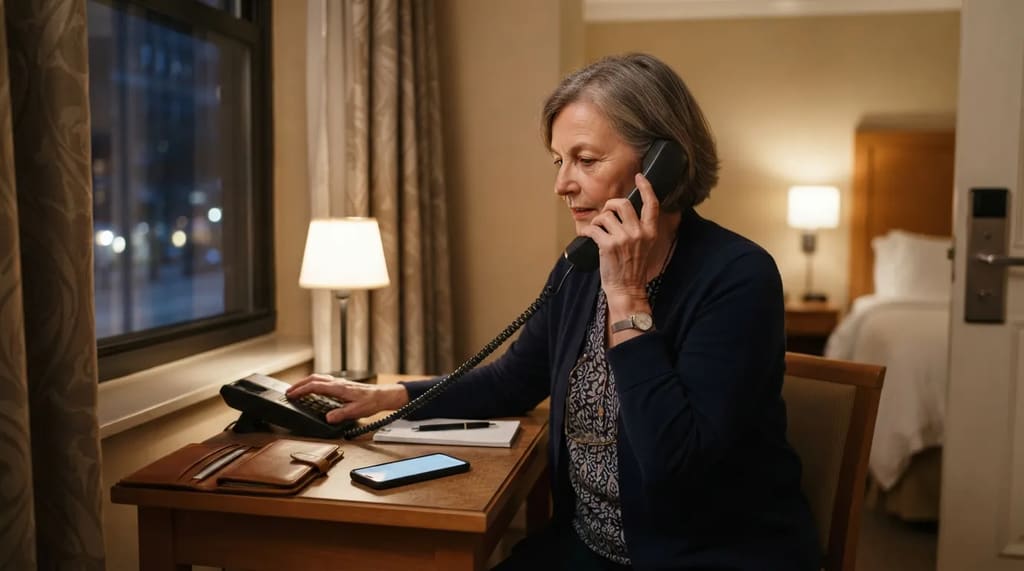
Pick up the room phone and listen for a dial tone before you do anything else. If you ever need the front desk or 911, you don’t want to learn then that the phone doesn’t work.
While you’re checking, look at the window locks and the balcony door. Notify the front desk if any lock isn’t functioning.
If the phone, a lock or the room itself seems wrong, ask to be moved. Don’t hesitate if you’re not comfortable, and the sooner you ask, the simpler the move.
Listen for a dial tone on the room phone before you unpack. It’s a ten-second test, and it’s the cheapest one in this article.
The desk number gets you a person. Whether it also reaches security is worth finding out, because some hotels run a separate line.
#6 – The Direct Line to Hotel Security
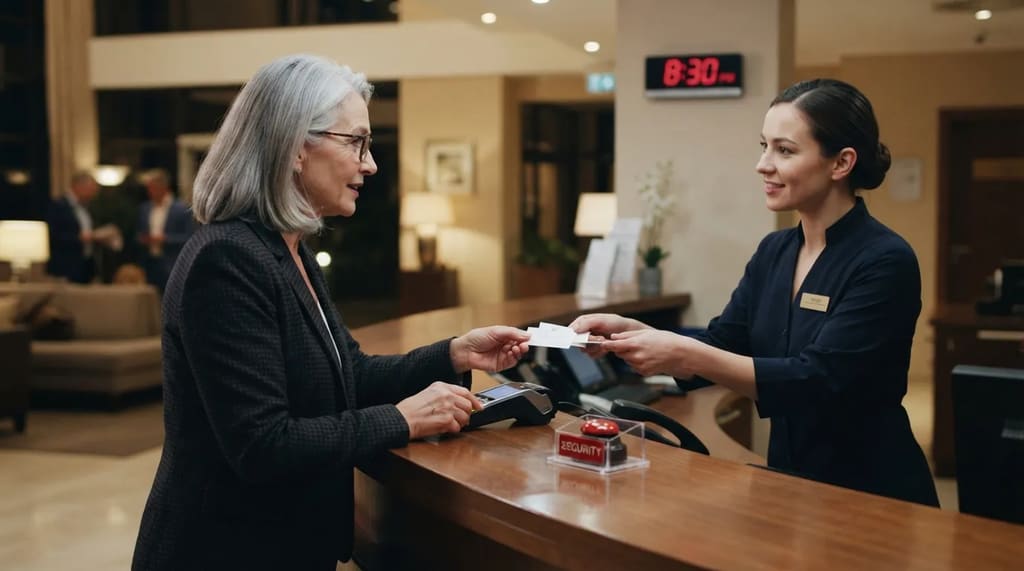
Ask at the counter what number to dial in an emergency. Also ask whether there’s a direct line to the hotel’s security team.
Many hotel phones have a direct line to security, but you won’t know which button to press unless the clerk tells you. If the clerk can’t name the number, that’s useful too, because it tells you the front desk is your only line.
Ask for a couple of the hotel’s business cards while you’re there. Keep one beside the room phone and carry one with you.5 6
The card gives you the hotel’s address and phone number in an emergency. That matters most when you head out for dinner and need a ride back after dark.
#5 – A Security Escort When the Lot Is Dark
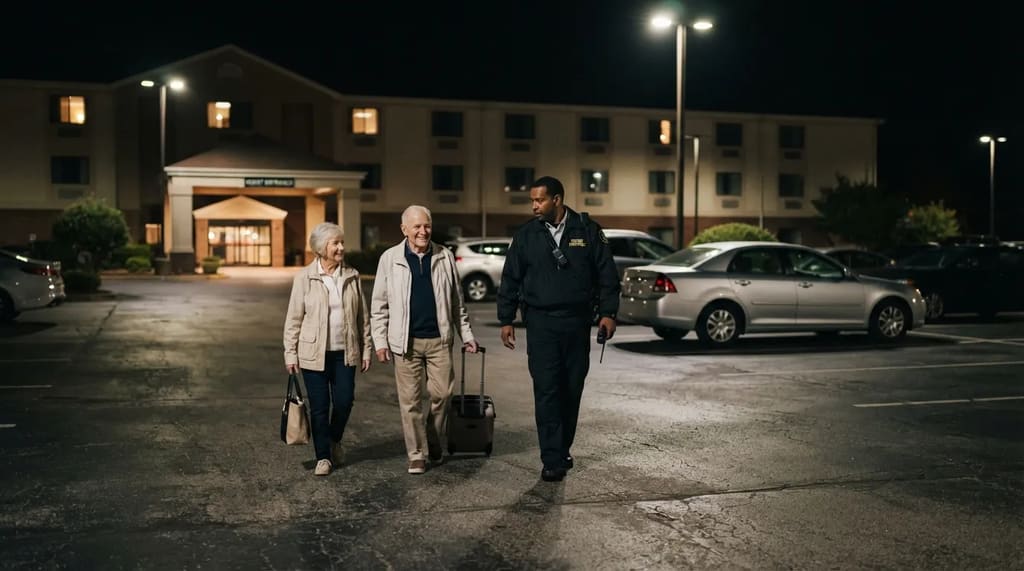
Hotel parking lots and hallways should be well lit. Report any outages to the front desk, and ask for a security escort if you feel unsafe.
A dim lot matters most after dark, when you’re carrying bags and the car is parked far from the door. The security number you collected a moment ago is how you’d ask.
Plan the request around staffing. Smaller independent hotels may not staff the desk overnight, and budget properties are the most likely to have limited overnight staffing, so ask about escorts at check-in rather than at 11 p.m.
Getting inside safely is half the job. The other half is what you carried in with you, and the desk can hold some of it better than your room can.
#4 – Valuables Held at the Front Desk
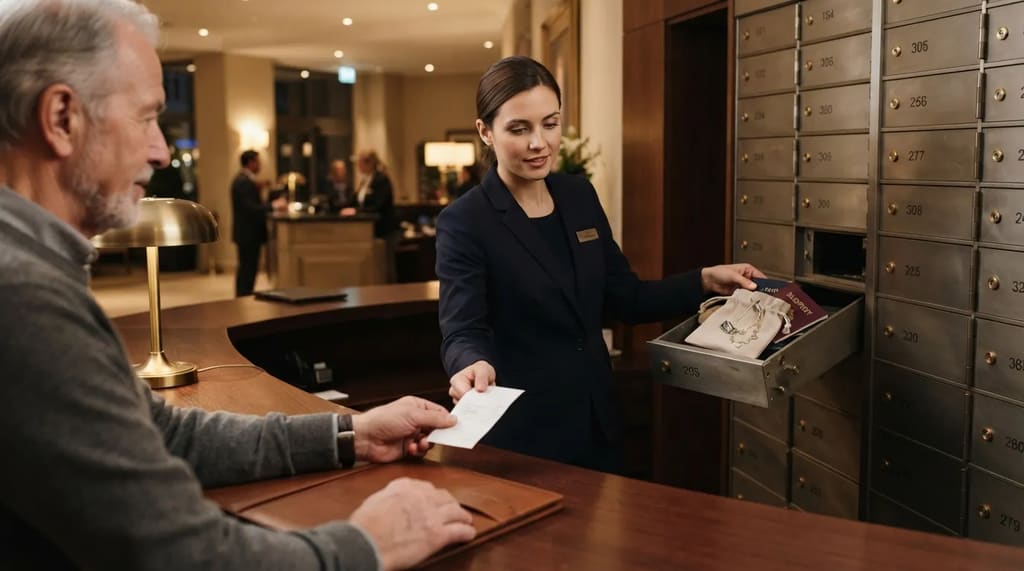
NBC News advises using the hotel safe or, better yet, leaving valuables at the front desk while you’re out. Get a written receipt for anything you leave and find out whether you’re covered in case of loss.6
For jewelry or anything you couldn’t replace, choose the desk over the in-room safe. The reason is paper: a receipt is a record, and a closed safe in your room leaves you as the only witness.
Passports, electronics and jewelry can go in the room safe or in the safety deposit boxes at the front desk, so the desk option exists at many hotels. Ask about coverage before you hand anything over, since a receipt without liability is only half the protection.
One more habit belongs at this counter. Don’t lay your credit card face up while checking in, because someone can snap a photo of the number in a moment.
Your valuables are accounted for. A knock on the door after dark is the situation where the desk’s answer matters most, and the answer is one phone call.
#3 – The Unexpected Knock Checked With the Desk
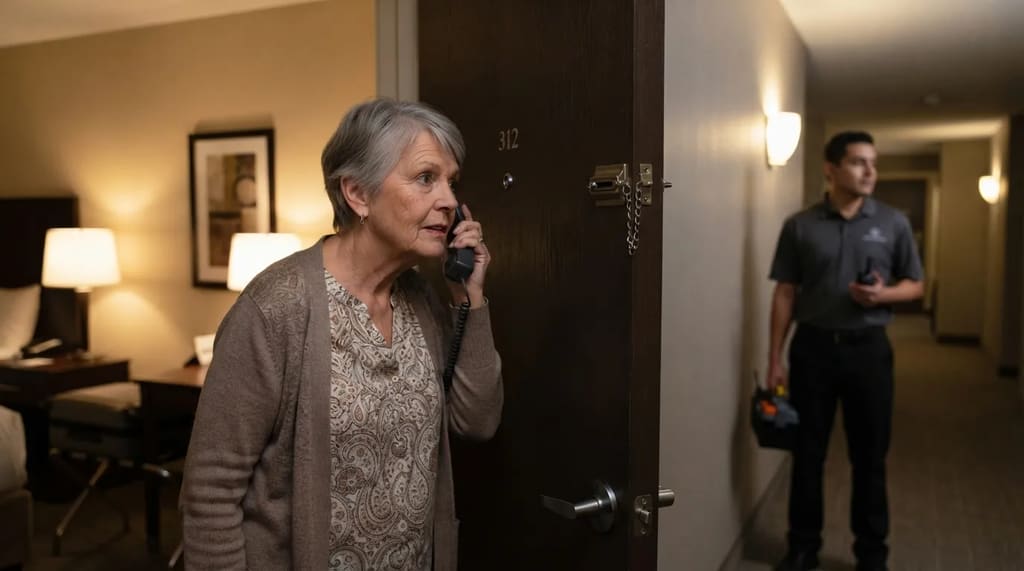
It’s evening, you didn’t call for anything, and a voice at the door says it’s from the hotel. Look through the peephole first, then call the front desk to ask whether someone was sent to your room, and for what purpose.5
The same rule covers the phone. If a caller claiming to be staff asks to come in for a repair, contact the front desk to confirm.
A uniform isn’t proof on its own. Call the front desk before you open the door, and a legitimate employee will wait the minute it takes.
At a Glance
- Check the peephole before you touch the lock.
- Call the front desk and ask whether anyone was sent, and why.
- Keep the door closed until the desk confirms.
- Apply the same check to phone callers who claim to be staff.
The Do Not Disturb sign belongs in this routine. Use it even when you’re out, and call the desk when you want service, since you can still arrange a housekeeping visit while the sign is up.
The best protection against that knock starts earlier, at the counter, with how the clerk hands over your key.
Related Stories From Travelbinger



#2 – Your Room Number, Written Instead of Spoken
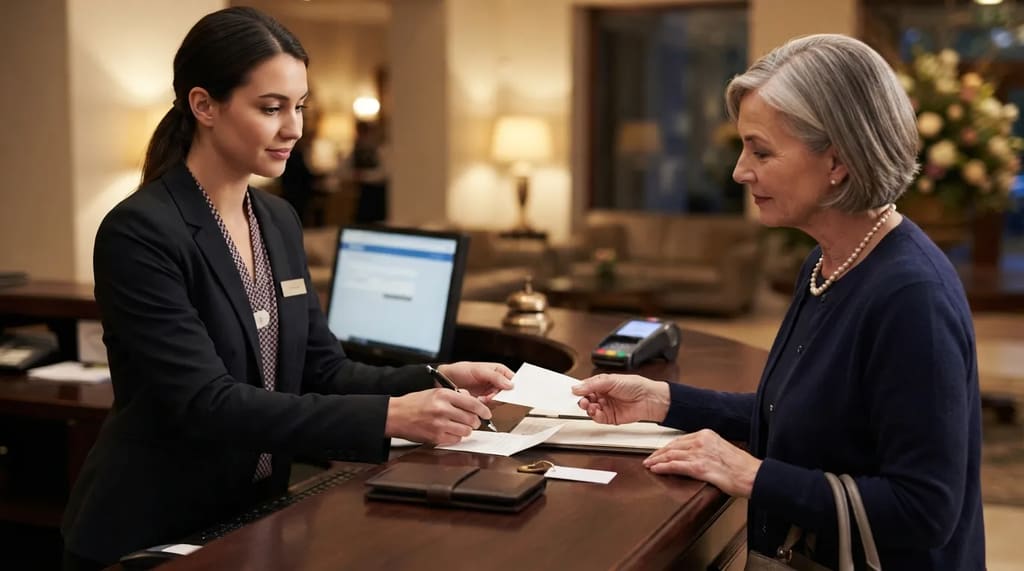
Hotels train their staff not to say guests’ room numbers out loud. A spoken number tells anyone in earshot where you’ll be sleeping, which is a particular problem for solo travelers.7
If the clerk says it anyway, ask for a different room and mention that for personal safety you don’t want the number said aloud. The change should come without any issue.
Don’t talk yourself out of it. Changing rooms over a spoken number isn’t overreacting, because it costs you a minute and removes the problem entirely.
Go one step further and ask the desk not to give out your name or room number, and to call you if anyone inquires.5 Take the key card out of its paper sleeve too, since a lost sleeve with the number on it lets a finder identify your room.
Everything above assumes a room is waiting for you. After dark, that depends on a call you make before early evening, and it’s the largest item on this list.
#1 – The Late-Arrival Call Before Six O’Clock

A room you booked can be given to someone else before dinner. Without a credit card guarantee, rooms are typically released at 6 p.m. local time, and some hotels release them as early as 4.
A guarantee changes the picture. A reservation backed by a credit card is held for you all night, and8 Marriott, Hilton and Hyatt properties generally accept arrivals until 2 a.m. or later when it’s guaranteed.
It still doesn’t replace the call. An automated overnight audit can mark a late reservation as a no-show unless the desk knows you’re coming, and a missed check-in can bring a no-show fee.
Quick Compare
- No guarantee: room typically released at 6 p.m., sometimes at 4.
- Card guarantee, no call: room held, but an overnight audit may flag a no-show.
- Card guarantee plus a call: room held and the desk expects you.
Small and budget hotels carry the most risk. Smaller independent hotels may not staff the desk overnight, and some stop checking guests in after 11 p.m.
Call before 6 p.m. and ask for a late-arrival note on the reservation. Request the direct front desk number rather than relying on the central reservation line, and use the same call to confirm any accessible room and to ask that your room number be written down.
A credit card guarantee plus a phone call beats hoping the night clerk feels generous. Of every item here, it protects the most money, because it’s the only one that decides whether you have a bed.
Ask While the Desk Can Still Say Yes
A front desk can do far more than hand over a key, but only for a guest who asks while someone is there to answer. The question that costs nothing at four in the afternoon can cost a night’s lodging at midnight.
So treat the desk as the first stop of the evening, not the last resort. Ten minutes of asking at check-in covers the things you’d otherwise discover alone in a hallway.
Which request from this list have you already made at a hotel desk, and how did the clerk respond?
- ConsumerAffairs Senior Hotel Discounts: https://www.consumeraffairs.com/news/you-may-qualify-for-a-senior-hotel-discount-at-55-here-are-the-hotels-to-ask-091526.html
- Hotel Chain Senior Discounts: https://clark.com/travel/hotels-senior-discounts/
- Daily Passport Senior Perks: https://dailypassport.com/senior-discounts-perks-hotels/
- PVA Hotel Accessibility FAQs: https://pva.org/wp-content/uploads/2023/09/UPDATED-Hotel-FAQs.pdf
- Hotel Safety Tips: https://www.gerlinglaw.com/hotel-room-safety/
- IFRC Hotel Security Tips: https://ifrcstaysafe.org/travel-security/hotel-security
- Reader’s Digest Room Numbers: https://www.rd.com/article/why-hotel-reception-writes-down-room-number/
- Late Arrival Hotel Guide: https://tania.pleasehere.com/2026/09/25/hotels-late-check-in-early-check-out/