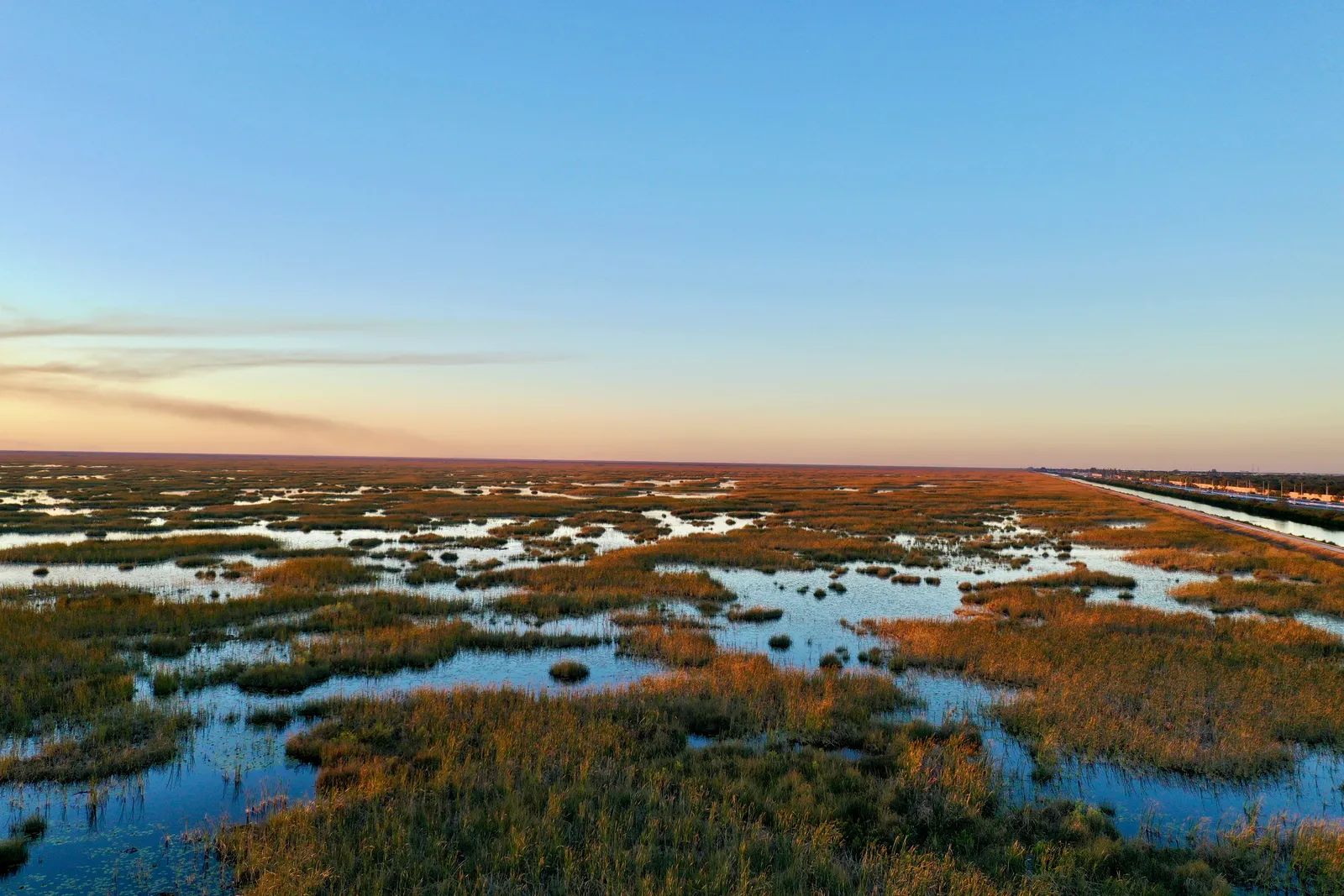
Flamingos, wading birds and threatened American crocodiles are appearing again in Florida Bay, where freshwater flows were cut sharply by decades of drainage. Helicopter surveys over the coastal Everglades in southern Florida now document how the wildlife is responding as water slowly returns. The pictures reveal dense mangrove forests, silty shallows and nesting colonies that few people see from the ground. The signs of recovery are real, but they remain tentative. ([1])
Water Is Coming Back, One Step at a Time
For much of the last century, the Everglades lost the freshwater that once spread southward into Florida Bay. Engineering projects built to control water for farming and development reshaped the flow, and the bay’s ecosystem suffered as a result. Under the Comprehensive Everglades Restoration Plan, a long-running federal and state effort to send water back to the southern Everglades and Florida Bay, those flows are gradually increasing.
Mark Ian Cook, an avian ecologist who leads the Everglades Research Group at the South Florida Water Management District, is tracking how birds respond to that change. He flies a survey about every two weeks during the breeding season. Through a small flap in the helicopter door, he photographs nesting colonies from the air, a method that gives researchers a clearer picture than observers can get on foot.
Why Photographs Matter More Than Counts
Some colonies contain tens of thousands of nests, far too many to tally by eye. Aerial images allow researchers to count them with greater reliability, and they create a record that can be compared from one season to the next. That consistency is what makes the survey useful for judging whether the plan is working for birds.
The surveys have captured a mixed picture. Wading bird nesting reached a record high in 2018, but numbers have since declined. The severe drought of 2025 and 2026 showed how quickly these birds respond to changes in water levels, and the decline has made water management a central question for the region.
| Measure | Earlier trend | Recent trend |
|---|---|---|
| Freshwater flow to Florida Bay | Sharply reduced by decades of drainage | Slowly increasing under the restoration plan |
| Wading bird nesting | Record high in 2018 | Declined since 2018 |
Wildlife Beneath the Helicopter
The aerial work does more than track nests. Cook’s surveys have documented returning wading birds, wintering waterfowl, American flamingos and threatened American crocodiles. Other scenes from the same flights are just as striking.
- Bottlenose dolphins herd mullet into rings of mud, where the fish become easier to catch.
- Nurse sharks mate in sheltered waters off Shark Point in Everglades National Park.
- Flamingos forage on remote mudflats that few visitors ever reach.
The nurse shark mating scene illustrates how much physical contact matters for sharks. The male grips the female’s pectoral fin in his mouth to hold position, a detail that is easy to miss from a boat but visible from the air.
Related Stories From Travelbinger
A Comeback That Is Still Fragile
The images show life returning to places that had been starved of water for generations. They do not show a finished recovery. The Everglades and Florida Bay still depend on how much water reaches them and when it arrives, and the birds’ drop in nesting since 2018 is a reminder that gains can reverse quickly.
Still, the flamingos and wading birds caught in these aerial frames offer a concrete measure of progress. Each season of photographs adds to the record, giving scientists and the public a clearer view of whether water returning to the Everglades is enough to bring the bay’s wildlife back for good.