Most first-timers treat embarkation afternoon as a free-for-all, and plenty spend it in a buffet line while the good stuff quietly disappears. Seasoned cruisers treat it like a clock, because this is when the dinner table, the spa slot and the best excursion get decided.
Twelve habits follow, and eleven of them protect a table, a slot, a bag or an hour of calm. The last carries a legal requirement and a crew record of whether you did it, and it has been mandatory since January 1, 2015, when passengers had to complete a safety muster before the ship departs or immediately as it leaves.1
#12 – A Phone Photo of the Deck Plan
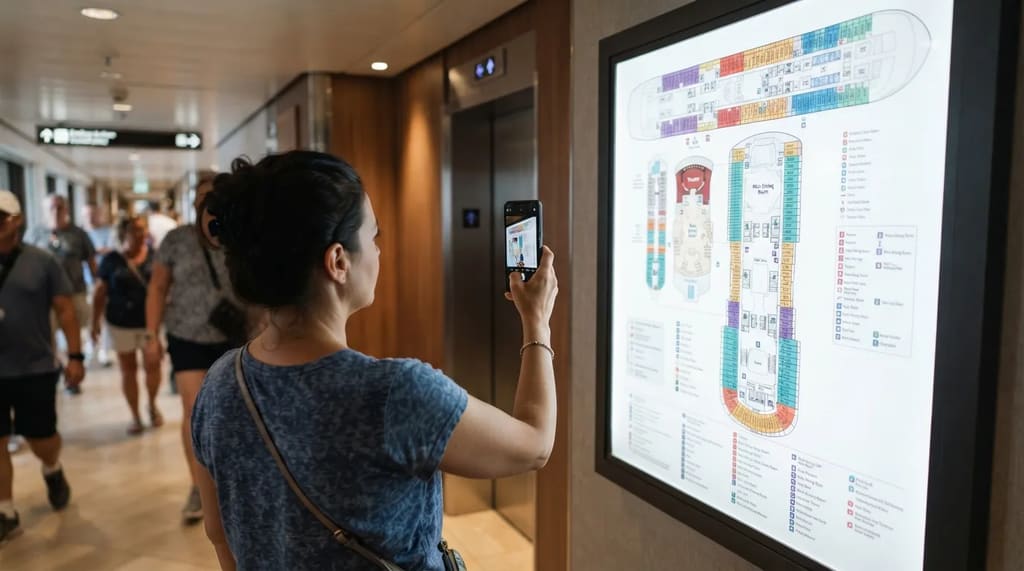
Deck plans are posted around most ships, and a quick phone photo of one, or a saved copy of the map in the cruise line’s app, takes about ten seconds. It is the cheapest habit on this list, and it saves a good deal of walking.
A large ship can feel like a floating maze, and the trouble usually shows up when you are hunting for the theater five minutes before a show. A short lap of the places you will use most spares you a lot of backtracking later in the week.
At a Glance
- Snap the posted deck plan, or save the map in the app.
- Mark your cabin and the nearest stairs and elevators.
- Mark your muster station before the corridors fill up.
- Mark the theater and main dining room, the two places you will hunt for under time pressure.
Note whether your cabin is forward, midship or aft, because most ships label their stairs and elevators that way. Knowing that one detail makes every later direction easier to follow.
Put your muster station on that lap, because many lines still ask you to visit it for verification even when the safety briefing itself is electronic.2 Finding the spot while the corridors are quiet is far easier than finding it after an announcement, with passengers moving in every direction.
The map shows where the pools are, though not when they are empty, which depends on the hour you go.
#11 – Pool Chairs While Other Passengers Unpack
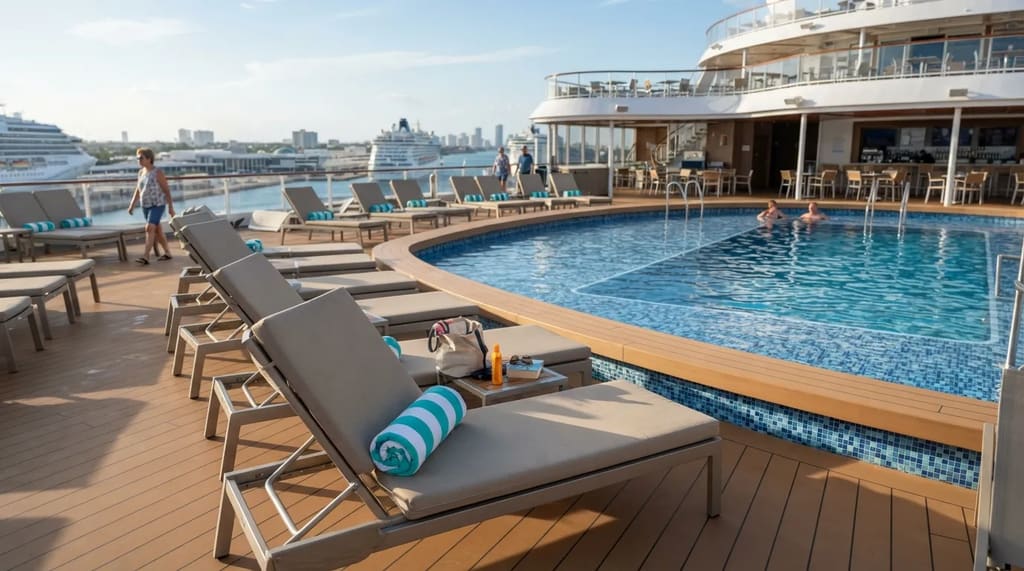
Pools are usually quiet and uncrowded on embarkation day, which makes it one of the better times to claim a chair by the water. If a calm hour in the sun is part of why you booked the cruise, this is the easiest time to get it.
A swimsuit in your carry-on bag means you can be at the pool while your suitcase is still working its way through the ship. Sunscreen goes in the same bag, so nothing about the plan depends on luggage you do not yet have.
Do not count on every bar and restaurant being open, since only some serve that afternoon while all of them run in the evening. Check the daily schedule before you plan a drink at one particular spot.3
More attractions open as the afternoon goes on, so an early look at the pool deck tells you what is running and what is not yet. Water slides and sports courts follow the same pattern.
#10 – Lunch Away From the Buffet Rush
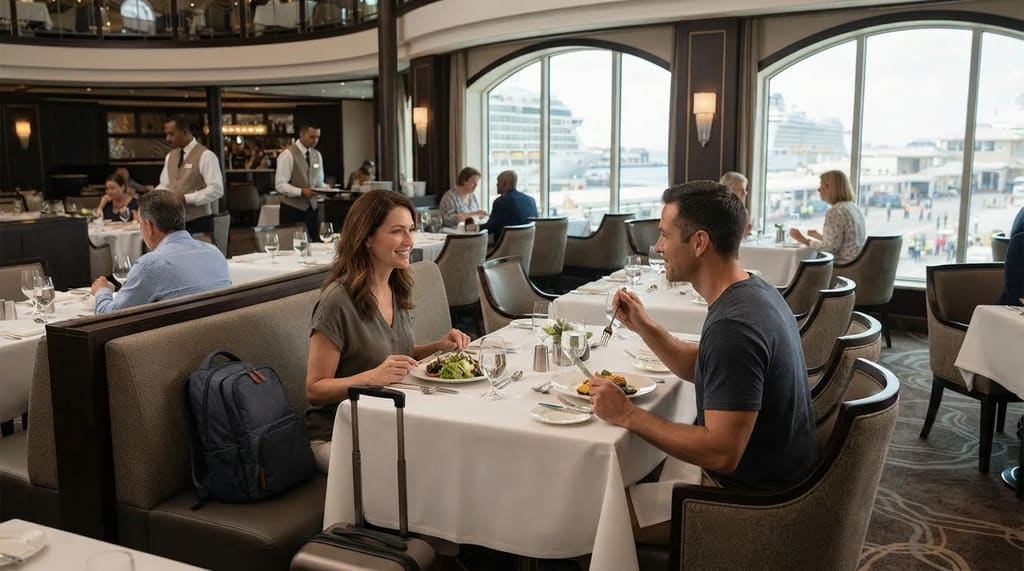
The buffet is often one of the busiest places on the ship on embarkation day, because hungry passengers arrive at roughly the same time.3 A tray in a long line at that hour is a poor use of your first afternoon.
The main dining room often serves embarkation day lunch with full service and fewer crowds.4 I would take a seated lunch over the buffet line, and even letting the first rush pass beats joining it.
Casual venues elsewhere on the ship may also be serving, and their lines are often shorter than the buffet’s. A quick look at the daily schedule tells you which ones are open.
If you can drop your carry-on at your stateroom when you board, do that first. If you cannot, keep the bag close, because the first afternoon belongs to whatever you carried on.
Lunch takes care of the appetite, though a different set of appointments is already filling while you eat.
#9 – Spa Tour First, Booking Second
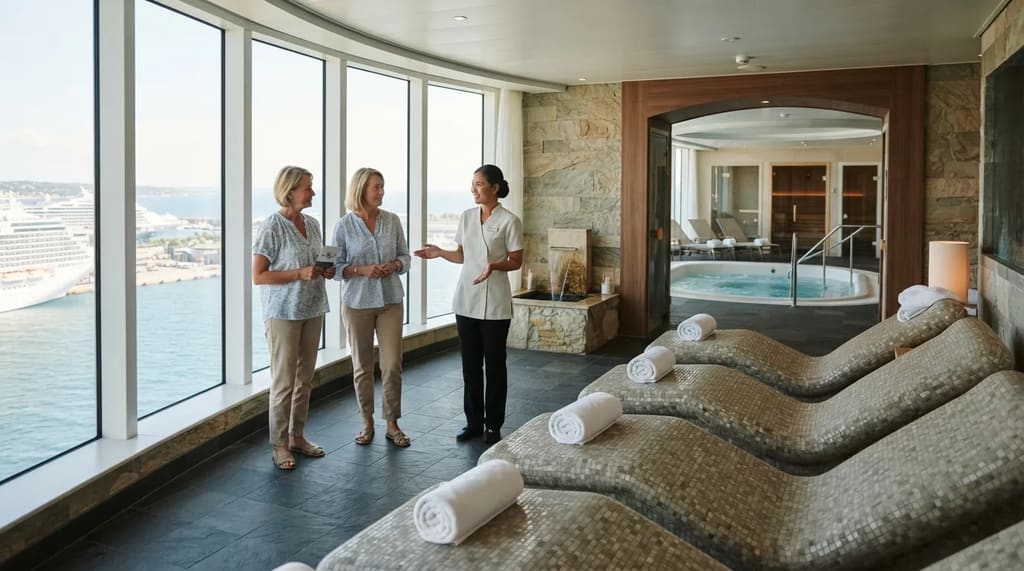
Day one often comes with spa deals and specials, and the spa is open to everyone, so you can tour the thermal suite if the ship has one. That makes it a low-pressure way to see what you would be paying for.
You might get to sample a massage or win a free treatment in the first-day raffle. Royal Caribbean‘s booking page also warns that spa appointments tend to fill up quickly.
Popular treatments and sea-day slots can fill up, but that does not make every offer a bargain.4 I would book on the first afternoon only if you want a particular sea-day time.
Leave with a short list of the treatments and times you like, not a signed receipt. You can always book later, and you cannot un-book the impulse.
Port days call for their own bookings, and those are made at a different desk.
#8 – Questions for the Shore Excursion Desk
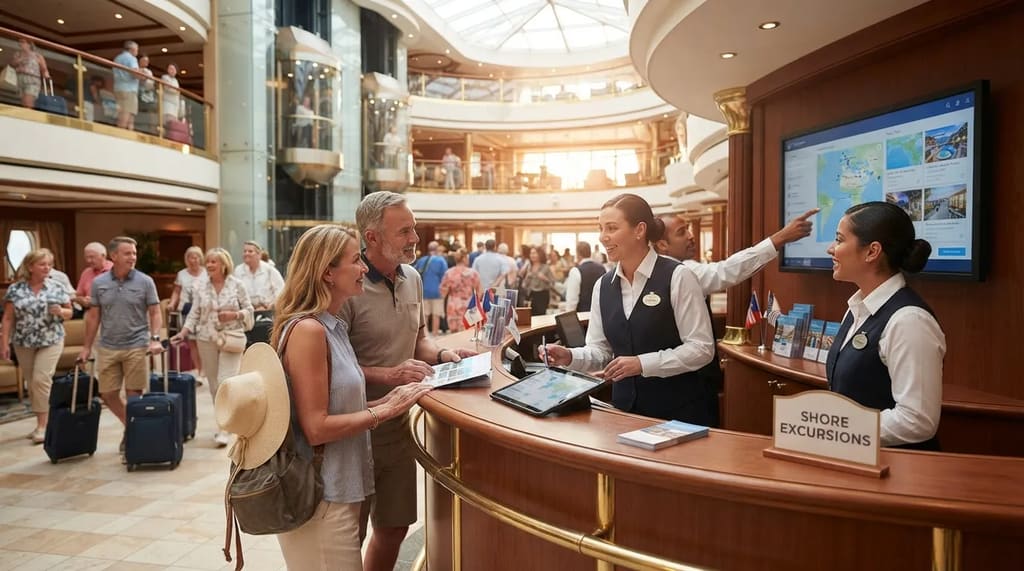
The shore excursion desk takes bookings on the first day. Some tours are more popular than others and their spots fill quickly, so the outings you would hate to miss deserve your attention first.
Look at ship-sponsored tours and independent ones side by side. Outside vendors often charge less than the cruise line for a similar or even identical excursion.
Three questions are worth asking before you hand over a card:
- What is the cancellation policy for this tour? It is worth checking for every excursion you reserve.
- How long does it last, and what time are you due back on the ship?
- Does an outside operator offer the same outing for less?
My view is that you should book only the one or two outings that would spoil the trip if you missed them, and leave the rest open until you have compared prices. If you go independent, the ship’s departure time becomes yours to watch, so leave a generous cushion.
#7 – Dining Time and Table Changes Before Dinner
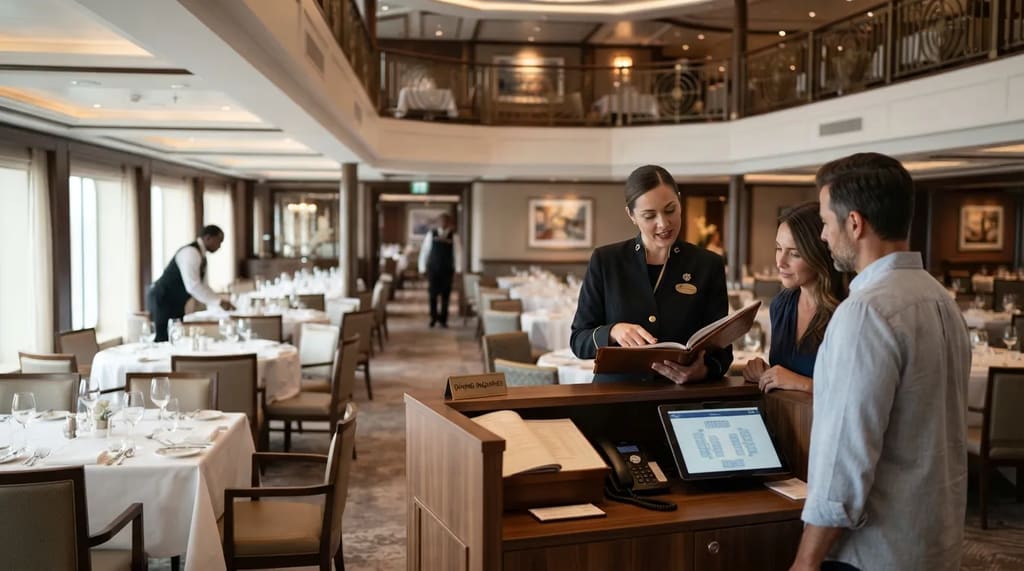
If you need to change your dining time, request a larger table or ask about special accommodations, embarkation day is the best time to handle it, before dinner service starts. Staff have the most room to help before the evening rush.
Familiarize yourself with the dining room and confirm any seating arrangements you planned ahead of time. Where your line assigns a time and table, check that both suit you.
Changes are not guaranteed, but embarkation day is a good time to ask about alternatives if your arrangement does not work.3 That is one more reason to ask in the afternoon, not at the host stand at dinnertime.
If you have dietary needs or want to mark an anniversary, say so at the same visit. One conversation then covers it for the whole cruise.
A settled table covers the main dining room, but the evening’s shows may need a booking of their own.
#6 – Show Reservations and the Cruise App
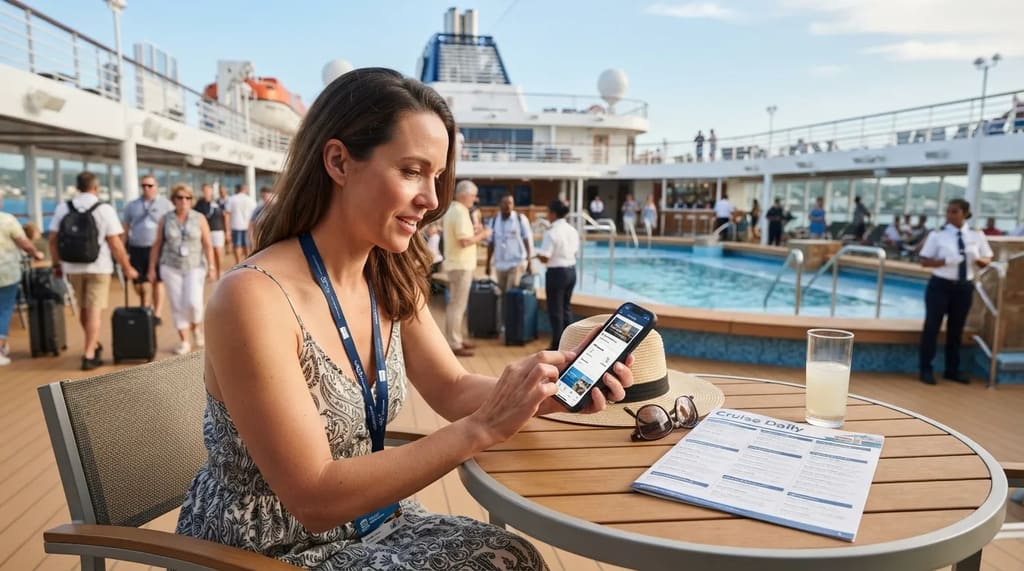
Some cruise lines open entertainment reservations before sailing, while others release additional spots on board. Find out which applies to yours, because there is no reason to stand in a reservation line for something already sorted.
Carnival’s HUB app, for example, handles shore excursions, dinner reservations, a Wi-Fi package and online check-in.5 Other lines have their own versions, and the app is usually the first place to look.
Quick Compare
- App: best for bookings and the daily planner, with no line to stand in.
- Desk: best for questions the app cannot answer and one-off requests.
- Daily planner: best for seeing what is open before you start wandering.
Scroll through the app or the daily planner before you start wandering, so you can map out your afternoon and evening. That ten minutes tells you which of the earlier habits, such as the spa tour or the excursion desk, fall at an hour that suits you.
If the app does the booking, stay out of the line. Use the desk for questions the app cannot answer.
The schedule covers the ship’s calendar, though not the room that should be ready for you by now.
#5 – A Five-Minute Stateroom Inspection
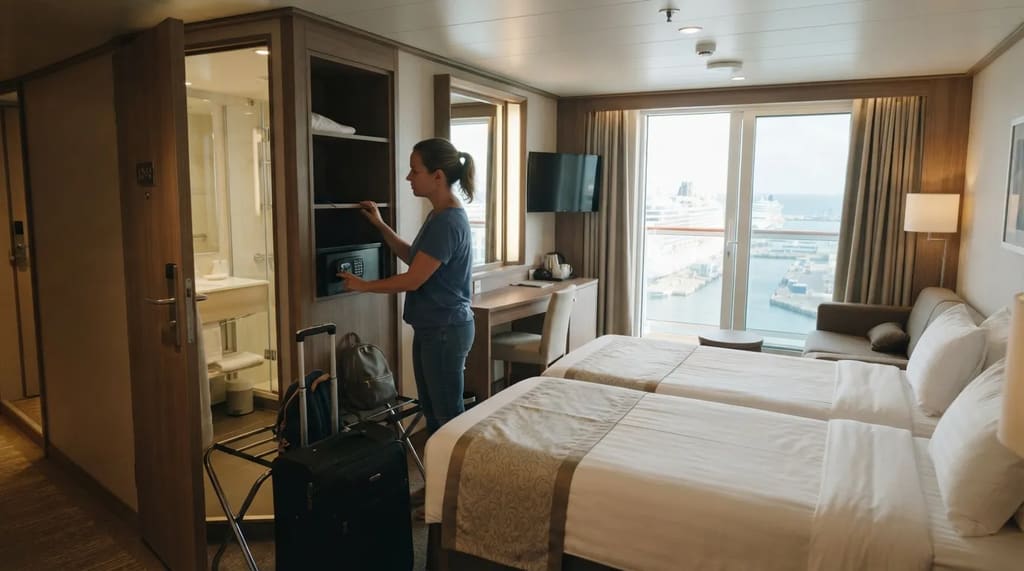
The room that should be ready by now is where the afternoon’s first quiet win is waiting. Cabins on most ships open in the early afternoon, though the exact time depends on the line and the ship.
When your door unlocks, spend five minutes inside before you do anything else. Check that the beds are set up as you booked them, the bathroom works, the safe opens and the balcony door slides shut.
Problems are far easier to fix on day one, when the crew has time to react. A broken lock reported on night three turns into a hunt for the right person.
If your steward is nearby, introduce yourself and ask for what you will want later. Extra pillows, an ice bucket or the beds split into two singles are common requests.
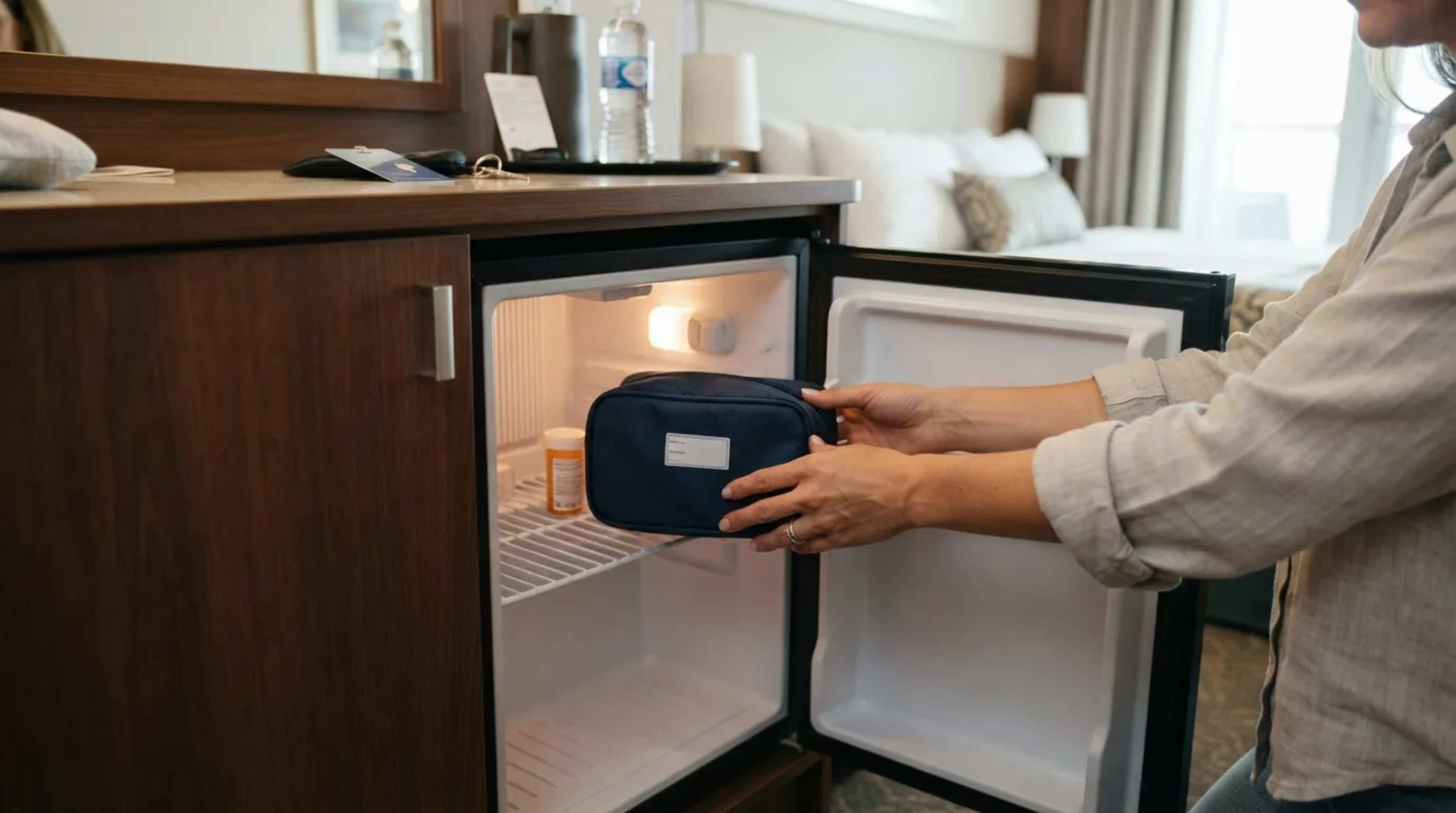
Do not expect your suitcases to arrive the moment you do, since delivery can stretch into the evening. Keep medicine, documents and chargers in your carry-on so the wait costs you nothing.
Your room is checked, but the phone in your pocket is about to become a surprise on your bill.
#4 – Airplane Mode Before the Pier Slips Away
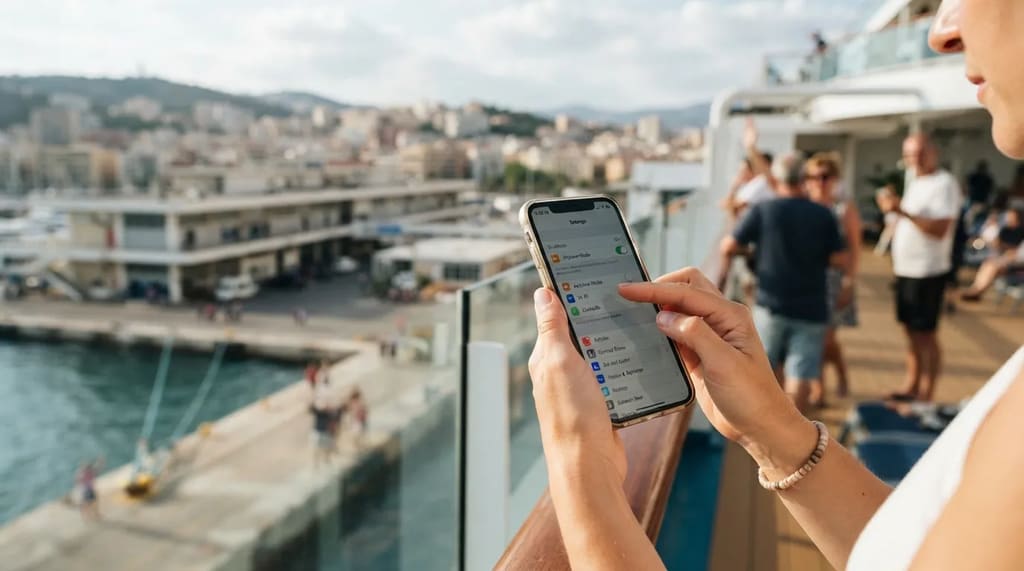
This habit protects your credit card, not your calendar. Once a ship leaves port, phones can connect to the ship’s own cellular network, and that can mean international roaming rates even though land is long gone.6
Seasoned cruisers switch to airplane mode before the ship pulls out.6 7 They turn Wi-Fi back on only if they have bought a package.
Many travelers also turn off cellular data and data roaming as a second layer of protection. It takes about thirty seconds, and it is a lot cheaper than a bill that arrives after you get home.
Your phone will not make a speech about what it is connecting to. The first sign of trouble can be a charge on your next statement.
Many cruise apps include a chat feature that works over ship Wi-Fi, though pricing and rules differ by line. Check yours before you decide you need a full internet package.
Staying offline avoids the charges you did not choose. The next habit is about the ones you did.
#3 – A Look at Your Onboard Account and Package Fine Print
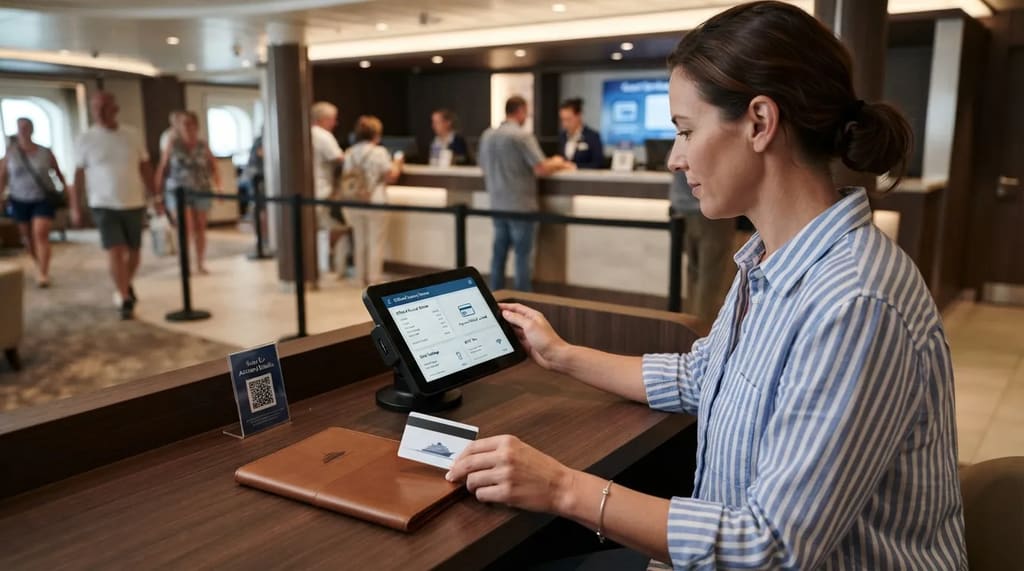
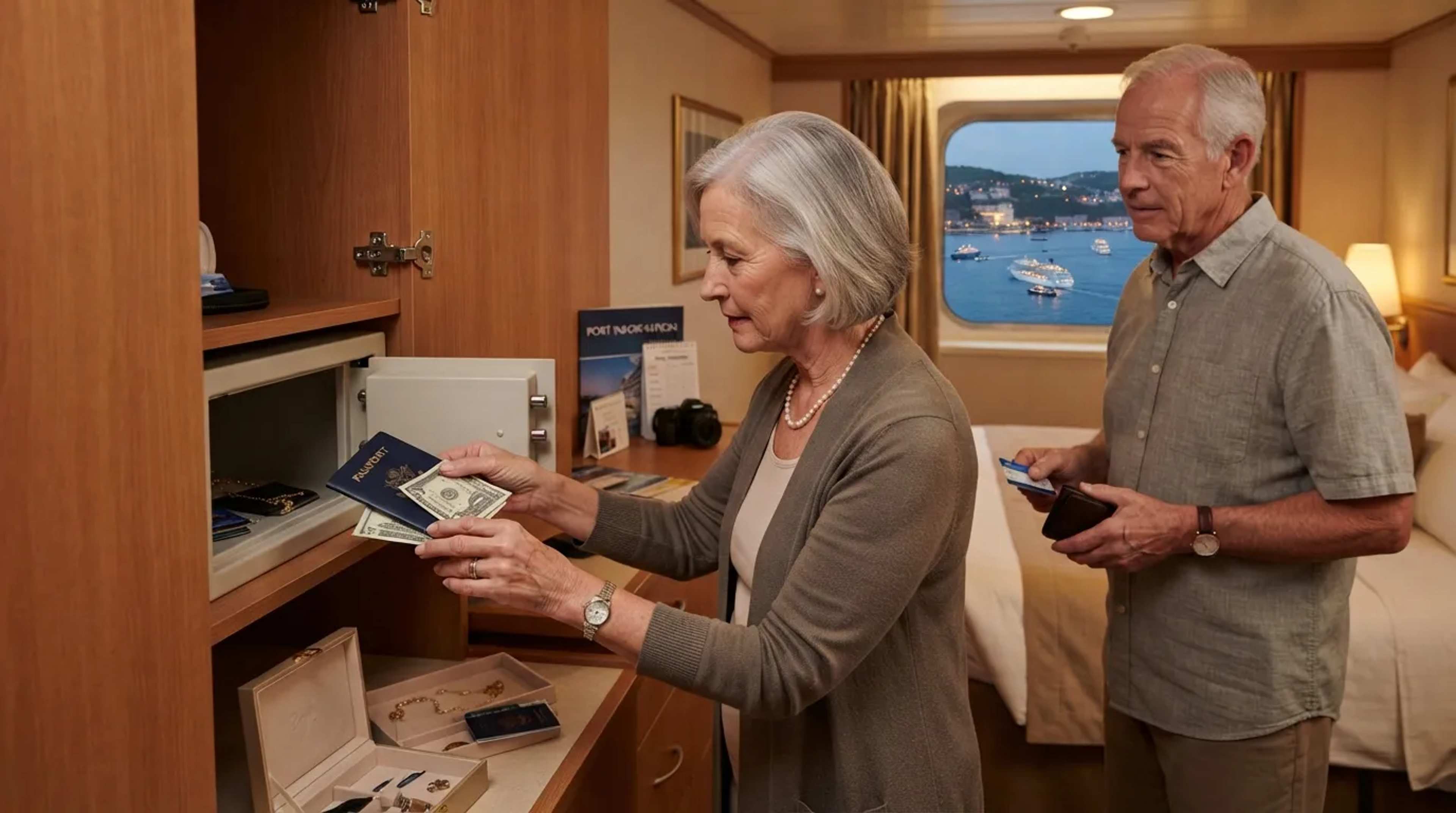
On most big ships your key card is both your room key and your wallet. Before the evening rush, confirm that a payment card is linked, so a first drink does not become a trip to guest services.
This is also when drink package and Wi-Fi decisions come due. Prices, deals and availability vary by line, and some offers change after you sail.
Read the terms before you buy, because the fine print is where packages quietly differ.
Worth Knowing
- Many lines require every adult in a stateroom to buy the same drink package.
- Many lines cap the price of each drink the package covers.
- Offers can change after you sail, so a deal today may not repeat.
- Your key card works as your wallet, so link a payment card early.
Then do the math with your own habits, not the brochure’s. A package is a bet that you will drink more than its price, and I would only take that bet if I could picture winning it.
Check your onboard account once on the first night and again later in the week. A wrong charge is easiest to fix while the staff who can fix it are still a short walk away.
The money is settled, and the last two habits have nothing to do with comfort. They are about what happens if something goes wrong.
#2 – Life Jackets and the Map on Your Cabin Door
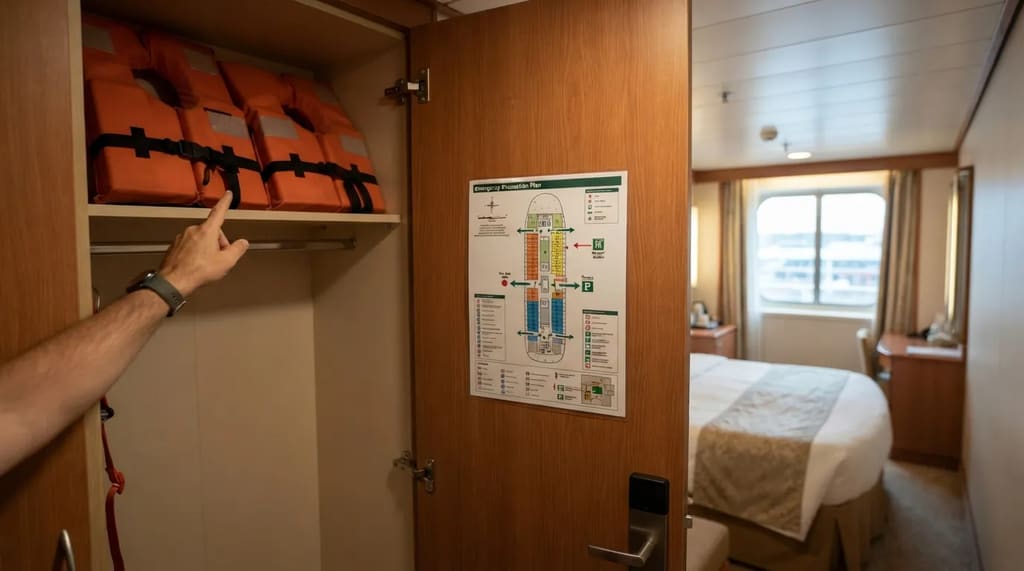
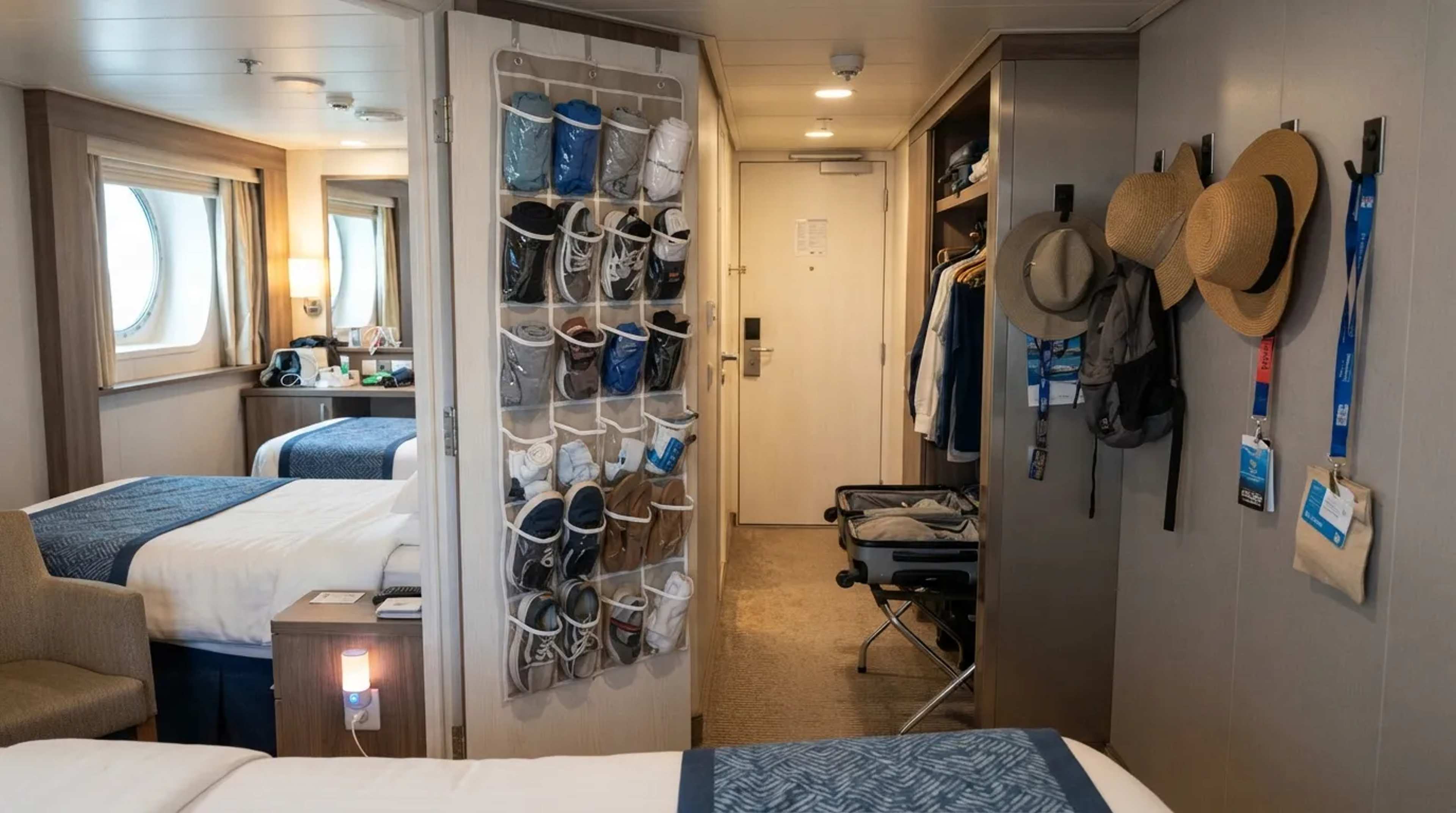
Your stateroom holds two safety items most passengers never look at. One is the life jacket for each guest, often stored in a closet or under a bed, and the other is the emergency map posted on the back of your door.
Related Stories From Travelbinger


Count the life jackets against the people in your cabin. If you travel with a small child, ask your steward or guest services about a child-size jacket, because ships carry them and they are normally brought on request.
The door map shows the way to your assigned muster station. Many lines also list the station in the app or on your key card, so compare the two and make sure they agree.
Then walk the route once, from your door to the station, while the corridors are still calm. A few minutes now beats finding your way later with hundreds of people moving in the same direction.
Nobody remembers this habit when everything goes well, and that is exactly how it should be.
Every habit so far was optional. The last one is not, and the crew will know whether you did it.
#1 – Finishing Your Muster Steps Before Anyone Has to Call Your Name
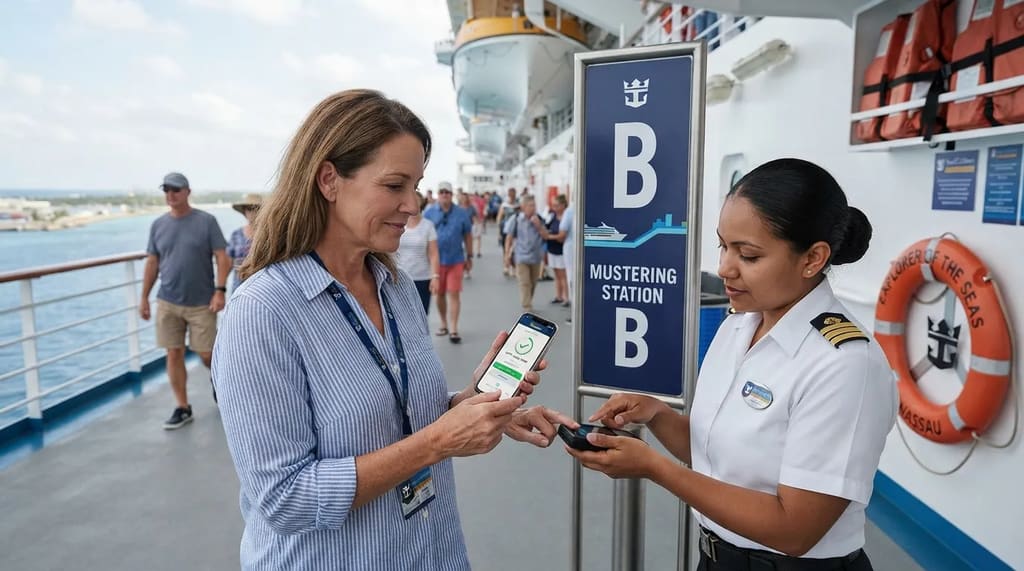
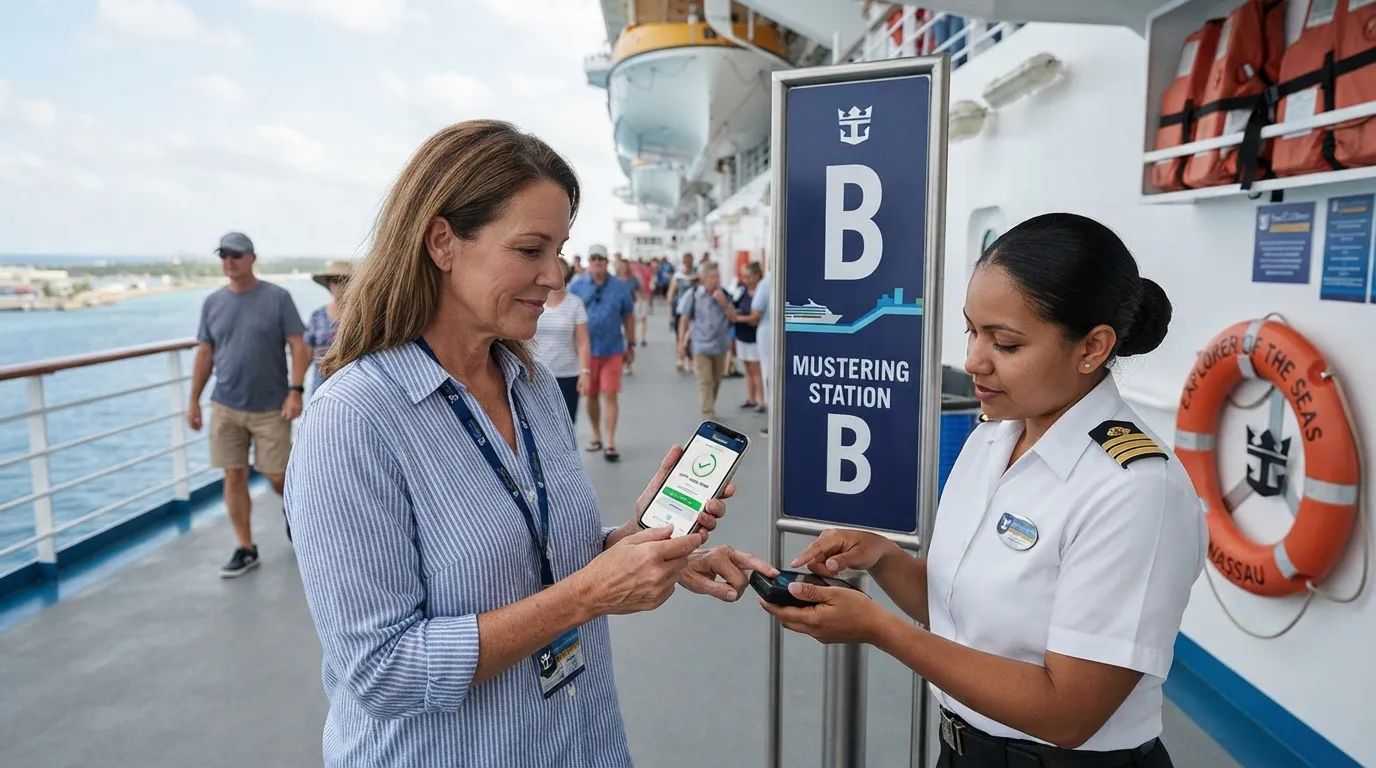
This is the habit with the legal weight behind it. Under international maritime safety rules, passenger musters must take place before the ship departs or immediately as it leaves, and that has been the case since January 1, 2015.1
Procedures differ by line, so read the notice in your cabin or the app. On many ships the process starts with a safety video on your phone or stateroom TV, followed by a short check-in at your assigned muster station.
Royal Caribbean’s app-based version, for example, has guests watch the video on their phones before checking in at their station.2 Whatever your line’s version looks like, the point is to complete both halves.
Fast Facts
- Timing: before the ship departs, or immediately as it leaves.
- In force since: January 1, 2015.
- Two halves on many ships: a safety video, then a station check-in.
- Cabin numbers that have not checked in are often called out over the speakers.
Do the video early, then head to your station as soon as the announcement or the app tells you to. Leaving it for the last minute is how people end up checking in with a beach bag, a drink and a half-finished unpack.
The crew keeps track of who has checked in, and cabin numbers that have not are often called out over the ship’s speakers. Nobody wants their cabin number read aloud while a ship full of strangers listens.
Finish it first and the rest of the afternoon is yours, with nothing left hanging over the sailaway.
Taken together, the twelve habits share one pattern. Each trades a few minutes of effort in the quiet hours for something that gets harder to win once the crowds arrive.
So when the gangway opens, skip the buffet line, snap the map and get the muster out of the way first. The ship will leave on its own schedule, and the sunset looks better when your list is already behind you.
Bonus: The Port-Day Safeguard Nobody Tells You
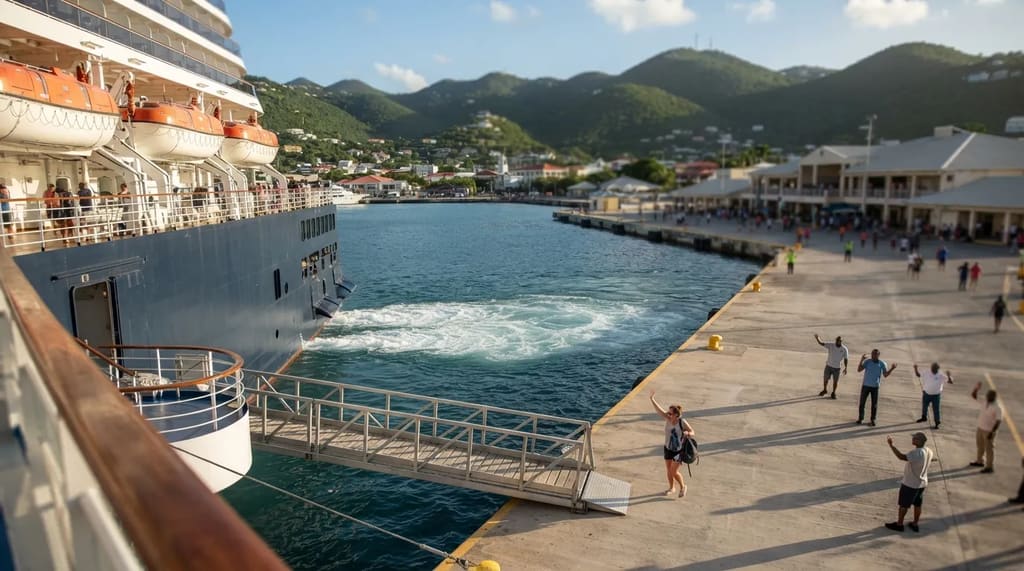
The costliest mistake on a cruise is not a pricey drink package. It is watching your ship leave a port without you, and the most common cause is a clock mix-up, not bad luck.
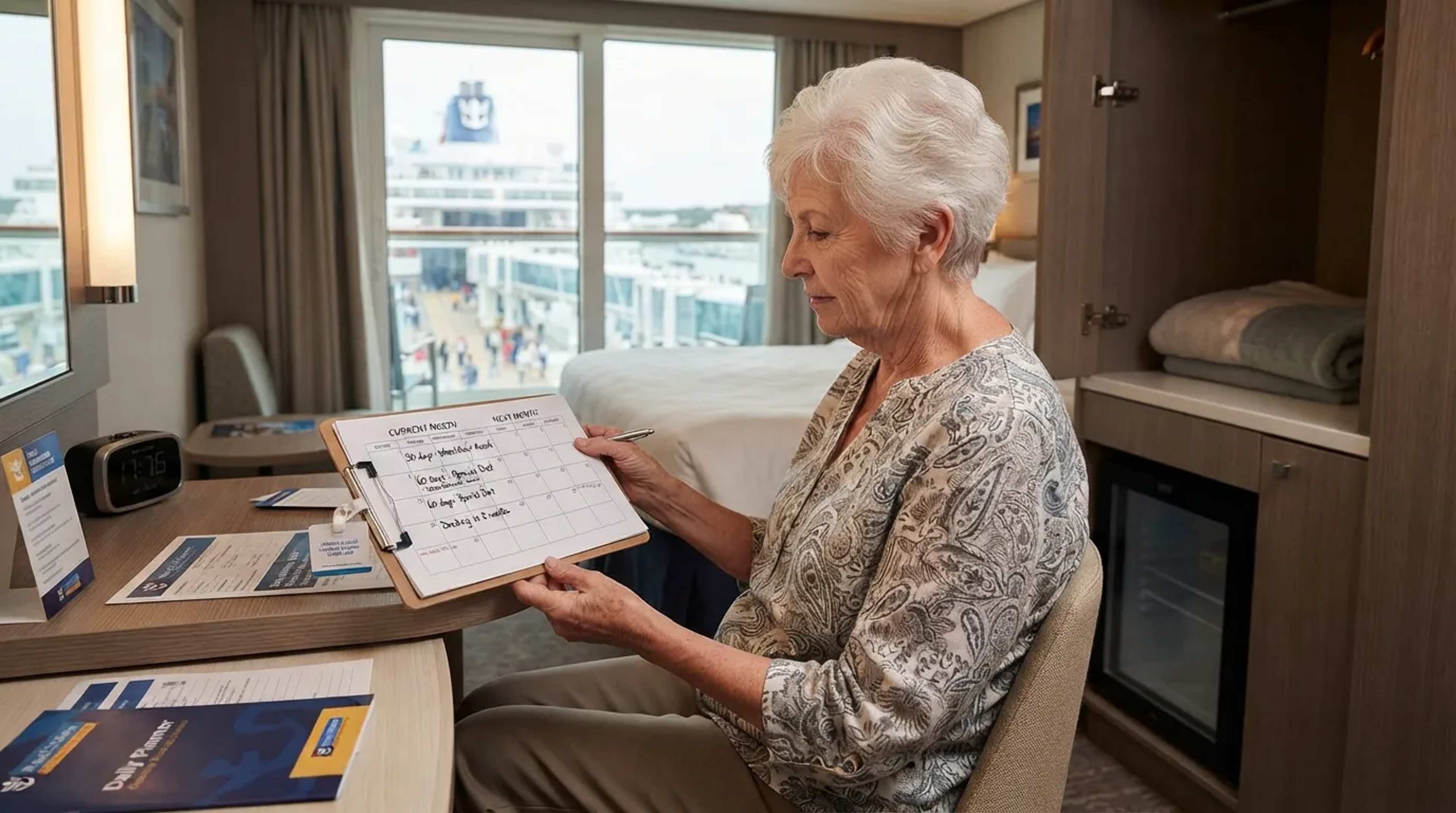
Set up a simple missed-ship safeguard on embarkation afternoon, while you are already poking around the app and the daily planner:
- Screenshot the itinerary. Save each port’s arrival time and the all-aboard time, which usually falls well before the ship actually sails. Screenshots still open in airplane mode.
- Find out which clock rules the day. Ask guest services or check the daily planner whether ship time matches local time in each port, because some ships keep a different time from the shore.
- Set two alarms. Make one for a comfortable buffer ahead of all-aboard and one earlier as a warning, and do not rely on your phone’s clock changing on its own while it is in airplane mode.
- Save the emergency contact. Photograph the port agent or emergency number printed in the daily planner, so you have it if you are ever running late.
If you book independent excursions, treat the all-aboard time as your deadline and plan to be back early. The ship’s own tours are the ones it tends to wait for.
- IMO Passenger Drill Requirements: https://www.imo.org/en/mediacentre/pressbriefings/pages/45-solas-eif-.aspx
- Royal Caribbean Muster Guide: https://www.royalcaribbean.com/guides/what-is-muster-drill-on-a-cruise
- Cheapism Embarkation Checklist: https://www.cheapism.com/12-things-experienced-cruisers-do-during-the-first-two-hours-after-boarding/
- Yahoo Embarkation Tips: https://travel.yahoo.com/cruises/articles/17-things-experienced-cruisers-embarkation-082011623.html
- Carnival HUB App: https://www.carnival.com/hub-app
- Kiplinger Cruise Phone Guide: https://www.kiplinger.com/personal-finance/travel/how-to-use-your-cell-phone-on-a-cruise
- Celebrity Cruises Cell Phones: https://www.celebritycruises.com/blog/cell-phones-on-a-cruise