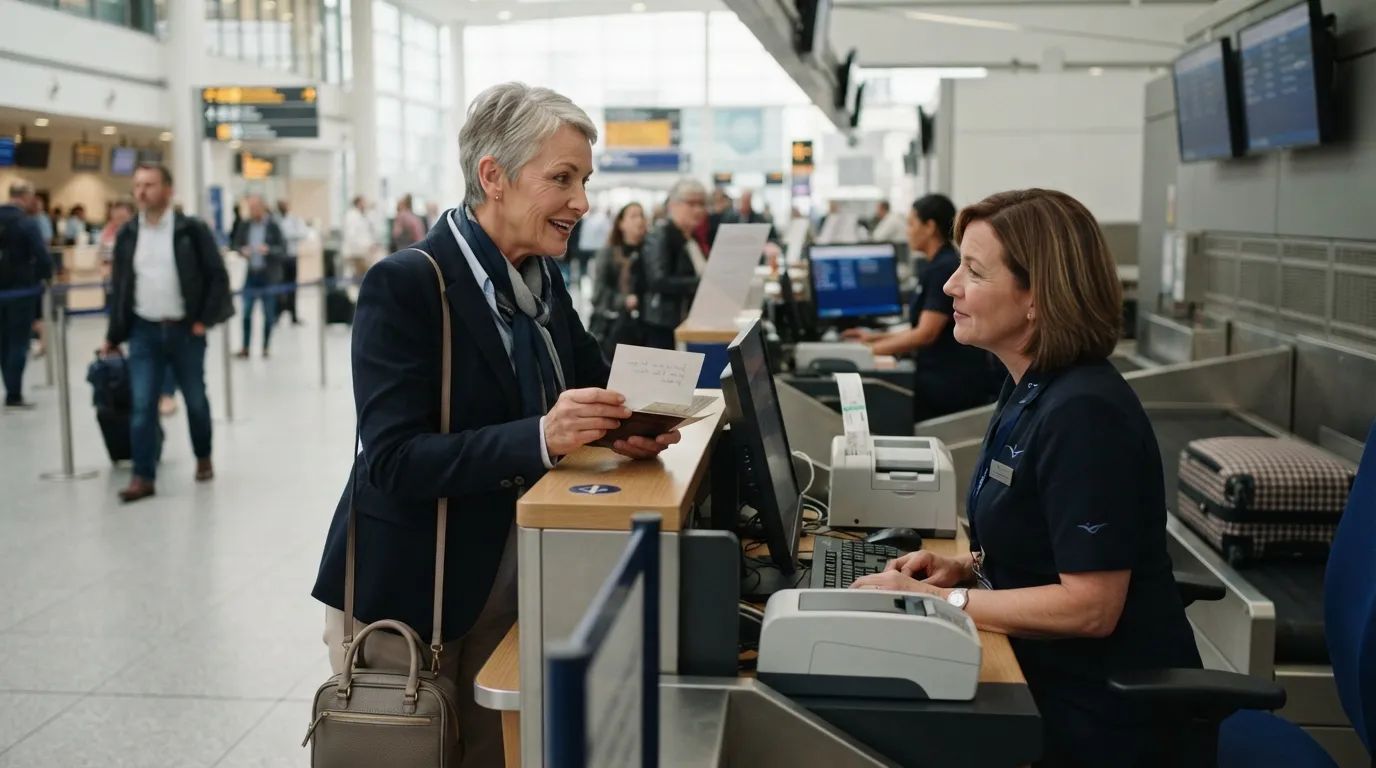
Picture the line at the ticket counter: a retired couple, two suitcases, and a total that climbs before anyone has picked a seat. A first checked bag costs about $45 each way on the big U.S. carriers after the spring 2026 increases, so one bag apiece on a round trip costs a couple $180.1
Here’s the twist. Turning 60 doesn’t erase most of those charges, but the right words, said politely and early, erase several of them.
The item at the end of this list can return an entire fare, and the first thing an agent offers you may be a voucher instead. Start with the request that gets made most often and works least.
#12 – The Senior Fare Question at the Counter
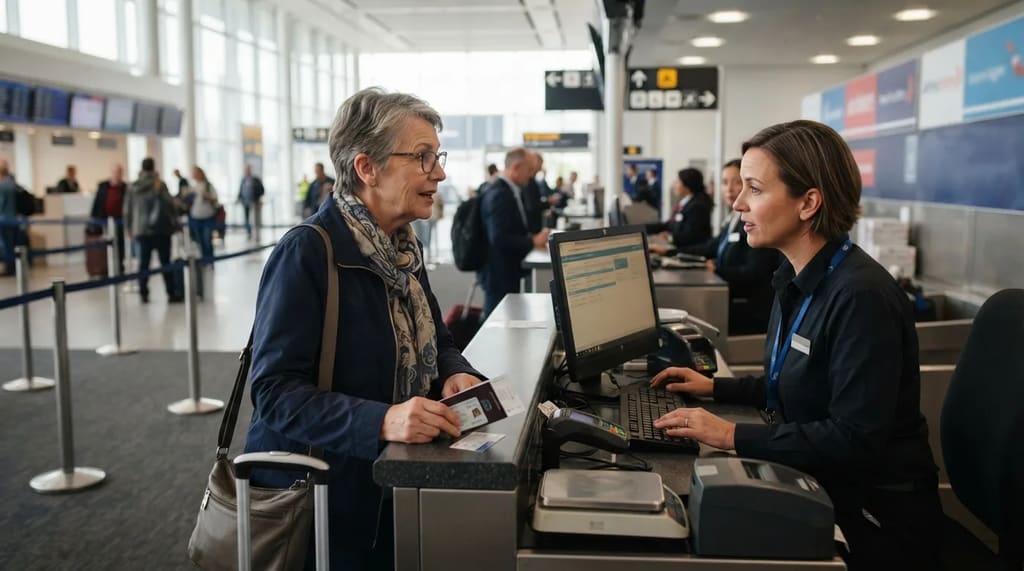
The senior discount is the request that gets made first and rewarded least. Southwest ended its senior fare program in 2019, so an agent at that counter has nothing to apply.
Most major U.S. carriers no longer publish an age-based fare, so the agent usually quotes the regular price. Some airlines have been known to sell age-linked fares by phone on select routes, which is the only reason the question is still worth asking.
State your age and route first, then ask whether a senior price exists. Ask the agent to price the trip twice, once with the senior fare and once at the lowest public fare, then book whichever is lower.
A refusal here costs you nothing, and it tells you whether an age-based fare exists on your route. The charges that follow are where the larger money sits.
Even when the ticket price is settled, the phone line you used to get it may add a charge of its own for the privilege of speaking to a person.
#11 – The Phone-Booking Fee and the Accessibility Exception

Booking by phone can add a per-ticket charge, and age alone won’t remove it. Elite members are the ones who keep it waived, and no published policy waives it for age, so an agent may help but nothing promises it.
What works is a reason the website fails you. At some carriers the fee is waived for customers with accessibility needs, those affected by flight disruptions, and cases where online booking is not feasible.
Say at the start of the call why the website doesn’t work for you. Vision, hearing, mobility or a memory condition can all be reasons, so name yours in the first sentence rather than the last.
Then ask the agent to confirm the fee is waived and to note it on your reservation. Some reward bookings made through a contact center still carry the charge, so don’t assume the waiver applies until you hear it said.
Worth Knowing
- Elite status keeps the phone fee waived; age does not.
- Accessibility needs can qualify you at some carriers.
- Flight disruptions can also qualify you.
- Ask the agent to note the waiver on your reservation.
The automated seat map has the same blind spot, and it can charge you for sitting beside the person who helps you travel.
#10 – The Seat Fee When a Companion Helps You Travel
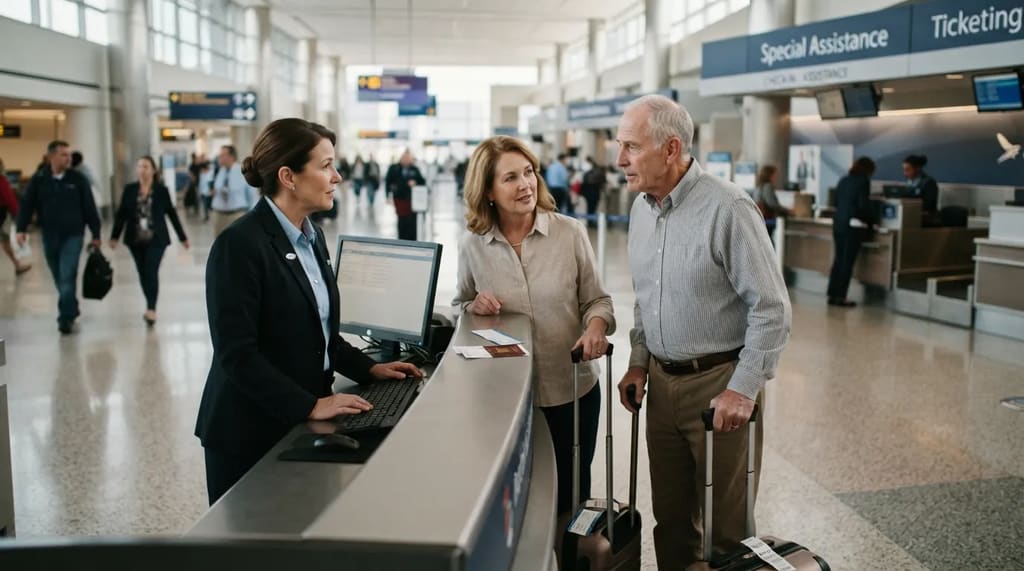
You book two seats, one for you and one for the spouse who helps you stand, and the seat map offers adjacent seats only for a fee. Federal disability rules require airlines to provide seating accommodation assistance that meets a passenger’s disability-related needs.2
The seat map won’t apply an exemption on its own, so you have to ask an agent directly. Tell them your companion provides personal care, and ask for adjacent seats and the fee waiver in the same sentence.
Name the need plainly: an aisle, or a seat near the front. Asking for a “senior seat” gives the agent nothing to act on, because no fare rule uses that wording.
This protection follows a disability-related need, not a birthday, so a healthy 65-year-old who simply prefers the aisle is shopping for a paid seat like anyone else. Basic Economy tickets often carry tighter restrictions, so ask what your exact fare allows before you assume you’re stuck.
With the seat settled, there’s still the boarding line, where some carriers sell the right to go first.
#9 – The Priority Boarding Charge You May Not Need
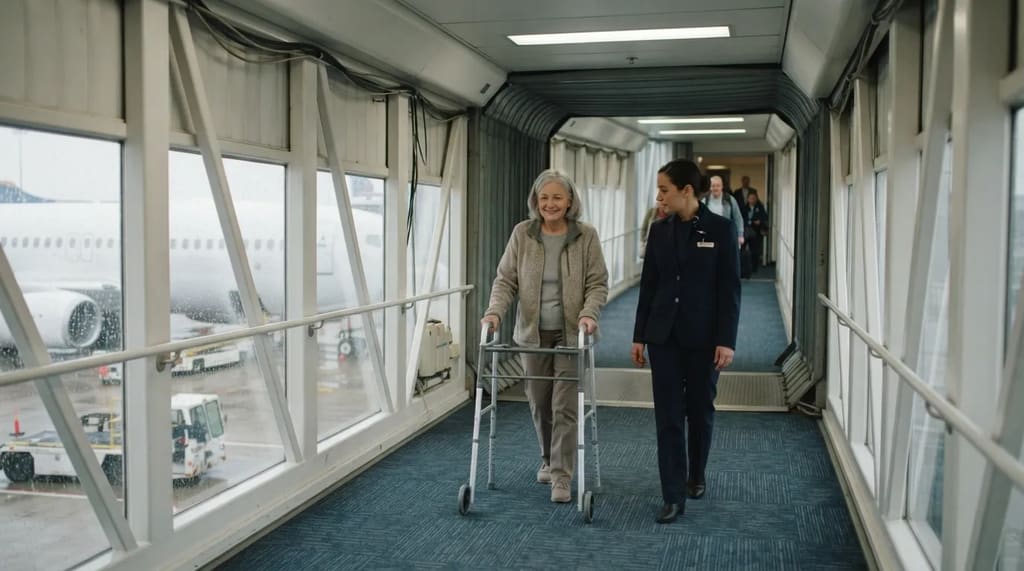
If boarding is the only reason you’d pay for priority, ask first. The charge is often bought to solve a problem that a single sentence at the gate can solve.
Federal disability rules include free gate-to-gate assistance and priority boarding for passengers who need them. Tell the gate agent what you need, such as extra time to get seated.3
If you use a walker, ask for it to be brought back to the aircraft door, so it’s waiting when you step off the jet bridge. That request costs nothing and saves a long wait in the terminal.
Buy priority boarding only if overhead-bin space is what you’re after. For a calm walk down the jet bridge, the fee is money you don’t need to spend.
That walker raises a question of its own at the check-in counter, where an agent might reach for a baggage-fee screen.
#8 – The Baggage Fee on Your Walker or Scooter
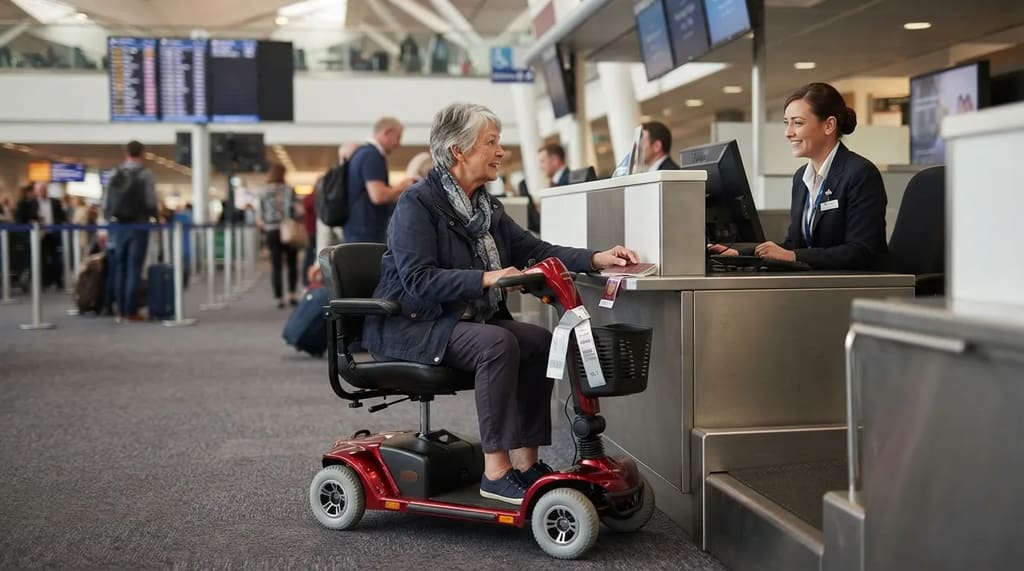
Airlines must carry a personal wheelchair or mobility device free. The rule is written into the regulations, so a baggage-fee screen shouldn’t come up at all.
The same protection reaches further. Airlines also cannot charge extra for wheelchair assistance, stowage of mobility devices, or use of an on-board wheelchair.
If an agent disputes it, ask them to check the airline’s disability policy instead of debating the point with a line forming behind you. If they still refuse, ask for the Complaint Resolution Officer.
If your wheelchair is damaged, the airline bears responsibility, so file a claim with the airline immediately. Waiting until you’re home makes the paperwork harder.
Getting the device through the airport is a separate service, and the law treats it as free on every fare class.
#7 – The Free Wheelchair Ride Through the Airport
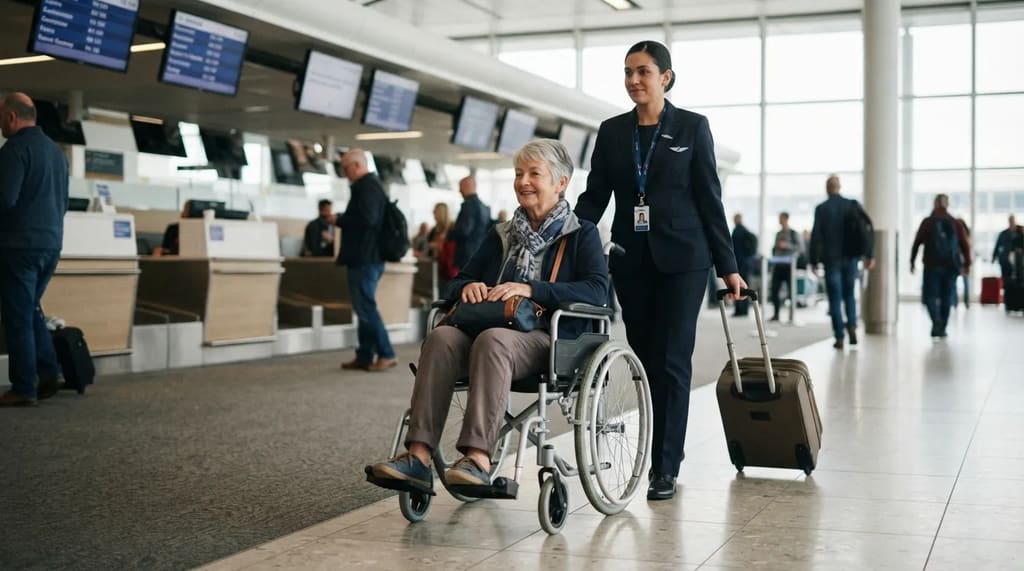
Airline staff can’t bill you for a wheelchair ride, and that holds on cheap fares too. Wheelchair assistance is free regardless of ticket class or fare type.
It covers help from the terminal entrance to the gate, boarding, connecting between flights, deplaning, and getting to baggage claim.3 Tipping is not required.
Request it when you book, either through the special assistance section of your reservation or by calling the airline. Airlines generally can’t demand advance notice, yet same-day requests get a reasonable effort rather than a guarantee, so earlier is safer.
Fast Facts
- Cost: nothing, on every fare class.
- Tip: not required.
- Best time to ask: when you book.
- Same-day requests get a reasonable effort, not a guarantee.
Take the chair on a long connection even if you can manage the walk. Arriving at the gate rested is worth more than the pride you save, and a missed boarding costs far more than either.
The Department of Transportation set a June 17, 2026 deadline for airlines and contractors to finish training staff who physically assist wheelchair users. If the handling falls short, ask for assistance that is safe and dignified, which is the legal standard.4
Plans change at the airport too, and a switch to an earlier flight on the day can bring a charge of its own.
#6 – The Same-Day Change Fee and the Standby Option
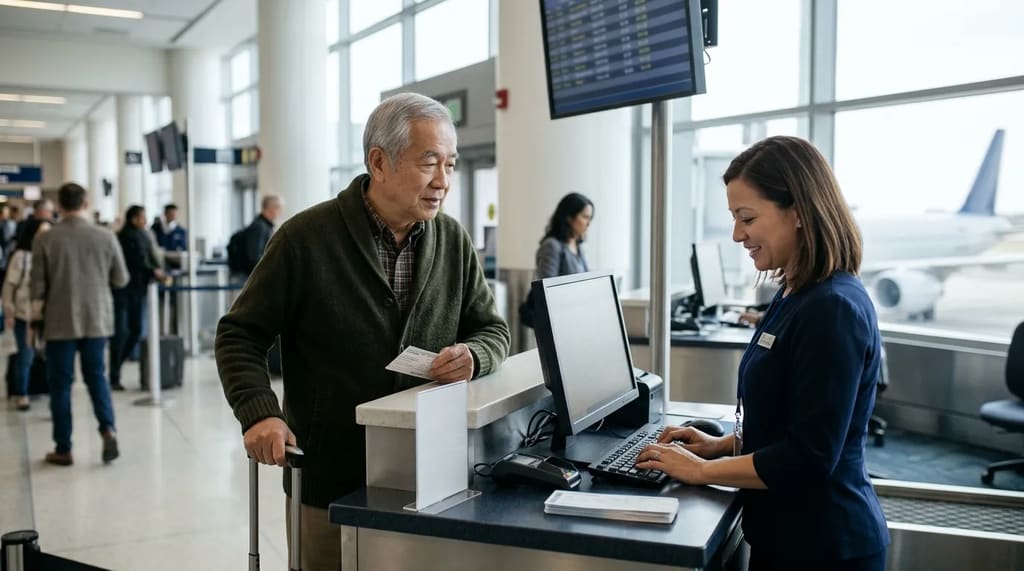
Switching to an earlier flight on the day you travel can cost $75 at carriers such as JetBlue and American, where elite members have it waived. Age plays no part in that fee.
Ask for standby by name before you agree to a confirmed same-day change. Standby saves you the fee for a confirmed change, though it comes with no guaranteed seat.
Pay the fee when a connection or a medical appointment depends on the seat. For an easy trip home a few hours early, standby is the better bet, because the worst outcome is waiting for your original flight.
Status and fare type decide this charge. If an agent quotes a change fee on a standard fare, ask them to confirm the fare type before you pay anything.
A fee like this one stays when you change plans by choice. When the plan changes because someone has died, the airline’s own rules can bend.
#5 – Compassionate Exceptions for a Family Death

A death in the family changes how Delta treats certain fees, but you have to phone. The website’s checkout won’t apply the exception for you.
Delta’s bereavement booking is described as waiving service fees on both flights, with tickets still subject to availability and no extra discount offered. The booking has to go through a phone agent.5
United agents may still grant compassionate exceptions, such as waived change fees or refund reviews, when you explain the situation and provide a death certificate. The decision rests with a person, not a published schedule.
Ask for a supervisor and request a compassionate exception. Front-line agents have limited discretion, while supervisors can often waive change fees or arrange standby placement.
Make the request before you pay for a new ticket, because an exception granted afterward is a refund you’d have to chase. Policies differ by airline and change, so confirm the current terms when you call.
Compassion rarely reaches the charge you meet first at the counter: a bag fee of $45 each way, and the ways around it have nothing to do with age.
#4 – The First Checked Bag at $45 Each Way
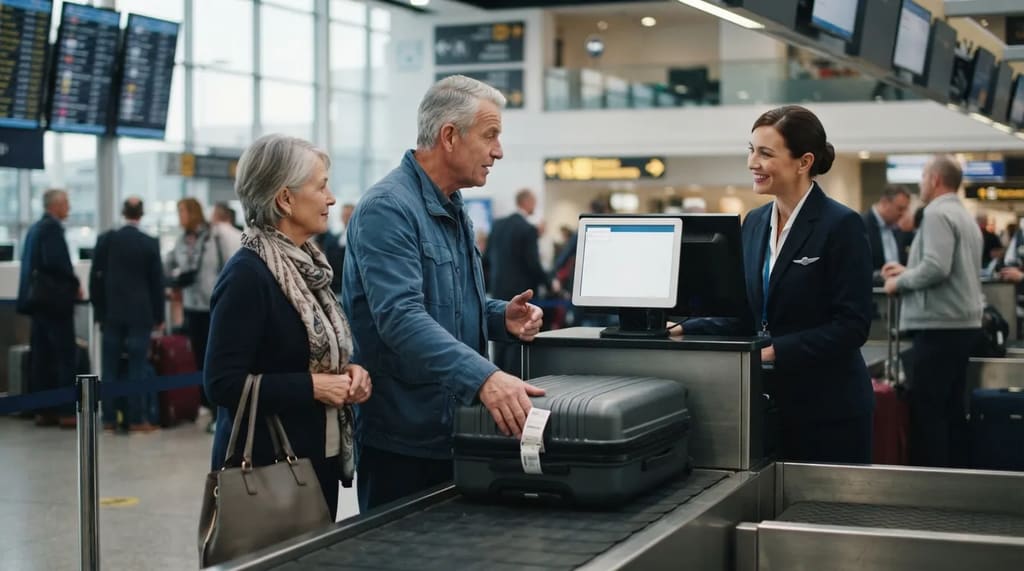
After the April 2026 increases, Delta and Southwest charge $45 for a first checked bag, and United charges $45 to $50.1 Fees apply per person, each way, so a couple’s round trip with one bag each means four charges.
Quick Compare
- Delta: $45 for the first checked bag.
- Southwest: $45 for the first checked bag.
- United: $45 to $50 for the first checked bag.
- A couple’s round trip, one bag each: four charges.
The waiver comes from a card or status, never from your birthday. Co-branded cards from Delta, American, United, JetBlue and Alaska waive the first checked bag for the cardholder and often for a companion on the same reservation.
Even mid-tier status typically includes free checked bags, and status can be earned through credit card spend on several programs. Neither route asks for your age, so you needn’t wait until you’re standing at the counter to find out.
A new card for a single trip isn’t worth the paperwork. Add up the bags you’ll check over a full year, compare that total with the card’s annual fee, and decide from there.
A different bill can follow a trip taken with a wheelchair or scooter, and it has nothing to do with bags: the airline may owe you the price gap between two flights.
#3 – The Fare Difference When Your Wheelchair Won’t Fit
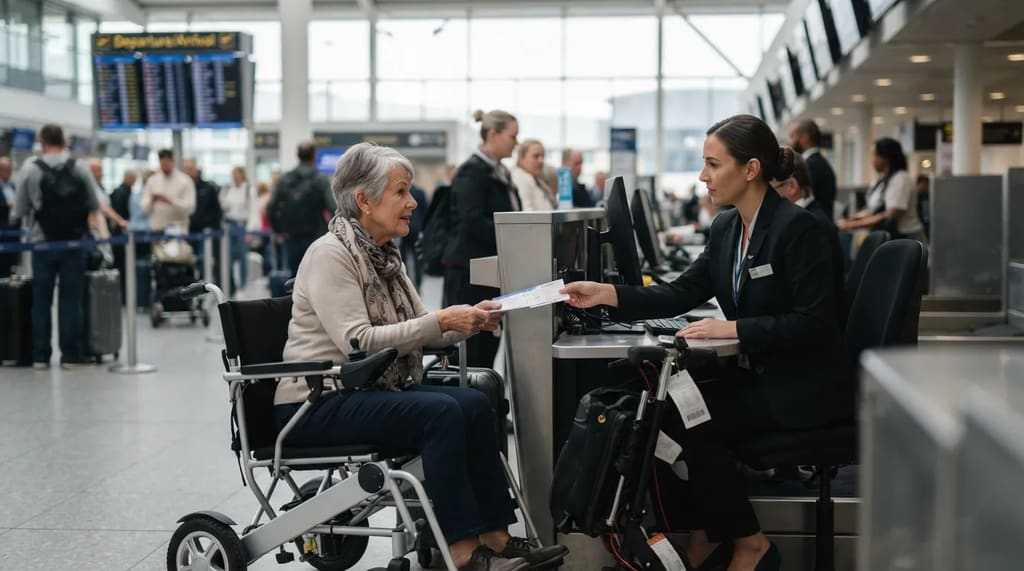
If your wheelchair or scooter can’t fit on the flight you booked, the extra cost of a flight that can carry it shouldn’t land on you. Under the 2024 wheelchair rule, you can ask the airline to refund the difference.4
The Department of Transportation’s disability rules call for reimbursing the difference between the fare on the flight the user took and the fare on the flight they would have taken if the device had fit.
Ask the airline to refund the difference between the two fares. Keep both fare quotes, and ask for the agent’s name and a reference number.
This right belongs to wheelchair and scooter users, so it doesn’t extend to every older traveler. If it applies to you, the amount at stake is the full fare gap, which can be far more than a $45 bag fee.
Related Stories From Travelbinger


That refund needs a wheelchair behind it. The right ahead is open to every passenger of any age, and its clock starts the moment you click buy.
#2 – The 24-Hour Window After You Buy

You have 24 hours to cancel a ticket and get your money back, and age has nothing to do with it. For tickets bought at least seven days before departure, DOT requires airlines to allow either a 24-hour cancellation or a 24-hour hold at the quoted price.6
Cancel within 24 hours of booking for a full refund. An airline doesn’t have to offer both choices, so check which one your airline uses before you rely on it.
The rule applies to all fare classes, including basic economy. It doesn’t apply to tickets booked through online travel agencies or other third-party agents, though those sellers may voluntarily offer something similar.
Why It Stands Out
- It protects every passenger, at any age.
- It covers basic economy fares too.
- It applies to tickets bought at least seven days before departure.
- Third-party bookings usually fall outside it.
The rule doesn’t require free ticket changes, such as correcting a name. Treat the 24 hours as a free look at your own booking: check the confirmation the moment it arrives, and cancel and rebook inside the window if something’s wrong.
That window closes after a day. The refund waiting at the top of this list can be worth a full fare, and the first thing an agent offers may be a voucher instead.
#1 – The Cash Refund When the Airline Cancels
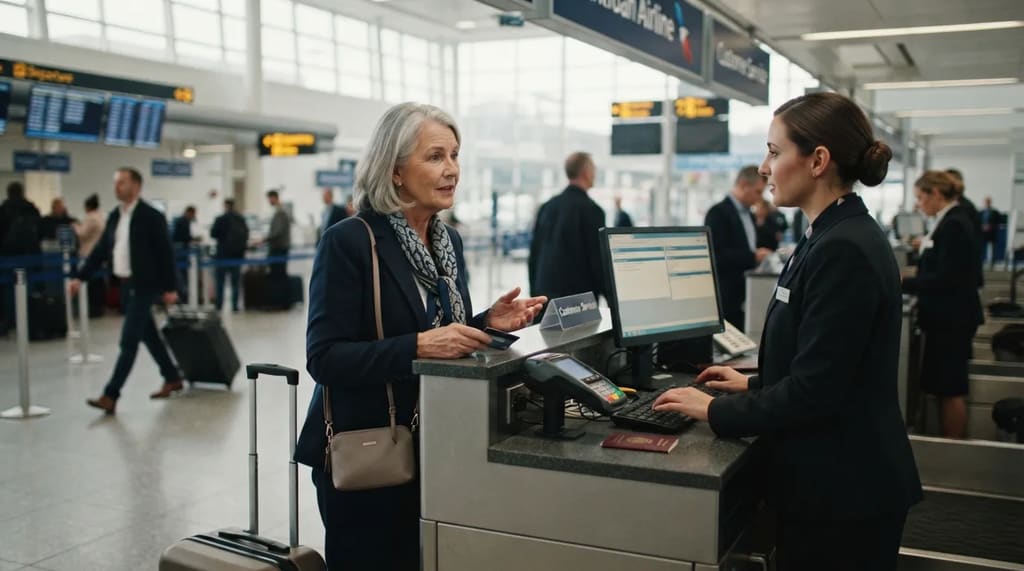
When an airline cancels your flight or changes it significantly and you decide not to travel, you’re entitled to a refund to your original form of payment. For DOT, significant means three hours or more on a domestic trip, or six hours or more on an international one.7
If you won’t travel now, ask for a refund to your card. A rebooking or a credit is an offer, and the refund applies if you decline the alternative the airline offers, so don’t accept either before you’ve asked.
It applies to non-refundable fares too, which is why this one tops the list: it can return the most money to the most people. The refund covers the full fare, with taxes and ancillary fees such as seat charges, including the seat fee from earlier.
Booked with the airline, the refund must be automatic and prompt. Booked through an agency, ticket agents must refund upon request, so you have to ask.7
Unless you already have a firm trip planned on the same airline, take the cash. A voucher keeps your money with the carrier, and cash lets you choose.
What to Say at the Counter Instead
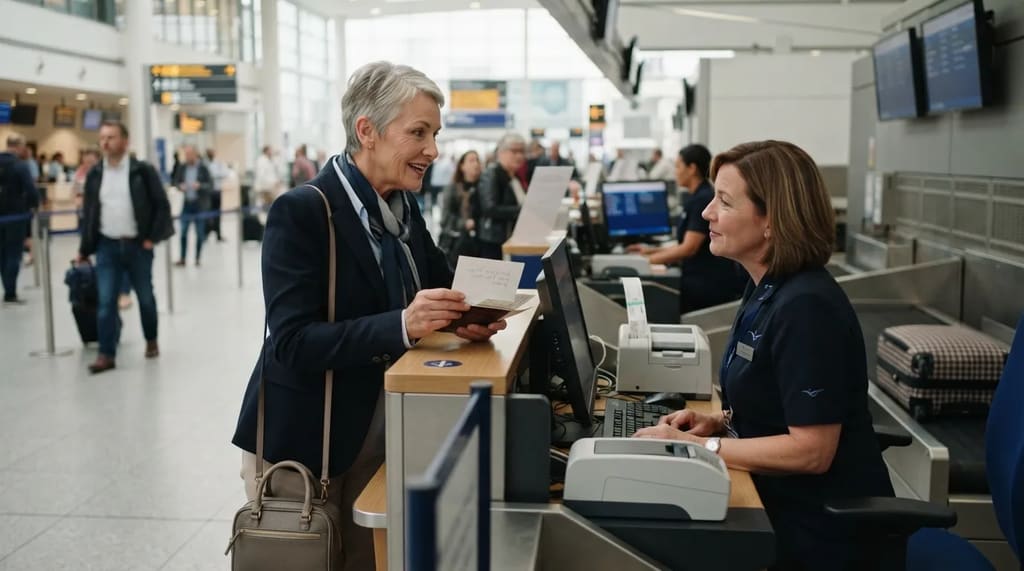
An agent’s goodwill gets your request heard, but a rule is what gets it granted. Name the rule or the need in your first sentence, and the polite tone you bring does the rest.
Before your next trip, write the two or three requests that apply to you on a card and keep it with your confirmation. Note the agent’s name and the time before you hang up.
Have you ever been handed a voucher after a canceled flight, and did you ask for the cash instead?
Bonus: The Insider Trick Nobody Tells You When an Agent Says No
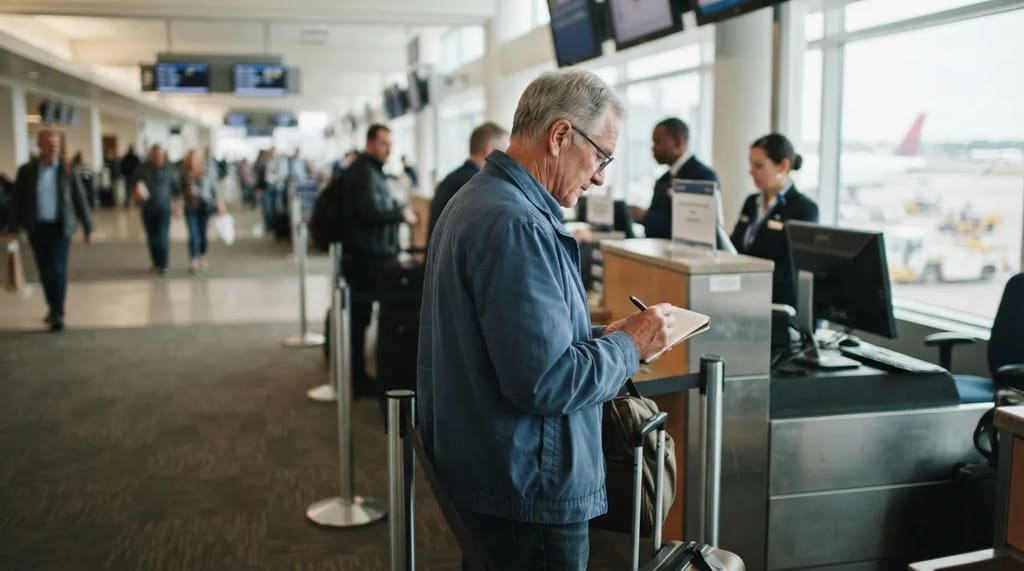
The most valuable move happens after the counter. When an agent refuses a refund or waiver you believe you’re owed, don’t argue and don’t leave empty-handed. Build a paper trail and escalate in a set order.
- Same day: Ask the agent to note your request and the refusal on your reservation. Write down the date, the time and the agent’s name.
- Within a few days: File a complaint with the U.S. Department of Transportation at transportation.gov/airconsumer. Attach your confirmation, fare quotes and notes. Airlines are expected to acknowledge these complaints within 30 days and answer them substantively within 60.
- Before 60 days pass: If money is still owed, dispute the charge with your card issuer. Under federal billing-error rules, you generally need to notify the issuer in writing within 60 days of the statement showing the charge.
Pay for tickets with a credit card rather than a debit card or gift card, so this last step is open to you. Many refunds that were refused at the counter are paid once a written complaint is on file.
- Afar Checked Bag Fees: https://www.afar.com/magazine/united-and-jetblue-airlines-to-raise-baggage-fees
- DOT Traveling with a Disability: https://www.transportation.gov/individuals/aviation-consumer-protection/traveling-disability
- DOT Disability Bill of Rights: https://www.transportation.gov/airconsumer/disabilitybillofrights
- Federal Register Wheelchair Rule: https://www.federalregister.gov/documents/2024/12/17/2024-29731/ensuring-safe-accommodations-for-air-travelers-with-disabilities-using-wheelchairs
- Delta Bereavement Policy: https://www.delta.com/content/www/en_US/traveling-with-us/special-travel-needs/bereavement.html
- 24-Hour Rule Overview: https://www.fondtravels.com/blog/travel-tips/airline-cancellation-and-refund-rules-2026
- DOT Refund Rules Explained: https://airtravelrights.com/us-dot/airline-refund-rules/