


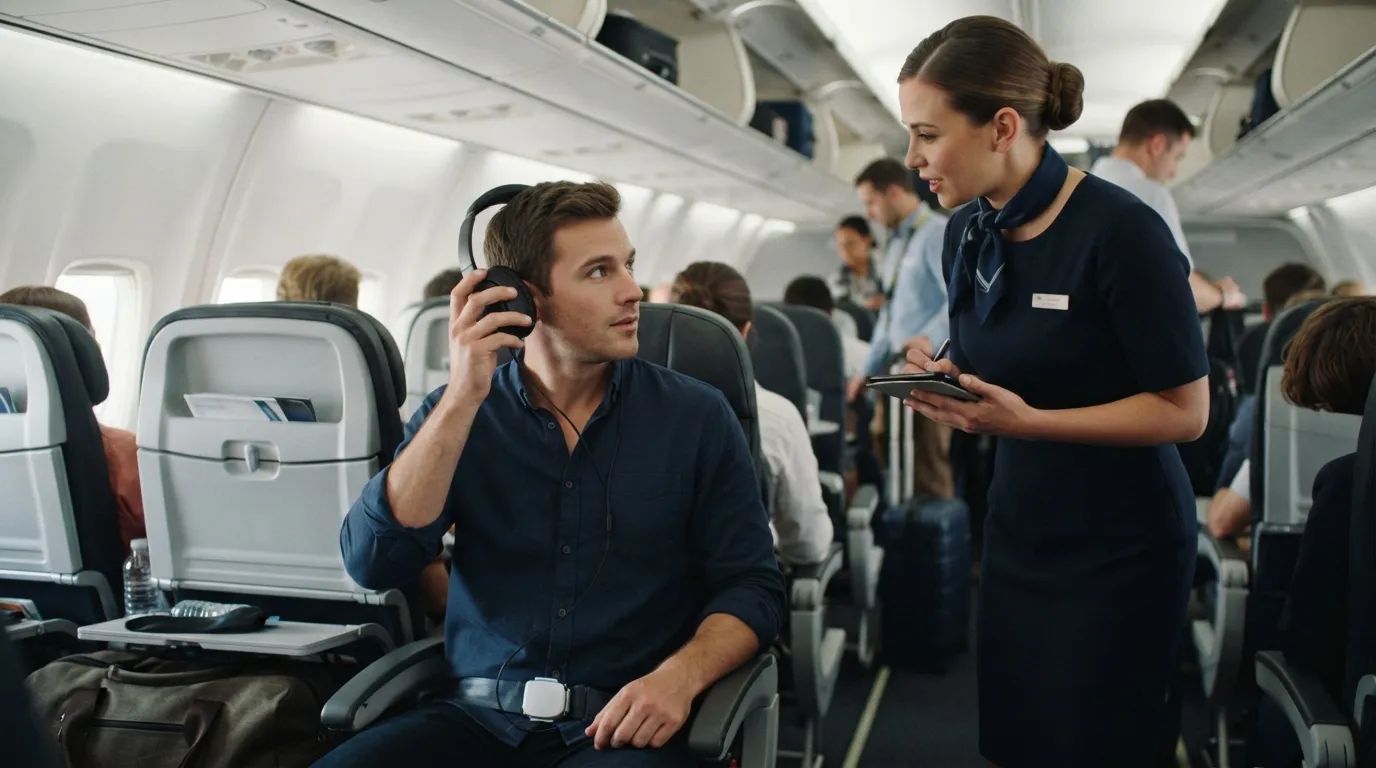
Boarding feels like the dull part of the trip, but the crew is watching it closely. These 25 small courtesies are the ones flight attendants notice at the door, and they can shape how the rest of your flight goes.
A careless boarding can cost you bin space and goodwill you may need later. One of the 25 below isn’t optional, because federal guidance requires it, and AAA says few passengers give it their full attention.
The first one starts at the gate, before you reach the door.
#25 – Waiting for your boarding group to be called
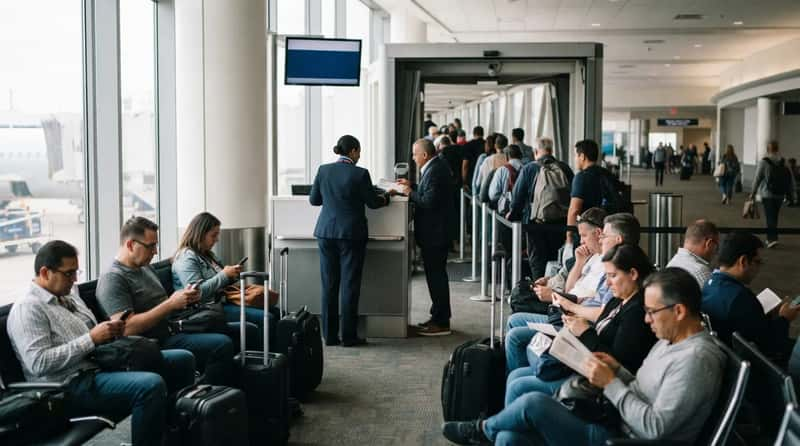
American Airlines tells travelers to check their boarding pass for the assigned group and wait until it is called, unless a gate agent directs otherwise.1 Former flight attendant LaWana Boone says crowding the gate can make boarding take longer.
The cost lands on the people already called, who have to squeeze past you with an “excuse me” at the entrance.
Once your group is called, the jet bridge ahead moves at a pace set by the people already inside the plane.
#24 – Letting the jet bridge move at its own pace
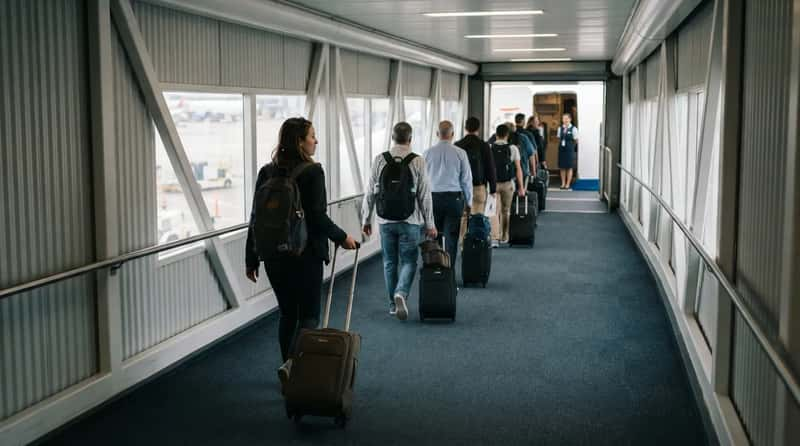
Don’t push on the jet bridge, because the line has to wait while the passengers ahead find their seats and settle. Crowding forward gets you nowhere, since the bottleneck is inside the plane, not behind you.
Wheeled bags need attention here too. A rolling bag can drift on the downhill slope of the bridge, so keep a hand on the handle.
At the door itself, the next hold-up is a boarding pass buried in a bag.
#23 – Having your boarding pass out and ready to scan
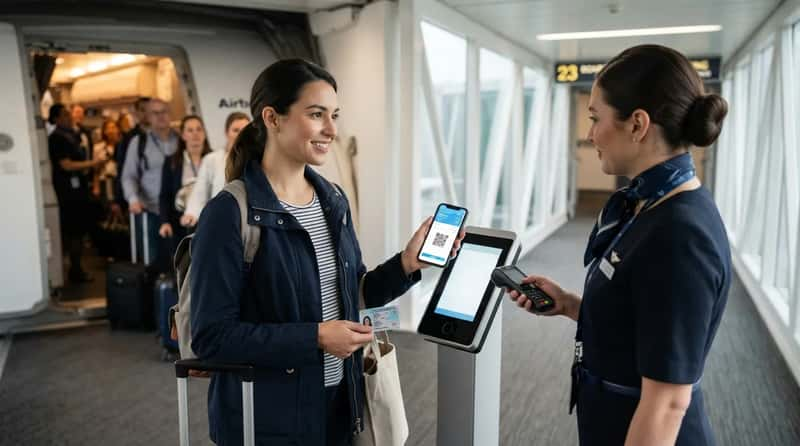
Have your boarding pass out and ready to scan when you reach the entrance. It sounds too small to matter, but every second spent patting pockets happens in front of a line of people holding their bags.
The cheapest fix is in the gate area, while you are still sitting down. Put the pass in the same pocket or phone screen every time, and make sure the screen won’t dim or lock as you walk up.
At a Glance
- Pull up the pass while you are still seated at the gate.
- Use the same pocket or phone screen every trip.
- Turn off auto-lock or raise screen brightness before you stand.
- Keep your ID in the other hand, not buried in a bag.
#22 – Checking in early and keeping the airline app open
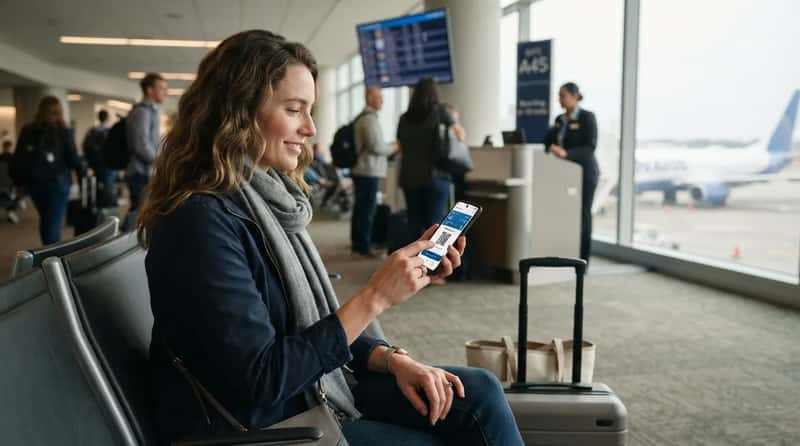
AAA says being prepared at check-in and boarding is courteous to other travelers and airport staff, and it eases your own stress.2 One flight attendant advises using the airline’s app to check in and to see the gate number and seat assignment.
The app also tells you when your group is boarding, which saves you from hovering at the podium to ask.
The app can tell you where to be and when, but it can’t tell you whether boarding early is worth it for you.
#21 – Boarding later when you have no bin to claim
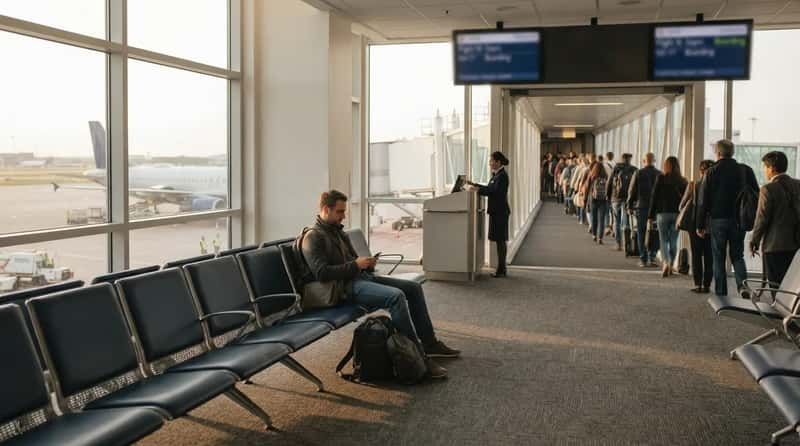
Etiquette expert Leighton says that if you don’t have luggage you want to secure bin space for, you can wait and board later. Your assigned seat will still be there at the end.
If you carry only a personal item, I’d take the chair in the terminal over the jet bridge every time. The calculation changes when you have a rolling bag, because the main advantage of an early boarding group is guaranteed overhead bin space.
Whenever you board, the aisle is no place to dig through a bag, and that is a problem you can solve at the gate.
#20 – Packing a seat bag at the gate
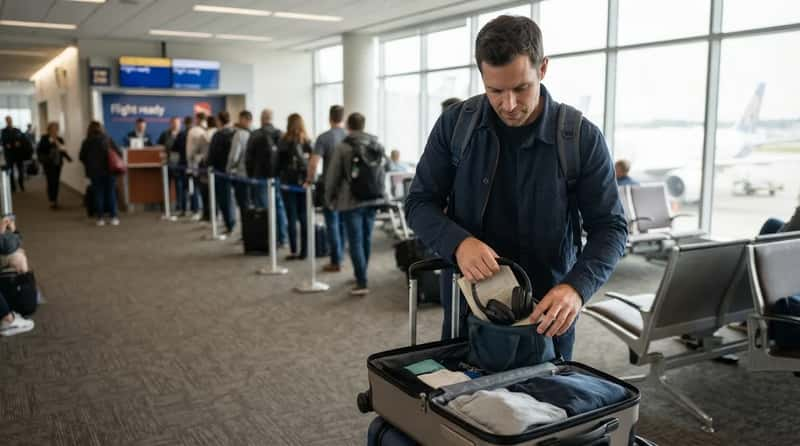
Boarding is a traffic jam in a narrow tube. Travel writer Henderson notes that one person reorganizing a suitcase in the aisle can hold up a hundred people behind them.
The fix takes a minute in the gate area.
Your phone belongs on that list, and a call that carries into the doorway costs the line more than a book does.
#19 – Ending the phone call before the doorway
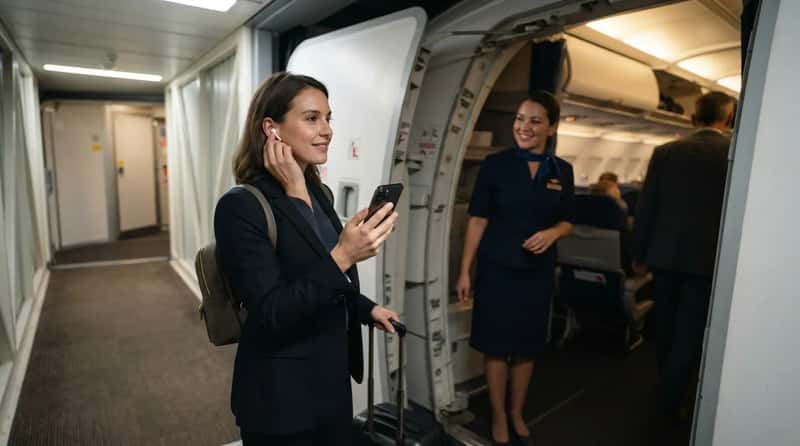
Etiquette author Diane Gottsman says a quiet call is fine, but if it slows boarding you should put your screens away until you reach your spot. A call also makes it hard to hear a greeting or a question at the door.
Calls without headphones force everyone nearby into your conversation, so ending the call before boarding is the standard.
The practical way is to say goodbye while you’re still in the gate area. If the call can’t wait, put in one earbud and be ready to take it out.
Headphones solve the noise problem for your neighbors and create a new one for the crew at the door.
#18 – Greeting the crew with eye contact
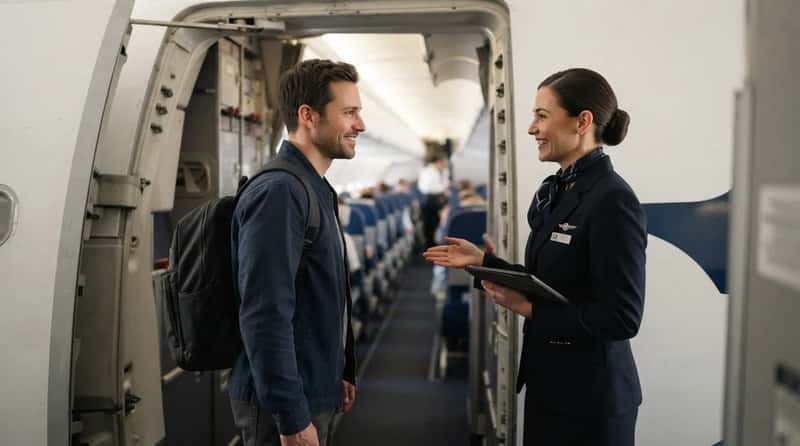
Eye contact and a genuine smile go a long way, and the crew will likely remember you for it.3 Passengers who acknowledge the crew with a smile or greeting are often viewed as easier to assist during the flight.
It costs you two seconds in a doorway and requires no script.
A greeting that stretches into a conversation is a different matter.
#17 – Keeping the greeting short
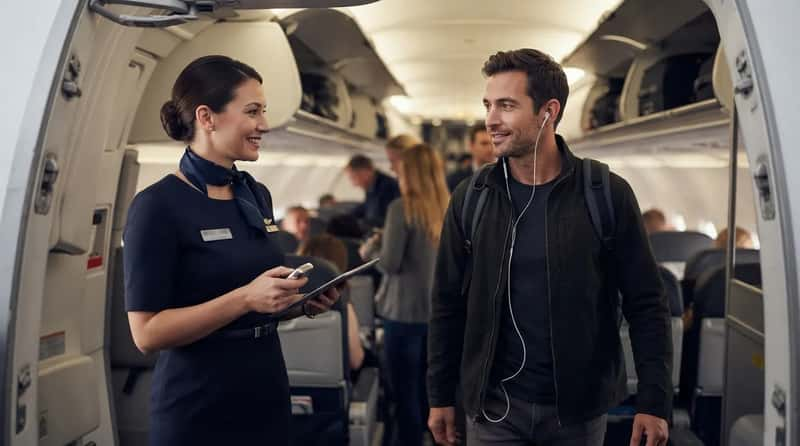
Flight attendants don’t like passengers who slow things down by chatting or handing out treats when the crew’s hands are full. Nicknames and forced banter, even when meant warmly, can come across as overly familiar.
A hello and a nod are enough, and the treats can wait.
The words matter less than whether you can hear the reply, and that depends on what is in your ears.
#16 – Taking headphones off when a crew member speaks
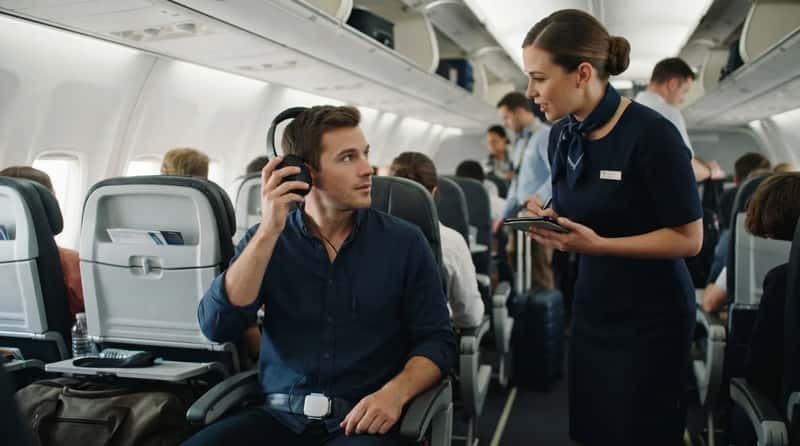
AAA calls removing your headphones and giving the crew your attention the civil and the safe thing to do. One flight attendant says to take them off during the safety demonstration and preferably during takeoff and landing.
You are keeping one ear open for the moments that matter.
Passengers who arrive without headphones at all create a different noise problem, one the crew can only partly fix.
#15 – Carrying your own headphones or earplugs
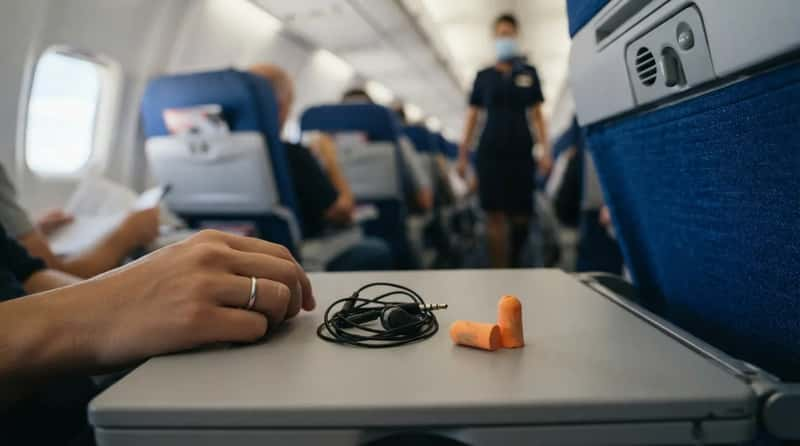
Flight attendants say passengers should always use headphones for videos, music and other device audio.4 For a first offense the usual response is to hand over a free set.
An American Airlines flight attendant recommends carrying a backup, and says a flight should be treated like a movie theater.
Worth Knowing
- Headphones are expected for any video, music or game audio.
- A first offense usually earns a free set from the crew, not a lecture.
- Wired earbuds and foam earplugs weigh almost nothing.
- A backup pair beats relying on the airline’s supply.
A cheap pair of wired earbuds or foam earplugs is worth the space. It also saves you from relying on whatever the airline has left in the bin.
#14 – Bringing something you can eat
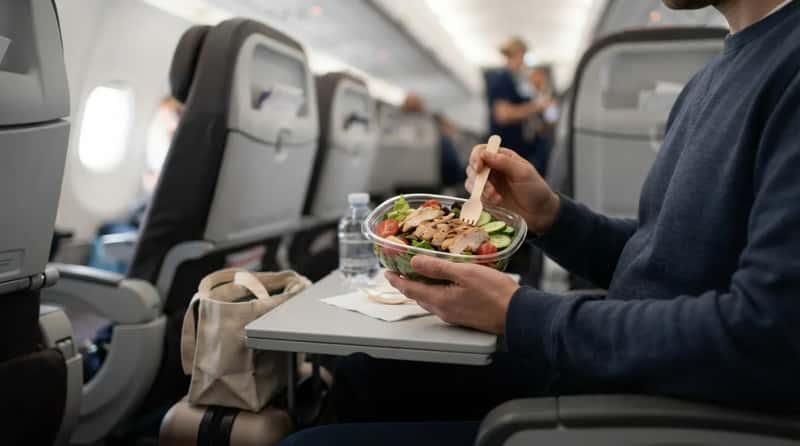
Flight attendant Lara Ketterman suggests packing something you can eat comfortably on board, because crews sometimes have to stop cabin service for safety.
I’d treat that as a rule for any flight that runs through a mealtime. Don’t count on the cart.
Wherever the snack goes, it belongs under the seat in front of you with your other small things.
#13 – Putting small bags under the seat
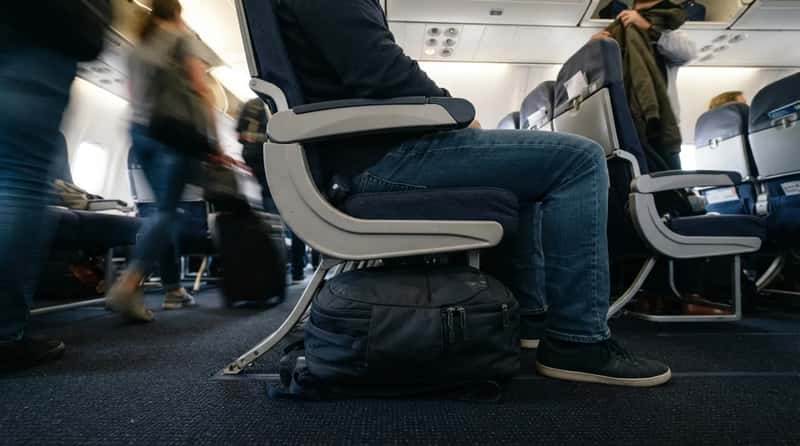
Personal items go under the seat in front of you, and only your large carry-on goes in the overhead bin. Putting personal items in the bin can mean space runs out before everyone has finished boarding.
That makes this a courtesy to the passengers behind you in line.
One exception is worth knowing. In a bulkhead seat, and in the emergency row on some airlines, bags can’t go under the seat, so your bag goes overhead.
The same priority applies to jackets and purses, which are the usual culprits.
#12 – Keeping jackets and purses out of the bin until big bags are in
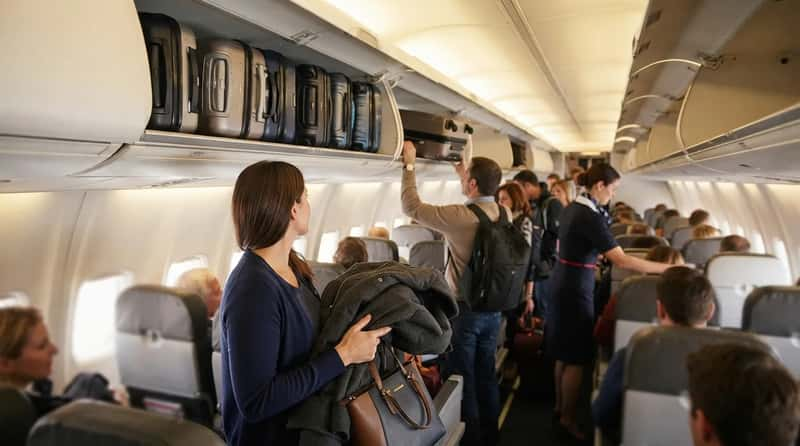
Leighton says bin priority goes to the carry-ons that can’t fit anywhere else, so jackets and purses wait until everyone has stowed their bigger bags. Henderson makes the same request, asking people not to put a small purse or jacket up while others are still hunting for room for suitcases.
A coat can ride on your lap for ten minutes.
Once the right things go up, the next question is which bin they go in.
#11 – Using the bin near your own seat
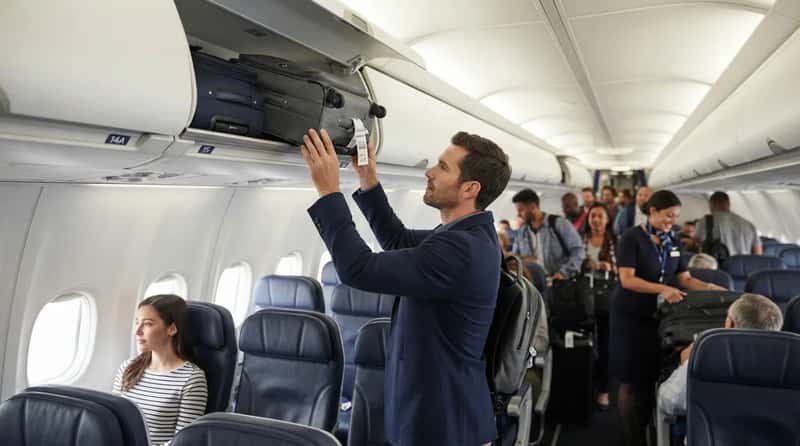
Overhead bins don’t belong to a particular seat, and flight attendant Loretta Hill told Reader’s Digest that bin space is first come, first served. It isn’t rude to use a bin away from your seat.
Keeping your bag near you is more polite when you can. Bags stored many rows behind their owners can cause a traffic jam at boarding and again when people deplane.3
Moving your bag is one thing, and moving someone else’s is another.
#10 – Asking before moving another passenger’s bag
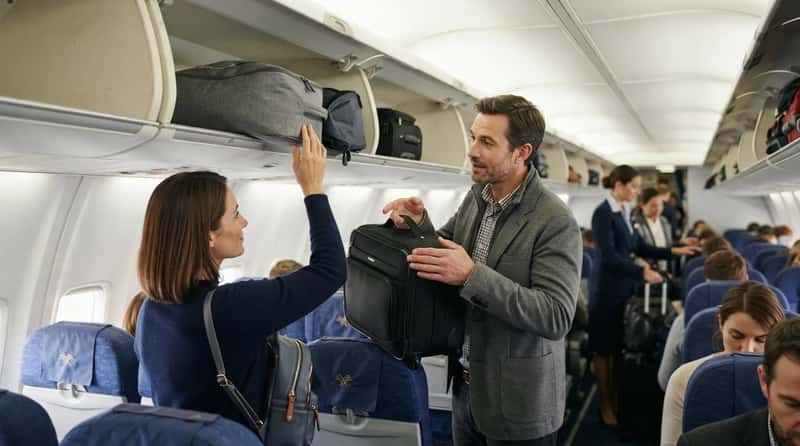
If a smaller item is sitting in the bin, don’t toss your bag on top of it without asking the nearby passengers or a flight attendant. A soft bag with a camera or medication in it can be crushed in seconds.
Even on an empty flight, the crew may announce that personal items can go in the bin, but you shouldn’t do so without permission.
The question takes five seconds, and a flight attendant can settle it faster than a standoff between two passengers. Resolving conflicts between passengers and helping with bin space are things crews can do.
Asking only goes so far when the bag in question is too heavy to lift without help.
#9 – Packing a bag you can lift yourself
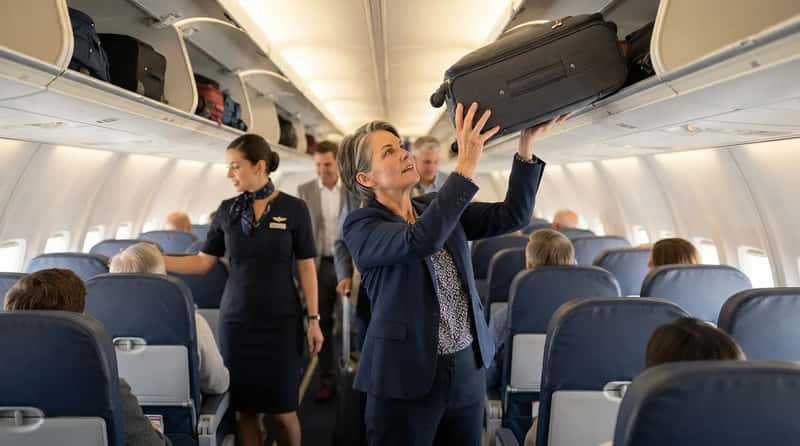
Don’t assume a flight attendant will raise your bag, because Delta says its crews can’t proactively help place carry-ons in the bins, with certain exceptions, partly to reduce injuries from repetitive lifting.5 The advice is to pack within your own safe lifting ability or check the bag before boarding.
My view is that this is where many older travelers get squeezed. If you can’t comfortably lift your bag above shoulder height, a smaller bag or a checked bag is worth the trouble.
Quick Compare
- Carry it on: Works only if you can lift it overhead on your own.
- Check it before boarding: Costs a little time at the airport, but spares your shoulders and the aisle.
- Gate check it: Usually free when bins are full, and the next stop on our list.
If the bag is the right size and the bins are still full, the airline has a free answer.
#8 – Accepting the free gate check
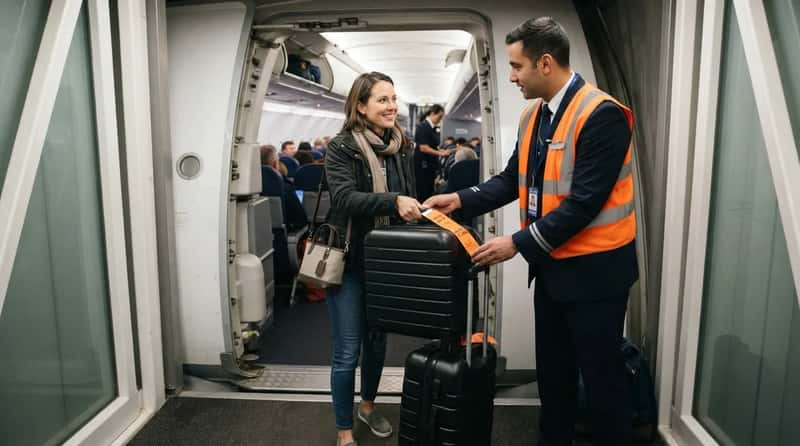
In most cases, gate checks due to full bins are free, even on airlines that normally charge for carry-on bags. Gate-checking is often faster than wrestling a bag into a packed bin while dozens of people watch.5
Taking the offer is a favor to the crew trying to close the door on time.
With the bag dealt with, the last job in the aisle is getting out of it.
#7 – Sliding your bag in and sitting down
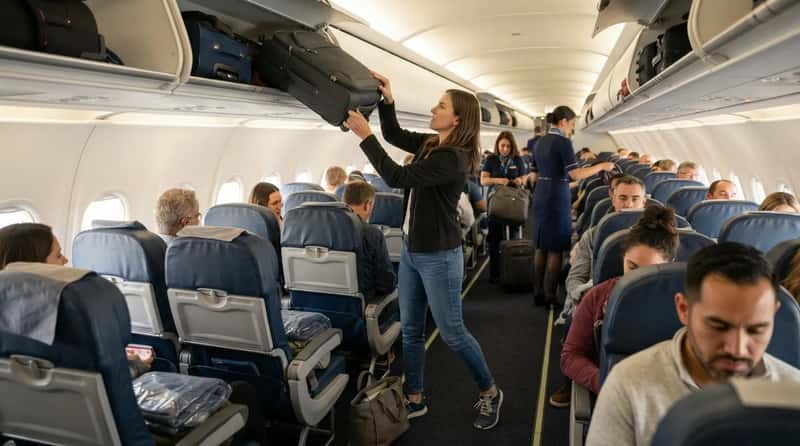
Once you’ve picked your spot in the bin, slide the bag in quickly and take your seat. One etiquette expert named stopping in the aisle to shuffle items as the biggest boarding mistake, because it clogs the aisle and leaves people wondering what is happening.
That’s why the seat bag from earlier pays off here.
AAA adds that being mindful in the aisle helps you avoid inconveniencing flight attendants during the time-pressed boarding process.2
Sitting down occasionally brings the surprise of finding someone already in your seat.
#6 – Checking your pass before disputing a seat
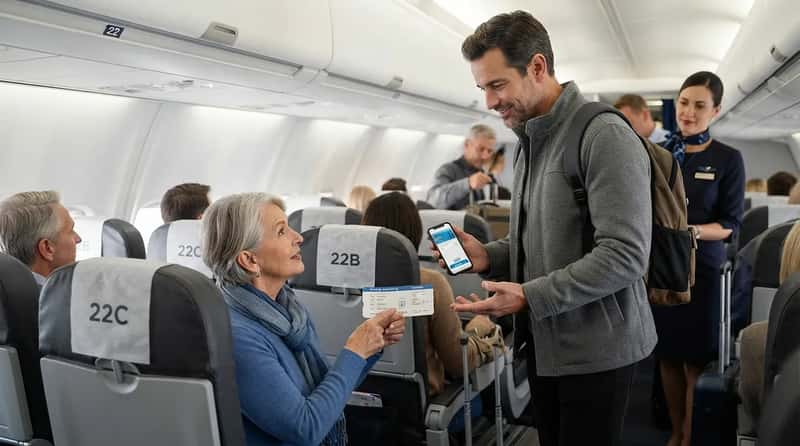
If you sit in someone else’s seat by accident, apologize, but have your boarding pass ready to confirm whose seat it is. That keeps a small mix-up from turning into an argument in the aisle.
If another passenger asks you to swap, etiquette experts say it’s perfectly polite to decline a seat you don’t want with a simple “No, thank you.”
Flight attendants can help resolve conflicts between passengers. Let them, rather than trading words at row 22.
Once everyone is in the right seat, the seat itself has one more boarding-time rule.
#5 – Holding the recline until boarding ends
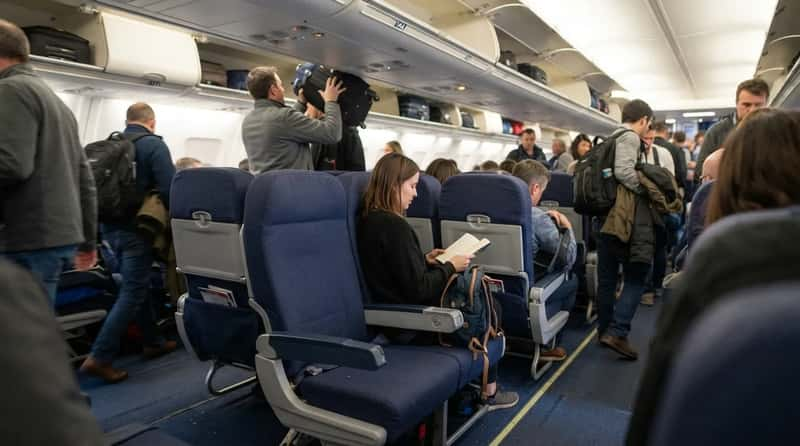
Refrain from reclining your seat during boarding, because it slows the process for everyone. The person behind you is still lifting a bag or sliding in, and your seatback is now in their way.
Wait until the cabin is settled.
#4 – Keeping trash and hands to yourself
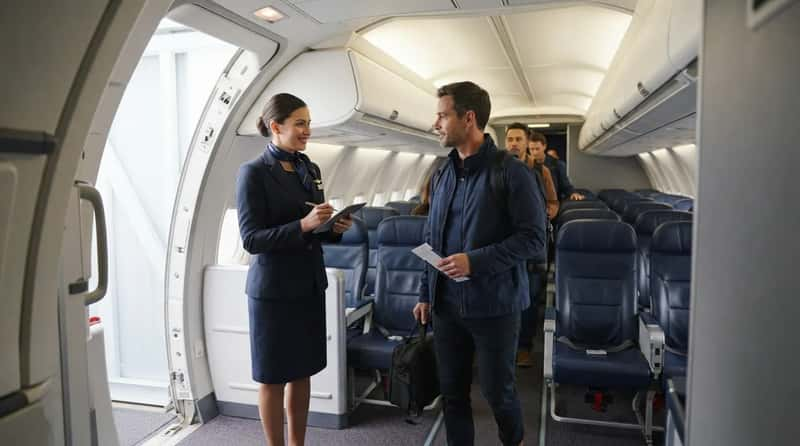
It’s polite to throw away trash in the terminal or wait until the crew collects it in flight. A flight attendant at the door is working through a checklist, not standing there to collect cups.
Never touch a flight attendant or pull at their uniform, and don’t call them “steward” or “stewardess.”
Getting attention without contact usually means waiting, which is a courtesy of its own.
#3 – Not blaming the crew for what they don’t control
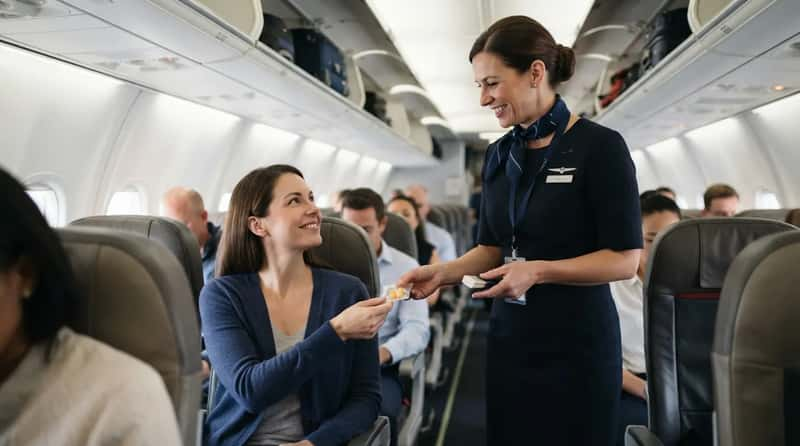
Flight attendants aren’t to blame for delays and other things they can’t control. They can help with conflicts between passengers, bin space, and comfort items like seatbelt extenders, earplugs or Band-Aids.
A flight attendant will get back to you as soon as they can, though each has fifty-plus passengers to look after.
Fast Facts
- Crews can help with passenger conflicts and bin space.
- They can also hand out comfort items such as seatbelt extenders, earplugs and Band-Aids.
- Delays are outside their control, so aim your frustration elsewhere.
- Please and thank you cost nothing and travel a long way.
Please and thank you work, but treat any extras as a surprise. Politeness may bring extra drinks or snacks, yet flight attendants stress that passengers should never expect special treatment.
#2 – Dressing for the emergency you hope never comes
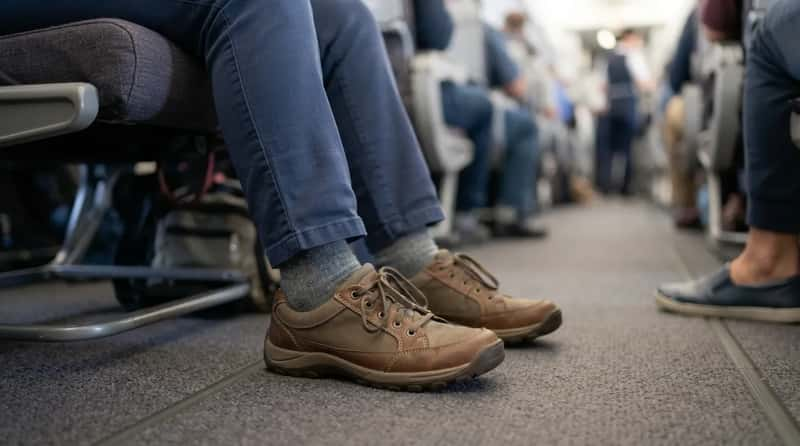
One flight attendant recommends comfortable natural fibers, and says to avoid synthetics that could melt in a fire. The same advice calls for shoes that can cope with heat or sharp metal.
AAA suggests laced shoes you can keep on and loosen if your feet swell.2 Check this before you leave home, since you can’t change at the gate.
#1 – Listening to the safety briefing and following crew instructions
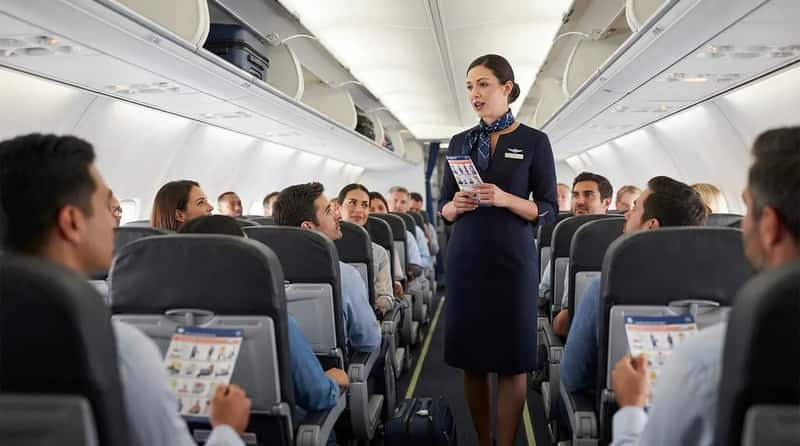
This is the courtesy that isn’t one. FAA guidance for airline operations says passengers must comply with safety instructions, including signs, placards and the instructions of the flight attendants.6
The appropriate crewmember must brief passengers orally before each takeoff.
That ties the whole list together. Taking your headphones off, clearing the aisle and stowing your bag are the same habits the crew counts on in an emergency, and they are the first to go when a passenger tunes the briefing out.
Most of these courtesies cost a minute or two at the gate, and none needs a conversation with anyone. The crew doesn’t need your thanks as a performance.
It needs a clear aisle, a passenger who can hear, and a bag that fits where you put it. Treat boarding as a shared job with a deadline, and if you remember one thing, make it the moment the briefing starts.
What do you always take out of your bag before you join the boarding line?
Sources
- 6 things flight attendants wish every passenger knew before boarding, Yahoo Travel
- The Rudest Things You Can Do While Boarding A Plane, HuffPost
- The Rudest Things You Can Do While Boarding A Plane, AOL
- Etiquette Rules for a More Pleasant Flight, AAA
- Three Flight Attendants Share Their Secrets for Flying, AAA
- FAA Advisory Circular 121-24D, Passenger Safety Information
- How Flight Attendants Identify Easy Passengers During Boarding, Aviation A2Z
- Is It Really Rude to Put Your Carry-on in Another Passenger’s Overhead Bin?, Reader’s Digest
- Follow This Simple Airplane Etiquette Rule To Avoid Overhead Bin Drama, Yahoo Travel
- This Is The Right Way To Board A Plane, According To Etiquette Experts, Yahoo Travel
- The Golden Rules of Airplane Etiquette, Yahoo Travel
- Gate lice, Wikipedia
- Flight Attendants Are Obsessed With Passengers Who Do These 6 Things, Simple Flying
- Flight attendants on headphones and cabin noise, AOL
- Forbes Airplane Etiquette: https://www.forbes.com/sites/rebeccadeurlein/2024/11/25/airplane-etiquette-rules-for-your-next-flight/
- AAA Etiquette Tips: https://mwg.aaa.com/via/travel-tips/etiquette-rules-for-flying
- AARP Airline Etiquette: https://www.aarp.org/travel/travel-tips/transportation/flying-etiquette/
- Reader’s Digest Airplane Etiquette: https://qz.com/-airplane-etiquette-rules-every-traveler-should-know-readers-digest
- Delta Carry-On Baggage: https://www.delta.com/us/en/baggage/carry-on-baggage
- FAA AC 121-24D: https://www.faa.gov/regulations_policies/advisory_circulars/index.cfm/go/document.information/documentid/1035568
