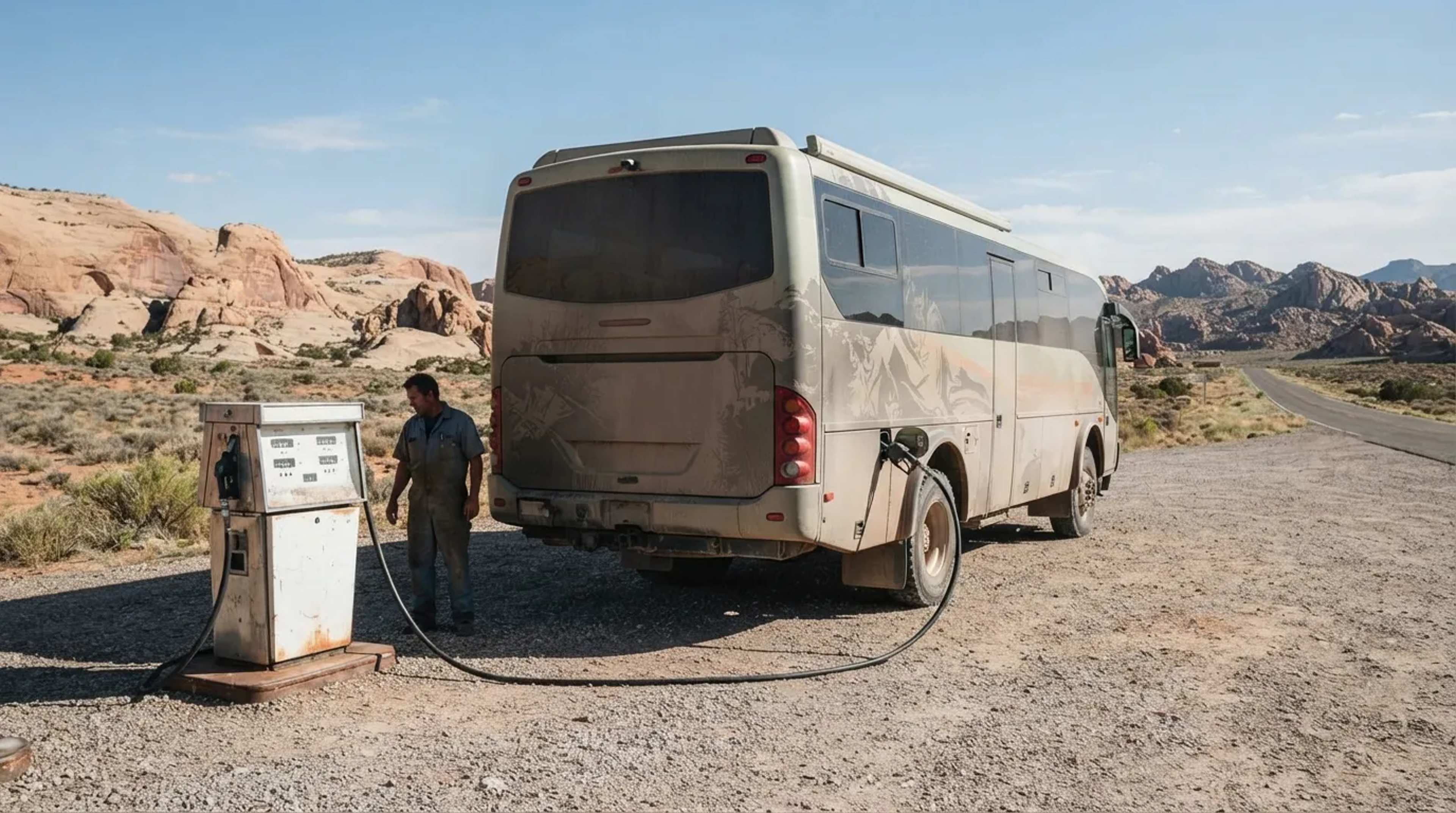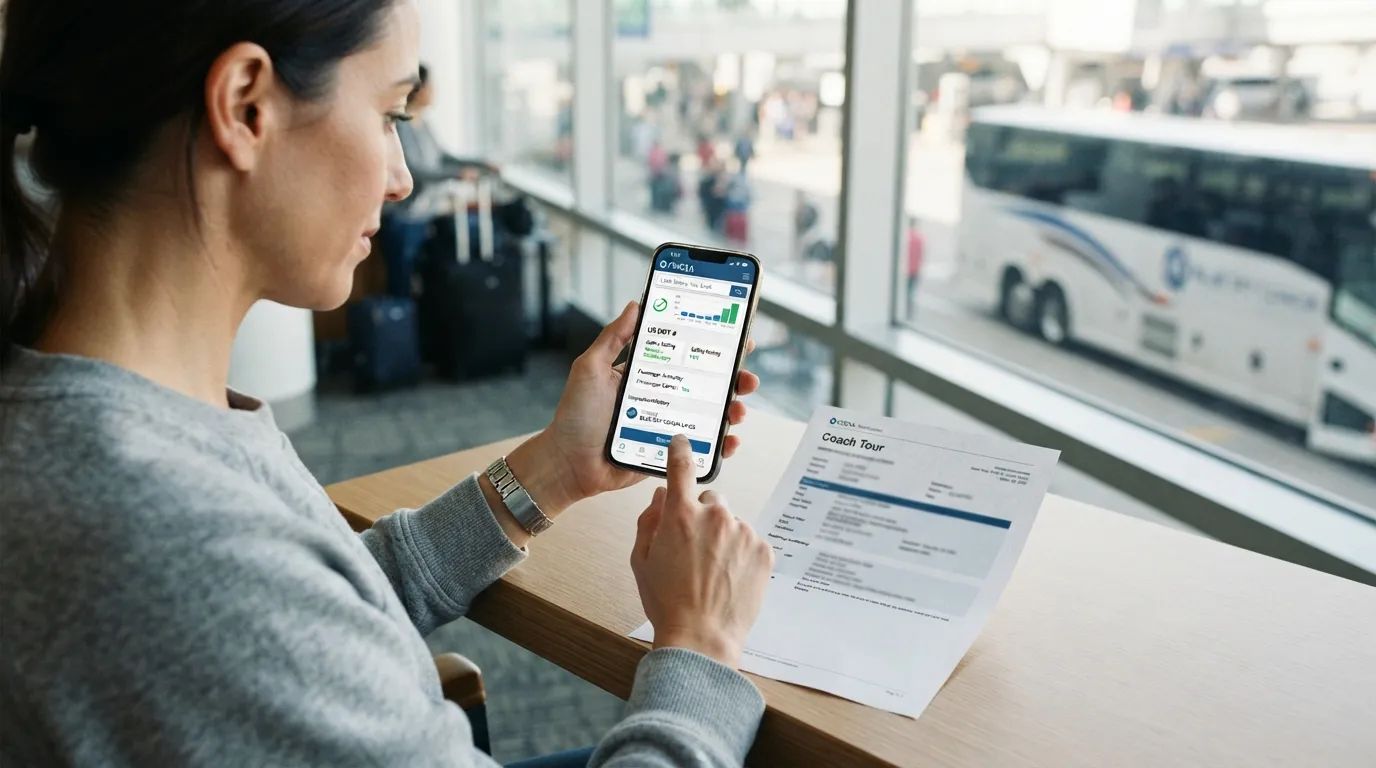
A coach tour looks simple in the brochure: one price, one bus, and someone else does the driving. The surprises come later, in a cash envelope, a suitcase limit or a long day in one seat.
These 16 are the details travelers tend to learn too late, and most can be fixed with one question before you pay. The biggest one is free to check and takes a few minutes, yet most people skip it. First, though, there is an envelope waiting on the last morning of the trip.
#16 – The Tip Envelope on the Last Morning

On many coach tours, tips for the guide and the driver are handed over separately, in cash, at the end. CosmoVista Tours, which runs bus tours in Canada, suggests C$5 per person per day for each of them.1
On a four-day tour, two travelers following that guideline would give C$40 to the director and C$40 to the driver.1 Other companies suggest higher or lower amounts, and whether tips are already built into the price depends on the operator.
Cash for the last morning is easy to plan. The first morning has its own deadline, printed on the final itinerary.
#15 – The Departure Time on the Final Itinerary

Multi-day tours list a departure time for each morning, and the coach leaves on schedule. The day’s stops, meals and driving hours are all built around it.
On tours that change hotels, luggage often has to be outside the room even earlier. That luggage deadline is the one to set your alarm for.
Read the sheet the night before. If you take medication on a schedule, plan it around the earliest morning of the trip.
A punctual morning gets you onto the bus, but it does not decide where you sit.
#14 – Seat Rotation and the Front Row
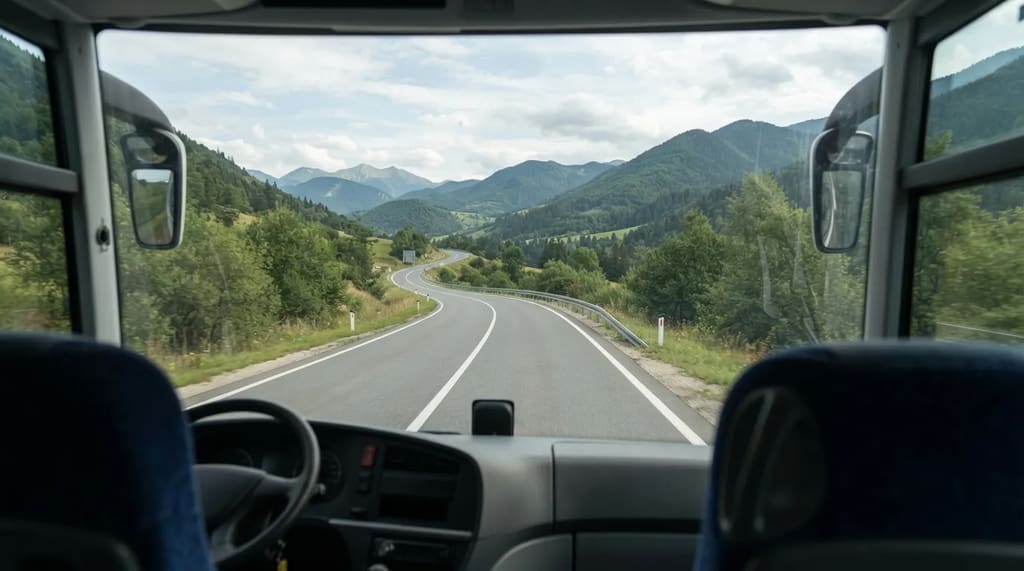
Some operators rotate seats daily on multi-day tours so everyone gets a turn at the front. Others let you keep the same seat all week.
Ask which system your tour uses before you book, especially if you have a bad knee, need an aisle or get queasy toward the back. If you are prone to motion sickness, tell the guide on the first morning, because a front seat with a view of the road is usually the easiest place to manage it.
#13 – The One-Suitcase Rule
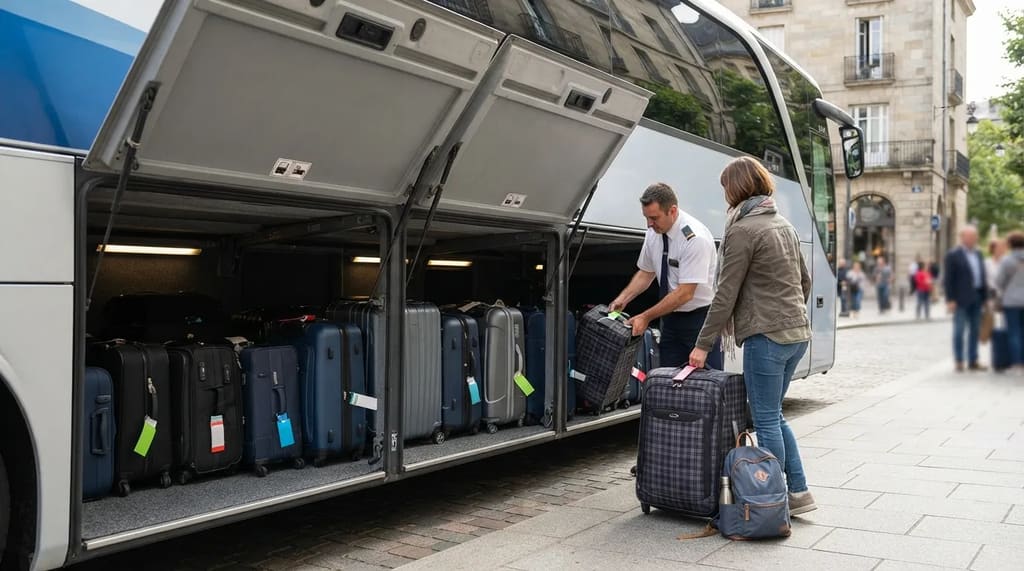
Coach luggage rides in the bays under the floor, and operators commonly limit each traveler to one checked suitcase and one small carry-on. On a full coach the bays fill up, and every bag is loaded and unloaded at each hotel.
Find the exact number and size limits in your confirmation, because they differ by company. The bays are generally closed during the day, so keep a small bag at your seat.
Worth Knowing: The Day Bag
- Medications you may need before the next hotel
- Glasses, plus a spare pair if you rely on them
- A sweater, since coach air conditioning runs cool
- A water bottle you can refill
What goes in that day bag matters even more if the coach’s own restroom is not a sure thing.
#12 – The Onboard Restroom Question
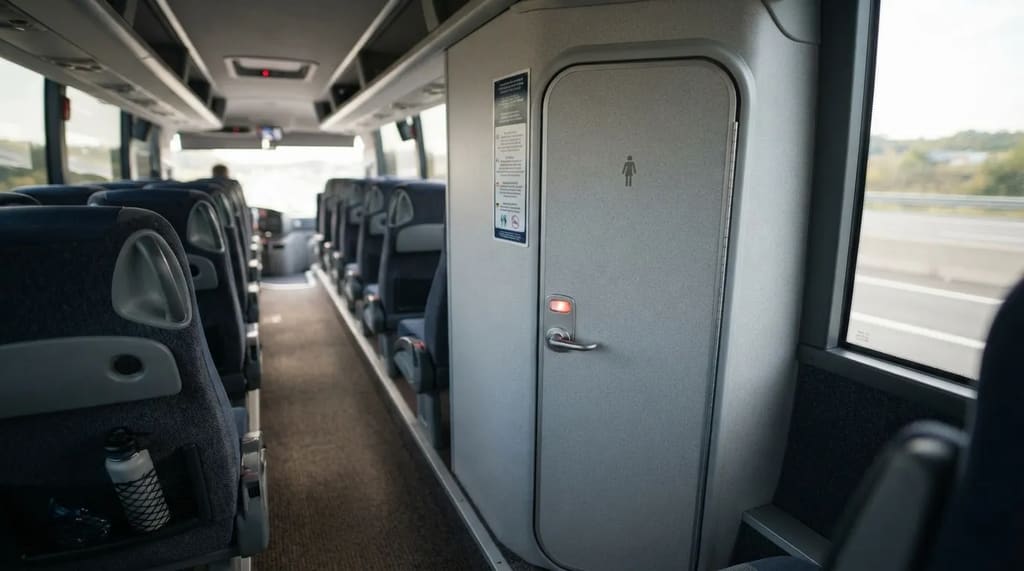
Not every coach has a restroom. On those that do, operators sometimes ask passengers to save it for emergencies.
Ask whether your coach has one, and how often the itinerary schedules stops. The number that matters most is the longest stretch between planned stops, because that is the stretch you will be planning around.
Carry your own water either way. Drinking less to avoid a stop is a poor trade on a long travel day.
#11 – Optional Excursions and Shopping Stops

The tour price usually covers the main itinerary, while add-on excursions are sold separately, sometimes at prices announced along the way. Some itineraries also include stops at shops or workshops.
Those stops are scheduled time you can spend however you like, including not buying anything. Ask for the list of optional excursions and their prices before you pay, so you decide at home instead of on the coach after a long day.
My view is that you should skip at least one. The included itinerary is already full, and a free afternoon is part of what you paid for.
Add-ons are priced per person, which is a reminder of who pays the most on any coach tour: the traveler who books alone.
#10 – The Single Supplement

Tour prices are typically quoted per person on the basis of two people sharing a room. A solo traveler is charged a single supplement to cover the empty bed.
The amount varies by operator and by departure, and it can add a noticeable share to the total. If you travel alone, compare the final price with the supplement included, not the brochure price.
Whoever you share a room with, you will share the road for the same hours, and the brochure rarely states how many.
#9 – Daily Driving Hours Behind the Route Map
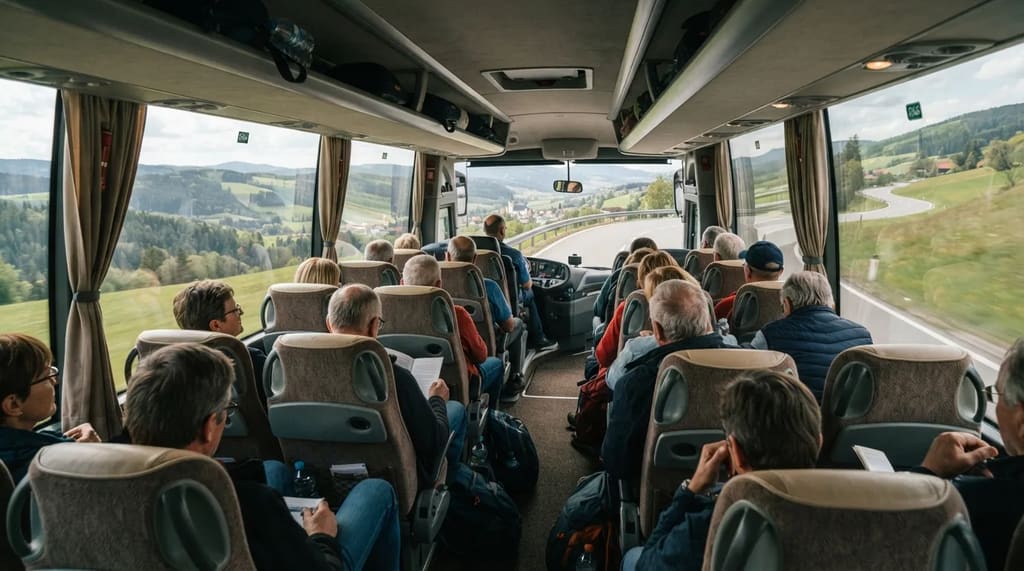
A brochure lists the places you will see, but not always the hours between them. That gap shows up as a day spent mostly in a seat.
Ask for the approximate driving time for each day, and compare it with the time you get at each stop. A route that drives eight hours for ninety minutes at one stop is a different trip from the same route split over two days.
If long sitting is hard on you, count the daily total, not the number of stops. Time in the seat is half of the day, and the other half is on your feet, which the brochure grades separately.
#8 – The Activity Rating for Walking

Tour descriptions often carry an activity or walking level, and for many travelers it says more about the trip than the hotel does. Cobblestones, steps at historic sites and a long walk from the coach drop-off can add up to more walking than the word “easy” suggests.
Match the rating to what you can manage on your worst day, not your best. Then put these questions to the operator.
At a Glance: Ask What “Easy” Means
- Roughly how many steps or stairs at each site?
- How long is the walk from the coach drop-off?
- Is the ground paved, cobbled or uneven?
- Does the coach wait while you sit out a stop?
#7 – Accessible Coaches and the 48-Hour Notice
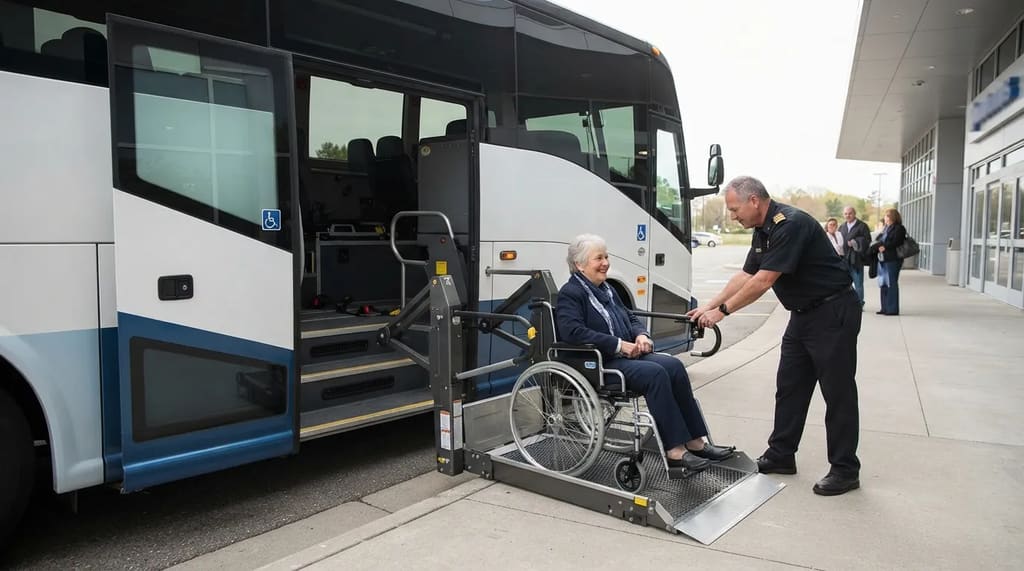
By law, bus operators must provide timely service for passengers with disabilities. The Tennessee Motorcoach Association says charter and tour operators may ask for 48 hours’ notice to provide an accessible bus with a lift and wheelchair securement.2
That notice window is one reason to raise mobility needs while you book, not at the curb on departure day.
Giving notice protects your seat, while the cancellation terms protect your money if the trip falls through.
#6 – The Deposit and the Cancellation Calendar

Tour deposits are commonly due soon after booking, and the refund schedule shrinks as departure approaches. The date when your money becomes nonrefundable is the one to find in the terms.
If that date falls months before departure on a costly tour, travel insurance starts to make sense. Many policies also set a deadline after the first deposit for buying certain coverage, so read it before assuming you can buy later.
A short, inexpensive trip with a fully refundable deposit may not need a policy at all.
Money is one kind of protection. The next one is about what is, or is not, strapped across your lap.
#5 – Seat Belts Depend on the Coach’s Age
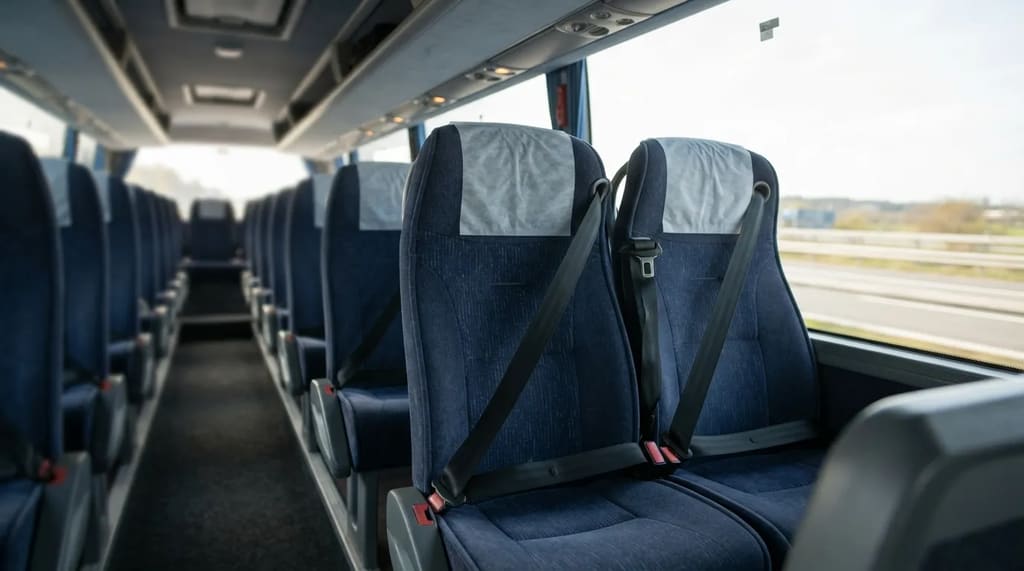
Beginning in November 2016, newly manufactured buses had to be equipped with lap and shoulder belts for each driver and passenger seat.3 Buses built before that date are not required to have belts installed retroactively, even if they are still in service.
So whether your seat has a belt depends on when that particular coach was built, not on what the brochure says. My view is that you should ask for the coach’s model year and wear a belt wherever one is fitted.
I would not cancel over an older coach alone, since FMCSA describes buses as one of the safest ways to travel overall.4
Belts protect you when something goes wrong, and limits on the driver’s working hours are meant to make that less likely.
#4 – The Driver’s Clock
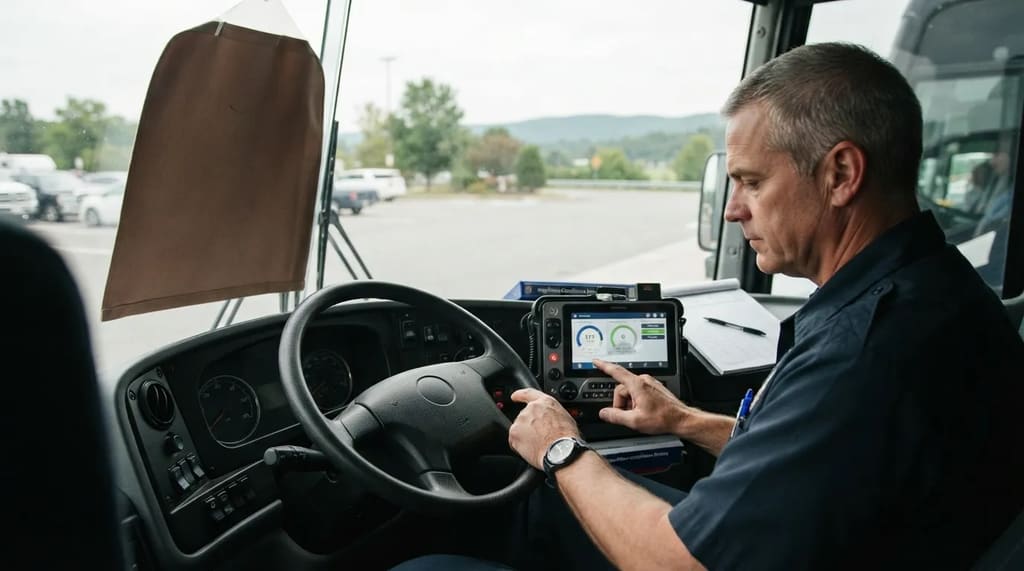
Federal rules cap how long a passenger-carrying driver can work, and those caps quietly shape every itinerary.
Fast Facts: The Driver’s Limits
- Maximum of 10 hours driving after 8 consecutive hours off duty5 6
- No driving after 15 hours on duty following those 8 hours off5
- Weekly caps: 60 hours on duty in 7 days, or 70 hours in 8 days6
- Adverse driving conditions can extend the 10-hour and 15-hour limits by up to 2 hours5
So an itinerary with the coach rolling from breakfast to a late dinner is bounded by the driver’s clock. A passenger-carrying driver found over the limits is placed out of service until he has had enough rest to be legal again.
These limits belong to the driver’s employer, and on some tours that is not the company named on the brochure.
#3 – The Company That Owns the Coach
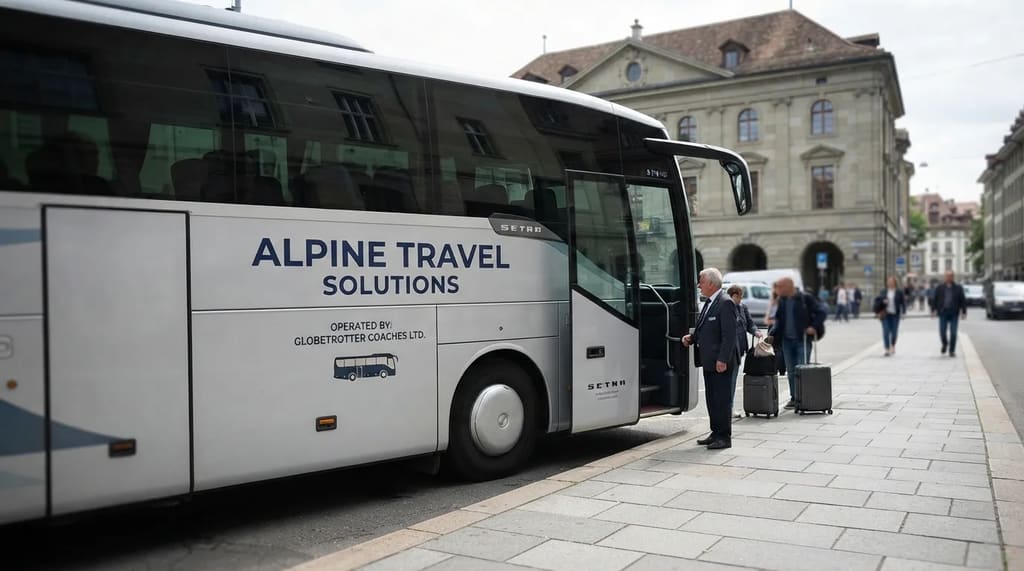
The name on your brochure may belong to a tour operator, while the coach and driver come from a separate bus company. The federal safety record is kept on the carrier, so the name that matters is the one on the side of the coach.
Consumer-safety guidance advises checking the company that will actually run the bus. Ask the tour seller, in writing, for the name of the carrier and its USDOT number, since a well-run booking desk can answer that in a line.
With the name and number in hand, the federal lookup takes only a few moments.
Related Stories From Travelbinger


#2 – The Lookup That Takes a Few Minutes

FMCSA’s Look Before You Book page has a free search tool. Enter a company’s name or USDOT number to see its safety rating, operating authority and inspection history.
Licensing comes first: a “Yes” next to Passenger means the company is authorized to carry passengers.7 Insurance is its own question, so ask what coverage the company carries.
FMCSA also offers a Look Before You Book app that covers these checks. A review site tells you about the cushions and the lunch, while the federal record tells you about the company’s inspections, so look at both but do this one first.
The search returns a rating, and the ratings do not all mean what they sound like.
#1 – What “Not Rated” and “Conditional” Mean
Here is how the labels stack up, from best to worst.
Quick Compare: The Safety Ratings
- Satisfactory: the highest rating, indicating adequate safety management7
- Conditional: may signal a higher safety risk8
- Unsatisfactory: the company should not be operating8
- Not Rated: operations not yet fully evaluated against FMCSA’s standards
Not Rated does not automatically make the operator unsafe or unauthorized, but it makes the inspection history more worth reading.
If the rating is Unsatisfactory, or the record shows no authority for passengers, I would not pay the deposit.
FMCSA says an Unsatisfactory company that is still booking trips should be reported. The hotline is 1-888-DOT-SAFT, Monday through Friday, 8:00 AM to 8:00 PM Eastern.2
The lookup costs nothing, and a bad answer on it is the one result that should end a booking.
Everything else on this list can be settled with a short email before the deposit, in writing and within a day. Once the money is nonrefundable, the same answers cost you a trip or a tense morning at the curb.
Treat the booking desk the way you would treat a contractor you are about to hire, with a short list and an expectation of clear answers. If you have taken a coach tour, which detail do you wish you had asked about before paying the deposit?
Bonus: The Curbside Check Nobody Tells You

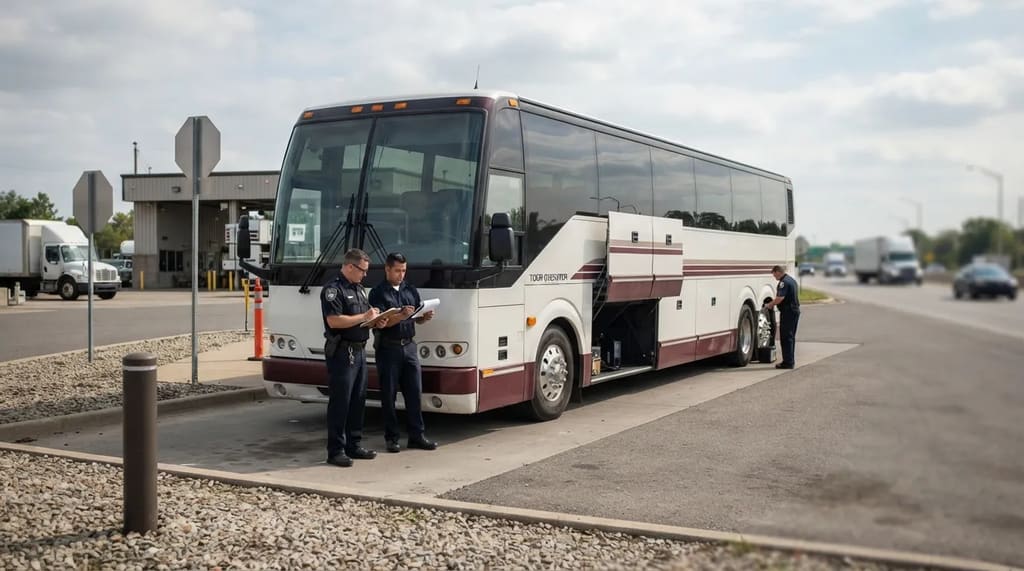
Doing the lookup at home only helps if the coach that shows up is the one you checked. Operators can swap vehicles or subcontract a departure, so confirm it on the first morning.
- Before the deposit: Send one email asking for the carrier’s name, its USDOT number, the coach’s model year and the longest stretch between planned stops. Save the reply on your phone.
- On departure morning: Before your bag goes into the luggage bay, find the USDOT number displayed on the side of the coach. Compare it with the number in that email.
- If it does not match: Photograph the number, ask the guide who operates the coach, and run the new number through FMCSA’s Look Before You Book search before you board.
It takes about a minute, and it is far easier to raise a question at the curb than two hours down the highway.
- CosmoVista Tipping Guide: https://www.cosmovistatours.com/tipping-etiquette-guided-bus-tours-canadian-senior-travelers
- Tennessee Motorcoach Association Safety: https://tnmca.net/safety/
- DOT Seat Belt Rule: https://www.transportation.gov/briefing-room/nhtsa-announces-final-rule-requiring-seat-belts-motorcoaches
- FMCSA Bus Trip Safety Fact Sheet: https://www.fmcsa.dot.gov/sites/fmcsa.dot.gov/files/docs/safety/look-you-book/75231/dot-generalfactsheetv4508.pdf
- FMCSA Hours of Service Summary: https://www.fmcsa.dot.gov/regulations/hours-service/summary-hours-service-regulations
- FMCSA Passenger Carrying Hours: https://csa.fmcsa.dot.gov/safetyplanner/MyFiles/SubSections.aspx?ch=23&sec=69&sub=177
- FMCSA Look Before You Book: https://www.fmcsa.dot.gov/travelplanner
- FMCSA Motorcoach Safety Handout: https://www.fmcsa.dot.gov/sites/fmcsa.dot.gov/files/docs/Motorcoach_Safety_Handout_508-ENG.pdf