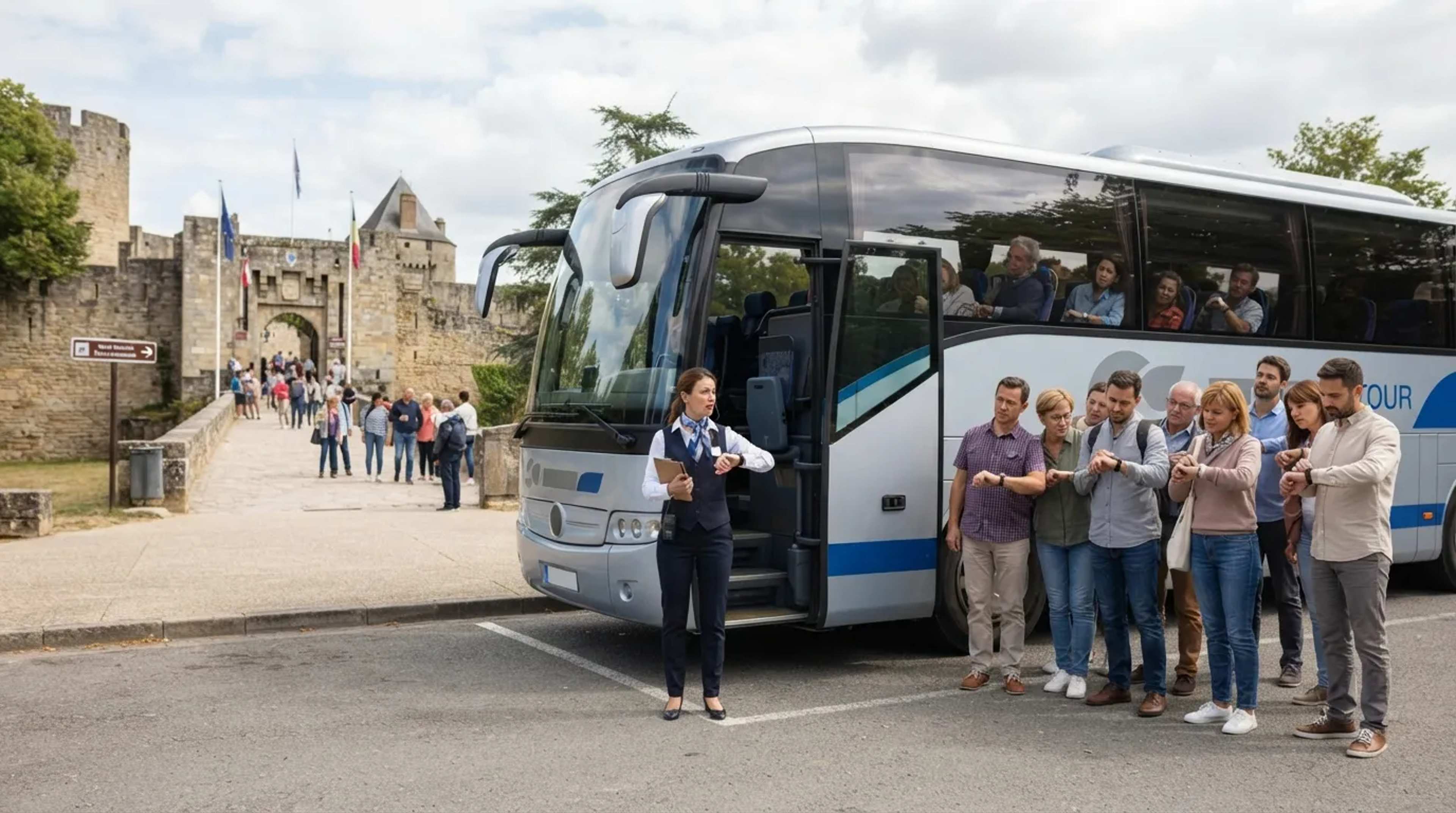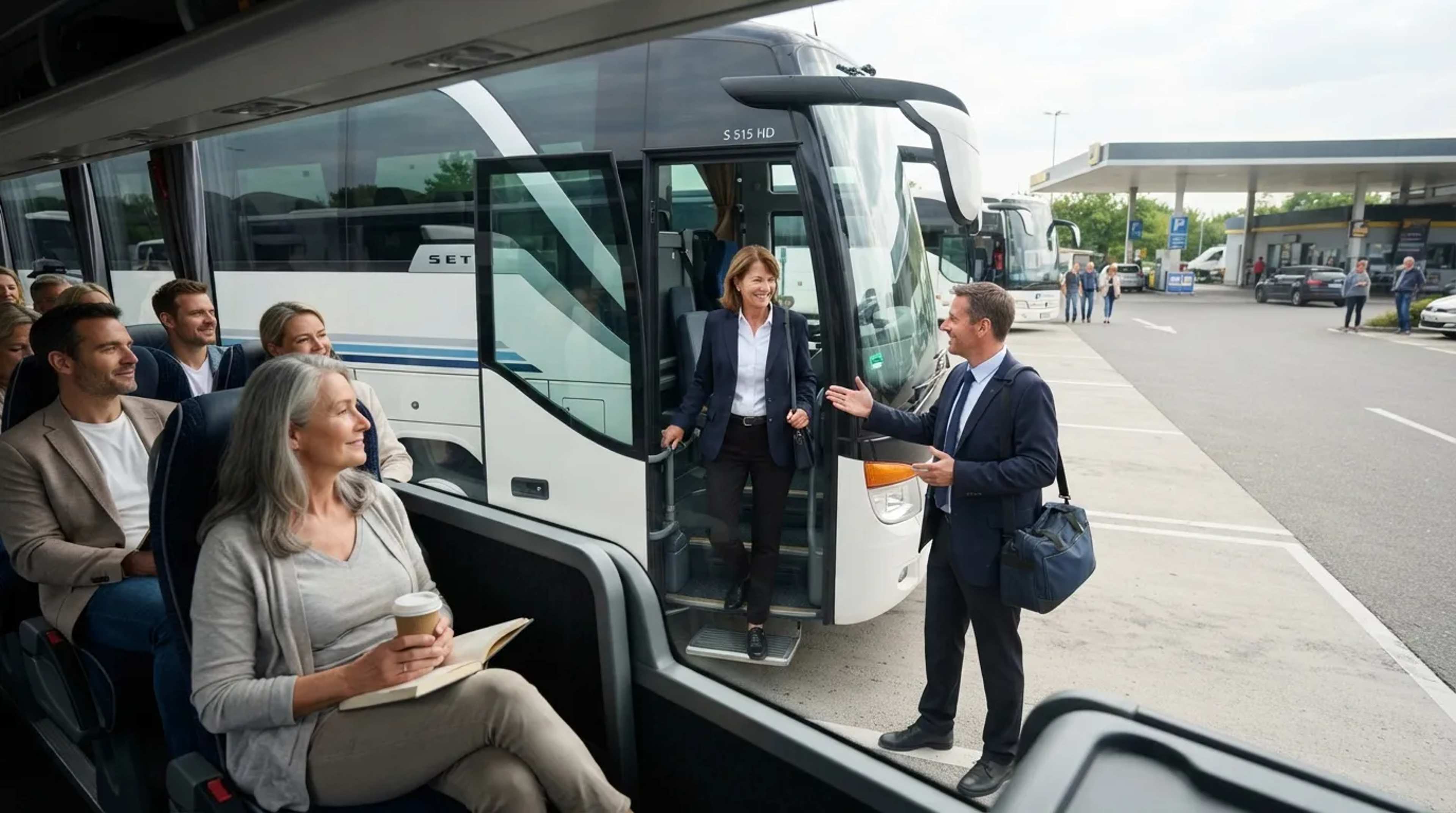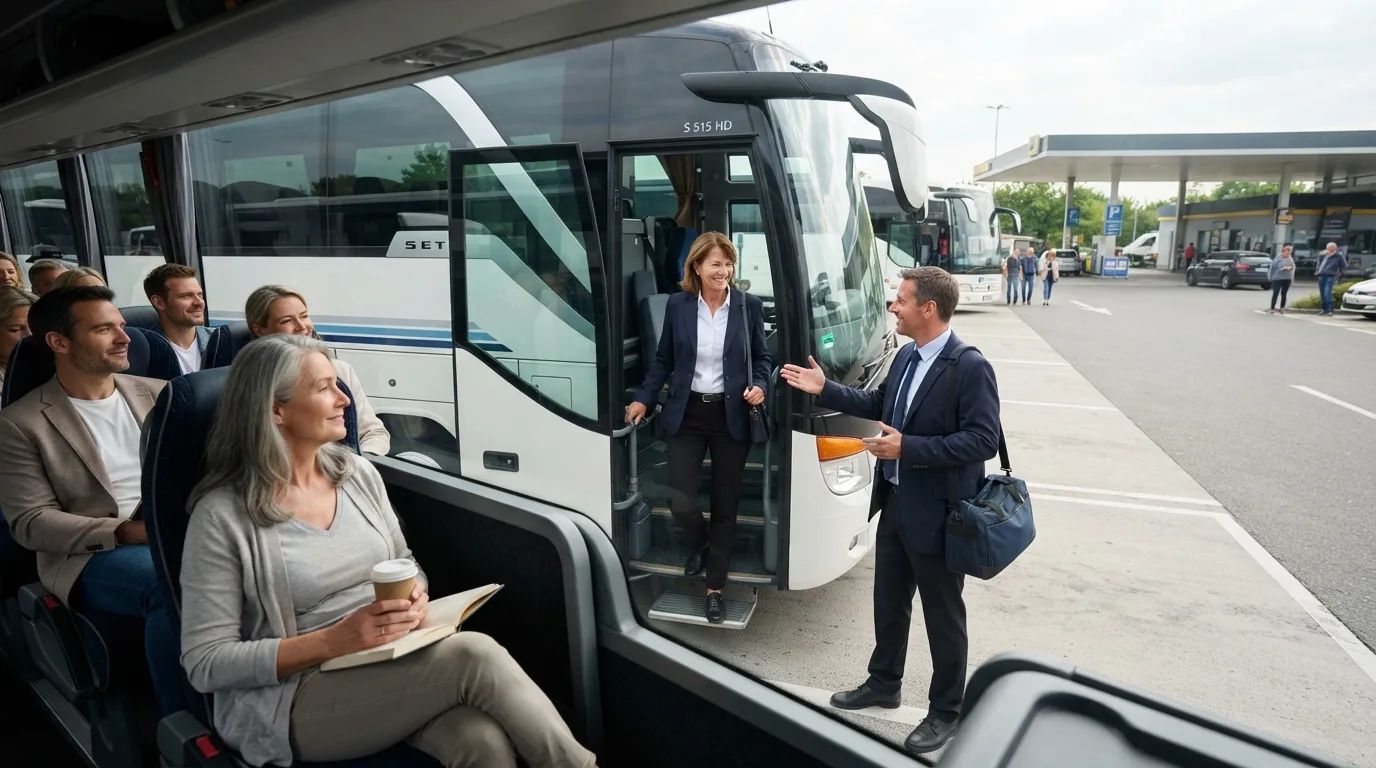
You’ve probably sat through one without a second thought. The coach slows, the engine idles, a stranger climbs aboard in a hi-vis jacket, and half the passengers reach for their phones. It looks like dead time. Experienced coach travellers treat it as the most useful 15 minutes of the whole trip.
Nothing they do is dramatic, and that’s the surprise. A handful of quiet habits keep them from losing a phone, missing a stop, or standing in the wrong car park at midnight. A couple of these habits split coach regulars right down the middle, and the last one changes how you’ll feel about the next swap.
#15 – They Stay Calm When the “Station” Is Just a Dark Car Park
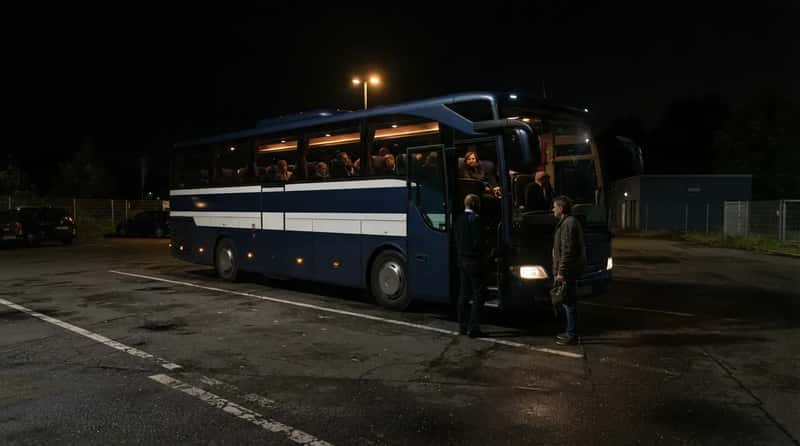
First-timers feel a jolt of worry when the coach rolls into a plain lot with no building in sight. Veterans barely look up. Changeovers often happen at depots, service areas or transport hubs, because the relief driver needs a safe, practical place to meet the vehicle. The least impressive stop on the route is often exactly where the handover is meant to happen.
Experienced travellers glance at the time, check the route, and ask the driver, “Is this the swap?” Newer passengers often assume something has broken down. A boring stop usually means the schedule is working. The reason behind that stop, though, is a clock most people never see…
#14 – They Know the Legal Clock Ticking Behind the Stop
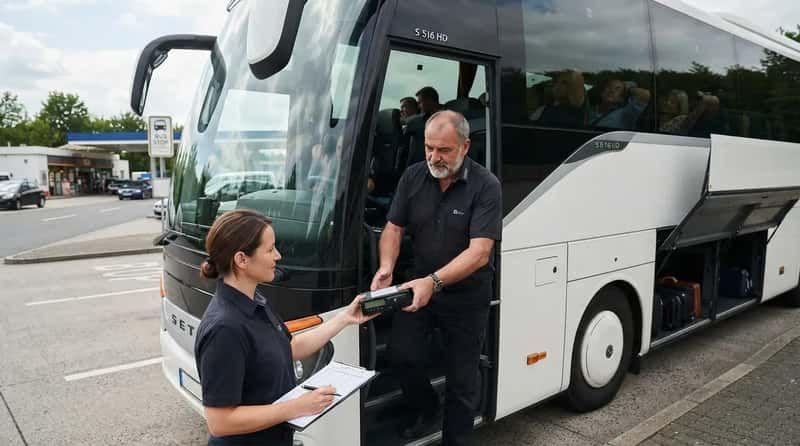
Regular travellers understand that the driver isn’t pulling over on a whim. Under EU rules, which most international coach work follows, a driver must take a break of at least 45 minutes after 4.5 hours of driving. That break can be split into shorter pieces. Driving hours are recorded automatically, so a driver can’t simply “push on” to save you time.
The US has its own version. Federal rules for passenger-carrying drivers cap driving at 10 hours after eight consecutive hours off duty. Once you know that, a delay at a changeover stops looking like incompetence and starts looking like a rule doing its job. Meanwhile, something you left on the seat could cost you far more than time…
#13 – They Take Valuables Off the Coach, Not Just Their Jacket
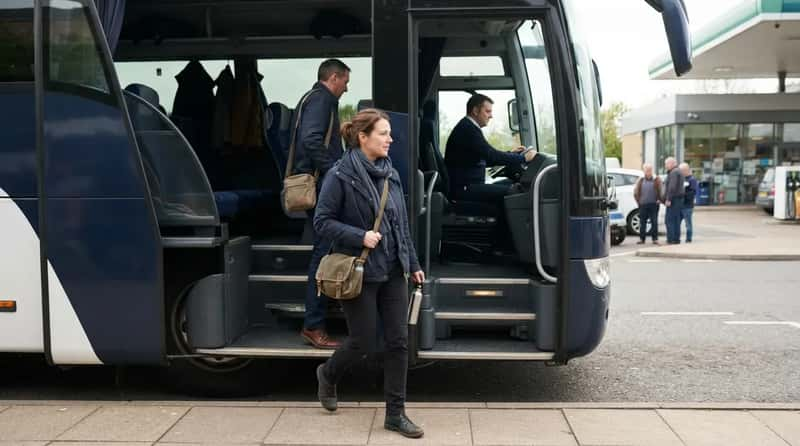
Smart travellers treat a changeover like leaving a parked car. Passengers drift off, drivers swap, and the coach can sit open or unattended for a few minutes. The classic mistake is leaving a phone, wallet or passport tucked into a seat pocket. Veterans carry those items with them.
It isn’t paranoia. It’s the same logic as never leaving a laptop on a café table while you queue for coffee. Many keep a small day bag packed with just the essentials, so there’s no frantic decision about what to grab. And once you’re out there, a new problem appears: finding your own coach again…
#12 – They Photograph the Coach and the Bay Before Walking Away
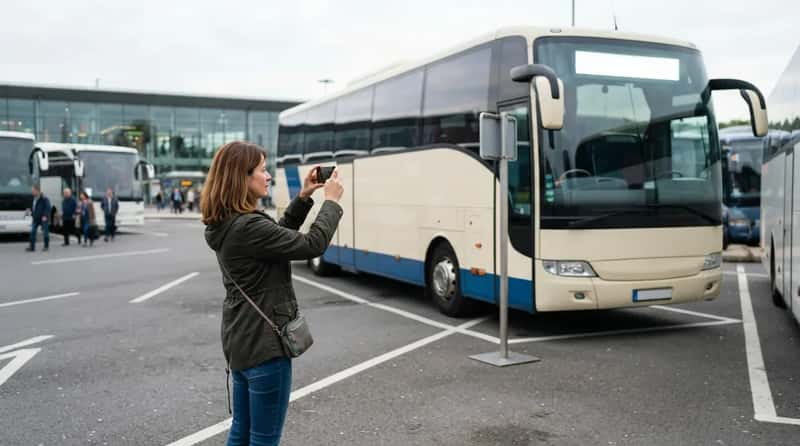
Service areas and depots can fill up with similar-looking coaches in near-identical company colors. Experienced travellers snap a quick photo of the vehicle, the number plate or fleet number, and the bay. It takes three seconds. Boarding the wrong coach is a classic changeover mix-up, and a single photo makes it nearly impossible.
Worth Knowing
- Fleet number or number plate: the fastest way to confirm it’s really your coach.
- Bay or stand sign: tells you where to walk back to in the dark.
- Windscreen destination board: proves which route you’re on.
- One nearby landmark, like a shop sign or lamp post, helps when every bay looks the same.
Some also photograph the destination board in the windscreen. On certain routes, a changeover can mean a different vehicle takes over for the next leg, so that picture matters. At night, it beats trying to remember which dark rectangle in a row of dark rectangles was yours. Next comes the habit that separates calm travellers from the ones sprinting across a car park…
#11 – They Hit the Restroom Before They Do Anything Else
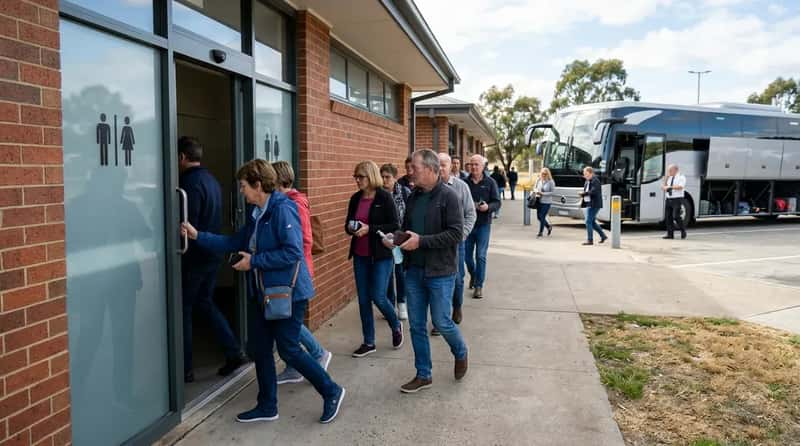
The queue is the real enemy of a changeover stop. Experienced travellers head to the restroom first, then food or fresh air. Leave it until last, and you may join a line that outlasts the break. They also resist the pull of the shop window until everything else is done.
Many also prepare before the coach even stops. They keep cash or a card in a pocket instead of buried at the bottom of a bag, so paying takes seconds. With the essentials handled, the best travellers spend what’s left of the break on something their bodies will thank them for…
#10 – They Actually Walk Instead of Sitting Down Again
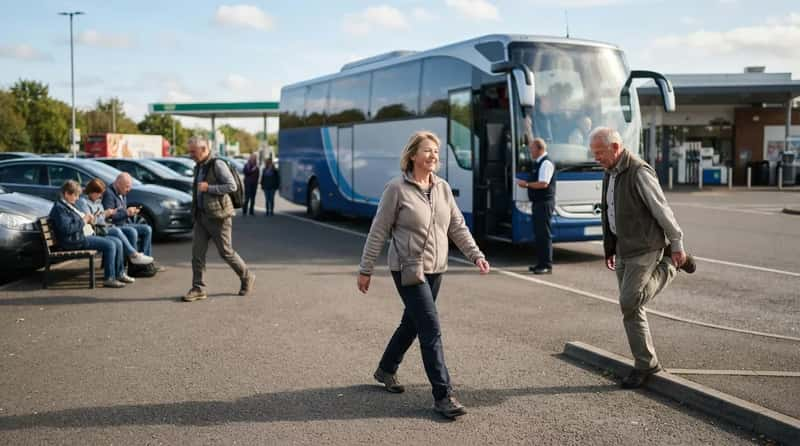
You’ll spot the veterans pacing the car park while everyone else scrolls on a bench. They’ve learned that hours on a coach leave legs stiff and sluggish. General health guidance for long journeys encourages moving around whenever you can and flexing your calves while seated. A brisk five-minute lap does more than most people expect.
They also roll their shoulders and loosen their necks before boarding. It’s a small thing, but those passengers tend to step back on looking fresher than the ones who stayed put. All the while, something important is happening a few feet away, and the sharpest travellers are watching it…
#9 – They Watch the Handover, Not Their Phones
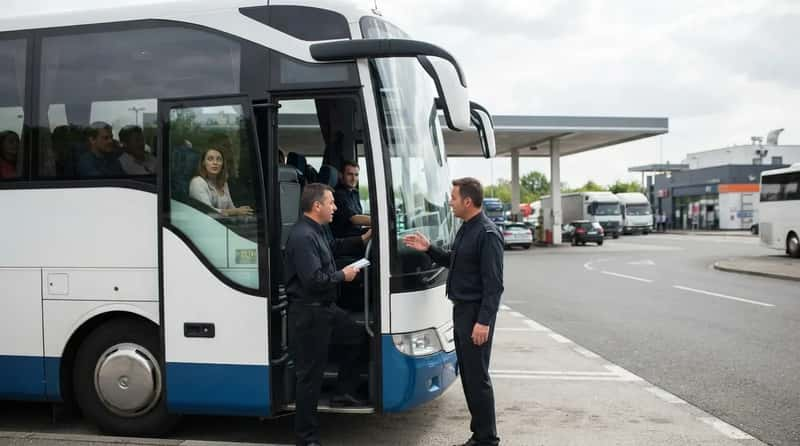
Experienced travellers notice what the drivers are doing. The outgoing driver may brief the new one, and the incoming driver often walks around the vehicle for a quick check. They aren’t being nosy. They’re reading the room. A calm, unhurried handover is a good sign, and a rushed one hints at a tight day.
That’s one reason a changeover sometimes runs longer than expected. The vehicle’s systems have to be switched over properly, not just the person in the seat. But there’s one thing even the friendliest travellers get wrong at this exact moment…
#8 – They Leave the Driver Alone During the Break
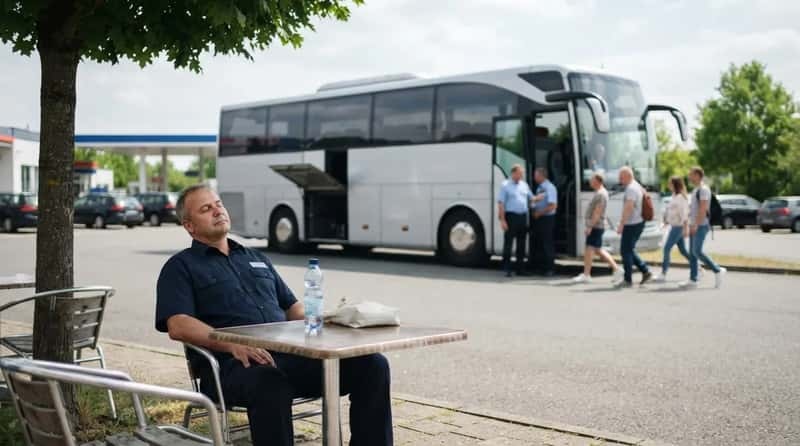
Here’s an opinion that splits coach passengers. Some think a quick chat with the driver at a stop is harmless. Many experienced travellers disagree. The break exists so drivers can rest, and every question eats into it. They hold their questions until someone is back on duty.
Critics call that overly cautious and point out that plenty of drivers enjoy talking to passengers. Maybe so. But the veterans’ rule is simple: if it can wait five minutes, it should. And the best question of all is saved for the new face behind the wheel…
#7 – They Ask the New Driver About the Road Ahead
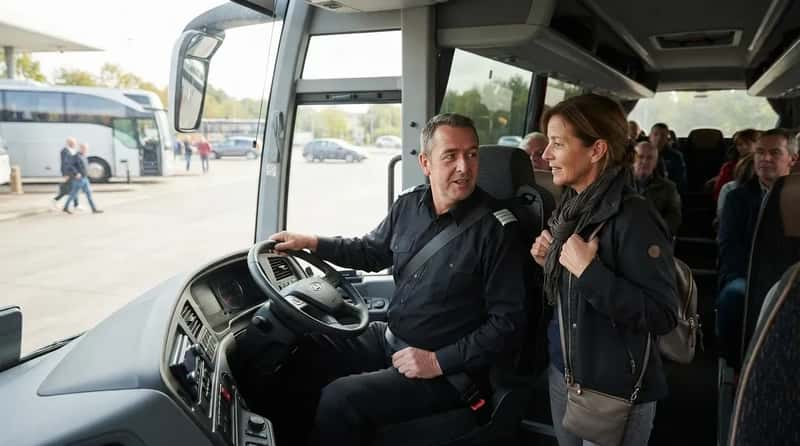
The incoming driver is a fresh source of information. Experienced travellers wait until the driver is settled, then ask something simple: any delays ahead, and is my stop still on schedule? A relief driver may know about roadworks or traffic that the outgoing driver never had to face. It’s a polite chat with a useful answer.
At a Glance
- Ask once, keep it short, and wait until the driver is seated.
- Best question: “Any delays ahead before my stop?”
- Second best: “Is the arrival time still about right?”
- Always name your drop-off so the new driver hears it directly.
They also confirm their own drop-off. A quick “I’m getting off at the second stop” can prevent a missed exit, one of the costliest mistakes a passenger can make. It matters even more when the new driver covers a different section than the old one. But there’s something that matters more than information, and it’s how fast you get back…
#6 – They’re Back on Board Before the Rush Starts
Coaches run to schedules, and veterans respect them. They return a few minutes early instead of strolling back at the last second. A coach leaving a passenger behind is rare but real, and nobody wants to be that story. Being early also spares the driver from counting heads and glancing at the clock.
There’s a practical bonus too. Early boarders can settle in, stow bags where they want them, and dodge the last-minute shuffle. They also skip the awkward walk down the aisle with a full coach watching. And next comes a question that starts real arguments among regulars…
#5 – They Think Hard About Tipping the Outgoing Driver
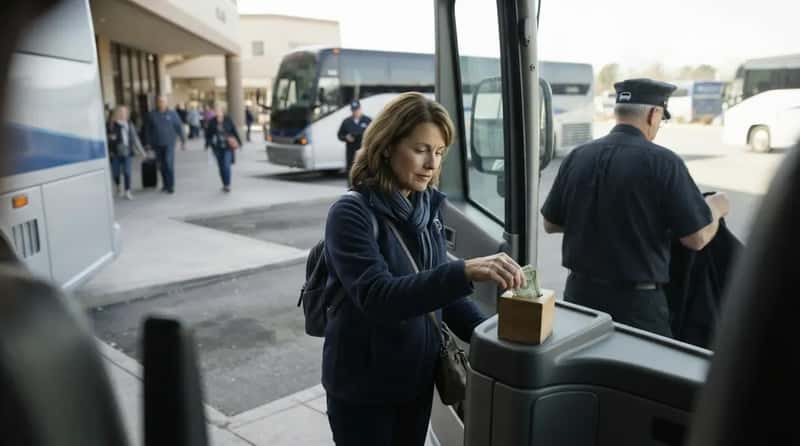
This one divides coach travellers. On guided tours in the US, tipping drivers is widely seen as normal. On scheduled intercity services, opinions vary and practices differ by operator. Some travellers quietly thank the outgoing driver, while others argue tipping should never replace proper pay.
Experienced travellers check the tour paperwork or operator policy first, since some tours already include gratuities. If tipping is expected, they do it before the swap, because that driver is about to walk out of their journey for good. Meanwhile, there’s a far less awkward habit involving your phone…
#4 – They Top Up Their Devices While They Can
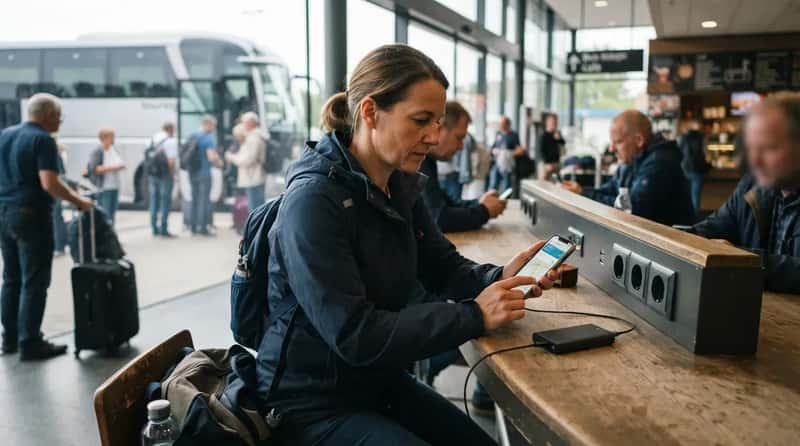
Veteran travellers treat a changeover like a charging window. Onboard sockets and USB ports can be patchy, and not every coach has working ones. Many carry a portable battery pack so a dead phone never strands them at the wrong stop. They also download tickets and maps before the trip even begins.
Quick Compare
- Onboard USB or socket: convenient, but not guaranteed to work.
- Portable battery pack: works anywhere, so it’s the veteran’s favorite.
- Station or café outlet: handy, but it pulls you away from the coach.
Stations and service areas often have charging points or cafés where you can plug in. Still, experienced travellers don’t wander far to find them. They stay close to the coach and keep the cable short. The next habit has less to do with gadgets and more to do with your comfort…
#3 – They Adjust Their Layers Because the Cabin Changes

A new driver can bring a new temperature setting. Night air at a service area can also be colder than expected, and the cabin can feel completely different after the doors have been open for ten minutes. Experienced travellers keep a light jacket, scarf or blanket within arm’s reach. They don’t wait until they’re shivering to plan for it.
If the temperature is truly uncomfortable, veterans ask once, politely, and then adapt. They don’t wage war on the air vents. And the final two habits are the ones that save the most trouble at the end of the ride…
#2 – They Send One Message to Whoever Is Picking Them Up

Delays are common on long routes, and a changeover is the perfect moment to check the time. Experienced travellers send one clear message to the person meeting them: updated arrival time and exact drop-off point. Pickups often go sideways because the coach stops somewhere different from where people expect. One text fixes that.
It’s kind to the people waiting, too. Nobody enjoys standing in the cold at 1 a.m., wondering whether you’re ten minutes away or two hours. But the number one habit isn’t about logistics at all, and it changes how you see the whole ride…
#1 – They Quietly Feel Relieved That Someone Fresh Is Taking Over
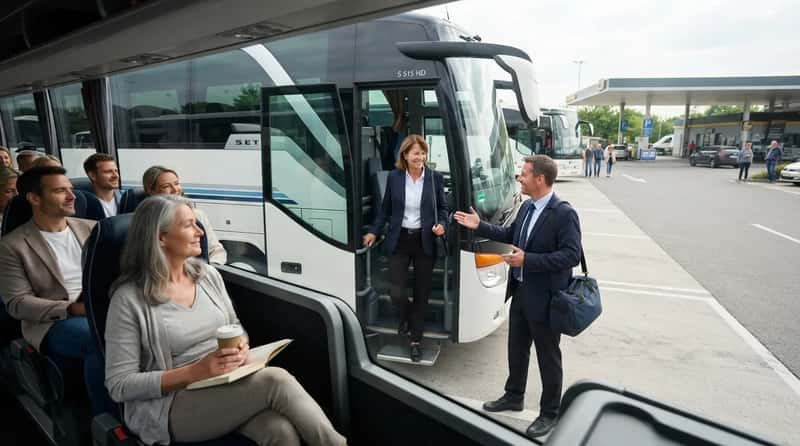
The best travellers see a driver swap as a good sign, not an annoyance. A rested driver is the whole point of the system. Fatigue is widely recognised as a serious risk on the road, which is why driving-hours rules exist in the first place. The inconvenience of the stop is the price of that margin.
Why It Stands Out
- It’s the only habit on this list that costs you nothing and needs no gear.
- It turns a delay into reassurance.
- It reminds you the system is built around rest, not speed.
They also remember that dozens of strangers are trusting one person with a very large vehicle for hours at a time. So when the new driver climbs aboard, they relax a little. The most experienced travellers don’t just tolerate the changeover. They’re quietly grateful for it.
Next time the coach pulls into some dim, forgettable lot and the engine goes quiet, look around. The people who seem to be doing nothing are usually the ones who planned best. Somewhere in that parking lot, a rested stranger is about to take your night in their hands, and that’s the whole point of the stop.