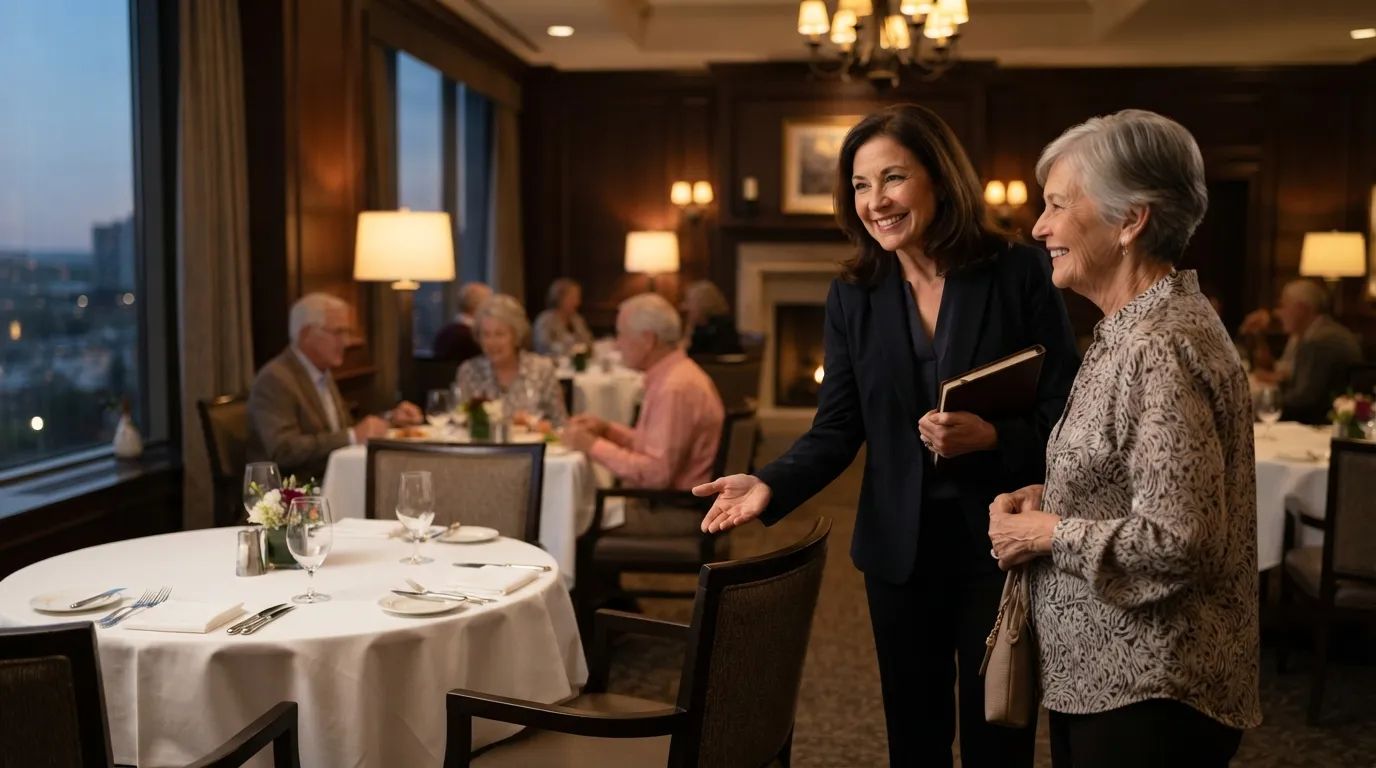
Walk into a hotel restaurant at 4:45 p.m. and the room looks almost empty. Look closer at the host stand. Before the bar fills and the music climbs, the host is already making small calls for the guests who always arrive first. Most diners over 60 never see it happen. Here are twelve of those quiet moves, tied to real research on hearing, seating, and early dining.
The surprising part is that none of it is printed on a menu. Some of it is about noise, some about light, and one move has nothing to do with food at all. Not every host does all twelve, and no hotel promises any of it. The best ones do most of them without saying a word.
12. They Steer You Away From the Kitchen Door and the Bar

Ask a hearing specialist where an older diner shouldn’t sit, and the answer is nearly always the same. AARP’s hearing-loss dining guide advises sitting as far as possible from loud spots like the kitchen or bar. A thoughtful host already knows this.
So the early arrival gets walked past the swinging doors and toward a calmer corner. The guest just thinks they landed a good table, but it was a decision.
Early service makes this easy. Arriving early at a favorite spot can give you more say in where you’re seated. That matters because hearing trouble is common in this age group.
Fast Facts
- About one in three Americans between 65 and 74 has hearing loss.
- Nearly half of those older than 75 have difficulty hearing.
- The loudest zones in most dining rooms are the kitchen door and the bar.
- The early shift is when the host still has the most seating choices.
By 7 p.m., those quiet tables are usually gone. But the next trick happens in the sound system, not the seating chart…
11. They Turn Down the Music Before the Room Fills Up
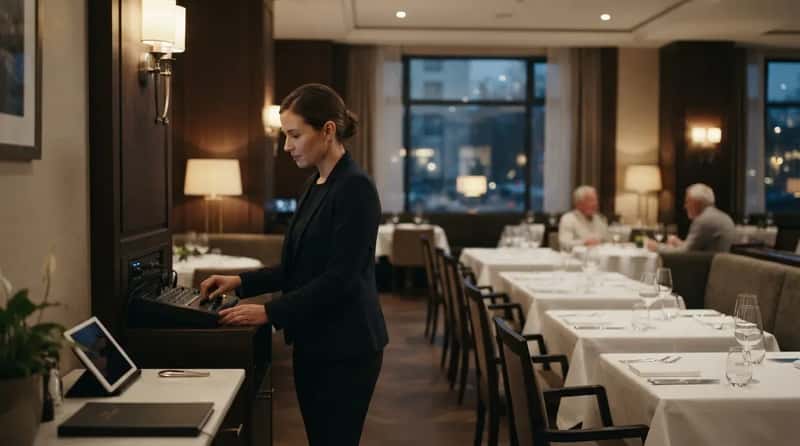
A half-empty dining room can be deceptively loud if the playlist is cranked. Some hosts and managers adjust the music while the room is still quiet, because they know it only gets harder to hear once the crowd arrives.
Background music is just one noise source in any restaurant. Kitchen clatter, music, and other diners’ conversations all pile up, which makes a calm sound level hard to hit. The early shift is the one window when the host can still control the mix.
The numbers explain why it matters. One study found that background noise below 50 dB(A) let diners over 60 talk with less vocal effort and understand conversation better, even with moderate to severe hearing loss.
Noise has been rated the most irritating part of dining out. A host who lowers the volume at 4:30 is protecting the whole evening. And there’s a quieter signal that works even better…
10. They Quietly Honor the Request You Made When Booking
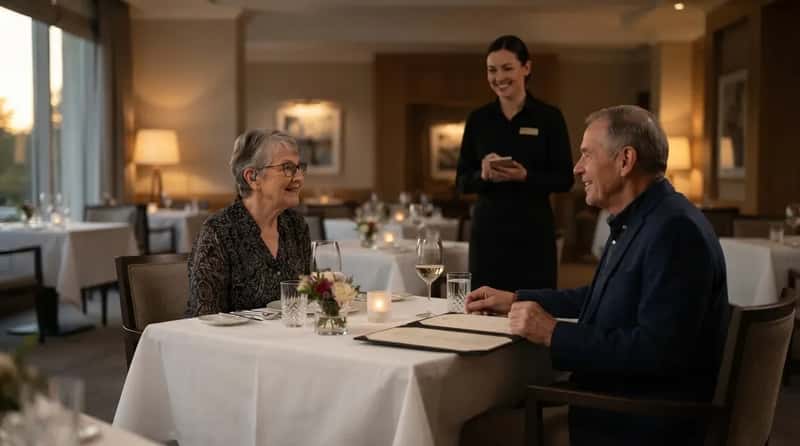
Many older diners never ask for help at the door. They ask on the phone, in one short sentence, when they book. Hosts who read those notes tend to remember them.
Hearing specialists suggest mentioning hearing aids when you reserve and asking for a quiet table. A good host treats that line as a promise rather than a suggestion.
Early reservations help here too, because there’s less chaos to plan around. Many people with hearing loss avoid restaurants altogether because of the noise. So a table that’s honored on the first visit often turns into a standing habit.
Hosts know that one calm evening can create a regular for years. But there’s a seating trick that’s even simpler than asking…
9. They Offer the Seat With a Wall Behind You
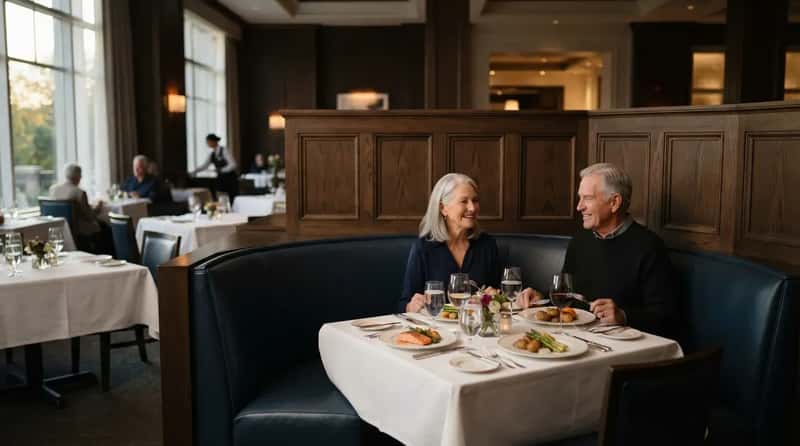
Watch where hosts place early diners, and you’ll notice a pattern. The corner table and the booth along the wall go first. That’s not random.
Hearing experts suggest a corner or wall seat, or sitting with your back to a wall, to cut down noise from behind you. Hosts who’ve seated thousands of guests learn which spots feel calmer without needing a study to tell them.
There’s also a comfort factor that no decibel reading captures. A wall at your back means fewer servers brushing past and fewer surprises.
The best seat in many dining rooms is the one most people walk right past. Hosts tend to hold those tables for guests who’ll appreciate them. Next up is something you can’t hear, but you definitely notice…
8. They Pick the Softer, Better-Lit Corner of the Room
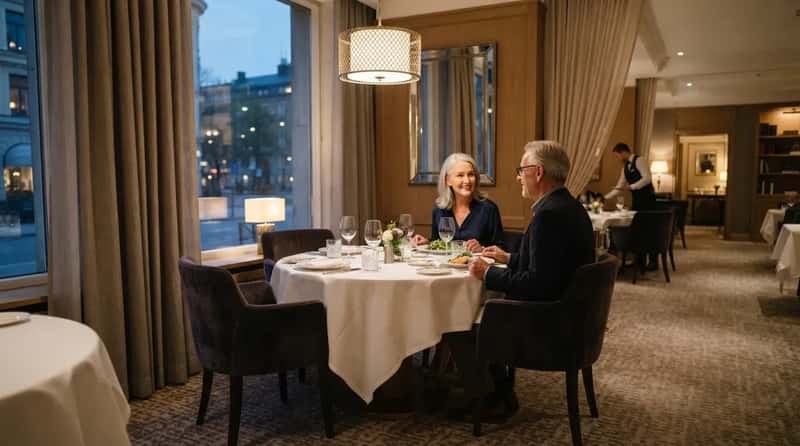
Light and surface matter more than most guests realize. Hearing-loss advocates recommend a table in a well-lit area, so you can see the faces of the people you’re talking with. Many people with hearing loss lean on lip-reading and facial cues without even knowing it.
A host who seats you under a dim pendant lamp at the far end can quietly make dinner harder. A thoughtful one moves you toward the light.
The floor matters too. Carpeting and curtains absorb sound, while marble or stone floors, glass, and mirrors let it bounce around. Many hotel dining rooms mix both, so the better-treated section can feel like a different restaurant.
The same room can have a loud half and a quiet half, and hosts know which is which. But the next move is about how they talk to you, not where they seat you…
7. They Slow Down and Face You When They Speak

Hearing loss at the table rarely announces itself. A seasoned host picks up on it anyway. They speak a little slower, face the guest, and repeat the details without a sigh.
It’s a small courtesy, and it may be the biggest accommodation many guests ever get. Nobody has to confess a hearing problem for it to work.
This matters because many diners don’t use hearing aids at all. In a national study of Medicare beneficiaries aged 71 and older, 65.3% had hearing loss, yet only 29.2% of those with hearing loss used hearing aids.
Quick Compare
- Helps: facing the guest so they can see your lips and expression.
- Hurts: reciting specials while turning away or walking off.
- Helps: a slower pace and a calm repeat of the key details.
- Hurts: a sigh or a louder, clipped tone the second time around.
Most older guests with hearing loss aren’t wearing anything to help them at the table. So the host’s voice and posture become the accommodation. Next comes something that happens before you even pick up the menu…
6. They Mention the Early Menu Before You Have to Ask
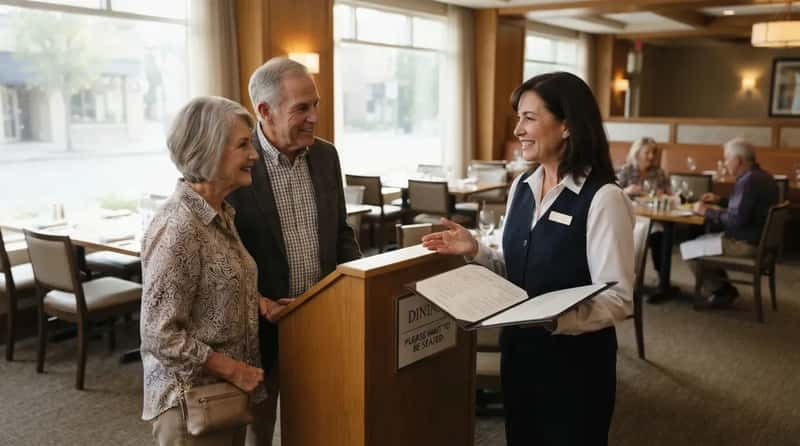
Early dining deals exist, but they’re easy to miss. They’re often not advertised at the table and vary by day and location. Cracker Barrel, for example, says its smaller-portioned early dinner deals run Monday through Friday from 4 p.m. to 6 p.m., dine-in only.
A host who knows the window will usually mention it as you’re seated. That’s real money saved, with zero awkwardness.
Not every deal is a company-wide policy. Golden Corral doesn’t appear to have a single companywide senior early-bird deal, though some locations still offer one.
The same chain can have a senior special in one town and nothing in the next. That’s why a friendly host is the best source on what’s actually available tonight. Which brings us to the portion question nobody wants to raise…
5. They Offer a Smaller Plate Without Making It Awkward
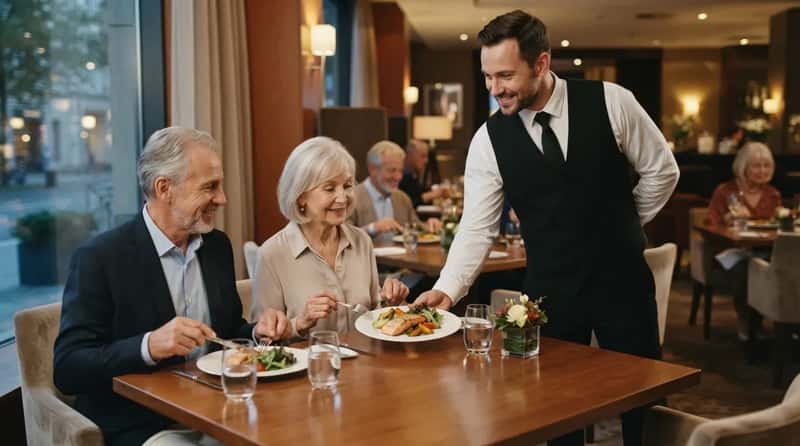
Appetites change, and plenty of older diners don’t want a platter built for two. Good hosts and servers let guests find a smaller option without making it a moment. Some chains build this into the menu. IHOP offers a dedicated senior menu to anyone 55 and older.
Hotel restaurants rarely advertise this, but half portions and lighter plates are often available if someone offers.
Quick Compare
- Cracker Barrel: smaller-portioned early dinners, Monday to Friday, 4 to 6 p.m., dine-in only.
- IHOP: a dedicated senior menu for guests 55 and older.
- Hotel restaurants: usually unadvertised, but lighter plates may be there if the host offers.
The key is that the offer comes from them, not from you. No one has to say the word “senior” out loud.
A discreet “we can do that as a smaller portion” has saved a lot of leftovers and a lot of pride. That’s the kind of insider move that turns a nice dinner into a loyalty habit. The next one has to do with the clock, and it’s bigger than it sounds…
4. They Guard the Calm Window Before the 5:30 Crowd Hits
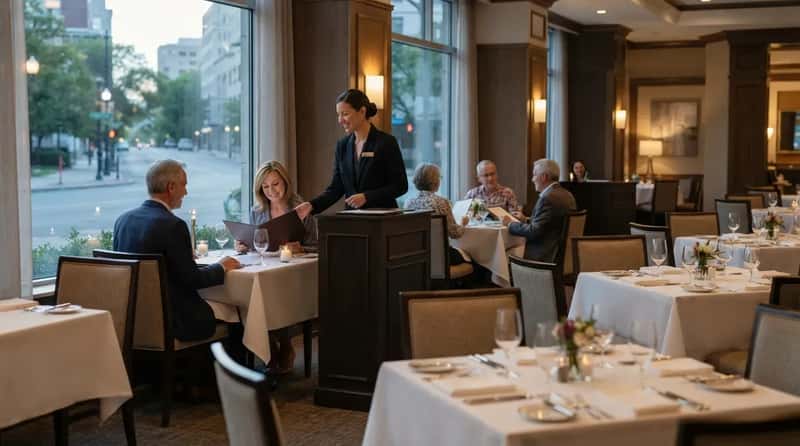
The early slot used to belong to retirees. Not anymore. Americans of all ages are moving dinner earlier, and the 5 to 5:30 p.m. slot has become one of the hottest reservations of the evening.
Yelp reported that about 60% of diners were making early reservations in 2025. Hosts see it on their books every night, and the quiet 4:30 table is quickly becoming a rare thing.
So smart hosts pace the early seatings on purpose. They try to get older guests settled, served, and comfortable before the younger rush arrives.
The calm hour that older diners always enjoyed is now something hosts have to defend. Spacing out those first tables is one of the least visible skills in the job. And the next move is about what happens when your legs aren’t as steady as they used to be…
3. They Hold the Table That’s Easy to Reach
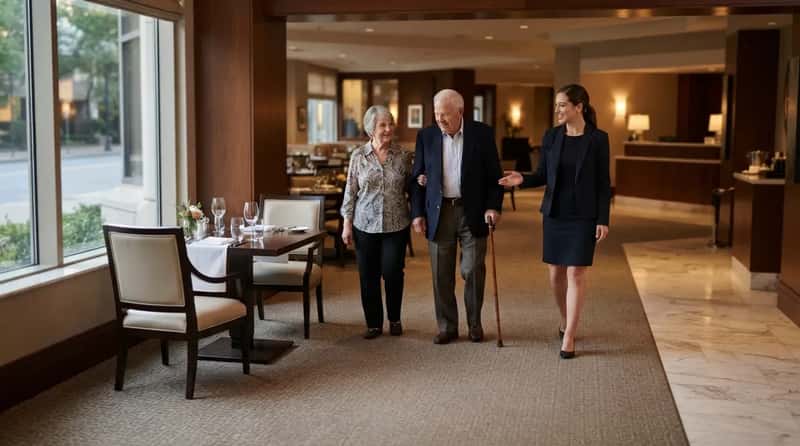
An early guest with a cane, a walker, or a bad knee notices every step and every tight turn. Hosts who pay attention seat these diners near the entrance, on level floor, with room to move.
Nobody gets asked a question about it. The table is simply there when the guest arrives. It’s one of those things you only notice when it’s done wrong.
Worth Knowing
- The shortest path from the door usually beats the prettiest table.
- Level floor and a clear aisle matter more than the view.
- Chairs that slide out easily make sitting down less stressful.
- Early in the evening, the route is open. Later, it rarely is.
Early service helps because the aisles are clear and the room isn’t packed with chairs pushed back. Two hours later, that same route can feel like an obstacle course.
Hosts know the layout better than anyone and quietly plan around it. This is hospitality that never shows up in a review, which is exactly why it’s so rarely talked about. Next, a move that depends on nobody watching the clock…
2. They Let You Linger Without Hovering

The early diner often finishes before the dinner rush even begins. That gives hosts a rare freedom: they don’t need the table back right away.
So an older guest can have a second coffee, finish the conversation, and take their time getting up. Nobody slides a check onto the table or stacks the plates with a sigh.
That freedom has a payoff for the restaurant too. Research suggests that keeping noise within a limit keeps perceived disturbance low and willingness to spend time and money high.
A calm room doesn’t just feel better, it can actually make guests stay longer and spend more. Smart hosts understand that a relaxed early table can be worth more than a rushed one. But the most meaningful move is saved for last…
1. They Remember You, and That’s Why You Keep Coming Back
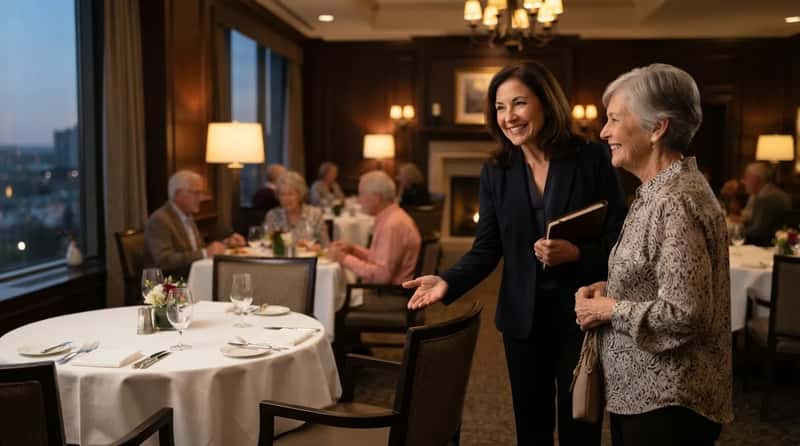
The most powerful thing a host does isn’t a seating trick. It’s remembering your name, your usual table, and which side you like to sit on.
For many older diners, dinner out is a social event rather than just a meal. Researchers describe dining establishments as an essential part of the social experience. A host who greets you like you belong is offering something that never shows up on a bill.
This matters most for people eating alone or after a loss. For some guests, the 5 p.m. table is the best conversation of their day.
Hosts notice who’s missing and who’s new, and they quietly adjust. It’s rarely in the job description, and it’s why so many early diners stay loyal to one restaurant for years.
Next time you’re seated at 4:45 and the table feels just right, it probably wasn’t luck. Someone made a dozen small decisions before you ever picked up the menu. Which of these have you noticed at your own early table?