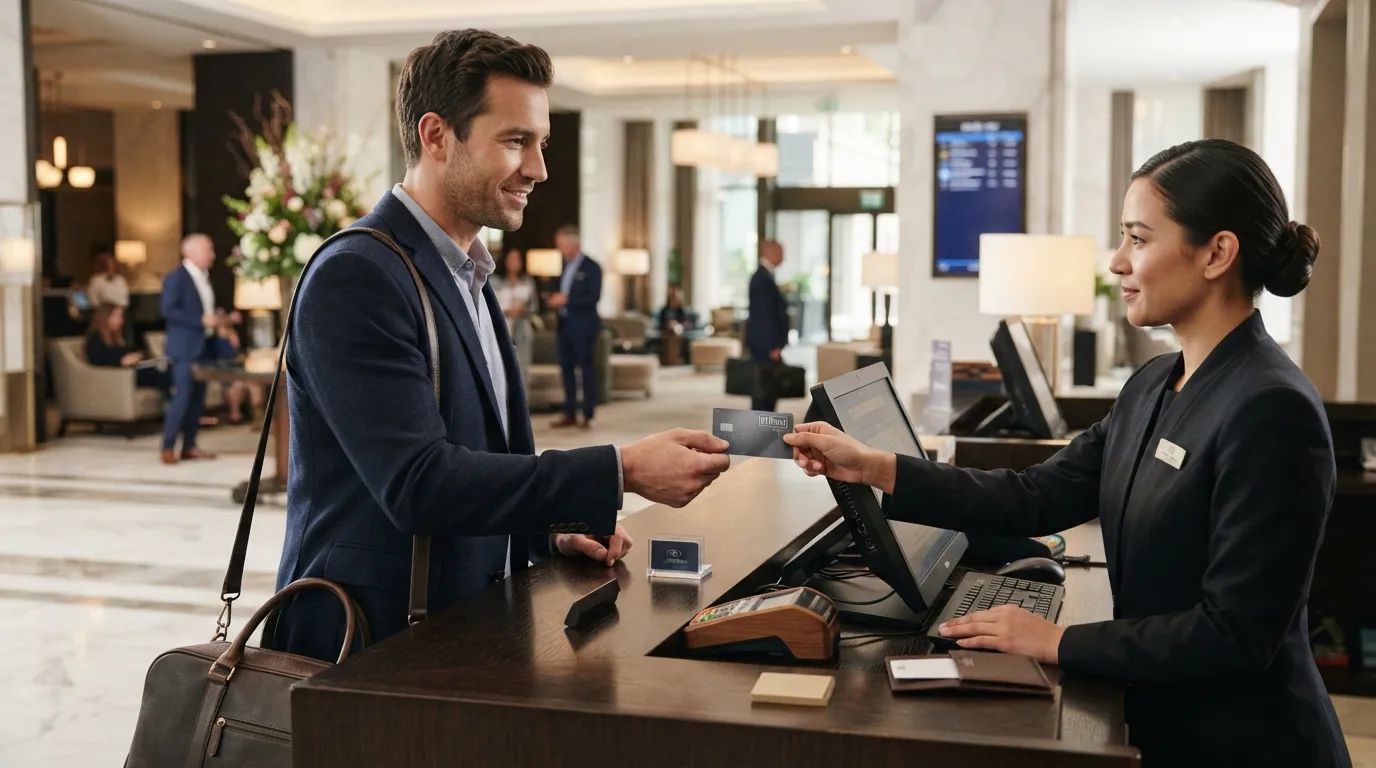
Somewhere in every hotel lobby, two guests check in five minutes apart, pay the exact same nightly rate, and walk away with two completely different rooms. One gets the corner suite with the skyline view. The other gets a box next to the vending machines. It isn’t luck, it isn’t fate, and it’s definitely not random – it’s a quiet system almost nobody bothers to learn.
Front desk agents will tell you the truth if you actually ask them: upgrades don’t go to whoever looks the most tired or the most important. They go to guests who, often without even realizing it, do a handful of small things right in the first sixty seconds at the counter. Here’s exactly what those habits look like – starting with the one most people skip before they’ve even left the house.
#13 – Booking Direct Instead of Through a Third Party
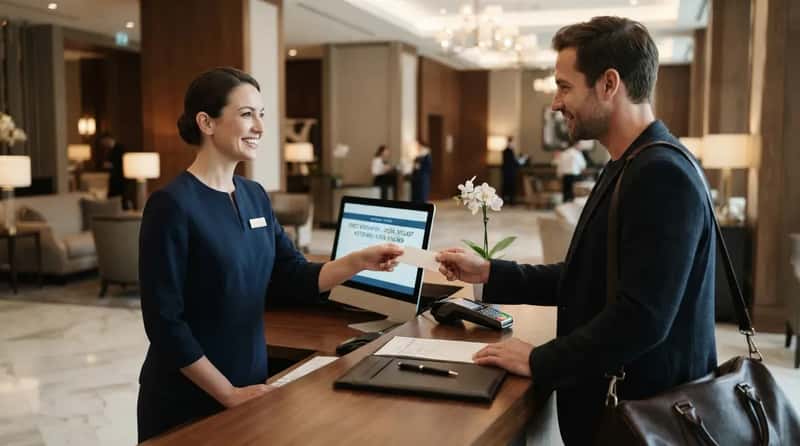
Booking straight through the hotel’s own website quietly puts a guest ahead of almost everyone else in line for a better room. Hotels pay commissions of 15 to 25 percent on reservations made through online travel agencies, so a direct booking is simply worth more to the property, and that math tends to show up later at check-in.
There’s a second hidden benefit most people never think about: direct bookers get access to special request fields during the reservation process, letting them note a floor preference, bed type, or any other need right when they book. That detail gets attached to the reservation and noticed internally. Third-party bookings almost never carry that information forward, which is why the exact same request can work for one guest and vanish into thin air for another.
Fast Facts
- OTA booking commissions typically run 15% to 25% per reservation
- Direct bookings include special request fields many third-party sites strip out
- Notes attached to a direct reservation stay visible to every front desk shift, not just one agent
#12 – Getting Painfully Specific Instead of Asking for Something “Nice”
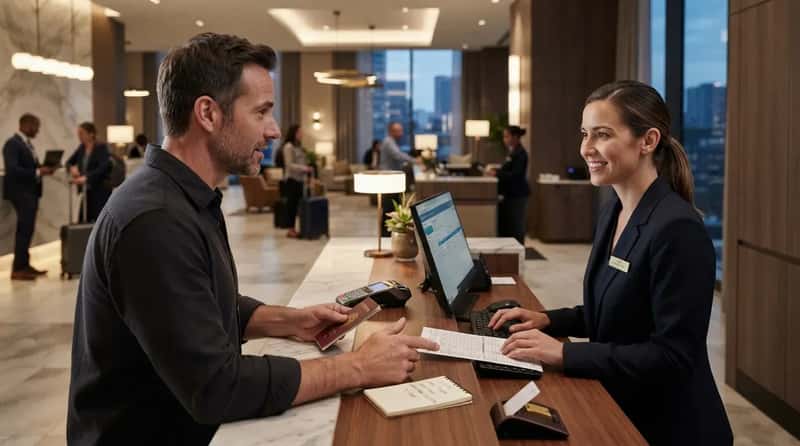
Vague requests get vague results, and front desk staff will say so if you push them on it. “Best room” means something completely different to every guest – one person wants a high floor, another wants easy elevator access, a third just wants to be nowhere near the pool deck. Vague language forces the agent to guess, and guessing rarely goes the guest’s way.
The fix is almost embarrassingly simple. Instead of asking for “something nice,” ask for exactly what matters – a quiet floor, away from the elevator, with a specific view if one’s available. A request like that is something an agent can actually act on immediately, while “a nice room” just gets a shrug and whatever’s next in the queue.
#11 – Arriving Mid-Afternoon Instead of Right at Checkout Time
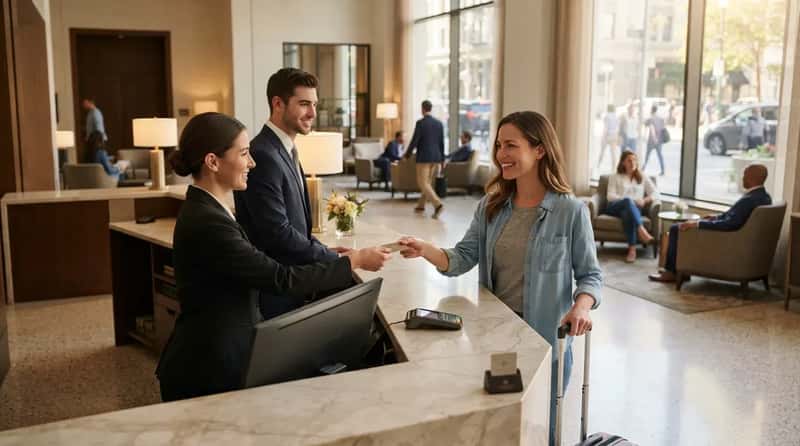
Showing up right at 11 a.m. checkout feels efficient, but it’s often the worst possible window for scoring an upgrade. During that stretch, the front desk is buried in checking out last night’s guests while trying to get today’s early arrivals settled, and upgrades are the last thing on anyone’s mind in the chaos.
The smarter play is arriving in the mid-to-late afternoon, once housekeeping has finished its sweep and the day’s room inventory is actually known. That window between cleaning and the evening rush is exactly when agents can see what’s open and have the mental space to hand it out. Arrive too late at night when the hotel is nearly full, though, and those options disappear fast.
#10 – Asking Like It’s a Favor, Not a Demand
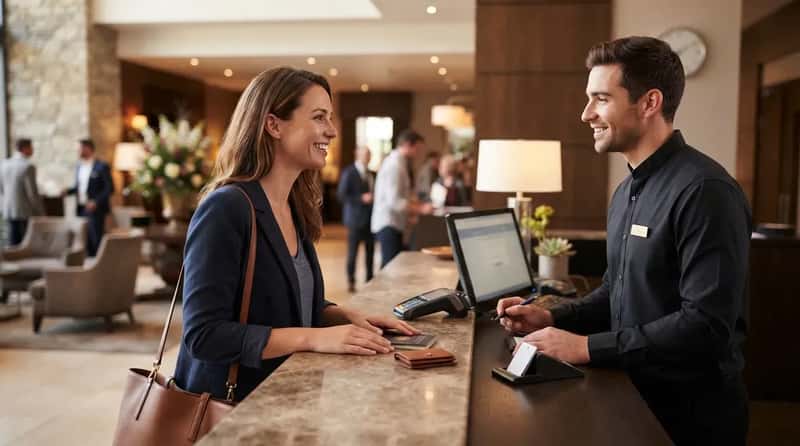
Tone matters more than almost anything else said at the counter. Front desk managers say it plainly: guests ask for upgrades constantly, but most of them ask like they’re already owed one, and that entitled edge shuts doors faster than any policy ever could.
The guests who actually get moved into a better room tend to phrase the ask as a small favor, not a transaction. A warm, low-pressure question – delivered with a smile and zero attitude – consistently outperforms a confident, demanding tone, even when two guests are asking for the exact same room. Staff want to help people who seem genuinely appreciative, not people who seem like they’re checking a box.
#9 – Mentioning a Special Occasion (But Not Expecting a Miracle)
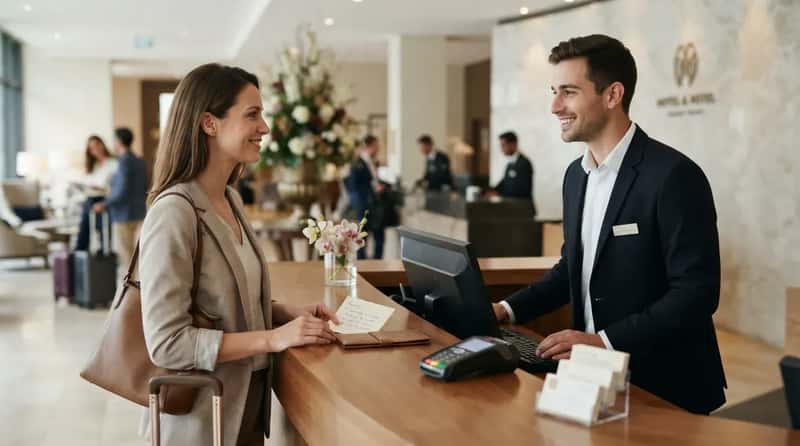
Birthdays, anniversaries, and honeymoons genuinely move the needle – just not as often or as dramatically as people assume. Mentioning a birthday or anniversary at check-in tends to make staff want to add something extra, partly because it feels good to be part of someone’s celebration, and partly because a happier guest is a better outcome for everyone.
But here’s the reality check nobody wants: front desk agents see anywhere from 75 to 100 guests a day, and a huge share of them mention a birthday, a first vacation in years, or an anniversary. Mentioning it doesn’t hurt, and it occasionally helps – but it’s nowhere near the guaranteed golden ticket most travelers think it is.
Worth Knowing
- Front desk agents can see 75 to 100 guests in a single day
- Birthdays and anniversaries are among the most common things guests mention at check-in
- A genuine, brief mention tends to land better than a scripted-sounding announcement
#8 – Never Asking for Early Check-In and an Upgrade at the Same Time
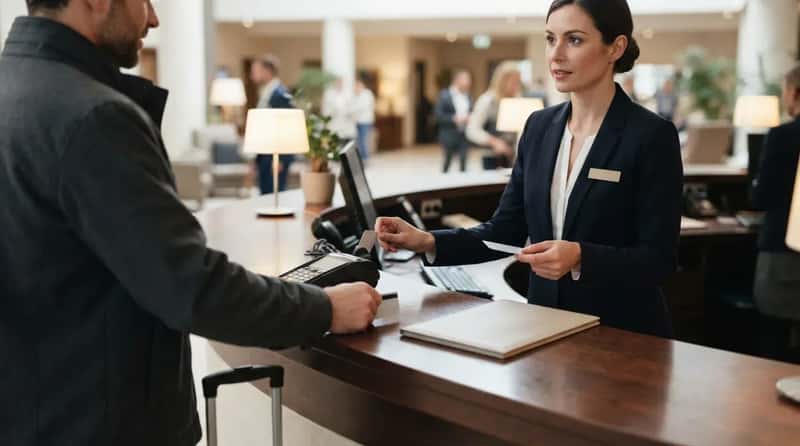
Asking for two favors at once quietly kills both requests. Travel writers who’ve tested this repeatedly warn against combining an early arrival with an upgrade ask, because stacking requests puts extra pressure on a staff member who’s already juggling a busy shift.
The reasoning is simple: an early arrival already strains the reshuffling window before rooms are ready. Piling an upgrade request on top of that makes it easy for an agent to say no to both at once, just to simplify the moment. Separate the two – arrive on time, then ask about a better room once you’re actually standing at the counter – and each request gets a real shot instead of getting bundled and dismissed together.
#7 – Asking Quietly Instead of in a Crowded Lobby
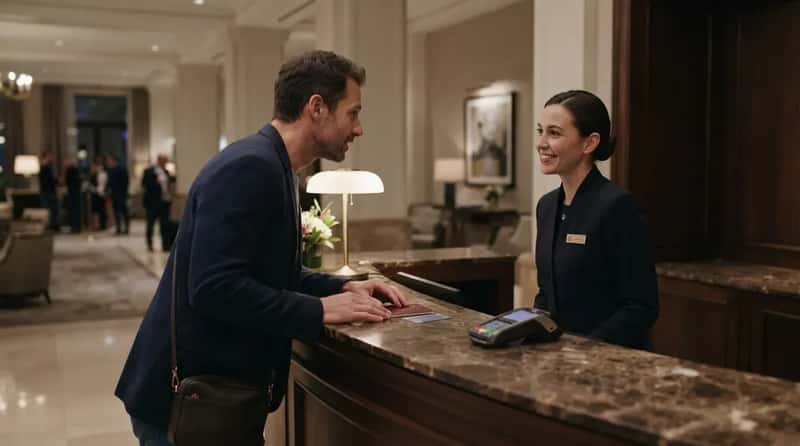
Asking for a favor with five strangers listening is one of the fastest ways to get shut down. Front desk staff have said as much themselves: an upgrade request made in earshot of other guests puts them in an awkward spot, and that discomfort works against the person asking, not for them.
It’s not personal – it’s simple math. The hotel can’t upgrade everyone standing in that line, so granting a public request risks starting a chain reaction of demands the agent can’t control. A quiet, low-key ask once the counter clears out gives staff the room to say yes without an audience watching.
#6 – Requesting a Corner Room by Name
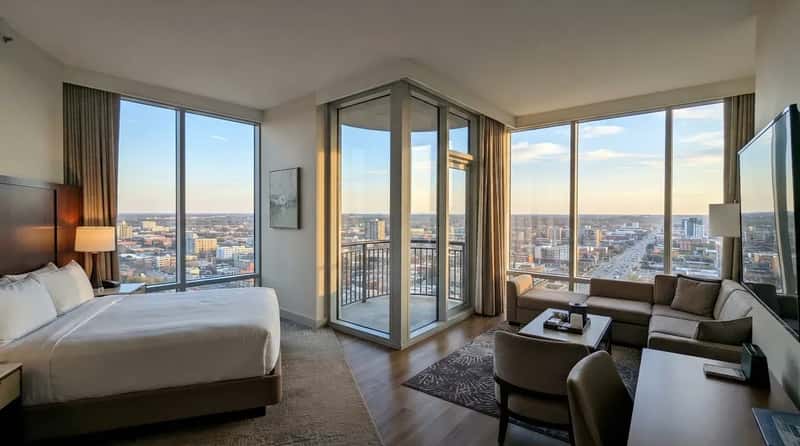
This is the single most underused phrase in hotel check-in vocabulary, and almost nobody uses it. Instead of asking for an upgrade, ask specifically for a corner room. Corner rooms are almost always slightly larger than standard rooms simply because of how the building’s floor plan works, yet they’re rarely priced or categorized as a pricier suite.
That’s the loophole most travelers never learn about. It exists purely because of construction geometry, not marketing – corners of a floor plan naturally leave extra square footage that gets folded into the room instead of a hallway or utility space. Asking for one by name sidesteps the whole awkward “can I get an upgrade” conversation entirely, because it’s a request most agents can grant without needing anyone’s approval.
At a Glance
- Corner rooms sit where two exterior walls meet, often adding extra square footage
- They’re usually priced the same as standard rooms on most rate plans
- Requesting one by name skips the approval step an “upgrade” often needs
#5 – Joining the Loyalty Program at the Counter Instead of Skipping It
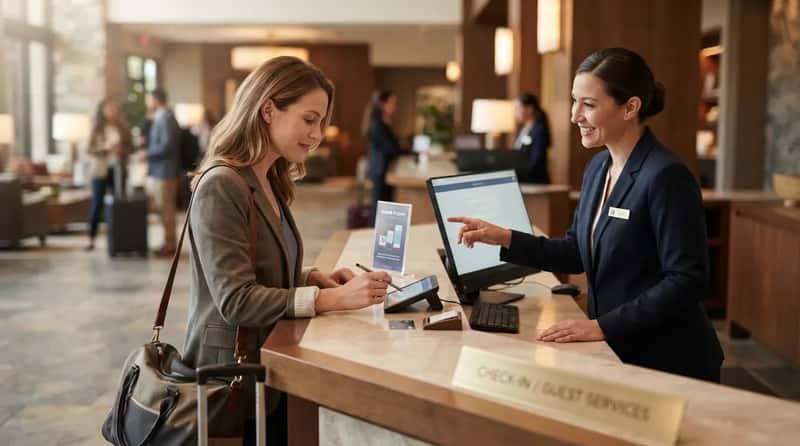
Signing up for a hotel’s free rewards program feels like a formality, but it quietly changes how a guest is categorized the moment it’s done. It costs nothing, takes an email address, and immediately makes a guest more likely to be considered for a free upgrade simply because it signals brand loyalty on paper.
Most people don’t realize status matters even on a first stay. Chain hotels weigh membership heavily when deciding who gets the better room, and top-tier members who stay the most nights each year are typically first in line – a system built entirely to reward loyalty. Signing up at the counter, even five minutes before check-in, can shift how the assignment plays out that same day.
#4 – Calling Ahead Instead of Only Showing Up Cold
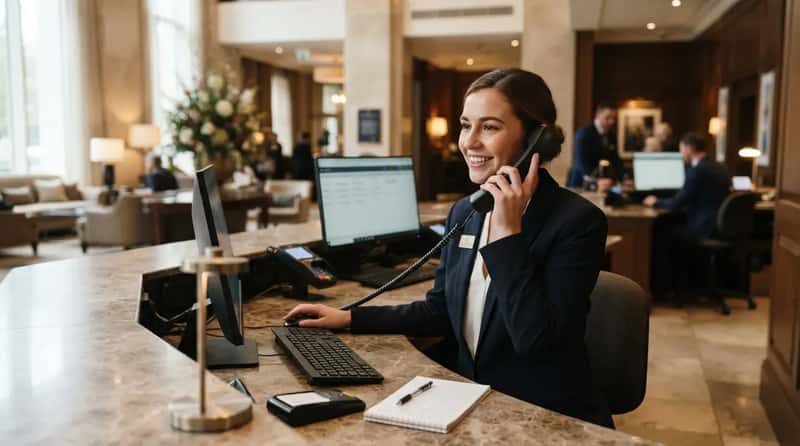
A phone call before arrival does something an email or app notification simply can’t replicate. When a guest speaks to a real person at the front desk before the trip even starts, they stop being a name on a screen and become someone the staff has already had a small, human interaction with.
Even better, that early contact often gets flagged in the system before arrival day starts. A short call or email a few days ahead, expressing excitement about the trip and asking if there’s anything that could make it memorable, frequently results in a note attached to the reservation – and a note like that is exactly the kind of thing that gets a room upgraded on the spot. Most guests never bother, which is precisely why the ones who do stand out.
#3 – Asking What’s Available Instead of Demanding an Upgrade
Framing matters more than most travelers realize. Rather than pushing for an upgrade outright, simply asking what’s open tends to work better and feels far less confrontational to the person on the other side of the counter.
The script itself matters too. Something as simple as, “I’d love this stay to be special – is there any chance of an upgrade if anything’s available?” reframes the guest as hopeful instead of entitled, and agents respond to that noticeably better than a flat request. It leaves room for a no without anyone feeling awkward, which oddly enough makes a yes more likely.
#2 – Being a Repeat, Recognizable Guest
This one surprises people because it has nothing to do with tricks or timing – it’s about consistency. Staff genuinely remember faces and names, and that memory compounds across multiple stays at the same property, quietly building a reputation long before anyone asks for anything.
That’s the part almost nobody expects: you don’t even have to ask. Returning guests who were pleasant and low-maintenance the first time around often find their rooms get a little better each visit after that, with zero extra effort at the counter. It’s slower than a clever script, but it tends to outperform most one-time tricks over the long run.
#1 – Leaning on Elite Status or a Status-Linked Credit Card
This is the habit with the biggest real, measurable impact – and it’s the one most casual travelers skip entirely. Hotel elite status, even the kind earned through a credit card rather than years of stays, changes what an agent is authorized to offer before a guest even reaches the counter. For travelers who don’t stay often enough to earn status the slow way, certain credit cards close the gap almost instantly – Hilton Gold status can come through the American Express Platinum Card or the Hilton Honors Surpass Card, while Hilton Diamond, the top tier, becomes reachable through the Hilton Honors Aspire Card.
Some programs go even further and build upgrades directly into the membership tier itself. Hyatt’s top-tier members, for instance, have historically received a set number of free upgrades each calendar year, no request required. Status isn’t a myth or a marketing gimmick – it’s the closest thing to a guarantee that actually exists at check-in.
Quick Compare
- American Express Platinum Card – unlocks Hilton Gold status
- Hilton Honors Surpass Card – also unlocks Hilton Gold status
- Hilton Honors Aspire Card – unlocks Hilton Diamond, the top tier
None of these habits involve slipping cash across the counter or making a scene in the lobby. They’re quieter than that – a phone call placed a few days early, a specific word like “corner room” instead of “upgrade,” a five-minute loyalty sign-up, or simply showing up at 4 p.m. instead of 11 a.m. Individually, each one seems small.
Together, they’re the actual reason some travelers walk away with a better view every single time while everyone else just assumes it’s random. It never was.