Most travelers assume a room upgrade comes down to luck, status, or how nice the lobby smells that day. But hotel insiders tell a different story – one where the tiniest check-in habits, the ones nobody teaches you, quietly decide whether you land a courtyard view or a suite on the top floor. It has almost nothing to do with how much you paid for the room.
Front desk agents see dozens of guests a day, and they remember exactly who made their shift easier and who made it harder. What separates the guests who get upgraded from the ones who don’t isn’t charm or luck – it’s a specific, repeatable pattern of small moves. Here’s what the people actually working the desk say really works.
1. Join the Loyalty Program First – Even the Free Basic Tier
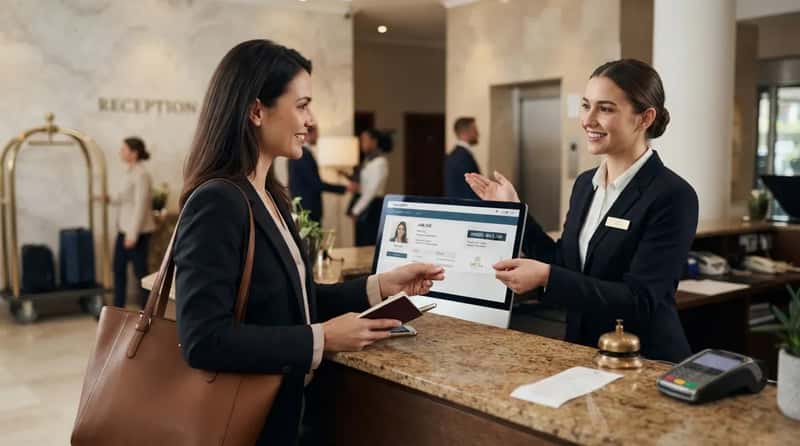
Signing up before you arrive changes how the front desk sees you the second your name pops up on the screen. Hotel loyalty programs are booming: membership hit 675 million in 2024, up 14.5% year over year, which works out to roughly 137 loyalty members for every available hotel room in the U.S. That means walking in as a non-member increasingly makes you stand out, and not in a good way.
Members also get first access to what agents privately call “the good inventory.” Regular guests are often first in line for upgrades if a hotel overbooks a particular room category. You don’t need elite status to benefit – just an account number attached to your reservation signals you’re worth keeping happy long-term.
Fast Facts
- 675 million: total hotel loyalty memberships in the U.S. as of 2024
- 14.5%: year-over-year growth in loyalty program enrollment
- 137: loyalty members for every single available U.S. hotel room
- Free-tier membership alone can still land you in the upgrade pool
2. Book Directly With the Hotel, Not a Third-Party App
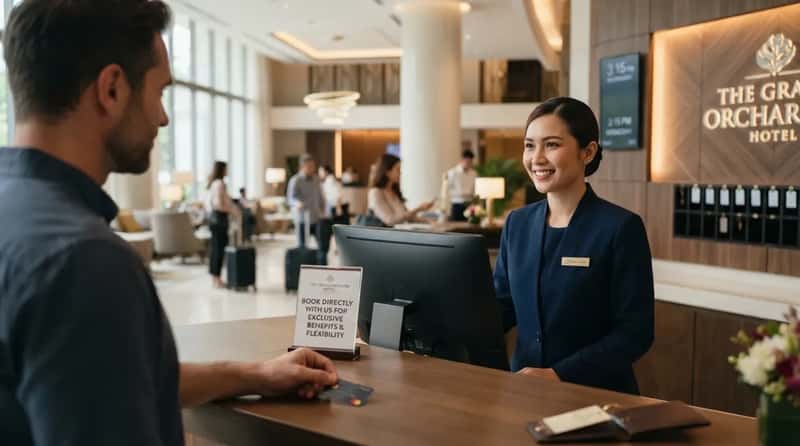
Reservations made through discount travel apps often arrive at the front desk flagged with lower commissions and less flexibility for the property. Direct bookings, on the other hand, give the hotel more room to say yes to a request. Agents simply have more discretion over guests who booked through the brand itself.
This doesn’t mean third-party bookings guarantee a bad room. It just means the hotel keeps less profit, and profit often quietly maps to priority. A guest who booked direct at a flexible rate is, in the eyes of the desk, simply an easier “yes.”
3. Put the Request in Writing Before You Ever Show Up
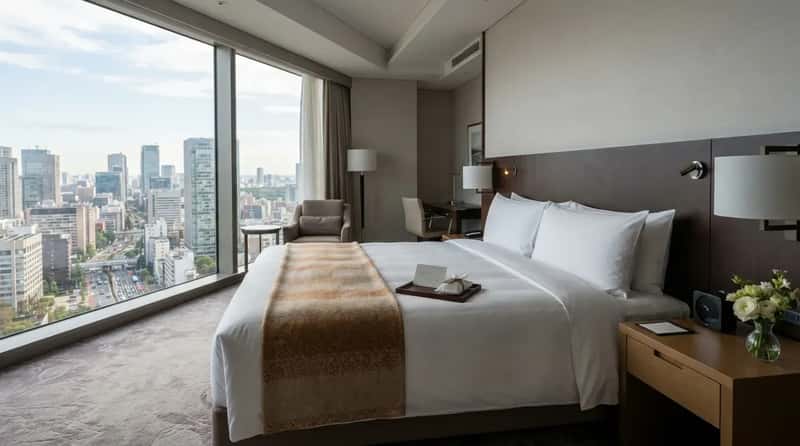
The single biggest mistake people make is saving every request for the moment they’re standing at the counter. For best results, put your request in as early as possible – ideally during the original booking – so the hotel knows in advance you’re hoping for a certain room, a higher floor, or a spot away from the elevators. That note sits in the reservation for days before you even arrive.
Requests submitted in advance get quietly matched against available inventory long before check-in chaos begins. A same-day ask competes with everyone else’s same-day ask. A pre-arrival note competes with almost no one.
4. Skip the Check-In Rush Window
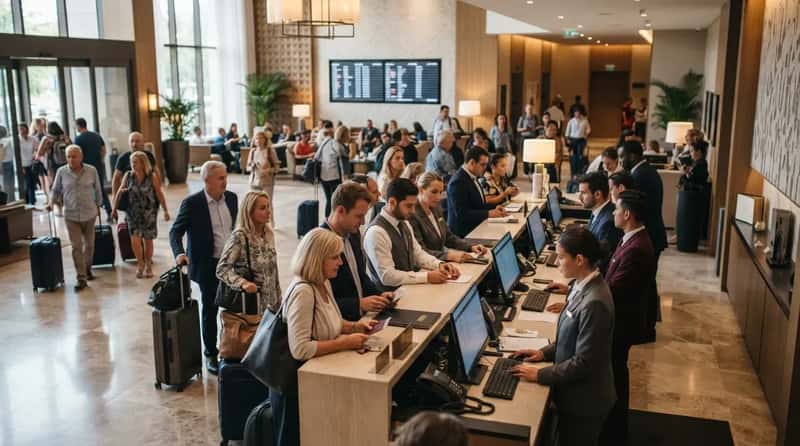
Showing up right at 3:00 or 4:00 p.m., the moment thousands of guests nationwide hit the same button on their phones, is the worst possible time to ask for anything extra. The desk is slammed, upgrades haven’t been sorted yet, and agents are moving as fast as they can just to keep the line short.
Arriving an hour or two after the official check-in window gives staff breathing room to actually look at your reservation. By then, no-shows have been released, upgrades have been assigned, and there’s simply more to work with. Timing alone can be the difference between a standard room and a corner suite.
Quick Compare
- 3-4 p.m. arrival: desk slammed, upgrades not yet sorted, little time to look
- 1-2 hours later: no-shows released, better rooms already freed up
- Rush hour: agents moving fast, requests get skimmed at best
- Off-peak arrival: staff has bandwidth to actually search inventory
5. Hand Over Your ID Like a Human, Not a Frisbee
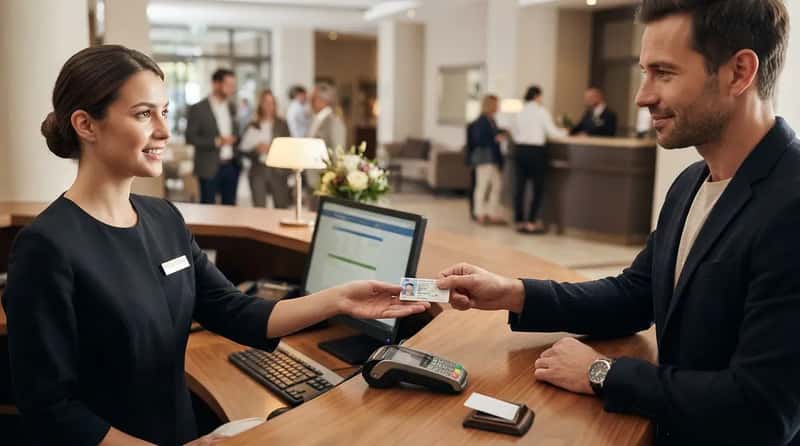
It sounds almost too small to matter, but agents notice it every single time. Handing your card over instead of tossing it onto the counter can quietly change the next ten minutes of your check-in. It’s a two-second gesture that tells the person behind the counter you see them as a person, not a vending machine.
One widely shared account from a front desk worker described what happens when guests do the opposite. A guest who checked in early, refused to speak, and tossed his credit card onto the counter instead of handing it over was quietly downgraded, moved to a noisier room, and left waiting four hours for standard check-in – never realizing he’d lost an $800 upgrade over his attitude. That’s not an isolated grudge; it’s a pattern staff describe again and again.
6. Make Eye Contact and Actually Talk to the Agent

Silence at the counter reads as coldness, even when that’s not the intention. Agents appreciate guests who make eye contact and actually talk to them. A simple “how’s your day going” before you launch into your reservation details goes further than most people expect.
This isn’t about performing friendliness – it’s about being memorable for the right reason. Front desk staff process reservations all day long, but they remember the two or three guests who treated them like a person instead of an obstacle. Those are the names that get a second look when a nicer room opens up an hour later.
7. Ask for Something Specific, Not “Any Upgrade Available?”
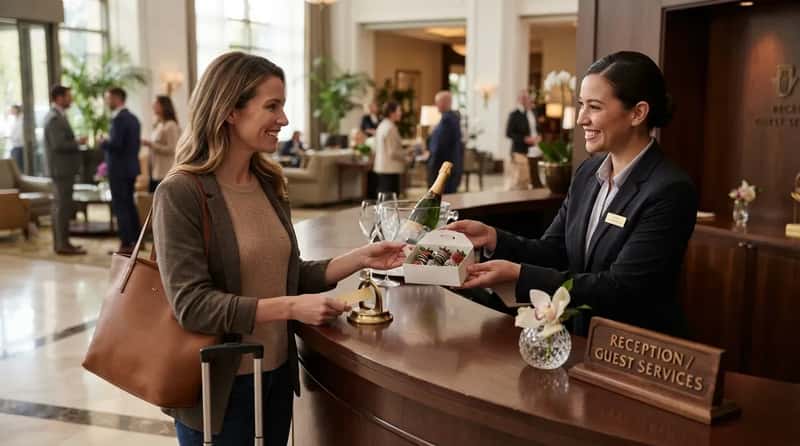
Vague requests get vague answers. Being specific helps – ask directly for a room upgrade, or mention something like complimentary chocolate-covered strawberries and champagne for a special occasion. A clear ask is easier to say yes to than an open-ended one.
Front desk agents get asked for things constantly, so being straightforward and pleasant about it can be the difference between getting exactly what you asked for and getting an extra amenity thrown in besides. Naming an exact floor, a quiet corner, or a view is far more effective than hoping the agent reads your mind and offers their best room by default.
Worth Knowing
- A specific floor number beats a vague “high floor, please”
- “Away from the elevator” is a request agents can act on instantly
- Naming a view – city, pool, courtyard – narrows the search fast
- Mentioning a real occasion with a specific ask gets remembered longer
8. Offer to Check Your Bags and Come Back Later
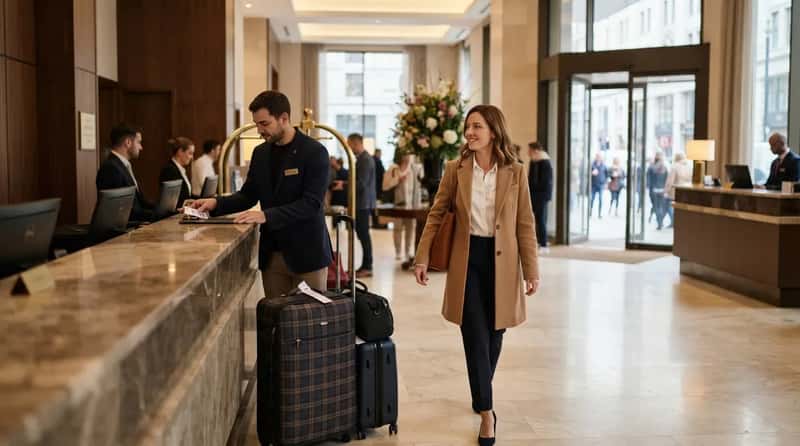
If your room isn’t ready and no upgrade is available yet, walking away is often smarter than waiting at the counter. Letting the front desk know you’re willing to wait until later in the day works well, since most hotels will happily store your bags while you head out and explore.
This single habit does two things at once. It removes the time pressure that forces agents into giving you whatever room is fastest to assign, and it signals patience – a trait that gets rewarded more often than impatience ever does. Some of the best upgrade stories start with a guest who simply left for a few hours.
9. Save the Tip for After, Not Before
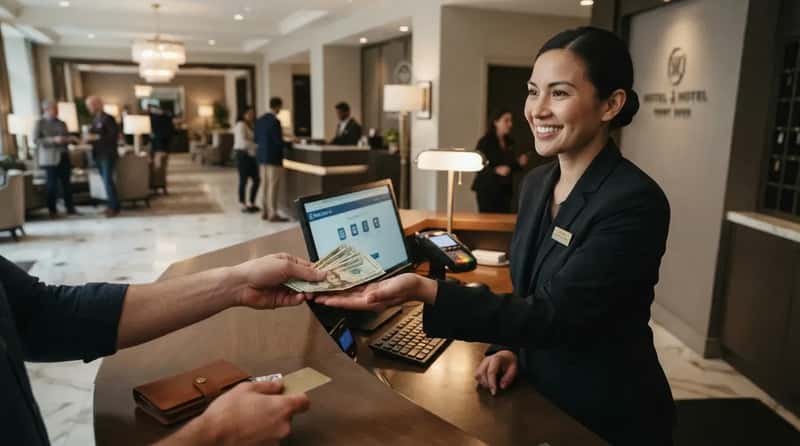
Cash still moves mountains at hotel front desks, but the timing matters more than people assume. If a front desk agent does something extra to make your stay better, tip them afterward as a thank-you – a tip beforehand can come across like a bribe, but a tip afterward feels like genuine appreciation.
Insiders who work the desk describe this in blunt terms: twenty to fifty dollars, handed over after the fact, will get you very, very far when the upgrade itself is worth well over a hundred dollars a night. The habit isn’t about buying a better room outright – it’s about rewarding the person who already had the power to give you one.
10. Mention the Occasion Quietly, Not Loudly
Announcing an anniversary or birthday used to be the go-to trick, but staff say it rarely works the way people expect anymore. Front desk agents see, on average, 75 to 100 guests a day, and it can feel like everybody is getting married, celebrating a first vacation in a decade, or marking a birthday. The line has simply been used too often.
A quieter, more honest mention – dropped naturally into conversation rather than announced like a demand – reads very differently than a scripted request. Pairing it with genuine warmth rather than expectation is what occasionally turns a routine stay into a memorable one.
11. The Twenty Dollar Habit Frequent Business Travelers Swear By

A former FBI special agent who spent 26 years in the field turned heads recently by revealing his go-to habit for premium rooms. Tom Simon says his method for securing some of the best rooms in any hotel revolves around genuine appreciation for hospitality workers, paired with a twenty-dollar bill he insists earns its money back many times over.
It’ll pay for itself.
Tom Simon, former FBI special agent
Simon’s approach is simple: walk straight up to the front desk, whether or not you even have a reservation yet, and start a real conversation with the staff there. The habit isn’t really about the money – it’s about being the rare guest who treats front desk work as skilled labor worth acknowledging, in a business where the people who deserve recognition the most are routinely overlooked.
12. Compliment the Work Before You Ask for Anything
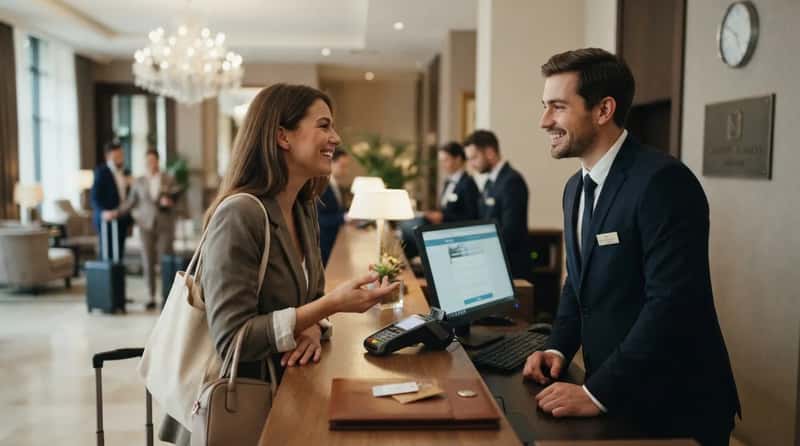
Small, specific praise changes the entire tone of a check-in interaction. Complimenting how smoothly the front desk runs, or thanking the agent for their patience during a busy shift, shifts the conversation from transactional to personal in a matter of seconds.
Agents who feel appreciated are, by their own accounts, far more willing to look for a better option before defaulting to the standard assignment. It costs nothing, takes ten seconds, and works precisely because so few guests bother to say it at all.
Why It Stands Out
- Costs nothing and takes about ten seconds to say
- Shifts the whole interaction from transactional to personal instantly
- Works even during the busiest, most stressful shifts
- Zero downside, unlike tipping or asking for a manager
13. Know When – and How – to Politely Ask for a Manager

Not every front desk employee has the authority to hand out upgrades, credits, or free amenities, and knowing this changes how you should ask. Some staffers simply aren’t empowered to offer those extras, so if the front desk seems limited in what they can do, you can always politely ask to speak with a manager.
The key word is politely. Escalating a request with warmth rather than frustration keeps the interaction friendly while still getting you in front of someone who actually has the power to say yes. It’s the final habit that separates guests who simply accept “no” from the ones who quietly walk away with a better room anyway.
None of these habits involve demanding, complaining, or dressing to impress. They’re small, almost boring behaviors – timing, tone, a folded twenty, a note left at booking – that add up to something front desk staff notice every single shift. The guests who get upgraded aren’t the loudest ones in the lobby; they’re the ones who made the interaction easy and human.
What’s your go-to check-in habit, and has it ever actually landed you a better room? Drop it in the comments – we want to hear the ones we missed.