

Most people assume cruise waiters treat every table the same, scanning menus and clearing plates on autopilot. But servers who’ve spent years working the dinner rotation say guests over 60 stand out almost instantly, often before the bread basket even arrives. Their habits, their manners, even the way they hold a menu, tell a story the crew has learned to read fast.
It’s not about age itself. It’s about a set of small, consistent behaviors that dining staff say separate this generation from younger cruisers in ways that actually shape the service they get back. Here’s what career waitstaff and cruise crew quietly notice, night after night, cruise after cruise.
#13 – They Still Show Up With Cash Tip Envelopes
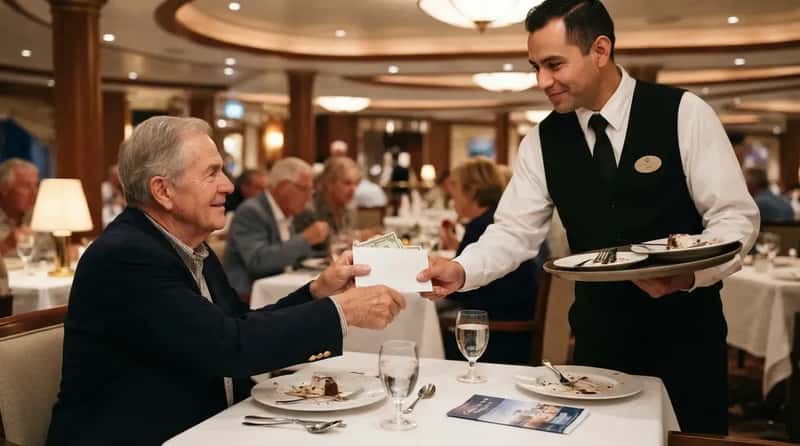
Long before app-based gratuities became standard, tipping in cash on the last night was the norm, and plenty of guests over 60 never abandoned the habit. Even though gratuities are usually built into the fare now, many still hand their waiter and assistant waiter a white envelope stuffed with cash on the final evening. Staff notice this instantly, since it’s become rare with younger passengers who assume the automatic charge covers everything.
Crew members privately admit this generation understands tipping the way American service culture was originally built around. It’s not just the extra money, though that’s obviously appreciated. It’s the ritual, the handshake, the “thank you for taking care of us” moment that servers say sticks with them long after the cash is spent.
Fast Facts
- Most mainstream cruise lines now add automatic gratuities of roughly $16 to $20 per person, per day, directly to the onboard account.
- Cash tip envelopes were the industry standard before automatic gratuities became widespread in the late 1990s and 2000s.
- Guests can adjust or remove auto-gratuities at guest services, though staff say it’s rarely older cruisers who do.
- An extra cash tip on top of the standard charge remains entirely optional, just a habit many longtime cruisers never dropped.
#12 – They Rarely Send Food Back, Even When It’s Wrong
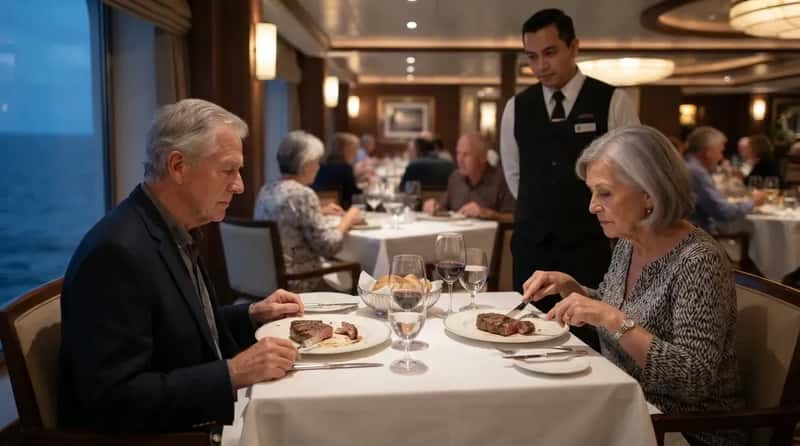
Younger cruisers will flag an overcooked steak without hesitation. Staff say guests over 60 often quietly eat around a mistake instead of causing a scene at the table. That generational restraint forces servers to develop a sharper eye, watching plates come back barely touched instead of waiting to be told something was wrong.
It creates a strange dynamic where the table with the fewest complaints sometimes had the worst meal of the night. Good waitstaff learn to ask directly, “How was everything tonight?” instead of assuming silence means satisfaction. The most surprising part is how often that question uncovers a problem nobody would have volunteered otherwise, which is exactly why attentive servers check in twice, not once.
#11 – They Notice, and Remember, Who Learns Their Name
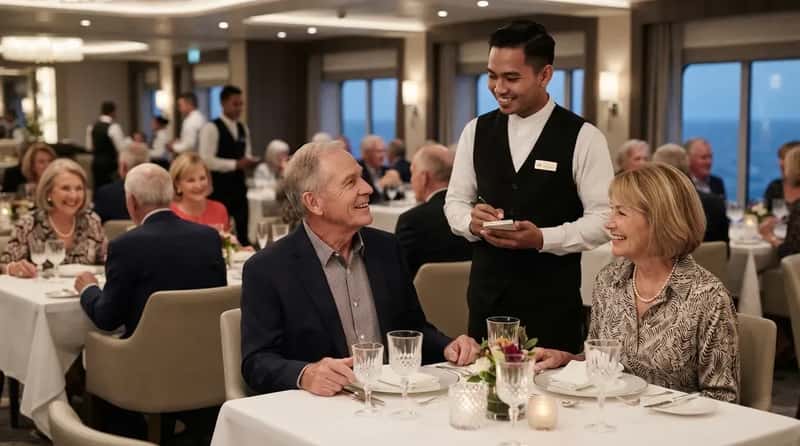
Introducing yourself on the first night sounds like a small gesture, but staff say it’s a habit far more common among older passengers than millennial or Gen Z cruisers. Guests who learn their server’s name and ask where they’re from set the tone for the entire voyage in about two minutes. Crew members bring that moment up unprompted when asked about their favorite guests.
Servers work grueling contracts far from home, and being treated as a person instead of a uniform matters more than most passengers realize. This small courtesy tends to correlate with warmer service throughout the week, not because staff keep score, but because genuine warmth naturally earns a warmer response. That’s nothing compared to what happens with #10.
#10 – They Ask For The Same Table And Same Server Every Night
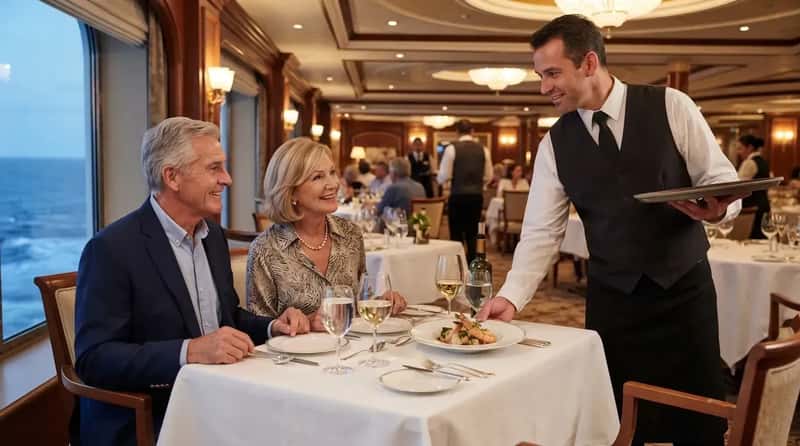
Traditional, assigned seating was built for exactly this kind of loyalty, and it’s overwhelmingly guests over 60 who request it instead of the flexible “anytime dining” younger travelers gravitate toward. Seeing the same server every evening creates the kind of rapport that quietly leads to better service, better timing, and better recommendations.
Staff admit this consistency changes how they treat a table. By the second night, a good server has already memorized a regular’s drink order, dietary preferences, and name, and has clocked which dish came back barely touched. That kind of familiarity almost never develops in one-off, rotating dining setups, which is exactly why repeat guests keep requesting it cruise after cruise.
Quick Compare
- Traditional (Fixed) Dining: Same table, same server, same seating time every night, built for regulars who value routine and familiarity.
- Anytime/My Time Dining: Flexible arrival windows and rotating waitstaff, popular with younger cruisers who prize spontaneity over consistency.
- The trade-off: Traditional diners often report faster service and more personalized recommendations by mid-week, while anytime diners gain flexibility but rarely build the same rapport.
#9 – They’re The Ones Celebrating The Real Milestones
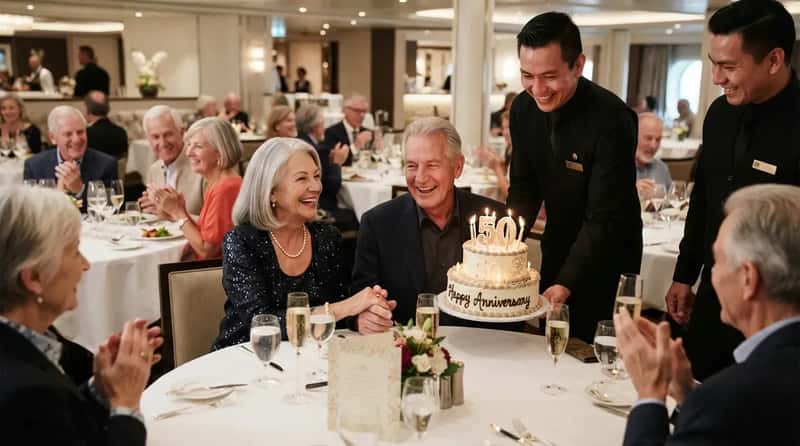
A twenty-something might mention a birthday in passing, but staff say the anniversaries older guests celebrate are the kind that stop a dining room in its tracks. Whether it’s a birthday with candles, a spouse’s favorite dessert, or a dish from a past cruise, servers make the request happen wherever they can.
Waitstaff say 40th and 50th wedding anniversaries come up constantly with this age group, and they’re never treated as routine. Kitchens will quietly coordinate a full celebration, cake, card, and a small production, for a couple who’s been together longer than most staff have been alive. It’s one of the few moments where the entire dining team stops to watch, and crew say it never gets old.
#8 – They Order Off The Same Safe Rotation All Week
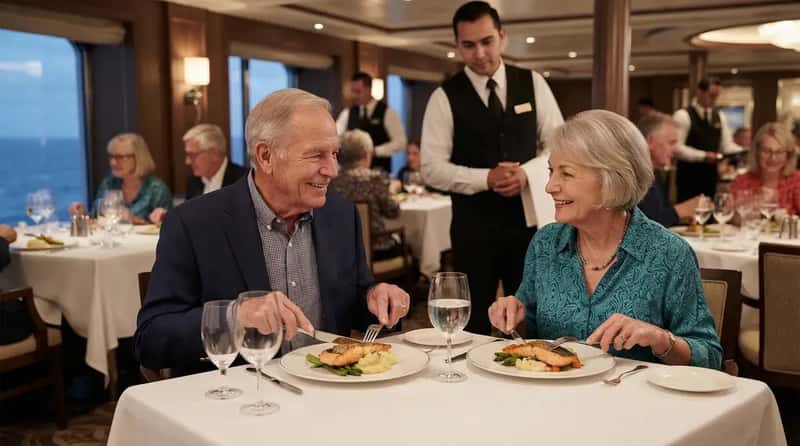
Staff notice a clear split at the table: some guests meticulously plan each meal while others chase spontaneity, eagerly asking about the exotic special. Guests over 60 skew heavily toward the familiar-favorites camp, often ordering some variation of the same protein or dessert every single night.
Longtime waiters say this isn’t laziness, it’s confidence in knowing exactly what they enjoy after decades of eating out. Servers stop suggesting the adventurous nightly special after the second polite decline, and instead quietly hold back an extra portion of the dish they know will be requested again. It’s less about the menu and more about trust built through repetition.
#7 – They Dress Up For Formal Night Without Being Asked
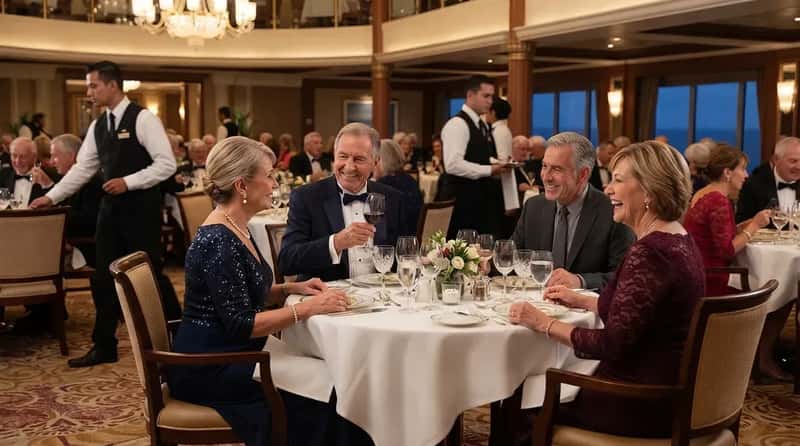
Formal night has faded in strictness across most mainstream cruise lines, but staff say the guests still treating it like a real occasion are almost always over 60. Suits, gowns, and actual dinner jackets tend to cluster at tables filled with longtime cruisers who remember when the dress code wasn’t optional.
Dining staff genuinely appreciate this, and several say it changes the entire energy of the room. The tables that dress the part tend to linger longer, order dessert, and treat the evening like a real event instead of a meal to rush through. Servers notice, and it often earns those tables a slightly more relaxed, celebratory pace of service in return.
#6 – They Flag Dietary Needs Weeks Before Boarding
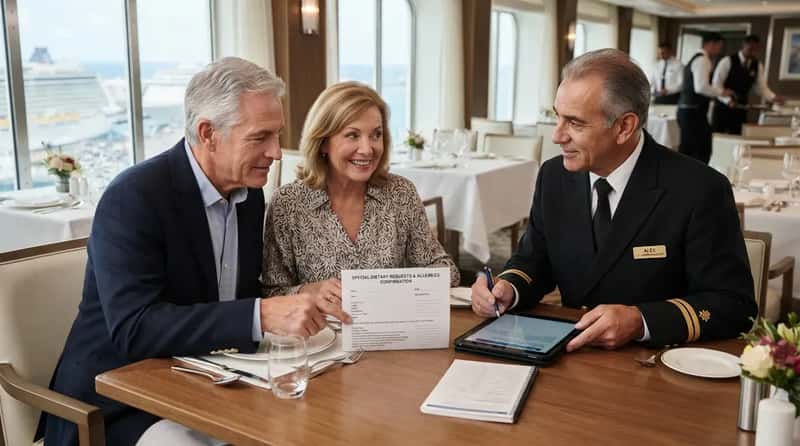
Most cruise ships ask for advance notice, sometimes up to 90 days out, for special diet needs, and cruising is actually one of the easier ways to travel with a food allergy once the ship knows ahead of time. Staff say older passengers are far more likely to have already done this legwork before ever sitting down in the dining room.
Younger travelers tend to mention allergies on the fly, at the table, forcing the kitchen to scramble mid-service. Guests who’ve cruised for years know to also check in with guest services or the head waiter in person on embarkation day, just as a reminder. That extra step means smoother meals all week, and staff notice exactly who bothered to prepare.
Worth Knowing
- Most major cruise lines request special dietary notice at least 30 to 90 days before departure for the smoothest experience.
- Common accommodations include gluten-free, kosher, low-sodium, and severe allergy protocols like nut- or shellfish-free meals.
- Head waiters typically review the next day’s menu with guests who’ve flagged an allergy, right at the table, the night before.
- Guests who skip advance notice can usually still be accommodated, but often with fewer next-day menu options.
#5 – They Trust The Server’s Recommendation Completely

Younger diners often research the menu on a cruise line’s app before ever sitting down, but staff say older guests are far more likely to simply ask, “What’s good tonight?” and take the answer at face value. A server eats on the ship too and has watched hundreds of passengers react to every dish on the rotating menu, so a nudge toward the short ribs over the salmon is backed by real, firsthand observation.
That trust flows both ways. Waitstaff say they feel more comfortable steering a guest toward a dish they genuinely love, rather than hedging, once a guest signals they’ll actually take the advice seriously. It’s a small dynamic, but it turns the whole interaction from transactional into something closer to a recommendation between friends.
#4 – They Ask About The Crew’s Life Back Home
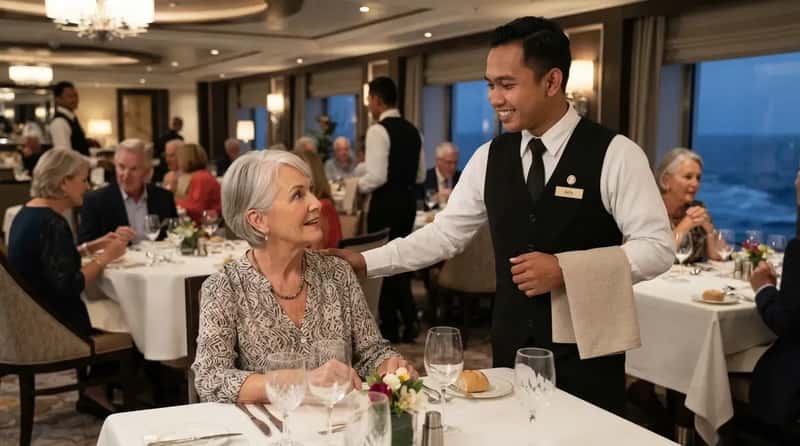
It’s a detail staff bring up again and again: guests over 60 are the ones who ask where a server is from, how long they’ve been away from family, and whether the pay is worth the sacrifice. Many crew members genuinely love the job despite the grind, traveling the world and building lifelong friendships most passengers never think to ask about.
Younger guests rarely go beyond small talk, but longtime cruisers treat waitstaff as people with entire lives outside the dining room. Servers say these conversations, however brief, are some of the only moments during a grueling contract where they feel genuinely seen instead of simply served. It’s often the single biggest reason a server remembers a guest’s name for years after the cruise itself is forgotten.
#3 – They Leave The Detailed, Handwritten Feedback
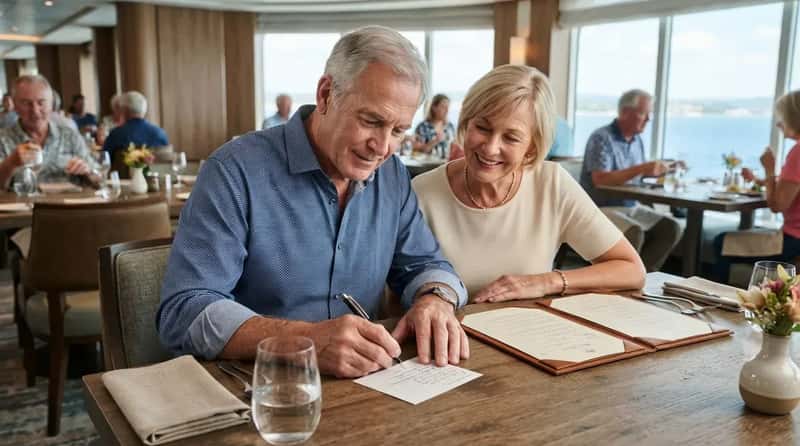
Comment cards still exist on every major cruise line, and staff say the ones filled out with actual names and specific praise almost always come from older guests. These cards aren’t just formalities. Mentioning a crew member by name and praising their service doesn’t just boost morale, it can genuinely factor into their evaluations.
Younger travelers are more likely to leave a quick star rating on an app and move on. Supervisors don’t see every instance of a crew member going above and beyond, so a detailed comment card can be the difference-maker when someone is up for a promotion or raise. Staff quietly track who bothers to write these, and it shapes who they go out of their way for on future cruises.
#2 – They Get Recognized The Instant They Rebook
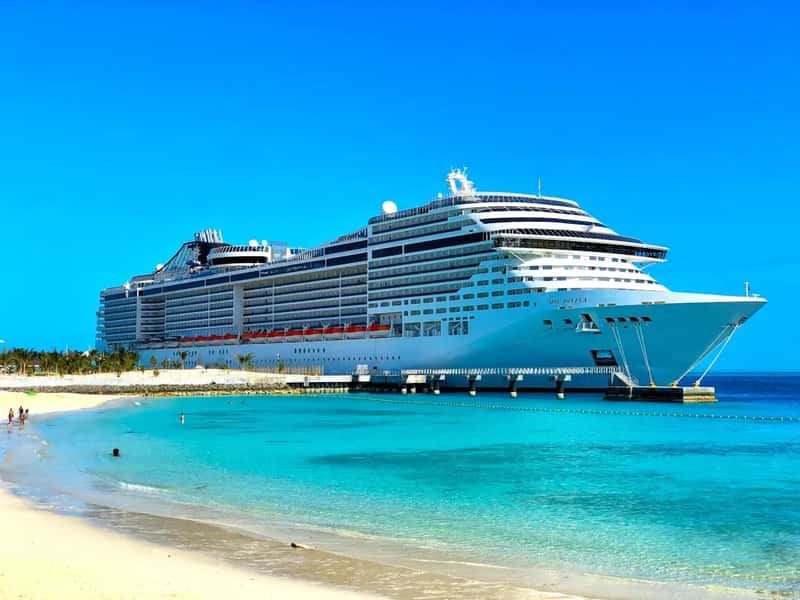
Loyalty is where this age group truly separates itself, according to dining staff. In some cases, crew already know who a returning guest is before they even step onboard, since VIP and loyalty program names are often shared with the team prior to embarkation. Repeat cruisers over 60 make up a disproportionate share of these recognized regulars.
Cabin stewards and dining staff say the memory runs deep for these guests specifically. Crew remember returning passengers with almost supernatural precision, right down to a preferred towel arrangement or which side of the bed someone sleeps on. In the dining room, that same precision covers a favorite table, a preferred wine, and the exact way someone likes their steak cooked. But that’s nothing compared to the number one detail.
#1 – They Genuinely Remember The Crew Between Cruises
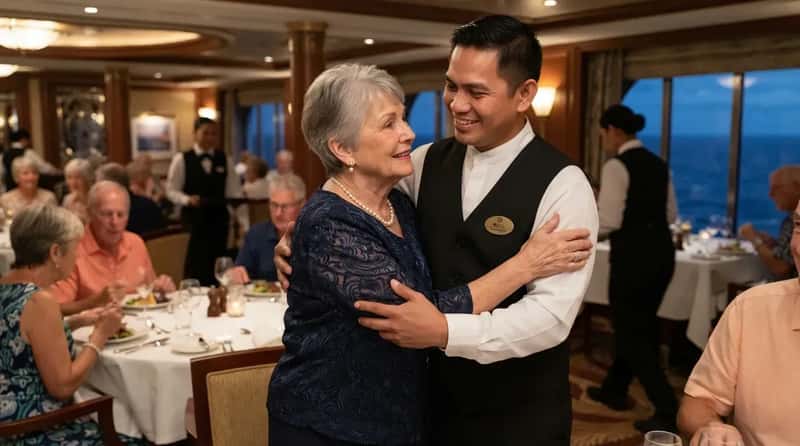
Above everything else, dining staff say the single most emotional thing about serving guests over 60 is how many of them remember individual crew members by name, sometimes years after a single voyage together. It’s not unusual for a longtime waiter to get a hug from a passenger they served once, five cruises and two ships ago.
Given that cruise ship servers typically work contracts of six to nine months without a day off, that kind of recognition means something rare in an industry built on constant turnover and thousands of forgettable faces. Crew members consistently say this is the detail that keeps them in the job long after the physical exhaustion should have pushed them out. It’s less about the tip or the title, and more about being remembered as a person on a ship where most guests never learn a single name.
At a Glance
- Cruise ship dining staff typically work contracts lasting six to nine months, often without a single full day off.
- A single server can serve hundreds of different guests across just one week-long sailing.
- Crew members frequently work multiple contracts back-to-back for years before taking extended leave.
- Despite the grueling schedule, many crew say a handful of memorable guests each contract make the job worth it.
Taken together, these details paint a clear picture: guests over 60 aren’t just easier to serve in some cases, they’re often the reason longtime dining staff say they still love the job. From cash envelopes to handwritten comment cards to genuinely asking a waiter about life back home, this generation tends to treat the dining room as a relationship rather than a transaction.
Crew members notice every bit of it, and it shapes the service that comes back around, cruise after cruise. Which of these surprised you the most? Drop your own cruise dining story in the comments.