Most first-time cruisers step onto the Lido deck like kids in a candy store – eyes wide, plate stacked, convinced that “all-inclusive” means all bets are off. That energy is completely understandable. Between the buffets, room service, burger bars, and specialty restaurants, cruise ships are genuinely built to satisfy any appetite. But here’s what seasoned cruisers figured out the hard way: not everything on that spread is worth touching. Some items are quiet safety risks. Some are quality disasters. And some will cost you a full day trapped in your cabin – which is a brutal way to spend a port morning in the Caribbean.
The veterans who’ve done 10, 20, even 40+ cruises move through the buffet line completely differently. They skip whole categories without a second glance – not out of paranoia, but because they’ve already learned the lesson. What nobody puts in the glossy brochure is that certain foods consistently underdeliver, hide real risks, or simply aren’t what they appear to be once you’re at sea. Here’s the insider list, counting down from the mildly regrettable to the ones that can genuinely wreck your trip.
#13 – Buffet Pizza That’s Been Sitting Under the Heat Lamps
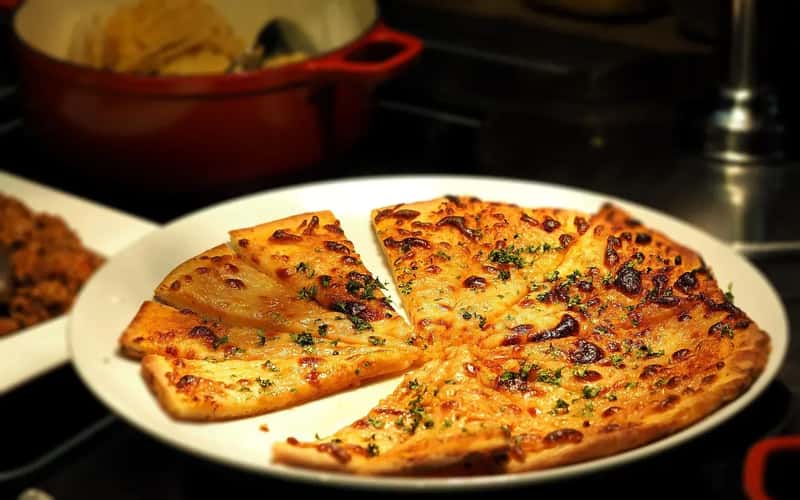
Cruise ship buffet pizza sounds like a perfect low-stakes snack between port stops. It almost never is. Unless you watch a fresh batch come straight out of the oven, chances are that slice has been sitting under the heat lamps long enough to turn the crust brittle, the cheese rubbery, and the toppings into something best left undescribed. The problem isn’t the pizza itself – it’s the holding time. Heat lamps don’t bake. They just slowly destroy whatever texture existed to begin with.
Experienced cruisers know to either ask a crew member when the next fresh batch is coming out or skip it entirely and head to the ship’s dedicated pizzeria. Most major lines now offer made-to-order pies, usually at no extra charge. That’s a completely different product – fresh dough, real heat, actual flavor. Waiting ten minutes for a real slice beats picking up a desiccated square that’s been drying out since the last port call.
#12 – Communal Condiments at the Buffet Table
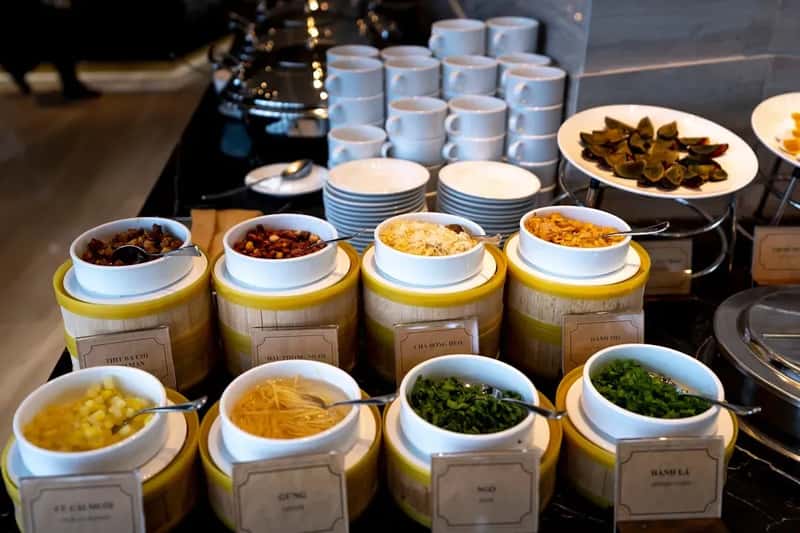
That ketchup bottle sitting on the buffet table has been grabbed by hundreds of hands that day – and that’s not an exaggeration. Cruise buffets serve massive crowds in tight windows, creating hundreds of opportunities for unwashed hands, accidental sneezes, and cross-contamination to converge on a single shared bottle. What makes it worse is that those bottles sit at room temperature in a warm, busy dining hall for hours at a stretch.
Ketchup, mustard, and mayo all need to stay properly chilled to stay safe. An open communal bottle on a buffet table is rarely meeting that bar. The fix is almost embarrassingly simple: ask a crew member for individual single-serve packets. Most staff will hand them over without any fuss. It’s a tiny ask with a real payoff, and veteran cruisers never skip it.
At a Glance
- Communal condiment bottles are touched by hundreds of passengers per day
- Warm dining halls accelerate bacterial growth in open bottles
- Single-serve packets are available on request from crew at no charge
- Mayo-based condiments are the highest-risk category when left unrefrigerated
#11 – Room Service Complex Dishes
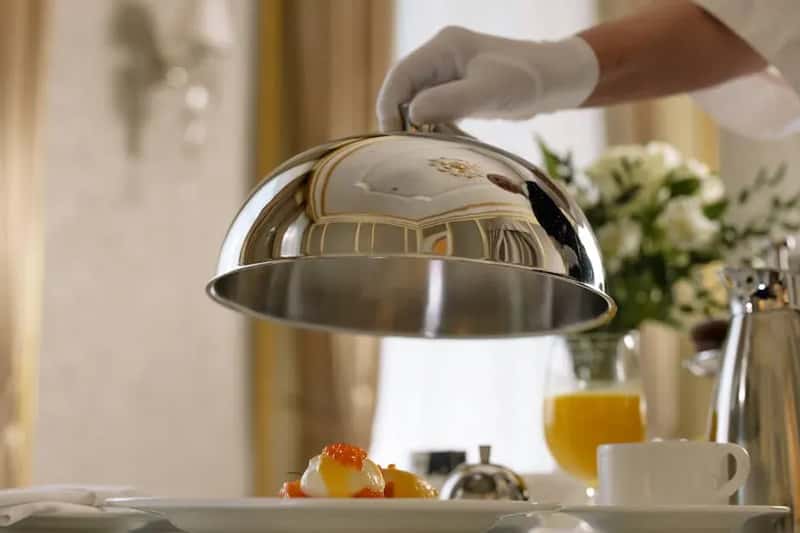
Room service on a cruise ship sounds like peak vacation luxury – breakfast on your balcony, a late-night snack without leaving the cabin. For simple items like a burger, a sandwich, or a bowl of cereal, it works fine. But ordering something elaborate through room service is where expectations and reality part ways fast. A perfectly sauced pasta or a composed seafood dish doesn’t survive a trek through corridors and elevator banks intact. By the time it arrives, the sauce has split, the protein has cooled, and whatever made it special in the kitchen is gone.
There’s a food safety dimension here too. Meals need to stay properly hot or cold during transit, and that’s harder to guarantee on a long delivery route through a busy ship. If any part of the packaging looks compromised when it arrives, don’t second-guess that instinct. Save the serious dining for the main restaurant, where the food travels three feet from the kitchen to your table instead of three decks.
#10 – Soft-Serve Ice Cream From the Self-Serve Machine
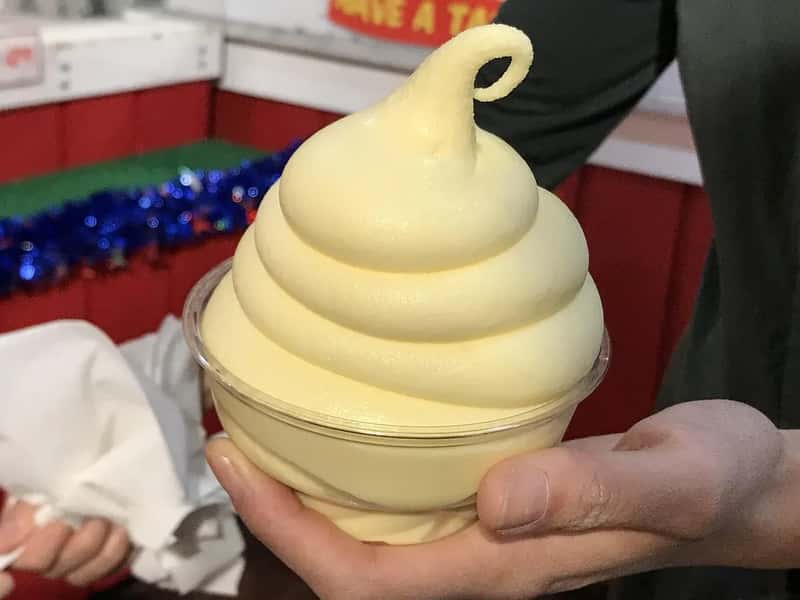
This one is a rite of passage for first-timers and a quiet hard pass for anyone who’s sailed more than twice. The self-serve soft-serve handle is one of the most-touched surfaces on the entire ship – grabbed hundreds of times a day by hands of wildly varying cleanliness. Kids swarm those machines. Adults swarm those machines. The lever gets sticky, the nozzle gets messy, and the machine itself requires constant, diligent cleaning to stay truly sanitary. Soft-serve machines have been linked to listeria outbreaks in the U.S., and food safety experts consistently flag them as one of the top items to skip on a cruise. Although these machines need to be properly cleaned every day to prevent bacteria and mold buildup, that protocol isn’t always observed.
Veteran cruisers who still want something sweet opt for staff-scooped gelato, pre-packaged ice cream bars, or the dessert station instead. If you truly can’t resist the soft-serve, use a napkin to pull the lever and grab a cup instead of a cone – it’s a small move that cuts the grossness factor significantly. Same sweetness, far fewer unknowns.
#9 – Pre-Cut Fruit From the Buffet
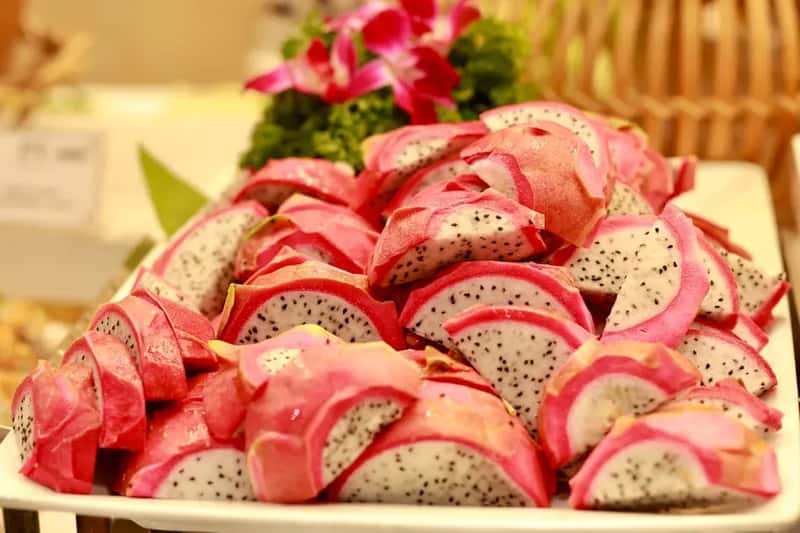
A bowl of melon and pineapple chunks looks like the healthy, refreshing choice at the buffet – and on land in a controlled setting, it usually is. On a cruise ship, it’s one of the sneakier risks on the table. The cutting process itself transfers whatever bacteria lives on the outer rind straight into the edible flesh. Then the fruit sits open in a warm, humid dining hall, often without a cover, exposed to shared utensils and passing foot traffic.
Cantaloupe is a particular offender – its rough, netted rind is notorious for harboring bacteria that ride straight into the flesh once the fruit is cut. Food safety research has found that outbreaks linked to pre-cut cantaloupe involved, on average, three times more patients than those involving whole melons. On tropical cruises, heat and humidity accelerate the problem considerably. The smarter move is grabbing whole fruit that still has its natural protective skin: an apple, a banana, an orange. Something you can wash yourself or peel yourself. The buffet melon bowl is rarely worth the gamble.
Fast Facts
- Cantaloupe’s netted rind traps bacteria that a knife blade carries directly into the edible flesh
- Pre-cut cantaloupe outbreaks average 3x more patients than whole-melon outbreaks, per food safety research
- Cut fruit left out for more than 2 hours at room temperature should be discarded, per Canadian food safety guidelines
- Whole, unpeeled fruit at the buffet is the safe swap – banana, apple, or orange with an intact skin
#8 – Creamy Pasta Dishes and Rich Sauces From the Buffet
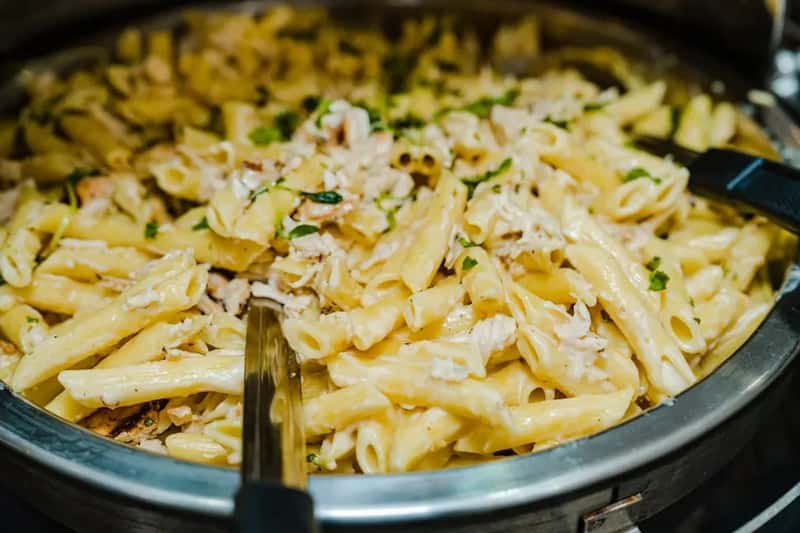
Fettuccine Alfredo under a heat lamp is a sad, gluey fate for what should be a silky dish. Cream-based sauces break and congeal almost immediately once they stop being actively stirred, and pasta absorbs whatever liquid is left, turning from al dente to paste within minutes. What you’re picking up off the buffet tray is usually a distant cousin of what came out of the kitchen twenty or thirty minutes earlier.
There’s a safety layer too. Creamy dishes like Alfredo or seafood bisque can spoil quickly in buffet trays, and their rich texture makes it genuinely hard to tell when something has turned. Veteran cruisers who want pasta simply walk to the main dining room and order it from a waiter – fresh from the kitchen, properly sauced, at actual serving temperature. The buffet version doesn’t come close, and the risk isn’t worth the convenience.
#7 – Wilted Salad Bar Items
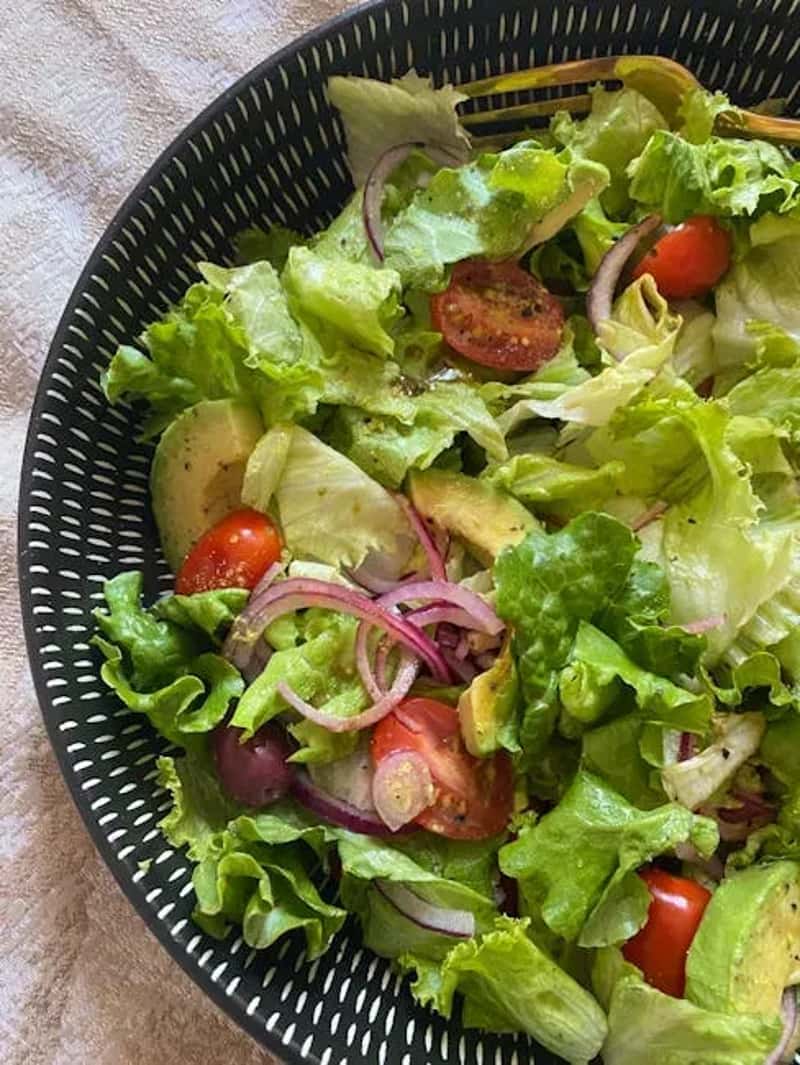
The salad bar feels like the safe, virtuous choice – and that’s exactly why it catches people off guard. By the time a buffet salad reaches your plate, those vegetables have been handled repeatedly: during prep, during transport, during setup, and then by every passenger who grabbed the tongs before you. Cross-contamination risk at an open salad bar is real and largely invisible, which makes it easy to underestimate.
The CDC has flagged cut and shredded raw vegetables as a high-risk category for travelers, noting that contamination can survive even a clean-water rinse. If the lettuce is browning at the edges or the cucumbers look waterlogged, that’s a clear sign the salad has been sitting long enough to skip. A sit-down restaurant or a spa café will have something far fresher – and cruisers who’ve learned this lesson the hard way never look back at that wilted romaine.
Worth Knowing
- Shared tongs are a primary cross-contamination vector at open salad bars
- Browning lettuce edges and waterlogged cucumbers signal dangerous holding time
- The CDC identifies cut and shredded raw vegetables as a high-risk food category for travelers
- Crew-served salad stations (available on some lines like Holland America) are a meaningfully safer alternative
#6 – Buffet Scrambled Eggs
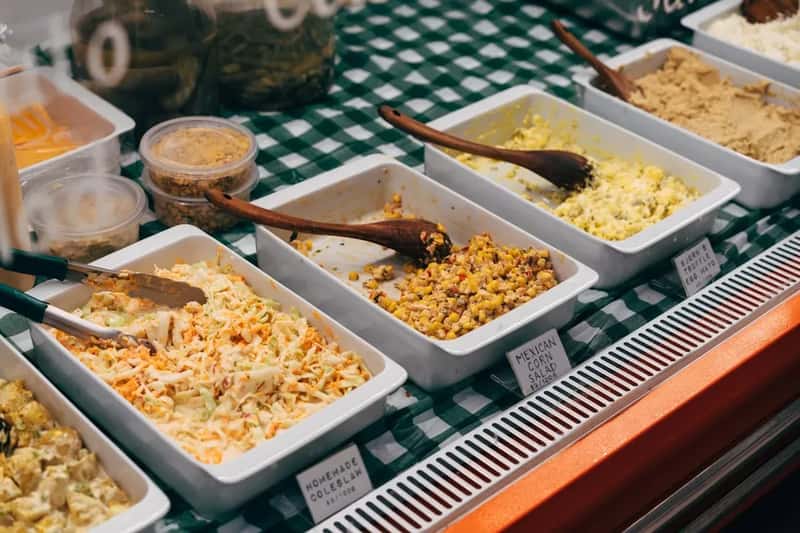
Those fluffy yellow mounds in the breakfast steam trays look innocent enough at 8 a.m. They’re almost universally a letdown. Because cruise ships need to feed enormous numbers of guests quickly, many rely on powdered eggs or pasteurized liquid eggs rather than cracking fresh shells – easier to store, easier to scale, and easier on kitchen logistics. The result spends too long under a heat lamp and arrives at your plate watery, rubbery, and faintly artificial-tasting.
This is one of the most consistently cited buffet disappointments among experienced cruisers, and the fix couldn’t be simpler: walk to the omelet station. Real eggs, cracked in front of you, cooked to your exact specifications. It usually takes only a few extra minutes, and the difference in quality is night and day. Once you’ve made the switch, you’ll never go back to the steam tray.
#5 – Soft Cheeses and Custard-Based Desserts at the Buffet
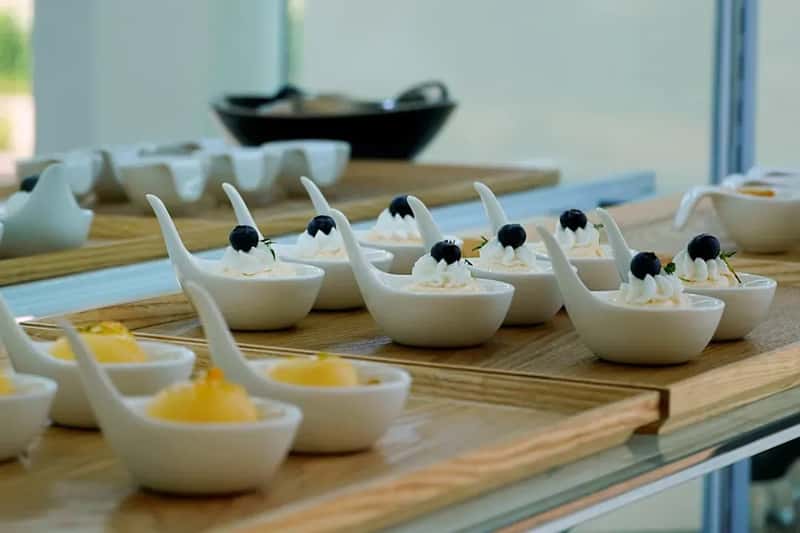
This is the one most cruisers never even think to question. The cheese board and the dessert table are among the most tempting stops on the buffet circuit – and two of the riskier ones. Soft cheeses like Brie, feta, and blue cheese can harbor listeria if they drift out of proper refrigeration temperature, even briefly. Custard-based desserts like cheesecake face the same vulnerability: they need to stay cold, and a busy buffet line doesn’t always guarantee that.
The problem isn’t that cruise ships are careless – most maintain serious food safety standards. The problem is structural: buffets are buffets, food sits, temperatures drift, and high-fat, high-moisture items like soft cheeses and custards pay the price faster than almost anything else. The rule veteran cruisers use is simple: if it doesn’t feel cold to the touch, it’s been out too long. A cheesecake slice that’s closer to room temperature than refrigerator temperature is one to walk past.
#4 – Shrimp Cocktail and Buffet Shellfish
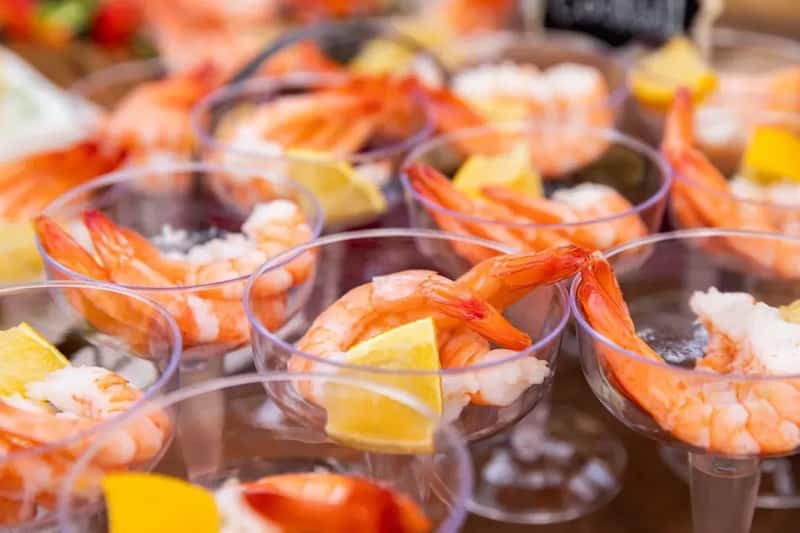
Shrimp cocktail is everywhere on cruise ships – it looks elegant, it signals vacation, and it’s genuinely delicious when done right. Which is exactly why experienced cruisers are so skeptical of it on the open buffet line. Seafood requires strict, unbroken temperature control to stay safe, and a shared tray that’s been sitting out for an unknown stretch of time is not that environment. Food safety expert Darin Detwiler has specifically called out shrimp cocktail as a risky buffet choice, noting that cruise lines sourcing ingredients from different ports face real supply chain inconsistencies that can quietly raise contamination risk.
Shellfish has sat at the center of multiple norovirus outbreaks over the years, and the CDC’s Vessel Sanitation Program documented 16 gastrointestinal illness outbreaks on cruise ships in 2024 alone – the highest count in over a decade. If you can’t see shellfish resting on a fresh bed of ice, that’s a significant red flag. Veteran cruisers who want shrimp or crab order it in a sit-down restaurant where it arrives fresh and properly handled – not off a communal tray with no visible cooling.
#3 – Buffet Sushi
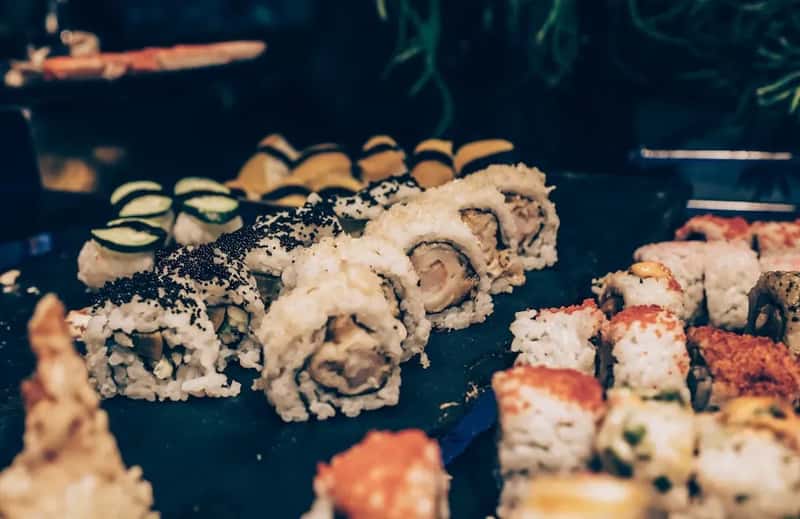
Sushi on the buffet line might be the single most debated item among experienced cruisers – and the skeptics have good reason. Buffet sushi often sits out for stretches of time that would make any sushi chef wince. The rice dries out and loses its texture, the fish stops tasting like itself, and the whole thing becomes a pale imitation of what sushi is supposed to be. Beyond quality, there’s a real safety element: raw fish requires precise storage and handling, and a shared buffet tray is not the controlled environment that requires.
The cross-contamination factor is significant too – shared serving utensils, nearby dishes, and the steady flow of hands all increase the risk. If your ship has a made-to-order sushi station, that’s usually the better call, even if it carries an additional charge. That surcharge exists for a reason: made-to-order means fresher fish, proper technique, and food safety standards that an open buffet tray simply can’t match.
Quick Compare
- Buffet sushi: Sits out for unknown time, rice dries out, shared utensils, no cold chain guarantee
- Made-to-order sushi station: Prepared fresh per order, controlled handling, staff accountability – usually a small upcharge
- Cooked sushi rolls: Safest option if raw fish is a concern, often available at the same station
#2 – Raw Oysters From the Raw Bar
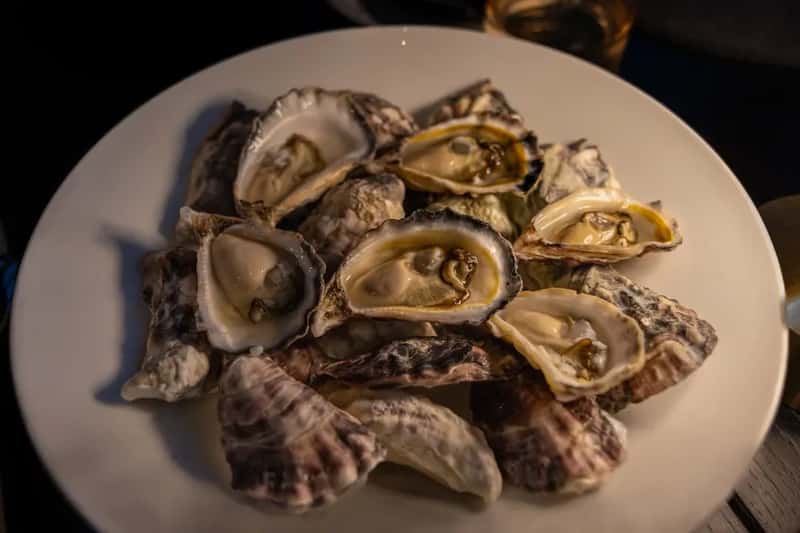
Raw oysters are where “adventurous dining” and genuine medical risk collide most sharply at sea. Martin Bucknavage, a senior food-safety extension specialist at Penn State University, has been direct on this point: raw mollusks like oysters can carry pathogens including salmonella, norovirus, and Vibrio directly to the consumer if proper controls aren’t maintained at every step of the chain. On a cruise ship, where oysters may pass through multiple ports and supply handoffs before reaching your plate, maintaining that unbroken cold chain is a serious challenge.
Vibrio vulnificus – a rare but potentially deadly bacterium found in warm coastal waters – has been linked to cruise ship oyster incidents that made headlines in recent years, including a passenger death that reignited conversations about onboard food safety. According to the CDC, about 1 in 5 people infected with Vibrio vulnificus die, sometimes within a day or two of becoming ill. For older travelers or anyone with a compromised immune system, the risk is sharply higher. The upside is a few briny bivalves. The downside, when you’re miles from a real hospital, is something you don’t want to find out about firsthand.
Raw seafood, especially raw mollusks such as oysters, are considered higher-risk foods. Since these foods are not cooked, pathogens such as salmonella, norovirus, and vibrio can be passed directly to the consumer if proper controls are not in place.
Martin Bucknavage, Penn State University food-safety extension specialist
#1 – Mayo-Based Salads That Have Been Sitting Out
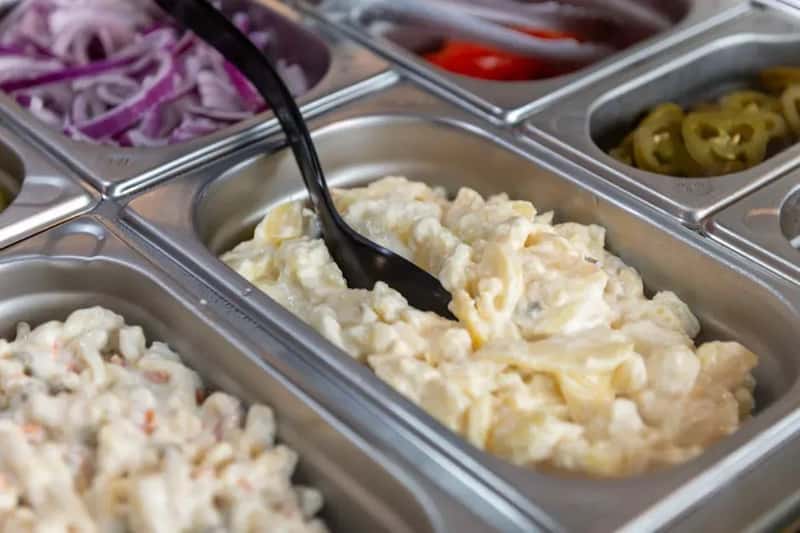
Here’s the one that catches the most people off guard – because it doesn’t look dangerous at all. It’s just the pasta salad, or the tuna salad, or the egg salad sitting quietly in a big bowl near the sandwich station. Nobody eyes a bowl of macaroni salad the way they eye a raw oyster. That’s exactly what makes it the most dangerous item on this list. Mayonnaise is an emulsion that breaks down under heat and becomes a vehicle for rapid bacterial growth the moment it drifts out of the safe temperature zone – and on a busy buffet, that drift happens faster than most people realize. Food safety expert Darin Detwiler specifically calls out mayo-based items like tuna salad and egg salad as foods to avoid if they’ve been sitting out, and the reasoning is hard to argue with.
Every single risk factor on this list converges at that bowl: food sitting out for extended periods, hundreds of hands on shared utensils, temperature fluctuations, and zero visual warning signs. Unlike oysters, nobody thinks to be suspicious of egg salad. Veteran cruisers skip it every time, without hesitation, without a second glance. It’s not dramatic. It’s just the move that keeps them feeling good when the ship pulls into the next port.
Fast Facts
- The FDA’s food “danger zone” is 40°F to 140°F – bacteria multiply rapidly in this range
- Mayo-based salads show no visible signs when they’ve turned – no smell, no color change
- 2024 was the worst year for cruise ship gastrointestinal outbreaks in over a decade, per CDC data (16 reported outbreaks)
- Norovirus accounts for over 90% of diarrheal illness outbreaks on cruise ships, according to the CDC
- The safest swap: hot, freshly plated food from the main dining room where kitchen-to-table transit is seconds, not minutes
The pattern across all 13 of these foods is really the same thing: the buffet rewards the impatient and punishes the uninformed. None of this means cruise food is bad – most of it is genuinely excellent, especially in the main dining room and specialty restaurants. It just means that knowing which corners get cut, and where the real risks quietly hide, is the difference between a vacation you rave about and one you spend horizontal in your cabin. Veteran cruisers aren’t paranoid. They’re just eating smarter – and their trips show it.