Nobody slides a list across the counter at check-in, but the person behind the front desk has more wiggle room than your confirmation email suggests. Wi-Fi, parking, extra-person fees, late checkout: plenty of travelers over 60 have watched a charge shrink or vanish after one calm, friendly question.
Here’s the twist. No hotel chain publishes an “older guest waiver list,” and nothing below is guaranteed. What separates the guests who hear yes from the ones who get a shrug is timing, wording, and knowing which charges bend and which are bolted to the floor. The one most people assume is negotiable is waiting at #1, and it plays out very differently than you’d expect.
#13 – The Daily Wi-Fi Charge That Sometimes Disappears With One Question

Paying by the day for Wi-Fi feels like being billed for tap water. Several major chains already include basic Wi-Fi for free loyalty members, so you may be paying for something your account already covers. At check-in, ask whether Wi-Fi is included with your rate or membership. Staff can often add a note to your reservation in seconds.
Keep the tone curious, not combative. “I see Wi-Fi listed per day. Is that already included for me?” hands the clerk an easy yes. Independent hotels and some resorts are where the fee tends to survive, but even then a reduced rate for one device is a realistic outcome.
#12 – The Overnight Parking Bill That Can Cost More Than the Room Upgrade
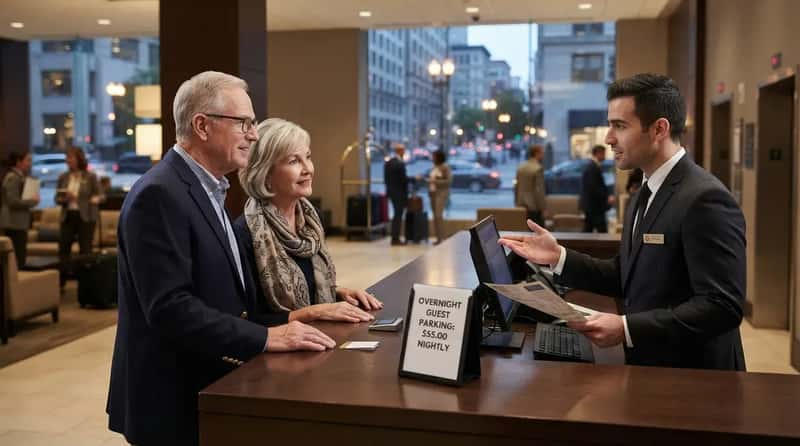
Parking is where a “good deal” often falls apart. City hotels can add a daily charge on top of the room rate, and a senior or AARP discount usually doesn’t touch it. Those rates generally apply to the room itself. A 10% break on the room can get swallowed whole by the garage.
So ask a narrower question. Is there a cheaper lot nearby, a reduced rate for a longer stay, or in-and-out privileges? Some desks can validate a nearby garage or trim the charge when the hotel is quiet. If the answer is no, at least you learn it before you’ve unloaded the car.
#11 – The “Extra Person” Fee for Bringing Your Spouse’s Sister

Plenty of hotels add a nightly charge once a third or fourth adult is in the room. It hides in the booking flow, and the fee often shows up only at check-in, when you’re standing there with luggage and zero leverage. Nothing feels pettier than being charged extra for family.
The polite fix is to raise it before you book. Ask whether the extra-adult charge applies when you’re sharing with relatives, and whether a larger room type costs less overall. A desk manager can sometimes drop the charge or move you to a better room for a similar total. Occupancy rules are often set room by room, so the answer can differ even inside the same hotel.
Worth Knowing
- Ask about the extra-adult charge before you book, not at the counter.
- Compare the total for one larger room against a standard room plus the fee.
- Mention that you’re traveling with relatives; a manager may treat that more kindly than a stranger’s request.
- Get the final nightly total confirmed by email so there are no surprises at check-in.
#10 – The Rollaway Bed That Costs More Per Night Than a Decent Dinner

Rollaway beds and cribs are classic nightly add-ons, and many hotels charge by the night for them. On a family visit with the grandkids, that adds up fast. The frustrating part is that the fee often feels like policy more than cost, which is exactly why a manager sometimes has room to move.
Try asking for the rollaway to be included for one night, or for a two-bed room at the same price. A flat refusal is common, and some chains treat the fee as fixed. But that middle-path question costs you nothing, and it’s the one that occasionally lands.
#9 – The Breakfast Add-On Some Properties Quietly Include for 55+

Daily breakfast packages can quietly double a stay’s cost for two people. Some brands are friendlier than you’d think. Best Western’s senior rate reportedly starts at 55 and may include free breakfast at some properties, though not every location offers it, so ask before you book.
That caveat matters. Senior rates apply only at participating properties, so two locations of the same brand can price things differently. If a package is quoted, ask exactly what’s included and whether a coffee-only credit is possible. Even a partial perk is real money over four nights.
#8 – The Early Check-In Fee That Is Often Just a Matter of Timing

Early check-in can show up as a flat charge, especially at resorts. Yet often it comes down to whether a clean room is ready. If housekeeping has finished and the room is sitting empty, there’s frequently nothing to charge for.
Don’t demand a room at 9 a.m. Ask if you can leave your bags, and whether they’d text you the moment a room frees up. Staff remember the guest who was easy to deal with, and that goodwill carries straight into the next item.
#7 – The Late Checkout Charge That Hotels Sometimes Drop on Slow Days

A late-checkout fee can be a flat sum or a half-day rate. When the hotel isn’t full, though, that room isn’t going to anyone else. That’s the quiet leverage, because a clerk looking at an empty arrivals list has little reason to charge you.
Ask the evening before, not at 11:50 a.m. while a line forms behind you. “Would a 1 p.m. checkout be possible if you’re not busy tomorrow?” works better than demanding a fee waiver. Loyalty members sometimes get it automatically. If it’s a full house, a polite no is the likely answer.
At a Glance
- Best timing: the evening before, when the desk can check tomorrow’s arrivals.
- Best odds: quiet nights and midweek stays, when rooms sit empty.
- Best wording: a specific time, not an open-ended “can I stay longer?”
- Likely no: sold-out weekends and event nights.
#6 – The Airport Shuttle Fee Hiding in Plain Sight
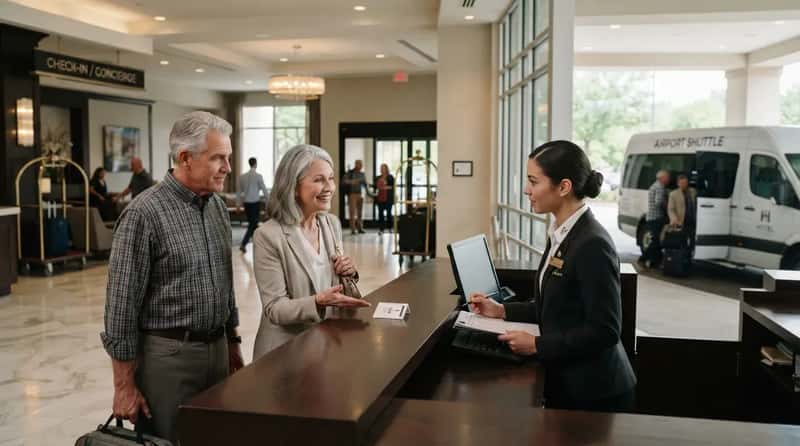
Shuttles are sometimes free and sometimes charged per person, and it’s easy to mix the two up while booking. A listing can say “shuttle available” without ever saying it costs money. Check the property’s own page before you go and get the price in writing.
If it’s a paid shuttle, ask whether the price is per person or per vehicle, and whether the return trip costs extra. A couple traveling together may do better with a flat taxi fare. Some desks will comp one direction when you’re booked at a regular rate.
#5 – The Quiet-Room or Lower-Floor “Upgrade” That Costs Nothing to Request

Hotels charge for view upgrades. But a room away from the elevator, or on a lower floor, is usually just a room assignment, not a product. Ask for it when you book and again when you check in. For many older guests, easy access and a good night’s sleep matter far more than a skyline.
Be specific and short. “We’d love a lower floor near the elevator, if one’s available” gives staff something concrete to act on. A particular room type may not be free, and that’s fair. But a room swap for access or noise is one of the more commonly granted requests, and it takes ten seconds to ask.
Why It Stands Out
- It’s a room assignment, not a paid product, so there’s rarely a fee to waive.
- Asking twice, at booking and at check-in, gives the desk two chances to note it.
- A short, concrete request is easy for staff to act on.
- The payoff is practical: fewer steps, less noise, better sleep.
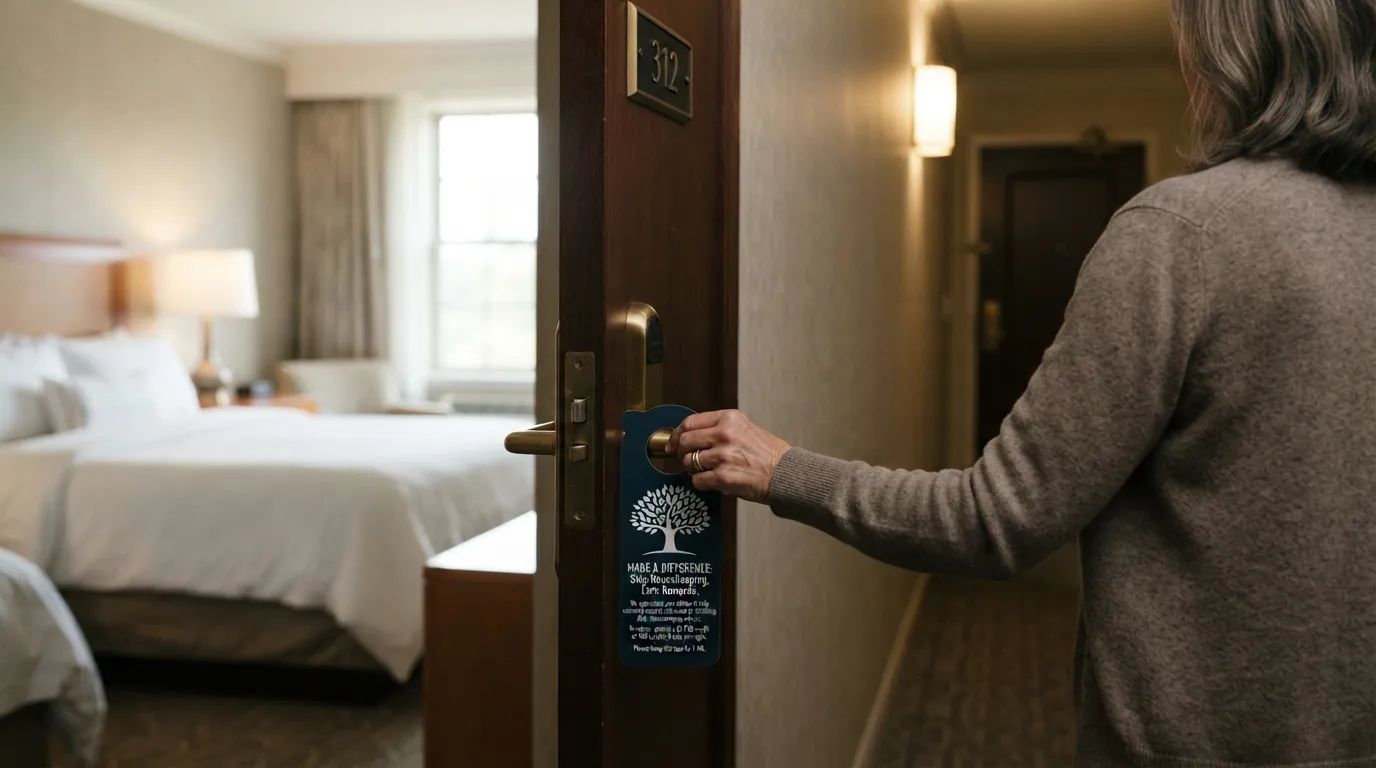
#4 – The Housekeeping Skip That Can Turn Into a Credit
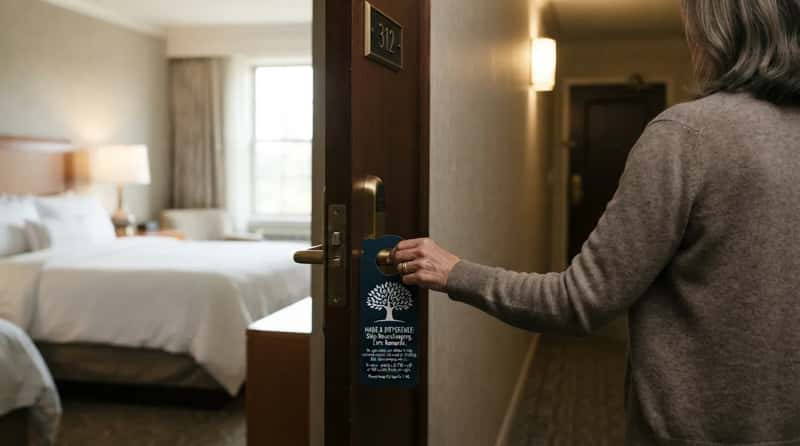
Here’s a rare reversal: the hotel pays you. Several chains run programs that reward guests for declining daily room cleaning, with points or a small food-and-drink credit. You’re not waiving a charge, you’re turning a service into a perk.
Details vary by brand and by property, and some resorts don’t take part at all. Ask at check-in exactly what you’d get before you hang the sign on the door. Fresh towels on request still work, so you’re rarely stuck.
#3 – The “Amenity” Charge for Things That Were Closed
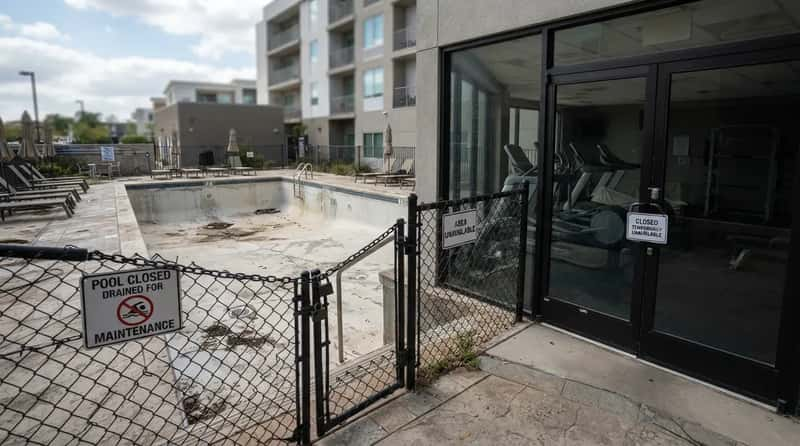
Picture paying a daily amenity fee for a pool that’s drained and a gym that’s locked. It happens. Multiple class actions are active over resort fees where the covered amenities were unavailable or unused, according to one fee-tracking guide, which shows how seriously some guests take it.
The polite move is to speak up on day one, not at checkout. Note which amenities aren’t available, then ask the desk whether the charge can be adjusted. Snap a photo of the closed sign and keep the conversation friendly. Hotels vary on whether they’ll reduce a mandatory fee, and a partial credit is more realistic than a full removal.
#2 – The Senior Rate You Have to Ask for by Name
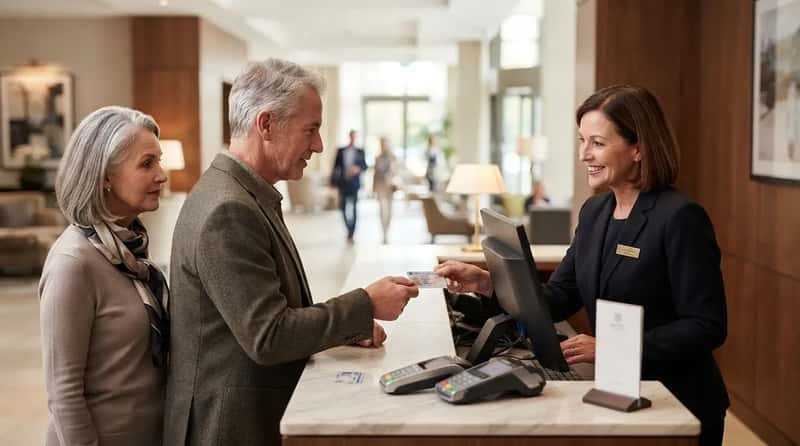
This isn’t a waiver, but it’s the biggest lever on the list. Many chains offer age-based rates, and they often aren’t the default price on screen. Marriott and IHG offer senior rates from age 62 at participating hotels, while Wyndham brands start at 60. Ask for the senior rate by name.
Bring ID, because you typically need to show proof of age at check-in. Also ask which discount is deepest for your dates, since hotels will generally apply the larger of AARP, AAA, or senior pricing rather than stacking them. Calling the property directly can reveal rates the booking sites don’t show.
Quick Compare
- Best Western: reportedly from age 55, at participating properties.
- Wyndham brands: from age 60.
- Choice Hotels: up to 10% off at 60+ or for AARP members, with advance booking.
- Marriott and IHG: from age 62 at participating hotels.
#1 – The Resort Fee: The Hardest Ask, and the Most Misunderstood

The honest truth: this one rarely gets waived just because you’re older. Resort fees are mandatory at many properties, and the FTC rule doesn’t ban them. Since May 12, 2025, hotels and short-term lodging must display the total price up front. The rule doesn’t prohibit any fees or cap what a company can charge, and even a senior package may exclude the fee entirely.
So what can you actually do? Compare totals across properties, since one fee tracker lists typical charges at roughly $25 to $55 per night. Ask whether the fee can be reduced if amenities are limited, or whether loyalty status changes it. Some desks will bend and many won’t, which is the real lesson of this whole list: a friendly question works best when you pick the right charge to ask about.
The Bottom Line: There’s no secret waiver list for older guests, and any article promising one is overselling it. What does exist is front-desk discretion, age-based rates, and a few charges that soften when asked at the right moment. Ask early, ask specifically, and keep it kind. A polite question costs nothing, and sometimes it saves a night’s worth of fees.