Most travelers assume hotel upgrades are reserved for platinum-status road warriors or honeymooners who mention it’s their anniversary. But talk to enough duty managers off the record, and a different pattern emerges – one where a 65-year-old booking a two-week stay quietly outranks a 28-year-old elite member checking in for one night. It’s not written in any loyalty program terms and conditions.
The reason isn’t sentimentality. It’s math, logistics, and something hotels call “low-hassle guest value” – and once you understand how that math works, you’ll never book a long stay the same way again.
#13 – The Quiet Floor Swap Nobody Advertises

Front desk agents rarely have the authority to override a room assignment on their own, but a duty manager usually does. Any room upgrade typically has to be approved by the front office manager or duty manager, who oversees these decisions directly. For a guest staying a week or longer, that approval is often an easy yes, because it removes a repeat-complaint risk from a noisy or high-traffic floor.
What makes this upgrade so common for older, longer-staying guests is timing. Hotels know a two-week guest represents more potential complaints – and more potential five-star reviews – than a single overnight stay. Moving that guest once, quietly, at check-in is far cheaper than fielding daily noise complaints for two weeks straight. It’s a small fix with an outsized payoff for both sides.
#12 – Checkout Creeping Past the Posted Deadline

Late checkout used to be a headline elite perk. Now it’s becoming baseline courtesy for a specific type of guest. Guests who stay seven or more nights get access to free early check-in and late checkout at participating extended-stay properties. That’s not a rumor – it’s written into loyalty program terms at major extended-stay brands.
For guests over 60 on longer stays, duty managers tend to stretch this further than the fine print suggests. A guest who’s been there ten nights already rarely gets told “sorry, noon sharp” – they get an extra hour or two without even asking. It’s one of the easiest approvals a manager can make, since the room usually isn’t turning over same-day anyway.
#11 – Check-In Hours Before the Room Is “Ready”

Early check-in works the same way in reverse. Extended-stay perks programs explicitly build this in for longer bookings, and free early check-in and late check-out is available when staying seven or more nights at participating hotels, based on availability.
Duty managers lean on that “based on availability” language constantly – it gives them room to say yes without setting a hard precedent. For a longer-staying guest over 60 arriving after a long drive or flight, that flexibility gets used generously. The room doesn’t even need to be technically ready – it just needs to be close enough that housekeeping can finish while the guest checks in. That’s the quiet workaround most travelers never learn to ask for.
#10 – A Real Kitchen Swapped In for a Mini-Fridge

This one is baked into the business model at extended-stay chains, and it disproportionately benefits older long-term guests. Senior guests booking these stays get spacious suites featuring fully equipped kitchens with a microwave, stovetop, and full-size refrigerator.
Where the “quiet approval” comes in is at properties that don’t guarantee a kitchen suite by rate class. A duty manager who sees a two-week booking from a guest in their 60s or 70s will often bump the room type specifically because kitchen suites reduce room-service costs and food-related maintenance calls. It’s less about kindness and more about a manager avoiding weeks of takeout containers piling up in a standard room.
Fast Facts
- Extended-stay hotel suites average around 365 square feet, compared to roughly 287 square feet in a standard hotel room.
- Standard rooms typically offer just a mini-fridge and microwave, while extended-stay suites add a stovetop and full-size refrigerator.
- Many extended-stay properties shift to weekly deep-cleaning instead of daily housekeeping, which is part of why kitchen suites also save labor costs.
- These layout differences barely matter for a one-night stay, but they add up fast across two or three weeks.
#9 – A Mattress and Pillow Swap Nobody Requests Out Loud
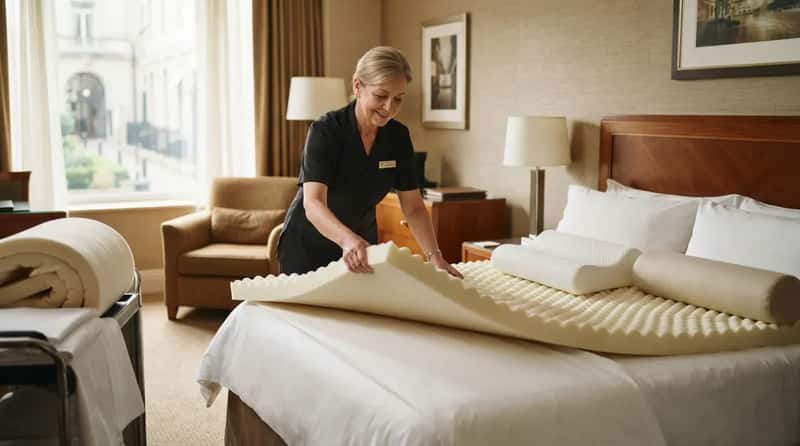
This upgrade almost never shows up on a receipt, but it happens constantly during longer stays. Housekeeping teams keep a rotating stock of firmer mattress toppers, extra pillows, and lumbar supports specifically for guests who mention back pain or simply look like they’ll be sitting in that room for two weeks straight.
Duty managers approve this because it’s essentially free – repositioning existing inventory rather than buying anything new. The upgrade costs the hotel nothing but saves them from a maintenance complaint on day nine of a fourteen-night stay. Guests over 60 get flagged for this more often simply because staff assume comfort issues will surface eventually, so they head it off early.
#8 – Relocated Away From the Elevator and Ice Machine
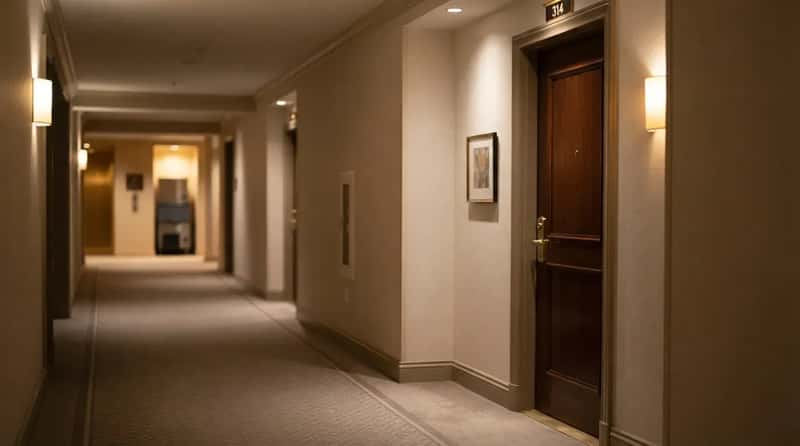
Room assignment software optimizes for occupancy, not peace and quiet – which is exactly why duty managers step in manually for longer-staying older guests. Coordinating this kind of move requires pulling together housekeeping, maintenance, and front desk information in real time, which is precisely the kind of cross-department call a duty manager oversees, including room status, special requests, and coordination between front desk and housekeeping.
For a two-night guest, this kind of manual relocation rarely happens – it’s not worth the operational hassle. But for someone staying two weeks, a single five-minute room swap prevents fourteen straight nights of elevator-ding complaints, which is a trade every duty manager will make without hesitation.
#7 – Parking and Resort Fees That Quietly Disappear

Extended-stay guests often get amenities bundled in that short-stay guests pay for separately. Extended-stay packages frequently include dedicated parking alongside perks like expedited check-in and meeting room access – none of which appear unless you ask.
Duty managers have wide latitude to waive daily parking or facility fees for guests booked longer than a week, especially older travelers arriving by car for medical stays, family visits, or seasonal relocations. The fee waiver rarely gets mentioned at booking – it’s almost always a check-in conversation, and only if the guest brings it up first.
#6 – Breakfast That Was Never Supposed to Be Free

Complimentary breakfast is one of the most negotiable line items in the entire hotel budget, and older long-stay guests benefit from it constantly. Breakfast is far more available than most guests imagine, particularly for seniors and long-stay visitors, and Best Western offers senior guests 55 and older discounts of up to 15% that at some locations include free breakfast.
Even at properties that don’t formally advertise a senior breakfast perk, breakfast is a common negotiating chip that properties routinely bundle with upgrades, early check-in, or late checkout for guests who ask at booking. Most guests never ask – which means most guests are quietly leaving free meals on the table for two straight weeks.
Quick Compare
- Best Western: 55+, up to 15% off, breakfast included at some locations.
- Choice Hotels (Comfort, Quality, MainStay): 60+ or AARP members of any age, up to 10% off.
- Extended Stay America: 55+, discounted senior rate, no AARP membership required.
- Hilton: 65+, up to 6% off the best available rate.
- Motel 6 / Studio 6: AARP members get 10% off plus late checkout.
#5 – Laundry Service Comped Instead of Charged

For anyone staying multiple weeks, laundry becomes a real cost, and hotels know it. Many extended-stay properties include on-site guest laundry as a standard additional service – but the quiet upgrade is when a duty manager waives the machine fee entirely for a long-staying senior guest instead of charging per load.
This rarely gets offered upfront. It surfaces after a guest mentions they’ll be there for weeks and asks where the machines are. A property that makes maybe six dollars from laundry machines over a stay would rather write it off than risk a bad review over a broken dryer eating someone’s quarters.
#4 – The Bigger Room Nobody Was Supposed to Get

This is where occupancy patterns matter more than loyalty status. Hotel upgrade strategy is explicitly built around demand cycles: occupancy forecasts are used to adjust upgrade generosity – more during slow periods, conservative during busy times – with complimentary upgrades prioritized during low occupancy to build guest loyalty.
A guest over 60 booking three or four weeks during a shoulder season is exactly the kind of low-risk, revenue-friendly booking that triggers this generosity. The room upgrade isn’t personal – it’s a scheduling decision dressed up as hospitality, and duty managers know exactly which weeks make it easy to approve.
#3 – Grab Bars and Shower Seats Added Without a Formal Request
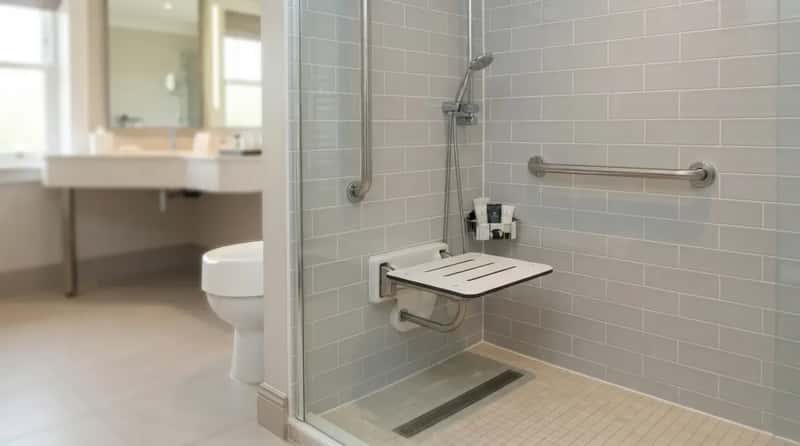
Accessibility adjustments used to require a formal request logged weeks in advance. Increasingly, they don’t. Front desk and housekeeping teams coordinate directly with duty managers on “special requests,” and room status, special requests, and maintenance issues are tracked and assigned in real time by the duty manager overseeing that shift.
For guests over 60 on extended stays, this means a grab bar, shower chair, or raised toilet seat often gets installed same-day, sometimes before the guest even finishes unpacking. It’s one of the few upgrades that has nothing to do with revenue and everything to do with liability – a hotel would much rather install a two-dollar grab bar than deal with an injury claim two weeks into someone’s stay.
#2 – Treated Like a Loyalty Elite Without the Card to Prove It

This is the upgrade that surprises people most, because it isn’t listed anywhere. Duty managers and general managers increasingly view certain guests as valuable independent of status tier. For guests over 60, the leverage is stronger than most realize – senior rates, extended-stay discounts, and a reputation for being low-hassle, reliable guests that hotel managers genuinely value.
That reputation translates directly into informal perks: quieter rooms, quicker complaint resolution, small comps here and there. A guest with zero loyalty points can outperform a mid-tier elite member simply by being predictable, polite, and booked for three weeks instead of one night.
At a Glance
- One-night elite member: priority upgrade request, but often waitlisted behind higher tiers and available inventory.
- Three-week guest over 60, no status: quieter room placement, informal fee waivers, and faster complaint resolution – earned through reputation, not points.
- Common thread: duty managers weigh predictability and low complaint risk as heavily as loyalty tier whenever rooms are tight.
#1 – The Full Suite Upgrade Hotels Would Rather Not Advertise
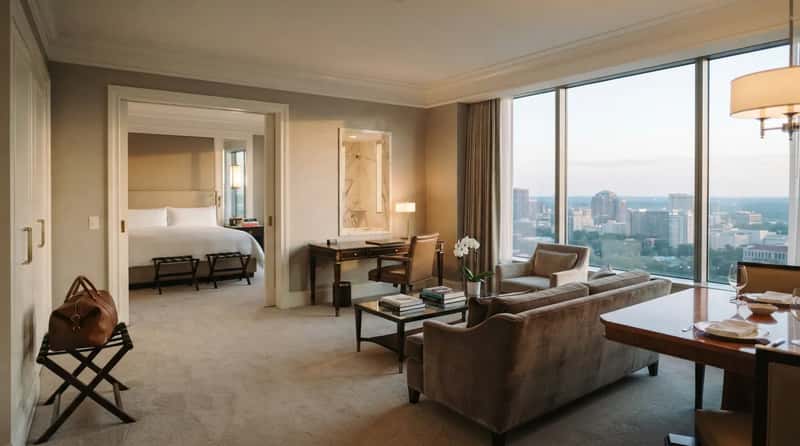
This is the upgrade duty managers protect most carefully, because it directly affects housekeeping labor costs. Some properties would rather leave a suite empty than staff it – general managers sometimes refuse to upgrade guests into suites for business reasons, since larger rooms cost more to clean and hotels want to save on housekeeping labor.
But that calculation flips for a genuinely long stay. A suite occupied for three or four weeks by one guest is cleaned on a far lighter rotation than a suite that turns over every one to two nights – which makes it a rare case where upgrading actually reduces housekeeping cost rather than raising it. During slower months, low occupancy periods are exactly when properties are told to focus on complimentary upgrades to build loyalty rather than protect inventory. For an older guest booking a month-long stay in a slow season, that suite upgrade goes from “almost never happens” to “surprisingly likely” – and almost nobody outside the front office knows why.
None of these upgrades are secret perks written into a rewards program. They’re judgment calls – small, quiet decisions duty managers make because a longer-staying older guest is statistically less risky, less demanding on turnover costs, and more likely to leave a good review than cause a bad one. The line between “no upgrades available” and “let me see what I can do” is thinner than most travelers ever realize.
Have you ever gotten one of these without asking – or had to ask twice before someone finally said yes? Tell us which one in the comments.